Sunday, August 30, 2020

Readout of Secretary of Defense Dr. Mark T. Esper's Virtual Meeting With the Singapore Minister for Defence Ng Eng Hen

 Aug. 30, 2020


On August 30, Secretary of Defense Mark T. Esper met virtually with his Singapore counterpart, Minister for Defence Ng Eng Hen to discuss the U.S.-Singapore bilateral defense relationship. Secretary Esper expressed solidarity with Singapore's efforts to address the COVID-19 outbreak and applauded Singapore's success in its pandemic response. Secretary Esper expressed appreciation for the regional access that Singapore provides U.S. forces, and its commitment to continued access made possible by renewal of the 1990 Memorandum of Understanding Regarding United States Use of Facilities in Singapore. Both leaders stated that they look forward to further collaboration on U.S. future force posture. Finally, the Secretary and Minister discussed regional security issues, including the South China Sea, counterterrorism, and the importance of ensuring a free and open Indo-Pacific.

Saturday, August 29, 2020

USS Philippine Sea Conducts Maneuvering Exercises with Spanish Navy

USS PHILIPPINE SEA VERTREP-AT-SEA/PHOTOEX/MARITIME EXERCISE

Story by Chief Petty Officer Justin Stumberg, U.S. Naval Forces Europe-Africa/U.S. Sixth Fleet

MEDITERRANEAN SEA — The Ticonderoga-class guided-missile cruiser USS Philippine Sea (CG 58) executed passing exercises with the Spanish Navy in the Mediterranean Sea, Aug. 26, 2020.

Philippine Sea and the Spanish Navy frigate Álvaro de Bazán (F 101) conducted the exercises to build partner capability using NATO operational and tactical procedures.

“These exercises enabled Philippine Sea to coordinate with our NATO Ally of many years,” said Cmdr. Matthew J. Iwanczuk, executive officer aboard Philippine Sea. “We are privileged to have this opportunity to train with our Spanish counterparts to increase operational efficiency and interoperability and build upon our strong partnership.”

The U.S. Navy routinely trains with allied and partner nations in order to enhance maneuverability capabilities and interoperability by establishing communication and safety standards that strengthen regional maritime security.

Philippine Sea is currently deployed to the U.S. 6th Fleet area of operations in support of regional allies and partners and U.S. national security interests in Europe and Africa.

U.S. 6th Fleet, headquartered in Naples, Italy, conducts joint and naval operations in order to support regional allies and partners and U.S. national security interests in Europe and Africa.

Readout of Secretary of Defense Mark T. Esper's Meeting With Japanese Defense Minister Taro Kono

 Aug. 29, 2020


On August 29, Secretary of Defense Mark T. Esper hosted Japanese Defense Minister Taro Kono in Guam, where they reaffirmed the strength of the U.S.-Japan Alliance and discussed ways to deepen and expand bilateral defense cooperation.

Secretary Esper and Minister Kono exchanged views on their shared vision for a free and open Indo-Pacific region.  The Secretary expressed serious concern regarding Beijing’s decision to impose a national security law in Hong Kong, as well as coercive and destabilizing actions vis-à-vis Taiwan.  Both Ministers restated their commitment to maintain a rules-based order in the East and South China Seas, and more broadly in the region and world.  The Secretary welcomed Japan’s efforts to strengthen cooperation with other likeminded partners, including members of Association of Southeast Asian Nations (ASEAN), India, Australia, and trilaterally with the United States and the Republic of Korea.

Secretary Esper reiterated the U.S. commitment to the full implementation of President Trump and Chairman Kim’s Joint Statement at the 2018 Singapore Summit, which includes the complete elimination of North Korea’s weapons of mass destruction, their means of production, and their means of delivery.  Secretary Esper thanked Japan for its strong leadership in implementing United Nations Security Council Resolutions sanctions to disrupt North Korea’s illicit ship-to-ship transfers, and for hosting multinational forces that support this effort.

Secretary Esper and Minister Kono agreed to continue efforts to support interoperability and to enhance Alliance capabilities, particularly for integrated air and missile defense (IAMD) and for intelligence, surveillance, and reconnaissance (ISR) functions.  They also agreed on the importance of secure networks and of strengthening information security to protect advanced defense technologies. 

The Ministers committed to work together closely to mitigate the impacts of the COVID-19 pandemic and to cooperate in providing assistance in response.  They reaffirmed their commitment to the realignment plan to move U.S. forces from Okinawa to Guam and other initiatives, including construction of the Futenma Replacement Facility.  The Secretary noted the importance of Japan’s steps towards completing the purchase of Mageshima to support field carrier landing practice.  Secretary Esper and Minister Kono recognized the importance of local community engagement in ensuring stable stationing of U.S. forces in Japan.  Secretary Esper further committed to maintaining the highest standards of safety for all U.S. personnel, while emphasizing the necessity of training to maintain readiness.

Esper, Japanese Defense Minister Discuss Cooperative Efforts

Aug. 29, 2020 | BY Jim Garamone , DOD News

Defense Secretary Dr. Mark T. Esper and Japanese Defense Minister Taro Kono discussed ways to strengthen the already strong U.S.-Japanese partnership during a meeting at Andersen Air Force Base, Guam.

Japan is a treaty ally of the United States and the Japanese have been stalwart allies in the Indo-Pacific. Both nations are concerned with Chinese actions in the region and globally and both nations work together for a nuclear-free Korean peninsula.

Seventy-five years ago this week, the United States and Japan laid down their arms against each other and entered into a durable friendship that has led to tremendous prosperity for our people, and all the peoples of the Indo-Pacific."
Defense Secretary Dr. Mark T. Esper

In opening statements, both men stressed the need for the United States and Japan to work more closely together in a post-pandemic world.

Esper asked Kono to pass along his best wishes to Japanese Prime Minister Shinzo Abe, who is stepping down due to poor health.

The meeting comes as the world commemorates the end of World War II.

"Seventy-five years ago this week, the United States and Japan laid down their arms against each other and entered into a durable friendship that has led to tremendous prosperity for our people, and all the peoples of the Indo-Pacific," Esper said. 

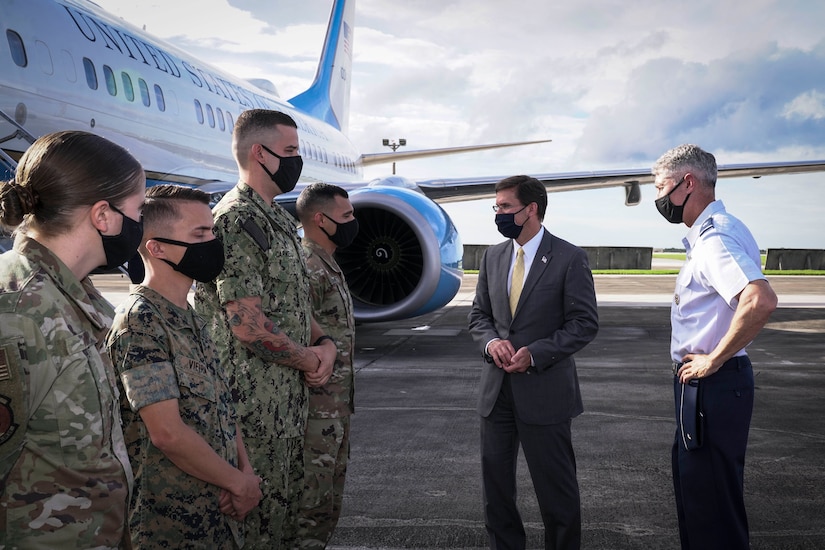
Man in civilian business suit greets military personnel on the tarmac. All are wearing masks. Official airplane is in the background.

Both men noted that Japan and the United States share values and interests in the Indo-Pacific region. Esper said that despite efforts by some to take advantage of the pandemic to "undermine long-standing rules and norms, we remain dedicated to preserving a free and open Indo-Pacific region, working with our partners and our allies, such as Japan."

Kono noted that in the six months since the men last met face-to-face the world has drastically changed not only because of COVID-19, "But because there are some attempts to change the status quo by force and coercion, and some countries are trying to apply cutting-edge technology to military use. We need to be very carefully monitoring the situation and we need to build the posture to prevent any attempt to change the status quo."

Japan is funding a large portion of the move of 5,000 Marines to Guam. Just before the meeting, Esper toured Camp Blaz on the island where the Marines will be based. He thanked the Japanese defense minister for Japan's contribution and for Japan hosting American service members.

China and specifically the behavior of the Chinese Communist Party, was a discussion point between the two leaders. "Today, I look forward to discussing with you China's malign behavior in the region under the direction of the Chinese Communist Party, including the intimidation and coercion of its neighbors, and its continued aggression in the East and South China Seas," Esper said. "We remain steadfast in our opposition to Beijing's destabilizing activities in the region, which include attempts to undermine Japan's administration of the Senkaku Islands."

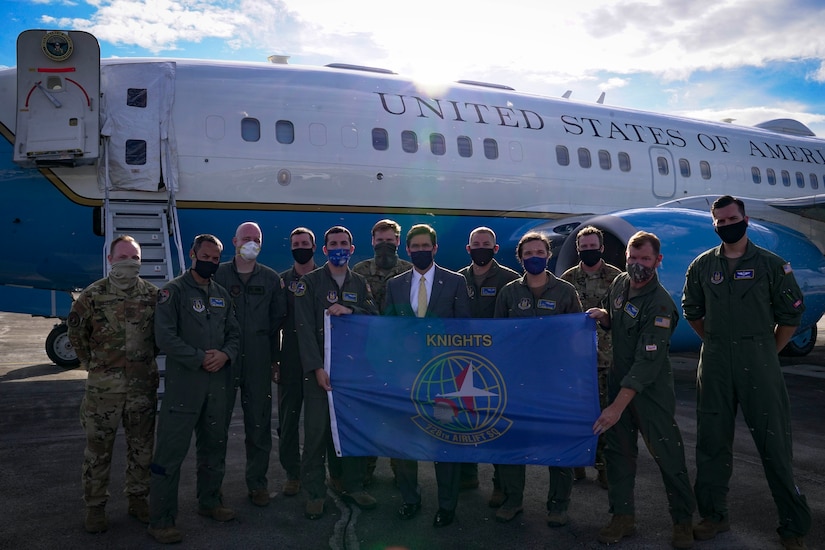
A man in business attire stands with men in military uniforms. All are wearing masks. An official airplane is in the background.

The United States is obligated under the U.S.-Japan Treaty to defend the islands. 

Esper and Kono pledged to improve intelligence-sharing arrangements, and to increase interoperability. Esper thanked Kono for the participation of two Japanese maritime self-defense force ships in the Rim of the Pacific exercise currently off the coast of Hawaii.

The two nations also discussed shared development programs including the co-development of the SM-23A ground-based interceptor missile. Esper also commented on Japan’s procurement of F-35 aircraft.

North Korea remains a concern to both nations and both are committed to the "final, fully verified denuclearization of North Korea, to include all [weapons of mass destruction] and ballistic missile programs," Esper said.


Friday, August 28, 2020

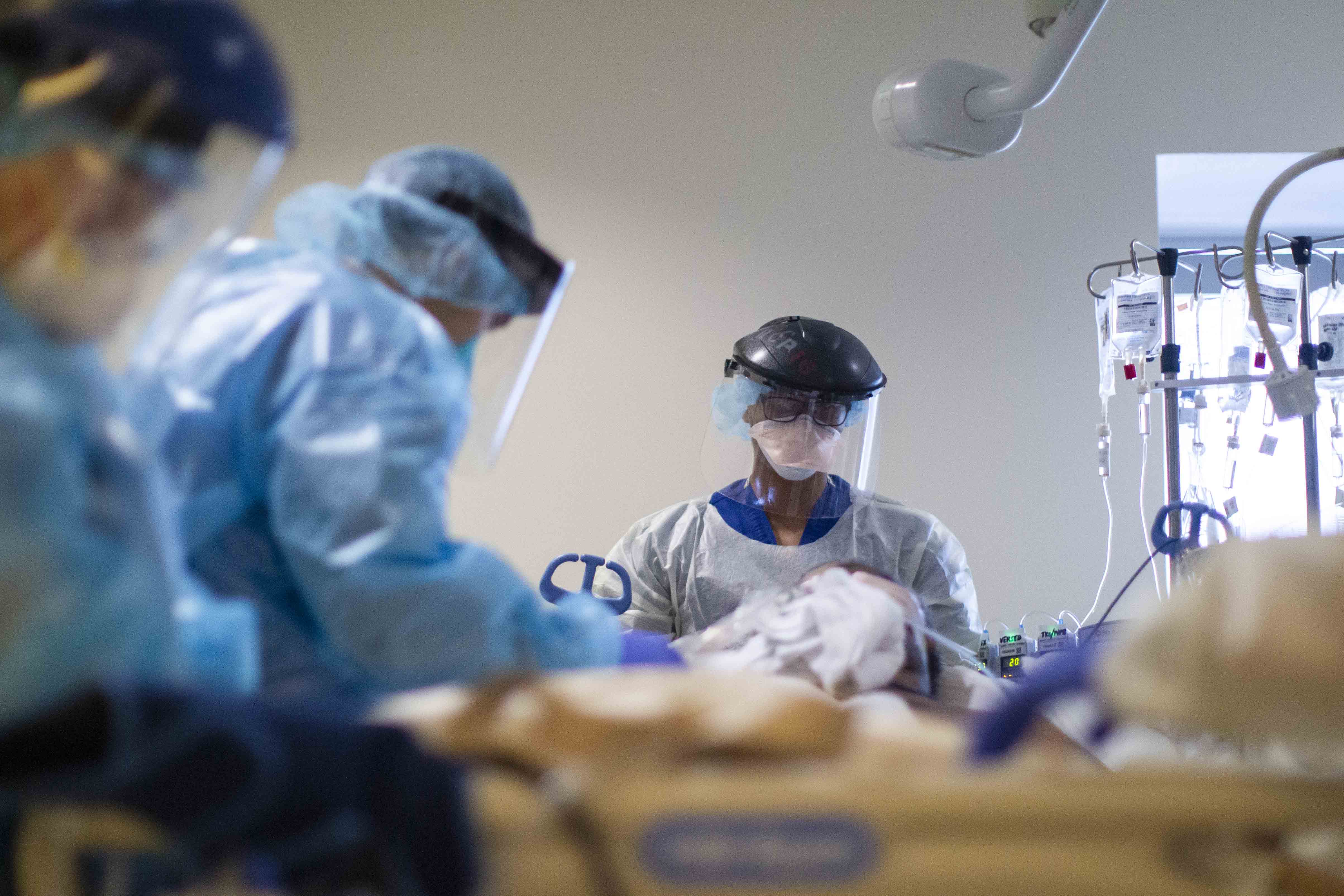
Medical Team


Air Force Staff Sgt. Minh Tran assists a medical team at the Los Angeles County + University of Southern California Medical Center in Los Angeles, Aug. 25, 2020. Air Force medical providers were deployed to the hospital in July as part of the Defense Department's COVID-19 response.

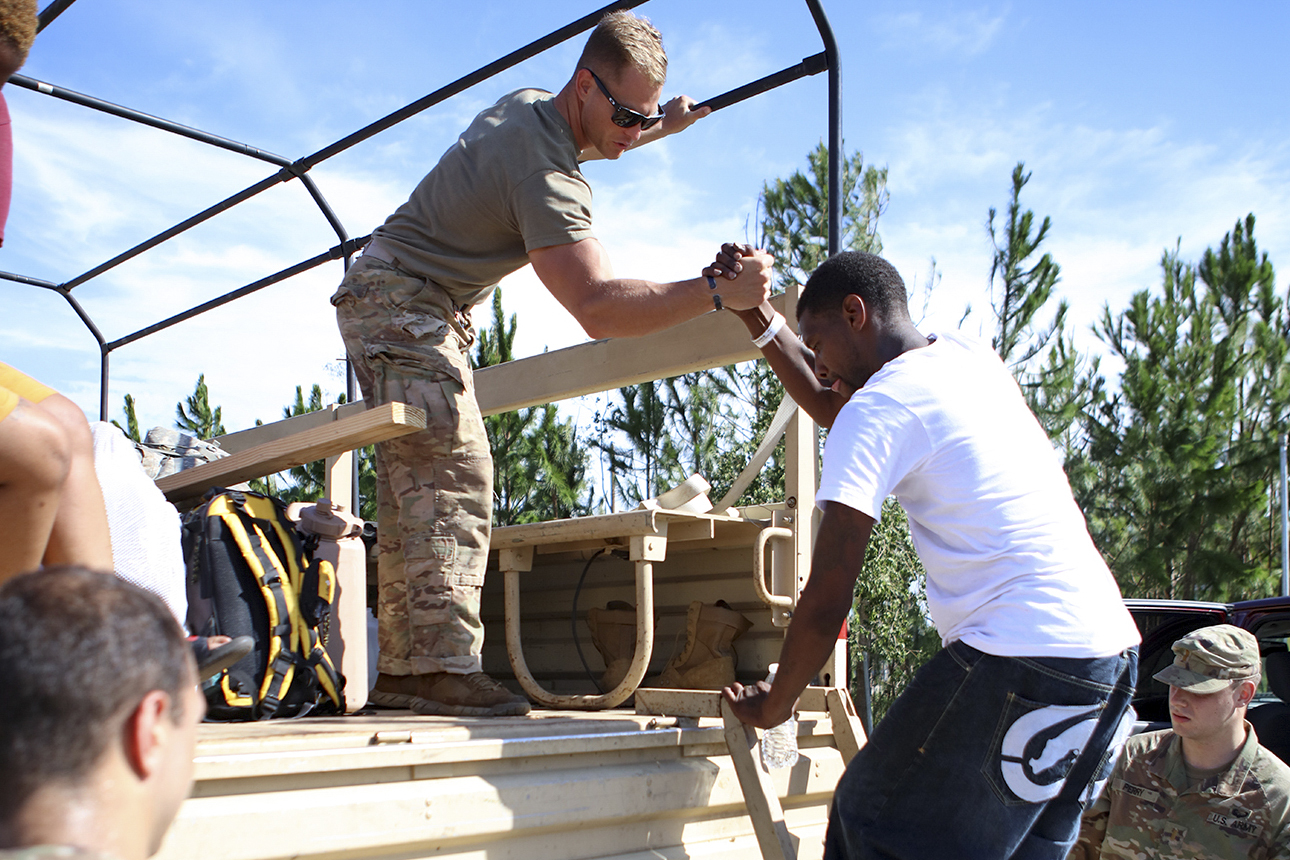
Helping Hand


Soldiers assigned to the Louisiana Army National Guard helps evacuate residents near Lake Charles, La., Aug. 27, 2020, in the aftermath of Hurricane Laura.

Valley Support


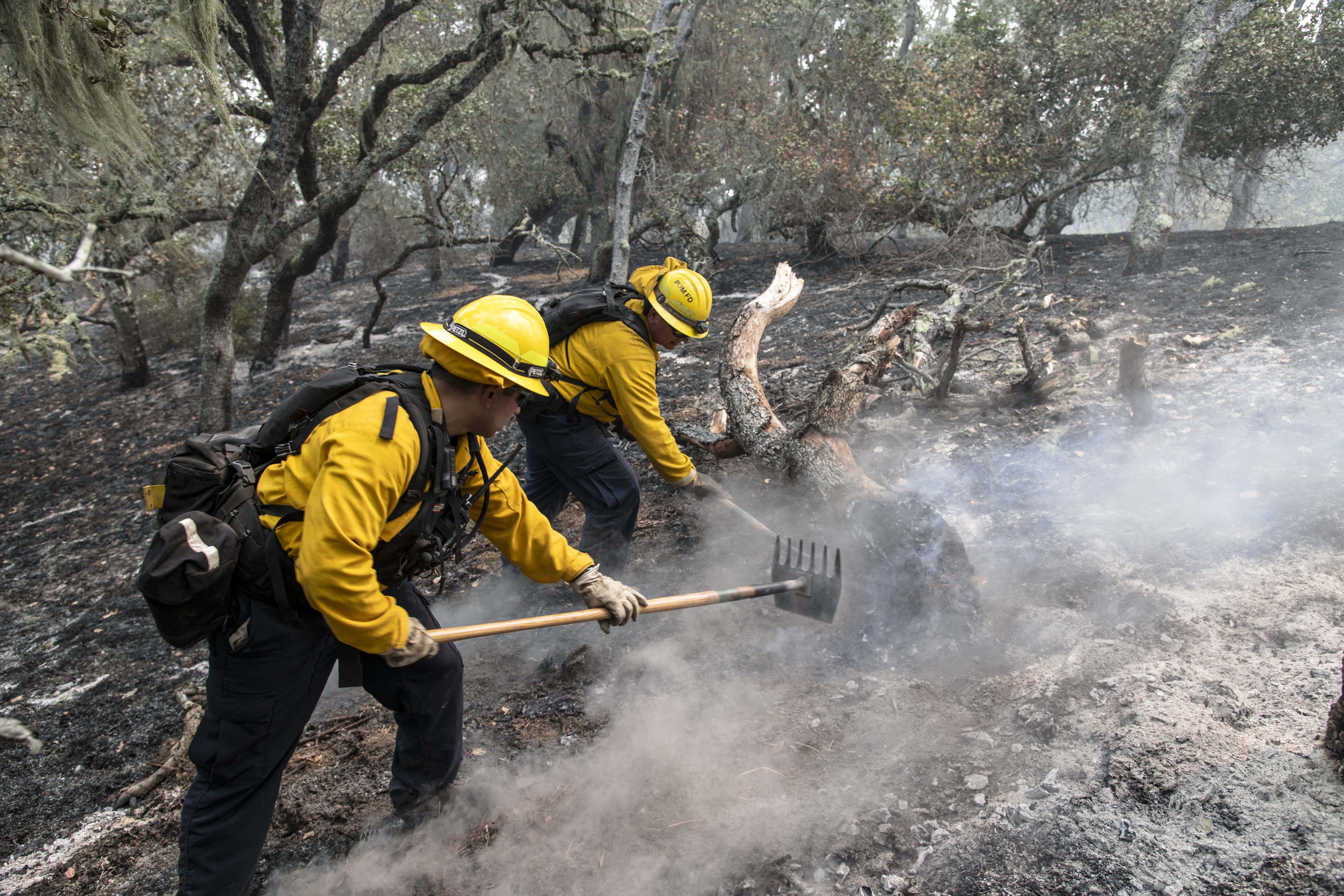
Army firefighters assigned to the Presidio of Monterey help extinguish a fire in California's Carmel Valley, Aug. 20, 2020

Navy to Christen Littoral Combat Ship Savannah

 Aug. 28, 2020


The Navy will christen its newest Independence-variant littoral combat ship (LCS), the future USS Savannah (LCS 28), during a 10 a.m. CDT ceremony Saturday, Aug. 29, in Mobile, Alabama.

Assistant Secretary of the Navy for Research, Development, and Acquisition James Geurts will deliver the christening ceremony's principal address. Mrs. Dianne Isakson, wife of former U.S. Senator John Isakson, will serve as the ship’s sponsor. In a time-honored Navy tradition, Mrs. Isakson will christen the ship by breaking a bottle of sparkling wine across the bow.

“Today we christened the sixth USS Savannah following an outstanding record of service named for a great American city. In so doing we move one step closer to welcoming a new ship to Naval service and transitioning the platform from a mere hull number to a ship with a name and spirit,” said Secretary of the Navy Kenneth J. Braithwaite. “There is no doubt future sailors aboard this ship will carry on the same values of honor, courage and commitment upheld by crews from earlier vessels that bore this name.”  

LCS is a highly maneuverable, lethal and adaptable ship designed to support focused mine countermeasures, anti-submarine warfare and surface warfare missions. The ship integrates new technology and capability to affordably support current and future mission capability from deep water to the littorals. Using an open architecture design, modular weapons, sensor systems and a variety of manned and unmanned vehicles to gain, sustain and exploit littoral maritime supremacy, LCS provides U.S. joint force access to critical areas in multiple theaters.

The LCS class consists of two variants, the Freedom-variant and the Independence-variant, designed and built by two industry teams. The Freedom-variant team is led by Lockheed Martin in Marinette, Wisconsin (for the odd-numbered hulls). The Independence-variant team is led by Austal USA in Mobile, Alabama, (for LCS 6 and the subsequent even-numbered hulls).

LCS 28 is the 14th Independence-variant LCS and 28th in class. It is the sixth ship named in honor of the city of Savannah. The first was a coastal galley that provided harbor defense for the port of Savannah, 1799-1802. The second USS Savannah, a frigate, served as the flagship of the Pacific Squadron and then served in the Brazil Squadrons and Home Squadrons, 1844-1862. The third USS Savannah (AS 8) was launched in 1899 as the German commercial freighter, Saxonia. Seized in Seattle, Washington, upon the outbreak of World War I, the freighter was converted to a submarine tender and supported submarine squadrons in both the Atlantic and Pacific, 1917-1926. The fourth USS Savannah (CL 42) was a Brooklyn-class light cruiser commissioned in 1938. The warship served through the entire Mediterranean campaign, receiving three battle stars for service before decommissioning in 1945. The fifth USS Savannah (AOR 4) was a Wichita-class replenishment oiler commissioned in 1970. AOR 4 earned one battle star and a Meritorious Unit Commendation for service in the Vietnam War. The oiler provided underway replenishment services in the Atlantic and Indian oceans until decommissioning in 1995.

Media may direct queries to the Navy Office of Information at (703) 697-5342. More information on the Littoral Combat Ship Program can be found here.

Ocean Launch


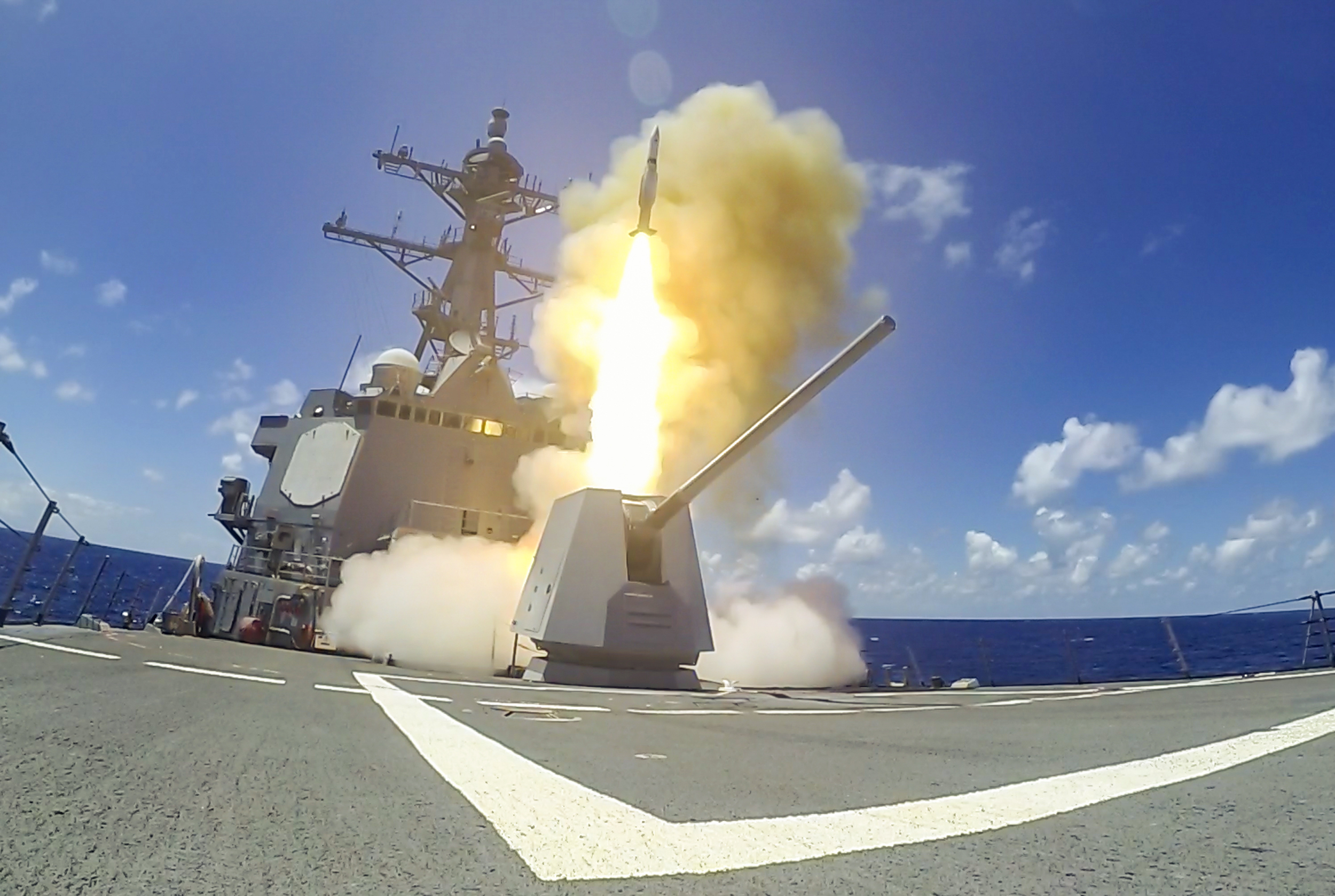
A missile launches from the USS Chung-Hoon during Rim of the Pacific in the Pacific Ocean, Aug. 26, 2020. The multinational exercise is an opportunity to strengthen relationships, build trust and increase interoperability among the participating nations.

Flag Officer Assignments

 Aug. 28, 2020


The secretary of the Navy and chief of naval operations announced today the following assignments:

Rear Adm. Collin P. Green will be assigned as chief of staff, U.S. Special Operations Command, Tampa, Florida. Green is currently serving as commander, Naval Special Warfare Command, San Diego, California.

Rear Adm. John F. Wade will be assigned as director of operations, J3, U.S. Indo-Pacific Command, Camp H. M. Smith, Hawaii. Wade is currently serving as director, maritime operations, U.S. Fleet Forces Command, Norfolk, Virginia.

Rear Adm. Fred I. Pyle will be assigned as director, maritime operations, U.S. Fleet Forces Command, Norfolk, Virginia. Pyle is currently serving as commander, Navy Warfare Development Command, Norfolk, Virginia.

Parachute Practice


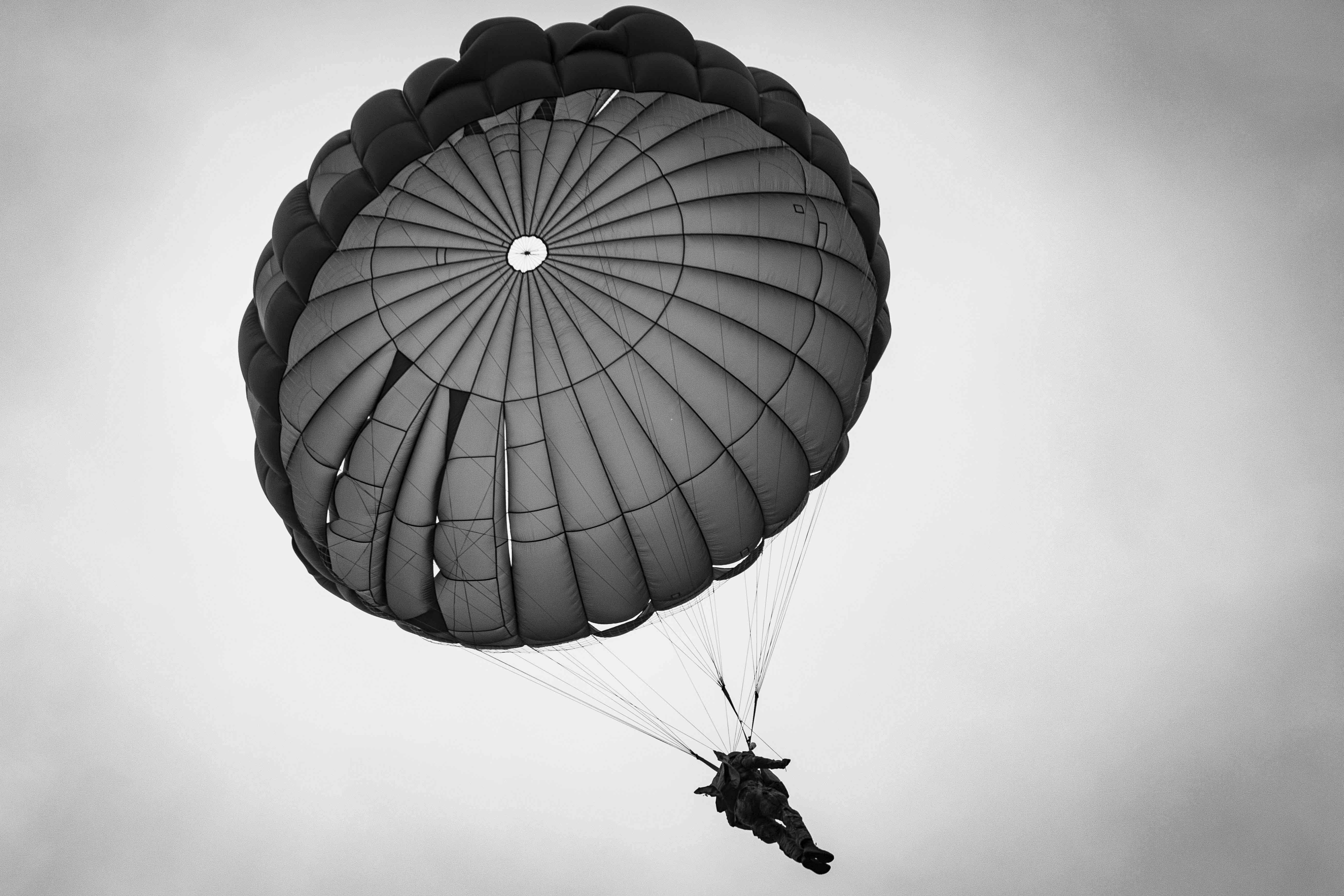
A soldier jumps from an Army Black Hawk helicopter over Joint Base Lewis-McChord, Wash., Aug. 21, 2020.

Mediterranean Movers


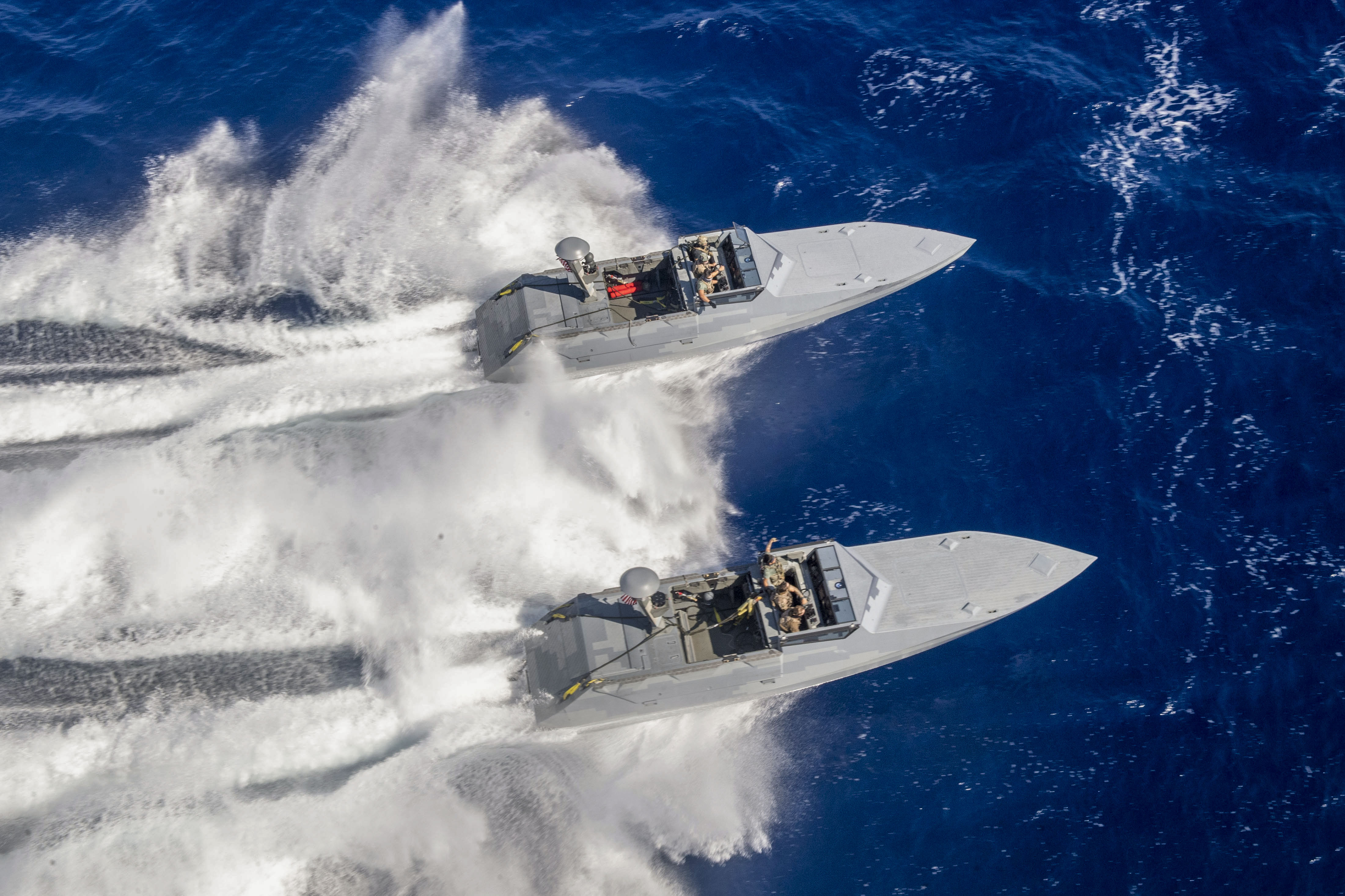
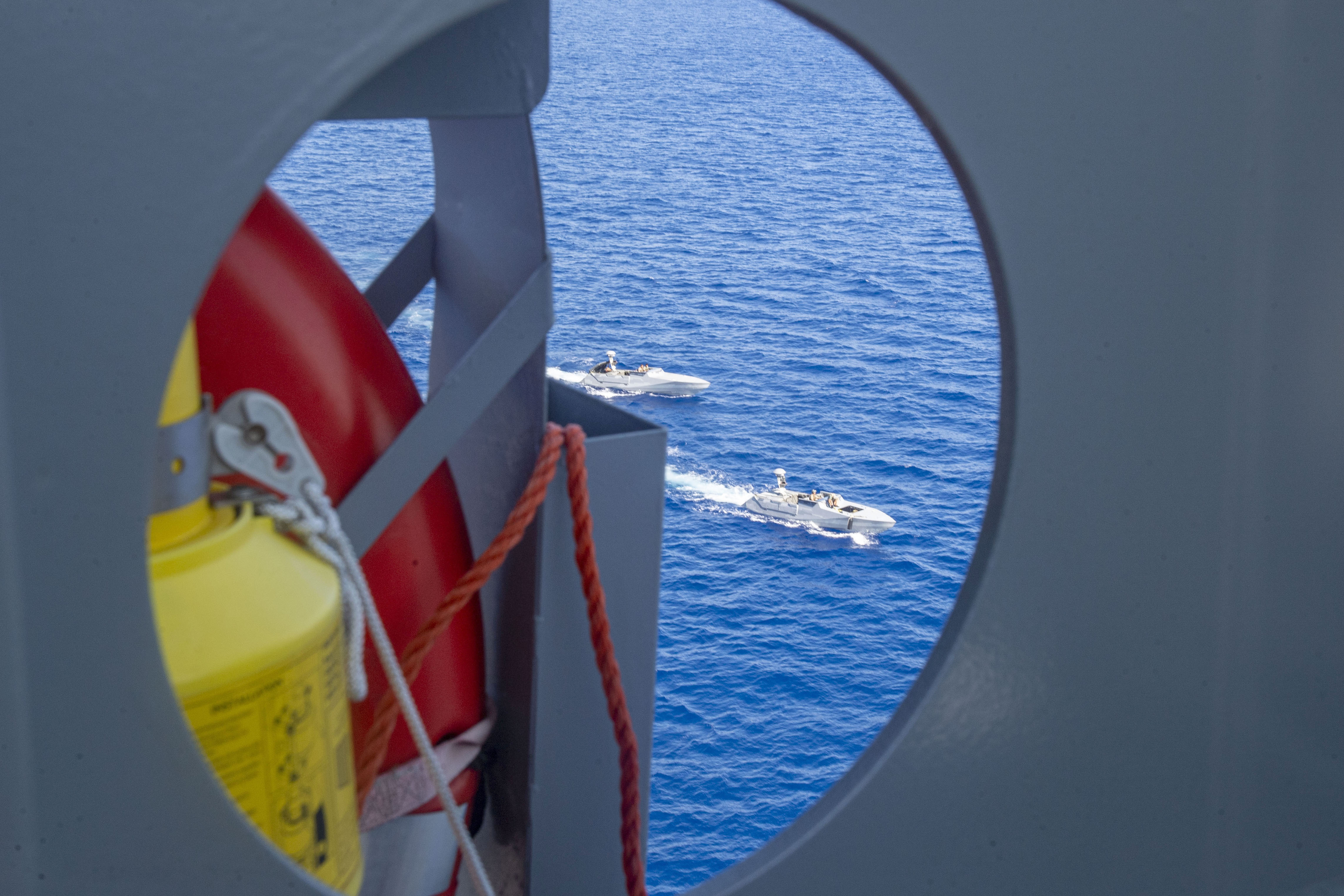
Sailors conduct small boat operations in the Mediterranean Sea, Aug. 27, 2020.

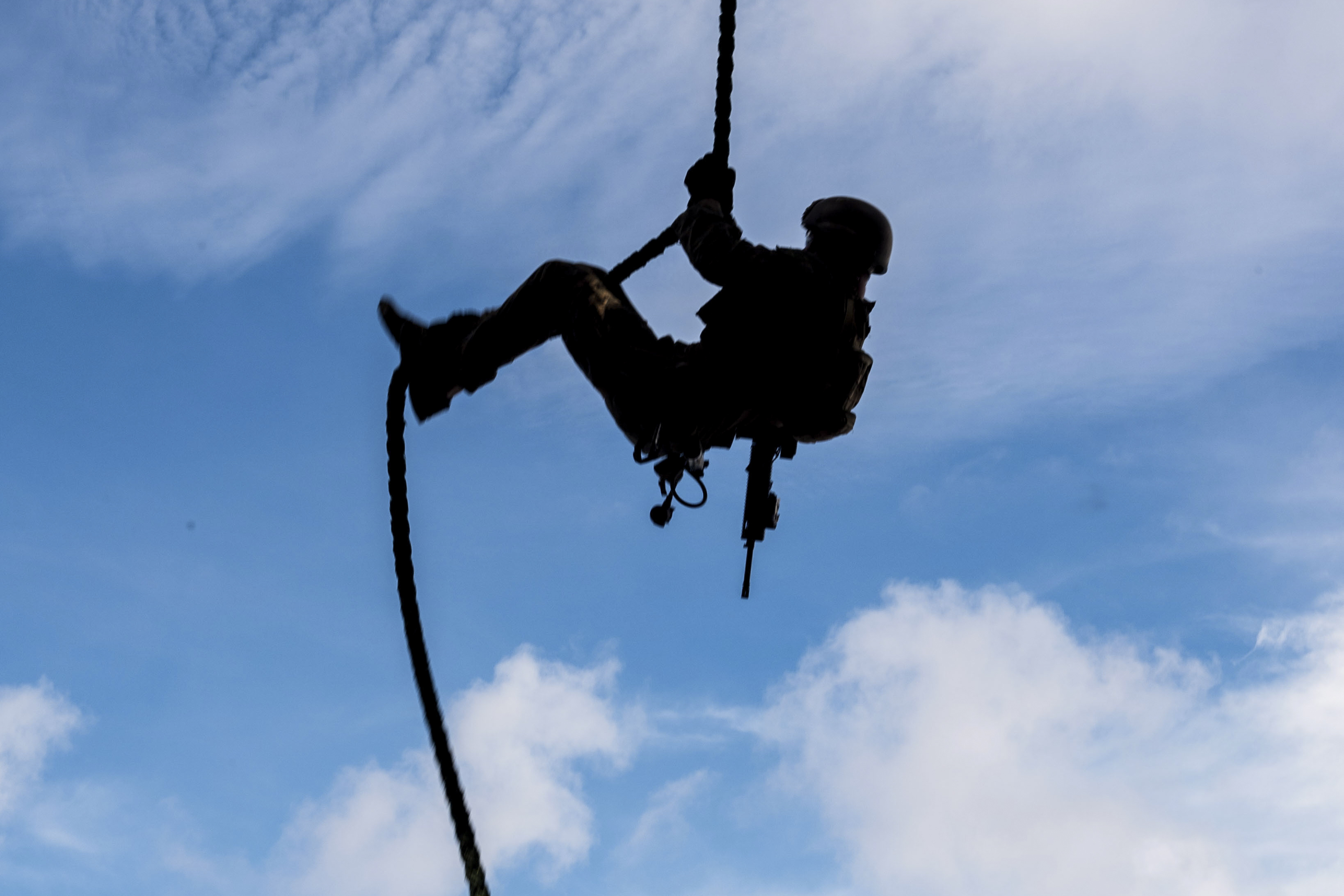
Marine Maneuver


A Marine conducts fast-rope sustainment training on the flight deck of the USS America in the Philippine Sea, Aug. 23, 2020.

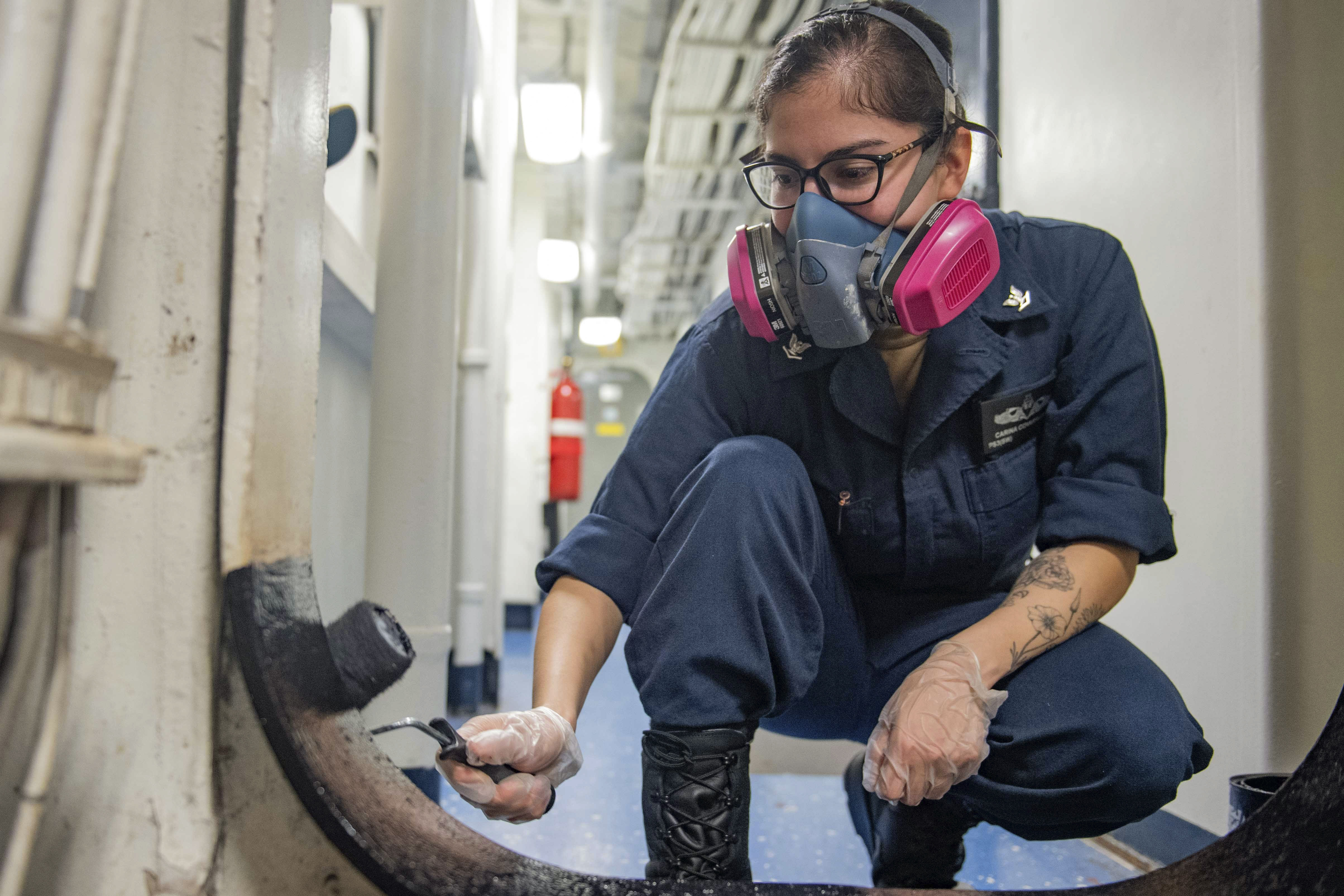
Pacific Painter


Navy Petty Officer 3rd Class Carina Covarrubias paints part of a door aboard the USS Comstock in the Pacific Ocean, Aug. 26, 2020.

American Graves Show America's Commitment to Pacific

 Aug. 28, 2020 | BY Jim Garamone , DOD News

The Pacific is full of American graves.

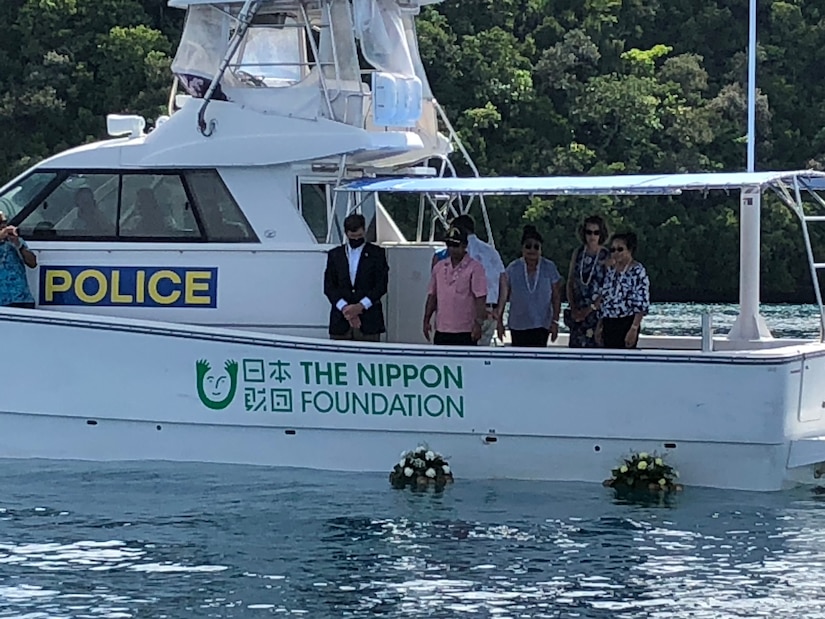
Defense Secretary Dr. Mark T. Esper and Palauan President Tommy Remengesau placed wreaths in the water above the sunken wreckage of a Navy TBM Avenger that crashed in the waters off the city of Koror, Palau, in 1944. All three of the bomber's crew members died.

Esper and Remengesau honored their sacrifice, and the sacrifices of thousands of Americans throughout the Pacific.

Five people in a boat look at wreaths floating on the water. Other people are in the background.

The TBM was lost in July 1944 as the United States was gearing up for the invasion of the neighboring island of Peleliu. Thousands of American Marines and soldiers lost their lives in that fight. The TBM crashed into the bay. It was flown by Navy Lt. Noland R. Houle, Petty Officer 3rd Class Walter E. Mintus and Chief Petty Officer Otis E. Ingram. The remains of Mintus and Ingram were recovered. Houle remains missing. 

The area where the plane crashed is a jewel called the Rock Islands. It now draws divers from around the world to take in the stunning scenery and fabulous underwater world of Palau. The plane remains as an underwater memorial to them. 

''The chance to have that moment with you, Mr. President, to honor them means a great deal to the United States,'' Esper said during a press conference with Remengesau. ''We are bound together by their sacrifice and many others who carry on this legacy today. And together, we remain committed to upholding the international rules and norms and promoting the free and open order that ensures security, stability, prosperity and sovereignty for nations of all sizes and all situations.''

The Palau TBM is just one grave of thousands. In Palau alone about 350 U.S. personnel from World War II remain unaccounted for, according to Navy officials. 

Esper and the country will remember them on Sept. 2 when the nation commemorates the end of World War II aboard the USS Missouri, now docked in Pearl Harbor, Hawaii.

We are bound together by their sacrifice and many others who carry on this legacy today. And together, we remain committed to upholding the international rules and norms and promoting the free and open order that ensures security, stability, prosperity and sovereignty for nations of all sizes and all situations.''
Defense Secretary Dr. Mark T. Esper

Just ahead of the Missouri – where the Japanese signed the unconditional surrender documents in 1945 – is the wreckage of the USS Arizona. It, too, is a grave for about a thousand sailors and Marines killed in Japan's surprise attack on Hawaii on Dec. 7, 1941.

Hundreds of thousands of Americans were killed in the Pacific during the war. Most were returned home. Others rest in the beautiful American Battle Monuments cemetery in Manila and in the Punchbowl Cemetery in Hawaii. But many died at sea, in the air, or on land and their bodies were not recovered. 

The Battle of the Sunda Strait saw the loss of the cruisers USS Houston and HMAS Perth in February 1942 and more unmarked graves.

U.S. service members called the water around Guadalcanal ''Ironbottom Sound'' because so many ships were lost in the bloody 1942-43 battle for the island.

There are graves within the USS Yorktown, sunk during the Battle of Midway, which the U.S. won. There are more in the USS Lexington, which was lost during the Battle of the Coral Sea. There are more graves around the U.S. destroyers that served as picket ships in the Battle of Okinawa. Japanese kamikazes did most of that damage.

There are American graves in Bataan, the Philippines, New Guinea and on the various islands of the Philippines.

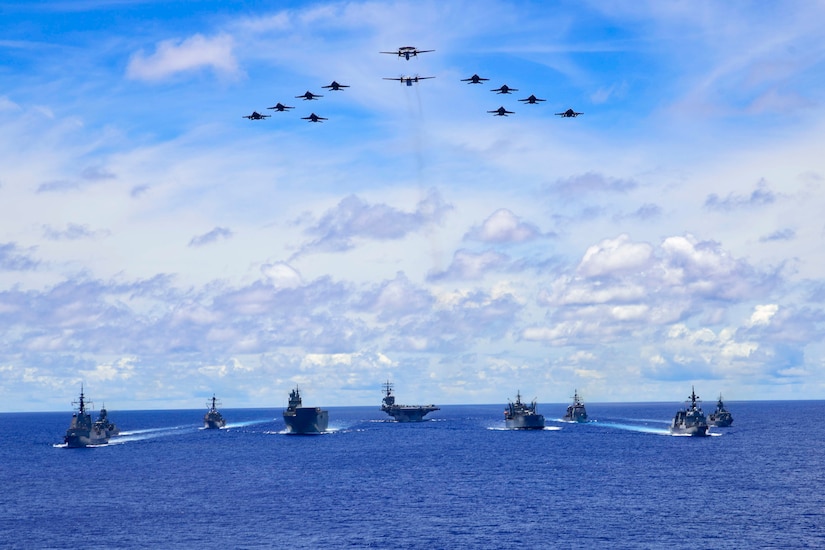
A triangular formation of aircraft flies above a formation of ships in blue sea.

All of these American graves are evidence of the United States' commitment to the Indo-Pacific. There are strong ties created by values, friendship, trade and blood that bind the U.S. to the nations of the region.

''Palau, as you all know, is a close brother, friend and ally of the United States and is representative of the many, many friends of the United States here in the Pacific,'' Remengetau said during the press conference.

Now the area – like the rest of the Indo-Pacific – is battling COVID-19 and increasing Chinese pressure to change the international rules-based environment that has created an open and free Pacific.

''We continue to work alongside our allies and partners to protect the international system that is under threat from China, and its ongoing destabilizing activities in the region,'' Esper said.

The secretary met with Palauan officials and with Marines that are at the island nation aboard the USNS City of Bismarck. He also met with a Seabee civic action team that is deployed to the nation through March.

Mediterranean Ops

Sailors conduct small boat operations with the USS Hershel "Woody" Williams in the Mediterranean Sea, Aug. 27, 2020.


Southcom Donates Field Hospitals to Support COVID-19 Response in Costa Rica

 Aug. 28, 2020 , U.S. Southern Command

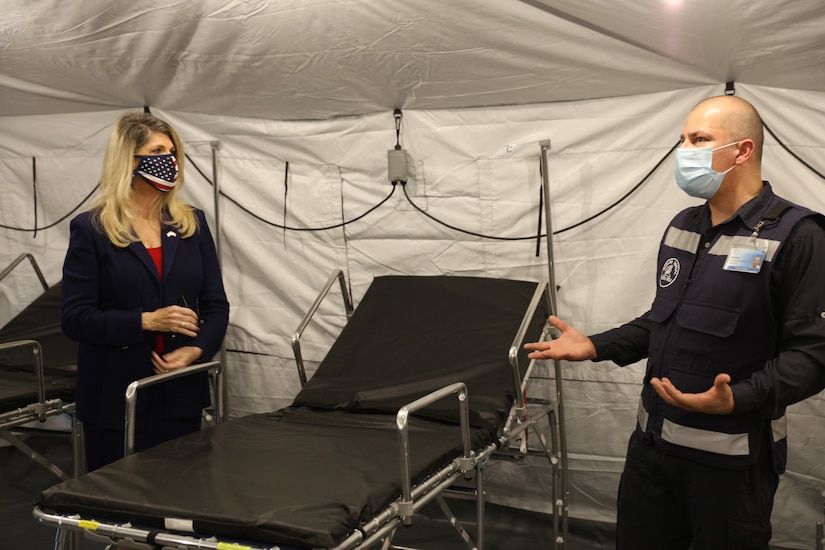
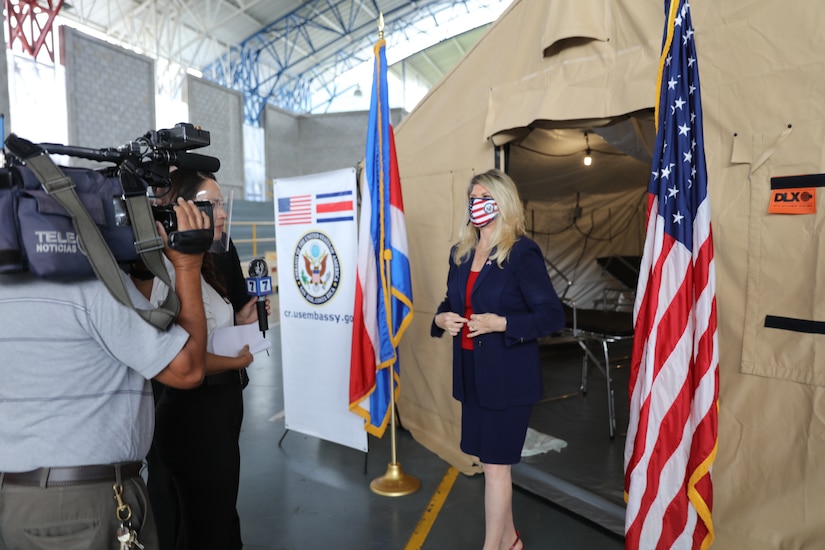
U.S. Ambassador to Costa Rica Sharon Day delivered three field hospitals, donated by U.S. Southern Command, to the Costa Rican government during an official donation ceremony in San Jose, Costa Rica, Aug. 21, 2020.

The donation, made on behalf of the American people, cost $1.1 million and was made possible as part of Southcom's ongoing assistance to nations responding to the COVID-19 pandemic in Central America, South America and the Caribbean and funded through the command's Humanitarian Assistance Program.

Ambassador Sharon Day, wearing a mask, stands inside a donated field hospital.

The field hospitals will be delivered to the Caja Costarricense del Seguro Social, the Costa Rican government agency that provides public health services nationwide.

A team of civilian trainers will instruct personnel on how to assemble, set up, use, disassemble, transport and stow the portable hospitals.

Earlier this week, the command also delivered the first of two field hospitals it will be providing to the Dominican Republic.

In total, Southcom will supply 24 field hospitals to 11 countries in the coming weeks.

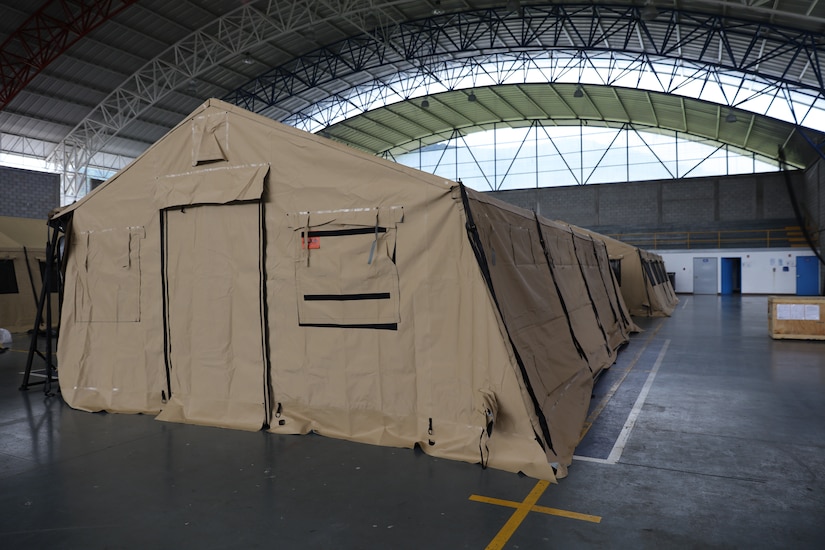
The transportable hospitals will support community health care systems experiencing a high volume of confirmed COVID-19 cases. Although each donation will be based on host-nation needs, most field hospitals will be equipped with generators and air conditioning equipment. They will be delivered ready for the requesting governments to staff, equip and operate. Each field hospital can accommodate up to 40 patient beds.

A field hospital on display in a hangar.

Southcom's support to COVID-19 response and mitigation efforts began in late March, as the first signs of COVID-19 infections emerged and nations requested assistance from the U.S. government.

The first phase of Southcom's assistance focused on supporting the countries’ immediate response to the pandemic by providing much-needed resources, procured locally, to first responders and health care providers on the front lines. During that initial phase, more than 80 HAP projects donated personal protective equipment, consisting of N-95 masks, gloves, face shields, protective coveralls and disposable aprons. Medical supplies, medical equipment and COVID-19 testing supplies were also donated during the initial phase.

The field hospitals are among the donations funded in the second phase of Southcom's assistance to the region, which is focused on supporting the region’s long-term preparedness and prevention efforts.

To date, the command has funded more than 290 HAP projects, purchasing more than $16 million in supplies, equipment and other vital resources to support the COVID-19 response and mitigation efforts of 28 nations. In total, the U.S. government has provided more than $135 million in COVID-19 response assistance to the region.

Ambassador Sharon Day stands outside a field hospital and talks to the media.

HAP helps partner nations build their disaster readiness, response and mitigation capabilities. The program funds infrastructure, equipment and training to help nations prepare before disasters and crises strike, but also supports countries who request assistance from the U.S. government when they experience health and weather-related emergencies.

COVID-19 assistance projects are funded under HAP to support requests from partner nations for supplies and equipment needed to respond to the virus outbreak, treat infected patients and prevent additional exposures. The State Department and U.S. Agency for International Development review the projects and concur with their proposed assistance before they are approved. All COVID-19 assistance items donated under the program were purchased from host-nation or regional suppliers with no impact on the Defense Department’s force health protection supply chain.

The countries currently assisted by HAP are Antigua and Barbuda, Argentina, Barbados, Bolivia, Brazil, Chile, Colombia, Costa Rica, Curacao, Dominica, the Dominican Republic, Ecuador, El Salvador, Grenada, Guatemala, Guyana, Haiti, Honduras, Jamaica, Panama, Paraguay, Peru, St. Kitts and Nevis, St. Lucia, St. Vincent and the Grenadines, Suriname, Trinidad and Tobago and Uruguay.

Michigan National Guard Continues Community Based COVID-19 Testing

 Aug. 28, 2020 | BY Army Staff Sgt. Tegan Kucera

Once again, the Michigan National Guard has brought COVID-19 testing to communities across the state, focusing on the towns of Three Rivers, Baldwin and Newaygo, Aug. 13-14, 2020.

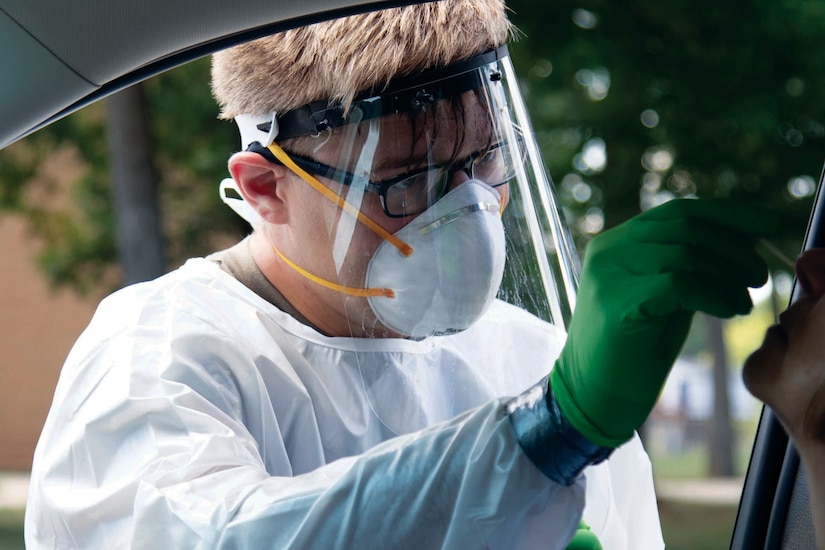
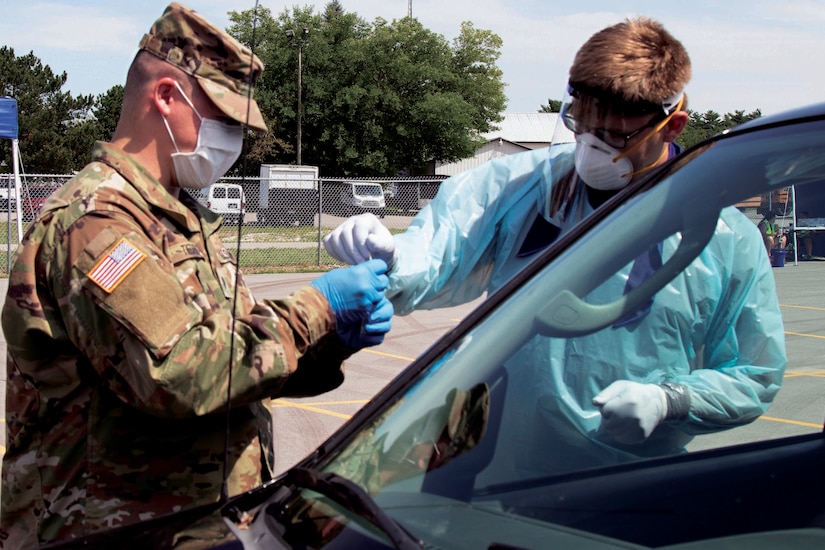
The Michigan National Guard's Task Force 182 was in all three communities providing drive-thru testing.

A soldier in personal protective equipment conducts a drive-thru COVID-19 test.

"I believe these missions are important to the public," said Army Spc. Nathan McCann, a medic with the task force. "It helps ease the minds of some, knowing that there's constant statewide testing going on."

McCann is new to the testing teams, filling in for others who had to get back to their homes and families after several months on the job. Before joining the testing teams, he was involved in COVID-19 relief activities at the regional care center and at food banks, helping many people within the state in a variety of ways.

"We are always here and ready to help with whatever we can," McCann said.

Also new to the testing teams, Army Spc. Corjon Wright had been on his annual training before receiving orders to help out.

Soldiers wearing masks and personal protective equipment conduct drive-thru COVID-19 tests.

"Doing this is just a benefit for the community, it was great to see that people were willing to come out and get tested," Wright said.

Wright was in Three Rivers, where he said the event was more successful than he expected.

"I was surprised by the overwhelming response," he said.

Army Sgt. Austin Topolski, a task force team leader, has been part of the testing teams from the beginning and has had to set some of the best practices and policies for quick and safe tests. He decided to stay on the mission and help guide the soldiers who are now coming onto the mission, and to help the testing mission stay strong within the state.

A soldier wearing personal protective equipment conducts a drive-thru COVID-19 test.

"We want to stay strong enough to consistently do the mission for the state of Michigan, keeping us viable and busy," Topolski said.

A Marine before he became a member of the National Guard, Topolski knew what it meant to serve his country. Now he has also had the experience of serving his community as a citizen-soldier, an integral part of the guard's mission.

(Army Staff Sgt. Tegan Kucera is assigned to the Michigan National Guard)

Readout of Secretary of Defense Dr. Mark T. Esper's Meeting With the President of the Republic of Palau and Other Members of his Cabinet

 Aug. 28, 2020


Today, Secretary Mark T. Esper became the first Secretary of Defense to visit Palau. Secretary Esper met with the President of the Republic of Palau and other members of his Cabinet. The two leaders reinforced the importance of the Compact of Free Association and exchanged views on current regional security issues and concerns. Secretary Esper and President Remengesau emphasized their support for the ongoing negotiations to extend the Compact, and they expressed a desire for continued progress and a swift conclusion of the talks. Both leaders agreed to continue coordination of maritime domain awareness activities and reaffirmed their support of USINDOPACOM posture priorities. Furthermore, the two discussed cooperation to uphold a Free and Open Indo-Pacific, and in this context, they stressed the importance of all nations upholding international rules and norms and respecting the sovereignty of all regional countries, no matter their size. 

Thursday, August 27, 2020

Halsey Horizon


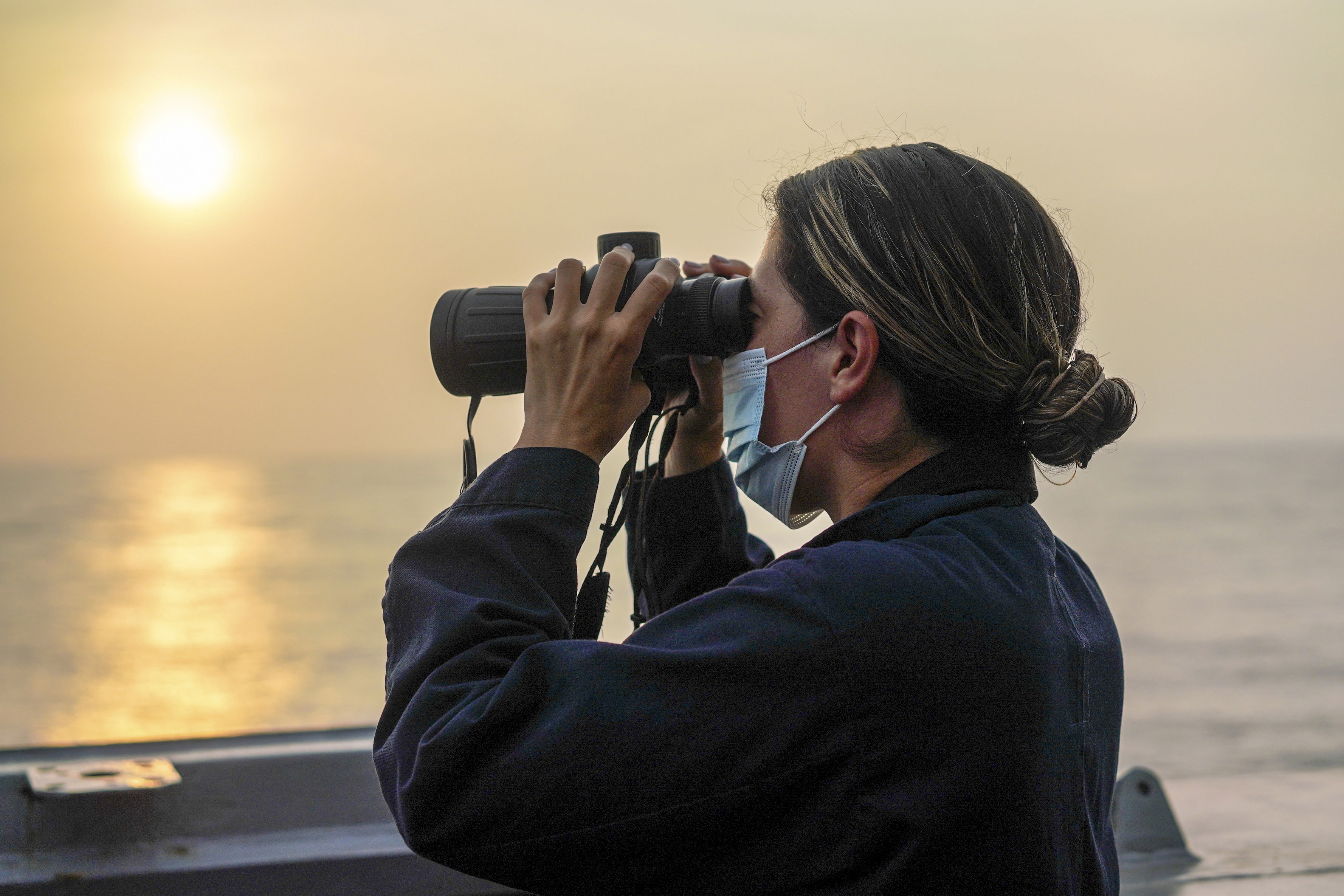
Navy Lt. Mari Eves observes a surface contact from the starboard bridge wing of the USS Halsey in the East China Sea, Aug. 26, 2020, as the guided missile destroyer supports security and stability in the Indo-Pacific region.