CAMP LEJEUNE, N.C. — A sadness radiated as veterans from
past battles stood proud with warriors still in uniform, watching as
the last set of tanks left Camp Lejeune for the very last time. U.S.
Marines with 2d Tank Battalion, 2d MARDIV waved goodbye one final time
to M1A1 Abrams main battle tanks at Camp Lejeune, North Carolina, July
31, 2020.
“It’s Hard to see them go away. I grew up in tanks, I became a man in
tanks,” said Sgt. Reginald Davenport, a tank commander with 2d Tank
Battalion, 2d Marine Division (MARDIV). “Pretty much everything I
learned about being an adult, I learned from someone in tanks.
The ceremony was attended by current active duty Marines of the
battalion and Marines whom served in the past. In accordance with Marine
Corps Force Design 2030, 2d Tank Battalion is being deactivated after
79 years of service to optimize the Marine Corps’ ability to conduct
naval expeditionary warfare. This moment, although bittersweet to many,
is the next step in the transition of the Marine Corps into a lighter,
more reactive force.
“We must divest of legacy capabilities that do not meet our future
requirements, regardless of their past efficacy,” noted Gen. David H.
Berger, 38th Commandant of the Marine Corps. “There is no piece of
equipment or major defense program that defines us.”
Berger said the new force design is his main priority and that it will
secure the Marine Corps’ spot as the world’s premiere warfighting
institution. As 2d Tank Battalion continues the process of deactivation,
hopes for a future for tanks prevails among tankers.
“It breaks my heart knowing that the legacy of Marine Corps tankers will
not live on,” said retired Master Sgt. Jason Pittsley, a veteran of 23
years and former Marine Corps tanker.
For many the reality did not sink in until this morning as they watched the tanks slowly roll away on the railroad tracks.
“This is the moment it actually hit me like tanks is really going away,
there’s no stopping it now, it’s real after this,” said Davenport.
As for the dedicated tankers of the “Iron Horse Battalion” of 2d MARDIV,
they will be given the opportunity to move into other military
occupational specialties in the Marine Corps or continuing with tanks in
other branches. Leaving behind the long tradition of 2d Tank Battalion
won’t prove easy for many but the leadership of the battalion is set to
ensure the Marines are well taken care of.
“There are Marines who have fought and died in these tanks; however,
these Marines will transition from here to different careers and do
wonderful things. It’s a new beginning and I’m happy for them,” said Lt.
Col Matthew A. Dowden, commanding officer, 2d Tank Battalion. “I’m
anxiously waiting for what’s in store for these Marines because it’s not
about the tanks, it’s about the tankers.”
Saturday, August 01, 2020
2d Tanks roll away


Violent, loud and decisive: A Gulf War veteran recalls his time in the desert, 30 years later
 Story by Staff Sgt. Zachary Sheely, 100th Missile Defense Brigade
Lehtonen was stationed in Baumholder, Germany, as a Howitzer gunner with Charlie Battery, 2nd Battalion, 29th Field Artillery, 8th Infantry Division, and said he remembers the overwhelming feeling that he and his fellow troops were ready to fight.
“Being in Germany at the time, the (Berlin) Wall had just fallen and we were prepared,” said Lehtonen. “That’s what our life was – preparing to go to war. I’ll never forget once we got the alert, as we were loading all of our gear in the motor pool, the battalion commander came to us and said, ‘I bet you guys think this is real now.’
“I remember thinking, ‘I always knew this was real,’” Lehtonen said. “That’s the mentality we had there. It was combat readiness at a very high level at that time.”
Now, Lehtonen serves as the senior military operations analyst contracted to support the 100th Missile Defense Brigade (Ground-based Midcourse Defense) in Colorado Springs. He retired from the Army in 2017 as the command sergeant major of the Field Artillery – the senior enlisted leader to thousands of Field Artillery Soldiers – following a 32-year career.
He served in many roles throughout his career across the globe and on multiple combat deployments, but cited his experience in Operation Desert Shield/Desert Storm as foundational to his life and Army career.
Some old photos and a threadbare and stained American flag are all that remain from his time in the Gulf. However, 30 years later, Lehtonen is filled with memories from that brief, but critical battle. Operation Desert Shield was the effort of a coalition of 35 nations to defend Saudi Arabia from Iraqi aggression. In the months to follow, Desert Shield transitioned to Operation Desert Storm, the combat phase of the Gulf War in which the allied coalition forces, led by the United States, liberated Kuwait.
Desert Storm began in the air in January 1991 with the relentless bombing of Iraqi strongholds in Kuwait. The subsequent ground war lasted a mere 100 hours from the start of the assault Feb. 24, 1991, until a cease-fire ended the fighting on Feb. 28. It was a conclusive victory for the U.S.-led coalition.
“When the ground war kicked off, it was violent, loud and decisive,” said Lehtonen. “There was a lot of artillery firing and moving at night. You’re with your section and the battery you’ve been training with. It was the culmination of years of hard training.”
He left a wife and young son back home, and remembers the quiet moments when his mind would wander, but credits his leaders for keeping him focused on the mission.
“There are times when you think of the worst, but I had great leadership,” said Lehtonen. “My section chief, retired Command Sgt. Maj Thomas Miller, then a staff sergeant, told us to give ourselves credit. Instead of thinking something bad can happen to us, he encouraged us to know it's the other guys who should be worried.
“This is a fight,” he said. “We were bad. I’m telling you we were bad. And we proved that.”
Lehtonen and his battery were part of the “left hook” ordered by Army Gen. Norman Schwarzkopf to cut off Iraqi retreat and confront the Republican Guard forces in Kuwait. During Desert Shield, Lehtonen said that U.S. military personnel were ordered not to fly the American flag, but that quickly changed at the onset of Desert Storm.
“We were not an occupying force,” he said. “We were told not to display the U.S. flag at first, but when the ground war kicked off, there were American flags going up everywhere. There was an incredible sense of pride, power and unity, not only with Americans, but also our allied forces.”
Lehtonen affixed a small flag to the M109A2 self-propelled Howitzer he was assigned, where it flapped as his battery traversed hundreds of miles of barren desert framed by a blackened sky, blotted out by Iraqi military forces setting fire to Kuwaiti oil wells. He preserves it to this day in a sealed Ziploc bag, frayed, but no less treasured.
“This was before we wore the American flag on our uniforms,” he said. “Seeing the flag over there was a reminder that I was a part of something bigger than myself. To be able to look at this flag today and touch it is amazing to me. All the memories come flooding back when I hold it. I feel like I am part of the American flag and it is part of who I am”
Many of the senior military leaders at the time were Vietnam veterans, which Lehtonen believes helped shape the battle and also the sentiment among Americans back home.
“I’ll never forget the first time I heard the National Anthem when we got back; ‘The rocket’s red glare and bombs bursting in air.’ I lived that. I was delivering that. And it was coming back at us. It was like, ‘Now I get it.’”
Lehtonen said he gained immense trust and respect for military and civilian leaders during the Gulf War that lives with him to this day.
“We’re in the middle of the desert,” he said. “We didn’t have a return date set, but we were told we wouldn’t be there any longer than we needed to be. Sure enough, we did our job and didn’t spend an additional day there before we were sent home.”
Though he briefly considered leaving the Army following his return from the Gulf in the summer of 1991, Lehtonen said the feeling was short lived.
“I could have gotten out soon after we redeployed back to Germany,” he said. “But I couldn’t bring myself to walk away. It was the people. The Soldiers, leaders and civilians who inspired me to stay. How can you not want to be part of this organization?”
Readiness Division's virtual farewell brings 'Family' together
 Story by Sgt. Alexandra Shea, 319th Mobile Public Affairs Detachment
“This is challenging,” Jones said of the current times. “We all have to wear face masks and the people we love can't be here.”
His two daughters tuned into their father's ceremony as it was live streamed on Facebook by the 81st RD. They were joined by the rest of the “Wildcat Family,” who largely are working remotely to help win the battle against the COVID-19 virus.
The U.S. Army Reserve Command Deputy Commanding General Maj. Gen. A.C. Roper was unable to attend the ceremony in person due to travel restrictions. In his stead he recorded a personal message that was played during the ceremony. While Roper virtually hosted the ceremony, Commanding General of the 80th Training Command Maj. Gen. Bruce E. Hackett presided in person.
“It's important that we conduct this ceremony because it represents over 100 years of Army tradition,” Roper said in his video. “Today, it is with great pride that we recognize Ken Jones who has done an amazing job of leading this division through some turbulent times during our most important transformation, command and control re-balance.”
Roper continued by thanking Jones, theWildcat Nation and the Jones Family for their support and service throughout the transformation.
As Roper's video came to a close, Jones approached the podium to give his final remarks, his last official act as he relinquished command to Ricciardi.
“Ricciardi is the deputy commanding general of this command and will be taking the baton here today,” Jones said. “He is the man that will lead this command until another is chosen to take this command. Joe, I know you are ready to lead and I thank you for what you are going to do for this command.”
Jones continued his speech by thanking those who impacted and influenced his life and career. He also addressed the Soldiers of the Wildcat Nation thanking them for their continued dedication and service as the division transformed over the past few years. The mission to provide responsibility of base operations for 81st RD's footprint across nine southeastern states, Puerto Rico and the U.S. Virgin Islands, while ensuring units and Soldiers are prepared to deploy and fight in multi-domain operations for current and future Combatant Commander Force requirements.
“I'm humbled to assume command of the storied 81st Readiness Division,” Ricciardi said. “Together with the great Soldiers and civilians of the Wildcat Division, we look forward to continuing the momentum on the transformative initiatives that Maj. Gen. Jones has started.”
Ricciardi also said the Wildcats were setting the stage for a smooth transition when a commander is chosen and arrives to continue the work the 81st has begun.
As the ceremony came to a close, Jones gave his heartfelt thanks to those closest to him, his Family. He thanked his wife Cheryl for the past 44 years of support to help pursue his career while helping to raise their two daughters Allison and Amanda.
Cheryl stood at his side during the relinquishment ceremony in addition to his retirement ceremony held the day before.
“I've had to watch you grow up from afar,” Jones said to his daughters, his voice catching. “I want to thank you for your love and support. I wouldn't be where I am in my career today without Cheryl being there for the past 44 years. You all know who the real general is now. Thank you ... Wildcat Six signing off.”
US Navy’s first Black female tactical air pilot earns Wings of Gold in Texas
 Story by Lt. Michelle Tucker, Chief of Naval Air Training
Virginia native Lt. j.g. Madeline G. Swegle was designated a naval aviator and received her Wings of Gold with 25 classmates during a small ceremony at Naval Air Station (NAS) Kingsville, Texas.
Swegle is assigned to the “Redhawks” of Training Squadron (VT) 21 under Training Air Wing 2 at NAS Kingsville and completed her final undergraduate TACAIR training flight in a T-45C Goshawk jet trainer aircraft July 7. VT-21 Commanding Officer Cmdr. Matthew Maher presented Wings of Gold to each of his graduates during the ceremony.
Amidst the Navy’s response to the global pandemic, instructors and students adjusted to COVID-19 spread mitigation measures including sterilizing surfaces, wearing masks, and social distancing when practical. Despite these challenges, this is the largest graduating class of strike aviators in almost a decade.
Chief of Naval Air Training Rear Adm. Robert Westendorff oversees all undergraduate flight training from the command headquarters at NAS Corpus Christi, Texas.
“We are all incredibly proud of Lt. j.g Swegle and the entire class,” Westendorff said. “This is a wonderful personal achievement but also a testament to their dedication and drive to succeed in the tactical air training pipeline. I wish them all every success at the next level learning to fly our fleet aircraft.”
A 2017 U.S. Naval Academy graduate, Swegle reported to Naval Aviation Schools Command at NAS Pensacola, Florida, where she completed Initial Flight Screening and Aviation Preflight Indoctrination. She completed Primary flight training with the “Boomers” of VT-27 at NAS Corpus Christi, and after selecting the TACAIR, or Strike, pipeline, Swegle progressed to Intermediate and Advanced training with VT-21.
Swegle is part of a new generation of TACAIR pilots to qualify on state-of-the art Aircraft Launch and Recovery Equipment (ALRE) unique to aircraft carrier USS Gerald R. Ford (CVN 78): the Electromagnetic Aircraft Launch System (EMALS) and Advanced Arresting Gear (AAG). She completed carrier qualifications in the Atlantic Ocean off the Florida coast, May 20.
“I’m excited to have this opportunity to work harder and fly high performance jet aircraft in the fleet,” Swegle said. “It would’ve been nice to see someone who looked like me in this role; I never intended to be the first. I hope it’s encouraging to other people.”
Chief of Legislative Affairs Rear Adm. Sara Joyner, a career naval aviator, served as guest speaker for the ceremony via teleconference.
“I’m incredibly proud of Lt. j.g. Swegle and her classmates and am excited to welcome them all to the fleet,” Joyner said. “There’s more work to do to make sure that we recruit, train and retain a diverse force that represents the best and brightest of this nation. Everything in Naval Aviation requires teamwork, and you will be judged by your professionalism, demonstrated capability, and leadership.”
Swegle and her classmates will advance to graduate-level flight training at their respective fleet replacement squadrons. Specific platform selection for the TACAIR training pipeline (F/A-18 Super Hornet, EA-18G Growler, or F-35C Lightning II) typically occurs shortly before the winging ceremony. Swegle will report to the “Vikings” of Electronic Attack Squadron (VAQ) 129 at NAS Whidbey Island in Washington to begin training as an EA-18G Growler pilot. VAQ-129 trains new naval aviators, naval flight officers, and naval aircrewmen in electronic warfare tactics, techniques, and procedures in preparation for their fleet assignments.
Swegle follows in the footsteps of Brenda E. Robinson, the Navy’s first African American female naval aviator. Robinson earned her Wings of Gold June 6, 1980 and was the 42nd woman to be designated a naval aviator.
“Lt. j.g. Swegle has proven to be a courageous trailblazer,” Commander, Naval Air Forces Vice Adm. DeWolfe “Bullet” Miller III said. “She has joined a select group of people who earned Wings of Gold and answered the call to defend our nation from the air. The diversity of that group—with differences in background, skill and thought—makes us a stronger fighting force.”
Chief of Naval Air Training trains the world's finest combat quality aviation professionals, delivering them at the right time, in the right numbers, and at the right cost to a naval force that is where it matters, when it matters.
For more news from Chief of Naval Air Training, visit www.navy.mil/local/cnatra/ or www.cnatra.navy.mil. Get more information about the Navy from U.S. Navy facebook or twitter.
From Satellite Beach to commanding a satellite brigade
 Story by Staff Sgt. Aaron Rognstad, U.S. Army Space and Missile Defense Command
PETERSON AIR FORCE BASE, Colo. -- U.S. Army Satellite Operations
Brigade hosted a virtual Change of Command between Col. Tonri C. Brown,
outgoing commander, and Col. Stephen Parrish, incoming commander, July
31. Parrish, who just happened to be born near the central Atlantic coastal beach town of Satellite Beach, Florida, now steps into command of the Army’s only Satellite Operations Brigade, comprising active and Reserve component Soldiers, Department of the Army civilians and Australian military and civilian employees.
“Our Soldiers and civilians represent the best in the Army and space community,” said Parrish in his ceremony speech. “Their intellect, their passion to succeed in their mission, and their professionalism are unmatched.”
Parrish recently earned a Master of Strategic Studies from the Air War College at Maxwell Air Force Base in Montgomery, Alabama – his previous assignment in his 23-year career.
Prior to that he was the chief, Space Concepts Integration Officer for the Capability Development Center and Mission Command Center of Excellence at Fort Leavenworth, Kansas, 2017-2019.
Parrish deployed in support of Operation Iraqi Freedom and earned a Bronze Star for his role as the theater linguist manager and chief, Counter Vehicle-Borne Improvised Device Task Force, Multi-National Forces, Baghdad, Iraq.
Brown, who served as the leader of the brigade for two years, expressed gratitude for his time leading the brigade.
“It has been an absolute honor and privilege to serve as your brigade commander,” Brown said to his former staff in his ceremony speech. “I enjoyed every single day.”
The U.S. Army Satellite Operations Brigade, which stood up May 1, 2019, consolidates all assigned satellite communication missions under a new major subordinate element to align for efficient command and control. It provides military satellite communication support globally through operations at all elements of the Department of Defense, U.S. government agencies and U.S. allies and partners.
Parrish is the brigade’s second commander.
“Thank you for your trust in me to lead this brigade,” Parrish said to his commanding officer, Lt. Gen. Daniel L. Karbler. “Thank you for the excellent transition and support.”
Due to COVID-19 protocols, the ceremony was recorded and shared with hundreds of viewers who watched worldwide.
Change of Command for Georgia’s 170th MP BN
 Story by Maj. William Carraway, Georgia National Guard
“Under Lt. Col. Rowell’s engaged leadership (this battalion) has met every challenge head-on and has been successful at every turn,” said Col. Alexander McLemore, commander of the Marietta-based 201st Regional Support Group. “These incredible Americans have left their mark on history, the National Guard and the nation.”
Keith assumes command of a battalion that traces its lineage to the 19th century. Keith has served in roles of increasing responsibility at National Guard headquarters in Arlington, Va. and in U.S. Army Europe. She commanded an MP company in Iraq and deployed to Afghanistan as the executive officer for Joint Task Force Biometrics. In addition to overseas deployments, Keith’s domestic operational experience includes humanitarian missions following Hurricane Katrina and with Task Force New Horizons in Guatemala.
“Lieutenant Colonel Keith comes highly recommended from many, including one of our own, (Former Adjutant General) Maj. Gen. Joe Jarrard,” said McLemore. “She has come a long way from Iowa, through Michigan, Missouri and Germany to get here… I am confident she will serve this unit well.”
Outgoing commander, Lt. Col. Copeland J. Rowell assumed command of the 170th MP Battalion in March 2018 and led the Soldiers through the Georgia National Guard’s response to Hurricane Michael later that year. In 2019, the 170th MP BN supported exercise Agile Spirit in the country of Georgia and was activated in anticipation of Hurricane Dorian response missions. Since March 2020, Soldiers of the 170th MP BN have been actively engaged in the coordinated response to the Coronavirus and have also been called to active service in response to civil unrest in Atlanta.
“Command of the 170th MP Battalion has been the most rewarding experience of my military career,” said Rowell. “Soldiers of this battalion have had more unique experiences in the past two years than most Soldiers may receive over their entire career.”
Rowell noted several of the accomplishments of the battalion over the years including multiple rotations at the Joint Readiness Training Center and National Training Center. Over the course of the COVID-19 response effort, 170th MP BN Soldiers have provided security for quarantine facilities, manned test sites, and deployed mobile infection control and testing teams to serve citizens across the state.
Keith assumes command at a pivotal time in the battalion’s history.
“Since World War II, this unit has undertaken numerous state activations and served in Desert Shield, Desert Storm and the War on Terrorism,” said Keith. “You have responded to state disasters, and most recently COVID-19, and it is an absolute honor to join the history of such exceptional enlisted, non-commissioned officers, warrant officers and officers.”
Governor Gretchen Whitmer Joins Michigan National Guard for Pass and Review Ceremony at Camp Grayling
 Story by Capt. Andrew Layton, Michigan National Guard
"I'm honored to be a part of this ceremony and celebrate our dedicated Michigan National Guardsmen and women," said Governor Whitmer. "This year especially, the Michigan National Guard has responded to multiple crises with honor and dedication to help aid communities across our state.”
The Pass in Review Ceremony is a time-honored tradition of the Michigan National Guard during which accomplishments of the previous calendar year are acknowledged, outstanding performers are recognized, and deceased and fallen members of the Michigan National Guard are honored.
“Today we gather to pay solemn respect to those Michigan National Guard members who have passed in the last twelve months; in their honor, we also celebrate the accomplishments of the Michigan National Guard during this historic year of 2020, assisting communities across the state with professionalism and exceptional, compassionate service,” said Maj. Gen. Paul Rogers, Adjutant General and Director of the Michigan Department of Military and Veterans Affairs. “Additionally, we recognize the successful completion of Northern Strike 20 here at the National All-Domain Warfighting Center. The work we do here sets conditions for future readiness of the joint force, and is incredibly relevant to our national security.”
The Michigan National Guard has a long-standing reputation for mission success, which has never been more true than in 2020. Even while hundreds of Soldiers and Airmen are deployed supporting overseas missions, the Michigan National Guard has been an important part of emergency operations across the state, including COVID-19 response missions, recovery operations after the Edenville and Sanford dams failed in May, and community support to ensure the right to peacefully protest in the face of civil unrest.
Over the last two weeks of July, the Michigan National Guard has hosted Northern Strike 20, a premier joint fires readiness exercise, at Camp Grayling and Alpena Combat Readiness Training Center. With nearly 148,000 acres of combined training space, the pristine training facilities of the Michigan National Guard are being renamed the National All-Domain Warfighting Center in acknowledgement of the crucial support these locations in Northern Michigan contribute to the U.S. National Defense Strategy.
Edwards AFB firefighters conduct search and rescue training during foam test
 Story by Giancarlo Casem, 412th Test Wing Public Affairs
Firefighters from the Edwards Fire and Emergency Services conducted a
search and rescue training session during a foam fire suppression test
at Edwards Air Force Base, California, July 23.Remembering a 101-year-old legacy

A memorial service was held on base to remember and pay
tribute to the life-long service and legacy of the director of retiree
affairs for Barksdale, July 31, 2020.
Retired Col. Steven L. dePyssler, who served 38 years in the U.S. Army
Air Corps and the Air Force, and the past 41 years volunteering with the
retiree affairs department, passed away July 25, 2020.
He is believed to be the only known American to have served in World War
II, the Korean War, the French Indo-China War, the Bay of Pigs Invasion
and the Vietnam War. He celebrated his 101st birthday just four days
before his passing
The ceremony consisted of guest speakers who spoke on his
accomplishments, his many years of dedication to the Air Force, to the
state of Louisiana and the Barksdale community. Barksdale’s honor guard
provided the military funeral honors.
“He represents the sacrifice [and] the dedication that is the best of
humanity - what we should all want and desire to achieve in our own
lives,” said Retired Air Force Col. Michael Dilda, president of the
Ark-La-Tex chapter of the Military Officers Association of America and
close friend to dePyssler, during the ceremony. “Steve represented an
infinite view of the game of life. The infinite view is one that's
characterized by a never ending desire to improve. A unique legacy spent
over a career of helping others. It was my advantage and distinct
pleasure to have the opportunity to work with him and get to know him -
to have him call me a friend.”
Since dePyssler was such an influential figure, a decision was made to
memorialize his life forever at Barksdale. Last year, during his 100th
birthday celebration, a building renaming was announced to pay tribute
to him. Then in November of 2019, the newly established Col. dePyssler
Mission Support Group building was unveiled.
During the memorial service, Dr. Bruce dePyssler, son of dePyssler,
offered the final remarks. Thanking multiple people in and around base
for all they have done for his family and telling stories from his life
growing up with his father.
“He was loyal to his wife, to his family, to his troops, to the vets, to
the Air Force and to the beloved country,” Dr. dePyssler said as he
began to be stricken with emotion. “He is fair. He is open. He accepted
others.”
“I do not know what natural and divine forces were conjured up to give
us this life, this consciousness that we have. This ability that we have
to hope, and love, and suffer. This ability to know what we do and do
not know. This ability to shape our destiny in large and small ways,”
Dr. dePyssler added. “One thing I do know is that I learned from my
father that this gift of life and consciousness is not something to be
squandered.”
dePyssler held every enlisted, warrant officer and officer rank during
his career from the rank of private to colonel. He was awarded the
Legion of Merit Medal four separate times for his outstanding service.
“Col. dePyssler loved all veterans, but his heart was always with the
Air Force and his heart was always with Barksdale,” said Retired Army
Col. Joey Strickland, Secretary of Louisiana Department of Veterans
Affairs, during the ceremony. “His service to veterans brings to mind
one of my favorite quotes. General Omar Bradley in 1948 when he was
serving as the Secretary of Veterans Affairs said, ‘We are dealing with
veterans, not procedures. We are dealing with their problems, not ours.’
That is just what Col. Steve dePyssler did every day. I always knew
that I could count on him for anything I needed to get done for
veterans, especially here in the Northwest.”
While volunteering at the retiree office, he dedicated his time to
helping military retirees, their widows, widowers, parents and children
through the process of obtaining and understanding retirement benefits.
“His goal was, and I quote, ‘to help one person a day, for as long as I
live. That’s my goal, and it has been for years and years and years,’”
said Maj. Gen. Andrew Gebara, Air Force Global Strike Command director
of strategic plans, programs and requirements and former 2nd Bomb Wing
commander, during the ceremony. “Well to do the math, for the amount of
time he was running the retiree affairs office, if you add 365 days a
year, and you have to add 10 for 10 leap years mind you, that means Col.
dePyssler’s goal was to help 14,975 people. And he did. He spent
countless days helping widows navigate the bureaucratic world of the
military life without their spouses. And he worked tirelessly to honor
veterans.”
Although he has passed, generations today and for years to come will
forevermore be able to learn and be inspired through the life and legacy
the retired colonel provided everyday since his enlistment in 1940.
“Steve, we all remember that you were here. We remember that you stood
up for what was right. And you left this world a better place,” Gebara
said as he turned to face dePyssler’s photo on the wall. “I hope you
know that the men and women of Barksdale will miss you. And I will too.”
Friday, July 31, 2020
Army Command Prepares for Hurricane Season in Age of COVID-19
Beginning in March, the Army Reserve's 377th Theater Sustainment Command oversaw a nationwide logistics response effort out of its home station in Belle Chasse, Louisiana, that supported thousands of service members in the fight against COVID-19. The scale of the mission was unprecedented, and required multitiered planning, equipment projection and coordination to achieve. As the response concluded, the command was tasked with a new and far more challenging assignment: preparing for this year's hurricane season in the age of COVID-19.
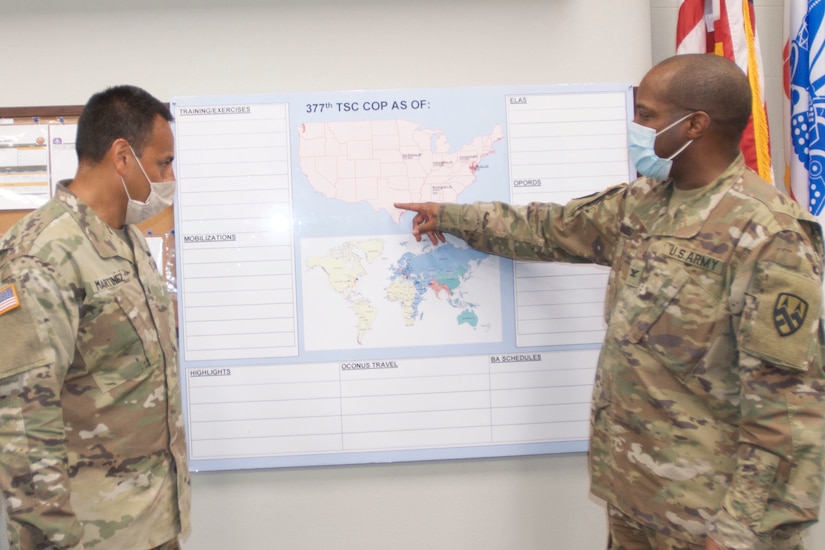
"Not only do we have to respond to a hurricane, we have to do it in a COVID environment, which is more resource- and planning-intensive on all levels to respond to," said Army Maj. David Finn, a plans officer at the command. "We've been planning this for almost two months now in preparation for it and trying to forecast the sustainment requirements to respond to a disaster event."
The command is in uncharted territory, bridging the gap between its traditional role in support of the Army Reserve Command and its newfound role as the lead logistics supplier for U.S. Army North, which supervises homeland defense and defense support to civil authorities missions throughout North America.
Hurricane season traditionally poses a logistics challenge to any supporting agency. The unpredictable path and varying severity of storms make long-term projections for placement of responding assets difficult. Despite this, the plans team has conducted coordination across the country to ensure essential capabilities such as water purification, transportation and medical support are able to respond as quickly as possible to the point of impact.
The partnership with Army North has been an invaluable learning process for Finn and his fellow soldiers, who speak highly of the knowledge and experience the Army North team brought to the fight.
"Working with Army North has been a new experience for me, and it's been a learning experience from the start," he said. "It helps me understand our larger responsibility to national defense and disaster support requirements."
Despite the increased coordination, operating in a COVID-19 environment has caused some limitations to the command's ability to prepare for hurricanes, as opposed to previous years. The annual Hurricane Certification Exercise, a mock scenario-based response staged in areas that are historically vulnerable to hurricanes, was cancelled this year over concerns that personnel could be exposed to COVID-19.
"Hurricane Maria completely overwhelmed Puerto Rico in 2017, so we staged the exercise there last year so we could learn from our shortcomings in the response and address those issues there," said Army Chief Warrant Officer 4 Dorian Bozza, the senior maintenance technician at the 377th Theater Sustainment Command. "Unfortunately because of COVID, there is no certification exercise this year, but we are still planning and coordinating with Army North to continue to monitor the weather and respond."
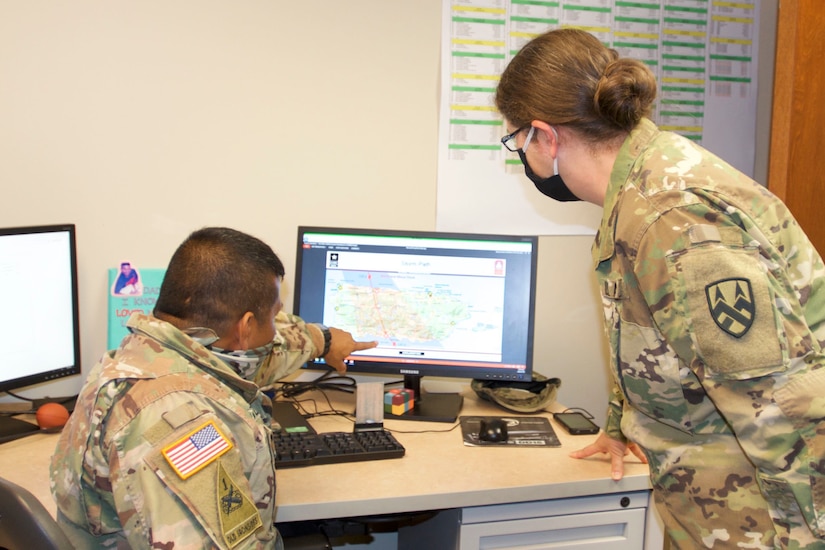
This coordination involves sending a command liaison officer to any state that is facing a potential hurricane landfall. The officer then integrates into the logistics planning process to coordinate with the state and federal agencies to ensure any personnel or equipment requirements are met prior to landfall.
COVID-19 has offered up one benefit to the command, however.
"We have more people now than ever before," Bozza said. "In previous seasons, we had a far more limited staff, but now we have almost the whole [team] mobilized for the hurricanes because of the complexity of responding during COVID-19."
After the loss of the full-scale certification exercise, the command held an extensive rehearsal of concept drill July 9 to demonstrate its capability to respond to Army North at its headquarters at Joint Base San Antonio, Texas. The ROC drill covered a series of potential hurricane landfall scenarios and involved contingency planning for the entire continental United States, Puerto Rico and the U.S. Virgin Islands.
"There's been a lot of preparation time and a lot of rehearsals where we actually practice how we would respond," said Army Col. Reggie Richardson, 377th Theater Sustainment Command deputy chief of staff for operations. "The ROC drill is a way for all teams involved to be mindful of the intent behind the mission and understand what their counterparts are doing during the mission."
With six Atlantic storms already named by the National Oceanic and Atmospheric Administration, the projected busy hurricane season has already gotten off to a quick start. The command has nearly doubled its normal staff in preparation for the season, in tandem with a similar increase in staff at the 4th Sustainment Command (Expeditionary), the subordinate unit assisting the 377th Theater Sustainment Command in its hurricane response mission.
With increased support and the lessons learned from previous hurricane seasons and the COVID-19 response, Richardson expressed nothing but confidence in the command's ability to respond to the hurricanes both effectively and safely.
"We're transitioning to the speed required and dealing with organizations we have not dealt with before," he said. "New people, new teams, new structures and new organizations…but the positive thing is, it's all coming together."
(Army Capt. Matthew Cline is assigned to the 377th Theater Sustainment Command.)
Thursday, July 30, 2020
DOD Medical Officials Outline COVID-19 Testing Approach
Though the rate of confirmed positive COVID-19 tests among those in uniform is lower than that of the nation's civilian population, the most junior service members have a slightly higher rate than that of their civilian counterparts, the medical advisor to the Defense Department's coronavirus task force said.
"From a data standpoint, after adjusting for the age of our force, the confirmed case rate in our active duty service members remain slightly lower than the U.S. average in all age groups except those aged 18 to 24 years old," Air Force Brig. Gen. (Dr.) Paul Friedrichs, who also serves as the Joint Staff surgeon, said at a Pentagon news conference today.
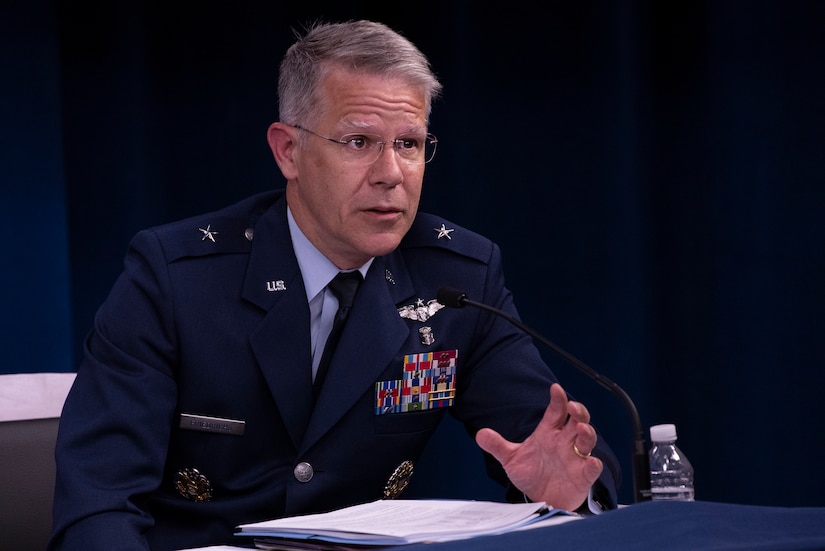
Department leaders, Friedrichs said, believe the slightly higher rate among the youngest service members is due in large part to more testing done within the military — for example, the services test service members at the entry to basic training and at the end of basic training.
"We think that this is a reflection of our commitment to the [Defense Secretary Dr. Mark T. Esper's] first priority of reducing risk to the force and protecting them as they go through performing their duties to protect and defend our nation," Friedrichs said.
Air Force Maj. Gen. (Dr.) Lee E. Payne, assistant director for combat support at the Defense Health Agency and the DOD lead for COVID-19 testing, said the department has increased the amount of COVID-19 testing it does fivefold over the past three months.
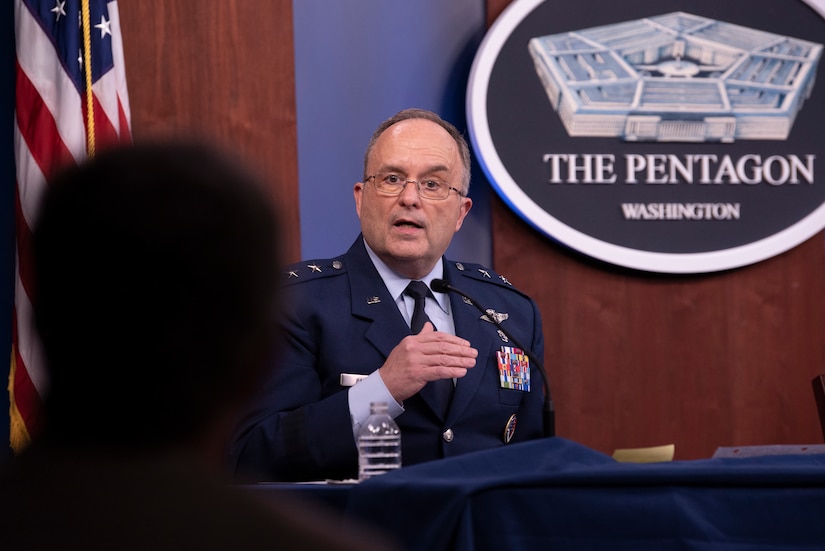
"To date, we've conducted over 540,000 tests since January," Payne said. "And DOD testing capacity has expanded greatly since March." Now, he said, the department has 125 labs certified to test for COVID-19 — up from 15. That greatly expanded testing capacity can do more than 200,000 tests per week if needed, he added. However, the department instead works to meet a goal it set for itself in May to conduct 56,000 tests a week, Payne said.
"Thanks to the tireless work of thousands in the Military Health System, we have met that goal, administering nearly 60,000 tests per week over the last several weeks," he added.
Payne said the active duty positive rate is holding at about 5.3% over the last several weeks. That, he said, is lower than in the civilian population.
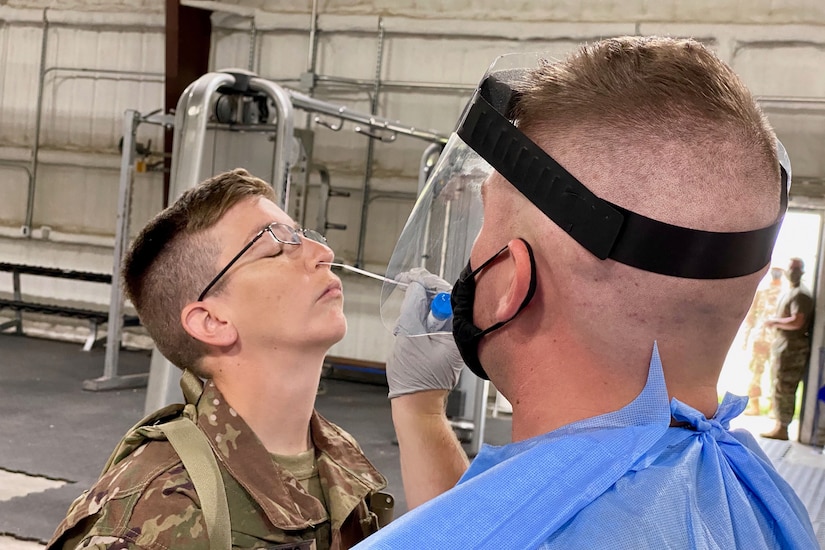
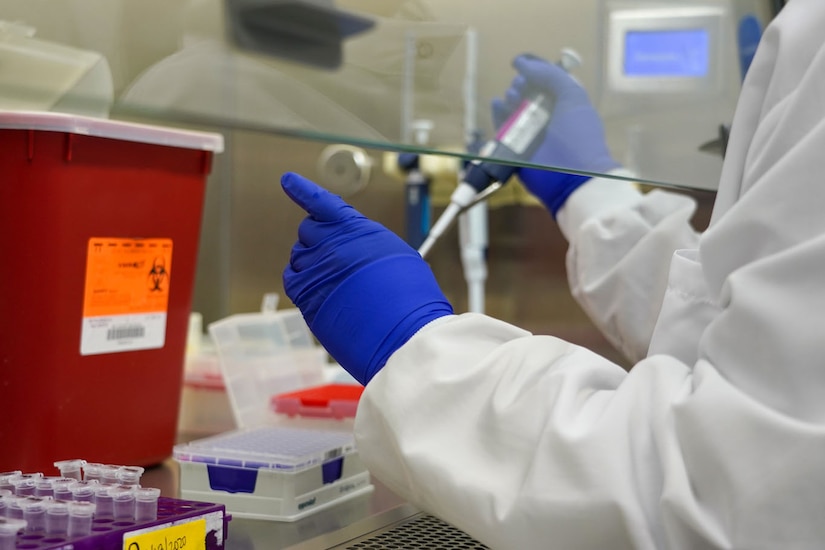
While increased testing and technology efforts such as the "Negative Pressure CONEX" for transporting infected patients on military aircraft while at the same time keeping the crew safe are all important parts of the department's response to COVID-19, and individual efforts are just as important, Friedrichs said.
"The foundation of our response has been and remains both the individual and the collective commitment to those basic public health measures that we've talked about over and over again — things like social distancing, washing hands, [and] wearing a mask," he said. "While not necessarily high-tech, they are incredibly effective, and we're grateful for the support from everyone who's embraced those in order to reduce the risk to the force into the mission."
China, Russia Nearing Status as U.S. Nuclear Peers, Stratcom Commander Says
Speaking today at the Nuclear Deterrence Forum sponsored by the Air Force Association’s Mitchell Institute, Navy Adm. Charles A. Richard discussed the rapid modernization and readiness improvements by Russia and China in both their strategic and conventional military capabilities — and the challenges those improvements pose for the United States.
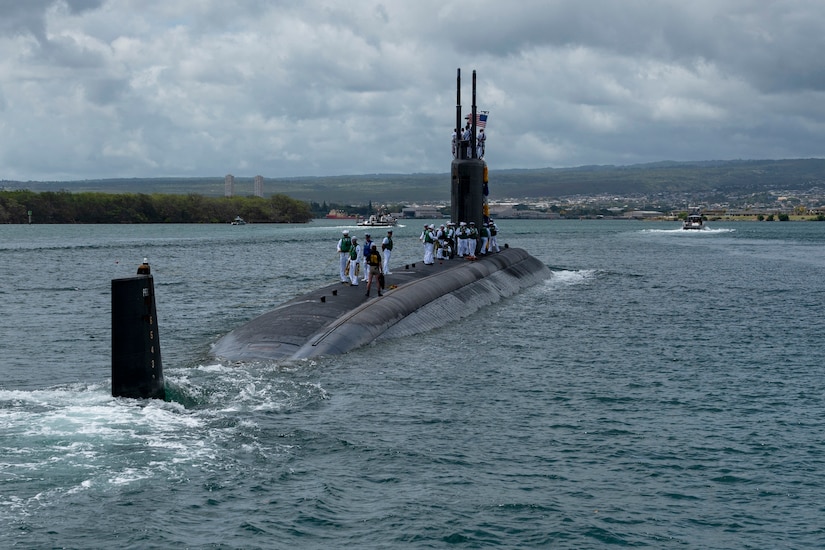
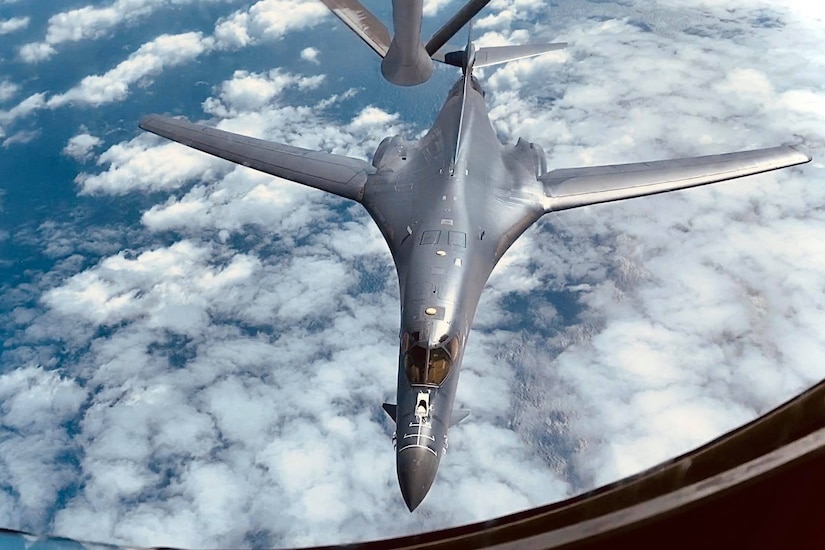
"China is on a trajectory to be a strategic peer to us by the end of the decade. So for the first time ever, the U.S. is going to face two peer-capable nuclear competitors," Richard said, adding that Russia is the other peer. "We have never faced that situation before."
China is in the process of completely building out its own nuclear triad, with the strategic bomber being the last part to be put into place, he said. The other two legs of the triad — intercontinental ballistic missiles and submarines — are already operational.
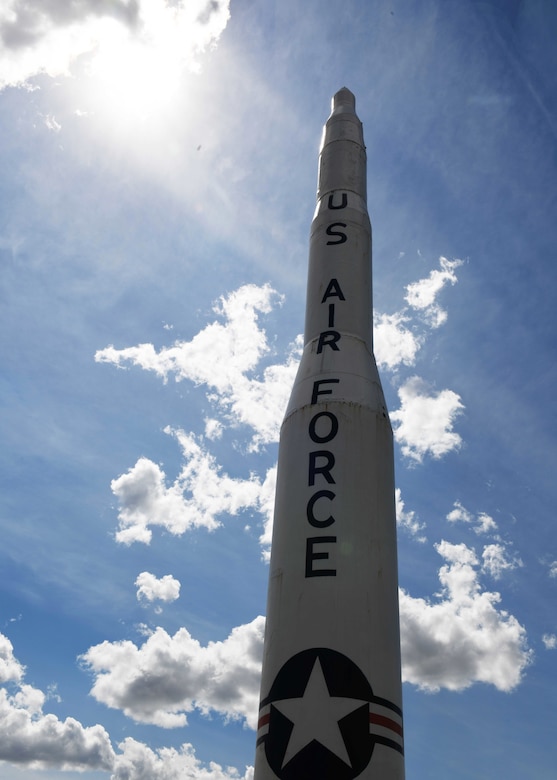
In addition, the admiral said, China is expanding all of its other capabilities, including new command and control systems and new warning systems, as well as conventional readiness and modernization improvements.
In its rapid expansion of across-the-board military capabilities, Richard said, China always goes faster than the United States.
He noted that in 2013, the Chinese didn’t have a coast guard. Today, he said, it has 255 cutters, adding that the coast guard is a perfect instrument to use below the threshold of armed conflict.
Likewise, Richard said, Russia has been modernizing everything over the last 15 years, and that process is about 70% complete. That includes command and control, warning systems, doctrine, as well as improved readiness and competence in conducting exercises, he said.
"The United States and the Department of Defense have not had to consider the full implications of competition through possible crisis and possible armed conflict with a nuclear-capable peer adversary in close to 30 years," he said. "The implications are profound."

The department has good leadership and a good strategy for addressing the situation, in the National Defense Strategy, Richard said. The NDS states that, in conflict, all domains — sea, air, land, space and cyber — will be challenged, he said, adding that it warns that strategic deterrence, which has always been foundational to the rest of the defense strategy, "will be tested in ways that haven't been tested before."
The admiral said that despite the COVID-19 pandemic, Stratcom "did not miss a beat."
"We remained fully mission-capable throughout," he said.
BAMC Nurses: 'It's Us Against COVID'
Many patients are on ventilators or hooked to a myriad of tubes and wires to a heart-lung bypass machine as they battle a virus that has so far claimed more than 145,000 lives in the U.S. alone. In the trenches beside them are the frontline health care workers – technicians, nurses, physicians – who can also be the last line of defense for the most critically ill patients.
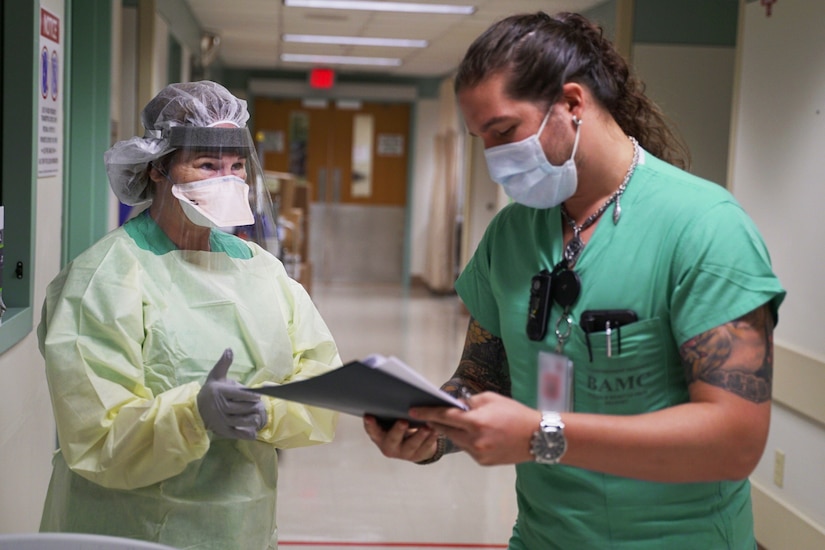
''Dealing with the virus on and off duty, the [personal protective equipment], the long shifts … to be honest, it takes a toll on the staff,'' said Army Lt. Col. Trisha Bielski, chief of critical care nursing services. ''I couldn't be prouder of my team and the job they've done in incredibly challenging circumstances.''
Bielski oversees hundreds of critical care nurses working in BAMC's four dedicated COVID ICUs. Currently, her attention is focused on 3S, an inpatient ward that’s been transformed from a cardiac unit to a COVID-dedicated ICU reserved for some of the city's most critically ill patients. Her nurses are tending to several patients on ventilators along with six patients on extracorporeal membrane oxygenation, or ECMO, a heart-lung bypass treatment for patients unresponsive to a ventilator or less invasive measures.
Over the past few weeks, BAMC has taken on additional civilian trauma patients and doubled its ECMO capacity to treat more of the most critically ill COVID-19 patients to help ease the burden on other hospitals, Bielski explained. While BAMC primarily cares for military beneficiaries, as part of its Level I trauma center mission, a special secretarial designee status enables the hospital to accept civilian ECMO patients and trauma patients in coordination with the city.
A Unit Transformed
In recent months, COVID-19 and the expanded ECMO mission have transformed 3S from a bustling inpatient ward into an equipment-laden area devoid of the chatter of family and friends. The nurses' colorful scrubs are now concealed by gowns, their faces obscured by masks and face shields. Technicians stand by patient doors with a clipboard, meticulously ticking off boxes on a checklist, ensuring everyone who enters or exits a room is properly donning and doffing their PPE. With safety on the line, mistakes aren’t an option when it comes to PPE.
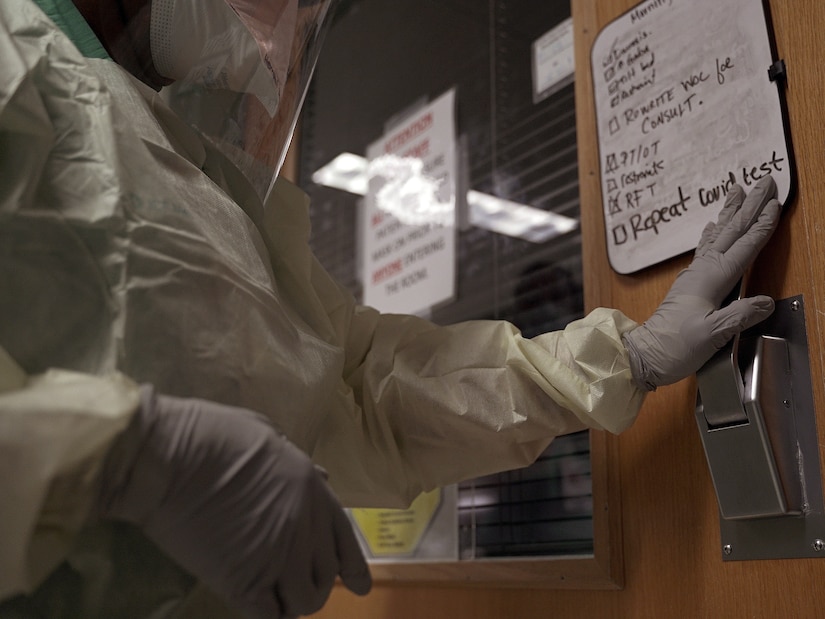
''We continually train our staff on PPE wear and stress the importance of all safety measures,'' Bielski noted. ''It takes time, but it’s effective and, I hope, reassuring for our staff who are understandably nervous about contracting the virus.''
While beneficial to the health care system, the trauma and ECMO mission expansions have generated a need for additional nurses and technicians to increase BAMC's bed capacity. In some cases, Bielski is able to borrow nursing support from the U.S. Army Institute of Surgical Research Burn Center, which is housed in BAMC, or from outpatient clinics and other wards. However, manpower is a limited pool, particularly as deployments, humanitarian missions and community-based support requirements draw military personnel away from BAMC, which has many personnel deployed overseas and stateside.
''We've been very stretched,'' Bielski said. ''We are constantly assessing our staffing models to ensure we can manage our patient census while ensuring the safest care.''
It's often an adjustment for nurses shifting from clinics to an ICU, especially one like 3S that requires such a high level of patient care.
''One of the biggest challenges is working with staff I have never before worked with,'' said Army Capt. Amanda Crow, ICU clinical staff nurse and charge nurse. ''Despite this challenge, I have been continually impressed by the professionalism and hard work of the providers and nurses I have just met. Everyone has been very supportive and helpful to one another during this trying time.''
Taking Down Barriers
Communication is key, particularly when donning PPE for hours at a time.
''It's draining to wear PPE over a 12-hour shift, but more importantly, it creates challenges in communication, whether to your peers or with our patients,'' said Army Sgt. 1st Class Jeremiah Canter, critical care nursing services noncommissioned officer in charge.

Face masks create a barrier of sorts between staff and patient, an unfortunate hindrance to communication in an environment where human contact is already severely limited. Aside from the staff, a BAMC-supplied tablet is often a patient's only link to loved ones and the outside world.
''It's heartbreaking that our patients who are so critically ill can't have the comfort of their family members at the bedside at this time,'' Bielski said.
The nurses do their best to fill the void with technology, an avenue that has proven vital for patient communication and morale. Crow recalled caring for an elderly patient battling COVID-19 along with other conditions. With all medical interventions exhausted, the family made the difficult decision to move toward end-of-life care. Crow quickly coordinated a group video chat with the patient's spouse, children and grandchildren prior to withdrawal of care.
''The family was able to talk to their loved one, see her face, pray for her, sing to her and let her know how much she meant to them,'' Crow recalled. ''It was a very moving experience, and I am grateful I was able to facilitate it.
''I would like to think that having that time with family brought her comfort in her final hours and gave her family closure,'' she added.
The staff strives to create these personal connections on a daily basis, Canter noted.
''We do the best we can to make them comfortable,'' Canter continued. ''We talk to them when we are bedside and try to arrange virtual chats. It really lightens their spirits at a tough time. Even when they aren't able to speak, you can see their faces light up.''
Moments of Comfort
For the ICU staff, these video chats spur thoughts of their own families throughout the day. At the end of a long shift, Canter is grateful to head home to his three children visiting for the summer from Georgia. He's meticulous about changing out of his uniform in his garage before entering the house. Even as he fights exhaustion, Canter takes time to play cards or board games with his kids before he heads to bed.
''We talk about my job,'' he said. ''They know what I do, and they aren't scared about it. They know it's a possibility I could get it and people die from it, but I tell them not to be scared. Just respect it and do the right thing, and you’ll be OK.''
Crow's family lives in Pittsburgh, but frequent video chats bring her comfort in the evenings.
''As with most families of health care providers during this time, my family does worry,'' she said. ''Several of my immediate family members are nurses, so we are able to allay each other's fears knowing that we take any and all necessary precautions in both our personal and professional lives.''
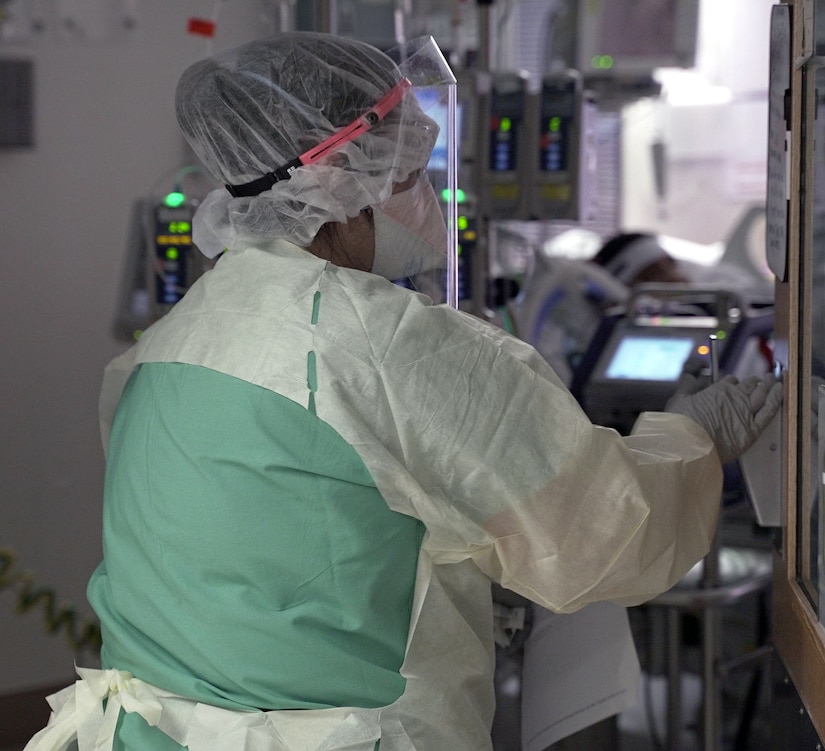
Even as she juggles staffing and critical care duties, Bielski knows she's asking a lot from her staff and often worries that she's not thanking her team enough.
''My team has been living and breathing this every day for months,'' she said. ''I'm so proud of what they do on a daily basis. They are truly making a difference in supporting our community.''
For Crow, this is exactly what she signed up for. She was inspired to become a nurse after seeing how nurses supported her father, who was ill, and her family when growing up. After joining the Army, she became even more determined to become a nurse after her older brother was injured in an IED blast while deployed and spent months recovering from a traumatic brain injury at Walter Reed National Military Medical Center in Bethesda, Maryland.
''I was inspired by the care he received and wanted to pay it forward to other families,'' she said.
COVID-19 or not, Crow never looked back on her decision to become a nurse.
''This is a strenuous time to be working in healthcare, and we are all facing unprecedented challenges,'' she said. ''That being said, I am grateful to be supporting my community during these trying times. I take pride in knowing that I am taking care of members in my local community, and I hope that my efforts can make a positive impact in the care of others.''
''I feel as a critical care section, we are the COVID response team,'' Canter added. ''It's us against COVID, and we have too much at stake to lose.''
(Elaine Sanchez is assigned to the Brooke Army Medical Center.)
Washington State's Military Department Responds to COVID-19 Pandemic
Soldiers and airmen of the Washington National Guard have helped at testing sites, in food banks and, more recently, in a call center where they help track where the virus spreads.
The state Emergency Operations Center was partially activated Jan. 22. It included officials from the state's health department and external affairs. Two days later, the center was fully activated with the health department's incident management team working out of the SEOC. Personnel were split between Health’s lab at Shoreline, its headquarters in Tumwater and the SEOC on Camp Murray. By mid-March, officials from the Department of Health, Washington Emergency Management Division and the Washington State Department of Social and Health Services developed a unified command structure.
For a few days at the end of February and beginning of March, teams from Health, Emergency Management and other state agencies came together to craft and strategize for some of the nonpharmaceutical interventions that would help guide the state in the months to come.
"Its purpose is to help public health officials, emergency management and partners choose which mitigation strategies to implement to limit and prevent the spread of novel respiratory diseases of concern," Chris Utzinger, EOC response section manager, said Feb. 28.
The marathon sessions started with the obvious advice: encouraging state residents to increase their hand washing and use of alcohol-based sanitizer, frequently clean and disinfect surfaces, and show proper cough and hygiene etiquette. Then, the nonpharmaceutical interventions started mentioning things that would become commonplace months later: social distancing, isolating sick people, cancelling public and large private gatherings, and ordering the closure of schools, child care facilities, workplaces and public buildings.
By the second week of March, restaurant doors were closed, schools were shut down and people were told to stay home unless they were going out for an "essential" service, such as shopping for groceries. Employees at the Washington Military Department were given unprecedented access to teleworking and told to stay home if they could.
"While this emergency can be unnerving, more than anything, I ask you to stay calm," the state's adjutant general, Army Maj. Gen. Bret D. Daugherty, wrote in an email March 19. "Together, we're going to get through this. I can assure you of that. Combining our state and federal forces, we have a talented team working day and night to help address this situation, and I’m confident we’re making a difference. Let’s continue to lead by example and take the steps necessary to slow the spread."
Vice President Visit
On March 5, before widespread shutdowns hit the state, Vice President Mike Pence visited Camp Murray, bringing many top federal officials with him. At the time, Washington state had been the hardest-hit state, with at least 70 confirmed infections and 11 dead.
Pence started with a tour of the state Emergency Operations Center, where he "bumped elbows" with line staff that filled the room.
"As the state of Washington, and the Seattle area in particular, deals with the coronavirus, we're going to continue to make sure that you have the full support of every agency in the federal government," Pence said. "We know you’re the front line."
Joining him were 10 of the 11 congressional officials representing Washington state, as well as Gov. Jay R. Islee, together in the EOC for the first time in recent memory.
Dual-Status Command
Army Brig. Gen. Bryan Grenon, Task Force Steelhead commander and Seattle Police Department captain, started off the COVID-19 response as the dual-status commander in Seattle. To assist the response, the Federal Emergency Management Agency deployed an Army field hospital to the CenturyLink Event Center, and Grenon was the conduit among the responding agencies, U.S Northern Command, Title 10 and Title 32 soldiers, and federal and state emergency response agencies and leaders.
Grenon said his civilian career positively affected his time as the DSC.
"I think that this is something that Northcom didn't anticipate, because of my role as a [police] captain, I had very strong relationships not only with these police departments, but with the city government and also the Seattle Fire Department."
Grenon's experience as the DSC was short, but it provided the opportunity to learn how to better engage and communicate when interacting with so many different agencies through the pandemic response, he said.
The Guard is Called to Support
As the economy suffered and unemployment skyrocketed, food banks across the state were slammed with requests. At the same time that demand climbed, volunteers who were relied upon to operate local food banks were forced to stay home, many of whom fall in the at-risk categories for COVID-19.
"The Washington National Guard will provide important help to our communities to ensure our critical food banks remain stocked and operational," Inslee said in a tweet. "They're filling an important need, and I ask that you welcome them in your communities as they process, package and distribute meals."
Airmen and soldiers from the 194th Wing and 81st Brigade Combat Team jumped at the chance to help their neighbors in Chelan, Franklin, King, Pierce and Walla Walla counties right away.
"These guardsmen will provide critical support to our food banks and pantries that are low on staff and need help getting food to some of our most vulnerable citizens," Daugherty said. "By looking out for our neighbors and following proper health safety guidelines, we will get through this together."
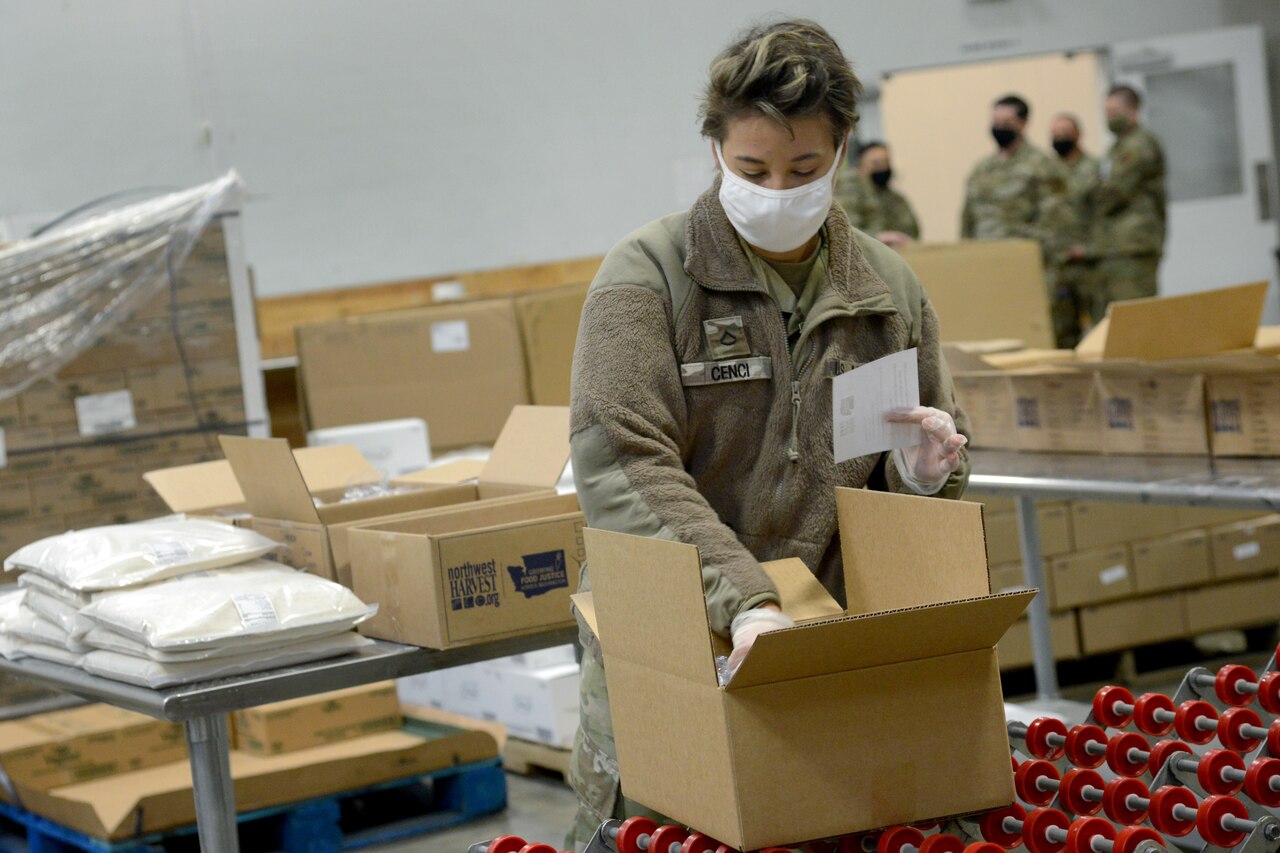
As the need grew, so did the requests for guard support at food banks across the state. By the end of April, more than 700 guardsmen were supporting operations at 43 food banks and distribution centers across Washington. Food Lifeline set up a distribution center in south downtown Seattle with the support of more than 200 guardsmen helping them process, pack and distribute food and goods to more than 300 food banks across the state.
Army Sgt. Kyle Sprague, 1st Battalion, 161st Infantry Regiment, volunteered for the opportunity to serve with Food Lifeline in Seattle after seeing how the "Stay Home, Stay Healthy" order was affecting the area.
"When driving through Seattle, you see a lot of boarded-up businesses," Sprague said. "That's a lot of lost wages. When I saw it, I realized that the community needs help and what better way to, to get out and help an organization like Food Lifeline."
Kate Wright, the executive director at the Edgewood food bank, said that the support was critical because many of the staff were listed as high-risk if they caught the virus.
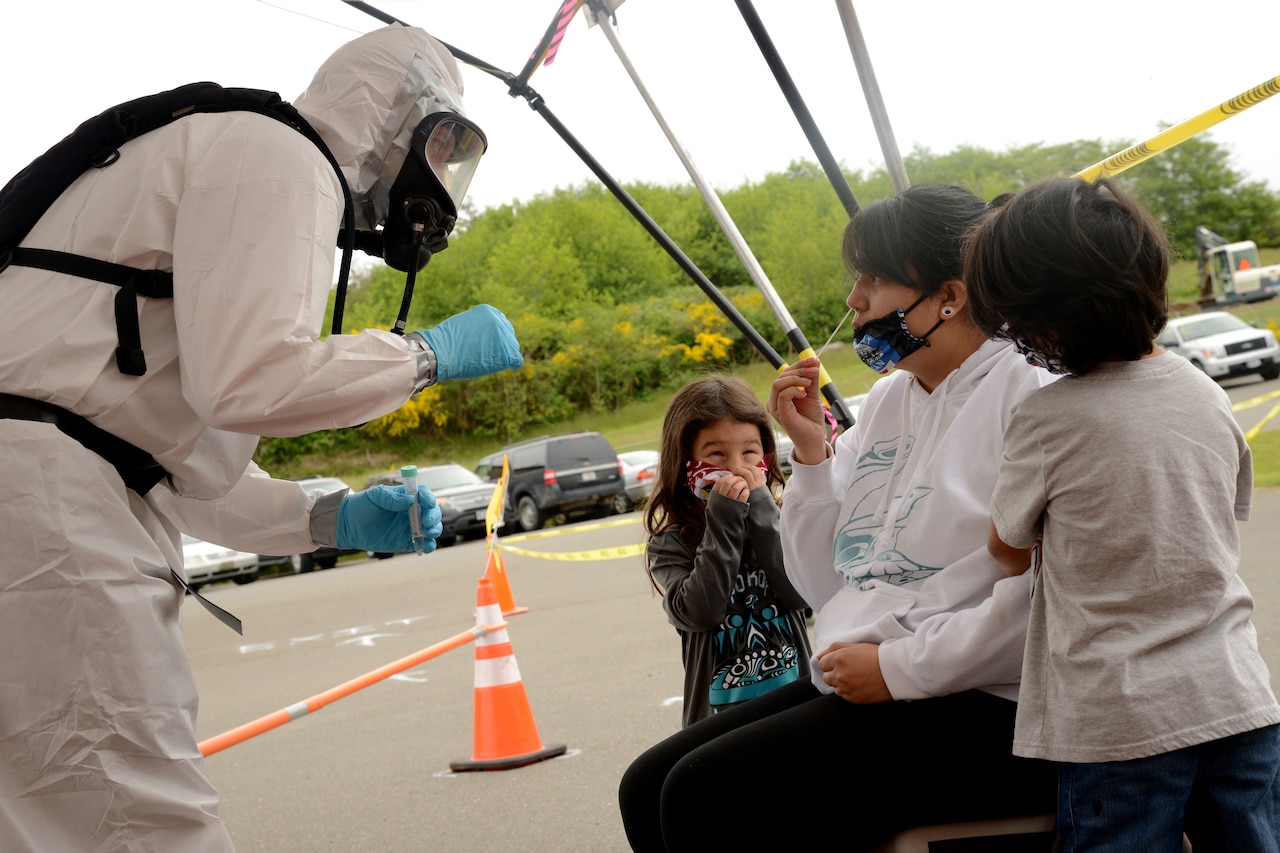
"I am not supposed to be here," Wright said. "I could be high-risk, so having the guard here is so helpful. We are helping to feed more than 400 families a week now, almost double what we were at before the COVID-19 pandemic." As the need for COVID-19 testing across the state grew, the Washington National Guard was asked to support. Dressed in full personal protective equipment, the guardsmen worked with doctors and nurses at community-based testing sites across the state to expand testing capabilities.
"There are only so many resources here in the area so every person counts in this operation, from the medics who test, to the people who do traffic enforcement, to those in administration," said Air Force Senior Airman Ryley Glick at a Grays Harbor site. "We're lending extra hands to those who need it."
Wearing Masks is the New Norm
At the beginning of April, the Centers for Disease Control and Prevention recommended the use of face masks when social distancing couldn't be achieved. That led one Washington National Guard mother to recruit some help to carry out an important mission of providing masks to soldiers and airmen.
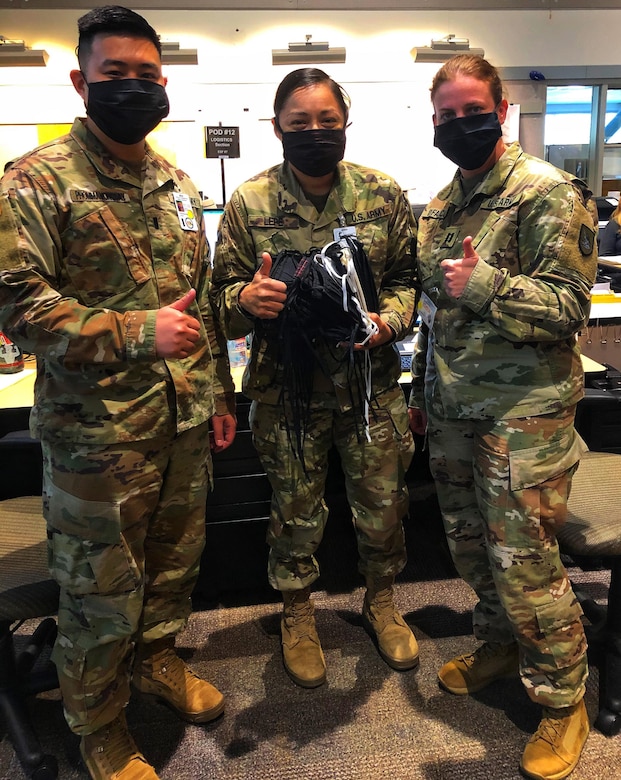
"It was something for my mom and her friends to do during this time, it is their way to support the COVID-19 response," said Army Lt. Col. Josh Daily, future operations officer with the Washington Army National Guard.
Daily's mother, Roberta Yoshimura, and her friends Ruth Dingfield and Jeanne Gallagher, dug out their sewing needles and fabric to create masks so guardsmen supporting local food banks would be protected.
"So many amazing people have selflessly provided protective masks for our soldiers and airmen," said Army Brig. Gen. Dan Dent, commanding general of the Washington Army National Guard. "It is during times like this that great people rise up to answer the call for our country."
In early April, Kathryn Salo, along with Wendy and Elizabeth Phippen, stitched together and donated hundreds of masks for guardsmen which were passed out to soldiers on Camp Murray.
Air Force Staff Sgt. Rachel Yandon, a radio frequency transmission systems apprentice working in the 225th Support Squadron's Communications Focal Point, volunteered to hand-sew 150 cloth protective masks and sent them to a hospital in Alabama.
Chaplains Provide Guidance During Tough Times
Knowing that soldiers and airmen with the Washington National Guard, like everyone else, have a wide variety of emotions during a disaster — fear, anger, stress — Army Chaplain (Col.) Don Brewer, the state chaplain for the Washington National Guard, asked all chaplains to reach out and conduct health and wellness checks during the COVID-19 response.
One of those chaplains called to action was Army Chaplain (Capt.) Denise Denniston, chaplain for the 341st Military Intelligence Battalion.
"I have been calling our soldiers," Denniston said. "My main focus is to check in on them as well as connect them directly with any resources that they may need at this time. I know Chap. Brewer's intent was to make sure all our soldiers were taken care of at this time."
The resources that Denniston often suggests are through the Joint Service Support office, which has staff members that can help guardsmen with health, finances or any mental/physical struggle. One type of resource came through the National Guard Association of Washington, which started providing guardsmen in need with $10,000 in grocery store gift cards.
"Our association is working with Joint Service Support to ensure all of our Washington guardsmen are taken care of during this time," said Bob Sweeney, executive director of the National Guard Association of Washington. "It is just part of taking care of our airmen and soldiers."
Drilling during COVID
For Washington National Guardsmen, the COVID-19 pandemic changed how they conduct their monthly inactive duty training.
While some units decided to move their drill days to another month, for the soldiers of the 56th Theater Information Operations Group, Army Col. Gerald Dezsofi and his command teams made a decision to drill from home during the first weekend of April and May.
"This was a great chance for us to not only catch up on administrative requirements, but we are also testing our soldiers to work, think, plan and act in an unfamiliar environment," Dezsofi said. "It forced them to adapt to a new environment with unexpected challenges."
Another unit that teleworked for their drill weekend was the 141st Air Refueling Wing located at Fairchild Air Force Base. In their monthly newsletter, Air Force Col. Larry Gardner described the challenges and how he wanted his leaders to overcome them.
"These challenges must be met with fundamental change on how we operate and a resolute discipline and timely led-turn to meet the next set of challenges not yet encountered," Gardner said. "We must lead with compassion and understanding; our number one priority is our airmen and their families."
Changes at the Youth Academy
As schools across the state began to close their doors, the Washington Youth Academy had a full class of cadets residing on campus.
"When we heard about the virus in January, we began reviewing our safety protocols," said Amy Steinhilber, director of the Washington Youth Academy. "By March, we began communicating regularly with the families, letting them know what we were doing to keep their kids safe."
While the Washington Youth Academy students can isolate in one secure area, the staff and external support can't. When Inslee issued his Stay Home, Stay Healthy proclamation on March 15, Steinhilber and Army Maj. Gen.Daugherty made the call to close the campus and send the cadets home.
"We gave them options," Steinhilber said. "They could come back for a future cycle or continue their studies online. We had 151 kids take part in our online campus. Within a week, IT Support contacted community partners and provided us 365 accounts and accessibility technology, like laptops, as needed so we could continue the mission to reclaim youth."
The staff believes the little time they had with the cadets made a lasting impression.
"Out of the 151 kids we started with, over 70 percent are on track to complete the cycle, with others needing a little more time to finish," Steinhilber said. "This is all new to us, but faculty and staff reacted quickly to ready the curriculum for the online collaboration with our cadets."
Plans are now underway to invite cadets unable to take full advantage of the online environment back to campus with safety in mind.
"We are enhancing protocols to social distance, limit exposure and continue to provide a safe place for our cadets to thrive," Steinhilber said.
Building Test Kits
When Inslee laid out his recovery plan for Washington, testing for COVID-19 was one of his pillars. Ensuring that test kits are readily available has been a team effort between professionals with the Department of Health, AmeriCorp and dozens of members of the Washington National Guard.
"Working with the Department of Health and AmeriCorp has been great, our guys know how important this mission is and are excited to be here," said Army Maj. Jeff Rogers, a logistician and site leader for the Washington National Guard. "This is all logistics and supply chain management, so being a logistician working this mission is right in my wheelhouse."
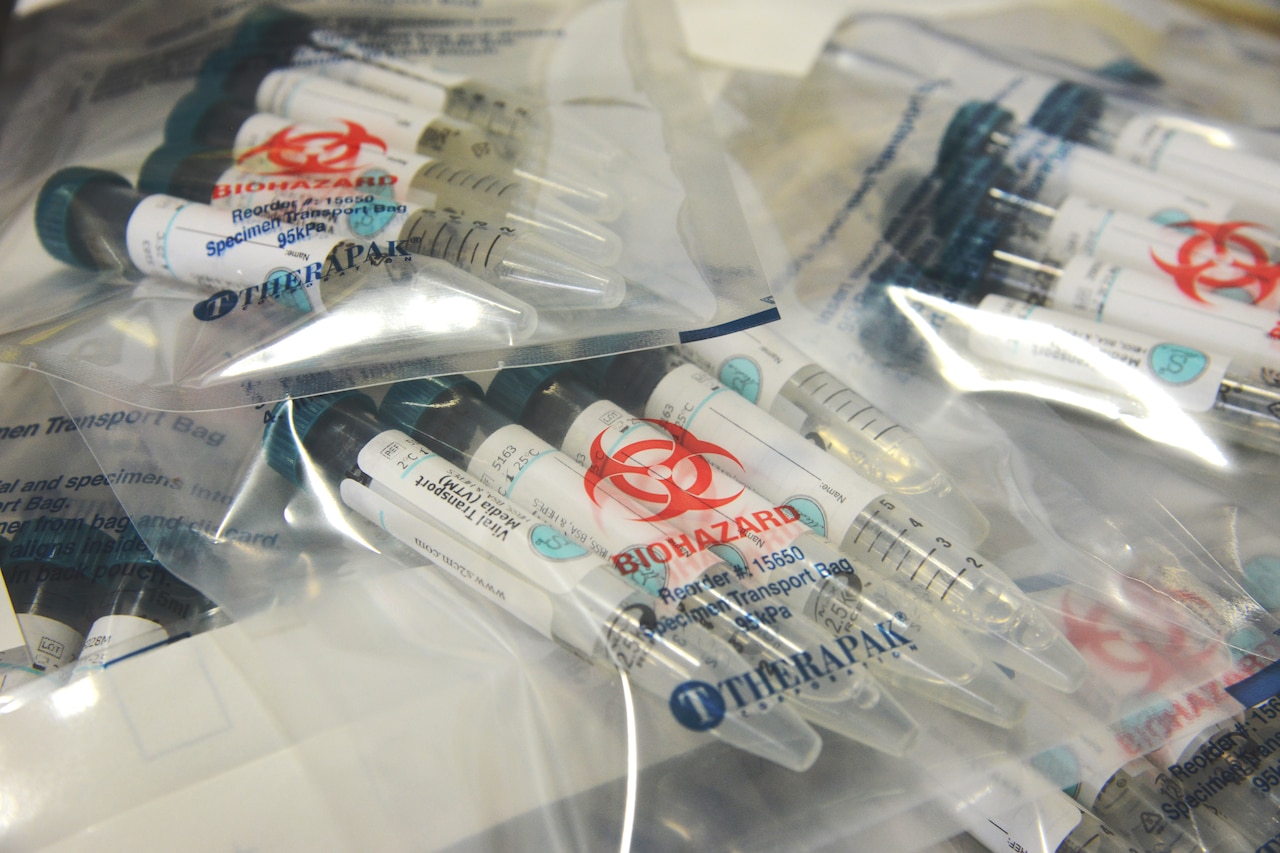
The AmeriCorp volunteers put together the sterile test kit components, then passed them to the guardsmen who put the instructions and sterile test kit bag into an outer biohazard bag. The assembled kits are then packaged into boxes for shipping out to the counties.
"A lot of quality control is happening to ensure that the test kits are properly created, packaged, shipped and tracked," Rogers said. "Making sure everything is sterile is critical. When new components come in for the test kits, they undergo a sterilization test to ensure the products are safe to use and will give an accurate test reading."
COVID-19 Mapping
As the state continues to work toward slowing and preventing the spread of COVID-19, members of the Washington National Guard are supporting the state's Department of Health with voluntary COVID-19 mapping.
"We are not focused on tracking the individual, we're actually tracking the virus," said Air Force Lt. Col. Christopher Panush, Task Force Kokanee officer in charge. "COVID-19 mapping is really what we are after; tracking where the virus might spread throughout the communities while working with the Department of Health."
In describing the process of COVID-19 mapping, Panush emphasized all the information belongs to the health department.
"The important aspect is that [guardsmen] will ask the person, the individual that has the virus, are they willing to be contacted?" he said. "If the answer is yes, then their information will go into the Department of Health's secure database and it's assigned a case number."
Once the case number is established by the epidemiology department at DOH, the case is then distributed to the call workers, who are a combination of Department of Health, Department of Licensing and Washington National Guard personnel.
"The questions during the phone calls are very scripted," Panush added. "The caller will ask the individuals a series of questions and try and establish where they have been in the past fourteen days. But again, the information is completely voluntary."
State EOC Support
Employees with the logistics division at the state Emergency Operations Center have had the herculean task of trying to find personal protective equipment at a time when everyone else on the planet was looking for the exact same thing. Even in June, months later, just a fraction of the $411 million in equipment ordered has actually arrived, according to statistics provided by the state Joint Information Center.
"The logistics section has been very short staffed with emergency management personnel to execute this very complex mission during this pandemic response," said Mark Douglas, logistics supervisor. "We solicited help from other state agencies and received help from DSHS, DOC and the National Guard."
The most in-demand items have been disposable gowns, N95 masks and powered air purifying respirators. As of May 25, more than 100 Washington manufacturers have re-tooled their facilities to manufacture personal protective equipment to meet that demand.
"We have been successful as a team in getting the limited amount of PPE to the right people at the right time, thanks to these partners and the team," Douglas said. "It has been a very long activation since mid-January, and we still have a lot of great work ahead."
In the meantime, the state EOC created a business and infrastructure branch specifically devoted to helping businesses navigate the complicated nature of the pandemic.
Taylor Hennessee and Brian Laughlin, who both work for the Washington Emergency Management Division, took turns leading the team and coordinating agency response from the state Department of Commerce, the Department of Labor & Industries, the state Department of Transportation, the Employment Security Department and assorted private and non-profit partners.
"We had some immediate infrastructure issues — people were flushing down wipes and clogging drains, everywhere," Laughlin said. "But that was a short-term issue. The long-term issue was how do we help businesses in need and the state with its 'essential' designations?"
Confusion spread over whether people would need to show passes to get into cities — and at one point a business re-entry program, designed more for large scale disasters such as earthquakes, was getting overwhelmed and confused with thousands of residents applying for special permission to get to their jobs.
"That was really tough — trying to convince people that there weren't going to be roadblocks and you didn't need a special pass," Laughlin said.
Another issue was coming up with a way to sort through the thousands of questions coming in on who was an essential business, what kind of social distancing measures were required for businesses and more. First, the questions showed up in email boxes — lots of email boxes — until a smart sheet database was established for questions and concerns. Then a team made up of many state agencies came together and started going through the questions to help business owners.
"This is something our state has never done before — but it's something we can take lessons out of in case we have an earthquake or other disaster," Hennessee said. "We had some folks at the state talking to each other who had never talked to each other before."
Hennessee said there were a lot of issues involving the supply chain and rumor busting, as well. Washington state was one of the first to give guidance to grocery stores on ways they could get ready for the pandemic, weeks before federal officials started issuing guidance.
"Our state was leading in a lot of efforts," she said.
One permanent change created during the pandemic is expanding the access of rural Wi-Fi spots.n With school and business closures across the state, the need for reliable Wi-Fi has been greater than ever.
Members of Washington Military Department's IT Division, which staff the Emergency Support Function 2 – Communications pod in the state EOC, worked diligently with partners at the Washington State Broadband Office and Northwest Open Access Network to increase wi-fi access to rural areas in particular.
There are now drive-up Wi-Fi hot spots all over the state, which are safe and offer high speed access.
Rich Hall has been spearheading efforts for the Washington Military Department. For years, the agency has been building relationships with the private sector as part of the internal Washington Emergency Communications Coordination Working Group.
Those connections led to the non-profit Information Technology Disaster Resource Center out of Texas, which has committed to donating $7 million worth of Wi-Fi and network infrastructure across rural areas in Washington state. This is infrastructure that will remain in place — even after the pandemic has ended.
"I helped design the network," Hall said. "I began to identify sites, both using existing coverage maps and data from where we know people have free and reduced lunches in schools in socioeconomic disadvantaged areas. At this point, we have more than 400 sites lit up and plans for another 600 when it's all done."
In addition, Hall worked with the private companies Verizon and T-Mobile who collectively donated more than 7,000 phones for folks in need, identified by the state Health Care Authority. The phones were free with subscription accounts paid for by the Health Care Authority
"I have a whole pile of stories where people saw immediate benefit from that," Hall said. "I had a little boy who hadn’t been able to talk to his mom because she was in the hospital for weeks; and his caregiver put a phone in his hand, and he was able to not just talk to her but FaceTime with her, and it was really emotional."
In addition, the GIS program within the Office of the Chief Information Officer along with the Washington Military Department, crafted specialized maps that enabled health officials and the Governor's Office to track COVID-19 cases in real time. The work was in conjunction with ESRI, a private company specializing in GIS work.
The same partnership was also able to push out a Wi-Fi map for Hall's project, and a third site that tracks the availability of childcare facilities.
Support to Employment Security
With businesses shut down to slow the spread of COVID-19, the state saw a record number of unemployment claims.
Organized criminals also spotted an opportunity to take advantage of the state's unemployment benefits. Over the course of a couple of weeks, overseas thieves made off with as much as $600 million in fraudulent unemployment claims.
As a result, the state's Employment Security Division, which manages Washington's unemployment benefits, froze thousands of accounts. This caused a financial hardship for those who truly needed the weekly benefit after being laid off from their full time jobs. While ESD continues to recoup the stolen funds, it asked the Washington National Guard to help with its efforts to eliminate the backlog of claims and ultimately, ensure those who need and qualify for unemployment benefits received them.
The guard has been asked to review the identification documents in ESD's electronic benefits system. Guardsmen will review the claims of those deemed as low risk of fraud and will help the requestor get their benefits.
(Sara Morris, Joseph Siemandel and Air Force Lt. Col. Alyson Teeter are assigned to the Washington National Guard's Joint Force Headquarters.)


 Posts
Posts

