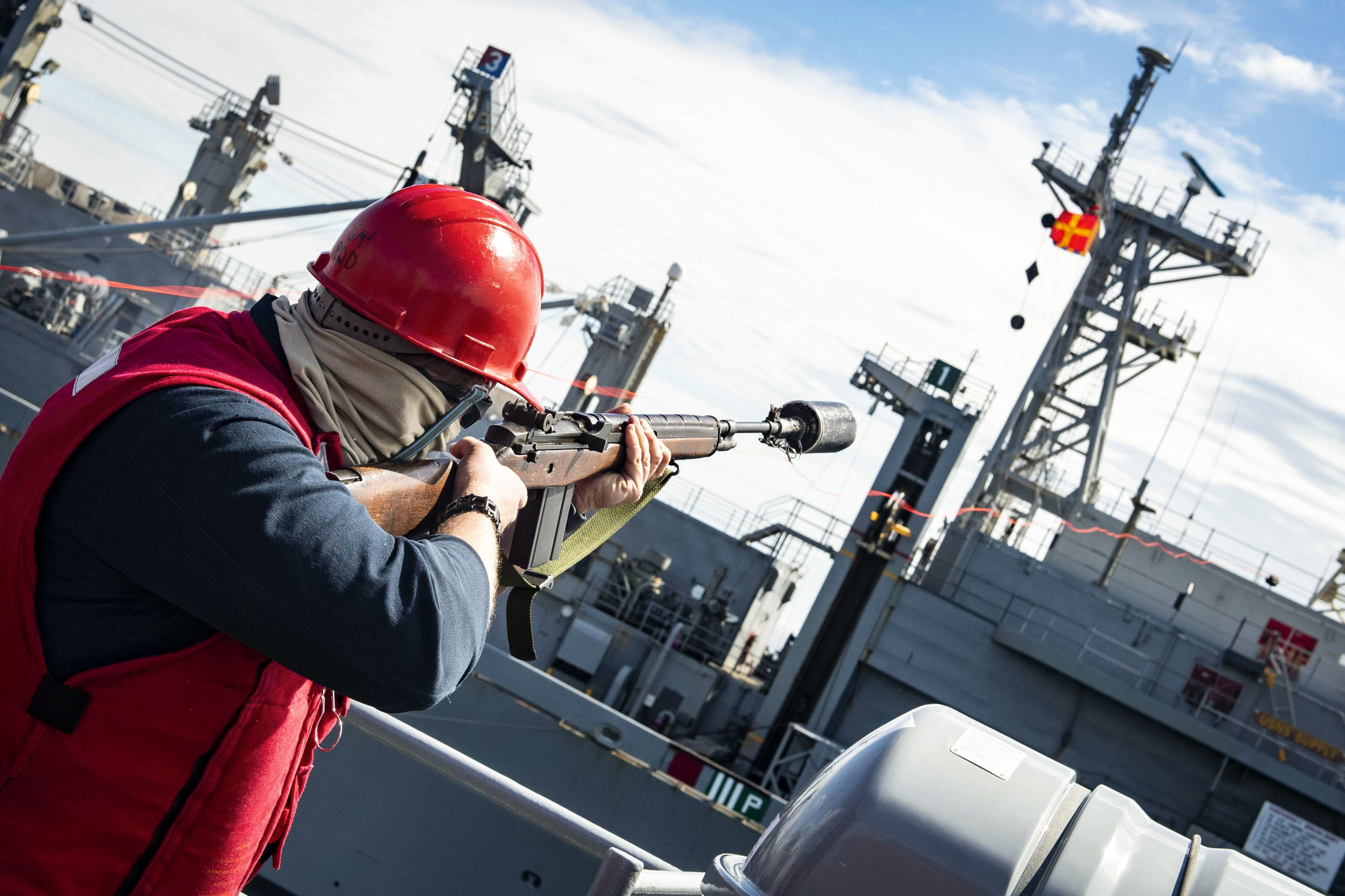
Navy Petty Officer 1st Class Adrian Rodziewicz fires a line to the USNS Supply in the Baltic Sea, June 16, 2020, during Baltic Operations, an annual maritime exercise in the region.
Navy Petty Officer 1st Class Adrian Rodziewicz fires a line to the USNS Supply in the Baltic Sea, June 16, 2020, during Baltic Operations, an annual maritime exercise in the region.
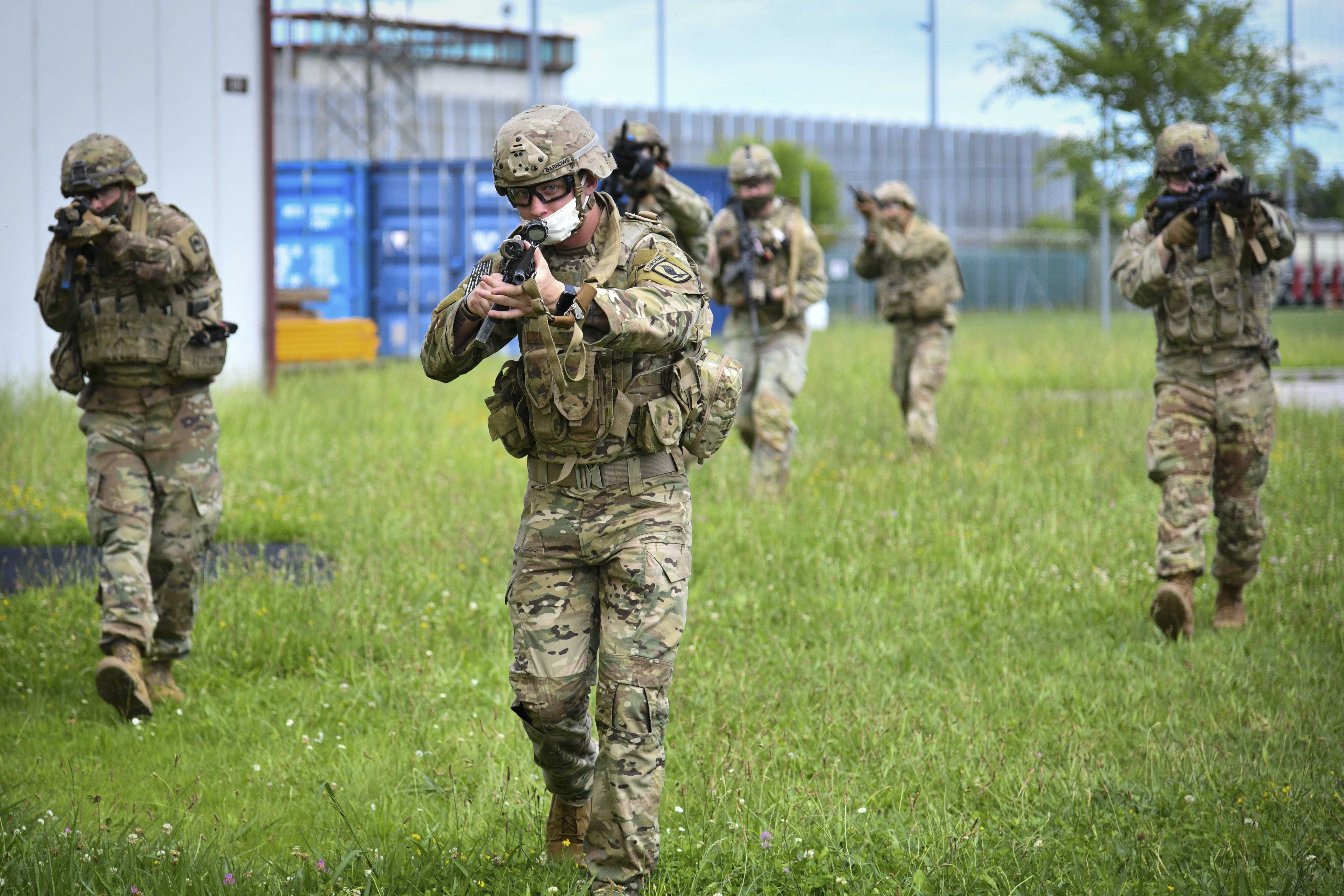
Army paratroopers participate in urban operations training under COVID-19 prevention conditions at Caserma Ederle Range in Vicenza, Italy, June 16, 2020.
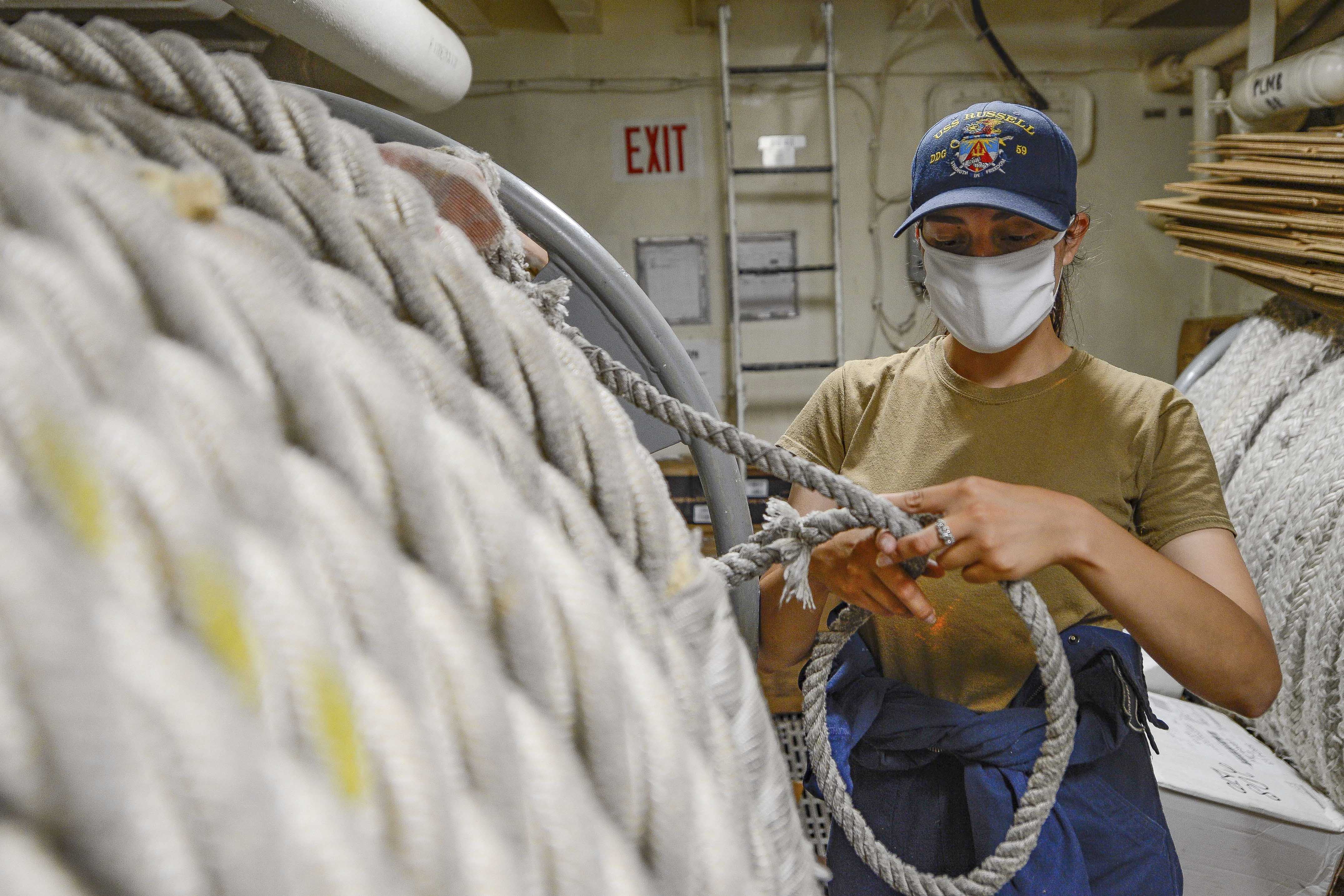
Navy Seaman Rose Ramirez ties a bowline knot aboard the USS Russell in the Philippine Sea, June 15, 2020.
"COVID started when we got here. We've been dealing with it every day for the past few months," said Army Chaplain (Lt. Col.) Douglas Brock, the chaplain for the New York Army National Guard's 42nd Infantry Division.
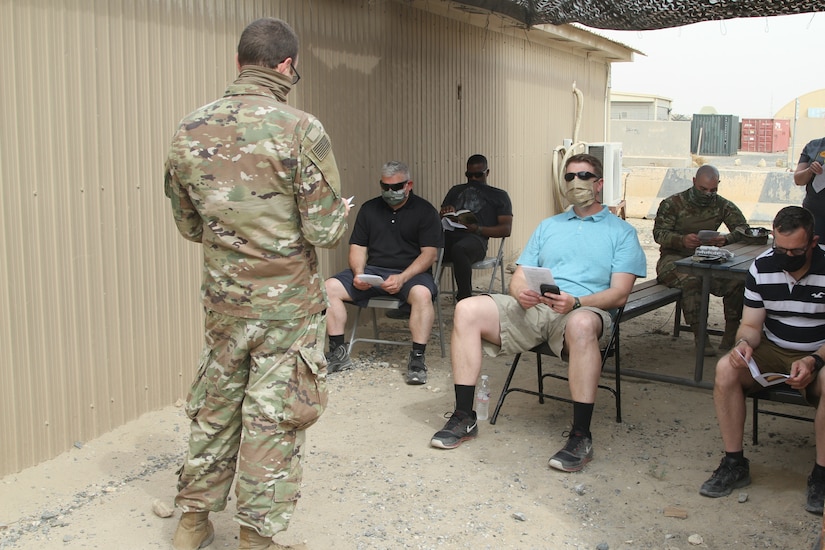
One of the largest impacts COVID-19 had on the task force's installation was the suspension of church services, Brock said.
"So we moved the chapel part of Sunday services to virtual," he said. "For example, my chapel has a Facebook page/group in which some of my chaplain team are posting Sunday messages, or daily messages and engaging with people."
The Facebook group Brock runs is called "AJ Contemporary Family." The Spartan chaplains believe the group makes it easier for soldiers to fulfill their spiritual needs, even if they cannot physically attend services.
"I don't know how well that's impacting our soldiers here on the camp, but we see that people are looking at it," Brock said. "They’re liking it. You have visibility on how many people have looked and how many people have liked and shared, and we’ve seen some action there, so it’s doing its mission."
Brock's social media group isn’t the only service in town. Others have followed suit.
"There are others; in fact, every chaplain program on post has a Facebook group." Brock said.
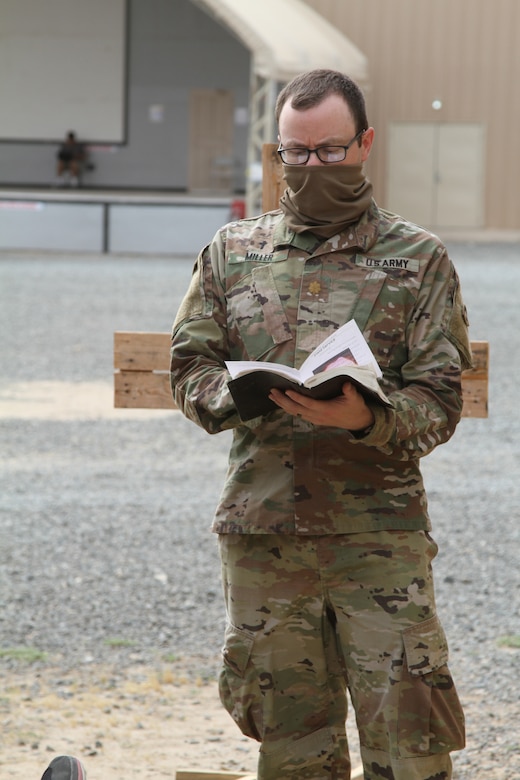
Army Chaplain (Capt.) Matthew Granahan, the chaplain for Task Force Hellhound, 3rd Ordnance Battalion, also has an online group. While keeping up to date with his own social media group, Granahan also works to provide support to soldiers who reside in quarantine or isolation.
"I will stand outside the wire, and soldiers will come up to me on the other side to gather together for a small service," Granahan said. "Sometimes, only one or two will show up, but I'll be there for whoever needs to hear the message."
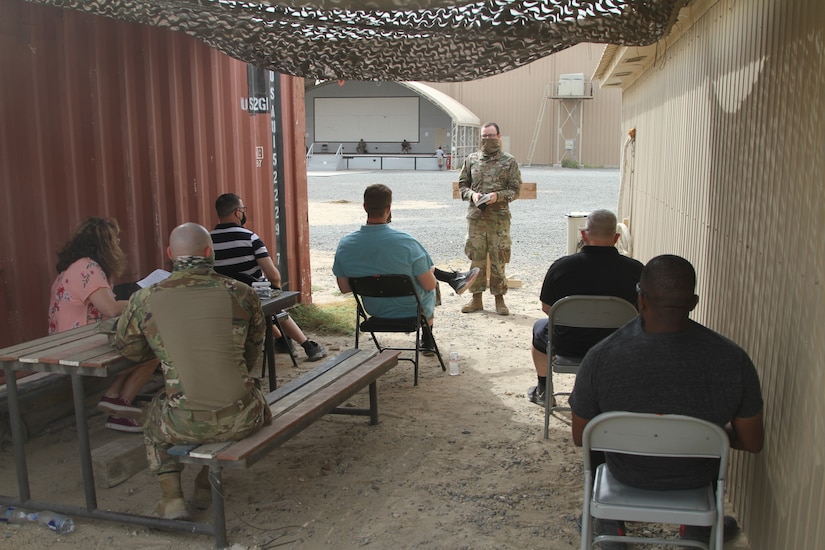
Virtual services are not the only method for tending to the faithful. Some small-scale services take place outdoors to maintain some semblance of normalcy.
"'When is service?' is one of the questions that I've been asked my whole career. Being able to answer that question reinforces that sense of normalcy, at least for National Guard soldiers that are used to field services."Brock said.
The services appear to have a positive effect on the soldiers who attend, Brock said, but the real struggle concerns current events on the home front. "In talking to my soldiers and talking to my chaplains," he said. "I'm finding that the biggest impact on morale is what's going on at home."
While Spartan soldiers deal with COVID-19, their families at home deal with multiple issues, including quarantine, potential loss of jobs and the increasing civil unrest related to recent events that have taken place in the United States. Without being able to be there for their families, soldiers are turning to their faith to cope.
"According to one soldier, what's hurting morale is the general feeling of ‘My wife and children are going through so many crises at home, and I'm not there to be a part of that,'" Brock said.
With all that going on in the world, Brock still sees this as a chance for soldiers to grow, and he looks at the situation with optimism, which he tries to share in his message.
"We talk a lot now about finding joy in trials and hardships," Brock said. "It's about recognizing God is in control, he can be trusted, he is good, there is hope and justice. We're recognizing that trials and hardship build us; it builds character and makes us stronger."
Brock and his three chaplains from the 42nd are all Christians, but they have made sure to provide opportunities to soldiers of other faiths to practice their beliefs.
"Since COVID, services have largely been virtual. Usually, Ramadan would include celebrating in gathering, and even surrounding nations cut that off," Brock said. "Like the Christians, they are not able to gather in large numbers, but we made provisions for that and provisions for Passover."
Brock wanted to give a message of hope to all the soldiers of Task Force Spartan.
"Rejoice in trial," he said, "Rejoice in trial because we recognize that hardship in trial is how we grow. Think of a gem. Think of basic training. Whatever it is you think of, it's in the hardship that you grow. I encourage you to reconnect with your faith and look for hope outside of your circumstances. Connect with someone, and if you need chaplain help, please reach out to us. So Amen, and Rainbow, never forget."
(Army Sgt. Andrew Valenza is assigned to Task Force Spartan.)
Naval Medical Research Unit San Antonio is giving recent graduates of the Medical Education and Training Campus Biomedical Equipment Technician School practical experience by attacking maintenance backlogs caused by the COVID-19 pandemic.
''Because of the COVID-19 closure, we got behind on our preventive maintenance inspections,'' said Navy Chief Petty Officer David Snow, the senior enlisted leader of the research unit.
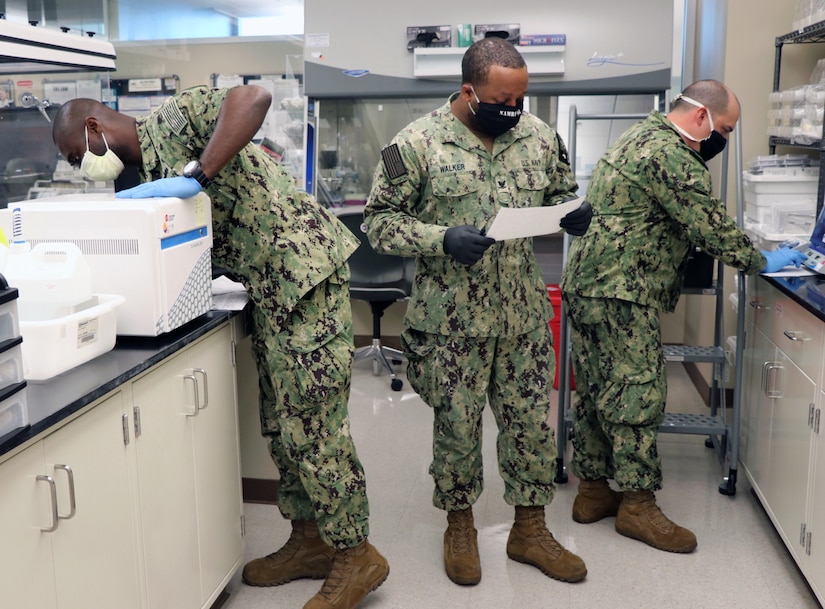
More than 1,300 pieces of medical and dental research equipment are in worksites at the Tri Service Research Laboratory and at the Battlefield Health Trauma Building, both located at Joint Base San Antonio-Fort Sam Houston, Texas.
Snow and two defense contractors, all former Navy BMET instructors at the school, are maintaining NAMRU-SA's biomedical equipment.
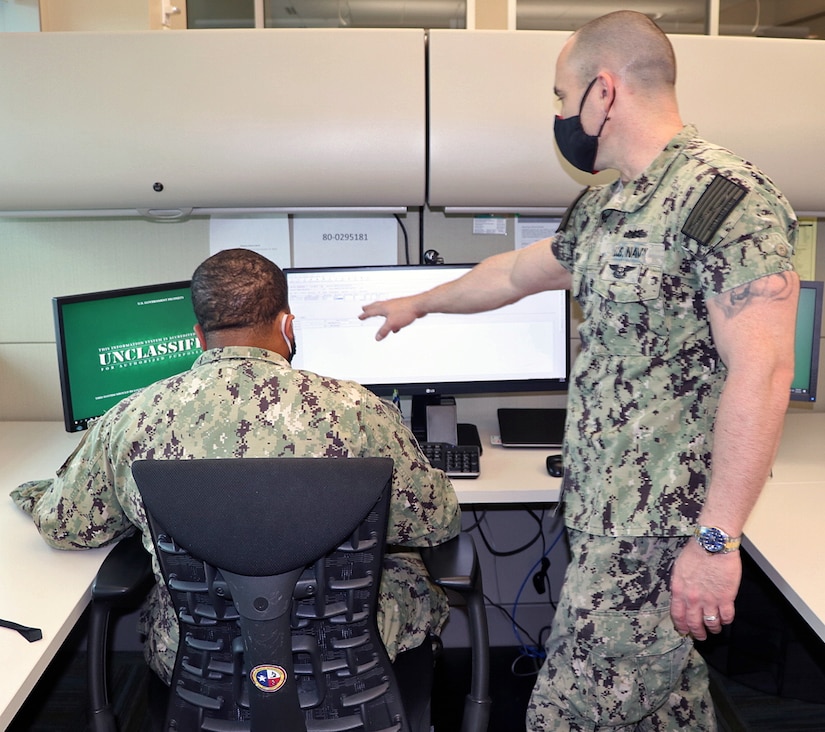
''It's a daunting task for three individuals,'' Snow said. ''One of the three of us is there supervising and doing quality control to ensure everything was done to the manufacturer's specifications.''
Snow said he knew that if the backlog got worse, it might jeopardize battlefield health research. With a recent memorandum of understanding between NAMRU-SA and NMTSC, which allowed for mutual assistance whenever possible, Snow was able to gain support from the executive officers of both commands, and eight recent BMET graduates reported for work at NAMRU-SA on May 18.
The new BMET graduates work with NAMRU-SA for three eight-hour days each week to aid in reducing the maintenance backlog.
The new graduates document their work in the Defense Medical Logistics Standard Support, where their efforts are reviewed for accuracy. It's a confidence-builder and exactly what the BMETs will be doing when they get to their shops.
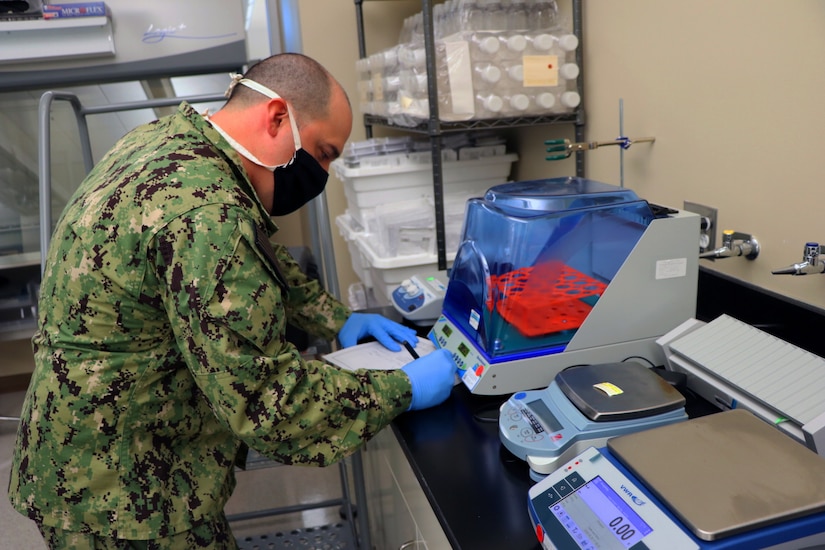
''I was a little bit nervous about leaving here because I have never been a BMET before,'' Navy Petty Officer 3rd Class Benjamin Walker said. Prior to attending the BMET course, Walker was a Navy dental technician. His next assignment is at Naval Medical Center Portsmouth, Virginia.
''Having this experience is going to help me slide into my next assignment pretty smoothly,'' he said.
(Randy Martin is assigned to Naval Medical Research Unit San Antonio.)

An Air Force F-16 Fighting Falcon assigned to the Ohio National Guard takes off in Swanton, Ohio, June 16, 2020, for a nighttime training mission.
Defense Secretary Dr. Mark T. Esper visited Air Force basic military training cadre and recruits, as well as members of the Air Force Recruiting Service, for a firsthand look at how the service transforms citizens into airmen.

Esper, accompanied on yesterday's visit by Senior Enlisted Advisor to the Chairman Ramón "CZ" Colón-López, observed how the 37th Training Wing, with the support of a tri-wing partnership with the 502nd Air Base Wing and 59th Medical Wing, has protected airmen during the COVID-19 pandemic. The traveling party adhered to all Centers for Disease Control and Prevention and Defense Department social distancing guidelines to ensure protection of their health and those around them.
"The basic military training mission remains absolutely vital to renew our air and space forces and underwrites our ability to defend the nation and deliver air and space power any time, any place," Esper said. "The entire team here has demonstrated what fighting through COVID-19 looks like with flexibility and tenacity, ensuring the safety of the recruiting, training and education pipeline."
The first stop was at Basic Military Training's Pfingston Reception Center for an overview of Gateway Wing operations and an in-depth look at how officials have adjusted operations amid the pandemic to continue developing the airmen needed to ensure readiness, including restriction of movement implementation, person-under-investigation and isolation operations.
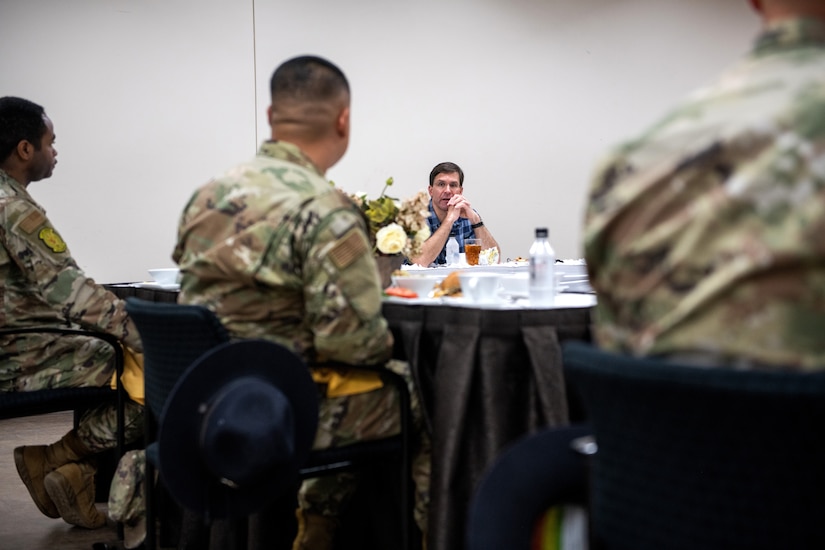
More than 34,500 airmen will graduate from Air Force basic training in fiscal year 2020, and the wing has graduated more than 8,500 airmen since March 16, when the service first implemented a 14-day restriction of movement protocol for new accessions arriving to training. Since May 19, 100% of new recruits have been tested, and the training campus has been realigned to prevent interaction of airmen in different weeks of training.
"Two of our top priorities during COVID-19 have been the safety of our people and ensuring the mission of national security continues," Esper said. "The rapid implementation of safety protocols here has been extremely successful on both of these fronts, thanks to the partnership of health experts and the BMT team."
Military training instructors and cadre had the opportunity to discuss BMT's tempo, successes and ways forward with Esper before taking him on a walkthrough of new trainee in-processing, daily operations at an airman training complex, as well as the Reid Clinic, where the 59th Medical Wing conducts BMT medical support operations.
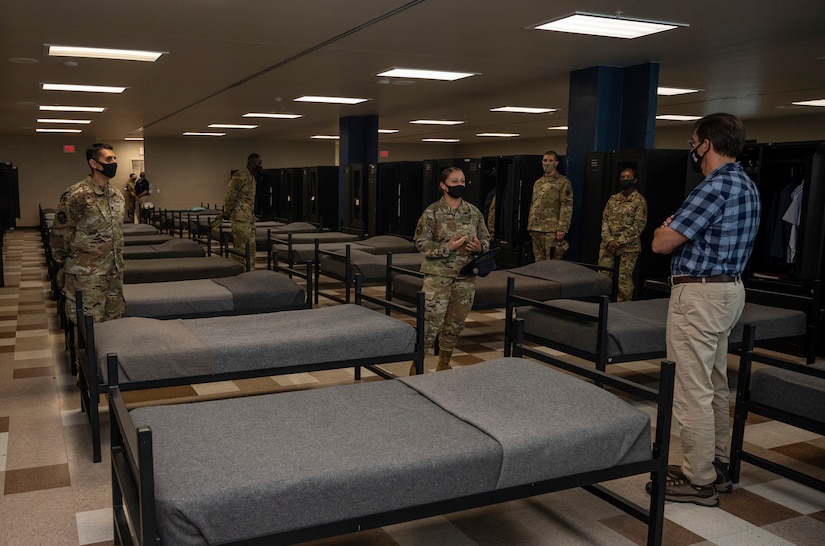
BEAR base, also called tent city, was another stop on the visit. This area was established by the 49th Wing at Holloman Air Force Base, New Mexico, to support potential BMT contingency operations for the Gateway Wing should swing space be required in the COVID-19 environment.
How the service recruits more than 31,000 new accessions every year into the total force was also highlighted for the Defense Department's senior leader, including the use of agile shipping methods to adjust the numbers of airmen reporting to basic military training each week.
"What the U.S. Air Force Recruiting Service has done in response to COVID-19 by being ready to pivot, prioritize, and match applicants to an optimal job and enter-active-duty date on a weekly, and sometimes hourly, basis has been incredible," Esper said.
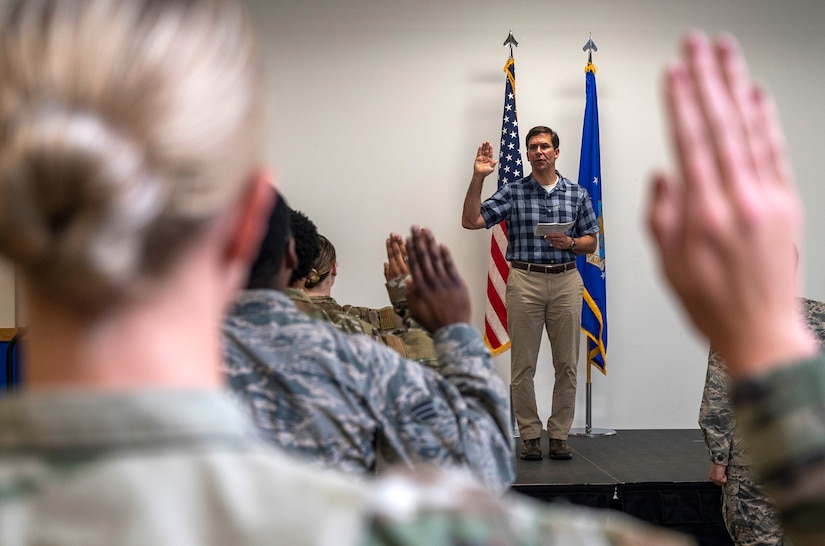
The secretary also learned about the recent integration of the Air Force Reserve and Air National Guard into total force recruiting and the recent rollout of the new "Aim High" phone application by Air Force Recruiting Service, which is aimed at providing better communication to inform and inspire new recruits with embedded tools to guide them into the right Total Force career path as they transition from citizens to service members.
"It's evident BMT's success in the COVID-19 environment can be largely credited to the [military training instructor] corps creating a culture of safety," said Esper. "The work they do year-round laid the foundation for them to adapt swiftly with health recommendations and develop a mentality of early symptom reporting."
(Air Force 1st Lt. Kayshel Trudell is assigned to the 37th Training Wing.)
Nine members of the unit deployed to New York in early April, in response to calls for help from hospital staffs overwhelmed by the coronavirus. According to the city government's website, New York endured more than 200,000 confirmed cases from February until the end of May.
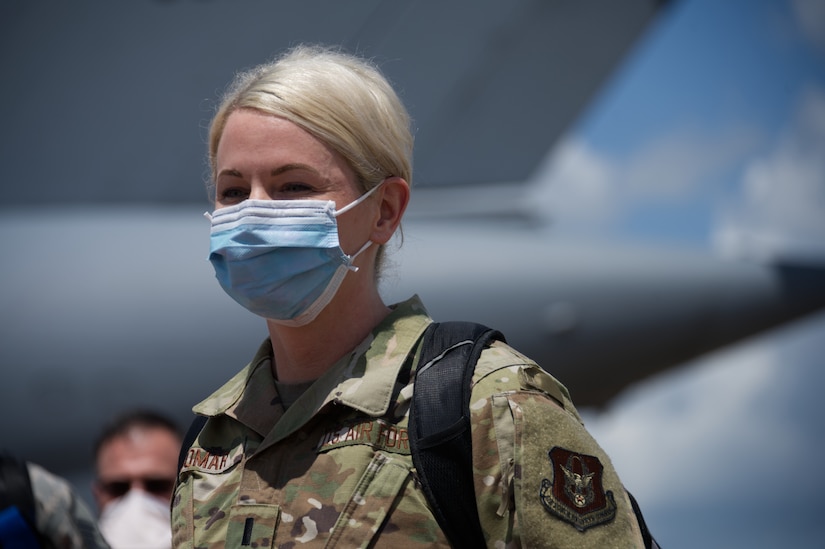
Air Force Staff Sgt. Trevor Talbert, a technician with the 307th Medical Squadron, said the situation was dire when the airmen arrived.
''The civilian staff at my hospital was burned out and depleted,'' he said. ''There were at least 40 patients on my floor, and the numbers didn't start to go down until last week.'' He explained those numbers included a broad age demographic, with patients ranging in age from 20-somethings to octogenarians. ''COVID-19 does not discriminate,'' he said. ''They all struggled.''
The airmen's efforts helped save lives, but they had to learn to deal with losing patients as well. Talbert spoke about leaving the bedsides of patients at the end of a shift and returning the next day to find out they had died. ''It makes you appreciate the important things in life,'' Talbert said. ''It never became normal, and I'm glad because I didn't want to become lax about treating them.''
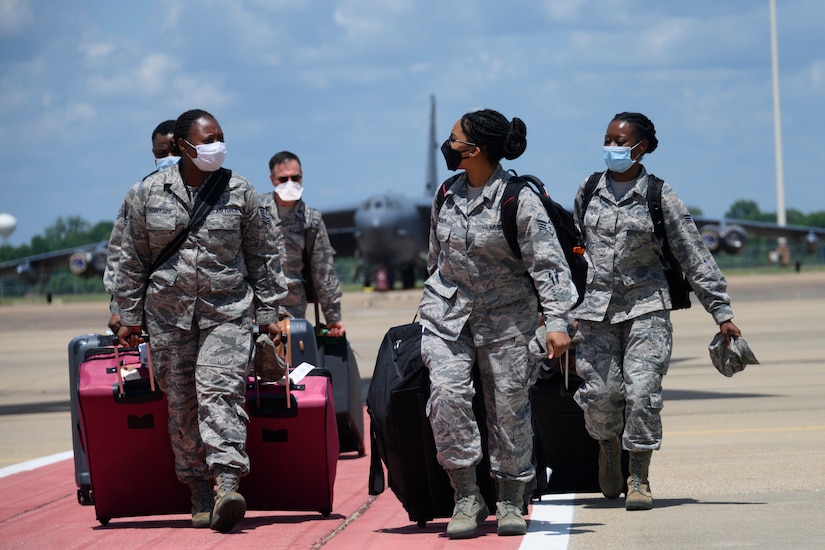
Air Force Capt. Aaron Biggio, a nurse with the 307th Medical Squadron, said hospital staff, patients and even the public showed deep appreciation for their efforts. He said people in the neighborhood would lean out of apartment windows, cheering for them during shift changes. ''I'd get thanked in the streets by total strangers, often with tears in their eyes,'' he said. ''There is no one in New York who doesn't know someone else affected by the disease.''
Talbert said the airmen did their best to serve the patients beyond standard medical care. He recalled using his cellphone to set up video chats between patients and loved ones. ''We were the only family they had while they were under our care,'' he explained.
Most airmen deployed to the region with a focus on direct patient care, but a handful also took part in research efforts designed to learn how to mitigate the effects of COVID-19 on hospital workers.
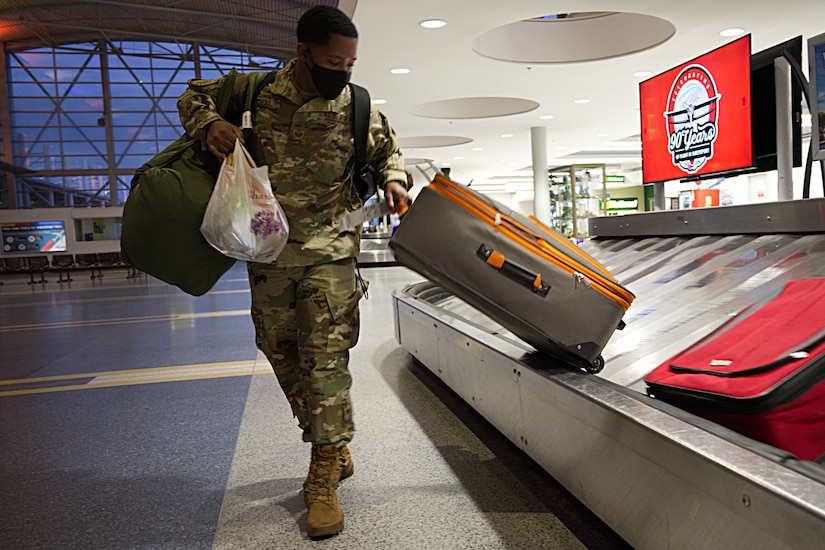
Air Force Tech. Sgt. Cynitra Roberson, the squadron’s immunization noncommissioned officer in charge, took part in patient care, but also served as part of a research team trying to determine if the safety protocols put in place were effective. She and other team members tested almost 500 medical workers. Though the research results remain to be determined, Roberson said, she gained personal insight from the experience.
''It was really neat and something different,'' Roberson explained. ''I worked with really good people, and it was a great experience.''
Throughout the deployment, the airmen worked 12-hour shifts and, in some hospitals, faced patient loads well beyond normal capacity. Biggio said he would do it all again, regardless of the hardships involved.
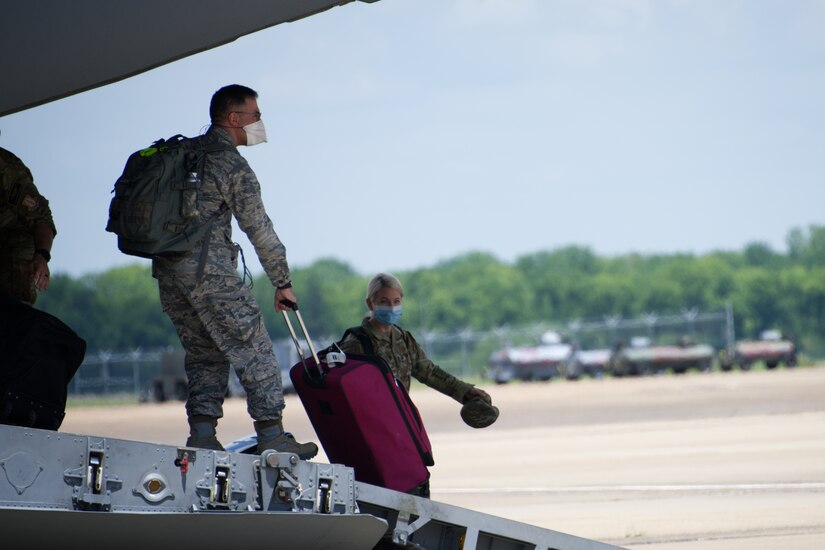
''I'd get back on the plane right now if they would let me,'' he said. ''There’s just something beautiful about the humanity of people coming together to fight through something so gruesome.''
Returning airmen are scheduled to be in quarantine for two weeks before being allowed to return to their military and civilian duties.
(Air Force Master Sgt. Theodore Daigle is assigned to the 307th Bomb Wing.)

An airman assigned to the New Jersey Air National Guard conducts tactical training at Warren Grove Gunnery Range, N.J., June 12, 2020.
"Today Elaine McCusker submitted her resignation as Deputy Under Secretary of Defense (Comptroller) effective Friday June 26, 2020. Since joining the Department of Defense Elaine has worked tirelessly to ensure that our budgeting and audit processes give full value to the taxpayer while meeting the enormous security needs of our nation as well as the men and women who serve it. I am grateful for her dedication to public service and the contributions that she has made to the Department and wish her the very best in her future endeavors."
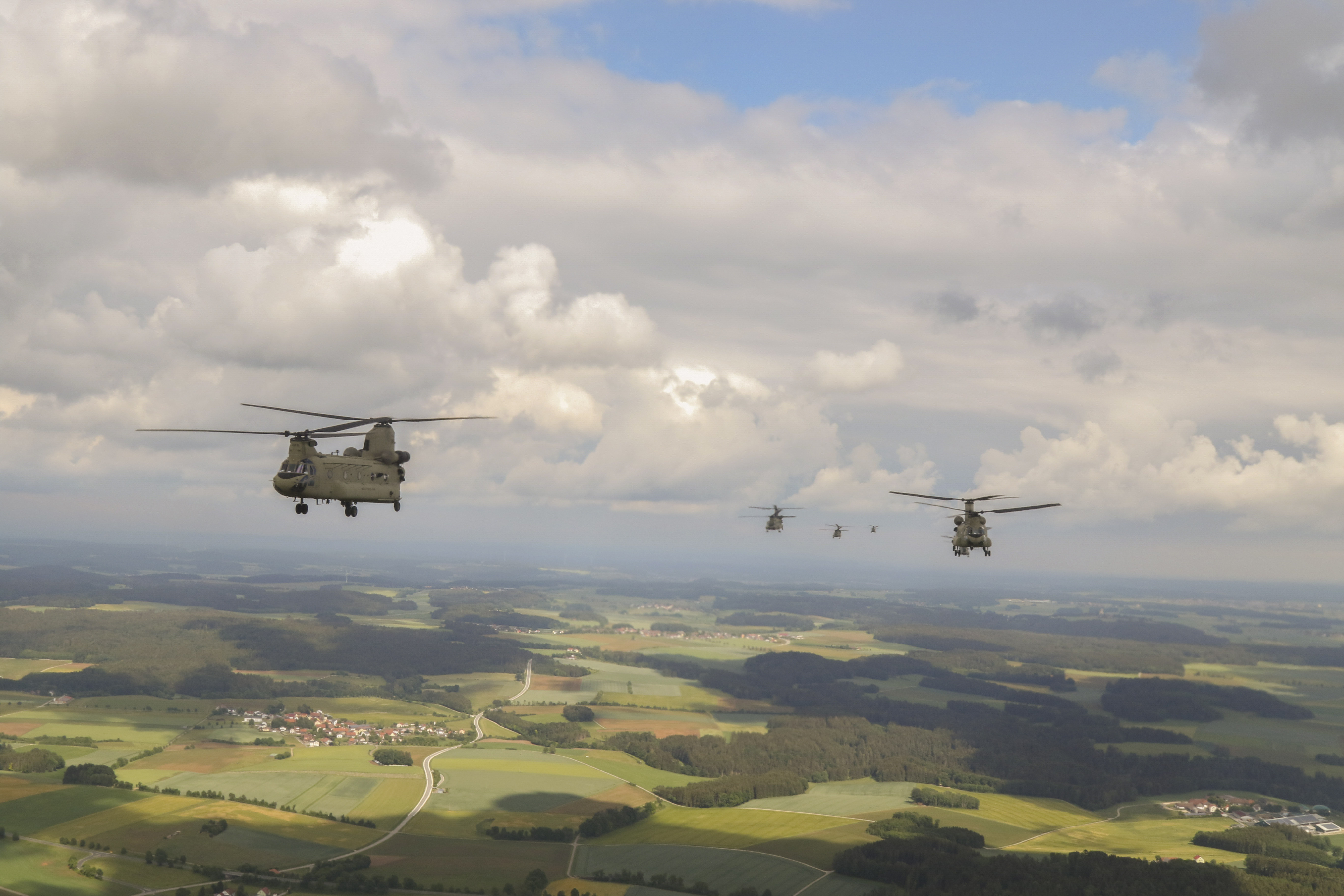
Soldiers aboard Army CH-47 Chinook helicopters fly over Hohenfels Training Area, Germany, June 6, 2020, during an air assault exercise.
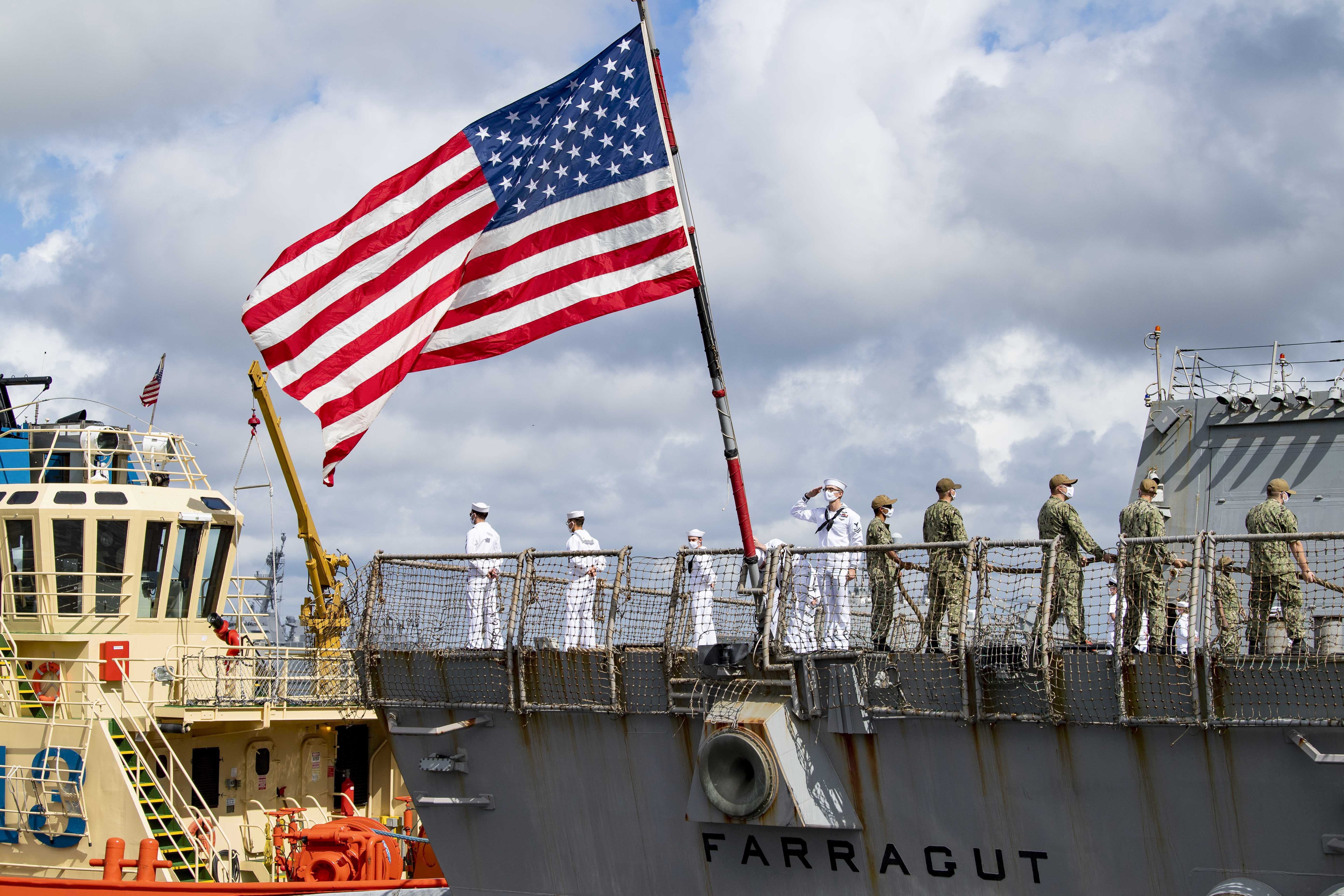
Sailors shift colors aboard the USS Farragut at Naval Station Mayport, Fla., June 14, 2020, after completing a deployment.
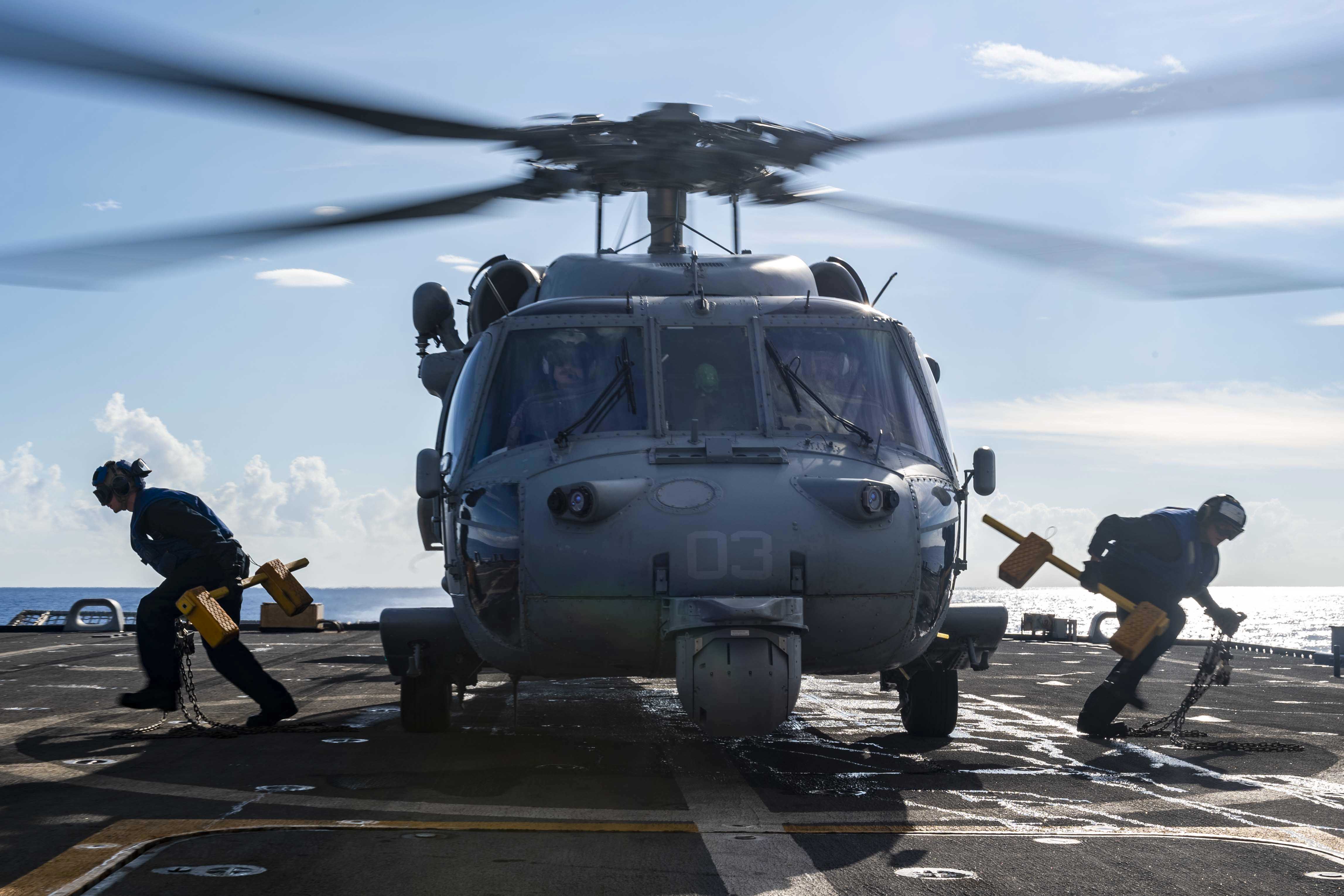
Sailors remove chocks and chains from the landing gear of an MH-60S Seahawk helicopter on the flight deck of the USS Detroit while transiting the Florida Straits, June 12, 2020.
Professional Military Education instructors and staff at McGhee Tyson Air National Guard Base in Tennessee have made it possible for airmen who need to complete their Noncommissioned Officer Academy and Airman Leadership School requirements virtually.
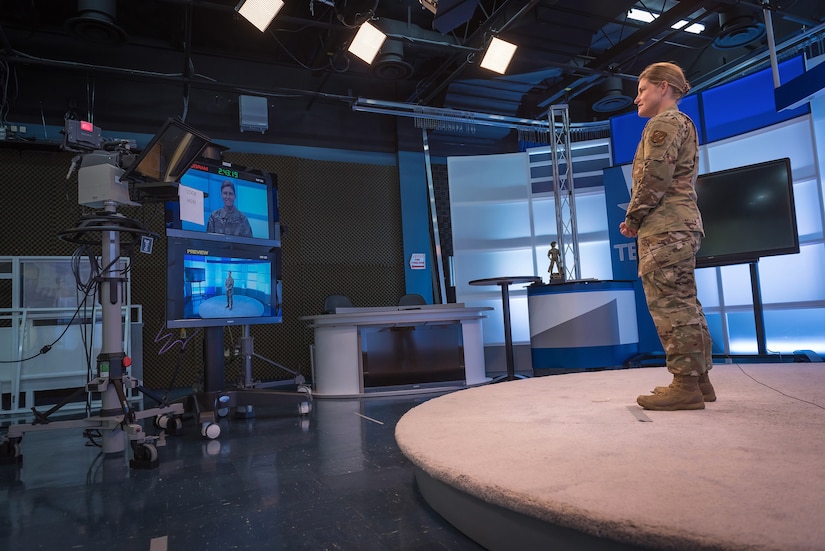
Air Force Tech. Sgt. Megan Francolini and Air Force Tech. Sgt. Renee Wiederspahn recorded sessions for the virtual in-residence remote NCO Academy in the I.G. Brown Training and Education Center TV studio.
The center's Lankford Enlisted Professional Military Education Center — the Air Force's largest enlisted PME center — kicks off the virtual-remote NCO Academy and Airman Leadership School courses today for more than 250 virtual students.
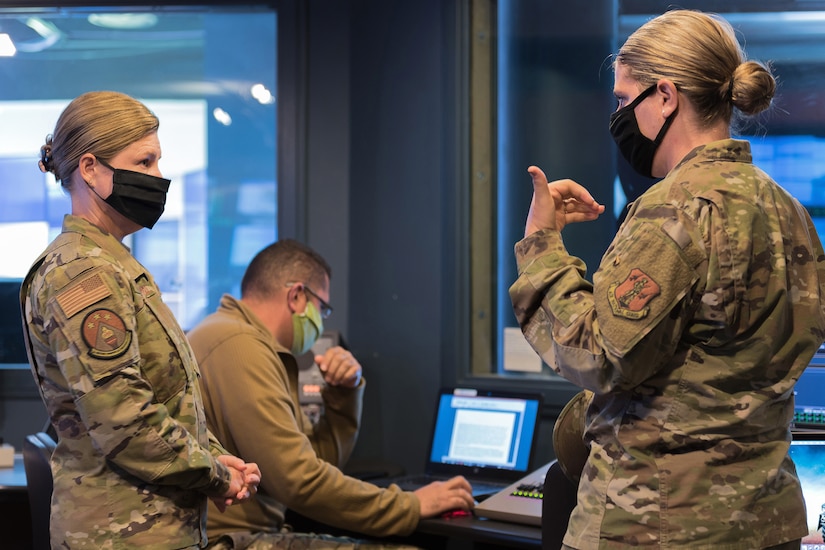
Air Force Chief Master Sgt. Steven Durrance, the Enlisted PME Center commandant, said in March that his team was focused on preparations to instruct a new curriculum as well as alternative learning methods.
Instructors learned television-studio camera skills such as reading from a teleprompter from broadcasting professionals to record their curriculum. The center operates the Air National Guard's broadcast center and Warrior Network television studios.
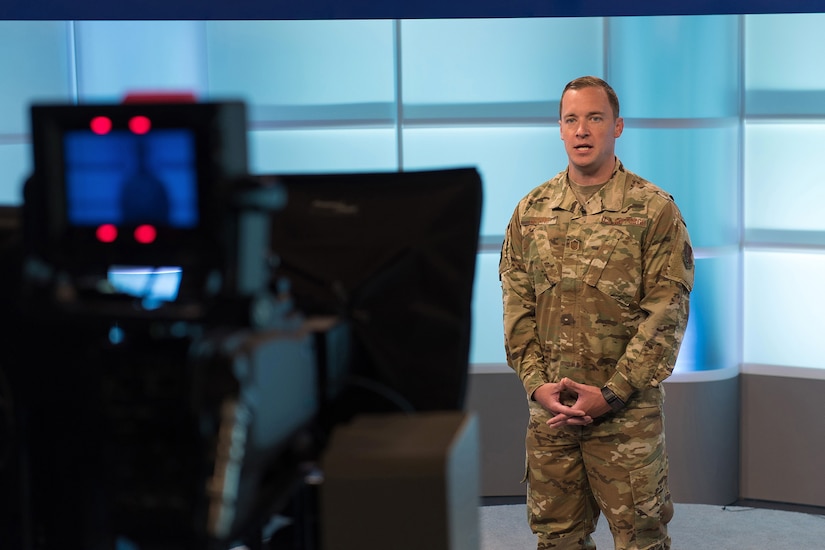
"This was an extremely quick turn for Lankford; especially considering the circumstances," said Air Force Master Sgt. Michael Beiting, the superintendent of the NCO Academy. "It really has been a massive effort with a lot of challenges."
The Air National Guard's Lankford Center is a total force institution and graduates thousands of students annually. The 38 faculty members include 19 active duty enlisted airmen, 18 from the Air National Guard and one from Air Force Reserve Command, as well as three support staff. They have focused on course revisions and transformations from home since the COVID-19 pandemic suspended classes on campus.
(Air Force Master Sgt. Mike Smith is assigned to the Air National Guard Training and Education Center.)
Faced with school closures due to the COVID-19 pandemic, California Military Department state active duty soldiers who serve as full-time cadre at California Military Institute found a new way to serve through a school meal program at Pinacate Middle School in Perris, California.
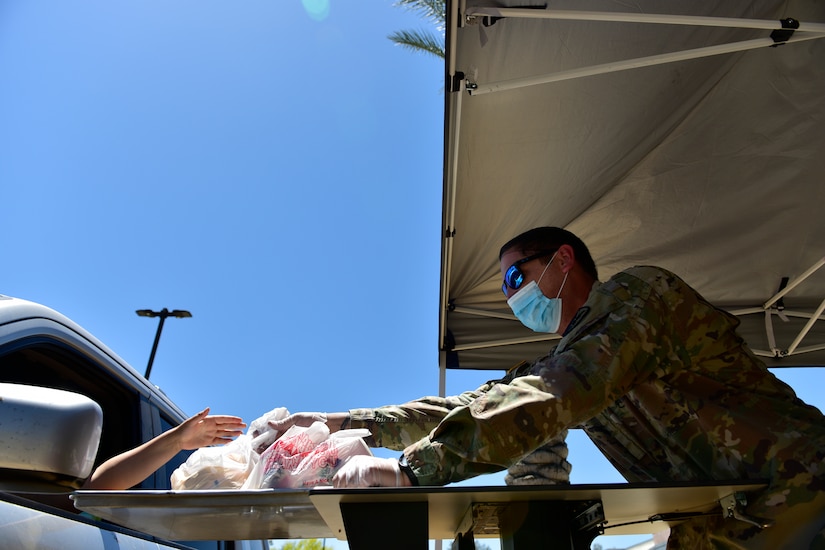
Army Sgt. 1st Class Benjamin Federici, the California State Guard noncommissioned officer in charge of operations at the California Military Institute, and Army Staff Sgt. Patrick Kelhi, with the California Army National Guard, volunteer twice a week, packaging and distributing meals to students in need.
"We're just here to help," Kelhi said. "The kids are going through enough, and no one has experienced this before. We’re a little bit of a solid foundation for the kids and family. They know we will be here on Mondays and Wednesdays to give out meals. They rely on us during this time of uncertainty. It's amazing."
The soldiers work with members of the TerraBites Cafe, which provides nutritional services to the Perris Union High School District. When all of the district's schools closed March 16, the TerraBites Cafe continued its meal programs.
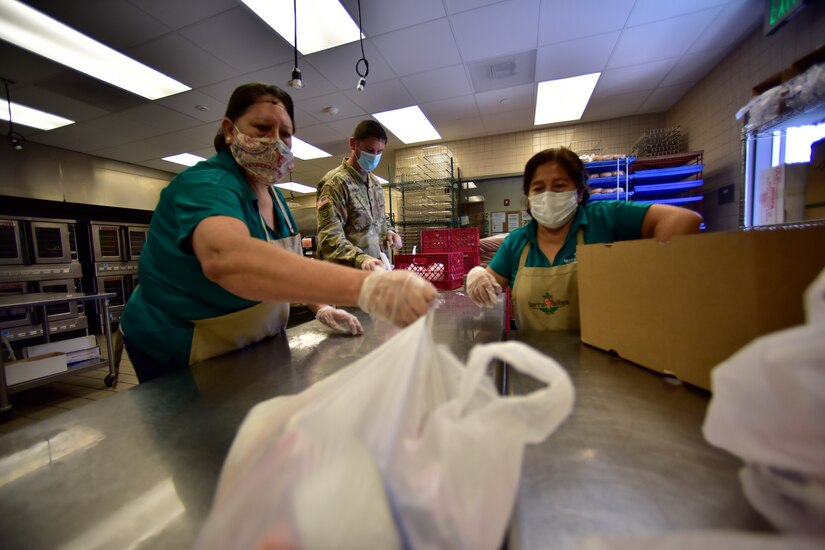
Louise Lopez, the nutritional services lead at the middle school, runs the meal distribution efforts that started shortly after the school closures.
"The kids count on these meals," Lopez said. "We have a really high percentage of students that receive free and reduced meals. We want to continue to meet that need, because we want to make sure they're still eating. For a lot of them, breakfast and lunch are their main meals, and it comes from us."
"I couldn't even put a word to it, it tears me up," she continued. "It's just so important. It's everything for a lot of them, and it's everything for a lot of parents, too."
Kelhi and Federici were quick to offer their help to the effort.
"When this started, we talked about it in our office and how these kids were going to be taken care of," Kelhi said. "So many kids rely on these meals. When we had the opportunity to volunteer here, we jumped on it. It's busy, it's hectic but the smiles on the kids' faces is a huge payoff."
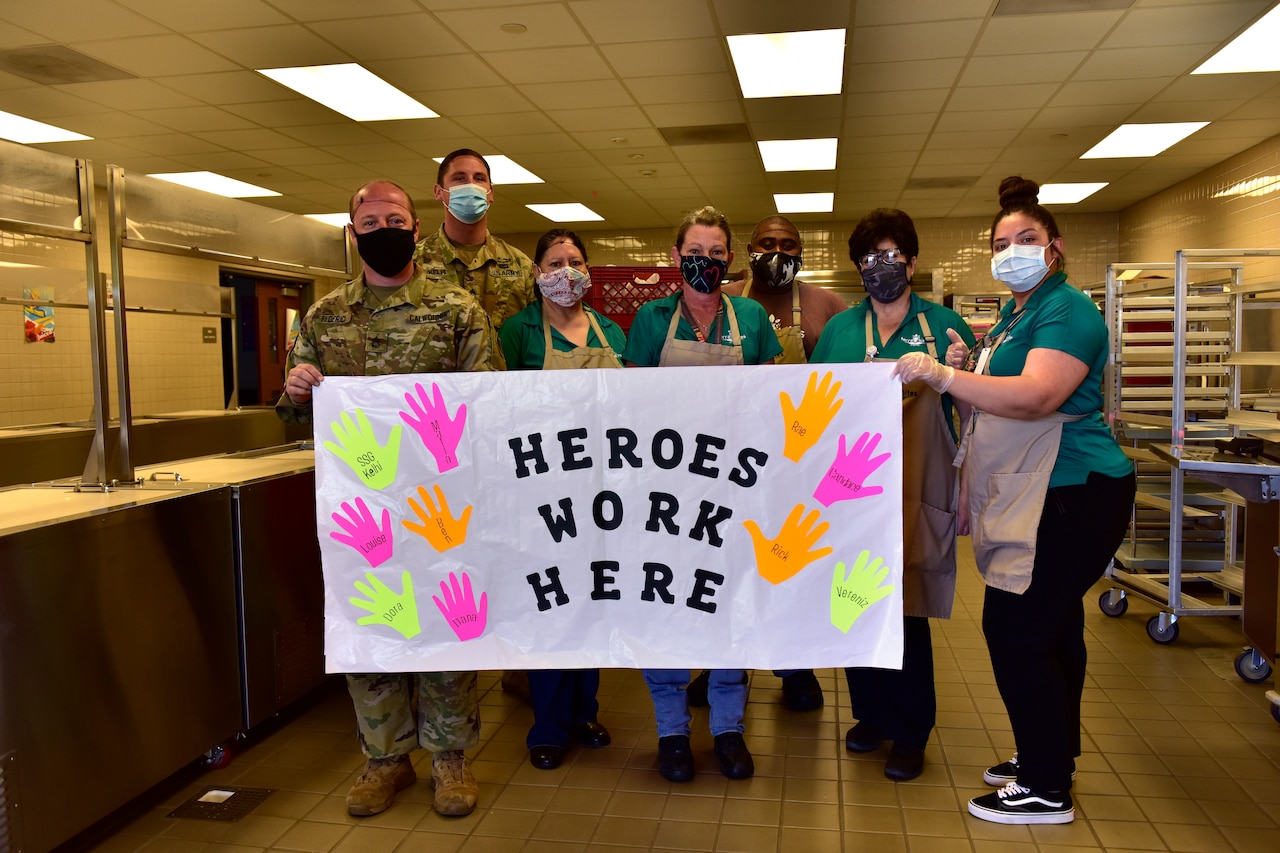
The twice-weekly distribution starts at 7 a.m. with staff members cooking and packaging the meals. Each meal includes a hot lunch item and two additional days' worth of breakfast and lunch items. The food covers the five days of meals children would have received if the school was still in session.
"Right now, what we're doing is making sure they get breakfast and lunch five days a week," Lopez said. "We have a system where the parents pull up, roll the window down, put their hand out of their window and show three fingers, four fingers, or whatever it is they need. Then we put the corresponding number of meals on a tray for them to grab."
Many of the children are not present for the meal pick-up, but some do ride along with parents just to see a familiar face and have a sense of normalcy.
"A lot of students will come through the line with their parents and say, 'That's my lunch lady,' or 'That’s my teacher,'" Lopez said. "They’ll wave, and the parents will wave at the guardsmen. The students get excited because we’re familiar to them."
"I want to go back to school," said Rogelio Lopez, who is 13 and a CMI cadet and member of the California Cadet Corps. "I miss my teachers and my friends, so it's cool to come through to get lunch and see them. This is amazing, because at the beginning, my mom couldn't get some things at the store because they ran out."
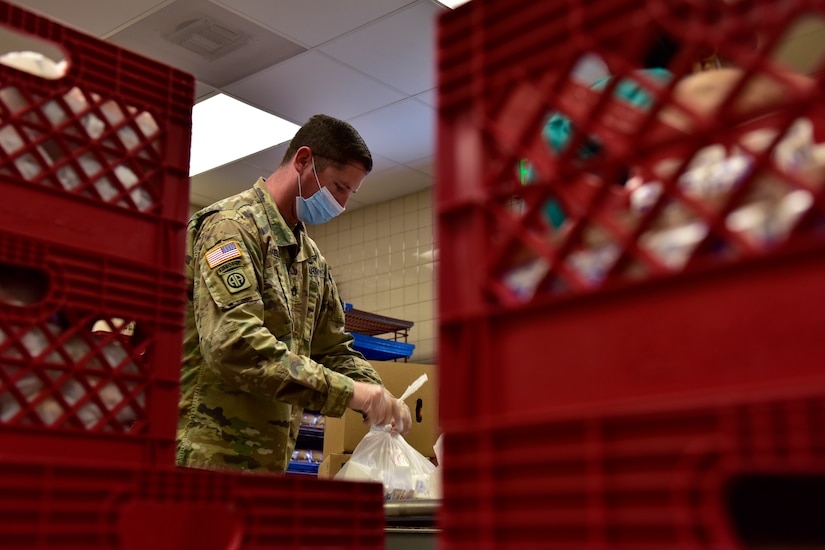
Kelhi and Federici help the TerraBites Cafe staff package the food and lead the drive-thru distribution to families.
As cadre members, both Federici and Kelhi interact daily with students in grades 5-12 who attend CMI, which is a military-themed public charter school in Perris. The school uses the California Military Department's youth leadership program, California Cadet Corps, as its military foundation, and members of the California state and national guards augment teachers to help facilitate the school’s cadet program.
"It helps out to have that face-to-face with my students, check on them and crack a dad joke to make them smile and laugh," Federici said. "I try to remind them that this will be over soon. Some of the students were upset that everything that was in the works got cancelled. I tell them this is just a setback."
The meal distribution means much more to Federici and Kelhi. For the pair, it's about more than handing out food.
"I feel a sense of pride that the kids are able to come here and get some nourishment, but also engage with us, too," Federici said. "If I can make that dad or mom or kid or grandparent smile and uplift their spirit, it helps me to go home to my kids and know I'm adding some good to a world that's chaotic right now."
(Air Force Tech. Sgt. Julianne Showalter is assigned to the California Air National Guard.)
The secretary's May 20 visit included stops at the 27th Special Operations Logistics Readiness Squadron and the 20th Special Operations Squadron, among other units.
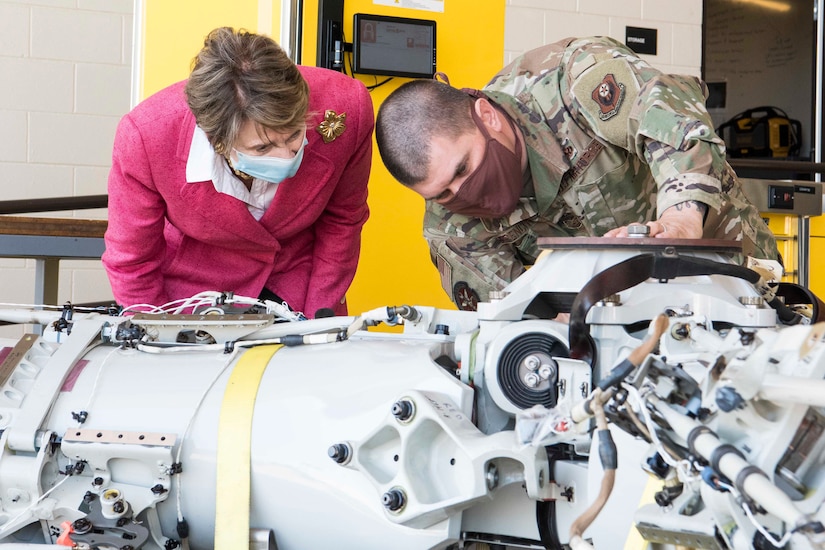
"It was reassuring to hear [Barrett's] insight and reflection on the wing and Air Force's response to COVID-19," said Air Force Lt. Col. Mark Hamilton, the commander of the 20th SOS. "We also noted her interest in taking away some of the best practices learned from the pandemic to become a more efficient and lethal vertical-lift squadron."
Hamilton and Barrett discussed the unit's role in the wing's mission, briefly showcasing the history of the unit and its accomplishments and how its airmen have continued staying current in meeting evolving demands with modern solutions.
"We are the sole vertical-lift platform at Cannon, and we strive to execute that professional specialized work for our nation," Hamilton added.
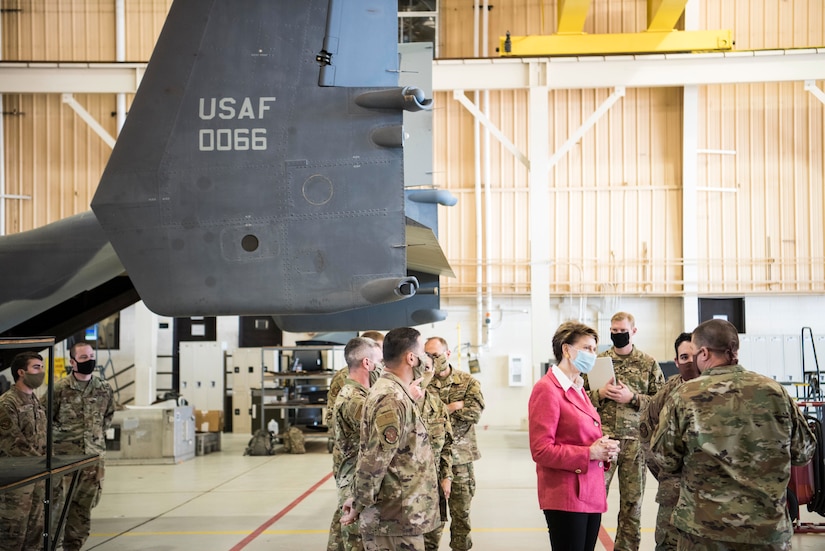
In light of the current times, Barrett not only wanted to see the day-to-day work of some of the base's units, but also wanted to hear about their methods of balancing airman safety with meeting mission requirements.
"We were presented with a unique problem set and rapidly adapted our lives in order to maintain readiness, minimize exposure and ultimately protect our collective family," Hamilton said.
Like many units, the 20th SOS has created a new shift system that essentially "splits" the squadron to minimize possible exposure. "While the workload has not reduced, we have become more effective at leveraging technology to work from home," Hamilton said.

Air Force Lt. Col. Shaun Parker, the 27th SOLRS commander, explained his squadron's side of the mission to the secretary and highlighted some airmen for their individual effort in keeping operations requirements met.
"I very much appreciated how she recognized the hard work of our members that have led the wing's pre-quarantine efforts to ensure we could deploy and relieve our deployed members that have been extended," Parker said. "I took away that she was interested in how we were maintaining readiness in the face of COVID-19."
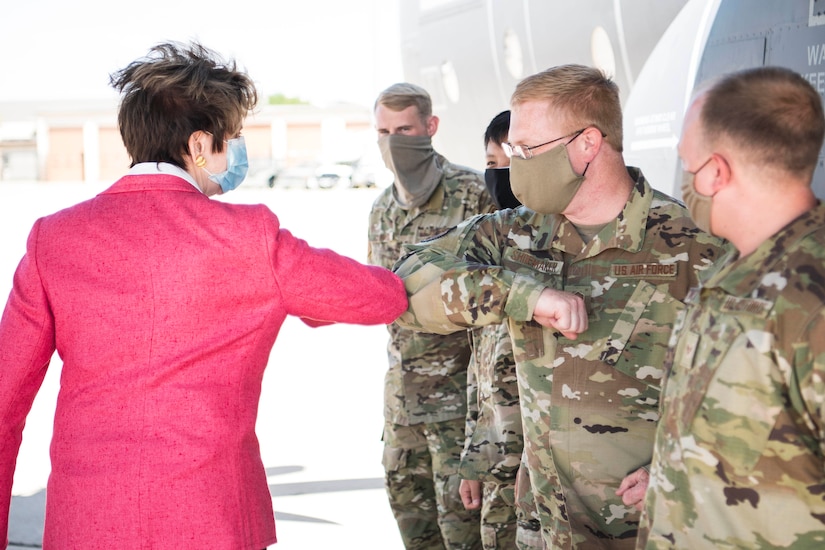
These two units were examples of how all squadrons at Cannon chose to adapt and press on with executing global operations at a high standard, base officials said.
"Today, the U.S. government, through the Department of Defense, is delivering vitally important equipment, including [personal protective equipment], to Eswatini to help prevent and combat COVID-19," said Ambassador Lisa J. Peterson. "We will continue to work with [the] government and our implementing partners to respond to this crisis in real and concrete ways."
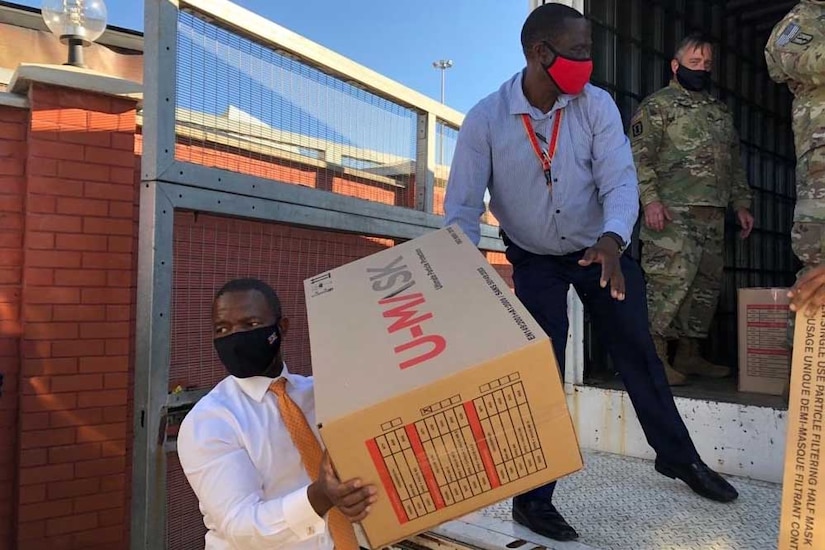
Eswatini, with a population of 1.2 million, is working hard to prevent the spread of COVID-19 within its borders. The donated equipment was transferred from embassy personnel in South Africa to the embassy personnel in Eswatini to comply with South African COVID-19 quarantine policies and laws.
"Together, we are working to overcome the COVID-19 pandemic, to protect people who are most vulnerable to contracting this disease and to preserve the advances Eswatini has made in the fight against HIV and AIDS," the ambassador said.
The donation of medical personal protective equipment from the U.S. to Eswatini is just one example of the ways the United States is supporting efforts to control COVID-19. The U.S. Embassy has already dedicated 22 medical and technical experts from the President's Emergency Plan For AIDS Relief, the Centers for Disease Control and Prevention, DOD and the U.S. Agency for International Development to work directly on Eswatini's COVID-19 response.

These officials support national efforts, share technical expertise, provide training and offer a wealth of knowledge and experience in responding to this unprecedented public health threat, officials said. Through direct funding to partner organizations, the U.S. Embassy is supporting 50 clinics and 1,926 facility and community-based support staff to support the government COVID-19 response.
"This donation of PPE from [U.S. Africa Command] to the Kingdom of Eswatini exemplifies how, despite vast distances between our capitals, governments can still work together to face down common threats on behalf of our citizens," said Army Lt. Col. Darrick Mosley, the U.S. Embassy Office of Defense Cooperation chief.
The border transfer demonstrates a continued and enduring commitment to helping build a stronger health system in Eswatini, officials said, protecting people who are most vulnerable from disease and working together to defeat COVID-19.
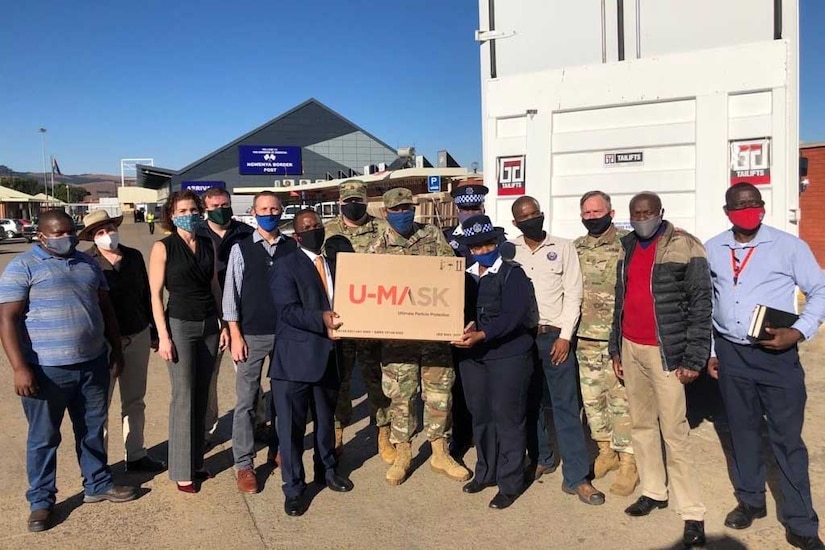
"We want to say, on behalf of his majesty's government, thank you for this partnership between the Kingdom of Eswatini and the U.S," Dr. Simon Zwane, the principal secretary of Eswatini's Ministry of Health. "We are so grateful to the American government for their generosity and warm heartedness, which they have shown not only in this COVID-19 pandemic but always. This PPE will go a long way in assisting the kingdom to respond more effectively to this pandemic, particularly to our beloved frontline workers."

Airmen assigned to the 347th Rescue Group drop flares during a "fini flight" for Col. Bryan Creel, the group's commander, at Moody Air Force Base, Ga., June 5, 2020. The fini flight is an Air Force tradition marking pilots' departure from a unit, or the last time they fly an aircraft. Creel's event marked his slated move to Incirlik Air Base, Turkey, to command the 39th Air Base Wing.
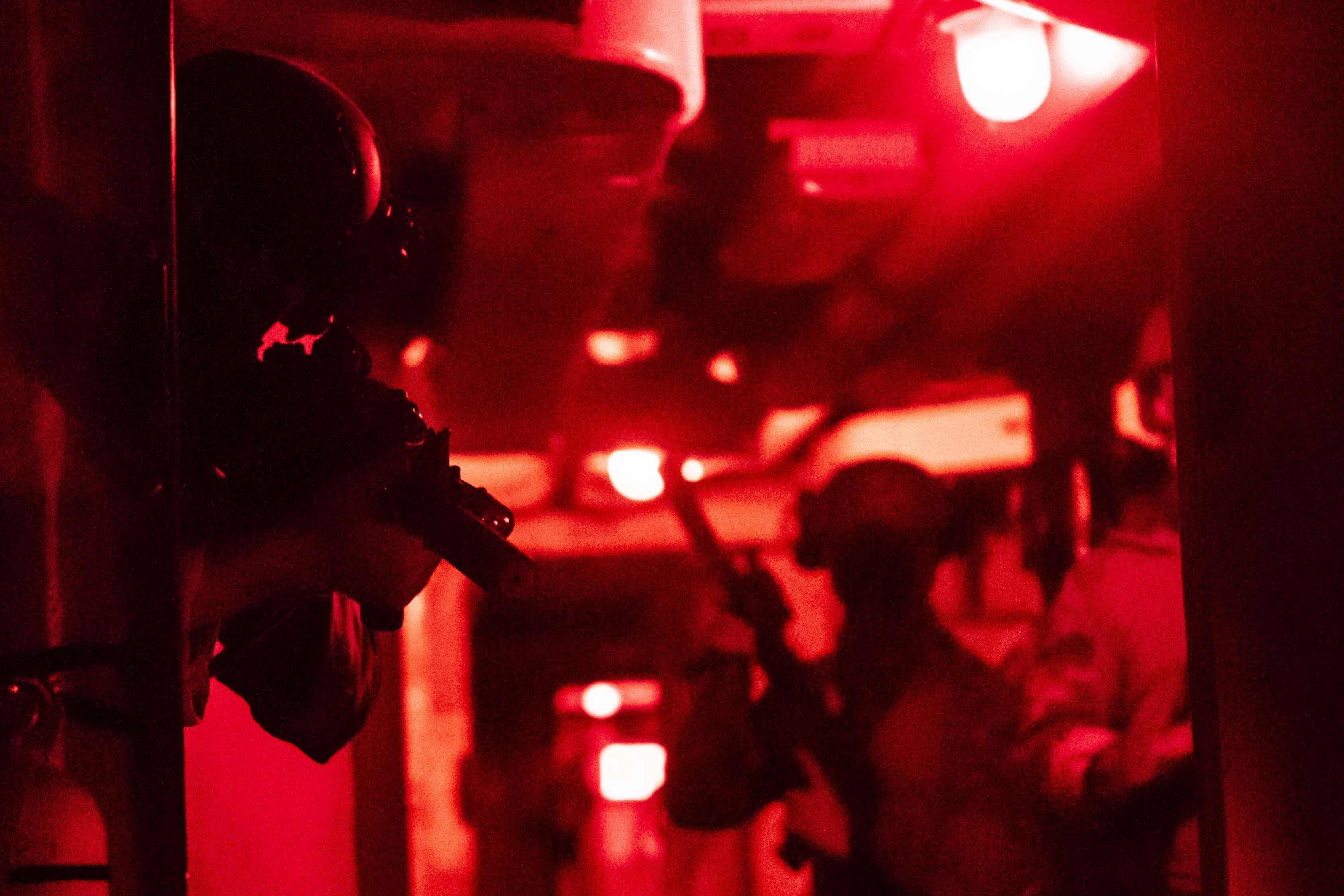
Coast Guardsmen conduct close-quarter combat training aboard the Coast Guard cutter Ingham, a museum ship, in Key West, Fla., June 8, 2020.
Based upon analysis of local conditions, per the White House guidelines for Opening Up America Again, DOD Chief Management Officer Lisa Hershman will move the Pentagon Reservation to Phase One (Restricted) of the Pentagon Reservation Plan for Resilience, effective 12:01 a.m. EDT, Monday, June 15, 2020. Under Phase One, the Health Protection Condition (HPCON) for the Pentagon Reservation remains HPCON C. The status of the Armed Forces Retirement Homes will not change; they will remain at HPCON D.
Main differences that may be seen starting Monday, as outlined below, are a slight increase of people in workspaces, more open entrances, and additional random testing of people entering facilities.
Under Phase One:
Additionally, under Phase One at the Pentagon building:
For further information, please see:


 Posts
All Comments
Posts
All Comments
Posts
All Comments
Posts
All Comments


