Saturday, April 18, 2020

Doolittle Raid on Japan 78 Years Ago Buoyed American Spirits


April 18, 2020 | BY David Vergun , DOD News

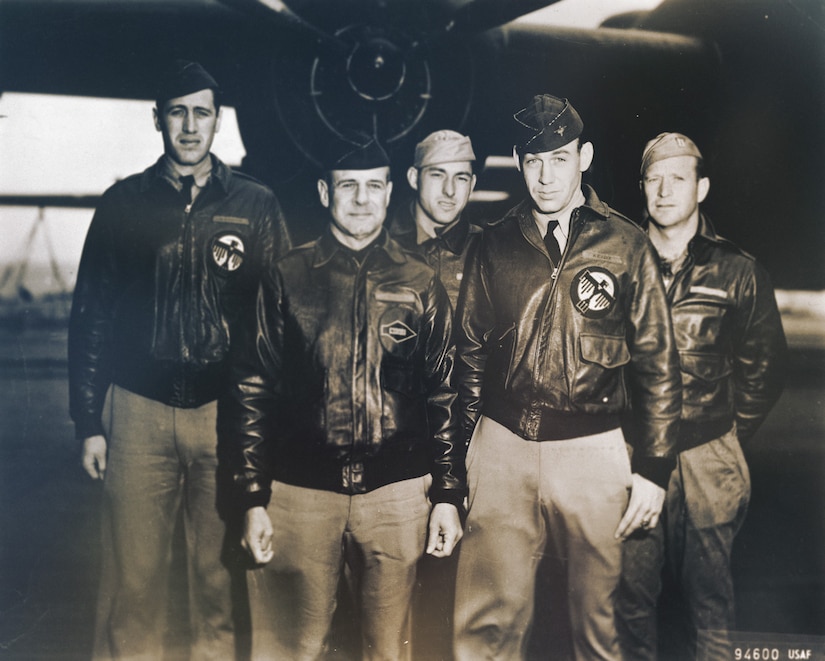
The April 18, 1942, Doolittle Raid on Japan early in WorldWar II bolstered American spirits just months after the surprise attack on Pearl Harbor and the loss of the U.S. territories of Guam and the Philippines.

The other goals of the mission were to bomb Japanese war industries and to lower the morale of the Japanese people.

The problem was that the U.S. didn't have long-range strategic bombers that could take off from Hawaii on their bombing run to Japan and then return. So with the help of the Navy, a plan was hatched.

The Army Air Force's North American B-25B Mitchell was selected as the best bomber available that could take off from an aircraft carrier. The commander of the raid, Army Lt. Col. Jimmy Doolittle, planned to fly his squadron from a carrier to the Soviet city of Vladivostok after the bombing run.

But they would not return to the carrier. B-25B tests showed that it had difficulty landing on the deck of a carrier, as it was meant to be a land-based runway aircraft. Also, the carrier group could get out of harm's way quickly enough, as enemy planes and ships were anticipating such an attack and had positioned vessels at sea to spot U.S. warships. The bombers also lacked radar.

Although the Soviet Union was a U.S. ally against Germany, it had signed a nonaggression pact with Japan, so it declined an offer to participate.

To get within range of Japan, the plan was to sail the carrier USS Hornet within 400 miles of mainland Japan, launch the 16 aircraft with a crew of 80 airmen and quickly sail out of harm's way, along with the carrier Enterprise; a cruiser; eight destroyers and two oilers.

However, when the task force was 750 miles from Japan, they were spotted by a Japanese patrol vessel, which the cruiser USS Nashville, promptly sank. However, the patrol vessel had time to radio a warning to the Japanese military, so the decision was made to launch the 16 B-25B's immediately and get out of the area as quickly as possible.

Six hours after launch, the aircraft bombed military and industrial targets in Tokyo and other large cities on the main island of Honshu.

Of the 16 planes, 15 crash-landed in China and one aircraft, which was low on fuel, landed in the Soviet Union, which was closer. Crew members from that plane were detained because the rules of neutrality were such that the men couldn’t be returned. However, they all managed to escape.

In total, three crew members were killed in action. Another three were executed by the Japanese, and one died in captivity. This was considered a relatively low fatality rate for such a risky mission.

One of the survivors, Doolittle, received the Medal of Honor in 1942 from President Franklin D. Roosevelt.

One of those who was captured by the Japanese, Army 2nd Lt. George Barr, was treated horribly while in custody, and at one point was near death. After the war and after recovery, he returned to Japan as a missionary, serving there for 30 years.

The Doolittle Raid, while doing relatively minor damage to Japan, did serve to greatly boost the morale of the American people, which was the primary aim.

USS Vermont becomes latest Virginia-class fast-attack submarine in service


April 18, 2020

The U.S. Navy commissioned USS Vermont (SSN 792), the 19th Virginia-class attack submarine, today, April 18, 2020.

Although the traditional public commissioning ceremony was cancelled due to public health safety and restrictions of large public gatherings, the Navy commissioned USS Vermont administratively and transitioned the ship to normal operations. Meanwhile, the Navy is looking at a future opportunity to commemorate the special event with the ship’s sponsor, crew and commissioning committee.

“This Virginia-class fast-attack submarine will continue the proud naval legacy of the state of Vermont and the ships that have borne her name,” said Acting Secretary of the Navy James E. McPherson. "I am confident the crew of this cutting edge platform will carry on this tradition and confront the challenges of today's complex world with the professionalism and dedication our nation depends on from warriors of the silent service.”

Vice Adm. Daryl Caudle, commander, Submarine Forces, said Vermont’s entry to service marks a new phase of American undersea warfare dominance for a global Submarine Force that is ready to deter, defend and defeat threats to our nation, allies, and rules-based international order.

“This warship carries on a proud Vermont legacy in naval warfare and unyielding determination stretching back to the birth of our nation,” Caudle said. “To her crew, congratulations on completing the arduous readiness training to enter sea trials and prepare this ship for battle. I am proud to serve with each of you! Stand ready to defend our nation wherever we are threatened – honoring your motto – FREEDOM AND UNITY. May God bless our Submarine Force, the people of Vermont, and our families! From the depths, we strike!”

The ship’s sponsor, Ms. Gloria Valdez, former deputy assistant secretary of the Navy (Ships), offered her gratitude to everyone who played a role in delivering USS Vermont to service. She said she is proud to represent the crew and the first Block IV Virginia-class submarine to enter service.

“I am very proud of the sailors and families of USS Vermont who worked so hard to bring her to life, and also feel extremely grateful to everyone who played a role preparing her to defend our nation for generations to come,” Valdez said. “I look forward to commemorating this special occasion together with the crew in the future.”

Vermont's commanding officer, Cmdr. Charles W. Phillips III, highlighted Vermont's accomplishments over the past several weeks getting through initial sea trials. The hard work and dedication of the entire team during the past few years was evident in the successful execution of at-sea testing. He said he is especially thankful to the crew and their families, ship sponsor Ms. Valdez, and the USS Vermont Commissioning Committee, led by Ms. Debra Martin, for all their hard work and support of the crew.

"We recognize just how important the submarine force is during this era of great power competition. As part of the nation's maritime asymmetric advantage over our competitors, we are ready to perform whatever duty is most needed. The crew is hungry to hone our skills at-sea and become an effective fighting unit, and we will work tirelessly to justify the nation's confidence in us. Today marks the culmination of six years of dedicated work by the men and women who constructed the nation's newest and most capable warship. We are all honored to be part of this historic moment," Phillips said. "We are also grateful for the families who have supported our sailors through the long process of bringing this warship to life and dedicated their time with patriotism and selfless devotion."

USS Vermont is the third U.S. Navy ship to bear the name of the “Green Mountain State.” The first Vermont was one of nine 74-gun warships authorized by Congress in 1816. The second Vermont, Battleship No. 20, was commissioned in 1907 and first deployed in December of that same year as part of the “Great White Fleet.” She was decommissioned June 30, 1920.

Vermont is a flexible, multi-mission platform designed to carry out the seven core competencies of the submarine force: anti-submarine warfare; anti-surface warfare; delivery of special operations forces; strike warfare; irregular warfare; intelligence, surveillance and reconnaissance; and mine warfare.

The submarine is 377 feet long, has a 34-foot beam, and will be able to dive to depths greater than 800 feet and operate at speeds in excess of 25 knots submerged. The ship’s construction began in May 2014, and it will provide the Navy with the capabilities required to maintain the nation's undersea superiority well into the 21st century. It is the first the first of 10 Virginia-class Block IV submarines. Block IV submarines incorporate design changes focused on reduced total ownership cost. By making smaller-scale design changes, the Navy will increase the length of time between maintenance stops and increase the number of deployments.

Friday, April 17, 2020

Deploying for Duty: Army Wife, Mom of 5, Heads to NYC to Fight COVID-19


April 17, 2020 | BY Katie Lange , DOD News

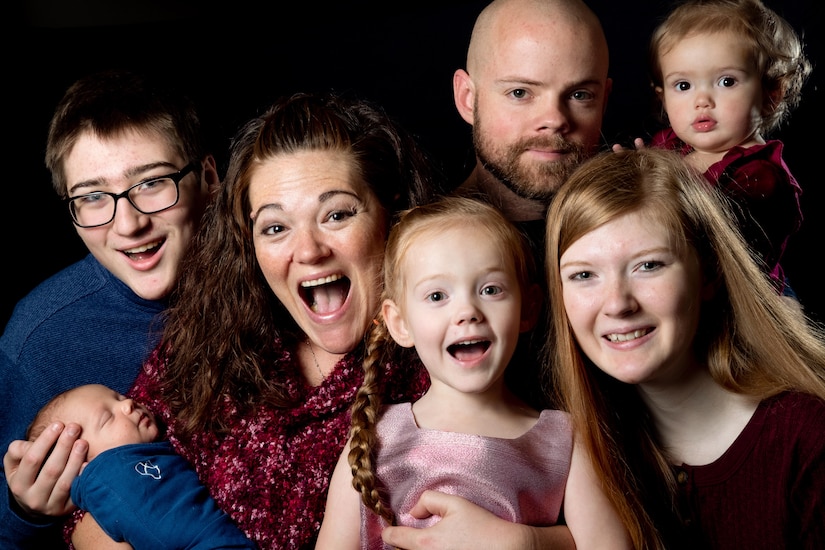
As an Army wife, Jessica Henninger is used to her husband deploying and being away from the family. So, it was a surreal experience for the nurse who had been out of the workforce to be the one saying goodbye while her husband prepared to take care of their five kids as she left for a different kind of war — the fight against COVID-19.

"For a military spouse who's used to the attention always being on my husband and [people saying] 'Thank your husband for his service,' for people to be saying that to me now is so weird," said the 38-year-old Henninger, who left over the weekend to help overwhelmed health care workers in New York City, the epicenter of the coronavirus pandemic in the United States.

Henninger put her own career on hold 18 months ago to take care of the couple's kids, who are 16, 14, 5, 1 and 4 months. But before that, she spent 20 years working in health care. Ten of those were as a nurse working in intensive care and with patients on ventilators in respiratory units.

So, she's perfectly cut out for the battle against COVID-19, and, once the crisis started ramping up, she knew she had to do something.

"There was this drive, I guess, just hearing all of the stories about how bogged down the nurses were and the atrocious nurse-patient ratios," Henninger said. "I thought, 'I have these skills, and they're not being used.' I can be helpful. I can't … just sit here on these skills doing nothing.'"

She found a position as a travel nurse — one who fills in at hospitals with short-term staffing needs — and was so focused on helping that she didn't contemplate having to leave her family behind.

"It wasn't until it got real — it got to me the night before I was going to leave — that all of a sudden I started realizing, 'I'm going to have to leave my baby,'" Henninger said of her 4-month-old son. "That's when it really started getting emotional for me. The morning I left, I was a mess."

Henninger's husband, Army Staff Sgt. Alex Henninger, is a broadcast specialist. During his 12-year Army career, he's been away from his family on deployments and other assignments for a fourth of that time. So, she's aware of what her family is in for.

"I knew it was going to be difficult for them, me being gone, but for me, it was just — we're nurses, and it's what we do," Henninger said.

Her husband understood.

"I was immediately on board with Jess's decision," Staff Sergeant Henninger said. "Her going to New York to do this is the same as me deploying to film in a combat zone. Both scenarios put us in the crucible of our training and experience. It's what we've prepared for our entire careers. I couldn't be more proud."

By April 13, Jessica was in Manhattan at an orientation, getting up to speed on what's going on at the hospital where she'll be working for the next eight weeks.

"Essentially, they're using the hospital that I'm at as an overflow for [COVID-19] patients as they start to stabilize and get a little less acute," she said. "They're not as critical, at this point, as they were when they first got sick."

She said her role will be a bit different from that of the average travel nurse, considering that the workers at the hospital — which she's been told not to name — don't usually work with patients suffering from COVID-19 symptoms.

"Normally, as a traveler, you go in and you're the new guy on the block, and you're looking to the more established staff to be, like, 'OK, you're my resource here,'" said. "But the [hospital] staff members will more than likely be looking to us, since we've done all of these types of things before."

She doesn't yet know if she'll have a set schedule for her time in New York. What she has been prepared for, though, is the need to stay flexible.

"They say that they're getting updates every single day as to what the changes are and how we're proceeding with things, so everything is just a really fluid situation, and we just have to be ready for anything," Henninger said.

At first, she said she was a little nervous because she hadn't practiced in a while, but after that first day, she felt much more prepared.

"Going through the orientation process has reinforced for me that, even though this is really an extraordinary time where we don't know what to expect, … all of the things that I know how to do and that are just a part of who I am as a nurse, none of that stuff has gone away," Henninger said.

She's finding comfort, too, in the fact that when it comes to this virus, everyone is the new kid on the block. "We're all in this together, learning new things and doing new things together," Henninger said.