Friday, July 06, 2018

Nevada Air National Guard Joins Colorado Firefighting Effort


By Air Force 2nd Lt. Emerson Marcus, 152nd Airlift Wing

RENO, Nev. -- The National Interagency Fire Center has requested a C-130 aircraft and aircrew from the Nevada Air National Guard’s 152nd Airlift Wing  to aid firefighting efforts in Colorado.

The aircraft, operating the U.S. Forest Service’s Modular Airborne Fire Fighting System, or MAFFS, departed Reno yesterday for its initial deployment location at Peterson Air Force Base in Colorado.

The 152nd Airlift Wing, known as the “High Rollers,” is one of four military C-130 units around the nation equipped with MAFFS for large-scale wild land firefighting.

The Reno unit will join two other military units in Colorado: the Air Force Reserve’s 302nd Airlift Wing from Colorado Springs, Colo., and the Wyoming Air National Guard’s 153rd Airlift Wing.

The initial request lasts through July 12.

About a half dozen large wildfires have ravaged areas around the Centennial State this summer and burned more than 100 homes. The 152nd Airlift Wing, along with other MAFFS crews, could potentially be called for any of these fires.

Ready to Answer the Call

“The High Rollers always stand ready to answer the call for federal firefighting missions,” said Air Force Lt. Col. Steve Mills, 192nd Airlift Squadron commander and pilot with the 152nd Airlift Wing. “We've read in the news about the devastation from the fires in Colorado, and we're prepared to do anything we're asked to do to help fight the fires.”

MAFFS equipment, loaded into the cargo compartment of a C-130 aircraft, can drop up to 3,000 gallons of water or fire retardant in six seconds through a nozzle on the rear left side of the plane. The Forest Service owns MAFFS equipment and supplies retardant. The four military units provide C-130 aircraft, maintenance, support personnel and flight crews to fly the missions.

Given the military’s non-compete clause with private industry, private air tankers receive first request for large-scale, wild land firefighting. Military units have provided the surge capacity with MAFFS since 1974, but are activated only after private contractor assets are exhausted and the Forest Service deems additional support is necessary.
The 152nd Airlift Wing was named the newest MAFFS unit in 2016, replacing the North Carolina Air National Guard’s 145th Airlift Wing. Since 2016, 152nd Airlift Wing aircrews have worked and trained with other MAFFS units to gain certification for wild land firefighting. This summer could mark the first autonomous firefighting missions for the unit without assistance from other units since it entered the MAFFS community two years ago.

Washington Guard Recognizes Soldiers for Saving Girl’s Life


By Army Capt. Joseph Siemandel, Washington National Guard

OLYMPIA, Wash. -- Four Washington National Guard soldiers received medals June 30 for their quick action in saving a girl’s life while their convoy was fueling up April 6.

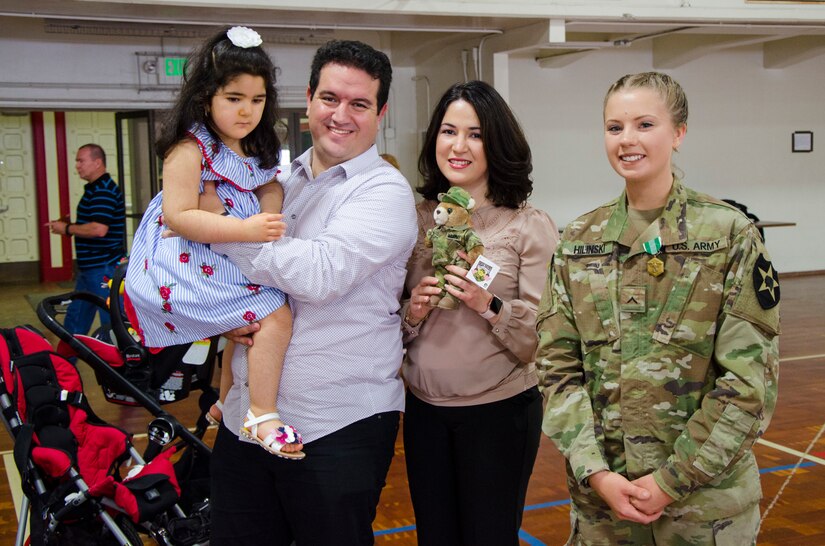
During a ceremony at the National Guard Armory here, Army Pvt. Gracie Hilinski, assigned to the medical section of Headquarters and Headquarters Battery, 2nd Battalion, 146th Field Artillery Regiment, received an Army Commendation Medal.

The other members of the team -- Army Spc. Brandon Issacson, Army Sgt. Richard Schutt and Army Spc. Mitchell Potter -- received Army Achievement Medals for their assistance.

The soldiers were making a routine fuel stop while performing convoy operations when they noticed that something was wrong in a nearby SUV. Hilinski reacted quickly, running to the vehicle to identify the emergency.

“You saved my daughter’s life, I will never forget that,” Ayoub Soulami, the child’s father, said during the ceremony.

After confirming that the family’s daughter, Lilya Soulami, was not breathing, Hilinski administered CPR. After several compressions, Issacson began to detect a pulse. The soldiers continued CPR while the rest of the team confirmed that civilian first responders had been contacted.

“Hilinski’s actions were immediate and confident, showing all the aspects necessary in a competent and effective medic,” Issacson said. “Jumping into a scene that terrifies many new [emergency medical technicians], her actions saved the life of a child.”

Hilinski shared many smiles, awards and gratitude with the family and gave Lilya a teddy bear as she conversed with her parents about the girl’s many healthy and happy years to come.

Thursday, July 05, 2018

Reservist Helps Treat PTSD With Equine Therapy


By Air Force Staff Sgt. Frank J. Casciotta, 302nd Airlift Wing

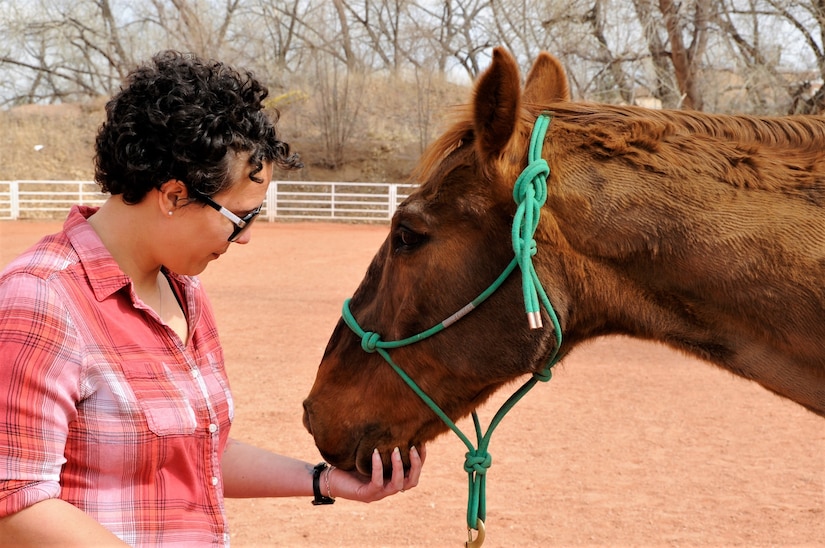
COLORADO SPRINGS, Colo. -- Air Force Tech. Sgt. Tanesha Fierro, an aviation resource manager assigned to the Air Force Reserve’s 34th Aeromedical Evacuation Squadron, spends one night a week at the Norris Penrose Events facility here volunteering with an equine therapy program designed to help veterans and active-duty service members overcome their post-traumatic stress disorder by working with horses.

In 2016, Fierro was volunteering with a therapeutic riding program for children with disabilities when she was approached by another volunteer who asked her if she would be interested in a similar program working with soldiers and airmen suffering from PTSD. “Any time there’s an opportunity to help someone, I’m there,” she said. “I was just honored and excited to get involved in another equine therapy class.”

During an equine therapy session, patients spend time grooming and performing simple exercises with horses. As a volunteer, it’s Fierro’s job to ensure the safety of both horse and patient.

“Horses are such special creatures,” Fierro said. “They can sense if you’re hiding something, and people with PTSD seem to be guarded. The horses pick up on that and won’t cooperate until that shield comes down, which is what makes this so effective.”

Connecting With Service Members

As an Air Force reservist, Fierro brings a special dynamic to her work with other service members and veterans.

“Given that we are working with soldiers, the fact that she wears the uniform gives her instant credibility with them,” said Bill Reed, who has been a volunteer with the program for more than a decade. “A few sessions ago, there was one pretty tight-lipped fellow struggling with some of the concepts. Well, she started working with him, and it turned out they had the same job, except he was [in the] Army. Miles of his barriers fell down right then. He got better after that.”

Though having a military background helps Fierro connect with patients, Dr. Kelly Moss, a clinical psychologist who oversees the sessions, also credits her temperament.

“She is always very calm, kind and even-tempered, which is why I think she works so well,” Moss said. “That makes a big difference in making an initial connection with patients.”

Fierro’s passion for horses started when she was a child living at Royal Air Force Mildenhall, England. Her mother, who is British, took Fierro with her to the stable, where she worked caring for horses.
“I think that’s where my nurturing side comes from,” Fierro said of her mother. “My mother was such a caregiver, and some of that rubbed off on me.”