Friday, June 15, 2018

Face of Defense: West Africa Native Fulfills Dream in Marine Corps


By Marine Corps Lance Cpl. Tegra Shepherd, 3rd Marine Division

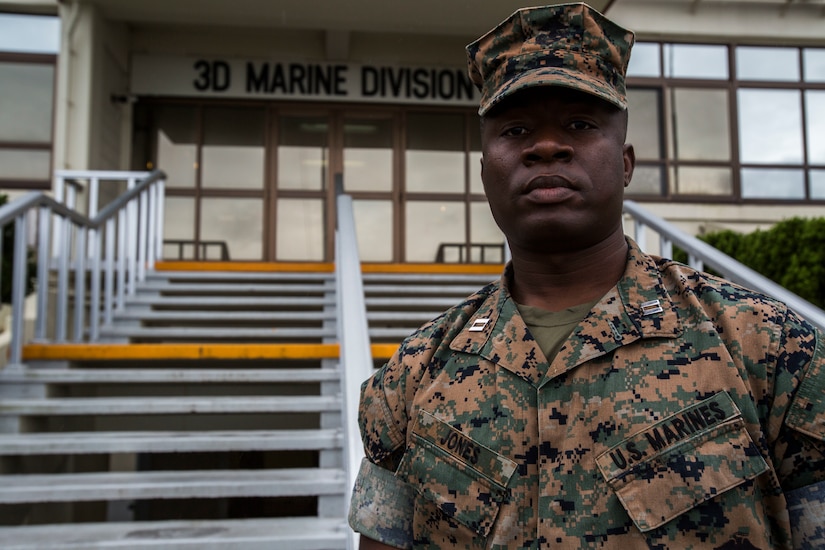
CAMP COURTNEY, Japan -- In 2002, Marine Corps infantryman Sgt. George Jones told an interviewer that his dream was to retire as an officer in the Marine Corps. Jones, a Liberia native, had by then survived a civil war in his home country, emigrated to the U.S. and joined what he called, “The best looking service in the world.”

“In 1994, I came to America as an 18-year-old kid with my parents,” said Jones, the 3rd Marine Division’s current operations officer. “We came to America because it was my dream to visit the United States and at the time they were the only ones offering refugees the chance to resettle.”

Jones said that while his family was in Liberia, they stayed pretty close to an American embassy. This familiarization led to his wanting to become a Marine at a very young age.

“It was obvious why I joined the Marine Corps,” Jones said. “I like a challenge, and I wanted to be one of the best of the best.”

When he arrived in the U.S., Jones started paying for college out of his own pocket, but realized it was very expensive. He returned to his dream of becoming a U.S. Marine and stopped college to enlist, attending boot camp at Parris Island in South Carolina.

Going Maverick

While an enlisted Marine, Jones was able to apply to the Broadened Opportunity for Officer Selection and Training program and earned his commission. The program has since been supplanted by the Marine Corps Enlisted Commissioning Educational Program.

Jones has now been an officer for eight years. His Marines say he has been a great influence.

“My first impression of Capt. Jones was that he was one of the most thorough and articulate Marines I had ever met,” said Master Sgt. Michael Lester, the logistics operations chief for 3rd Marine Division. “My saying about him is that ‘pressure makes diamonds,’ because that’s what he does. He puts pressure on you, because he’s going to make you shine.”

Now with only two years remaining until he retires, Jones has proven to himself and the world that anyone can achieve their goals if they pursue them.

Thursday, June 14, 2018

Exercise Saber Strike 18 Participants Mull Lessons Learned


By Army 1st Lt. Erica Mitchell, Battle Group Poland

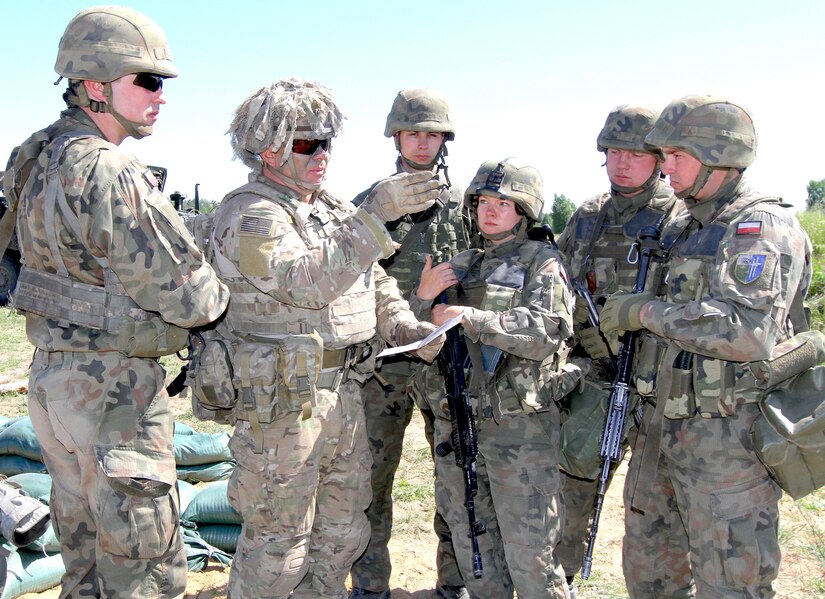
BEMOWO PISKIE, Poland -- As this year’s U.S. Army Europe-led Saber Strike 18 cooperative training exercise comes to an end, soldiers from NATO's Enhanced Forward Presence Battle Group Poland reflected on training, partnerships and interoperability.

“Through Saber Strike, I have learned that together, we are NATO. Once again, this multinational exercise has proven that all participating nations are strongly involved to achieve the same goal,” said Romanian 1st Lt. Alexandru Calinescu, specialist officer, Air Defense Detachment, Blue Scorpions, Battle Group Poland.

Enhancing Interoperability

Not only designed to enhance interoperability among allies and regional partners, this year’s exercise also focused on improving air and land operational capabilities with an additional key objective to train with NATO's Enhanced Forward Presence battle groups.

Battle Group Poland is uniquely comprised of U.S., U.K., Croatian and Romanian Soldiers, who serve with the Polish 15th Mechanized Brigade as a defense and deterrence force in northeast Poland.

Saber Strike 18 began with combined situational training exercises aimed to teach soldiers specific skills, tactics and battlefield techniques of the participating nations, giving soldiers the opportunity to learn from one another.

“This exercise allows us to work with the coalition forces of Battle Group Poland giving us the chance to learn how they move around the battlefield, how they communicate on the radio, how they send fire missions and ultimately understand their standards to send fires downrange,” said Army Staff Sgt. Dustin Peterson, a mortarman from Headquarters and Headquarters Troop, 1st Squadron, 2nd Cavalry Regiment.

An integrated, synchronized, deterrence-oriented field training exercise designed to enhance interoperability and improve readiness of Battle Group Poland culminated the 12-day exercise.

“As a member of the Fire Direction Center, I am aware of the importance of rapid and accurate fire support, in a complex multinational exercise such as Saber Strike 18. We have learned how to adjust to different nations’ tactics, techniques and procedures in order to become interoperable and to perform our tasks efficiently,” said Croatian Pvt. Domagoj Sabolek, Fire Direction Center, Mobile Multiple Rocket Launcher Battery, M-92 Vulkan.

Participation in multinational exercises such as Saber Strike enhances professional relationships, military capabilities and improves overall coordination with allies and partner militaries to conduct a full spectrum of military operations, officials said.

“Like our commander said, the five participating nations in Battle Group Poland are like the fingers of a hand, if there is need, we strike together like a fist,” said Capt. Anna Bielak-Pestka, press officer for Poland’s 15th Mechanized Brigade. “After this exercise, we can truly say that interoperability between the Enhanced Forward Presence Battle Group Poland and the 15th Mechanized Brigade soldiers is on the highest level and we are a ready force.”

Coast Guard Veteran Dedicates 43 years to Keeping Mariners Safe


By Walter Ham, U.S. Coast Guard Headquarters

WASHINGTON -- One fateful evening in 1974 after dropping his girlfriend at home in Shelby County, Alabama, Bob Trainor heard a U.S. Coast Guard radio ad that would change his life.

“Within those 60 seconds, I was hooked,” Trainor said. “I visited the recruiter the next day and within a couple of months was on my way to Alameda, California.”

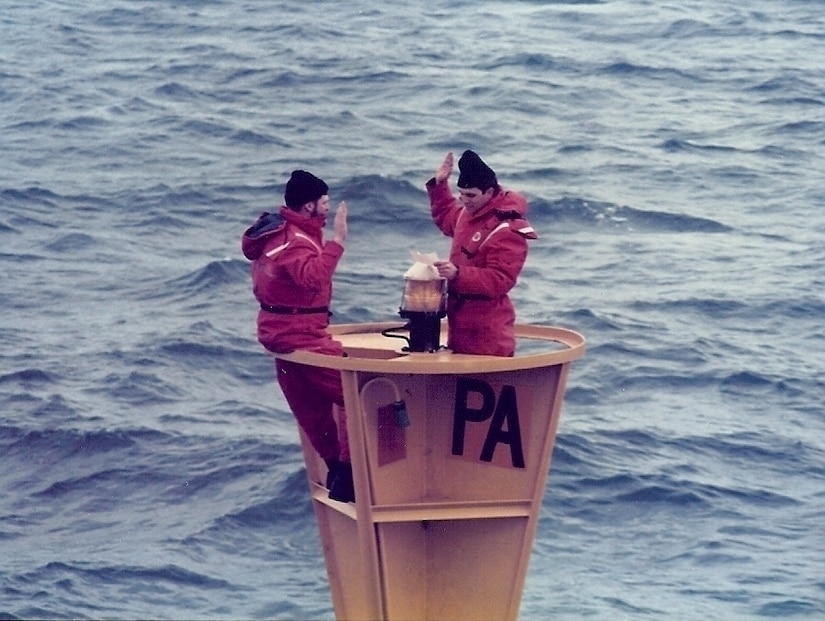
Trainor decided to join the Coast Guard because he wanted to drive boats and save lives. Little did he know at the time he was about to become a lifelong “Black Hull” sailor who would help maintain the U.S. Aids to Navigation system, orATON, -- the buoys and beacons that help to keep mariners and the U.S. economy on course.

Maintaining Navigation Buoys, Beacons

The Coast Guard maintains over 48,000 buoys and beacons across more than 25,000 miles of the U.S. navigable waterways that make up the U.S. Marine Transportation System. The Coast Guard ATON system mitigates maritime transit risks by promoting the safe, economic and efficient movement of vessel traffic. The U.S. MTS contributes more than $4.6 trillion to the U.S. economy annually.

“Joining the ATON community was blind luck, but once assigned to the Coast Guard buoy tender Rambler in 1975 out of Mobile, Alabama, I never looked back,” said Trainor, who was born in White Plains, New York, and raised in upstate New York and Massachusetts before moving to Alabama, while still in high school.

Trainor served 24 of his 31 active-duty years in the Coast Guard’s ATON mission. Of his 18 years of sea duty, he served on seven different ATON cutters and two Aids to Navigation Teams, including two commanding officer tours and one officer in charge tour. From the Gulf Coast to the Pacific Northwest to the East Coast, he traveled thousands of miles and helped maintain thousands of the buoys and beacons that safely guide mariners transiting the MTS.

Early in his career on the Corpus Christi-based construction tender Anvil, Trainor and his crewmates demonstrated the multimission capabilities of ATON cutters following the 1979 blowout of a Campeche Bay, Mexico, oil rig.

Working from sunup to sundown for six weeks, the Anvil crew set oil containment booms across many of the inlets along the coast to protect Texas wetlands.

Saving Mariners’ Lives

ATON units also perform search-and-rescue missions. While on the Seattle-based seagoing buoy tender Fir, Trainor, then a chief petty officer, and Chief Warrant Officer Tom Murray rescued a man and his young son who were stranded on a rock island in Deception Pass, Washington, after their boat crashed into pieces on the rocks.

While serving as the commanding officer of the Coast Guard Cutter Sledge, a Baltimore-based construction tender, Trainor helped to restore the ATON system in the waterways of North Carolina, Virginia and Maryland following the 1999 Category 4 Hurricane Floyd. For three weeks following the hurricane, Sledge traveled more than 1,200 miles, rebuilt 45 beacons and corrected many other ATON discrepancies, restoring several critical waterways.

“There is a sense of accomplishment when a construction tender spuds down at severely damaged range light and within a few hours you’re underway with new aid to navigation in your wake lighting the way for our nation’s mariners,” Trainor said.

Trainor retired as a chief warrant officer in 2006. He then went to work as a civil servant at Coast Guard Headquarters here. He was assigned to the Office of Navigation Systems, Aids to Navigation and Position, Navigation and Timing Division.

Coast Guard Civilian Service

As a Coast Guard civilian, Trainor capitalized on his experience to help shape policy and introduce initiatives, improving both the design and maintenance of the ATON system. In addition, he helped shape global ATON standards as a committee member of the International Association of Marine Aids to Navigation and Lighthouse Authorities.

One of his most memorable contributions was the establishment of range project in the Delaware River that vastly improved ship transits through a narrow bridge. One of the Delaware Bay Pilots commented, “You guys just made the most dangerous part of the river much safer.”

From the Coast Guard Headquarters to the Black Hull fleet, Trainor has helped to make U.S. waterways safer, more efficient and resilient.

“Saving lives is the foundation of everything the Coast Guard does,” Trainor said. “From actual rescues to keeping drugs out of the country, to maintaining a system of signals to mitigate transits risks, all Coast Guard missions aim to save lives.”

More than four decades after he joined the Coast Guard, Trainor retired for a second time, wrapping up his 43 years of uniformed and civilian Coast Guard service during a ceremony here in May 2018. His wife Cynthia, who was his girlfriend in 1974 on the night he heard the life-changing radio ad, was there with him.