Thursday, May 10, 2018

Face of Defense: Airmen Make Service a Family Affair


By Robert Lingley, 21st Space Wing

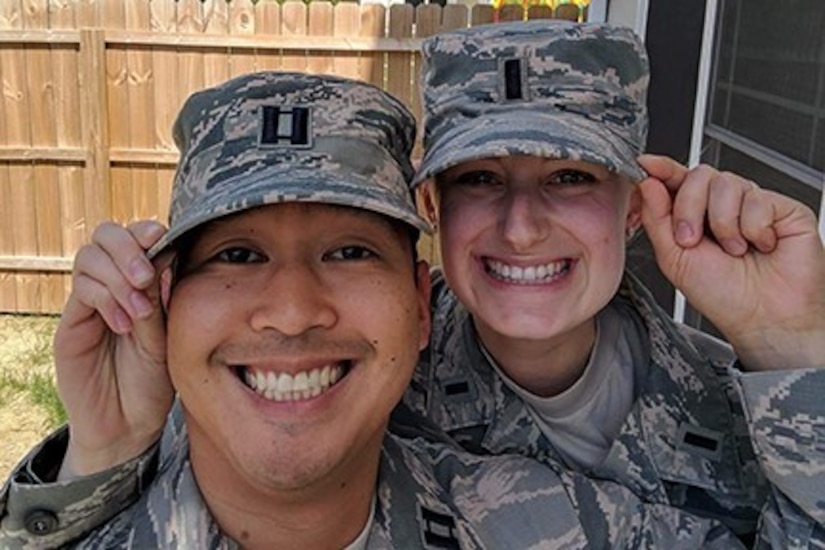
COLORADO SPRINGS, Colo. -- Air Force 1st Lt. Emily Lagarile and Capt. Scott Lagarile are stationed at Cavalier Air Force Station, North Dakota, less than 20 miles from the U.S. border with Canada. Winters can be rough, and the closest fast food joint is 25 miles away. It may be the Air Force’s only isolated installation in the continental United States, but that doesn’t separate these two U.S. Air Force Academy graduates.

Emily is the chief of training for the 10th Space Warning Squadron, and Scott is the 10th Space Warning Squadron’s chief of weapons and tactics. Their time at the Air Force Academy overlapped for two years, but the Lagariles didn’t meet until early in their careers when they both were assigned to the 20th Space Control Squadron at Eglin Air Force Base, Florida.

Military, Family

Just over two and a half years later they married.

Emily is originally from Kansas City, Kansas, and is the third generation of her family to serve, graduating from the Air Force Academy in 2015. Scott is a second-generation U.S. citizen who followed his father’s legacy of military service by first enlisting in the Air Force as a special operations aircraft maintainer. He then went to the Air Force Academy and commissioned in 2013.

Scott works to build better techniques and procedures for the phased-array radar weapon system while also providing advanced training to better prepare space operators. Emily ensures new operators are well prepared to execute the missile warning and space situational awareness missions.

The Lagariles delayed their honeymoon, but finally went on it this month.

“We were excited to finally go on our honeymoon this month and traveled all over Southeast Asia,” Scott said.

Watching the Skies

Scott and Emily operate the Perimeter Acquisition Radar Attack Characterization System to protect the nation’s northern border from strategic missile attack, providing critical missile warning capability to U.S. leaders.

In addition to providing missile warning, Scott said they also employ the PARCS weapon system’s Space Situational Awareness capability, and bring vital space object identification data to the intelligence community.

Since arriving here, Scott and Emily have found a variety of hobbies, including shooting, cooking, board games and going to the base gym. Emily is also an avid runner and is training for the Leadville Trail 100 Run, held in Leadville, Colorado, in August.

“Living here is definitely different from our previous assignment in Florida,” Emily said. “We’re pretty isolated and a trip to the nearest big city takes an hour and a half each way. We live on base and the community up here is great. Our squadron is pretty close and spends a lot of time together because it’s a remote assignment.”

Whenever they have time to travel they try to take advantage of the surrounding area and frequent places like Winnipeg, Manitoba, and Minneapolis, Minnesota.

“The squadron has also given us the chance to truly embrace all that North Dakota has to offer, like fishing, ice fishing, dog sledding and even curling,” Emily said.
The Lagariles love their jobs and think it’s great that they both understand the language of space and the Air Force and the struggles that come with the job. Working opposite schedules can be difficult, but Emily and Scott said they are proud to serve their country together and have only grown closer through their experiences.

Mattis Says U.S., Allies Must Deal With Range of Iranian Malign Activities


By Jim Garamone, DoD News, Defense Media Activity

WASHINGTON -- The United States will continue to work with other nations to address the range of Iranian malign influences, Defense Secretary James N. Mattis told the Senate Appropriations defense subcommittee today.

Mattis and Marine Corps Gen. Joe Dunford, the chairman of the Joint Chiefs of Staff, testified before the panel on the fiscal year 2019 defense budget request. The secretary also discussed President Donald J. Trump’s withdrawal from the Joint Comprehensive Plan of Action that the United States and European allies negotiated with Iran in 2015.

The pact was aimed at limiting Iran’s nuclear program.

“Yesterday, President Trump announced the administration's decision to withdraw from the Joint Comprehensive Plan of Action, terminating U.S. participation, and re-imposing sanctions on the Iranian regime,” Mattis told the subcommittee. “We will continue to work alongside our allies and partners to ensure that Iran can never acquire a nuclear weapon, and we'll work with others to address the range of Iran's malign influence. This administration remains committed to putting the safety, interests and well-being of our citizens first.”

Iran’s Influence

Iran is a prime disturber of the peace throughout the Middle East, defense officials have said, and the plan, as it stands, does nothing to curtail the Iranian regimes malign activities. “[Syrian strongman Bashir] Assad is still in power today, still murdering his own people and still creating refugee flows that we've not seen before based on the support out of Iran,” Mattis said.

But Iran’s activities are not limited to Syria as their influence extends into Lebanon, Yemen and Bahrain, defense officials have said. The Houthi movement in Yemen, a Shiite group, has fired missiles made in Tehran at Saudi Arabia, defense officials have said.

“We have not seen any drawdown or reduction in Iran's malicious activities and malign activities across the region,” the secretary said.

The secretary stressed that the United States will continue to work with allies to “try to bring Iran back into more responsible behavior.”

Iran needs to be confronted not just for its nuclear program, Mattis said, but for its development of ballistic missiles, support for terrorism, launching of cyberattacks and threats to international commerce.

Remembering Nurses’ Contributions to Military Medicine


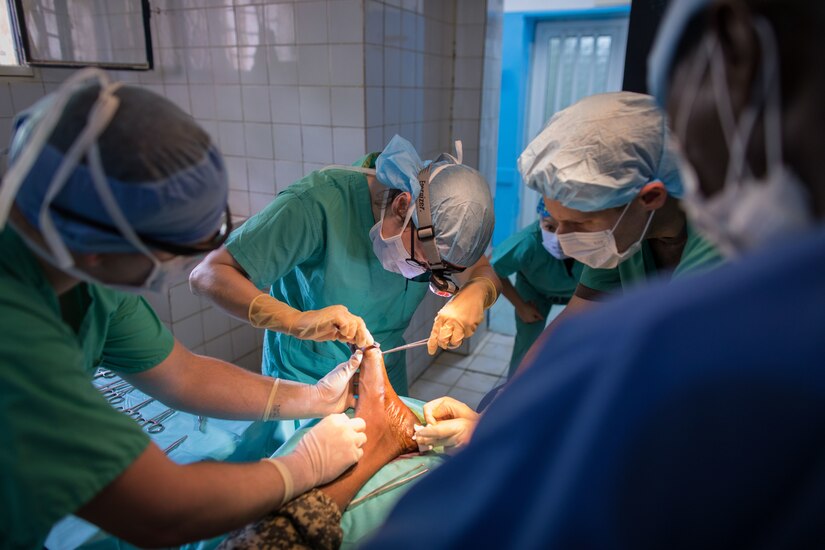
FALLS CHURCH, Va. -- Nurses have been caring for American service members on and off the battlefield since the Revolutionary War. Through the generations, the number of women and men serving as military nurses has continued to grow. The contribution, sacrifice and bravery of these military and civilian medical professionals are recognized during National Nurses Week.

“This week, we proudly celebrate all nurses across the Military Health System – past and present – serving our courageous warfighters, retirees, and their families,” said Tom McCaffery, acting assistant secretary of defense for health affairs, who attended the Military Health System Nurses Week wreath-laying ceremony at Arlington National Cemetery’s Nurses Memorial on May 7.

“The selfless service of nurses in the Military Health System and the Department of Defense impacts each of us every day,” he said. “Their dedication to providing the highest-quality care possible to our 9.4 million beneficiaries means that our troops are safer downrange, our military families are healthier back home, and our nation is a more secure, more prosperous place as a result.”

Proud Tradition of Service

National Nurses Week, which runs from May 6-12, is a weeklong celebration anchored by the birthday of Florence Nightingale, who is often considered the founder of nursing. This year’s theme is “Nurses: Inspire, Innovate, Influence.”

Carol Romano, dean and professor at the Uniformed Services University of Health Sciences Graduate School of Nursing, said nurses are on the frontline of protecting, promoting, and advancing the health and safety of the nation. And like Nightingale, nurses carry knowledge to bring hope, comfort, and care to those in need, she said.

“Nurses inspire others to health; they innovate in leading quality, safety, and access to care; and they influence policy and the healing of mind, body, and spirit, not only for people but for a nation,” said Romano, who gave the opening remarks at the ceremony.

The proud tradition of nursing in the military dates back to the founding of our military, when Gen. George Washington requested the assistance of nurses to tend his wounded and sick soldiers along with a matron to oversee their work. Congress approved, granting one nurse for every 10 patients in Continental Army hospitals. Eighty years later during the American Civil War, thousands of men and women performed nursing duties.

“Since the American Revolution, from battlefields to bedsides, on water, in the air, and on land, nurses and technicians have served admirably as an indispensable part of the U.S. fighting force,” said Maj. Gen. Dorothy Hogg, deputy surgeon general of the Air Force, in her keynote address at the wreath-laying ceremony.

Nursing Corps Established

During the Spanish-American War, the Army relied on contract nurses for the first time. Anita Newcomb -- the only woman authorized to wear an officer’s uniform at the time -- was appointed the U.S. Army’s acting assistant surgeon general and hand-selected nurses to care for service members during the war, Hogg said. This led to the formal establishment of the Army Nurse Corps in 1901. The Navy Nurse Corps, established in 1908, will celebrate its 110th anniversary on May 13. The Air Force Nurse Corps emerged from the Army Nurse Corps in 1949.

When the United States entered World War I in 1917, more than 400 nurses were on active duty. By the end of the war, about 21,000 women, or half of all women who served in the armed forces, belonged to the Army Nurse Corps. They helped fight the influenza epidemic of 1918, which took the lives of more than 200 Army nurses.

Nearly 74,000 military nurses answered the nation’s call in World War II, Hogg said. The first Navy flight nurse to fly into an active battlefield was Ensign Jane Kendeigh, who helped evacuate more than 2,000 injured service members during the Battle of Iwo Jima.

“Nurses [in World War II] administered care closer to combat than ever before,” said Hogg. “They went above and beyond their traditional roles, triaged patients, sutured wounds, and administered blood in the line of fire.”

While speaking at the ceremony, Navy Capt. Deborah Roy, the deputy director of the Navy Nurse Corps, said she was reminded of the 91 nurses captured on Corregidor and held for 37 months in Japanese Prison Camps in the Philippines in 1942. They cared for the sick and injured despite their personal suffering from malnutrition and infectious diseases, with scarce resources during two-and-a-half years of imprisonment, she said.

“We can all recount other stories of the distant and recent past of how nurses influence, inspire, and innovate,” Roy said. “Let us continue to be transformational leaders in the delivery of health care around the world.”

Improving Care

Today, more than 28,500 nurses serve in the uniformed forces and the Defense Health Agency. Hogg said military nurses have advanced combat medicine and improved care for warfighters, including reducing cross contamination of infections, initiating protocols to enhance military nurses’ readiness for deployment, and developing methods to reduce pressure injuries en route to care.

In addition to being caregivers, nurses are also patient advocates, administrators, program managers, educators, researchers, and clinic leaders who take on some of the most challenging positions across the Military Health System, Hogg said. “We must continue to learn from our past and build on our future. The nurses buried here were the nurses who made our profession what it is today … We are responsible for what nursing will be in the future.”

Additional speakers and distinguished guests at the ceremony included Army Col. Melissa Hoffman, deputy chief of the Army Nurse Corps, former chiefs and director of each branch’s nurse corps, and Dr. Karen Off of the Department of Veterans Affairs’ office of nursing services.

“Thank you to all nurses and technicians, past and present, who make military medicine what it is today,” Hogg said, adding praise for those who face the irregular hours, stressful environments, and challenges of nursing. “This is not a profession for the faint of heart. I am honored to recognize your efforts today and grateful for all you do.”