Tuesday, May 08, 2018

Face of Defense: Guardsman Takes Army Values to Heart


By Air Force Tech. Sgt. Erich B. Smith, National Guard Bureau

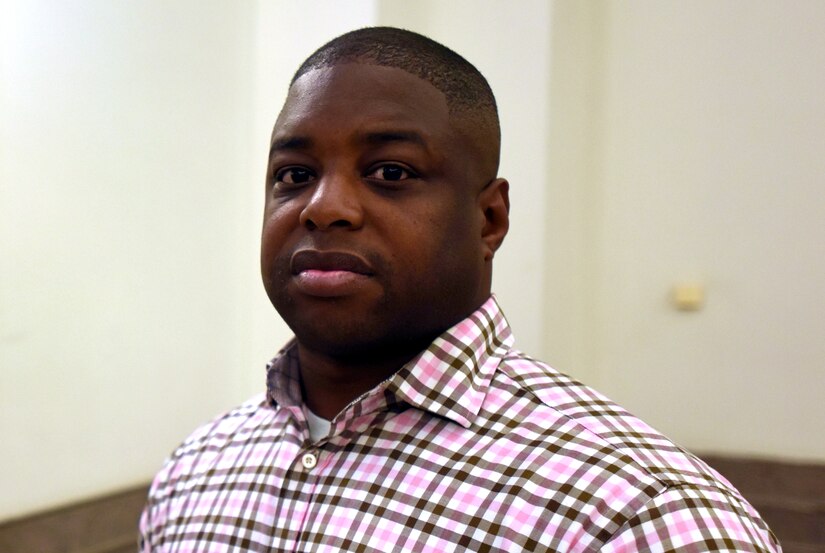
ARLINGTON, Va. -- An infantryman with the South Carolina Army National Guard’s Charlie Company, 1st Battalion, 118th Infantry Regiment, takes the Army values to heart.

“We’re supporting the mission on the ground and making that difference,” said Army Sgt. Stephen Caldwell, adding that he loves being a part of a larger team.

“Being a fire team leader, providing fire superiority and taking over the objectives -- it’s an adrenaline rush to say the least,” he said.

Monitoring Threats

In his civilian job, Caldwell is a watch analyst with the Department of Homeland Security. In that capacity, he monitors potential national threats that could pose harm to physical structures, cyber networks and the environment.

“We have situational awareness on pretty much anything,” he said.

And, regarding his infantry duties, Caldwell said good radio communications provide a tactical edge for his unit.

“It’s communication that makes everything run and I love the challenge,” he said, adding the radio makes him feel like a double threat on the battlefield.

“A single radio has the power to change the outcome of an engagement,” Caldwell said.

Before working at DHS, he spent four years working at the South Carolina Emergency Management Division’s joint operations center. The experience there laid the groundwork for his current DHS job, Caldwell said.

“It gave me an understanding of what affects critical infrastructures,” he said. “Just seeing it from a technical standpoint helped me understand what is needed at the national level with DHS, as far as the cause and effect of things.”

Caldwell said he has also found crossovers from the military side, as well.

Communication

“Great communication is key when a situation is developing and when you need to put something out to leadership so they can make a judgment call,” he said. “Camaraderie is a big thing on our teams, and it keeps me motivated when taking on a new task.”

Whether he is in his civilian or military role, Caldwell said he likes to learn and grow, making it a point to move laterally within DHS and absorb all the new information he can along the way.

“Complacency kills, so I take the time in learning new things outside of my normal skill set,” he said. “It makes for more excitement on a daily basis.”

That eagerness to learn -- along with being highly competent and having a strong commitment to the homeland security mission -- makes Caldwell an asset, said Matt Vaughn, a program manager in the section where Caldwell works at DHS.

“He’s a real go-getter, and you never have to tell him [to execute a task] twice,” Vaughn said. “He gets it. He does it, and it’s always done well.”

Training, Teamwork

While Caldwell said training and teamwork have been the backbone of his success with the South Carolina Army National Guard and the DHS, he is furthering his personal and professional growth by attending school for intelligence studies at the American Military University.

“Education helps me relay my thoughts in a productive way, helping me better connect with soldiers,” he said.

But education has not been the only source of learning for Caldwell.

He was a self-described “gung-ho kid” when he deployed to Afghanistan in 2007 with the South Carolina Army National Guard’s 218th Infantry Brigade Combat Team. He said the experience of working with his fellow soldiers in a deployed environment taught him the importance of thinking in a more critical and tempered way.

“I learned that even though you can’t control everything, you still have to remain mission focused,” Caldwell said. Following that mindset, he added, requires not making “emotional decisions.”

He said he tells new soldiers that taking on new tasks will help them stand out – such as becoming a “double threat” by learning the ins and outs of radio communication.

“Always be willing to learn something new,” Caldwell said. “Once you start to do that you fall into a pattern as that soldier with a can-do attitude.”

Monday, May 07, 2018

Soldier Communication Gets a Boost


By Army Maj. Chris Bradley, 173rd Airborne Brigade Combat Team

GRAFENWOEHR, Germany -- It appears that the days of simple radio communication are over for the soldiers of the 173rd Airborne Brigade Combat Team. In its place comes a sophisticated yet intuitive communication system that allows leaders at the squad level and higher to rapidly share information across the military network.

This new platform, called the Integrated Tactical Network, revolutionizes the way tactical leaders are able to communicate, improving the lethality of small units, while at the same time increasing safety and situational awareness for soldiers.

“Besides each of us having access to the mission graphics, we will be able to battle track each other,” said Army 1st. Lieutenant Michael Austin, a platoon leader in Attack Company, 1st Battalion, 503rd Infantry Regiment. “If we’re in a movement to contact and we take chance contact, we can use this to very accurately shift fires, and have more fires on the enemy while being very safe because we know our exact front-line trace.”

The benefits for soldiers in the field are extensive. With the platform, leaders are able to track the positions of the units all around the battlefield, as well as share text messages, voice communication and even pictures.

Crystal-Clear Communications

The equipment was fielded to the battalion two days prior to executing company-level combined arms live-fire exercises here May 1-5. After a one-day class, the radio telephone operators and the platoon leaders understood the process for using the devices and were able to use them for the actual exercise.

“We had crystal-clear communications the entire time and that’s the first time we’ve had that,” Austin said. “Our scouts were able to take photos directly from their hide site, so we had eyes on the objective in real-time.

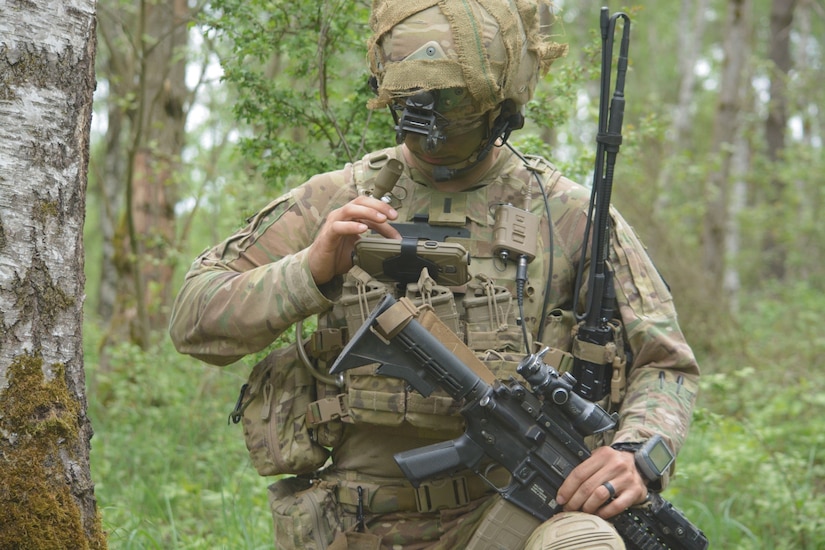
The new system uses equipment that soldiers are already very familiar with, including the multi band inter/intra team radio radio to project data, and a modern smartphone for the actual interface.

“This system is simple to field and use,” said Army Capt. Michael Belina, the signals officer for 1st Battalion, 503rd Infantry Regiment “We were able to learn it at the [operator] level in one day. The software is really intuitive since most soldiers know how to use smart phones as a second nature, [so] there’s no issue with them picking up the features and figuring it out.”

Platoon leaders, fire support officers and company commanders have the devices now, but squad leaders will have the same devices soon.

Informing Soldiers, Empowering Junior Leaders

“When the platform is fully implemented, paratroopers will have an additional quality radio and access to the same common operating picture as their leadership,” Belina said. “The common soldier will have a better idea of what’s going on around him, and it will basically cut out some of the talk that is required to build that picture. It will be more immediate.”

Another benefit of the new equipment is that it simplifies the communications package for the soldier on the ground.

“It makes it so you don’t have to have a truck with a [Joint Capabilities Release] on it, with a vehicle and power to it. It takes away all that equipment and simplifies it,” said Army Sgt. Alex Jones, a retransmission team noncommissioned officer with the 1st Battalion, 503rd Infantry Regiment’s communications section.

On a less tangible level, this system empowers junior leaders to know their mission and react quickly as the situation on the ground changes.

“As an airborne unit, we already do a good job of going down to the lowest level to ensure everyone knows the plan,” Austin said. “But it’s typically just the platoon leaders and platoon sergeants and up that have the finer details. This ensures even lower levels know the plan.”
By improving communication across the formation, empowering junior leaders and ensuring soldier lethality on the battlefield, this new system shows just how the 173rd Airborne Brigade Combat Team soldiers continue to lead the force not just as fighters but also as modern, adaptable communicators on today's battlefield.

Friday, May 04, 2018

U.S. Protests Chinese Interference With U.S. Planes in Djibouti


By Jim Garamone, DoD News, Defense Media Activity

WASHINGTON -- The United States has protested to China after repeated instances of lasers interfering with U.S. military aircraft landing in Djibouti, chief Pentagon spokesperson Dana W. White said here today.

In her weekly news conference, White confirmed that two Air Force crewmen were slightly injured in one incident.

“They are very serious incidents,” White said. “There have been two minor injuries. This activity poses a true … threat to our airmen.”

The United States has formally “demarched” the Chinese government, and requested that the Chinese investigate the incidents. Demarche is a diplomatic term used when a nation protests or objects to policies or actions of another government.

Djibouti – on the Horn of Africa – is a strategic U.S. ally, and the nation has hosted a U.S. presence since 2002. Last year, the country also agreed to host China’s first overseas military outpost, and that facility is located near the American base.

FAA Issues Notice to Airmen

Over the last couple of weeks, in at least two and perhaps as many as 10 incidents, U.S. aircraft landing at the base were hit by laser beams. The Federal Aviation Administration has issued a Notice to Airmen on the danger, telling aircrews to “use caution for unauthorized laser activity.” U.S. officials said the beam is coming from a military grade laser, and that they are confident the Chinese are behind the incidents.

Firing lasers at aircraft can blind aircrew members during critical moments of landing. In the incident where the minor injuries occurred, a C-130 was landing at the base when it was painted by a laser beam. The aircraft managed to land safely, and the two aircrew members are recovering, Pentagon officials said.

“Our concern is the safety of our service members,” White said. “And so we raised the issue with China, and we expect China to investigate it thoroughly.”