by Senior Airman Marjorie A. Bowlden
911th Airlift Wing Public Affairs
1/27/2016 - PITTSBURGH INTERNATIONAL AIRPORT AIR RESERVE STATION, Pa -- Maj.
Fred Pounds, flight commander of clinical management with the 911th
Aeromedical Evacuation Squadron here, went to Orlando to attend a Yellow
Ribbon Reintegration seminar, expecting to unwind and adjust to life
back home. Instead, he ended up averting a crisis and subsequently
saving a stranger's life.
"Whether it happened at a Yellow Ribbon event or down the street from my
house, I probably would have done the same thing," said Pounds. "I just
did what anyone else would have done."
Pounds returned from a four-month deployment to Southwest Asia in
September 2015. Like all Air Force Reserve Airmen recently home from a
deployment, he was offered the opportunity to attend up to two Yellow
Ribbon events to ease the adjustment process. He and his wife decided to
take the December trip to Orlando.
On the morning of Dec. 19, 2015, Pounds and his wife left their room to
attend a speech on resiliency by former Air Force Reserve Chaplain John
Groth. During the speech, Pounds said that he noticed a man at a nearby
table repeatedly asking his wife if she was alright. Instead of
replying, her head rolled back, and she became unresponsive.
"I immediately went over and asked if anything was wrong," said Pounds.
"He told me his wife wasn't responding, and I instructed him that we
needed to lower her to the floor."
At this point, several people gathered around to see what was going on.
Pounds identified himself as a nurse, and a man standing next to him
said that he knew CPR. They checked for her pulse, but there was none to
be found.
Pounds, who has been a critical care nurse for 16 years, has encountered
a plethora of different health crises and situations over the length of
his career. However, the woman's lack of pulse was not at all what he
was expecting.
"I usually see people that just pass out and come to within two seconds,
and that's what I was expecting at first," he said. "But to check for
her pulse and not find one, and to see that she wasn't breathing, was a
little scary. I realized immediately that we had to do CPR."
The two men began to try to revive the woman, Pounds doing compressions and the other trying to control her airway.
"I'm not even sure how long it was because it all happened so fast,"
said Pounds. "But at some point, she gave a few gasps and then started
to breathe on her own."
The two men rolled the woman onto her side and waited for the paramedics
to arrive. In the meantime, Pounds discovered that the woman had
recently had surgery and hadn't been feeling well for a few days
preceding the event.
When the paramedics arrived, Pounds followed them out to the ambulance.
Though her blood pressure was still low, she was improving and was able
to talk before being transported to the hospital.
Airmen often train for real-life situations and crises like this one,
but applying that training isn't always so simple, said Lt. Col. Bryan
Hutcheson, chief nurse with the 911 AES.
"Airmen with the Air Evacuation Squadron spend about 1,000 hours
training for every hour that we spend in that kind of situation and
having to make a decision," said Hutcheson. "It can catch you off guard,
and it's sometimes hard to apply the training when you need it. The
only thing I can ask of our nurses and techs is to be ready when that
moment comes."
Pounds also said that being ready for a crisis like this one is crucial.
He encourages other Airmen to confidently step up to the plate when
crisis strikes, even if they're not part of the medical field.
"Don't be afraid to act," said Pounds. "Even if you don't have the
specific training for an event like this, try to offer whatever help you
can."
Though Pounds humbly said that he'd done what anyone else would do and
doesn't want recognition for his actions, Hutcheson disagrees.
"You'd hope that everyone else would do the same, but that's not always
the case," said Hutcheson. "His actions were absolutely a testament to
his training, his character, and his willingness and commitment to be
ready at all times."
Wednesday, January 27, 2016
Airmen work in concert to execute rapid global mobility
by Capt. Kathleen Ice
Air Mobility Command Public Affairs
1/27/2016 - SCOTT AIR FORCE BASE, Ill. -- It's been raining sideways for hours since he arrived for work on the flightline at 6 a.m.
Staff Sgt. Justin Worcester ignores his drenched uniform and plows ahead while inspecting every inch of the 53-year-old KC-135 Stratotanker, because he's a crew chief. His name is on it.
"We put everything on the line when we sign our name off," Worcester said. "The aircrew is trusting us to make sure this aircraft is safe to fly."
Airmen like Worcester defend their country by making sure the U.S. can quickly move people and equipment around the world at a moment's notice. This is executing rapid global mobility, Air Mobility Command's top priority.
Time can save lives in a humanitarian crisis. Alternately, surprise is a principle of war. Whether a KC-135 is creating an air bridge for a 32-hour bomber mission or a C-17 is air dropping pallets of food to earthquake victims, the U.S. can move a large force in a matter of hours, not days.
This is made possible by Worcester and a team of approximately 126,000 other mobility Airmen.
The Best Checklist
"Teamwork's crucial," said Worcester, who is assigned to the 6th Air Mobility Wing at MacDill Air Force Base, Florida.
"If I come out here to do a tire change with a couple of Airmen, I expect them to have the knowledge of what to do, what tools they might need," he said. "If we come out here to do an inspection on the aircraft, I expect my other team members to know what they're looking for."
From the latest corporate knowledge in Worcester's checklists to his headset and gloves, Air Mobility Command makes sure he has what he needs to do his job.
"Executing rapid global mobility is about moving missions, and 18th Air Force has the operational lead on that," said AMC's commander, Gen. Carlton D. Everhart II. "But in order to move, you have to have a sufficiently organized, trained and equipped force."
Maintaining a sufficient force to execute rapid global mobility can be challenging with fewer personnel and older aircraft than ever before, but AMC works daily toward that goal. Due to its size, the Mobility Air Force needs to be more agile, or flexible and responsive, according to the 2015 Mobility Air Forces Strategic Vision.
Right Time, Right Place
Aging tankers require excellent maintenance to be flexible and responsive. Back on the wet Florida flightline, Worcester inspects a KC-135 that was built in 1963. It has responded to conflicts around the world since Vietnam.
He walks under the wing and taps his knuckles all over the gray metal, making hollow sounds.
"You want to hit the diffuser here, because if mounted screws are broken, you'll hear a little jingle," he says. All screws were intact.
The aircraft spent most of last year at Al Udeid Air Base, Qatar in support of Operations Inherent Resolve and Freedom's Sentinel. The Airmen who deployed it to Al Udeid work at 18th Air Force, AMC's component numbered air force and the largest of its kind in the world.
Combined with the 618th Air Operations Center, the 18th AF executes assigned missions through the employment of airlift, air refueling, aeromedical evacuation and tailored global air mobility support systems. It provides geographical combatant commanders a seamless and synchronized logistical capability to execute their mission.
"We turn the conceptual into air power," said Lt. Gen. Samuel Cox, 18th AF commander in a recent interview with "The Mobility Forum." "Together, the pieces of the air mobility machine merge under the 18th Air Force umbrella to execute AMC's priority to execute rapid global mobility," Cox said.
To deploy forces effectively, the 18th AF commander entrusts tactical execution with the Airmen at the 618th Air Operations Center. Around the clock, they manage the complex sphere of theater clearances, flight planning, mission planning, weather, and much more.
They make sure air mobility forces arrive on time in the right place for successful hand-off to overseas commanders.
In Airmen's Hands
With every hand-off of a KC-135 to an air crew, Worcester gets a sense of satisfaction.
The rain is gone, but wind still whips his hair as he watches the KC-135's engines roar to life. He removes the yellow wooden chocks near the landing gear, checks panels near the flight deck, runs out of the way, turns and gives the pilot a thumbs up as the plane rolls forward.
"We have a lot of pride when we've been out here all night; and, right before we leave in the morning, the jet that we've been working on 10 hours taxis out and we get to watch it take off," Worcester said.
"The landing gear goes up, and you know that plane made it and is going to come back safe."
He knows his role in executing rapid global mobility.
"If there were no crew chiefs, then the plane wouldn't get up off the groun
Air Mobility Command Public Affairs
1/27/2016 - SCOTT AIR FORCE BASE, Ill. -- It's been raining sideways for hours since he arrived for work on the flightline at 6 a.m.
Staff Sgt. Justin Worcester ignores his drenched uniform and plows ahead while inspecting every inch of the 53-year-old KC-135 Stratotanker, because he's a crew chief. His name is on it.
"We put everything on the line when we sign our name off," Worcester said. "The aircrew is trusting us to make sure this aircraft is safe to fly."
Airmen like Worcester defend their country by making sure the U.S. can quickly move people and equipment around the world at a moment's notice. This is executing rapid global mobility, Air Mobility Command's top priority.
Time can save lives in a humanitarian crisis. Alternately, surprise is a principle of war. Whether a KC-135 is creating an air bridge for a 32-hour bomber mission or a C-17 is air dropping pallets of food to earthquake victims, the U.S. can move a large force in a matter of hours, not days.
This is made possible by Worcester and a team of approximately 126,000 other mobility Airmen.
The Best Checklist
"Teamwork's crucial," said Worcester, who is assigned to the 6th Air Mobility Wing at MacDill Air Force Base, Florida.
"If I come out here to do a tire change with a couple of Airmen, I expect them to have the knowledge of what to do, what tools they might need," he said. "If we come out here to do an inspection on the aircraft, I expect my other team members to know what they're looking for."
From the latest corporate knowledge in Worcester's checklists to his headset and gloves, Air Mobility Command makes sure he has what he needs to do his job.
"Executing rapid global mobility is about moving missions, and 18th Air Force has the operational lead on that," said AMC's commander, Gen. Carlton D. Everhart II. "But in order to move, you have to have a sufficiently organized, trained and equipped force."
Maintaining a sufficient force to execute rapid global mobility can be challenging with fewer personnel and older aircraft than ever before, but AMC works daily toward that goal. Due to its size, the Mobility Air Force needs to be more agile, or flexible and responsive, according to the 2015 Mobility Air Forces Strategic Vision.
Right Time, Right Place
Aging tankers require excellent maintenance to be flexible and responsive. Back on the wet Florida flightline, Worcester inspects a KC-135 that was built in 1963. It has responded to conflicts around the world since Vietnam.
He walks under the wing and taps his knuckles all over the gray metal, making hollow sounds.
"You want to hit the diffuser here, because if mounted screws are broken, you'll hear a little jingle," he says. All screws were intact.
The aircraft spent most of last year at Al Udeid Air Base, Qatar in support of Operations Inherent Resolve and Freedom's Sentinel. The Airmen who deployed it to Al Udeid work at 18th Air Force, AMC's component numbered air force and the largest of its kind in the world.
Combined with the 618th Air Operations Center, the 18th AF executes assigned missions through the employment of airlift, air refueling, aeromedical evacuation and tailored global air mobility support systems. It provides geographical combatant commanders a seamless and synchronized logistical capability to execute their mission.
"We turn the conceptual into air power," said Lt. Gen. Samuel Cox, 18th AF commander in a recent interview with "The Mobility Forum." "Together, the pieces of the air mobility machine merge under the 18th Air Force umbrella to execute AMC's priority to execute rapid global mobility," Cox said.
To deploy forces effectively, the 18th AF commander entrusts tactical execution with the Airmen at the 618th Air Operations Center. Around the clock, they manage the complex sphere of theater clearances, flight planning, mission planning, weather, and much more.
They make sure air mobility forces arrive on time in the right place for successful hand-off to overseas commanders.
In Airmen's Hands
With every hand-off of a KC-135 to an air crew, Worcester gets a sense of satisfaction.
The rain is gone, but wind still whips his hair as he watches the KC-135's engines roar to life. He removes the yellow wooden chocks near the landing gear, checks panels near the flight deck, runs out of the way, turns and gives the pilot a thumbs up as the plane rolls forward.
"We have a lot of pride when we've been out here all night; and, right before we leave in the morning, the jet that we've been working on 10 hours taxis out and we get to watch it take off," Worcester said.
"The landing gear goes up, and you know that plane made it and is going to come back safe."
He knows his role in executing rapid global mobility.
"If there were no crew chiefs, then the plane wouldn't get up off the groun
Tuesday, January 26, 2016
ASYMCA supports service members in Alaska
by Airman 1st Class Javier Alvarez
JBER Public Affairs
1/26/2016 - JOINT BASE ELMENDORF-RICHARDSON, Alaska -- The Armed Services YMCA has been assisting military members and their families since the days of the American Civil War.
The organization came to Alaska in 1941, and for the past 70 years the ASYMCA has been serving the Alaska military community through its mission of alleviating some of the stresses military life can present.
The headquarters of ASYMCA of Alaska is located on Joint Base Elmendorf-Richardson. However, there are other locations throughout Alaska - on Fort Wainwright and the surrounding areas, including two military courtesy lounges at Ted Stevens and Fairbanks International Airports.
"We can be found throughout the U.S.," said Buddy Whitt, executive director for ASYMCA of Alaska. "We work specifically with local commands to find out what the needs are. You can go to the local ASYMCA and look at all the programs and services offered. If you were to then PCS to Fort Hood, Texas, and go to the ASYMCA there - there may be some similarities, but there are things they do that we don't. It all depends on the local need."
While the ASYMCA carries the YMCA name, there are some distinct differences in their purpose and function.
"What separates us from a traditional YMCA is our funding does not come from any sort of membership," Whitt said. "We are not an organization that is run by monthly fees for services. Most of what we do is free or low cost."
Offices are strategically located on or near military installations to better serve their target audience.
"[Non-military] can volunteer with us," said Kyra Mailki, ASYMCA of Alaska program and funds development supervisor. "They can donate and participate in those ways. But as far as services, it's only for military members and their dependents."
The organization is largely funded through donations. And while they have paid employees, their staff is primarily composed of volunteers.
"People will give us stuff to pass on to the military," Mailk said. "We make sure the support that's out there, and people want to give, makes it to the people they want to give it to."
Currently, the ASYMCA on JBER offers more than 20 programs designed to meet the needs of the local community.
"We try to address the needs that are presented to us rather than pushing needs that we think exist," Mailk said.
Some programs and services offered by the JBER ASYMCA include:
Teddy's Child Watch provides two free hours of childcare for children 6 months to 12 years at the hospital. There is a short registration process, but the service is available to anyone with access to the hospital.
"If you have a doctors appointment and you have a little one that you have to take with you, you're not really going to get a lot done," said Mailki. "It can be very distracting and it can be hard to pay attention to what the doctor has to say."
An ASYMCA Food Pantry assists military families who may be hit with unbudgeted expense during the month.
"Maybe their car breaks down and they need a couple more meals to get through the month," Whitt said. "Or it could be someone who just [transfer] up and they weren't ready for the expense of living in Alaska."
There are many other programs and services offered by the ASYMCA such as Y on Wheels, Operation Snack Attack and Operation Kid Comfort to name a few.
"We try to be helpful in multiple ways, not just getting someone who is in trouble get through until the next week, but maybe putting them on a path to success long term," Mailki said.
"I like to consider ourselves as hero support," Whitt said. "We have all these heroes working, and we don't have those super powers. Our job is to make sure our heroes and their families have everything that they need to do their job."
Those interested in volunteering, donating or inquiring about the many services offered by the ASYMCA can call the JBER-Elmendorf office at 552-9622. Or the JBER-Richardson office at 384-9622.
JBER Public Affairs
1/26/2016 - JOINT BASE ELMENDORF-RICHARDSON, Alaska -- The Armed Services YMCA has been assisting military members and their families since the days of the American Civil War.
The organization came to Alaska in 1941, and for the past 70 years the ASYMCA has been serving the Alaska military community through its mission of alleviating some of the stresses military life can present.
The headquarters of ASYMCA of Alaska is located on Joint Base Elmendorf-Richardson. However, there are other locations throughout Alaska - on Fort Wainwright and the surrounding areas, including two military courtesy lounges at Ted Stevens and Fairbanks International Airports.
"We can be found throughout the U.S.," said Buddy Whitt, executive director for ASYMCA of Alaska. "We work specifically with local commands to find out what the needs are. You can go to the local ASYMCA and look at all the programs and services offered. If you were to then PCS to Fort Hood, Texas, and go to the ASYMCA there - there may be some similarities, but there are things they do that we don't. It all depends on the local need."
While the ASYMCA carries the YMCA name, there are some distinct differences in their purpose and function.
"What separates us from a traditional YMCA is our funding does not come from any sort of membership," Whitt said. "We are not an organization that is run by monthly fees for services. Most of what we do is free or low cost."
Offices are strategically located on or near military installations to better serve their target audience.
"[Non-military] can volunteer with us," said Kyra Mailki, ASYMCA of Alaska program and funds development supervisor. "They can donate and participate in those ways. But as far as services, it's only for military members and their dependents."
The organization is largely funded through donations. And while they have paid employees, their staff is primarily composed of volunteers.
"People will give us stuff to pass on to the military," Mailk said. "We make sure the support that's out there, and people want to give, makes it to the people they want to give it to."
Currently, the ASYMCA on JBER offers more than 20 programs designed to meet the needs of the local community.
"We try to address the needs that are presented to us rather than pushing needs that we think exist," Mailk said.
Some programs and services offered by the JBER ASYMCA include:
Teddy's Child Watch provides two free hours of childcare for children 6 months to 12 years at the hospital. There is a short registration process, but the service is available to anyone with access to the hospital.
"If you have a doctors appointment and you have a little one that you have to take with you, you're not really going to get a lot done," said Mailki. "It can be very distracting and it can be hard to pay attention to what the doctor has to say."
An ASYMCA Food Pantry assists military families who may be hit with unbudgeted expense during the month.
"Maybe their car breaks down and they need a couple more meals to get through the month," Whitt said. "Or it could be someone who just [transfer] up and they weren't ready for the expense of living in Alaska."
There are many other programs and services offered by the ASYMCA such as Y on Wheels, Operation Snack Attack and Operation Kid Comfort to name a few.
"We try to be helpful in multiple ways, not just getting someone who is in trouble get through until the next week, but maybe putting them on a path to success long term," Mailki said.
"I like to consider ourselves as hero support," Whitt said. "We have all these heroes working, and we don't have those super powers. Our job is to make sure our heroes and their families have everything that they need to do their job."
Those interested in volunteering, donating or inquiring about the many services offered by the ASYMCA can call the JBER-Elmendorf office at 552-9622. Or the JBER-Richardson office at 384-9622.
AMC leaders share way ahead for 2016
by Jodi Ames
Air Mobility Command Public Affairs
1/26/2016 - SCOTT AIR FORCE BASE, Ill. -- Air Mobility Command hosted the first all call of the new year Jan. 20, at Scott Air Force Base, Illinois.
AMC Commander Gen. Carlton D. Everhart II kicked off the event by thanking mobility Airmen for their efforts to execute and sustain Rapid Global Mobility operations around the world in 2015.
"I will tell you that 2015 was an outstanding year," Everhart said. "But 2016 is going to be even better, because this staff works to get the mission done."
Everhart shared his vision and priorities for the year ahead, which are nested under the national defense and national security strategies. He emphasized readiness, modernization, training and no-fail support to the nuclear deterrence mission.
"I want us to train the same way we fight so we can be at that tip of the spear, ready to go," he said. "Our aperture should remain open to our entire repertoire of core mission sets."
The all call was also an opportunity for the commander to officially introduce Chief Master Sgt. Shelina Frey, AMC's new command chief. Both stressed the importance of developing Airmen.
"There are opportunities for you to walk out of the headquarters building and go to the base and lead," Frey said. "At the strategic level, you have something to offer. To be truly competitive, get out there and share yourself and explore your own leadership."
"Life is about choices, and everybody in this room chose to be a part of something that's larger than we could ever imagine," Frey added. "I wake up to this vastness every day and ask myself what is next. What can I possibly do to be the best chief that I can be for our Airmen?"
Since her arrival in November, Frey has been introducing Mobility Airmen to her Airman Up! philosophy. During the event, she took a moment to share what the phrase means to her.
"It's not about just being proud to be a defender, or a dirt boy, or a maintainer or a personnelist. Airman Up is about being the best defender, dirt boy, maintainer or personnelist you can be," she explained.
"I am proud to be an Airman, so I say 'Airman Up!' Airman Up truly is about airpower. We cannot have airpower without Airmen being up on their game."
Everhart also discussed results from the recent climate assessment and spoke candidly about the critical role feedback plays in identifying areas for improvement.
"I want to thank you for participating in our climate survey," Everhart said. "Open communication and open dialogue is what it is all about."
Col. Eric Halverson, AMC director of staff, briefed attending Airmen about ongoing efforts to update the command's headquarters facilities, as well as long-term projects and milestones for the renovation process.
Speaking of the renovation process, Everhart added, "We plan on keeping the building for another 50 to 60 years, so we have to do internal renovations to make sure the building can last that long and be safe for you. I promised you a safe work environment, and that's what I owe you."
Air Mobility Command Public Affairs
1/26/2016 - SCOTT AIR FORCE BASE, Ill. -- Air Mobility Command hosted the first all call of the new year Jan. 20, at Scott Air Force Base, Illinois.
AMC Commander Gen. Carlton D. Everhart II kicked off the event by thanking mobility Airmen for their efforts to execute and sustain Rapid Global Mobility operations around the world in 2015.
"I will tell you that 2015 was an outstanding year," Everhart said. "But 2016 is going to be even better, because this staff works to get the mission done."
Everhart shared his vision and priorities for the year ahead, which are nested under the national defense and national security strategies. He emphasized readiness, modernization, training and no-fail support to the nuclear deterrence mission.
"I want us to train the same way we fight so we can be at that tip of the spear, ready to go," he said. "Our aperture should remain open to our entire repertoire of core mission sets."
The all call was also an opportunity for the commander to officially introduce Chief Master Sgt. Shelina Frey, AMC's new command chief. Both stressed the importance of developing Airmen.
"There are opportunities for you to walk out of the headquarters building and go to the base and lead," Frey said. "At the strategic level, you have something to offer. To be truly competitive, get out there and share yourself and explore your own leadership."
"Life is about choices, and everybody in this room chose to be a part of something that's larger than we could ever imagine," Frey added. "I wake up to this vastness every day and ask myself what is next. What can I possibly do to be the best chief that I can be for our Airmen?"
Since her arrival in November, Frey has been introducing Mobility Airmen to her Airman Up! philosophy. During the event, she took a moment to share what the phrase means to her.
"It's not about just being proud to be a defender, or a dirt boy, or a maintainer or a personnelist. Airman Up is about being the best defender, dirt boy, maintainer or personnelist you can be," she explained.
"I am proud to be an Airman, so I say 'Airman Up!' Airman Up truly is about airpower. We cannot have airpower without Airmen being up on their game."
Everhart also discussed results from the recent climate assessment and spoke candidly about the critical role feedback plays in identifying areas for improvement.
"I want to thank you for participating in our climate survey," Everhart said. "Open communication and open dialogue is what it is all about."
Col. Eric Halverson, AMC director of staff, briefed attending Airmen about ongoing efforts to update the command's headquarters facilities, as well as long-term projects and milestones for the renovation process.
Speaking of the renovation process, Everhart added, "We plan on keeping the building for another 50 to 60 years, so we have to do internal renovations to make sure the building can last that long and be safe for you. I promised you a safe work environment, and that's what I owe you."
New SBIRS ground system celebrates final development capstone
by Space and Missile Systems Center Public Affairs
1/21/2016 - LOS ANGELES AIR FORCE BASE, El Segundo, Calif. -- Air Force Space Command's Space and Missile Systems Center and the 460th Space Wing announced the Remote Sensing Systems Directorate completion of the Space-Based Infrared System's Block 10 Integrated Test and Evaluation (IT&E) Readiness Soak. This is the final Block 10 Increment 2 system test prior to the formal evaluation by the Air Force Operational Test and Evaluation Center.
Beginning January 5, 460th Operations Group personnel conducted the Soak event from the Mission Control Station at Buckley Air Force Base, Colorado. The 14-day test demonstrated total system readiness and stability for IT&E start. It included complete command and control (C2) and mission management of the full constellation, and full operational crew posture and execution of operations for the final dependability and maintainability assessment prior to IT&E. This event not only tested total system readiness, but also demonstrated that operational crews have enough confidence in the system to run live operations.
"For the first time, live mission messages were sent from the Block 10 floor" said Col. Mike Guetlein, SMC's Remote Sensing System director. "This is another huge step toward Operational Acceptance."
"This is a full function test flight of our new ground system where our Airmen conduct full warning and detection functionality combined with intensive spacecraft command and control of all three of our spacecraft constellations," added Col. John Wagner, 460th Space Wing commander. "This was our shakedown cruise."
Block 10 consolidates operational C2 of Defense Support Program satellites, Space-based Infrared System Geosynchronous Earth Orbiting and Highly Elliptical Orbit sensors under one primary Mission Control Station. Block 10 also significantly increases performance capability across its four mission areas: missile warning, missile defense, battlespace awareness, and technical intelligence.
The Remote Sensing Program Office, in partnership with the operations community, leveraged lessons learned from previous SBIRS upgrades to successfully execute the Soak test. The system will now progress into IT&E and its formal operational and development evaluation activities.
Col. Mike Jackson, 460th SW Operations Group commander, said the completion of the phase marked a "truly historic day for the overhead persistent infrared mission."
The SBIRS program is managed by the Remote Sensing Systems Directorate at the U.S. Air Force Space and Missile Systems Center, Los Angeles AFB in El Segundo, California. Lockheed Martin Space Systems Company, Sunnyvale, California, is the SBIRS prime contractor, and Northrop Grumman Electronic Systems, Azusa, California, is the payload integrator. The 460th Space Wing at Buckley AFB operates SBIRS. The SBIRS program delivers timely, reliable and accurate missile warning and infrared surveillance information to the president of the United States, the secretary of Defense, combatant commanders, the intelligence community and other key decision makers. The system enhances global missile launch detection capability, supports the nation's ballistic missile defense system, expands the country's technical intelligence gathering capacity and bolsters situational awareness for warfighters on the battlefield.
1/21/2016 - LOS ANGELES AIR FORCE BASE, El Segundo, Calif. -- Air Force Space Command's Space and Missile Systems Center and the 460th Space Wing announced the Remote Sensing Systems Directorate completion of the Space-Based Infrared System's Block 10 Integrated Test and Evaluation (IT&E) Readiness Soak. This is the final Block 10 Increment 2 system test prior to the formal evaluation by the Air Force Operational Test and Evaluation Center.
Beginning January 5, 460th Operations Group personnel conducted the Soak event from the Mission Control Station at Buckley Air Force Base, Colorado. The 14-day test demonstrated total system readiness and stability for IT&E start. It included complete command and control (C2) and mission management of the full constellation, and full operational crew posture and execution of operations for the final dependability and maintainability assessment prior to IT&E. This event not only tested total system readiness, but also demonstrated that operational crews have enough confidence in the system to run live operations.
"For the first time, live mission messages were sent from the Block 10 floor" said Col. Mike Guetlein, SMC's Remote Sensing System director. "This is another huge step toward Operational Acceptance."
"This is a full function test flight of our new ground system where our Airmen conduct full warning and detection functionality combined with intensive spacecraft command and control of all three of our spacecraft constellations," added Col. John Wagner, 460th Space Wing commander. "This was our shakedown cruise."
Block 10 consolidates operational C2 of Defense Support Program satellites, Space-based Infrared System Geosynchronous Earth Orbiting and Highly Elliptical Orbit sensors under one primary Mission Control Station. Block 10 also significantly increases performance capability across its four mission areas: missile warning, missile defense, battlespace awareness, and technical intelligence.
The Remote Sensing Program Office, in partnership with the operations community, leveraged lessons learned from previous SBIRS upgrades to successfully execute the Soak test. The system will now progress into IT&E and its formal operational and development evaluation activities.
Col. Mike Jackson, 460th SW Operations Group commander, said the completion of the phase marked a "truly historic day for the overhead persistent infrared mission."
The SBIRS program is managed by the Remote Sensing Systems Directorate at the U.S. Air Force Space and Missile Systems Center, Los Angeles AFB in El Segundo, California. Lockheed Martin Space Systems Company, Sunnyvale, California, is the SBIRS prime contractor, and Northrop Grumman Electronic Systems, Azusa, California, is the payload integrator. The 460th Space Wing at Buckley AFB operates SBIRS. The SBIRS program delivers timely, reliable and accurate missile warning and infrared surveillance information to the president of the United States, the secretary of Defense, combatant commanders, the intelligence community and other key decision makers. The system enhances global missile launch detection capability, supports the nation's ballistic missile defense system, expands the country's technical intelligence gathering capacity and bolsters situational awareness for warfighters on the battlefield.
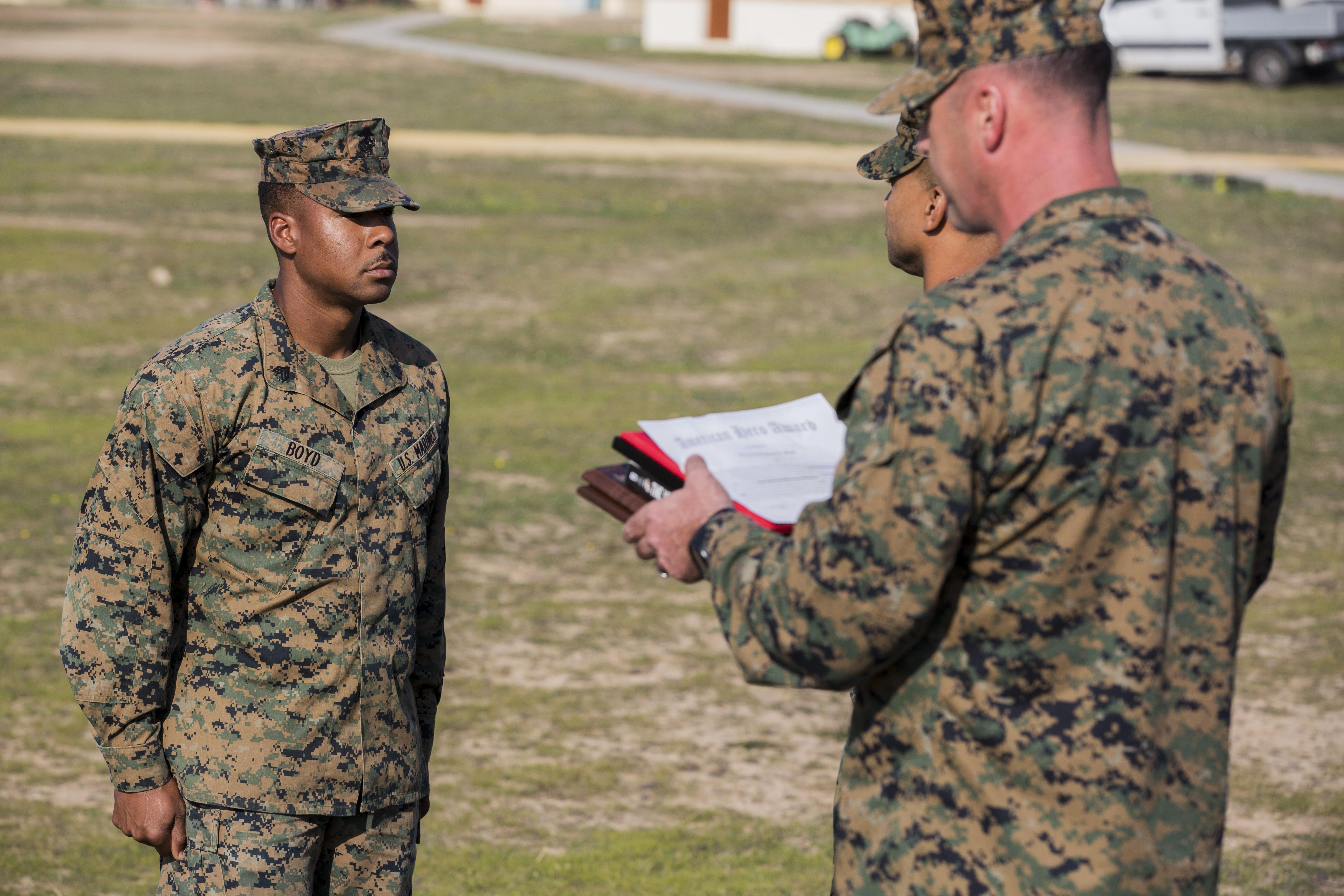
Face of Defense: Marine Takes Action to Prevent Suicide
By Marine Corps Staff Sgt. Vitaliy Rusavskiy, U.S. Marine
Corps Forces Europe and Africa DoD News, Defense Media Activity
MORON AIR BASE, Spain, January 26, 2016 — Eight months ago,
Marine Corps Sgt. Raheem Boyd was in his room on Camp Lejeune, North Carolina,
when he received a message from a fellow Marine telling him he had discovered
suicidal posts on another Lejeune-based Marine’s Facebook page.
“I checked that Marine’s page and saw one post that looked
strange and made me want to investigate further,” Boyd said, adding that he
recognized the Marine from a previous tour in Okinawa, Japan.
When he drove to the barracks, he found that the Marines on
duty were by the Marine’s room, which was empty. After searching the area, one
of the on-duty Marines briefly caught a glimpse of the troubled Marine in his
car with an assault rifle as he sped off from the barracks parking lot.
Boyd said he followed and eventually saw his car sitting on
the side of the road. "He did not recognize me at first," Boyd said.
"It was the first time I had seen him since Okinawa."
Life-or-Death Moment
Boyd said he approached the vehicle and attempted to calm
the Marine, telling him that he was there for him and that there is always
another way. As they talked, the first police car pulled up and the Marine
started to panic.
As more police cars approached with flashing bright red and
blue lights dissipating in the darkness, the Marine reached across the seat for
the rifle -- with the intent to shoot himself, Boyd said. Boyd quickly reached
through the window of the car, wrapped his body around the Marine and pushed
the rifle away to the floorboard.
“I gave just enough time for [the police] to come around and
secure the weapon,” Boyd said. “After the situation de-escalated, I did my best
to comfort the Marine and tell him that everything will be all right. He got
out of the car and we escorted him to the hospital in an ambulance.”
'Me Being a Human'
The events took place not long before Boyd deployed here. He
currently serves as a heavy equipment operator with Special-Purpose Marine
Air-Ground Task Force Crisis Response-Africa.
“A lot of Marines were telling me I did a good job and that
they wish a lot more Marines would be like me,” said Boyd, a Birmingham,
Alabama, native. “But I feel that wasn’t me being a Marine, it was me being a
human -- being there for someone who needs help. I always fell back on my
morals -- to always treat others how you would want them to treat you.”
Boyd’s excellence in service did not stop there. During his
deployment here, he was meritoriously promoted to sergeant, helped certify more
than 40 new black belt recipients, led the unit’s leadership seminars for
corporals and -- his latest achievement -- receiving the American Hero Award
for preventing a tragic loss of life.
“Sergeant Boyd is above his peers and is very mature. The
Marines in his shop always look up to him,” said Marine Corps Gunnery Sgt.
Archie Mardis Jr., utilities chief for the Combat Logistics Detachment here. “I
never have to worry about him. He is the Marine to go to.”
Each tragic loss to suicide has far-reaching impact on
families, friends and Marines left behind. The Marine Corps had 28 suicides in
the first three quarters of 2015. If not for Boyd’s actions, that number could
be 29.
National Guard Forces Continue Post-Storm Assistance
By Cotton Puryear Virginia National Guard
STAUNTON, Va., January 26, 2016 — Virginia National Guard
soldiers on state active duty have been using Humvees and medium tactical
trucks to provide mobility support to help Virginia State Police and local
first responders reach residents requiring assistance after a historic snowfall
blanketed the state.
Since they began operations Jan. 22, Virginia Guard members
have escorted or transported 49 law enforcement, emergency medical and fire
rescue personnel to emergency locations as well as transported 26 essential
medical and support personnel to their place of work.
Guard members assisted in saving at least two lives in
Virginia. They also provided mobility support to citizens and law enforcement
personnel for nonemergency situations, transported essential medical supplies,
towed fire trucks stuck in the snow and conducted health and welfare checks.
"I think our soldiers are doing a fantastic job across
the commonwealth in helping our state and local first responder partners get
through the heavy snow to help their fellow Virginians," said Army Maj.
Gen. Timothy P. Williams, the adjutant general of Virginia. "Working so
closely with the Virginia State Police and local government emergency response
officials under the guidance of the Virginia Department of Emergency Management
has proven to be very effective."
Specific Actions
Some of the significant activities accomplished by soldiers
of the 116th Infantry Brigade Combat Team:
-- Virginia National Guard soldiers working in support of
Waynesboro Fire and Rescue responded along with an ambulance to an emergency
call on Afton Mountain, Jan. 24. The resident was located about one mile from
the main cleared road, but the ambulance and rescue teams were not able to
reach the house. The Guard Humvee with one EMT was able to move through the
unplowed road and clear a path for a follow on vehicle to pick up the resident
for movement to an air evacuation site.
-- Virginia National Guard soldiers working in support of
the Greene County Rescue Squad responded along with an ambulance to an
emergency call near Stanardsville, Jan. 23. The ambulance was not able to make
it to the residence through the heavy snow, so the EMTs moved to the Humvee to
make it the residence where a man was suffering from chest pains. The soldiers
helped move the patient to the Humvee, then transferred him into the ambulance
for evacuation. During transport, the patient's heart stopped and a soldier
assisted with CPR. The patient was revived and successfully airlifted for
further medical support.
-- Virginia National Guard soldiers working in support of
local civil authorities in Winchester were dispatched Jan. 23 to assist an
ambulance stuck in the snow while responding to a high-priority emergency call.
Using two medium tactical trucks, the soldiers drove in front of the ambulance
to clear a path. Once at the residence, the EMTs were able to provide care,
move the patient to the ambulance and then the Guard vehicles lead the
ambulance to the cleared road.
-- Virginia National Guard soldiers working in support of
Augusta County Fire Station No. 6 responded to a vehicle crash Jan. 22, where
one of the passengers sustained a severe head injury. One of the soldiers
assisted fire and rescue personnel with extracting the passenger from the
vehicle and moving them into the ambulance for evacuation.
-- Virginia National Guard soldiers working in support of
Page County helped clear a path for an ambulance to reach a dialysis patient in
need of transport Jan. 23, near Stanley. The Guard was able to clear a path so
the rescue squad was able to transport the patient for required treatment.
Command, Control
The Staunton-based 116th Infantry Brigade Combat Team is
providing mission command for the response operations in the field and is
working requests from the Virginia Department of Emergency Management to
provide support to multiple locations, as well as the Virginia State Police.
Soldiers are deployed along the I-81 corridor between Lexington and Winchester,
along the Route 29 corridor from Warrenton to Danville, as well as in the areas
near Northern Virginia, Richmond, Fredericksburg and Gate City.
More than 400 soldiers from units of the 116th IBCT as well
as from the Virginia Beach-based 329th Regional Support Group and Bowling
Green-based 91st Troop Command are on duty providing support.
The Virginia National Guard also has more than 100 soldiers,
airmen and members of the Virginia Defense Force on duty in Richmond, Sandston
and Fort Pickett, where they are providing mission command, administrative and
logistical support for the overall mission.
Virginia Gov. Terry McAuliffe authorized up to 500 personnel
for state active duty in his initial emergency declaration, and then he
increased that to 700.
Delaware Guard Response
The Delaware National Guard activated nearly 300 soldiers
and airmen to support the citizens of Delaware through Winter Storm Jonas.
The National Guard leaned forward before the storm,
prepositioning operators and tactical vehicles such as Humvees, five-ton trucks
and wreckers to each county's emergency operations center. From each EOC,
troops and vehicles were dispatched to local fire houses and state and local
police departments.
Officially, troops supported nearly 100 missions and 165
individual citizens across Delaware. Missions included transporting medical
professionals and first responders to and from work shifts and moving
Delawareans to safety from flooding or effects of the snowstorm.
Because of flooding in Sussex County, the Guard helped
evacuate approximately 40 residents from the Oak Orchard/Long Neck area to area
shelters or homes of friends. In New Castle County, due to the snowfall, the
Delaware Guard helped dozens of people who needed emergency medical care or
were stranded on the road.
Included in those missions were efforts to recover an
ambulance and a fire truck, along with an aerial assessment of the flood damage
in Sussex County, which was reported to Gov. Jack Markell and other state
officials.
"Even though the Delaware National Guard has troops
deployed around the world, we were able to provide the necessary support to our
great state," said Army Maj. Gen. Frank Vavala, the adjutant general of
Delaware.
In addition to helping 165 Delawareans on official missions,
soldiers and airmen "unofficially" assisted countless stranded
motorists and moved abandoned vehicles for Department of Transportation workers
to plow roads and first responders to complete their missions.
Guardsmen Helping Elsewhere
Guard members were activated in other states as well. Their
personnel strength numbers as of yesterday:
-- Washington, D.C., about 100;
-- Kentucky, more than 75;
-- Maryland, more than 500;
-- New Jersey, more than 120;
-- Pennsylvania, more than 300; and
-- West Virginia, more than 120.
Subscribe to:
Posts (Atom)