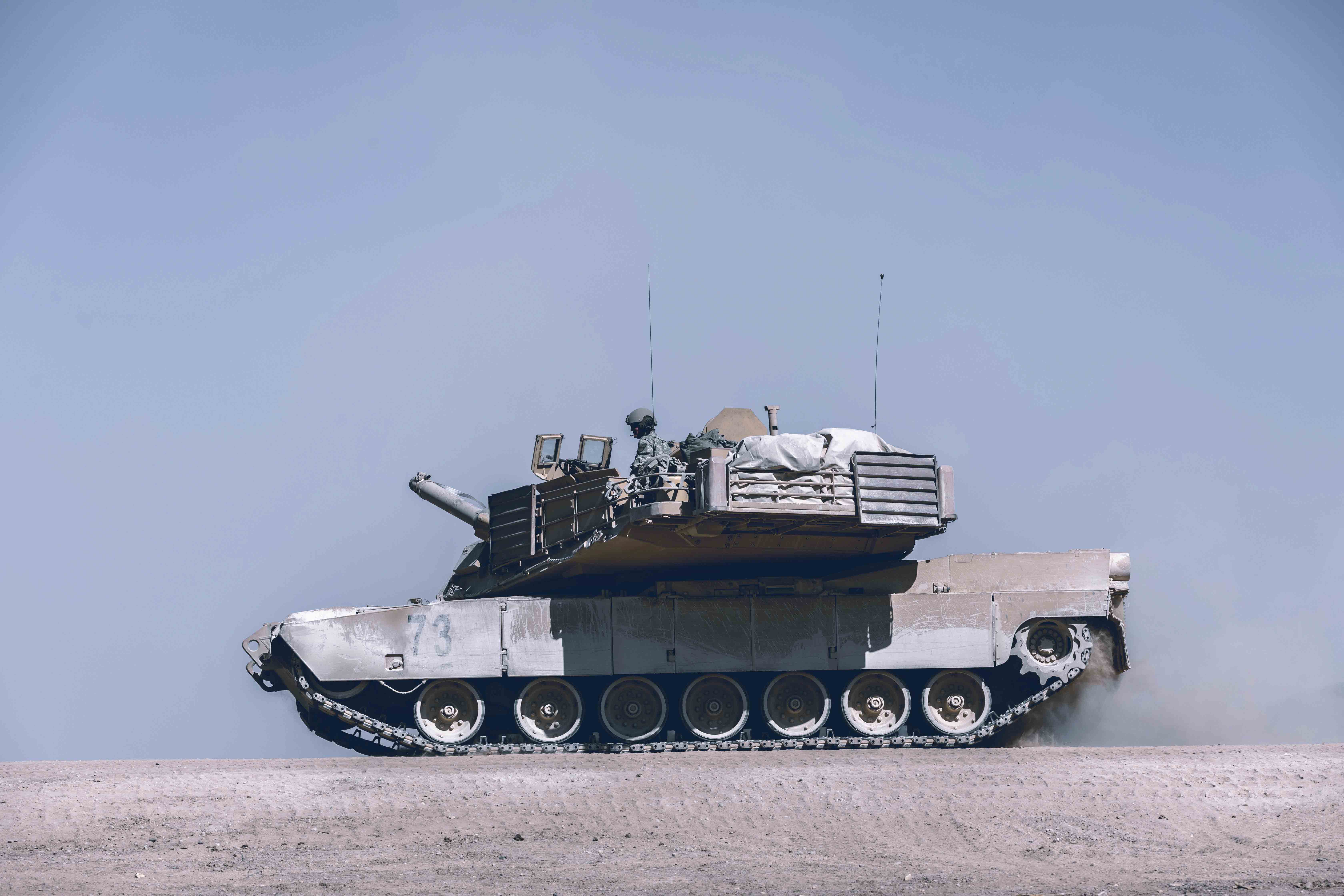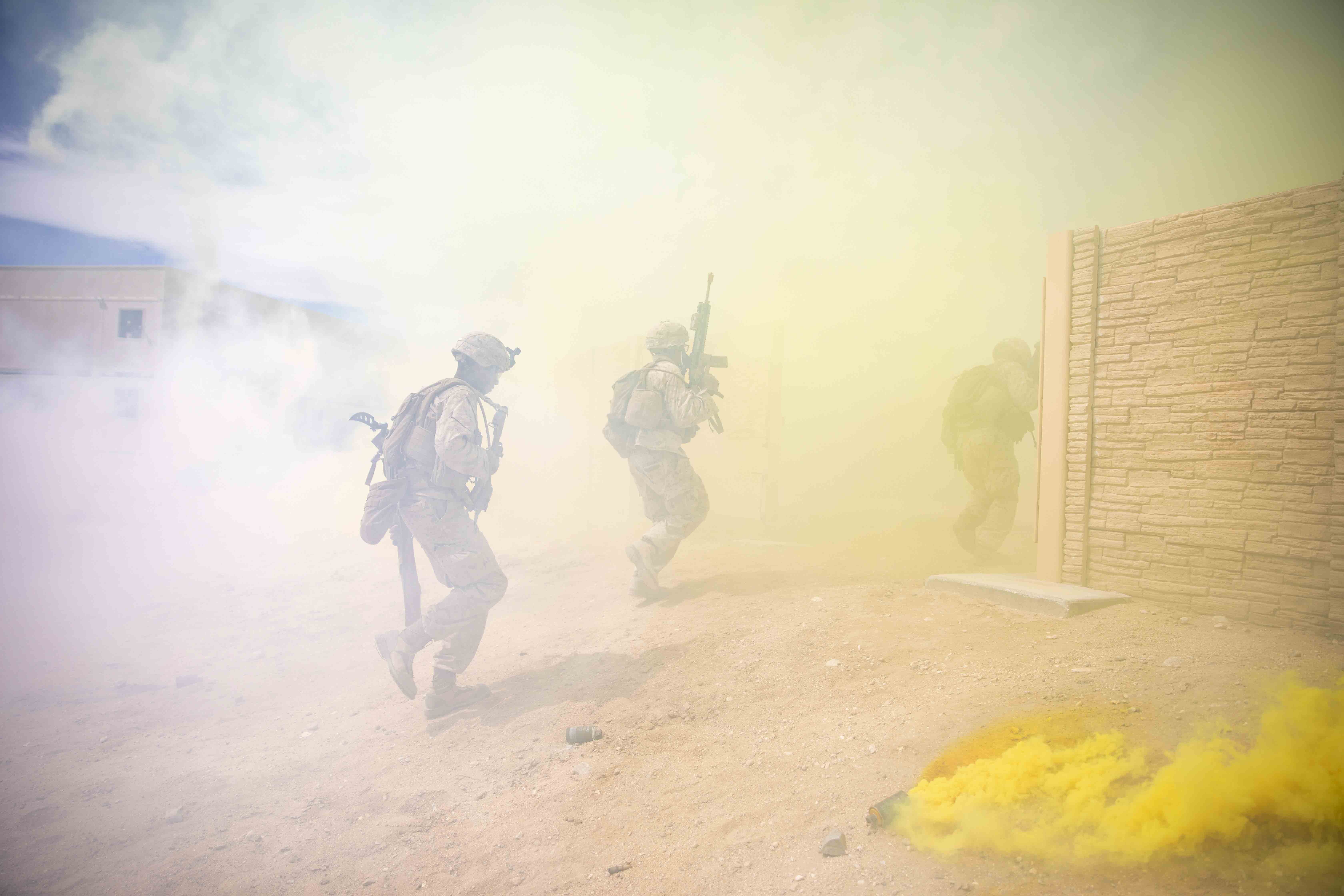
Marines move through urban terrain during an integrated training exercise at Marine Corps Air Ground Combat Center Twentynine Palms, Calif., April 7, 2021.
Marines move through urban terrain during an integrated training exercise at Marine Corps Air Ground Combat Center Twentynine Palms, Calif., April 7, 2021.
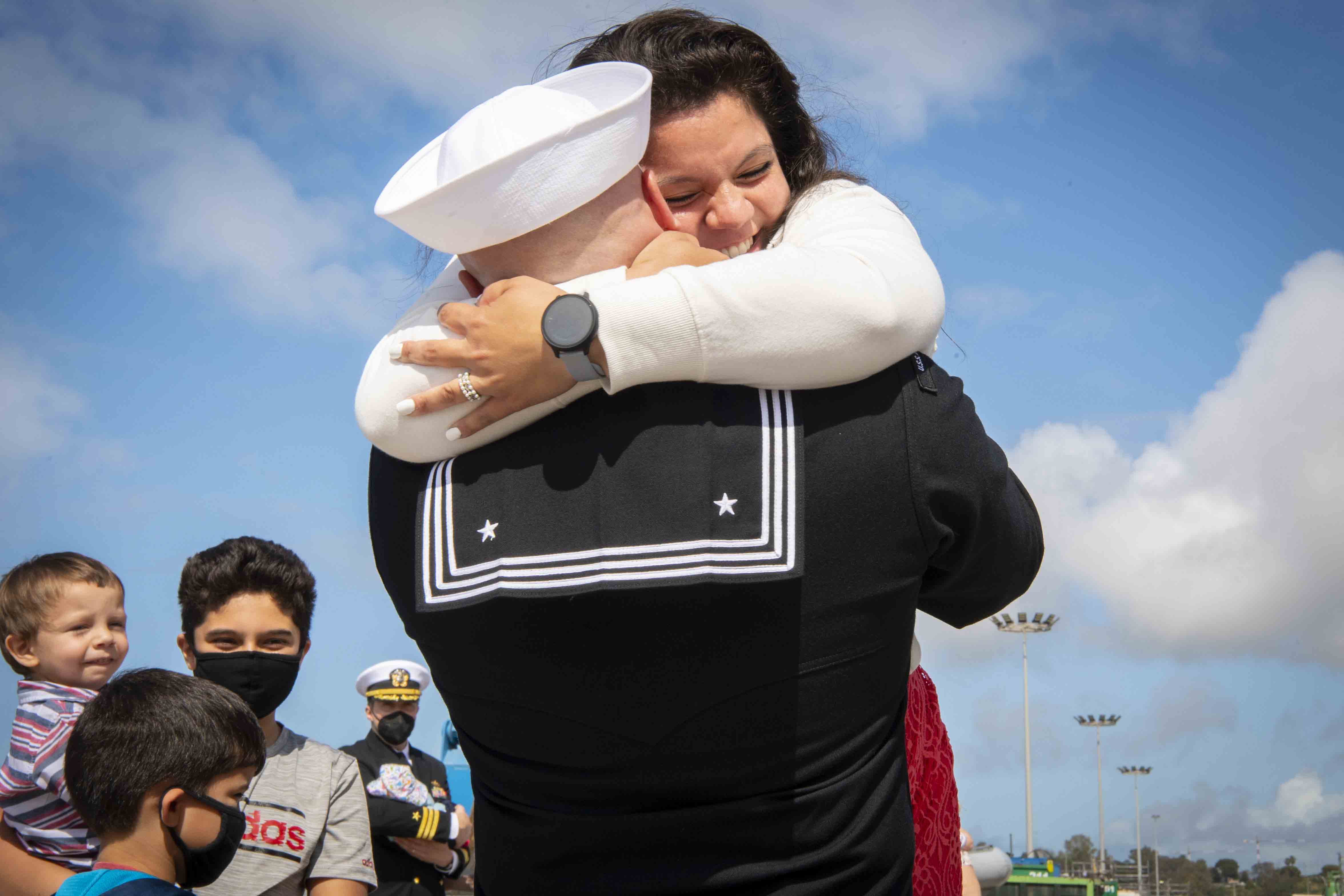
Navy Petty Officer 1st Class Nicholas Murray reunites with a family member after the USS Arleigh Burke arrived at Naval Station Rota, Spain, April 11, 2021.

Soldiers participate in the Green Mile physical endurance course at the end of jungle training at Lightning Academy in Wahiawa, Hawaii, April 1, 2021.
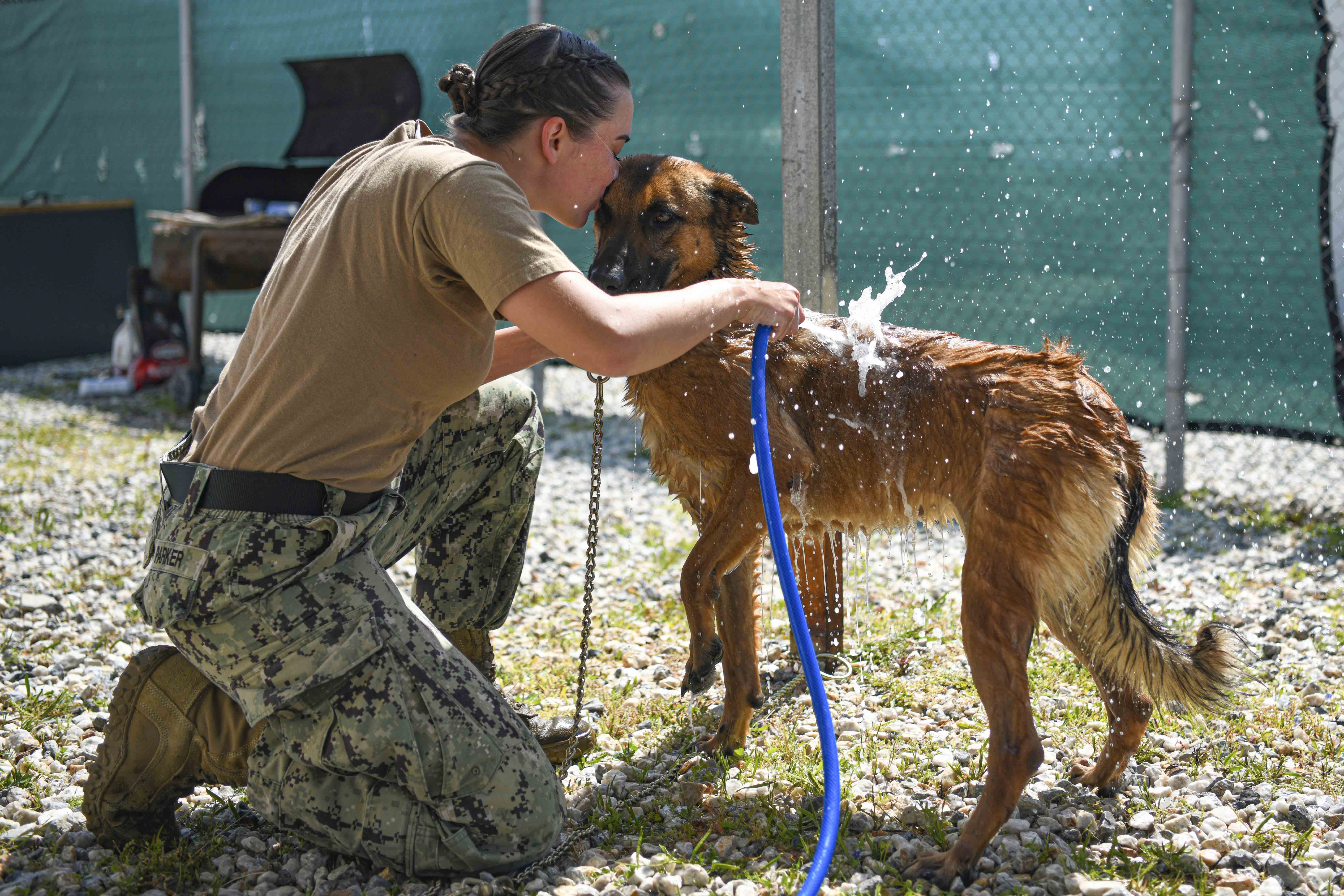
Navy Petty Officer 2nd Class Logann Parker bathes Astra, a military working dog, at Naval Support Activity Souda Bay, Greece, April 12, 2021.
April 13, 2021
STAFF: Ladies and gentlemen, Secretary of Defense Austin and Minister Annegret Kramp-Karrenbauer, for their statements.
MINISTER ANNEGRET KRAMP-KARRENBAUER: So?
SECRETARY OF DEFENSE LLOYD J. AUSTIN III: I think I probably should have rehearsed this, but.
MIN. KRAMP-KARRENBAUER: (Laughter.) So?
SEC. AUSTIN: Okay, go ahead.
MIN. KRAMP-KARRENBAUER: Okay.
STAFF: So Secretary of Defense, if you want to start?
SEC. AUSTIN: Am I first?
STAFF: Sir -- sir, the floor is yours.
SEC. AUSTIN: Well, good afternoon, everyone. And thank you for being here. I'd like to thank the people of Germany for their gracious hospitality. And I'd also like to thank Minister Kramp-Karrenbauer for the warm welcome despite the challenges of COVID-19.
It is indeed great to be here in Berlin on my very first visit to Europe as the Secretary of Defense. I have fond memories of serving in Germany as a young lieutenant. And its people and culture will always have a special place in my heart.
Germany is one of our staunchest allies. And our relationship is built upon shared values of freedom, democracy, human rights, and the rule of law. And today, these principles are increasingly under duress.
Amid shifting global dynamics and a challenging security environment, Germany will continue to be an important security and economic partner for the United States in the years ahead. And so that is why strengthening our relationship with Germany is a top priority for the Biden-Harris administration.
And underscoring our strong commitment to allies and partners is at the forefront of my agenda. And this includes advancing our trans-Atlantic partnership and increasing cooperation with our NATO allies.
Today, we had a productive dialogue on a number of security issues important to our two countries. First and foremost, our commitment to our force presence in Germany, which is good for the United States and good for NATO. And today I'm happy to announce that we will be increasing the U.S. force presence in Germany.
In keeping with my pledge to consult with allies and partners, today I briefed the minister our intention to permanently station approximately 500 additional U.S. personnel in the Wiesbaden area as early as this fall.
Now, these forces will strengthen deterrence and defense in Europe. And they will augment our existing abilities to prevent conflict and, if necessary, to fight and win. And this move will also create more space capabilities, more cyber, and more electronic warfare capabilities in Europe, and it will greatly improve our ability to surge forces at a moment's notice to defend our allies.
This planned increase in U.S. personnel underscores our commitment to Germany and to the entire NATO alliance.
Along with this discussion, I also briefed my German counterparts on the very latest regarding global U.S. force posture and the large -- larger review that we are currently conducting. And I expressed my appreciation for Germany's robust contributions to security missions around the world, especially its leadership role as a framework nation in Afghanistan.
In addition, we discussed areas where the United States and Germany can strengthen our close cooperation on global challenges, including -- including the COVID-19 pandemic and combating malign influence of our shared -- combating the malign influence of our shared strategic rivals.
I was pleased to discuss Germany's upcoming naval deployment to the Indo-Pacific region. And this is a tangible sign of Germany's commitment to project stability and uphold the rules-based international order.
I also expressed my thanks for the steps that Germany has taken to increase defense spending and to modernize its forces. We all recognize the pressures each of our nations face when it comes to spending, but it's important to -- to maintain that momentum, especially in this era of increased strategic competition.
At the same time, we are grateful for Germany's support in hosting our U.S. military personnel and their families. Because we all know that collective security requires teamwork and cooperation, hallmarks of this enduring alliance.
And finally, to the thousands of U.S. service members and family members currently serving here in Germany, I want to thank you for standing shoulder to shoulder with your German counterparts and for representing our country so well. Thanks to your commitment and partnership, our alliance remains strong and allows us to operate from a position of strength.
Thanks again, Madam Minister, for your warm hospitality and for your strong leadership. And I look forward to working with you to tackle the monumental challenges facing our two countries. And today's discussion gives me great confidence that together we can meet any challenge now and in the years ahead. And so, thank you very much and danke schoen.
MIN. KRAMP-KARRENBAUER (through translator): Secretary Austin, ladies and gentlemen --
MIN. KRAMP-KARRENBAUER: I have to wait? It's okay?
SEC. AUSTIN: Please continue.
MIN. KRAMP-KARRENBAUER: Okay.
MIN. KRAMP-KARRENBAUER (through translator): It is a great pleasure and a special sign of our close ties that Secretary Austin's first visit as a member of the Biden administration has chosen Berlin as his first destination for his visit to Europe -- his first visit to Europe.
The U.S. and Germany have a long and close and friendly cooperation marked by trust, and I am very grateful for that. This personal exchange of two important stakeholders in the trans-Atlantic partnership is essential to fill this partnership with life. And we were both grateful to meet in person today in spite of COVID-19. So I am pleased. I -- I really hope that I will also be able to visit the U.S. as soon as possible.
Our cooperation is all the more important -- important in times where the security and defense architecture has come under pressure in many parts of the world. In Germany as well, so we have to rethink it in a way, because as I said, our world order – our free and value-based order has come under pressure in this is why it is all the more important to stand together as partners.
I am deeply grateful to the United States for its indispensable contributions to security in Europe and in the entire Atlantic area. Which also means a contribution to the security of the people of Germany.
The U.S. with their presence in Europe and Germany and their commitment – its commitment to NATO is an crucial pillar for our freedom and peace. And this is why it is welcomed -- it is and great news that not only has the -- has their withdrawal plan -- the withdrawal of troops from Germany been halted, but quite the contrary, we will be able to welcome an additional 500 U.S. troops in Germany.
This is a very strong signal of our partnership and friendship. And I am -- would like to thank you once more for that. We will do what we can to make this stay a worthwhile one for the 500 troops and their families coming to Germany. We hope that they will feel like Germany is a good -- a home for them while they're here and they will leave with fond memories.
We talked about the challenges of today and of the future and it is clear and we both agree that we need a NATO that is capable to act. It can only be capable to act if NATO nations make their contributions and this is true for Germany, of course, as well. And this is why it is a good thing that in the next budget year we will be increasing our defense spending more than an additional 2.5 billion more than what we had originally planned.
But we also know that in the next legislative period efforts will have to be renewed. I, as Defense Minister, believe that we need to keep our promises with a view to cash capability and contributions. This is our contribution to solidarity and we depend on that solidarity for our freedom and peace.
This is also true for when we're in operations together in Afghanistan; we've been on this operation for 20 years. We went in together; we have been working side by side for 20 years; and we are going to go out together and bring this mission to a close together. And we will have to discuss that further at NATO level.
We also talked about the Indo-Pacific region today. It is clear to us that if we talk about a free and value-based world order, we also have to cooperate with partners that share our values. They may be geographically far away from Germany, but we still want them as partners. The freedom of navigation, protection of human rights, multilateralism based on rules and rule of law: these are values that we hold dearly and we are willing to send a clear messages with our partners.
We will be sending a frigate to the region this year and we are all -- we will also be part of the mission of observing their weapons at the arms embargo to North Korea. And we will also be crossing the South Chinese Sea with our frigate to send a clear message.
Of course we also discussed Eastern Ukraine today. We agreed -- and you have already heard that after the G7 meeting yesterday, we agreed that we are concerned about Russian troops -- troop movements and we are monitoring and looking at them closely.
I would like to thank Lloyd Austin for this first very friendly and very constructive meeting. Secretary Austin, do you know of, our first phone call you told me that you were stationed in Germany as a young lieutenant and I said that I hoped that I would soon be able to welcome you as a Defense -- as Secretary of Defense, and I'm very pleased that it happened so quickly. Thank you very much for making this a priority.
STAFF: Ladies and gentlemen, the Secretary of Defense Austin and Minister of Defense Kramp-Karrenbauer are ready to take your questions. As stated before, we are able due to time schedule to accept four questions, as stated before. So the first question goes to Mr. Fischer. Please grab a microphone and state your question, please.
Q: Yes, (inaudible) Secretary Austin, welcome to Germany. My first question goes to you, Secretary Austin. You just announced the deployment of additional troops to Germany which is a surprise. I would like to know does this have to do anything with the current situation in Eastern Ukraine? Can we read this additional deployment as a sign to Russia? And in connection to that, the U.S. position on Nord Stream 2 has been to end -- Nord Stream 2 has been very tough in recent year and it hasn't changed under the new administration.
I would like to know if you -- if you'll even strengthen in this demand to end Nord Stream 2 by the situation in Eastern Ukraine? (Inaudible) --
STAFF: Unfortunately the interpreters cannot hear the question. The microphone does not seem to be working.
Q (through translator): (OFF MIC) You mentioned defense spending. What I am interested in is this, Secretary Austin – can -- were you able to tell, Secretary Austin, when we -- when Germany will meet that two percent target?
SEC. AUSTIN: Madam Minister, I lost count as to how many questions that really was. But let me take -- let me take a shot at the first couple of questions here. The first question was respect -- with respect to the troops that -- deploying to Germany that I mentioned earlier and whether or not that was a sign or a message to Russia.
Let me assure you that it's a message to NATO and that message is that we support NATO in the fullest extent and most importantly we -- we value the relationship with our partner here in Germany. And so, we will continue to strengthen our -- our partnership and our alliance and so this capability provides us, again, additional capabilities with respect to space and cyber and some other issues.
On the issue of Nord Stream, you know, we've expressed our opposition to this deal and -- and the influence that it will actually give Russia. But we're -- we're not going to let that issue get in the way of a tremendous relationship that we have with the country of Germany. And so we're going to continue to -- to work with -- with Germany and the rest of our allies in the region to strengthen our alliances and – and continue to move forward.
And over to you.
MIN. KRAMP-KARRENBAUER (through translator): When you asked about defense spending and our commitment to NATO, and I've said that we at the Ministry of Defense stick to the plans we've made, so we've pledged capabilities until 2031 and we need the funds to go with that. We will uphold this position, but of course it will have to be reaffirmed in the next legislative period.
Your questions about -- your question about Nord Stream 2, does it make sense if you ask to now have a moratorium just before the completion of the project. Well, of course, this is a question that one may pose, but I am absolutely convinced that even if we complete Nord Stream 2 then we will have to still --
(CROSSTALK)
STAFF: So ladies and gentlemen, I will kindly ask you to stay with one question max?
(CROSSTALK)
MIN. KRAMP-KARRENBAUER (through translator): -- make further -- further decisions depend on Russia's behavior.
STAFF: One more, and that is question (inaudible) question, so the next turn goes to Mr. Burns.
Q: Thank you. I'm Robert Burns with Associated Press. Question for each of you, Secretary Austin, getting back to the 500 troops that you announced, I know you're in the midst of a global postural review, but is it fair to interpret your announcement today on the 500 as a sign that you will not carry through with the previous administration's order to withdraw many thousands of troops from Germany?
And for the minister, did you receive, or what sort of assurances did you receive from Secretary Austin that a large U.S. troop cut will not happen in Germany? Thank you.
SEC. AUSTIN: Well, thanks, Bob. You will recall that a couple of months ago President Biden announced that we had ceased withdrawing troops from Germany. And what I emphasized to the minister today was that we are no longer making any plans, we've ceased planning as well. And again, I -- I think our assignment of an additional 500 troops speaks to the level of our partnership and our commitment to NATO, and I'll just leave it at that, Bob.
MIN. KRAMP-KARRENBAUER (through translator): President Biden promised that troops -- troop reductions will not happen as planned by the previous administration and today I received the happy news that instead additional 500 troops -- U.S. troops will be stationed in Germany and this is what friends and partners do, we make promises and we stick to them.
STAFF: The next question goes to Mr. Stuchlik.
Q (through translator): Stephan Stuchlik, (inaudible). Minister, you mentioned Afghanistan, what about schedule -- what can you tell us about the timeline for a possible withdrawal? And the Secretary, the previous administration said the troop withdrawal from Germany was a punishment for lack of commitment to NATO, so you're announcement today can we see it as a sign that you are happy with German commitment and -- to NATO?
MIN. KRAMP-KARRENBAUER (through translator): I cannot tell you anything about timelines yet. What we discussed today was that we are going to coordinate closely and any further steps will take that very seriously.
There is a new (inaudible) that was just decided by the federal parliament and so we are planning for an orderly withdrawal now, together with all partners. But right now we also preparing for a potentially worsening security situation on the ground. And this is why we are currently deploying more troops and equipment to secure our troops in Afghanistan.
(CROSSTALK)
STAFF: So last question (inaudible) Secretary Austin …
SEC. AUSTIN: I think your question was that the perception was that the initial reduction of forces was punishment of Germany, based upon a lack of commitment to NATO. You know, as the minister has -- has highlighted, and as I stated earlier, Germany has -- has increased its -- its defense spending and it is on a path to achieve its goal in the out years.
We are very encouraged by that, remain encouraged, and of course, we also will continue to encourage the minister to -- to continue on a positive glide path and shorten the timeline, if at all possible. But rest assured that we are grateful for -- for your contribution to -- to the alliance and I know that our -- our other alliance partners are as well. So --
STAFF: So now it's time for the last question, Mr.Garamone, please.
Q: Thanks for doing this. Mr. Secretary, why was it so important for you to come to Germany as one of your first trips as secretary? And, Madam Minister, do you take the deployment of the 500 troops as a reassurance that the United States is in this for the long haul?
SEC. AUSTIN: Thanks, Jim. It – it was important to our country because, as you heard President Biden say very early on, that we -- we treasure our alliances, that's how we operate, we always operate better as a part of a team. NATO is a great team.
And of course our -- my goal here, on behalf of the Biden-Harris administration, is to reassure that -- reassure our friends in Germany that -- that we want to strengthen that partnership, strengthen that alliance as we go forward.
And so that's -- that's the goal of the administration. Lloyd Austin's goal is to come back and communicate to a country that I started out in as a young lieutenant that I truly value. I personally value, you know, what you bring.
I am -- it is not lost on me that we share values and -- and that you are a very committed partner. And so it's great to be back and I want to thank the minister again for a very warm welcome and a great discussion today.
MIN. KRAMP-KARRENBAUER (through translator): I believe that this visit and the promise that more troops will be stationed in Germany is a strong signal. It shows the strong ties between the U.S. and Germany. And it also shows what Secretary Austin just said.
NATO is a team, and we are both convinced that we can only meet the challenges of today and of the future if we have a very strong team to defend our shared values. And we, in Germany, intend to make our contribution to that.
So this decision by our U.S. partners encourages us to keep up our efforts. Also, on a personal note, I can say that today we've seen that Secretary Austin really embodies this friendship. He is really a friend of Germany and that is very, very encouraging and I'm very grateful. Thank you.
STAFF: Secretary, Minister, thank you a lot for your statements and the answers to the questions. Ladies and gentlemen, the press conference is closed at that point. Thanks for your coming.
[Eds. Note: The two German journalists who asked questions were Michael Fischer, Deutsche Presse-Agentur (DPA), and Stephan Stuchlik, ARD.]
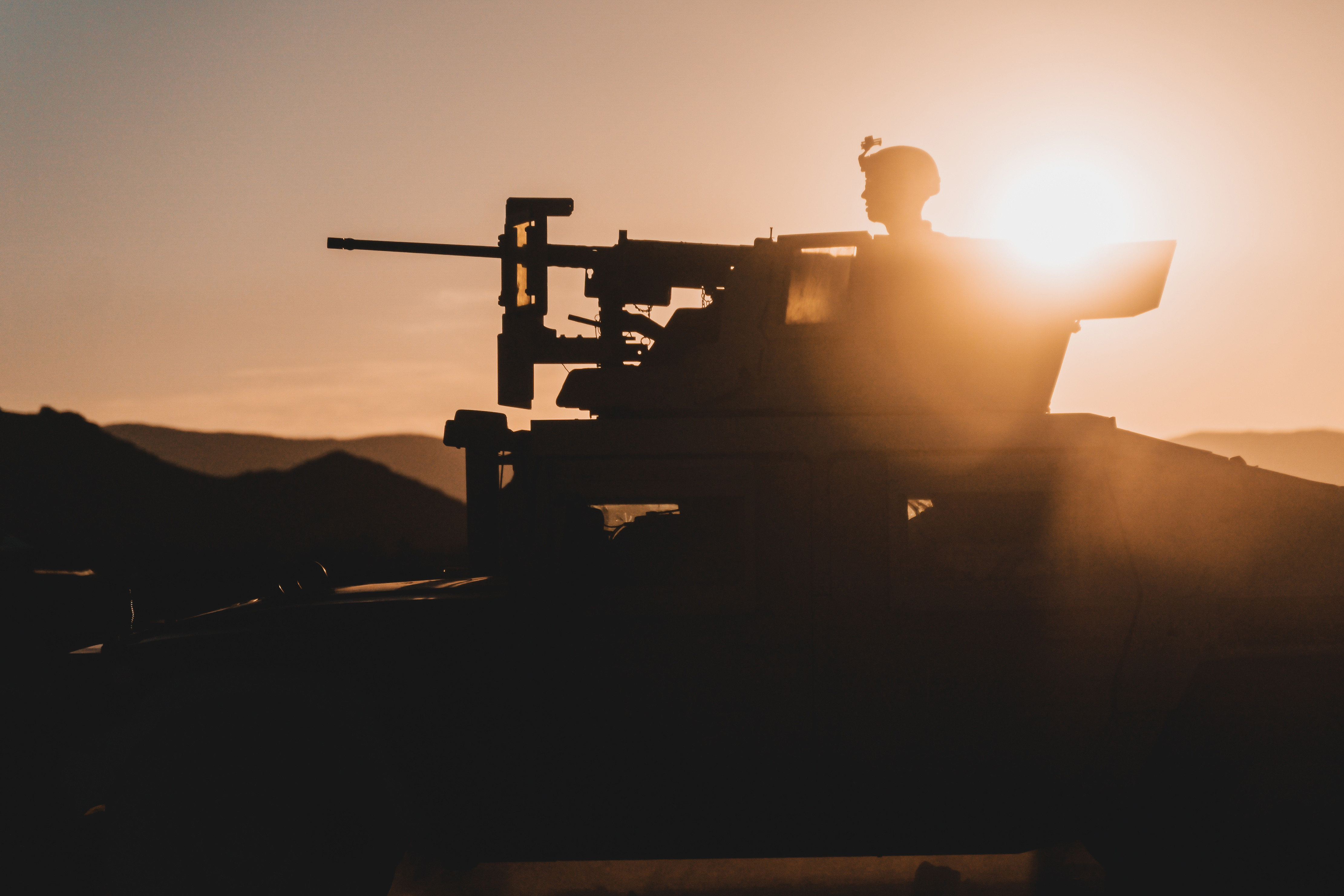
A Marine participates in an integrated training exercise at Marine Corps Air Ground Combat Center, Twentynine Palms, Calif., April 12, 2021. The exercise provides a challenging, realistic training environment to prepare troops for combat.

Navy Petty Officer 2nd Class Logann Parker conducts a handling demonstration with military working dog Astra at Naval Support Activity Souda Bay, Greece, April 12, 2021.

The Theodore Roosevelt Carrier Strike Group transits in formation with the Makin Island Amphibious Ready Group in the South China Sea, April 9, 2021.
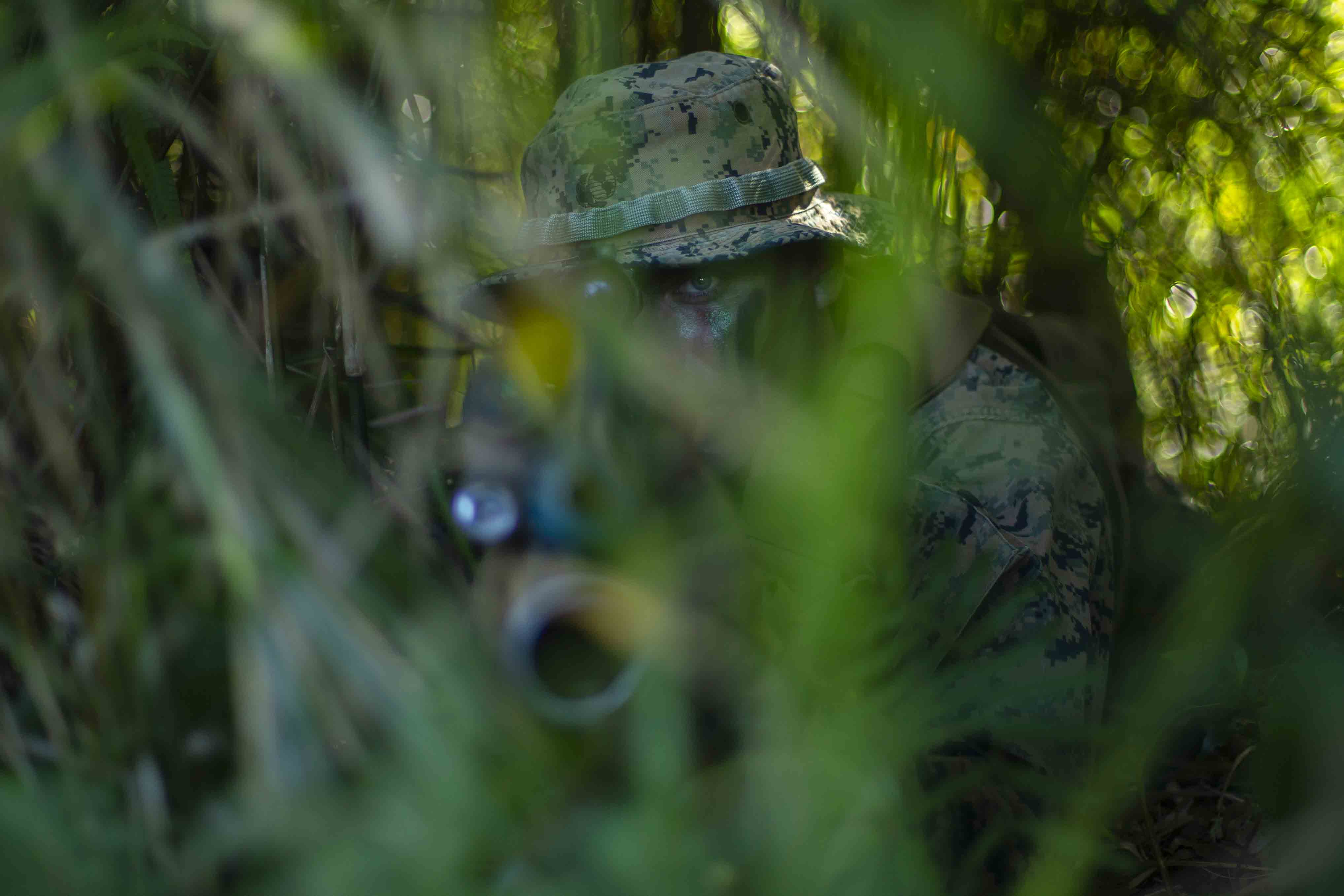
Marine Corps Cpl. Tyler Rautheaux simulates providing security during training in Okinawa, Japan, April 7, 2021.
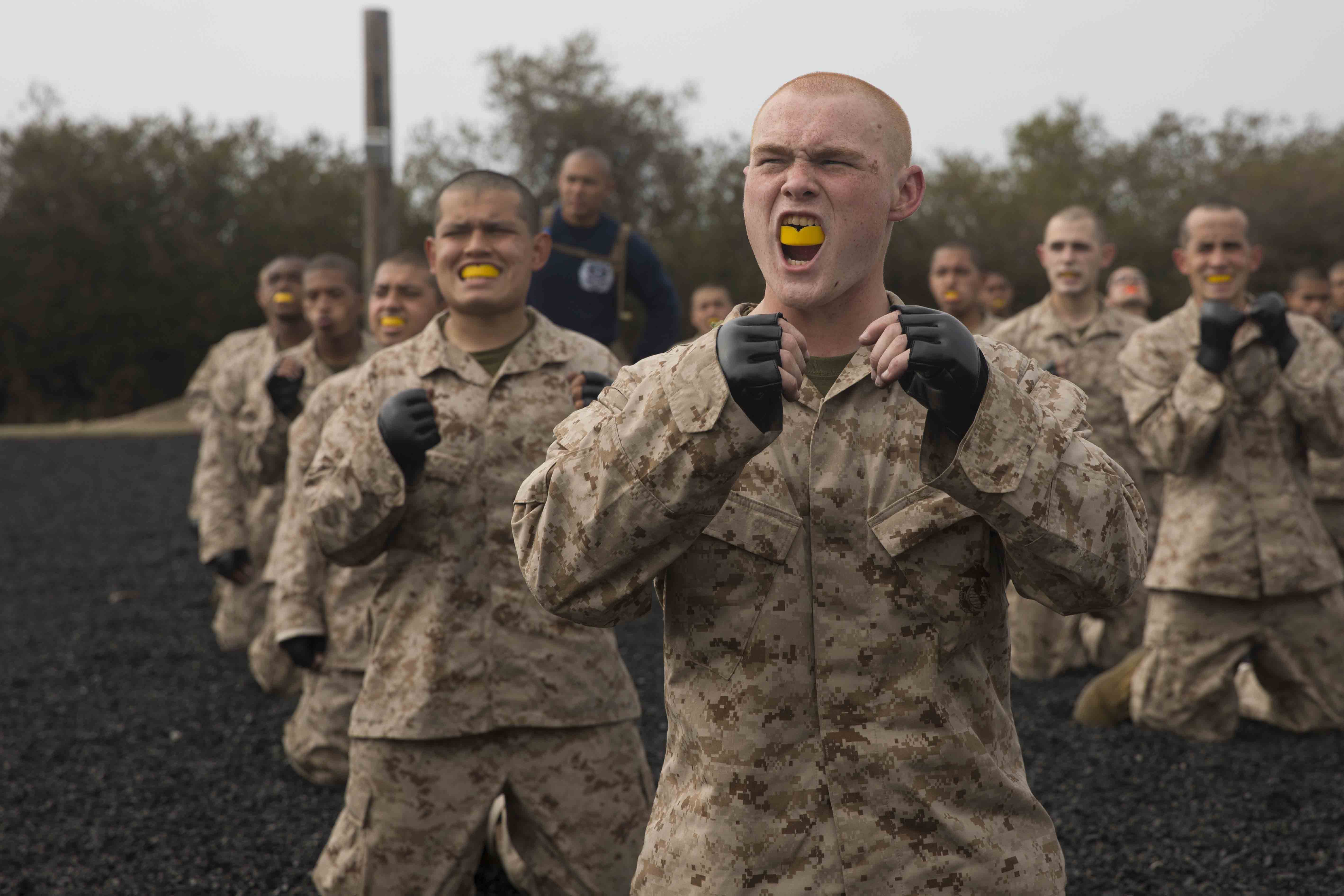
Marine Corps recruit Wade G. Huddleston participates in martial arts training at Marine Corps Recruit Depot San Diego, April 12, 2021.
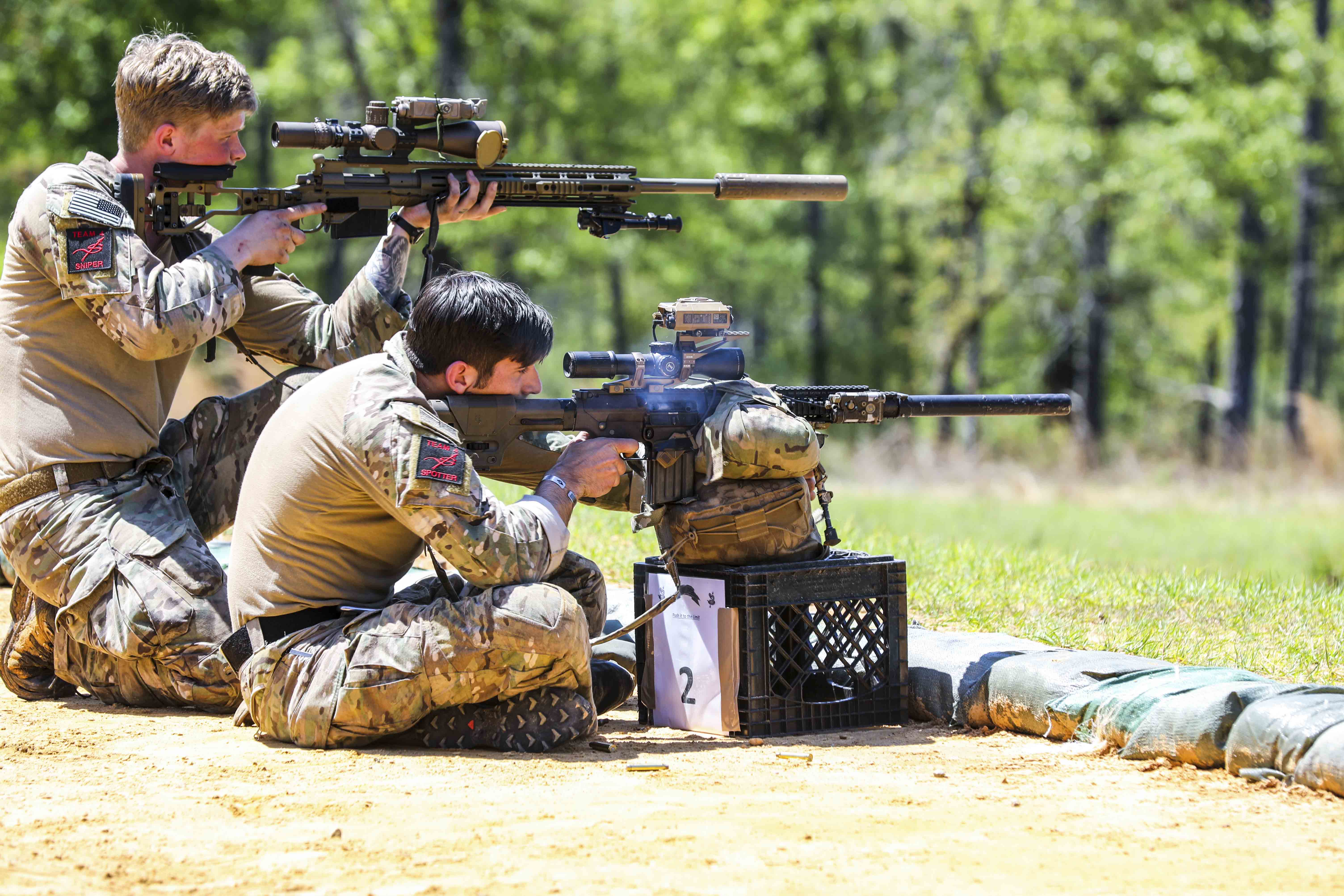
Soldiers compete in the U.S. Army Best Sniper Competition at Fort Benning, Ga., April 12, 2021.

Army Cadet Master Sgt. Jhaniyah Wynn performs a pushup during a training corps cadet leadership challenge at Camp Zama, April 6, 2021.
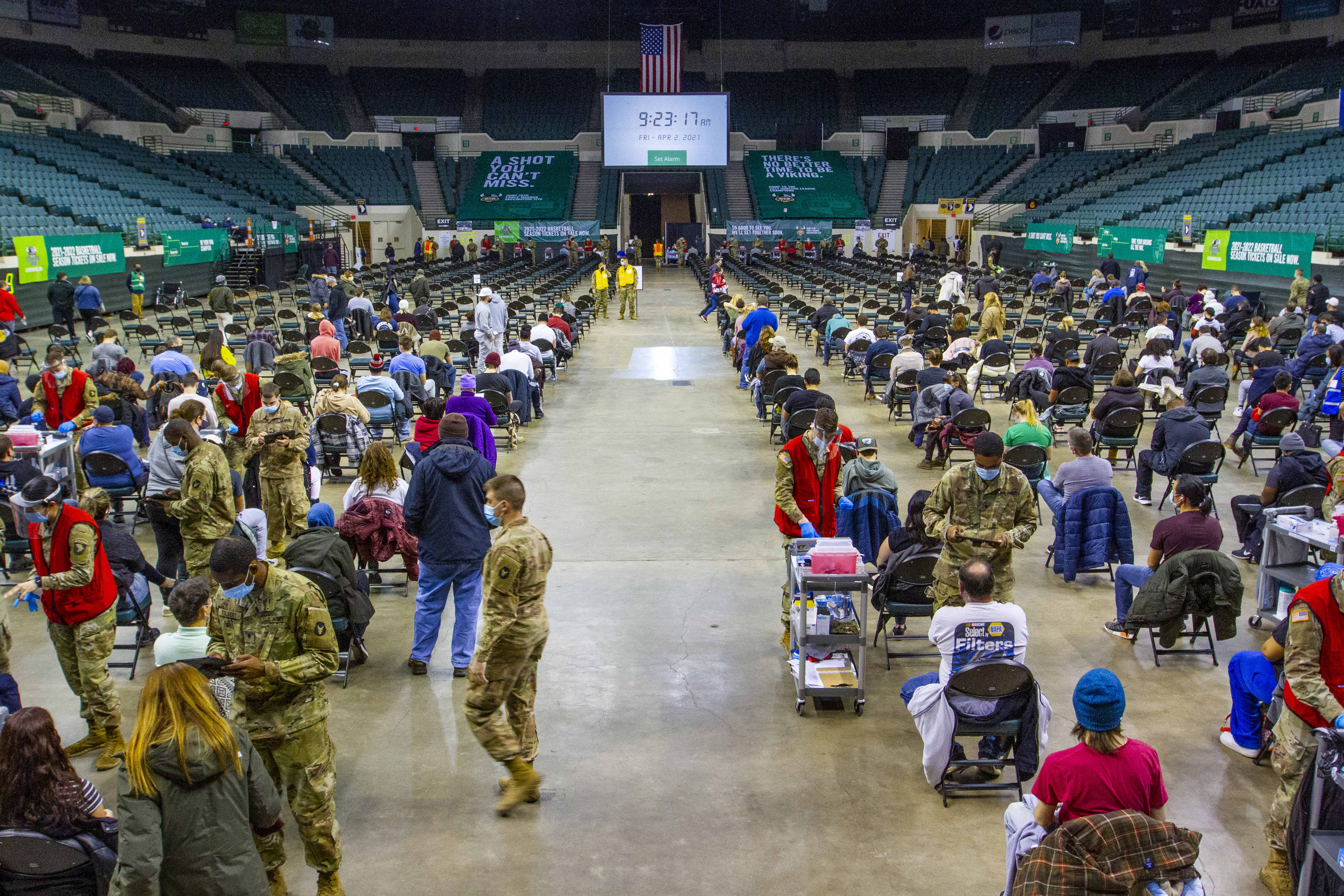
Soldiers assigned to the 2nd Brigade Combat Team, 101st Airborne Division, and their partners from the Ohio National Guard reach a milestone; administering their one hundred thousandth dose of the COVID-19 vaccine at the state-run, federally-supported Wolstein Community Vaccination Center in Cleveland,, April 2, 2021. U.S. Northern Command, through Army North, remains committed to providing continued, flexible Defense Department support to the Federal Emergency Management Agency as part of the whole-of-government response to COVID-19.

Army Spc. Logan Kilmon, assigned to the Kentucky Army National Guard, directs traffic at Kentucky’s largest drive-through COVID-19 vaccination clinic at Cardinal Stadium in Louisville, Ky., April 12, 2021. More than 30 Kentucky National Guard soldiers and airmen are providing direct support to the clinic, which can vaccinate up to 4,000 people a day.

Navy Seaman Matthew Tuten, left, and Navy Seaman Kenecha Campbell, right, assigned to Naval Medical Center Portsmouth, Va., refill COVID-19 vaccine supplies at their assigned stations at the Hynes Convention Center COVID-19 Community Vaccine Center in Boston, April 2, 2021. Sailors from across the country are deployed in support of Defense Department vaccine response efforts. U.S. Northern Command, through Army North, remains committed to providing continued, flexible DOD support to the Federal Emergency Management Agency as part of the whole-of-government response to COVID-19.

Army Sgt. 1st Class Chris Acevedo conducts a tandem jump with Ryan Alam, a teen fighting a rare neurodegenerative disease, over Potomac, Md., April 12, 2021.

Secretary of Defense Lloyd J. Austin III stands at attention as two U.S. Marines salute after Austin placed a wreath at Yad Vashem in Jerusalem, April 12, 2021. Also called the World Holocaust Remembrance Center, Yad Vashem is dedicated to remembering the six million Jews killed in the Holocaust and working to ensure it can never happen again.
April 13, 2021 | , DOD News
Lawrence "Larry" Eugene Doby was the second Black baseball player to break the color barrier when he signed with the Cleveland Indians in July 1947, three months after Jackie Robinson made history by signing with the Brooklyn Dodgers.

Doby made history as the first baseball player to go from the Negro Leagues directly into Major League Baseball.
From 1942 to 1943, Doby played for the all-Black Newark Eagles. At the time, no Black players were selected for Major League Baseball teams.

From 1943 through 1946, Doby served in the Navy. He was stationed at Great Lakes Naval Training School in Illinois, then Treasure Island Naval Base in San Francisco Bay, California. He also was assigned to Navy units in Ogden, Utah, and San Diego.
In 1945, he was stationed on Ulithi, a volcanic atoll in the Caroline Islands between Guam and the Philippines. The island served as a major staging area for the Navy that year during its final push to secure the Philippines and begin the invasion of Japan.

Serving in the military had been somewhat of a family tradition, since Doby's father served in World War I.
In 1946, Doby briefly played for the San Juan Senators in Puerto Rico before rejoining the Eagles that year.
On July 5, 1947, Doby began playing for the MLB's Cleveland Indians. Some of his new teammates refused to shake his hand when he was introduced, but second baseman Joe Gordon befriended Doby.

Initially, Doby had police protection to shield him from fans who were angry that a Black player was on the team.
Indians owner Bill Veeck, who signed Doby, had originally proposed integrating baseball in 1942, but he was rebuffed by MLB Commissioner Kenesaw Mountain Landis.
Doby, a center fielder, continued playing for the Indians until 1955. From 1956 to 1957, he signed with the Chicago White Sox, but he returned to the Indians in 1958. The following year, he joined the Detroit Tigers; later that year he rejoined the White Sox.

Despite moving around a lot, Doby amassed an enviable record: seven-time All-Star from 1949 to 1955; World Series champion in 1948; two-time American League home run leader in 1952 and 1954; and the American League's runs batted in leader in 1954.
Following his career as a baseball player in the U.S., Doby played professional baseball in Japan for the Chunichi Dragons team in 1962.
In 1978, he became the manager of the White Sox for one season.
Doby was named director of communications for the National Basketball Association's New Jersey Nets from 1980 to 1989.
In 1998, Doby was elected into the National Baseball Hall of Fame. He died in 2003 at the age of 79.

"This planned increase in U.S. personnel underscores our commitment to Germany and the entire NATO alliance," Austin said in his remarks to Germany's Ministry of Defense.
The increase reverses the policy of the previous administration, which looked to drastically reduce the number of U.S. forces based in Germany. President Joe Biden announced a policy to freeze that process, which included moving the headquarters for the Stuttgart-based U.S. European Command and U.S. Africa Command. The president ordered a global posture review to determine how to best station U.S. forces around the world.
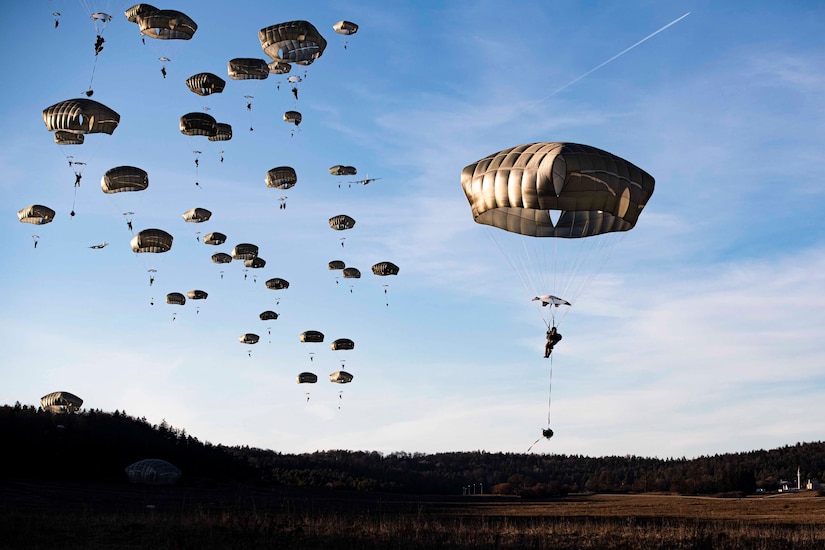
"It is great news that not only has the withdrawal of troops...from Germany been halted, but, quite the contrary; we will be able to welcome an additional 500 U.S. troops," Kramp-Karrenbauer said. "This is a very strong signal of our partnership and friendship."
Russia's actions in Georgia, its illegal annexation of Crimea from Ukraine, the continued harassment of Ukraine and other bordering nations, its military build-up, and its increasing use of cyberattacks are concerns in Europe. Germany is no exception; as the economic powerhouse of the continent, Germany is key to responding to these provocations.
"Germany is one of our staunchest allies, and our relationship is built on shared values of freedom, democracy, human rights, and the rule of law," Austin said. "Today, those principles are increasingly under duress. Amid shifting global dynamics and a challenging security environment, Germany will continue to be an important security and economic partner for the United States in the years ahead."
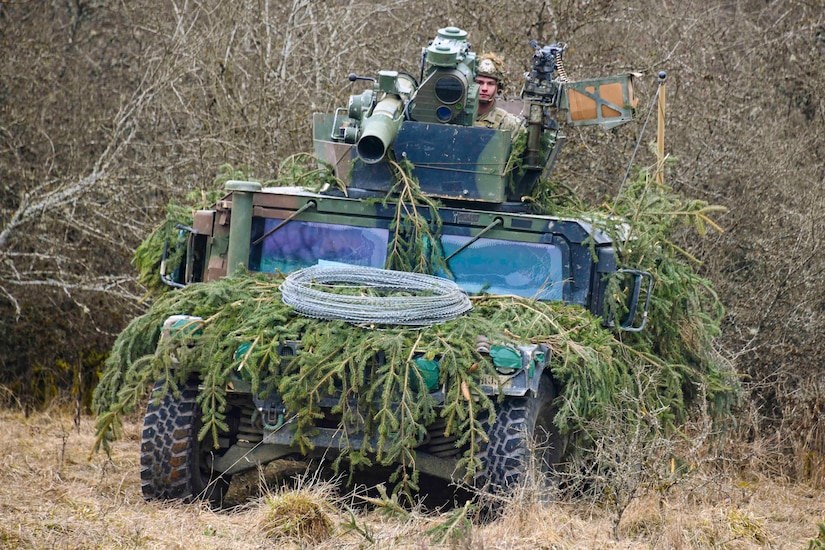
The secretary's visit to Germany is an indication of the value the Biden-Harris administration places on the relationship, officials traveling with the secretary said. It is part and parcel of the administration's effort to revitalize the series of American alliances worldwide. NATO is the crown jewel of the alliance system.
"Strengthening our relationship with Germany is a top priority for the Biden-Harris administration," Austin said. "Underscoring our strong commitment to allies and partners is at the forefront of my agenda, this includes advancing our transatlantic partnership, and increasing cooperation with our NATO allies," he said.
The 500 new U.S. troops will augment existing capabilities, help in the space and cyber domains, and provide more electronic warfare capabilities in Europe. They will "greatly improve our ability to surge forces at a moment’s notice to defend our allies," he said.
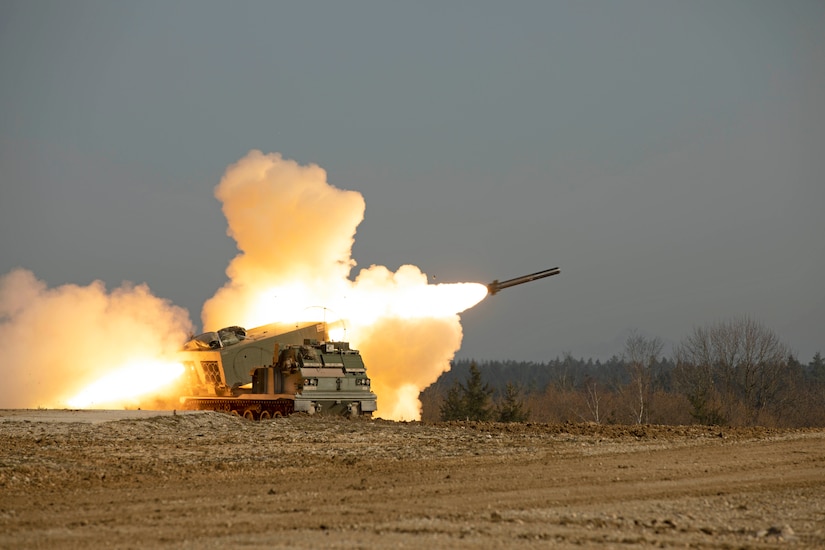
Austin briefed Kramp-Karrenbauer on the global U.S. force posture review, and the two also discussed Afghanistan. The German minister reiterated that NATO went into Afghanistan together and will leave together. The two also discussed areas where the United States and Germany can strengthen cooperation on global challenges, such as the COVID-19 pandemic and combating the malign influence of their shared strategic rivals.
Kramp-Karrenbauer said Germany will send a frigate to the Indo-Pacific that also champions freedom of navigation.
Germany is the first European nation Austin is visiting in his current job. "The visit was important to our country because as you heard President Biden say very early on that … we treasure our alliances," he said. "That's how we operate, and we always operate better as a part of a team, and NATO is a great team."


 Posts
All Comments
Posts
All Comments
Posts
All Comments
Posts
All Comments