Pentagon Press Secretary John F. Kirby
PRESS SECRETARY JOHN F. KIRBY: Good afternoon, everybody. Happy Friday. A couple things at the top here.
As I think and hope you saw yesterday, the Secretary published his
message to the force, which committed to ensuring the Department
develops the right people, priorities, and purpose of mission to
continue to defend the nation from enemies.
Secretary Austin provided his top three priorities in specific areas
of focus. I think you saw on there the three priorities are defend the
nation, take care of our people, and succeed through teamwork.
The Secretary reiterated the need for resources matched to strategy,
strategy matched to policy, and policy matched to the American people's
will. These priorities will help guide the Department as we develop
policy fashioned to strategy and acquire the necessary resources to
defend our country and support our alliances and partnerships around the
world.
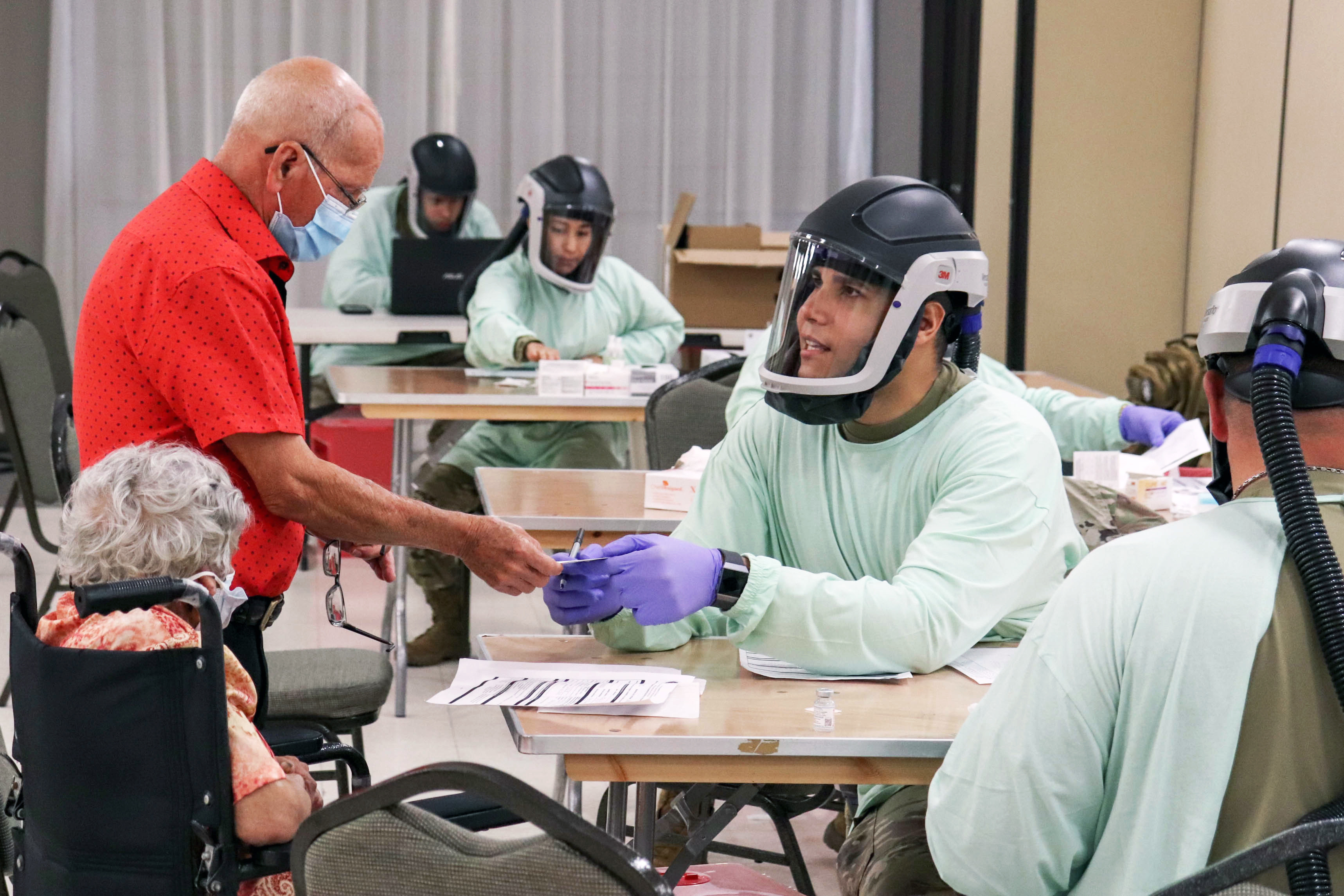
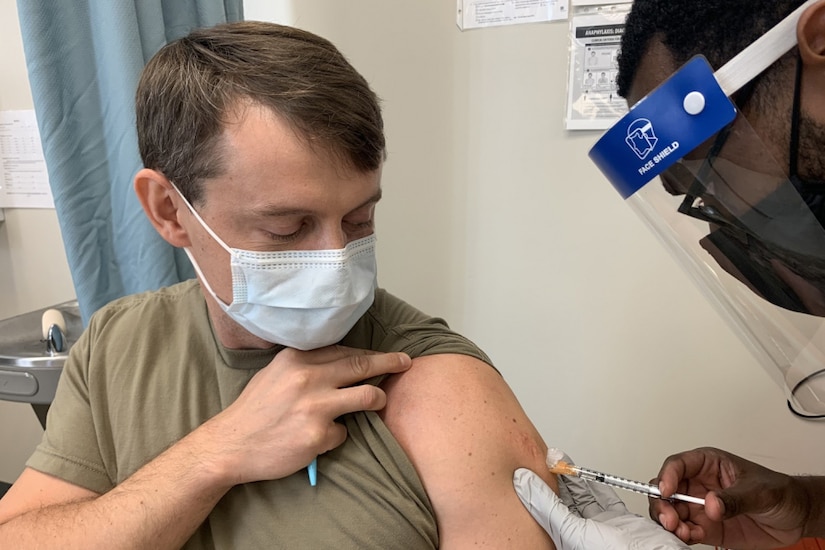
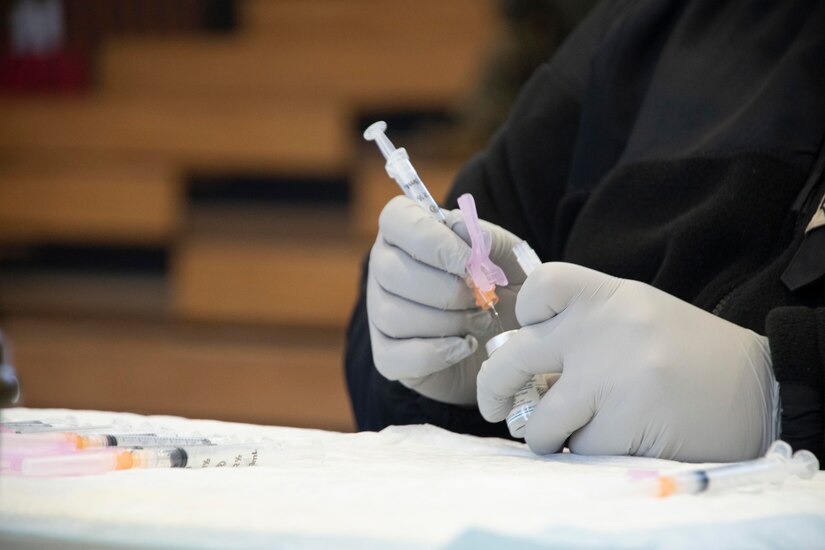
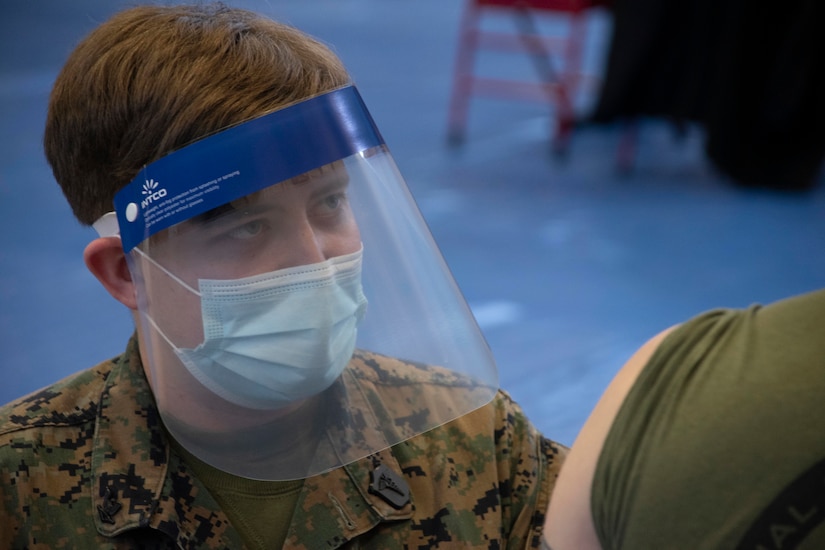
Next, just a quick update on our support to FEMA led vaccination
sites. Yesterday the Secretary authorized an additional 10 type two
teams for future FEMA support. This brings our total to now 35 times, 15
of the type one variety, and 20 of the type two.
Currently we are supporting 15 state-led, federally-supported
community vaccination centers in six states -- California, Texas, New
York, Florida, Pennsylvania, New Jersey, and the U.S. Virgin Islands.
Today we are deploying teams to community vaccination center sites in
Illinois and North Carolina. And in the coming weeks, we will send
teams to Ohio and to Georgia. And we'll be able to provide you a better
site breakdown after the briefing, if you need that.
Finally, I want to finish by honoring a hero from the Korean War. The
Defense POW MIA Accounting Agency formally identified the remains of
Army Chaplain Emil Kapaun of Kansas from remains that had rested among
unknowns at the National Memorial Cemetery of the Pacific in Hawaii.
His remains had rested among the 867 remains buried there as unknowns
at the cemetery. In 2018, the Defense POW MIA Accounting Agency began a
seven-phased project to disinter all remaining Korean War unknowns from
the cemetery.
And at a White House ceremony on April 11, back in 2013 President
Obama posthumously awarded the Chaplain the Medal of Honor for his
heroic service during the Korean War. And just to remind, because I
think it's important to think about what heroes like he did.
On November 2, 1950, the Third Battalion was near Pusan when the unit
came under heavy fire from Chinese forces and received orders to
withdraw. Approximately a quarter of the Battalion's soldiers made their
way back to friendly lines, but the others -- including many wounded
soldiers became trapped.
Chaplain Kapaun volunteered to stay with the wounded and was soon
captured and taken to a Chinese-run POW camp on the Yalu River. The
Chaplain continued to minister to other POWs, even after he became
gravely ill. And he lived long enough to celebrate a final Easter mass
in late March, dying on May 23, 1951.
I think it's just terrific that we were able to identify his remains
and bring closure to his family, and to honor his service, and the
Department thanks him for that service and for the example he set of
bravery and courage under fire.
With that, I'll take some questions.
Looks like Lita’s on, go ahead.
QUESTION: Yes, thanks John. Two questions, one can you bring us up to
date on the latest U.S. Capitol Police requests to the Defense
Department for additional National Guard to stay on at the Capitol for
another extended period of time?
And then the second question is, is the Department concerned at all
about this latest effort to narrow the AUMF? Is there any concerns that
this might make strikes like the one on the Syria-Iraq border more
difficult? Thanks.
MR. KIRBY: So on your first question, Lita-- I'm going to write down
the second one in case I forget it. We are in receipt of a formal
request from the Capitol Police for continued National Guard assistance
at the Capitol complex.
This request does seek an extension for a number of guardsmen over
the next couple of months. We're evaluating the request right now, as we
do with all others, with an eye toward properly balancing the need with
the resources available. And I'm not going to get ahead of that
process, but again, can confirm that we do have the request in the
building.
As for your question on the authorization for use of military force,
the Department fully supports the effort to work with Congress to craft a
new authorization. And we expect to be a full partner in that
conversation with Congress and -- and with the national security
leadership of the country.
And again, we -- as I said the other day, we'll be a full partner in
that effort to make sure that -- that -- that the necessary
authorizations are in place for us to continue to defend the nation.
Let's see, anybody in the room? Yes, Tara?
Q: Thanks, John. At the White House press briefing yesterday, Jen
Psaki was asked whether the administration is going to start putting the
numbers of troop levels in Iraq, Syria and Afghanistan back on the web.
As you know, they were removed from public release in 2017. She said
that it would be up to the Defense Department.
I was just wondering if the secretary is considering this, if the Pentagon will put those numbers back up there?
MR. KIRBY: We're reviewing it.
Q: Do you know any sense of how long this might take to review or what -- what is the timeline?
MR. KIRBY: No, I don't have a -- I don't have the timeline on it. But
we're aware of the -- of the issue and we're going to take a look at
that.
Phil Stewart?
Q: Sorry about that. I was just taking it off mute.
Two quick ones, once is Reuters reported earlier today that the HHS
has done a site survey in Fort Lee in Virginia to house unaccompanied
children. Just wondering whether or not there are other sites that DOD
is also looking to if the numbers continue to swell and then -- and then
what would that look like? What would having unaccompanied children at
Fort Lee look like? If you could help walk us through that and then I
have a separate question.
MR. KIRBY: So I mean, obviously we can confirm that HHS did do a site
survey visit at Fort Lee yesterday to determine if facilities there
might be suitable for temporary housing for unaccompanied children.
There's no formal request by HHS to do this at Fort Lee. And I know of
no other request to -- to look at or to consider other -- other
installations.
And Phil, as you know, this is not -- if it were to come to pass, it
certainly wouldn't be the -- the first time that we've done this. We've
done this back in 2012 and I believe there was a similar request for
assistance in -- in 2017, most recently in February of 2017. So it's not
something that hasn't been done before.
I wouldn't certainly speculate now as to whether it's even going to
come to pass or what that might look like. But the children would be
housed on the facilities in -- in usually base housings there, not --
not for families but -- but barracks-type housing. And they're under the
responsibility and the care of HHS. The Department's role would be to
provide the space in a fully reimbursable format.
Go ahead. What was your second one?
Q: The second one was on attribution for the rocket attack. I know
that you were looking into that before. Have you gotten any further in
potentially ID'ing which specific group and are you ready to talk about
that publicly?
MR. KIRBY: I don't have any update on attribution and certainly nothing specific with respect to Iran-backed militias.
Yes, go ahead.
Q: I wanted -- I want to go back to the mandate for use of force. Can
you please clarify if the administration, while waiting to replace the
current mandate, will seek a congressional approval before carrying any
air strikes? Especially that the air strikes from last week relied on
the mandate -- the current mandate.
MR. KIRBY: The -- as I said last week, the president's legal
authorities to conduct those defensive strikes were under Article II of
the Constitution and Article 51 of the U.N. Charter, which provides for
the right of self-defense for -- for nations. We're very comfortable
with those legal authorities.
OK, yeah.
Q: Thank you, John. So according to your -- what you just said,
there's no change in the Department policy toward designating certain
militia groups as being backed by Iran. Because we've seen some news
reports after my question last time. So...
MR. KIRBY: Yes, I've seen them too.
Q: ... Yes, I just...
(LAUGHTER)
... Yes, I just wanted to address this issue. And I have a second question on Israel.
MR. KIRBY: Yes, Fadi I misspoke. I got tongue-twisted, it happens.
But that -- we referred to them as Iran-based militias and that hasn't
changed.
Q: OK. Thank you, John. And we heard in the FOX News interview from
the Israeli defense minister statements that Israel is updating plans to
target Iranian nuclear sites. At the same time, we hear you saying,
although we're trying to defend our troops or partners, what we don't
want to see escalation in the region. Are you in consultation with your
-- with Israel, the main U.S. ally in the region, over these statements?
Are you concerned about escalation in light of these statements?
MR. KIRBY: Yes, without talking about diplomatic consultations, which
is not our purview, as I said and have said since -- since the strikes
that we took in Syria, that nobody's interested in this escalating -- in
the situation escalating. What we are interested in is making sure that
we are protecting our troops and that we are able to conduct our -- the
-- the mission in Iraq that we've been invited by the government there
to conduct, and in, also, standing with and by our Iraqi partners.
Q: Thank you.
MR. KIRBY: Lara Seligman?
Q: Hi, John. Thanks. I just wanted to ask you...
MR. KIRBY: Uh-oh.
Q: ... Sorry, someone muted me. Yes, I just wanted to ask you,
following up on the attribution question, when can we expect a response?
Will there be a response? And what kind of options are being discussed?
MR. KIRBY: I assume you mean a -- a military response to the strikes, not a response on attribution?
Q: A military response to the strikes, yes.
MR. KIRBY: I just simply won't get ahead of the process, Lara. Our
Iraqi partners are investigating the attack at Al Asad. We want to let
them do their work, as we've done in the past.
And if it's uniformly decided inside the national security
establishment that our -- a military response is warranted, you know,
then -- you know, that will be a response that -- as before, is at a
time and a manner of our choosing. But we aren't there yet, and I just
-- I wouldn't get ahead of the process.
Q: According to Iraqi press though, like you said earlier this week,
the Iraqi investigators were on scene immediately. And according to
Iraqi press, they found the launcher that was used in the attack. So
what else do you need for attribution?
MR. KIRBY: Lara, again, we're evaluating this and I know the Iraqis
are -- are too. And I simply don't have any updates on the evaluation
process -- the investigative process and any specific degree of
certainty that we have about who was responsible. But I think, as was
made clear last week, this administration is not afraid to hold those
responsible accountable for attacks on our people. Again, I'm just going
to not get ahead of -- of a decision-making process that's underway
right now.
Jenny?
Q: Thank you, John. The South Korean government seems to be
considering to -- suspending the joint military exercises between U.S.
and South Korea conscious of relations with North Korea? And what do you
think the South Korean government considers North Korea more than
important than their security alliance with the United States?
MR. KIRBY: I have not seen reports that...
Q: A lot of reporting...
MR. KIRBY: Yes, I have not seen those reports, so I -- and I
certainly wouldn't speak for the South Korean government and their view
of specific training events on the peninsula. I'll just say what I've
said before, which is that, you know, we take our alliance commitment so
the Republic of Korea very seriously, and that includes making sure
there are ready military capabilities should they be needed, and General
Abrams minds that very, very well, in lockstep with our South Korean
allies.
And I just wouldn't -- I wouldn't comment more beyond that other than
we know we've got serious commitments to make sure we have ready forces
there.
Q: Do you have an upcoming schedule on Secretary Austin to visit South Korea and Japan?
MR. KIRBY: I don't have any travel to speak to today.
Q: Well I have something information, but I want to confirm that because you're -- everybody knows.
MR. KIRBY: Everybody knows what?
(LAUGHTER)
Q: Secretary trip to South Korea (inaudible).
MR. KIRBY: I don't have any travel to announce. I don't have any travel to announce today.
Q: All right, thank you.
MR. KIRBY: But thanks for trying. Tony Capaccio, Bloomberg.
Q: Hi. John, can you hear me?
MR. KIRBY: Yes, I can.
Q: OK, two quick questions. Admiral Davidson this week has been
advocating putting on Guam a major air defense system, one of these
Aegis Ashores. Does the secretary endorse that? And I have a second
question.
MR. KIRBY: The secretary's mindful of what I think is -- that what
you're talking about is part- and-parcel to the Pacific defense
initiative and, again, he -- this is something that will be I'm sure
informed by and informing our global posture review.
Q: OK, second question. In terms of necessary resources I keep -- I
keep asking you about the '22 budget process. Last week you said it was
in a nascent stage. A week later, where is it? Did you get a pass-back
yet from OMB giving you a topline? And just where is all these reviews
that Secretary Hicks has asked for?
MR. KIRBY: They're still ongoing, Tony. I -- we're still - and we're
still working with OMB. I don't have anything further to share, you
know, and I won't until the budget is delivered to Congress.
Q: Do you have any sense when it may get released? Maybe early May, mid May, Fourth of July?
MR. KIRBY: That's -- that is really a question better put to OMB, Tony. Not to us.
Q: John, getting back to Capitol Hill and the Guard, I think you said
it was a $480 million cost for this. Was that through March or...
MR. KIRBY: Yes.
Q: ... if you can give us an update on that?
MR. KIRBY: Yes. It was -- it was budgeted $483 million through March, 12 March, which is next week.
Q: OK. One other thing on Chaplain Kapaun, his remains are being
returned. Where are they being returned to? Where's the family in the
States?
MR. KIRBY: I don't have an update on that. I'll have to get that for
you. We can take that question. That's fair. That's fair. OK, Matt from
ABC. OK. Let's see, Jeff from Voice of America.
Q: Hi. Thanks very much for doing this and taking my questions.
First, two questions. One on Afghanistan, any update on where the
process is as the May 1 deadline continues to get closer? We've been
hearing recently from lawmakers on both sides of the aisle now saying
including the Chairman of the House Armed Services Committee earlier
today, saying that they see no way that the Pentagon can or should be
meeting that May 1 withdrawal deadline. Then I have a second question as
well.
MR. KIRBY: I don't have an update. The interagency review continues.
Q: OK. And also there's been reporting this week about how airstrikes
were carried out. We saw in a release from the Africa Command today
quoting Somali Defense Chief saying that the airstrikes are absolutely
needed. Is -- has there been any expression of concern from U.S. allies
or partners about what's happening with the policy on airstrikes and
whether or not it might impede their efforts against violent extremist
groups, terrorist groups in Africa and elsewhere?
MR. KIRBY: I'm not aware of any such concerns that have been expressed to the department. OK. Abraham?
Q: Yes. Thanks, John. With the National Guard, that request for
extension, could you give us any more details like the number of troops
or if fencing would come down?
MR. KIRBY: I don't have any updates on fencing, and I would point you
to what the Capitol Police have said about what they're requesting.
That's better for them to speak to. But what I would say is, as I said,
we're in receipt of it, we're evaluating it, and we're going to treat it
just like any other request for assistance that we get. We're viewing
it with an eye towards whether we can meet the demand, whether the
requirements are all valid, and then on what timeline and what sourcing,
and that process just came in last night, so we're working very quickly
at that mindful of the 12 March deadline for the current mission, OK?
Q: All right.
MR. KIRBY: Let's see. Sam from USNI.
Q: Hi, John. Just a quick one. So from the Austin message that we saw
yesterday the interim national security guidance that came out earlier
this month and then some of the reporting around some of the directives
from Dep SECDEF Hicks on kind of the priorities for the department going
forward. Do you all have a good definition on what you're referring to
as legacy systems because divestiture of legacy systems is something
that in all sort of all three of those instances, is that something that
you all have kind of a clear definition on or is it sort of a little
squishier as we move through these reviews?
MR. KIRBY: I mean, I don't -- I couldn't give you a precise
definition of the word in budget terms here from the podium Sam, but I
think everybody understands that to mean older systems and capabilities
that may need to be replaced or revised.
Q: But I guess I'm just asking the question because the consistency
of the language across a lot of different vectors means there's
something in mind and there's sort of a definition in mind, and there's a
particular set of missions that you all have in mind when this is
coming. I was just wondering of there was a more of a formal definition
on what that would be?
MR. KIRBY: Yes. No, I get the question. I'd just point you back to my
original answer. I don't have a specific definition to give you except
-- and I think, you know, you've been covering this a long time, Sam,
and you know in general what we mean when we talk about legacy systems.
But look, that's what you do -- that's what you in budget season. That's
what you do every year when you take a look at what resources you need
to defend the country. You take a look at the systems, the platforms,
the capabilities to make sure that they're relevant to the threats and
the challenges that you're facing, and -- so when we refer to legacy
systems, we're talking about typically older capabilities that are worth
asking the question, do we still need them, do we still need them in
the same number, do they need to be modernized or do they need to be
eliminated?
And I think that's the general gist of how that word was used in our planning.
Yes, go ahead.
Q: Thank you. China -- China said (inaudible) that it will increase its
defense budget by 6.8 percent in 2021. How much are you concerned about
the continuing increase of China's military spending?
MR. KIRBY: The secretary's been very clear, I mean, he holds China as
the pacing challenge of the department. You saw that in the document
that we made public yesterday. And as he further articulated in that
document, that means we've got to make sure that we have the right
capabilities, the right operational concepts, the right policies and
strategies in place, not just in the Indo-Pacific region but around the
world, because China is having an impact globally. And to make sure that
we're ready to meet -- to meet that challenge forthright and head-on.
OK?
Q: A follow-up, there is also criticism of China's military spending,
criticism of accusation of China's military spending in terms of
transparency and openness. So do you think that China's actual spending
is much larger than the amount than they publicly announced?
MR. KIRBY: I don't have a -- from this podium I wouldn't have that
kind of context to offer. I -- what I think you're asking is are they
being dishonest about the increase in their spending, that it's more
than what they're saying it? I think that's a great question for the
Chinese government, to pose to them. I mean, I'm in no position to judge
right here today what we believe about the veracity of the figure that
they're putting out there.
Our focus is on getting our budget in order and getting it ready
along OMB's timeline. That's where -- that's where our head is right
here.
Ellen from Synopsis?
Q: Hi, thank you so much for taking me. I want to get to COVID
vaccination, and I'm sure that vaccination is still ongoing at --
throughout DOD. There's this number of a third of service members
refusing the vaccine. Are you all doing anything to actually measure
this, or is this just anecdotal?
MR. KIRBY: We've talked about this before. At DOD, at this level, at
the Office of the Secretary of Defense, we are not centrally tracking
the rate at which or the raw numbers at which those who are being
offered the vaccine decline to take it. There are -- the services are
working through getting better clarity around the -- both the acceptance
decisions and the declination decisions, and so I'd point you to each
of the services who can talk with probably more fidelity about what
they're seeing.
I would caution you, though, and all of you -- and as I've said
before, I mean, we are still vaccinating essentially Tier 1 -- Tier 1A
and Tier -- I'm sorry, Tier 1A and Tier 1B populations largely
throughout the force. So the majority of people -- I think we've
administered now almost a million and a half doses, and as you well
know, all you have covered the workforce, we're talking at over 3
million total in the workforce.
So there's still a long way to go. And so the rates, whatever they
are, acceptance rates or declination rates that you'll find, you have to
keep in mind that that's a -- that's of a small subset right now as we
still continue to work our way through the program.
Yes, Sylvie?
Q: (OFF MIKE)
MR. KIRBY: I'm sorry, was there another one?
Q: Yes, do you have the Janssen vaccine in the supply chain already,
and where are you sending that? Is it maybe going overseas, or to
particular kinds of troops?
MR. KIRBY: We are -- we are receiving allocations of the Janssen
vaccine and we're going to start incorporating it into the existing
distribution process. What we said before is it does give us more
flexibility, because it ships in bulk and it doesn't require
refrigeration. It only requires one shot, so -- making a single vaccine,
you can be able to accomplish more in less time. It's also highly
effective. We believe it will appropriately protect our personnel from
hospitalization and possibly death.
And like we've said, like all the other vaccines, we believe this is going to be key to helping end the -- end the pandemic.
Yes, Sylvie?
Q: Yes. I would like to go back to the National Guard. I am not
especially -- but I know that there is a law that prevent the military
to accept some police activities in the -- in the country, the Posse
Comitatus.
So I wanted to know if in the Pentagon there is a concern that
keeping National Guard at the capital for two more months would risk to
violate this law?
MR. KIRBY: No, there's no concern about the Posse Comitatus, which
restricts active duty -- what we would call Title 10 troops from
participating in law enforcement activities. But the National Guard,
under Title 32 does have the mandate to support local authorities as
requested. So there's no concern for Posse Comitatus here.
Q: And do you -- do you consider that the situation right now is an emergency that deserve the National Guard to stay?
MR. KIRBY: Well as I said, we just received this request and we're
evaluation that, and part of the evaluation process is to look at the
requirement, to consider the need. And I -- again, I won't get ahead of
the decision making process here, but there's also – you know in
addition to looking at the threat environment, there's also -- we -- I
think it's necessary for us to also look at the capabilities requirement
and the degree to which -- I mean things are -- things are clearly
different now, and -- in the wake of January 6th, and the Secretary
believes that our lawmakers absolutely deserve a safe and secure
environment in which to work.
And -- so we have to look at the capabilities there in -- on the
Capitol complex and ask ourselves if there are capabilities we can add
that the Capitol Police don't have right now or have insufficient to the
need.
So it's a combination of looking at the threat and looking at the
capabilities need. And that's what we'll be doing in the -- in the -- in
the coming hours and days as we work through this, and my answer to
Tom, I mean we’re mindful of the current mission ending on the 12th of
March. So I don't expect that you're going to see the Pentagon take too
long here to make a decision.
Sure, go ahead Lucas.
Q: Does the Secretary support using the U.S. Military as a full-time
quick reaction force to the Capitol as requested -- recommended by
General Honore?
MR. KIRBY: I don't have any -- as far as I know, we don't have --
haven't received the report and don't have a -- an opinion on those
recommendations. I mean I haven't seen the report, I don't know that --
I'm not faulting you here, but I don't know that those are
recommendations that General Honore has made so I'm unable to answer
that right now.
Q: And just to follow up on Fort Lee, does the Secretary support
using Fort Lee as a base to hou -- potentially house migrant children?
MR. KIRBY: The Secretary was supportive of having HHS visit Fort Lee
to examine and to do a site survey. And if there is a need, and right
now there isn't one, there's no request, but if there's one, the
Secretary is fully committed to making sure that -- that request gets a
full airing here at the Pentagon and that we make the best decisions we
can.
Q: And does he support the name of the base being changed before any potential migrant children arrive?
MR. KIRBY: There's a, as you know, there's a base naming commission
-- at work, he named four commissioners to it. That -- they have started
to have their initial deliberations and he wants them to make sure they
get all the support they need from us, and they will, and we'll see
what they come up with at the end of their work.
MR. KIRBY: Hang on just a second. Peter from Asahi Shimbun? Okay. Peter’s not there. Jared?
Q: There are -- sorry, there are two mute buttons that you have to unpush on Zoom. (inaudible)
MR. KIRBY: So, which one of you am I talking to?
Q: You're talking to Peter (inaudible) from Asahi Shimbun.
MR. KIRBY: Alright, thanks.
Q: The -- thank you, the South Korean government but also the
Japanese Government have both confirmed, as well as the Australian
Government, has talked about the Quad. Can you -- can you -- you've
already said you cannot say anything about the Secretary's trip to -- to
the Indo-Pacific. Can you explain why other governments have released
it so much quicker than we have?
(LAUGHTER)
MR. KIRBY: I -- as has been evident by misstatements and -- that
I've made up here, I am barely capable of speaking for the Defense
Department, not -- and I'm certainly not capable of speaking for other
governments. I'm -- I've got no travel to announce and if and when there
is travel to speak to, we will do that in due course.
Q: Is it top secret or?
MR. KIRBY: Is what?
Q: Is the, you know, Secretary trip to Korea or Japan top secret? Or what is it?
MR. KIRBY: When I have something to announce and to talk to, I will do that. And thanks for the concerted effort.
Pierre?
Q: Can you tell us a little bit more about how this Secretary got to
the point that he's talking about the threats that are coming from
states? We've heard the Secretary speaking mainly about -- about China,
we’ve heard him speaking about Russia sometimes, but North Korea and
Iran were like, (inaudible) new to me. How did we come here? Is it
something that is added? Is it something that is being relooked at from
the previous administration and re-adopted in the message that he sent
yesterday?
MR. KIRBY: I'm -- I think the short answer to your question is no.
We've spoken quite a bit from this podium and the Secretary has spoken
quite a bit about the maligned activities that Iran continues to
perpetrate in the region. The support for terrorism, their ballistic
missile program, the maritime threats that they pose. It's certainly no
secret and its not lost on the Defense Department today any more than it
was in the last few years. I, myself have stood at this podium before
many years ago talking about Iran and about North Korea. North Korea
continues to develop -- continues to posses a dangerous program of
weapons of mass destruction that threatens the region and potentially
threatens the United States, certainly poses a threat to our allies and
partners in the region. So that's not -- that's not new.
I would think that you'd be surprised if when talking about state
threats that Secretary Austin didn't mention those countries, OK? Tom
from it looks like Talk Media? I’m going to wait for him to hit the mute
button. I didn't know you had to hit two buttons. OK.
Q: Hi. Can you hear me? Hey.
MR. KIRBY: Is that -- is that you, Tom?
Q: Hey, John. John?
MR. KIRBY: Yes. I got you, buddy.
Q: OK. Hey, I was wondering if you can give me an update -- us an
update pleas on when the Freedom of Navigation report for the last
fiscal year will be released? Usually it comes out at the end of
January. The folks as OSD press officers have checked them each weekend.
Each week they tell me it's going to be released at the end of the
week. It's about two months late. Do you have any idea when that might
be released, please? I have a related question on that. Thanks.
MR KIRBY: I don't, Tom. I'll take it as a question and we'll get back
to you. I'm sure we'll be able to get back to you by next week.
(LAUGHTER)
I'm kidding. I'm kidding. We will...
Q: I know, and...
MR. KIRBY: It's a fair question, Tom, so let me -- let me -- let me get back to you. Did you have another one?
Q: The follow on that is the Germans announced that they're going to
have a frigate in the South China Sea this coming summer. Is this part
of a larger effort by the Pentagon to get more NATO allies to
participate in the South China Sea Freedom of Navigation operations?
MR. KIRBY: Well that's a -- the issue of a German ship or any other
ship operating in that part of the world really is a question better put
to their ministries of defense. They should speak to their assets. I
certainly can't do that.
I think what you're seeing, though, Tom, is rather than some
U.S.-driven concerted strategy, I think you're seeing many countries
around the world expressing their concerns about China's aggressive
activities, particularly in the South China Sea, and they're -- and they
are acting on those concerns.
Q: OK, thanks.
MR. KIRBY: Yes. You bet. OK. Meghann?
Q: Has the secretary made a decision on where Ike is going to go on
its upcoming deployment, or if he hasn't, did he have meetings with the
Chairman or the COCOMs this week as he told us last week on Nimitz that
he planned to do this week?
MR. KIRBY: He meets with the military leaders every week, Meghann. I
do not have a specific decision to speak to you today. OK. Sure.
Q: John, also you said that the peace segment with the Taliban and U.S. is not done yet. It's under review, right?
MR. KIRBY: That's correct.
Q: But where does the new decision come from regarding coalition
government in Afghanistan that Doctor Khalilzad would have came went to
Afghanistan and announced this topic, coalition government, but is still
some of the leader of Afghanistan did not accept that coalition 50-50
between Taliban and Afghan government. It means their agreement is not
-- reviewing is not finished yet, right? It's under review, but we have
this decision comes from?
MR. KIRBY: I would have to point you to the State Department to speak
to that and Ambassador Khalilzad and his activities. I'm not aware of
that, and that even if I was would not be appropriate to speak to from
this podium. Matt, ABC. Oh, we tried him, didn't we?
Q: He's right here.
MR. KIRBY: Is he?
Q: Hey, John. Can you hear me?
MR. KIRBY: Yes, now I got you.
Q: Yes, I failed the unmuting test earlier. Thanks. So I got another
question about Iraq, and The New York Times reported about the Pope
landing today saying that his flight was escorted by U.S. aircraft once
he entered Iraqi air space. Can you say anything about that or confirm
that?
MR. KIRBY: I cannot confirm that.
Q: OK. One other thing. You're not ready to give attribution for this
attack, but that should come. Does having somebody like the Pope in the
region complicate the calculus when it comes to a U.S. response?
MR. KIRBY: Again, there -- no decision has been make with respect to
whether there'll be a response or what that response might be like. And,
as I think you know, there's a multitude of factors that go into any
decision that the United States military makes to conduct a strike of
that sort. Lots of factors go into that. OK.
Q: Thank you.
MR. KIRBY: Oren?
Q: Jake Sullivan warned yesterday of the danger or the threat posed
by the Microsoft Exchange hack and that it was echoed by the White
House. He specifically said defense industrial base entities was
targeted. I wonder was the DOD a target as well? Was there a breach? And
have you been in communication with any defense industrial based
entities that were targeted?
MR. KIRBY: So what I can tell you, Oren, is that we're aware of the
Microsoft threat intelligence center's report. We're currently assessing
our networks right now for any evidence of impact. We're also, as I
don't think will come as a surprise, taking all necessary threats to
identify and remedy any possible issues related to the situation.
Joint Force headquarters, we call it DODIN, but it's DOD Information
Network, is coordinating with the National Security Agency and the
Cybersecurity Infrastructure Security Agency on guidance and directives
to make sure we can protect DOD networks and IT systems. So right now
we're aware of to and we're assessing it. That's really as far as I'm
able to go right now.
OK, Jared?
Q: Hi, John. Thanks for doing this.
Just a quick question on Israeli Defense Minister, Benny Gantz’s
comments yesterday to Fox News. Does the department assess that the
Israelis are capable of conducting a unilateral operation against Iran's
nuclear site. What might be the consequences of that?
MR. KIRBY: I absolutely would not comment on that today. That's
really a question better put to our Israeli friends in the region. I
would not comment on that.
Terrance from Newsy? Did I get that wrong? I'm sorry. Yes. Terace. Sorry.
Q: Yes. Yes, sir. Can you hear me?
MR. KIRBY: Yes.
Q: OK. Excellent. Actually a reporter asked my question earlier, so I don't have one. Thank you.
MR. KIRBY: OK. I'm sorry I butchered your first name.
Q: No, no. That's OK. I'm used to it.
MR. KIRBY: I'm going to blame it on Brook DeWalt for his handwriting.
(Laughter.)
Back there.
Q: OK. Follow up on the Chinese defense budget. So one of the
arguments from the Chinese side is their budget is still relatively
small compared to the United States budget, so which brings back the
transparency question. Do you think it's fair to compare the U.S. budget
that it's publicly announced to the one that Chinese government is
announcing?
MR. KIRBY: Do I think it's fair for who?
Q: Just to make a comparison?
MR. KIRBY: I didn't make a comparison, and I'm -- and I'm not
attempting to make a comparison. The Chinese government can speak to
their defense budget. They should have to speak to their defense budget
and what they're doing and what they're spending and what they're using
it for. And they should have to answer and speak to their aggressive
activities in the South China Sea and they way they're coercing their
neighbors.
They should speak to a lot of things. Our job is to speak to what
we're doing here in the U.S. Defense Department and that's one of the
reasons why I wanted to make sure we publicly released the Secretary's
priorities to all of you so you could see what he wants to do here at
the Defense Department. And what we're willing to speak to on behalf of
the American people.
And you saw right in that document that China was clearly delineated
as the pacing challenge for the department. So we're comfortable
speaking to that.
Abraham?
Q: Yes, thank you. Former Defense Secretary Mark Esper said he wanted
to travel to China to meet with his PLA counterpart, is that something
that Secretary Austin would like to do as well?
MR. KIRBY: I don't have any potential travel to China to speak to either. Do I, Jenny?
(Laughter.)
Q: (Inaudible) in your tie.
MR. KIRBY: Do you like this one, too?
Q: Yes.
MR. KIRBY: I'm hitting them out of the park with you aren't I? I'm going to run out of ties soon. Go ahead, in the back.
Q: Thank you. Gary Raynoldo with Diplomatic Times. I have a question
on U.S. Africa command in terms of operations. First in Africa Sahel, do
you see them stepping up operations in the Sahel area given the
unprecedented terror attacks there? Because we know they're involved in
eastern – the Horn of Africa with Somalia. So do you see any more
expanding their operations in the Sahel?
MR. KIRBY: I think we said before we certainly take seriously the
terrorism threat in Africa and Sahel specifically. And continue to work
inside the international community to address that threat. I don't have
and won't speak to potential future operations.
Yes, ma'am.
Q: It is reported that U.S. will establish missile network along the
so called First Island Chain for Indo-Pacific theater. And then the plan
for part of a Pacific Deterrence Initiative proposed by the U.S.
Indo-Pacific Command and expected to cost $27 billion over six years. So
can you elaborate more on this like missile network system? And then
just one more, the SMA agreement, actually the U.S. and ROK are getting
close to final SMA agreement. So they are now having a final meeting in
D.C. now today.
So what does DOD expect from its agreement in terms of the U.S./ROK alliance? Thank you.
MR. KIRBY: Your talking about for the SMA, as far as I know, those
discussions are still ongoing and that's a question better put to the
State Department. On the Pacific Deterrence Initiative, we are
developing -- in fiscal year '22 to fund key investments that will
maintain a credible deterrent in the Indo-Pacific. We assure our allies
and partners and reduce operational risk to U.S. forces.
Specifically, the Pacific Defense Initiative -- Pacific Deterrence
Initiative, sorry, will support the department's efforts to field more
lethal and survivable capabilities, build a more resilient and
distributed force posture, improve the capabilities of our allies and
partners and enhance innovations, experimentation and training for the
joint force. And that's about as far as I'm going to go in detail today.
For any further details we'd point you to the Indo-Pacific Command to
speak to.
OK, have a great weekend, everybody. Looks like I got everybody on the sheet, got everybody here. Have a great weekend.
Of course. It wouldn't be a briefing without you getting the last one.
Q: John are you concerned this tit-for-tat with Iran will up to a war?
MR. KIRBY: I mean we talked about that, Lucas. Nobody -- first of
all, I would not characterize this as a tit-for-tat. We took defensive
strikes last week in order to protect our people. And nobody wants to
see this escalate, as I've said before. Nobody wants to see this
escalate. But we have an obligation to protect our people. And if and
when we feel like we need to do that again, we will.
Q: But these Iranian-backed militias, if they're hearing this that
you don't want to escalate this, doesn't that mean that they can keep
going knowing there's not going to be a response?
MR. KIRBY: I -- again, without getting ahead of decisions that
haven't been made, I think the President sent a very clear signal last
week that he's going to act proportionally, deliberately, and prudently
to protect our people and our Iraqi allies -- and our Iraqi partners in
the region.
Go ahead.
Q: The -- the -- the previous administration stated it clearly that
it would hold Iran responsible for any action or attacks by the proxies.
Are you saying proportional means tit-for-tat, that whoever is going to
attack us, we are going to attack them?
MR. KIRBY: No, I'm saying -- I'm saying quite clearly we -- we're not
interested in getting into what Lucas describes as a tit-for-tat. What
we're interested in doing is making sure that we are protecting our
people and our Iraqi partners, and that we continue to be able to
conduct the mission inside Iraq -- at the Iraqi government's invitation
-- to go after ISIS. That is -- that is what I'm saying. OK?
Q: Thank you.
MR. KIRBY: Thanks, everybody.












 Posts
Posts

