Saturday, February 27, 2021


Austin Tells DOD Education Activity Students About His Heroes, Inspirations
Feb. 26, 2021 | , DOD News
Each generation has heroes — people who rise above the humdrum and mediocre to inspire those around them and who follow them, to aspire to better themselves and their nations.
Henry O. Flipper — the first African-American graduate of the U.S. Military Academy — was one of the heroes who inspired Secretary of Defense Lloyd J. Austin III, the secretary told students at Defense Department Education Activity high schools at Fort Knox and Fort Campbell, Kentucky.

The first African American leader of the department, who was also a West Point graduate, spoke virtually about his motivations and inspirations for Black History Month.
Flipper was from Austin's hometown of Thomasville, Georgia. He was born enslaved and freed as a result of the Civil War. After his 1877 graduation from West Point, Flipper was commissioned a second lieutenant in the 10th Cavalry Regiment — an all-Black unit in the western U.S. that American Indians called Buffalo Soldiers.
"As a young man growing up in Georgia, I never would have, would have imagined that I'd be walking the halls of the Pentagon, let alone doing that with the president and the vice president of the United States of America," Austin told the students.
"It is my distinct honor to serve as a secretary of defense," he said. "In that capacity, my number one job is to defend our country and secure our nation's interest[s] around the globe. I do this by leading and serving alongside a diverse group of nearly 3 million hard working professionals — soldiers, sailors, airmen, Marines and guardians."

The secretary told the students that DOD is stronger the more diverse it is. He wants DOD to mirror the make-up of the larger American people, which it does with 40 percent of the force representing people of color.
"I think … the military has led the way … in terms of providing opportunity, not only to join, but providing opportunity for promotion," he said. "One of the things that I think we're going to have to work on going forward is making sure that the senior ranks of the military also reflect what the military looks like."
Austin wants senior leadership in the United States military to mirror America's diversity. "That's one of the things I'm going to work on while I'm in this job," he said.
"Black history is American history," Austin said. Heroes of every hue inspire Americans of every hue.
The heroes are willing to step up and make the country better. They are willing to secure the freedoms and rights and privileges for all Americans. "Your generation won't be any different," Austin said.
Flag Officer Announcements
Feb. 26, 2021
Secretary of Defense Lloyd J. Austin III announced today that the president has made the following nominations:
Rear Adm. (lower half) William E. Chase III has been nominated for appointment to the rank of rear admiral. Chase is currently serving as senior military advisor for cyber policy to the under secretary of defense for policy; and the deputy principal cyber advisor to the secretary of defense, Washington, D.C.
Rear Adm. (lower half) Christopher C. French has been nominated for appointment to the rank of rear admiral. French is currently serving as legal counsel to the chairman of the Joint Chiefs of Staff, Washington, D.C.
Rear Adm. (lower half) William C. Greene has been nominated for appointment to the rank of rear admiral. Greene is currently serving as fleet maintenance officer, U.S. Atlantic Fleet, Norfolk, Virginia.
Rear Adm. (lower half) Joseph D. Noble Jr., has been nominated for appointment to the rank of rear admiral. Noble is currently serving as commander, Naval Supply Systems Command Weapons Systems Support, Philadelphia, Pennsylvania.
Rear Adm. (lower half) John A. Okon has been nominated for appointment to the rank of rear admiral. Okon is currently serving as commander, Naval Meteorology and Oceanography Command, Stennis Space Center, Mississippi.
Rear Adm. (lower half) Scott W. Pappano has been nominated for appointment to the rank of rear admiral. Pappano is currently serving as program executive office, Columbia, Washington, D.C.
Rear Adm. (lower half) Dean A. VanderLey has been nominated for appointment to the rank of rear admiral. VanderLey is currently serving as commander, Naval Facilities Engineering Systems Command Atlantic with additional duties as fleet civil engineer (N01CE), U.S. Atlantic Fleet, Norfolk, Virginia.
Capt. Kristin Acquavella has been nominated for appointment to the rank of rear admiral (lower half). Acquavella is currently serving as director, plans and policies, N415, Office of the Chief of Naval Operations, Washington, D.C.
Capt. Maria L. Aguayo has been nominated for appointment to the rank of rear admiral (lower half). Aguayo is currently serving as chief of staff, Naval Facilities Engineering Systems Command, Washington, D.C.
Capt. Joseph B. Hornbuckle has been nominated for appointment to the rank of rear admiral (lower half). Hornbuckle is currently serving as chief of staff, Naval Air Warfare Center Aircraft Division, Patuxent River, Maryland.
Capt. Ronald J. Piret has been nominated for appointment to the rank of rear admiral (lower half). Piret is currently serving as chief of staff, Naval Meteorology and Oceanography Command, John C. Stennis Space Center, Hancock County, Mississippi.
Capt. Anthony E. Rossi has been nominated for appointment to the rank of rear admiral (lower half). Rossi is currently serving as major program manager, Mission Integration and Special Programs Office, PMA 298, Patuxent River, Maryland.
Capt. Stuart C. Satterwhite has been nominated for appointment to the rank of rear admiral (lower half). Satterwhite is currently serving as deputy director, enterprise support, Office of the Chief of Naval Personnel, Washington, D.C.
Capt. Ralph R. Smith III has been nominated for appointment to the rank of rear admiral (lower half). Smith is currently serving as director, Maritime Operations Center, U.S. Tenth Fleet/U.S. Fleet Cyber Command, Fort Meade, Maryland.
Sunlit Aircraft

A B-1B Lancer pilot prepares to take off from Dyess Air Force Base, Texas, Feb. 21, 2021. The B-1 is capable of providing vast numbers of precision and non-precision bombs at any moment against any enemy, anywhere in the world.
Secretary of Defense Lloyd J. Austin III Remarks at L.A. Vaccination Center
Feb. 25, 2021
Q: You'd look a lot nicer without a mask.
SECRETARY OF DEFENSE LLOYD J. AUSTIN III: Well, my wife thinks I look better with a mask on. (Laughter.) I'm just kidding.
Hey, it's -- it's been a -- it's been a great day for me today. And I've had an opportunity to go to NORTHCOM and visit with General VanHerck and talked about -- talked to him about what the command is doing in support of FEMA. He was in support of the overall whole-of-government, whole-of-nation effort to -- to get the vaccines out.
And we clearly -- his command has done some impressive things over time in a very short period of time, quite frankly. And what you see here today is evidence of that.
This is -- this looks easy. But when you think about the fact that we have active components troops here, National Guardsmen here, civilian agencies here, local agencies all working together like a well-oiled machine, it's really impressive. And -- and when you -- when you take a look at this, it makes you proud to be in America.
Now, many of these troops that you see here have -- have served in combat zones. They've been out helping people all over the world do things like run their local governments and, you know, towns and villages; administer health care to their citizens; you know, you name it -- provide security.
But you know, I asked a number of our troops today how they feel about being able to come here and help in America, understanding that every shot that they deliver to a person is probably helping to save that person's life eventually. And -- and that's a big deal. That's -- we're in the business of -- of protecting Americans and saving lives. And they feel really good about what they've been doing.
As important, the people that they've been helping feel really good about having them here as well. You know, I talked to some of our local officials and civilian agency heads. And they've told me that, you know, what the military brings to -- to this equation is -- is discipline, organizational skills and effectiveness. And they were impressed by the fact that, every day, our troops take a look at things and endeavor to get better.
You know, good is not good enough. And so they've started in one place and over time -- a very short period of time increased the capacity in ways that we probably couldn't have envisioned a couple of weeks ago. In the walk-up site, I think we're doing some 2,000 shots a day and with a very short wait -- wait time. And here you see the evidence of what organization and teamwork and discipline brings to the equation.
You know, I'm not a very emotional guy, but there are two things I heard here today that almost brought tears to my eyes.
The first thing I heard was from the commander, Lieutenant Colonel Olson, who said, our ability to be here is a bestowal of trust by the American people on us.
You know, that -- that -- that rocked me backwards. Unsolicited, heartfelt -- Olson's been in some tough places and -- and -- and that's a powerful statement.
The other thing I heard that almost brought tears to my eyes was one of our young soldiers here, a young sergeant, is from this neighborhood -- and you've seen him reported on before -- but I didn't realize this and he told me he administered, you know, the vaccine to his mother. That -- that rocked me backwards, as well, and -- and -- almost brought tears to my eyes.
So the ability to do things like that, I think, you know, it really makes a difference and our -- our troops find -- find this to be a very meaningful deployment. And -- and -- it's -- it's a real pleasure to come and -- and -- and see how well this is working but just be -- just -- just as a reminder, you know, we're in support of FEMA, who is in support of the whole of nation effort to get the vaccines out as -- as -- as rapidly as possible and as effectively as possible.
And I think we're learning some lessons, we're sharing those lessons and so I think we're off to a -- a really, really good start. And with that, I'll stop and -- and take a couple questions.
Q: Hi, thank you, Mr. Secretary. You've talked about lessons learned. Can you give us an example of what you think the military has learned at, say, here or these spots that you've talked to people about today, that they can put into motion in other places so it's sort of the new ones?
And you've approved 25 so far, back to these (inaudible). When do you think you will be approving more?
SEC. AUSTIN: We'll improve more when -- as we get requirements, requests from FEMA. You know, again, we're in support of FEMA and -- and -- and until that happens, we'll continue to make sure that we identify the capability and capacity to -- to continue to help.
In terms of the things that we have learned, you know, it's interesting -- our civilian counterparts have -- have -- we've learned a lot from them -- excuse me -- and then we have -- they've learned some things from us, as well, in terms of how to organize, you know, the queues, you know, how to -- how to be more effective in reaching out to people.
I talked to the mayor earlier and he pointed out to me that, you know, with the help of mobile teams, they've been able to reach populations and people that -- that -- you know, that would -- they would not have reached otherwise.
And so one key lesson learned is more mobile teams are -- you know, are good. And so we'll take those lessons back to Jeff Zients, who's running the national effort, who no doubt has already heard this, but he and his team are doing amazing work, great work.
Q: Mr. Secretary, do you think that – how can I put it -- is there a way in those lessons learned to make the civilians learn to react faster, quicker? Has the military taught that lesson to people?
SEC. AUSTIN: Well, you know, I -- I think -- I think we're learning from each other and I think there are -- there are, you know, elements in -- in every community, every state that are really moving at -- at -- at a pretty rapid pace.
Again, what we bring to the -- to the table is organizational skills that -- you know, a little discipline and -- and -- and we -- we have a focus on -- on trying to be better tomorrow than we were today. I mean, that's -- that's in our DNA, that's how we train, that's how we fight, that's how you win -- that's how you win battles, as you well know.
So, you know, I think -- I think there are things that we can continue to export to the civilian community but as important, there are things that we're learning from the civilian community and -- and we'll certainly -- certainly take those lessons to heart.
(CROSSTALK)
Q: ... Mr. Secretary, can I ask -- I'd like to ask you about vaccine hesitancy, particularly in the African American community. You are the highest ranking African American male in the Biden administration. What would you say directly to African Americans who point to things like the Tuskegee syphilis experiments on black men as a reason why they don't want to come here and get a vaccine?
SEC. AUSTIN: Well I think -- I mean, they're -- because of some things that have happened in the history, there's a -- there's a degree of -- of mistrust and I think we have to collectively work hard to -- to dispel rumors and to provide facts to people.
And it's been my experience that when armed with the facts, people will -- will tend to make the right decisions -- and these are individual decisions and we want to make sure that they have the best -- best information available to -- to make those decisions.
At the end of the day, you know, people are going to go home and -- and talk to their -- their families, their physicians, and we want them to do that, but we want them to have the facts. And so in DOD, what we do is -- is we're -- we're trying to make sure that we get as much information out -- factual information out as possible through the chain of command but we also do things like -- like, you know, put as much information as possible on our website, we -- we have commanders that are -- that are making videos, talking -- addressing this issue -- I've made a video myself -- and -- and -- but -- but it's -- it's really important that -- that, you know, people have the facts. And we've found that armed with the facts, they'll make the right decisions typically.
I've taken a vaccine. It is -- it is -- you know, I consider it to be safe. You know, we've not seen very many side effects that are -- that are harmful and -- and so this is the most researched, you know, tested vaccine that we've seen ever probably and it's -- and the efficacy is just incredible.
So my -- my counsel to -- to everyone is, I mean, this saves lives. And it's not just about saving our life, it's about saving our partner's life, our neighbor's life, and in the military, you know, we -- we -- we thrive on teamwork and we have to think about our teammates, as well.
So my getting the vaccine could potentially help save the life of a -- of a teammate.
(CROSS-TALK)
Q: So on that note of you making the push to service members to get vaccinated, the Navy has decided they're going to relax on liberty rules for some sailors on deployment if they've been vaccinated. Is there any guidance you can push to the service secretaries, the service chiefs about looking at their own -- the way that things work for them and coming up with some sort of incentives for soldiers, for airmen to get vaccinated?
SEC. AUSTIN: You know, the -- the greatest incentive to getting vaccinated is that it saves your life and it saves the life of -- of the folks that -- that -- that mean a lot to you and -- and I think that -- that, in and of itself, is -- is very, very important.
And I'd just like to say that -- that I have every confidence in our service secretaries and our service chiefs that they will do the right thing in terms of taking care of their -- their populations and I'm really proud of them and thankful for their focus on what they're doing.
STAFF: Last question to you, Jim.
Q: Mr. Secretary, did the civilian authorities ask you for anything? Did they -- did they say that they would recommend this process in other communities?
SEC. AUSTIN: I -- I -- I -- there's no question -- I -- I didn't ask that specific question but there's no question in my mind that, based upon what I heard in terms of feedback, that they would, and -- and they -- they really liked the approach that -- that we've all taken in terms of, you know, what can we do to get -- to -- to become more efficient, to get better, to get more vaccines in arms. They -- they liked the way that these various communities have come together, and -- and -- and quite frankly, I -- I think this is one of the most amazing things that we've seen lately.
Again, you -- you don't see any competition here. The only competition is, you know, to -- to beat the vaccine, to -- to get as much -- to beat the pandemic, to get as much vaccine out as we can possibly get out, but -- but I think, just based upon what I've heard from them, that, you know, there's no question in my mind that they would recommend a process like this in other places.
STAFF: Thank you all very much, we've got to get going. Appreciate it.
Q: Thank you.
Friday, February 26, 2021
Practice Partners
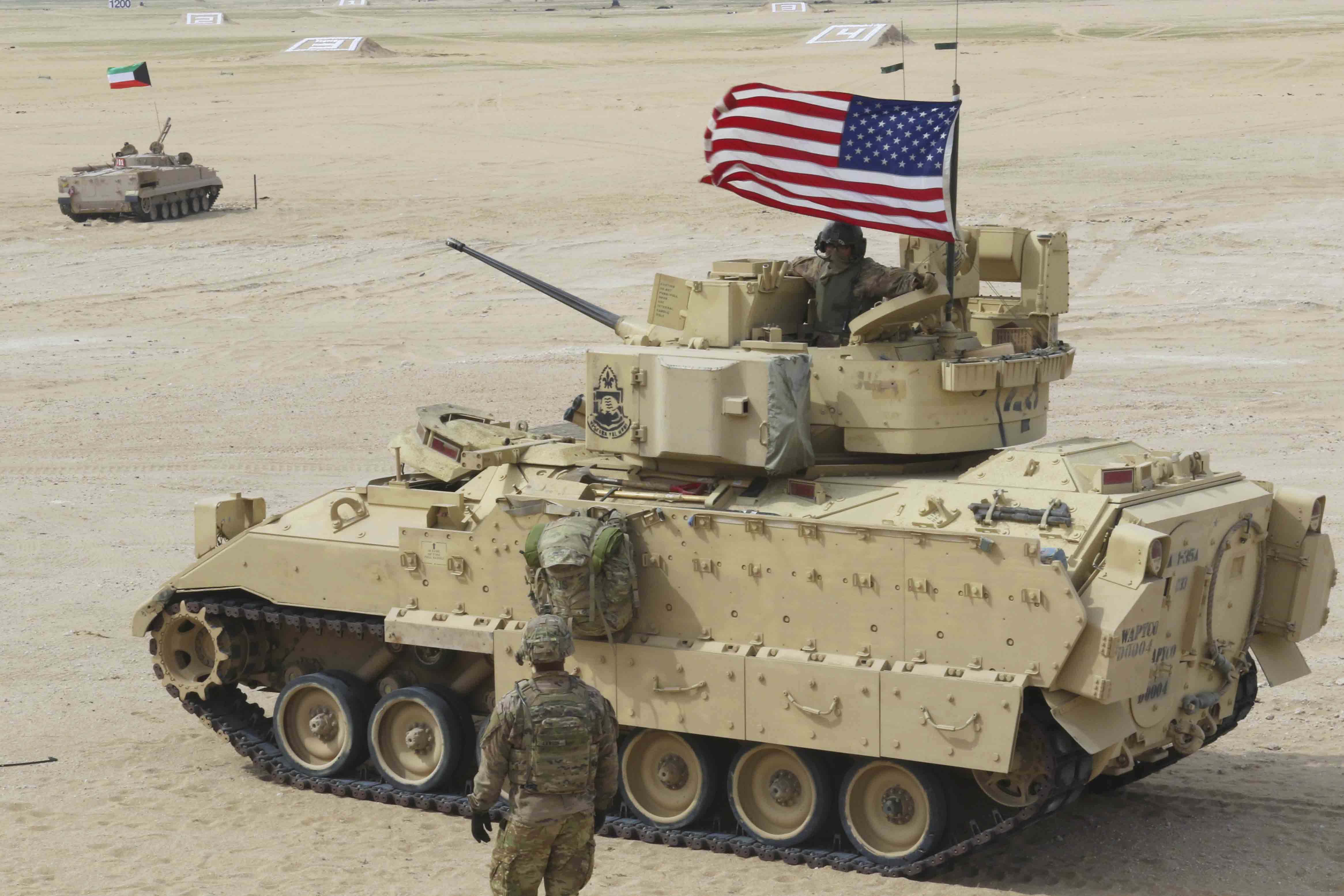
Soldiers participate in a live-fire exercise during Al Tahreer at Udairi Range Complex, Kuwait, Feb. 23, 2021. The exercise strengthens the U.S.-Kuwait relationship and promotes regional stability.
Atlantic Refueling
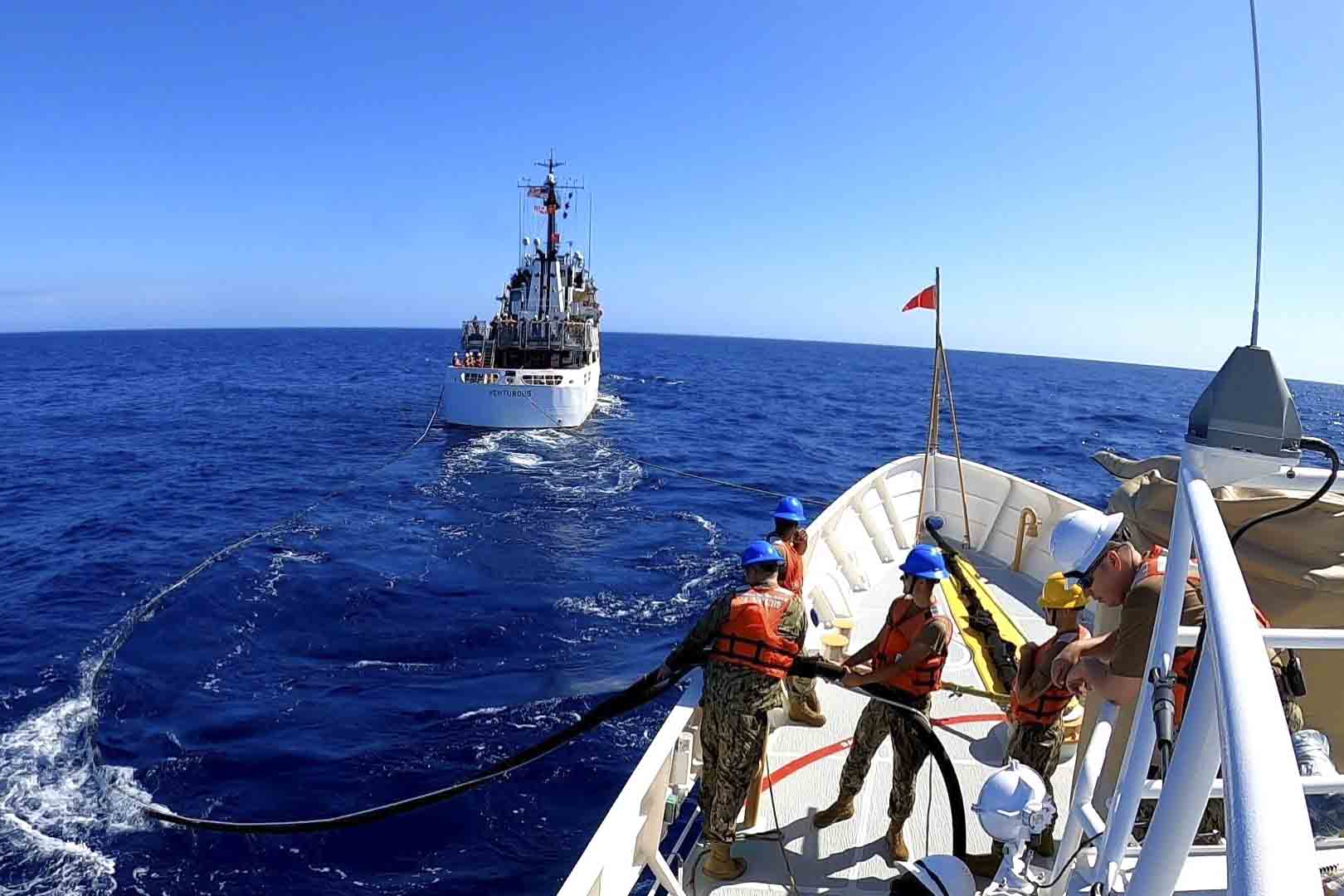
Coast Guardsmen aboard the U.S. Coast Guard cutter Charles Moulthrope conduct astern refueling with the U.S. Coast Guard cutter Venturous during training in the Atlantic Ocean, Feb. 23, 2021.
Support Team

Marines conduct helicopter support team aerial lift training during Hagatna Fury in Okinawa, Japan, Feb. 24, 2021. The exercise allows Marines to hone abilities to seize, defend and provide expeditionary sustainment for key maritime terrain.
On Mark
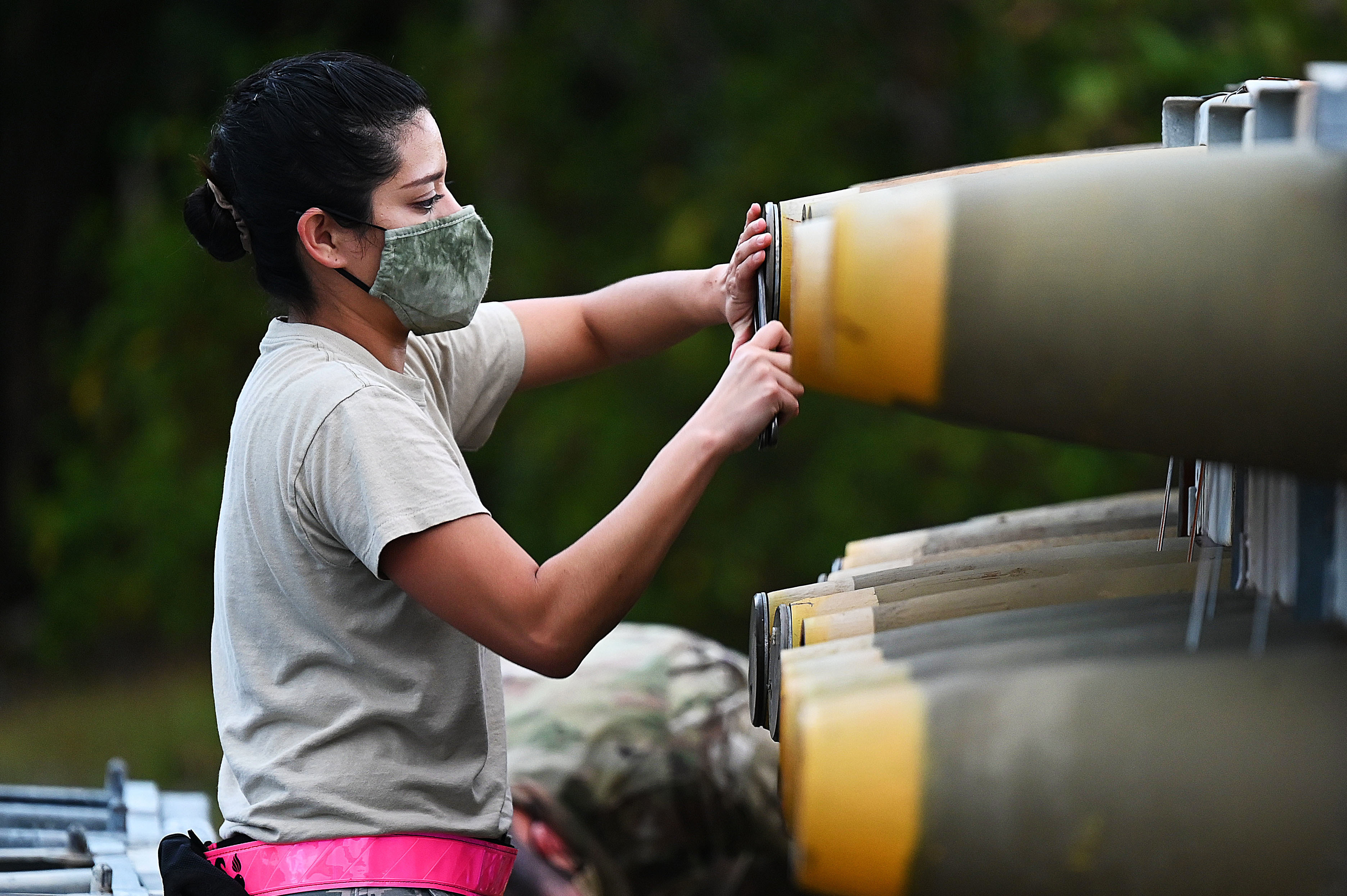
An airman prepares to assemble a Mark-82 munitions component at Andersen Air Force Base, Guam, Jan. 26, 2021.
Former White House Advisor to Lead DOD Commission on Sexual Assault
Feb. 26, 2021 | , DOD News
"To carry out the president's direction, [Secretary of Defense Lloyd J. Austin III] ordered the establishment of a 90-day independent review commission on sexual assault in the military ... to review department policies and processes as directed by the president," John Kirby said during a briefing today. "The secretary has designated Lynn Rosenthal, formerly the first-ever White House advisor on violence against women and a longtime advocate for survivors of gender violence, to lead this commission."
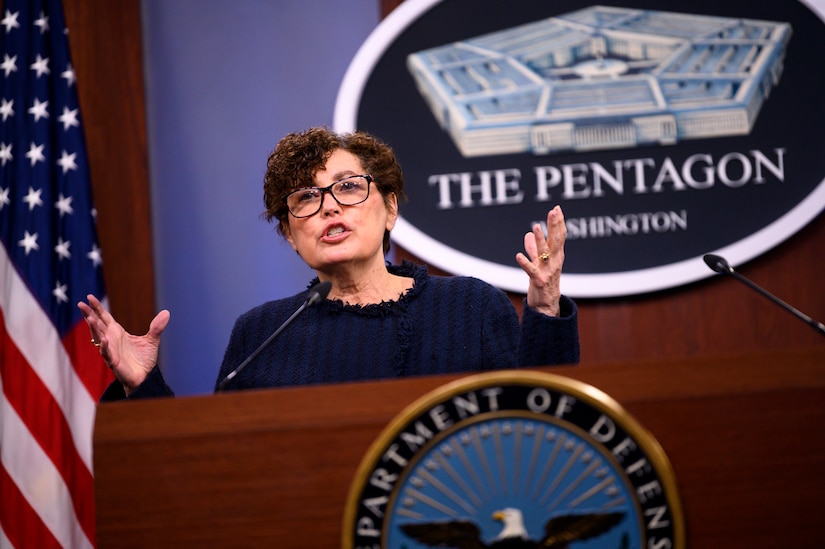
In addition to the independent review commission, Austin has also directed actions to bring the department in compliance with evidence-based practices to ensure accountability of sexual assault and harassment efforts at every level across the department, Kirby said.
"Every member of the total force deserves a workplace free of sexual assault and harassment and personal fear," Kirby said. "We must commit ourselves to eliminating this illegal and corrosive behavior."
All Options on the Table
"The trauma and life-altering effects of sexual assault are devastating in any context," Rosenthal said. "What I'm struck by here, as I listen to stories of military survivors, is how much their service meant to them, how their life was about this dream of serving in the military, and the dream was a part of their identity. And for many, their dreams were shattered by the trauma of sexual violence and sometimes retaliation for coming forward. This must end."
While the commission's primary task is to provide accountability for those who commit crimes of sexual assault, Rosenthal also said the commission will be looking at climate, culture and prevention.
Right now, she said, the commission is working with Deputy Defense Secretary Kathleen H. Hicks on developing a charter for the commission. Rosenthal said within 60 days the commission will have initial recommendations, including those on accountability issues.
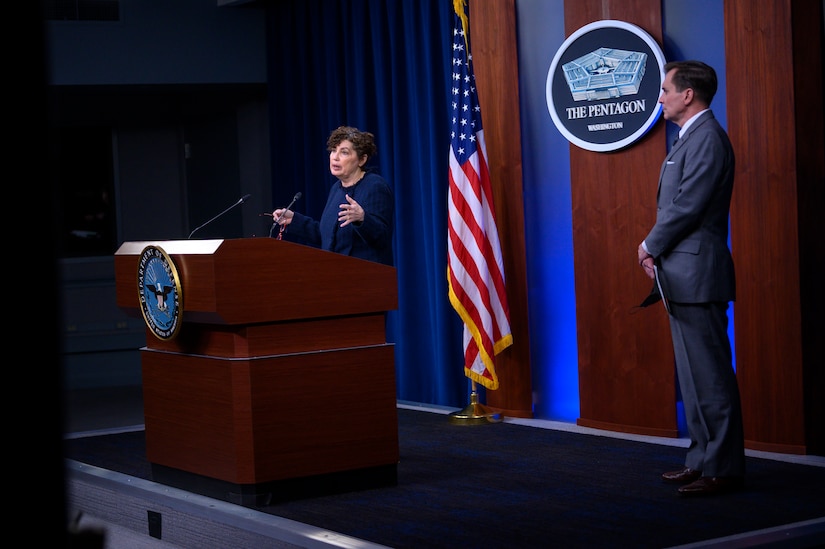
The commission's membership will include military leaders, former military leaders, advocates for those who have been sexually assaulted, and experts on the crime of sexual assault, she said.
"We want to hear a diversity of views from every level of the services and in civilian society," Rosenthal said. "We will take all of those views into account in our deliberations and our recommendations."
Discussions about solving the sexual assault problem within the ranks and improving the climate so that those who are sexually assaulted feel comfortable coming forward have frequently involved the idea of removing commanders from the process of investigating sexual assaults. Rosenthal said that is something that will be looked at by the commission.
"The president and the secretary have said that all options should be on the table," she said. "I don't think we have a predetermined outcome of this question, which we must very carefully examine."
By 90 days, she said, the commission's work will have finished, but work on sexual assault in the military will continue long after it is done.
"I think the secretary is our greatest asset in fighting this problem," she said. "He gets it so deeply. He cares about it so much. He cares about his service members. And, so, the commission ends in 90 days, but the implementation of the recommendations will certainly continue."
Secretary of Defense Lloyd J. Austin III Remarks on USS Nimitz
Feb. 25, 2021
Q: Mr. Secretary, (inaudible), this ship has been on a very long deployment. How do you balance the security needs and the need to show presence in the Pacific with what you're very familiar with, which is General McKenzie's argument that he needs a carrier in the Middle East, and that having a carrier there has, indeed, in his view, turned Iran in the past? As you look ahead to the next several months, are you going to send a carrier back to the Middle East? And how do you balance that with the needs here in the Pacific?
SECRETARY OF DEFENSE LLOYD J. AUSTIN III: Yeah. By the way, happy birthday, Lita.
Q: Yeah!
(Laughter.)
Q: (inaudible) --
SEC. AUSTIN: Since it is your birthday, I think it only appropriate that you got the first question.
Q: Thank you very much.
SEC. AUSTIN: So the question is, you know, how -- how do we balance requirements against, you know, the, you know, precious resources we have, and how -- how do we utilize those resources?
Well, I'll tell you that one of the first things that we -- the president asked me to do with, and certainly, I want to do is to -- to -- to take a look at our global force posture. And so we are relooking our global force posture to make sure that those -- those resources that we're talking about are focused on our priorities. You know, our -- our -- our -- we -- we should be resourced to -- to match our strategy, our strategy ought to match our policies, and our policies ought to reflect the -- the will of the American people.
And -- and so we've embarked upon that process. We're going to do a very detailed review of -- of our force posture. It'll -- it'll include all the agencies; most important, State Department, our intelligence agencies, and we'll make sure that -- that we have, you know, a -- a good lay-down that's -- that's focused and are supported from our strategy.
Having said that, you know, things happen in the world, and -- and so we have to have the -- the capability to surge when -- when a -- an unexpected or strategic surprise happens, and hopefully, there will -- won't be many strategic surprises.
So we're doing that, and -- and we'll -- we'll finish that probably in mid-summer.
Q: And -- and any decision yet on the carrier, on the Eisenhower?
SEC. AUSTIN: No, I've -- I've not reached a decision on that yet. When I -- when I get back, I'll consult with -- with the chairman, and also look at the recommendations -- the CNO, the CENTCOM commander, the EUCOM commander, and based upon their input and -- and what I see as -- as a current need, you know, we'll make that decision here. So --
STAFF: Jim ? Go ahead.
Q: Sir, just again, through the long deployment, how -- how long is too long? I mean, how -- how does -- how does that -- is it personnel that break? Is it the ship that breaks? Is it a combination of all those sort of things? And how do you know that, you know, you're not pushing these guys too hard?
SEC. AUSTIN: Well, you know, I -- I think -- I think our sailors, our soldiers, our airmen, when they -- when they signed up to -- to -- to be a part of the military, they know that at some point there'll be some unexpected things that happen, some -- some -- some requirements that are -- that are a little bit tougher. And by -- for the most part, they -- they understand and they're -- and they're willing to -- to make sure that they're meeting the need, the requirement.
We've seen that happen here. These sailors have done a great job, and most importantly, Jim, their families have been very, very supportive, as well, and I want to make sure I, like, I give them a shout-out and -- and provide our thanks for -- for their sacrifices.
We have seen this happen in the past, and you've covered this in the past, Jim, in -- in -- in Iraq when we -- when we (inaudible) --
Q: Fourteen months, right.
SEC. AUSTIN: We had deployed troops over for a -- for a, you know, a year, and that -- that deployment turned out to be 18 months. By the way, I had two of those 18-month deployments, and I -- I understand the -- the stress that that can place on a family. So as secretary, what I want to do is make sure that, number one, going forward we do everything we can to minimize that kind of stress; that we do what -- what's necessary to take care of our -- our equipment, but most importantly, our people, our families, because I -- I know the impact that that can have.
We've learned a -- a lot about how to reintegrate families or -- or service members with their families, and so we're much better at that than we -- when we started this, you know, some 20 years ago. But we're not perfect, and we're going to continue to learn. We're going to continue to make sure we have the resources, that we're doing the right things to pace ourselves going forward, because I -- I really think this is important.
Q: Thanks.
Q: Hi, sir.
SEC. AUSTIN: Hi Helene. How are you?
Q: I'm good. So I -- I -- this has been -- again, on the deployment. This ship left -- when they left their home port in Bremerton, Washington, April 27th, it’s a completely different America now, and in that time we have a new president. We have a new defense secretary, and they also sat down on the ship and watched the Capitol being breached on January 6th, and which, I had a sailor just tell me that they're going around the world defending America from harm outside, and they're watching harm within the borders and saying, "I wonder what kind of country we're coming back to." What do you say to these sailors who want to know, sir, about the America that they are now returning to, in light of what -- what's happened over the last (inaudible) days?
SEC. AUSTIN: Well, I want to tell them that we're the greatest country in the world, and we have been that for a very long time. We will be that for -- for the, you know, forever. And it's a great country because of them and their families, their leadership.
And so yeah, it -- you know, you know when you were gone for 12 months or 18 months, just like I said, you know, had happened to me a couple of times, it is different when you -- when you come back, and it does take some -- some readjustment. But our sailors haven't been, you know -- they've maintained some degree of situational awareness in terms of what's going on in America, and -- and our leadership has kept them informed. They've kept them focused on the right things.
And -- and so reintegration is always a challenge. But in this case, I think we're -- as I said to Jim earlier, we're much better at that than -- than we were many years ago. And you know, I have confidence in our sailors and -- and Marines and -- that they're mature enough to -- to -- and they're focused enough to make sure that as they reintegrate, those values that we -- we've instilled in them, they'll stick to those values, they'll stay focused on the right things, and they'll continue to represent us well. And they have done amazing things all around the world to -- to represent us, and they’ll continue to do that.
Q: Yeah. Yeah, so given that the carrier maintenance and availability in the Navy, is there a possibility, a circumstance where you would feel comfortable deciding to have a carrier in the Middle East, for several months or up to a year at a time?
SEC. AUSTIN: Sure. There's -- you know, I mean, I -- I'd like to have a carrier in every -- in every spot in the world, you know. But that's just not possible because, as you know, we don't have those kinds of resources.
We've made decisions in the past and gapped the carrier in the Middle East, and -- and as we do that, we do things to make sure that -- that we have resources in the right place to ensure that we can respond to -- to contingencies as they arise.
But yeah, I mean, there -- there's -- there's going to be gaps at periods of time. And again, we're going to look at ourselves and make sure our resources are -- are in alignment with our priorities based on our strategy going forward.
STAFF: Mosh, you got one?
Q: Yeah. Thanks, again for doing this. So the previous administration, their response about the Navy and -- and having a carrier presence, the previous administration felt that less carriers. I just wanted to know your thoughts of the carrier program in the future (inaudible) the appearance of (inaudible).
SEC. AUSTIN: I -- I'm sorry. I -- I -- I didn't hear your question. You're -- you're pretty soft-spoken, so if you could --
(CROSSTALK)
Q: Sorry. I’ll do it again. So in the previous administration, when they talked about the future of the navy, in terms of the carrier program, talked about a navy with less carriers. Does that give you pause? What is your thought in terms of future of the Navy, in terms of the carrier program?
SEC. AUSTIN: And -- and that's a great question. So in terms of the numbers of carriers that we have going forward, you know, again -- and I -- I think that's based upon how we envision future conflicts, what our strategy's going to be, what those requirements are, what kind of capabilities we need. And -- and -- and that will -- that will kind of shape the design of the force.
And you know, we've had the greatest navy in the world for -- for -- forever. It is -- it is a, you know -- it's been relevant in everything that we've done, more than relevant, and it will continue to be so going forward. But we want to make sure it's relevant today and for the foreseeable future. You know, the things that we do in the future may be -- may be different from what we've done -- will be different from we've done in the past. And so it's incumbent upon the leadership to -- to make sure that -- that we envision what the next conflict could be like, or what our challenge is going to be like going forward, and we -- and that we have the right capabilities. And you've heard the president talk about making sure that we have right capabilities for today, but also, for tomorrow, and into the future. That -- that's really our focus.
Hey, listen, guys, this has been real great. Hey, thanks for coming out to the carrier. Encourage you to talk to some of these great sailors and Marines, but they are truly our nation's finest. So thanks a lot.
Q: (inaudible) with you, sir.
The Servicemembers and Veterans Initiative Honors Contributions of African-Americans to the Armed Forces During Black History Month
February 26, 2021
Each year, Black History Month gives us the opportunity to reflect on and appreciate the contributions that African-Americans have made in all aspects of our Nation’s history, including within the armed services. Many have valiantly volunteered their lives to protect the freedoms of the citizens of a country that has not always provided them with those same freedoms. African-Americans have contributed to military life throughout the entirety of American history, serving in every conflict since the Nation’s inception. As of 2015, African-Americans made up 17% of active duty military members, more than their 13% share of the U.S. population. Many consider the first casualty of the Revolutionary War to be Crispus Attucks, a Black man shot during the Boston Massacre while protesting British oppression. During the Civil War, Harriet Tubman served as a spy for the Union Army and led troops in combat, in addition to her role helping hundreds escape slavery through the Underground Railroad. And, most recently, on January 22, 2021, Secretary Lloyd Austin became the first African-American to lead the Department of Defense.
The Servicemembers and Veterans Initiative (SVI), a part of the Civil Rights Division, advocates for the fair treatment of former and current military members by building a comprehensive legal support and protection network focused on serving servicemembers, veterans, and their families. The Civil Rights Division enforces certain laws that protect the rights of servicemembers, including those affecting their employment, housing, financial, voting, and disability rights. The Initiative builds upon this critical enforcement work, as well as the work of other Department components that serve the military community, by sharing information, identifying servicemember and veteran needs, and coordinating the distribution of resources. Throughout Black History Month and the rest of the year, SVI will work to utilize the powerful resources of the Civil Rights Division to ensure that African-Americans who have answered the call of duty enjoy the rights and resources that they deserve. If you have any questions about SVI’s work or have a concernVeteran Vaccination

Army Spc. Alexis Ruth prepares to administer the COVID-19 vaccine at a Veterans Affairs Medical Center in Baltimore, Jan. 30, 2021. Ruth was part of a Maryland National Guard mobile vaccination support team working with the Department of Veterans Affairs and other agencies to distribute hundreds of vaccines to veterans.
Vaccine Prep
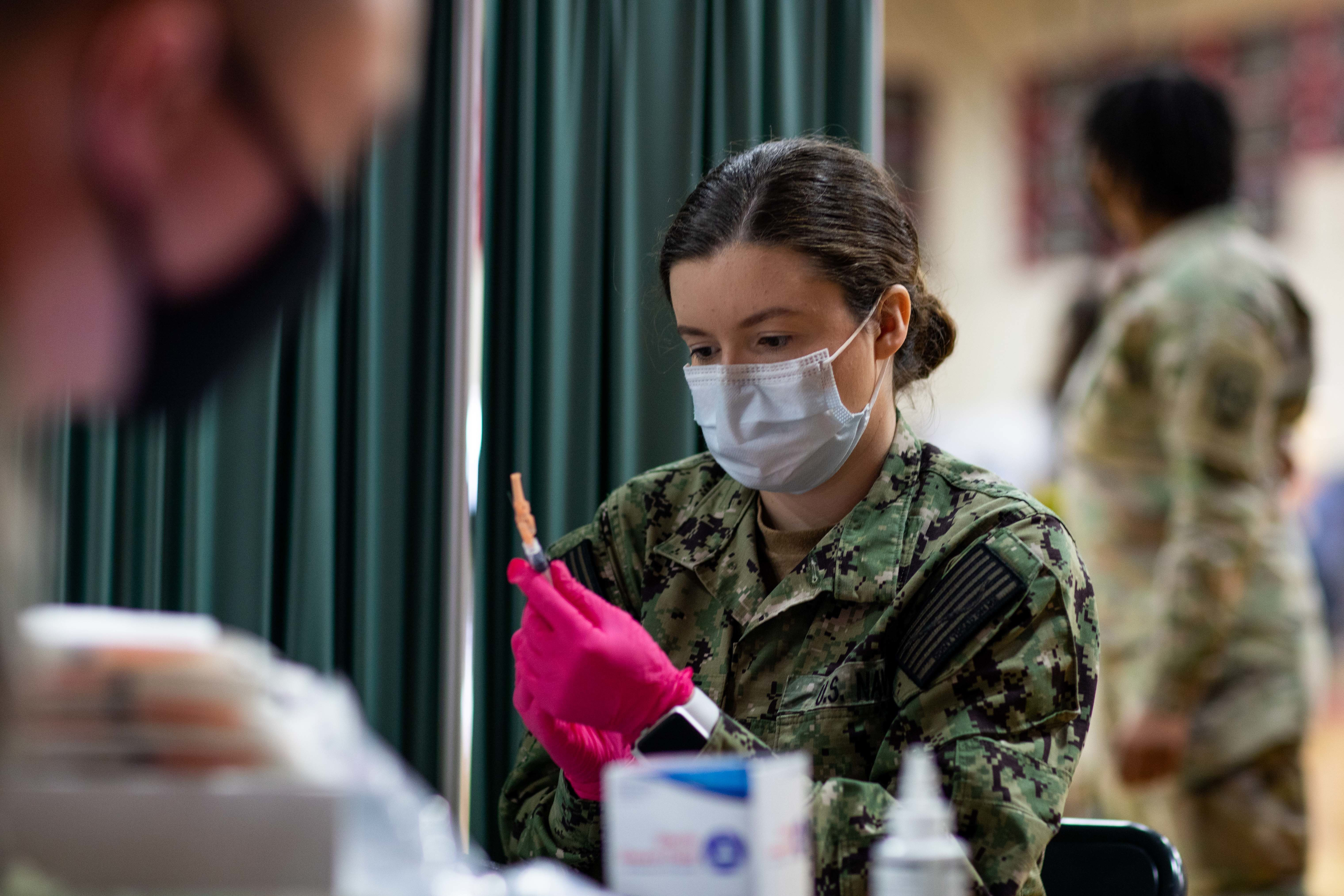
A sailor prepares to administer the COVID-19 vaccine at a vaccination center in Elizabeth, N.J., Feb. 22, 2021.
Vaccination Center
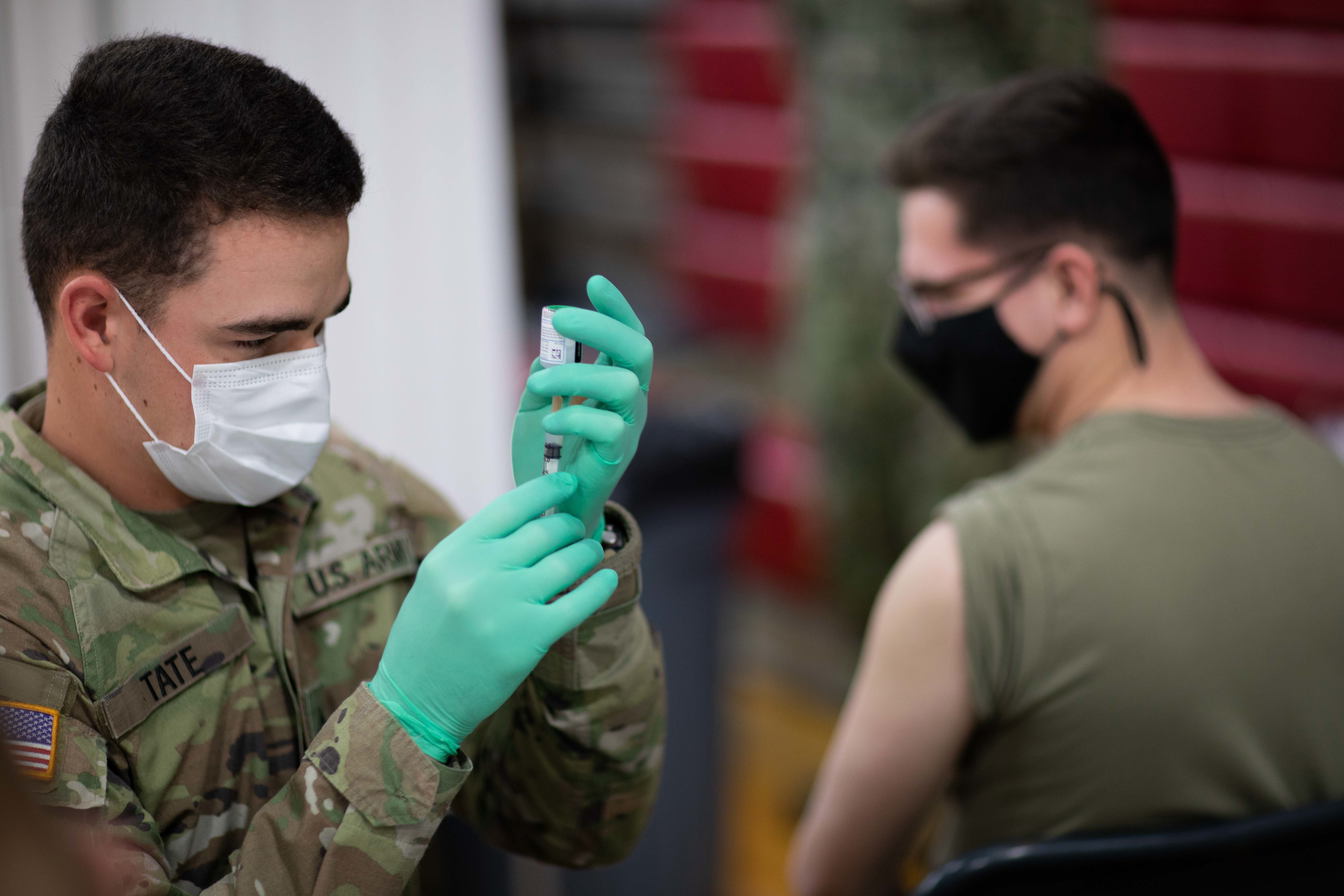
Army Pfc. Tanner Tate prepares to administer the COVID-19 vaccine to a fellow soldier at a vaccination center in Elizabeth, N.J., Feb. 22, 2021.


 Posts
Posts

