Wednesday, August 26, 2020

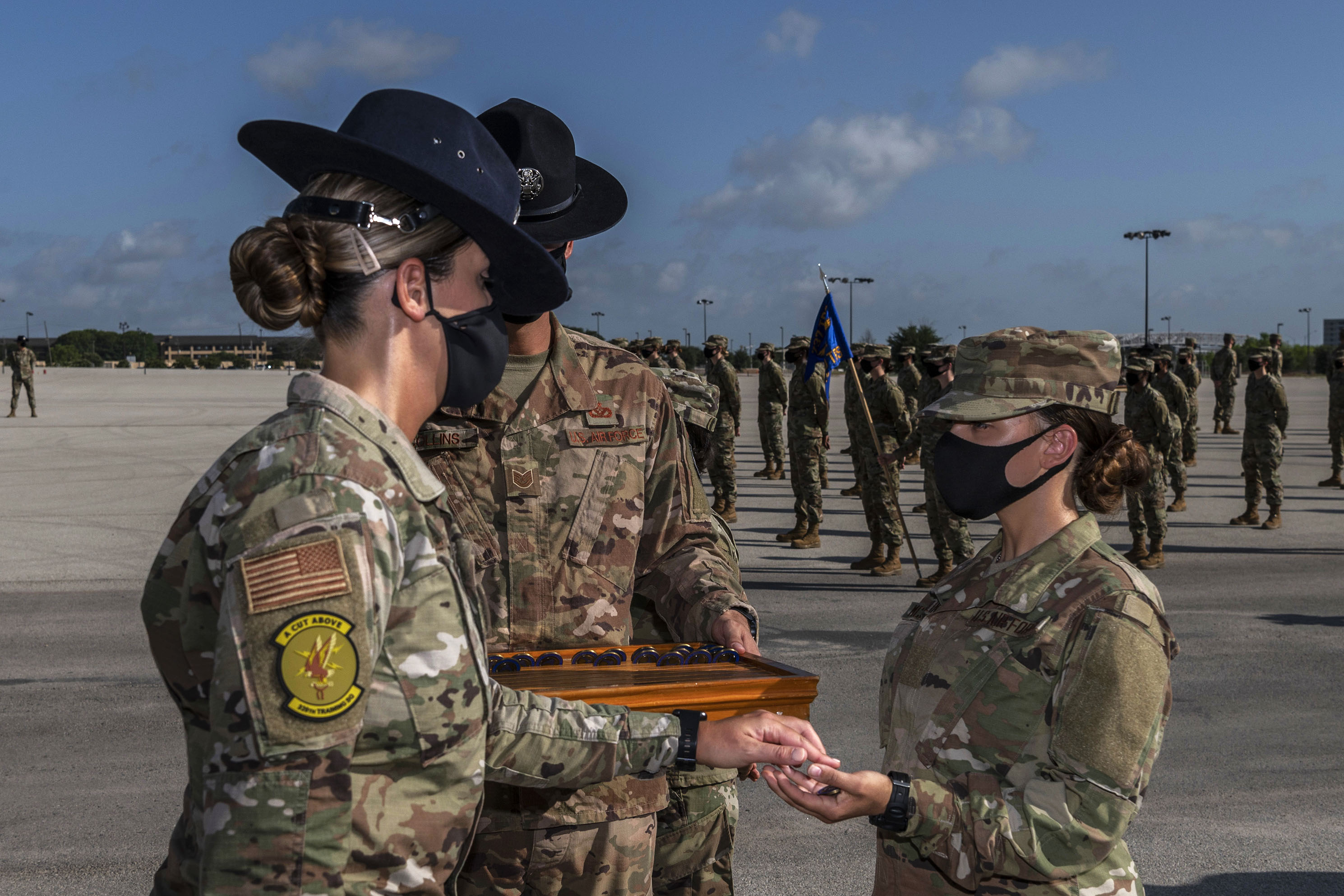
Coining Ceremony


An Air Force basic military graduation and coining ceremony is held for the 320th Training Squadron at the Pfingston Reception Center on Joint Base San Antonio-Lackland, Texas, Aug. 13, 2020. The graduation ceremonies are closed to the public until further notice for the safety and security of the airmen and their family members due to coronavirus.

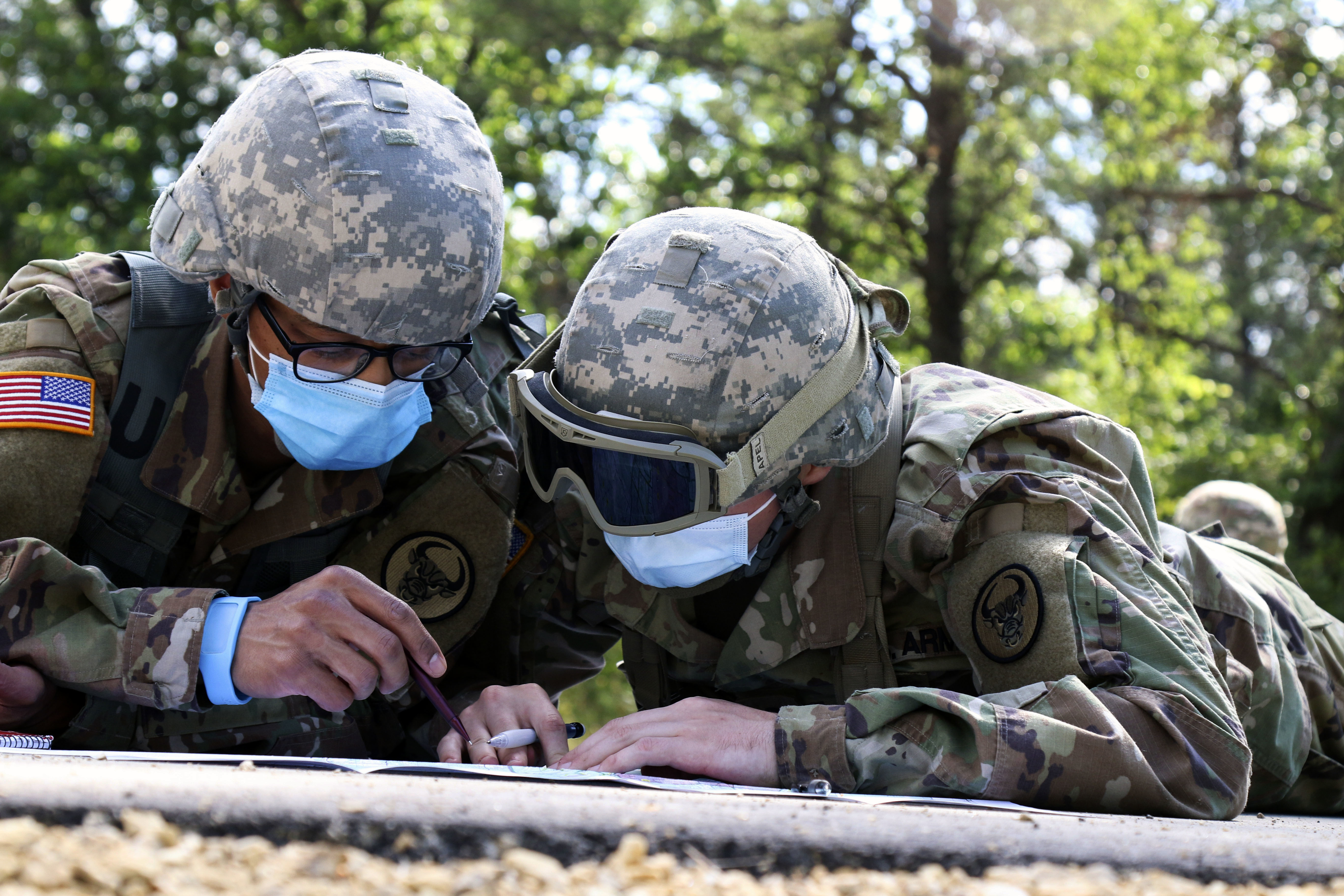
Plotting Points


Army Specialists Julian Marsh-Patterson, left, and Hunter Broome, both assigned to the 518th Sustainment Brigade, plot points on a map during the land navigation course at Fort McCoy, Wis., Aug. 21, 2020. The course is part of the Army Reserve's Operation Ready Warrior, which is an exercise designed to allow soldiers to maintain proficiency at warrior tasks as well as overall readiness while maintaining COVID-19 health and safety protocols from the Defense Department and Centers for Disease Control and Prevention.

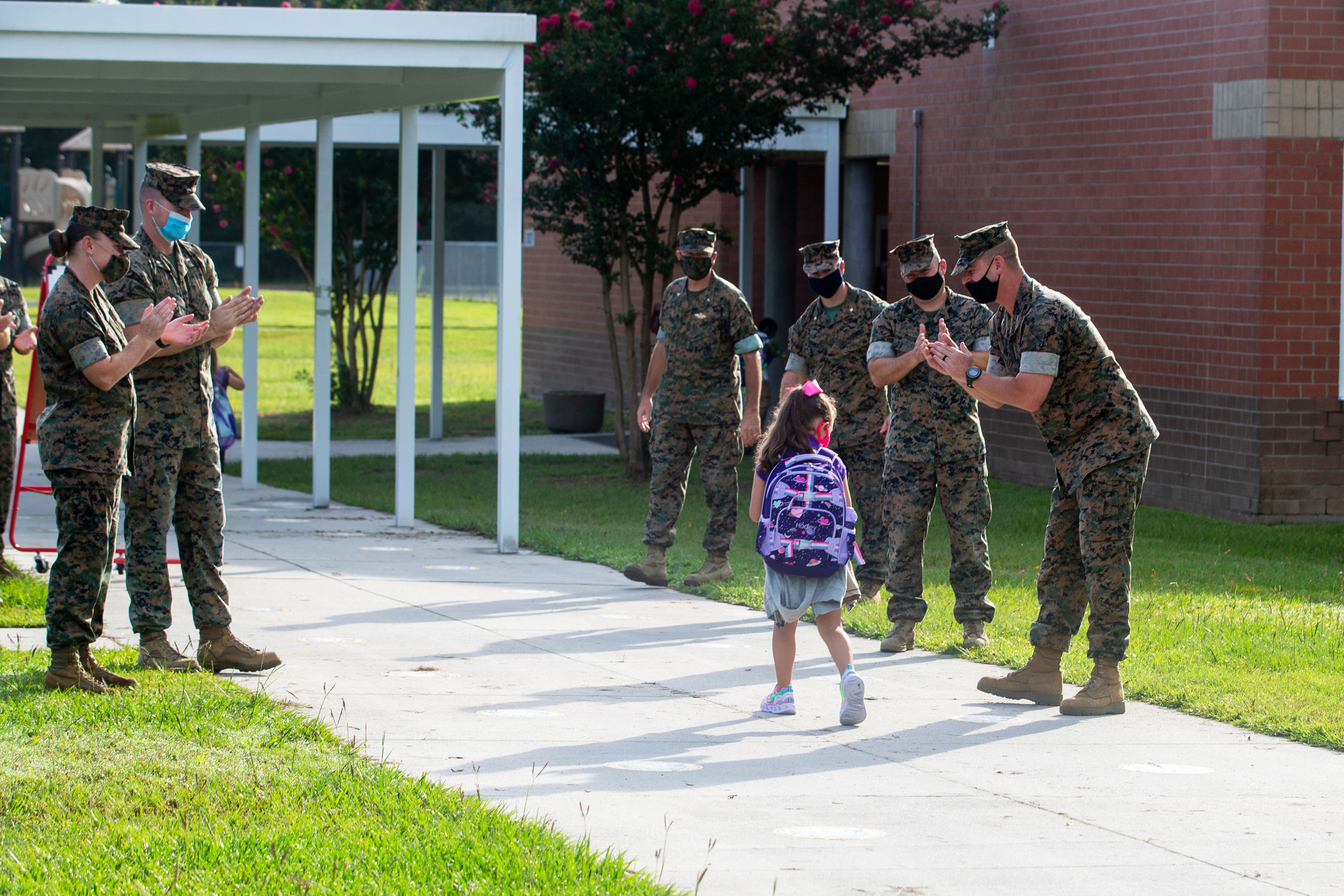
School Day


Marines assigned to the 10th Marine Regiment, 2d Marine Division welcome students at Johnson Primary School at Camp Lejeune, N.C., Aug. 24, 2020. The Marines cheered as the students arrived at school for the first time in several months while adhering to COVID-19 guidelines. The Department of Defense Education Activity instructed parents and students to conduct daily health screenings and temperature checks before leaving their homes.

Hurricane Preps


National Guard soldiers reinforce exposed levees in Grand Isle, La., in preparation for Hurricane Laura, Aug. 24, 2020. The Guard is working around the clock to assist local and state agencies prepare for the storm.

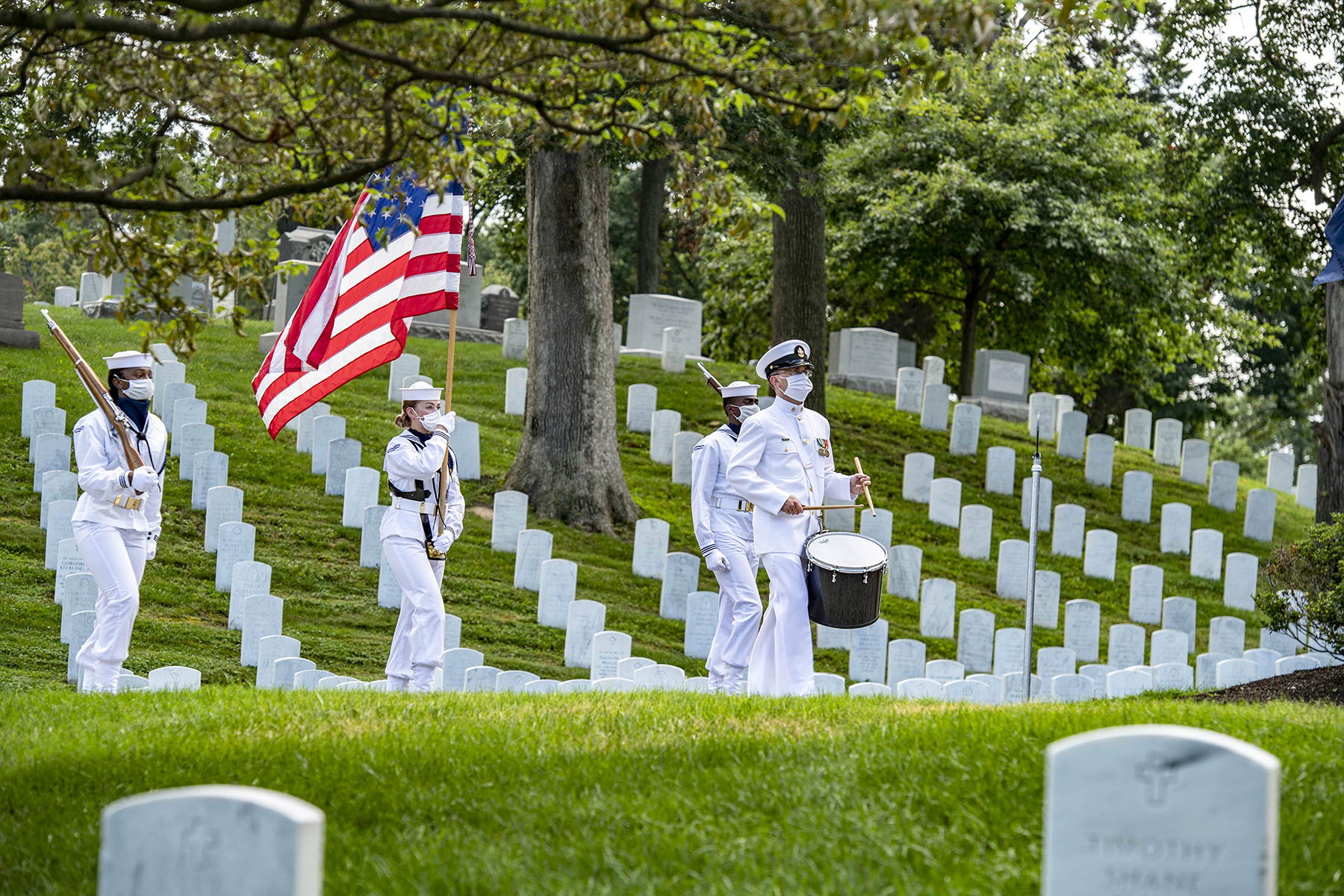
Arlington Honors


Sailors participate in a memorial service for Navy Lt. Demarest Lloyd, who fought in World War II, at Arlington National Cemetery in Virginia, Aug. 24, 2020. Lloyd, a recipient of a Distinguished Flying Cross, Purple Heart and Air Medal, died on June 12, 1944, and was reported missing at sea.

DOD Seeks Reform in Delivering Improved Training, Education

 Aug. 26, 2020 | BY David Vergun , DOD News

Defense Department leaders in the fields of training and education discussed reform efforts the department is pursuing to more effectively and efficiently deliver various types of learning to its uniformed and civilian personnel.

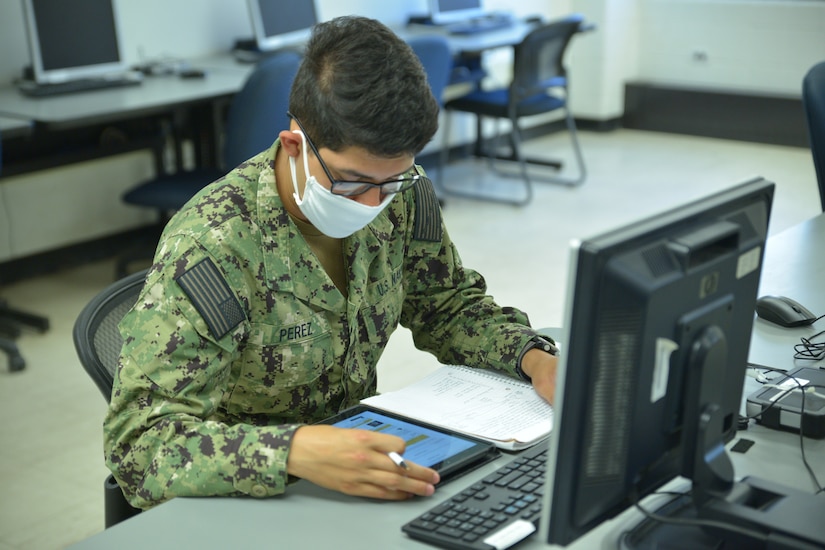
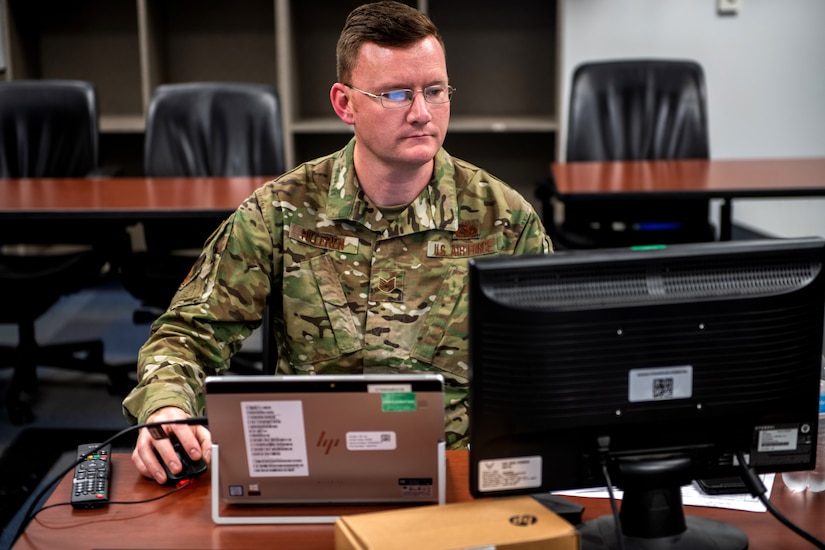
A man works on a computer.

Fred Drummond, deputy assistant secretary of defense for force education and training; Lora Muchmore, director of the Defense Business Systems Directorate, Office of the Chief Management Officer; Jim Seacord, acting director of the Human Capital Management Office, Office of the Under Secretary of Defense for Intelligence; and, Amy Rogers, chief learning officer for the civilian workforce, Office of the Assistant Secretary of Defense for Personnel and Readiness, spoke today at a National Training and Simulation Association webinar on "Transforming DOD's Learning Infrastructure."

Muchmore said that the most critical element in designing a training or education system is to first determine the desired outcome and how that outcome contributes to the mission and readiness of the department.

Once the outcome is determined, the next step is to determine which training or education delivery system is most effective at achieving the desired performance metrics, she said, adding that the performance metrics have to be operationally defined.

An airman works on a computer.

However, effectiveness has to be balanced with training time and investment of dollars in learning technologies, so there's a trade-space involved in the process.

Other factors to consider besides learning technologies are the development of common languages and data standards across the department, ease of access and availability of learning systems, workforce culture and policies, Muchmore said.

Seacord said the culture shift has to involve everyone thinking about the DOD mission and how what they're doing can further that mission. A soldier, sailor, airman, Marine, civilian and contractor are all on one team and it takes an open mind to break out of the traditional parochialism mindset.

Rogers said many department personnel are not aware of the training and developmental opportunities that are available to them that would further develop a skilled and ready workforce.

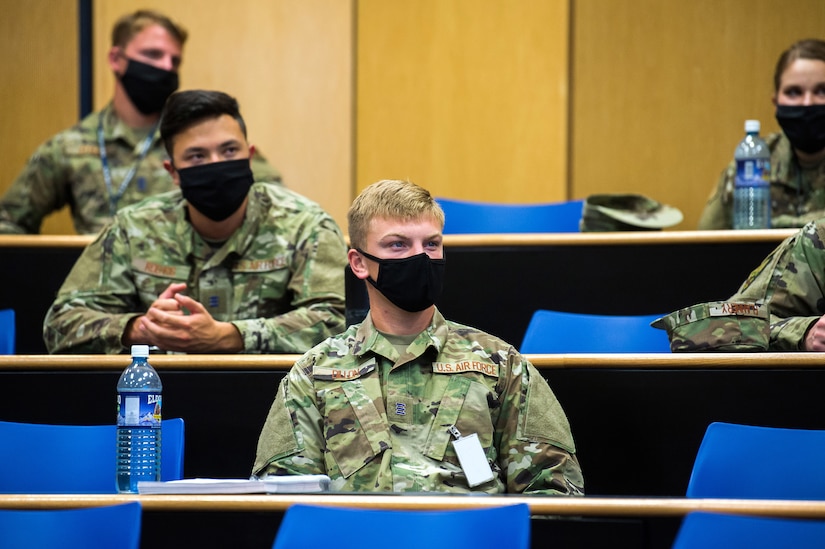
Masked students sit in a classroom.

Training and education opportunities should reflect competencies needed not just for the current mission but for the future missions, she said. 

A good idea is to collaborate and borrow from training and education that has proven effective and innovative, Rogers said. It should not be us versus them attitude.

Drummond emphasized the interoperability of training and education systems across all organizations within the department. He said they must all share the same languages and data standards so that interoperability is seamless.

Drummond, Rogers, Seacord and Muchmore are all members of the executive steering committee for the department's training and education reform effort, known as Enterprise Digital Learning Modernization. 

Taking Temps


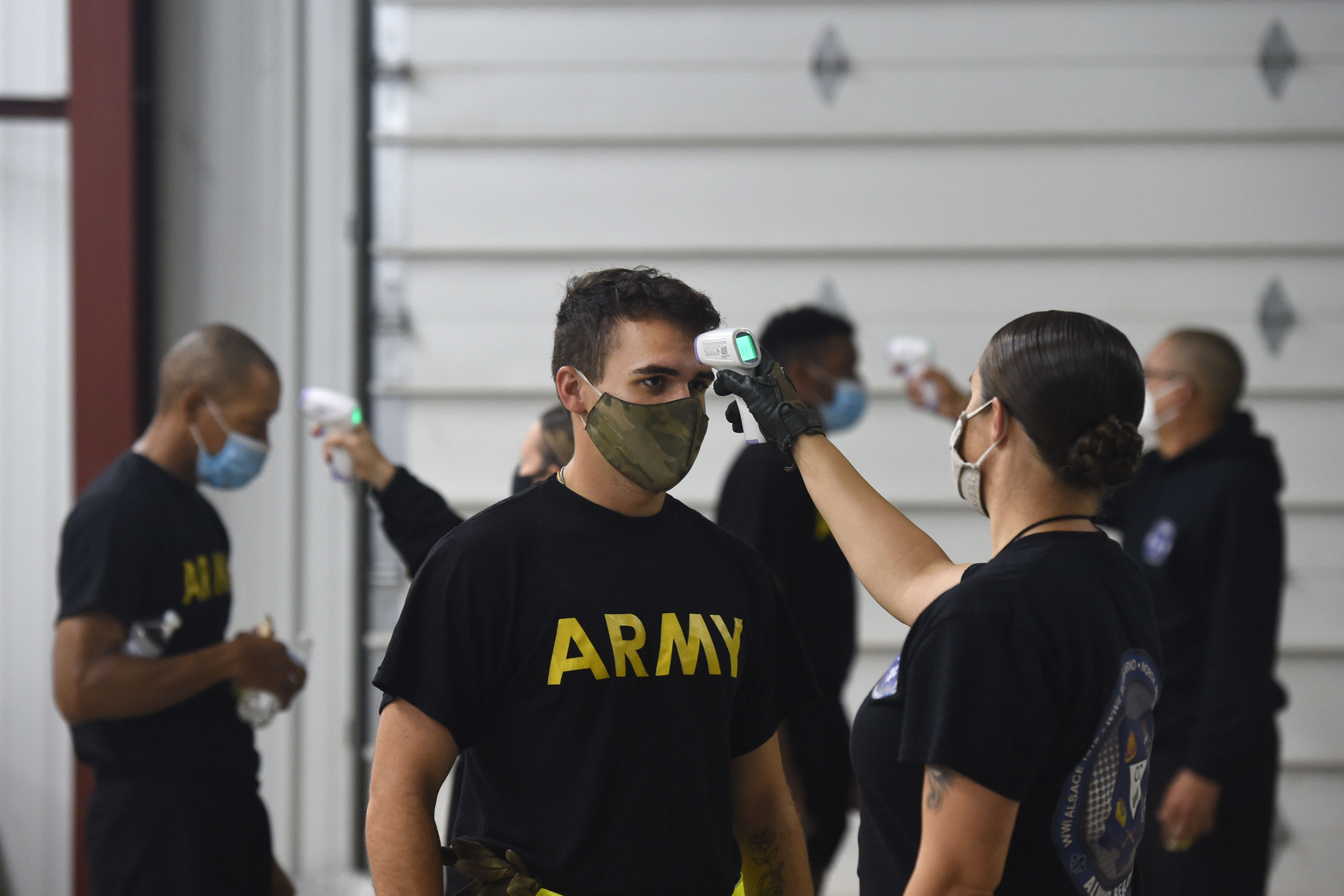
Observer coach/trainers assigned to the first Army’s 181st Multi-functional Training Brigade check the temperatures of arriving soldiers before an Army Combat Fitness Test familiarization during the Operation Ready Warrior exercise at Fort McCoy, Wis., Aug. 23, 2020. Operation Ready Warrior, led by the 78th Training Division, was the Army Reserve’s first collective, small-scale training exercise since the start of COVID-19. The exercise was made up of partnerships from various units and organizations from the active and reserve component to include key support from the Fort McCoy Army installation that focused on COVID-19 mitigation efforts to train soldiers safely.

Dorm Leaders Safeguard Inbound Airmen

 Aug. 26, 2020 | BY AIR FORCE SENIOR AIRMAN NOAH SUDOLCAN

Relocating to a new military installation in another country can be stressful, especially during the COVID-19 pandemic. With so many uncertainties involving the pandemic's impact on changing living standards, a special group of professionals provides initial solutions and comfort to new arrivals at Osan Air Base, South Korea.

Working around the clock, Osan's airman dorm leaders, or ADLs, strive to give new members the warmest welcome and meet essential needs during their two-week quarantine phase.

For Air Force Tech. Sgt. Toni Bellamy, an ADL serving as Osan's COVID-19 Command Center housing representative, being the first line of defense for inbound personnel is a challenging, but fulfilling experience.

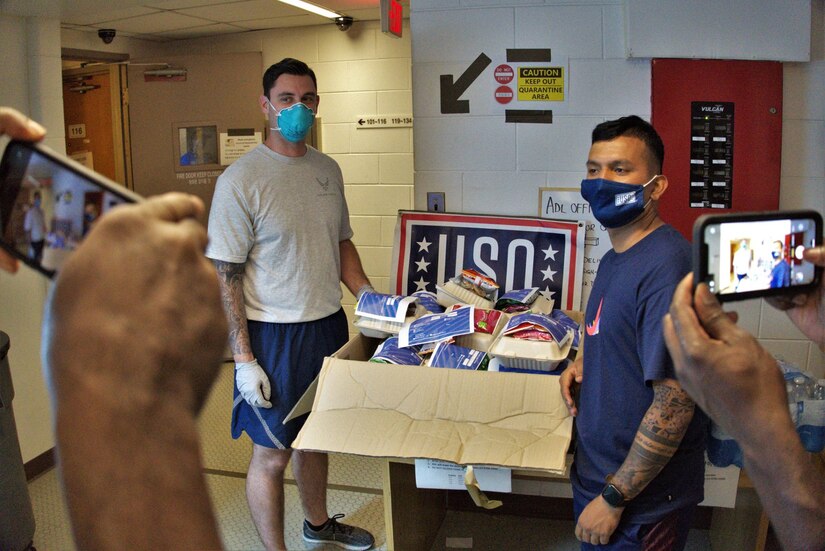
Airmen stand next to a donated box of food.

''Knowing that we help keep the base safe by housing nearly 500 quarantine personnel at a given time and giving them their essential needs is a huge reward,'' Bellamy said. ''We work alongside the base first sergeants, Red Cross and the United Services Organizations to help supply personnel with toiletries and meals to make the quarantine residents stay more comfortable.''

To administer a smooth process, the ADLs proactively communicate with commanders, chiefs, first sergeants and supervisors to take care of inbound individuals. They're dedicated to ensuring six dorms and vacancies in the base hotel are readily available for occupancy.

''We take care of all residents from in-processing, meals, trash, grocery delivery and other orders to outprocess from quarantine,'' Bellamy added. ''I assign all inbound members to a living space and, once assigned, the list of projected arrivals is passed to the ADLs to ensure rooms are ready for incoming members.''

Free Wi-Fi is equipped in the quarantine dorms and the hotel to help with their needs during the 14-day period. Quarantined personnel are authorized and encouraged to bring items that may make their stay more comfortable such as blankets, televisions and computers. They're also allotted daily recreational time outside to get fresh air and exercise.

''It was nice knowing I had a team of ADLs dedicated to help smooth the transition process into the quarantine dorms,'' said Air Force Staff Sgt. Tiffany Wallace, an orthopedic surgical technician with the 51 Medical Operations Squadron. ''For me, being able to adjust comfortably and FaceTime my family was a huge bonus.''

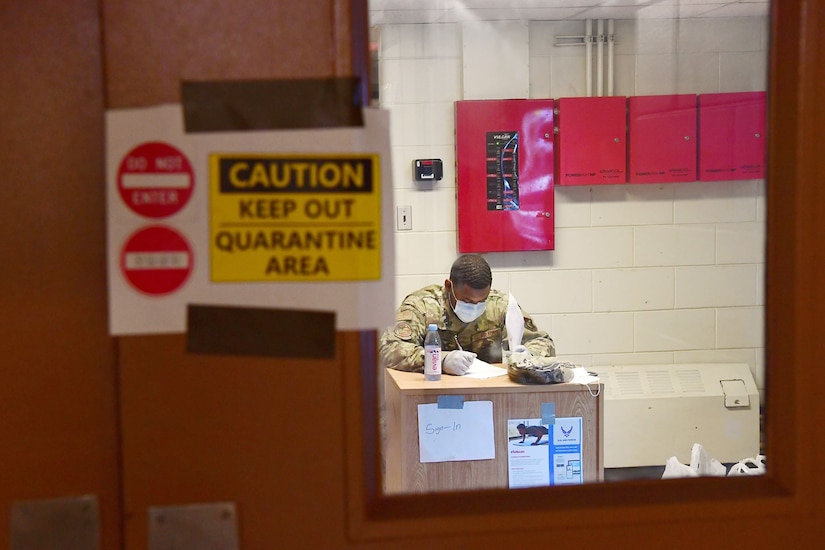
An airman works at a desk.

New inbound members are also given resources on how to acquire additional necessities from the base exchange and commissary. They can also contact their leadership for additional needs.

''The biggest way to help our quarantine personnel is to stay in contact with them daily, asking them about how their stay is, from room maintenance to meals,'' Bellamy said. ''Another way to help is offering to bring your member a hot meal or forms of entertainment.''

Whether it's preparing dorm rooms 48 hours prior to arrival or maintaining open communication with all leadership and anyone with concerns about COVID-19, the ADL team is committed to their role.

''The biggest positive of this job is seeing how the whole base is coming together,'' Bellamy said. ''The augmentees are from all units around the base. We couldn't do it without all the organizations stepping up to provide us with bodies and supplies.''

(Air Force Senior Airman Noah Sudolcan is assigned to the 51st Fighter Wing).
Esper Shares U.S. Vision for a Free and Open Indo-Pacific Region

 Aug. 26, 2020 | BY JIM GARAMONE , DOD News

Defense Secretary Dr. Mark T. Esper arrived in Hawaii, beginning a trip to explain America's vision for a free and open Indo-Pacific and to honor the World War II generation that made a peaceful region possible.

The secretary will visit Hawaii, Palau and Guam.

The Indo-Pacific is the main focus of American national strategy. The region is crucial to the U.S. economy, and U.S. service members are crucial to maintaining peace and stability in the region.

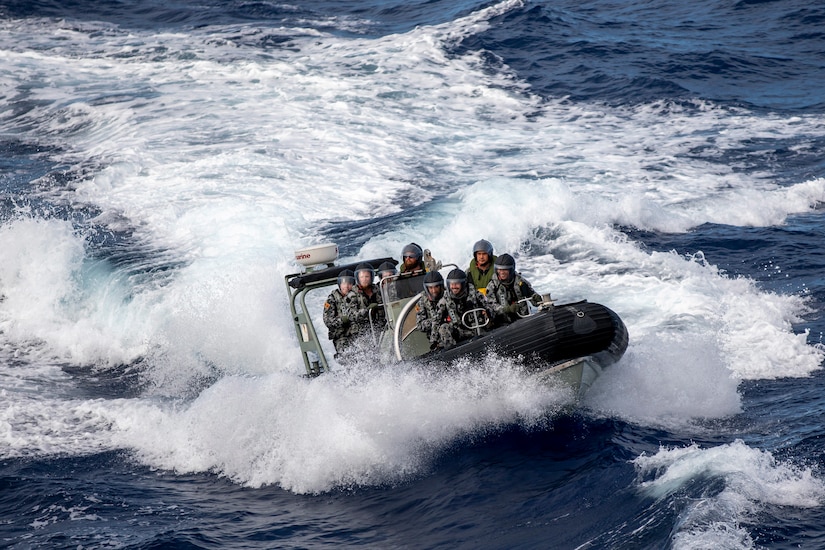
Sailors in small boat crest through the waves.

The National Defense Strategy issued in 2018 said the return of great power competition with China and Russia is the main danger to the United States and the world.

''This is an opportunity for the secretary to really reinforce what we're doing to advance this vision for a free Indo-Pacific,'' said a senior defense official speaking on background. ''The vision is based on some broadly held principles — peaceful resolution of disputes; freedom of navigation; free, fair and reciprocal trade arrangements — the things that have kind of made the international system work.''

In the Indo-Pacific, China is challenging these principles. China is building and militarizing islands in the South China Sea and East China Sea. China is using its economic power to coerce nations around the world to its point of view. 

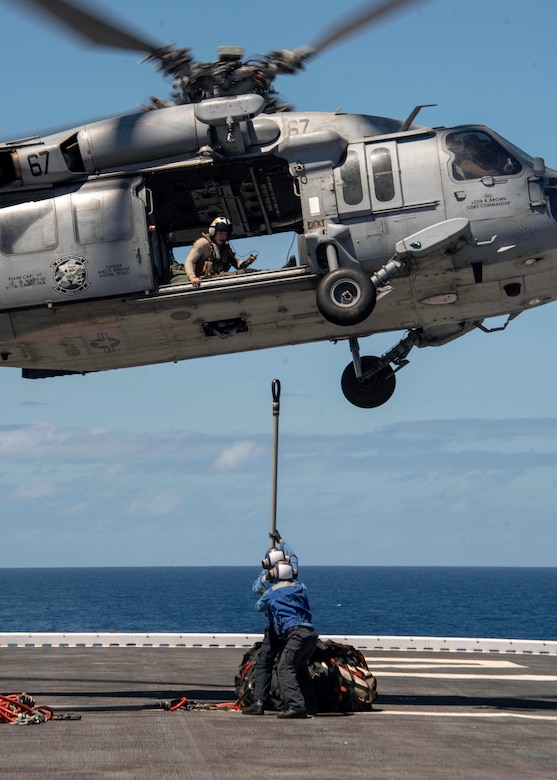
Sailors attach cargo to a hovering helicopter.

Esper will talk about what the United States is doing to reinforce and uphold the principles of the international rules-based order. 

During the visit, the secretary will visit ships involved in the semi-annual Rim of the Pacific exercise. The exercise has been scaled back due to COVID-19, but more than 5,000 personnel from 10 different countries are participating. The exercise allows the nations to test interoperability and cooperation across the spectrum of conflict. 

RIMPAC also highlights the alliance system in the Indo-Pacific. ''Even during the current pandemic, we're still able to operate in pursuit of common tasks,'' the official said.

Guam is a centerpiece of American strategy in the Indo-Pacific, and Esper will visit with troops and visit facilities that are being built.

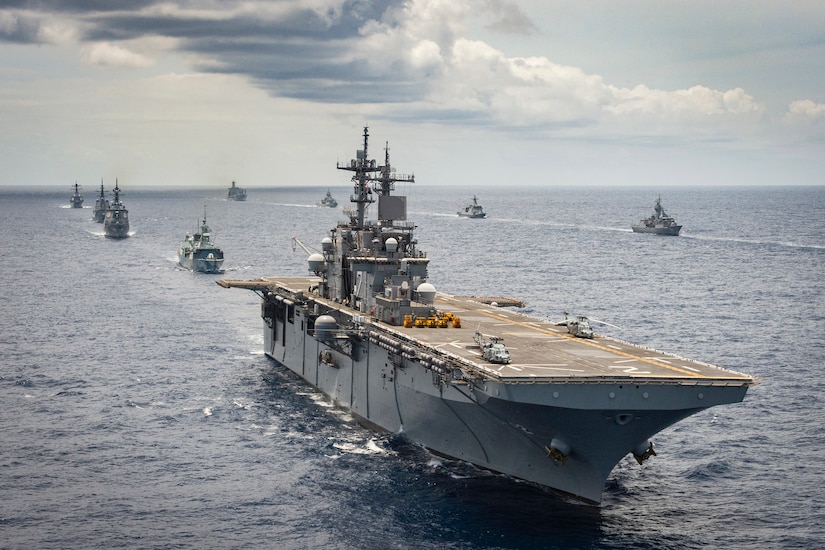
Ships sail in formation.

The secretary will also participate in ceremonies marking the 75th anniversary of the end of World War II. He will visit Palau – the site of the bloody Battle of Peleliu in 1944 — and mark the end of the war during a ceremony aboard the USS Missouri. The Japanese signed the surrender documents aboard the Missouri in Tokyo Bay on Sept. 2, 1945.

World War II still resonates today. The experiences of the war – with millions killed, untold treasure destroyed and huge upheaval – was the impetus behind establishment of the rules-based international order as a means of preventing the type of great power competition that brought on the war. Those rules are still important 75 years later, officials said, and they need to be protected.

Uniform Inspection


Marine Corps Staff Sgt. Dominick Dickson, a squad instructor, inspects a student’s uniform at Marine Corps Recruit Depot Parris Island, S.C., Aug. 24, 2020.

Tuesday, August 25, 2020

Hawaii Training


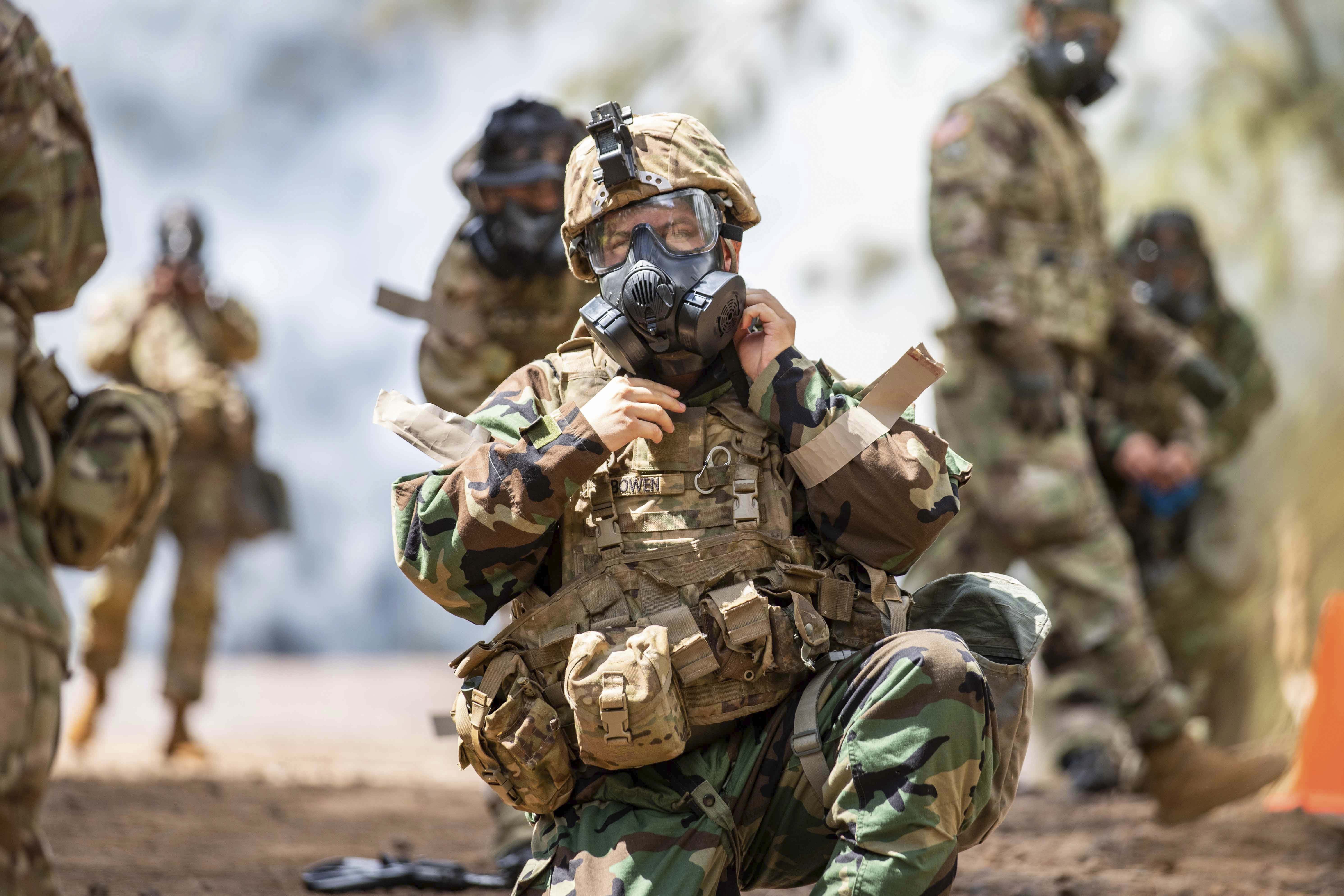
Soldiers conduct chemical, biological, radiological and nuclear training at Kahuku Training Area, Hawaii, Aug. 20, 2020.

Sailor Strike


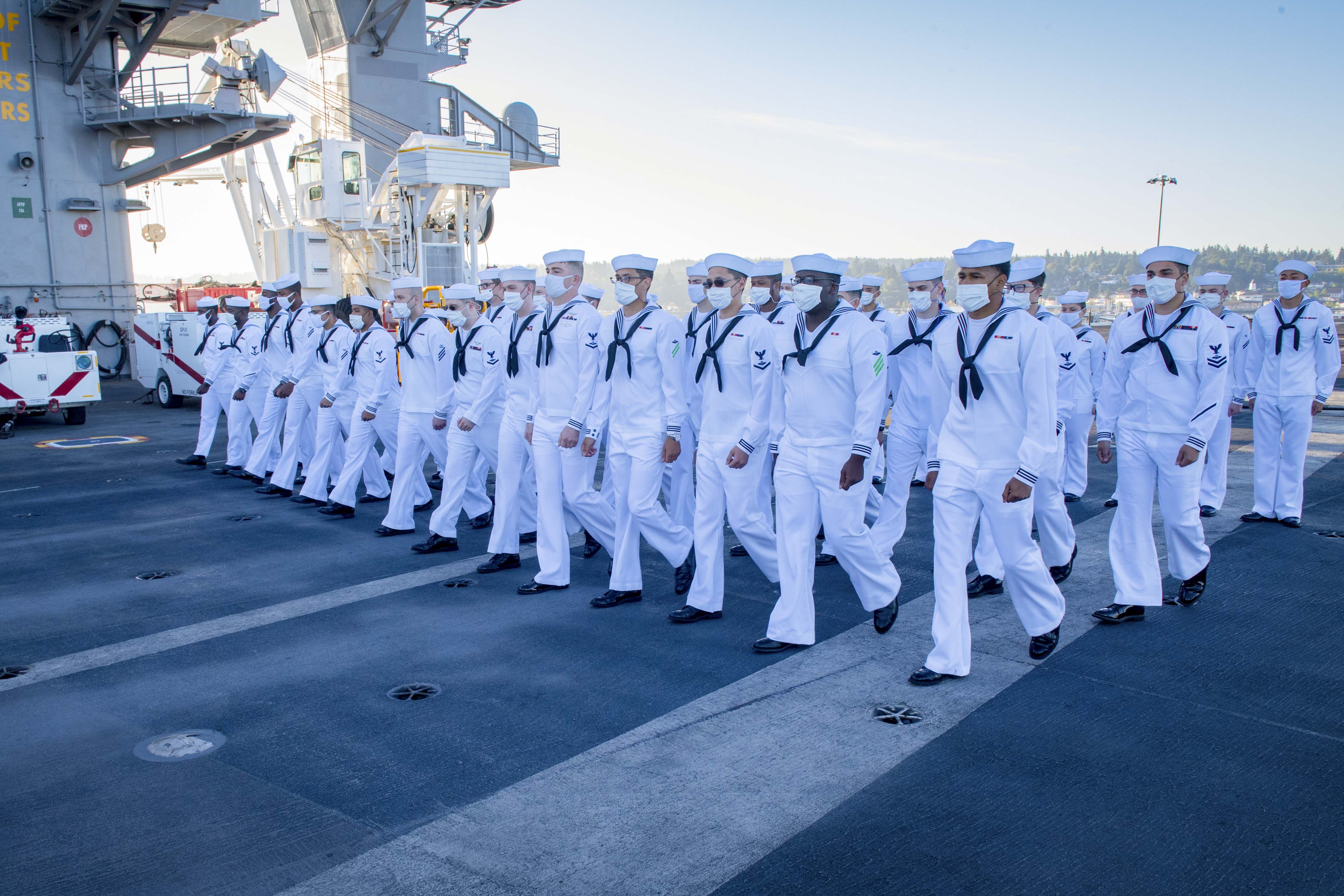
Sailors prepare to man the rails on the flight deck of the USS Carl Vinson as the ship departs Naval Base Kitsap-Bremerton, Wash., Aug. 23, 2020.

Constitution Climber

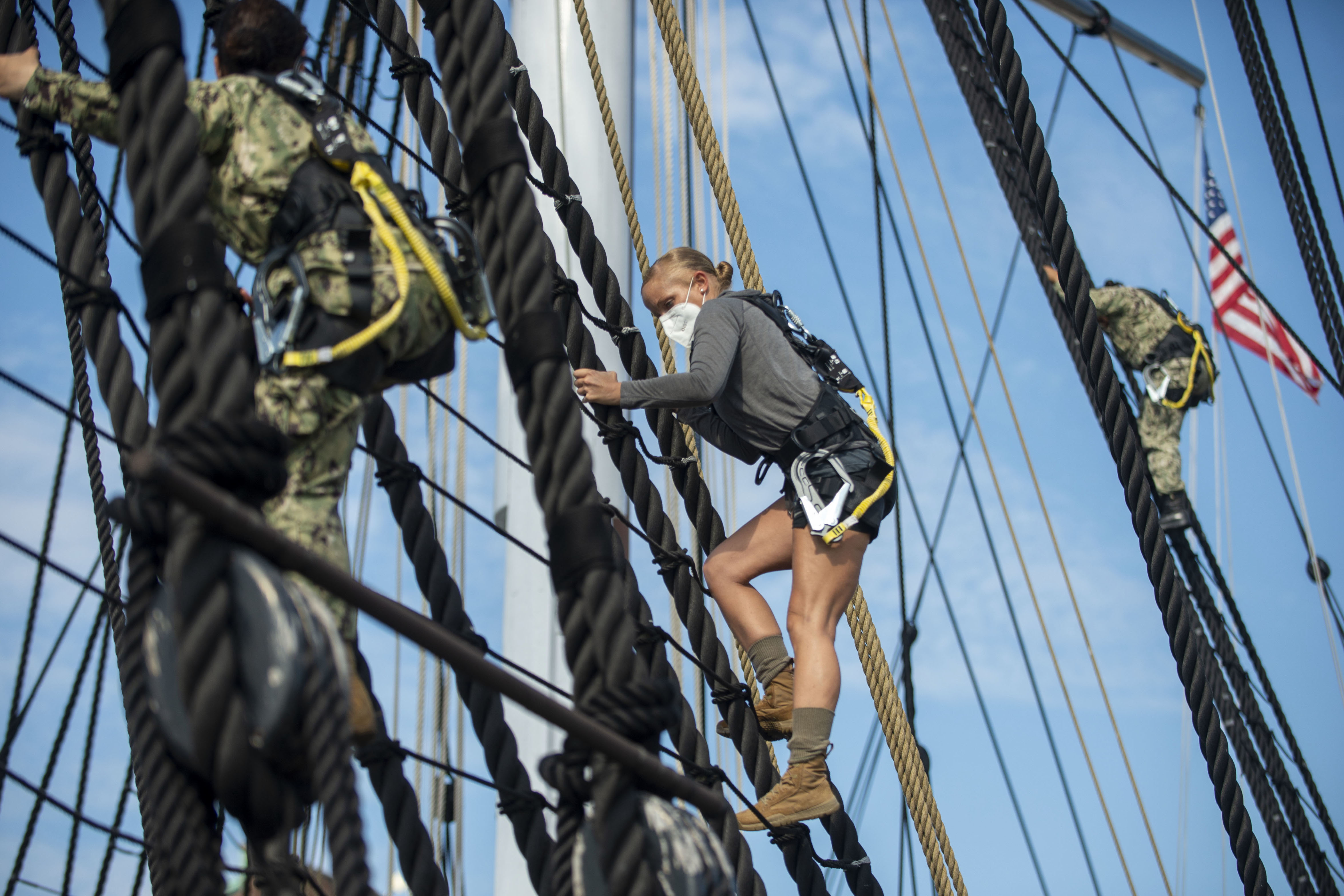
A service member climbs the shrouds aboard USS Constitution in Boston, Aug. 24, 2020. Sailors stationed aboard USS Constitution provide free tours and offer public visitation to more than 600,000 people a year as they support the ship’s mission of promoting the Navy’s history and maritime heritage.

Chock Check

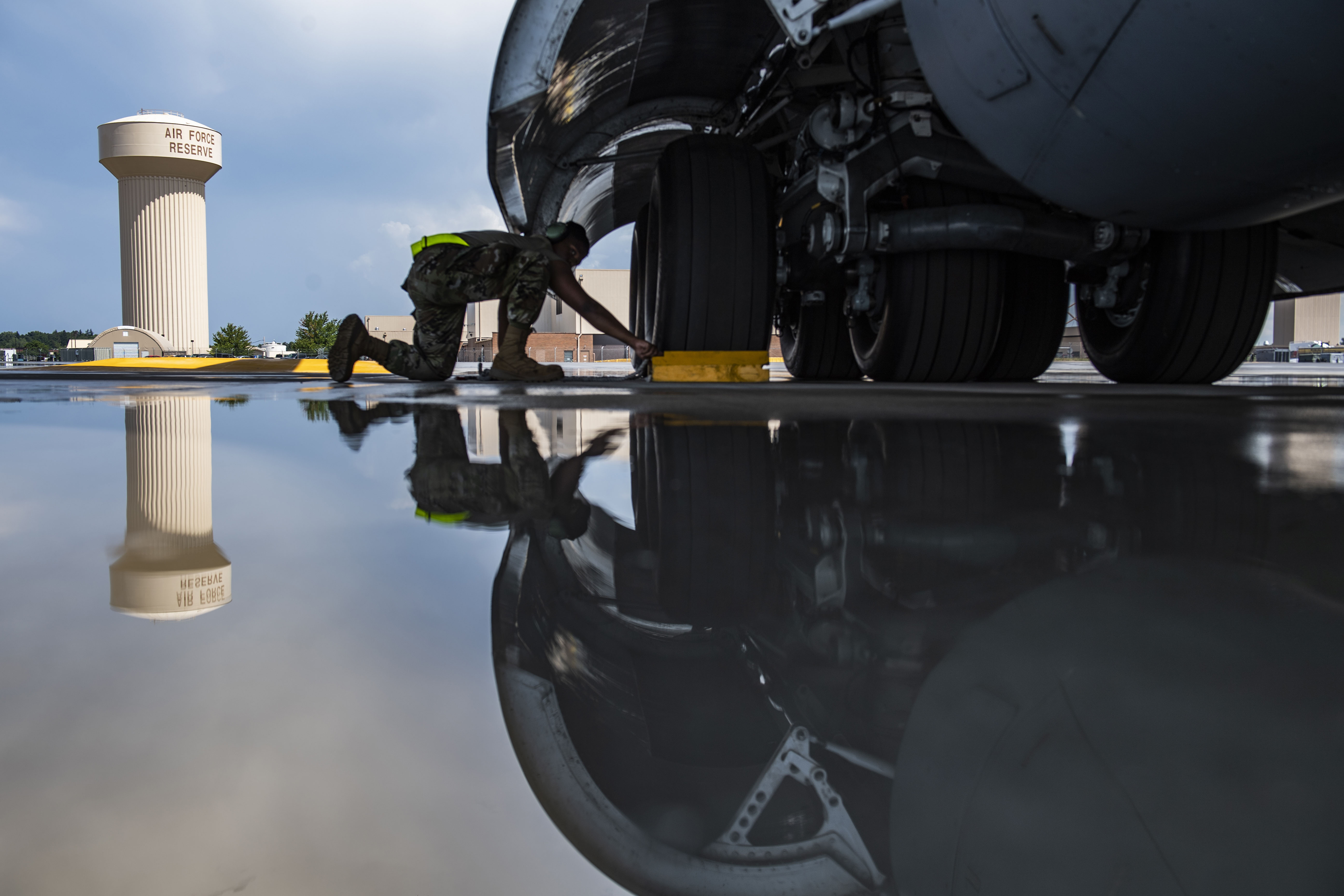
Air Force Airman 1st Class Elijah Turner fixes a tire chock during a walk around inspection of a C-17 Globemaster III at the Pittsburgh International Airport Air Reserve Station, Pa., Aug. 24, 2020. Walk around inspections are performed to ensure aircraft readiness.


Sports Heroes Who Served: From Coast Guardsman to Golf Legend

 Aug. 25, 2020 | BY David Vergun , DOD News


Sports Heroes Who Served is a series that highlights the accomplishments of athletes who served in the U.S. military.

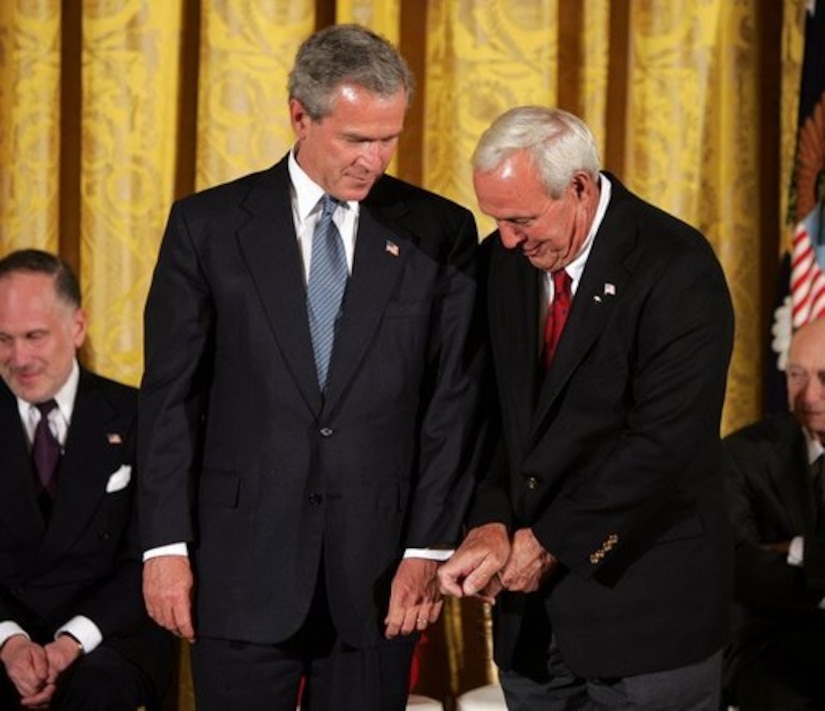
Although his claim to fame happened decades ago, ardent golfers of any age know the name Arnold Palmer. He is considered one of the greats. He won 62 PGA tour titles from 1955 to 1973, making him one of the top five golfers of all time.

President and golfer chat

Many, particularly the older generation, know about Palmer the golf legend, but here is some of the story about Palmer, the Coast Guardsman.

Palmer, born in 1929, attended Wake Forest College in North Carolina on a golf scholarship. In 1950, his close friend and roommate Bud Worsham was killed in an auto accident.

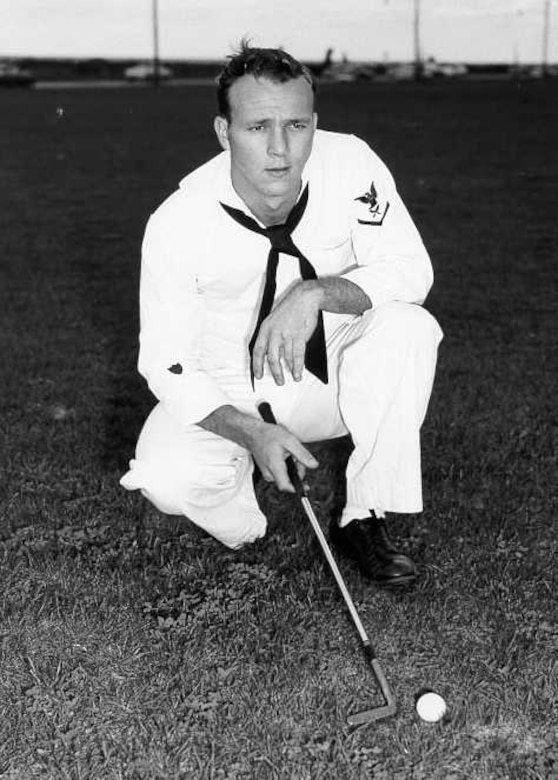
Golfer pans the area.

Worsham's death affected Palmer deeply, he told Richard A. Stephenson, a historian with the U.S. Coast Guard Auxiliary, Feb. 28, 2013.

Palmer couldn't focus on his studies and decided he needed a change from the academic venue. So, in 1951, he joined the Coast Guard.

"I thought it was a great outfit that specialized in saving lives," he told Stephenson.

He served in the Coast Guard from 1951 to 1954.

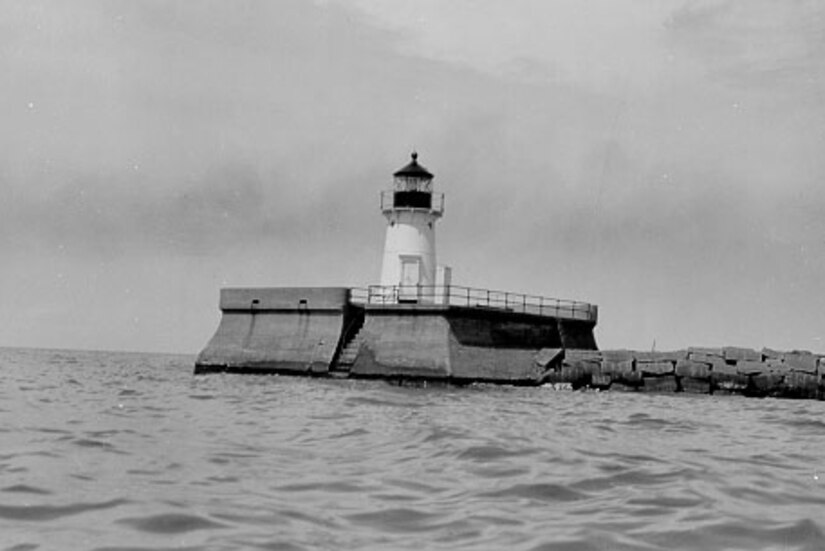
Lighthouse.

After basic training at Cape May, New Jersey, which is still the basic training center for all enlisted Coast Guard recruits today, Palmer received nine-month orders to serve as a lifeguard for the center's recruits. While there, Palmer also taught the recruits physical education, including judo and how to use force when necessary.

His next duty station was at the 9th Coast Guard District Auxiliary, Cleveland, Ohio, working at the Cleveland East Pierhead Lighthouse, which looks out over Lake Erie. While there, he was assigned as a photographer taking military ID card photos for all the Coast Guardsmen in the district.

At the end of his enlistment, Palmer returned to Wake Forest to complete his studies. Regarding his golf course legacy, it is one for the history books.

Golfer pans the area

"I'm very proud of the fact that I was in the Coast Guard," Palmer told Stephenson, regarding his time in service. "I think it's a wonderful outfit. Young people need the kind of training in one of the military outfits."

"The knowledge that I gained, the maturity that I gained in the Coast Guard made me a better person," he continued. "The military isn't just about restrictions, it's a learning experience and it's very important that young people have that opportunity to learn and to know themselves a little better, and I think the military helps put that in the right perspective."

Monday, August 24, 2020

Linguists Translate COVID-19 Information

 Aug. 24, 2020 | BY Terri Moon Cronk , DOD News

From national security missions to disaster relief to COVID-19 testing, the right interpreter is vital to getting the message out in a way that can be understood. 

The National Language Service Corps is a Defense Department entity that provides the federal government with workers whose primary mission is to promote understanding — literally. 

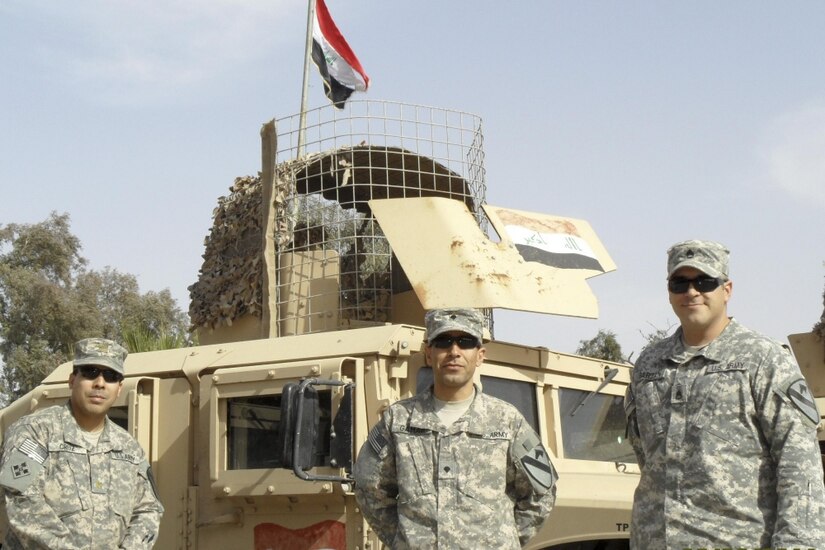
Three soldiers stand in front of a military vehicle.

Since March, NLSC interpreters have been called on by the White House Coronavirus Task Force and Federal Emergency Management Agency community-based testing sites to interpret virus-related questions for people whose first language is not English. 

Some 500-plus languages and dialects are offered by more than 10,000 NLSC interpreters. The top-three requested languages for FEMA's COVID-19 response are Spanish, Vietnamese and Arabic, an NLSC official said.

When a person who isn't English-proficient arrives at a FEMA-established COVID-19 testing site, a call goes out to an NLSC hotline that has an interpreter standing by for the specific language. 

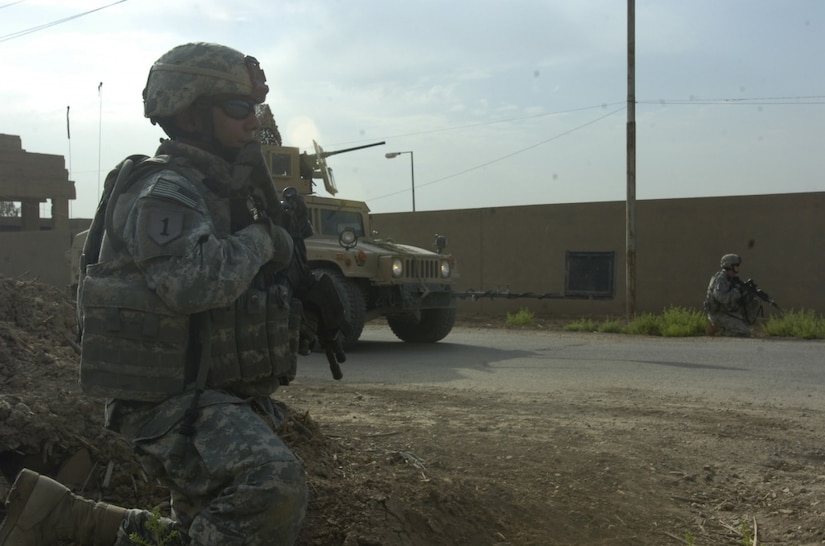
A soldier kneels while on patrol.

These specialists are by the phone, ready to engage with the person who has limited English proficiency, the official said. "They're able to say, 'OK, here's the menu of languages that are available for you to get interpretation support.'" It's about making sure there's clear communication between the health care providers and the people being tested, the official added.

Eric Heuberger is one of about 70 NLSC interpreters assigned exclusively to pandemic work. He is in Brooklyn, New York, interpreting Spanish over the phone for FEMA's citywide system of COVID-19 testing sites. If Spanish-speaking people have questions about the virus or testing procedures, Heuberger is the one they ask and he translates for health care workers and for those being tested. In addition to health care settings; he also is involved with interpreting for educators.

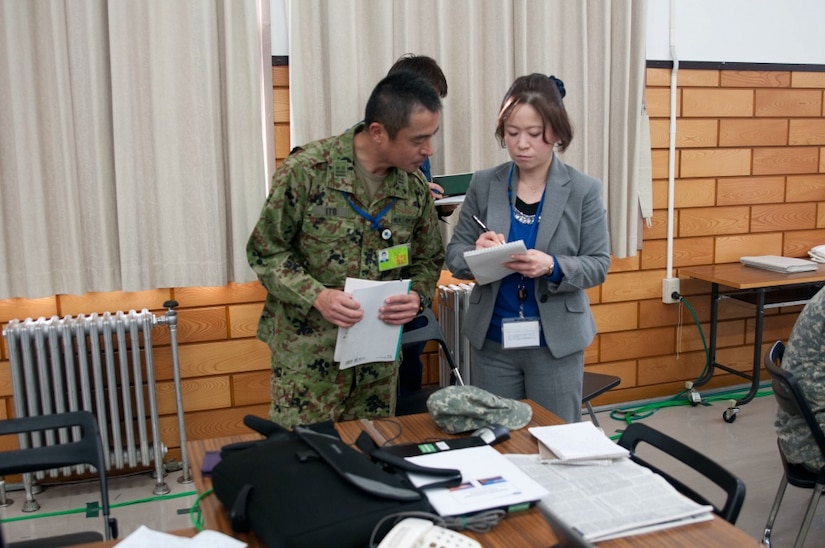
An interpreter goes over notes with a man in a military uniform.

"In New York, what we've seen is that the poor people are in the more crowded living circumstances, and they are more likely to get infected," Heuberger said. "So, where people are being infected is within their living spaces, and there's not much they can do about it."

"We anticipate that [the virus] is going to be here for a little bit. So we're going to be ready to support in whatever capacity is needed," the NLSC official said.

Stratofortress Scene


Two Air Force B-52 Stratofortresses fly over RAF Fairford, England, Aug. 22, 2020.

Shake Ace


Vito, an Air Force patrol explosive detector dog, shakes hands at Camp Zama, Japan, Aug. 21, 2020.

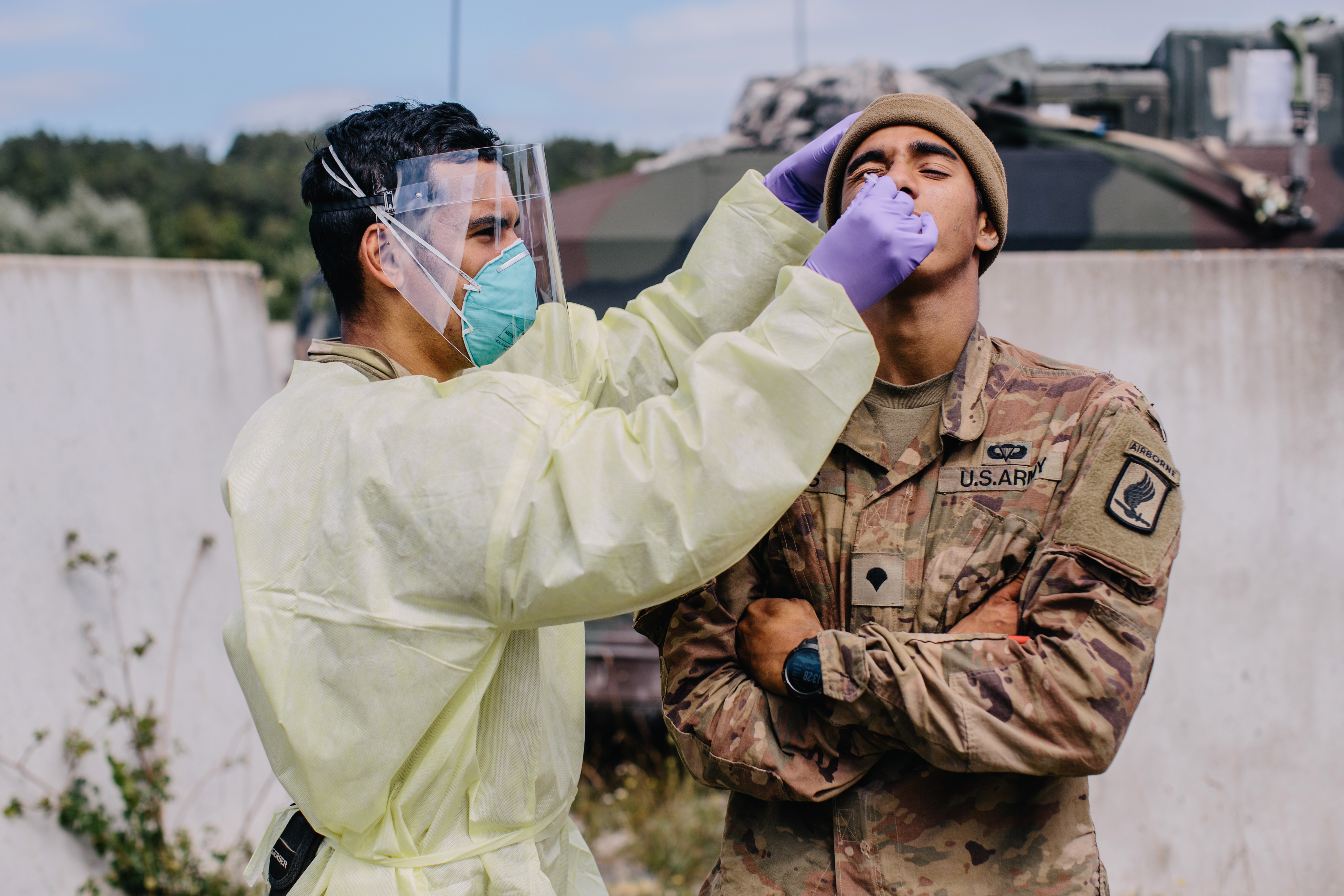
Soldier Swab


An Army medic paratrooper swabs a soldier for COVID-19 during Exercise Saber Junction at the Hohenfels Training Area, Germany, Aug. 20, 2020.

First Day

Air Force Staff Sgt. Jason Dieterle and his family head to the Aviano Elementary School building at Aviano Air Base, Italy, Aug. 24, 2020. It was the first time students were allowed back to the schools since they closed in February due to COVID-19. Parents were given the option to bring their kids to school or continue virtual education from home.