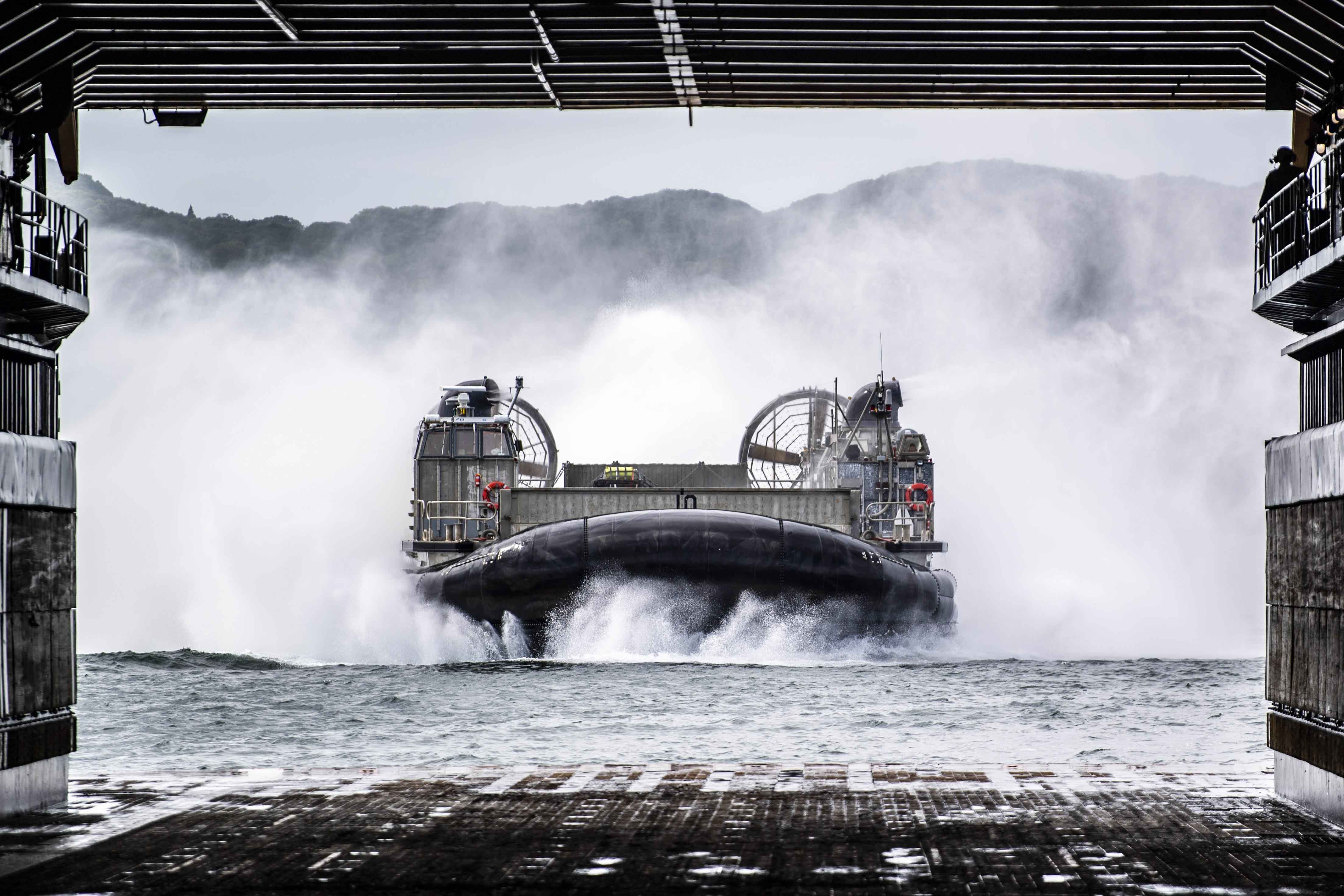
An air-cushioned landing craft prepares to enter the well deck of the USS Germantown as the ship conducts amphibious operations in Sasebo, Japan, Aug. 9, 2020.
An air-cushioned landing craft prepares to enter the well deck of the USS Germantown as the ship conducts amphibious operations in Sasebo, Japan, Aug. 9, 2020.
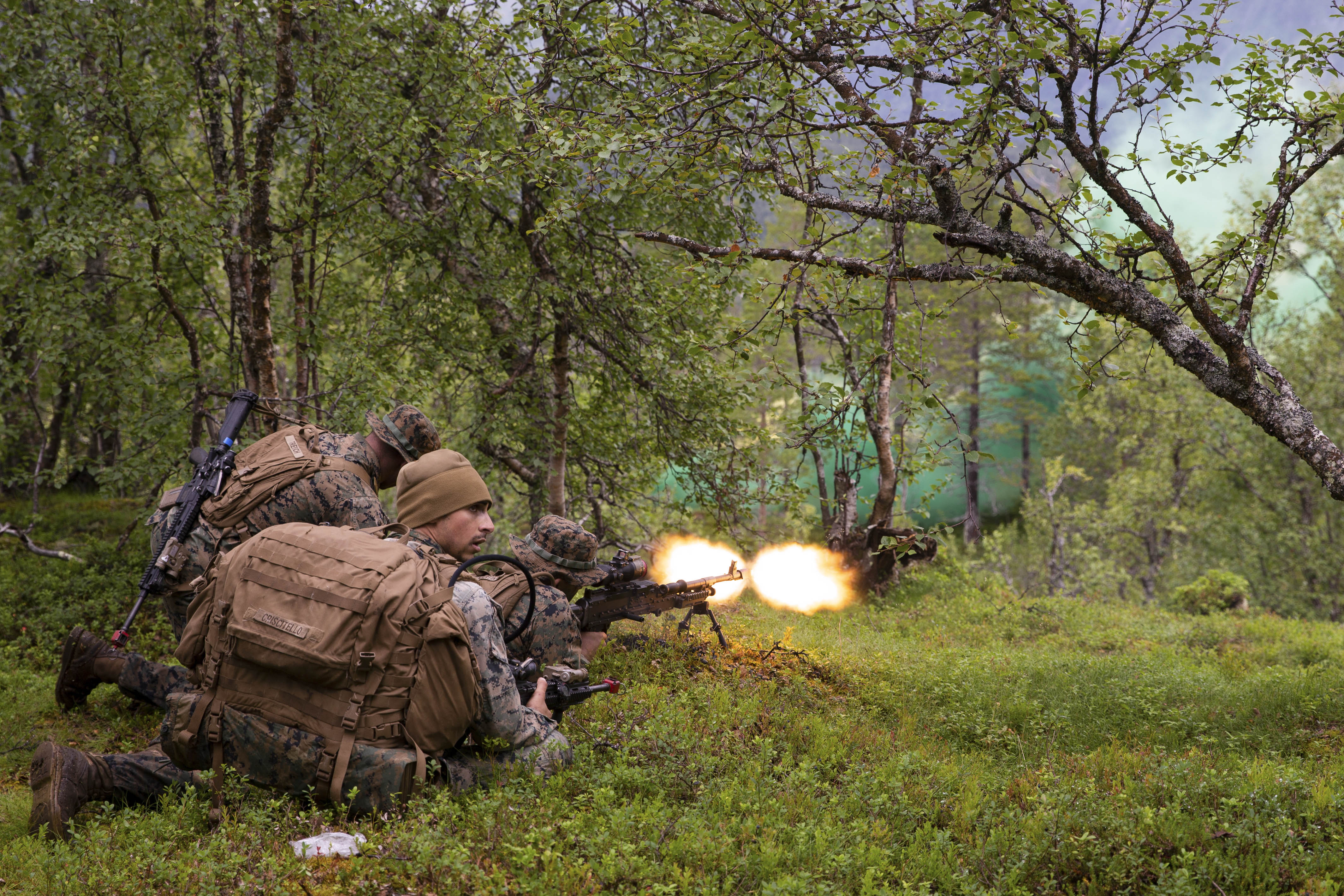
Marines attack simulated enemy forces during Exercise Midnight Sun in Setermoen, Norway, Aug. 9, 2020. During the exercise, units practice arctic cold-weather and mountain-warfare training and conduct military-to-military engagements.
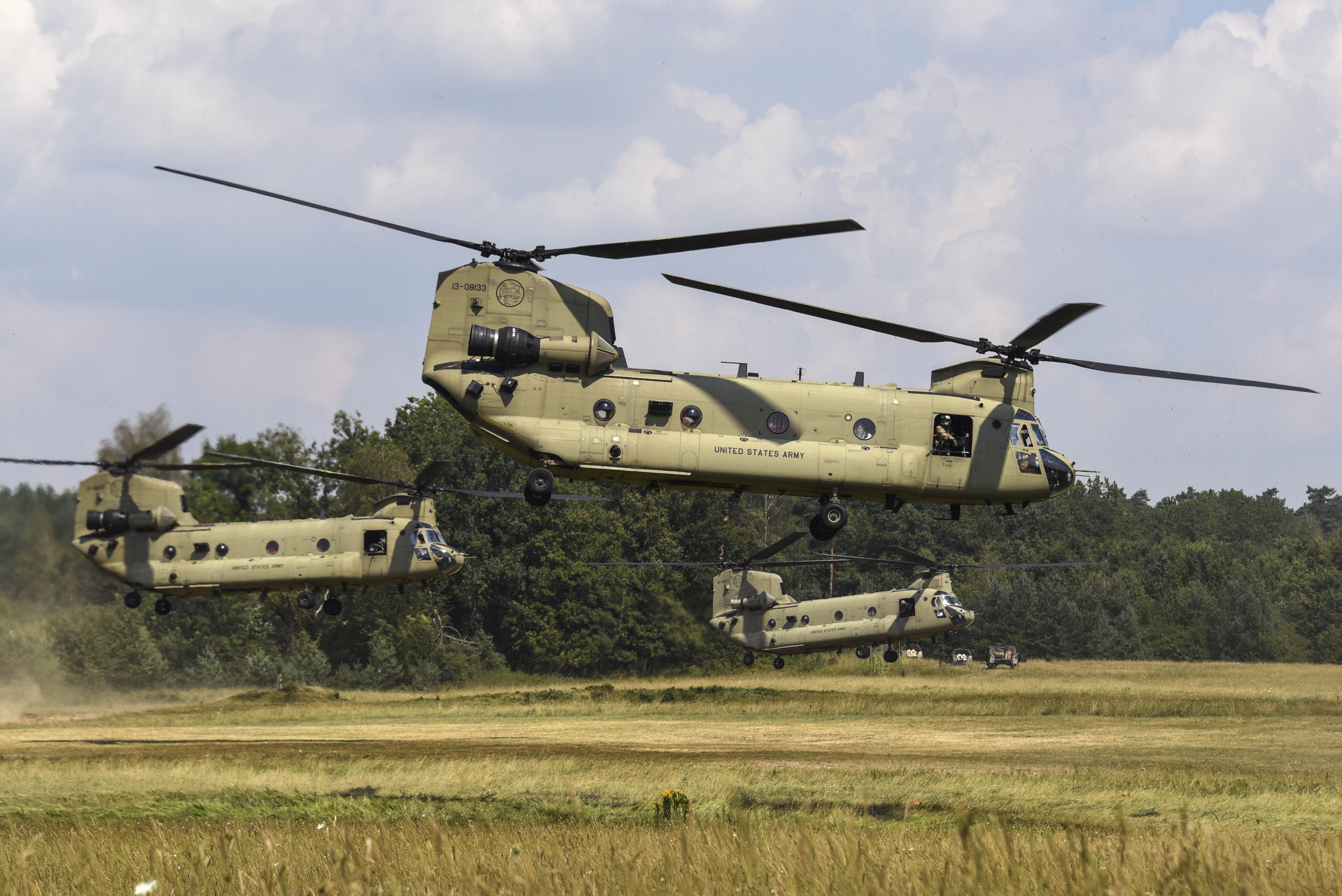
Army CH-47 Chinook helicopters lift off during Saber Junction at Grafenwoehr Training Area, Germany, Aug. 10, 2020. The joint exercise is designed to assess readiness and promote interoperability with allied and partner nations.
In 1936, 19-year-old Louis Zamperini qualified for the Summer Olympics in Berlin. Even today, he remains the youngest American to qualify in the 5,000 meter track and field event.
He didn't earn a medal at the Olympics, but several years later he would take part in actions that resulted in medals earned for acts of valor.
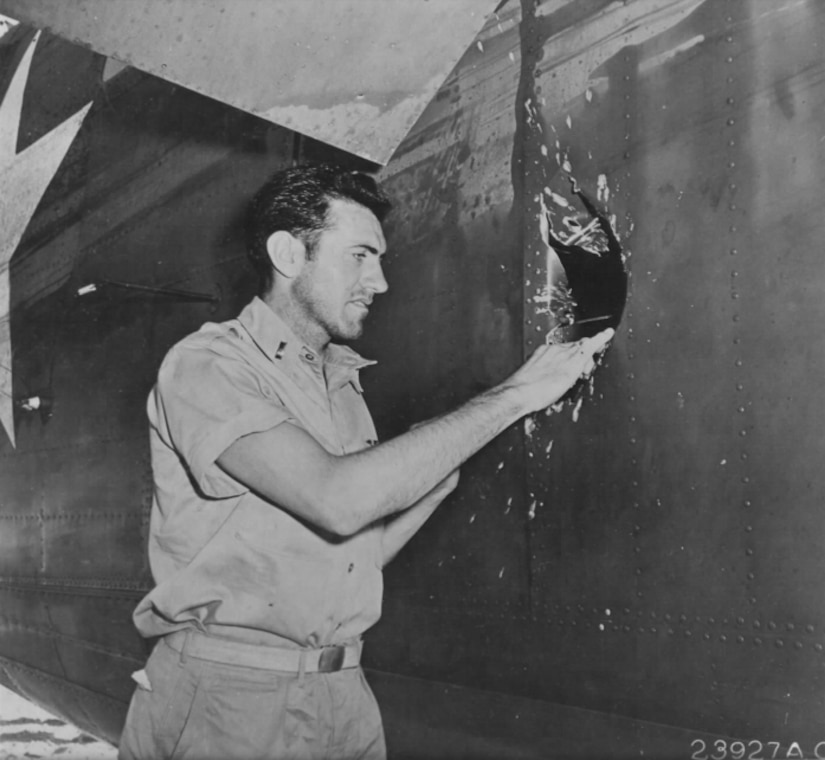
In 1938, Zamperini attended the University of Southern California, where he set a national collegiate record of 4 minutes, 8.3 seconds in the mile, despite being intentionally spiked in the shins from competitors during that race.
The runner would soon shift gears in his career. He didn't wait for America's entry into World War II. Instead, Zamperini enlisted in the Army Air Corps in September 1941 and soon was commissioned as a second lieutenant.
In late 1942, he was stationed on the Pacific atoll of Funafiti. It and other islands at the time were a British colony, known as the Gilbert and Ellice Islands.
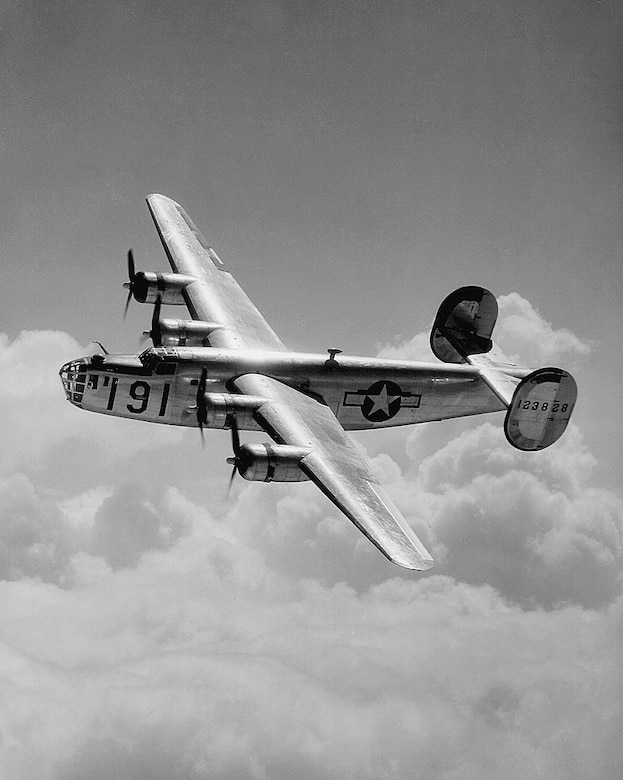
The Seabees had constructed a runway there, which was used by Consolidated B-24 Liberator heavy bombers. Zamperini was a bombardier. The bombardier sat in the cockpit, where .30-caliber Browning M1919 machine guns were mounted on both sides for forward protection of the aircraft. The navigator could man one of the guns if necessary.
Missions included bombing runs on Kiribati, one of the Gilbert Islands occupied by Japan, and another, Nauru, which was administered by Australia at the time.
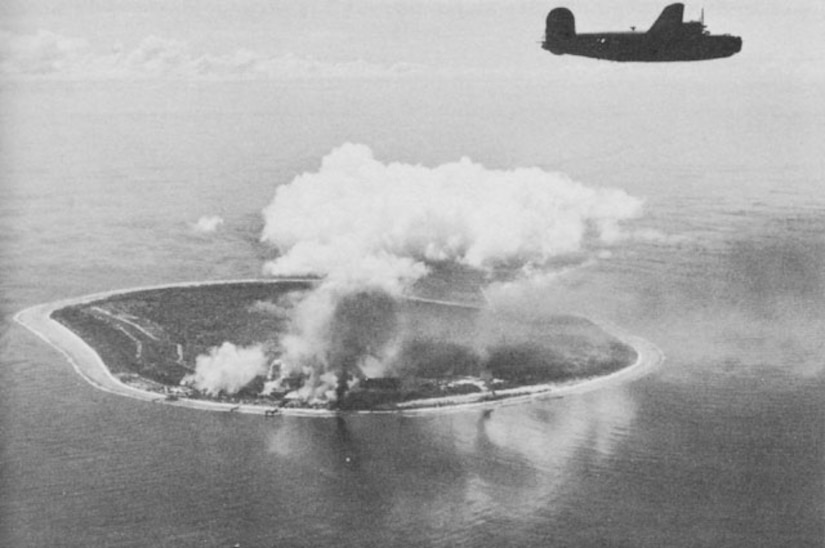
On one return flight from a successful bombing mission over Nauru, Zamperini's aircraft was attacked by three Japanese Zero fighter aircraft. He and the other gunners successfully fought them off, but one of the crew members was killed, four others were injured, and the aircraft sustained severe damage, though it managed to land back at Funafiti.
Next, Zamperini was transferred to Hawaii, where he was a crew member on another B-24. Their mission this time was searching for lost crew members and aircraft.
On May 27, 1943, his aircraft experienced mechanical problems during a mission and ditched into the ocean 850 miles south of Oahu, Hawaii. Only three men survived the crash, including Zamperini.
They inflated life rafts and floated about for weeks. They captured two albatrosses that landed on their rafts. They ate one, and they used the other as bait to catch fish. Fortunately for them, it rained enough to supply drinking water.
There were some close calls. A shark brushed up alongside their rafts, but it left when they hit it with a raft paddle. They nearly capsized during a storm, and they were strafed a number of times by a Japanese bomber.
After 33 days, one of the three men died.
On Day 47, Zamperini and Russell Allen Phillips, who was the pilot of the doomed B-24, landed their raft at Kwajalein Atoll in the Marshall Islands, where they were immediately taken prisoner by Japanese sailors. He and Phillips were later transferred to a number of prisoner of war camps on mainland Japan and were separated. They wouldn't meet again until after the war.
Zamperini eventually was transferred to the infamous Naoetsu POW camp in northern Japan, where he remained until the end of the war.
The camp was infamous because of prison guard Mutsuhiro ''The Bird'' Watanabe, who relished torturing the men. After the war, Army Gen. Douglas MacArthur listed him 23rd among the top 40 most wanted war criminals in Japan. However, he was spared execution.
Marine Corps Maj. Greg ''Pappy'' Boyington was held at the same POW camp. In Boyington's book, ''Baa Baa Black Sheep,'' he wrote that Zamperini described Italian recipes to the men to keep their minds off their miserable situation. Zamperini grew up in an Italian family, and he didn't even learn to speak English until grade school.
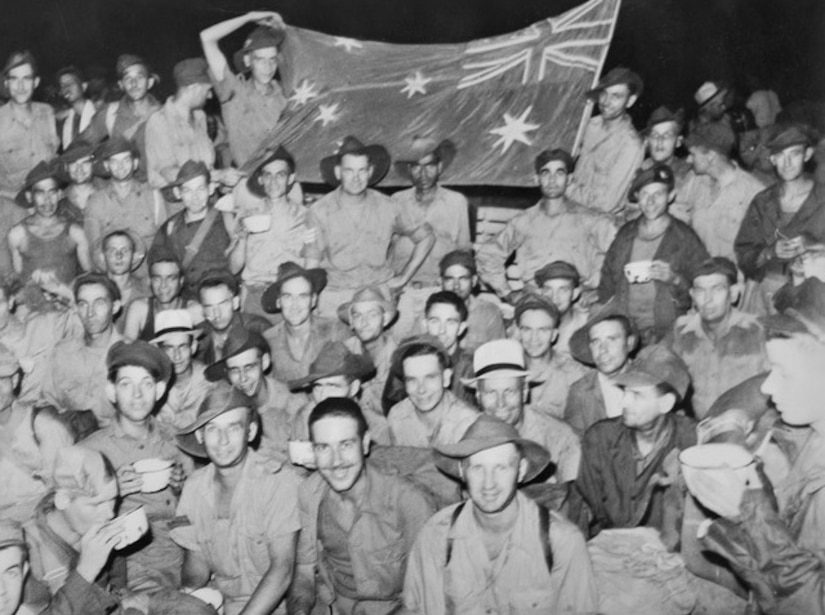
While Zamperini was held captive, he first was declared missing at sea and later as killed in action.
After the war, Zamperini said, he drank heavily and was extremely bitter about Watanabe and others who mistreated the prisoners. The life-changing moment for him, he said, came when he was attending a Rev. Billy Graham crusade in Los Angeles in 1949, which resulted in him becoming a born-again Christian.
He returned to Japan the following year, where he met many of his former guards to tell them he'd forgiven them. However, Watanabe refused to meet with him, so he wrote a letter of forgiveness to him.
In 1998, Zamperinia participated in the torch relay for the 1998 Olympic Winter Games in Kyoto, Japan. In 2010, Laura Hillenbrand wrote a book about him: ''Unbroken: A World War II Story of Survival, Resilience, and Redemption.'' Four years later, actor Jack O’Connell portrayed Zamperini in the film ''Unbroken.''
Zamperini died in 2014 in Los Angeles at 97.
The Defense Department's top priorities have not changed since the onset of the coronavirus pandemic: protection of the force and families, safeguarding of mission capabilities or readiness, and closely working with partners and allies to fight COVID-19 head-on.
The 83rd Combat Sustainment Support Battalion, 7th Mission Support Command, in conjunction with other United States Army Europe units and the USO, has partnered to safely introduce Soldiers to the European theater. The mission, known as Task Force Willkommen, began in early March led by the 39th Movement Control Battalion.
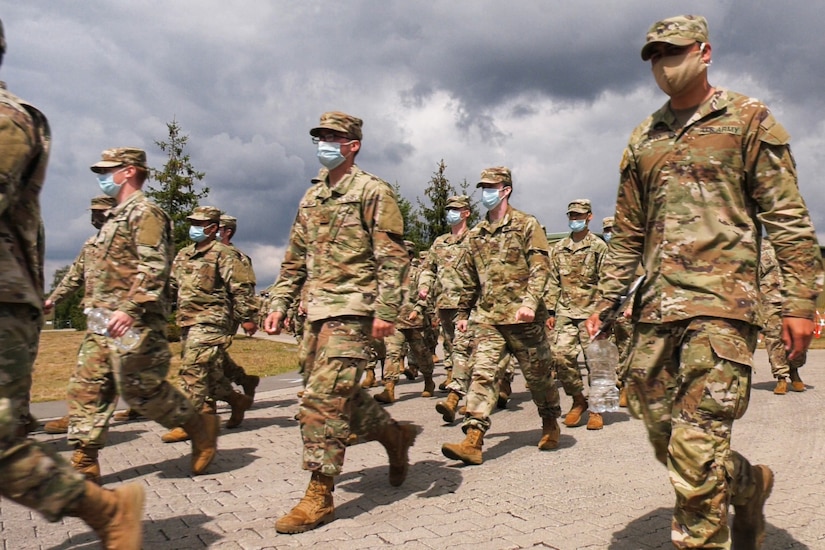
"The 83rd took over the mission June 15," said Maj. Jayson Cummins, the task force support operations officer. "Task Force Willkommen is a group [set up] to facilitate the in-processing of personnel coming in from CONUS."
Units involved in the collaboration include United States Army Europe, 21st Theater Sustainment Command, 7th Mission Support Command and the 83rd CSSB, to name a few.
"There's also the 1st HRSC, the 30th Medical Brigade, the 21st STB and our partners at the 16th Sustainment Brigade," Cummins said. "It takes a lot of coordination and deconfliction on quantities, amounts and timelines."
Cummins said the process, from the moment a Soldier lands in Germany, takes approximately 14 days until they are safely pushed to their next assignment.
"We identify the Soldiers we are taking into possession, we get their luggage, put them on buses and they are transported over here to Rhine Ordnance Barracks," Cummins said while talking about the Deployment Processing Center located within ROB. "The first night at ROB, they are assigned a PHA or a housing area, and they are hard-quarantined for three days."
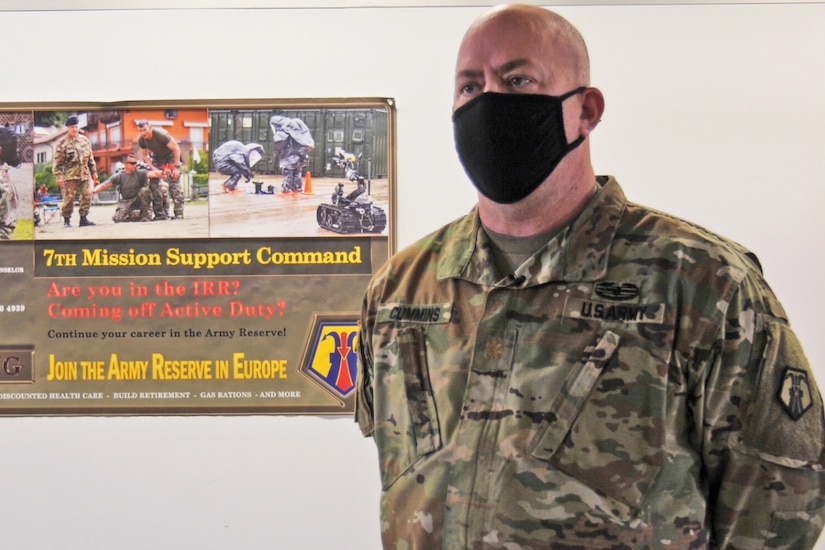
One of the first orders of business during the process is a COVID test. Results typically come back in 24 to 48 hours, according to Cummins. When results come back negative, the balance of protecting the force and quality of life kick in, but the restriction on movement remains in effect for the entire duration of the 14-day stay. The Soldiers are not free to leave the DPC, other than to gather comfort items, where they are marched to and from the nearby coffee shop and shoppette.
"It is what you make it," said Pfc. Christopher Williams, DPC resident and Mobile, Alabama native. "The cadre, they listen to you. Things they can do in their power; they will make sure they do it."
The DPC, completely enclosed by fencing, is designed to temporarily house transient service members passing through U.S. Army Garrison Rheinland-Pfalz. It was recently retrofitted for quarantine and in-processing. There are multiple buildings called personnel holding areas, but during unprecedented times there are bound to be issues.
"One of the biggest challenges we faced so far was our first positive case," Cummins said. "The plan that was in place on identifying that Soldier, separating them from their group, doing another test and then transporting that individual to an isolation barracks for another 14 days for observation, but we figured it out."
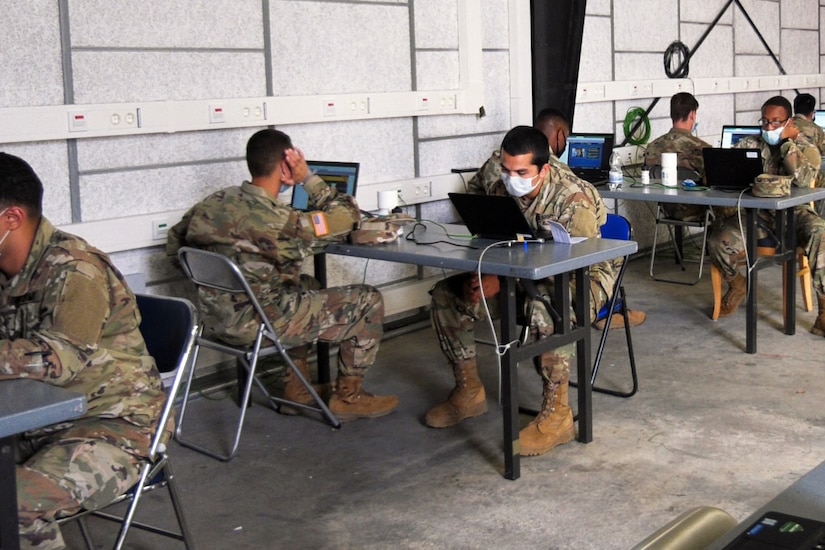
The goal of TF Willkommen is to provide a safe and isolated environment for Soldiers in between the United States and their final destination.
"The exit strategy for the Soldiers usually occurs about day 12," Cummins said. "They are given another COVID test, and once we identify they have been given a clean bill of health on day 14, they are all separated, put back on buses and sent to their garrisons throughout Germany or Italy."
Task Force Willkommen will remain in effect, indefinitely, providing service in support of United States Army Europe, host nation countries and even the individual.
"I am looking forward to going to my unit," Williams said. "It's going to be a fun experience."
(Army Staff Sgt. Christopher Jackson is assigned to the 221st Public Affairs Detachment)
Aug. 11, 2020 |
Along with the pandemic, some installations have had to cope with the threat of wildfires damaging training areas and shutting down bombing ranges. In an effort to continue its mission, the Wildland Fire program reprioritized its goals for the year and enacted COVID-19 safety protocols for its firefighters to follow, Michelle Steinman, Wildland Fire branch chief said.
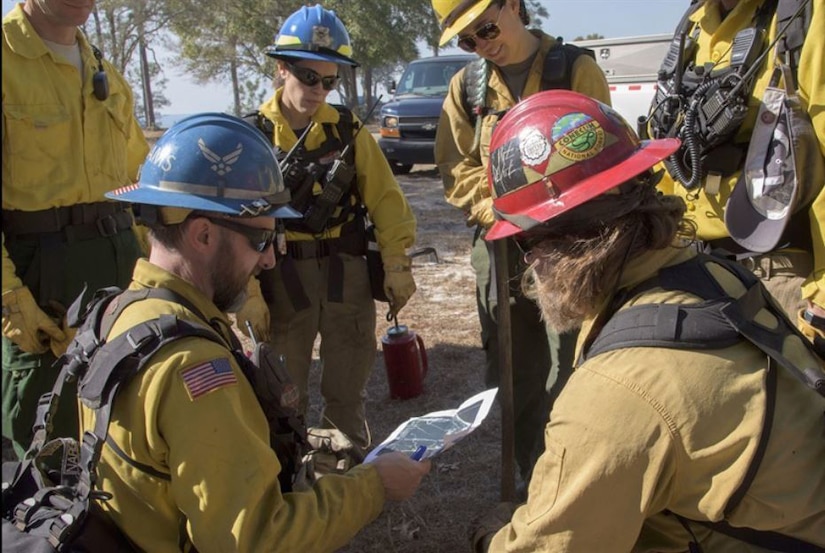
"We have prevented COVID-19 from derailing our performance and efforts to support mission activity by utilizing air resources, such as helicopters, to attack wildfires from above and implementing procedures to keep our firefighters healthy so they can keep airmen and their families safe," Steinman said.
For example, Steinman said a contract helicopter crew assisted the Eglin wildland support module in Florida to suppress a May wildfire caused by a downed aircraft at the merging of the two streams providing habitat for the threatened Okaloosa Darter on the Eglin range. The helicopter crew released water bucket drops over the crash site while Eglin bulldozer operators worked on the ground to contain the wildfire to 91 acres with only minor disturbance to the darter.
The Wildland Fire Branch is leveraging technology to mitigate COVID-19 by conducting virtual training sessions and encouraging the firefighters in the wildland support module to practice social distancing, reducing fire vehicle capacity and following CDC guidance. The Avon Park WSM in Florida is following safety protocols in the office as well as at home to maintain a fully staffed crew. So far, the seven-member team has completed 16 prescribed burns across 3,400 acres and managed 12 wildfires across 1,044 acres.
"We have taken every precautionary step to ensure that our crew stays healthy because if one person gets sick, then the whole crew is out, which could stop Air Force missions," Frank Gibbs, team lead for Avon Park WSM, said. "We have been very fortunate to be isolated on a range and keep our firefighters safe so that we can continue to do what we do best."
The Joint Base Elmendorf-Richardson WSM in Alaska is also following protocol to remain healthy in case there is a need to protect their local community. Recently, the module teamed up with the JBER Fire Department and a hotshot crew to prevent an intense wildfire from spreading and damaging critical infrastructure.
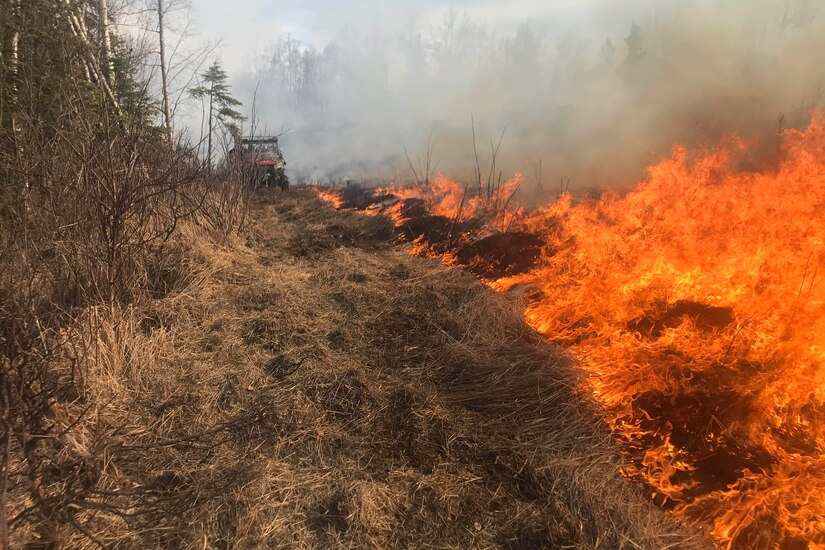
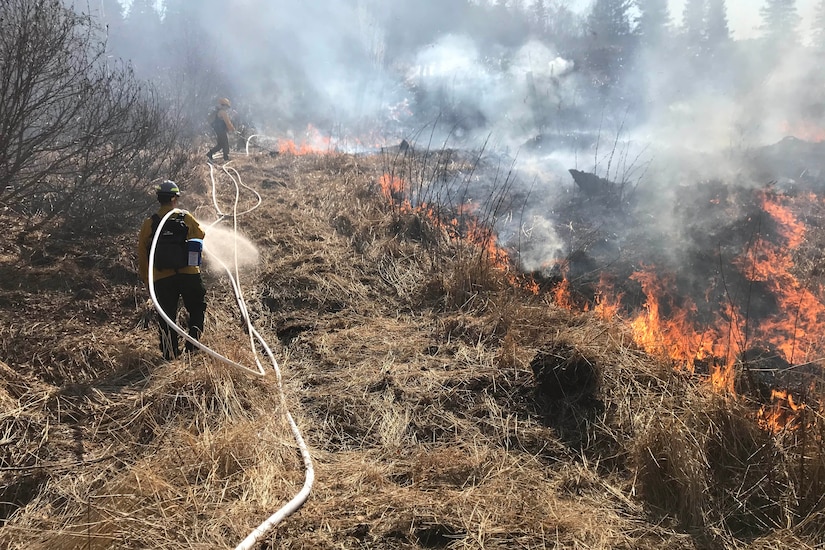
The fire was ignited from a ricocheted round during military training. Two weeks before the fire, the JBER WSM conducted prescribed burns surrounding the area where the wildfire took place. These burns stopped the progression of the fire and helped the crews contain the wildfire to fewer than five acres. The fire was extinguished in three days, and the crews removed all hazards to prevent reignition.
"We have evacuated thousands of people and that's chaotic," Jon Glover, team lead for JBER WSM, Alaska, said. "This pandemic is just a different type of chaos that we have learned to manage and have adjusted to. Firefighters are problem solvers and we will look at every solution to get the job done safely and effectively."
The Wildland Fire Branch, established in 2012, ensures military mission capability and increases lethality and readiness by reducing the threat of wildfires across 72 installations. The branch includes 14 wildland support modules composed of qualified and equipped personnel who conduct prescribed burns, mechanical fuel reduction and wildfire suppression response at installations within their area of responsibility. Across the U.S., the branch averages 140,000 acres of prescribed fires and responds to more than 100 wildfires.
(Courtney Strzelczyk is assigned to the Air Force Installation and Mission Support Center)
CAMP HUMPHREYS, Republic of Korea--- The images of
people running out of classrooms and movie theaters have plagued the
United States in recent decades. Time after time the news shows the
smiling faces of the people who were slain in these mass shootings. The
Military Police are the security force that protects military personnel
and facilities from these types of incidents.
Military Police from the 977th Military Police Company from Fort Riley,
Kansas, on rotation supporting the 2nd Infantry Division, conducted
Advanced Law Enforcement Rapid Response Training, July 28, at the
Rodriguez Live Fire Complex.
“We [practiced] making entry into rooms, systematically clearing rooms,
direct to threat, and responding to an active shooter call,” said Sgt.
1st Class Lori Singer-Bare, a platoon sergeant with the 977th MP Co.
“The purpose of this training is to learn how to shoot, move, and
communicate to neutralize and stop the threat with as much force as
necessary.”
MPs trained in teams of two to simulate being the first patrol to reach
the scene of a shooting. They start the exercise moving through
corridors, methodically clearing rooms, and checking on simulated
wounded dummies. They practiced restraining assailants and clearing the
assailants’ weapons. The team would continue going through these motions
until they heard gunfire. Once the gunfire is heard, the pair would
rush directly to the sound of the shots to subdue the threat.
Singer-Bare explained that ALERRT is the direct result of the 1999
Columbine shootings and the training has continuously evolved over the
past 20 years to what they are training today.
One of the more recent adaptions to ALERRT is once gunfire is heard,
while in the building, the law enforcement team would break from
systematically clearing room-to-room and movie directly to the threat
instead of continuing an in-depth room clearing.
“Once they find a sign or get an overarching stimulus that there is an
active shooter,” said 2Lt. Robert Holland, a platoon leader with the
977th MP Company, “they go direct to the threat to neutralize it as
quickly as possible.”
The desire to cut the amount of time it took to subdue the shooter was
one of the main reasons that contributed to the change in room clearing
techniques.
“If we go room-to-room and clear every closet when we hear shooting, the
threat is out there longer,” said Holland. “One of the biggest things
we learned here is that time saves lives.”
Since time is of the essence, instead of systematically clearing each
room, MPs give a cursory glance in the rooms on the way to the shooter
as a precaution, this is known as ‘dirty clearing.’
“I personally really like this training,” said Pfc. Adrian Chavez, an MP
with the 977th MP Company. “It prepares us for when we are working the
road so we know what to do and to not be shaking nervous if we ever get
the call to go into a building.”
The 977th MP Company is on a 9-month rotation to the Republic of Korea
to train on various law enforcement techniques and to assist 2nd ID to
stand ready to fight tonight.
“Our Soldiers are doing exceptionally well, being able to conduct this
as a unit in South Korea is phenomenal law enforcement training,” said
Holland.

Sailors on the bridge of the aircraft carrier USS Dwight D. Eisenhower navigate the ship in the Atlantic Ocean, Aug. 9, 2020. The ship was returning to Naval Station Norfolk after a regularly scheduled deployment in support of maritime security operations and theater security cooperation efforts in the U.S. 5th and 6th Fleet. The Dwight D. Eisenhower Carrier Strike Group has remained underway as a ready strike group during the COVID-19 global pandemic.
Aug. 10, 2020 | , 60th Air Mobility Wing
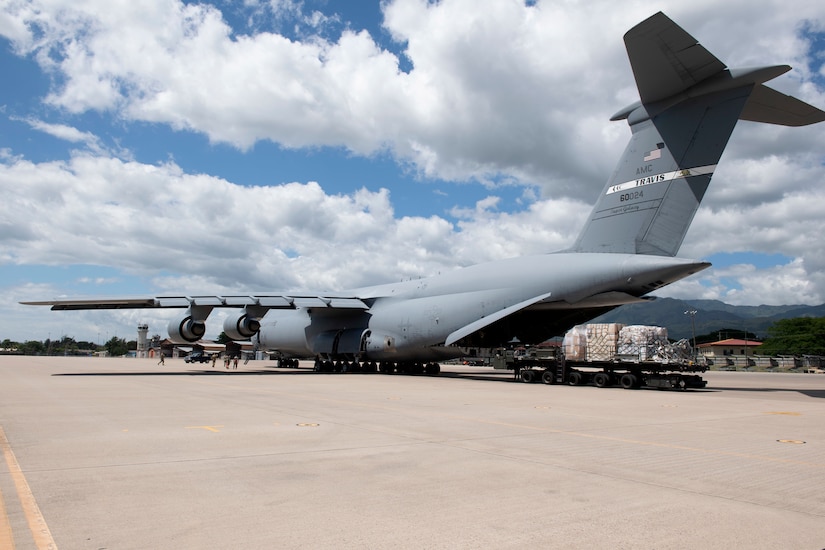
Airmen assigned to the 22nd Airlift Squadron at Travis Air Force Base, California, delivered humanitarian aid supplies to Soto Cano Air Base, Honduras.
The July 18 mission was in support of the Denton Program, a Defense Department transportation program that moves humanitarian cargo donated by U.S.-based nongovernmental organizations to developing nations.
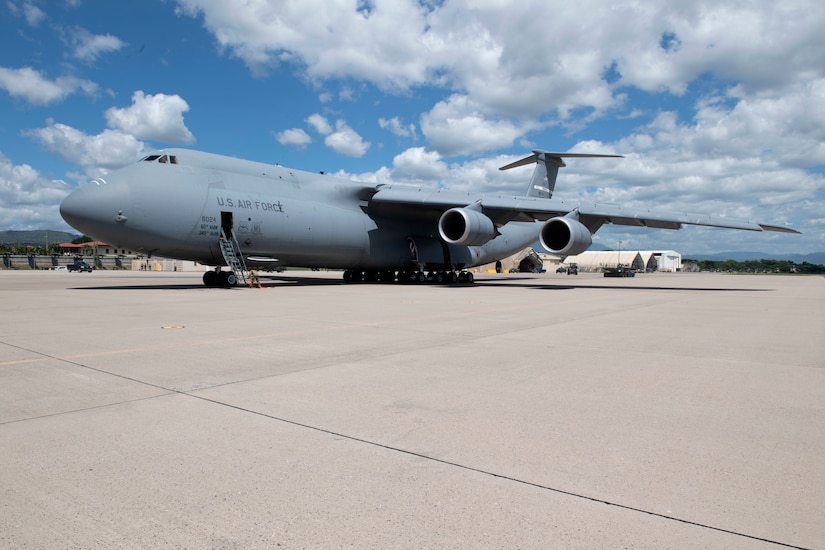
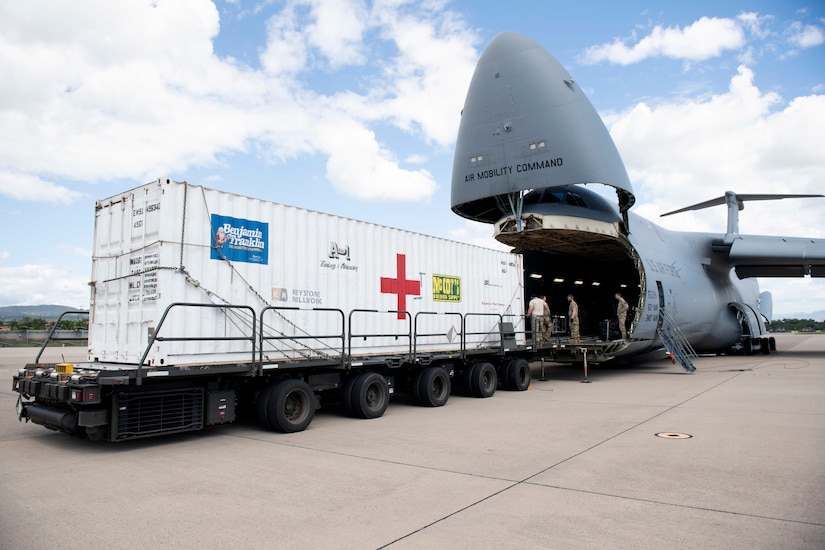
The airmen transported 58,000 pounds of cargo in a C-5M Super Galaxy transport jet. The cargo consisted of eight pallets, two vehicles, two excavators and a 40-foot container filled with medical supplies to treat COVID-19 patients.
"A lot of what is on this aircraft will go to COVID-19 response," said Army Lt. Col. Jeffrey Uherka, Joint Task Force Bravo civil military operations director at Soto Cano Air Base,. "The 40-foot container is heading to Intipuca, which is an underserved community."
Uherka said the contents of the container would be able to supply a procedure room, two recovery rooms and a laboratory, all of which are vital in effectively combating COVID-19.
The 12-member crew stopped at Joint Base Charleston, South Carolina, to pick up the humanitarian cargo for Honduras.
"This was my first humanitarian mission," said Air Force Capt. Heather Denny, 22nd Airlift Squadron pilot and aircraft commander. "It was a different mission for our C-5 crew; we don't typically fly into [U.S. Southern Command's area of responsibility], which made this a great training mission for us."
Before this mission, more than $700,000 of Denton cargo has been delivered to Honduras during fiscal year 2020.
"Having this be my first humanitarian experience was very eye-opening and very surreal because of the impact it may bring to people who I don't know," flight engineer Air Force Staff Sgt. Byle Williams IIsaid.
Williams also noted that the humanitarian mission was an example of the Air Force's global reach.
"Giving help, giving aid and knowing that Travis Air Force Base is the one that provided the opportunity to do that for individuals shows how big our footprint is locally and abroad," Williams continued.
Transporting aid bolsters relationships with partners in Central America and Joint Task Force Bravo has been executing that mission for 38 years, Uherka said. Additionally, according to Uherka, the humanitarian aid has the potential to reach tens of thousands of people in Honduras communities.
"This couldn't be done without Travis," Uherka said. "We very much appreciate the support of Travis and the United States Air Force for our mission."
The Army's 82nd Airborne Division is employing COVID-19 measures while still conducting realistic training for its paratroopers.
The division's Headquarters and Headquarters Battalion hosted a fire-team training exercise July 16 near West McKeithan Pond on Fort Bragg, North Carolina. Army commanders use exercises in combat-environment training areas to evaluate the capabilities of their weapons and their paratroopers.
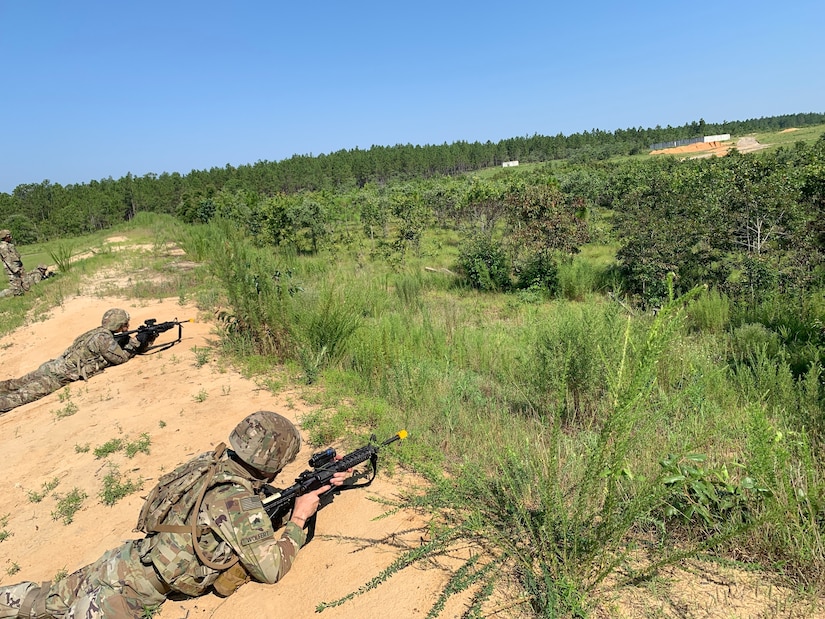
Army Capt. Samuel Rolofson, a military intelligence officer, was the officer in charge of the training.
''This training was unique because many of our mitigation measures for COVID-19 are in effect,'' he said. ''We are using unique strategies within the COVID restriction guidelines mandated by [Forces Command].''
To prevent excessive heat exposure injuries, soldiers rest and cool off without using cooling tents, which only recycle air and create a confined space, Rolofson said.
Rolofson controlled range operations from the training area's tower. On the ground, Army Capt. Maitiu Laman, Headquarters Support Company commander, observed the teams' communication techniques and their weapons function while they moved toward the objective.
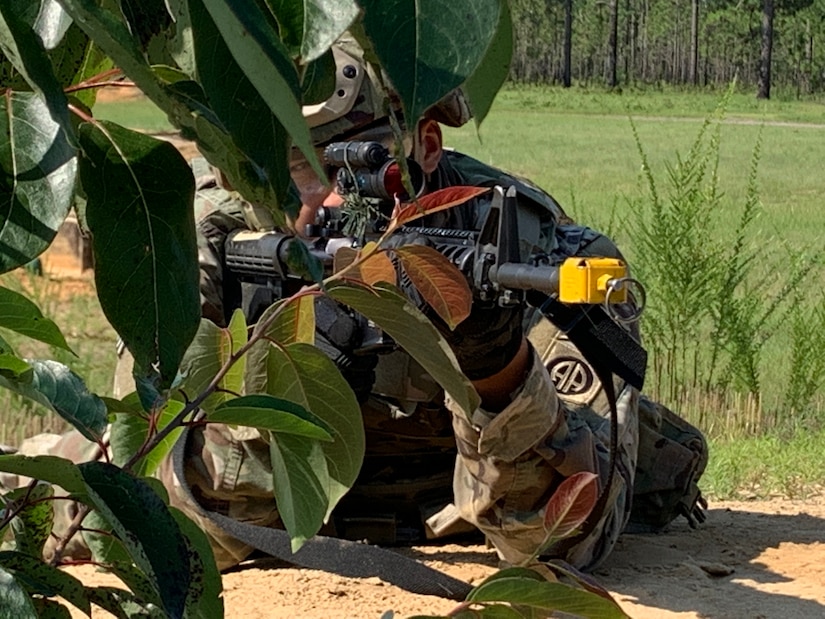
For Rolofson and Laman, their mission was clear. They were focused on improving any complexities the trainers may foresee while reinforcing, sustaining and expanding the paratroopers' marksmanship skills to ready them for war.
''Earlier today, we started with a dry run,'' said Army Sgt. Christian Smith, a fire team leader. ''It was a little choppy as we worked out the mechanics, but as we progressed, we saw a significant improvement throughout the entire exercise. I believe our team definitely got some great training out of it today.''
The firing range at West McKeithan Pond was triple-layered. It was designed to provide forested, desert and urban fighting areas to challenge the soldiers with real-life combat scenarios.
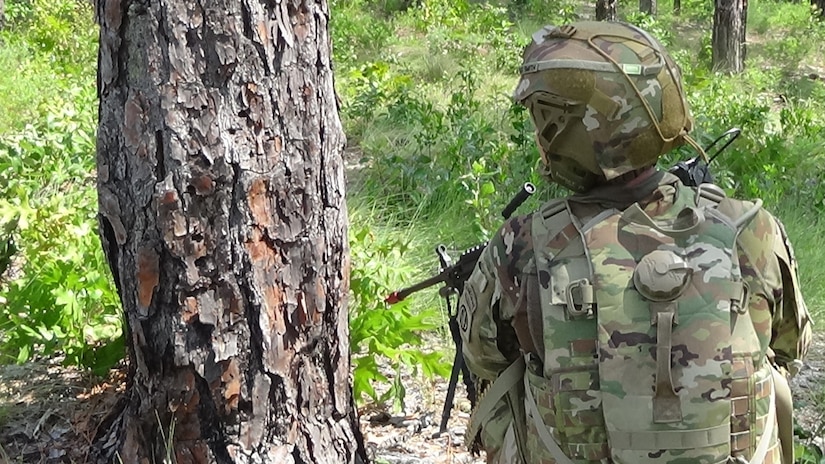
''The range is unique to the paratroopers,'' Rolofson said. ''It has a right and left side maneuverer, with realistic environments that were relatively new to them.''
Army Lt. Col Todd Sunday, Headquarters and Headquarters Battalion commander, and battalion chaplain Mike Basie visited the range, talked with the paratroopers, served them chow and recognized them for their work during the training.
''When the [battalion chaplain] came to me, we talked about the training and techniques I can use to improve my marksmanship fundamentals,'' said Army Pvt. Edward Wiggins, an intelligence analyst. ''It was pretty cool.''
(Army Staff Sgt. Sharon Matthias is assigned to the 82nd Airborne Division.)
The Department of Defense is providing an additional way for military parents to find child care solutions for hourly care. Military OneSource will expand its offerings through a national online service that enables families to find, hire, and pay for care.
The new offering provides access to a monthly subscription service with a secure, searchable network of care providers. The subscription, provided at no cost to eligible military families, offers a user-friendly way to explore providers who can assist with hourly, flexible and on-demand child care services. Families can find out more and access the service through MilitaryOneSource.mil or call Military OneSource at 800-342-9647 to speak with a consultant who can support their search.
“We are committed to taking care of our service members and military families, and understand that families may need assistance with their hourly care needs,” said Kim Joiner, deputy assistant secretary of defense for military community and family policy. “This new service provides a flexible way that empowers modern military families to find child care services that best meet their hourly care needs.”
“Child care is a workforce issue that directly impacts the readiness and retention of the Total Force,” said Carolyn Stevens, director of the Office of Military Family Readiness Policy. “This new service provides another opportunity for the department to support our military families.”
About Military Community and Family Policy
Military Community and Family Policy is directly responsible for establishing quality-of-life policies and programs that help our guardians of country, their families and survivors be well and mission-ready. Military OneSource is the gateway to programs and services that support the everyday needs of the 5.2 million service members and immediate family members of the military community. These Department of Defense services can be accessed 24/7/365 around the world.

Airmen conduct a simulated search and rescue mission during training in Caldwell, Idaho, Aug. 7, 2020.

An Air Force F-22 Raptor prepares to receive fuel from a KC-135 Stratotanker during Exercise Red Flag over Alaska, Aug. 5, 2020.

Soldiers prepare to hook a pallet of equipment to the underside of a CH-47 Chinook helicopter during sling-load training at Grafenwoehr Training Area, Germany, Aug. 5, 2020.

Air Force Airman Steffon Brownjohnson signals that a Navy C-2A Greyhound is ready to launch abroad the USS Ronald Reagan in the Pacific Ocean, Aug. 6, 2020.
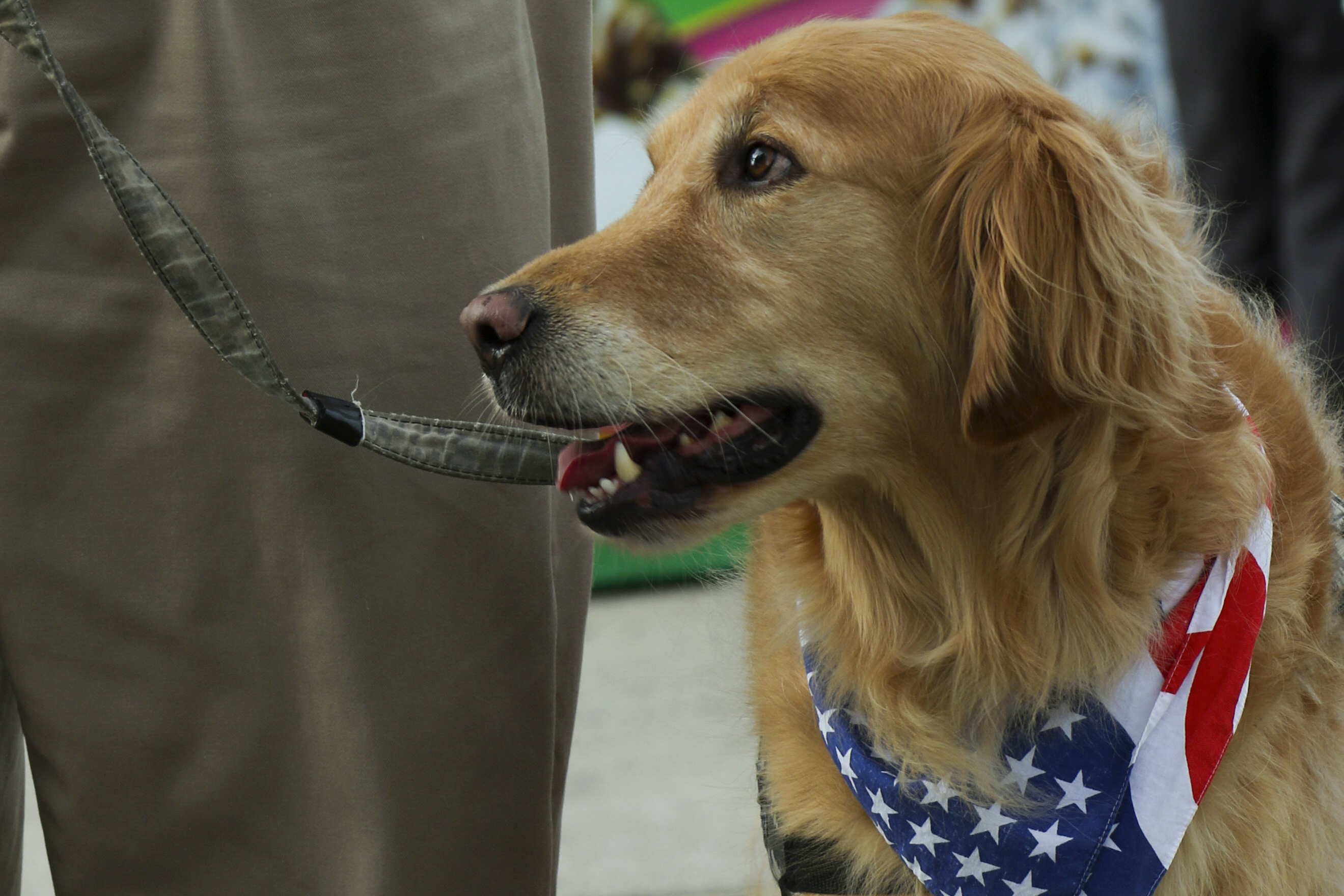
Brutus, a Golden Retriever with the Kare 9 Military Ministry, attends the August Daily Herald Cruise at Bloomingdale Court, Illinois, August 6 2020. All dogs of the ministry are purebred Golden Retrievers, with the original eight being named after military working dogs that were killed in the line of duty in Vietnam. (U.S. Army photo by Spc. Maximilian Huth)

Aircraft assigned to the Thunderbirds, the Air Force’s flight demonstration team, perform aerial maneuvers at Joint Base Andrews, Md., Aug. 6, 2020.
Secretary of Defense Dr. Mark T. Esper announced today that the president has made the following nomination:
Air Force Lt. Gen. David D. Thompson for appointment to the rank of general, with assignment as vice chief of space operations, U.S. Space Force, Pentagon, Washington, D.C. Thompson is currently serving as vice commander, Air Force Space Command (redesignated U.S. Space Force), Pentagon, Washington, D.C.
Aug. 7, 2020 | , Marine Corps Installations Pacific
Okinawa Government representatives met with Marine Corps Installations Pacific leaders and medical professionals to discuss COVID-19-related information at Camp Foster Naval Hospital.
Testing capabilities, tracing efforts and reporting procedures of both the Okinawa prefect and U.S. military entities were among the many topics discussed during the July 15 meeting.
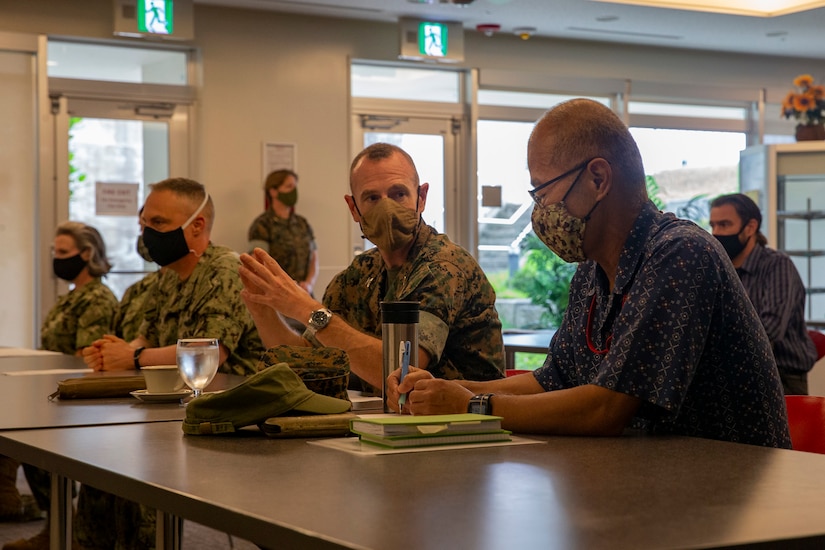
"We are genuinely open to communicating so that both the U.S. military and Okinawa government can fight the spread of COVID-19," said Marine Corps Col. Neil Owens, director of government and external affairs for Marine Corps Installations Pacific.
Members of each party expressed their concerns and ideas regarding Okinawa's current COVID-19 situation. One topic of importance was the preventive measures each entity has put in place to fight the spread of COVID-19. MCIPAC recently enacted enhanced protective measures, limiting on-base activities and prohibiting off-base activities as part of their combined efforts.
Navy Capt. David Krulak, commanding officer of U.S. Naval Hospital Okinawa, reassured the Okinawa government representatives that the hospital has aggressively tested large numbers of people at once. He also expanded upon tracing efforts, noting that the naval hospital contact-trace teams investigate asymptomatic individuals back at least 10 days to locate any close contacts who indicate a need for testing.
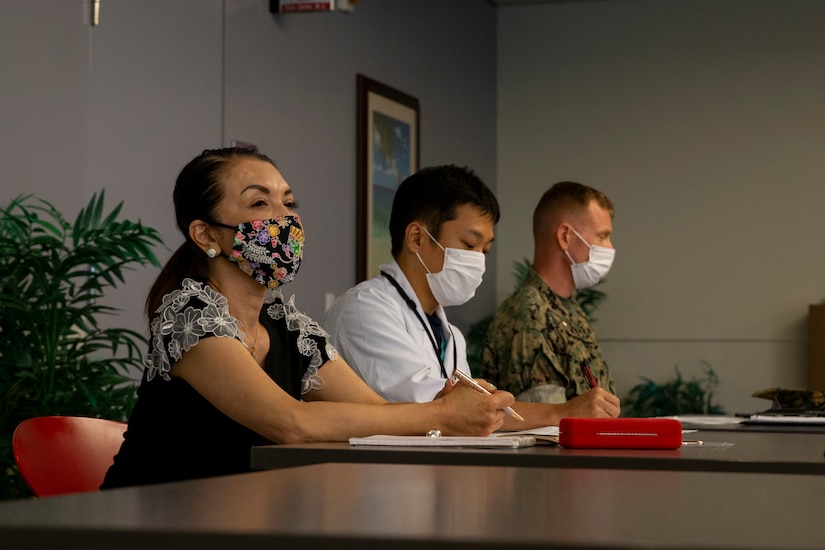
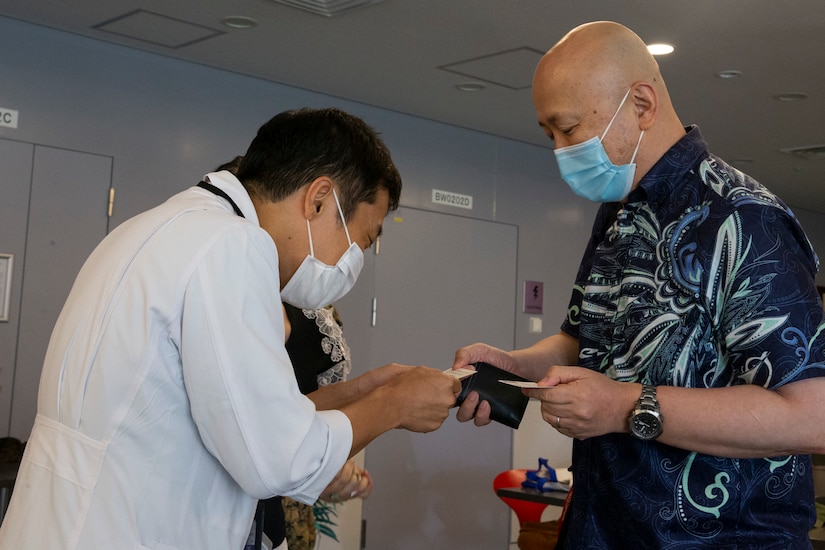
The military and government leaders agreed to continue open communication and to meet regularly via teleconference to ensure proper protective measures are in place.
"We will continue to work closely to ensure the health of all people on the island," Krulak said during his closing remarks.
Aug. 7, 2020 |
To encourage donations, as well as to assist current COVID-19 patients with recovery, the Armed Services Blood Program at Fort Bliss, Texas, is screening all blood donations for COVID-19 antibodies.
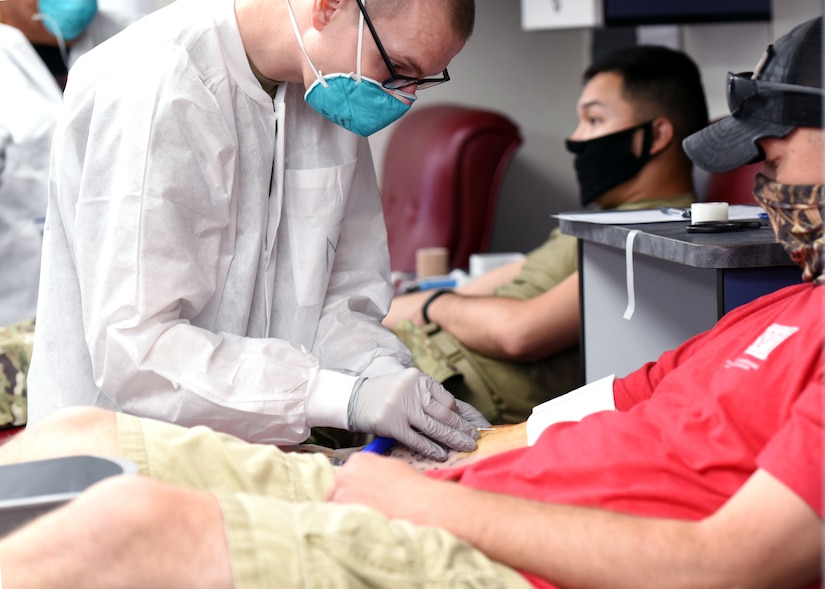
''With the COVID-19 antibody testing, the patient experience is exactly the same as a traditional blood donation; there is nothing different,'' said Army Spc. Christi McRae, a laboratory specialist with the 440th Blood Support Detachment at Fort Bliss. ''The blood is sent to an offsite testing location to see if there are any antibodies within the plasma. If there are, it indicates the patient came into contact with the COVID-19 virus at some point, and their body has built up antibodies to fight against it.''
McRae said the antibodies do not indicate immunity from the virus. It simply means the patient was exposed to it. ''It could mean they had it and recovered,'' she explained, ''or they just came into contact with [the virus] and their body was able to react and develop those antibodies without actually getting ill.''
After donation, the patient will not be contacted again if their blood tests negative for coronavirus antibodies. If it tests positive, they will be called and encouraged to donate plasma, because research shows the antibodies help current coronavirus patients recover much faster.
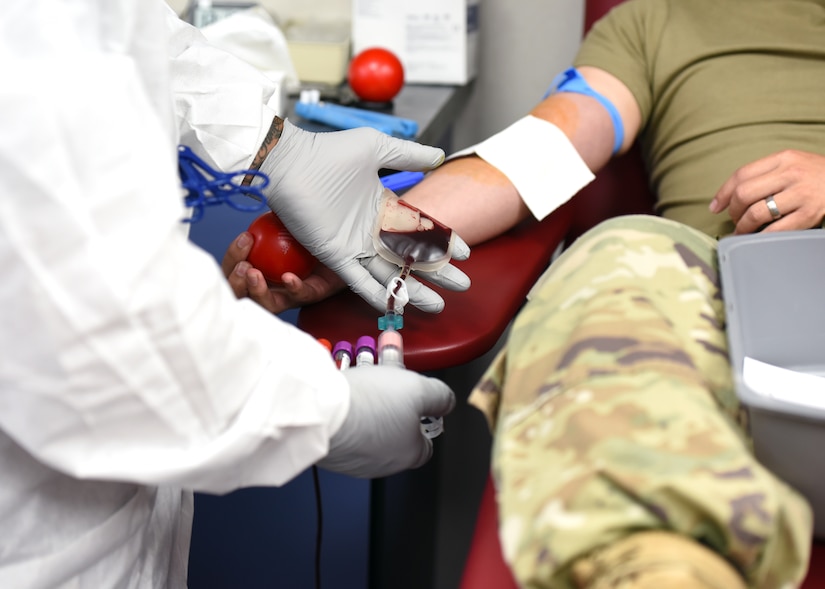
''Your body is super intelligent,'' McRae said. ''Once you have been exposed to something you make those antibodies, so, when and if you come into contact with it again, your body already has an answer and knows how to react. We do not know how long COVID-19 antibodies remain in each individual's system, so it is important to donate blood soon after recovery or suspected exposure.''
McRae hopes the antibody testing will encourage more people to donate blood because the Defense Health Agency has been tasked to collect 8,000 to 10,000 units of COVID-19 antibody-containing plasma before Sept. 30.
The Armed Services Blood Program at Fort Bliss routinely hosts blood drives with its blood donation bus. Army Staff Sgt. Chris Frost with the 2nd Battalion, 501st Aviation Regiment, said he saw the bus and stopped to donate because he has blood type O negative, which he said is always in high demand.
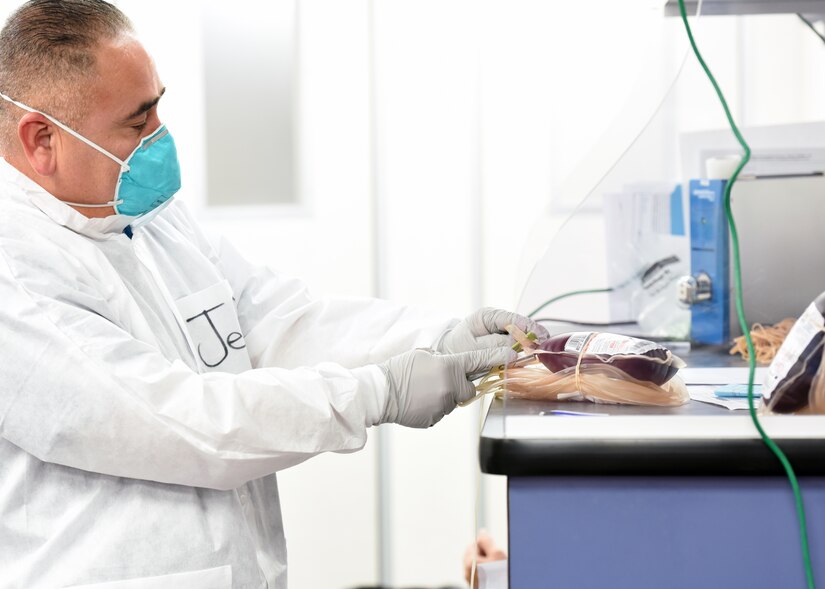
''A few minutes of my time could mean the lifetime of somebody else, because this blood is potentially on its way over to Afghanistan to save somebody's life,'' he said. ''So, a little bit of my time to save some of my brothers, I'm OK with it.''
Nearly all blood products collected at Fort Bliss are sent downrange, McRae said. ''Even though we are here fighting COVID-19, we still have missions around the globe. We have to keep that in mind and make sure we have the lifesaving blood products we need to ensure our men and women come back home safely.''
(Michelle Gordon is assigned to Fort Bliss.)


 Posts
All Comments
Posts
All Comments
Posts
All Comments
Posts
All Comments