Tuesday, August 11, 2020

Wildland Pros Battle Fire Season Despite COVID-19

 Aug. 11, 2020 | BY COURTNEY STRZELCZYK, AIR FORCE

The Air Force Civil Engineer Center's Wildland Fire Branch hasn't let the COVID-19 pandemic stop it from protecting airmen and their families as well as wildlife during this year's severe fire season.


"The Air Force recognizes the growing threat of wildfires to our installations caused by training and testing operations and naturally occurring fires in wildland areas on Air Force property," Jeff Domm, director of AFCEC's Environmental Directorate, said. "Wildfires are expensive to control and can negatively impact sensitive and protected habitat and disrupt mission activity."

Along with the pandemic, some installations have had to cope with the threat of wildfires damaging training areas and shutting down bombing ranges. In an effort to continue its mission, the Wildland Fire program reprioritized its goals for the year and enacted COVID-19 safety protocols for its firefighters to follow, Michelle Steinman, Wildland Fire branch chief said.
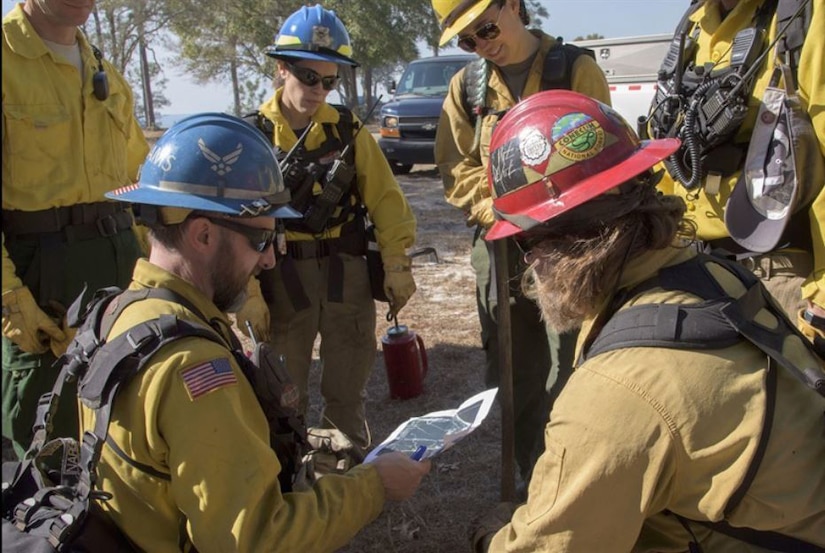
Firefighters look at a map.

"We have prevented COVID-19 from derailing our performance and efforts to support mission activity by utilizing air resources, such as helicopters, to attack wildfires from above and implementing procedures to keep our firefighters healthy so they can keep airmen and their families safe," Steinman said.

For example, Steinman said a contract helicopter crew assisted the Eglin wildland support module in Florida to suppress a May wildfire caused by a downed aircraft at the merging of the two streams providing habitat for the threatened Okaloosa Darter on the Eglin range. The helicopter crew released water bucket drops over the crash site while Eglin bulldozer operators worked on the ground to contain the wildfire to 91 acres with only minor disturbance to the darter.

The Wildland Fire Branch is leveraging technology to mitigate COVID-19 by conducting virtual training sessions and encouraging the firefighters in the wildland support module to practice social distancing, reducing fire vehicle capacity and following CDC guidance. The Avon Park WSM in Florida is following safety protocols in the office as well as at home to maintain a fully staffed crew. So far, the seven-member team has completed 16 prescribed burns across 3,400 acres and managed 12 wildfires across 1,044 acres.

"We have taken every precautionary step to ensure that our crew stays healthy because if one person gets sick, then the whole crew is out, which could stop Air Force missions," Frank Gibbs, team lead for Avon Park WSM, said. "We have been very fortunate to be isolated on a range and keep our firefighters safe so that we can continue to do what we do best."

The Joint Base Elmendorf-Richardson WSM in Alaska is also following protocol to remain healthy in case there is a need to protect their local community. Recently, the module teamed up with the JBER Fire Department and a hotshot crew to prevent an intense wildfire from spreading and damaging critical infrastructure.
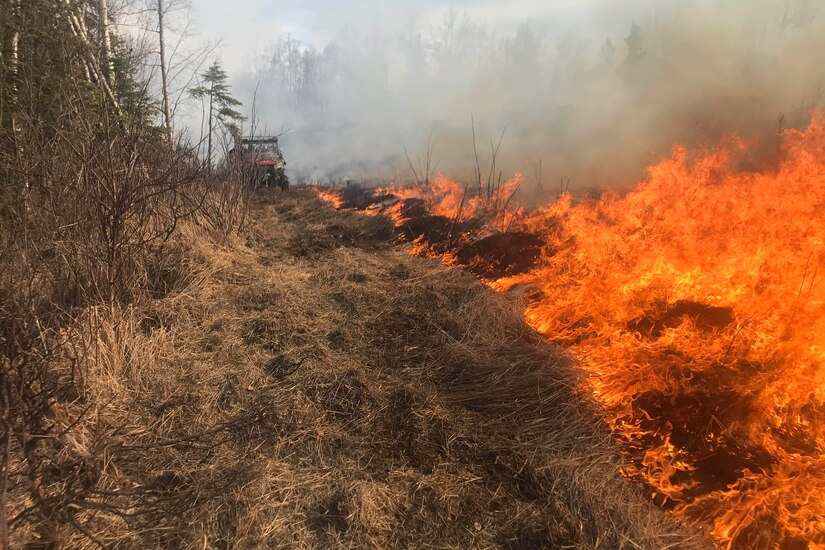
A fire burns along a line of brush. A firefighting vehicle is in the background.
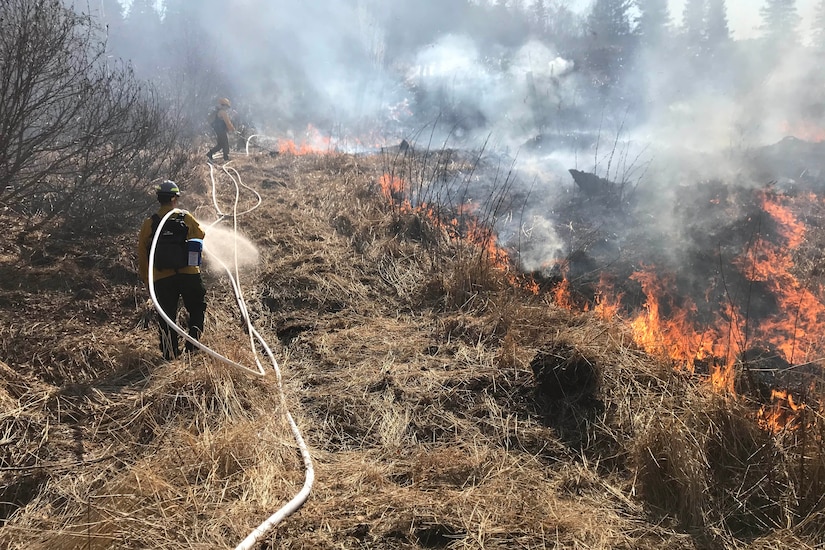
Firefighters spray water on brush to help control a fire.

The fire was ignited from a ricocheted round during military training. Two weeks before the fire, the JBER WSM conducted prescribed burns surrounding the area where the wildfire took place. These burns stopped the progression of the fire and helped the crews contain the wildfire to fewer than five acres. The fire was extinguished in three days, and the crews removed all hazards to prevent reignition.

"We have evacuated thousands of people and that's chaotic," Jon Glover, team lead for JBER WSM, Alaska, said. "This pandemic is just a different type of chaos that we have learned to manage and have adjusted to. Firefighters are problem solvers and we will look at every solution to get the job done safely and effectively."

The Wildland Fire Branch, established in 2012, ensures military mission capability and increases lethality and readiness by reducing the threat of wildfires across 72 installations. The branch includes 14 wildland support modules composed of qualified and equipped personnel who conduct prescribed burns, mechanical fuel reduction and wildfire suppression response at installations within their area of responsibility. Across the U.S., the branch averages 140,000 acres of prescribed fires and responds to more than 100 wildfires.

(Courtney Strzelczyk is assigned to the Air Force Installation and Mission Support Center)

Monday, August 10, 2020

Direct to Threat: MPs Practice Active Shooter Drills

977th MP ALERRT 

Story by Spc. Hayden Hallma, 20th Public Affairs Detachment

CAMP HUMPHREYS, Republic of Korea--- The images of people running out of classrooms and movie theaters have plagued the United States in recent decades. Time after time the news shows the smiling faces of the people who were slain in these mass shootings. The Military Police are the security force that protects military personnel and facilities from these types of incidents.

Military Police from the 977th Military Police Company from Fort Riley, Kansas, on rotation supporting the 2nd Infantry Division, conducted Advanced Law Enforcement Rapid Response Training, July 28, at the Rodriguez Live Fire Complex.

“We [practiced] making entry into rooms, systematically clearing rooms, direct to threat, and responding to an active shooter call,” said Sgt. 1st Class Lori Singer-Bare, a platoon sergeant with the 977th MP Co. “The purpose of this training is to learn how to shoot, move, and communicate to neutralize and stop the threat with as much force as necessary.”

MPs trained in teams of two to simulate being the first patrol to reach the scene of a shooting. They start the exercise moving through corridors, methodically clearing rooms, and checking on simulated wounded dummies. They practiced restraining assailants and clearing the assailants’ weapons. The team would continue going through these motions until they heard gunfire. Once the gunfire is heard, the pair would rush directly to the sound of the shots to subdue the threat.

Singer-Bare explained that ALERRT is the direct result of the 1999 Columbine shootings and the training has continuously evolved over the past 20 years to what they are training today.

One of the more recent adaptions to ALERRT is once gunfire is heard, while in the building, the law enforcement team would break from systematically clearing room-to-room and movie directly to the threat instead of continuing an in-depth room clearing.

“Once they find a sign or get an overarching stimulus that there is an active shooter,” said 2Lt. Robert Holland, a platoon leader with the 977th MP Company, “they go direct to the threat to neutralize it as quickly as possible.”

The desire to cut the amount of time it took to subdue the shooter was one of the main reasons that contributed to the change in room clearing techniques.

“If we go room-to-room and clear every closet when we hear shooting, the threat is out there longer,” said Holland. “One of the biggest things we learned here is that time saves lives.”

Since time is of the essence, instead of systematically clearing each room, MPs give a cursory glance in the rooms on the way to the shooter as a precaution, this is known as ‘dirty clearing.’

“I personally really like this training,” said Pfc. Adrian Chavez, an MP with the 977th MP Company. “It prepares us for when we are working the road so we know what to do and to not be shaking nervous if we ever get the call to go into a building.”

The 977th MP Company is on a 9-month rotation to the Republic of Korea to train on various law enforcement techniques and to assist 2nd ID to stand ready to fight tonight.

“Our Soldiers are doing exceptionally well, being able to conduct this as a unit in South Korea is phenomenal law enforcement training,” said Holland.

Navigating the Atlantic


Sailors on the bridge of the aircraft carrier USS Dwight D. Eisenhower navigate the ship in the Atlantic Ocean, Aug. 9, 2020. The ship was returning to Naval Station Norfolk after a regularly scheduled deployment in support of maritime security operations and theater security cooperation efforts in the U.S. 5th and 6th Fleet. The Dwight D. Eisenhower Carrier Strike Group has remained underway as a ready strike group during the COVID-19 global pandemic.

Travis Airmen Deliver COVID-19 Aid, Other Supplies to Honduras

 Aug. 10, 2020 | BY Air Force Senior Airman Jonathon Carnell , 60th Air Mobility Wing

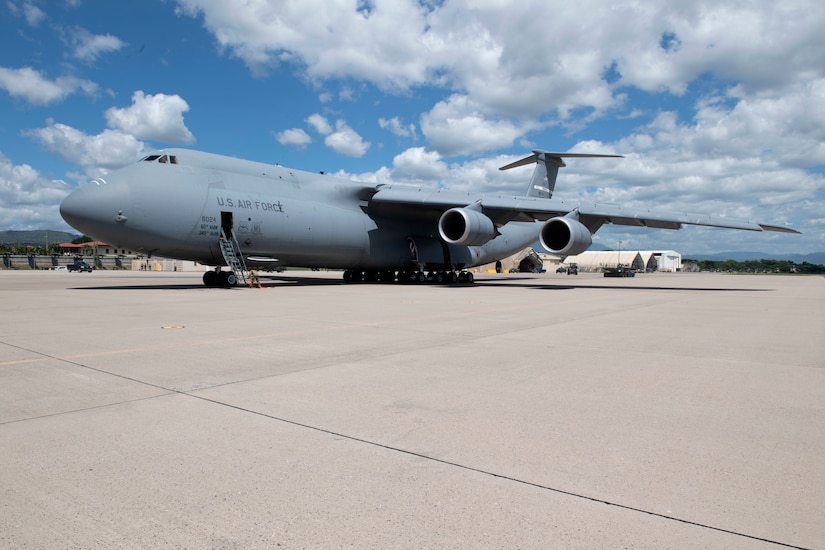
Airmen assigned to the 22nd Airlift Squadron at Travis Air Force Base, California, delivered humanitarian aid supplies to Soto Cano Air Base, Honduras.

The July 18 mission was in support of the Denton Program, a Defense Department transportation program that moves humanitarian cargo donated by U.S.-based nongovernmental organizations to developing nations.

A C-5B transport jet sits on a flight line.

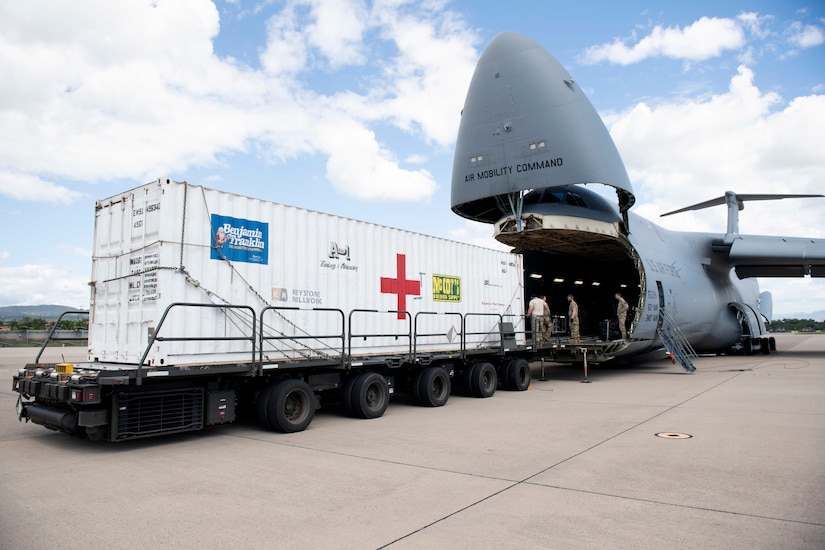
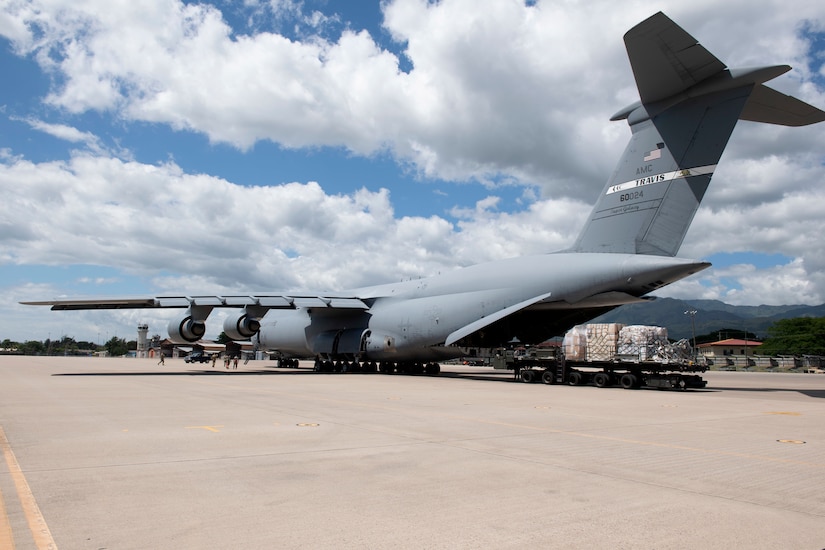
The airmen transported 58,000 pounds of cargo in a C-5M Super Galaxy transport jet. The cargo consisted of eight pallets, two vehicles, two excavators and a 40-foot container filled with medical supplies to treat COVID-19 patients.

"A lot of what is on this aircraft will go to COVID-19 response," said Army Lt. Col. Jeffrey Uherka, Joint Task Force Bravo civil military operations director at Soto Cano Air Base,. "The 40-foot container is heading to Intipuca, which is an underserved community."

Uherka said the contents of the container would be able to supply a procedure room, two recovery rooms and a laboratory, all of which are vital in effectively combating COVID-19.

The 12-member crew stopped at Joint Base Charleston, South Carolina, to pick up the humanitarian cargo for Honduras.

Airmen move a large container from the open cargo bay of a C-5B transport jet to a trailer on the tarmac.

"This was my first humanitarian mission," said Air Force Capt. Heather Denny, 22nd Airlift Squadron pilot and aircraft commander. "It was a different mission for our C-5 crew; we don't typically fly into [U.S. Southern Command's area of responsibility], which made this a great training mission for us."

Before this mission, more than $700,000 of Denton cargo has been delivered to Honduras during fiscal year 2020.

"Having this be my first humanitarian experience was very eye-opening and very surreal because of the impact it may bring to people who I don't know," flight engineer Air Force Staff Sgt. Byle Williams IIsaid.

Williams also noted that  the humanitarian mission was an example of the Air Force's global reach.

Airmen remove cargo from the back of a C-5B transport jet.

"Giving help, giving aid and knowing that Travis Air Force Base is the one that provided the opportunity to do that for individuals shows how big our footprint is locally and abroad," Williams continued.

Transporting aid bolsters relationships with partners in Central America and Joint Task Force Bravo has been executing that mission for 38 years, Uherka said. Additionally, according to Uherka, the humanitarian aid has the potential to reach tens of thousands of people in Honduras communities.

"This couldn't be done without Travis," Uherka said. "We very much appreciate the support of Travis and the United States Air Force for our mission."

82nd Airborne Division Conducts Realistic Training Despite COVID-19

Aug. 10, 2020 | BY Army Staff Sgt. Sharon Matthias

The Army's 82nd Airborne Division is employing COVID-19 measures while still conducting realistic training for its paratroopers.

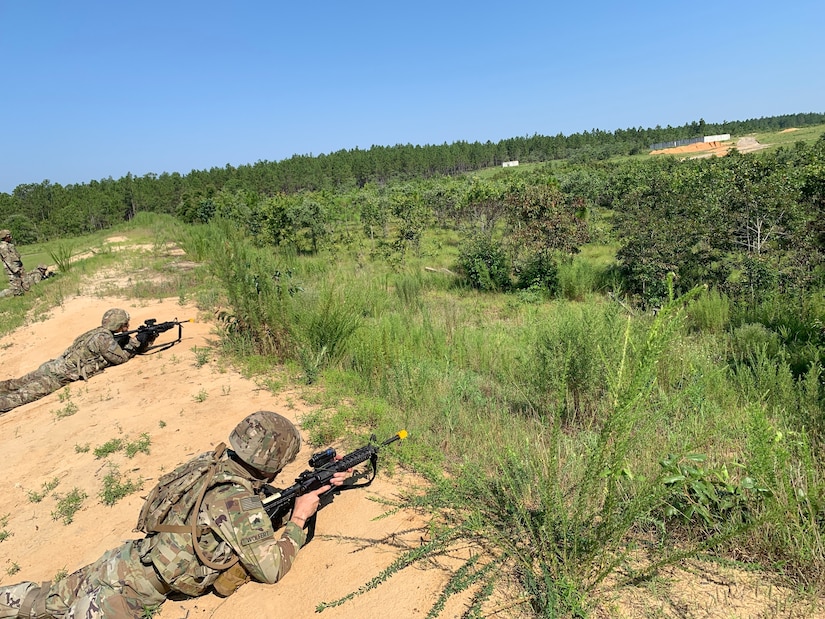
The division's Headquarters and Headquarters Battalion hosted a fire-team training exercise July 16 near West McKeithan Pond on Fort Bragg, North Carolina. Army commanders use exercises in combat-environment training areas to evaluate the capabilities of their weapons and their paratroopers.

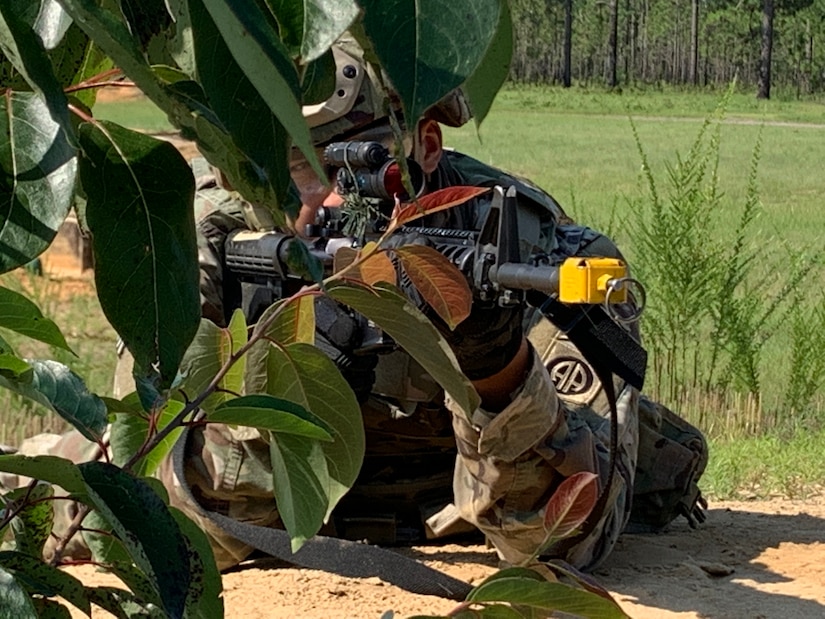
Soldiers wearing camouflage uniforms aim their rifles as they lie prone at the crest of a slope at the edge of an area covered with vegetation.

Army Capt. Samuel Rolofson, a military intelligence officer, was the officer in charge of the training.

''This training was unique because many of our mitigation measures for COVID-19 are in effect,'' he said. ''We are using unique strategies within the COVID restriction guidelines mandated by [Forces Command].''

To prevent excessive heat exposure injuries, soldiers rest and cool off without using cooling tents, which only recycle air and create a confined space, Rolofson said.

Rolofson controlled range operations from the training area's tower. On the ground, Army Capt. Maitiu Laman, Headquarters Support Company commander, observed the teams' communication techniques and their weapons function while they moved toward the objective.

A soldier lying prone and wearing a camouflage uniform aims a rifle while using vegetation as cover.

For Rolofson and Laman, their mission was clear. They were focused on improving any complexities the trainers may foresee while reinforcing, sustaining  and expanding the paratroopers' marksmanship skills to ready them for war.

''Earlier today, we started with a dry run,''  said Army Sgt. Christian Smith, a fire team leader. ''It was a little choppy as we worked out the mechanics, but as we progressed, we saw a significant improvement throughout the entire exercise. I believe our team definitely got some great training out of it today.''

The firing range at West McKeithan Pond was triple-layered. It was designed to provide forested, desert and urban fighting areas to challenge the soldiers with real-life combat scenarios.

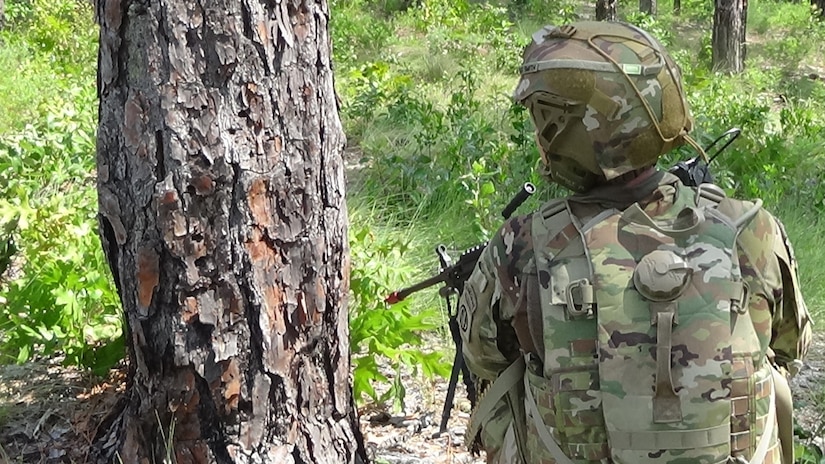
A soldier wearing a camouflage uniform has his back to the camera as he holds a rifle in a wooded area.

''The range is unique to the paratroopers,'' Rolofson said. ''It has a right and left side maneuverer, with realistic environments that were relatively new to them.''

Army Lt. Col Todd Sunday, Headquarters and Headquarters Battalion commander, and battalion chaplain Mike Basie visited the range, talked with the paratroopers, served them chow and recognized them for their work during the training.

''When the [battalion chaplain] came to me, we talked about the training and techniques I can use to improve my marksmanship fundamentals,'' said Army Pvt. Edward Wiggins, an intelligence analyst. ''It was pretty cool.''

(Army Staff Sgt. Sharon Matthias is assigned to the 82nd Airborne Division.)

Department of Defense Offers an Expanded Child Care Service Through Military OneSource


Aug. 10, 2020

The Department of Defense is providing an additional way for military parents to find child care solutions for hourly care. Military OneSource will expand its offerings through a national online service that enables families to find, hire, and pay for care.

The new offering provides access to a monthly subscription service with a secure, searchable network of care providers. The subscription, provided at no cost to eligible military families, offers a user-friendly way to explore providers who can assist with hourly, flexible and on-demand child care services. Families can find out more and access the service through MilitaryOneSource.mil or call Military OneSource at 800-342-9647 to speak with a consultant who can support their search.

“We are committed to taking care of our service members and military families, and understand that families may need assistance with their hourly care needs,” said Kim Joiner, deputy assistant secretary of defense for military community and family policy. “This new service provides a flexible way that empowers modern military families to find child care services that best meet their hourly care needs.”

“Child care is a workforce issue that directly impacts the readiness and retention of the Total Force,” said Carolyn Stevens, director of the Office of Military Family Readiness Policy. “This new service provides another opportunity for the department to support our military families.” 

About Military Community and Family Policy 

Military Community and Family Policy is directly responsible for establishing quality-of-life policies and programs that help our guardians of country, their families and survivors be well and mission-ready. Military OneSource is the gateway to programs and services that support the everyday needs of the 5.2 million service members and immediate family members of the military community. These Department of Defense services can be accessed 24/7/365 around the world.

Search and Rescue


Airmen conduct a simulated search and rescue mission during training in Caldwell, Idaho, Aug. 7, 2020.

Friday, August 07, 2020

Above the Clouds


An Air Force F-22 Raptor prepares to receive fuel from a KC-135 Stratotanker during Exercise Red Flag over Alaska, Aug. 5, 2020.

Pallet Partners


Soldiers prepare to hook a pallet of equipment to the underside of a CH-47 Chinook helicopter during sling-load training at Grafenwoehr Training Area, Germany, Aug. 5, 2020.

Launch Ready

Air Force Airman Steffon Brownjohnson signals that a Navy C-2A Greyhound is ready to launch abroad the USS Ronald Reagan in the Pacific Ocean, Aug. 6, 2020.


Patriotic Pup


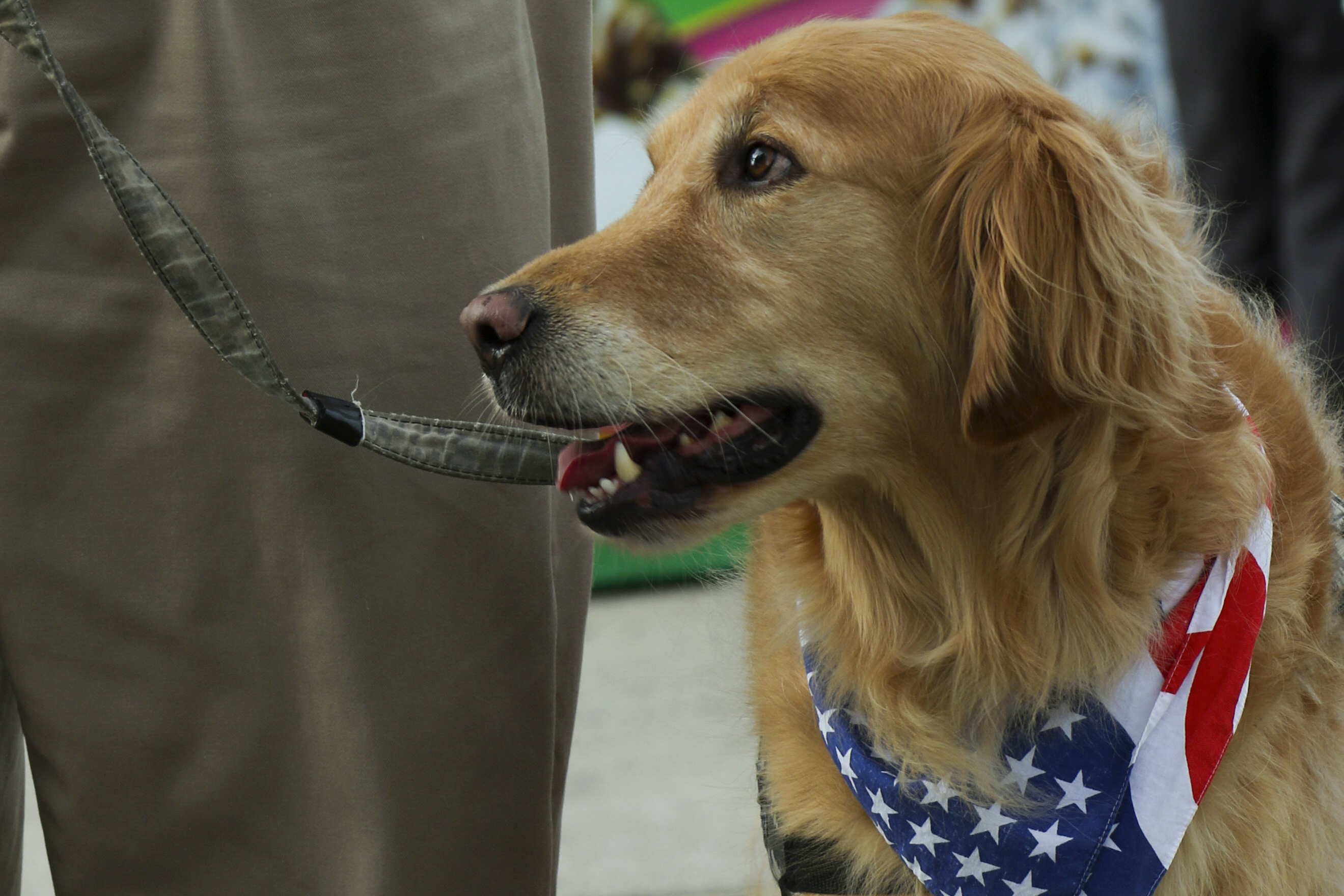
Brutus, a Golden Retriever with the Kare 9 Military Ministry, attends the August Daily Herald Cruise at Bloomingdale Court, Illinois, August 6 2020. All dogs of the ministry are purebred Golden Retrievers, with the original eight being named after military working dogs that were killed in the line of duty in Vietnam. (U.S. Army photo by Spc. Maximilian Huth)

Aerial Maneuver


Aircraft assigned to the Thunderbirds, the Air Force’s flight demonstration team, perform aerial maneuvers at Joint Base Andrews, Md., Aug. 6, 2020.

General Officer Announcement


Aug. 7, 2020

Secretary of Defense Dr. Mark T. Esper announced today that the president has made the following nomination:

Air Force Lt. Gen. David D. Thompson for appointment to the rank of general, with assignment as vice chief of space operations, U.S. Space Force, Pentagon, Washington, D.C.  Thompson is currently serving as vice commander, Air Force Space Command (redesignated U.S. Space Force), Pentagon, Washington, D.C.

Marine Installation Leaders, Okinawa Officials Meet to Discuss COVID-19

 Aug. 7, 2020 | BY Marine Corps 1st Lt. Timothy Hayes , Marine Corps Installations Pacific

Okinawa Government representatives met with Marine Corps Installations Pacific leaders and medical professionals to discuss COVID-19-related information at Camp Foster Naval Hospital.

Testing capabilities, tracing efforts and reporting procedures of both the Okinawa prefect and U.S. military entities were among the many topics discussed during the July 15 meeting.

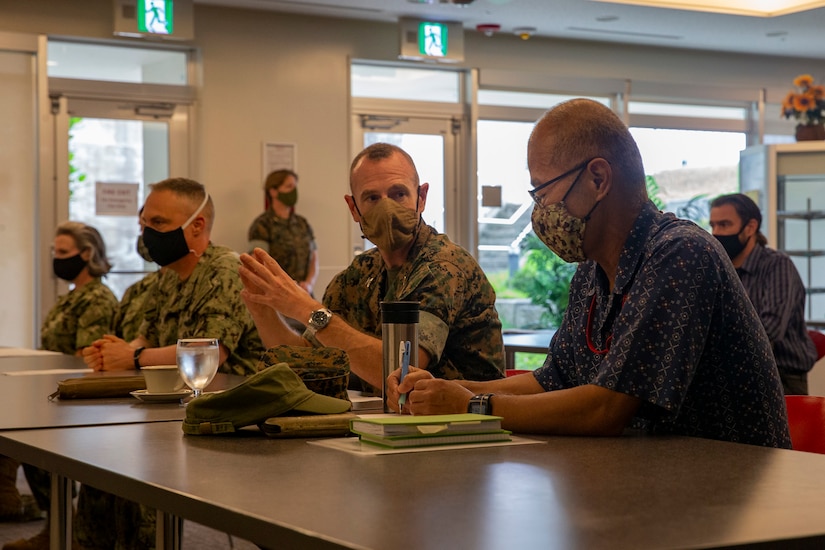
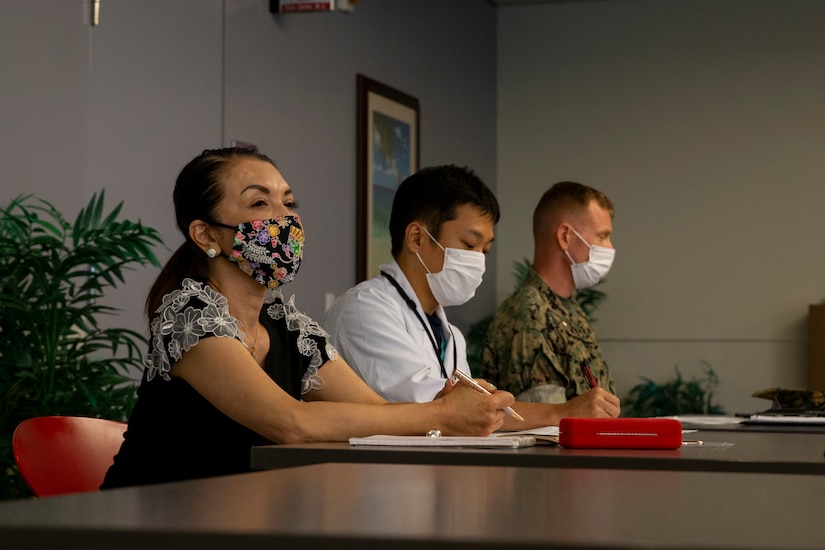
Service members and civilians talk while seated at a conference table. All are wearing face masks.

"We are genuinely open to communicating so that both the U.S. military and Okinawa government can fight the spread of COVID-19," said Marine Corps Col. Neil Owens, director of government and external affairs for Marine Corps Installations Pacific.

Members of each party expressed their concerns and ideas regarding Okinawa's current COVID-19 situation. One topic of importance was the preventive measures each entity has put in place to fight the spread of COVID-19. MCIPAC recently enacted enhanced protective measures, limiting on-base activities and prohibiting off-base activities as part of their combined efforts.

Navy Capt. David Krulak, commanding officer of U.S. Naval Hospital Okinawa, reassured the Okinawa government representatives that the hospital has aggressively tested large numbers of people at once. He also expanded upon tracing efforts, noting that the naval hospital contact-trace teams investigate asymptomatic individuals back at least 10 days to locate any close contacts who indicate a need for testing.

A civilian woman, a civilian man and a Marine, all wearing face masks, sit at a conference table during a meeting.
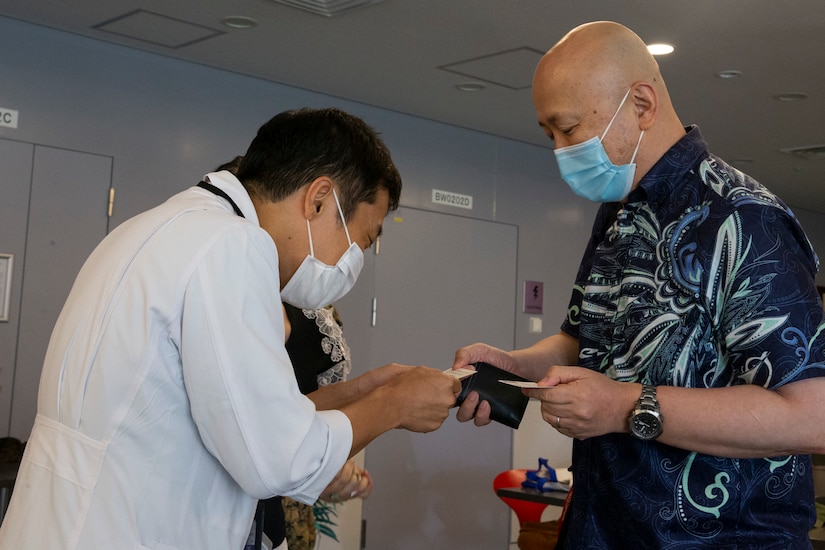
Two men wearing face masks exchange business cards.

The military and government leaders agreed to continue open communication and to meet regularly via teleconference to ensure proper protective measures are in place.

"We will continue to work closely to ensure the health of all people on the island," Krulak said during his closing remarks.

Bliss Blood Program Faces Supply Shortage, Begins Testing for COVID-19 Antibodies

 Aug. 7, 2020 | BY Michelle Gordon

As the United States contends with the COVID-19 pandemic, it also faces a nationwide blood donation shortage, which includes blood collected for service members deployed overseas.

To encourage donations, as well as to assist current COVID-19 patients with recovery, the Armed Services Blood Program at Fort Bliss, Texas, is screening all blood donations for COVID-19 antibodies.

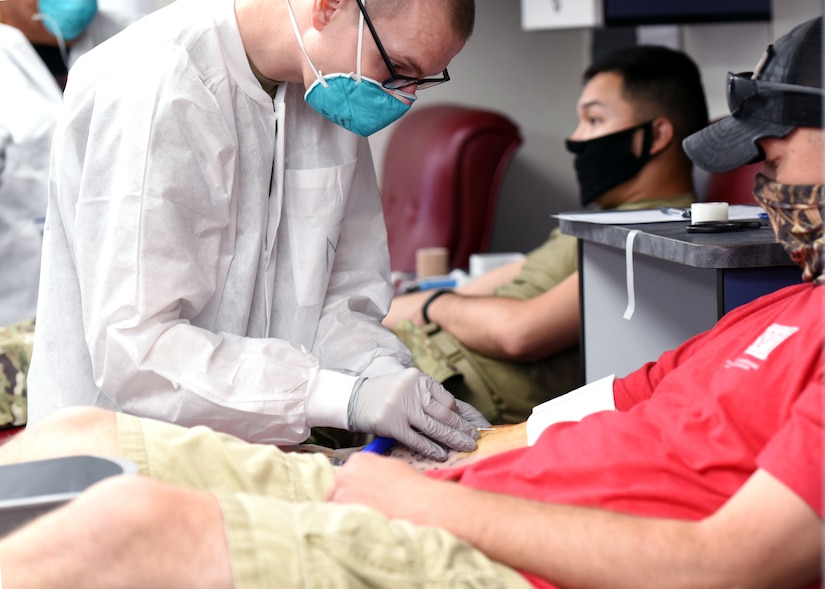
A technician takes a blood donation from a soldier.

''With the COVID-19 antibody testing, the patient experience is exactly the same as a traditional blood donation; there is nothing different,'' said Army Spc. Christi McRae, a laboratory specialist with the 440th Blood Support Detachment at Fort Bliss. ''The blood is sent to an offsite testing location to see if there are any antibodies within the plasma. If there are, it indicates the patient came into contact with the COVID-19 virus at some point, and their body has built up antibodies to fight against it.''

McRae said the antibodies do not indicate immunity from the virus. It simply means the patient was exposed to it. ''It could mean they had it and recovered,'' she explained, ''or they just came into contact with [the virus] and their body was able to react and develop those antibodies without actually getting ill.''

After donation, the patient will not be contacted again if their blood tests negative for coronavirus antibodies. If it tests positive, they will be called and encouraged to donate plasma, because research shows the antibodies help current coronavirus patients recover much faster.

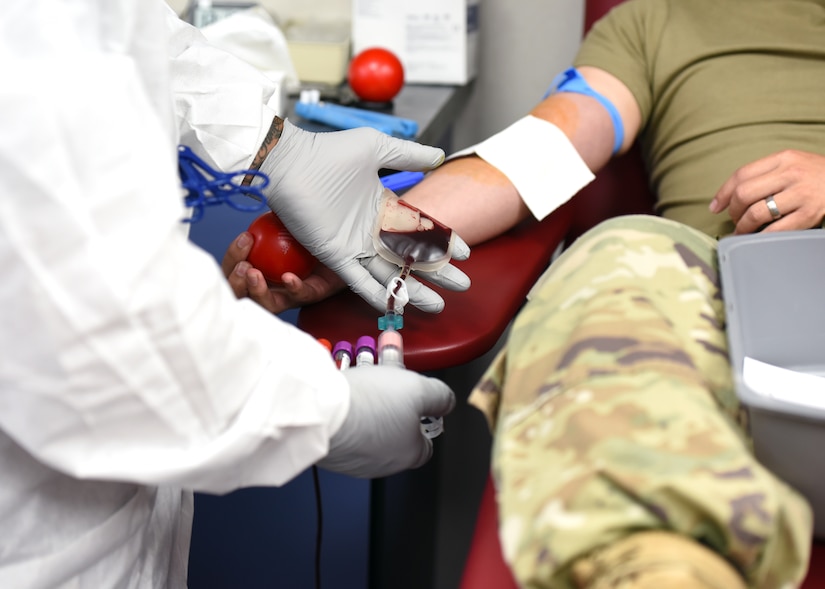
Gloved hands of a technician fill vials with blood from a donor’s arm.

''Your body is super intelligent,'' McRae said. ''Once you have been exposed to something you make those antibodies, so, when and if you come into contact with it again, your body already has an answer and knows how to react. We do not know how long COVID-19 antibodies remain in each individual's system, so it is important to donate blood soon after recovery or suspected exposure.''

McRae hopes the antibody testing will encourage more people to donate blood because the Defense Health Agency has been tasked to collect 8,000 to 10,000 units of COVID-19 antibody-containing plasma before Sept. 30.

The Armed Services Blood Program at Fort Bliss routinely hosts blood drives with its blood donation bus. Army Staff Sgt. Chris Frost with the 2nd Battalion, 501st Aviation Regiment, said he saw the bus and stopped to donate because he has blood type O negative, which he said is always in high demand.

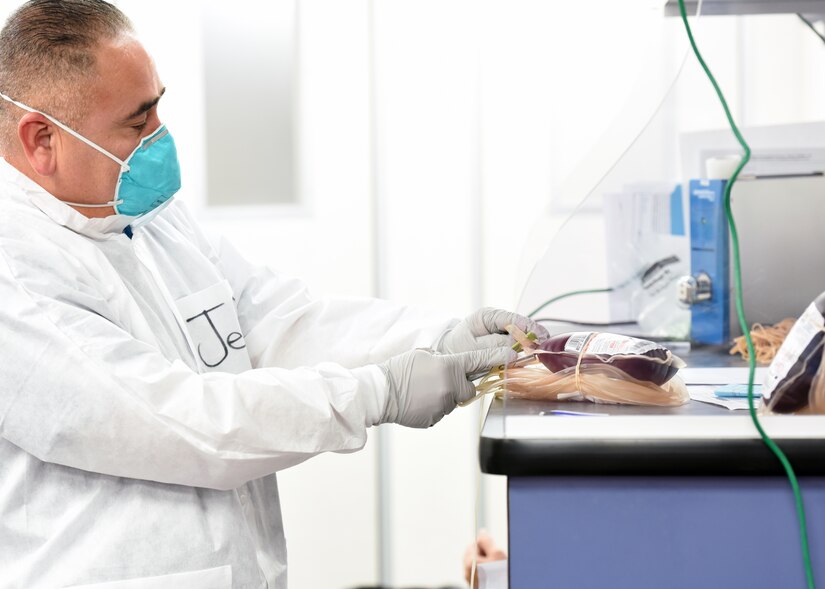
A man wearing a face mask, gloves and a white smock handles bags of donated blood.

''A few minutes of my time could mean the lifetime of somebody else, because this blood is potentially on its way over to Afghanistan to save somebody's life,'' he said. ''So, a little bit of my time to save some of my brothers, I'm OK with it.''

Nearly all blood products collected at Fort Bliss are sent downrange, McRae said. ''Even though we are here fighting COVID-19, we still have missions around the globe. We have to keep that in mind and make sure we have the lifesaving blood products we need to ensure our men and women come back home safely.''

(Michelle Gordon is assigned to Fort Bliss.)

Thursday, August 06, 2020

Fort Jackson Supports Local Community With COVID-19 Testing

Aug. 6, 2020 | BY Alexandra Shea , Fort Jackson

Fort Jackson, South Carolina, supported the Midlands' pandemic efforts by hosting drive-thru COVID-19 testing just outside of the post's Palmetto Falls Water Park.

Historically, the installation provides millions of dollars to the local economy when thousands of family members flock to the post each week to witness Basic Combat Training graduations. Fort Jackson trains roughly 50% of all soldiers and more than 60% of all women entering the Army each year.

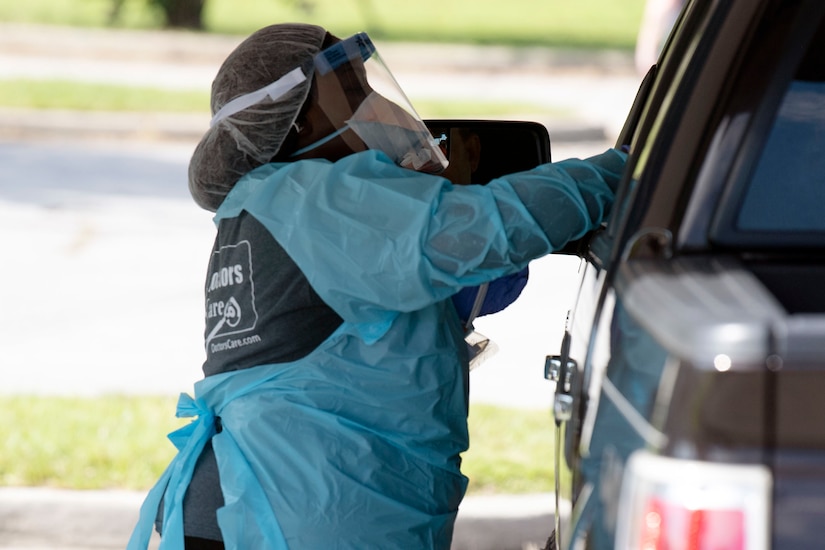
A woman wearing personal protective equipment reaches through the driver’s side window of a pickup truck.

Army Training Center and Fort Jackson Commander Brig. Gen. Milford H. "Beags" Beagle Jr. recently spoke with Columbia Mayor Stephen K. Benjamin regarding COVID-19 mobile testing opportunities on Fort Jackson. They agreed that hosting a mobile testing site would help reduce stress for off-post testing sites and ensure accurate testing results to help battle and contain the spread of the virus.

"We are all-in to be good community partners," Beagle said.

The post coordinated with the Medical University of South Carolina, to offer those with access to the installation two days of testing free of charge. Roughly 800 total tests were administered at the event. MUSC supplied the medical providers and resources for its mobile testing site.

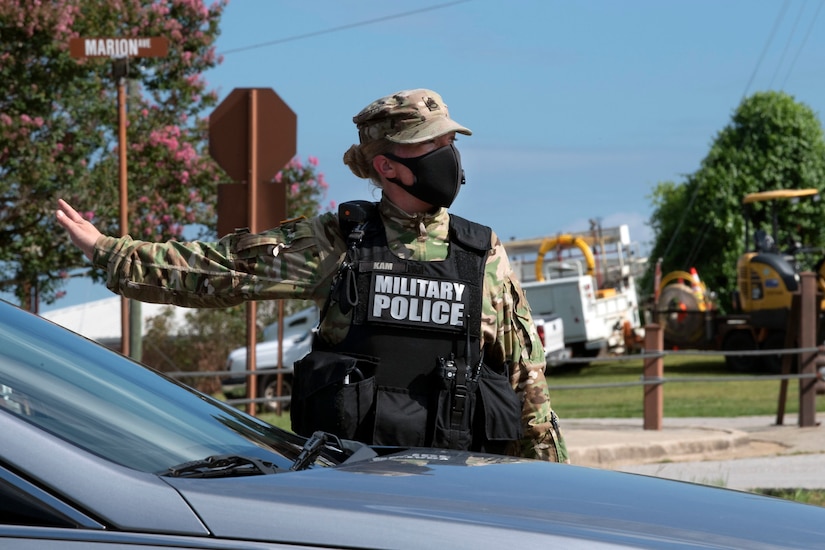
A soldier wearing a face mask and a military police vest directs traffic.

Fort Jackson currently allows retirees, veterans with Veteran Health identification cards and their beneficiaries to access installation only on Sunday, Monday, Tuesday, Friday and Saturday to help protect soldiers from virus exposure, as part of a "protective bubble," officials said.

Each day of testing was geared for specific groups. Testing was held for soldiers, their family members and the civilian workforce July 8, and testing was available for others with installation access July 10.

"It's extremely important for [retirees and beneficiaries] to come on and get tested," Beagle said. "It's not a 'me' thing, it's a 'we' thing. We need to do the right thing so that we can help protect others."

Trainees were not tested at the mobile sites. Each trainee is tested and quarantined for 14 days upon their arrival to Fort Jackson as they in-process at the installation.

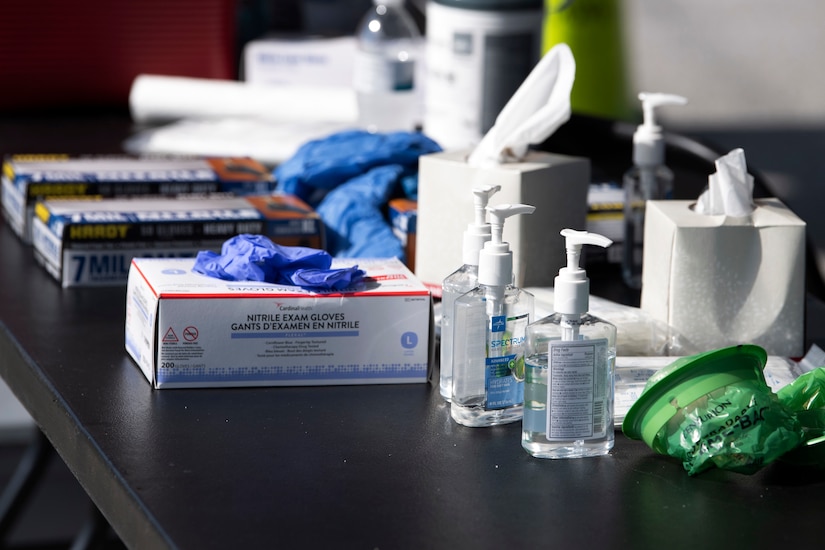
A table holds hand sanitizer, latex gloves and other medical supplies.

The South Carolina Department of Health and Environmental Control has reported a surge in positive test results in the state the past month. DHEC also recently stated that asymptomatic patients, or those who have the virus but show no or minimal virus signs and symptoms, are also on the rise.

"About 20% testing positive for coronavirus are symptomatic," said Dr. Curtis Franke, president of Doctors Care, the firm that performed the testing for MUSC. He added that about 7-10% of positive tests at similar events across the state are asymptomatic.

People tested at the mobile testing site were able to access their test results online in five to seven days through a link provided by email during the application process. All participants who tested positive were contacted directly by MUSC staff.

Aerial Refueling Crews Stay Safe Amid COVID-19

Aug. 6, 2020 | BY Air Force Senior Airman Mary Begy

Amid the COVID-19 pandemic, the 507th Operations Group at Tinker Air Force Base, Oklahoma, has ensured that aircrew members and maintainers stay safe by implementing new operating standards for daily missions refueling aircraft from Alaska to Texas.

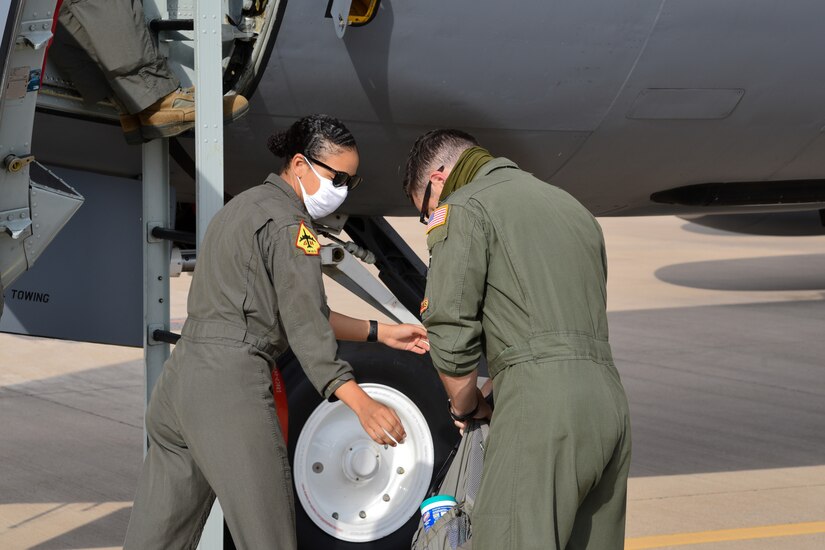
Pilots wearing face masks prepare to board a tanker aircraft.

Air Force Col. Kenneth Humphrey, 507th Operations Group commander, said the ability to conduct the refueling mission is integral to the nation's defense. However, the concerns over COVID-19 and its tendency to spread in close quarters prompted the 507th OG to adapt.

"Human nature and the closeness of our personnel make it difficult to ensure proper safeguard measures are adhered to in the aircraft, briefing rooms and crew transportation," Humphrey said. "The aircraft poses multiple challenges due to the close confines and required interaction of personnel."

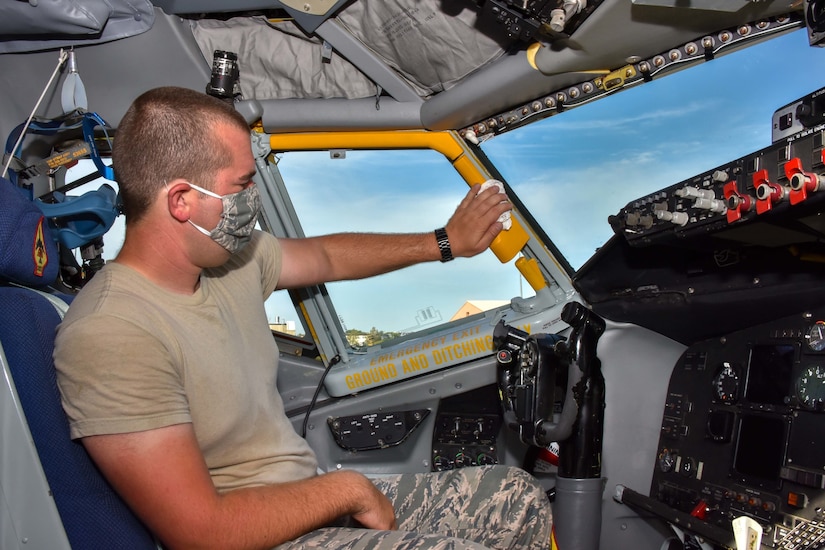
An airman wearing a face mask wipes down the cockpit of a tanker aircraft.

With the help of the 507th Air Refueling Wing safety office, the Air Force Reserve Command logistics directorate, and mission partners at the 730th Air Mobility Training Squadron at Altus Air Force Base, Oklahoma, the operations group implemented new flight operating standards to ensure a clean and safe environment to meet mission requirements.

Rigorous sanitizing measures and the use of personal protective equipment were put in place. The new procedures include wearing masks, minimizing nonessential crew contact during preflight inspections and limiting the number of personnel on board the aircraft to reduce the chances of exposure. 

"Contamination across the flight line can easily be spread across the base and city," Humphrey said. "Our [U.S. Strategic Command] and conventional missions remain a top priority. Additional crews have been designated and assigned that could be used in the event primary aircrew come down with the virus."

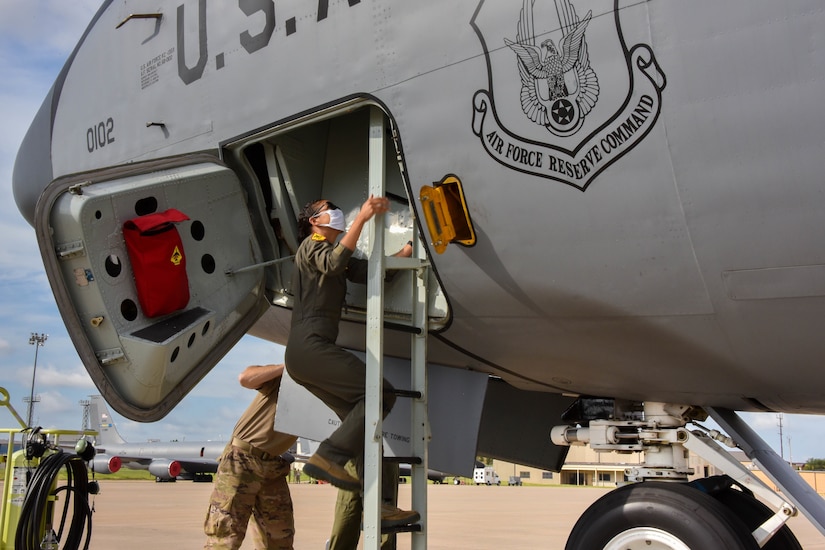
A pilot wearing sunglasses and a face mask climbs a ladder that leads into the cockpit of a tanker aircraft.

Pilot and crew training and currency requirements are a priority. The ability to adapt and overcome has facilitated the ops group's ability to maintain readiness. "Our local flying schedule has been sufficient to meet these requirements ensuring we have safe, qualified aircrew to perform the mission and keep the jets flying," Humphrey added.

Air Force Col. Miles Heaslip, 507th ARW commander, said he thinks the members of the wing have done an outstanding job making sure all missions run safely and effectively. "The measures implemented by the ops group once again prove we can overcome anything," he said.

(Air Force Senior Airman Mary Begy is assigned to the 507th Air Refueling Wing.)

CIO Says Top-Level Leadership Helped DOD Navigate COVID Crisis

Aug. 6, 2020 | BY C. Todd Lopez , DOD News

Clear guidance early on from Defense Secretary Dr. Mark T. Esper ensured the Defense Department would be able to continue operating through the COVID-19 crisis, the department's chief information officer said.

''Our secretary of defense did a great job of making it perfectly clear what his expectations were,'' Dana Deasy said yesterday during a discussion with Martin Giles of the Forbes media company. ''Very early on, he said, 'Protect our employees.' I took that to mean from an IT standpoint that anybody and everybody who needed to work outside their normal environment could do that without any failure. Failure was never going to be an option for us.''

Esper also emphasized that the mission must be protected as well and that the department could not fail in its responsibility to protect the United States, Deasy said.

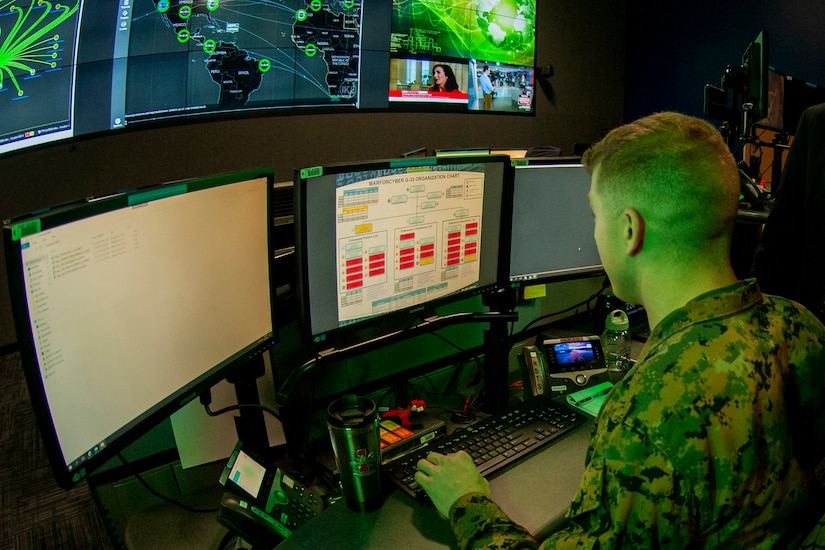
Marine operates computer.

''That means Protect our country,''' Deasy said. ''That means anywhere around the world, any mission that needed to be done, there could be no interruption. From a technology standpoint, that simply meant [that] while we were driving a lot of people outside the Pentagon and to home, we need to somehow to make sure those same people that were now working from home were going to be able to support the mission.''

Protecting the workforce and keeping the mission on track involved significant involvement from the CIO workforce — in particular, with implementing telework capability to a large number of employees, Deasy said.

Before COVID-19, he said, about 80,000 to 90,000 people per day were teleworking across the department. The numbers of people who would need to be able to work from home once COVID restrictions were put in place weren't known at the time, the CIO noted. ''We now know it was a 10 times growth,'' he said. ''We are supporting somewhere between 1 and 1.2 million people concurrently, all working from home at the same time.''

A man looks at a computer screen.

A big part of making that happen, Deasy said, was the department's implementation of the  ''Commercial Virtual Remote'' tool, which allows teleworking employees to form teams and collaborate online. Within two weeks, he said, about a quarter million employees were connected with the CVR. Within 90 days, he said, that was up to a million. 

The defense secretary also emphasized the department's commitment to contribute to the whole-of-government effort to combat COVID-19, Deasy said.  From the CIO's perspective, that involved providing IT and networking support to a variety of missions, including the Army Corps of Engineers setting up field hospitals in convention centers, National Guard efforts in local communities, and Navy hospital ships in New York and Los Angeles.

Deasy also discussed efforts to evaluate how the department's digital modernization strategy might be accepted by the DOD workforce — in particular, the service members at the tactical edge who might be affected by changes.

The department's digital modernization strategy touches on cybersecurity, artificial intelligence and cloud computing. All are common factors in similar modernization plans for private-sector companies, but Deasy pointed out that a unique focus of DOD's strategy is command, control and communications, or C3.

A service member uses a communication device.

''What I think was quite fascinating was how we went about actually testing whether that strategy was going to make sense to the warfighter,'' he said. 

In his first six months as the CIO, Deasy said, he traveled to Afghanistan to meet with warfighters and commanders who might be most affected by DOD's digital modernization strategy. 

''I [talked with] the warfighters that were going out every night on a mission — whether that was to a village, whether it was in caves, the side of the mountain — and actually have them show me how they were using the stuff we were putting into our digital modernization strategy,'' he said.

Service members are not shy about sharing their opinions, Deasy said, and they made it clear the strategy was good.

''They're very clear to tell you how they feel about your digital monetization,'' he said. ''They were in environments where they were constantly getting degraded, they were getting denied by the adversary. So the C3 strategy was actually validated by looking about what you could and could not do.''

Field Training

U.S. Military Academy cadets learn how to conduct fire missions during field training at West Point, N.Y., July 21, 2020.

Chopper Formation

A Marine Corps AH-1Z Viper, Navy MH-60R Seahawk and two MH-60S Seahawks conduct amphibious task force training during Exercise Trident Storm at San Clemente Island, Calif., July 30, 2020. During Trident Storm, Marines worked alongside their Navy counterparts focusing on long-range strikes and air-to-ground support.