Thursday, June 04, 2020

Zama Middle High School Celebrates Modified Prom

June 4, 2020 | BY Winifred Brown

At the crowning of this year's Zama Middle High School royal prom court at Camp Zama, Japan, all four members stood alone, socially distanced, to put on their own crowns or tiaras.

With this year's prom canceled due to COVID-19, there was no dancing, no crowd and no fancy gowns or tuxedos, but the members of the court still smiled, nicely dressed and thankful the school managed to maintain a few prom traditions despite the ongoing pandemic.
Zama Middle High School prom court.

Lauren Rosa, an art teacher and the prom organizer, led the organization of a modified version of the traditional prom that included party favors, the crowning of an elected prom court and the chance for photos and a video.

"It's important to finish what you start," Rosa said. "What's going on doesn't have to, per se, define your whole academic career or your entire senior year. It stinks. It's not a great way to end, but something, in my book, is always better than nothing."

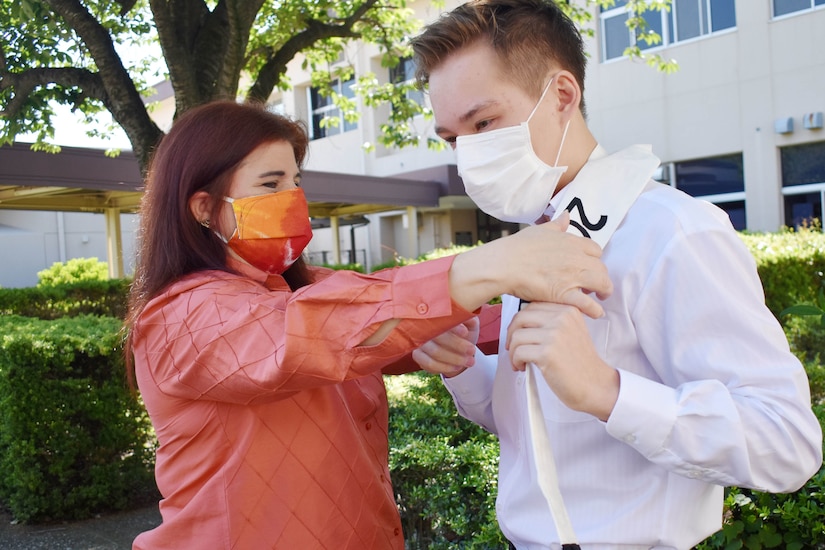
This year's prom court consisted of Jason Giles, prom king; Leah Sakamoto-Flack, queen; Alexander Ala, prince; and Aika Davis, princess. They individually put on their crowns and tiaras while maintaining social distancing during a small ceremony in a sunny garden at the school May 29. Lucinda Ward, the Camp Zama school liaison officer, sewed the sashes and donated them.

Student puts on her prom queen crown.

Sakamoto-Flack, a senior, said she appreciates the effort everyone put into the modified prom.

"I think it's the best they could do under the circumstances, and I think it's still honoring the seniors because this is their last high school event," Sakamoto-Flack said. "They still did a really good job with everything."

Davis, a junior, said she had been looking forward to attending this year's prom before its cancellation but was glad organizers found a way to maintain some of the traditions.

Prom princess poses for a photo.

"I went to the prom my freshman and sophomore years, and I'm going to miss the whole dancing part, but I think it's nice that they're doing something for the kids," Davis said.

Giles, meanwhile, said he found one aspect of this year's prom better than last year's: It was outside. Giles, a senior, said he was glad organizers held the ceremony outside and in person instead of online.
Student and principal pose for a photo.

Ala said he recognizes the school could not hold a full-fledged prom this year with COVID-19, and appreciates all they did instead.

In addition to the court members, the student body also had a chance to participate by voting online for the court and picking up Botanical Bloom Prom 2020 party favors at the school. Of the 138 students eligible to vote for the court, 100 did, Rosa said, and she was happy with the turnout.

All four members of the court said they were surprised their peers had voted for them.

"I wasn't expecting this and was really surprised," Ala said, echoing similar sentiments from all three other members of the court.
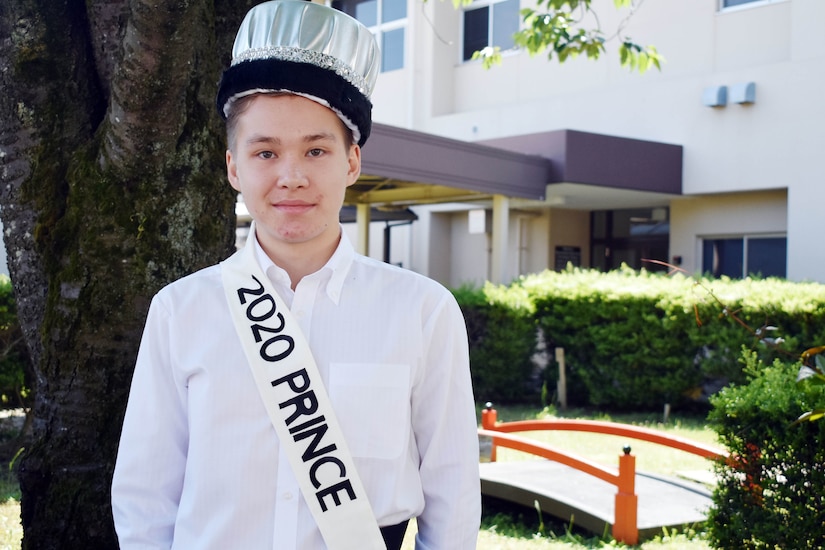
Student poses for his prom photo.

Rosa said she had organized nine other proms at the school she used to work for in Florida, so she knows how important proms are for students.

In addition, however, continuing with a modified prom teaches a greater life lesson: in the face of adversity, it is important to keep going, Rosa said.

"[COVID-19] is one challenge, one disappointment in your life, and if it's the only one, fantastic, but that's probably not likely," Rosa said. "You just have to put one foot in front of the other and just try."

Ward agreed.

"Our traditions do not have to stop based on a pandemic; they just need to be modified," Ward said. "Recognizing prom allows the youth to still experience tradition through a different set of glasses."

Ward said she donated the sashes because sewing is her favorite pastime, and when she arrived at Camp Zama nine months ago, the community embraced her.

Party favors.

"Making the sashes is just my way of thanking all of the youth for welcoming me as the school liaison officer," Ward said. "This is a great community."

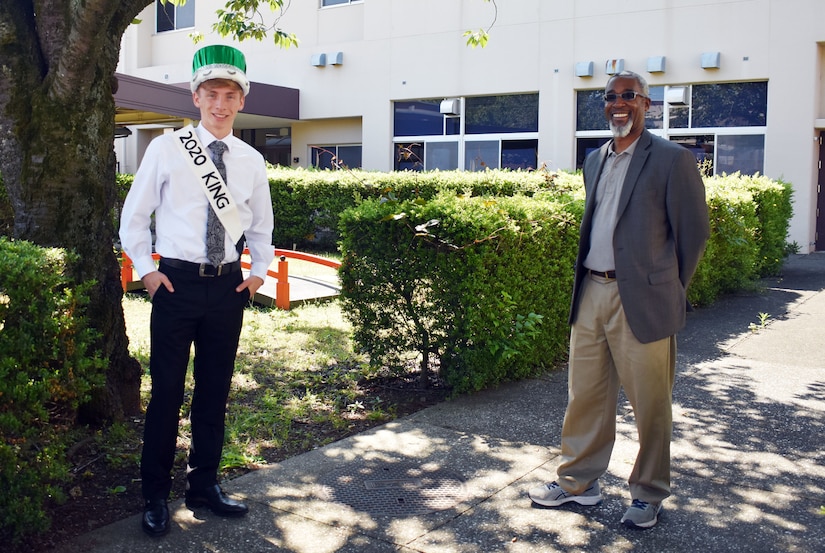
Wayne Carter, the principal of Zama Middle High School, said the modified prom went well and he thanked Rosa, Ward and Camp Zama's Family and Morale, Welfare and Recreation for making it happen.

Not only did the prom organizers step up this year, so did everyone associated with the school, Carter said.

"This has been a very unprecedented year, but what we've seen from the students, from the families, from the teachers, it's just phenomenal," Carter said.

(Winifred Brown is assigned to US Army Garrison Japan.)

Fort Bliss Volunteers Assist in Implementing Lifesaving Devices

June 4, 2020 | BY Amabilia Payen

William Beaumont Army Medical Center on Fort Bliss, Texas, quickly ensured the procurement of devices developed by Army doctors to protect health care workers from exposure while treating COVID-19 patients.

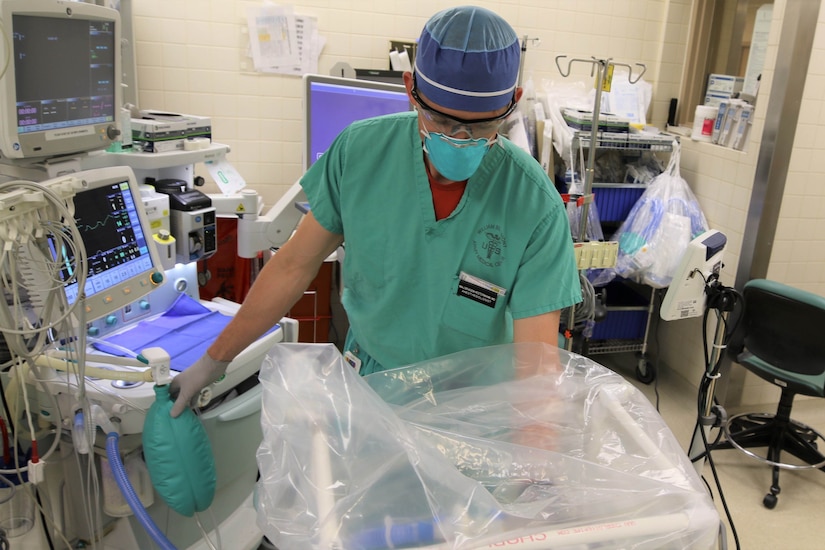
U.S. Army Medical Command promulgated the COVID-19 Airway Management Isolation Chamber. It's used to protect medical care providers from exposure while treating COVID-19 patients. 

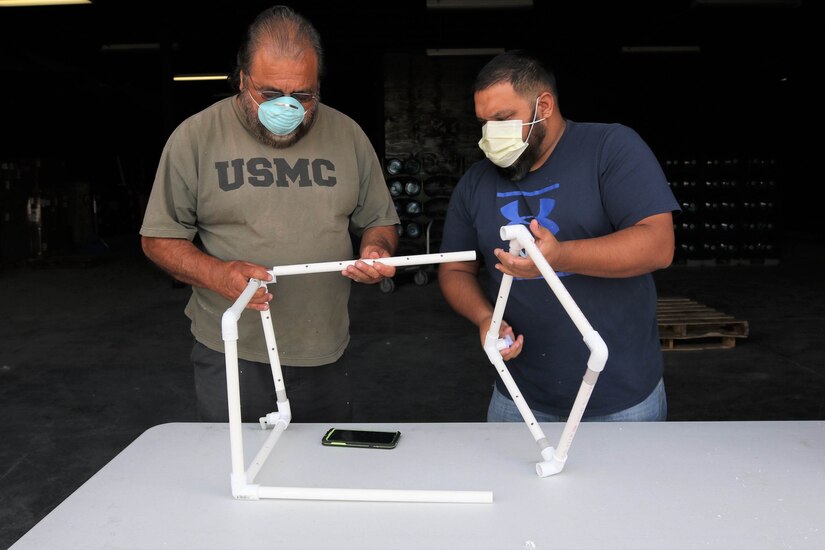
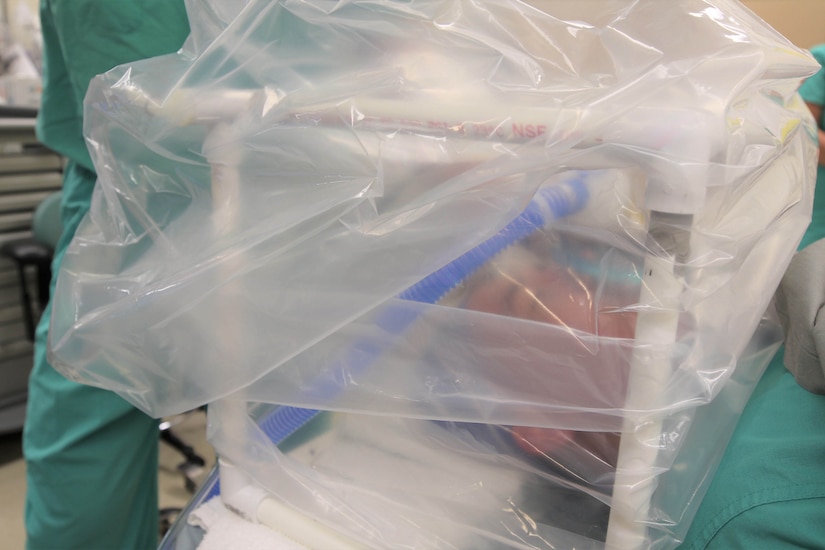
The CAMIC is an inexpensive barrier device constructed by draping clear plastic sheeting over a box-like frame made of common PVC piping. The barrier is then placed over the patient's head to reduce the risk of spreading COVID-19 during treatment. This barrier protects health care workers from aerosolized droplets by capturing and removing viral particles emitted from the patient. Holes in the piping device release oxygen flowing through it from one end, which is then sucked out by a vacuum on the other end.

An Army medical officer demonstrates how to use a CAMIC.

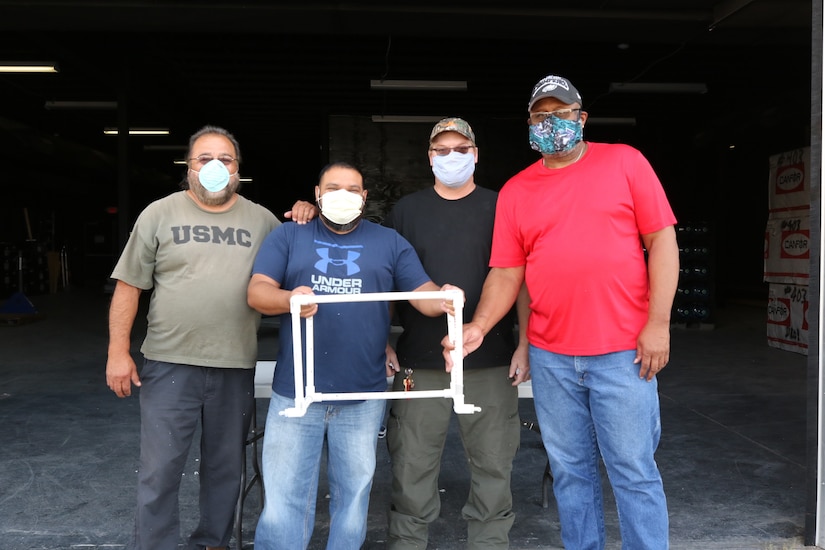
With an emergency use authorization from the U.S. Food and Drug Administration, the hospital contacted Fort Bliss for support in constructing 40 CAMICs. A few volunteers from Fort Bliss Range Control stepped forward to do the job. They volunteered to construct the devices, procured all the supplies needed and began working on the construction immediately.

Tim Ahlstrom, Robert Serrano, Kevin Waller and Raul Martinez, range control maintenance workers from the Fort Bliss Directorate of Plans Training Mobilization and Security, came in for a few weeks and built the CAMICs using development instructions from Army Medical Command.

"When they explained to me what it was going to be used for, I said definitely, we will do it," said Serrano, a maintenance mechanics. "We have to do what we can to help during these times. It is a small part on our part, but still it's something that is going to be a big help to the people who get infected."

Doctors and nurses at the hospital are thankful that the items were constructed in such a quick manner and are at their disposal when treating someone with COVID-19.

Maintenance workers assembling a CAMIC.

"The construction of the CAMIC devices by our Team Bliss colleagues is a great example of the phenomenal work by the entire Fort Bliss community in response to the COVID-19 pandemic" said Army Col. (Dr.) Michael Oshiki, the commander of William Beaumont Army Medical Center. "These devices will provide a superb degree of protection to our staff and our patients, and on behalf of WBAMC, Command Sgt. Maj. [Janell] Ray and I would like to extend our heartfelt thanks to all those who contributed to getting these devices made."

Army Lt. Col. (Dr.) Eric Weber, the chief medical officer of William Beaumont Army Medical Center, explains that the CAMIC can be the solution to a worldwide problem.

"The problem is we have a disease that is dangerous and can spread easily when aerosolized," Weber said. "Where you would normally treat a patient with this disease in an isolation or negative pressure room, this helps. There are not enough negative pressure rooms in hospitals, and this can help treat patients in regular rooms."

In the emergency room, a patient with COVID-19 may need to be intubated, and anyone within 6 feet of that patient is at high risk for contracting  it themselves.

An Army medical officer demonstrates how to use a CAMIC.

"The CAMIC is the perfect solution. You can put anyone on a [Bilevel Positive Airway Pressure device] or any kind of high-flow nasal device and completely wall it off, and prevent them from getting intubated and help them get better and not spread the disease to everybody else," Weber said.

All 40 CAMICs have been fielded in different parts of the hospital, to be used on patients when needed.

"The CAMIC is a small piece of what we are doing to treat patients with COVID," Weber said. "We have an amazing staff, and we are prepared. I think patients can feel safe and comfortable coming here. We are ready should a large volume of patients come."

As a doctor himself, Weber said, he does not hesitate to give the local population his advice.

"As the chief medical officer here, my advice to everybody is to wear a mask," Weber said. "There is a tremendous amount of data that wearing a mask is the absolute best thing we can do. It's not 'Wear a mask for yourself,' it's for the people around you. You may do great if you are young, but you may have other people who you may interact with that may not do so well. A mask will help slow the spread until we can get a vaccine."

Maintenance workers assembling a CAMIC.

Samuel Pearson, the logistics manager for the range branch, agrees with Weber. Aside from helping in acquiring the materials for the range control team to make them, he feels people should know that they may end up under the CAMIC themselves.

"I want people to take it seriously, you know," Pearson said. "Wear the mask, wash your hands. We get emails on people telling us what to do, what not to do, and I just want people to adhere to what our leaders are telling us so we can be safe."

(Amabilia Payen is assigned to the William Beaumont Army Medical Center.)

Barksdale Dental Clinic Reopens in a Phased Approach

June 4, 2020 | BY AIR FORCE 2ND LT. AILEEN LAUER

Since not being fully operational since mid-March due to COVID-19, the 2nd Operational Medical Readiness Squadron, is preparing to reopen the dental clinic on Barksdale Air Force Base, Louisiana, using a phased approach to begin completing a backlog of 903 dental exams.

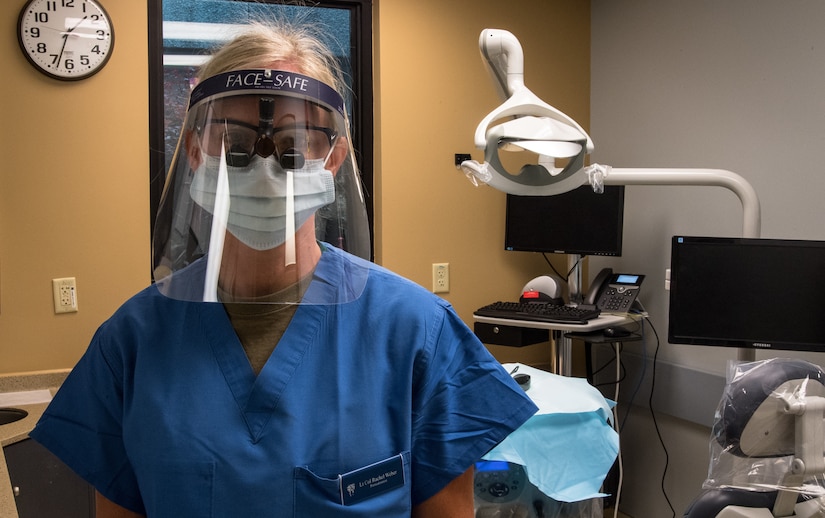
''First, we are going to be catching up on all the annual required dental readiness exams that have been postponed since March,'' said Air Force Lt. Col. (Dr.) Rachel A. Webber, a periodontist with the 2nd OMRS. ''No routine dentistry [e.g., fillings, cleaning] until later, unless it is causing the patient to be dentally nondeployable.''

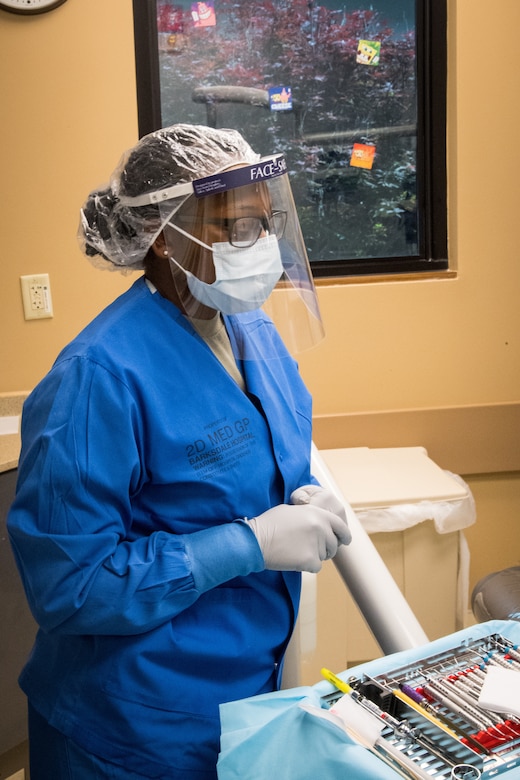
An Air Force periodontist wears protective gear.

Upon arrival at the clinic, patients must call and notify the front desk personnel that they have arrived and then wait in their cars. Patients will get a call to come to the front door.

Once at the door, patients are asked to wear a face mask. A dental technician will check the patients' temperature and screen them using a COVID-19 questionnaire. Patients will then immediately be brought back to their treatment room. These procedures are in place to minimize the number of patients in the reception area, Webber explained.

An Air Force dental technician examining a patient.

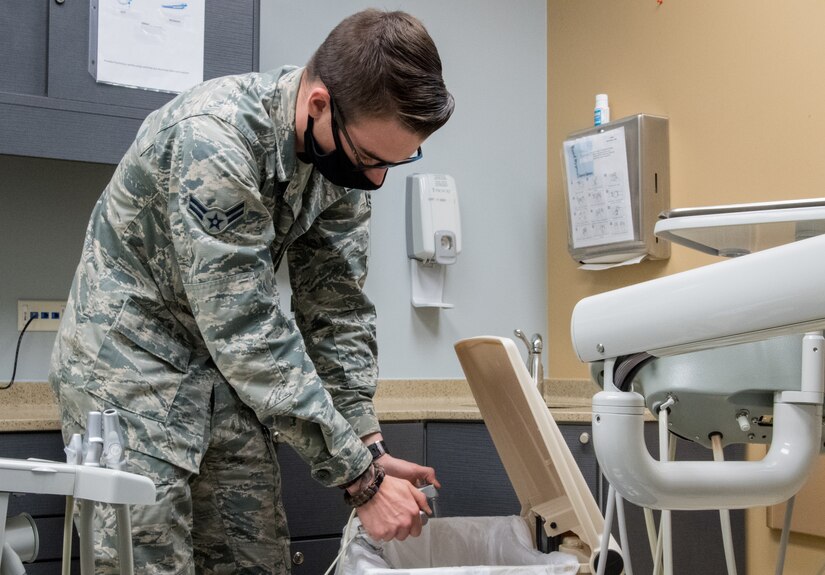
Aside from having patient procedures in place, the dental staff has been preparing each suite for use. Rooms have been inspected, unnecessary items were removed and water lines have been shocked and tested.

''It's good to get back to a workflow and nice to start seeing everybody''' said Air Force Airman 1st Class Bryson T. Raymer, a dental technician at the clinic.  ''It's kind of a blessing in a way, because I know people were running out of things to do. I'm happy to be back.''

An Air Force dental technician shocking water lines.

Although the clinic will have full-day operational hours from 7 a.m. to 7 p.m., it will be operating with a split staff. Half of the dental staff will report in the morning and work in one section of the clinic, while the afternoon staff will work on the opposite side of the clinic. This schedule is designed to help keep everything isolated.

''I'm adjusting and getting back to everything,'' said Air Force Senior Airman Amanda Yeske, a front desk attendant. ''I'm ready to get back into the swing of things.''

(Air Force 2nd Lt. Aileen Lauer is assigned to the 2nd Bomb Wing.)

Service Members, Civilians Bound By DOD Rules During Election Campaigns

June 4, 2020 | BY Terri Moon Cronk , DOD News

It's election season again, when federal, state and local political campaigns kick into high gear. Defense Secretary Dr. Mark T. Esper's latest ethics video lays out the importance of political activity rules that Defense Department civilian employees and service members must follow. 

In the 2020 DOD Public Affairs Guidance for Political Campaigns and Elections memorandum of Feb. 11, DOD spokesman Jonathan Rath Hoffman summarized the rules that apply to all DOD personnel regarding involvement in political events.

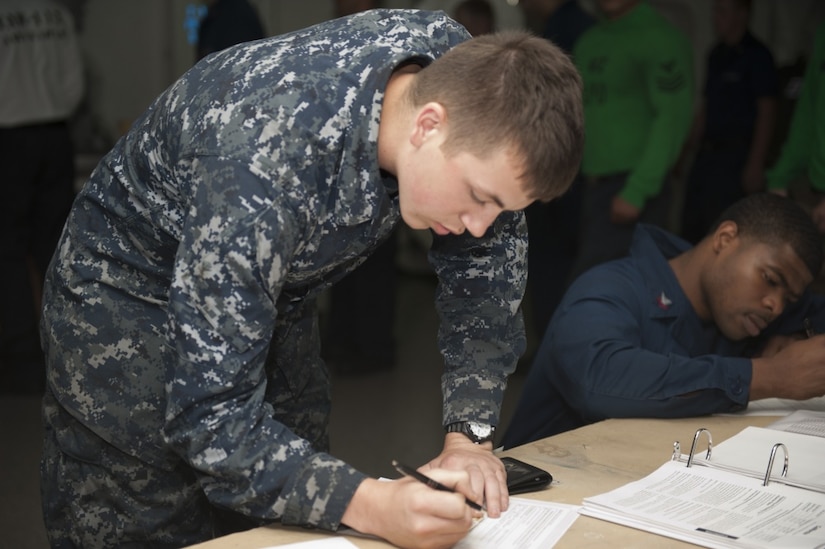
Sailor registers to vote.

"The Department of Defense has a longstanding and well-defined policy regarding political campaigns and elections to avoid the perception of DOD sponsorship, approval or endorsement of any political candidate, campaign or cause," Hoffman wrote. 

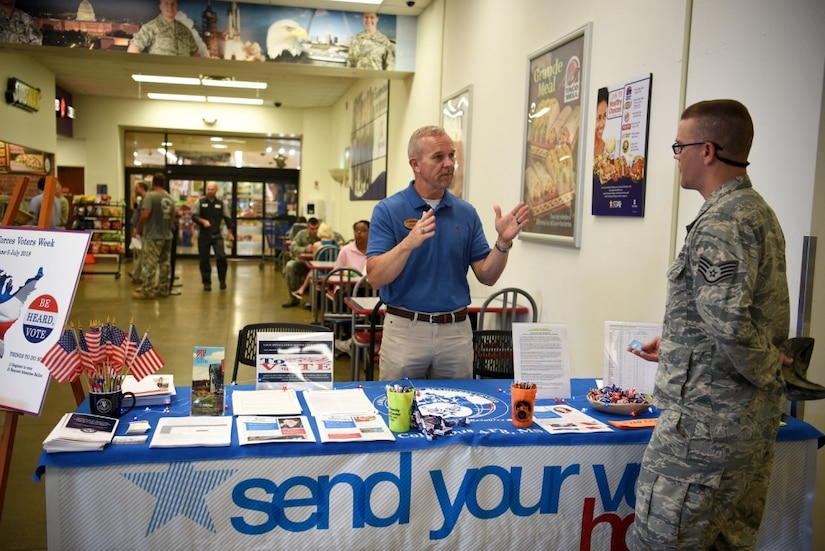
"The department encourages and actively supports its personnel in their civic obligation to vote, but makes clear members of the armed forces on active duty should not engage in partisan political activities," his memo read.

Sources of Authority 

The Hatch Act is a federal law passed in 1939 that limits certain political activities of federal employees, according to the U.S. Office of Special Counsel. It applies to DOD civilian employees. The law's purposes are to ensure that federal programs are administered in a nonpartisan fashion, to protect federal employees from political coercion in the workplace, and to ensure that federal employees are advanced based on merit and not based on political affiliation, the OSC site added. ​​

DOD policy for service members is contained in Department of Defense Directive 1344.10, Political Activities for Members of the Armed Forces. It is DOD policy to encourage members of the armed forces to carry out the obligations of citizenship while keeping with the traditional concept that members on active duty should not engage in partisan political activity. All members of the armed forces, including active-duty members, members of the reserve components not on active duty, and retired members are prohibited from wearing military uniforms at political campaign or election events.    

As the secretary said in his ethics video, both active-duty service members and civilian employees must understand federal rules and DOD policies pertaining to political activities. Service members and employees should direct any questions to their supervisors or their supporting legal office, said a senior official in DOD's Standards of Conduct Office.  

Resources

For particulars and more in-depth information concerning political activities, check out DOD Directive 1344.10 for service members and the U.S. Office of Special Counsel website for civilian employees.

Voting poster from 2014.

Ethics and Leadership

In his ethics video, and in previous ethics messages to the department, Esper emphasized the importance of leaders regularly training their subordinates in the importance of maintaining ethical standards.  

"Maintaining the hard-earned trust and confidence of the American people requires us to avoid any action that could imply endorsement of a political party, political candidate or campaign by any element of the department," he said.  

"As the secretary has stated, we must continuously train and prepare so that we are ready to do what is right when ethical dilemmas arise," said Scott Thompson, director of DOD's Standards of Conduct Office. "Training is not a one-time event. The secretary expects department leaders to be personally involved in training their organizations, and to talk about examples of ethical decision-making, good and bad. In addition to annual ethics training, leaders should routinely make conversations about ethics a natural part of meetings and engagements with personnel."

A voting awareness booth is set up at an Air Force base.

As leaders, teammates and colleagues, all must inspire one another by setting the right example of ethical conduct, Thompson emphasized.

"Shortly after taking office, Secretary Esper reminded DOD personnel that each of us takes a solemn oath to support and defend the Constitution. The department's mission imparts a special responsibility on each of us to serve with the utmost integrity and be vigilant in protecting the duties and confidences with which we have been entrusted," he added. "To ensure we are ready to do what is right when ethical dilemmas arise, we must train and prepare ourselves."

(Katie Lange of Defense Media Activity contributed to this report.)

Wednesday, June 03, 2020

DOD Official: National Guard Is First Choice in Response to Civil Unrest

June 3, 2020 | BY David Vergun , DOD News

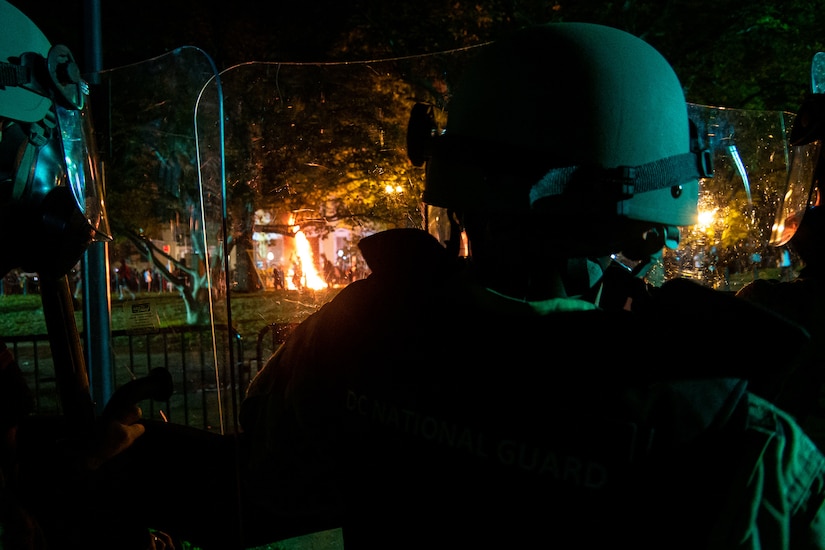
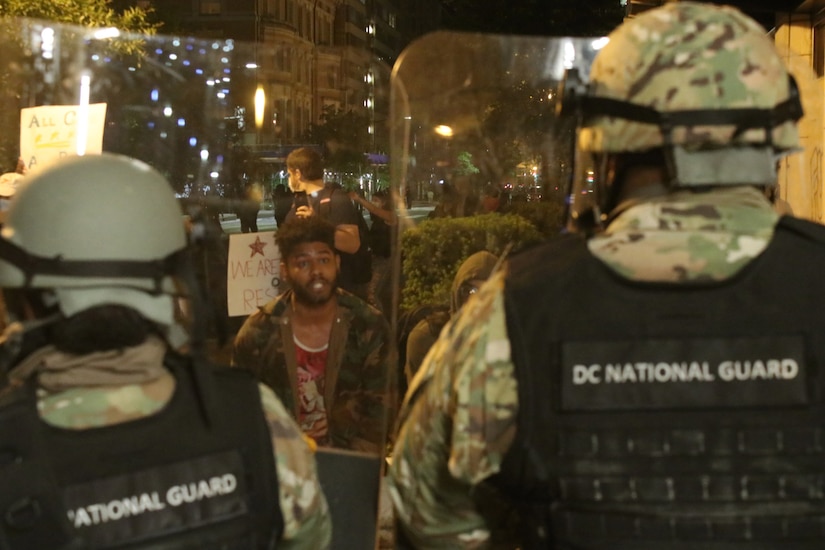
Governors in 28 states have called on the National Guard to support first responders in the wake of civil unrest and protests across the nation following the death of George Floyd. 

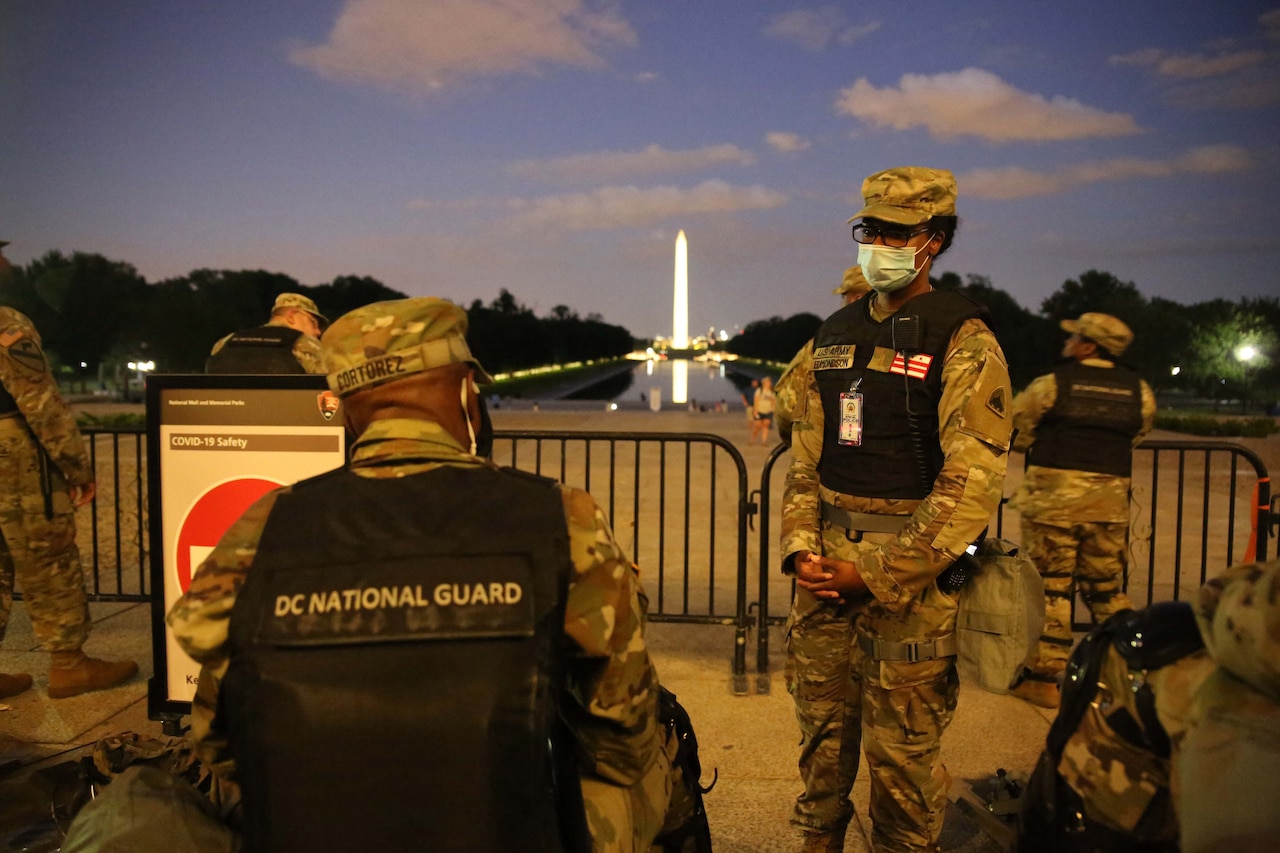
Soldiers stand with the Washington Monument in the background.

A Defense Department official said yesterday that the country relies on Guard troops to support civil authorities because they can be deputized to serve in a law enforcement role, if needed, while active duty service members cannot.

But, the official noted, DOD is consulting with governors to determine if and where active duty troops might be needed to supplement the Guard's efforts.

Department officials held a press briefing to discuss the potential use of National Guard and active duty personnel in support of state and local authorities.

District of Columbia National Guardsmen have been deployed to help the district's law enforcement agencies protect buildings, federal installations and monuments — and ensure peace, order and safety, the official said.

The D.C. National Guard and Guard troops from outside the city who come to help are being led by Army Maj. Gen. William J. Walker, the D.C. National Guard commander, the official said. Since the district doesn't have a governor, Walker reports directly to Army Secretary Ryan D. McCarthy.

However, the official noted, the response to civil unrest in the nation's capital was overwhelmingly from law enforcement, not National Guardsmen.

More than 100,000 guardsmen are engaged across the country and in overseas missions, the official said.

In the U.S., more than 67,000 National Guard soldiers and airmen are supporting operations in every single state, three territories, and the District of Columbia, the official said, noting that this represents the largest domestic response since Hurricane Katrina.

"More than 42,000 are still actively doing COVID operations," the official said. "All of those mission sets remain the same, and ... another over 18,000 now in 29 states and the district are assisting law enforcement authorities."

Training Mission

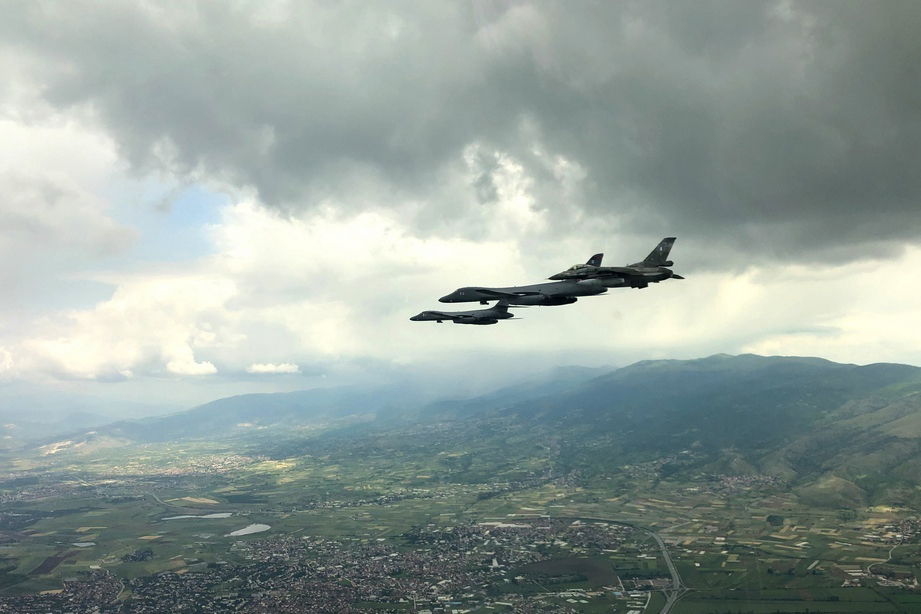
Two U.S. Air Force B-1B Lancers fly with a Greek air force F-16 during a training mission for Bomber Task Force Europe over North Macedonia, May 29, 2020.

Clean Routine

Medical professionals disinfect Alabama National Guardsmen assigned to the Task Force 31 COVID-19 response team at the West End Health and Rehab facility in Birmingham, Ala., May 27, 2020. Soldiers and airmen assigned to the task force helped disinfect medical facilities and nursing homes throughout the state.

Message to the Department - Support to Civil Authorities

June 3, 2020

Secretary of Defense Dr. Mark T. Esper released a message to the Department of Defense regarding its continued support to civil authorities, June 2.

In the memo, Esper said, the United States military has been the greatest force for good in our Nation's history.

While we often see the impact of our efforts overseas, every President has at times deployed military forces for domestic missions as well. In the last few months, for example, America's men and women in uniform - Active Duty, Reserve, and National Guard - have worked day and night across our communities to confront the COVID-19 crisis. This historic mission was just the most recent example of our longstanding support to civilian authorities - from pandemics to hurricanes, and from wildfires to providing security after 9/11 .

Throughout these response efforts, I have been incredibly proud of our Service members and their hard work to assist our fellow Americans. This past week, our support to civil authority mission - that had been focused on COVID-19 - changed. Our National Guard are now also being called upon across the country to help protect our communities, businesses, monuments, and places of worship.

Department of Defense personnel have taken an oath to defend the Constitution of the United States. I myself have taken it many times in my military and civilian careers, and believe strongly in it. As part of that oath, we commit to protecting the American people's right to freedom of speech and to peaceful assembly. I, like you, am steadfast in my belief that Americans who are frustrated, angry, and seeking to be heard must be ensured that opportunity. And like you, I am committed to upholding the rule of law and protecting life and liberty, so that the violent actions of a few do not undermine the rights and freedoms of law-abiding citizens.

I appreciate your professionalism and dedication to defending the Constitution for all Americans. Moreover, I am amazed by the countless remarkable accomplishments of the Department of Defense in today's trying times - from repatriating and sheltering Americans who were evacuated from a foreign land, to delivering food and medical supplies to communities in need, and to protecting our cities and communities. In every challenge, and across every mission, the U.S. military has remained ready, capable, and willing to serve.

As I reminded you in February, I ask that you remember at all times our commitment as a Department and as public servants to stay apolitical in these turbulent days. For well over two centuries, the U.S. military has earned the respect of the American people by being there to protect and serve all Americans. Through your steadfast dedication to the mission and our core.

The memo can be found here.

Tuesday, June 02, 2020

Beach Ops

Marines stage assault amphibious vehicles during around-the-clock operations at Marine Corps Base Hawaii, May 28, 2020.

Face of Defense: Sibling-Soldiers

June 1, 2020 , DOD News

For Army Maj. Nicholas Fiore, Maj. Elyse Pierre and Capt. Carolyn "Nina" Fiore, family ties bolster their shared commitment to duty and service. 

Raised in a military family, all three siblings graduated from the U.S. Military Academy at West Point, New York, before embarking on their Army careers. They recently talked about their upbringing and what military service means to them.

Army Maj. Nicholas Fiore, Maj. Elyse Pierre and Capt. Carolyn "Nina" Fiore
Job Titles:
Nicholas: armor officer and future operations planner
Elyse: medical officer and board-certified doctor
Nina: aviation officer and commander, Troop D, 3rd Squadron, 6th Cavalry Regiment, 1st Armored Division Combat Aviation Brigade
Hometowns: Fairfax, Va.; Pompton Lakes, N.J.; Ringwood, N.J.
Stationed: Fort Bliss, Texas (Nicholas and Nina) and Fort Stewart, Ga. (Elyse)

Growing Up Military

Military children are more likely than their peers to join the military. About 80 percent of recent recruits come from a family where at least one close relative was in uniform.

The Fiore siblings' father, Uldric "Ric" Fiore, served in the Army for 30 years and is a retired member of the Senior Executive Service as a judge advocate general director for the Army. Their mother, Nancy Colfax, graduated from Vermont Law School and worked as a lawyer for a time.

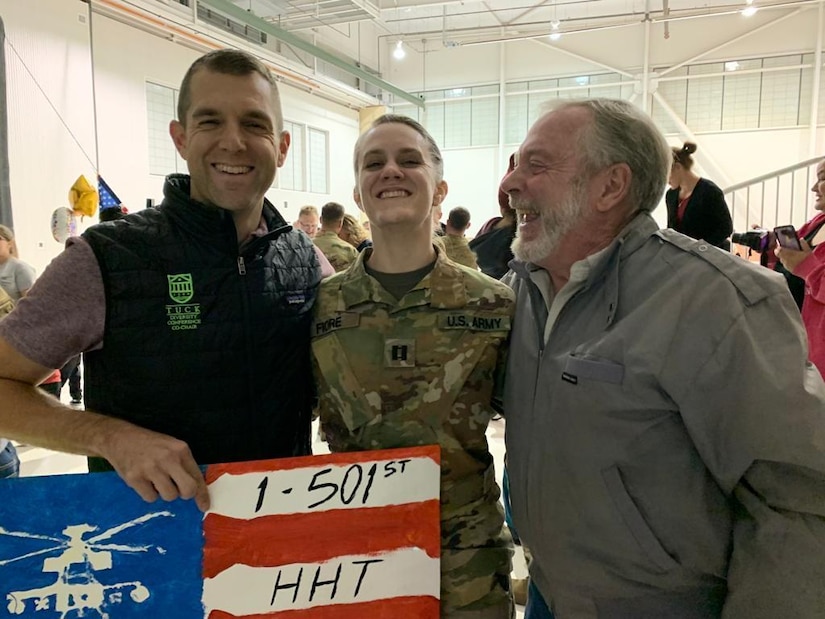
A soldier stands smiling with her father and grandfather on either side of her.

Throughout their childhoods, the Fiore siblings saw the sacrifice and dedication of their parents as they adjusted to the challenges that face military families.

"One of the things that I think drives a lot of young families out of the Army is that they realize that they just can't manage two careers," Nicholas said. "Our mother chose to stay at home, even though I know that she missed practicing law and that she was good at it."

Rising to Challenges

Even when she transitioned out of her career, their mother didn't stop working, he said, describing her tireless efforts to help military families. 

"She would take me with her, with the little red plastic lunchbox and the Lion King VHS, when she would volunteer on post and still use her skills to help out soldier families wherever we were."

The family adapted to the challenges of military life, and made sure those challenges did not interfere with childhood excitement and opportunity.

"We moved around a lot and that tends to cause Army children to have one of two reactions, 'I don't ever want to move again' or 'Hey, it's kind of cool to travel around the world and see different places'" Ric said. "I think our children enjoyed the traveling piece, so they were not adversely influenced by all the moving and we always made sure that their schools were a priority."

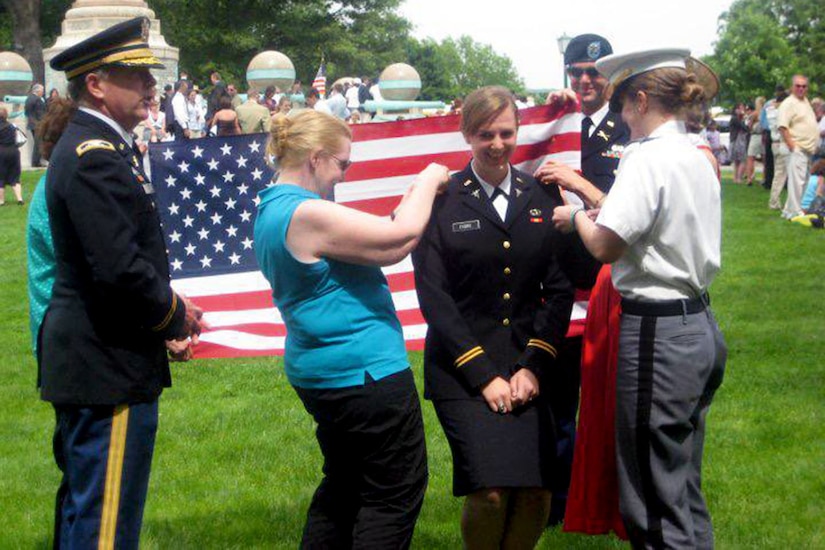
A soldier stands smiling around her family as they affix decorations to her uniform.

West Point Pride

Despite the frequent moves, the Fiore family established a strong identification with West Point. 

"When my parents were growing up, West Point was the biggest college nearby, so they went to West Point football games even though they didn't have a family connection to the Army," Nicholas said. "I remember going to those tailgates as a kid and that definitely attracted me."

Each of the three siblings retained a sense of independence and individuality but ultimately, each chose West Point as the place to pursue their goals. Nicholas graduated 2007, Elyse in 2010 and Nina in 2013.

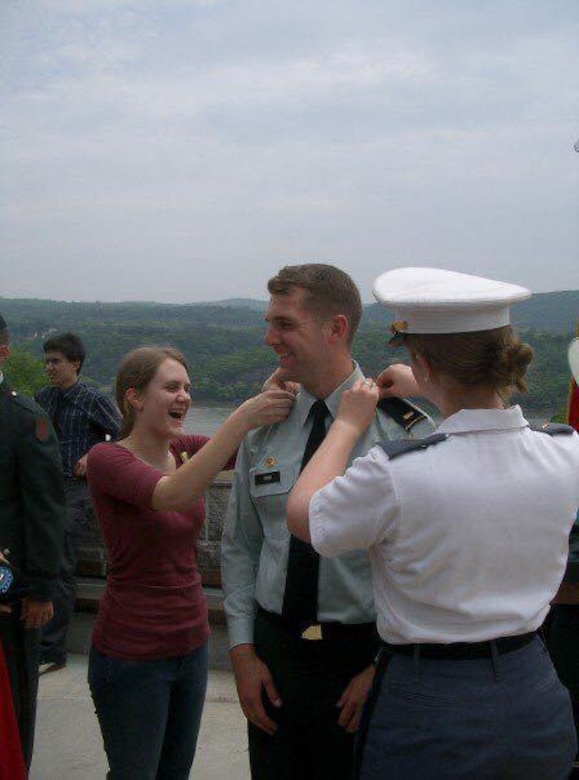
A soldier stands smiling while his two siters affix the shoulder boards on his uniform.

"When Nic was applying to colleges, he was looking at St. John's University and Johns Hopkins University but eventually decided that he wanted to go to West Point," Nina said. "Our sister Elyse decided that going to West Point to be a physician for the Army was what she wanted, to help keep soldiers healthy and not just go work in a practice somewhere tucked away in a corner of a big office building."

"I've wanted to fly helicopters since about the time they convinced me I couldn't be a bird when I grew up," she continued, "so for me that was a no-brainer."

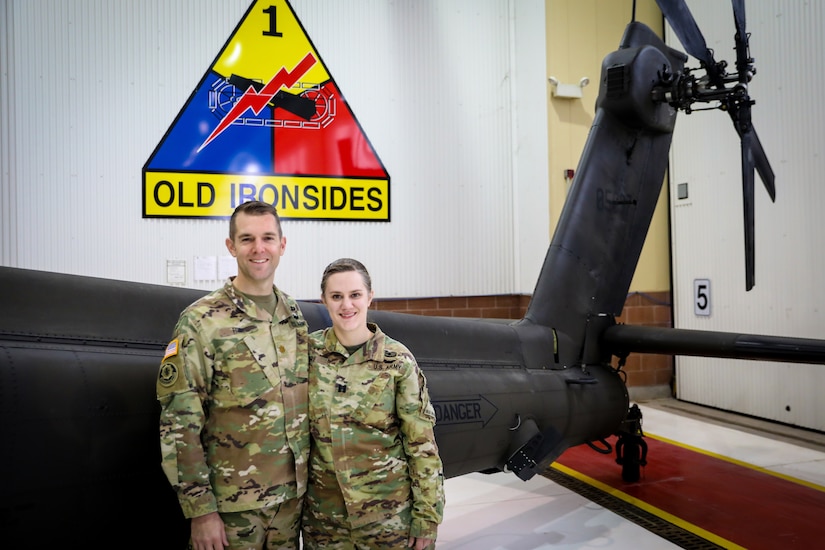
Two soldiers pose in front of the tail end of a helicopter.

Family Within a Family

Serving as an armor officer, an aviation officer and a medical officer results in very different experiences for the siblings, but they remain close knit and supportive of one another nevertheless — a family within the Army family. 

"All of us are committed to serving other soldiers and Americans as best we can, Nina said. "We're fortunate to have the ability and the opportunity to do so." 

Adapted from an article by Army Pfc. Matthew Marcellus

Statement by Assistant to the Secretary of Defense for Public Affairs on Support to Civil Authorities

June 2, 2020

Attributable to Jonathan Rath Hoffman, Assistant to the Secretary of Defense for Public Affairs:

The Department of Defense moved multiple active duty Army units into the National Capitol Region as a prudent planning measure in response to ongoing support to civil authorities operations.

The Secretary of Defense authorized the movement of an infantry battalion designated Task Force 504, assigned to the Army’s Immediate Response Force based at Fort Bragg, North Carolina.

Additionally, at the Department’s direction, the U.S. Northern Command commander authorized the move of the 16th Military Police Brigade headquarters from Fort Bragg, North Carolina, and the 91st Military Police Battalion from Fort Drum, New York.  The brigade provides a command and control element for the battalion, which primarily provides military police and engineering capability.  

Active duty elements moved to the National Capitol Region by military aircraft over the last 24 hours.

Active duty elements are postured on military bases in the National Capitol Region but are not in Washington DC. They are on heightened alert status but remain under Title X authority and are not participating in defense support to civil authority operations.  

The overall number of active duty troops recently moved from Fort Bragg and Fort Drum is approximately 1600 troops.

Air Force Secretary Gets Update on Kirtland's Mission During COVID-19

June 2, 2020 | BY Air Force Airman 1st Class Austin Prisbrey , 377th Air Base Wing

Air Force Secretary Barbara M. Barrett toured Kirtland Air Force Base, New Mexico, to visit various mission partners and explore active mission sets to gain a better understanding of how the base has sustained national security capabilities during the COVID-19 pandemic.

A woman and an airman, both wearing masks, talk while walking out of a headquarters building..

The secretary visited the base May 20-21.

"Team Kirtland's myriad of missions don't stop because of COVID-19." Barrett said. "Today's visit was an opportunity to personally thank and observe how service members and civilians have adapted and continue to modernize the Air and Space Forces."

Barrett began the visit at the Air Force Research Laboratory's Directed Energy and Space Vehicles Directorates, where she was briefed on several programs critical to the nation’s defense.

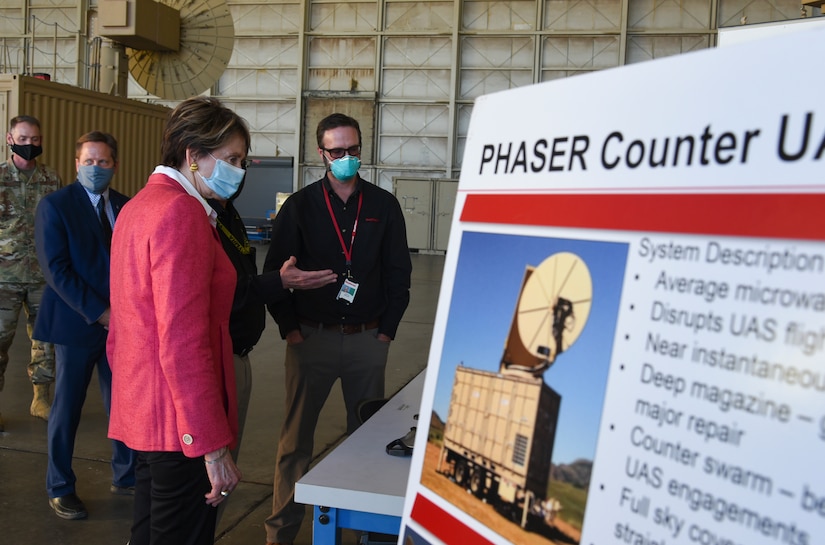
One of three airmen gestures while speaking with a civilian woman outdoors. All are wearing masks.

Dr. Kelly Hammett, the director , introduced Barrett to a variety of high-power microwave and high-energy laser systems in development. Hammett showcased the Raytheon PHASER and AFRL THOR high-power microwave systems for countering small unmanned aerial systems, as well as the CHIMERA high-power microwave system being tested for additional base defense capabilities.

"Combatant commanders are very interested in these transportable systems that can nonkinetically defeat multiple air base threats, while providing a deep magazine and low cost per shot," Hammett said.

Barrett received briefings on the space vehicle's small-satellite portfolio and detailed presentations on the directorate’s spacecraft now  in orbit.

"The Air Force Research Lab has an amazing pipeline of space science and technology innovations focused on increasing the resiliency of our nation's space capabilities so that we deter conflict in space," said Air Force Col. Eric Felt, the lab's director.

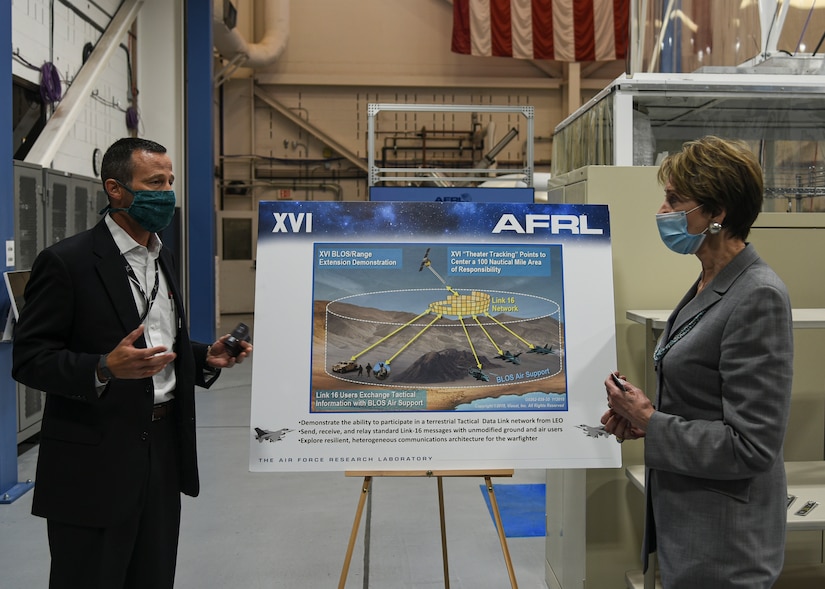
A man and a woman speak while standing by a sign depicting part of a military unit’s operations. Both are wearing masks.

The base visit continued to the Air Force Nuclear Weapons Center, where Barrett was brought up to date on critical programs and how they line up with her priorities as the Air Force secretary. The planned transfer of AFRL missions to the Space Force continues, despite the COVID-19 pandemic.

Barrett was briefed on the center's plans for returning to full mission capability during the COVID-19 pandemic, said Air Force Maj. Gen. Shaun Morris, the commander of AFNWC and the Air Force program executive officer for strategic systems. "Given the absolutely critical nature of our role in providing nuclear capabilities to the warfighter, we are committed to maintaining full support despite COVID-19. To date, we've kept all key efforts on track and in line with her nuclear deterrence priorities."

Secretary of the Air Force Barbara Barrett touring Kirtland Air Force Base.

Barrett also visited the Space Rapid Capabilities Office to familiarize herself with its mission and transition to the Space Force.

"As one of the key acquisition organizations of the U.S. Space Force, the Space RCO is laser focused on meeting our mission to develop and deliver critical space capabilities at the speed of relevance," said Mike Roberts, the RCO director. "The Space RCO is honored to have the opportunity for our workforce to meet [Barrett], given the secretary's leadership has been key in empowering our ability to meet our mission."

Barrett visited the Space and Missile Systems Center Innovation and Prototyping Directorate to better understand how the center accelerates the pivot to the new space architecture.

"We were particularly excited to showcase the partnerships we share with other space organizations here at Kirtland Air Force Base and across the [Defense Department]," said Air Force Col. Timothy Sejba, the director of SMC innovation and prototyping.

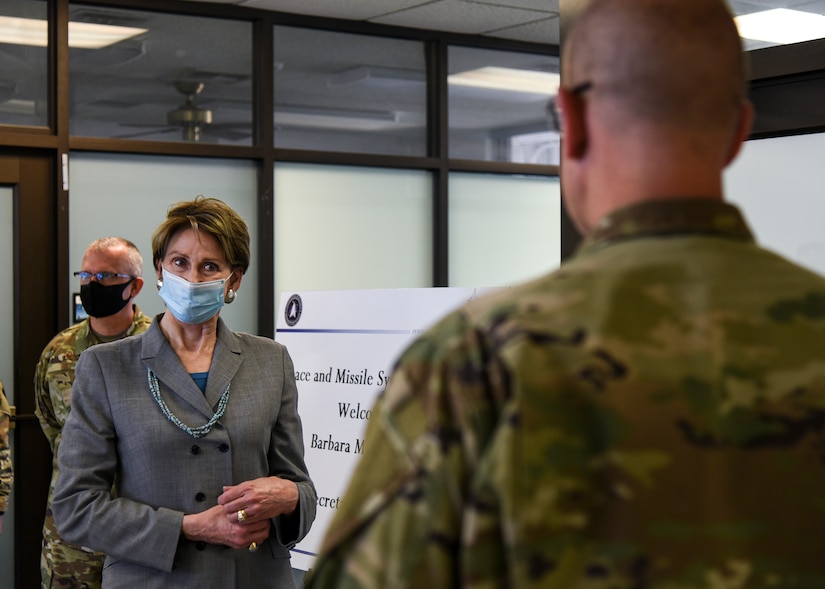
A woman wearing a mask receives a briefing from an airman who has his back to the camera.

Throughout the visit, Barrett emphasized the importance of the multiple national security mission sets on Kirtland and not only how critical their capabilities are, but also how vital the workforce is for mission readiness and success. Social distancing, face coverings and "elbow" greetings were routine during the visit.

"It was an amazing opportunity for our airmen to spend time with Secretary Barrett," said Air Force Col. David S. Miller, the commander of the 377th Air Base Wing. "Her trip to Kirtland certainly underscores the importance of the work by all of the men and women on Team Kirtland, and the installation's contributions to national security."

Javits Farewell

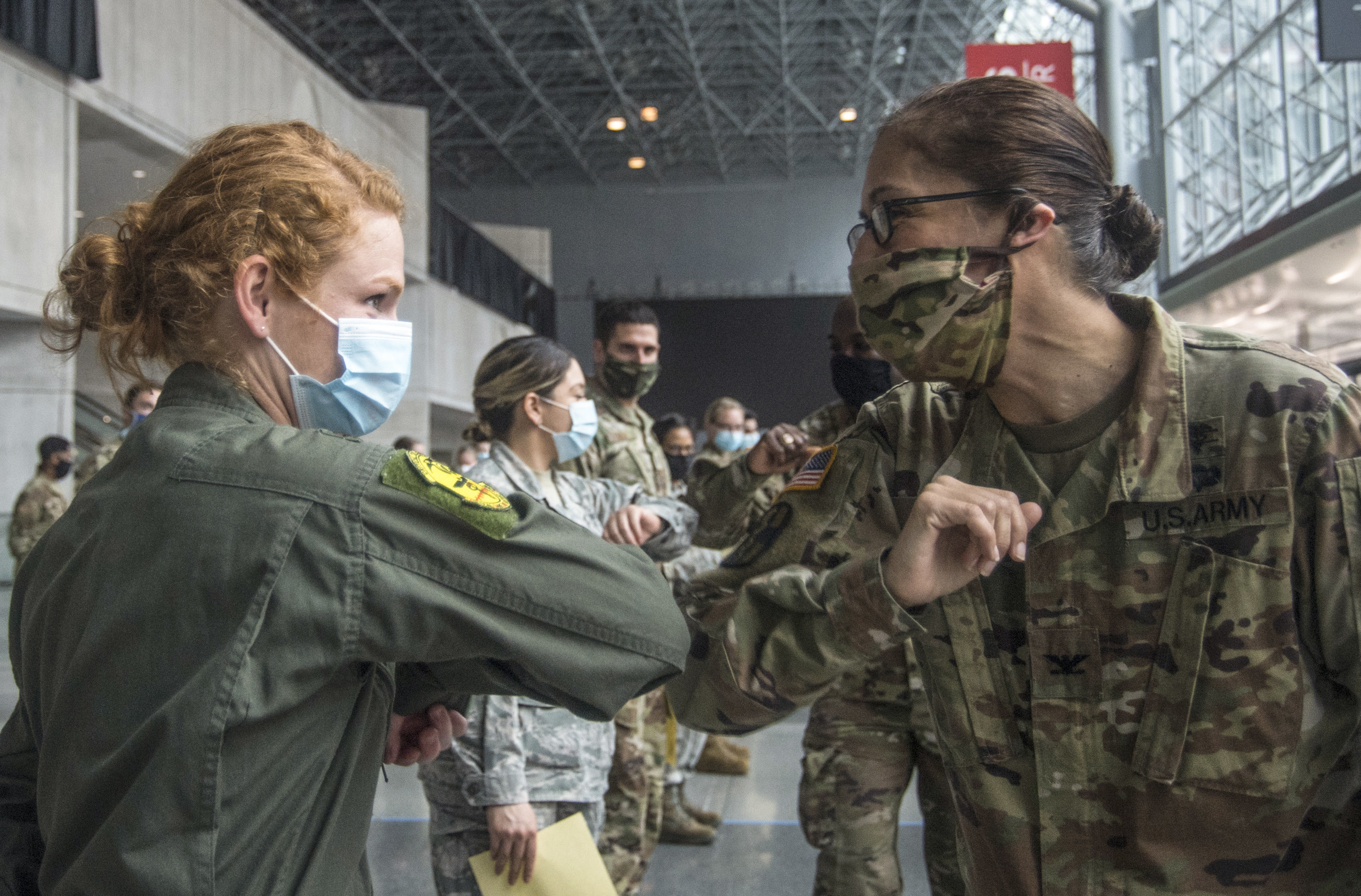
Army Col. Kimberlee Aiello, right, commander of the 44th Medical Brigade, gives an elbow bump to Air Force Maj. Carrie Gaddy, assigned to the 64th Air Expeditionary Group, during an award and farewell ceremony at the Javits Center in New York City, May 28, 2020. Military medical providers assigned to the hospital collaborated as an integrated system to support the New York City medical system as part of the Defense Department’s COVID-19 response efforts.

Pohnpei Paint

Navy Seaman Shareine May, assigned to the Naval Mobile Construction Battalion 5 Detail Pohnpei, paints a mobile bathroom and shower facility designed by Navy Seabees to help prepare a COVID-19 response compound for the Pohnpei State Medical Task Force at Misco Beach in Pohnpei, Micronesia, May 20, 2020. NMCB-5 is deployed across the Indo-Pacific region conducting high-quality construction to support U.S. and partner nations to strengthen partnerships, deter aggression and enable expeditionary logistics and naval power projection.

Dual Descent

Airmen descend during airborne training at Joint Base Elmendorf-Richardson, Alaska, May 26, 2020. The training helps maintain operational readiness during the pandemic.

Department of Defense Announces Tour Length Change for the Middle East

June 2, 2020

The Department of Defense has changed the current overseas tour length for DoD military personnel under COCOM (Title 10) authority assigned to permanent duty locations in the Arabian Peninsula and Iraq.

As a byproduct of the Department's continuous reassessment of personnel policies worldwide, DoD military personnel will gradually transition to 12-month unaccompanied tours for designated duty stations in the region.

This change will not affect the number or readiness of U.S. forces in the region.

DoD military personnel currently assigned to the region will finish out their accompanied tours and cycle out gradually over the course of two years. Those who have orders to prepare to move up to 30 days from today will be allowed to PCS to their accompanied tour, though all accompanied tours must be complete by August 31, 2022.

While this change applies to a number of countries in the region, only Bahrain and Qatar currently host military families under COCOM authority.

The Department remains committed to supporting our partners in this vital region.

The policy can be found here and a corresponding fact sheet can be found here.

Marine Education

Marine Corps students with the Center for Naval Aviation Technical Training Camp Pendleton conduct maintenance on a UH-1Y Venom helicopter at Marine Corps Base Camp Pendleton, Calif., May 28, 2020. Students and staff took strict precautionary measures to combat the spread of COVID-19.

Department of Defense Accepts Korean Ministry of Defense's Proposal to Fund Korean National Employee Labor Costs

June 2, 2020

The Department of Defense has accepted the Republic of Korea’s (ROK) proposal to fund the labor costs for all U.S. Forces Korea (USFK) Korean National (KN) employees through the end of 2020.

The lapse of last year's 10th Special Measures Agreement (SMA), in which the Republic of Korea partially shared the burden of stationing U.S. Forces on the peninsula, and the continued absence of a subsequent agreement, resulted in more than 4,000 Korean National employees being furloughed.

USFK expects all KN employees to return to work no later than mid-June.

In March, prior to the partial furlough, the DoD funded critical logistics contracts and partially funded KN labor to mitigate some of the risk associated with a complete furlough. This enabled USFK to accomplish their mission to maintain a robust combined defense posture.

Since the last SMA lapsed on 31 December 2019, the United States has unilaterally shouldered the burden for all costs associated with U.S. Forces in Korea. These include KN labor costs, logistics contracts, and construction project design and oversight costs.  Today’s decision will provide over $200M in ROK funding for USFK’s entire KN workforce through the end of 2020.  Additionally, it is a direct reflection of the United States’ commitment to readiness, to our Korean employees, and to the Alliance - “the linchpin of peace and stability on the Korean peninsula.”

This decision enables a more equitable sharing of the KN employee labor burden by the ROK and the U.S. More importantly, it sustains the Alliance’s number one priority - our combined defense posture.

In regards to the lapsed SMA, the Department of Defense believes that equitable burden-sharing between the governments of the United States and the Republic of Korea is in the best interest of all parties. We strongly encourage our Ally to reach a fair agreement as quickly as possible. The United States has shown considerable flexibility in their approach to the SMA negotiations, and requests that the ROK does the same.

Without an agreed upon SMA, critical defense infrastructure projects will remain suspended, all logistics support contracts for USFK will continue to be paid completely by the U.S., and burden sharing will remain out of balance for an Alliance that values and desires parity.  USFK’s mid- and long-term force readiness remains at risk.

Food Kits

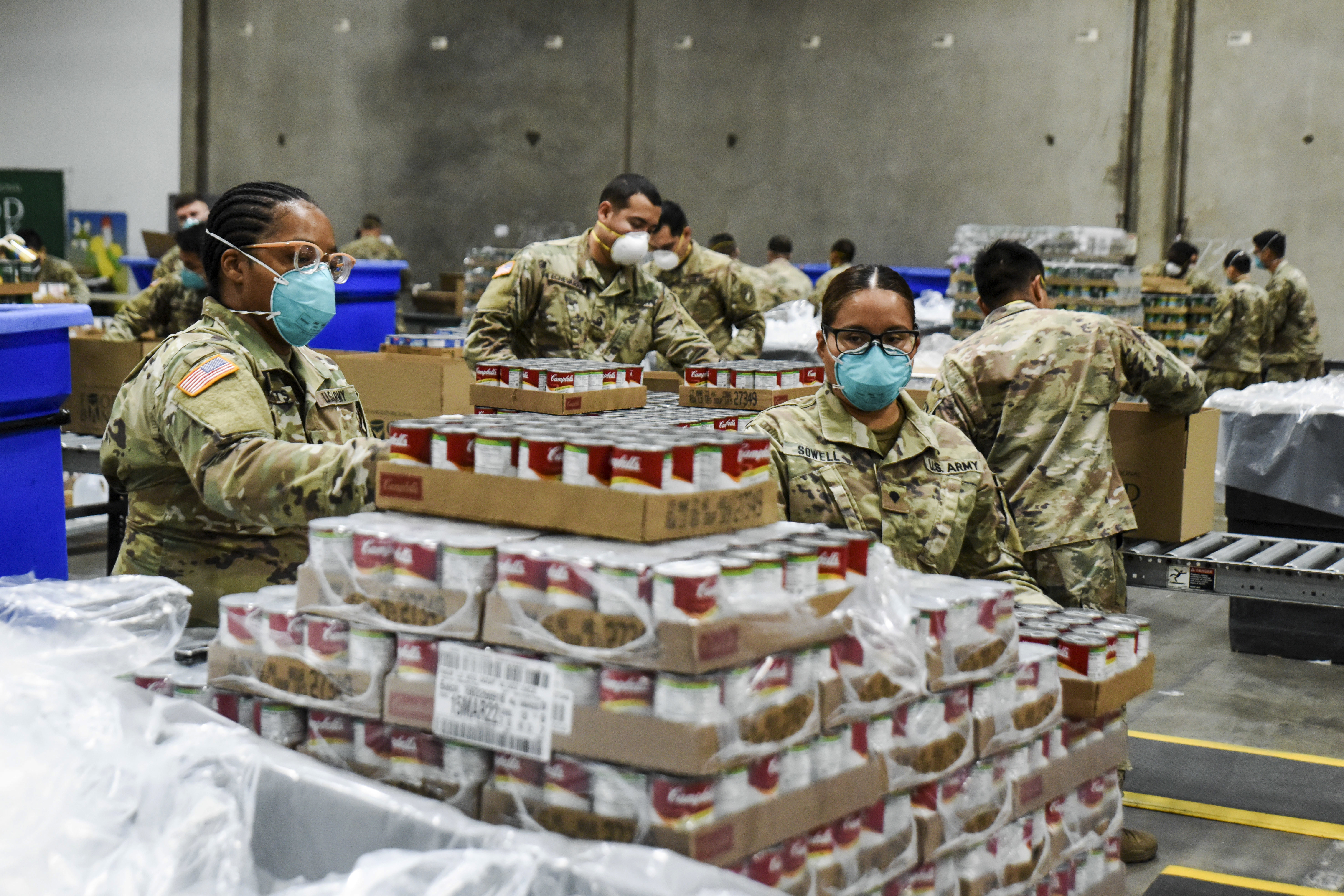
Soldiers assigned to the California Army National Guard’s 224th Sustainment Brigade assemble emergency food kits during a COVID-19 humanitarian response mission at the Los Angeles Regional Food Bank in Commerce, Calif., May 29, 2020. With Cal Guard’s assistance, the food bank is building more than 10,000 kits a day and recently surpassed a milestone of 300,000 kits built since troops arrived in mid-April.

Drive-Thru Test

Delaware Army National Guard Pfc. Kelly Buterbaugh gives instructions to a motorist during a drive-thru coronavirus testing mission at the University of Delaware's Science, Technology and Advanced Research Campus in Newark, Del., May 29, 2020. About 25 soldiers and airmen with the Delaware National Guard supported the saliva-based testing of roughly 400 people at the STAR Campus location.