Friday, September 14, 2018

Face of Defense: Navy Recruiter Shares ‘Formula’ for Success


By Navy Chief Petty Officer Kim Martinez, Navy Recruiting District Miami

BRANDON, Fla. -- “Formula One. That’s my thing because I love competition,” said Navy Petty Officer 1st Class Jose Sotocora.

Sotocora is an enlisted recruiter working out of the Navy’s recruiting office here. He is among Navy Recruiting District Miami’s top producers.

“There is a lot of teamwork” in Formula One auto racing,” Sotocora said.

“And, it is so much like recruiting,” he added. “The driver and team both want to be successful, which is very similar to recruiters and divisions. Each day, the drivers and teams develop their cars and tech strategy, and must push themselves to be a better and faster team or car. If they don’t continuously develop, they will be surpassed.”

A Puerto Rico native, Sotocora joined the Navy in 2008. He experienced much of what the Navy offers as a fire controlman on board several Navy ships, and has travelled to many countries including England, France, Italy, Dubai, Bahrain and Spain.

Having the ability to see his shipmates operate the Navy in their respective ratings in various parts of the world motivated Sotocora to take on the challenge of becoming a Navy recruiter.

“Adapting to the change of being a fire controlman and being a recruiter and having to learn the craft from scratch was challenging,” Sotocora said. “Getting a grasp on the different approaches you can take to conduct the business of recruiting and juggling the different priorities isn’t always easy.”

Recruiting Success

Sotocora has achieved success in the recruiting field, having enlisted an impressive 11 applicants into the Navy in one month. He credits his success to the support he receives at home and at work.

“I always try to maintain balance at home because without it, you cannot successfully recruit,” said Sotocora, who’s married with children.

“I always communicate with top recruiters in our district to keep me on my toes,” he added. “We push each other and shoot for excellence.”

So far this fiscal year, Sotocora has recruited a total of 52 future sailors for the Navy, contracting 11 applicants in one month. Navy Recruiting Command awarded him the Navy Commendation Medal for recruiting excellence.

Navy Recruiting District Miami’s territory covers three major metropolitan areas in Florida, including Tampa, Fort Lauderdale and Miami, as well as the U.S. territories of Puerto Rico and the U.S. Virgin Islands.

NRC consists of a command headquarters, two Navy Recruiting Regions, 20 Navy Recruiting Districts and six Navy Talent Acquisition Groups that serve more than 1,000 recruiting stations across the country.
The Navy’s recruiting force totals over 6,100 personnel in more than 1,000 recruiting stations around the globe. Their goal is to attract the highest quality candidates to assure the ongoing success of America’s Navy.

Senior Enlisted Leaders Discuss Cooperation at Indo-Pacom Conference


By Jim Garamone, DoD News, Defense Media Activity

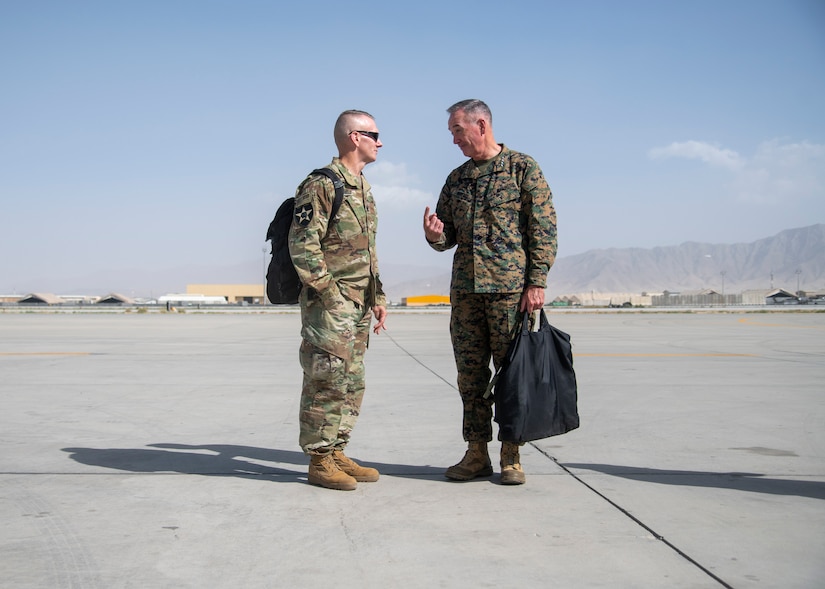
HONOLULU -- Because a world of transregional threats requires transregional networks and solutions, U.S. Indo-Pacific Command hosted a senior enlisted leadership conference here this week.

Senior enlisted leaders from across the globe came together to discuss strategic leadership and the role of senior enlisted leaders in this complex and dynamic world. Marine Corps Sgt. Maj. Anthony A. Spadaro, Indo-Pacom’s senior enlisted leader, was the driving force behind the conference.

When Spadaro began the conference two years ago, six senior enlisted leaders attended. Last year, the number grew to 16. This year, it was 20.

Army Command Sgt. Maj. John W. Troxell, the senior enlisted advisor to the chairman of the Joint Chiefs of Staff, was the keynote speaker on the first day of the conference. He called the role of senior enlisted leaders “transformational” in helping to build alliances and networks. “We are able to devote the time to each other in ways our chiefs of defense can’t,” Troxell said.

Troxell is the highest-rankling enlisted leader in the U.S. military. He advises the chairman and the defense secretary and works closely with the senior enlisted leaders of the services and the combatant commands.

Growing Relationships

The senior enlisted leaders start with professional relationships that build to friendships, Troxell said. “We do this together,” he added. “There is more of an interpersonal relationship here that allows us to grow and get after what we need to get after.”

Doing that, he explained, promotes the relationships that are so important to building interoperability. “We show our generals and admirals and elected officials the power of a collective network of senior enlisted leaders,” he said.

Each senior enlisted leader has to understand the visions, priorities and intents of commanders and political leaders, Troxell said, and senior noncommissioned officers must then develop complementary focus areas.

“If we don’t do that, we are on the fast track to irrelevance,” he said. “We need to have the personal and professional courage to do and say what needs to be said.”

Complex Operating Environment

Troxell said today’s world arguably presents the most complex operating environment in the history of modern warfare, where threats come from nations and nonstate actors looking to use new technologies in new domains to take on the United States. He also spoke about the ability of adversaries to use disinformation to push an agenda or to influence people. Globalization and the increased speed of communication makes this possible, he said.

“As senior enlisted leaders, we look at chaotic situations and shape the conditions so men and women can thrive, grow and develop and our armed forces can continue to develop and be that arm of action that defends our sovereign territory, our allies and our national interests,” Troxell told the senior enlisted leaders. “My role is to say what we are doing globally so it makes sense to our people who work regionally.”

To illustrate his point, Troxell noted the additional attention the U.S. military is paying to the Indo-Pacific region, noting that service members in other combatant commands may think their missions should have more resources and capabilities. For example, he said, troops in the U.S. Central Command area of operations are worried because they believe they have threats such as the Islamic State of Iraq and Syria, al-Qaida and al-Shabab and are losing intelligence, surveillance and reconnaissance assets and fires control.

“I think we all know that if our troops know what is going on at the strategic level and why it affects them at the tactical level, they may not like it -- they may cuss about it -- but in the end they will accept it and they will drive on the mission,” he said.

Delivering a Message That Resonates

Senior enlisted leaders speak for the troops and to the troops, Troxell said, and his message in December to troops was that ISIS has only two options: surrender or die. If they didn’t surrender, he said, there would be no mercy and service members would “shoot them in the face, or beat them to death with an entrenching tool.”

“I am saying exactly what [Defense Secretary James N. Mattis] and [Joint Chiefs Chairman Marine Corps Gen. Joe Dunford] expect me to say,” the sergeant major said. “It’s about inspiring the troops and dispiriting the enemy. And it was what the troops needed to hear, which is [that] we’re going to stay focused on this threat, we’re going to defend our collective homelands, and we’re going to refuse to allow any terrorist to influence how we raise our children and grandchildren.

“We are the spokesmen for the troops,” he continued, “and we need to deliver the messages that will resonate with the troops, will get leadership attention and people will understand the direction we need to go.”

Oklahoma Guard Aviators Deploy to Aid Hurricane Florence Relief Effort

By Army Sgt. Brian Schroeder, Oklahoma Army National Guard

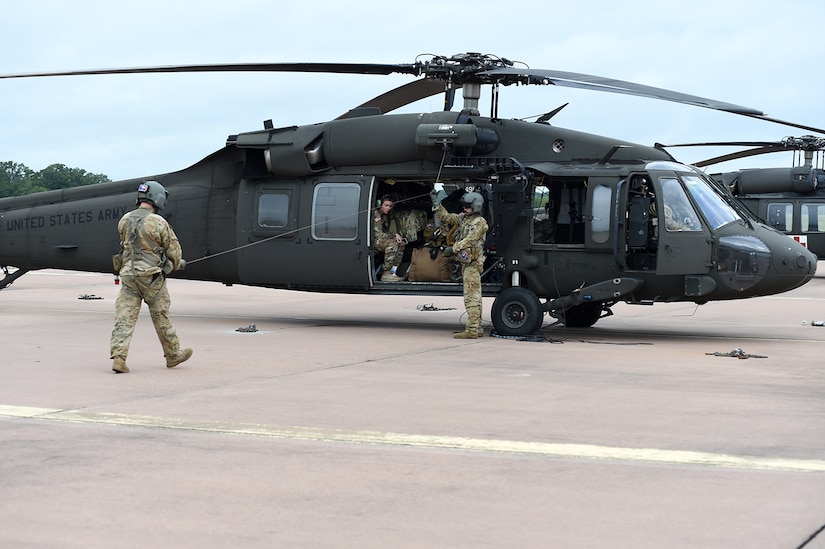
LEXINGTON, Okla. -- Soldiers from the Oklahoma Army National Guard departed yesterday from Muldrow Army Heliport here to provide search-and-recovery capabilities for East Coast citizens impacted by Hurricane Florence.

Seven soldiers from Detachment 1, Charlie Company, 1st General Support Aviation Battalion, 169th Aviation Regiment, who trained in helicopter search-and-rescue operations, are tasked to assist in Hurricane Florence relief efforts. The unit flew to Knoxville, Tennessee, and is waiting on standby until called upon by one of the states affected by the storm.

Once in Knoxville, the Oklahoma Army National Guard team of aviators, crew chiefs and an operations sergeant, will fly to and link up with Oklahoma’s Task Force 1, which includes a collaboration of Oklahoma City and Tulsa firefighter-paramedics. The unified team of aviators and firefighters regularly train together to conduct swift water rescue using dynamic and static hoists.

Rescuing Stranded Citizens

Army Chief Warrant Officer 2 John Jenkins, a UH-60 Black Hawk helicopter pilot assigned to Charlie Company, said the training for swift water rescues and hoists with the Task Force 1 has prepared the group to perform the potentially dangerous task of rescuing a person stranded after the hurricane subsides.

Jenkins said he and his crew are excited to provide a helping hand to citizens outside of Oklahoma.

“We all fall under the same flag, no matter which of the 50 states,” Jenkins said. “That’s part of putting the uniform on and doing the job. It’s not the aspect of position, rank or title. It’s about going out there and actually saving someone’s life.”

The pilots, working with crew chiefs and firefighters, will locate and hover over stranded persons in need. The crew chief will then attach the firefighter to the hoist. Once safety checks are complete, the firefighter is lowered down to the stranded individual in a basket, seat or other floating rescue device. The rescue team member will then make contact with the stranded individual, secure the person to the hoist seat and both are lifted to the cabin of the helicopter.

Depending on the number of remaining seats, Jenkins said the team will continue collecting stranded individuals, drop them at an established drop-off point, or fly the injured to an emergency facility for treatment.

“Individuals who are trapped or stuck and are exceeding the means of a normal boat rescue, they call us to help assist,” Jenkins said. “I’m looking forward to going out and taking care of the mission and making a change, not only in someone else’s life, but also going out and reaching our hand out to South Carolina, North Carolina and Virginia, showing that Oklahoma is a helping state. We’ve always been that way.”

The crew’s mission also includes operational support on the ground provided by Army Sgt. Tiffani McBride, an aviation operations sergeant with Charlie Company. McBride’s primary role is to relay weather reports to the flight crew, track the number of rescues and the crew’s flight hours to report back to her home station.

“The key thing to take forward is just to be flexible,” McBride said. “Everything can change in a matter of minutes. You’ve got to go with the flow, but it’s all about helping people. I’m looking forward to it.”