Friday, May 11, 2018

Navy Volleyball Players Save Two Lives in Florida


By Navy Lt. Cmdr. Chad Murphy, U.S. Armed Forces Sports

HURLBURT FIELD, Fla. -- As elite military volleyball players from around the U.S. armed forces competed for victory at the 2018 Armed Forces Volleyball Championship here, they might not have known they shared the court with four lifesaving sailors.

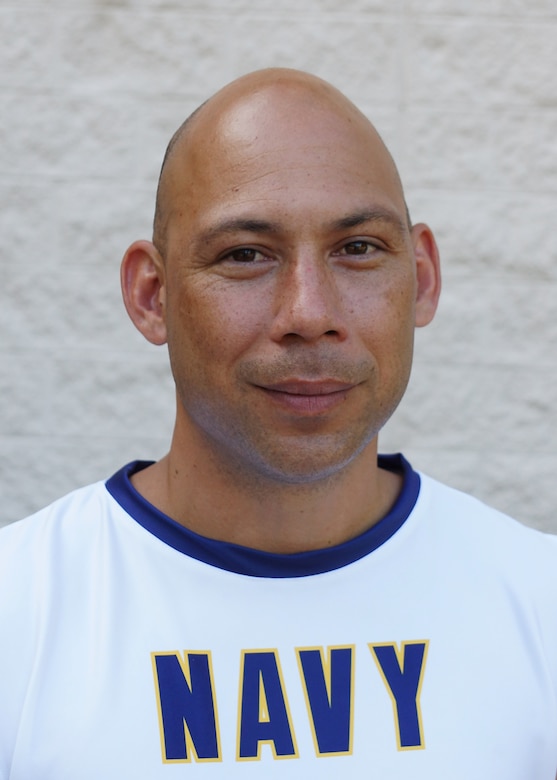
On the afternoon of May 5, 2018, All-Navy Men’s Volleyball players Chief Petty Officer Aniahau Desha, from Hilo, Hawaii; Seaman Gaston Yescas, from Tucson, Arizona; Petty Officer 1st Class Sheldon Lucius, from Pearl City, Hawaii; and Petty Officer 3rd Class Joshua Essick, from Harrisburg, Pennsylvania, risked themselves to save the lives of two teenage girls at Naval Station Mayport Beach, Florida.

These sailors bravely responded to cries for help from beachgoers, stating that two people were in trouble 75 yards off shore. Understanding the peril at hand, the four sailors entered rough surf conditions to retrieve the endangered swimmers.

“I was on the beach with my wife, and everyone showed up there, Josh, Sheldon, and Gaston. We’d just sat down, and some ladies came up the beach were yelling for help, seeing that the girls were out in the waves, needing help. They were in trouble, so we just ran into the water and got them,” Desha said.

As the rescuers reached the teenagers, one of the girls was holding on to her unresponsive friend.

Lucius pulled the conscious swimmer ashore, ensuring her safety, while Essick and the others carried the unresponsive swimmer up onto the beach.

‘She Wasn’t Breathing’

“When we got on shore, as soon as I picked her up, I noticed that she wasn’t breathing. It was obvious that she wasn’t breathing. I checked for her pulse -- there was no pulse. So we immediately started chest compressions and mouth-to-mouth,” Desha said.

Desha and Yescas conducted CPR until emergency rescue personnel arrived to relieve them.

“Since I’m a corpsman up to date with the CPR certifications and all, and I was also a lifeguard for eight years, this was honestly like a normal drill, I would say. I’ve been in a lot of incidents like this,” Yescas said.

On scene officials provided observations.

“Two teenagers are alive today as a direct result of [these sailors’] quick thinking, bravery and composure under extreme pressure,” said All-Navy Men’s Volleyball coach Gilburto Bermudez.

Thomas Lyszkowski, First Coast Navy Fire and Emergency Services assistant fire chief echoed the sentiment, saying the swimmer found unresponsive had been released from the hospital.

‘Those Sailors Put Others Before Themselves’

“Because of the actions of these sailors, she’s alive,” Lyszkowski said.

“Those sailors put others before themselves, and did so at great risk to their own safety,” added Mark Brusoe, First Coast Navy Fire and Emergency Services fire chief.

Yescas said, “It makes me feel great to hear that she made it out alive. Her mom sent us a message on Facebook to let us know that she was getting discharged, and that her daughter was going to write us a letter and send us a picture just saying thank you for what we did.”

“It’s an amazing feeling knowing that this girl’s going to see another day because of what we did,” Desha said. For the parents, especially, and as a parent myself, I couldn’t imagine hearing the news that something happened to my daughter. And if someone was there to help, I’d like them to do the same for me if it was my child. So, I’m pretty honored.”

Balikatan 2018: U.S., Philippine Forces Share Ideas, Best Practices


By Marine Corps Staff Sgt. Jackie Sanders, III Marine Expeditionary Force

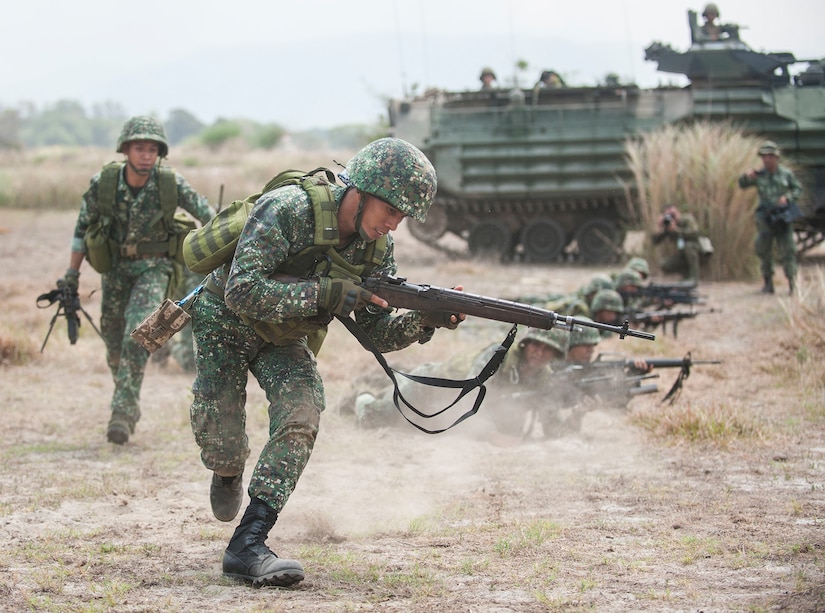
CLARK AIR BASE, Philippines -- U.S. and Philippine armed forces work to cultivate strong partnerships between the two nations by exchanging and demonstrating best practices and procedures during exercise Balikatan 2018, scheduled May 7-18 at various locations across the Philippines.

This year marks the 34th iteration of the annual training event focused on a variety of missions including humanitarian assistance and disaster relief, counterterrorism, and mutual defense. This year’s Balikatan also focuses on interoperability training events designed to enhance the combined capabilities of both the Philippine and U.S. armed forces.
Balikatan 18
‘We Want to be Interoperable’

“We came to Balikatan because we want to be interoperable with the Philippine military and with our joint counterparts,” said Air Force Lt. Col. John Matuszak, Balikatan exercise coordinator and deputy commander of the 36th Contingency Response Group from Andersen Air Base in Guam. “We learn a lot from each other just by talking and asking questions about how we do things.”

Balikatan is a Filipino term that means “shoulder to shoulder” or “sharing the load together” and characterizes the spirit of the exercise. Over the next several days, both nations will participate in multiple subject matter expert exchanges designed to enhance their capabilities.

“The good thing about these activities is that the subject matter experts in each area give their best practices to their counterparts,” said Philippine air force Maj. Arvin Gundran, operations director of the 600th Air Base Group and Balikatan subject matter expert exchange coordinator for the Philippines.

Cooperation

With Balikatan 2018, as in previous years, both nations will benefit from the increased cooperation and understanding during real-world missions.

This process allows us to both learn and teach in areas that we are responsible for, including base security, aerodrome operations and other base services, Gundran explained.

"The 36th CRG has a long history with this exercise and we’ve been coming here for the past two decades," Matuszak said. "We both participate with the intent of learning from each other, and this all builds a certain level of trust. Even if we’ve been gone for months, we can rely on the critical connections we make here."

The exercise is scheduled to incorporate multiple SMEE individuals, including command and control, flight operations, pararescue procedures, combatives and a simulated mass casualty response.

Africom Chief Details Changes Made to Mitigate Risks After Niger Attack


By Jim Garamone, DoD News, Defense Media Activity

WASHINGTON -- The incident in Niger on Oct. 4, 2017, that resulted in the deaths of four U.S. soldiers and wounding of two more have resulted in changes and adjustments to how U.S. forces are employed in Africa, the commander of U.S. Africa Command said here today.

Marine Corps Gen. Thomas D. Waldhauser briefed the Pentagon press corps on the incident and spoke specifically about how the lessons learned have led to changes throughout the command. “I will ensure that lessons learned [from the incident] are communicated to all levels within Africom as well as within the component commands, and integrate these changes into our daily operational activities,” the general said.

Army Maj. Gen. Roger L. Cloutier, Africom’s chief of staff and the investigating officer, and Robert S. Karem, the assistant secretary of defense for international security affairs, also spoke about the incident and the subsequent investigation, known as a 15-6 for the Army regulation that governs such incident reviews.

The process is designed to gain understanding of what happened via interviews with all available witnesses, imagery, reports, physical presence at the scene of the events and much more. Each service and the Defense Department has a similar process to get at the truth and to make recommendations.

Risk Mitigation, Improved Readiness

Waldhauser noted that the command did not wait until the 15-6 investigation was concluded to make changes. Soon after the incident he made changes to mitigate risk and improve readiness for American forces in Africa.

Some examples include requiring U.S. service members operating in Africom to understand the intent and guiding principles of the strategic approach when working with allies and partners. “The fundamental principles of this framework are critical to an enabling approach to security assistance,” the general said.

The strategy, he said, emphasizes employing U.S. military capabilities in a supporting role to enable African partners to address their own security challenges. “U.S. forces are in a supporting role and not as participants in direct combat,” the general said.

Waldhauser has directed additions to the minimal equipment requirements for the special operations teams that work for Special Operations Command Africa to ensure those forces maintain an improved security posture. “This includes increased firepower for force protection,” he said.

The general also directed adjustments to the mobility requirements to provide teams additional options for vehicle movement based on terrain, traffic and mission.

Clear, Unambiguous Guidance

Waldhauser also directed a comprehensive review of the concept of operations process used by the special operations component in Africa. “The changes following this review now provide clear, unambiguous guidance for submission and approval for partner force operations,” he said.

This should clear up confusion surrounding approval authorities and oversight by the Special Operations Command Africa leaders, the general said.

The 15-6 investigation into the October incident led to changes in other areas, such as pre-deployment training, force generation, unit transitions, oversight and operational support, Waldhauser said. The investigation found that pre-deployment training and personnel turbulence hampered the unit, he said. It also found that the integration and training with partnered forces in Niger was inadequate. The team did not meet the standards of familiarization and integration with the Nigerien partner force prior to conducting the initial mission on Oct. 3, the general said.

The team also did not rehearse immediate action drills before the mission. “The investigation also found the team inaccurately portrayed the concept of operations for the first of three total missions on 3 and 4 October,” Waldhauser said.

These shortcomings call into question the oversight of Special Operations Command Africa, he said.

Africom, Socom and the U.S. Army will continue to examine the results of the investigation and more as the organizations move forward, the general said.

There are about 800 U.S. service members in Niger, DoD officials said. They are there to help local forces build and learn how to provide security. The U.S. military has excellent military-to-military relations with countries in the region and they are helping those nations confront terror groups such as the Islamic State of Iraq and Syria and its offshoots, officials have said. U.S. service members also work closely with French and British forces on the continent.