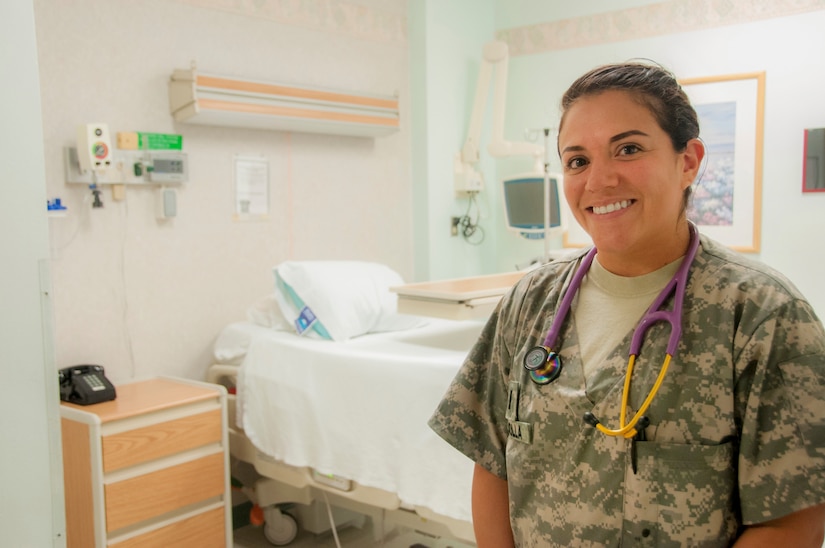
FALLS CHURCH, Va. -- Army 1st Lt. Lizamara Bedolla remembers
tanks rolling by her house, electricity turning on and off, and the turmoil of
war in her home country of Nicaragua. When she was 4 years old, she fled to
Mexico with her family as they waited for visas to be approved allowing entry
into the United States. As time passed, her family tried to make their way to
the U.S. border, where they hoped their visas would be granted.
“We know you’re down there!” Bedolla said border agents
yelled as her family navigated through underground sewer systems. Helicopters
flew above. They were detained, but after a week, Bedolla and her family
received their visas. They eventually settled in Houston.
Two years later, Bedolla saw an Army recruitment commercial
while watching television. At just 6 years old, she told her mother she wanted
to be in the Army when she grew up -- and 12 years later, that’s exactly what
she did.
“I felt such a responsibility to the country that had given
me, my sisters, and my family so many opportunities to succeed,” she said. “I
had a really strong sense of loyalty and a really deep desire to give back.”
Career Change
Bedolla started basic training two weeks after graduating
from high school. She then spent more than a decade serving as an operating
room technician, where she worked with nurses who she said helped her realize
nursing was the career she wanted.
“Before becoming a technician, I had no real experience in
the medical field or inclination to being in the medical field,” Bedolla said.
“But being an OR tech opened up a whole new world for me. That’s when I
realized I could progress in a field, go to school, and learn how to be a
nurse.”
Before she could attend nursing school, Bedolla took the
steps she needed to obtain her U.S. citizenship, applied for the Army Enlisted
Commissioning Program, and completed prerequisite classes at night after
working a full-time job. After completing her nursing degree and Officer Basic
Course, she began working as a staff nurse at William Beaumont Army Medical
Center at Fort Bliss, Texas, and has been there since.
“Being a mom, a wife, a soldier, an OR tech, going to
school, and balancing all those different aspects of my life to get to where I
wanted to be was the most difficult part throughout this journey,” Bedolla said.
She said that she’s always had support from her family and leaders that pushed
her to excel.
Soldier First
Bedolla isn’t alone in taking a longer path to nursing. Army
1st Lt. Mary Lee grew up knowing she wanted to follow in the footsteps of her
sisters and become a nurse. But her plans changed after receiving a scholarship
to a college that didn’t have a nursing program.
She graduated with a degree in health promotion, but after
spending a few years in the civilian workforce, Lee again looked into nursing
-- this time with the Army. After meeting with a recruiter, she learned the
unit she’d attach to as a combat medic was already deployed. She opted to
enlist as a photographer, which she had some experience in.
“I joined the Army with the intention of doing
photojournalism and then later going to nursing school,” said Lee, who deployed
to Iraq as a photographer and was assigned to a combat support hospital. As a
photographer, she learned to be vigilant about what’s going on around her,
multitask, and be quick on her feet, she said, adding that the experience
proved to be good training for nursing.
After spending a week watching doctors and nurses work with
service members, Lee found military nursing appealing, she said. “You’re a
soldier first. Not only do you have to be really good with your skills as a
nurse, but you also need to be able to fire a weapon and know what to do.”
Commissioning
When she returned to the U.S., she used the GI Bill to
enroll in nursing school at the University of Alabama at Birmingham. She
trained through ROTC and received her commission as a nurse in the Army when
she graduated. Lee worked in the intensive care unit at the university’s
hospital, tending to patients with head trauma.
“It really felt like that was what I was meant to do,” said
Lee, now an Army Reserve officer. “When getting into any new career, you may worry
about change, but it all just felt like a very natural transition … I knew I
wanted to be an Army nurse.”
Working with patients with traumatic brain injuries sparked
Lee’s interest in mental health and she felt the urge to go back to school for
a master’s degree. When she’s not training with the 75th Combat Support
Hospital in Tuscaloosa, Alabama, she works as a mental health nurse
practitioner providing outpatient mental health services at a community clinic.
Her work includes medication management, counseling, substance abuse use
treatment, and providing resources for the homeless community, she said.
Unique Journeys
“Everyone’s journey to becoming a military nurse is
different,” Lee said. “I took one of the longer routes by first being enlisted,
then doing ROTC, and then becoming an officer; but I encourage anybody who has
any desire to do it to at least look into it. It’s opened up so many more
opportunities to me than anything else I could have done.”
To Bedolla and Lee, the most rewarding aspects of being a
military nurse are the relationships they build with patients. They are
soldiers placed in this position to serve other soldiers when they are called
to the battlefield, Bedolla said. And they are ready to serve soldiers,
families, veterans and retirees at home. Bedolla added that she’s inspired by
the resiliency of her patients.
“It’s a difficult job, but it’s also a very beautiful part
of nursing to be there when people are at their most vulnerable, and in the
most pain physically and emotionally,” Bedolla said. “Just knowing you can have
a hand in bringing people back to health, giving them hope, and giving them a
chance to continue on with their life is rewarding."




 Posts
Posts

