Thursday, April 02, 2026

Face of Defense: A Guardian's Story, From Home to the Tactical Edge

For Space Force Tech. Sgt. Alaowei W. Monibidor, the call to deploy came with little warning. In just two weeks, he would leave his home in Maryland for a six-month tour in a location he could not be told over the phone. Yet his answer was an immediate "yes."
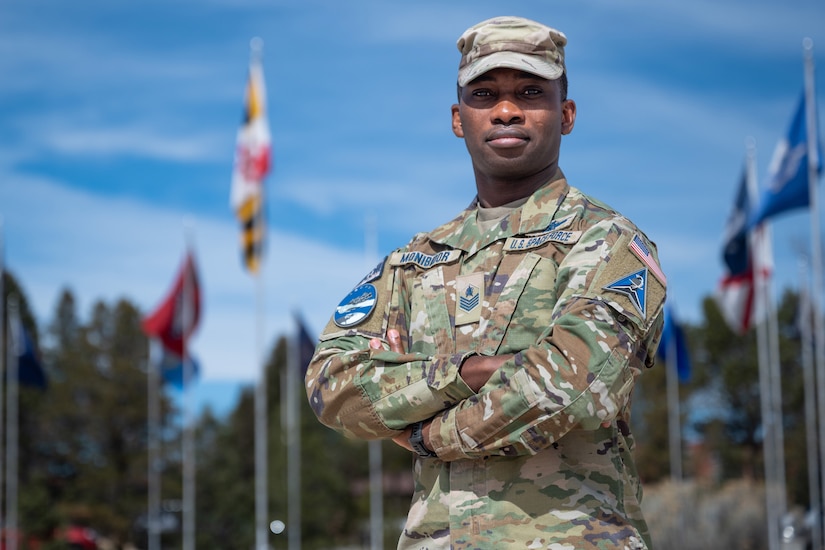
Space Force Tech. Sgt. Alaowei W. Monibidor
A guardian in a camouflage uniform stands with his arms folded outdoors during daytime, with blurry flags on poles and trees in the background.
Job: Mission Readiness Section Chief
Stationed: Fort Meade, Md.
Unit: Detachment 2, 53rd Space Operations Squadron, Space Delta 8
This rapid departure and the high-stakes mission that followed underscore the agility and commitment of Space Force guardians and the families who support them. 

As the mission readiness section chief for Detachment 2, 53rd Space Operations Squadron, Space Delta 8, Monibidor's job isn't on the front lines of satellite control. 

"Instead, my primary focus is proactive: ensuring the squadron's personnel are flawlessly trained and ready to perform their mission 24/7," Monibidor explained. 

His deployment, however, would take him to the tactical edge of space operations, supporting joint and coalition partners across Europe, Africa and the Middle East. 

Family Resilience

The decision to volunteer for a short-notice deployment was made possible by a crucial conversation he and his wife had months earlier.  

"I sought her support to accept a future deployment opportunity, and despite the anticipated challenges, she affirmed her understanding of the demands of my career path," Monibidor shared. "Her agreement was vital, as I believe deeply in confronting these professional realities as a united front." 

That unity was tested by the pace of his departure. 

"This deployment came with unexpected swiftness," Monibidor said. "This meant immediate cancellations and an abrupt shift for everyone. The final two weeks of preparation were mentally draining, but seeing my family's resilience made all the difference." 

The untold story of military families, Monibidor emphasized, is one of unseen resilience. "The family runs its own parallel mission at home. Their strength is the silent, uncelebrated foundation of our own." 
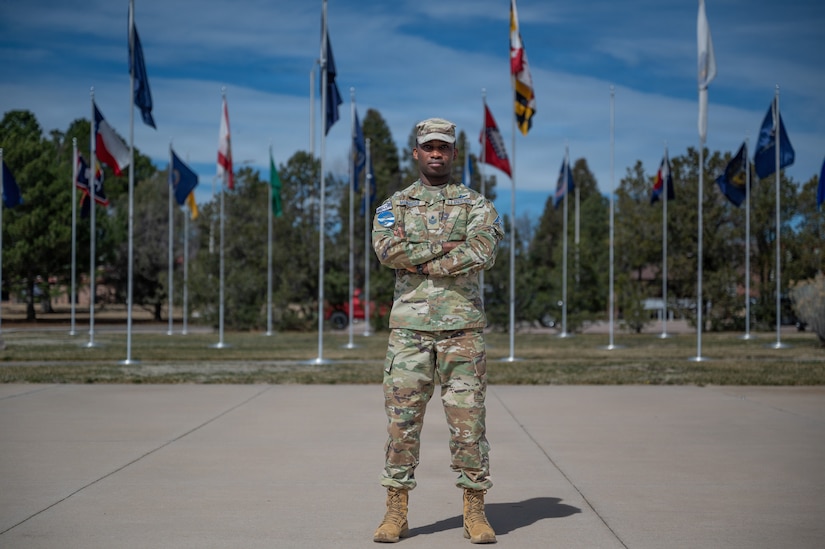
A guardian in a camouflage uniform stands with his arms folded outdoors during daytime, with flags on poles and trees in the background.

Critical Missions

His deployment saw him providing critical space electronic warfare command and control to four combatant commands, a role that shifted dramatically depending on the region. Supporting NATO and U.S. European Command involved collective defense within a formal alliance, a stark contrast to missions in the more volatile U.S. Central Command area of responsibility. 

"It was a fundamental pivot from deterring a peer adversary to actively countering violent extremist organizations and state-sponsored aggression," Monibidor noted. 

A highlight of his time supporting NATO-Eucom was his involvement in a special operations forces exercise, the highest level of strategic military simulation. 

"My role was to provide the commanders and their staff with missile threat warning[s] and options for space electronic warfare command and control against a near-peer adversary," Monibidor said.  

This experience was vital in preparing for the real-world crises he would face in Centcom's area of operations. In the Middle East, his space electronic warfare command and control, or SEW C2, support was paramount. 

"My support for SEW C2 revolved around maintaining friendly access to and superiority in the space domain, while denying or degrading the adversary's ability to use space for their operations," he explained. 

This became critically important during Operation Midnight Hammer, a complex joint operation aimed at degrading Iran's nuclear enrichment capabilities. 

"I coordinated directly with [U.S. Space Forces – Central] to synchronize the electronic warfare effects of 11 joint units, delivering unified effects for the commander of U.S. Central Command, directly enabling the strike force to penetrate Iran's contested airspace, precisely destroy its targets and return safely," Monibidor recounted. "Trust was built when leaders saw a consistent pattern. I learned to provide them with precisely what they needed to make difficult decisions." 

A Strategic Expert

Guardians like Monibidor are a decisive advantage, said Space Force Master Sgt. Austin Adams, 53rd Space Operations Squadron training superintendent and Monibidor's frontline supervisor. "Space is a complex, technical domain, and he excels in the bridge between joint and coalition partners. His strategic thinking allows him to translate our sophisticated space capabilities into understandable, synchronized effects for our partners. Having an expert like him on the front lines is mission-essential for modern, integrated warfare." 

Reflecting on his deployment, Monibidor is proud of both his professional and personal accomplishments. Professionally, he is proud of "using our capabilities to directly protect the U.S and its coalition partners from a real-world threat, proving our worth at the tactical edge." 

But his greatest pride lies with his family. "Their stability at home is the bedrock that allows me to do my job, and that is my greatest accomplishment," he said. 

This deployment served as a powerful reminder of the Space Force's integral role in modern warfare. 

"This deployment proves that space isn't a separate or future battlefield; it's integral to every joint operation happening right now," Monibidor asserted. 

Being a guardian at the tactical edge, Monibidor concluded, "means being the final link, translating our nation's strategic space assets into tangible combat effects for soldiers, pilots and sailors on the ground. At the edge, space superiority isn't a concept; it's the daily, hands-on mission of ensuring our joint and coalition partners can fight and win."

Department of War Annual Recognition of Sexual Assault Awareness and Prevention Month

The Department of War recognizes April as Sexual Assault Awareness and Prevention Month as part of its ongoing efforts to counter sexual assault in the Total Force.

"Sexual assault is unacceptable, period, and has no place in our military. It is contrary to our institutional values, the warrior ethos, and our overall readiness," said Anthony J. Tata, under secretary of war for personnel and readiness, adding that, "Awareness, prevention, and support are a shared responsibility. We expect every member of the Department of War community to help root out harmful behaviors, maintain standards, and continue to drive necessary change throughout the force."
Eliminating sexual assault in the military requires unwavering, year-round commitment. The ongoing DoW sexual assault awareness and prevention campaign, "STEP FORWARD: Prevent. Report. Advocate," calls on the Total Force to confront and counter harmful behaviors, provide victim assistance, and strengthen command climates.
"The warrior ethos demands integrity, honor, and courage — on and off the battlefield. Sexual assault violates every one of those values," said Dr. Nate Galbreath, director of the Department's Sexual Assault Prevention and Response Office. "To Step Forward is to live up to those expectations. It means having the integrity to intervene, the courage to seek help, and the honor to create a climate of dignity and respect. Those standards build a lethal force where every warfighter is safe, respected, and ready for the fight."

If you or someone you know has experienced sexual assault, please reach out to the Safe Helpline at (877) 995-5247 or SafeHelpline.org/live-chat for anonymous, 24/7, one-on-one support.

More information can be found on the SAPRO website at https://www.sapr.mil/saapm.

3rd Special Forces Group Pioneers Transformation for Multidomain Operations

In an era defined by rapid technological advancement and evolving warfare, special operations stands at the forefront of transformation. As the Army adapts to the pressing demands of a battlefield plagued with changing threats, 3rd Special Forces Group is spearheading a significant transformation.

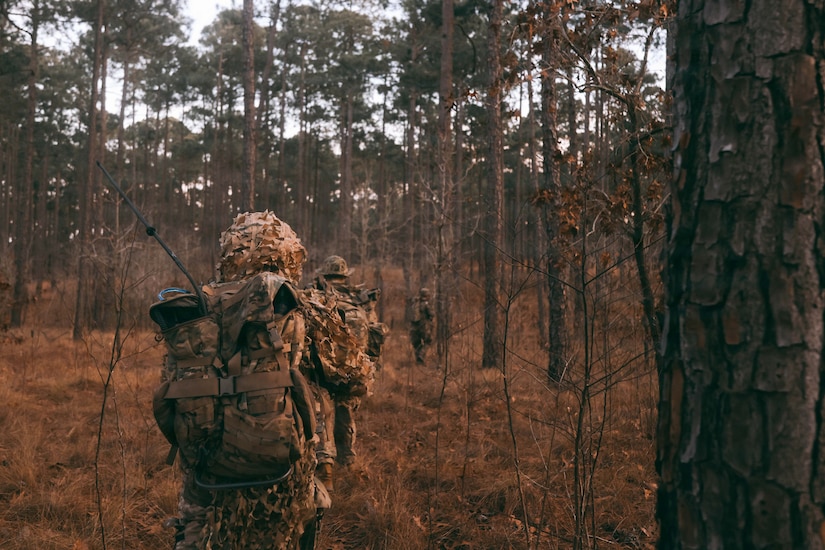
Three people wearing camouflage military uniforms and tactical gear walk through the woods.

In an invigorated effort to enable multidomain operations, 3rd Special Forces Group is transforming its legacy military intelligence company into a robust multidomain operations company. The move not only enhances the capabilities of special operations but also aligns with the broader initiative to foster interdependence, interoperability and integration across the force.

The transition to a multidomain company is just a small part of a comprehensive transformation strategy aligned with the Army's modernization efforts. The new structure consolidates the group's intelligence and electronic warfare capabilities under a single company, highlighting the significance of this shift in operational capabilities. 

As battalions across the formation use their forces to meet strategic-level objectives, the newly structured company is taking on an increased responsibility for the training and readiness of signals intelligence and electronic warfare soldiers within the formation.

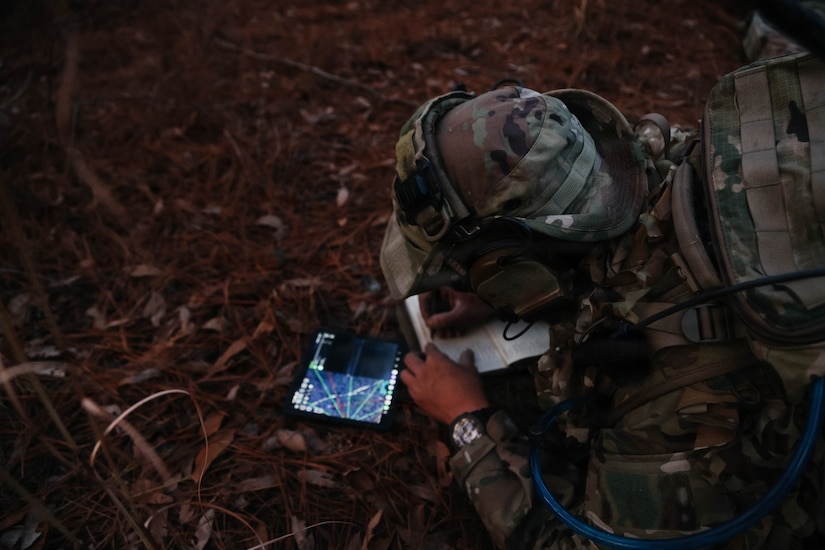
A person wearing a camouflage military uniform lies on the ground in the woods while writing coordinates from a GPS into a notebook.

"One of the key initiatives that we have done is assumed responsibility of the advanced collection training team, which is helping to facilitate a streamlined training glidepath for the group's [signals intelligence] and [electronic warfare] assets," said Army Capt. Andrew Reynolds, multidomain operations company commander.

As the company adjusts to its new role in the group, it is returning to foundational intelligence practices, drawing on insights from 1980s doctrine.

"We are analyzing current [geopolitical] events, like the ongoing conflict in Ukraine and the large-scale military drills in China, and applying decades-old doctrine to better understand how we can effectively counter near-peer threats during large-scale combat operations," Reynolds explained as he emphasized the impacts of preparing soldiers for the complexities of modern warfare.

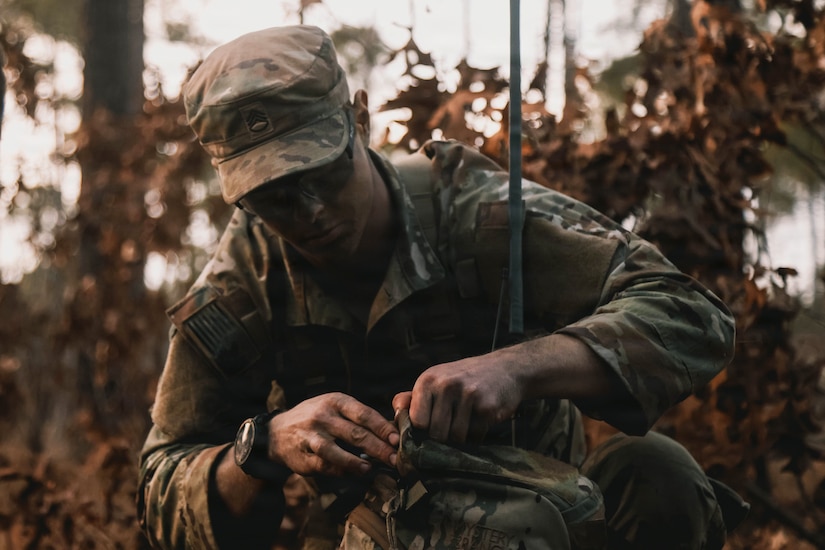
A man wearing a camouflage military uniform kneels in the woods while checking his equipment.

Despite ongoing advancements and an overall transformation of warfighting systems, the company is still developing new solutions to mitigate the challenges of integrating intelligence capabilities with the conventional force and joint partners.  

"We are working to identify solutions to efficiently and effectively support the targeting process with real-time data," Reynolds said. "The networks and systems we use do not always 'talk' to one another, leading our soldiers to use slow and outdated techniques to feed targeting."

To enhance collaboration and integration practices across the force, Reynolds and his company are engaging with Army corps-level commands to execute comprehensive training that tests the company's systems and capabilities. In line with Army transformation efforts, the formation is exploring the application of future artificial intelligence to feed joint systems, enhancing data analysis and streamlining the targeting process across the joint force.

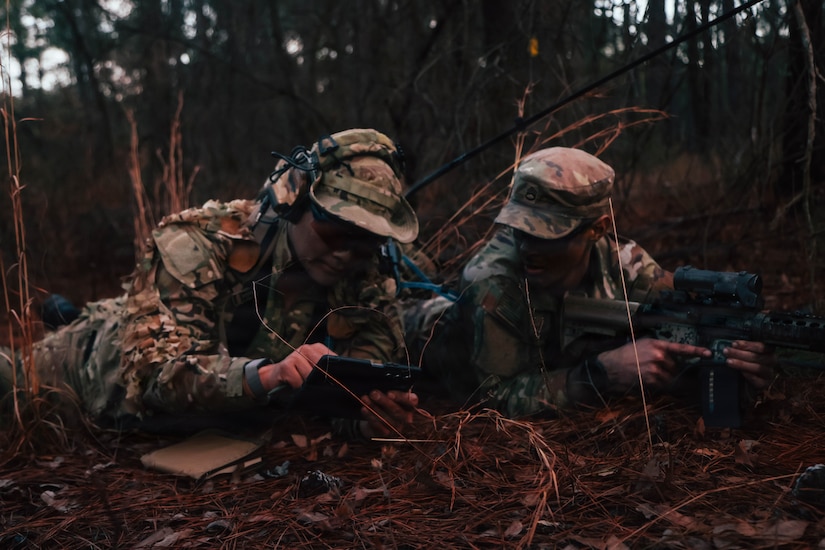
A man wearing a camouflage military uniform lies in the woods while holding up a GPS so another man, in similar attire lying next to him with a rifle in his hands, can see the screen.

Meeting the Army's growing demands requires innovation, adaptability and realistic training. To meet these demands, the company is executing certification, validation and verification training events to ensure the formation's readiness for deployment in support of large-scale combat and stability operations.

At higher command levels, the company is curating training and an operational support model that meets the unique demands of unconventional warfare in a contemporary warfare environment.

While the special operations enterprise is transforming at an unprecedented rate to meet the growing demands of warfare, no transformation is equal to it. The 3rd Special Forces Group's tailored approach not only meets the unit's unique needs but also reinforces the holistic objectives of multidomain operations.

Through this transformation, the multidomain operations company is positioning itself to lead the way in innovative intelligence solutions, ensuring the joint force is prepared to face future challenges.

Tuesday, March 31, 2026

Department of War Releases Its Annual Report on Suicide in the Military for Calendar Year 2024

The Department of War released its seventh Annual Report on Suicide in the Military for Calendar Year 2024 today. The Department remains steadfast in our commitment to suicide prevention, and takes a comprehensive, integrated approach to suicide prevention efforts to strengthen the health, safety, and wellbeing of our warriors and their families and advance force readiness.

This report presents recent suicide data for service members and — where available — their families and describes efforts underway to combat suicide across the Department. It contains the most comprehensive, accurate data available, and meets the highest standards of quality and integrity in support of our military community.

Across the Total Force, 471 service members died by suicide in CY 2024, which is less than in CY 2023, when 531 service members died by suicide. Suicide rates for service members in CY 2024 are as follows, as compared to CY 2023:

  • The Total Force suicide rate decreased by approximately 11%. 
  • The Active Component suicide rate decreased by approximately 16%. 
  • The Reserve suicide rate decreased by approximately 14%. 
  • The National Guard suicide rate increased by approximately 13%. 

Over time, for the Active Component, suicide rates have gradually increased from calendar year 2011 to calendar year 2024. For the Reserve Component, including the National Guard, suicide rates have remained stable over the same period.

After accounting for age and sex, military suicide rates have been similar to those of the U.S. population in most years between calendar year 2011 and calendar year 2024. Firearms continue to be the primary method of death by suicide.

Recognizing that every death by suicide is a tragedy, the Department will continue to take action to support our men and women in uniform and their families, promote the wellbeing and resilience of the force, and take steps to prevent suicide in our military community. The Department continues to develop its support services, in part, by expanding the availability and accessibility of clinical services, such as telehealth. As part of The Brandon Act, Service members can also self-refer for mental health evaluations. Ongoing research ensures the Department remains responsive to the evolving needs of Service members and their families.

Service members and veterans who are in crisis or having thoughts of suicide, and those who know a Service member or veteran in crisis, can call the Veterans/Military Crisis Line for confidential support available 24 hours a day, seven days a week, 365 days a year. Call 988 and Press 1, text 838225, chat online at MilitaryCrisisLine.net.

The Annual Report on Suicide in the Military is posted at: https://www.dspo.mil/.

Last Surviving World War II Triple Ace Laid to Rest


Last Surviving World War II Triple Ace Laid to Rest

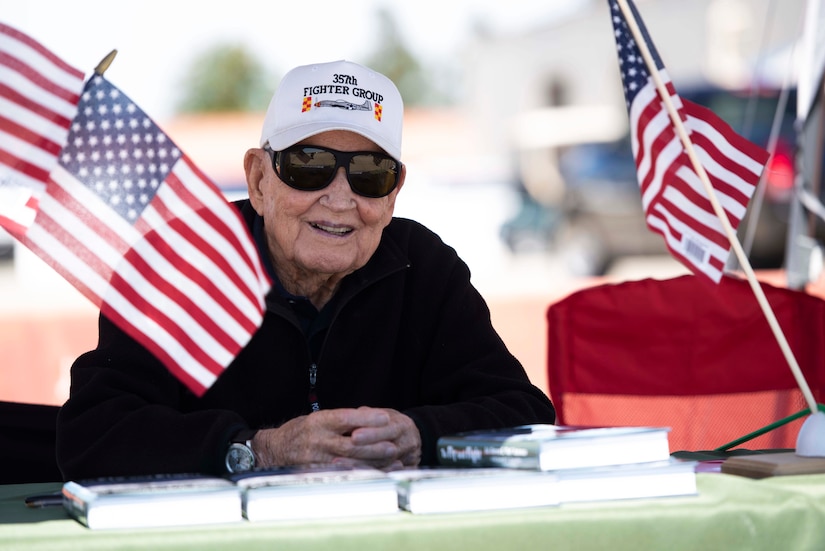
More than 100 people gathered at Arlington National Cemetery, Virginia, yesterday to honor and remember retired Air Force Col. Clarence E. "Bud" Anderson, the last surviving World War II triple ace, a pilot who has downed at least 15 enemy aircraft, and one of the most distinguished fighter pilots in American history.

An elderly man wearing a hat and sunglasses sits at an outdoor table with books and small American flags displayed in front of him.

Anderson, who passed away at age 102 in 2024, was laid to rest in section 38, joining his beloved wife of nearly 70 years, Eleanor Cosby, who was buried in 2015.

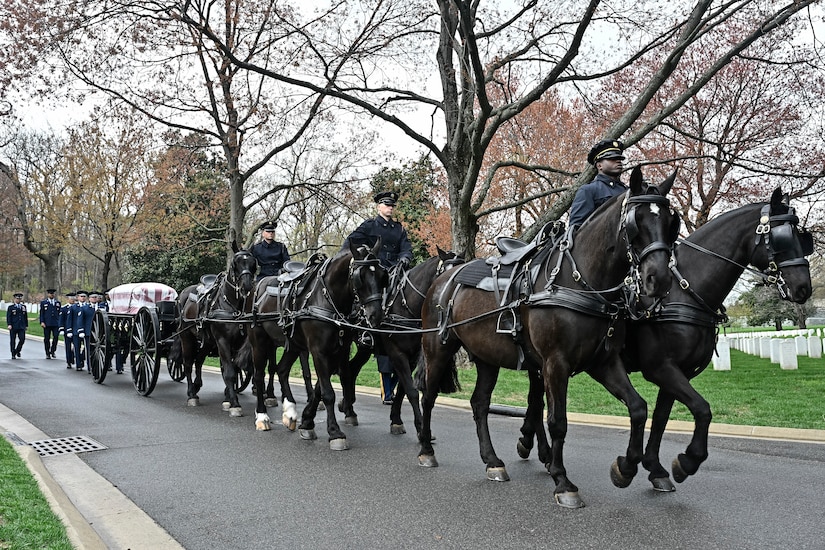
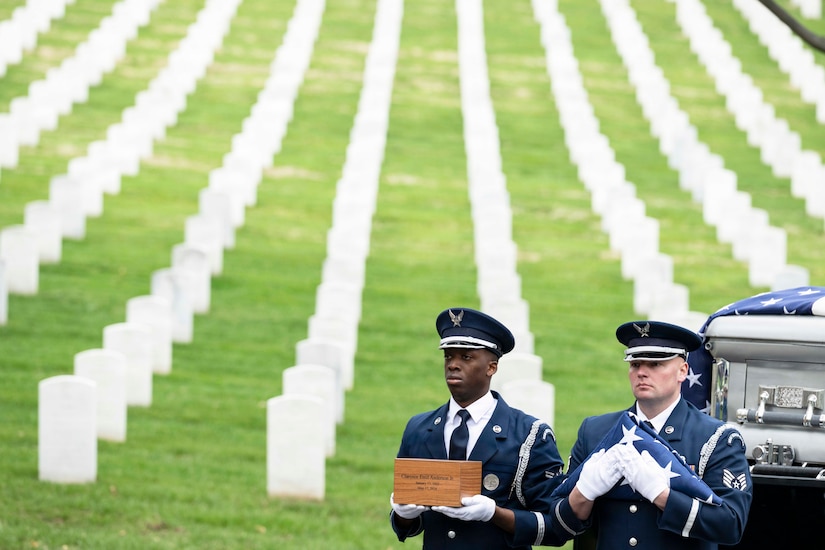
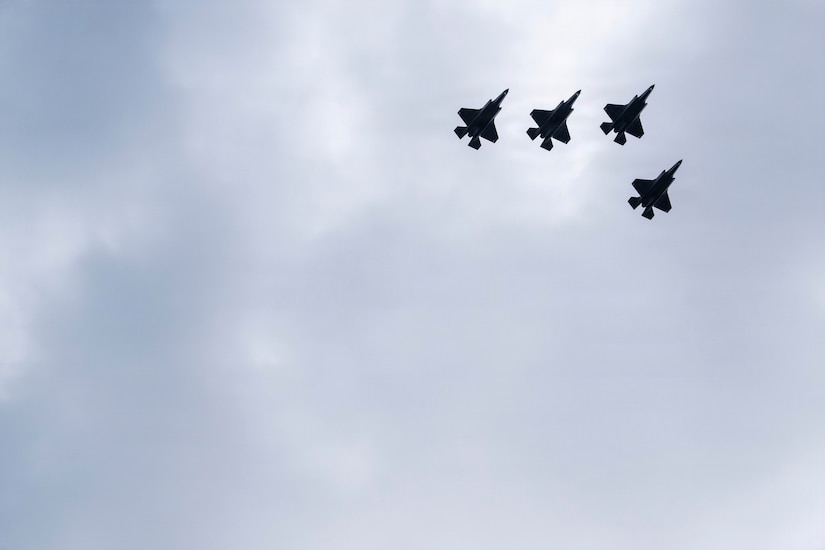
The full military funeral honors with escort service commenced with a double flyover: first by four F-35 Lightning IIs, followed by four World War II-era P-51 Mustangs, two of which bore the name "Old Crow," the name of Anderson's fighter. A horse-drawn caisson carried Anderson's urn to section 38, where an Air Force firing team shot three volleys, a bugler sounded "Taps" and a bagpiper concluded the ceremony by playing "Amazing Grace." 

Air Force Chaplain (Capt.) Andrew Lloyd, who oversaw the service, told the mourners, "In life, Bud Anderson honored the flag with his service to the nation; now, it is our honor to present our nation's flag in honorable and faithful service."  

Three men in military dress uniforms ride horses pulling a wagon with a casket on top. Six men in similar attire walk behind the casket.
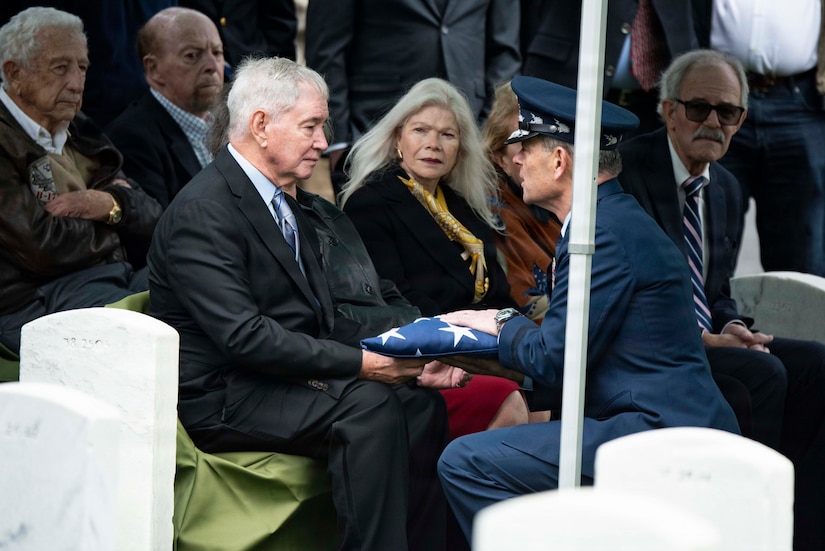
A man in a military dress uniform kneels to give a folded American flag to a man in a suit seated next to several other people in business attire.

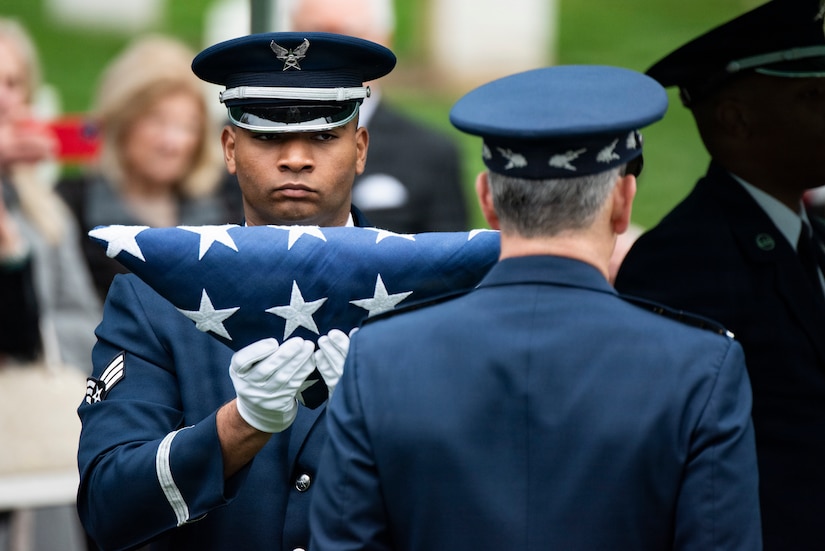
After the U.S. Air Force Honor Guard crisply folded the American flag over Anderson's urn, Chief of Staff of the Air Force Gen. Kenneth S. Wilsbach presented it to Anderson's son, Jim, who then passed it to his sister, Katherine Burlington, seated next to him. "We're sharing it," he later explained. 

Receiving the flag from Wilsbach humbled Jim. "I appreciate that he would take time out of his busy schedule to be here," he said. Both siblings were deeply moved by the service, particularly the double flyover. While Jim had worked to ensure that the P-51s would be part of the ceremony, the addition of the F-35s came as a surprise. "That was really special," he said. 

Anderson's journey to becoming an aviation legend began in the 1920s, when he was growing up on a California farm and became fascinated by airplanes flying overhead. In 1941, at age 19, he earned his private pilot's license.  

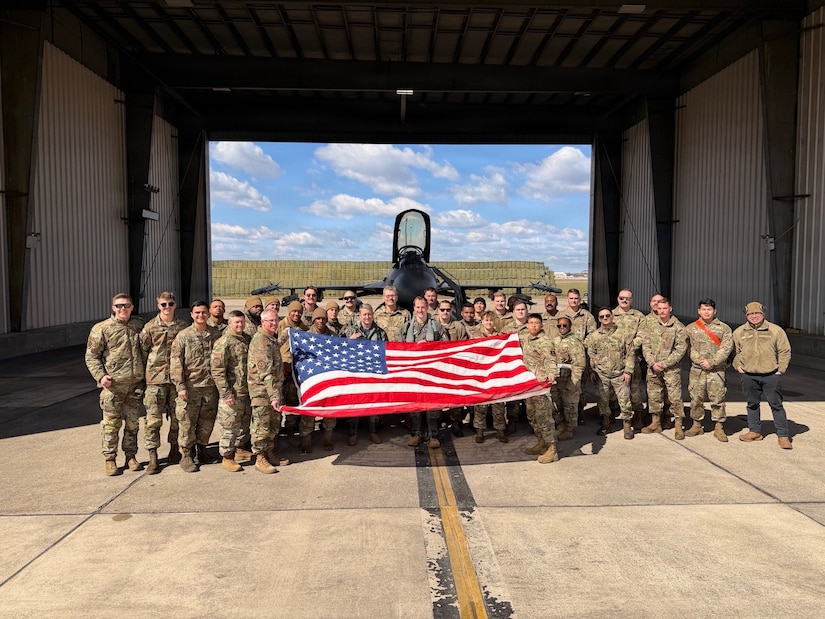
Dozens of people in military camouflage uniforms pose for a photo in front of an aircraft hangar while holding up an American flag. A military jet is in the background.

He joined the Army Air Corps Aviation Cadet Program in January 1942, shortly after the United States entered World War II, and was commissioned in the Army Air Forces  later that year.  

During World War II, Anderson served two tours with the 363rd Fighter Squadron, flying P-51 Mustangs that escorted heavy bombers — helping to win Allied air supremacy over Europe. He flew 116 individual combat missions that resulted in 16 downed aircraft and one shared combat victory, earning him triple ace status. After World War II, Anderson remained in the Army and then the Air Force, after it was established as a separate service branch in 1947.  

As a fighter pilot, test pilot, and combat and operational commander, Anderson logged over 7,500 flight hours and flew more than 130 types of aircraft. His many decorations include five Distinguished Flying Crosses, two Legion of Merits, 16 Air Medals, and the French Legion of Honor and Croix de Guerre. 

A man in a military dress uniform holds the American flag in front of another man in similar attire.
Two service members in ceremonial dress, one holding a box, the other a folded American flag, walk in front of a casket in a cemetery.

Yet Anderson's legacy is not defined by numbers alone. After he retired from the Air Force in 1972, he became a public ambassador for the World War II generation and America's achievements in aviation. Through his 1990 memoir and frequent speaking engagements, Anderson brought to life the experience of aerial combat and the significance of military service.  

Reflecting on his father's influence, Jim — who attended the U.S. Air Force Academy, served during the Vietnam War and then became a commercial airline pilot — said, "When I was in the Air Force, I tried to keep it a secret who my father was because I wanted to make [my career] my own. But eventually people would find out." 

Anderson continued flying until the age of 90. In 2022, he was honored at the nation's largest aviation convention, where he took his last flight, as a passenger, in a P-51. He was 100 years old. 

Beyond his remarkable career, Anderson was a devoted husband, father, grandfather and great-grandfather. Jim and Katherine each shared fond memories of their father. 

Four military fighter aircraft fly overhead.

The funeral at Arlington National Cemetery offered a poignant farewell to a beloved family man and aviation icon.  

"Bud Anderson is a hero and legend in air combat; he wrote the playbook," Wilsbach said. "He mastered his craft, flew with immense courage and leaves a legacy of service that will inspire generations."

Monday, March 30, 2026

First F-35A Lightning II Aircraft Arrive at Misawa Air Base

March 30, 2026 | By Air Force Senior Airman Patrick Boyle, 35th Fighter Wing

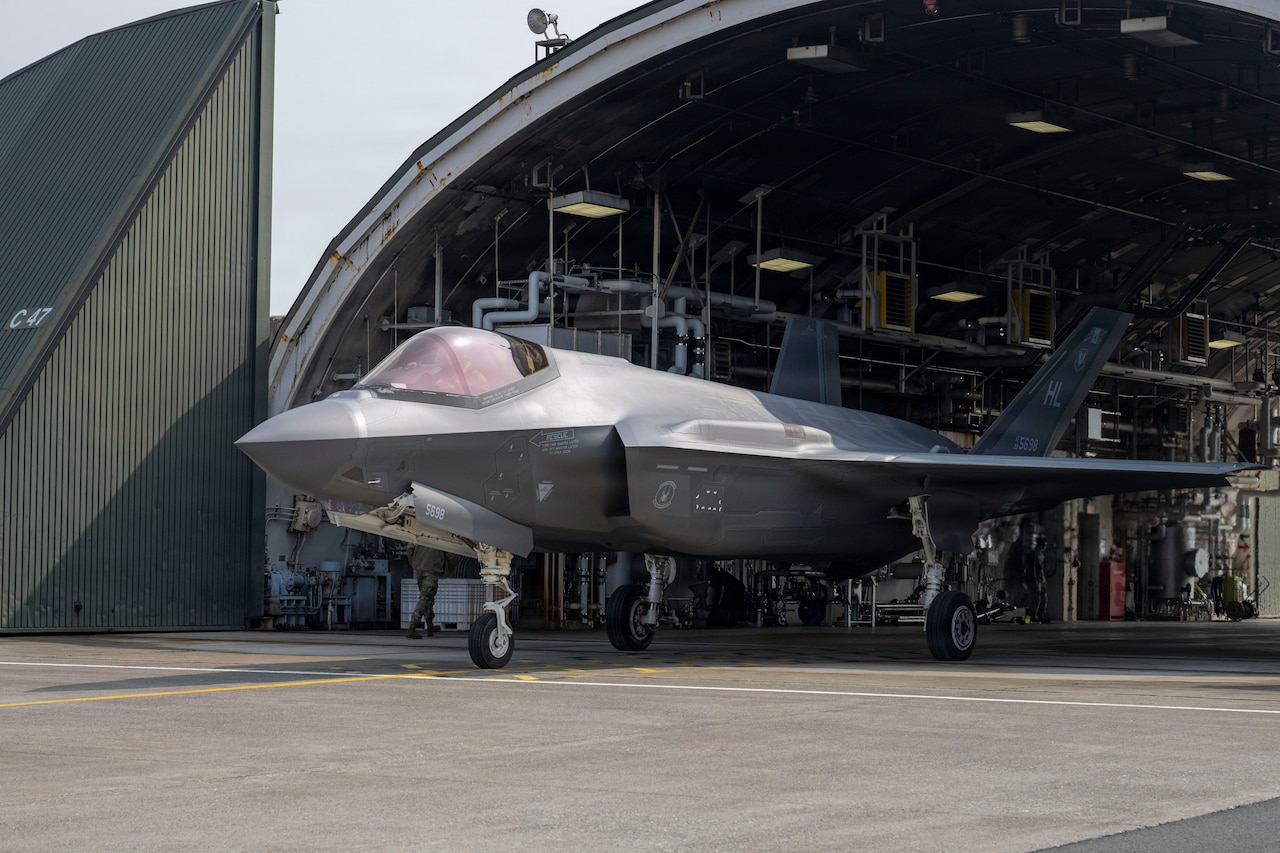
A military fighter jet is shown in front of an open aircraft hangar.

The F-35A Lightning II aircraft assigned to the 13th Fighter Squadron arrived at Misawa Air Base, Japan, March 28, marking the beginning of the squadron's transition to fifth-generation airpower and the permanent stationing of the joint force's most advanced tactical aircraft in northern Japan.  

The arrival supports the Department of the Air Force's modernization efforts and demonstrates the United States' ironclad commitment to the defense of Japan and sustaining peace through strength in the Indo-Pacific region.  

"Bringing the F-35 to Misawa underscores our long-standing commitment to Japan and the region," said Air Force Col. Paul Davidson, 35th Fighter Wing commander. "It strengthens our ability to respond quickly and operate seamlessly with our Japanese partners."  

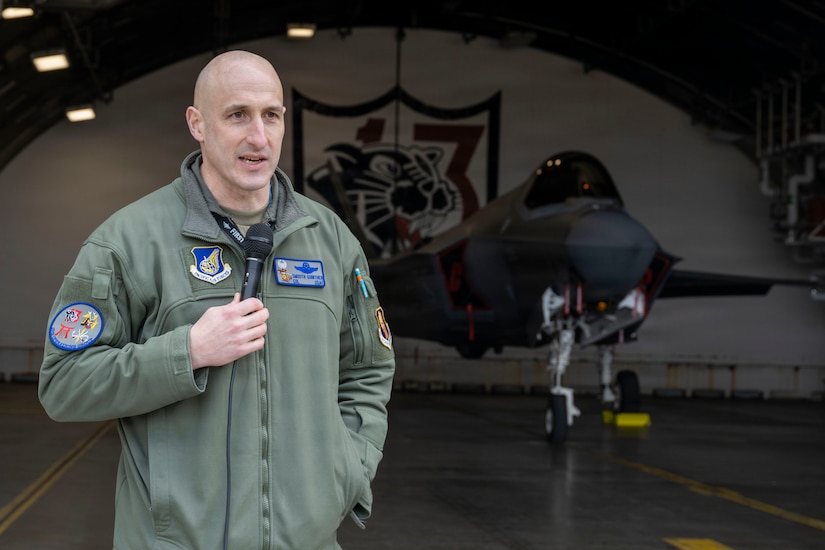
Air Force Col. Jeromy Guinther, 35th Operations Group commander, welcomed the arriving pilots on behalf of Davidson.  

A man in a military flight suit stands in front of an aircraft hangar with a microphone in his right hand. A military fighter jet is in the hangar.

"The 'Wild Weasels' stand ready to defeat any threat in our area of responsibility and beyond," Guinther said. "As you lay the foundation for Misawa's upgrade to a fighter integration wing, remember your Wild Weasel legacy, stay ready and lethal and continue to contribute to the [squadron]'s many generations of excellence."  

Misawa's forward position makes it a critical hub for maintaining regional stability. The transition to the F-35 increases fighter capability, deepens interoperability with allies and partners and enhances deterrence across the region.  

"The F-35 was tailor made to be a [Wild] Weasel platform," said Air Force Lt. Col. John Widmer, 13th Fighter Squadron commander. "Where legacy platforms performed the Wild Weasel mission with bolted-on sensors or weapons, the F-35 was built from the ground up as a sensor platform with the sensor fusion and quarterback capability we bring to the fight."

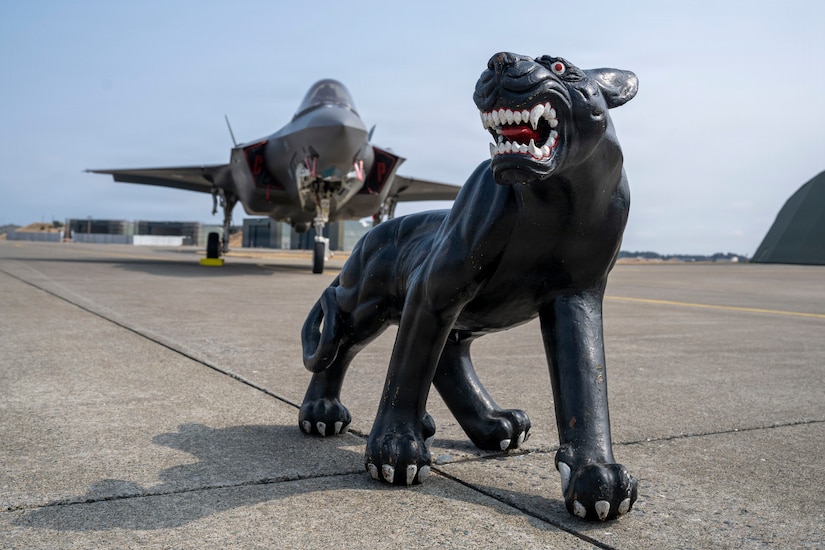
A statue of a panther is displayed in front of a military fighter jet on a flight line.

The F-35 excels at operating and surviving in advanced threat environments. Its aerodynamic performance and fully integrated avionics deliver next-generation stealth, improved situational awareness and reduced vulnerability for U.S. and allied forces.  

"As far as transitioning from the F-16 [Fighting Falcon] to the F-35, the stealth capability is obviously one of the biggest things," Widmer said. "The sensor package we bring to the fight allows us to sense the threat and manage the entire spectrum of what the enemy is fielding at us right now. It's constantly updating, constantly getting upgraded and as we continue forward, it's the place I want to be if I need to go to war."  

Airmen across the wing completed months of preparation leading up to the aircraft's arrival, including formal training, infrastructure updates and coordination to ensure the squadron can generate and sustain combat-ready aircraft.  

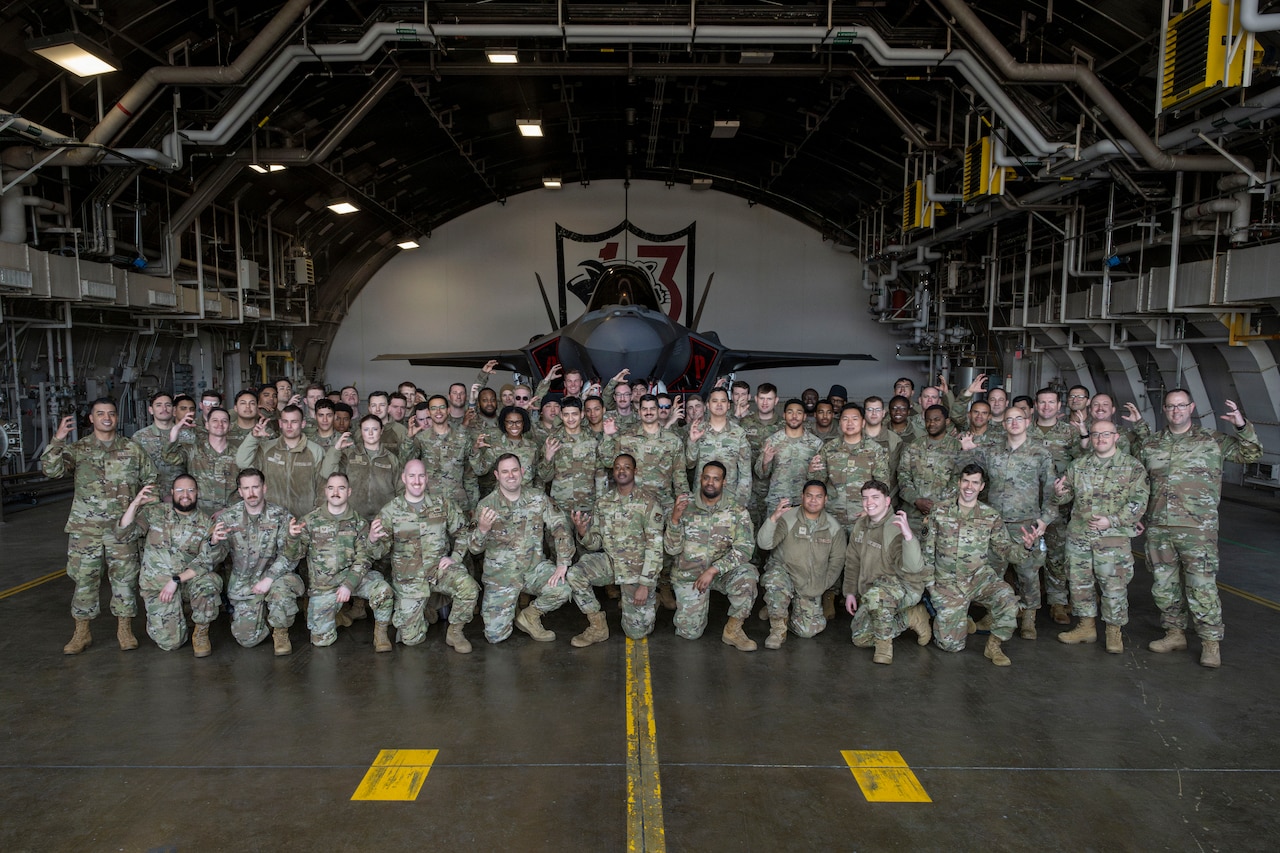
A large group of people in camouflage military uniforms pose for a photo in front of an aircraft hangar with a military fighter jet in the background.

The permanent stationing of the F-35s in northern Japan further multiplies the collective defense capabilities of the U.S.-Japan alliance and ensures the 35th Fighter Wing remains ready to defend Japan and deter aggression in the War Department's largest area of responsibility. 

Medal of Honor Monday: Marine Corps Maj. Gen. Smedley D. Butler

Few have been awarded the Medal of Honor. Even fewer have been awarded two.

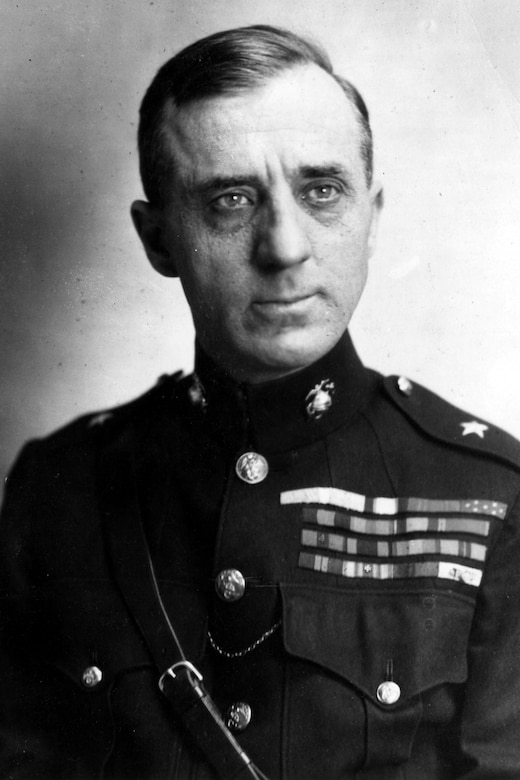
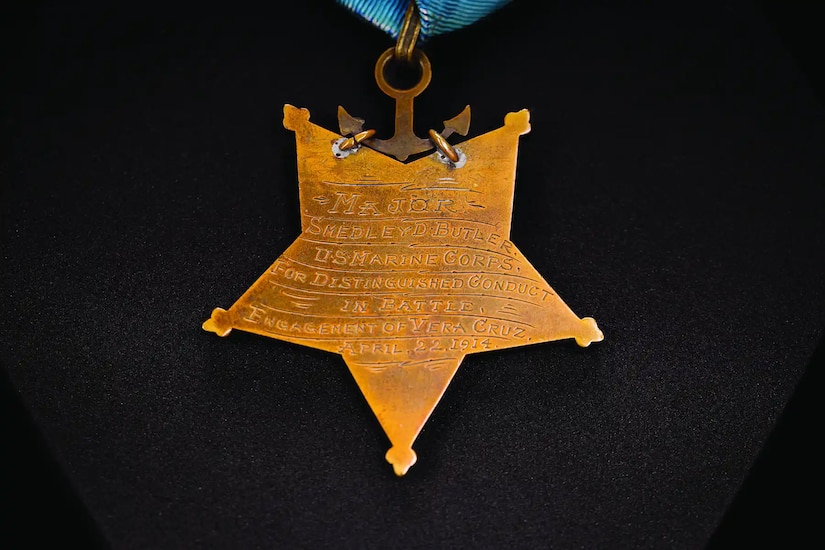
Marine Corps Maj. Gen. Smedley D. Butler was twice awarded the medal, the first for distinguished conduct during the occupation of Veracruz, Mexico, April 22, 1914, when he was a major.

A man in a formal military uniform poses for a portrait.
Butler returned the medal to the Navy, believing his actions were not worthy of the nation's highest award for valor. However, Navy Rear Adm. Frank Friday Fletcher returned it to him, ordering him to wear it.

Incidentally, Fletcher, who commanded the naval forces at Veracruz, was also awarded the Medal of Honor for the same battle.

The following year, Butler arrived in Haiti aboard the battleship USS Connecticut to quell an uprising by Cacos rebels.

On Oct. 24, 1915, about 400 Cacos ambushed Butler's patrol of 44 mounted Marines as they approached Fort Dipitie, Haiti. Despite being surrounded by the Cacos, the Marines held their perimeter throughout the night and, at dawn, launched a successful counterattack.

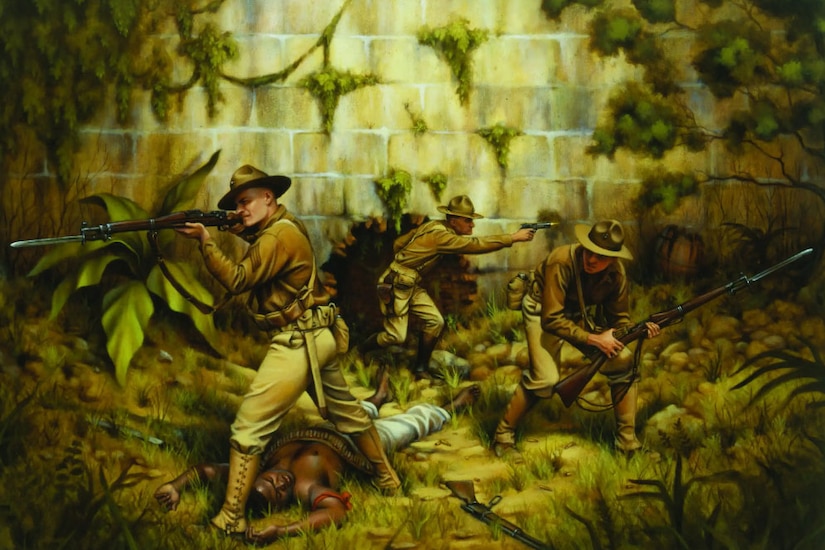
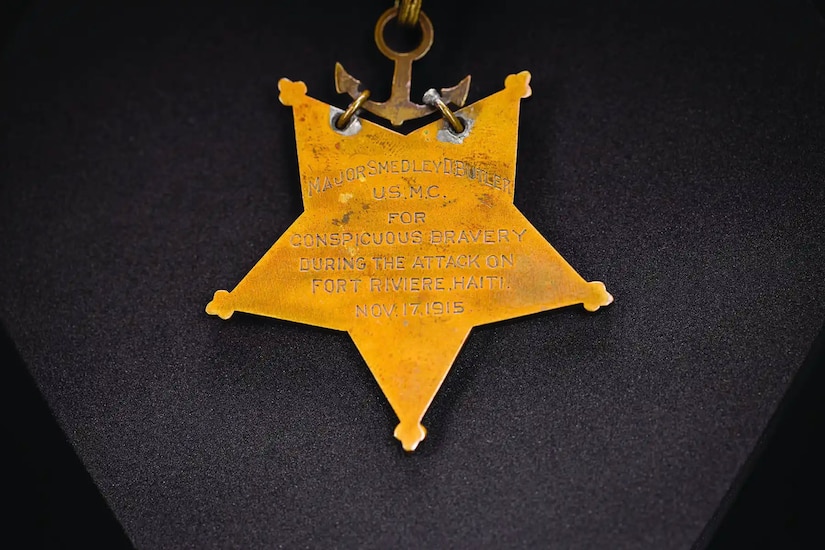
Later that year, Nov. 17, 1915, Butler led three companies of Marines in capturing Fort Rivière atop Montagne Noire in northern Haiti. Assistant Secretary of the Navy, and future president, Franklin D. Roosevelt recommended that he receive the Medal of Honor for his actions, which was approved.

A painting depicts three uniformed men with guns pointed at natives outside beside a wall.

One of Butler's senior noncommissioned officers, Marine Corps Gunnery Sgt. Daniel J. Daly, was also awarded the Medal of Honor for his actions in Haiti. Daly is the only other Marine to have received two Medals of Honor, the first for valor during the Boxer Rebellion in China, where he also served with Butler in 1900.

Although Butler served with valor during the Boxer Rebellion, he did not receive the Medal of Honor because, at the time, only enlisted Marines were eligible for the medal.

A gold-colored, five-pointed star with an etched inscription hangs from a gold-colored anchor, hanging from a ribbon.
After his distinguished military career, and at the direction of President Calvin Coolidge, Butler, while still in uniform, was appointed the Philadelphia director of public safety, in charge of the city's police and fire departments. He served successfully in this position from January 1924 to December 1925, rooting out protection rackets, bootlegging, prostitution, illegal gambling and other corruption.

Born July 30, 1881, in West Chester, Pennsylvania, Butler was commissioned a Marine second lieutenant at the age of 16, having lied about his age. In July 1898, he deployed to Guantánamo Bay, Cuba, arriving shortly after its invasion and capture during the Spanish-American War.

Butler retired from the Marine Corps in 1931. In addition to Veracruz and Haiti, Butler also fought in the Philippine-American War in 1899, Nicaragua from 1909 to 1912, and World War I in 1918.

During his service in Nicaragua, Butler earned the nickname "Old Gimlet Eye" for his piercing stare. A gimlet is a hand tool for drilling small holes.

Other nicknames he acquired included "The Maverick Marine," "The Fighting Quaker" and "Fighting Hell-Devil."

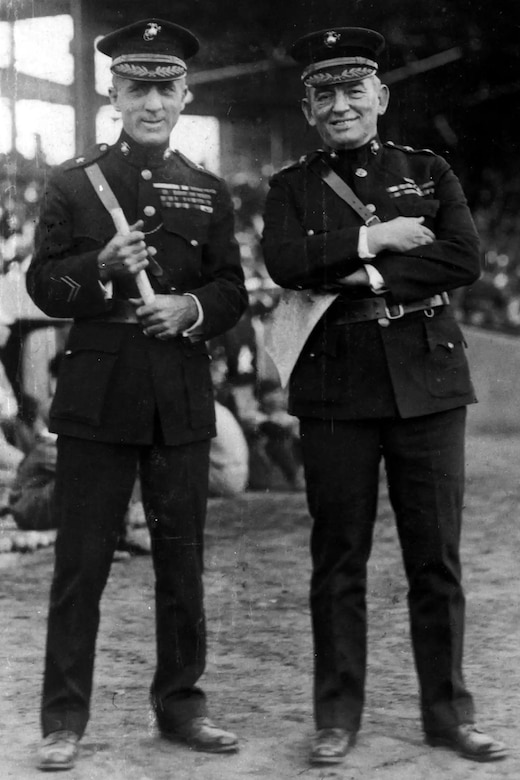
Two men in military dress uniforms smile as they pose for a photo.
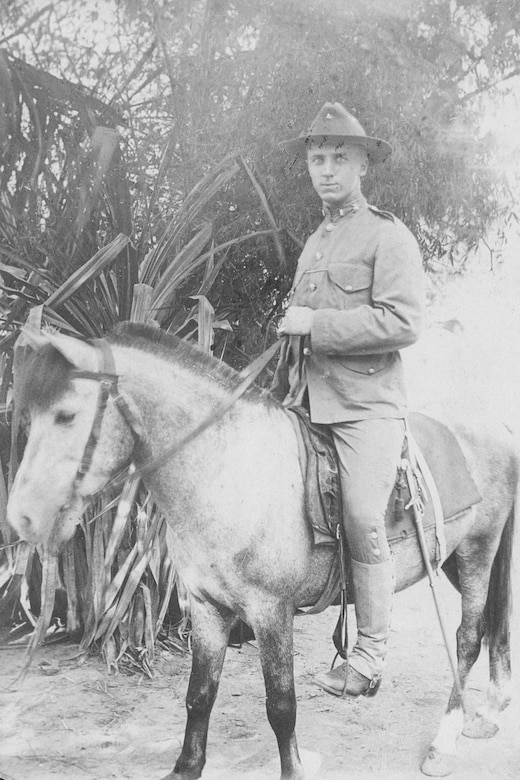
A man wearing a military uniform poses for a photo while sitting on a horse and holding its reins.
Butler died of cancer, June 21, 1940, at the age of 58 at Philadelphia Naval Hospital. He is buried in Oaklands Cemetery near the place of his birth. His childhood home at West Chester, The Butler House, was listed on the National Register of Historic Places in 1980.

The destroyer USS Butler was named in his honor in 1942 and participated in the European and Pacific theaters of operation during World War II.

Additionally, Marine Corps Base Camp Smedley D. Butler, established in 1955 on Okinawa, Japan, is also named in his honor.

Saturday, March 28, 2026

Containerized Autonomous Kitchen Expands Army Food Modernization to the Field

Building on the success of its Market 19 autonomous dining facility, the 19th Expeditionary Sustainment Command in Daegu, South Korea, is now testing a mobile version of the system that extends access to fresh, hot meals for soldiers operating beyond the garrison environment. 
 
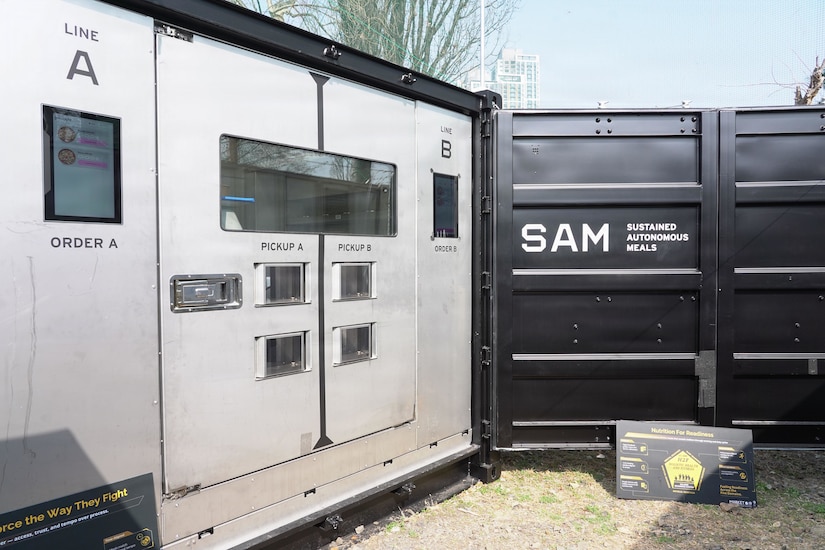
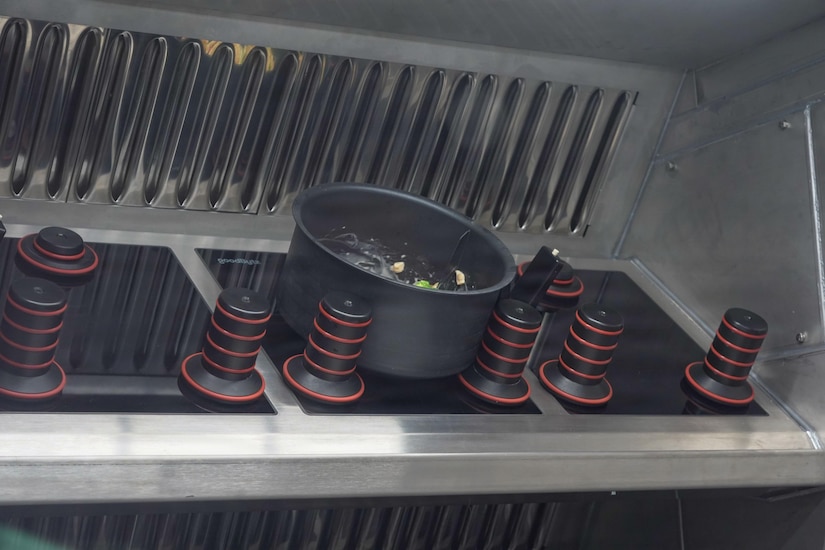
The Sustained Autonomous Meals, or SAM, is a containerized extension of the Market 19 concept, designed to deliver on-demand meals in field environments, improving both operational flexibility and quality of life. 

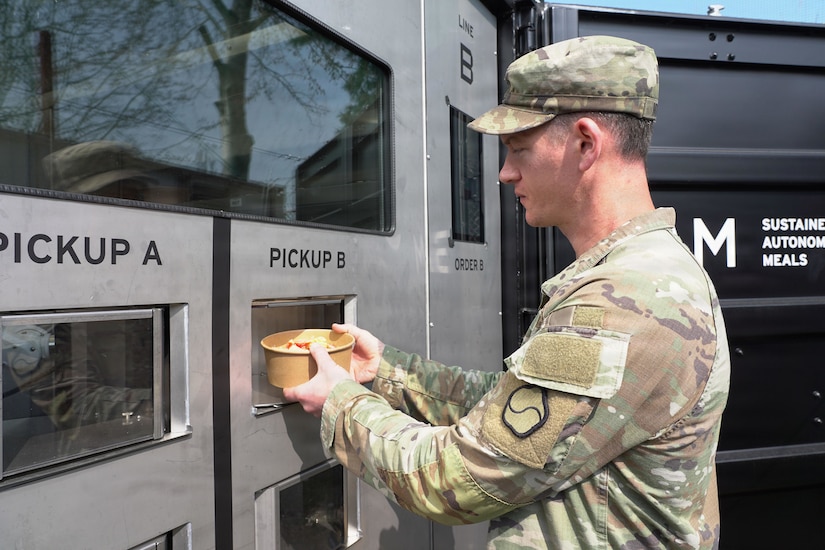
A soldier wearing a camouflage military uniform retrieves a bowl of food from an outdoor military container kitchen.

"This is essentially the same autonomous cooking system, but now in a 20-foot container that can go where dining facilities can't," said Army Chief Warrant Officer 3 River Mitchell, a food advisor assigned to the 19th Expeditionary Sustainment Command. "It allows us to bring freshly prepared meals directly to soldiers, even in austere locations." 
 
Unlike traditional field-feeding methods that rely on scheduled mealtimes or prepackaged rations, the containerized system prepares meals to order using fresh ingredients. Soldiers can access hot meals based on their operational schedule, rather than being limited to fixed dining times. 
 
"I think the biggest value is that we're driving bottom-up innovation and transforming at the speed of industry," Mitchell said. "We're not waiting on long development cycles — we're testing, learning and improving in real time." 

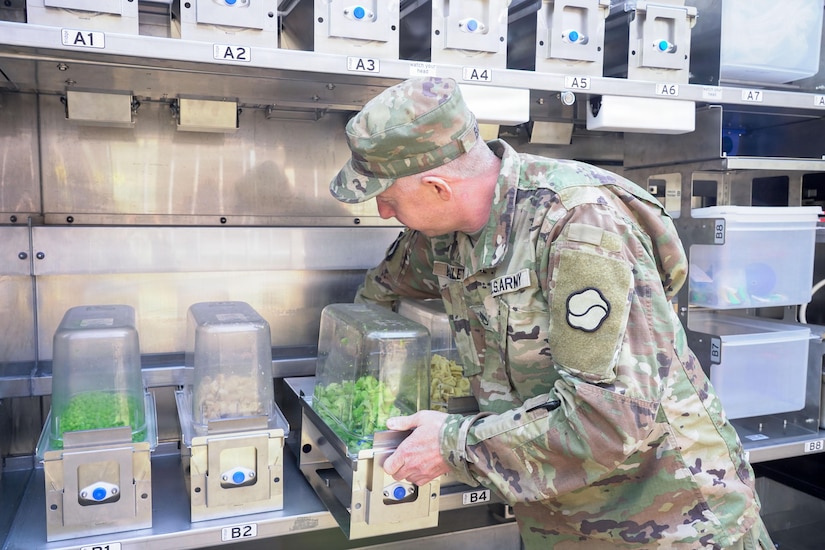
A soldier wearing a camouflage military uniform loads a container of vegetables into an outdoor, mobile military container kitchen.

The system can produce over 120 meals per hour and can operate continuously with minimal personnel, requiring only a small team for ingredient preparation and oversight. Its mobility allows it to support a wide range of missions, from port operations to large-scale exercises and forward-deployed environments. 
 
For soldiers training on the system, the impact is already clear. 
 
"It's amazing; it's going to be a change in the future for us," said Army Staff Sgt. Darren Bailey, the noncommissioned officer in charge of Market 19. "I think the robot is going to be a great asset to us and really change the culture for ... our culinary specialists." 

Several large containers sit outside in a gravel area. Each is labeled with kitchen words such as “line,” “order” and “pickup;” the container on the right is labeled “SAM, sustained autonomous meals.”
A bowl of boiling water and ingredients sits on a stove in an outdoor, mobile military kitchen.
Inside the container, two robotic arms prepare and plate meals while a built-in holding system maintains the food at the right temperature, allowing for rapid service during high-demand periods. The system can store multiple completed meals while continuing to cook additional orders — increasing efficiency without sacrificing quality. 
 
Beyond convenience, the containerized kitchen supports broader Army modernization efforts by integrating commercial technology into sustainment operations. This approach reflects a shift toward faster innovation and adaptability in the field that senior Army leaders have emphasized. 

The system also directly contributes to soldier readiness by improving access to nutritious meals. Compared to traditional mass-prepared field feeding, freshly made meals better support performance and recovery in demanding environments.

For units operating in remote or resource-constrained areas, the impact can be significant. With fewer hands needed for cooking, smaller teams of culinary specialists can feed an entire company. The containerized system gives commanders an additional option to sustain their formations, reducing reliance on prepackaged meals and expanding access to fresh food. 
 
"The data we collect here will guide decisions about future locations and applications," Mitchell said. "We want to see how this can support sustainment both in the Pacific and eventually in the continental United States."

The SAM is currently in its initial testing phase on the Korean Peninsula. Over the coming months, soldiers and leaders will evaluate its performance, scalability and potential for wider use across the Army. 
 
As the Army continues to modernize its sustainment capabilities, initiatives like this represent a shift toward more agile, soldier-focused solutions — ensuring that no matter the environment, soldiers remain fueled, ready and resilient.

Coast Guard, Northern Mariana Islands Strengthen Maritime Security Presence in Western Pacific

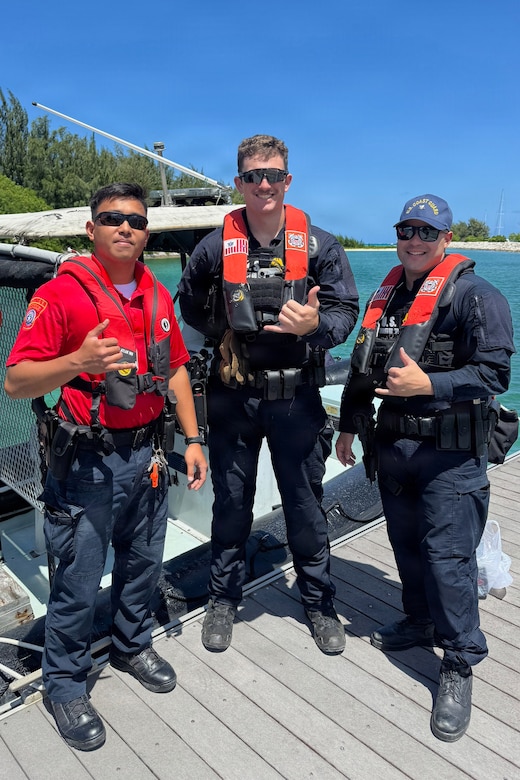
Three men wearing life jackets and sunglasses pose for a photo on a pier with a small boat moored in the background.
Earlier this month, federal and local maritime law enforcement agencies patrolled the waters and ports in and around Saipan, the capital and largest island of the Northern Mariana Islands — a U.S. territory, boarding six small vessels and launching new coordination channels that expand the commonwealth's ability to monitor and respond to threats in its surrounding waters.

The U.S. Coast Guard Sector Boarding Team led joint underway and shoreside operations alongside local agencies, March 18-22. Teams engaged 12 vessel contacts and completed six small vessel security boardings, while a joint patrol of the port of Saipan marked the first combined shoreside operation between the Coast Guard and local customs and biosecurity.

The operation also brought together key agency leaders for the first time. Boarding team members met with an Immigration and Customs Enforcement representative, the assistant director of the Northern Mariana Islands' Department of Fish and Wildlife, and the newly appointed chief of the Saipan Marine Unit — reinforcing direct lines of communication and cooperation that strengthen maritime domain awareness across the commonwealth's waters and surrounding exclusive economic zone.

"The Marianas sit at the center of Western Pacific maritime activity: commercial traffic, fishing, small vessels moving between islands," said Coast Guard Lt. j.g. Thomas Forames-Su, supervisor of the boarding team. "These operations are about more than boardings. We're strengthening the relationships and shared awareness that let us and our partners act faster and more cohesively."

Maritime domain awareness is a shared responsibility across federal, local and community stakeholders. The islands' economy depends heavily on the free flow of maritime commerce, fishing and tourism, all of which require safe, well-monitored waters. Joint operations, like this one, strengthen the network of agencies and protect those interests every day.

Building on the momentum from these operations, the Coast Guard and local partners are planning additional joint patrols, dockside security boardings and coordinated cutter operations, like the U.S. Coast Guard cutter Frederick Hatch's recent patrol, in the waters around Saipan and to the north. Agencies are also working to deepen communication protocols and formalize interagency coordination agreements to expand joint response capabilities across the region.

Thursday, March 26, 2026

Leaders Say Nuclear Forces, Space Domain Paramount to National Security

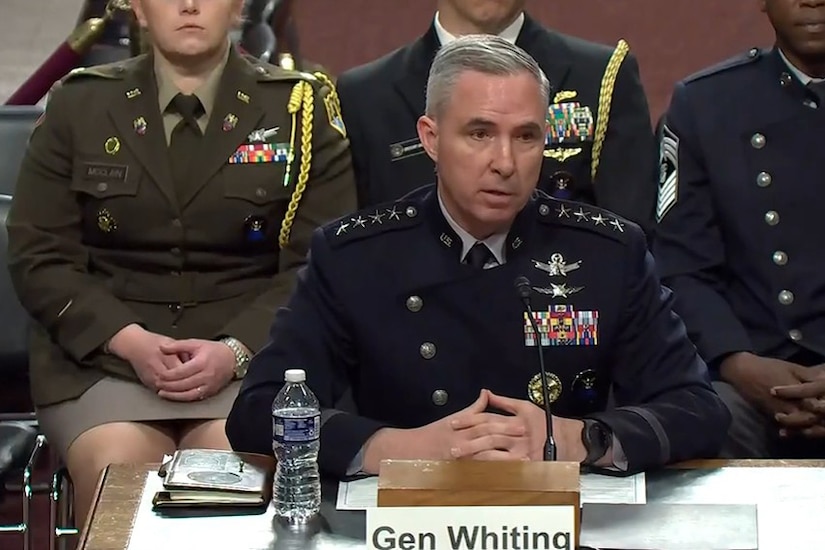
Protecting America's space systems is essential for national security because so many military capabilities rely on them — including precision navigation, global communications, missile warning and real-time intelligence, said Space Force Gen. Stephen N. Whiting, commander of U.S. Space Command, who testified today in Washington before the Senate Armed Services Committee.

A man wearing a formal military uniform speaks into a microphone while seated at a table. There are three people in similar attire seated behind him.

Space systems were critical to mission success in recent operations, including Midnight Hammer, Absolute Resolve and currently Epic Fury, he said.

"Should an adversary degrade or destroy our space capabilities, the joint force's ability to fight as it is sized and designed would be immediately and materially impacted," Whiting said, adding that opponents are moving at an alarming pace, developing and deploying capabilities to deny the War Department the use of space.

China's space presence has grown exponentially, operating over 1,300 active satellites, a 667% increase since 2015, including more than 510 intelligence, surveillance and reconnaissance satellites.

They are using these capabilities to integrate military, space-enabled effects and fielding weapons designed to outmaneuver and destroy U.S. satellites, he said.

Russia has capabilities designed to disrupt U.S. space assets, "including the potential placement of a nuclear weapon [in] orbit — the single greatest threat to our space architecture," Whiting said. "Armed conflict in space is not inevitable, but should deterrence fail, the integrated space power of our team will provide a decisive advantage."

The general listed his top funding priorities for fiscal year 2027, which include fielding integrated space fires, active protection of satellites, enhancing battlespace awareness, building an integrated command and control system, and providing sufficient cyber defenses for the space domain.

The command is making good progress in moving its headquarters from Peterson Space Force Base in Colorado to Redstone Arsenal in Alabama, he said.

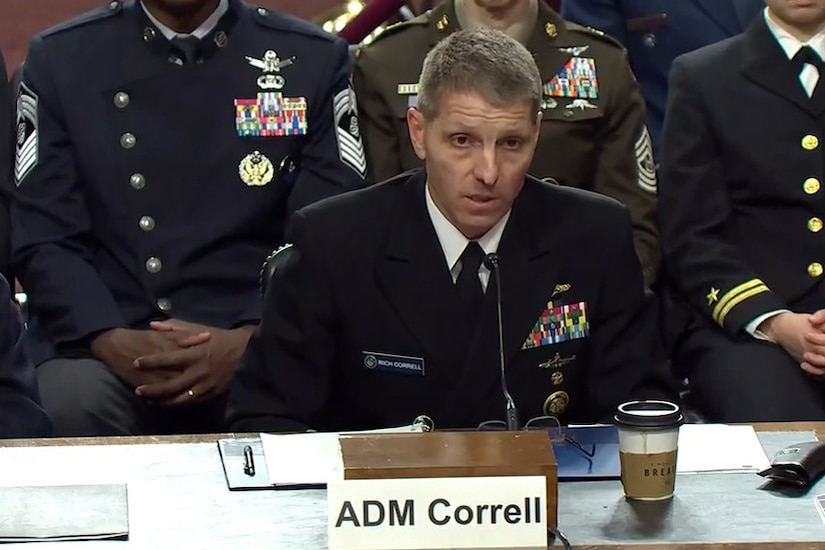
A man wearing a formal military uniform speaks into a microphone while seated at a table. There are three people in similar attire seated behind him.

Navy Adm. Richard A. Correll, commander of U.S. Strategic Command, who also testified today, said that the nation's nuclear forces are the foundation of national security.

"Stratcom and its components stand ready, not seeking out confrontation, but deterring strategic attack and underpinning all Department of War operational plans," the admiral said.

The challenge is to deter great power conflict and manage the complexities of deterring multiple nuclear competitors simultaneously, all while adapting to rapid technological change and advancements, Correll said.

Some of those challenges include cyber threats, counter-U.S. space capabilities, a contested electromagnetic spectrum, novel enemy missile systems and supply chain issues.

"As we bring the B-21 [Raider] bomber, the Columbia-class submarines and the Sentinel intercontinental ballistic missile system online, we will ensure the credibility of our deterrence for decades to come," he said.

Wednesday, March 25, 2026

Department of War and Lockheed Martin to Accelerate PrSM Deliveries, Putting Production on a Wartime Footing

The Department of War (DoW), in partnership with Lockheed Martin, today announced a new framework agreement to accelerate the production of the Precision Strike Missile (PrSM). The agreement is a direct outcome of Secretary Hegseth's mandate to move faster, put the defense industrial base on a wartime footing, and build the Arsenal of Freedom.

Under the agreement, Lockheed Martin will make targeted investments in advanced tooling, facility modernization, and critical testing equipment to slash production lead times. By focusing on these critical industrial base elements, the Department is ensuring this deep-strike capability can be delivered to the warfighter faster and more efficiently than ever before. This framework agreement also establishes the potential to negotiate a multi-year contract for up to seven years, should Congress authorize a multi-year contract in the future.

"Through this agreement, we are actively building the Arsenal of Freedom with speed and urgency," said Michael Duffey, Under Secretary of War for Acquisition and Sustainment. "By empowering industry to invest in the factory floor, we are building a decisive and enduring advantage for our warfighters to outpace any potential adversary." 

This initiative is a core component of the Department's broader Acquisition Transformation Strategy and the work of the Munitions Acceleration Council, executed in close collaboration with the Army and several DoW components, including the Economic Defense Unit.  By forging partnerships with industry leaders, the Department of War is ensuring that the Arsenal of Freedom and the industrial base remain robust, responsive, and capable of delivering speed, scale, and resilience needed to deter aggression and ensure the United States and its allies are prepared to prevail in any conflict.

Department of War and Honeywell Aerospace Forge Agreement to Surge Production of Critical Munitions Technology

The Department of War, in partnership with Honeywell Aerospace, today announced a framework agreement to surge production of critical components for America's munitions stockpile, including navigation systems, Honeywell Assure™ actuators, and electronic warfare solutions.  By providing a long-term, stable demand for critical munitions, the Department has unlocked a $500 million multi-year investment from Honeywell Aerospace to modernize and expand its manufacturing capacity, marking a key victory for the defense industrial base that directly answers President Trump and Secretary Hegseth's call to build a resilient and enduring Arsenal of Freedom.

This agreement is a direct outcome of the Department's Acquisition Transformation Strategy, which empowers direct engagement with key suppliers to ensure production capacity increases across the entire supply chain, not just at the prime contractor level. The result is a more robust and responsive industrial base, capable of equipping the American warfighter at the speed and scale necessary to deter and defeat any adversary.

Through this agreement, Honeywell Aerospace will accelerate the delivery of components that form the technological backbone of America's military advantage. Production will be ramped up for the navigation systems that guide precision munitions, the high-performance actuators that give our missiles their critical maneuverability, and the advanced electronic warfare solutions that dominate the battlefield.

"Our strategy is to provide the long-term demand signals that unlock private investment, and this half-billion-dollar commitment from Honeywell Aerospace demonstrates we are succeeding," said Michael Duffey, Under Secretary of War for Acquisition and Sustainment. "Thanks to the leadership of President Trump and Secretary Hegseth, we are building the deep and dominant Arsenal of Freedom our nation requires by ensuring our entire industrial base can deliver at speed and scale."

This agreement was made possible through close collaboration across the defense enterprise. The Department's Munitions Acceleration Council is working in concert with industry leaders, including prime contractors Lockheed Martin and RTX, to ensure demand signals flow down to critical suppliers like Honeywell Aerospace, enabling this landmark investment in the nation's security.

Next Generation of Airmen Sustain Deterrence Mission

At Vandenberg Space Force Base, California, and other intercontinental ballistic missile bases, maintaining the nation's strategic deterrence requires precision, teamwork and a high level of responsibility from the missile maintainers supporting the mission.

A rocket sails through the air, leaving a bright trail in the night sky.

Many of them step into the role early in their careers, working on complex systems that support missile test operations and ensuring the reliability of the country's missile deterrence. 

These service members prepare systems used during test launches conducted at Vandenberg and maintain ICBMs held at F. E. Warren Air Force Base, Wyoming, Minot Air Force Base, North Dakota, and Malmstrom Air Force Base, Montana. Their work demonstrates the reliability and readiness of the nation's strategic capabilities. 

Air Force Staff Sgt. Cameron Struckmeier, an electromechanical team chief assigned to the 377th Flight Test Missile Maintenance Squadron at Vandenberg, has spent almost nine years supporting different parts of the missile maintenance career field. He started his career working on the air-launched cruise missile system at Barksdale Air Force Base, Louisiana, before moving to the ICBM mission.

Another maintainer, Air Force Staff Sgt. River Ramey, team chief of the missile maintenance squadron, has served for more than six years. He began his career supporting the ICBM mission at Malmstrom before later transferring to Vandenberg.

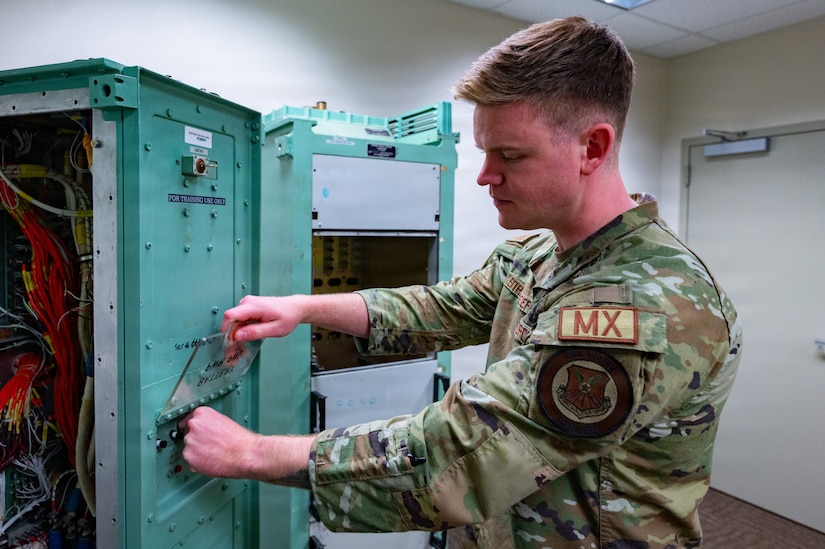
A man in a camouflage military uniform checks electrical equipment inside a room.

Missile maintenance airmen begin their careers in technical school before moving into on-the-job training at their first duty station.

Preparing for a missile test launch requires coordination across multiple teams and sections. Leading up to a launch, maintainers complete inspections, prepare equipment and review procedures to ensure each step of the process is completed safely and correctly. 

Operations intensify as launch day approaches. Maintenance teams may work longer hours while preparing equipment and ensuring systems are ready for launch. 

For many maintainers, witnessing a missile launch for the first time reinforces the significance of the mission they support. Test launches conducted at Vandenberg replicate the procedures used for operational launches and demonstrate the reliability of the weapon system.

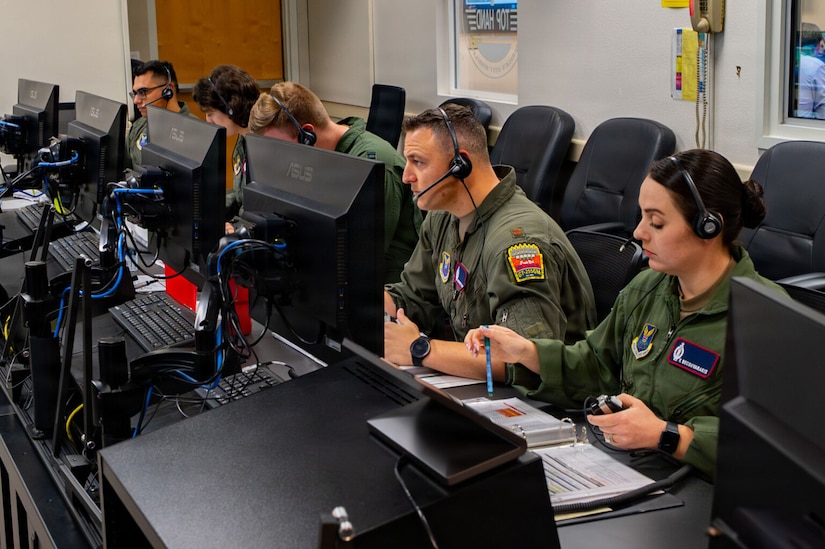
Five people in military flight suits wear headsets and look at computer screens indoors.

"My first shift at Vandenberg was actually a launch night," Struckmeier said. "It smells like the Fourth of July, and you can feel the heat coming off the launch tube." 

After the launch, Struckmeier realized that the test process was identical to the real thing. "That was sobering in a good way," he explained. 

Supporting mission asset systems requires strict adherence to technical orders and maintenance procedures. Even minor errors can affect mission success, making precision and attention to detail essential parts of daily work. 

"The tiniest mistake on a weapon system is catastrophic," Struckmeier said. "Globally, what we do here shows the world that the system works. If maintenance mistakes cause launches to fail, adversaries might start questioning our capabilities. So, proving the system is reliable is extremely important." 

Through their time supporting the mission, both team chiefs said the experience has contributed to significant professional and personal growth. As they gained experience, their responsibilities expanded to include supervising technicians, ensuring safety standards are met and supporting mission readiness.

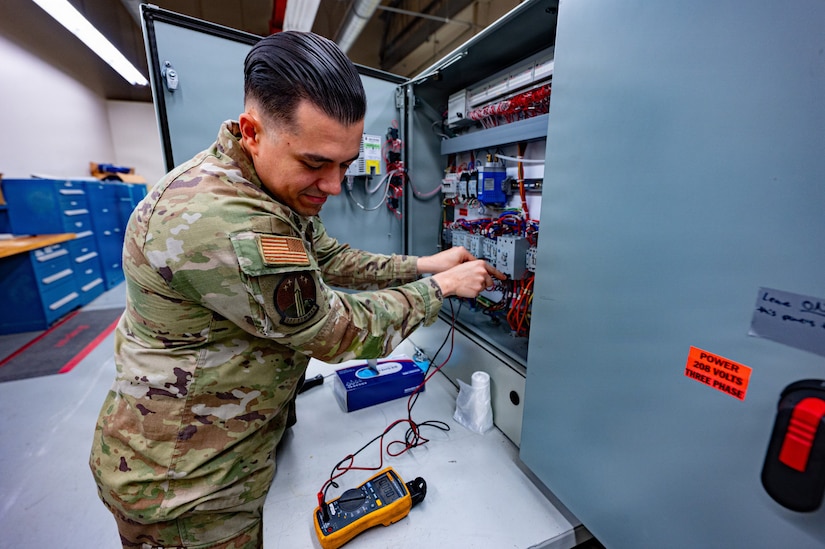
A man in a camouflage military uniform checks a voltage meter while inspecting electrical equipment inside a large room.

"My mindset has evolved a lot here at Vandenberg," Ramey said. "Because the equipment is mission-certified, we need guidance before making certain changes or repairs. So, you have to be very mindful of everything you do."

While many people in their 20s are still establishing their careers, airmen supporting the ICBM mission often take on responsibilities that require a high level of technical knowledge and accountability. Although the work can feel routine daily, events such as missile launches and the global attention they receive highlight the broader significance of the mission. 

Maintainers supporting the mission take pride in contributing to a capability designed to preserve stability and deter conflict. Much of their work happens behind the scenes, where success often means systems function exactly as intended. 

"Sometimes we see what adversary countries say about it and how the public reacts," Struckmeier said. "It's cool seeing recognition for a job that usually goes unnoticed, because a good day means nothing happens."

The reliability of the nation's strategic deterrence depends not only on the systems themselves, but also on the highly trained young airmen responsible for maintaining them. Through their work, the next generation of maintainers continue to support a mission that plays a critical role in national security.

Pearl Harbor Survivor Celebrates 106th Birthday With Navy Talent Acquisition Group New England

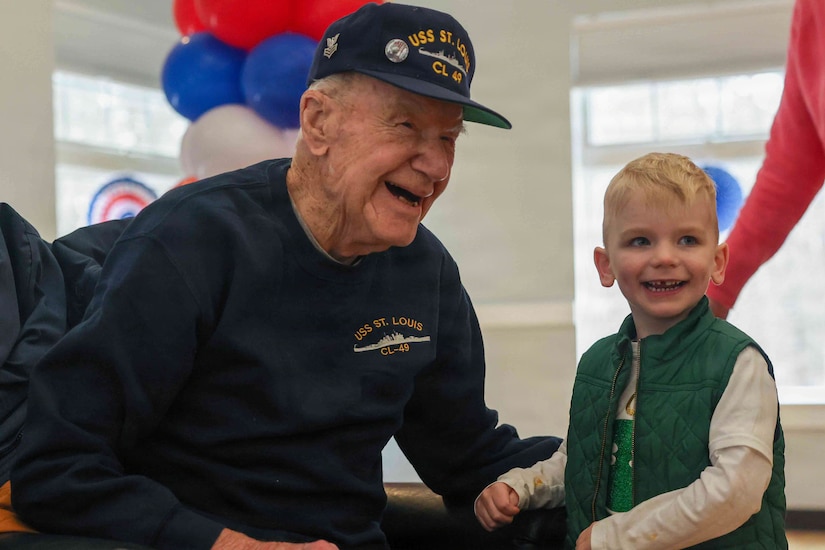
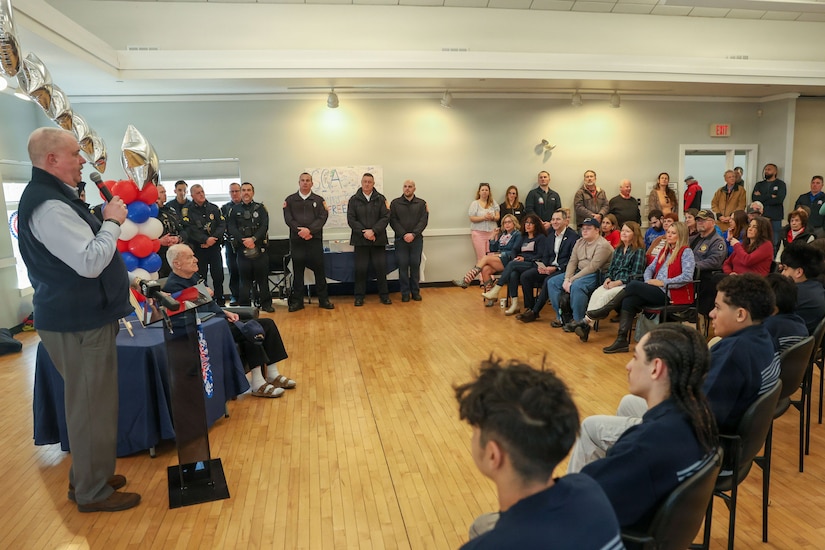
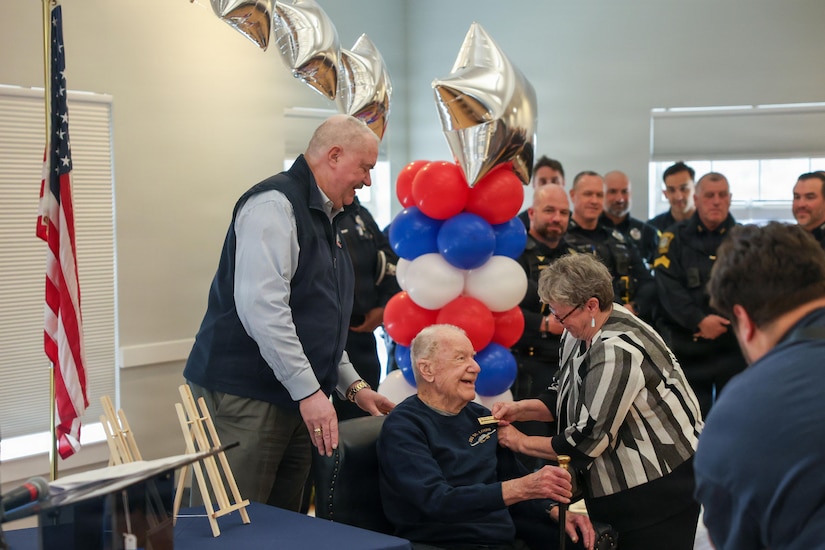
Pearl Harbor survivor and Navy veteran Freeman Johnson arrived in celebrity-like fashion at the Barnstable Adult Community Center in Hyannis, Massachusetts, March 18.

An elderly man wearing a Navy ship memorabilia sweatshirt and cap sits in a black leather chair and smiles. A young blond-haired boy stands next to him and smiles, with other partially visible people nearby. Red, white and blue balloons can be seen in the background.

Johnson, one of the oldest survivors of the attack on Pearl Harbor, Hawaii, was there to celebrate his 106th birthday.

He emerged from a black limousine amidst television news crews and photographers, aided by Barnstable police officer Brian Morrison, who assisted him into a wheelchair. The duo passed through a mixture of military service members and first responders who lined the sidewalk to salute Johnson as he approached the building's entrance.

Sailors, firefighters, police officers and Coast Guard ROTC students from Barnstable High School were among those gathered to celebrate Johnson's birthday and honor his military service.

Johnson was born in Springfield, Massachusetts, and moved to Waltham when he was 5 years old. From there, he joined the Navy in 1939 at the age of 19.

After completing boot camp in Newport, Rhode Island, he was stationed on board his first ship, the Brooklyn-class light cruiser USS St. Louis, which was homeported in Norfolk, Virginia, at the time, but would later go to the Navy yard in Pearl Harbor for a maintenance period.

A man holding a microphone stands before a crowd of seated and standing people. Red, white and blue balloons are on a table near the man.

Johnson completed his six-year Navy career as a machinist mate first class, but he was a junior sailor with the rank of fireman the morning of Dec. 7, 1941.

In a 2025 interview with Pacific Historic Parks – USS Arizona Memorial, Johnson reflected on his experiences during the attack, recalling the events of that fateful Sunday morning.

"I was in my bunk when the whole thing started [at around] 7:56 in [the] morning," Johnson said. "We'd already had breakfast, that was over. I heard the machine guns fire over my head, then [general quarters] started. Everybody on board has a specific spot they're supposed to be in. So, I went to my spot."

The Pearl Harbor attack accounted for 2,403 American deaths and 1,178 more wounded. The USS St. Louis was remarkably the only major ship to exit the harbor unscathed. Johnson's ship managed to escape without suffering any casualties or major damage during the attack, earning it the nickname "Lucky Lou."

Johnson's story exemplifies bravery in the face of danger and inspired the sailors in attendance.

An elderly man sitting in a black leather chair shakes hands with a woman standing in front of him. Other people, some dressed in police and firemen uniforms, stand nearby. A table filled with red, white and blue balloons is behind the man in the chair, where another man is standing.

Navy Fire Controlman 2nd Class Cullen McCarthy, a recruiter assigned to Navy Talent Acquisition Group New England, had the pleasure of serving Johnson a slice of cake after everyone sang "Happy Birthday."

McCarthy grew up in Whitman, Massachusetts, just 30 miles from where Johnson did. He felt privileged to take part in honoring his shipmate and fellow New Englander.

"Well, it's always awesome to get out into the community and get more involved, but especially when it's something of this magnitude," McCarthy said. "It's the 106th birthday for Freeman, a true hero, local hero and national hero. It's important for me to be able to get out here and get involved."

Johnson's birthday celebration gave everyone the chance to learn some naval history, and it provided a heartfelt connection with a veteran who served our country at a crucial hour.

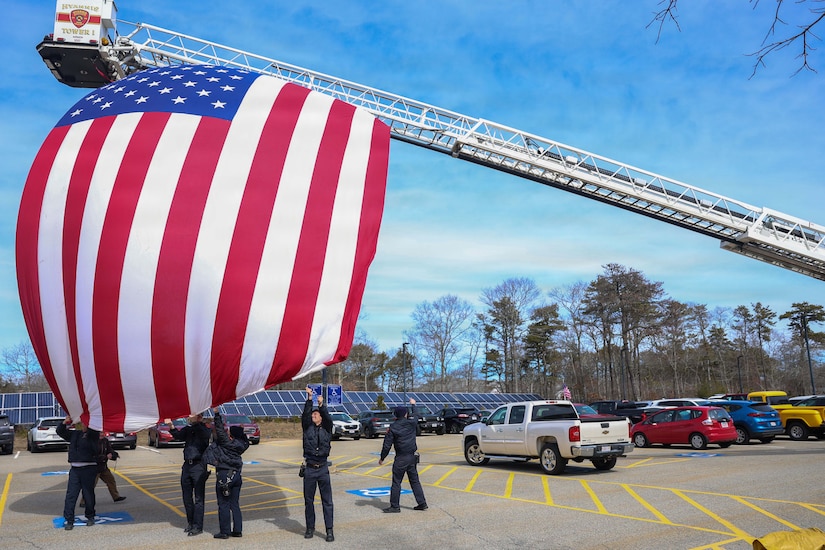
Six men dressed in navy blue jackets and slacks reach up to straighten a large American flag hanging from a crane. Rows of solar panels are nearby, as well as parked cars.

Kelly Howley, director of the Barnstable Council on Aging, oversees Barnstable Adult Community Center, which hosted the event.

"Well, today was a wonderful day celebrating Freeman's 106th," Howley said.

"He's a local celebrity here in Barnstable now, and it was an honor to be part of all of the military, first responders, town government and the well-wishers that came by to help celebrate his birthday."

Organizing the birthday party was a joint effort, with State Rep. Kip Diggs and Veterans Outreach Services collaborating to plan the event.

Navy Talent Acquisition Group New England is responsible for the Navy's enlisted and officer recruiting in Maine, New Hampshire, Vermont, Massachusetts, Connecticut, Rhode Island and Eastern New York.

Tuesday, March 24, 2026

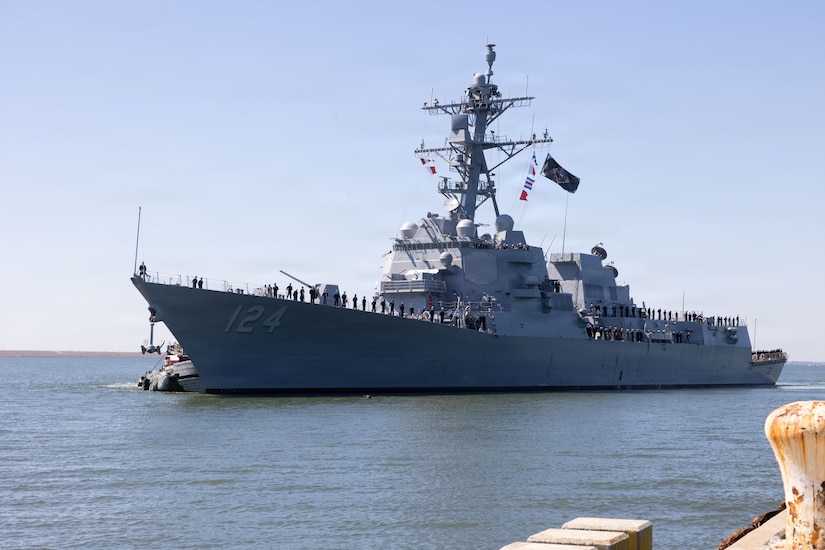
Navy's Newest Destroyer Arrives at Naval Station Norfolk Ahead of Commissioning

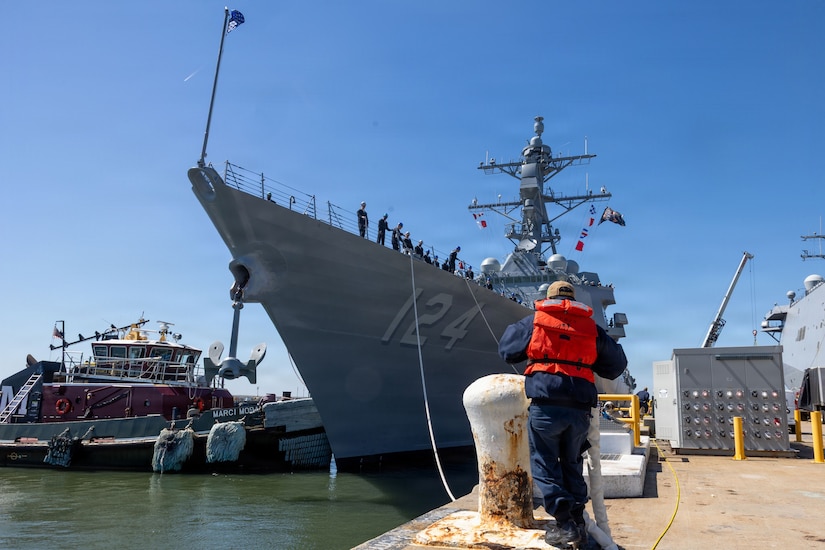
The Navy's newest destroyer, the future USS Harvey C. Barnum Jr., arrived at its home port, Naval Station Norfolk, Virginia, March 20, ahead of its commissioning ceremony, scheduled for April 11.

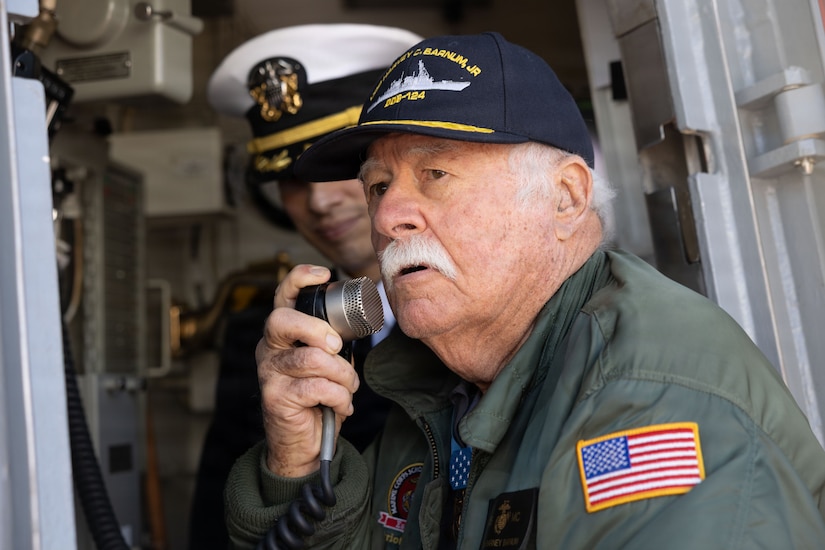
An elderly man speaks into a microphone while on a large military ship. The man is wearing a jacket with an American flag sewn on the shoulder and a command baseball hat with the ship's name on it; another man in a military dress uniform stands in the background.

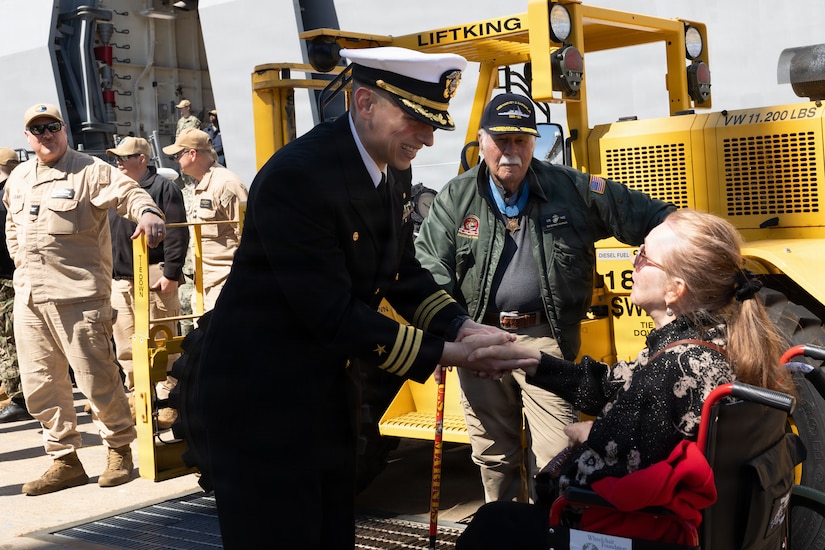
The warship's namesake, retired Marine Corps Col. Harvey Curtiss Barnum Jr., a Medal of Honor recipient, was on the pier to welcome the ship and its crew.

"To be on the pier and welcome this incredible crew to their new home port is monumental," Barnum said. "This warship represents the enduring bond between the Marine Corps and the Navy, and I have the utmost confidence in the crew to carry on the legacy of service and courage that defines our naval forces. I look forward to seeing them 'bring her to life' and join the fleet."

A man in a military dress uniform shakes hands with a woman in a wheelchair while standing on a pier; an elderly man in civilian attire and four men in military uniforms stand in the background.
A person in a military uniform and life jacket ties the mooring line of a large military ship to a pier, as several people in military uniforms stand on the bow.
The destroyer is the first ship to bear Barnum's name. It honors his gallantry and intrepidity at the risk of his life beyond the call of duty during the Vietnam War.

On Dec. 18, 1965, then-1st Lt. Barnum assumed command of his company after the commander was mortally wounded. With two helicopters under his control, he moved fearlessly through deadly fire to lead air attacks against the enemy's well-entrenched positions while directing one platoon in a successful counterattack on the key positions.

Having cleared a small area, Barnum requested and directed the landing of two transport helicopters to evacuate the deceased and wounded. He then assisted in accomplishing the battalion's objective. He is among the few living namesakes to witness his warship's commissioning.

"It is an honor to bring this warship to Norfolk and to be welcomed by Col. Barnum himself. His heroism is the standard we strive to meet every day," said Navy Cmdr. Benjamin R. Cantu, the ship's commanding officer. "This crew has trained relentlessly to prepare for this moment. We are ready to join the fleet and carry the name of a true American hero as we defend our nation's interests around the globe."

Dozens of people man the rails of a large military ship as it comes into port.

The warship's sponsor is Barnum's wife, Martha Hill, who has maintained a close relationship with the crew since the keel-laying ceremony in 2021. In keeping with naval tradition, she will give the order during the commissioning to "man our ship and bring her to life." At that command, the crew will hoist the commissioning pennant, and the USS Harvey C. Barnum Jr. will officially become a warship in the Navy's fleet.

The ship is designed to conduct a wide range of maritime operations, including antiair warfare, antisubmarine warfare and antisurface warfare in support of national security and global maritime stability. Once commissioned, the warship will be capable of operating independently or as part of a carrier strike group, surface action group or an expeditionary strike group.