At Vandenberg Space Force Base, California, and other intercontinental ballistic missile bases, maintaining the nation's strategic deterrence requires precision, teamwork and a high level of responsibility from the missile maintainers supporting the mission.
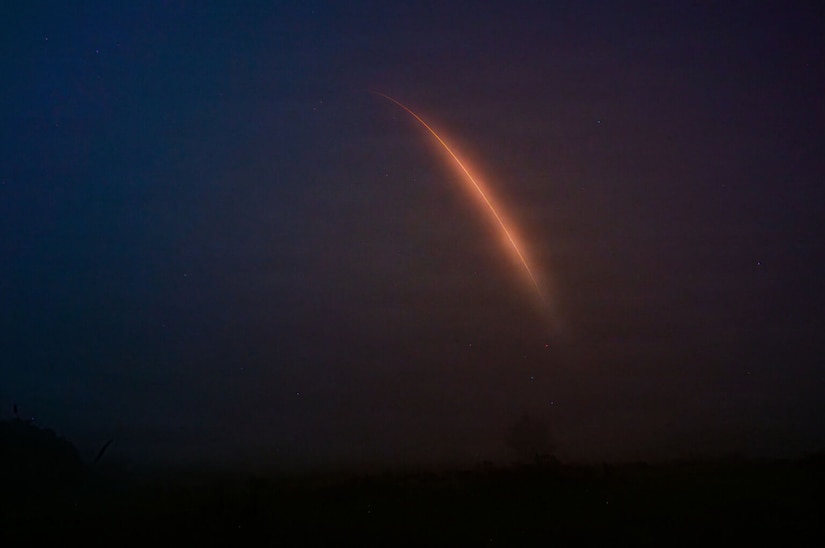
Many of them step into the role early in their careers, working on complex systems that support missile test operations and ensuring the reliability of the country's missile deterrence.
These service members prepare systems used during test launches conducted at Vandenberg and maintain ICBMs held at F. E. Warren Air Force Base, Wyoming, Minot Air Force Base, North Dakota, and Malmstrom Air Force Base, Montana. Their work demonstrates the reliability and readiness of the nation's strategic capabilities.
Air Force Staff Sgt. Cameron Struckmeier, an electromechanical team chief assigned to the 377th Flight Test Missile Maintenance Squadron at Vandenberg, has spent almost nine years supporting different parts of the missile maintenance career field. He started his career working on the air-launched cruise missile system at Barksdale Air Force Base, Louisiana, before moving to the ICBM mission.
Another maintainer, Air Force Staff Sgt. River Ramey, team chief of the missile maintenance squadron, has served for more than six years. He began his career supporting the ICBM mission at Malmstrom before later transferring to Vandenberg.
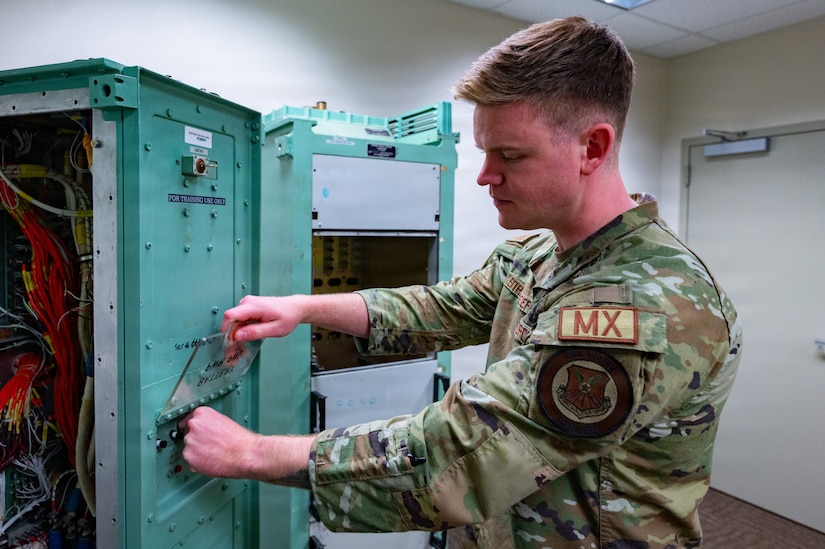
Missile maintenance airmen begin their careers in technical school before moving into on-the-job training at their first duty station.
Preparing for a missile test launch requires coordination across multiple teams and sections. Leading up to a launch, maintainers complete inspections, prepare equipment and review procedures to ensure each step of the process is completed safely and correctly.
Operations intensify as launch day approaches. Maintenance teams may work longer hours while preparing equipment and ensuring systems are ready for launch.
For many maintainers, witnessing a missile launch for the first time reinforces the significance of the mission they support. Test launches conducted at Vandenberg replicate the procedures used for operational launches and demonstrate the reliability of the weapon system.
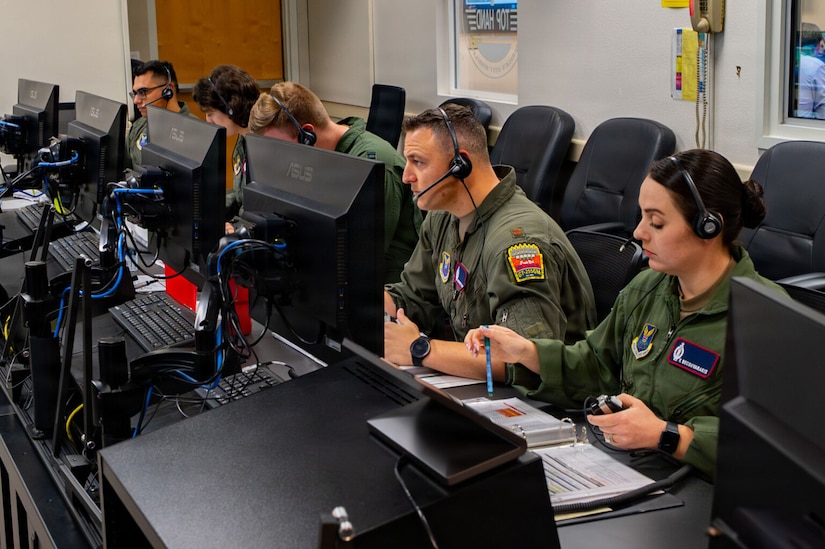
"My first shift at Vandenberg was actually a launch night," Struckmeier said. "It smells like the Fourth of July, and you can feel the heat coming off the launch tube."
After the launch, Struckmeier realized that the test process was identical to the real thing. "That was sobering in a good way," he explained.
Supporting mission asset systems requires strict adherence to technical orders and maintenance procedures. Even minor errors can affect mission success, making precision and attention to detail essential parts of daily work.
"The tiniest mistake on a weapon system is catastrophic," Struckmeier said. "Globally, what we do here shows the world that the system works. If maintenance mistakes cause launches to fail, adversaries might start questioning our capabilities. So, proving the system is reliable is extremely important."
Through their time supporting the mission, both team chiefs said the experience has contributed to significant professional and personal growth. As they gained experience, their responsibilities expanded to include supervising technicians, ensuring safety standards are met and supporting mission readiness.
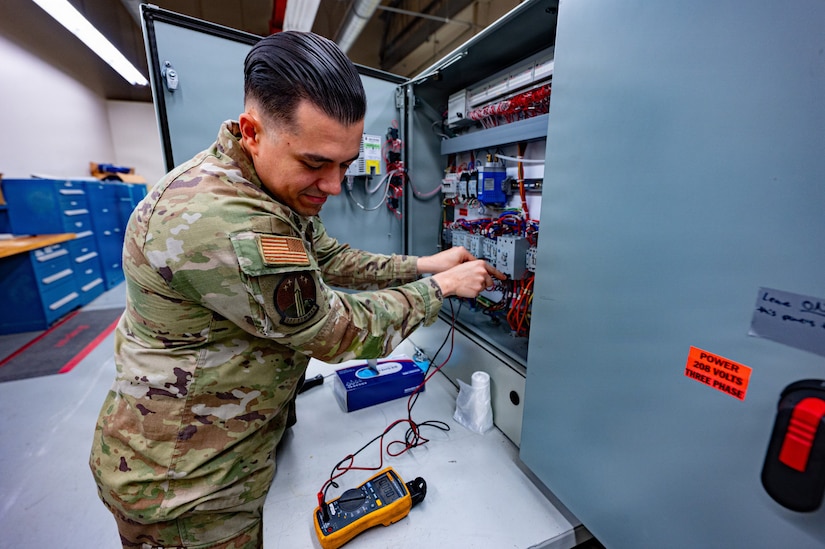
"My mindset has evolved a lot here at Vandenberg," Ramey said. "Because the equipment is mission-certified, we need guidance before making certain changes or repairs. So, you have to be very mindful of everything you do."
While many people in their 20s are still establishing their careers, airmen supporting the ICBM mission often take on responsibilities that require a high level of technical knowledge and accountability. Although the work can feel routine daily, events such as missile launches and the global attention they receive highlight the broader significance of the mission.
Maintainers supporting the mission take pride in contributing to a capability designed to preserve stability and deter conflict. Much of their work happens behind the scenes, where success often means systems function exactly as intended.
"Sometimes we see what adversary countries say about it and how the public reacts," Struckmeier said. "It's cool seeing recognition for a job that usually goes unnoticed, because a good day means nothing happens."
The reliability of the nation's strategic deterrence depends not only on the systems themselves, but also on the highly trained young airmen responsible for maintaining them. Through their work, the next generation of maintainers continue to support a mission that plays a critical role in national security.


 Posts
Posts


No comments:
Post a Comment