Showing posts with label Marine Corps history. Show all posts

Monday, March 30, 2026

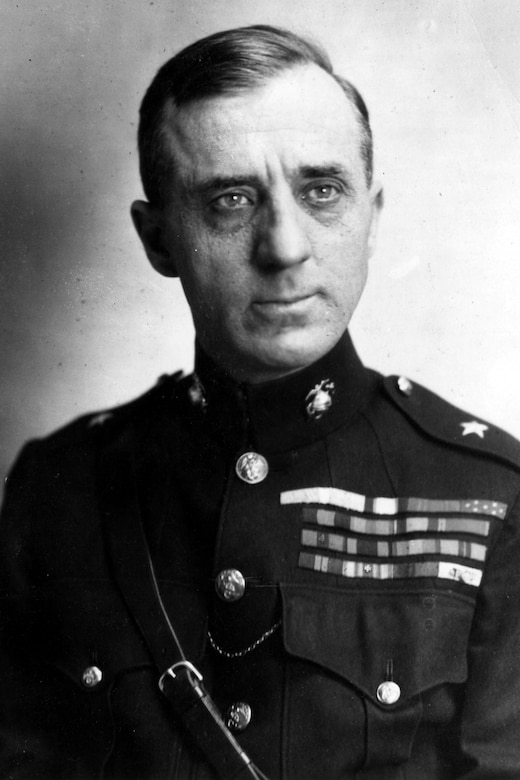
Medal of Honor Monday: Marine Corps Maj. Gen. Smedley D. Butler

Few have been awarded the Medal of Honor. Even fewer have been awarded two.

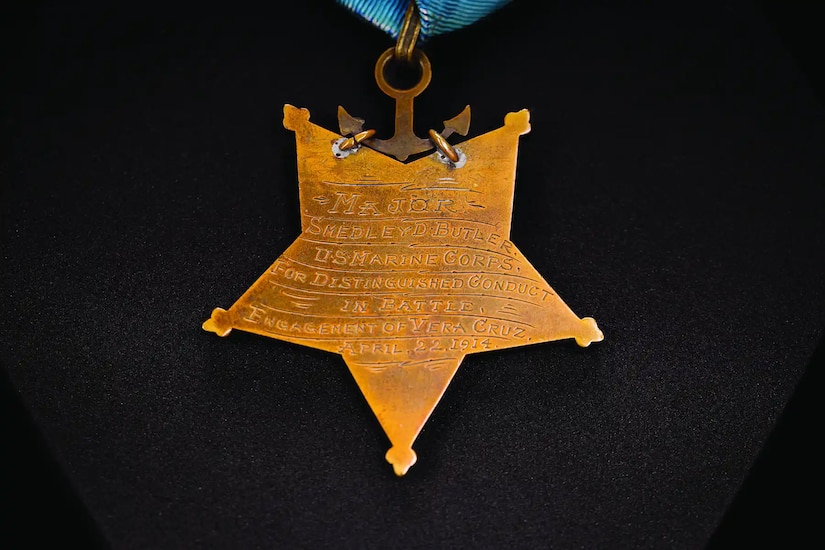
Marine Corps Maj. Gen. Smedley D. Butler was twice awarded the medal, the first for distinguished conduct during the occupation of Veracruz, Mexico, April 22, 1914, when he was a major.

A man in a formal military uniform poses for a portrait.
Butler returned the medal to the Navy, believing his actions were not worthy of the nation's highest award for valor. However, Navy Rear Adm. Frank Friday Fletcher returned it to him, ordering him to wear it.

Incidentally, Fletcher, who commanded the naval forces at Veracruz, was also awarded the Medal of Honor for the same battle.

The following year, Butler arrived in Haiti aboard the battleship USS Connecticut to quell an uprising by Cacos rebels.

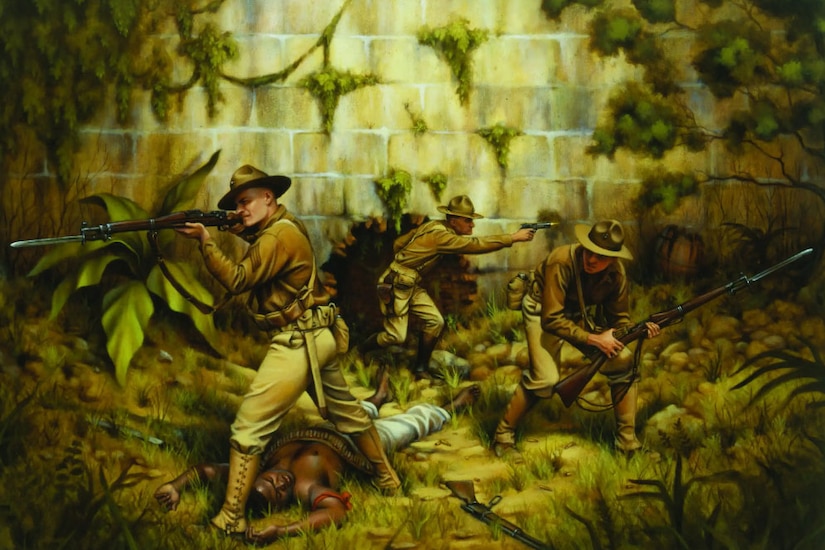
On Oct. 24, 1915, about 400 Cacos ambushed Butler's patrol of 44 mounted Marines as they approached Fort Dipitie, Haiti. Despite being surrounded by the Cacos, the Marines held their perimeter throughout the night and, at dawn, launched a successful counterattack.

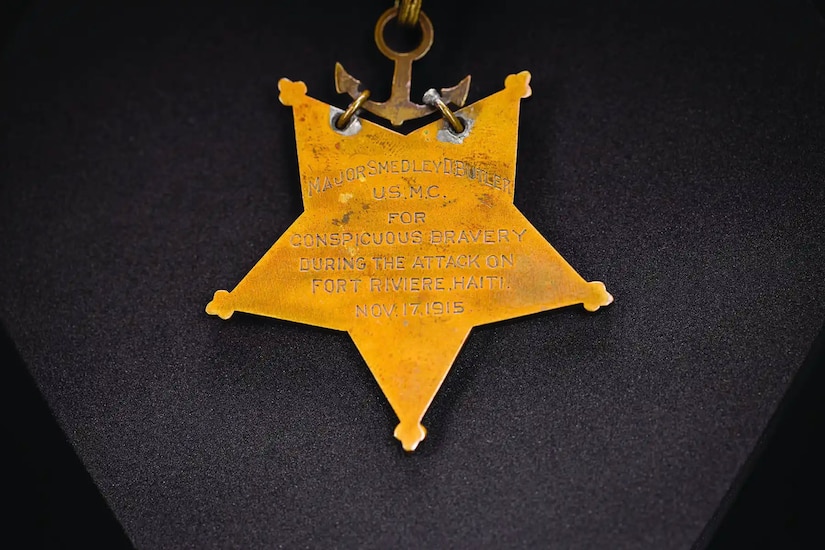
Later that year, Nov. 17, 1915, Butler led three companies of Marines in capturing Fort Rivière atop Montagne Noire in northern Haiti. Assistant Secretary of the Navy, and future president, Franklin D. Roosevelt recommended that he receive the Medal of Honor for his actions, which was approved.

A painting depicts three uniformed men with guns pointed at natives outside beside a wall.

One of Butler's senior noncommissioned officers, Marine Corps Gunnery Sgt. Daniel J. Daly, was also awarded the Medal of Honor for his actions in Haiti. Daly is the only other Marine to have received two Medals of Honor, the first for valor during the Boxer Rebellion in China, where he also served with Butler in 1900.

Although Butler served with valor during the Boxer Rebellion, he did not receive the Medal of Honor because, at the time, only enlisted Marines were eligible for the medal.

A gold-colored, five-pointed star with an etched inscription hangs from a gold-colored anchor, hanging from a ribbon.
After his distinguished military career, and at the direction of President Calvin Coolidge, Butler, while still in uniform, was appointed the Philadelphia director of public safety, in charge of the city's police and fire departments. He served successfully in this position from January 1924 to December 1925, rooting out protection rackets, bootlegging, prostitution, illegal gambling and other corruption.

Born July 30, 1881, in West Chester, Pennsylvania, Butler was commissioned a Marine second lieutenant at the age of 16, having lied about his age. In July 1898, he deployed to Guantánamo Bay, Cuba, arriving shortly after its invasion and capture during the Spanish-American War.

Butler retired from the Marine Corps in 1931. In addition to Veracruz and Haiti, Butler also fought in the Philippine-American War in 1899, Nicaragua from 1909 to 1912, and World War I in 1918.

During his service in Nicaragua, Butler earned the nickname "Old Gimlet Eye" for his piercing stare. A gimlet is a hand tool for drilling small holes.

Other nicknames he acquired included "The Maverick Marine," "The Fighting Quaker" and "Fighting Hell-Devil."

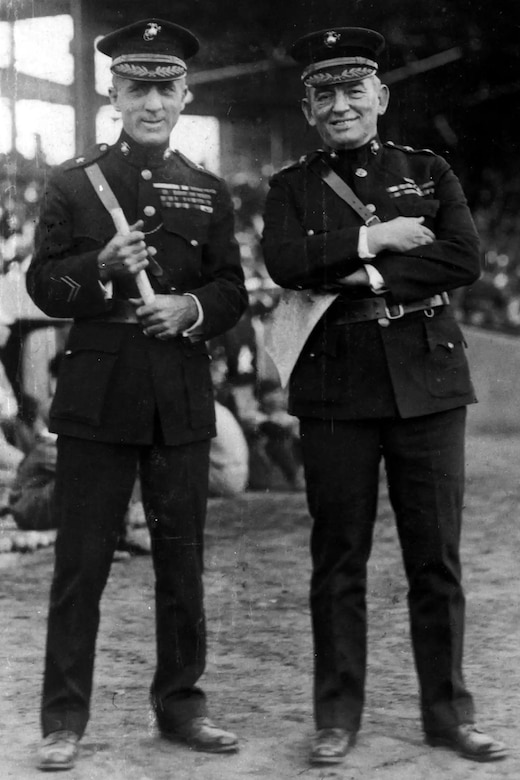
Two men in military dress uniforms smile as they pose for a photo.
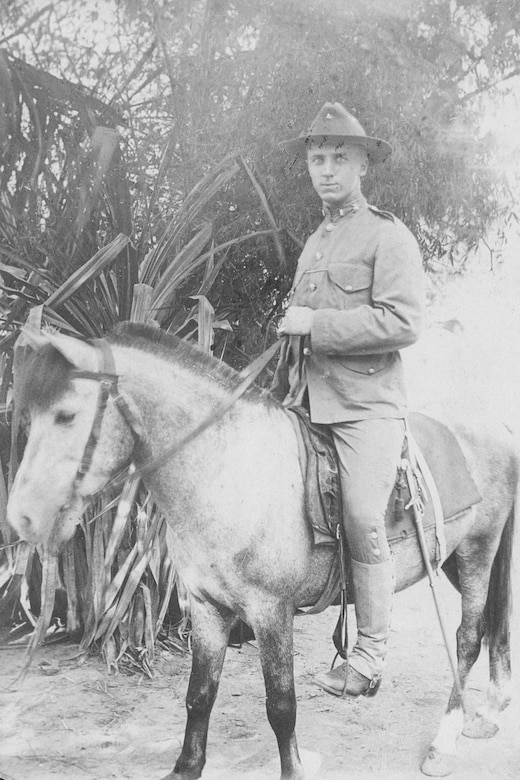
A man wearing a military uniform poses for a photo while sitting on a horse and holding its reins.
Butler died of cancer, June 21, 1940, at the age of 58 at Philadelphia Naval Hospital. He is buried in Oaklands Cemetery near the place of his birth. His childhood home at West Chester, The Butler House, was listed on the National Register of Historic Places in 1980.

The destroyer USS Butler was named in his honor in 1942 and participated in the European and Pacific theaters of operation during World War II.

Additionally, Marine Corps Base Camp Smedley D. Butler, established in 1955 on Okinawa, Japan, is also named in his honor.

Friday, December 05, 2025

Marine Corps Magazine Outlines History, Trends, Future

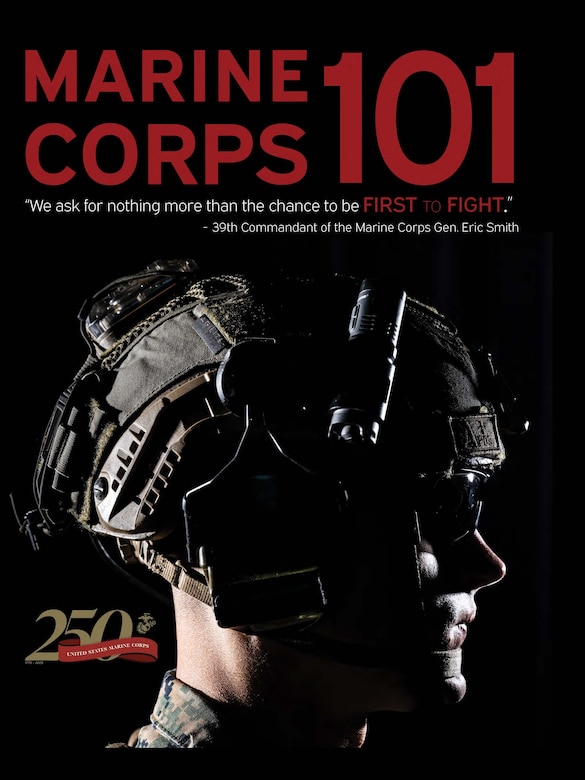
The Marine Corps, founded Nov. 10, 1775, marked its 250th birthday by publishing a comprehensive magazine introducing readers to foundational knowledge of the service branch.

A profile view of a Marine wearing a helmet.

Designed for Marines of all ranks, service members from other branches, civilians and anyone interested in gaining a clear understanding of the Marine Corps, the magazine highlights the service's history, structure and global presence. It opens with an accessible overview of the mission and major campaigns and battles — tracing the evolution of Marine Corps warfighting from its origins to modern-day operations.

It examines the Marine Corps' worldwide network of bases and installations, illustrating how forward-deployed forces enable rapid responses and sustained readiness. Readers are guided through the Marine Corps rank structure and organizational framework, which offer insights into how Marines are trained, led and employed across the Fleet Marine Force.

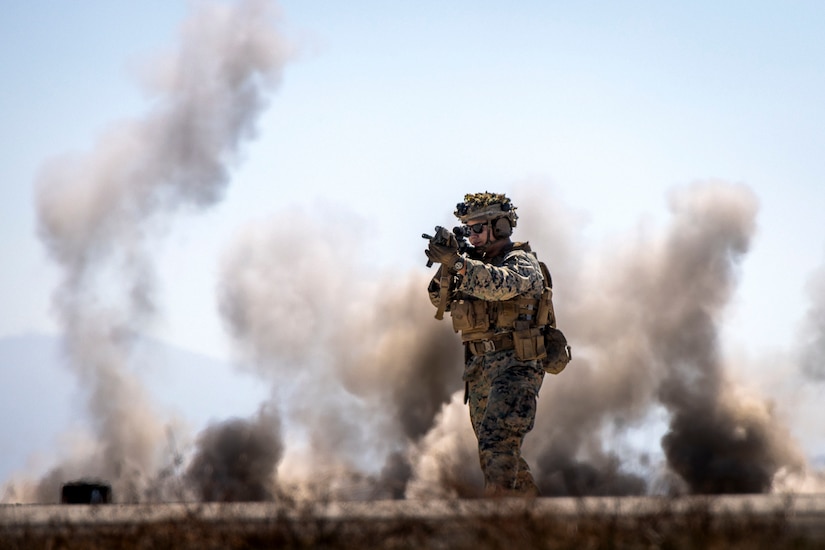
A Marine in tactical gear stands in front of columns of smoke during the day and aims a service weapon.

The magazine also reflects current Marine Corps demographic trends, showcasing how roughly 200,000 Marines serve today, as well as the path forward outlined by Gen. Eric M. Smith, the 39th commandant of the Marine Corps.

Wednesday, November 19, 2025

Legendary Marines From Throughout Corps' 250 Years

The stories of legendary Marines are familiar to all leathernecks, many of whom are inspired by them. 

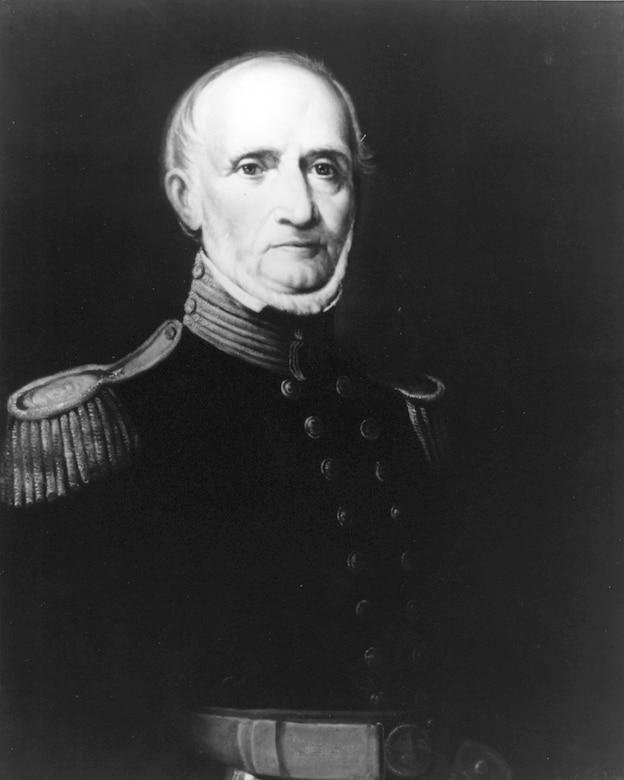
A portrait painting of a man in a military dress uniform is shown.

Marines call Col. Archibald Henderson the "grand old man of the Marine Corps." He served in the Marine Corps from 1806 to 1859 and was commandant from 1820 to 1859, making him the longest-serving commandant.

During the War of 1812, Henderson served aboard the heavy frigate USS Constitution, the world's oldest commissioned naval warship still afloat today. The Constitution fought in a number of victorious engagements. 

Henderson led Marines in combat during the Indian campaigns in 1836 and 1837 in Florida and Georgia, as well as in the Mexican War, from 1846 to 1848. He was decorated for his bravery. 

The sword presented to him at the end of the Mexican War was inscribed, "From the Halls of Montezuma to the Shores of Tripoli," which became the first stanza of the Marines' Hymn. 

When President Andrew Jackson tried to merge the Marine Corps with the Army in 1829, Henderson stopped the effort and ensured Marines would remain under the Navy Department.

Henderson, who was born in Colchester, Virginia, Jan. 21, 1783, died Jan. 6, 1859, while still on active duty. The transport USS Henderson and Henderson Hall Barracks in Virginia were named in his honor.

Marine Maj. Gen. Smedley Butler served in the Marine Corps from 1898 to 1931 and is one of only two Marines to receive two Medals of Honor, the first for action at Vera Cruz, Mexico, in 1914; the second for valor in Haiti in 1915.

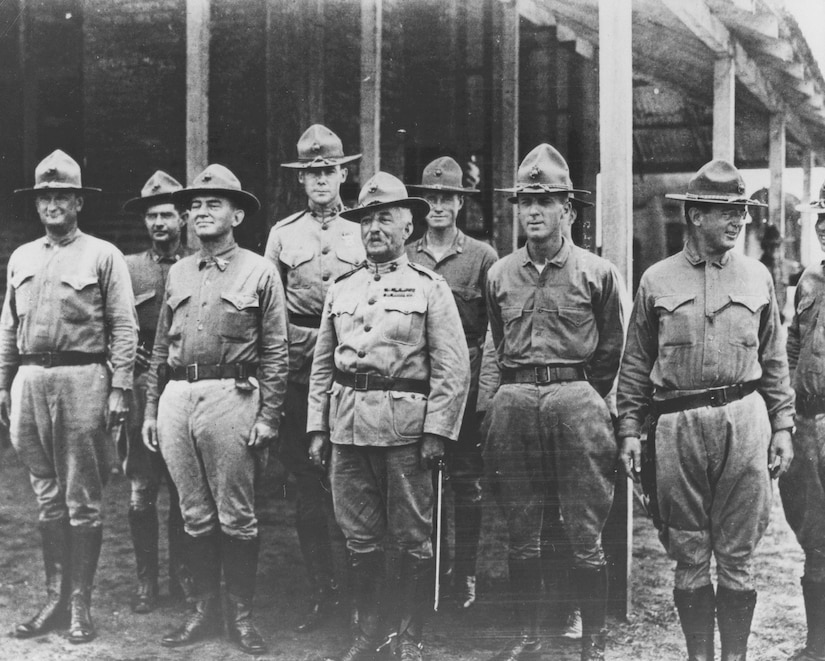
Marines standing in uniform pose for a photo outside.

Butler also served in the Spanish-American War in 1898, the Philippine-American War from 1899 to 1902, the Boxer Rebellion in China, which lasted from 1899 to 1901, the occupation of Nicaragua, which lasted from 1912 to 1933, World War I in France, which lasted from 1917 to 1918 and the expedition to Tianjin, China, from 1927 to 1929.

Later, Butler went public with criticism of intervention in nations to benefit U.S. businesses and also wrote a book on the topic titled "War is a Racket."

In 1924, while still on active duty, Butler was invited by Philadelphia's mayor to run the city's police and fire department and rid the city of crime and corruption. He was effective in doing so and worked in that capacity until 1925. 

Butler, who was born in West Chester, Pennsylvania, July 30, 1881, died in Philadelphia on June 21, 1940. Marine Corps Base Camp Smedley Butler on Okinawa, Japan, is named for him.

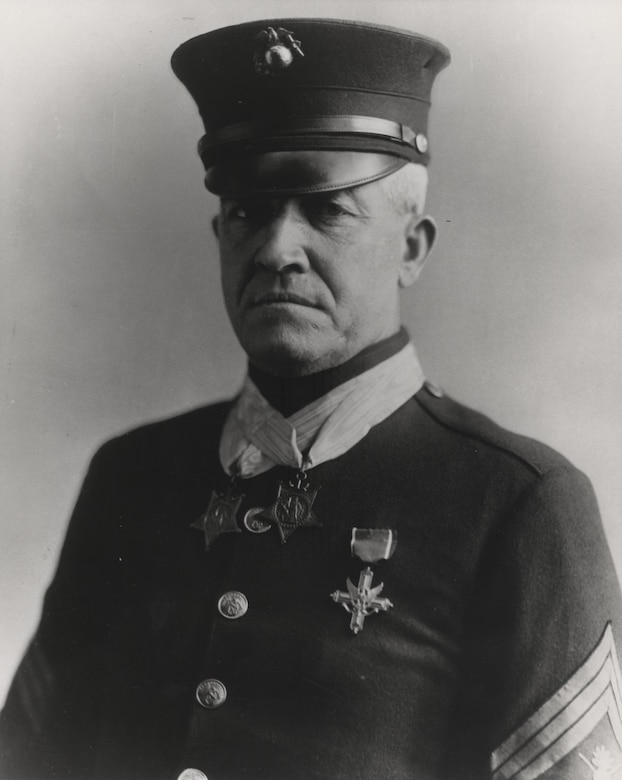
Marine Corps Sgt. Maj. Dan Daly also earned two Medals of Honor, the first during the Boxer Rebellion and the second in Haiti, the same year Butler received his. 

A Marine in uniform wearing medals poses for a black and white photo.

During World War I, he earned the Navy Cross Medal and the Distinguished Service Cross. 

Daly was court-martialed once for drunkenness on post and spent three weeks in the military jail at the Boston Navy Yard, thereby further enhancing his legend. He was also widely known as a skilled boxer.

On Feb. 6, 1929, Daly retired from the Marine Corps and found work as a bank guard on Wall Street in New York City. 

Daly, who was born in Glen Cove, New York, Nov. 11, 1873, died in New York City on April 27, 1937. The destroyer USS Daly was named for him.

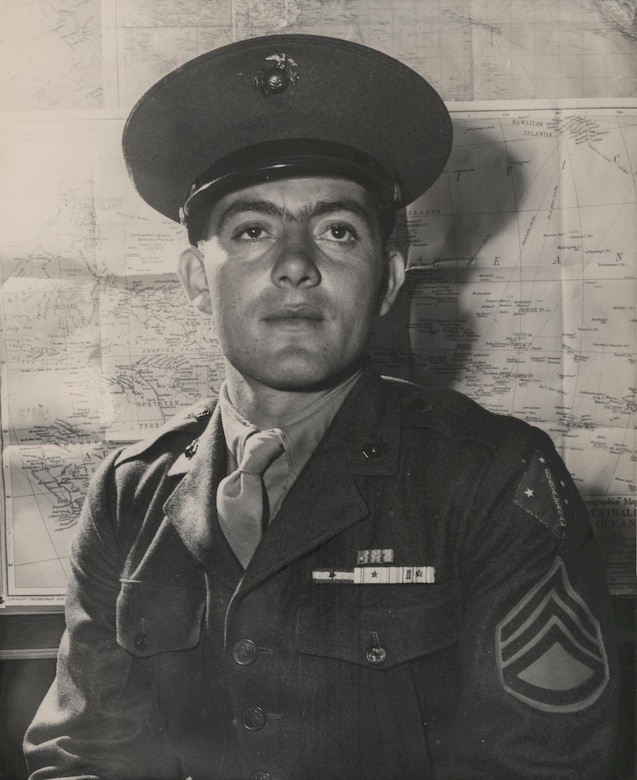
Marine Corps Gunnery Sgt. John Basilone served in the Army from 1934 to 1937 before enlisting in the Marine Corps, July 11, 1940. While in the Army and stationed in Manila, he gained fame as a champion boxer, which earned him the nickname Manila John.

A Marine in uniform and wearing medals poses for a photo.

In September 1942, he fought in the Battle of Guadalcanal. The following month, he received the Medal of Honor.

Basilone, who was born in Buffalo, New York, Nov. 4, 1916, was killed on the first day of fighting during the Battle of Iwo Jima, Feb. 19, 1945. He was posthumously awarded the Navy Cross for heroism on Iwo Jima. Two destroyers were named for him.

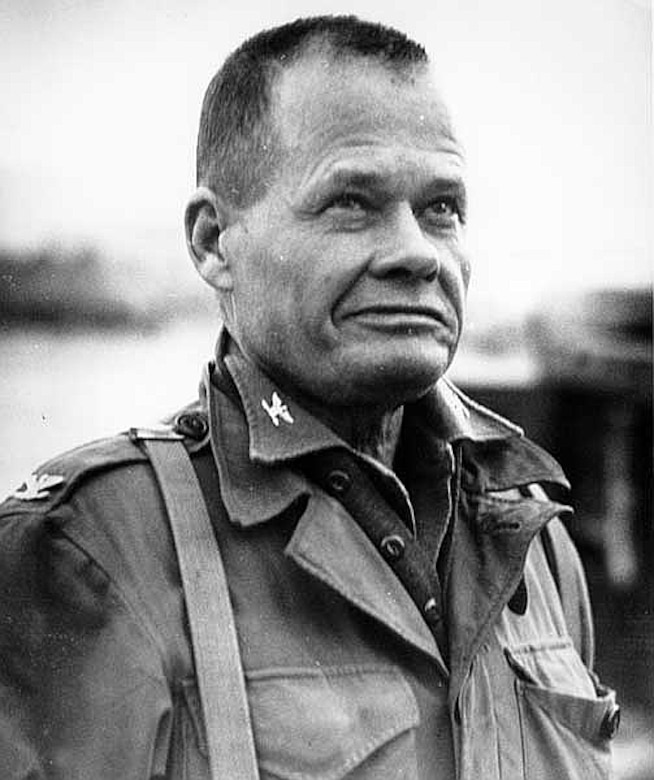
Marine Corps Lt. Gen. Lewis Burwell Puller is better known as Chesty Puller. Although Puller never received the Medal of Honor, he's considered the most decorated Marine, having earned five Navy Crosses for valor in the 1928 Nicaragua campaign, the 1932 Nicaragua campaign, 1942 on Guadalcanal, 1943 on New Britain and in North Korea in 1950.

A Marine in uniform poses for a photo.

Puller also earned the Distinguished Service Cross from the Army for action in North Korea in 1950. 

He is beloved by enlisted troops and is credited with the tradition of officers receiving rations last when in the field. To this day, as soon as Marine recruits hit the rack, they chant "Good night, Chesty, wherever you are."

Also, when Marines are doing pullups or other exercises, they are often told to "Do one for Chesty" at the end when they're fatigued.

The official Marine Corps mascot, an English bulldog, is perpetually named "Chesty." Puller had a barrow chest and bulldog face, so the resemblance is apt. 

Puller, who was born in West Point, Virginia, June 26, 1898, died in Hampton, Virginia, on Oct. 11, 1971. The frigate USS Lewis B. Puller was named for him.

Incidentally, Puller's distant cousin was Army Gen. George S. Patton. 

Other notable Marines include, but are not limited to: 

  • Col. John Glenn, the first American to orbit the Earth, and who later became a senator from Ohio. 
  • Cpl. JD Vance, who became a senator from Ohio and is currently serving as vice president of the United States. 
  • Sgt. Chuck Mawhinney, a sniper credited with 103 confirmed kills during the Vietnam War.