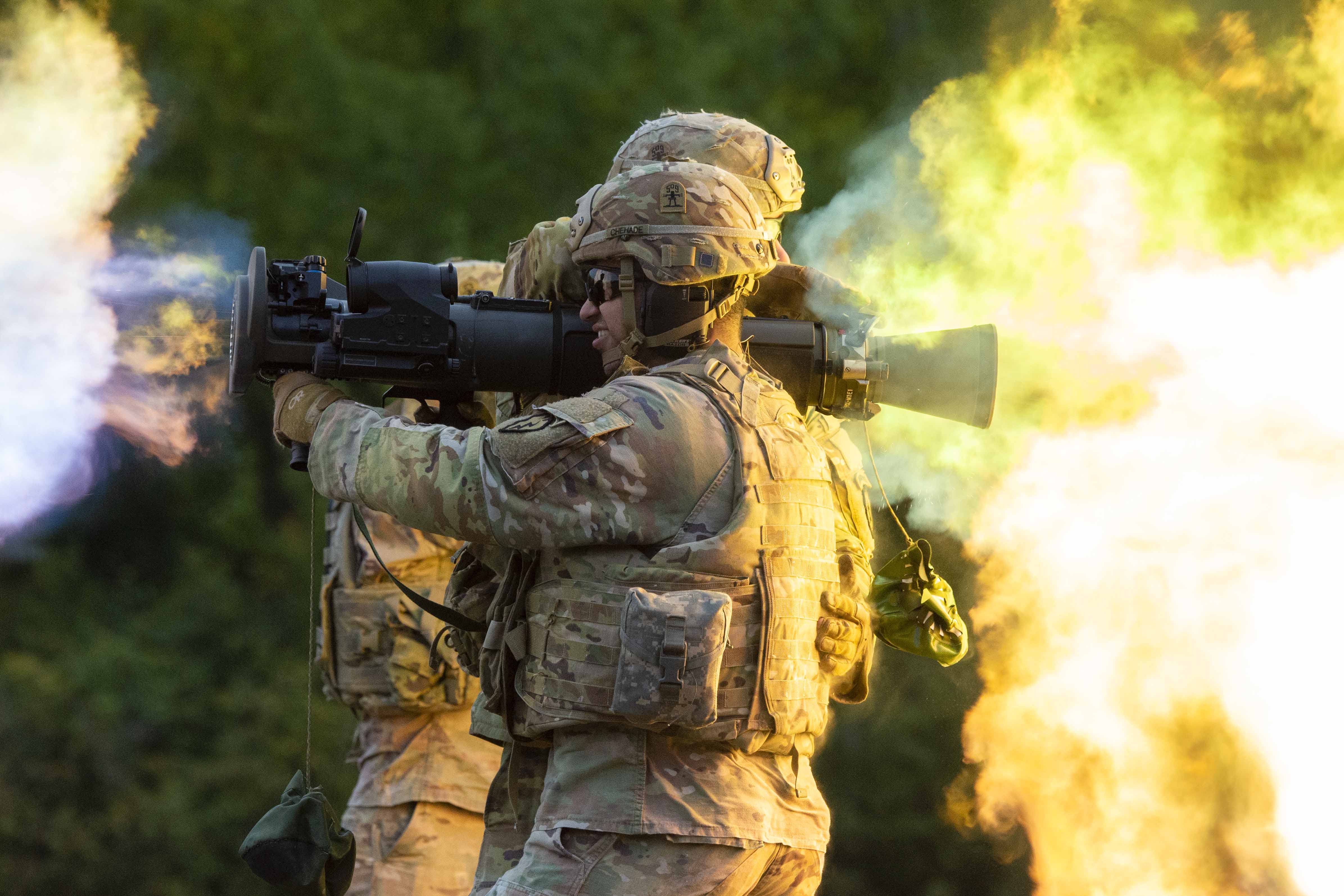
Soldiers fire an M3 multi-role anti-armor antipersonnel weapon system during live-fire training at Joint Base Elmendorf-Richardson, Alaska, Sept. 15, 2021.
Soldiers fire an M3 multi-role anti-armor antipersonnel weapon system during live-fire training at Joint Base Elmendorf-Richardson, Alaska, Sept. 15, 2021.
Sept. 16, 2021 | , DOD News
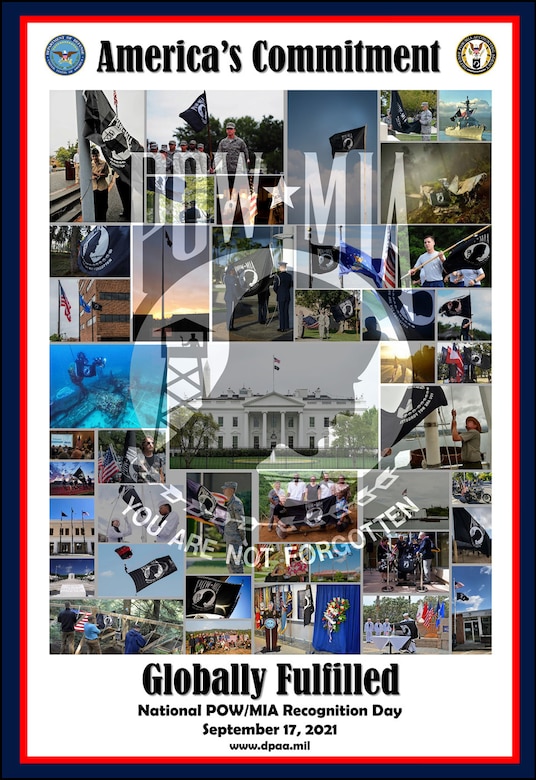
National POW/MIA Recognition Day — which this year
falls on Sept. 17 — was established in 1979 through a proclamation
signed by President Jimmy Carter.
The proclamation reads, in part: "In each of America's wars, our
prisoners of war have been called upon to make uncommon sacrifices. Upon
them has fallen the arduous responsibility of defending American ideals
under the absolute control of the enemy.
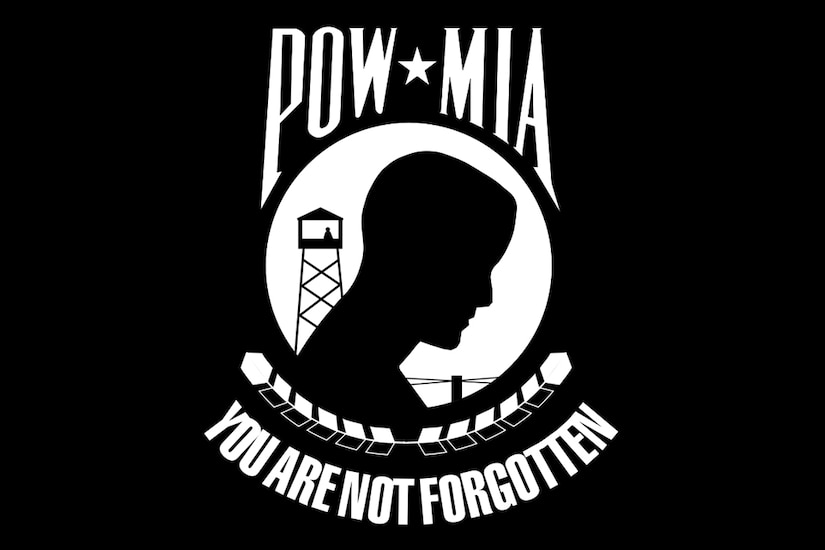
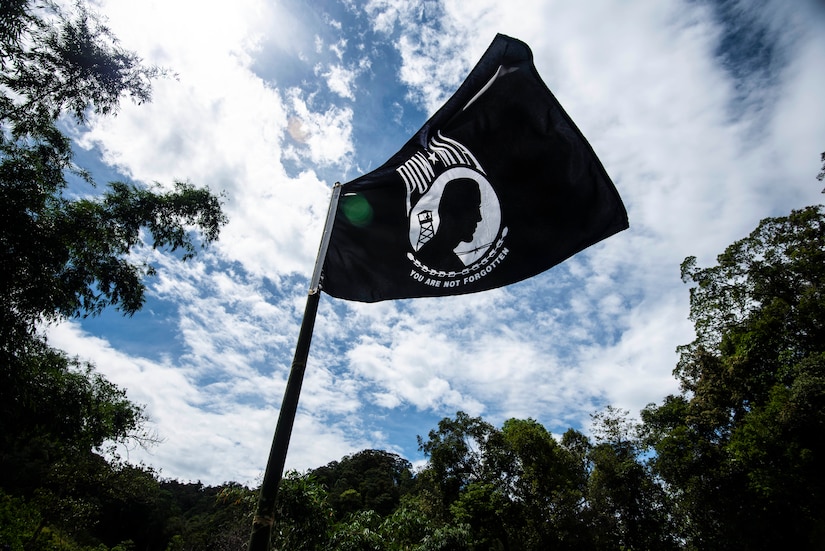
The POW/MIA flag, also known as the National League of Families
POW/MIA flag, can be seen flying in Defense Department installations and
in many other government and private locations. It flies directly below
the United States flag during the observance day. If there are two
flagpoles, it is always flown to the viewer's left of the U.S. flag.
Besides being flown on National POW/MIA Recognition Day, Congress in
1998 legislated that it can also be flown on Armed Forces Day, Memorial
Day, Flag Day, Independence Day and Veterans Day. In 2019, Congress
authorized the POW/MIA flag to be flown at certain locations on all days
that the U.S. flag is flown.
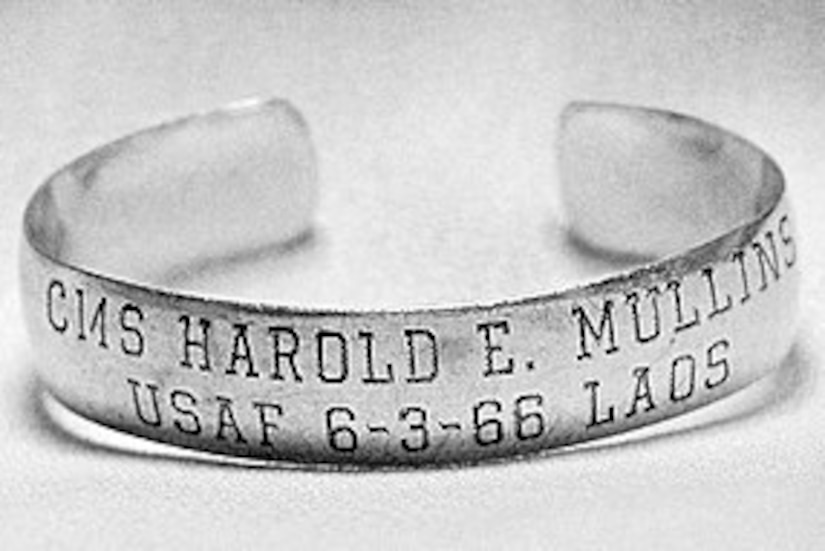
Sept. 17, 2021 | , DOD News
The Defense POW/MIA Accounting Agency has identified most of those killed on the USS Oklahoma when the Japanese attacked Pearl Harbor, Hawaii, in 1941.
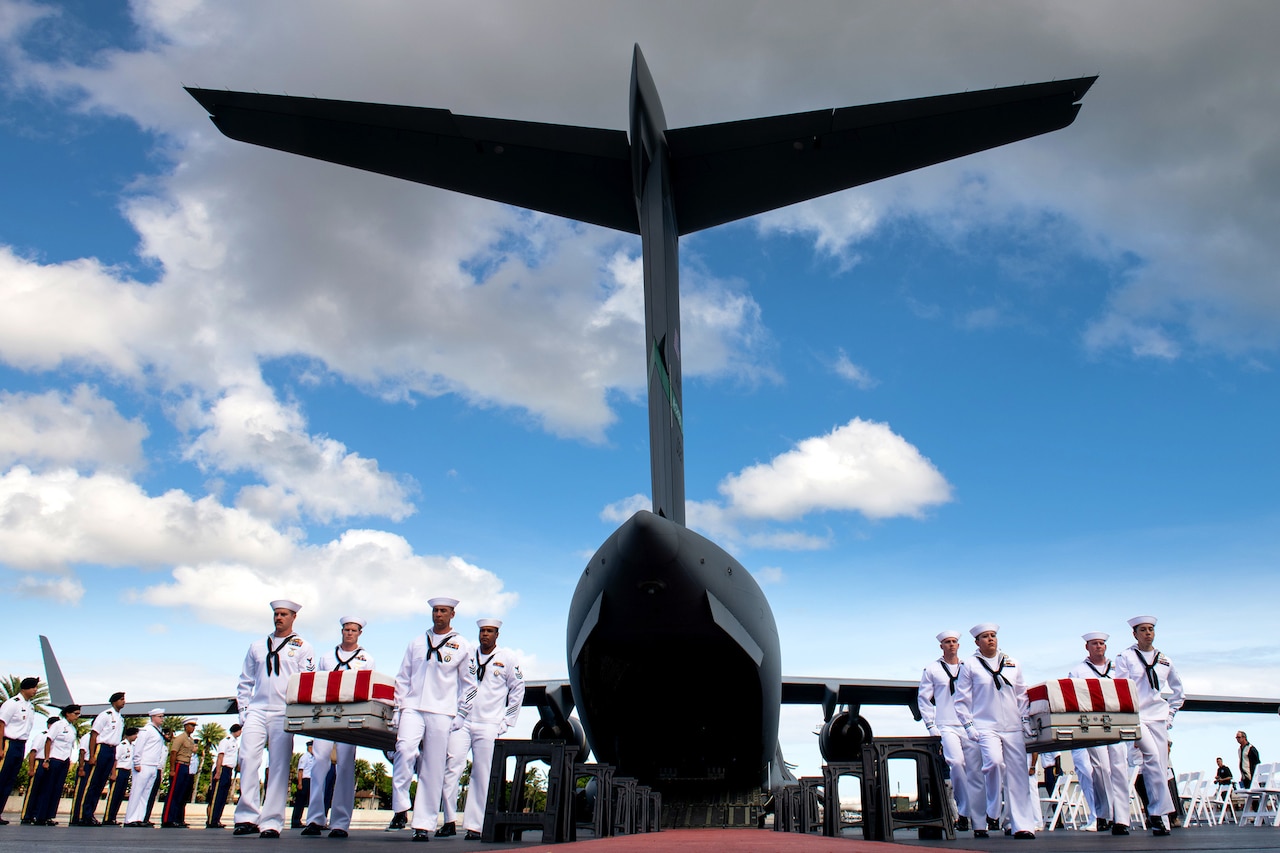
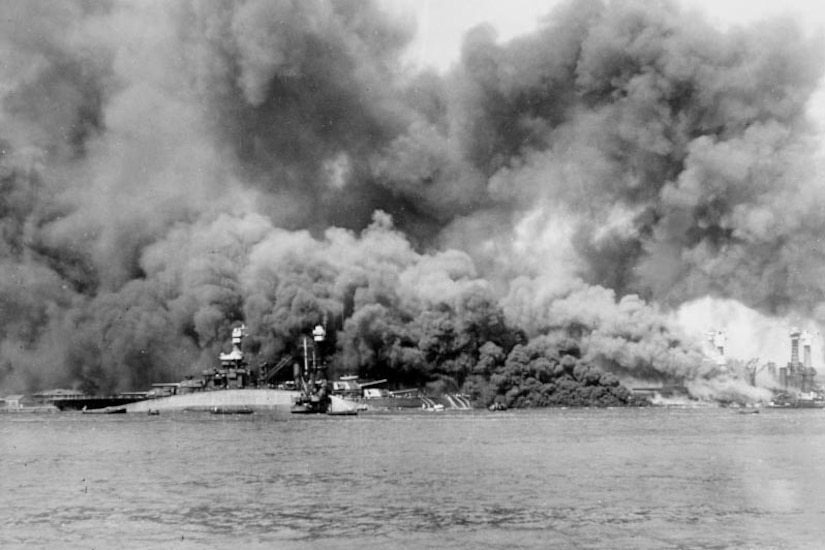

DPAA has been working to identify the remains since 2015 when the USS Oklahoma project began. Scientists from the Armed Forces Medical Examiner System have used mitochondrial DNA and autosomal DNA analysis.
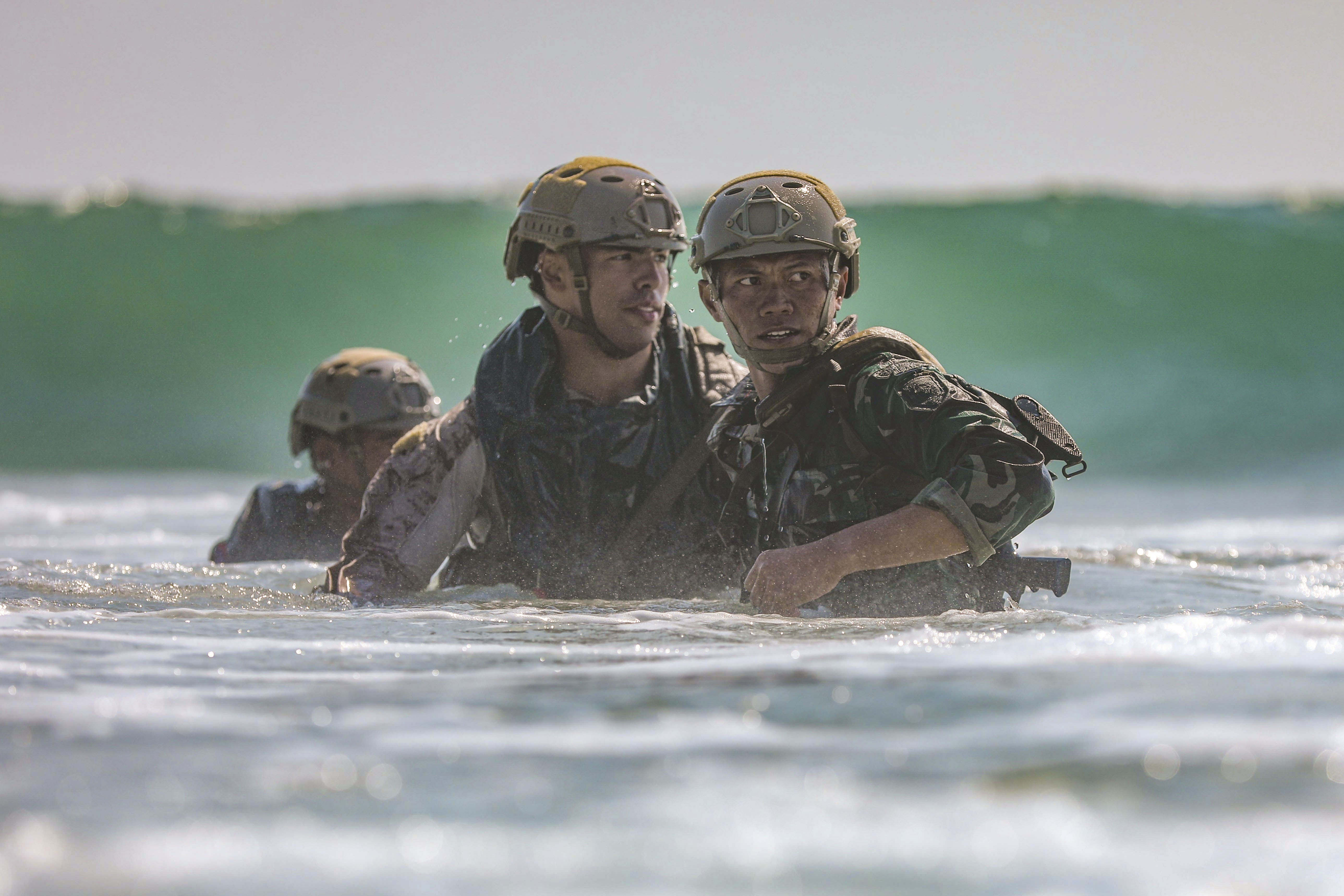
Marines conduct amphibious training during RECONEX, a two-week exercise with Indonesian marines, at Marine Corps Base Camp Pendleton, Calif., Sept. 8, 2021.

Army Master Sgt. Kristen Roles prepares to attempt an overhead press during an exercise drill at Boone National Guard Center in Frankfort, Ky., Sept. 7, 2021.

Soldiers assigned to the 1st Cavalry Division celebrate the division’s 100th birthday at Fort Hood, Texas, Sept. 13, 2021.

Soldiers participate in a combined arms live-fire exercise at Fort Bragg, N.C., Sept. 15, 2021.
Sept. 17, 2021 | , DOD News
Back in July, the Defense Department released the Active Duty Spouse Survey — something it does every two years. In the past, the survey was available by invitation only to a select few military spouses. But not this year.
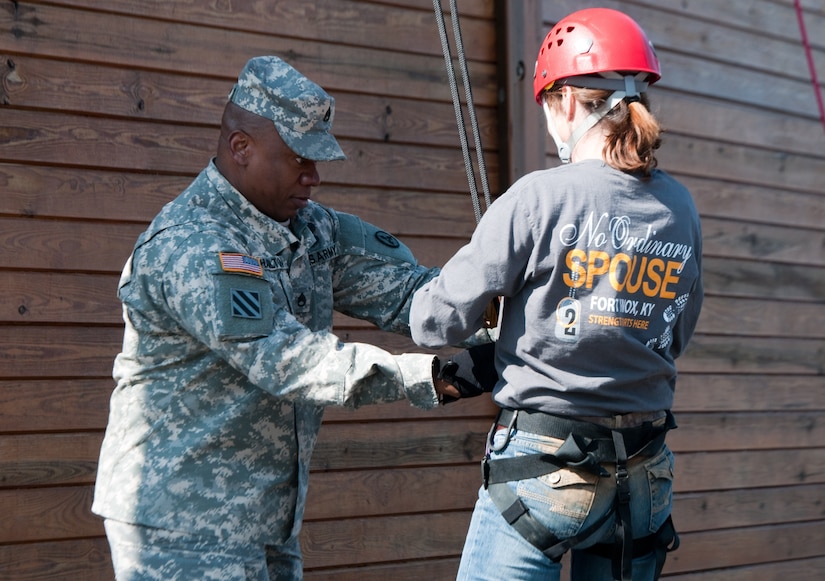
Through late October, all spouses of active-duty military members — more than 600,000 of them — can visit the OPA Survey Portal and tell the Pentagon what they think about being 'married to the military.'
The results of the survey will be used to give Pentagon decision-makers a better idea about how they can adjust family policy and programs in the coming years — especially in relation to military benefits, financial stability, spouse employment, child care, and the overall health and well-being of spouses, children and families.
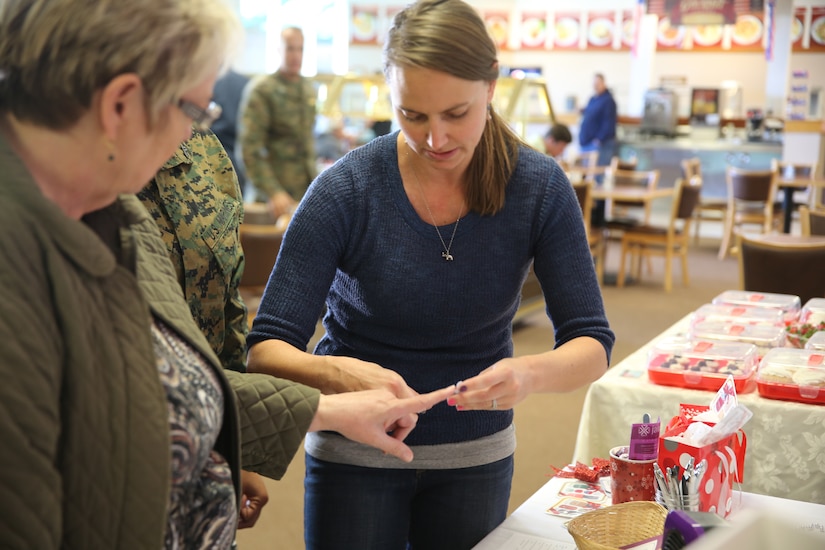
"Leadership across the DOD takes the [survey] seriously," said Eddy Mentzer, the associate director for strategic initiatives within DOD's military community support programs office. "From the office of the secretary of defense to the military service headquarters, [survey] results are shared and utilized to shape future programs and resources. The survey results are also shared outside the DOD with Capitol Hill and the White House."
This year, some military spouses will still get mail and/or email invitation to participate. Those spouses will get a "ticket number" they can enter to begin the survey. All military spouses can get a ticket number by selecting "click here" at www.DoDsurveys.mil. The DOD ID number on the back of the spouse's common access card, along with the date of birth, will be used to access the survey.

While some military spouses will remain silent about life being married to an active-duty service member, others will want to let the Pentagon know directly what's grinding their gears. Mentzer said more spouses should let military leadership know what's going on in the trenches at home.
"While military spouses share common experiences, each military spouse has a unique story," Mentzer said. "Military life can result in a number of challenges. By allowing their voice to be heard and sharing their experiences, military spouses can ensure they are able to have a voice in the future programs that support them."
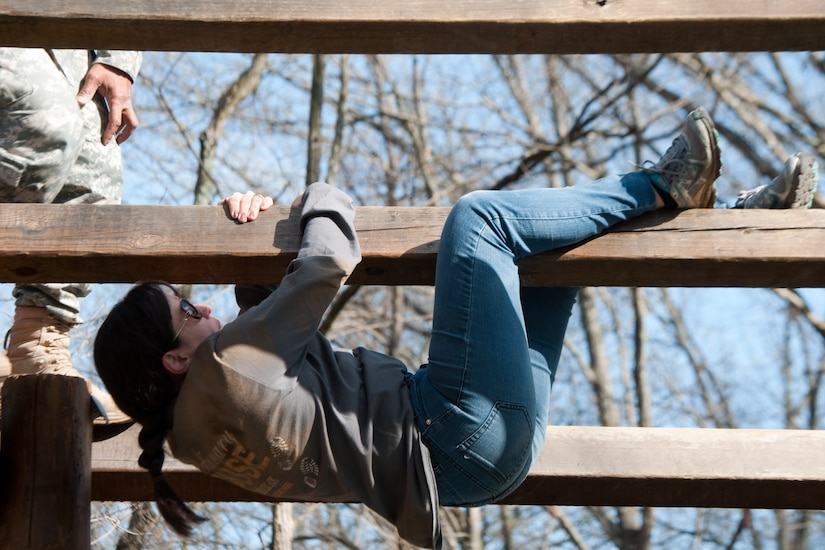
According to the Defense Department's Office of People Analytics, which is conducting the survey, the data collected is reported in aggregate to protect the identity of participants. That aggregate data will eventually be made available publicly so participants can see how other military spouses responded. Information from the 2019 survey is available online at the link below.
FOR MORE INFORMATION

Participants in the live-fire exercise Jaded Thunder disembark from a Marine Corps MV-22 Osprey after an incentive flight at Hulman Field in Terre Haute, Ind., Aug. 22, 2021. Participants received a tour of the aircraft as part of the incentive flight.
Sept. 17, 2021 | , DOD News
Secretary of Defense Lloyd J. Austin III swore in Christopher Maier as the Defense Department's new assistant secretary for special operations and low-intensity conflict.

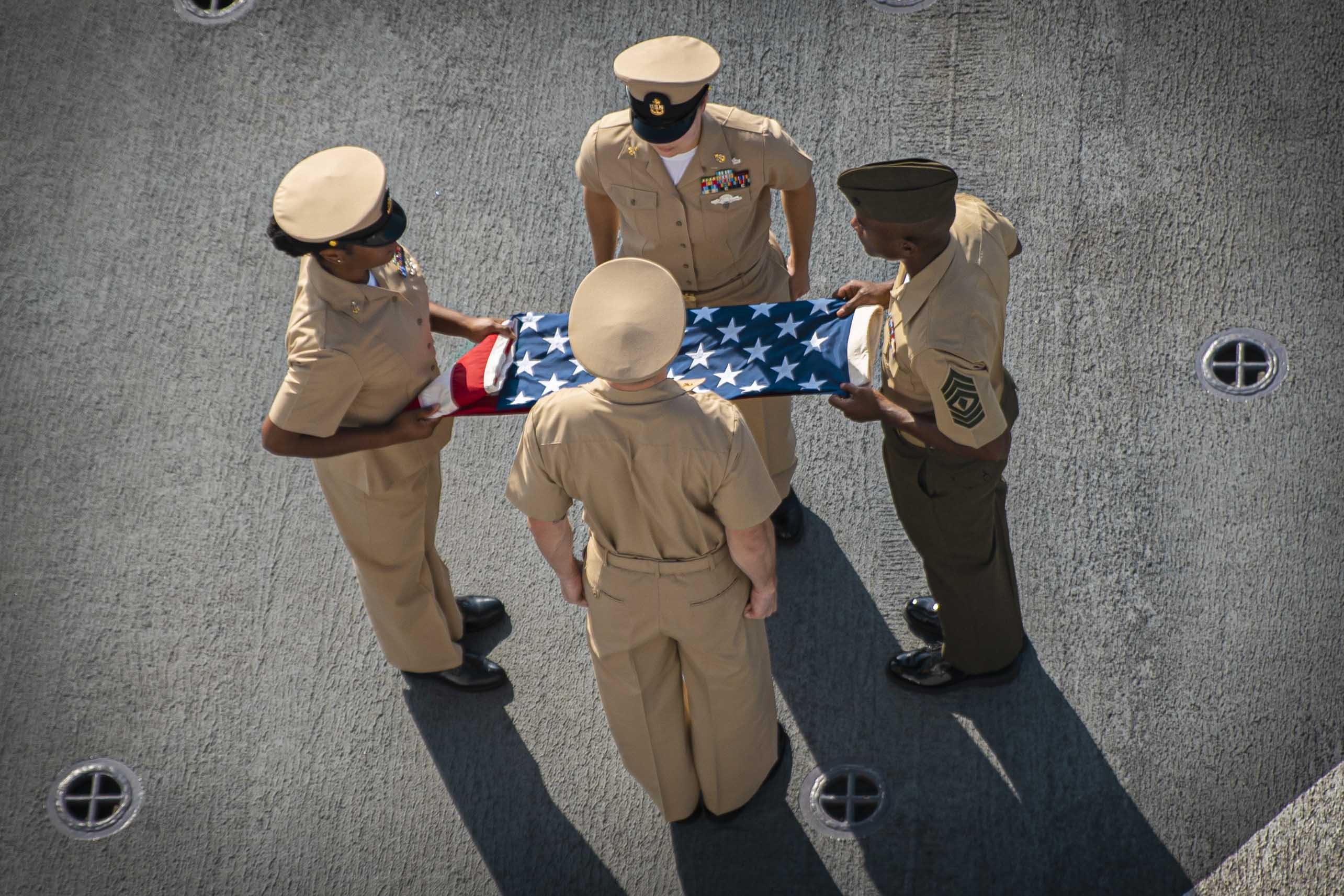
A Marine and sailors fold an American flag during a 9/11 remembrance ceremony aboard the USS Portland in the Indian Ocean, Sept. 11, 2021.

U.S. Air Force Academy’s Thaddaeus Dewing maneuvers around University of Evansville soccer players during a game at the academy in Colorado Springs, Colo., Sept. 12, 2021.
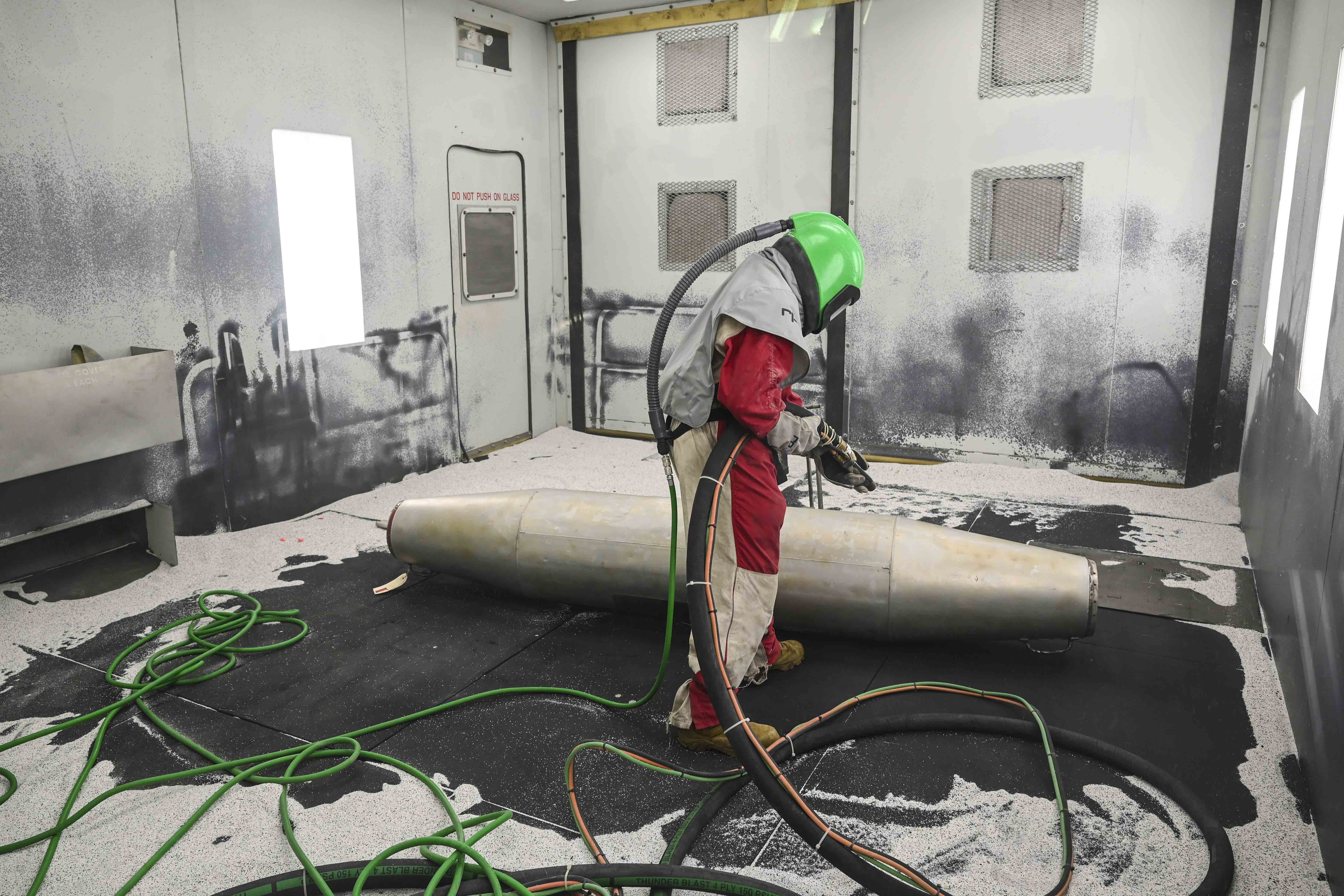
Air Force Senior Airman Leonard Jacob conducts media blasting operations at Eglin Air Force Base, Fla., Sept. 13, 2021. The process removes paint and corrosion so the part can be inspected for damage before it is recoated and painted.

A soldier fires an M1A2 120 mm round during training at Konotop range, Drawsko Pomorskie Training Area, Poland, Sept. 13, 2021.

Army Spc. Jess Stieneke rappels from a tower during an air assault course at Grafenwoehr Training Area, Germany, Sept. 14, 2021.
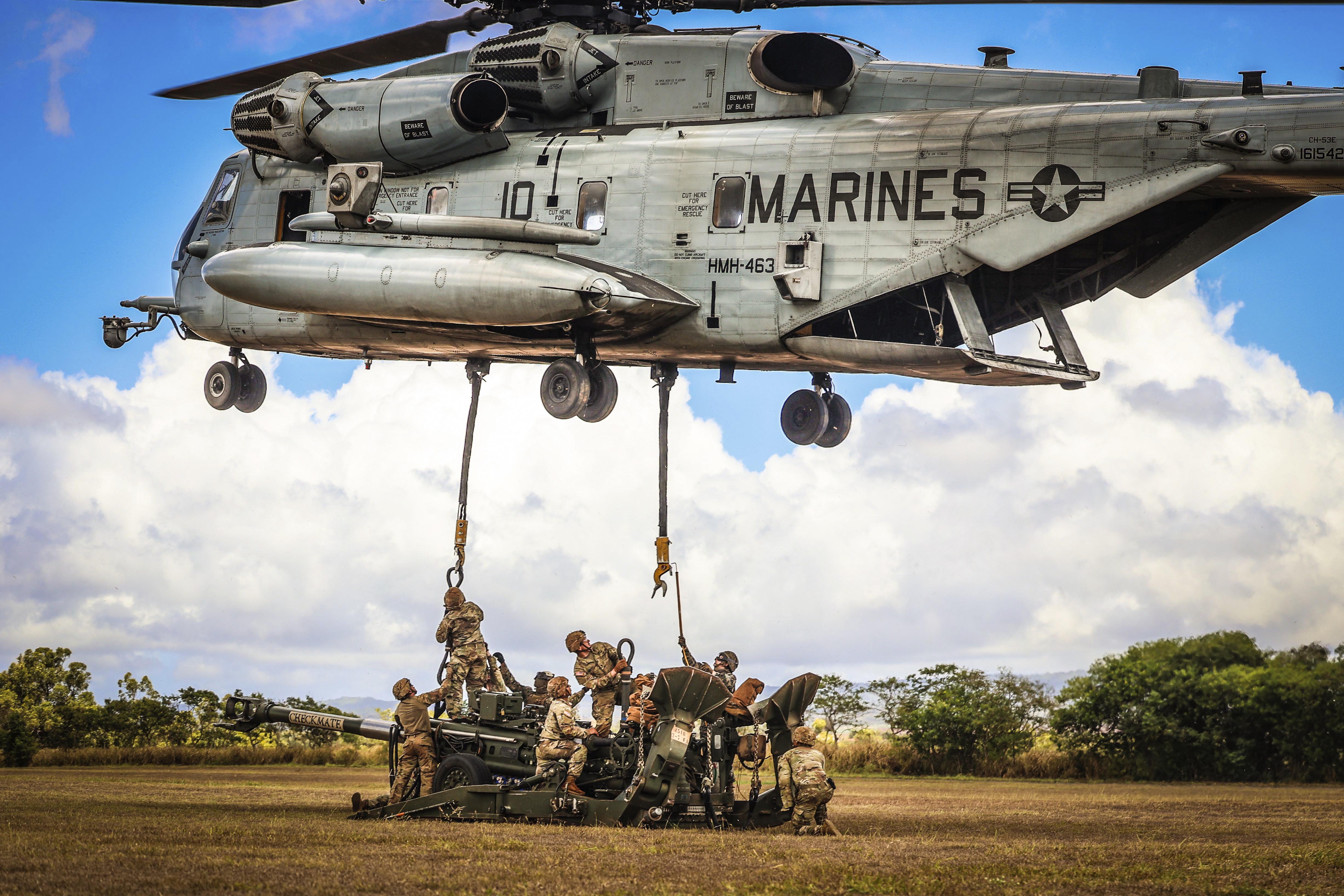
Soldiers sling load an M777A2 howitzer onto a Marine Corps CH-53E while conducting elevator training drills during Steel Crucible at Schofield Barracks, Hawaii, Sept. 14, 2021. The exercise is designed to increase joint air assault proficiency.

Marines conduct an ammunition resupply during training at Marine Corps Base Camp Pendleton, Calif., Sept. 14, 2021.
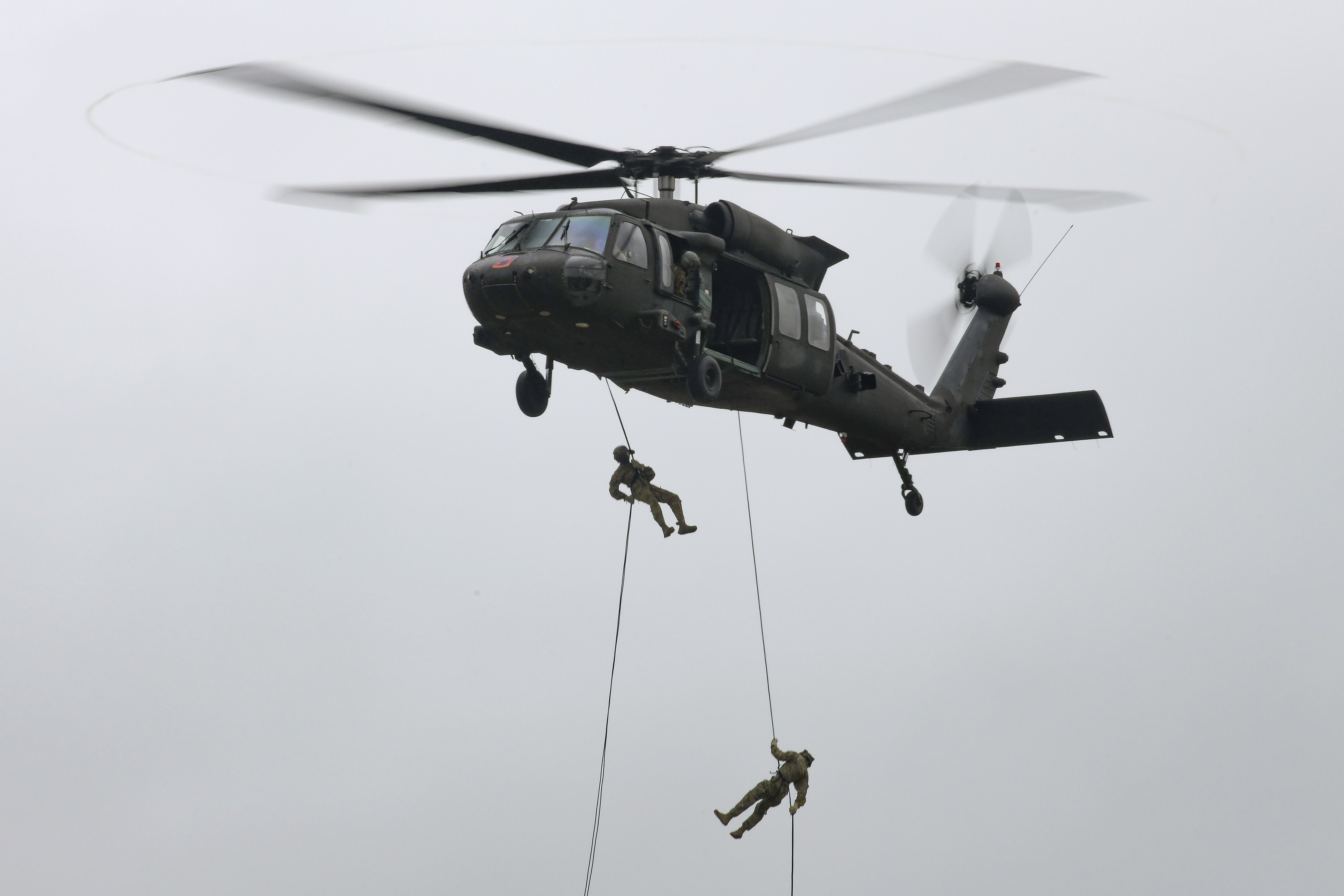
Soldiers rappel from an Army UH-60 Black Hawk helicopter during an air assault course at Grafenwoehr Training Area, Germany, Sept. 16, 2021.

Service members participate in an armed forces full honor wreath-laying ceremony at President William H. Taft’s Memorial Gravesite at Arlington National Cemetery, Va., Sept. 15, 2021. The wreath-laying ceremony was held to commemorate Taft's 164th birthday.
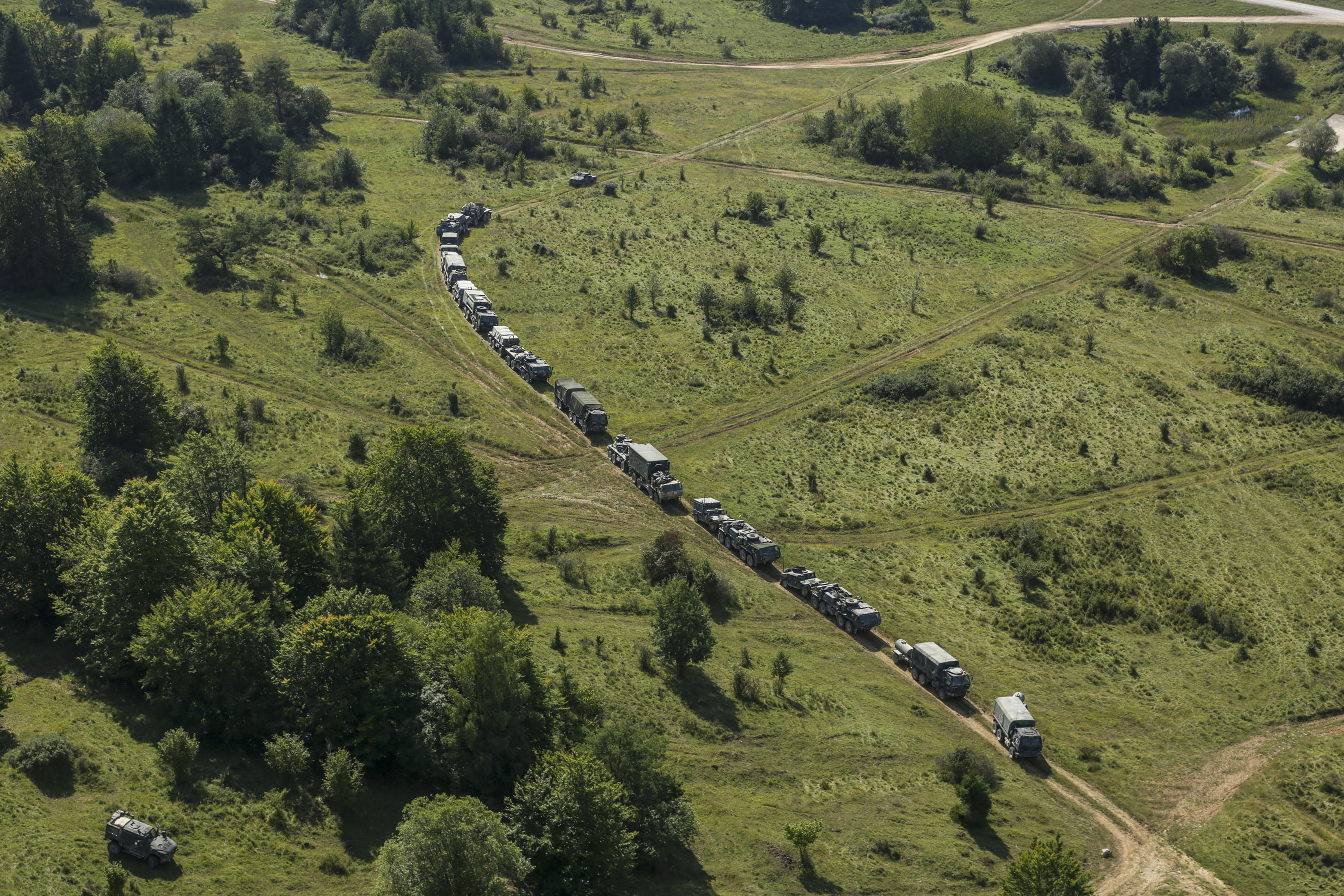
Soldiers prepare to convoy to their next location during Saber Junction 21 at Hohenfels Training Area, Germany, Sept. 14, 2021. Saber Junction is a training rotation designed to evaluate and assess the readiness of the 2nd Cavalry Regiment to execute unified land operations in a joint, combined environment and to promote interoperability with participating allied and partner nations.

Air Force Col. Jesse J. Friedel and Japan Air Self-Defense Force Maj. Gen. Takahiro Kubota salute in honor of prisoners of war and missing in action personnel during the POW and MIA remembrance retreat ceremony at Misawa Air Base, Japan, Sept. 3, 2021.
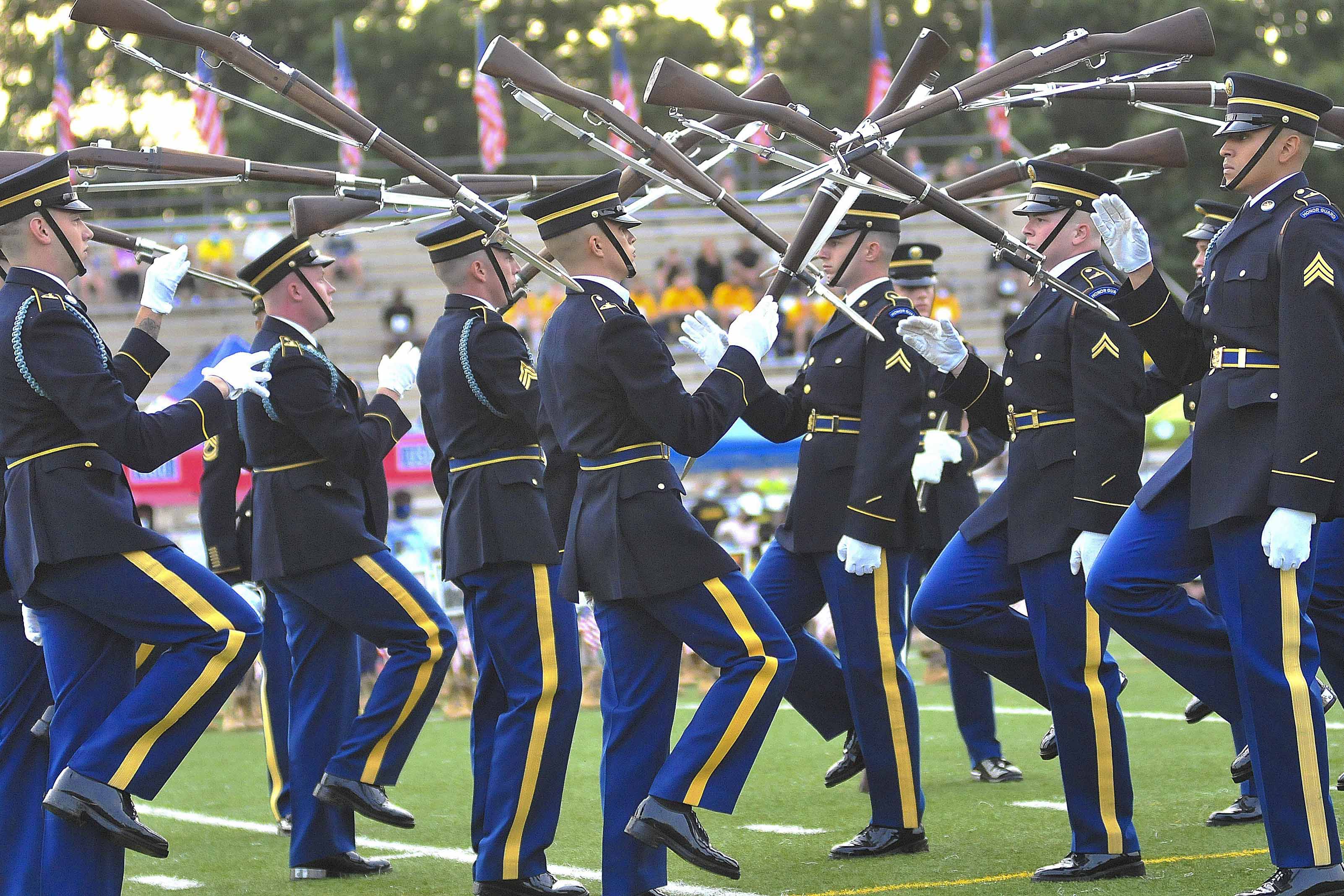
U.S. Army Drill Team members toss M1903 Springfield rifles into the air during a performance at Fort Lee, Va., Sept. 11, 2021.
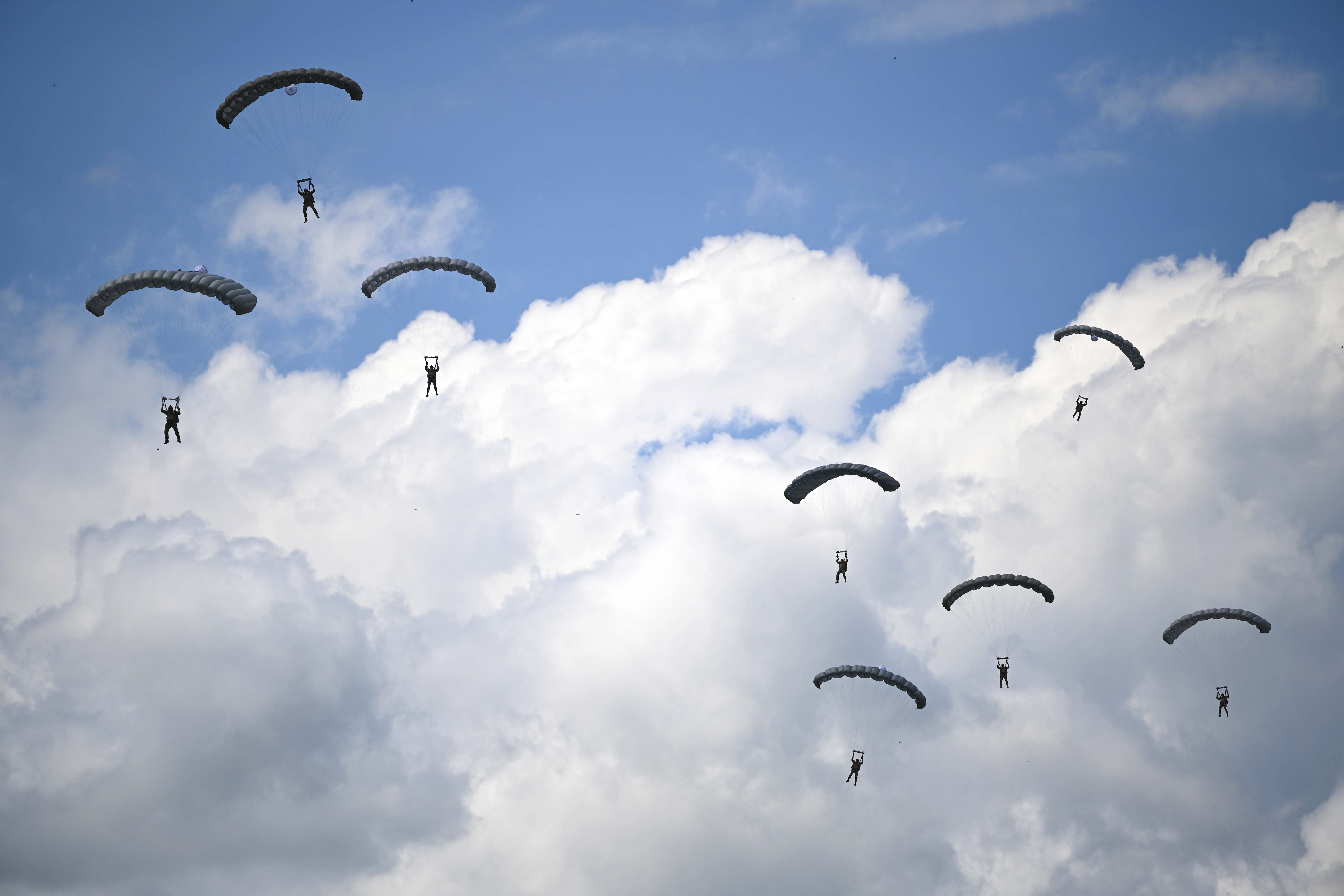
Airmen perform a military freefall jump in Rionegro, Colombia, Sept. 3, 2021, during Ángel de los Andes Cooperación VII, a Colombian-led search and rescue exercise.

Marines conduct military operations in urban terrain exercises at Marine Corps Base Quantico, Va., Sept. 9, 2021.
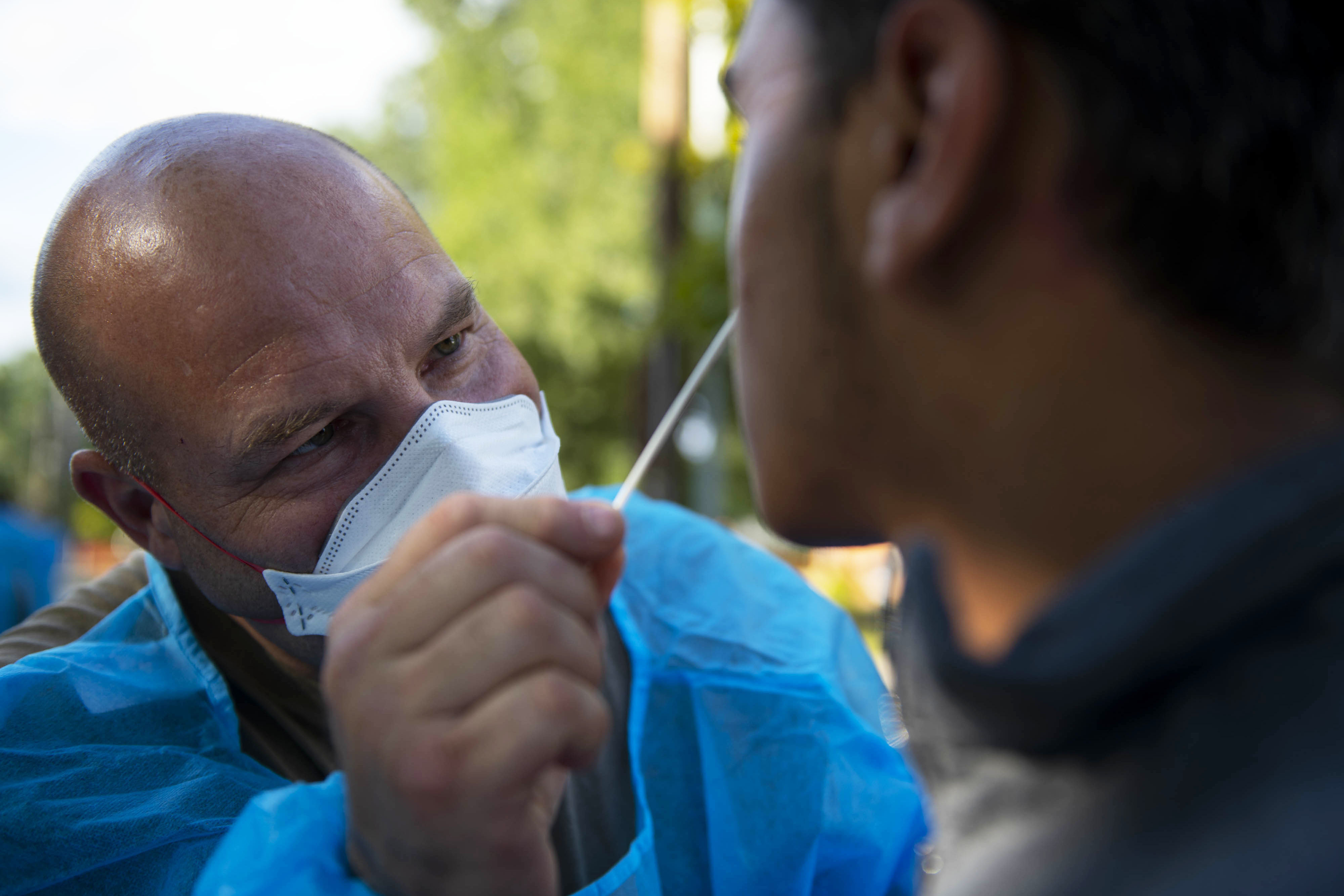
Air Force Senior Master Sgt. Matthew Hardin administers a COVID-19 test in Liberty Village at Joint Base McGuire-Dix-Lakehurst, N.J., Sept. 3, 2021.
Sept. 15, 2021 | , DOD News
Jesse Salazar spoke today at the George Mason University School of Business in Arlington, Virginia.
"Our defense industrial base allows us to preserve our military advantages and deter our adversaries," he said.
"Domestic manufacturing advances our national security by providing supply chain resilience and the capacity to respond in the case of a national emergency," Salazar said.
However, for many years, American industrial and manufacturing capacity has declined, he said.
"We have to address this. We must onshore domestic defense capabilities," Salazar said, meaning ensuring that critical manufacturing must be located in the United States.
"Clear market signals and investment priorities will unlock the power of American entrepreneurship, technological breakthroughs and individual achievement," he suggested.

Salazar mentioned the importance of the defense industrial bases of allies and partners.
"We recognize that we cannot exclusively look to American sources for all the items we procure. Strategically, we see great value in building closer cooperative ties," he said.
Key allies and partners who have been especially helpful, he said, include Australia, India, Japan, South Korea, Canada, the United Kingdom and other NATO nations.
For example, he said that Australia's sophisticated approach to rare earth processing could help the United States build capacity here.
Canada supplies high-purity aluminum metal needed for fabricating space, military and automotive products. Additionally, Canada hosts a germanium zinc refinery, which imports ores from an Alaskan mine, he said.
The U.K. is advancing development of batteries that are useful in military applications, he said. The U.K. also has advanced forging and casting techniques.
Australia increased its defense budget 3% this year and is spending the most on acquisition and sustainment since World War II, he noted.
The department is working with Congress to ensure it has the authority to invest in key military industrial assets produced by allies such as Australia and the U.K., he said.
Another possibility is expanding the use of Security of Supply Arrangements, he said.
The SOSA agreement is used when the U.S. defense industrial base needs to source goods, services and raw materials from the global marketplace to support national security and defense requirements.
The DOD is also evaluating options to improve the effectiveness, flexibility and speed of the Defense Production Act, he said.
Sept. 15, 2021
SECRETARY OF DEFENSE LLOYD J. AUSTIN III: Well, good morning, everyone, and Minister Dutton, it's an honor to welcome you to the Pentagon. Thanks for making a long trip, and you've been on the road quite a -- quite a while now, so we really, really appreciate having you here. I look forward to our discussions today and to our participation in the 31st Australia-United States ministerial consultations tomorrow.
As you know, this past weekend, we commemorated the 20th anniversary of the 9/11 terrorist attacks, and that cast a special light on the 70th anniversary of ANZUS. Australia, one of our oldest allies, invoked the ANZUS Treaty for the first time and the only time after 9/11, sending your forces to -- for two decades -- ago to fight shoulder-to-shoulder alongside the United States. And so Minister Dutton, the American people will forever be grateful, and we will always remember Australia's steadfast support.
And I also want to personally thank you for your letter -- letter of condolence after the ISIS-K terrorist attack in Kabul that killed 13 of our heroic service members and so many Afghan civilians. We're also grateful to Australia for standing alongside us for the very end of our military mission in Afghanistan, and we're looking forward to continuing our close cooperation.
I'm hoping that our discussions today will further strengthen our alliance in new and unique ways. The alignment between our countries has never been greater than it is today. We see the same challenges. We share the same sense of urgency. And we're cooperating closely on force posture, strategic capabilities, regional engagement and military operations, and all of that strengthens our ability to deter threats to a free and open Indo-Pacific.
So Mr. Minister, thanks again for being here, and I look forward to a productive discussion today.
MINISTER FOR DEFENCE PETER DUTTON: Well, Mr. Secretary, thank you very much for those very warm remarks. Thank you to you and to your colleagues for the preparation ahead of today's meeting, and we do have a very significant point in history that is before us, and the opportunity for our two nations to continue the work that we've done over generations.
I was in New York in the January following the 9/11 attacks, and felt the raw emotion there, the smell still from the smoldering wreck and the raw emotion that was evident on the streets, and as you went across the United States. They were flying flags, and the patriotism was on display. But America rose to deal with that issue, and the 20-year anniversary, whilst some of those stories will never fade, and the pain will never go away for many of those families and their descendents now of those killed there. It is a reminder of the need for us to continue our relationship to stare down that evil and to deal with whatever the next century might hold.
And for us, this celebration of the seven -- 70th anniversary is a significant one because as we know, the position in the Indo-Pacific is deteriorating. And as we know, only together with the United States, with the United Kingdom, with their Five Eyes partners otherwise can we provide the true effect to protecting our nations and our people.
So it's a great honor to be with you at the Pentagon, steeped in history, and that collaboration, as you say, over a long period of time.
I'll finish on this note in relation to Afghanistan. We were shoulder-to-shoulder, and as you know, Prime Minister Howard was in Washington at the time of the strike on the United States 20 years ago. And we have been able to take 4,100 people out of Kabul, which for a population of 25 million in our case is a significant effort. It would not have been possible to remove one of those individuals, one of those little girls or boys or young women without the support of your 4,000 troops and the thousand British troops there, as well. There's no other country in the world that had the capacity to hold that airport. And despite the criticism and despite those with 20/20 hindsight, we achieved success in withdrawing those people and starting a new life for them only because of the efforts of the United States, and I'm very grateful for that.
And our task now is to make sure that we strengthen this relationship even further, and there are many opportunities for us to do that today. So thank you so much. It is a great honor to be here with you and -- and your staff.
SEC. AUSTIN: Thank you, sir.
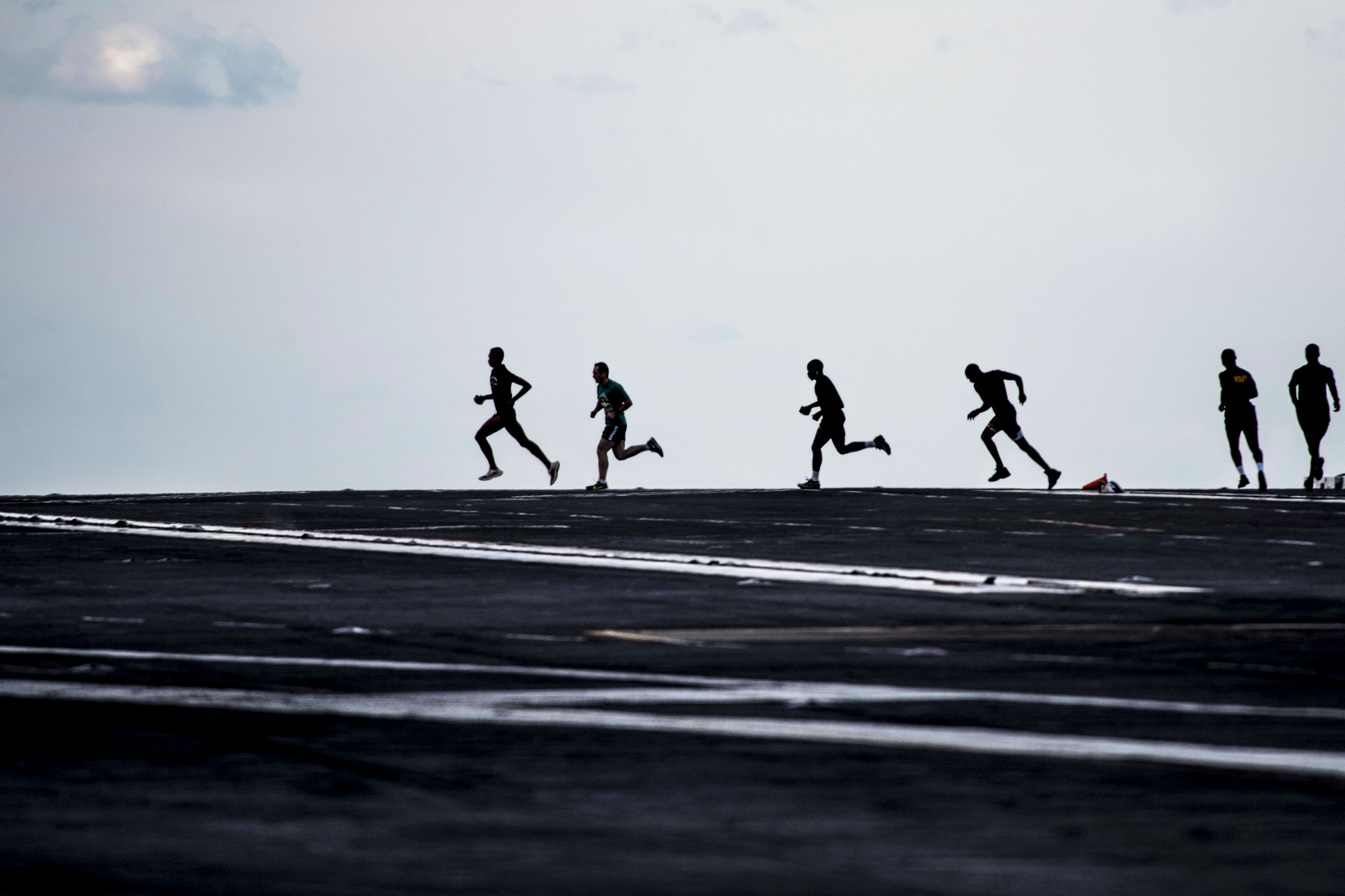
Sailors participate in a 5K run on the flight deck of the USS George H.W. Bush in the Atlantic Ocean, Sept. 11, 2021, in remembrance of the lives lost in the 9/11 attacks.

U.S. and Indonesian marines conduct amphibious training during a training exercise at Marine Corps Base Camp Pendleton, Calif., Sept. 8, 2021.
Sept. 15, 2021
Secretary of Defense Lloyd J. Austin III announced today that the President has made the following nomination:
Marine Corps Col. Matthew S. Reid for appointment to the rank of brigadier general. Reid is currently serving as chief of staff, Marine Corps Training and Education Command, Marine Corps Base Quantico, Virginia.
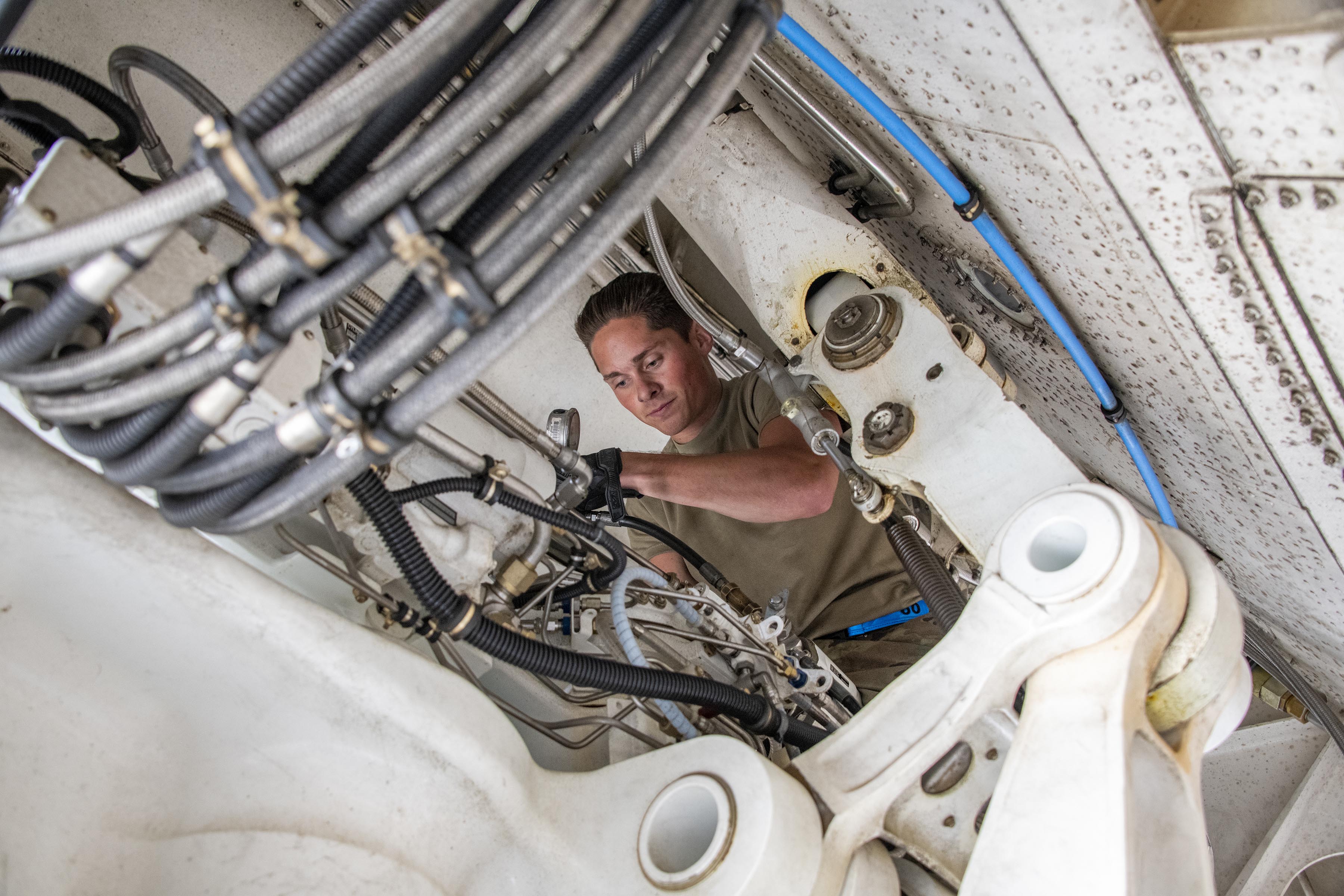
Air Force Airman 1st Class Bryson Hill services the main landing gear of a C-5M Super Galaxy at Travis Air Force Base, Calif., Aug. 21, 2021.

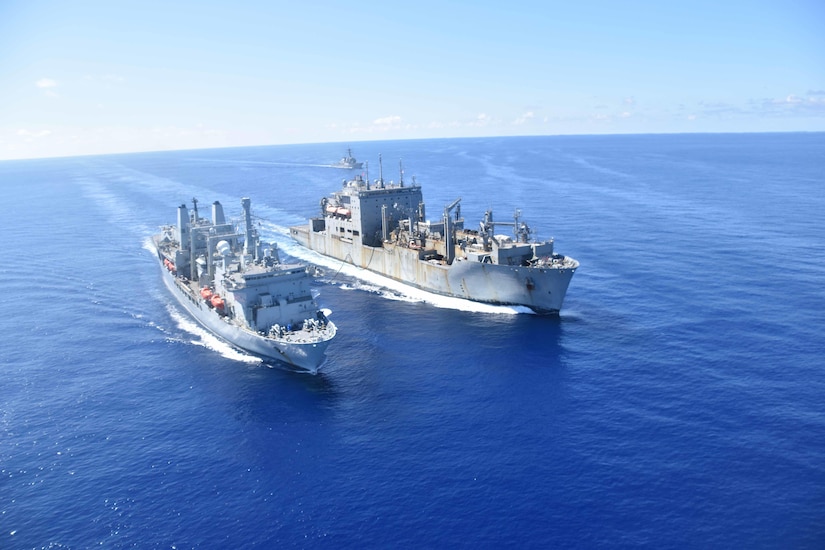
The USNS Alan Shepard, right, conducts an underway replenishment with the United Kingdom’s RFA Fort Victoria in the East China Sea, Aug. 28, 2021.
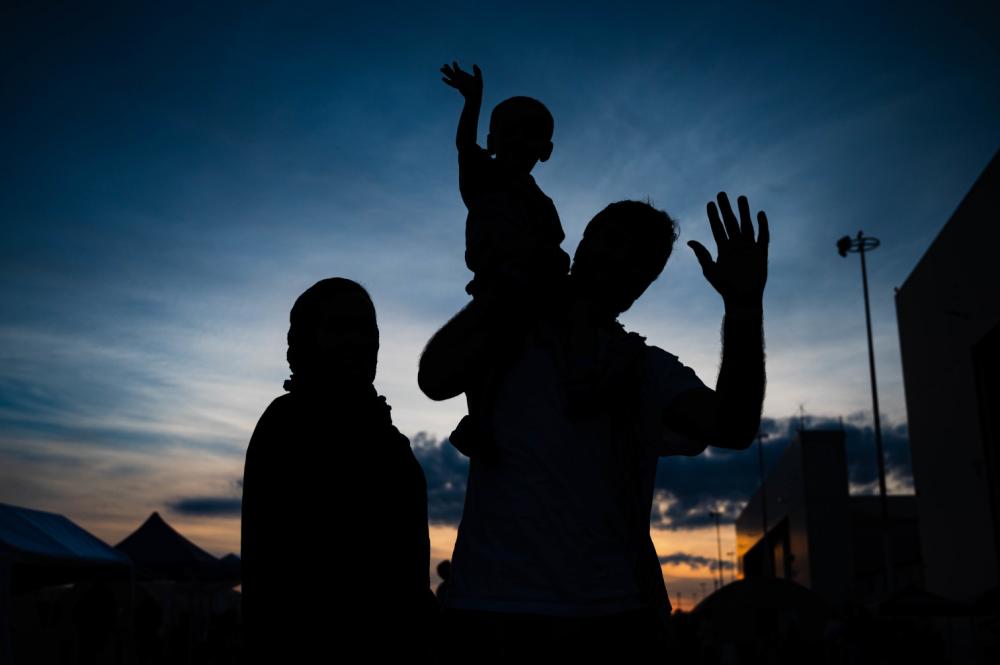
A family of Afghan evacuees wave nearby temporary lodging pods during Operation Allies Refuge at Ramstein Air Base, Germany, Sept. 14, 2021. Ramstein transformed into U.S. European Command’s primary evacuation hub, supporting the largest, most complex humanitarian airlift operation in history.
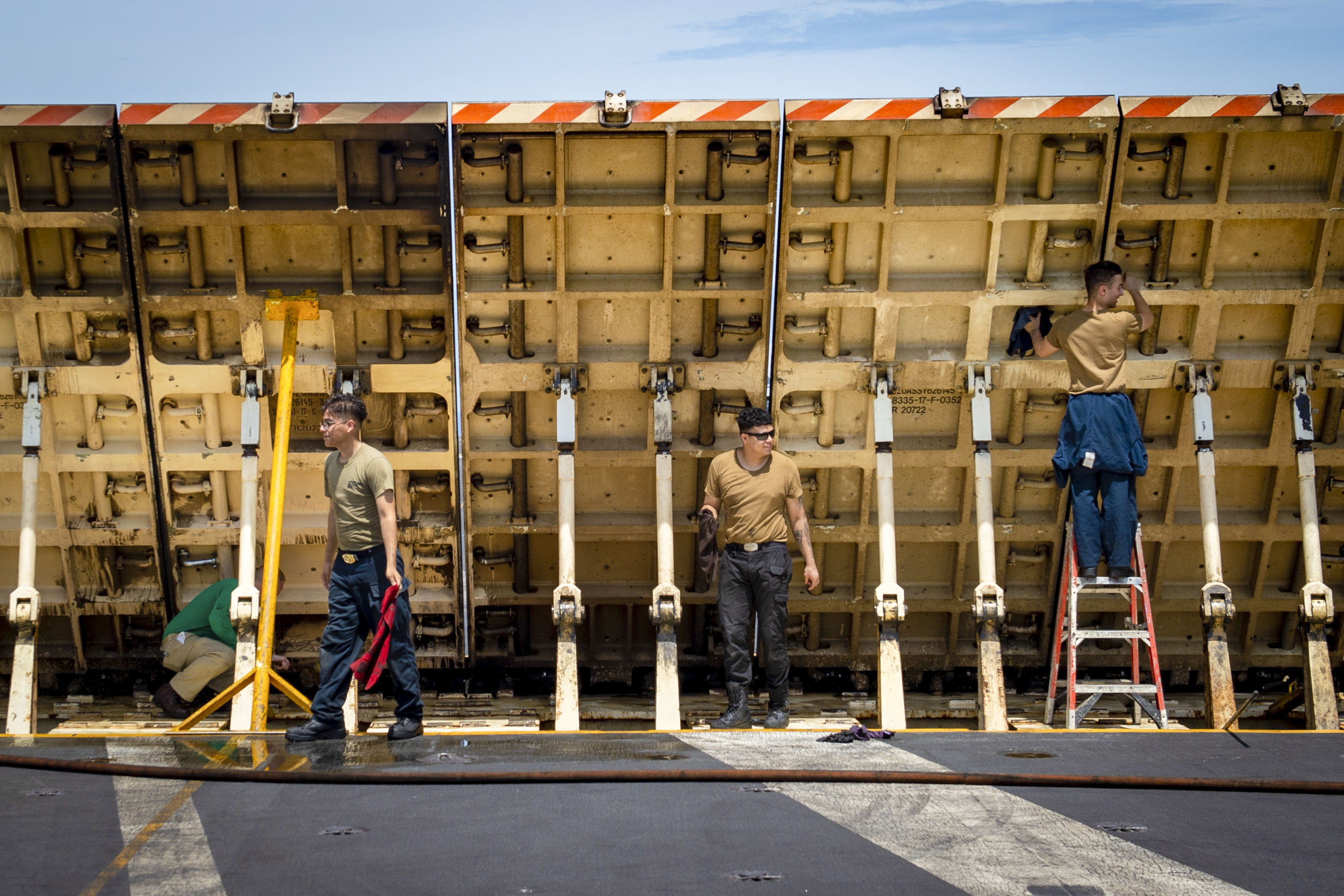
Sailors clean a jet blast deflector aboard the USS Carl Vinson in the South China Sea, Sept. 12, 2021.

Stickers declaring, "I got my COVID-19 vaccine!" are given to vaccinated airmen, as their vaccination records are updated with the 2nd Medical Group at Barksdale Air Force Base, La., Sept. 9, 2021.
Sept. 15, 2021 | , DOD News
Dutton met Austin at the Pentagon a day before the Australian-U.S. Ministerial Consultations with the State Department scheduled for tomorrow. The defense leaders discussed the state of the alliance, the situation in the Indo-Pacific region and steps the countries can take together.
That the alliance is close is an understatement. The United States and Australia shared battlefields from Hamel on the Western Front in 1918, to New Guinea in World War 2, through Korea, Vietnam, Desert Storm and the war on terrorism. The United States and Australia are treaty allies under the Australia, New Zealand, United States Security Treaty, also known as the ANZUS Treaty, signed 70 years ago.
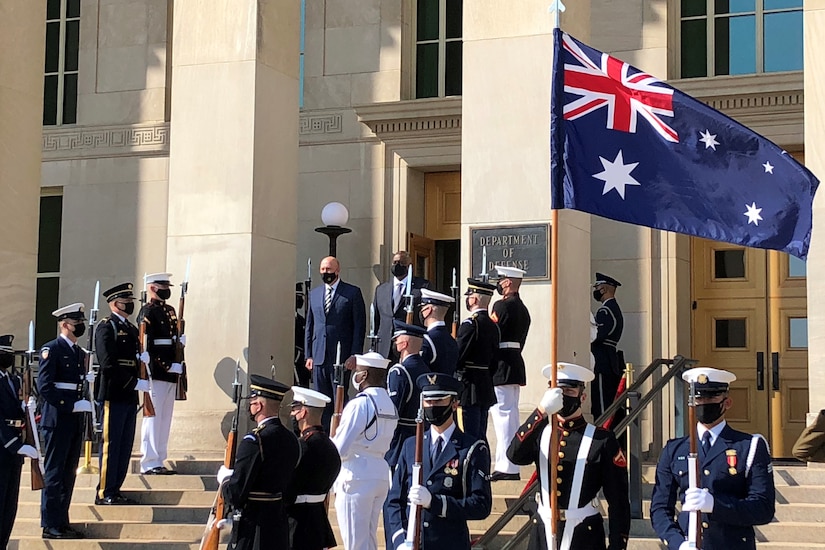
"This past weekend, we commemorated the 20th anniversary of [the] 9/11 terrorist attacks, and that cast a special light on the 70th anniversary of ANZUS," Austin said. "Australia, one of our oldest allies, invoked the ANZUS Treaty for the first time, and the only time, after 9/11, sending your forces two decades ago to fight shoulder-to-shoulder alongside the United States."
Dutton also invoked 9/11 saying he was in New York soon after the attacks. He said 9/11 "is a reminder of the need for us to continue our relationship to stare down that evil and to deal with whatever the next century might hold."
Dutton said the situation in the Indo-Pacific is "deteriorating" and the only way to defend the international rules-based order that has served so well is through alliances. He said this is the only way to protect the nations and the people of the region.
Dutton finished by thanking Austin for the American service members who supported Australia's evacuation of 4,100 Afghans from Kabul last month. "No other country in the world had the capacity to hold that airport," he said. "Despite the criticism, despite those with 20/20 hindsight, we achieved success in withdrawing those people … and I'm grateful for that."
The two nations share values, outlooks and freedoms, Austin said. "We're looking forward to continuing our close cooperation," he said. "I'm hoping that our discussions today will further strengthen our alliance in new and unique ways. The alignment between our countries has never been greater than it is today. We see the same challenges, we share the same sense of urgency, and we're cooperating closely on force posture, strategic capabilities, regional engagement and military operations."
The Defense Department relies on nuclear-armed bombers, submarines and intercontinental ballistic missiles, as well as space-based sensors, to provide a strategic deterrence umbrella for the homeland and to protect deployed forces, allies and partners.
However, sensitive microelectronics used in these assets could be vulnerable to high levels of ionizing radiation caused by a number of factors, including cosmic rays in outer space, severe solar storms, and an electromagnetic pulse caused by a high-altitude nuclear detonation.
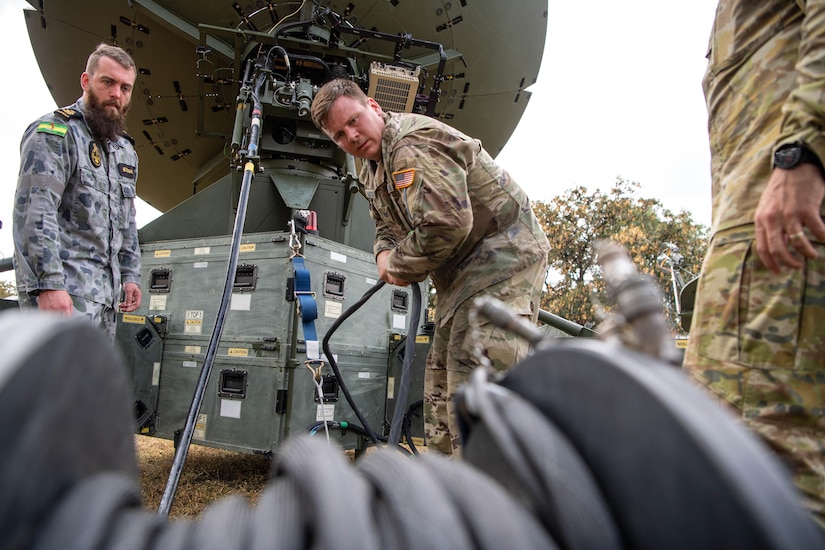
To protect against these threats, the DOD has developed techniques to protect microelectronics used in satellites, spacecraft, the nuclear triad and the triad's command and control center, said Rich Ryan, director for international programs, nuclear forensics, resiliency and survivability in the office of the deputy assistant secretary of defense for nuclear matters.
This protection, known as hardening, can consist of manufacturing chips on insulated material, redundant circuits, altering the design of circuits, and placing a shield over the microelectronics, he said.
Each of the methods used undergoes rigorous radiation testing in military and government laboratories to ensure they work in hazardous conditions, he said.
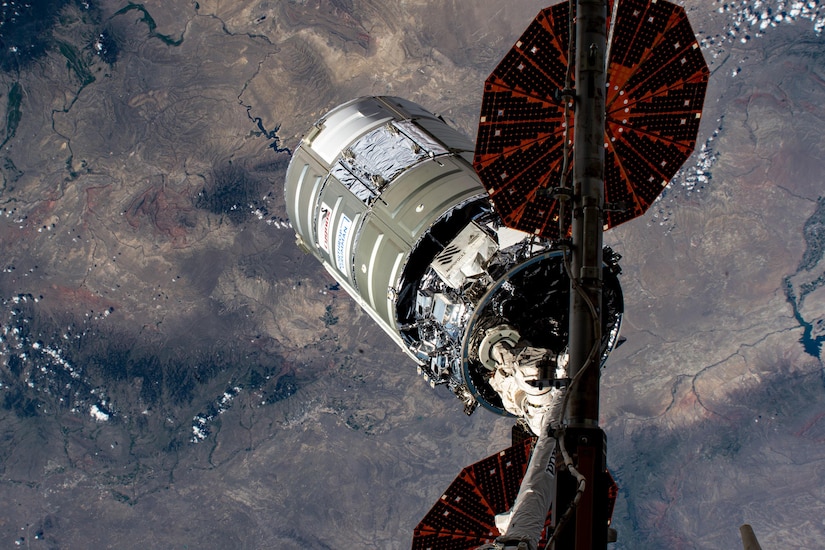
In the past, there was no central repository for identifying and accessing parts that have been certified as radiation hardened, he said.
On Sept. 30, the DOD opened a parts library to serve the department and other agencies with requirements for radiation hardened parts, including NASA and the Department of Energy. The cloud-based library is hosted by Nimbis Services in Oro Valley, Arizona.
Known as the Trusted Silicon Stratus Distributed Transition Environment, the authority to operate this library was issued by the Strategic Radiation Hardened Electronics Council; the Air Force Research Laboratory at Wright Patterson Air Force Base, Ohio; and the Naval Surface Warfare Center Crane Division in Indiana.
"The authorization comes as a clarion call that in order to improve supply chain visibility across the nuclear enterprise, establishing this microelectronics library is key to improving the ability to analyze key parts, their sources, and to facilitate government re-use of intellectual property throughout the DOD," Ryan said.

The next step for the parts library is to test performance across DOD programs, he added.
"The parts library will enable closer Air Force, Navy and Missile Defense Agency collaboration on a variety of strategic system acquisition and sustainment programs — allowing them to better align requirements, technology development, production and sustainment efforts, and supply chain protection activities. By improving data-sharing and reducing duplication of effort, the library will drive affordability, advance technology, and reduce risk while protecting critical design information," said Drew Walter, deputy assistant secretary of defense for nuclear matters.

Soldiers load an HH-60 Pave Hawk helicopter into a C-5 Super Galaxy at Naval Station Guantanamo Bay, Cuba, Sept. 9, 2021.
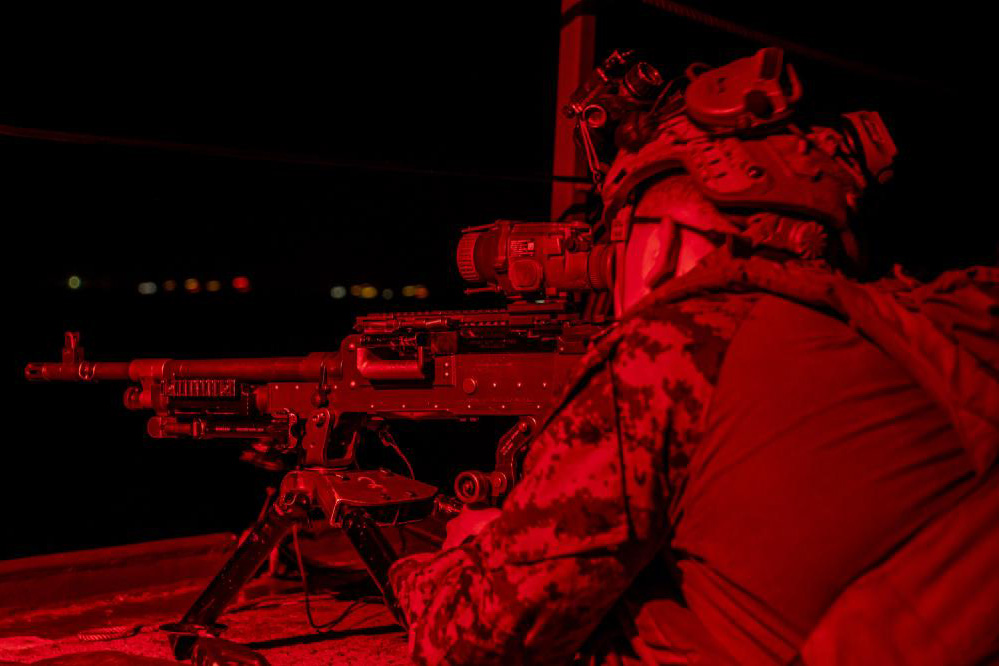
Marine Corps Lance Cpl. Samuel Aguilera provides security during a strait transit aboard the USS Portland, Sept. 5, 2021.


 Posts
All Comments
Posts
All Comments
Posts
All Comments
Posts
All Comments


