Aug. 18, 2021
Pentagon Press Secretary John F. Kirby
PRESS SECRETARY JOHN F. KIRBY: Good morning, everybody. Let me get organized here.
Q: You’re not color coordinated today…sorry to tell you.
MR. KIRBY: Oh, the mask. I know, I -- actually I shouldn't admit this
but there is a -- there is a mask that actually goes with this suit.
But it -- it is in my car and since I'm not on camera I figured I
wouldn't have to go back and get it. Otherwise, I would -- I would hear
about it if I was on TV with a mask that wasn't properly coordinated.
All right, lots to walk through today. So, let's just get -- let's
just get right at it. So, we'll give you a -- start, obviously, with an
update -- operational update on our effort in Afghanistan. And as I
think you all realized just keep in mind that this is a snapshot in
time. Very dynamic, fluid situation, things keep flowing, things keep
changing.
So, just please keep that in mind. So, currently, U.S. military
footprint in Afghanistan is approximately 4,500 total troops on the
ground in Kabul, and when I say in Kabul I mean at the airport. There
may be a few hundred more that will flow in today but we're not
anticipating a big shift in personnel beyond that right now.
The operation and actually that number I should -- I want to add
that, well, I'll get to that later. The operation's ongoing and so
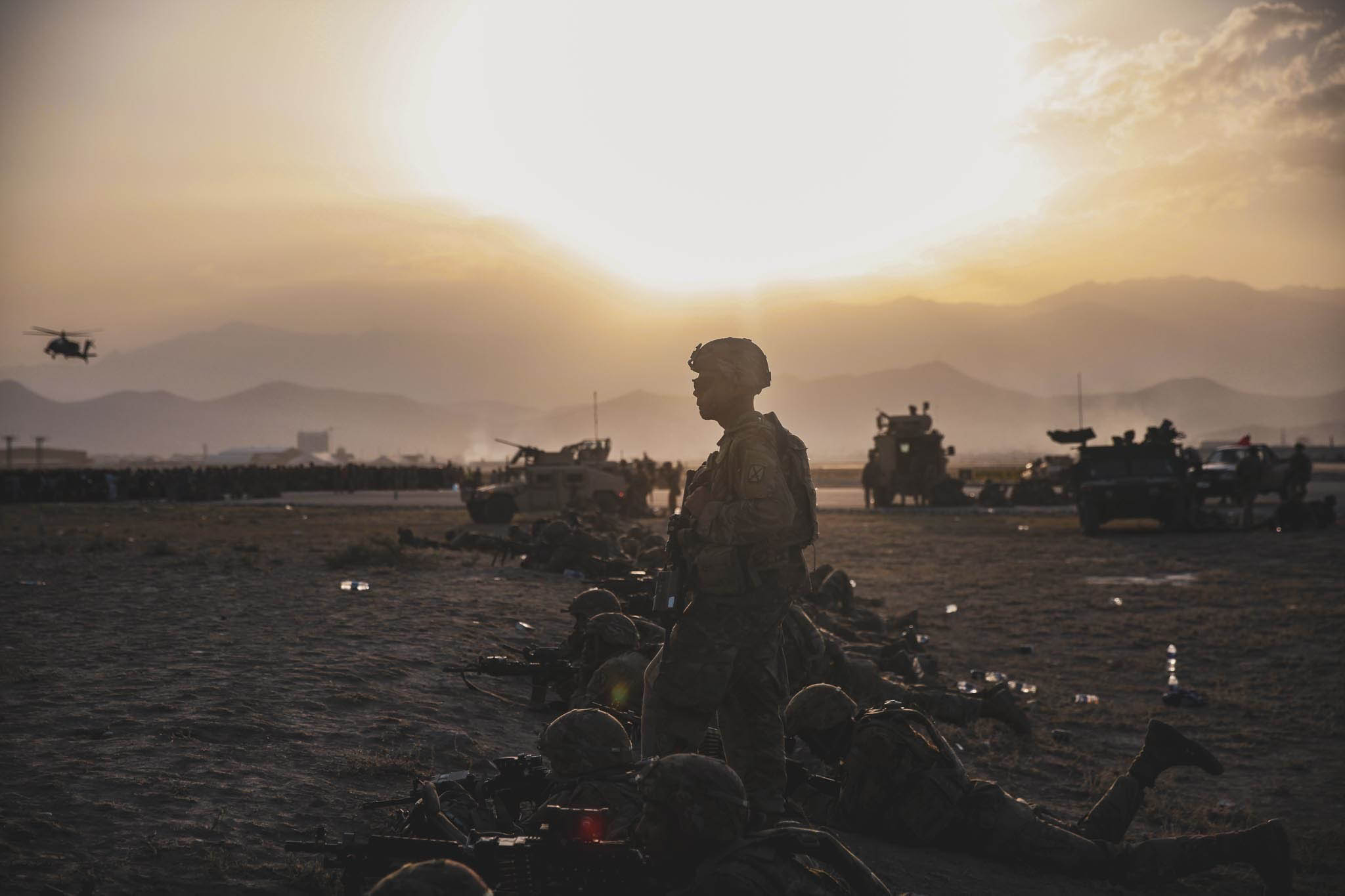
here's just a -- some -- some quick snapshots. Kabul Airport remains
secure and open for flight operations, military flights are arriving and
departing consistently, and there is limited commercial flight
operations as well as some foreign contracted flights that are coming
and going.
In the past 24 hours, 18 C-17s and one C-130 arrived with around 700
additional troops and some equipment, and that brought our total as I
said up to about 4,500. There are --
Q: (Inaudible) 24 hours you said?
MR. KIRBY: Twenty-four hours, yes. And -- and -- and, Courtney, by
24 hours what I'm giving you are numbers that are relevant as of 3:00
this morning our time. So, from 0300 to 0300. That's how we're going
to try to frame this for you. But as I said, several hundred more could
come in today so, you know, it's -- we're continuing to flow.
Q: Sorry, just -- so it doesn't overlap with the nine you said yesterday? That's...
MR. KIRBY: It's -- what we're trying to get to now is 03 to 03. So,
the last 24 hours. That's the best I -- I can do. So, you're at 4,500
right now approximately and 700 came in over the last 24 hours. This
-- there are -- I know you know there are lots of troops. Some of the
-- some of the 4,500 are -- include 1,300 Marines that are on deck and
they are to continue to flow in.
They're from the 24th Marine Expeditionary Unit and the Special
Marine Air-Ground Task Force - Crisis Response and we've talked about
prepositioning just to stress that both of those units were forward
deployed in the CENTCOM AORs as part of their normal deployment
operations.
And some of the secretary's decisions to make sure that they would be
ready to go on short notice. And they were, and, of course,
non-combatant evacuation operation support is something that Marines are
well trained in and do -- and do well. So, we're glad to have them on
the ground.
Additionally, 18 C-17s have departed in the last 24 hours. These
flights have carried around 2,000 passengers. And I can confirm that
325 of those passengers are American citizens. The remainder of the
number will include Afghans and some NATO personnel. In the next 24
hours, the scheduled airlift numbers will be similar to the last 24
hours.
And as I said yesterday, there are a number of factors that can
influence flight operations and the circumstances can -- can change.
Obviously, we're going to do what we can to keep you updated. But in
terms of flow of aircraft in and out the next 24 hours we anticipate
will look a lot like the last 24 hours.
Now, that's flow of sorties, I can't guarantee that the numbers of
people on those planes will be the same because some of these planes are
still coming in loaded for equipment and people that are not just all
empty C-17s with 300 seats on them. We're still flowing in some people,
so there's different configurations on the plane. Courtney, do you
have a question?
Q: Yes. The White House put out the numbers last night, that there
were 1,100 U.S. citizens. So, the 325 AMCITS. So, you're not giving us
aggregate number at this point, right? I'm -- because I...
MR. KIRBY: They were -- they were right. They got that number from
us, that was at the end of our day yesterday that that was the 1,100
that we got out in -- at the end of our day. What I'm trying to get to
here just for our consistency is, you know, 03 to 03. And so, I'm --
that -- that's what I'm giving you now.
Q: So, do we add the 325 to the 1,100? So that they -- so that they
got 1,400, now we can't do that right because that's not right.
MR. KIRBY: I don't think so.
Q: Do you have an aggregate number of how many...
MR. KIRBY: Yes we do. And I -- if I don't have it here we'll -- we can get it for you.
Q: OK, sorry, it's just that it's like the big question that we keep getting.
MR. KIRBY: I understand.
Q: How many people are getting out? And it's like the numbers...
MR. KIRBY: I am well aware that data can be confused.
Q: Yes.
MR. KIRBY: I get it.
Q: Thank you.
MR. KIRBY: Just give you what I -- what we can here. There is
another capability that's worth mentioning, I mentioned the Marines but
the -- and their expertise at non-combatant evacuation operations.
But we also want to point out that the -- the 621st Contingency
Response Group out of Joint Base McGuire-Dix-Lakehurst arrived also in
the last 24 hours. They were part of that flow-in.
This is a dynamic Air Force unit highly specialized in the rapid
deployment of personnel to quickly open airfields and establish, expand,
sustain, and coordinate air mobility operations. So, this is a group
that knows how to run airfields. And can help with the -- the actual
air operations on the ground.
The secretary and the chairman are over at the White House as we
speak with the president updating him on these ongoing efforts in
Afghanistan. And I can announce that you'll hear from both of them
later today at -- at the podium here in the briefing room. Right now
it's scheduled for 1500.
As you know things can change but -- but -- but I'd be planning for a
1500 briefing with the chairman and the -- and the secretary. And,
obviously, throughout all this, we continue to work closely with our
State Department counterparts.
The success of this and any other evacuation is going to rely on --
on the full efforts of a team of organizations all of which focused on
the various elements and, of course, trying to -- trying to integrate
multiple parts.
And the last thing I'll say on this and then I want to get to Haiti
for just a little bit is that we're focused on the present mission.
That's where our heads are. There's -- there's lots of things in this
space out there, and -- and lots of speculation, and what I can tell you
is that -- and you'll hear this from them this afternoon -- the
secretary and the chairman are focused on what we're doing today and
tomorrow and -- and trying to help get as many people out as safely and
as efficiently as possible. That's the focus of the -- of the -- of the
U.S. military right now, and that is not changed.
OK. Still on Afghanistan, or Afghanistan-related, I want to talk a
little bit about Special Immigrant Visa applicants and housing. So as
you know, the department recently approved a request for assistance from
the State Department to provide additional temporary housing,
sustainment and support inside the United States for a number of up to
22,000. It's not 22,000 for sure; it's a capacity of up to 22,000
Special Immigrant Visa applicants, their families and other at-risk
individuals. Today, Secretary Austin authorized the use of Fort Bliss,
Texas, and Fort McCoy, Wisconsin to provide this additional support in
addition to Fort Lee, which you already know is -- has been part of this
process. U.S. Northern Command will coordinate all the details with
the State Department, the Department of Homeland Security and the
Department of Health and Human Services as necessary, and this support
will be provided under presidential drawdown authority to maximum extent
possible with additional support being provided on a reimbursable
basis. The focus is on getting this done, getting this capacity in
place. And obviously, we're -- we're proud to continue to support the
State Department with this fast-developing mission set, and the details
of exactly how each site is going to be fitted out and -- and the
capacity improved, we're still working on. I don't have all that today,
but I'll update you as -- as much as we can.
The -- the big mover that I wanted to make sure we announced was the
-- the addition of these two bases, Fort McCoy and Fort Bliss, and --
and the contributions that we're trying to make to -- to -- to build out
capacity for -- for people to have temporary housing while they
continue their processing.
So on Haiti, yesterday, the -- the secretary had a chance to go on
down to the National Military Command Center here in the -- in the -- in
the Pentagon to talk to the team that's working the Haiti response and
-- and to get an update from them. He was very grateful for all the
work they're doing and the coordination with U.S. Southern Command. The
people of Haiti continue to need assistance from the devastating
earthquake that occurred on the 14th of August, and the Department of
Defense will continue work to save lives in support of USAID's Bureau of
Humanitarian Affairs.
USAID is the lead agency, and they're working to get relief to those
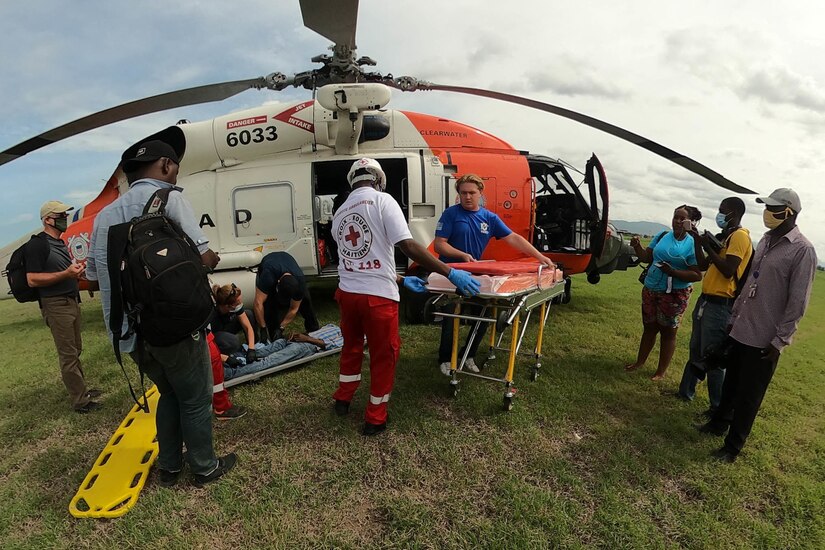
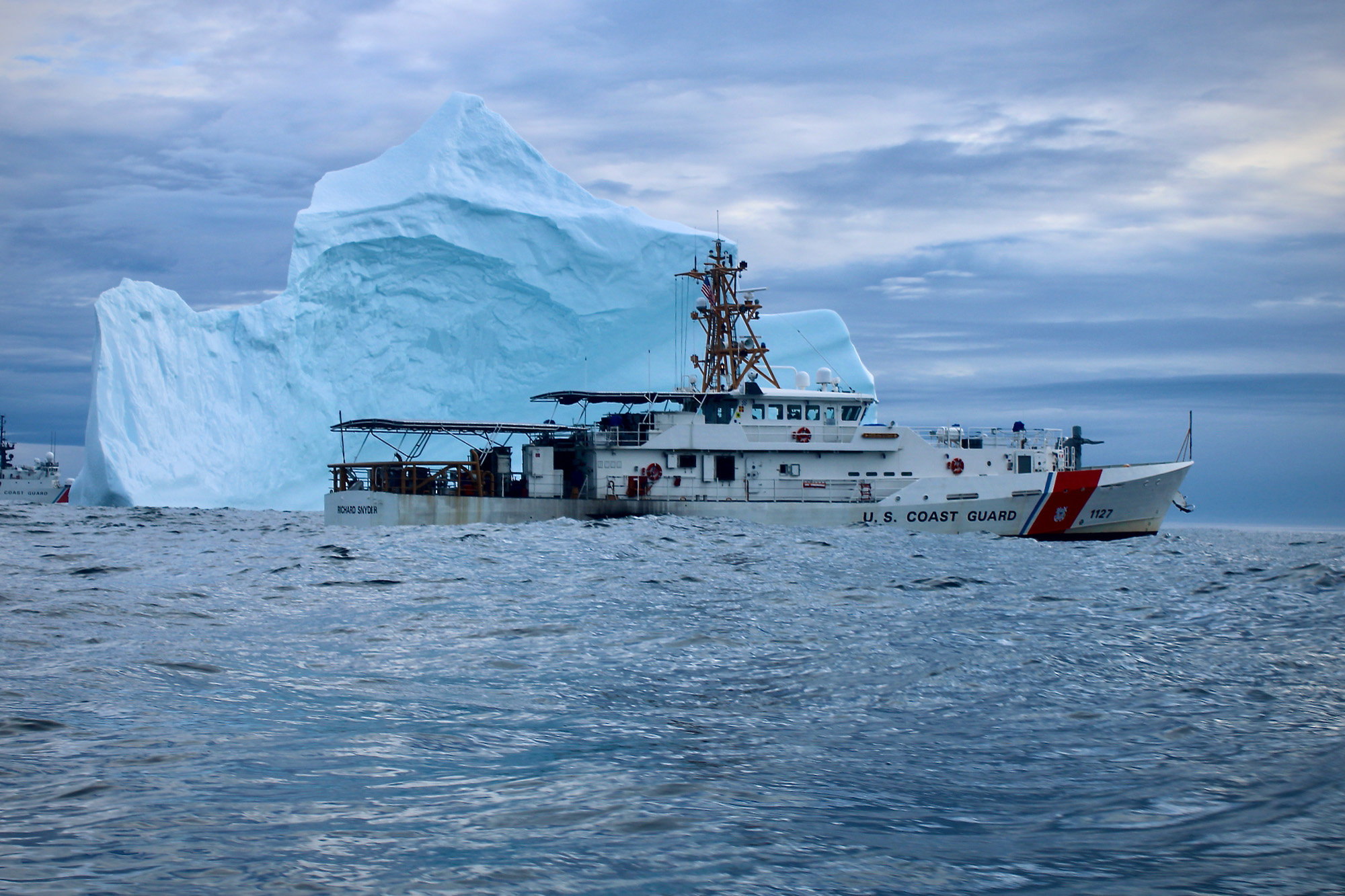
in need. But in terms of our support, you know, the Coast Guard's on
scene. They've been flying lifesaving missions since Sunday. There's
been -- you -- you've probably seen some of the -- the images and the
video coming out of that. And they have, as of late last evening --
this is as of late last evening, they -- they saved 67 people, flying 72
flights. They've transported search-and-rescue responders and 5,500
pounds of medical supplies. Rear Admiral Keith Davids, the commander of
Joint Task Force Haiti, arrived yesterday evening in Port-au-Prince,
and he's currently operating from the embassy to lead DOD efforts in
support, again, as I said, of USAID.
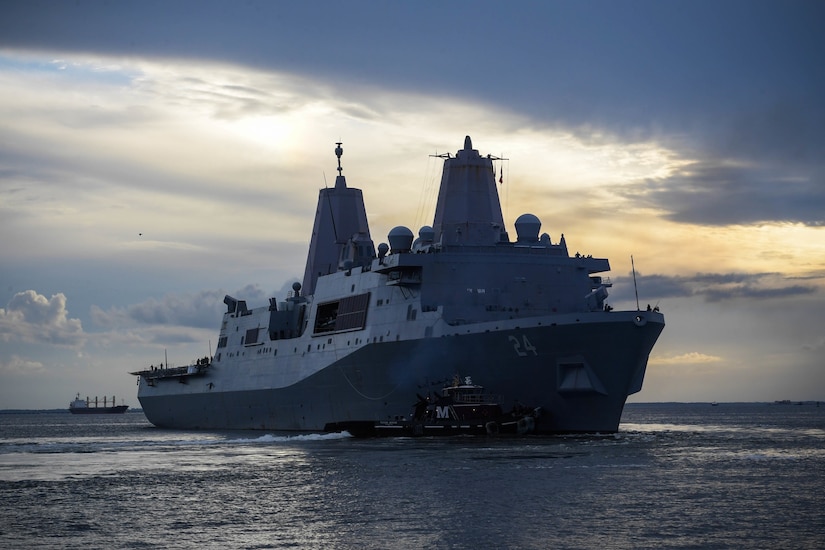
As I also mentioned yesterday, the U.S. Navy's USS Arlington is now
underway and is expected to arrive Friday off of Haiti, where it will
provide airlift and medical capabilities, and serve as yet another
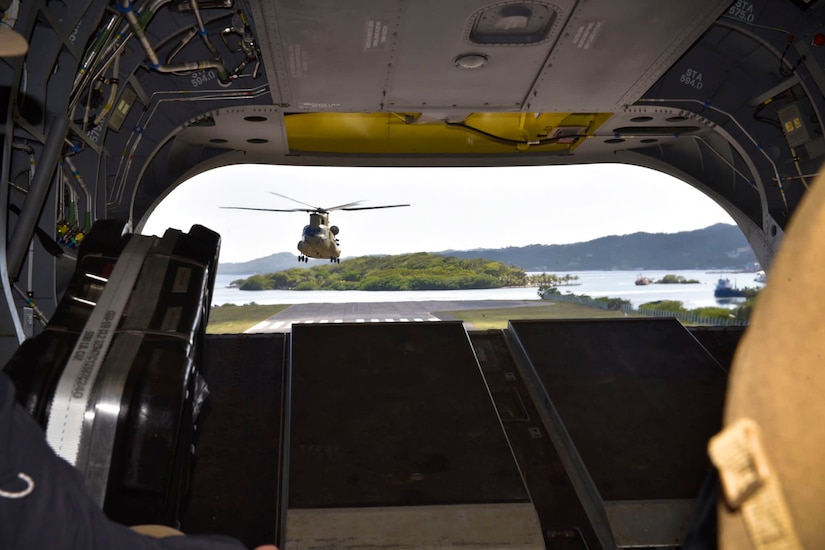
resource for the Haitian people. Eight U.S. helicopters -- that's three
CH-47 Chinooks and five UH-60 Blackhawks -- are currently prepositioned
at Naval Station Guantanamo, and after a weather delay from Tropical
Storm Grace yesterday, they will now be operating each day out of
Port-au-Prince. All the helicopters will be on airlift missions to ease
suffering and get people and capabilities where they need to be.
Again, this is an important mission and we all take it very seriously,
and we want to do what we can to help the people of Haiti. And as,
again, we have updates to that mission set, we'll certainly keep you
informed.
OK, that's an awful lot. Bob?
Q: John, thank you. I think you mentioned in your rundown on
Afghanistan that over the past 24 hours, there've been about 2,000
people evacuated by the airlift, and that you expect it to be about the
same in the next 24 hours.
MR. KIRBY: What I said would be the same is the -- is the sorties, the -- the aircraft.
Q: OK.
MR. KIRBY: And I -- I tried to make that clear. I guess I didn't,
but we expect the air activity, in terms of -- so we had 18 C-17s and
one C-130. We expect about the same number of sorties over the next 24
hours, but I -- I can't tell you exactly the numbers of people that will
be coming and going because the -- our force flow is beginning to get
smaller as we get more troops on the field, and -- and I just can't be
perfectly-predictive over the next 24 how many individuals will be
evacuated.
Q: My question is, you've -- you've mentioned 5,000 and 9,000 per
day as your goal, and you're a long way from that, apparently, at the
moment. I'm wondering whether -- to what degree is the limiting factor,
the inability of people, particularly Afghans, to actually get to the
airport because of the Taliban checkpoints, et cetera.
MR. KIRBY: Five- -- 5- to 9,000 is not a -- a goal; it's -- as I
said, it's the capacity, the -- the -- the max capacity that we think
will be able to reach when we're at full throttle. The goal is to get
as many people out as quickly as we can. So I -- I want to make it
clear, we're not -- you know, it -- it's not a certain number per day.
We're -- we're simply trying to get as many people out as we can. And
there are -- there -- there's lots of factors that affect the numbers,
Bob, and -- to include the ability to process people through the gate
and to do it safely, and that's what we're doing -- we're working in
lockstep with the State Department on -- on that processing angle. I
would refer you to them to speak to that with more detail. And then our
job is, again, really, to help -- help with the security.
We're going to -- when -- we talked about sending this crisis
response group. We're also deploying some evacuation -- evacuation
control teams from the Marines that do this really, really well in terms
of helping the consular officers manifest and review the paperwork for
incoming people. So they're -- we're still working on the processing
here. That -- I think that's really -- and at -- that -- that's really
what we're focused on over the next 24 hours, is -- is how we are
reviewing and helping the State Department process individuals,
qualified individuals to -- to get manifested.
Q: But in the safe passage agreement that General McKenzie worked
out with the Taliban, I mean, does it -- is it going to work if they
can't get to the airport? Isn't that the problem?
MR. KIRBY: It is working. The -- it -- it is working. As I said,
we had another 300-plus Americans and -- and -- and -- American citizens
go out over the last 24 hours. So in that respect, it -- it's working,
and we are continuing to have communication with the Taliban about
making sure we can, A, continue that flow and that -- and that our
special immigrant visa applicants are included in it. Carla?
Q: On the situation on the ground, are you running out of space?
Can you kind of update us with the number of international folks that
you're working with? We've been seeing posts. The Turks are there. We
heard the Australians are wanting to come to help or may already be
there. The Albanians are still there you can see on social media. Can
you give us an update on how many foreign forces are helping?
MR. KIRBY: I do not have a breakdown of foreign forces at the
airport. I mean, obviously the Turks are still there. They have been
very helpful in terms of helping us establish security at the airport,
but I don't have a breakdown of other nations and exactly, you know, who
they have there.
Q: Who would we go to find out exactly how many number of foreign forces are there?
MR. KIRBY: We can try to pull the number. I mean, it's -- we can
take that for you. I just -- I just don't have it handy right now.
Q: OK, and then also on the deaths, I know we're talking about
what's happening today and tomorrow, but do we have any more details on
the numbers of Afghans who were killed during the initial chaos of the
evacuation?
MR. KIRBY: So as you saw the Air Force Office of Special
Investigations is reviewing the incident with that one C-17 that taxied
in and took off with Afghans clinging to the airframe. Clearly we know
just by visual evidence and by the Air Force's statement that there were
at least several fatalities involved in that, but I don't want to get
ahead of the Air Force's review in terms of hard numbers of what the
total toll was. That we just pass on, again, our -- the deepest
condolences for the loved ones and families of those who were killed,
but we obviously know that there were several fatalities.
Q: When should we expect that review to be wrapping up?
MR. KIRBY: You'd have to talk to the Air Force, Carla. They would
be the ones to speak to that. I don't know how long their process is
going to be. Idrees?
Q: On the SIVs, the White house put out the number yesterday that
there were like 2,000 SIV applicants who have been flown out so far,
which I think is the same number as it was the day before and the day
before that. Am I understanding that wrong or...
MR. KIRBY: Yeah, I'm not sure if that's accurate, Idrees.
Q: OK, because that White House official or whoever it was did say
2,000 SIV applicants had been flown out. Do you have an updated number?
MR. KIRBY: I don't. I don't other than what I've given you today. Sylvie?
Q: I have two different questions. First, there was a Dutch plane
that left Kabul empty because the U.S. military at the guard -- the
entrance of the airport didn't allow the Dutch citizen to get into the
airport to take the plane, so are you taking measures to help, you know,
other countries to get their citizens?
MR. KIRBY: I can't speak to that incident, but we're all mindful.
To Bob's question, we're all mindful that the processing of individuals
is a very important step in this process, and that's why, again, we're
flowing in Marines that -- actually teams that specialize in evacuation
control point coordination as well as this crisis response group to
bolster and to assist our State Department colleagues on the review work
that they have to do at that level to help process individuals.
As I said, Sylvie, our goal is to help as many people as possible in
as short a period of time as possible, and we're going to continue to
look for ways to do that.
Q: OK, and another question. The Taliban have seized a lot of
weapons that because of the collapse of the Afghan Army. So what are
you going to do about that?
MR. KIRBY: So what -- look. I mean, we've had this question before
on the equipment. Let me remind that we have actually been retrograding
out of Afghanistan for many, many months before this administration
took office because the previous administration ordered numbers down to
2,500. And through the retrograde process this summer, as we have
talked about, there were constant decisions made on vehicles and weapons
and other systems. Some were brought back to the United States. Some
were redeployed into the Central Command AOR. Some were destroyed, and
some were transferred over to the Afghan National Security Forces.
A very responsible process. Very deliberate. Done in the same way
we would do it in any other environment. When it comes to U.S.-provided
equipment that is still in Afghanistan and may not be in, you know, be
in the hands of ANSF, there are several options that we have at our
disposal to try to deal with that problem set. We don't obviously want
to see our equipment in the hands of those who would act against our
interest or the interest of the Afghan people, and increase violence and
insecurity inside Afghanistan.
There are numerous policy choices that can be made, to including --
you know, up to and including destruction, and what I would tell you at
this point is those decisions about disposition of that level of
equipment in Afghanistan haven't been made yet.
Q: And finally, if I can, can you confirm that there were some
incidents with shots, weapon fired very close to the airport these last
hours?
MR. KIRBY: Yes. So we’ve obviously seen reports of shots being
fired on the perimeter of the airport, particularly at locations of the
gates. What I can tell you is that it's our understanding, and again, I
want to be -- I want to caveat this. This is a dynamic and fluid
situation, and it's difficult for me sitting here to give you perfect
information about every single shot that was fired. I can't do that.
What I can tell you is that we are aware that shots -- some shots
were fired largely around the gate areas, and it's our understanding
that at least some of these -- I can't account for every bullet, but at
least some of these were fired by U.S. personnel on the airport side of
the perimeter as crowd control measures, as non-lethal warnings if you
will. No shots were fired by American troops at Afghans or anybody
else.
None of these shots that we're aware of have anything to do with
hostile intent or hostile activity. Simply used as crowd control. Now
that is my understanding, Sylvie. Again, I am not going to say that I'm
accounting for every single round that was fired overnight in Kabul at
the airport, but based on our reporting that's what this appears to be.
It's our troops doing what they're trained to do, which is try to --
again, hold security at the airport and a semblance of order and we have
no indications that there were any casualties or injuries as a result
of these shots being fired.
Q: (Inaudible)
MR. KIRBY: It was just overnight. I don't have the exact timeframe. Barb?
Q: A number of follow-ups. When you say a non-lethal crowd control
are you saying the U.S. troops are using the equivalent of rubber
bullets?
MR. KIRBY: I don't know what rounds they had in their – Barbara, I'm not going to get into every shot that was fired.
Q: OK. I'm just asking because you said non-lethal, so.
MR. KIRBY: Non-lethal as in not shooting at people.
Q: OK. Well, bullets go in the air, bullets come down.
MR. KIRBY: I know they have -- they have rubber bullets at their
disposal, Barb, but if you're asking me to tell you what's in the
magazine of every soldier over there, I just can't do that.
Q: I want to ask a couple of additional follow-ups. Has the U.S.
military, since you control the airport and the flights, have you now
promised the 500 Afghan forces assisting you inside the airport that you
will take them out to safety?
MR. KIRBY: I know of no -- I don't know. I -- I couldn't know that,
Barbara. As I said yesterday, I mean, we, and the secretary has made
clear, we want to assist all the brave Afghans who have helped us. And
if these ANSF soldiers want to be a part of that process they will
absolutely find us open and willing to do what we can to help them.
Q: OK. My last question, to follow-up on Bob, you did say just a
minute ago that five to -- 5,000 to 9,000 was indeed a goal. That was
your word describing it. And you're pretty far from that goal right
now. Do you still you think you can get there?
And my -- part of that, is there anything that you are doing, that
the U.S. government is doing to assist Americans in Afghanistan, in
Kabul, around the country to get to the airport and pass through the
checkpoints? Are you doing anything to assist them to get to the
checkpoints?
MR. KIRBY: So let me try level-setting again on the 5- to 9,000,
it's a capacity goal. We want to be able to have the capacity to flow
that many out per day. That doesn't mean that every day we're going to
reach that range. But it's the capacity goal that we're trying to
reach.
And as the force flow in dwindles, which it is now starting to get
smaller. So we have 4,500 on the ground, it will allow more aircraft to
come in that are more specifically configured for passengers and not
passengers and equipment.
And so, we believe that the capacity goals will get higher. I am not
going to be, as I told Bob, I'm not going to be predictive on -- you
know -- for what we -- how many people we're going to be able to get out
tomorrow or the next day as there's still a processing effort that has
to be done and frankly we're working hard to bolster that processing of
individuals.
The mission and I understand where the question's coming from, and
it's -- the mission is exactly the same as it was yesterday. It is
focused on security at the airport, number one. Air operations, number
two. And as I said, commercial flights can fly, civilian aviation can
fly but there are some limits to it. Military aviation can -- is and
will continue to fly conditions permitting.
And then number three, to assist our State Department colleagues in
the processing of individuals at the airport gates. You know, the
marshalling centers and the getting them manifested and onto planes
going out. That's the focus. The focus is at the airport.
Q: If the focus -- I mean, would be wrong to walk away thinking,
concluding that there is no U.S. government effort at the moment to
assist American citizens to get to the airport in Kabul? Because I
haven't heard anybody say definitively that there is. And how many
Americans do you now think are in Afghanistan?
MR. KIRBY: I -- our focus is on the airport and those three mission
sets. That's what we're focused on, Barb. And I'm -- that -- that's
what we're doing. That's what our troops are trained to do. That is
what they are assisting our State Department colleagues doing is the
focus is at the airport. And I don't know how many Americans are in
Afghanistan. That's a question put to the State Department, not the
Department of Defense. We don't have that kind of granularity.
Tara?
Q: So we're seeing reports that U.S. military aircraft fighter jets
are doing low passes over Kabul Airport. Can you confirm that that's
taking place? And are they from Strike Group? Or are they Air Force
assets and what is their role?
MR. KIRBY: I hadn't seen those reports, Tara, so let me -- let me get back to you on that.
Q: OK. And then secondly on the capacity issue what I had heard
that it's not the capacity problem with the airlift, it's the fact that
none of the Afghans that are trying to get through the airport have the
appropriate paperwork.
Heard reports that there's a tacit agreement basically with the
Taliban if somebody has the paperwork to show that they were in the
process they'll be allowed through. But it's a paperwork problem. And
so I was wondering if the Defense Department is working with State to
try and help people get that paperwork as quickly as possible.
And then secondly, just the logistics of the --
MR. KIRBY: This is thirdly...
Q: -- it is a third -- that there's an 8:00 p.m. curfew in place
that also makes it much more difficult for numbers of people to flow
through. So how will the U.S. work through these things to actually
help people get out?
MR. KIRBY: We war working with the State Department on both those
issues. And so I'll have to get back to you on the other question. And
I haven't --
Q: Can you talk about what you guys are doing for the paperwork and
for just the flow -- is -- are there discussions that are going on with
Taliban, for instance, to maybe lift the curfew so that more people can
get through?
MR. KIRBY: What I would tell you there is, there is constant
communication with the Taliban commanders outside the field with respect
to helping us with the flow. And we are -- we are talking to them
about the effect that their curfew and their -- and the limits that
they're putting on flow outside the airport is having on our ability to
accomplish the mission. And on the paperwork obviously that is not --
that -- I don't mean to keep deflecting, but that really is a State
Department function.
What I can tell you is that we are working with the State Department
to see if we can solve the paperwork problem that we know exists. OK?
Q: (Inaudible).
MR. KIRBY: Give me just -- I haven't gotten to anyone on the phone.
And if I don't get anybody on the phone I run the risk of getting
fired. Let's see Eric Schmidt, I think you're on? OK. Karoun, from
The Post?
Q: Hi, how are you? So I have a question that’s also related to the
airport perimeter. At this point given that there clearly are problems
that are -- with people getting in, why is the U.S. military not
expanding its perimeter to be on the outside of the airport too to try
enable some of that passage?
And also just kind of relatedly, you said that there were 4,500 --
the footprint was 4,500 right now and not really expected to grow
significantly. We were hearing numbers like 6,000 before, is that a
strategic decision that is related to this airport issue or why is that
number stopping short of what we were hearing just a few days ago?
MR. KIRBY: Nobody's talking about it stopping short, Karoun, I mean
4,500 is where we are now, every day we've been updating all of you on
the flow as best we can. I said in my opening statement that we think
several hundred more U.S. troops will arrive most likely over the next
24 hours. And tomorrow we'll come back and give you the fresh numbers.
Commanders on the ground obviously have the authority to adjust the
force posture as they see fit. What the Secretary wanted to make sure
was that they -- we had the capacity to get up to 6,000 and that was the
plan a few days ago. I'm saying it's not going to reach 6,000. But
it's really going to be something we evaluate day-to-day and the
commanders on the ground certainly have authority to adjust those
numbers.
On the --
Q: Expanding outside --
MR. KIRBY: -- on your first question about expanding the perimeter.
I'm just not going to talk about potential future operations one way or
the other. The focus right now is on security at the airport on the
airport premises itself and on assisting the State Department with the
flow of people through the various gates at which they can enter the
airport. That's our focus right now and I think I'd just leave it at
that.
Yes, Lucas.
Q: Does the Pentagon feel any obligation to help rescue some of these Americans outside the airport right now?
MR. KIRBY: We have a -- we believe an important obligation to help
get as many people out of Afghanistan as we can. I understand the
question and where it's coming from. Again, our focus right now, Lucas,
is on the airport and making sure that the airport stays a safe and
secure place where people can flow into and flow out of.
Q: Do you have enough troops to accomplish that mission? Do you need a national mission force?
MR. KIRBY: Lucas, I think the Secretary's comfortable that he's been
given the authorities from the President to flow in the forces that we
believe are necessary. As I said, we're at 4,500 today, that number's
going to go up. We've been talking about the authorization of up to
6,000 to go in there. And again, we'll make this adjustment day by day.
Q: Are all American citizens accounted for in Kabul outside the airport?
MR. KIRBY: I can't speak to that. That's not something the Defense Department would be able to speak to.
Let me go back to the phones. Travis Tritten from Bloomberg.
Q: Hey, thanks, John. The question about the airport and security
there. Is the entire airport military and civilian sides under U.S.
control or has the Taliban moved into the civilian side? And on a
separate issue, lawmakers have called on the Pentagon to extend the
August 31 evacuation deadline. Is that an option at this point?
Thanks.
MR. KIRBY: Yes, the airport is secure and it's being secured by U.S.,
Turkish and allied troops. There are no Taliban in control of any part
of the airport. They do have positions outside the airport which is
one of the reasons why we continue to communicate with them. But the
airport is secure and is being secured by American and other foreign
troops.
On your second question about the date. Again, the mandate by the
president is to complete this mission by the -- the 31st of August, and
that's the target we're shooting for. I won't speculate about any --
any possible different decisions going forward. That would be at --
that would have to be a decision made by the commander-in-chief. Our
focus is on getting this accomplished by the 31st of August. That's
where our headspace is.
Yeah, Court?
Q: On the -- the conversations with the Taliban, how are those
happening? Are they calling you on the phone? Are they going out --
outside and -- and talking to them face to face?
MR. KIRBY: I -- I don't know. I -- I -- I -- it's probably a
mixture of both, Courtney, but I have no idea. Rear Admiral Vasely is
the one on the ground as commander of U.S. Forces Forward, and he's the
one having these conversations. I -- I -- I couldn't tell you how --
how they're transpiring.
Q: How do we characterize the Taliban person who's -- is it, like,
is it his counterpart, essentially? Like, somebody who's a military -- a
senior military commander in the Taliban who he's discussing this
with? Or do you know?
MR. KIRBY: My understanding is that the -- the individual that
Admiral Vasely is communicating with is designated by the Taliban as --
as their appropriate commander for what -- what they're doing at -- at
the airport. I --- I don't -- I don't -- I -- I confess to not knowing
the Taliban order of battle or their -- their organizational structure,
but -- but Admiral Vasely is coordinating with this individual, and it
appears to be the appropriate level and the appropriate person with the
appropriate authorities to -- to command the Taliban elements that are
outside the airport.
Q: And there still haven't been any -- any engagements between the
U.S. and the military in the Taliban, right? No shots fired between the
two sides?
MR. KIRBY: No, there have not.
Jeff Schogol?
Q: Thank you. Just doing a little math, I think you said about
2,000 people evacuated in the past 24 hours, about 300-some are American
citizens. Does that mean, oh, about another 1,700 or so Afghan SIV
applicants and their families have been evacuated in the past 24 hours?
MR. KIRBY: No, not all of the Afghans on the -- and we can get you a
better number on -- on the SIVs, Jeff, but I -- not all of the Afghans
that are on the plane are technically SIVs, so that wouldn't be an
accurate assumption. But I don't -- we'll see if we can get you a
better number on exactly how many SIVs.
Q: Thank you. And I'm -- I'm hearing various reports about Afghans
with appropriate paperwork, even including green cards, being turned
away at the airport by U.S. troops. Is the U.S. taking any steps to
make sure that Afghans who do have green cards and who have been told by
the State Department that they can travel, that they can actually get
into the airport? Thank you.
MR. KIRBY: So what I would tell you, Jeff -- I'm not aware of all
these individual cases, but I -- and I -- I don't want to speak for my
colleagues at the State Department. But they have consular officers at
two of the gates, as well as in the terminal, and -- and our troops are
working with those consular officers. The consular officers are the
ones making -- as appropriate, they are making decisions as to -- as to
the -- the processing of individuals, and we're trying to assist them in
that effort. But I -- I can't speak to individual cases. But -- but
there are consular officers from the State Department trained to do this
kind of work, and they're -- and they're -- they are at the -- they are
at the, at least two of the gates that I know of, and are helping with
the -- the decision-making process of -- of flow in.
Yeah, David?
Q: Is it a fact that the evacuation depends on the goodwill of the
Taliban? And you also said that the U.S. does not want its equipment to
fall into the hands of those who would wish it -- or -- or use it to
harm us and our allies, but you didn't say into the hands of the
Taliban. What is the policy on weapons into the hands of the Taliban,
as opposed to other groups in Afghanistan?
MR. KIRBY: There's other -- as you said, there's other groups in
Afghanistan, as well. I -- I -- I'm not going to speculate, David,
about the future disposition of equipment and aircraft. As I told
Sylvie, there are multiple options that we can explore here, and we --
we are working through those options right now, so I'm just not going to
get ahead of that.
And then your other question about the -- the goodwill, I mean, we --
as Jake Sullivan said yesterday, we have agreed to some safe passage
arrangements with the Taliban. I'm not going to walk you away from the
idea that -- that that's not important. Of course, it's important. But
to say that the evacuation all hinges on goodwill of the Taliban, I
think, is to overstate all the efforts that have to go into this,
including working with the State Department on -- on the manifest list
and their work to -- to -- to notify individuals when to get to the
airport, as well as the military efforts to provide the airlift and to
provide the security at the airport, and to make sure that the airport
is -- is up and running. There's a lot of pieces to this. But -- but
the safe passage -- but the safe passage agreement is important.
There's no question about that, since we aren't outside the airport and
they are.
Pierre?
Q: Can you confirm that the U.S. military provided a military airplane for one leader of Taliban to come to Afghanistan?
MR. KIRBY: I can't confirm that.
Q: I see video?
MR. KIRBY: I cannot confirm that.
Q: Because you don't know, or because it's not...
MR. KIRBY: I cannot confirm that.
Q: Hi, John. You mentioned the commanders on the ground talking to
the Taliban about a flow of people to the airport. Did Taliban activity
on the south side of the airport on Monday help stop the flow of people
onto the runway? And was that done by the Taliban's own accord, or
were U.S. commanders requesting assistance with that?
MR. KIRBY: I -- I know of no requests for the Taliban to assist on
Monday. I couldn't tell you what they were doing. What I can tell you
is what we were doing. Obviously, faced with that very daunting
challenge and literally thousands of people on the tarmac and on the
flight line and imperiling operations, not to mention themselves, as we
-- we briefed you on Monday afternoon, the U.S. military led an effort
to basically sweep those people off of the flight line and -- and move
them outside the airport. So...
Q: Were they involved in that sweeping effort that...
MR. KIRBY: No.
Q: That they were not on...
MR. KIRBY: No. They were not...
Q: They were not on the grounds?
MR. KIRBY: No.
Q: All right.
MR. KIRBY: Never, no.
Q: Were you in communication with the Taliban at that time?
MR. KIRBY: I don't know.
Q: OK. And just a last question: Is any part of the deal with the Taliban that U.S. forces don't leave the airport?
MR. KIRBY: Is there any part of the deal that says we can't leave the airport?
Q: That we remain inside the perimeter?
MR. KIRBY: I'm not aware of any such agreement.
Yeah?
Q: Three points: To Pierre's question, I think he's referring to a
video that shows Mullah Baradar walking, and there's a C-17 in the
background.
MR. KIRBY: I've seen the video.
Q: I'm looking...
MR. KIRBY: I -- I'm -- I'm not going to answer it any differently, Luis.
Q: I know, but I'm looking -- I'm looking at -- I'm looking at the
plane that belongs to the Qatari air force and has the same markings as
the plane that was on the tarmac. Your -- your answer makes it sound
like that was an American plane, but I'm looking at...
MR. KIRBY: I...
Q: ... MAC, which is on the side of an American aircraft -- of the Qatari aircraft.
MR. KIRBY: Yeah.
Q: OK.
(LAUGHTER)
Q: The -- there's a report out that there may be 45 aircraft,
helicopters, fixed-wing aircraft that departed Afghanistan flown by
their own personnel to neighboring countries. Can you confirm that?
MR. KIRBY: I can't confirm the numbers, Luis, but we do know some
Afghan Air Force aircraft piloted by Afghan and -- Afghan Air Force
pilots did leave the country and went to -- went to third country
locations that they flew them out. We do know that.
Q: You can't categorize -- you can't quantify it?
MR. KIRBY: I can't.
Q: The theme of the day seems to be you guys are on your mission.
You're building up. You're providing security. You're on the
perimeter, but nobody can get in, and if they can get in they have to go
through this terrible gauntlet, which I mean, our reporter just sent me
an email. He was physically there at the north gate a half hour ago,
and he saw total chaos. People couldn't get passed the Taliban fighters
who were there. I mean, is there a disconnect between the Taliban
leadership and these guys on the ground, and how do you reconcile this
in terms of -- well in terms of like, you know, the contacts? I don't
know what the contacts are, but if we're talking about the safe passage
of individuals how can they even get through because once they do get
through apparently it's a very orderly process, which is what you're
talking about in the processing of these individuals, but how do they
even get there to begin with?
MR. KIRBY: We're certainly aware of the same reports, Luis, and this
is one of the reasons why communication with the Taliban is so
important. And what I can tell you is we're not unaware that there has
been issues out in town and harassment of individuals, and we are --
that is one of the reasons why Admiral Vasely is in touch with his
counterpart -- his Taliban counterpart to try to make sure that doesn't
happen and that those that we are trying to evacuate, the special
immigrant visa applicants, the special Afghans at risk, that we're able
to -- we're working very hard to make sure that they can get through
safely so that they can be properly processed.
Q: Is there another step that needs to be taken in order to make that safe passage even more viable?
MR. KIRBY: We are working very hard on this issue, Luis. I don't
have a specific next step for you. We are -- we are in communication
with the Taliban. We want to see this process go more smoothly. We
certainly want it to go faster and with more capacity. And we're
working on this very, very hard with our colleagues at the State
Department.
Q: Thank you.
MR. KIRBY: Yes, yes.
Q: As you build this capacity, can you talk to the extent at which
additional air lifters, tankers, ISR, even combat aircraft have surged
down range from CONUS in the past two days, maybe longer? And recent
photos appears to show a Blackhawk being loaded onto a C-17. Is
additional -- our U.S. assets like helicopters being flown out of Kabul?
MR. KIRBY: As part of the flow in of additional troops, yes. Some
aircraft were included. I don't have the exact numbers. CENTCOM can
get you that. Some additional aircraft were flown in as far as I know
to assist with the buildup of forces that we were putting onto the --
onto the airfield.
And as for the -- you know, again, the airlift itself, I mean, I just
briefed you. 18 C-17s and one C-130 in the last 24 hours. About the
same going out in the next 24 hours. And that will increase as
necessary to continue to get as many people out as we can.
Q: Is it only people, though? Are you carrying out helicopters or any other equipment?
MR. KIRBY: Well I mean, right now the focus has been on getting the
proper footprint on the ground in Kabul. That process is not complete.
I don't anticipate that there are going to be in coming days additional
large pieces of equipment or additional rotor-wing assets to assist our
efforts. So I think that -- I think that's over.
And I'm not going to talk about how we're going to be moving things
out. That will be done in the appropriate timeline when this mission is
complete.
I haven't gone to the phones much. Jack Detsch, Foreign Policy.
Q: Hey, John. I know you're focused on the airlift, but the
Pentagon budget did allocate over $3 billion to the Afghan military.
I'm just wondering since, of course, that force seems to be in the wind,
you know, what the deliberations are on that?
MR. KIRBY: Yes. Good question. I mean, we're certainly working our
way through that. I don't have any announcements or decisions to make
with respect to that right now. Lara Seligman?
Q: Hey, John. Thanks for taking our questions. I had a question
just sort of in retrospect. Was the decision to close Bagram Air Base a
month ago misguided now that we've seen what's happening? Is it -- it
seems like it may be have been more easily defendable than Kabul
Airport. And with Bagram we may have been able to get more people out
and we wouldn't be in this situation. So can you -- can you say what
led to that decision and whether in retrospect that might now have been
the best one?
MR. KIRBY: The decision to close Bagram was always part of the
drawdown, and it was, as you saw, the last facility, last major base
that we closed and turned over to the Afghans. It was always baked into
the retrograde plans. In fact, it was part of U.S. forces
Afghanistan's retrograde plans before President Biden announced his
final decision with respect to drawdown because, as you know, the
previous administration had already announced an exit by May 1st.
So Bagram was always part of that planning process, and as for, you
know, looking back and Monday morning quarterbacking, I think there’ll
time to do that. There'll certainly be a time to look back and gather
lessons learned and review what could have been done and what could have
been done better. We're very good about that. The Pentagon is nothing
if not able to be self aware, so I'm just not going to speculate about
what that -- what that's going to look like going forward.
So there'll be a time to take a look at decisions and timelines. Now
is not that time, Lara. Now is the time to continue to try to get
people out of Afghanistan in a safe and orderly way. OK, that’s all,
almost a full hour. We'll have the chairman -- the secretary and the
chairman up here later this afternoon and you can get to do it all over
again with them. All right? Thanks.

















 Posts
Posts

