General Glen D. VanHerck, commander, NORAD and U.S. Northern Command
STAFF: Okay, good morning, ladies and gentlemen. It
is our pleasure to welcome the commander, U.S. Northern Command, General
Glen D. VanHerck to the press briefing room today. General VanHerck is
here to provide an update on how NORAD and NORTHCOM, in collaboration
with all 11 U.S. combatant commands, has executed the third in a series
of Global Information Dominance Experiments, also known as GIDE.
With that, I'll turn it over to General VanHerck for his opening comments.
Sir, the floor is yours.
GENERAL GLEN D. VANHERCK: Great. Thank -- thank you very much, and
good morning. It's great to be here with you. And thanks for joining me
here in person, and those of you that are on the phone.
I'd also like to welcome and point out over here the commands, NORAD
and USNORTHCOM have a new command senior enlisted leader, Sergeant Major
James Porterfield, United States Marine Corps, and we're happy to have
him for the past few weeks, and he's joining me today, so it's good to
see you.
I'm honored to serve as the commander of two distinct commands, North
American Aerospace Defense Command, turned 63 year old -- 63 years old
in -- in May, and the commander of the United States Northern Command,
with two incredibly noble missions: defending North America primarily in
the air domain for NORAD, also providing maritime warning; and
obviously, defending our homeland, to include Alaska, for North -- for
United States Northern Command; and providing defense support of civil
authorities on a routine basis, and the coordination we do with the
nations in the NORTHCOM AOR with Canada, Mexico and the Bahamas.
Today, our peer competitors hold the homeland at risk in every vector
and every domain. The Global Information Dominance Experiment that
we're going to talk about, and more specifically, the recent Global
Information Dominance Experiment 3 was a cross-command event seeking to
leap forward our ability to maintain domain awareness, achieve
information dominance and provide decision superiority in competition
and crisis. GIDE 3 included representatives from all 11 combatant
commands, and later today, I'll conduct an outbrief with most of the
commanders and certainly, their representatives. And I can tell you,
each combatant command is very excited about what we're doing, and I
look forward to that outbrief.
As the secretary of defense recently said, integrated deterrence is
about using the right mix of technology, operational concepts and
capabilities, all woven together in a networked way that -- so -- that
is credible, flexible and formidable that will give any adversary pause,
especially to think about attacking our homeland. So I fundamentally
believe that integrated deterrence, which you're hearing the secretary
talk a lot about today, allows for the increase of decision space, and
that GIDE, the Global Information Dominance Experiments, embodies a
fundamental change in how we use information and data to increase
decision space for leaders from the tactical level to the strategic
level -- not only military leaders, but also gives opportunity for our
civilian leaders.
GIDE also makes a concerted effort to create global integration,
shifting the department away from today's regionally-focused plans,
strategies, the way we do force management and force design paradigms,
and budgetary and acquisition processes. We're shifting our focus away
from pure defeat mechanisms for homeland defense towards earlier,
deter-and-deny actions well outside a conflict. GIDE spurs faster
decisions and provides proactive options by making new technologies more
accessible and more effective.
Right now, the threats we face and the pace of change in the
geostrategic environment continues to advance at really alarming rates.
We've entered a era of new and renewed strategic competition, and this
time, we're facing two peer competitors, both nuclear-armed, that are
competing against us on a daily basis. We must outpace our competitors
by accelerating our own efforts to transform our culture, including
factoring in homeland defense into every strategy, every plan, force
management, force design decision, as well as aspects of acquisition and
budget so that we can deter in competition, de-escalate in crisis and
if required, defeat in conflict.
In addition to the work we're doing with global information dominance
as we defend our homelands, United States Northern Command has been
actively executing our defense support of civil authorities mission,
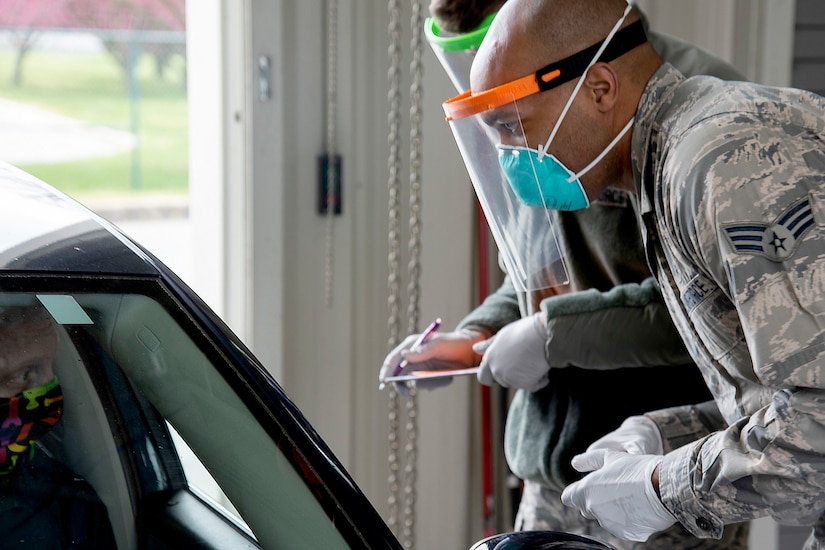
whether supporting our whole-of-nation effort that we recently wrapped
up in June with COVID support, not only medical support, but
vaccinations, we're actively engaged in fighting wildland firefighting
today, supporting the Department of State with Afghan special immigrants
as well.
We're also building military-to-military partnerships, outstanding
relationships with key neighbors such as Mexico, Canada and the Bahamas.
And I look forward to discussing all of these important efforts and
topics with you.
So thanks again for being here and also being on the phone. Let's get to your questions.
STAFF: Thanks, sir. So we'll go to questions. (Patrick ?), we'll start with you.
Q: Thank you.
(Patrick ?) from Defense One. Good to see you again, General.
Can you tell us what happened in the GIDE experiment? And can you
also address how you used artificial intelligence in the experiment and
your plans for that going forward?
GEN. VANHERCK: Absolutely.
So the experiment -- we won't name nations but let's just say it was
focused on a peer competitor. This time in GIDE 3 we focused a lot on
contested logistics, to give us a scenario where maybe a line of
communication such as the Panama Canal may be challenged. It enabled us
to rapidly collaborate amongst all 11 combatant commands and across the
department to see that data and information. We're taking sensors from
around the globe, not only military sensors but commercially available
information, and utilizing that for domain awareness.
Specific to your question about artificial intelligence and what I
call information dominance, we would take artificial intelligence and
use machine learning to take a look and assess, for example, the average
number of cars in a parking lot that may be there in a specific
location to a competitor or a threat. And we monitor that over a period
of time.
The machine learning and the artificial intelligence can detect
changes in that and we can set parameters where it will trip an alert to
give you the awareness to go take another sensor such as GEOINT
on-satellite capability to take a closer look at what might be ongoing
in a specific location.
Does that -- does that make sense?
Q: Yes. Did that -- was it something specifically that you did as part of this experiment --
GEN. VANHERCK: Absolutely. We've been doing that for over a year now.
What -- what we've seen is the ability to get way further what I call
left, left of being reactive to actually being proactive. And I'm
talking not minutes and hours, I'm talking days.
The ability to see days in advance creates decision space. Decision
space for me as an operational commander to potentially posture forces
to create deterrence options to provide that to the secretary or even
the president. To use messaging, the information space to create
deterrence options and messaging and if required to get further ahead
and posture ourselves for defeat.
Please.
STAFF: Hey, (Ram ?) go ahead.
Q: Thank you so much. Thanks for taking my question, General.
In this experiment you said all of the 11 combatant commands were
involved. Can you talk about how you worked with SPACECOM and what sort
of capabilities came online that showed you how you're going to be able
to solve problems moving forward that you wouldn't be able to solve as
easily before?
And then I have a second question.
GEN. VANHERCK: Well, SPACECOM was intimately involved. And SPACECOM
is a crucial partner to United States Northern Command and NORAD. We
rely on Space Command sensors and capabilities for our threat warning,
our attack assessment and the domain awareness that we need to conduct
our missions.
SPACECOM was intimately involved in providing sensor awareness, that
domain awareness that we talk about. But just as importantly, as you're
creating and coordinating globally to create global dilemmas, to create
deterrence, SPACECOM offers unique capabilities for deterrence in the
space environment as well. And so the -- they work closely to provide
deterrence options and de-escalation options against a peer competitor
in an experiment like this.
Q: Any specifics to that?
And also, sir, can you give an update on the status of the radars and the missile interceptors that coming online in Alaska?
GEN. VANHERCK: So I can give you specifics.
So for example, SPACECOM can come up with options to potentially hold
at risk a competitor's -- not only their terrain on Earth their space
capabilities, but also potentially taking a look at domain awareness of
space capabilities, where a competitor may be attempting hold our
capabilities at risk.
Q: Sorry, and then the update for the radars and the -- and missile interceptors in Alaska?
GEN. VANHERCK: So give me the specific question. When -- when you --
Q: Oh, sure. The new middle -- missile interceptors are coming online
in Alaska and new radars that are -- that are coming online up there,
could you give us an update? Are they on schedule? And what type of
capabilities would that bring --
GEN. VANHERCK: Sure, I'll talk about the interceptors first. But the
Missile Defense Agency is really your best point of contact for that.
But the next-generation interceptor is, I think, what you're talking
about. That's planning on being fielded in 2028. To my knowledge it is
absolutely on schedule at this time.
I'm encouraged by the -- the -- the process that they've set up that
creates competition and actually rewards innovation and pulling further
left to field the capabilities sooner. I'm looking forward to that.
The Missile Defense Agency's also focused on a new long-range
discriminating radar which will be crucial for the missile defense
capabilities. And they're on track with that. They're in the stages
right now of moving into their initial operations capability. I look
forward to that coming on line here in the near future.
Q: Thank you, sir.
STAFF: Okay. And let's go to the phones. (Jack ?), FedScoop.
Q: Yes, thank you. Thank you very much for taking my question -- I've got a multi-parter here.
But broadly, I'm hoping to know: what's the difference between what
you can take away from the experiments being North America-based versus
what other COCOMs can take away on a -- on a technical level? And do you
have more capability be it in cloud storage or other type of technical
abilities that you can have being based here in the U.S. versus a more
(austere ?) environment or environment outside the U.S.?
And secondly, what are the cloud capabilities that supported this
experiment? And how would the Joint Warfighting Cloud Capability that's
successor to the JEDI contract change what you could actually implement
here?
GEN. VANHERCK: So I'll answer your first part of that. First of all,
all 11 combatant commands are using the exactly same environment, single
pane of glass. There's no difference between what United States
Northern Command NORAD have than SOUTHCOM, or SPACECOM, or anybody.
We're all collaborating in the same information space using the same
exact capabilities.
As far as the technical questions about the specifics of the -- you
know, the cloud, I don't have those details to give you. I can get an
expert to get back with you on those.
And as far as the policy aspects of JEDI, I won't go into that. What
we're doing is utilizing capabilities that are available right now.
Okay? These are not capabilities for future technology. These
capabilities we could absolutely field tomorrow and, I believe, be
significantly more capable to create that decision space that I talked
about.
I hope that makes sense.
Q: And if I could just -- if I could follow-up on that last point.
Would having an enterprise cloud that the Joint Warfighting Cloud
Capability would provide -- is that going to expand the aperture of
possibilities here of what, maybe, you could experiment with or
eventually implement? And what would that change be to having a (fully
enterprised ?) warfighting edge cloud?
GEN. VANHERCK: So to make sure I understand -- so the question
specific to the cloud and what advantages that would bring in future
competition, crisis, and conflict. Is that right?
Q: Correct.
GEN. VANHERCK: Yes, so the cloud brings significant advantages and
we're -- we are utilizing cloud. You can actually use multiple clouds
and share information, and we've demonstrated that.
You know, there's been a significant focus on having data standards
and getting the data right before you share it. What we found, by using
the cloud and innovative solutions with innovative companies out there,
is that as long as you make the data and information available in the
cloud today, we can then share that information from a cloud to any
user.
The other advantages, they're -- they're significant. You can limit
who gets access, whether you want foreign nations to have it or select
foreign nations. Those are things that you can do with today's software
technology that you can almost do in a matter of hours and days vice
months and years through the processes that we've typically utilized.
So I'm really encouraged with where we're going with soft base -- software-based capabilities utilizing the cloud.
For my homeland defense design, allies and partners have to be part
of the homeland defense design. I don't want to defend starting in the
homeland. I want to defend starting forward.
And using a cloud with an architecture that you can decide, by who
logs in, what information they're going to get and capabilities they're
going to see. That's incredibly powerful today that you can utilize
right now.
STAFF: All right. Jason Sherman, Inside Defense.
Q: Thanks very much. General, what is the -- what is the key material
component here? What's the new technology that was demonstrated that --
that -- that wasn't available before? Who are the main industry
partners supporting you in that? And is there a -- is there a trajectory
here for a program of record for a new capability that could
proliferate across combatant commands?
GEN. VANHERCK: Okay, Jason, thanks. As far as the new technology, I'm
not sure there's new technology here, to be candid with you. You know,
Amazon's been doing it this way -- Google. A lot of people have been
figuring out how to pool and share data and information.
What -- what we've done is take it and not approach it from a
military or a capability problem. But we approach this from a data and
software problem. And we stitched everything together to make this
happen.
As far as partners, I'm not going to go into details on what
companies. I'm agnostic to who provides these capabilities. We've
partnered with some exceptional companies out there.
I would also tell you that support from across the department, the
Joint Artificial Intelligence Center and Project Maven. Under Secretary
of Defense for I&S has been crucial. The Department of the Air Force
and their Chief Architect Office provided resources to include funding
and personnel, which were tremendously helpful to get us where we are.
And of course, all 11 combatant commands.
The last part of your question -- I forgot that one. We got the tech and the partners. What was the final portion?
Q: Is -- is what -- does this package that you've put together, like,
a definitive shape that leads towards a program of record that you
would then kind of replicate across the combatant commands?
GEN. VANHERCK: Yes, so tomorrow I'm going to talk to the Deputy
Secretary and we'll see. And we'll give her an out brief as well on the
way forward.
I wouldn't think of this as a thing or a -- you know, a gadget we're
going to buy and move forward. This is a software-based capabilities
utilizing technology that is readily available today.
As far as a program of record, you're well aware that I'm not an
acquisition authority in my combatant command hat. And my ultimate goal
would be to hand this off to somebody that can move out, field it sooner
than later so that we can collaborate and create decision space and
deterrence options for our senior leaders right now.
I don't know what that's going to look like, to be candid with you.
I'll talk to the deputy. I'll talk to the vice chairman. We'll see what
happens in today's out brief as we move forward.
But I believe in the near future that we can kind of build the bike while we ride it, if you read my recent article.
And what I mean by that is we can use a new paradigm, a new way going
forward, and field these capabilities across the combatant commands
today, and develop the tactics, techniques, and procedures that
oftentimes take us years to develop through developmental testing,
operational testing before we field capabilities.
But I believe with software-based capabilities we're ready to field
these and move out. And I think next spring when we do our Globally
Integrated Exercise -- that'll be led by the chairman with play across
the department -- we could validate these capabilities in that exercise.
And those are some things that I'm thinking about and will talk about
with the vice chairman and the deputy secretary. But I'm incredibly
encouraged that we can move much quicker than we historically have.
Q: Is it fair to say you think there's a valid requirement for this capability?
GEN. VANHERCK: Absolutely. There's a -- this is JADC2, okay, Joint
All-Domain Command and Control. It's done at the operational and
strategic level. You've heard the -- the vice chairman talk about it.
You've heard all the services moving out to develop these capabilities.
The primary difference, (Jeff ?), between what I'm doing and what the
services are doing is I'm focused at the operational to strategic
level. Taking data and information that is available today. That's key.
This data and information -- we're not creating new capabilities to
go get data and information. This information exists from today's
satellites, today's radar, today's undersea capabilities, today's cyber,
today's intel capabilities.
The data exists. What we're doing is making that data available,
making that data available and shared into a cloud where machine
learning and artificial intelligence look at it. And they process it
really quickly and provide it to decision-makers, which I call decision
superiority.
This gives us days of advanced warning and ability to react. Where,
in the past, we may not have put eyes on with an analyst of a GEOINT
satellite image, now we are doing that within minutes or near real-time.
That's the primary difference that I'm talking about.
STAFF: Thanks, sir. (Oriana ?), military.com.
Q: Thanks so very much. I'm curious how -- if you could speak a
little bit to this, how this supplements what you all have been trying
to do with Canada to upgrade the North Warning System.
I know you had created a bilateral committee to study (what best ?)
upgrades you would need. But I'm just curious where that study is and
how this may change your framework of how to move forward.
GEN. VANHERCK: Well, the North Warning System is a sensor that
provides data and information like any other sensor capability. And so,
the North Warning System can be fed into this.
We -- we have taken what we developed called Pathfinder and applied
that to our North Warning System, not in the data coming out that we get
say at our air defense sectors but the raw data. So what we're doing is
now we're analyzing the physical raw data that comes off those radar
sensors.
And that's very important because what we found is about 98 percent
of the data and information was not being actually analyzed or assessed
under the prior way we conducted operations.
Now by taking the raw data and applying Pathfinder, which uses
machine learning and artificial intelligence, we're actually able to
assess 100 percent of the data. And that gives us a much better
capability.
As far as NORAD modernization, those discussions are ongoing. The
president -- President Biden and Prime Minister Trudeau talked about
NORAD modernization in their first meeting. I'm encouraged by that.
Now, we've got to move forward at the department level to see what
the way forward is for NORAD modernization. Those are policy decisions
that I'll absolutely stay out of. I'll provide input when asked.
But any sensor capability that NORAD modernization provides such as
over-the-horizon radar technology -- a polar over-the-horizon radar
would be able to fit right into this as long as you make the data and
information available to share.
STAFF: All right, (Kristina ?), AWPS.
Q: Thank you for taking my question. So I'm wondering if there are
any concerns about self-fulfilling prophecy, where you get into a loop
and there's some assumptions made. Is there a thought about that?
And then I had another question as well -- it slips my mind at the moment. So that -- that would be the first question.
GEN. VANHERCK: Yes. So I -- I think I understand what you're saying.
You're worried about basically escalating due to use of machine learning
artificial intelligence gets us in a loop. Is that correct?
Q: Yes. That -- that there is some kind of intrinsic assumptions that
are made maybe on -- on the human decision-making side. Because you're
getting this information -- it's a lot of information and it's against a
biased perception or a worry that's about an adversary's intention.
GEN. VANHERCK: Yes. So, the first thing I would tell you that humans
still make all the decisions in what I'm talking about. We don't have
any machines making decisions. Certainly, machines can provide options.
So for example, if you -- if you collaborate in real-time and develop
deterrence options that utilize force structures such as airplanes or
ships, the database can have the information of the readiness, the
availability, the capability of those ships available.
So any options you create, you'll know if they're available
immediately. That's the advantage of having a cloud and a software
environment.
With regards to, you know, the self-fulfilling prophecy, what I'd tell you is I think it's exactly the opposite.
Today, we end up in a reactive environment because we're late with
the data and information. And so all too often we end up reacting to a
competitors move. And in this case, it actually allows us to create
deterrence, which creates stability by having awareness sooner of what
they're actually doing.
And you can utilize the information space, pick up the phone, call,
and create actual deterrence options by doing so or positioning forces
to do that.
So I see this not as something new that would create concern about
utilizing this information to escalate. It actually is the opposite.
And -- and -- and keep in mind that it's not new information. It's
information that today is just not analyzed and processed until later in
the -- the -- the time cycle, if you will.
And all we're doing is taking it and sharing it and making it
available sooner. So that our key decision-makers will have options vice
being reactive where they may be forced to take some kind of escalation
option. I hope that makes sense.
Q: Awesome. So my follow-up question is about our international
partners. Are there -- looking ahead, is there kind of a way in which
they would be integrated and there (would be ?) sort of a -- a level of
integration that would sliding scale, as you might have it, depending on
what the scenario is? Or how would that work?
GEN. VANHERCK: Thanks for bringing that up because I didn't address
that. But we actually had partners -- our allies and partners play in
GIDE 3. So they're already in with us.
Going forward, as the secretary has said, integrated deterrence is
crucial. And integrated deterrence not only relies on all levers of
national influence that we have here in the United States but it also
relies on a network of allies and partners, which is our asymmetric
advantage globally, in my mind.
And so absolutely, they have to be part of this. They have to be
brought in. I met with the Supreme Allied Commander Transformation
General Lanata as well. And they see it the same way. They're encouraged
by where we're going. They're all in with his hat as well from a NATO
perspective. I think that is crucial.
From my homeland defense design -- and I -- I already alluded to this
a little bit. You know, I don't want to be shooting down cruise
missiles over the National Capital Region or in our -- in our country.
I believe the best way to keep a safe homeland is to have that
network of allies and partners -- that integrated deterrence that
Secretary Austin talks about -- and with my fellow combatant commands to
have a global and all-domain picture to create deterrence and focus on
competition.
But if required, the way you defend the homeland is, prior to that
threat becoming a threat to the homeland, you give options to our senior
leaders to negate that, whether that be through deterrence,
de-escalating, or -- if required -- defeating.
STAFF: Lara, Politico.
Q: Hey, (Marty ?). Thanks, General, for doing this. I wanted to ask
two questions, one on this experiment. Can you tell me -- can you
provide us any detail on upcoming experiments? I think this is third
one. Is there a fourth one planned and when is that happening?
And then, it's sort of off topic, but hoping you can answer some
questions about the COVID response, as NORTHCOM the coordinator for that
-- that response, I believe.
Can you tell us whether you anticipate mandating the troops get
vaccinated? And sort of following on that, if the -- if the federal
government mandates the vaccine, can you explain whether the troops and
DOD civilians are automatically included in that mandate?
Thank you.
GEN. VANHERCK: Okay, thanks, Lara.
First on your question, certainly we're looking to the future and
what a Global Information Dominance Experiment 4 would look like. We
haven't scheduled it.
I'll figure out the way forward after we meet today with the -- at
the out brief and I talk to the deputy and the vice chairman in the near
future on the way forward. That, kind of, ties back to my overarching
question -- or comments earlier about the future of fielding this and
the way forward. But we look forward to moving the ball down the field.
With regards to COVID, first I can tell you that I'm really proud of
United States Northern Command, our team, all of the department for our
response.
You know, we had over 20,000 personnel respond across over the last
15, 16 months. Providing support to the lead federal agencies in their
response, whether that be from repatriating citizens that were coming
from overseas, the cruise ships as you remember, embedding into
hospitals, and providing nearly 5 million vaccines across the nation. So
I'm proud of that.
With regards to your policy questions, I'm aware of the reports on
the street. I'll defer to OSD on the specific policy on mask mandate and
wearing. That's not my call.
I will tell you though, I'm incredibly proud of what our teammates
here at the United States Northern Command and NORAD have done. We're
nearly 90 percent vaccinated in our headquarters. That's significant, 90
percent. Okay?
When you look across the nation, the vaccine works. If you look
hospitalization rates, you look at death rates right now from COVID the
vast majority -- high percentages are form unvaccinated.
And so, I'm encouraged by that. I'll defer to policy on the mask
wear. CDC obviously will get a piece of that and the department. I have
ultimate confidence they'll put out health protection guidance. And
we'll follow that policy.
Q: So I wasn't actually asking about the mask mandate. I was asking
about a vaccine mandate for -- for troops. And I understand if you can't
get ahead of any announcements. But can you say that -- if there is a
mandate for federal workers, does that mean that U.S. troops and DOD
civilians are automatically included in that or would that be a
different discussion?
GEN. VANHERCK: Lara, I don't know from my combatant command position.
I'm -- my awareness on this is probably just what yours is -- what I've
read in the media.
We'll see what the president comes out with as far as direction and
what that direction is to the department, and I'll salute smartly to
Secretary Austin's guidance, and we'll move out. I will tell you, I'll
go back to my comments. The vaccine works. We continue to encourage
people to -- to take the vaccine, moving forward.
STAFF: Okay, (Anson ?), Asashi Shimbun. Might have lost him.
(Jonathan, DOD News ?).
All right, Abraham Mahshie.
Q: Thank you, sir.
I wonder if you could detail any of the challenges or lessons learned
from this experiment. And also, how did you work with INDOPACOM during
the experiment?
GEN. VANHERCK: Yeah, so INDOPACOM -- I'll address the second -- was
absolutely all-in and a great partner in this experiment. We did focus
to the West this time. I will tell you that. And INDOPACOM was critical
to being part of the overall solution.
As far as -- remind me the first one. I should --
Q: Challenges and lessons learned.
GEN. VANHERCK: Challenges, so challenges. Let me just talk real quick
about that. So I -- I think some of the challenges -- we first have to
have secure network and backbone to ride on. And so CYBERCOM understands
that, National Security Agency -- everybody understands that. So going
forward, the I.T. infrastructure has to be secure and reliable to
execute future data and information capability. So I think that's
something we have to focus on.
I also think that we need to build confidence and understanding of
A.I. and machine learning across not only the department, but within
Congress and the American people to ensure they understand that machines
aren't making decisions. We're not relying on computers to take us to
create deterrence options or defeat options.
I do think a challenge is that we have to work simultaneously while
we build the bike while we ride it, if you will, is to work in the
policy aspect and the law aspect, where what we don't want to do is
field capabilities, and the policy and the laws have not kept up with
the capabilities that we have, or there's a lack of competence in the
capabilities, or trust, more importantly, with the American people and
Congress, and within the department.
So those are things that we'll continue to work. I'm heavily-engaged
when I do my posture hearings and talking to the congressional members
on the committees about the -- the future of data and information.
Q: When you say policy keeping up, can you be more specific?
GEN. VANHERCK: Policy with regards to the use of artificial
intelligence, machine learning to ensure that the data-sharing is
available. So for example, in the intelligence communities, you know,
historically, we've taken that intelligence. We've allowed an analyst to
pore over that for days, sometimes, before we made that intelligence
available. We may have to make that intelligence available sooner in the
future by sharing the raw data, the real-time data, and allowing
machines to look at that data, things that today, analyst may do. The
machine can take a look and tell you exactly how many cars are in a
parking lot, or how many airplanes are parked on a ramp, or if the
submarine's getting ready to leave, or if a missile's going to launch.
Where that may have taken days before, or hours, today, it can take
seconds or less than minutes. Those are policy issues that we'll have to
sort through and build trust and confidence.
Q: Thank you, sir.
Q: Thanks. This is a question that -- that might annoy you. When you
go about this cloud environment, the point of the JEDI contract was to
move the department away from a federation of little, tiny clouds that
didn't connect well, had bad APIs, to a cloud environment that
represented, like, best of what was available in industry, so really,
large -- a -- a coherent cloud environment on par with Amazon, Google or
Microsoft. For this experiment, did you use a -- a large, coherent,
singular cloud environment, or maybe a multi-cloud environment of two
large clouds, or was it a multi-cloud environment of lots of little
clouds, all stitched together?
GEN. VANHERCK: I don't that information, but I am not the technical
expert on this. I would tell you, I think there's multiple clouds. I'm
agnostic to how we do this, candidly. Ultimately, these capabilities, as
long as there's a cloud to share information that can accept that data
and information, the tools that we can utilize for A.I. and M.L. can be
applied, and then you can share that data. But I -- I don't have those.
I'm -- I'm sorry. I don't have that technical data.
Q: Thank you.
STAFF: All right, sir, over to you for closing comments.
GEN. VANHERCK: Okay, great. Hey -- hey, thanks for being here,
everybody. I appreciate your time. I'd love to have a -- a room full. I
think we have an important message at NORAD and NORTHCOM: Defending our
homelands is an absolutely noble mission that we do each and every day,
and providing support to our civil authorities and the people of our
nation, so I think that's -- that's about as noble as it gets.
You know, I'm really encouraged with where the secretary's going with
the integrated deterrence as he continues to talking about that. I
think we -- we must shift away from focusing on conflict and create
deterrence during competition. I think that's where the secretary's
going, and that competition involves all levels of national influence.
It involves our allies and partners, and it involves all the combatant
commands on a daily basis.
My homeland defense design is set up perfect for that, and this
experiment, Global Information Dominance Experiment and the capabilities
feed right into that to give the secretary exactly what he needs to
have that global integrated deterrence, and what our combatant
commanders need to create those deterrence options in day-to-day
competition, de-escalation options in crisis, and if we have to fight,
defeat options in conflict.
So I appreciate your time.











 Posts
Posts

