Secretary of Defense
Lloyd J. Austin III
Good evening, everyone. It’s great to be here in
Singapore, and it’s an honor to be giving what I’m told is the 40th
Fullerton Lecture. IISS has done an outstanding job enriching our
dialogue about the Indo-Pacific. And James, thanks to you and John for
all that you’ve done to make this event possible. It’s also great to see
Senior Minister Teo and Minister of Defense Ng —thank you both for your
hospitality.
Now, we are meeting in difficult times… but we’re working with our
friends so that we all come out of the pandemic stronger than before.
I’m here to represent a new American administration, but also to
reaffirm enduring American commitments. And above all, I want to talk
about the strategic imperative of partnership.
You know, I learned a core lesson over four decades as a soldier, in
peace and in war: Nobody can go it alone, at least not for very long. We
are far stronger, and for far longer, when we come together than when
we let ourselves be split apart.
And the United States and this region are more secure and more prosperous when we work together with our allies and partners.
Together with our friends, we face a range of challenges in this
region that demand common action. There are transnational threats, like
the pandemic and the existential threat of climate change… the specter
of coercion from rising powers… the nuclear dangers from North Korea…
the struggles against repression inside countries such as Myanmar… and
leaders who ignore the rule of law and abuse the basic rights and
dignity that all people deserve.
We will meet those challenges together.
In the days ahead, I’ll travel from Singapore to see my counterparts
in Vietnam and the Philippines. I’ve come to Southeast Asia to deepen
America’s bonds with the allies and partners on whom our common security
depends. Our network of alliances and friendships is an unparalleled
strategic asset. And I never take an ally for granted.
Together, this region can rebuild from the pandemic… and move forward
to an even brighter future, in an even stronger rules-based
international order.
And that means more security… more stability… more prosperity… more resilience… and more openness.
We’re proud to renew a longstanding, bipartisan belief… that our
partnerships are especially vital in times of great challenge and
change.
All of our countries have suffered from Covid-19, and it is still taking a terrible toll.
Yet the Indo-Pacific has been tested before. Our recent history has
been marked by grave crises—and by inspiring efforts to tackle them in
common purpose.
We’ve seen it over and over again, from the aftermath of World War
II… to the frost of the Cold War… to the panic of the 1997 financial
crisis… to the ravages of the 2004 tsunami. Yet at so many key
junctures, the countries of the Indo-Pacific resisted the temptation to
turn inward… and instead forged strong ties, and built a more inclusive,
and secure, and prosperous region.
Today, amid this merciless pandemic, we stand together at another
hinge moment… and we face another choice between the power of
partnership and the dangers of division.
I am confident that—through our collective efforts—the Indo-Pacific
will again rise to the challenge. And America will be right at your
side, just as an old friend should.
And after COVID-19, we don’t believe that the goal should just be to
return to the way that things were. We stand ready to work together, as
President Biden says, to “build back better.”
So the central question for us all is: How can we unite to recover
and to rebuild? And how do we work hand in hand to forge a more
resilient regional order?
We think that the answer involves three components—and all of them are rooted in the imperative of partnership.
First, the most urgent task is recovery. We must redouble our fight
against COVID and raise up a safer, healthier, and more prosperous
future.
Second, we must look further ahead… and invest in the cooperation,
and the capabilities, and the vision of deterrence that will meet the
security challenges here in Southeast Asia and across the
Indo-Pacific.
And third, we must recommit ourselves to the great, long-term project
of coming together as Pacific states to build a free and open region…
one that stretches toward new horizons of partnership, prosperity, and
progress.
Let me talk a bit more about those three areas.
First, recovery. We must focus on the fundamentals: working urgently
together to tackle the COVID crisis and to restore the region’s economic
dynamism.
The pandemic has reminded us how deeply our world is interwoven.
Today, a threat to global health anywhere is a threat to security
everywhere.
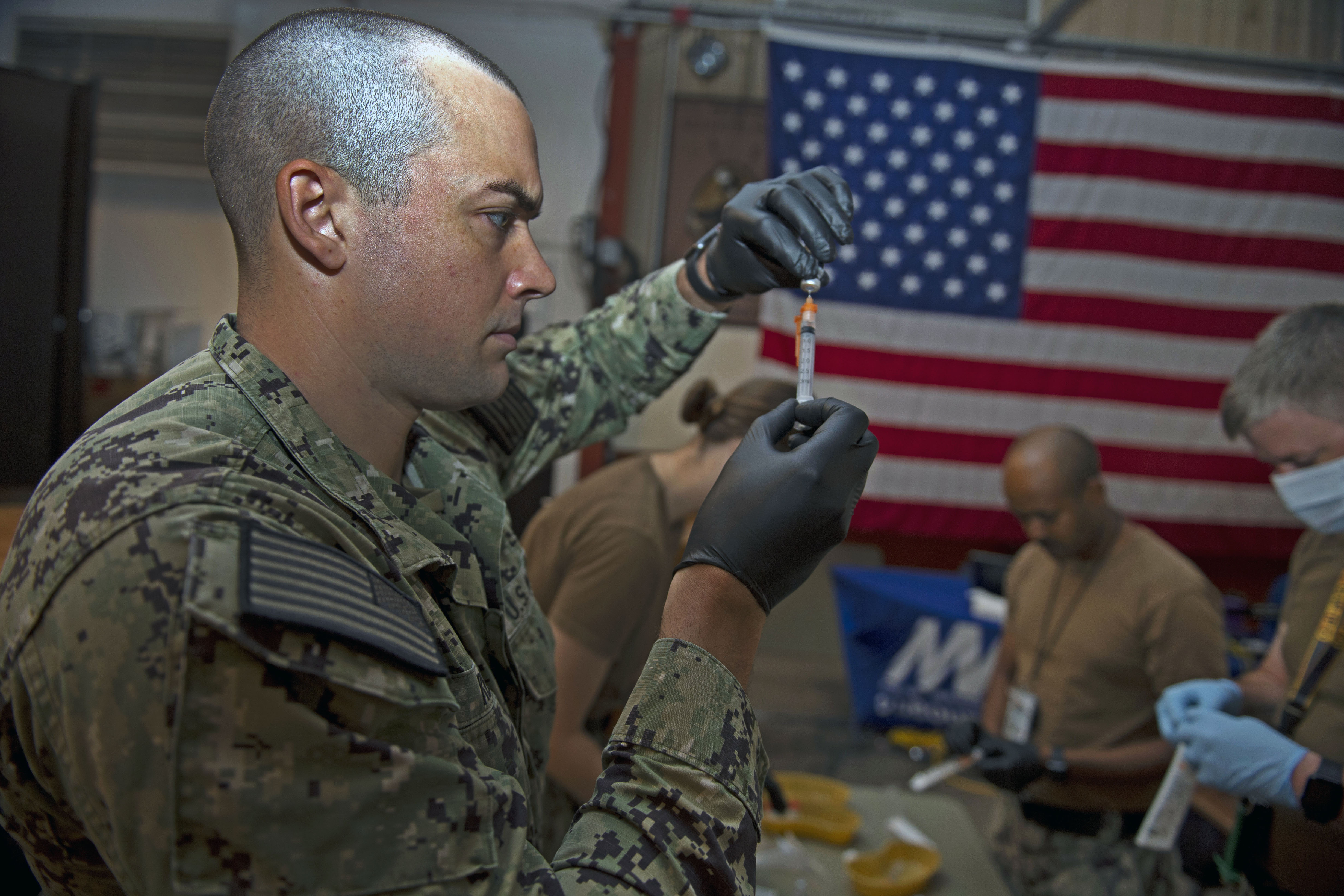
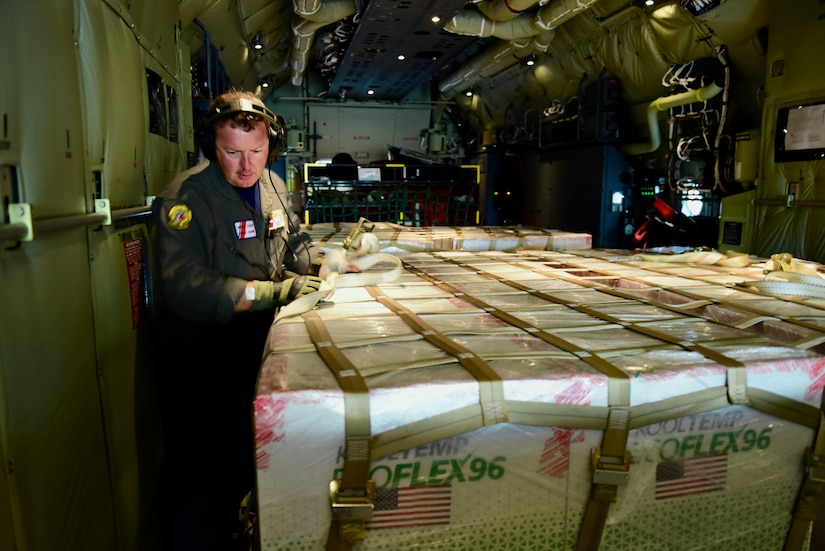
So the United States has been rushing urgently needed assistance
across the Indo-Pacific. That includes testing equipment, oxygen
supplies, PPE, ventilators, and storage for vaccines.
And my team has been pushing hard to find other ways to help…
including providing logistics support, establishing mobile clinics, and
offering new military medicine training.
But global recovery requires global vaccination. So we are rushing
life-saving vaccine doses to the region. President Biden has committed
to deliver more than 500 million shots world-wide over the next year,
and the Indo-Pacific is a top priority. You know, in just the past two
months, we have shared some 40 million doses throughout the region,
including Indonesia, Laos, Malaysia, the Philippines, South Korea,
Taiwan, Thailand, and Vietnam.
Now, the vaccines developed in the United States are medical
miracles. They’re incredibly effective at saving lives and preventing
serious illness. And you know what… They’re free. No conditions. No
small print. And no strings attached. Because this is an emergency. And
that’s what friends do.
So we’ll keep working to end this plague… for everyone, and
everywhere. And we’ve watched with admiration as countries across this
region have come together to fight it.
When India was besieged, its friends stepped up. We salute Singapore
for rushing to the scene, with two C-130s carrying some 250 oxygen
cylinders. And Singapore has three new vaccine-production facilities
planned or under construction, which will help more rapidly deploy
vaccines throughout the region in future crises.
Meanwhile, through the Quad’s vaccine initiative, India, Japan,
Australia, and the United States have committed to producing and
delivering a billion vaccine doses, right here in the Indo-Pacific.
And South Korea is aiming to produce up to a billion vaccine doses
this year. To help, the United States and South Korea have established a
comprehensive Global Vaccine Partnership.
The pandemic is still raging. The road to recovery will be long. Yet
these partnerships reflect our common determination and our common
humanity.
And that brings me to the second way that our teamwork can create an
even stronger region… and that is by coming together to tackle current
and emerging challenges in the region that is the highest strategic
priority for the Department of Defense.
Now, President Biden has made clear that the United States will lead
with diplomacy. And the Department of Defense will be here to provide
the resolve and reassurance that America’s diplomats can use to help
prevent conflict from breaking out in the first place. As I’ve said
before, it’s always better to stamp out an ember than to try to put out a
blaze.
So deterrence remains the cornerstone of American security. And for
decades, we have maintained the capabilities, the presence, and the
relationships needed to ward off conflict and to preserve the stability
that lies at the heart of our shared prosperity.
Yet emerging threats and cutting-edge technologies are changing the
face and the pace of warfare. So we are operating under a new,
21st-century vision that I call “integrated deterrence.”
Now, integrated deterrence means using every military and
non-military tool in our toolbox, in lock-step with our allies and
partners. Integrated deterrence is about using existing capabilities,
and building new ones, and deploying them all in new and networked ways…
all tailored to a region’s security landscape, and in growing
partnership with our friends.
And so together, we’re aiming to coordinate better, to network
tighter, and to innovate faster. And we’re working to ensure that our
allies and partners have the capabilities, the capacities, and the
information that they need.
With our friends, we are stepping up our deterrence, resilience, and teamwork, including in the cyber and space domains.
We’re working with our hosts here in Singapore to enter a new phase
in cyber-defense cooperation. We’re partnering with Japan to deploy new
sensors in space to better detect potentially threatening behaviors… and
exploring similar opportunities with other friends.
And I’m especially pleased that Singapore has chosen to invest in the
F-35 Joint Strike Fighter. That’s going to boost our collective
capabilities… and open up new opportunities for high-end combined
training.
Integrated deterrence also means working with partners to deter
coercion and aggression across the spectrum of conflict… including in
the so-called “grey zone” where the rights and livelihoods of the people
of Southeast Asia are coming under stress. That’s why we’re working to
strengthen local capacity and to bolster maritime-domain awareness, so
that nations can better protect their sovereignty… as well as the
fishing rights and the energy resources afforded them by international
law.
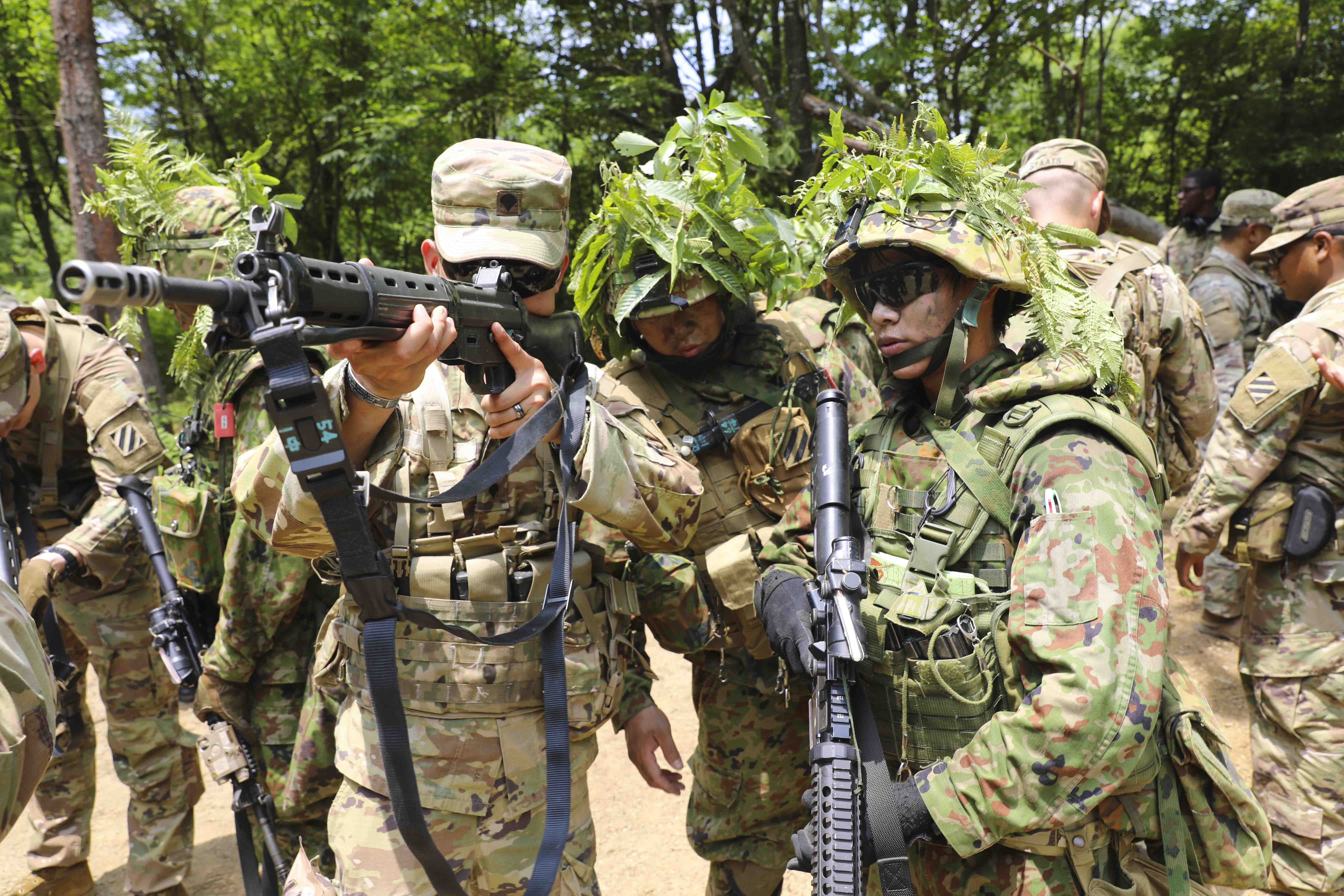
Meanwhile, we’re improving interoperability across our security
network. And that includes more complex exercises and training. In
Japan, for example, we recently wrapped up an ambitious, large-scale
exercise… in which U.S. and Japanese forces together conducted the first
successful firing of a High Mobility Artillery Rocket System in Japan.
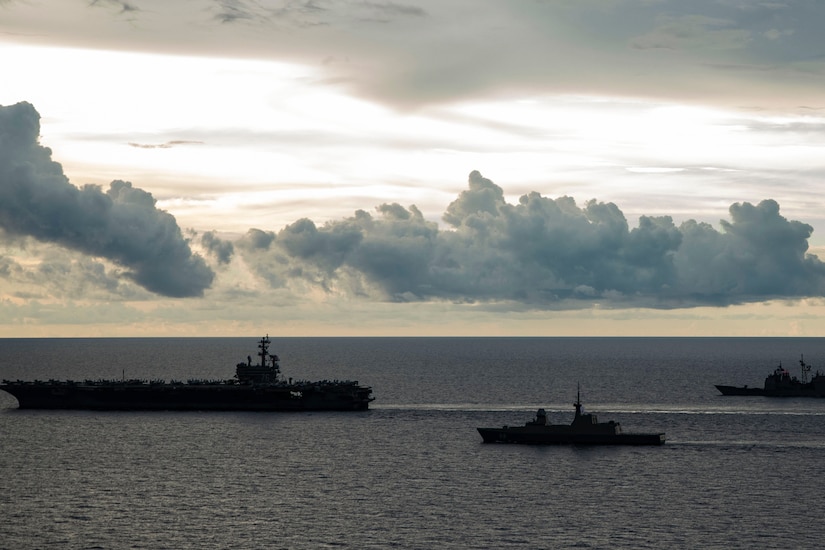
And we recently held the exercises known as Pacific Vanguard and
Talisman Sabre off the coast of Australia, together with Japan,
Australia, and the Republic of Korea. That underscored our ability to
carry out integrated, high-end maritime operations with our allies.
I’m especially encouraged to see our friends building stronger
security ties with one another, further reinforcing the array of
partnerships that keeps aggression at bay.
Meanwhile, we are working with Taiwan to enhance its own capabilities
and to increase its readiness to deter threats and coercion… upholding
our commitments under the Taiwan Relations Act, and consistent with our
one-China policy.
At the same time, we’re moving to enhance our combined presence in
the Indo-Pacific with other close partners and allies. Take Britain’s
historic deployment of a carrier to the Pacific. The HMS Queen Elizabeth
is sailing through this region as the flagship of a multi-nation
carrier strike group that includes a U.S. destroyer and a U.S. Marine
Corps F-35 squadron.
All that brings me to the final way in which we can move forward together toward the future that this region deserves.
And I speak as a representative of an Indo-Pacific country… with
vital interests that are best served by a stable, open, and prosperous
region.
Our strategic partnerships can carry us all closer to the historic
common project of a free and open Pacific, at peace with itself and with
the world… a stronger, more stable regional order where countries
resolve disputes amicably and uphold all the rights of all their
citizens.
To bring that day closer, we are working through old alliances, and
through new partnerships, and through regional and multilateral
channels—from ASEAN to the Quad to the U.N. Security Council.
We have long sought to create space for Indo-Pacific countries to
realize their highest aspirations and safeguard the rights of their
citizens. And these joint efforts with our friends rely on more than
just intersecting interests. They draw strength from common principles.
And that means a deep belief that countries must remain sovereign and free to chart their own destinies.
A profound commitment to transparency, inclusion, and the rule of law.
A dedication to freedom of the seas.
A devotion to human rights, and human dignity, and human decency.
An adherence to core international commitments.
And an insistence that disputes will be solved peacefully.
Yet this region has witnessed actions that just don’t line up with those shared principles.
Beijing’s claim to the vast majority of the South China Sea has no
basis in international law. That assertion treads on the sovereignty of
states in the region. We continue to support the region’s coastal states
in upholding their rights under international law. And we remain
committed to the treaty obligations that we have to Japan in the Senkaku
Islands and to the Philippines in the South China Sea.
Unfortunately, Beijing’s unwillingness to resolve disputes peacefully
and respect the rule of law isn’t just occurring on the water. We have
also seen aggression against India… destabilizing military activity and
other forms of coercion against the people of Taiwan… and genocide and
crimes against humanity against Uyghur Muslims in Xinjiang.
Now, these differences and disputes are real. But the way that you manage them counts.
We will not flinch when our interests are threatened. Yet we do not seek confrontation.
So let me be clear: As Secretary, I am committed to pursuing a
constructive, stable relationship with China… including stronger crisis
communications with the People’s Liberation Army. You know, big powers
need to model transparency and communication. And we hope that we can
work together with Beijing on common challenges, especially the threat
of climate change.
Yet even in times of competition, our enduring ties in Southeast Asia
are bigger than just geopolitics. As Prime Minister Lee has counseled,
we are not asking countries in the region to choose between the United
States and China. In fact, many of our partnerships in the region are
older than the People’s Republic of China itself.
That’s why we are expanding our important work with countries
throughout the Indo-Pacific and with ASEAN itself, a critical body that
brings the region closer together… offering everyone a voice, and
building deeper habits of cooperation.
And I’ll say personally that I’m proud that my predecessors and I
have attended every single meeting of the ASEAN Defense Ministers
Meeting-Plus… a venue that is increasingly central to the region’s
security architecture.
ASEAN is also showing its ability to lead on the region’s most
important issues. And we applaud ASEAN for its efforts to end the tragic
violence in Myanmar. The Myanmar military’s refusal to respect the
inalienable rights of the Burmese people, and to defend their basic
well-being, is flatly unacceptable. A military exists to serve its
people—not the other way around. And so we call on the Myanmar military
to adhere to the ASEAN Five-Point Consensus and to forge a lasting
peace.
As ASEAN plays its central role, we are also focusing on
complementary mechanisms in the region. I know how pleased President
Biden was to host the first Quad Leaders’ Summit in March. And
structures like the Quad make the region’s security architecture even
more durable.
We’re also taking a leading role again at the U.N. Security Council.
That includes enforcing its critical resolutions about nuclear dangers
on the Korean Peninsula. And we’re taking a calibrated, practical
approach that leaves the door open to diplomacy with North Korea… even
while we maintain our readiness to deter aggression and to uphold our
treaty commitments and the will of the Security Council.
Our partnerships draw strength from our shared belief in greater
openness… and our belief that people live best when they govern
themselves. Now, our democratic values aren’t always easy to reach. And
the United States doesn’t always get it right. We’ve seen some painful
lapses, like the unacceptable and frankly un-American discrimination
that some Asian Americans and Pacific Islanders have endured in my
country in recent months.
I believe that we’re better than that. Far better. But we aren’t
trying to hide our mistakes. When a democracy stumbles, everyone can see
and hear it. It’s broadcast in loud and living color, and not hushed up
by the state.
Our openness gives us the built-in ability to self-correct… and to
strive toward a more perfect union. And when we come up short, when we
stray from our Constitution’s wisdom, we have a pretty good track of
record of owning up and trying to do better. Even in times of challenge,
our democracy is a powerful engine for its own renewal. We’ve embarked
upon an ambitious program to “build back better” after the pandemic. And
President Biden likes to tell the world leaders he meets with that it’s
“never, ever, ever been a good bet to bet against America.”
Ladies and gentlemen, what ties all of this together is one simple
insight: When we work hand-in-hand with our friends, we are stronger and
more secure than we could ever be on our own. And that’s what guides my
approach to this most important region as Secretary of Defense.
Our alliances are an unmatched and unrivaled source of strength and security.
Our countries share the shores of the Pacific. But we also share an understanding of the power of partnership.
Geography has made us neighbors, as President Kennedy once put it. But vision and values have made us friends.
As a fellow Indo-Pacific country, we believe that the next chapter in
the story of this region can be an inspiring one… a time where, as
President Biden likes to say, hope and history rhyme.
So we stand together with you… as your allies, your partners, and
your friends. Because we know that no one can go it alone. And we are
confident that together, we can build a better and brighter future for
all of our children.
Thank you very much.























 Posts
Posts

