Monday, July 26, 2021

Secretary of Defense Lloyd J. Austin III Press Conference at Eielson Air Force Base, Alaska

 July 24, 2021

Secretary of Defense Lloyd J. Austin III; Pentagon Press Secretary John F. Kirby

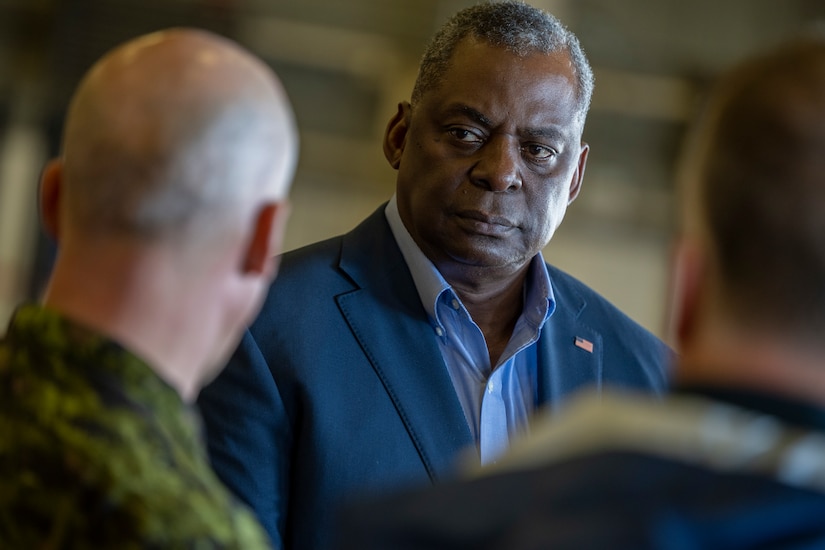
SECRETARY OF DEFENSE LLOYD J. AUSTIN III: Well, it has been a terrific day and I want to thank Senator Sullivan for accompanying me today. I know how committed he is to our national security and to keeping our capabilities sharp here in Alaska. I think the only thing that he cares about more than those capabilities are the men and women serving here and their families. And we had a chance to speak with some of them today, thanking them for their service and for what they do every day to help defend this nation. It is impressive. They are impressive. 

Now I also come away from this visit with a few takeaways. First is a keen reminder of just how strategically important Alaska is to our national security and to homeland defense. We are an Indo-Pacific nation and we are an Arctic nation. And here in Alaska those two critical regions intersect. This is where we can project power into both regions and where we must be able to defend ourselves from threats coming from both places. It's also where we can better posture ourselves and prepare
for climate changes that will impact our future. 

And when we talk about strategic competition, well, the Arctic is one of those places that is ripe for it. As the permafrost melts, the Arctic will increasingly become a theater for resource competition and even instability. And we need to stay ahead of that. I was impressed by the Army's Arctic Strategy and the thinking that they are applying to operational concepts here. I also came away with a better understanding of the capabilities that we deploy and permanently base here, and you can see many of those capabilities as you look around here. 

From fifth generation strike aircraft to integrated air and missile defense and the exceptional training ranges to include the Joint Pacific Alaska Range Complex, there's a diverse set of options that we can employ and I intend to make sure that we keep them as lethal and as ready as we can. And that's really the last impression that I took away from my time here, the need for continued readiness and modernization.

I was impressed by the training that goes on, from missile defense exercises to the Red Flag Exercise to the cold weather and mountain warfare training that the Army conducts at the Northern Warfare Training Center. It goes without saying that this is a harsh environment, but as I said, it's a critically important region. And we must continue to hone the skills our soldiers and airmen learn in Alaska's unique training environment. 

We must also invest appropriately in the infrastructure needed to keep them ready and to keep them vigilant. And I'm committed to doing that and to working with the services to make sure that we adapt and modernize our training and the tools that we give our troops up here. 

And that's really the last thing that I would like to address, our people. I'm mindful of the stress that they're often under and I'm deeply concerned about the suicide rates not only here but across the force. As you've heard me say before one loss by suicide is too many and while we're working hard on this problem, we have a lot more to do. And I believe that has -- it has to start with removing the stigma attached to mental health issues. 

Mental health is health period. And we have to approach it with the same energy that we apply to other -- any other health issue, with compassion and professionalism and resources. And so if you're hurting, there are resources available. And I know that our leaders here are committed to making those resources even more accessible and available. 

My first priority is to defend this nation. And I've seen a lot of things today that help us accomplish that goal. But key to achieving it is taking care of our people, taking care of each other. And that was one of my messages to the men and women that I spoke with today. We need to look out for one another. And as I promise, I would be looking out after them in every way possible. 

And so with that, I'll take some of your questions. 

PRESS SECRETARY JOHN F. KIRBY: Idrees?

Q: Secretary, if I could ask two questions on Afghanistan. First, there is a report of a strategy of the Afghan forces (inaudible) consolidating around strategically important parts of the country and locations. Do you think that's going to help stop the gains made -- being made by the Taliban? And secondly, could you provide us with an update on any further locations you've picked for SIV (inaudible)? 

SEC. AUSTIN: So you've -- you've correctly described what the Afghan leadership is doing right now. They are consolidating their -- their forces around the key population centers. In terms of whether or not it will stop the Taliban, I think the first thing to do is to make sure that they can slow the momentum and then -- and then be able to put themselves in a position where they can retake some of the gains that the Taliban -- some of the ground that they've lost. 

So I think -- I think, from my engagements with the Afghan leadership, they are committed to that. And so, we look forward to them making progress. They have the capabilities, they have the capacity to -- to make progress and to really begin to blunt some of the Taliban's advances. But we'll see what happens. 

Q: This idea of Afghans making any progress (inaudible)?

SEC. AUSTIN: Well, we continue to work on the SIV issues. You've also heard me say that I believe it's one of our moral obligations to help the people who have helped us. DOD is fully in support of the -- of the State Department's effort to address this issue. And, of course, our focus has been on identifying places where we can -- we can house SIV applicants as they go through the process. 

Our immediate focus is on making sure that we've set up all the things that are necessary to support the (inaudible) that are coming to -- very soon to Fort Lee, Virginia. We're well on the way to having all the pieces in place to support that. And I truly believe that that will be a very successful and smooth operation.

MR. KIRBY: Sure, go ahead. 

Q: So (inaudible) Alaska, I guess with (inaudible) taking over the Department of Defense, what is your vision for Alaska and what role does Alaska play in your vision for the northern (inaudible)? 

SEC. AUSTIN: Well, oh thanks, I think you heard me say in my statement that this is a very critical place on the -- on the globe. It is the intersection of the areas of responsibility of a couple of combatant commands, you know, the Indo-Pacific Command, which is really important to us, as well as Northern Command. It truly is a place where we think that as we continue to -- to develop our capabilities here, it will certainly help us in our efforts to -- to create capacity and capability that allows us to do what we set out to do in increasing the competitive edge with adversaries like -- like China and Russia. 

Q: Would that potentially include more soldiers and and airmen being transferred and stationed in Alaska? 

SEC. AUSTIN: Well, you've seen us increase our capability up here recently with the arrival of additional F-35s. And we're in the process of building out the capabilities to support that effort. And, of course, we've already announced that and I don't have any further announcements to make today. I will just point to the fact that I'm really proud of the people that are up here working hard every day to create a world-class training environment and a world-class capability, again, that gives us additional capabilities to protect this nation and also to -- to increase our competitive edge against some of our adversaries

MR. KIRBY: (inaudible)

Q: (inaudible) two questions, first one about Iraq, ongoing discussions the role of U.S. forces in Iraq. So are there American combat troops in Iraq currently? And how will the troops' roles be changing? 

SEC. AUSTIN: Well, as you know, Prime Minister Kadhimi is in Washington as we speak. He will meet with the president on Monday. I won't get ahead of any discussions that he and the president will have. I would just remind you that we are there at the invitation of the Iraqis. And that -- and we're there for a specific (inaudible) and that is to help train, advise, and equip them to -- to do things such as countering ISIS, which has been a threat throughout and we certainly don't want to see ISIS redevelop additional capability. 

You've heard Prime Minister Kadhimi say that he is very grateful for the -- for the support that we've given them in the past. And he certainly looks to benefit from that -- that support going forward. 

Q: And then to follow up, do we (inaudible) the troops in Iraq right now? Does the U.S. military call the troops "combat troops" currently? 

And then on Somalia, we've noticed that there was a six-month gap in strikes in Somalia. There were dozens under the Trump administration each year and then they stopped. When President Biden became commander-in-chief and you became Secretary of Defense. Does this new strike -- new strikes that just started now, do they mean that we will continue to see strikes against al-Shabaab? And what was the reason for that six month gap? 

SEC. AUSTIN: So I've lost count, is that two questions or three questions? 

Q: Very long (inaudible) combination. 

SEC. AUSTIN: In terms of the types of troops that we have in -- in Iraq, you know, all of our troops are capable of doing multiple things. And certainly, you know, we -- we task our combat troops, our troops that are capable of conducting combat operations with training, advising, and assisting. And so -- so we're capable of doing a number of things and -- and it has been that way throughout. You've seen us do that across -- around the globe. And so I think trying to make that distinction is very difficult. But I would say that the key is -- will be, you know, what we're purposed -- what we're tasked to do at any one point in time. 

In terms of the strikes in Somalia, General Townsend has always had the authority to employ force to protect our forces and also to protect our partner forces. As you may know, we've been working with -- with partner forces in Somalia to counter the activities of al-Shabaab, which is an al Qaeda affiliate. And most recently what has happened is our partner forces have increased their op tempo and they have been pushing back on -- on al-Shabaab in a more significant way. And the result of that is some engagements that were fairly intense. And we conducted those strikes to support our partner forces there. 

John. 

MR. KIRBY: Jim? 

Q: Hi, Mr. Secretary. One of the things that you really emphasized since taking office is the outreach to friends and allies, not just in the Indo-Pacific, but around the world. There isn't a day it seems that goes by without you, because of COVID, reaching out on the phone. And you've had three or four trips to these areas. I'm just wondering why -- why should the average American care about this aspect of security policy, that -- that outreach to friends and allies? And -- and what does that outreach to these friends and allies mean to potential adversaries? 

SEC. AUSTIN: Well, as -- as you know, Jim, we have -- everything that we have done in the past has been a part of -- as a part of a team, a coalition. It's who we are. It's how we fight. It increases our capability and capacity in -- in ways that are very difficult to describe, but it magnifies our capabilities. And it's something that we're very, very proud of. And, you know, we -- we look to continue to develop our relationships with like-minded partners and allies, those that share our values, those that look to do things like ensure that we have -- that we follow in an international rules-based order which -- which I think is very, very important to us. 

And so it is our strength. And I would point to the fact that others don't have those kinds of -- don't enjoy those kinds of partnerships and alliances. And if you look at a China or Russia, they don't have the the ability to get to align themselves with -- with like-minded partners to the degree that the United States does. It magnifies our capability in ways that are really difficult to describe because they are so significant. 

John? 

MR. KIRBY: (inaudible)

(CROSSTALK)

Q: But does it encourage you that you're looking right over there and it's an Australian F-35 and it's an American (inaudible) and they're obviously (inaudible)? 

SEC. AUSTIN: It's absolutely encouraging. It's the way that we operate. We train with each other. We share common practices and policies. And it's how we're going to fight going forward. And, again, it really increases our capability by orders of magnitude. 

MR. KIRBY: Last question. Elana? 

Q: Yes, sir. With the numbers rising of COVID variants, how concerned are you about it impacting troops? (inaudible) some of the biggest (inaudible)? 

SEC. AUSTIN: I'm sorry, I -- because of the background noise I didn't...

Q: Yes, I'm sorry. (inaudible). With recent rise in numbers of the Delta variant, how concerned are you about impacting the troops (inaudible)? More recently (inaudible)? 

SEC. AUSTIN: Like the rest of our leadership, like the rest of the world, I remain very concerned about the most recent variant. It is highly transmissible and I would point to the fact, though, that we have worked hard to continue to vaccinate our force. We have at least 70 percent of the force that has gotten at least, you know, one dose of the vaccine. We're going to continue to push -- push hard to ensure that we're making the vaccine available to the force. And we're going to encourage people, our troops, to take the vaccine. It's a very important force protection measure, so.

MR. KIRBY: Thanks very much...

(CROSSTALK)

Q: I just wanted to follow up with that with the Delta variant (inaudible) requirement (inaudible)? 

SEC. AUSTIN: It -- right now, it remains voluntary. Our focus is going to continue to be on making sure that our troops have the right information, factual information, that they can talk to their doctors, they have the ability to talk to their families about this vaccine. You know, if you just look at what the vaccine has done across -- across the globe, it's incredibly powerful. And so we think -- you know, I think the right thing to do is to make sure that we continue to encourage our troops to take it. 

Thanks so much everybody. 

Q: Thank you, sir. 

Sunday, July 25, 2021

Austin Administers Speedy Swearing-In for DOD's New Indo-Pacific Policy Guru

 July 25, 2021 | BY Jim Garamone , DOD News

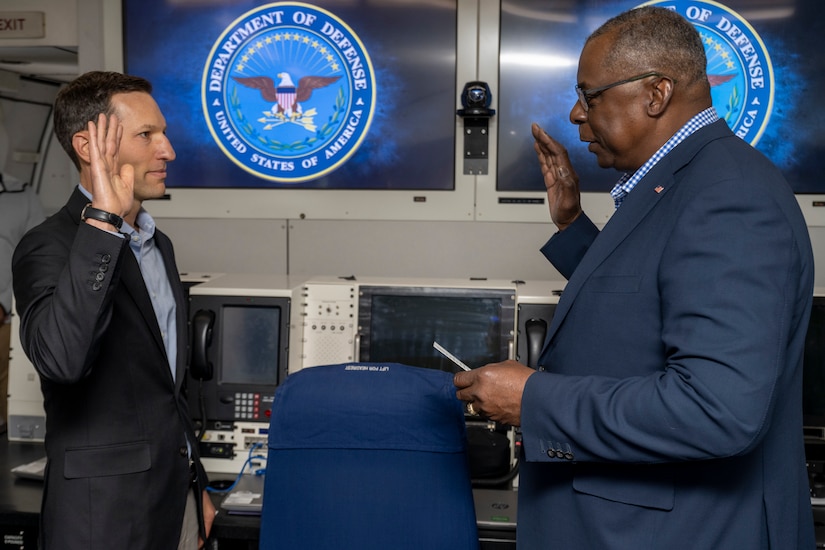
At 614 miles per hour, it may have been the fastest oath ceremony for an assistant secretary of defense ever as Secretary of Defense Lloyd J. Austin III today administered the oath of office to Ely Ratner aboard an Air Force E-4B headed to Singapore.

Ratner, who is now the assistant secretary of defense for Indo-Pacific security affairs, had helmed DOD's China Task Force.  

Two men face one another; both hold up their right hands.

The Senate approved Ratner's nomination July 22. Senators also approved Heidi Shyu as undersecretary of defense for research and engineering; Gina Ortiz Jones as undersecretary of the Air Force; Meredith Berger as assistant secretary of the Navy for energy, installations, and environment; Shawn Skelly as assistant secretary of defense for readiness; and Caroline Krass as DOD's general counsel. 

"These deeply qualified public servants represent decades of combined expertise and leadership in national security and defense policy, and I am grateful for their willingness to serve the country at this critical time," Austin said in a written statement.

Austin swore in Ratner in the press room of the so-called "doomsday plane." The 747-derivative was flying at 30,000 feet at N 52.22, W 168.05, according to the crew. The aircraft had left Fairbanks, Alaska, earlier in the day.

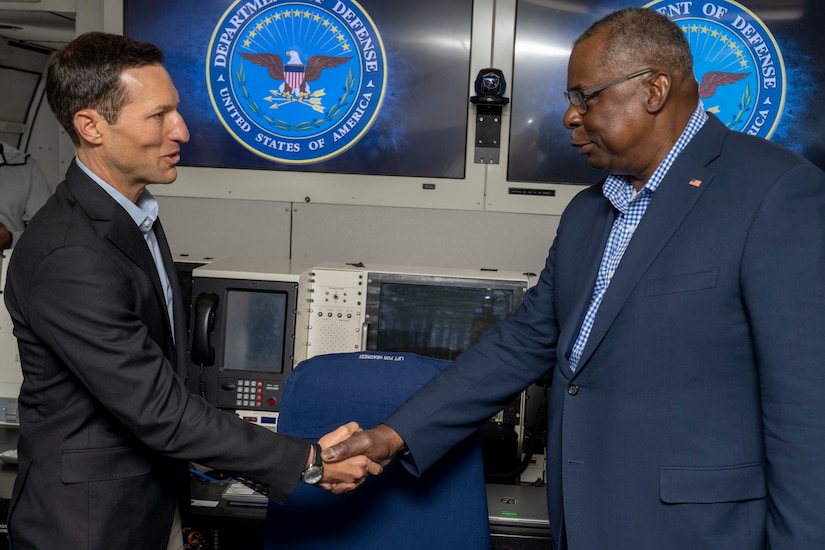
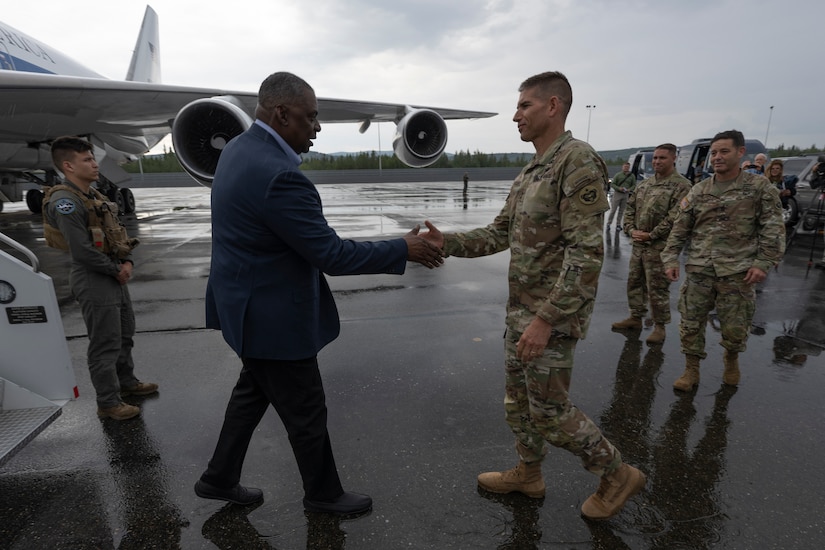
Two men shake hands.

Austin welcomed Ratner to the job and said the new assistant secretary had "fire in his eyes and energy in his belly." The secretary praised Ratner for his work leading the China Task Force, saying it had helped define the situation between the United States and China.

While there have been many reenlistments aboard the E-4B, this may have been the first swearing in of an assistant defense secretary aboard the aircraft.

Austin Calls on Service Members to Stop Stigmatizing Mental Health Help

 July 24, 2021 | BY Jim Garamone , DOD News

After a briefing from leaders about the spike in suicides among service members in Alaska, Secretary of Defense Lloyd J. Austin III said today he's concerned about the number of suicides there and across the force.

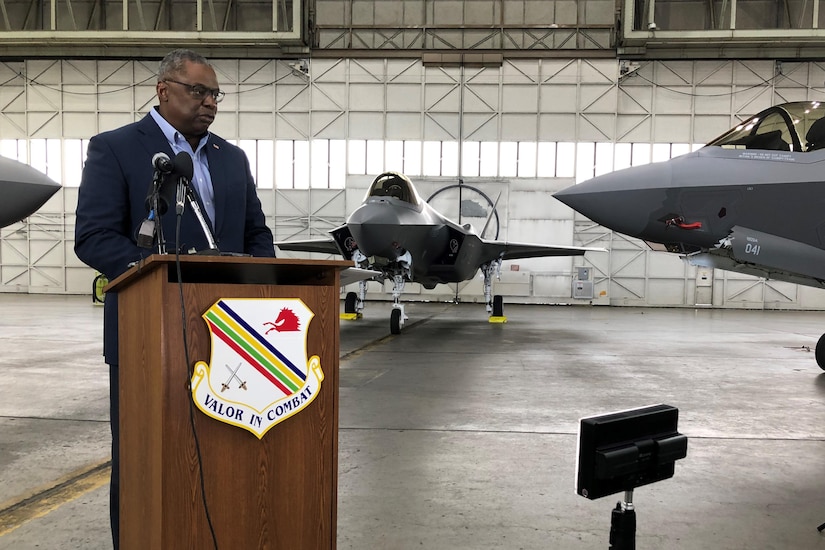
A man stands at a podium.

"I'm deeply concerned about the suicide rates, not only here but across the force," he said during a press conference at Eielson Air Force Base, Alaska. "One loss by suicide is too many. While we're working hard on this problem, we have a lot more to do."

Addressing the problem must start with reducing the stigma associated with seeking help for mental health issues, he said. "Mental health is health, period," Austin said. 

The secretary said the Defense Department must approach the suicide issue with the same energy applied to any other health issue. Getting help to those suffering from mental health issues must be done with compassion and professionalism, not stigma, he said. 

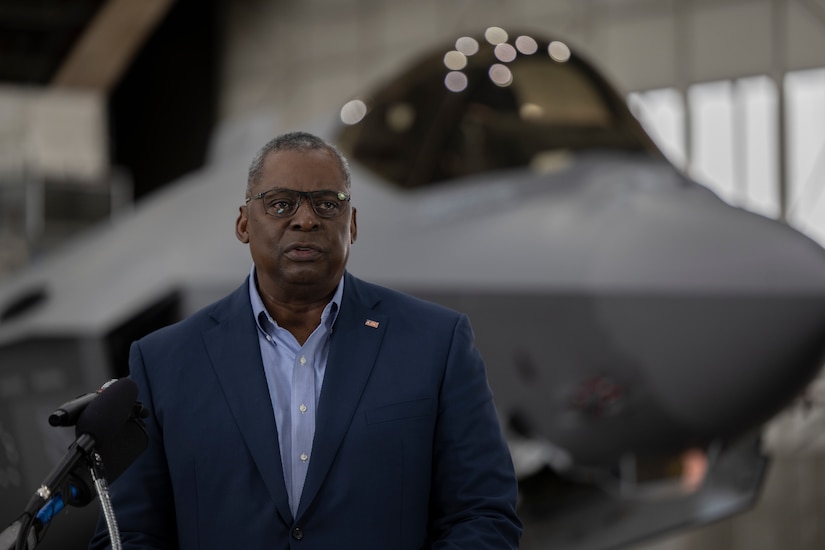
Secretary of Defense Lloyd Austin stands in front of a microphone.

"So, if you're hurting, there are resources available," Austin said. "And I know that our leaders here are committed to making those resources even more accessible and available."

From Day 1 in his tenure at the helm of the DOD, Austin has said that his first priority is to defend the nation. "But key to achieving it is taking care of our people," he said. "One of my messages to the men and women that I spoke with today is we need to look out for one another, and I promised I would be looking out after them."

Austin Emphasizes U.S. Ties With Indo-Pacific Allies, Partners

 July 24, 2021 | BY Jim Garamone , DOD News

Since taking office, Secretary of Defense Lloyd J. Austin III has devoted precious time to ensuring the United States military does its part to maintain the web of alliances that are America's greatest strength.

Secretary of Defense, Lloyd J. Austin III stands in front of two others.

The COVID-19 pandemic forced him to make some of those contacts virtual, but he personally visited Japan, South Korea, India, Israel, Germany and NATO.

He is now on his second week-long trip to the Indo-Pacific region to further cement those ties.

The secretary spoke about the importance of those contacts during a press conference at Eielson Air Force Base today, emphasizing that the value the United States gets from these ties with allies and partners is immeasurable.

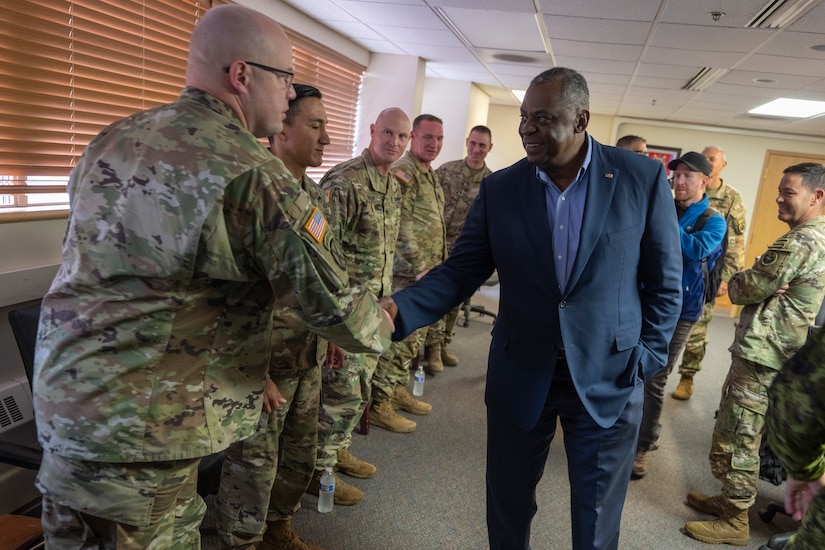
Secretary of Defense, Lloyd J. Austin III shakes hands with service members.

"Everything that we have done in the past has been as a part of a team — a coalition," Austin said. "It's who we are, and it's how we fight."

These alliances magnify America's military capabilities, he said. 

Austin spoke in a hangar on the base; in the background were three F-35 Lightning 2 fifth generation aircraft. One plane had the markings of the Royal Australian Air Force. In another corner of the hangar was an EF-18G Growler that also sported the kangaroo symbol.

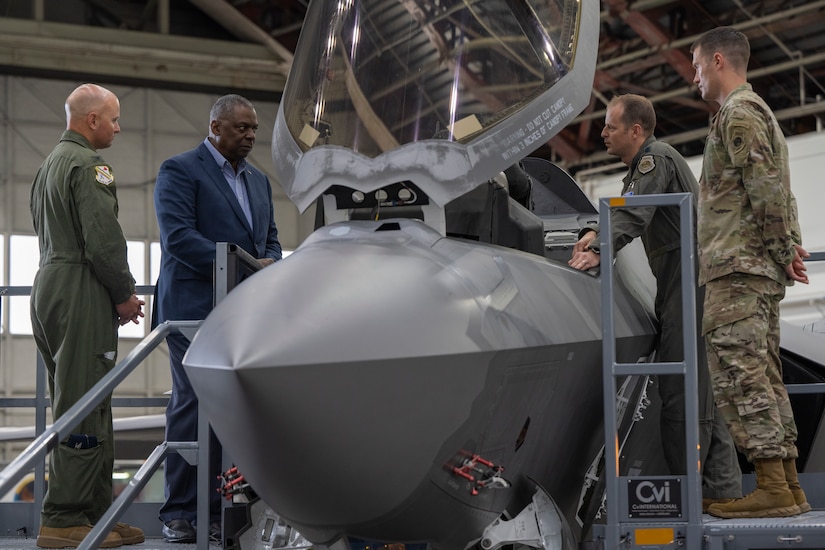
Four men stand around a military aircraft.

The United States is proud of its relationships with Australia and other nations. "We look to continue to develop our relationships with like-minded partners and allies that share our values, that look to … ensure that we have, that we follow an international rules-based order," he said. 

This network of alliances and partnerships is an asymmetric advantage the United States has over potential adversaries. "I would point to, to the fact that others don't … enjoy those kinds of partnerships and alliances," he said. "If you look at China or Russia, they don't have the ability to get to align themselves with like-minded partners to the degree that the United States does. It magnifies our capabilities." 

The secretary said that from a military standpoint, these allies and partners are at the core of how America fights. "It's a way that we operate," Austin said. "We train with each other; we share common practices and policies. It's how we're going to fight going forward."

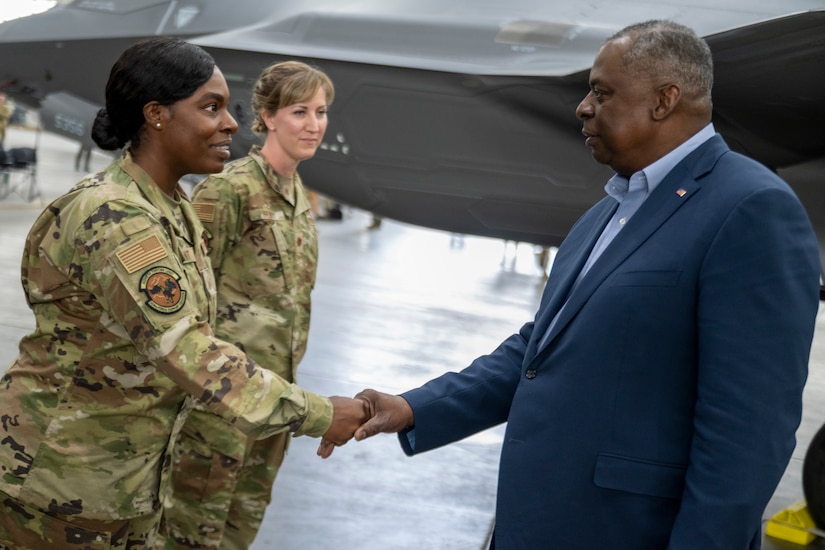
Secretary of Defense, Lloyd J. Austin III shakes hands with a service member.

Eielson Air Force Base is a case in point. The base hosts the Red Flag exercise. Held four times a year, Red Flag tests aviators, maintainers, logisticians and more in all aspects of conflict. The base has hosted aircraft from many allies including Japan, South Korea, the United Kingdom, Australia and the Philippines, according to an Eielson spokesperson.

Austin will continue on from Alaska to meet with partners in Singapore, Vietnam and the Philippines.

Saturday, July 24, 2021

Fitness Test


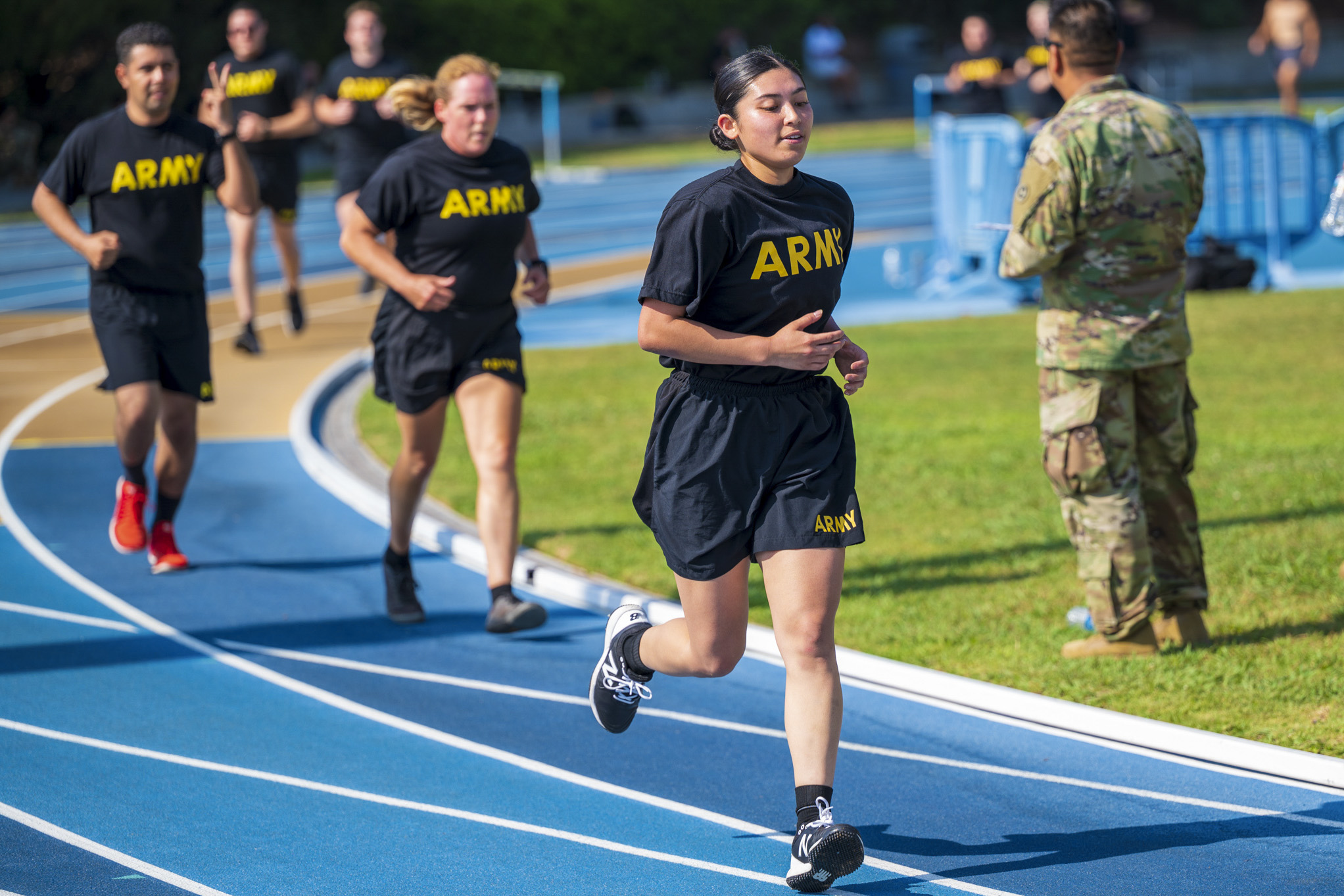
Army Spc. Kiana Malbas participates in an Army Combat Fitness Test at the University of California, Los Angeles, July 17, 2021.

Puppy Love


Loved ones welcome an airman returning to McEntire Joint National Guard Base, S.C., after a deployment in Saudi Arabia, July 18, 2021.

Talisman Saber


Marines participate in Talisman Saber at Shoalwater Bay Training Area in Queensland, Australia, July 18, 2021. The exercise is designed to strengthen capabilities to respond to security concerns in the Indo-Pacific region.

Camouflage Crew


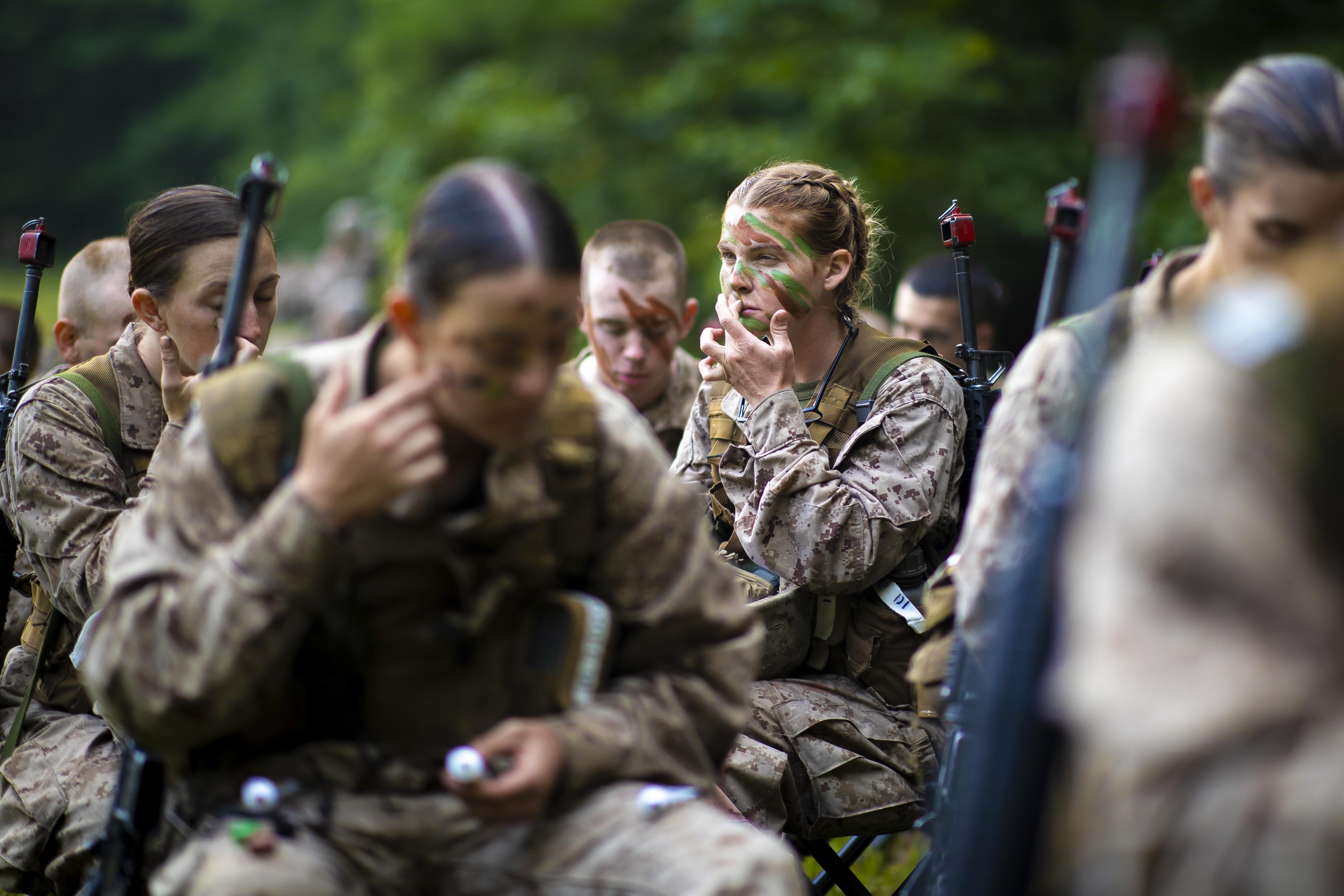
Marines apply camouflage face paint before participating in the small unit leadership evaluation at Marine Corps Base Quantico, Va., July 21, 2021.

Graduation Ceremony


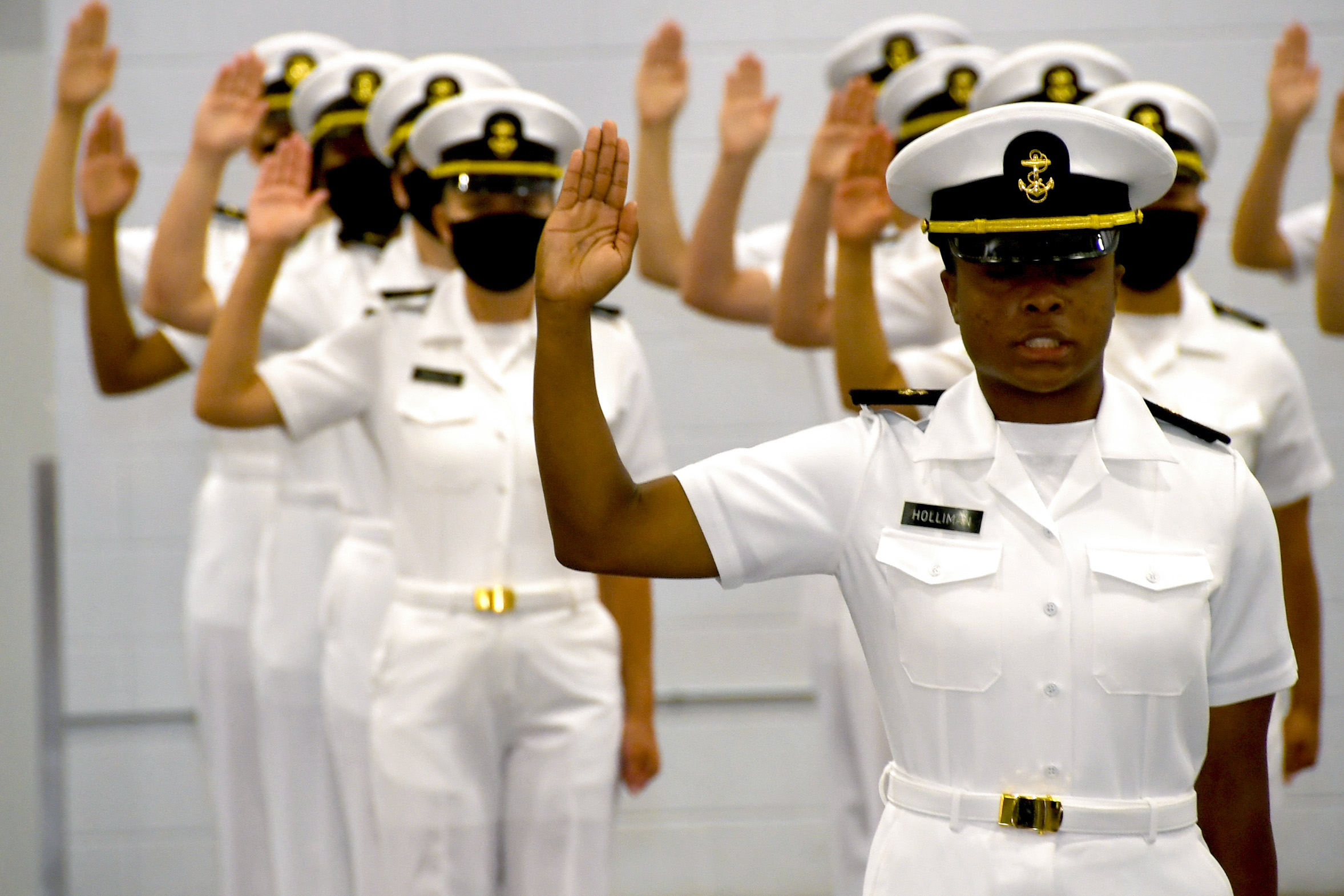
Navy ROTC midshipmen raise their right hands during a graduation ceremony at Recruit Training Command in Great Lakes, Ill., July 22, 2021.

Silhouette Inspection


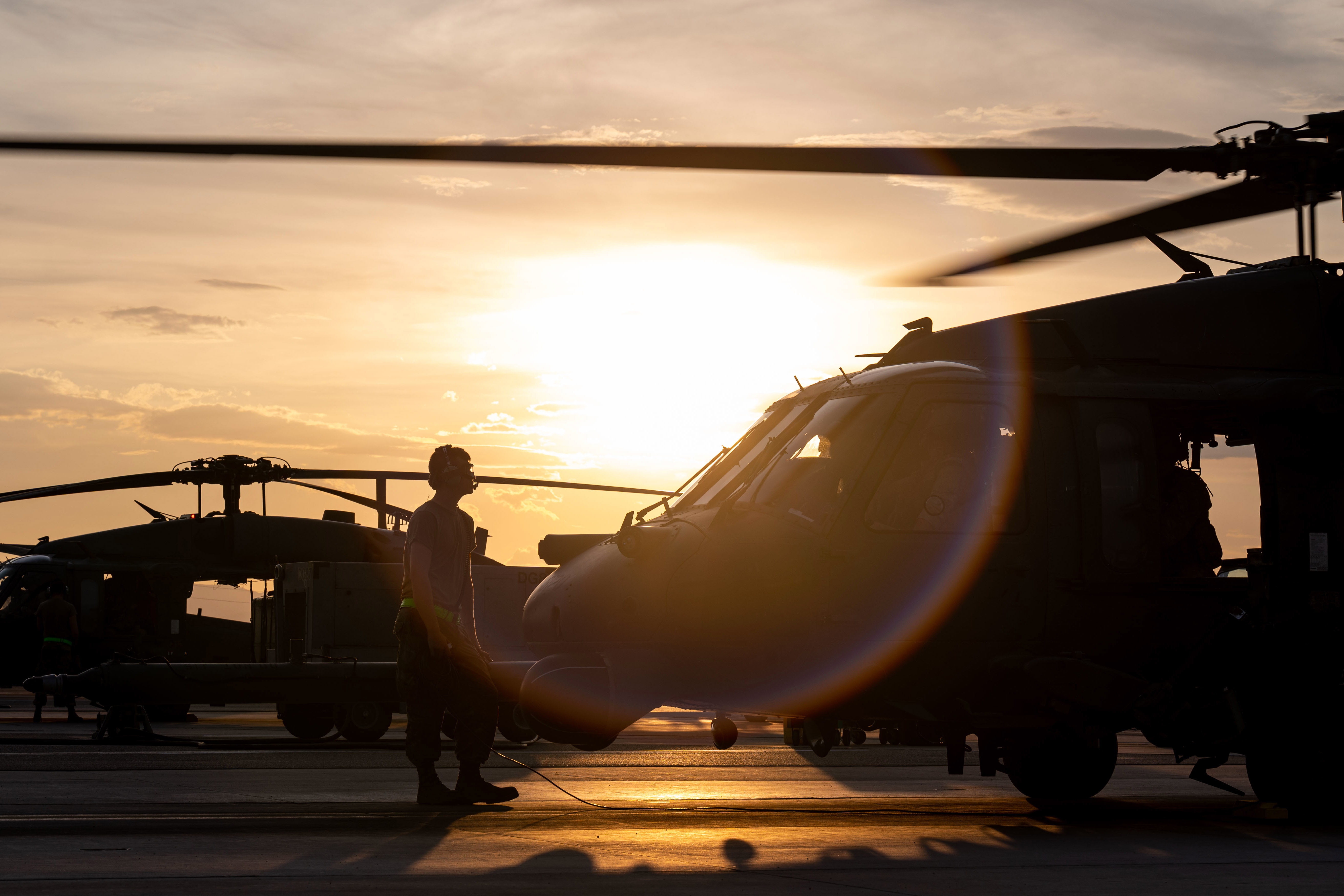
Air Force Airman 1st Class Dylan Guidry preforms preflight inspections on an HH-60G Pave Hawk during Red Flag 21-3 at Nellis Air Force Base, Nev., July 23, 2021.

Readout of Under Secretary of Defense for Policy Dr. Colin Kahl's Meeting With Croatian Minister of Defence Mario Banožić

 July 23, 2021


Pentagon Deputy Press Secretary Jamal Brown provided the following readout: 

Under Secretary of Defense for Policy Dr. Colin Kahl met with Croatian Minister of Defence Mario Banožić at the Pentagon today to reaffirm the importance of the U.S.-Croatia bilateral defense relationship and further strengthen our strategic Alliance. Dr. Kahl emphasized the U.S. commitment to collaborating within NATO and helping Croatia meet its NATO capability targets.

The two leaders discussed regional security, Euro-Atlantic integration, COVID-19 and mutual concerns over malign influence in the region. Dr. Kahl thanked Minister Banožić for Croatia’s impressive history of contributions to coalition operations, including Kosovo Force and NATO Mission Iraq.

Austin Begins Indo-Pacific Visit in Alaska

 July 24, 2021 | BY Jim Garamone , DOD News

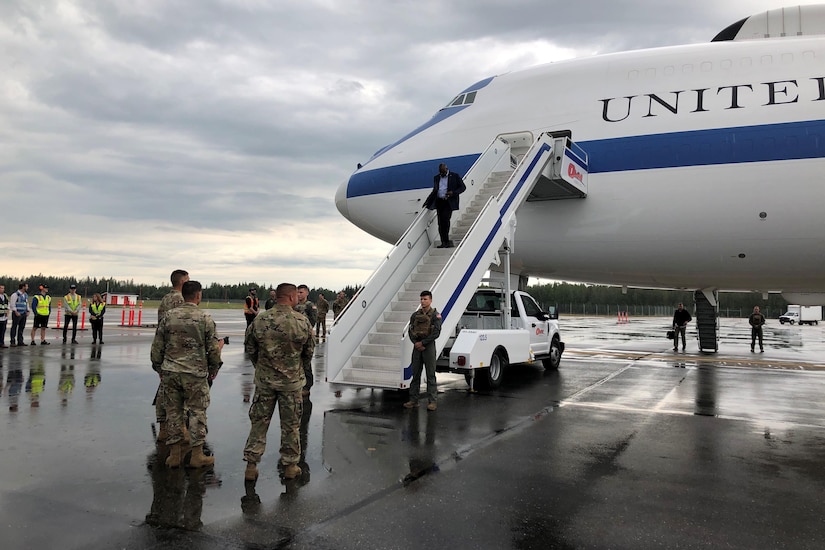
Secretary of Defense Lloyd J. Austin III landed in Fairbanks, Alaska, yesterday beginning a weeklong trip to the Indo-Pacific.

It's the secretary's second trip to what he has called the Defense Department's "priority region" since taking office in January.

A man walks down some stairs that are outside the door of a plane.

"I think it'll be a really good visit: you'll hear me talk a lot about partnerships and the value of partnerships," Austin told reporters traveling with him. "We believe that we're a stabilizing force; no matter where we are, what part of the world, we add value to the stability of the region. So, my goal is to strengthen relationships."

Alaska is a cornerstone of America's defense in the Indo-Pacific. The state is home to some of DOD's most modern systems, including F-22 Raptors and F-35 Lightning IIs — fifth generation aircraft that can dominate any battlespace. Alaska is also home to ground-based missile defense sites. These systems — manned by members of the Alaska National Guard — are key to America's defense from rogue states.

Two man shake hands as others stand around.

Soldiers based in Alaska are key to America's Arctic strategy and are integral forces for the Indo-Pacific. Army personnel have deployed to work with allies throughout the region and have conducted exercises and operations with many allies and partners.

Austin will travel on to Singapore, Vietnam and the Philippines before returning to Washington.

Friday, July 23, 2021

Department Statement on DJI Systems

 July 23, 2021


The Department of Defense (DOD) position is that systems produced by Da Jiang Innovations (DJI) pose potential threats to national security.  Existing DOD policy and practices associated with the use of these systems by U.S. government entities and forces working with U.S. military services remain unchanged contrary to any written reports not approved for release by the DOD.   

A recent report indicated that certain models of DJI systems had been found to be approved for procurement and operations for US government departments and agencies.  This report was inaccurate and uncoordinated, and its unauthorized release is currently under review by the department. In 2018, DOD issued a ban on the purchase and use of all commercial off-the-shelf drones, regardless of manufacturer, due to cybersecurity concerns. The following year, Congress passed legislation specifically banning the purchase and use of drones and components manufactured in China. DOD complies with Section 848 of the FY20 National Defense Authorization Act (NDAA) and additional guidance provided by Executive Order 13981.

As outlined in the FY20 NDAA, when DOD has a valid and authorized requirement for the use of Chinese-made small Unmanned Aircraft Systems (UAS) in conducting certain types of analysis or operations, “the Secretary of Defense is exempt from the restriction [of using covered systems] if the operation or procurement is for the purposes of— (1) Counter-UAS surrogate testing and training; or (2) Intelligence, electronic warfare, and information warfare operations, testing, analysis, and training.”  DOD unit requests to purchase or use commercial off-the-shelf drones are reviewed on a case-by-case basis, and if found exempt from the law, are subject to several measures to ensure sensitive data is not released. 

U.S. Special Operations Command (USSOCOM) has purchased commercial off-the-shelf drone technology in recent years as consistent with Section 848 of the FY20 NDAA and Executive Order 13981. Accordingly, USSOCOM has accounted for cybersecurity concerns in all purchased systems through a rigorous review process, strict adherence to the usage guidelines, and other applicable risk mitigation measures. DOD refers any additional questions on this matter to USSOCOM.

Mitigating the threats posed by small UAS, including DJI systems, remains a priority across the Department, and DOD continues to ensure existing policy remains current and appropriately implemented.    

California Bound


An airman loads a C-130 Hercules aircraft with a Modular Airborne Fire Fighting System at the Wyoming Air National Guard Base, Cheyenne, Wyo. July 19, 2021. The aircraft will be operating out of McClellan Park, Calif.

Grenade Toss


Army Spc. Alexander Gravely throws a grenade during the situational training exercise at this year's Army National Guard Best Warrior Competition at Camp Navajo Military Reservation, Ariz., July 21, 2021.

Starry Sky


The guided missile cruiser USS Shiloh transits the Arabian Sea under a starry night sky, July 5, 2021.

Tearful Return


Navy Seaman Katie Helps embraces her father after returning to Naval Station Mayport, Fla., from a deployment overseas, July 18, 2021.

Ocean Ride


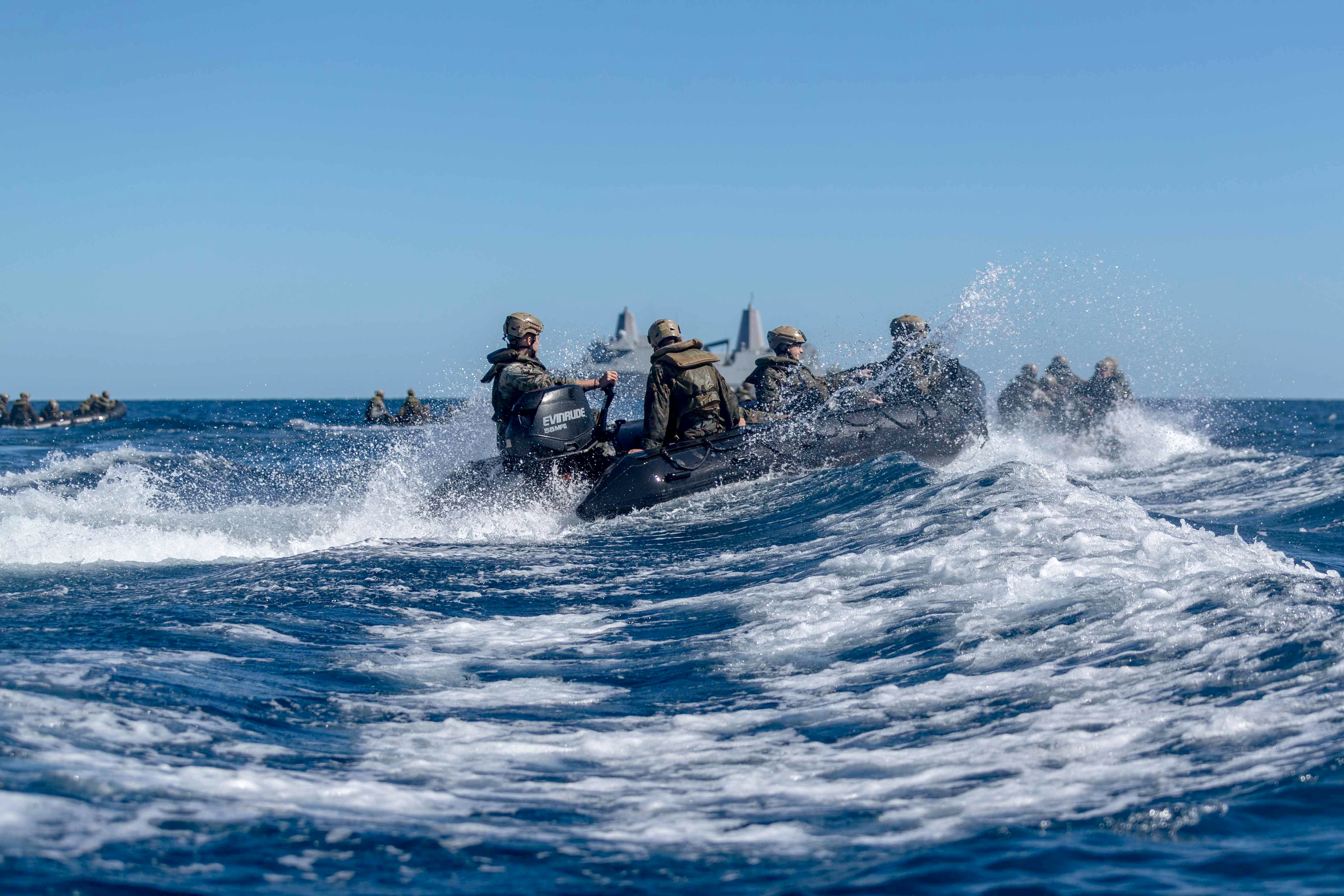
Marines maneuver their combat rubber raiding crafts after conducting readiness drills in the Coral Sea, July 19, 2021.

Vaccination Administration


Army Spc. Raymond Ortiz, assigned to the Puerto Rico Army National Guard, administers a COVID-19 vaccine to a participant at Rubén Zayas Montañez Coliseum in Trujillo Alto, Puerto Rico, July 14, 2021.

Vaccination Administration


Army Spc. Raymond Ortiz, assigned to the Puerto Rico Army National Guard, administers a COVID-19 vaccine to a participant at Rubén Zayas Montañez Coliseum in Trujillo Alto, Puerto Rico, July 14, 2021.

Hospital Equipment


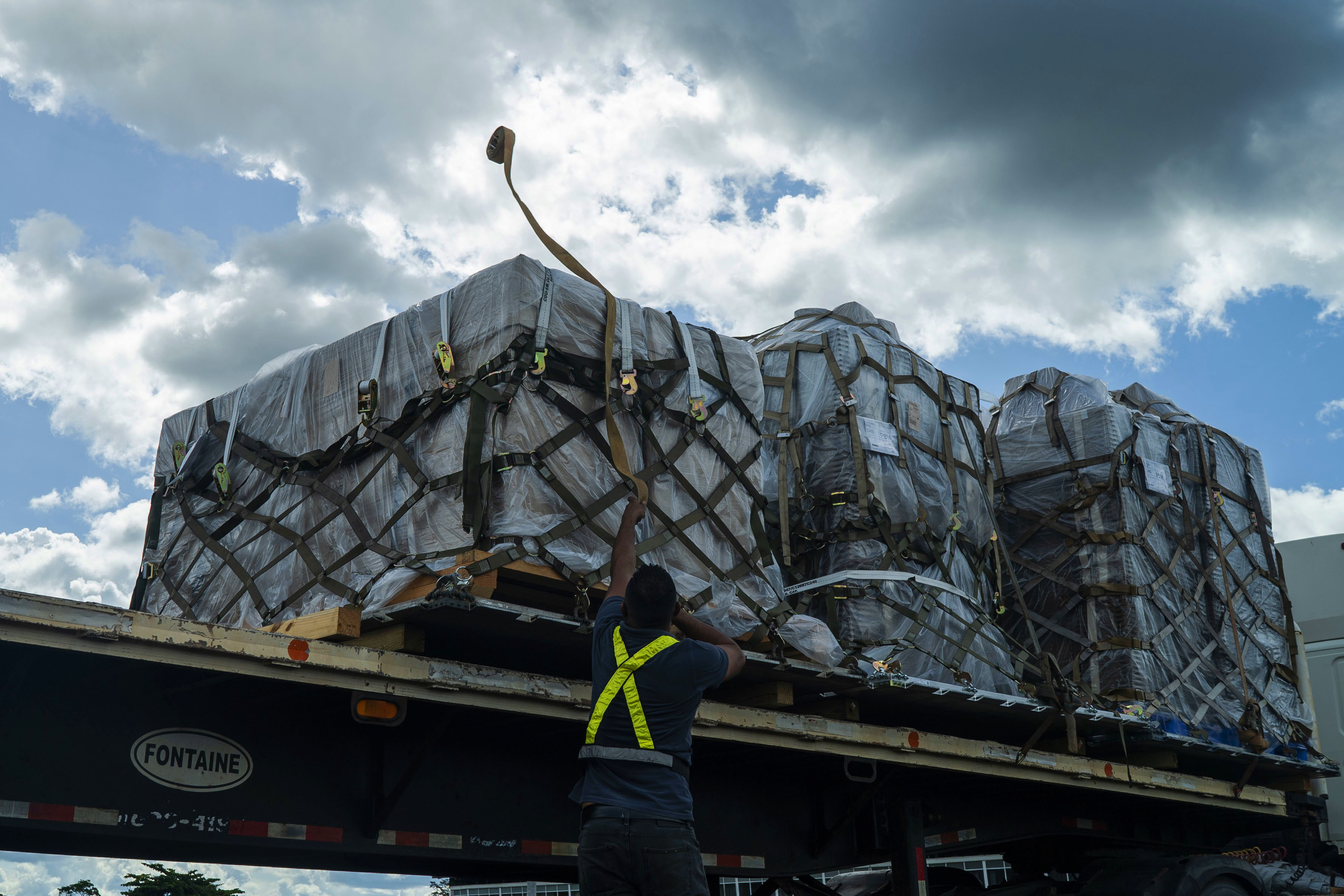
Air Force personnel and Surinamese locals unload field hospital equipment at Johan Adolf Pengel International Airport in Suriname, South America, July 16, 2021. The portable field hospital, valued at $745,000, was donated by U.S. Southern Command to the Suriname Ministry of Health to augment their overwhelmed medical capacity brought on by COVID-19.

Thursday, July 22, 2021

Recovery Mission


Air Force Tech. Sgt. Chandler Dobson, an explosive ordnance disposal technician with the Defense POW/MIA Accounting Agency, swings a chemical light stick during a recovery mission in Quang Nam Province, Vietnam, July 4, 2021

Falling Water


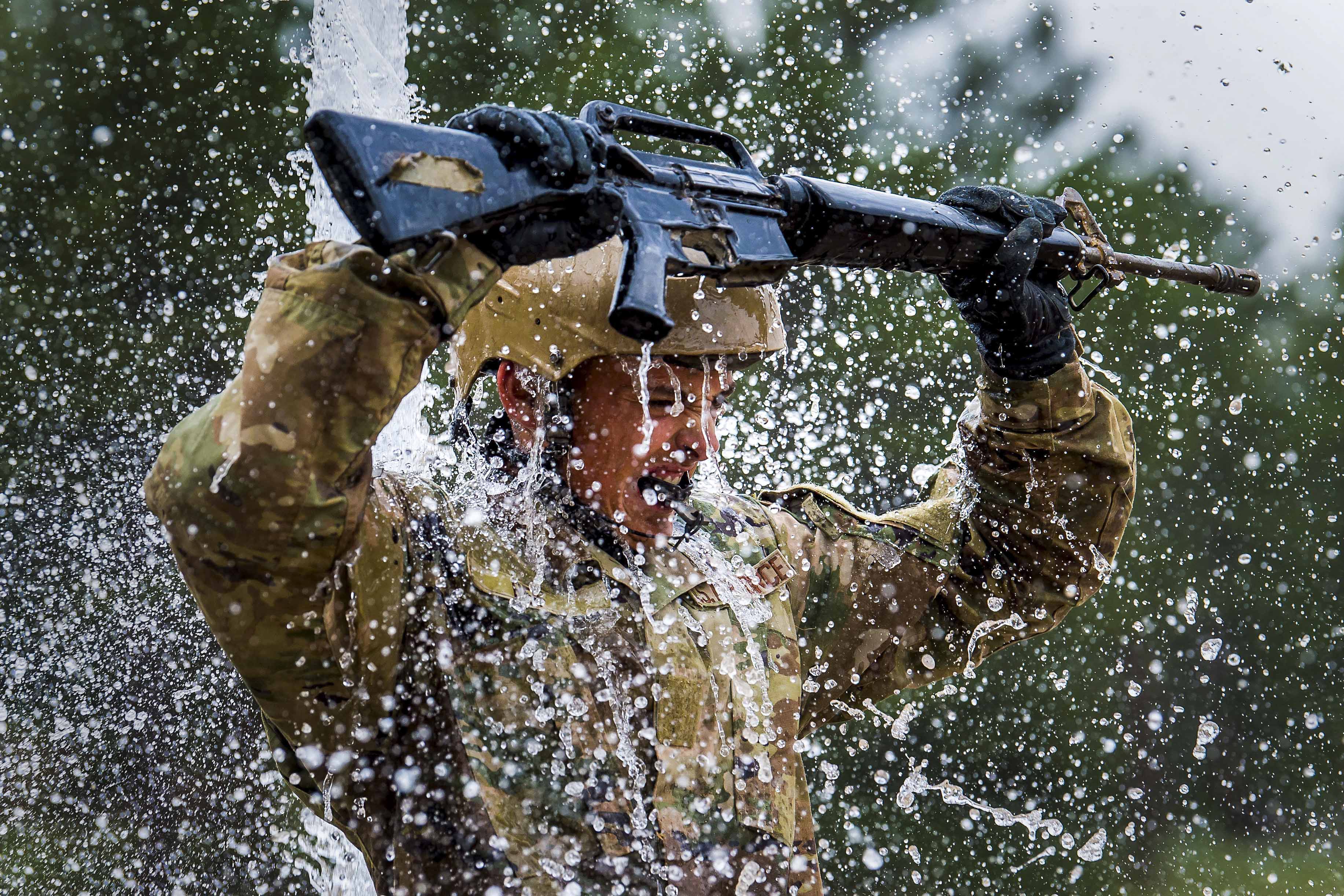
An Air Force cadet completes an assault course at the U.S. Air Force Academy in Colorado Springs, Colo., July 13, 2021.

Memorial Mission


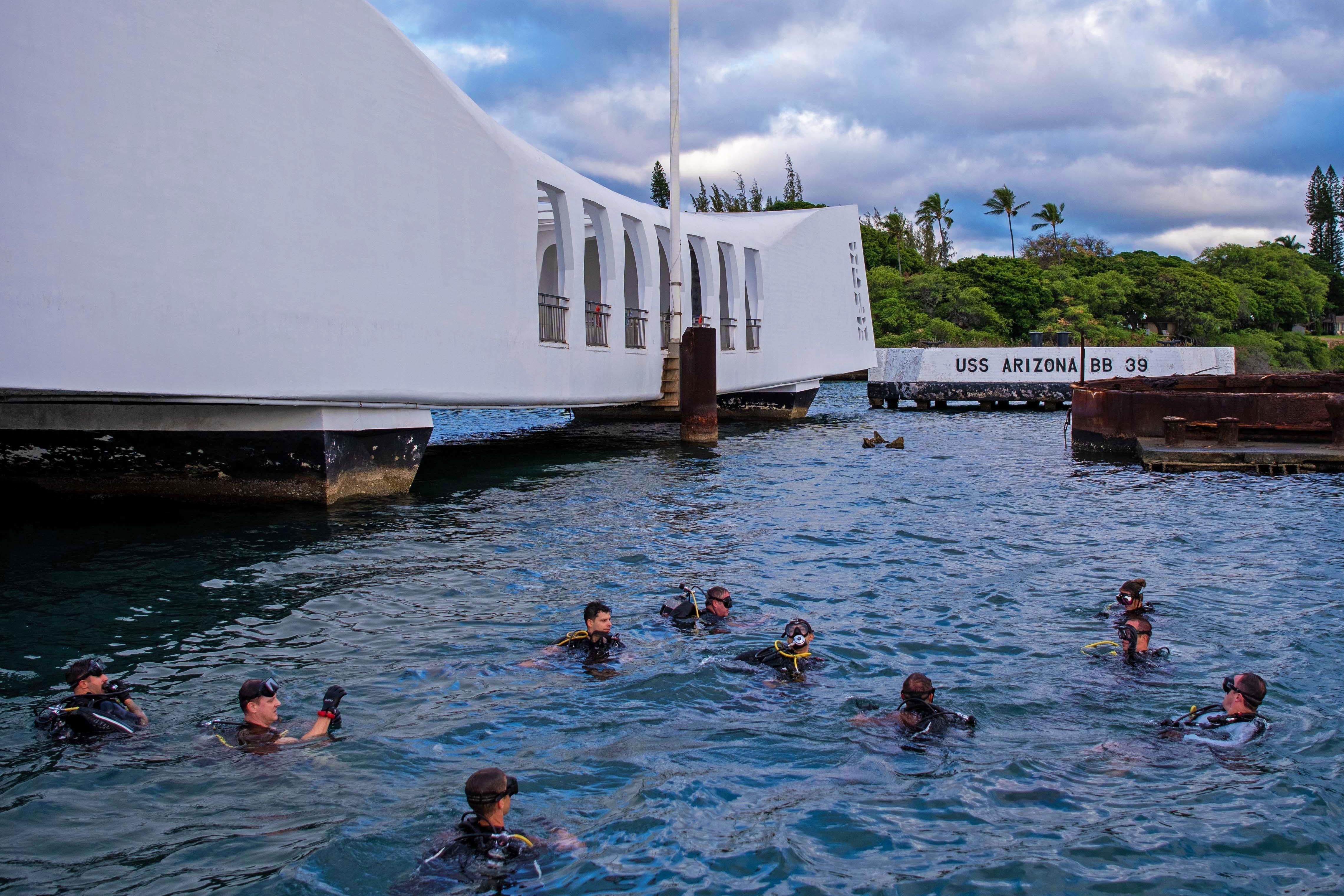
Navy divers prepare to dive at the USS Arizona Memorial, Joint Base Pearl Harbor-Hickam, Hawaii, July 16, 2021. The dive was a collaborative effort with the National Park Service to conduct a survey on the memorial.

Survival Training


Airmen conduct water survival training at Joint Base McGuire-Dix-Lakehurst, N.J., July 17, 2021.

Honor Guard


Air Force honor guard members stand at attention before a change of command ceremony at Royal Air Force Alconbury, England, July 20, 2021.

Fargo Fun


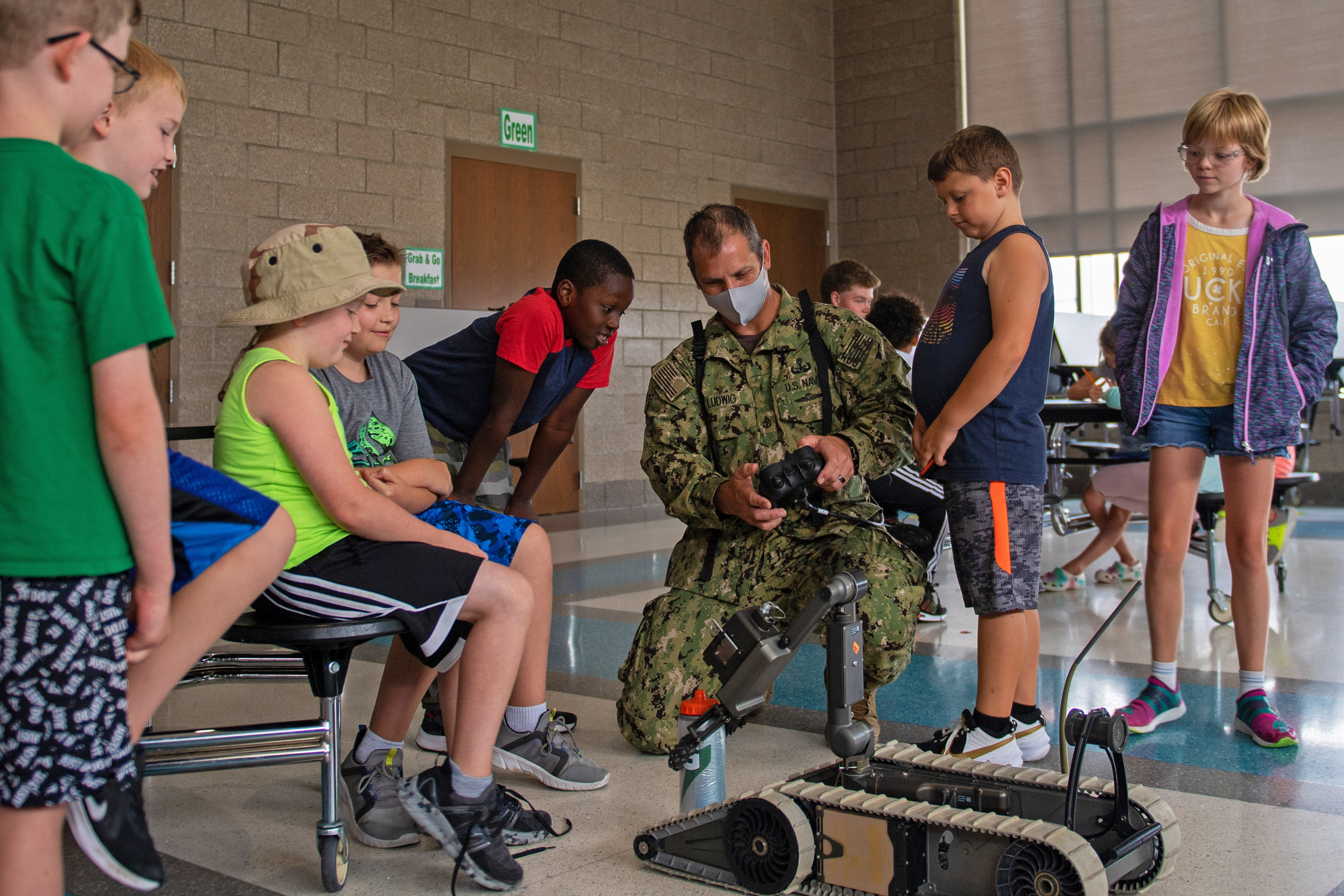
Navy Chief Petty Officer Matt Ludwig shows children an unmanned ground vehicle during a community relations event at Ed Clapp Elementary in Fargo, N.D., July 21, 2021.

Pentagon Press Secretary John F. Kirby Holds an Off-Camera Press Briefing

 July 22, 2021

Pentagon Press Secretary John F. Kirby

PRESS SECRETARY JOHN F. KIRBY: Everybody. Okay. Just a couple things at the top.

This morning, Secretary Austin, Deputy Secretary Hicks and acting undersecretary of personnel and readiness joined the secretary of veterans’ affairs, the Honorable Denis McDonough, and other V.A. leaders and a small group of advocates and survivors to participate in a survivor and advocate roundtable on sexual assault and sexual harassment. During the meeting, the group discussed priorities, efforts and recommendations as part of the development and implementation of the Independent Review Commission roadmap. This is, I think, their third engagement with this group of survivors. This is something that the group, that they've been trying to stay in touch with as we move from the very beginning of the IRC all the way through the end, so it was a chance to touch base with them again now that the IRC recommendations are complete, and listen to them and their input, and to read out to them where the department's thinking is on this.

Today, we will also host a delegation from the government of Iraq for the next iteration of the U.S.-Iraq military technical talks as part of the U.S.-Iraq strategic dialogue. The meetings will discuss the long-term U.S.-Iraq security cooperation partnership and areas for cooperation beyond counterterrorism, and we'll, of course, give a full readout of the meeting when it's over.

And with that, I think we'll start with Bob on the phone here.

Q: Yes. Thanks, John.

I actually do have a question about the Iraq talks. My question is, you know, the last time there was, I think, the last Iraq-U.S. strategic dialogue in April, there was a joint statement put out afterwards that said that now that U.S. and coalition forces had transitioned to training and advising, that the -- this would allow for what they said was the redeployment of any remaining combat forces from Iraq, with the timing to be established in upcoming technical talks, which may be exactly what you were referring to there. And my question is, has there been any additional clarity on that timing? And does Secretary Austin wish there to be, let's say, more clarity and a -- a firm timetable for withdrawing from Iraq?

Thanks.

MR. KIRBY: Yeah, Bob.

We are talking about -- we're talking with the Iraqis over the course of the next couple of days about a whole host of issues, and certainly, you can expect that one of those issues is, of course, the American military footprint in Iraq and the missions that we're conducting inside Iraq. I won't get ahead of those discussions. I do think you can expect that at the conclusion of the dialogue, there will be a public statement, as there has been in the past. And as I said we'll give a readout from today's meetings, as well. I don't know how detailed that will be in terms of a timeline for the eventual departure of U.S. troops.

I think it's important to remember that we are there at the invitation of the Iraqi government. This was -- this -- this mission, which was focused on ISIS, was never intended to be permanent, and I think everybody has always understood that there would be a time when there would no longer be a need for U.S. combat forces inside Iraq. And what that looks like going forward, again, these talks are part of that process, and I simply don't -- won't be able to get ahead of decisions that haven't yet been made. 

But -- we're obviously in close consultation with our Iraqi partners about what we're doing and the mission against ISIS, how that's going, and of course, thinking about what the future would look like.

Q: A follow-up question is, is it your intention to establish more clarity during this week's talks, or is this the beginning of a longer-term dialogue?

MR. KIRBY: Again, I don't want to get ahead of talks that haven't been completed. We're -- we're certainly looking at these talks as additional opportunities in the process to discuss what the future will look like.

Q: Thank you.

MR. KIRBY: Okay. In here? Court?

Q: On that, has the Biden administration's viewpoint changed? I mean, is it still the intention of the administration to maintain U.S. military combat troops in Iraq or -- I mean, I know there's these ongoing reviews, so is that still the hope, that the same footprint or even a larger footprint will -- where are you -- where is that coming from?

MR. KIRBY: No -- Courtney, I mean, the hope is that we can, you know, rid ourselves and rid the region of the threat that ISIS poses. And there's been a lot of good work done in the last several years on greatly diminishing that threat. That's -- that's what we're there for and that's what we're hoping for.

Our presence there, again, is at the invitation of the Iraqi government and what that looks like going forward is something that we're going to decide with our Iraqi partners. So if and it's -- not about a desire to have a presence or not to have a presence, it's a desire, in concert with our Iraqi partners, to eradicate the threat that ISIS poses, and -- and that's what these discussions are all about. It's examining the threat, examining what we're doing, the operations, and what it needs to look like going forward, commensurate with the status of ISIS inside Iraq.

Q: And then one -- one other thing --

(CROSSTALK)

MR. KIRBY: Hang -- hang on just a second.

Q: What is the department's intent about media access to the Afghans who are going to Fort Lee?

MR. KIRBY: I would refer to you -- to the State Department for that, Courtney. That it's a -- the -- the media posture for the relocation of these individuals and their families is not something that the Department of Defense is going to be responsible for. That's -- that's really for the State Department to speak to.

Yeah -- yeah, Joe?

Q: Yeah, thank you so much.

Yeah, I had a question on Afghanistan. I wanted to ask (inaudible) yesterday. What -- what's the current assessment of the Pentagon of Pakistan's role inside Afghanistan? And have you seen any evidence that the Pakistani Air Force has helped Taliban in gaining grounds, especially in the Kandahar Province?

MR. KIRBY: I'm not going to speak for operational details here, Joe, you know that, and we -- we've talked about this before. The -- we -- we recognize that Pakistan has a stake in a stable, secure Afghanistan, the long border there, and we've long recognized that the border between those two countries has been used in the past as safe haven for some of these terrorist groups, including the Taliban, and that the Pakistani people themselves have fallen victim to terrorist attacks that have emanated from that border region.

So our message to the Pakistanis has remained consistent, that -- that we we recognize we have shared interests here, common interests in not allowing for those safe havens, and -- and we continue to talk to the Pakistanis about ways that, collectively, all of us can -- can see an improvement there.

But as for what the Pakistanis are doing or are not doing and operationally, that's something that they should speak to, not -- not us.

Q: Sorry, but you can't say if they are playing a positive or a negative role now -- right now --

MR. KIRBY: What I can tell you is that we -- we have had discussions with Pakistan about ways in which they can be helpful in terms of helping secure that border and contributing to a more stable and more secure future for Afghanistan.

Q: Yeah, but Pakistan's support to the Taliban (inaudible), which he has said, is helping Taliban get control -- ground control of -- now they have control of 200 districts. Isn't it impacting your mission in Afghanistan?

MR. KIRBY: Well, our mission in Afghanistan is to complete this drawdown and to get to a point where our force presence is designed to protect our diplomats and our diplomatic mission. That's our mission in Afghanistan.

And again, I think we've been very candid and forthcoming about the challenges along that border, and I think the Pakistani people, they understand the threat that they're under, too, and the need to -- to not allow for there to be safe haven there.

Yes, Wafaa? How's your finger?

(CROSSTALK)

Q: Yes, I have to keep it for a few days.

Back to the strategic dialogue, you said that the meetings will discuss area of cooperation beyond concert -- counter-terrorism. Can you explain this, especially that the mission in Iraq is to defeat ISIS, its counter-terrorism mission?

MR. KIRBY: Yeah, the military mission in Iraq is aligned against ISIS but we also have a bilateral relationship with Iraq that doesn't just exist in a security environment, and I think that's what the strategic dialogue is trying to get at.

Q: And are you going to discuss specific security measures that the government of Iraq, the Iraqi Forces need to take to secure the bases -- military bases where the U.S. is being, like, targeted by militia backed by Iran?

MR. KIRBY: I think we'll be talking about a range of security issues. I'm not going to get ahead of the the discussions, but to your point -- and we've said this before -- we take the safety and security of our people in Iraq very, very seriously. The President has proven on numerous occasions now that he's willing to take action to try to bolster that force protection and he certainly reserves the right as Commander in Chief to do it again, if need be. And -- and I think our Iraqi partners well understand that.

Yeah?

Q: Hey, good morning, sir.
After he took office in January, the Secretary (inaudible) zero-based reviews of about 40 advisory committees and boards. What's the status of those reviews, sir?

MR. KIRBY: They -- we -- largely, the committee-level work has been completed and -- and we are examining those committee recommendations -- the Secretary is -- to determine how he wants to move forward.

I don't have any specific announcements to make today but I do think you'll start to see us be able to communicate in -- with -- in more detail very soon about what those -- what -- what boards are going to be reconstituted and -- how they're going to be both chaired and populated.

I don't want to get ahead, again, of the Secretary's decisions. I think in general, now that the committee work is done -- I mean, I can certainly, in general, point to the fact that some of the major boards, like the Defense Policy Board, the Defense Science Board, the Defense Business Board, Health and Innovation Boards -- I mean, they -- will be reconstituted. But the -- as for -- you know, beyond that, I'd really rather not get ahead of -- again, of the Secretary's decision space.

I didn't go to anybody on the phone here. Stephen Losey?

Q: Hi. Thank you.

My question has to do with the assassination in Haiti and the DOD's statement that some of the suspected people involved had received training from the U.S. military. Has there been anything in addition that the Defense Department has learned about potentially how many people, what -- what kind of training, things like that? And also, are those -- is that discovery and what happened in Haiti prompting the DOD to perhaps reevaluate or reconsider how it trains foreign militaries, or how it vets those who participate?

MR. KIRBY: So I think what we can confirm is thus far, we've identified seven individuals who were former members of the Colombian military that had received some sort of training and education, U.S.-funded and provided education and training. Some of it was under State Department funding and authorities, and some of -- some of the training was under DOD, Department of Defense-funded training.

But to you give an example of some of them that we've identified -- and -- and this isn't by individual. I'm not going to get into speaking to individuals, but cadet leadership development, counter-drug operations, noncommissioned officer professional development, small-unit leadership training, human rights training, emergency medical training, some helicopter maintenance training and those kinds of things -- all things that are very common. We train thousands of individuals, particularly from militaries in the Western hemisphere over the -- over the course of a given year, all training that is basic military and leadership training, as I just cited. And those examples I gave are actual examples of training we know that these seven individuals got -- nothing, certainly, related at all -- or -- or that one could extrapolate, you know, as leading to or encouraging of what happened in -- in Haiti. And I know of no plans right now, as a result of what happened in Haiti, for us to reconsider or to change this very valuable, ethical leadership training that we continue to provide to -- to partners in the Western hemisphere and to partners around the world.

Q: Is it correct that some of them were -- were trained at Fort Polk, or were some people trained elsewhere, or --

MR. KIRBY: I don't have the details of exactly where all this training went. You're talking about seven individuals over the course of their time in the -- in the Colombian military, and I just, I don't have the details of every base at which every training seminar was held, and frankly, I'm not really sure the relevance of that level of detail anyway.

Q: But no changes in the works.

MR. KIRBY: Sylvie?

Q: Hello. I had a question about Somalia. There was a strike against Al-Shabaab in Somalia this week, and I wanted to know if it was authorized by the White House, or if the -- if President Biden lift the instruction to always go through the White -- the White House to -- before striking Somalia.

MR. KIRBY: The strike that we've -- that -- that we're -- you're talking about, Sylvie, was ordered by General Townsend under his existing authorities to act in -- in the defense of our Somali partners, who were under attack by Al-Shabaab. He had all -- he had the authorities to do this. He ordered this on his own. You know, he ordered this under his own authority to do so, and he didn't need to -- to ask permission to -- to conduct that strike.

Q: But in March, you told us that all the strikes that were ordered outside Afghanistan, Iraq and Syria had to go through the White House.

MR. KIRBY: What I can tell you is that General Townsend had the authority to order this strike, and -- and he used those authorities to do so, and those -authorities have existed for -- for General Townsend, and I'm not -- you know, I -- I think -- I think I'll just leave it there.

Oren?

Q: On the Iraq talks, given the relationship between the presence in Syria and the presence in Iraq, is there a -- is that part of these talks, how a tweak or a change to the footprint in Iraq might affect the footprint in Syria, or is that a consideration for DOD as these move forward? And then separately, do you know the number of Delta variant breakthrough cases amongst DOD vaccinated personnel?

MR. KIRBY: I don't have a number on the Delta variant cases here. Let me see if we can get you a better idea. We do know that there are -- there are Delta cases inside the DOD population. I just don't have the exact number.
I'm sorry, and your first question was about Syria?

Q: Essentially, how does the conversation in Iraq and the strategic dialogue, how could that affect, and -- and is it part of the conversation about it could affect the footprint in Syria? (inaudible) --

MR. KIRBY: I mean, as you know -- again, I don't want to get ahead of talks that are ongoing here and where it's going to go. But as you know, the -- the missions are very -- they're very linked because we knew when ISIS stood up in 2014, or when they got -- when they were on the move in 2014, they were using Syria as a staging/logistics/ recruiting/training ground for much of their operations inside Iraq. So -- it's all -- I mean, there -- there is a linkage there under Operation Inherent Resolve.
What -- what decisions might come out of these talks that could affect the footprint in Syria, I just don't know. But, you know, but clearly, the fight against ISIS continues, and --and how it's going to look, you know, in -- in future months, I think, is just unknown right now. We're going to be continuing to talk to the Iraqis about our presence there, and about what makes the most sense for the threat that ISIS poses, and just as importantly, what makes the most sense for our Iraqi partners, because we're there at their invitation.

Yeah?

Q: Thanks. On Afghanistan, SIGAR yesterday put out a report on ANDSF's fuel with -- alleging that about half of it has been stolen, and without enough fuel, ANDSF operations will come to a grinding halt. First, does DOD have any reaction to this ongoing issue? And going forward, does DOD or groups like DLA or anyone else expect to provide logistical support for fuel, spare parts, that sort of thing, in Afghanistan?

MR. KIRBY: Yeah, I don't have -- I don't have anything on that report. I haven't seen it. So let me see if we have an official department reaction to that. I just haven't seen it, and I wouldn't want to speculate.

But broadly speaking, as the secretary said, our commitment to the ANDSF will continue after the drawdown is complete in a largely financial and logistical support component. Now what -- what piece of that is fuel, I just don't know, and I don't know that we have that all ironed out right now. But our support to the ANSF -- ANDSF will continue in terms of helping them have the logistical and maintenance capability to continue defending their country.

And again, I just have to -- let me take a look at this report and see what it says. I just -- I don't know.

Eric?

Q: John, going back to the airstrike in Somalia, there have been other times when partner forces have come into contact with al-Shabaab and airstrikes had not been authorized. What was -- what made this particular incident rise to that occasion and does it augur for more instances where U.S. drones or other aircraft will come in support of Somali forces on the ground?

MR. KIRBY: Yeah, I -- I won't speak for General Townsend and the calculus that he used to come -- to make this decision. Again, it was -- he ordered it, he had the authority to do it, and I think I'd rather refer -- defer to him in terms of whatever thought process he's willing to share. It was done, I think as I said, at his level.

And as for the future, clearly I won't speculate about what potential operations could occur in the -- in the future but he does have the authority to act in defense of our forces and our Somali partners, if he feels that he needs to do that. He has the authority and has the capability and -- and I think, you know, we'll just -- I -- I wouldn't want to get ahead of that.

It does underscore the threat that Al-Shabaab poses in Somalia and -- and certainly the Horn of Africa, and -- and that -- that threat remains significant and we're -- we're going to continue to be vigilant about it.

Jeff Schogol?

Q: Thank you. Has the U.S. military conducted any airstrikes around Kandahar recently? I'm seeing tweets that possibly some Navy FA-18s have launched attacks to stop the Taliban from taking the city.

MR. KIRBY: Without speaking to specifics, Jeff, I can say that -- that in the last several days, we have acted through airstrikes to -- to support the ANDSF but I -- I won't get into tactical details of those strikes.

But we continue to be able to and we continue to, as the Secretary said yesterday, conduct airstrikes in support of the ANDSF. General McKenzie has those authorities.

Q: Well, if I could follow up, the DOD did announce an airstrike in Somalia. Why not just say what's going on in Afghanistan?

MR. KIRBY: We didn't announce an airstrike in Somalia, Jeff, we were asked a question and we answered it.

(CROSSTALK)

MR. KIRBY: I -- as I said and as the Secretary said yesterday, we have, in recent days, conducted strikes in support of the ANDSF. We're not going to get into specific details about them.

Yes, ma'am?

Q: How many troops do you have in Syria now?

MR. KIRBY: I'll get you the firm number. I don't have it off the top of my head. It's -- as I understand it, it's still less than 1,000 but we can -- we can try to pull you a more specific number.

Q: Thank you. Russia and Ethiopia --

MR. KIRBY: I'm sorry?

Q: Russia and Ethiopia last week signed a military cooperation agreement. Do you have any concern regarding that?

MR. KIRBY: Who? I'm sorry, I could not understand you.

Q: Russia and Ethiopia signed a military agreement last week -- Russia and Ethiopia.

MR. KIRBY: Okay, Russia and Ethiopia.

Q: Yeah. Do you have any comment on that?

MR. KIRBY: I'm not familiar with that agreement. I don't want to speculate or comment on it. I have not seen that agreement. Yeah, I'm sorry.

Yeah, in the back there?

Q: Hi, John. Just to bring it back to Iraq, can you tell us which Iraqi officials are participating in that current discussions ahead of Prime Minister Al-Kadhimi's visit?

MR. KIRBY: I don't think I have that list, do I, Jess. We should be able to get it to you, though, I just don't have that --

(CROSSTALK)

Q: -- just to follow up on this, you mentioned, you know, it's always been understood that combat troops will eventually no longer be needed. Do you have a rough estimate of how many U.S. combat troops are actually in Iraq right now?

MR. KIRBY: I think what we said -- the -- the number's roughly around 2,500.

Q: Right, but aren't they considered advisors under OIR?

MR. KIRBY: They are -- they are -- the mission is -- is largely advice and assistance.

Q: Okay. Do you have any -- any rough idea of what percentage or --

MR. KIRBY: I can't break that down more than that, no.

Okay, thanks.

Q: Thank you.

Readout of the U.S.-Iraq Military Technical Talks, as Part of the U.S.-Iraq Strategic Dialogue

 July 22, 2021


Pentagon Press Secretary John F. Kirby provided the following readout:

Dr. Mara Karlin, Acting Assistant Secretary of Defense for International Security Affairs, hosted Qassem al-Araji, Iraq National Security Advisor; Staff General al-Shimary, Deputy Commander of the Joint Operations Center – Iraq; and a military delegation from the Government of Iraq for the next iteration of the U.S.-Iraq Military Technical Talks, as part of the U.S.-Iraq Strategic Dialogue.  

During the meeting, both parties reaffirmed the importance of the U.S.-Iraq bilateral security relationship, their shared commitment to the D-ISIS mission, and the need for U.S. and Coalition to be able to safely support the Iraqi Security Forces.  They also discussed the long-term U.S.-Iraq security cooperation partnership and areas for cooperation beyond counterterrorism.

Secretary of Defense Lloyd J. Austin III joined the delegation, reiterated his commitment to the Defeat-ISIS mission, and reaffirmed his steadfast support for the U.S.-Iraq strategic partnership.

Confidence Course


A Marine Corps recruit completes an obstacle during a confidence course at Marine Corps Recruit Depot Parris Island, S.C., July 20, 2021.

Sea Shot


Navy Seaman Nicholas Rotelli fires a line throwing adapter from an M14 aboard the USS Carl Vinson in the Pacific Ocean, July 21, 2021.


General Officer Assignments

 July 22, 2021


The chief of staff of the Army announces the following general officer assignments:

Lt. Gen. Antonio A. Aguto Jr. to commanding general, First U.S. Army, Rock Island Arsenal, Illinois. He most recently served as commanding general, 3d Infantry Division and Fort Stewart, Fort Stewart, Georgia.

Lt. Gen. Stuart W. Risch to judge advocate general, U.S. Army, Washington, D.C. He most recently served as deputy judge advocate general, U.S. Army, Washington, D.C.

Lt. Gen. Edwin J. Deedrick Jr. to U.S. Military Representative to the NATO Military Committee, Belgium. He most recently served as commander, Combined Security Transition Command-Afghanistan, U.S. Forces-Afghanistan, Operation Freedom's Sentinel, Afghanistan.

Maj. Gen. (Promotable) Jonathan P. Braga, deputy commanding general, U.S. Army Pacific Command, Fort Shafter, Hawaii, to commanding general, U.S. Army Special Operations Command, Fort Bragg, North Carolina.

Maj. Gen. (Promotable) Paul A. Chamberlain, director for Army Budget, Office of the Assistant Secretary of the Army (Financial Management and Comptroller), Washington, D.C., to military deputy for Budget, Office of the Assistant Secretary of the Army (Financial Management and Comptroller), Washington, D.C.

Maj. Gen. Joseph B. Berger III to deputy judge advocate general, U.S. Army, Washington, D.C. He most recently served as commanding general/commandant, U.S. Army Judge Advocate General's Legal Center and School, Charlottesville, Virginia.

Maj. Gen. John W. Brennan Jr., commanding general, 1st Special Forces Command (Airborne), Fort Bragg, North Carolina, to commander, Combined Joint Task Force-Operation Inherent Resolve, Operation Inherent Resolve, Iraq.

Maj. Gen. Jeffery D. Broadwater, commanding general, 1st Cavalry Division, Fort Hood, Texas, to deputy commanding general, V Corps, Fort Knox, Kentucky.

Maj. Gen. Brian J. Mennes to deputy commanding general, XVIII Airborne Corps, Fort Bragg, North Carolina. He most recently served as commanding general, 10th Mountain Division (Light Infantry) and Fort Drum, Fort Drum, New York.

Maj. Gen. John B. Richardson IV, deputy commanding general, III Corps, Fort Hood, Texas, to commanding general, 1st Cavalry Division, Fort Hood, Texas.

Brig. Gen. Eugene D. Cox to command surgeon, U.S. Army Forces Command, Fort Bragg, North Carolina. He most recently served as commander, U.S. Army Medical Research Institute of Infectious Disease, Fort Detrick, Maryland.

Brig. Gen. Jack M. Davis, commanding general, Regional Health Command-Pacific; market manager, Puget Sound Enhanced Multi-Service Market; and chief of the Army Nurse Corps, Joint Base Lewis-McChord, Washington, to director, Walter Reed National Military Medical Center; deputy director, National Capital Region Market, Defense Health Agency; and chief of the Army Nurse Corps, Bethesda, Maryland.

Brig. Gen. Marcus S. Evans to chief of staff, U.S. Special Operations Command, MacDill Air Force Base, Florida. He most recently served as commander, Special Operations Joint Task Force-Afghanistan, U.S. Forces-Afghanistan/Headquarters NATO Special Operations Component Command-Afghanistan, Operation Freedom's Sentinel, Afghanistan.

Brig. Gen. Alison C. Martin to commanding general; and commandant, U.S. Army Judge Advocate General's Legal Center and School, Charlottesville, Virginia. She most recently served as executive officer to the judge advocate general, U.S. Army, Washington, D.C.

Brig. Gen. David E. Mendelson, staff judge advocate, III Corps, Fort Hood, Texas, to assistant judge advocate general for military law and operations, U.S. Army, Washington, D.C.

Brig. Gen. Clinton K. Murray to commanding general, Brooke Army Medical Center; and deputy market manager, San Antonio Military Health System, Joint Base San Antonio, Texas. He most recently served as commander, Walter Reed Army Institute of Research, Silver Spring, Maryland.

Brig. Gen. George R. Smawley, staff judge advocate, U.S. Cyber Command, Fort Meade, Maryland, to commanding general, U.S. Army Legal Services Agency; and chief judge, U.S. Army Court of Criminal Appeals, Fort Belvoir, Virginia.

Brig. Gen. Brett G. Sylvia, deputy commanding general (Maneuver), 1st Cavalry Division, Fort Hood, Texas, to vice director, J-5, Joint Staff, Washington, D.C.

U.S. Army Reserve

Maj. Gen. Rodney L. Faulk, commander (Troop Program Unit), U.S. Army Support Command - First Army and deputy commanding general, First Army, Rock Island, Illinois, to commanding general (Troop Program Unit), 99th Readiness Division, Fort Dix, New Jersey.

Maj. Gen. Robert D. Harter, assistant deputy commanding general for Reserve Office (Individual Mobilization Augmentee), U.S. Army Material Command, Redstone Arsenal, Alabama, to deputy chief of Army Reserve, (Individual Mobilization Augmentee), Office of the Chief of Army Reserve, Washington, D.C.

Brig. Gen. Joseph D’costa, deputy commander - support (Troop Program Unit), 412th Engineer Command, Vicksburg, Mississippi, to deputy commanding general - support (Individual Mobilization Augmentee), Eighth Army, Korea.

Brig. Gen. Dianne M. Del Rosso, deputy commanding general (Forward) (Troop Program Unit), 1st Theater Sustainment Command; and commander, 311th Sustain Command (Expeditionary), Operation Spartan Shield, Kuwait, to assistant deputy chief of staff, Logistics (Individual Mobilization Augmentee), Office of the Deputy Chief of Staff, G-4, U.S. Army, Washington, D.C.

Brig. Gen. Joseph Dziezynski, deputy commanding general (Individual Mobilization Augmentee), U.S. Army Intelligence and Security Command, Fort Belvoir, Virginia, to commanding general (Troop Program Unit), Military Intelligence Readiness Command, Fort Belvoir, Virginia.

Brig. Gen. Cheryn L. Fasano, deputy commander (Troop Program Unit), 377th Theater Sustainment Command, Belle Chasse, Louisiana, to mobilization assistant to the commander and commander (Individual Mobilization Augmentee), Joint Transportation Reserve Unit, U.S. Transportation Command, Scott Air Force Base, Illinois.

Brig. Gen. Tony L. Wright, commander (Troop Program Unit), 98th Training Division (Initial Entry Training), Fort Benning, Georgia, to deputy chief of staff, strategy, plans and policy, (Individual Mobilization Augmentee), Supreme Allied Command Transformation, Norfolk, Virginia.

Airborne Ops


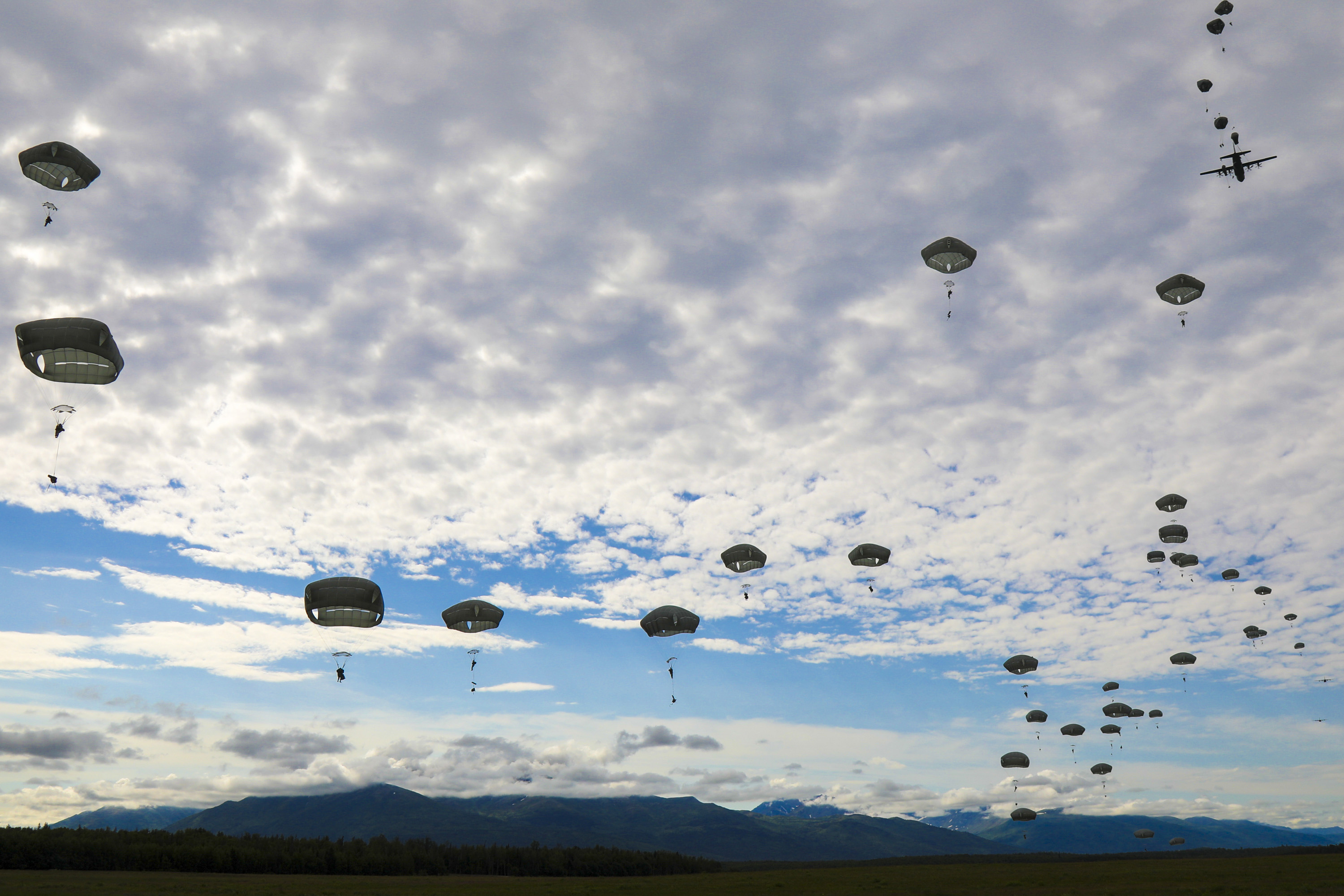
Soldiers jump from a C-130J during an airborne operation at Joint Base Elmendorf-Richardson, Alaska, July 14, 2021.

DOD to Modernize Intelligence Information Apparatus With 'Back to Basics' Approach

 July 22, 2021 | BY DoD News

The Defense Department's information technology capacity provides intelligence information to leaders and warfighters to give them a decision-making advantage.

The legacy systems that provide that capacity, however, must be modernized to ensure the United States doesn't fall behind its competitors, said the deputy chief information officer for special access program information technology.

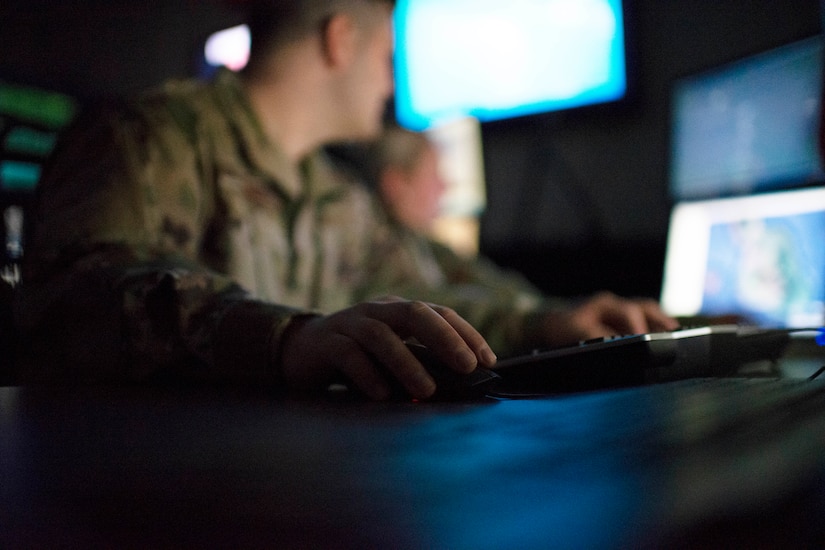
Individuals sit in a darkened room lit only by computer screens.

"Our nation continues to face a complex, evolving and diverse set of threats," Cynthia J. Mendoza said yesterday at a forum sponsored by GovExec. "To counter these threats and remain ahead of our adversaries, it's very important that we have timely, insightful and accurate data and information."

U.S. adversaries, Mendoza said, are advancing in areas such as cybersecurity, artificial intelligence, machine learning and supply chain risk management. The U.S. must do the same.

"To confront these technology challenges, we must be united across the DOD in how we are scaling and operationalizing the IT infrastructure and securing it to provide for the best advanced technologies," she said. "As we look forward, our challenge will be to scale and operationalize IT-enabling capabilities by leveraging key advanced technologies, such as artificial intelligence and machine learning, 5G wireless technology and quantum computing."

Mendoza said she's guided by three principles she believes will help her move the department ahead, but which are not at all new.

Those basic tenants include building trusted partnerships, understanding mission results and outcomes, and leveraging best practices and lessons learned.

"I call these 'getting back to basics,'" she said.

Individuals sit in a darkened room lit only by computer screens.

Stakeholders in the IT modernization strategy don't just include the department, the intelligence community, international partners, the private sector, academia and Congress, Mendoza said.

"I honestly believe people are the 'secret sauce,'" Mendoza said. "They will make the capability real. It all begins with building and developing a stakeholder engagement strategy that is inclusive of all key enterprise stakeholders and focused on a particular capability gap."

She said trusted partnerships with stakeholders enable DOD to rally around a common purpose with accountability to deliver capabilities with an enduring commitment for success.

Mendoza also said the department needs to be clear on what it wants to do — it must understand mission results and outcomes.

"What problem are we trying to solve?" she asked. "We need to be clear on the result and the outcome we are all working to accomplish. We need to ensure that we validate this with our stakeholder community and that they understand the intended outcome."

Leveraging best practices and lessons learned is also critical to avoid "reinventing the wheel" when addressing DOD's mission goals and objectives, she said.

"We leverage lessons learned from our colleagues who are doing similar things," she said. "Best practices and best solutions go hand-in-hand, and so do best approaches: reference architecture frameworks, service-centric and platform based environments, common operating principles, speaking and operating from the same ontology. These are fundamentals, best practices that eliminate our need to reinvent the wheel."

Ceremony Prep


Soldiers participate in a transfer of command ceremony at Fort Hood, Texas, July 21, 2021.

Mission Motion


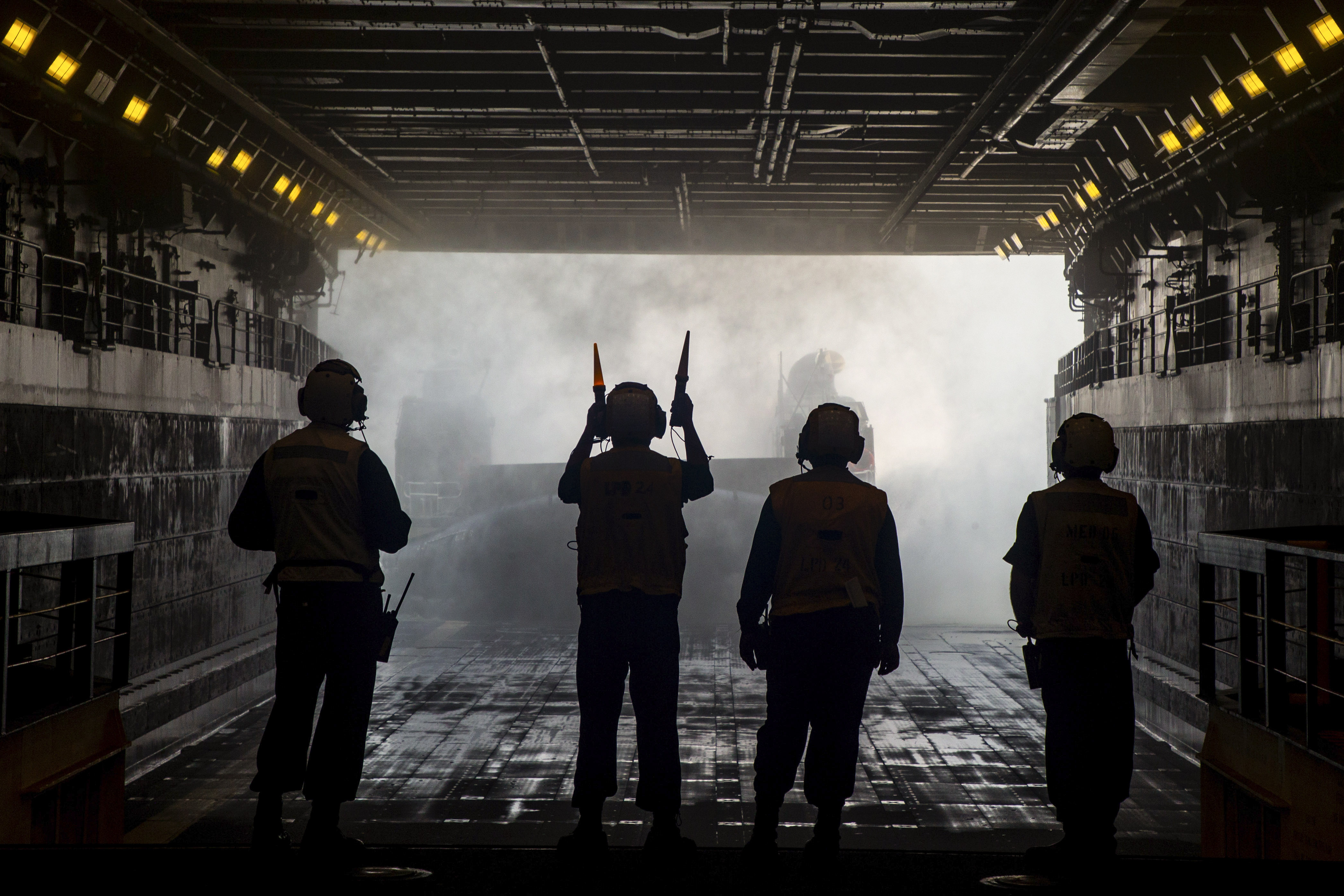
Service members signal an Navy air-cushioned landing craft to enter the well deck of the USS Arlington during mission rehearsals at Naval Station Norfolk, Va., July 21, 2021.

Loading Groceries


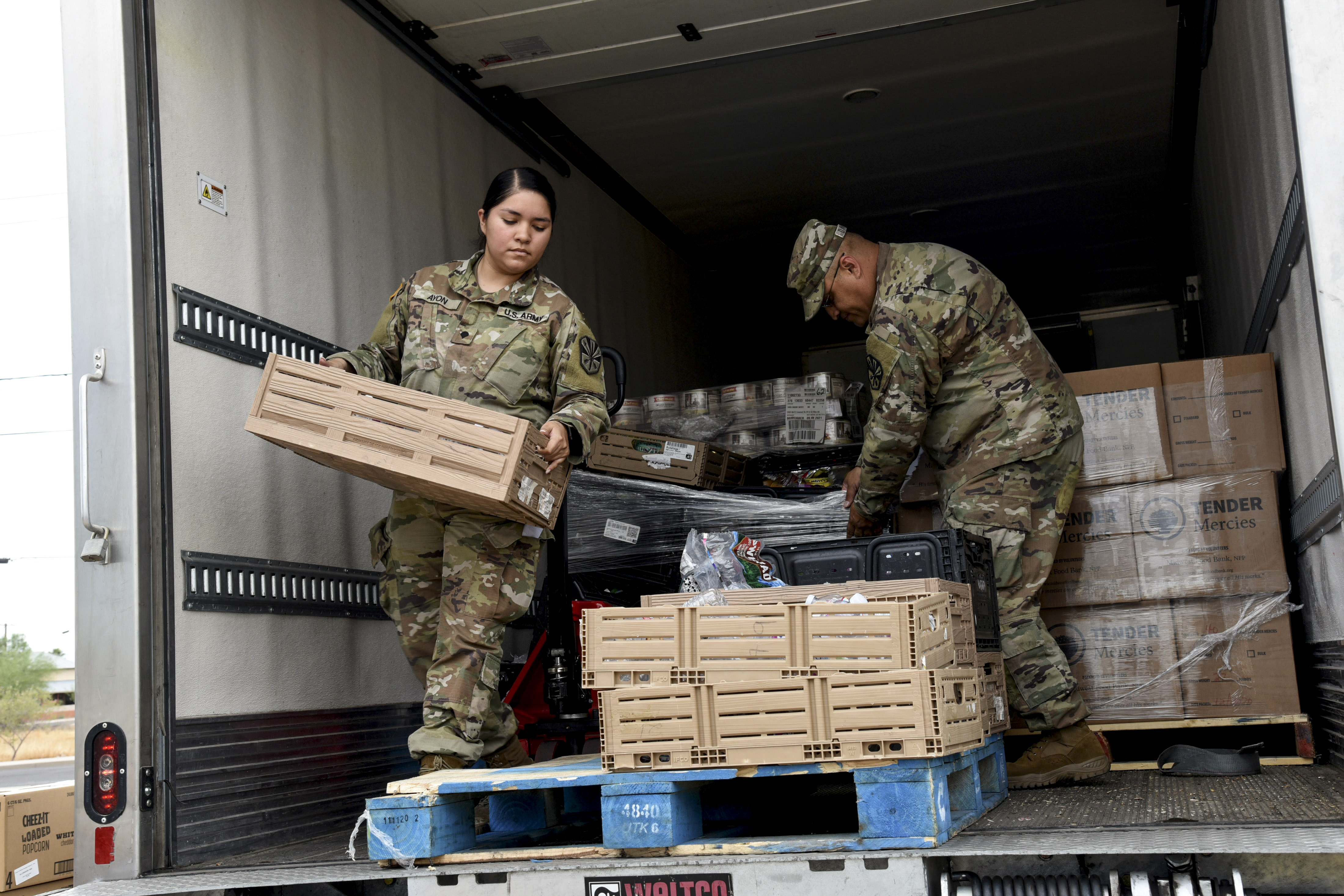
Arizona Army National Guard soldiers load boxes of groceries into a truck at a food bank in Gilbert, Ariz., July 16, 2021, while supporting COVID-19 response efforts.

Deck Descent


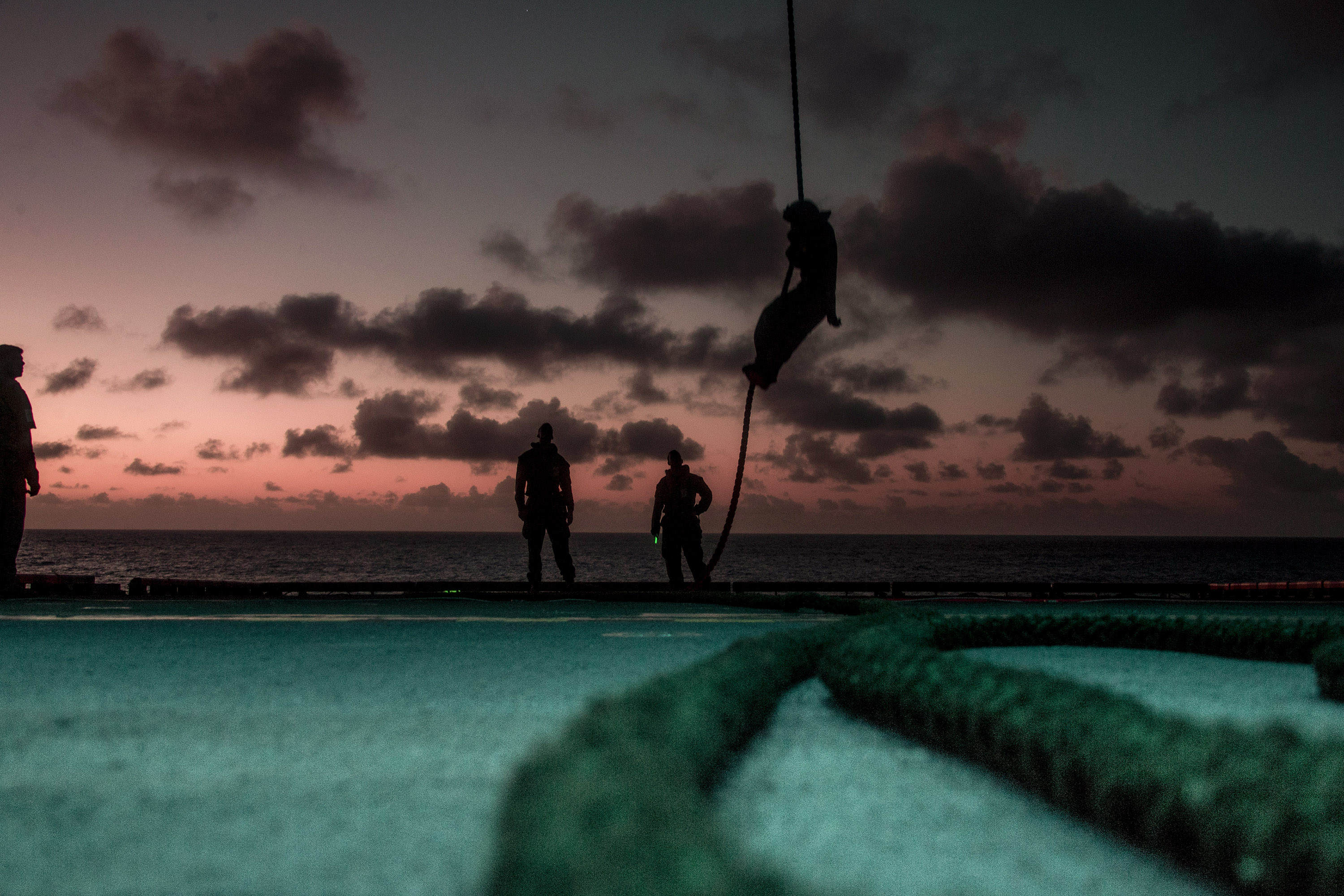
Marines conduct fast-rope training aboard the USS America in the Coral Sea, July 16, 2021.

Fire From Above


Marine Corps Staff Sgt. Fernando Mata supervises Lance Cpl. Austin Mitchell while he fires an M240 machine gun on a UH-1Y Venom during specific weapons delivery training in Misawa, Japan, July 20, 2021.

Beach Crawler


Marine Corps Lance Cpl. Justis Tinoco crawls on the beach during a scout swimmer course at Naval Amphibious Base Coronado, Calif., July 16, 2021. The course provides Marines with the skills necessary to plan and execute swimmer reconnaissance for small boat raids.

Low-level Training


Pilots and loadmasters conduct low-level tactical flight patterns during a training exercise at Joint Base Elmendorf-Richardson, Alaska, July 13, 2021.

Soccer Practice


Army Staff Sgt. Ryan Rodehorst plays soccer with a child at the Caritas Orphanage, Djibouti, July 15, 2021.

Inflatable Target


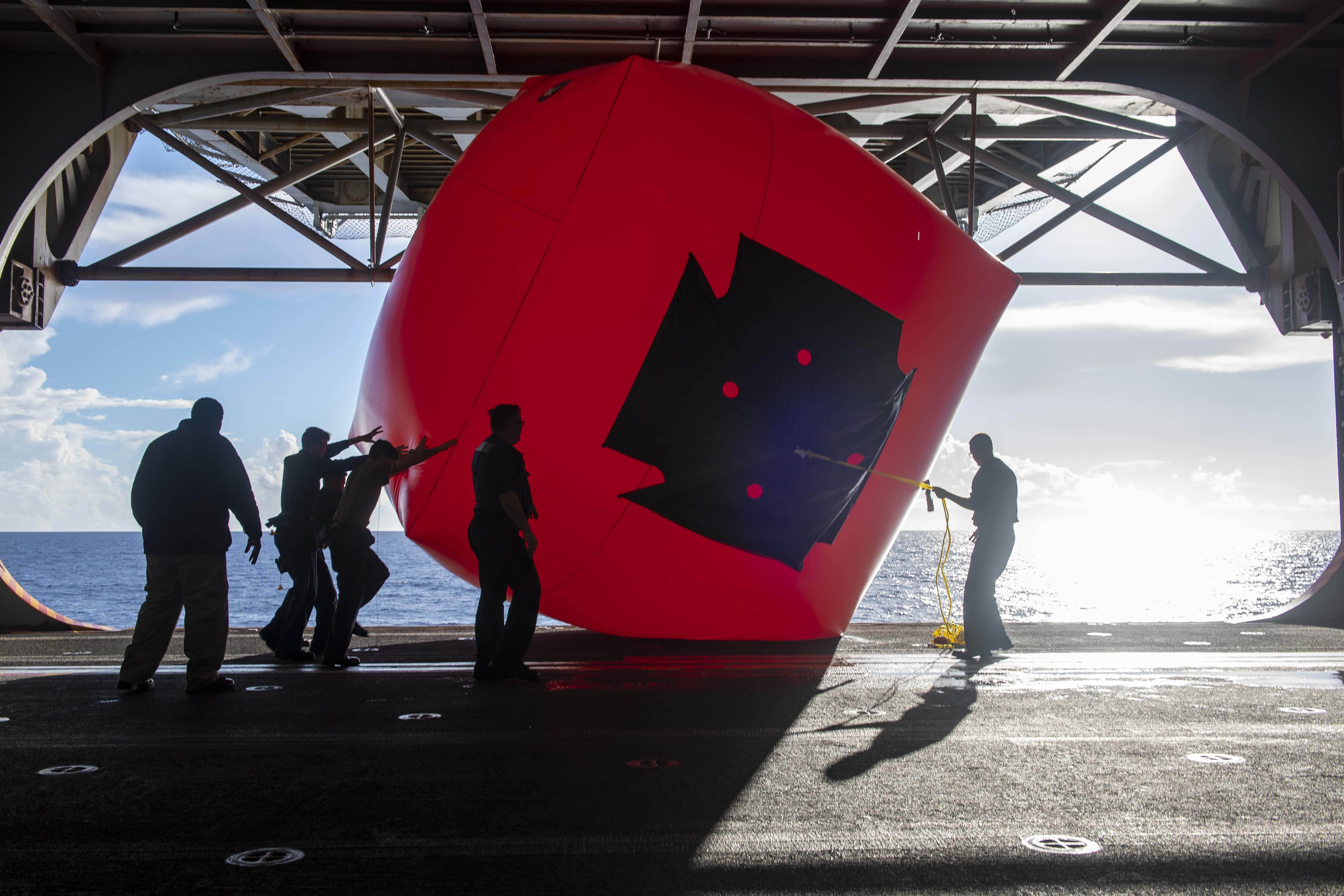
Sailors assigned to the amphibious assault ship USS America set up an inflatable target in the ship’s hangar bay in preparation for a weapons exercise in the Philippine Sea, June 9, 2021.