Monday, July 12, 2021

Pentagon Press Secretary John F. Kirby Holds a Press Briefing

 July 12, 2021

Pentagon Press Secretary John F. Kirby

PRESS SECRETARY JOHN F. KIRBY: Hey, guys.

Q: Hi, John.

MR. KIRBY: OK. I have to get my iPad oriented now. There we go.

OK, lots of stuff to go through at the top, so please bear with me. I think earlier today, you know there was a transition of authority ceremony held at Resolute Support Headquarters in Kabul, Afghanistan, marking the transition of command authorities from General Scott Miller to the commander of U.S. Central Command, General Frank McKenzie. As the secretary approved earlier this month, and as we outlined to you on July 2nd, General McKenzie will now lead the U.S. mission in Afghanistan, and that's focused on four things: one, protecting our diplomatic presence in country; two, enabling the safe operation of Hamid Karzai International Airport; three, continuing to provide appropriate advice and assistance to the Afghan National Defense and Security Forces; and four, supporting our counterterrorism efforts.

As you heard from Secretary Austin just hours ago, before his meeting with the U.K. Secretary of State for Defense, Ben Wallace, This transfer of authority is only the next milestone in an ongoing drawdown process. Withdrawal remains on track to be complete by the end of August, and General McKenzie retains all existing authorities surrounding the conduct of ongoing counterterrorism operations needed to protect our homeland from any threats that may emanate out of Afghanistan.

As General McKenzie said to those that were in Kabul for the ceremony, and I'm quoting him now, "This ceremony marks an important milestone in and transition of our involvement in Afghanistan. What it does not signify is an end of our commitment to our Afghan partners." Now, as he said that we'll be able to support counterterrorism efforts and our Afghan partners from places outside of the country indicates a change in posture, but not a change in our resolve to support our partners.

Both Secretary Austin and General McKenzie have expressed their thanks to General Miller. You may have caught the secretary's comments just an hour or so ago to that regard, to thank General Miller and his team for their diligent execution of the retrograde of millions of tons of equipment and thousands of personnel, all conducted with great efficiency and without a single casualty, and I think that's historic. When you think about this kind of withdrawal, which is ongoing, but when you think about what they've accomplished in a short period of time and no one's gotten hurt -- and we had to assume it would be a contestant environment -- we haven't done something like this, so it truly was historic.

Now, following today's events, General Miller departed Afghanistan. He's on his way back to the United States, and we'll have more to talk about that in -- in the coming days.

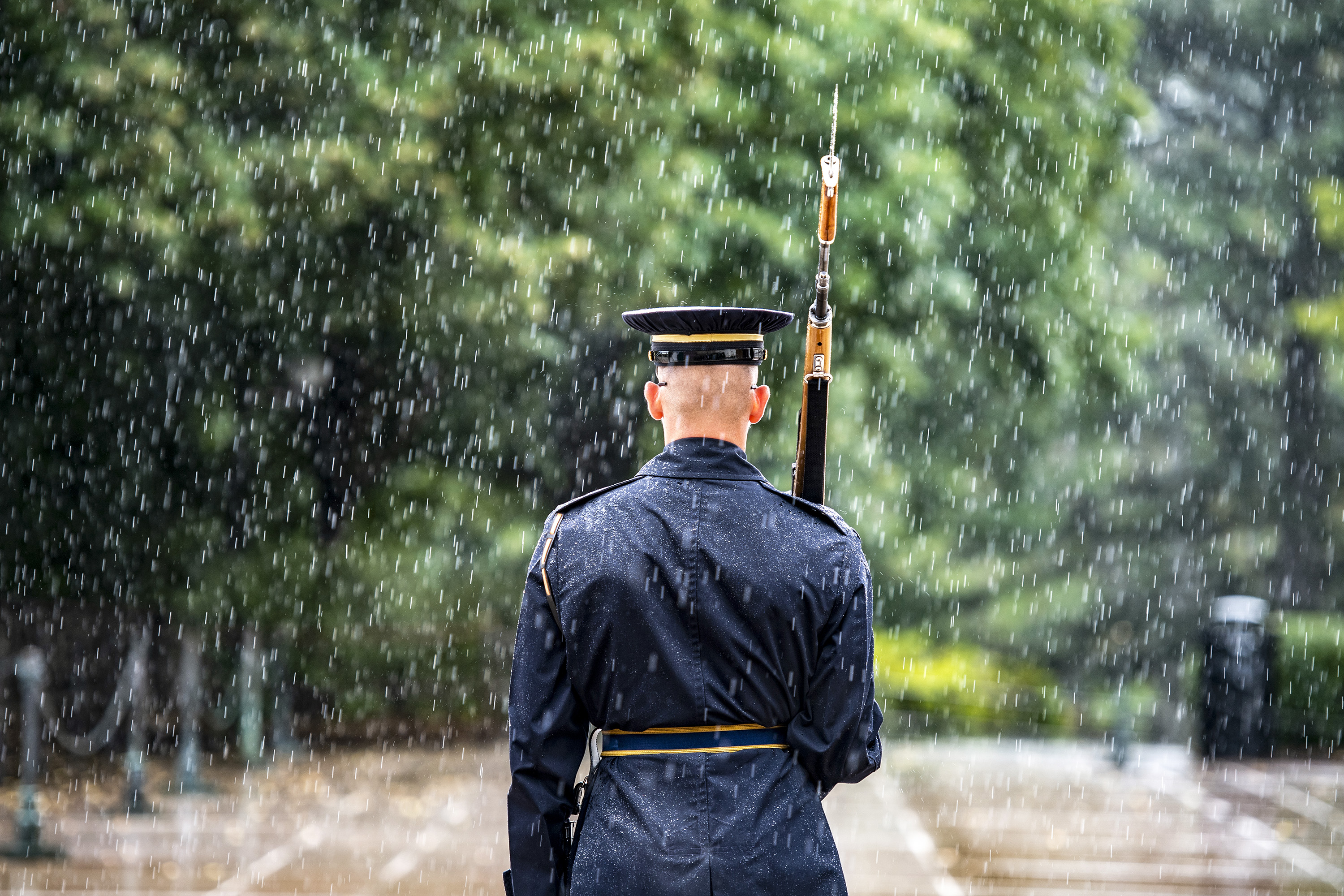
Now, so moving on, here in Washington, I think I already alluded to it in my comments about Afghanistan, the secretary did welcome and host the secretary of state for defense of the United Kingdom, Ben Wallace, here at the Pentagon today. They are now visiting Arlington Cemetery, where the secretary of state for defense will lay a wreath at the Tomb of the Unknown Soldier. We'll put out a -- a readout later today of -- of the meeting and what they discussed.

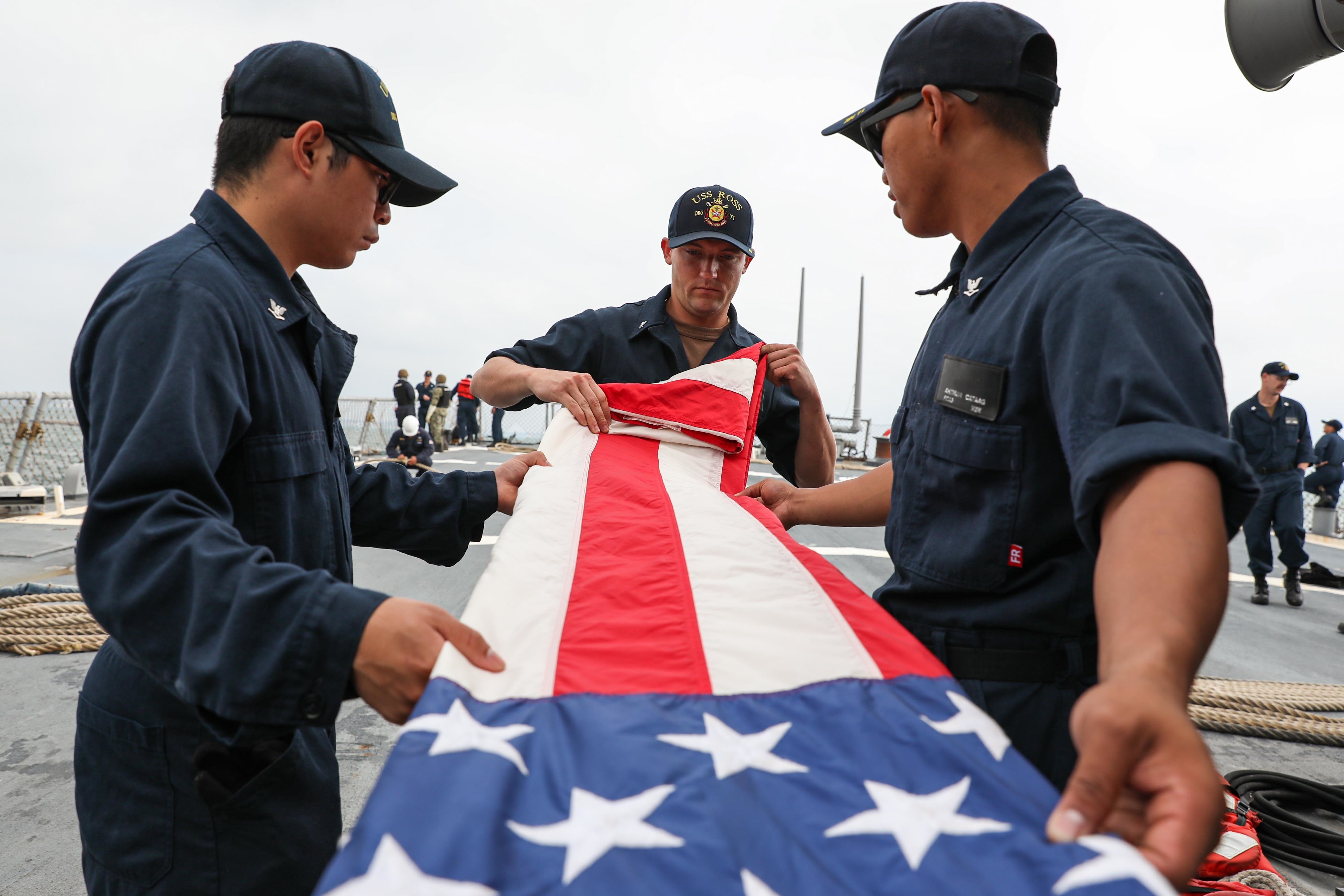
Shifting gears to some ongoing exercises, in the European Command theater, the Ukrainian-US-cohosted Exercise Sea Breeze concluded over the weekend. Thirty-one ships, 40 aircraft and Navy and Marine Corps personnel conducted 175 events throughout the Black Sea, to include air, surface and subsurface warfare drills to build upon interoperability in the Black Sea region. The destroyer USS Ross and other U.S. Navy Sixth Fleet forces are now heading to Bulgaria to kick off the annual Bulgarian-led Exercise Breeze.

Our transition to the next exercise demonstrates our continued support to all of our Black Sea allies and partners, and shows our commitment to building a community dedicated to strengthening stability and security in the region. Also in Bulgaria, Exercise Thracian Star '21 kicked off today. This exercise builds upon our ability to integrate with NATO allies from Bulgaria, Greece and Romania to train for supporting regional security during peacetime, contingencies and crises. As part of the exercise this week, F-16s and airmen from Aviano Air Base, Italy will conduct training alongside NATO forces to enhance our ability to provide a credible fighting force.

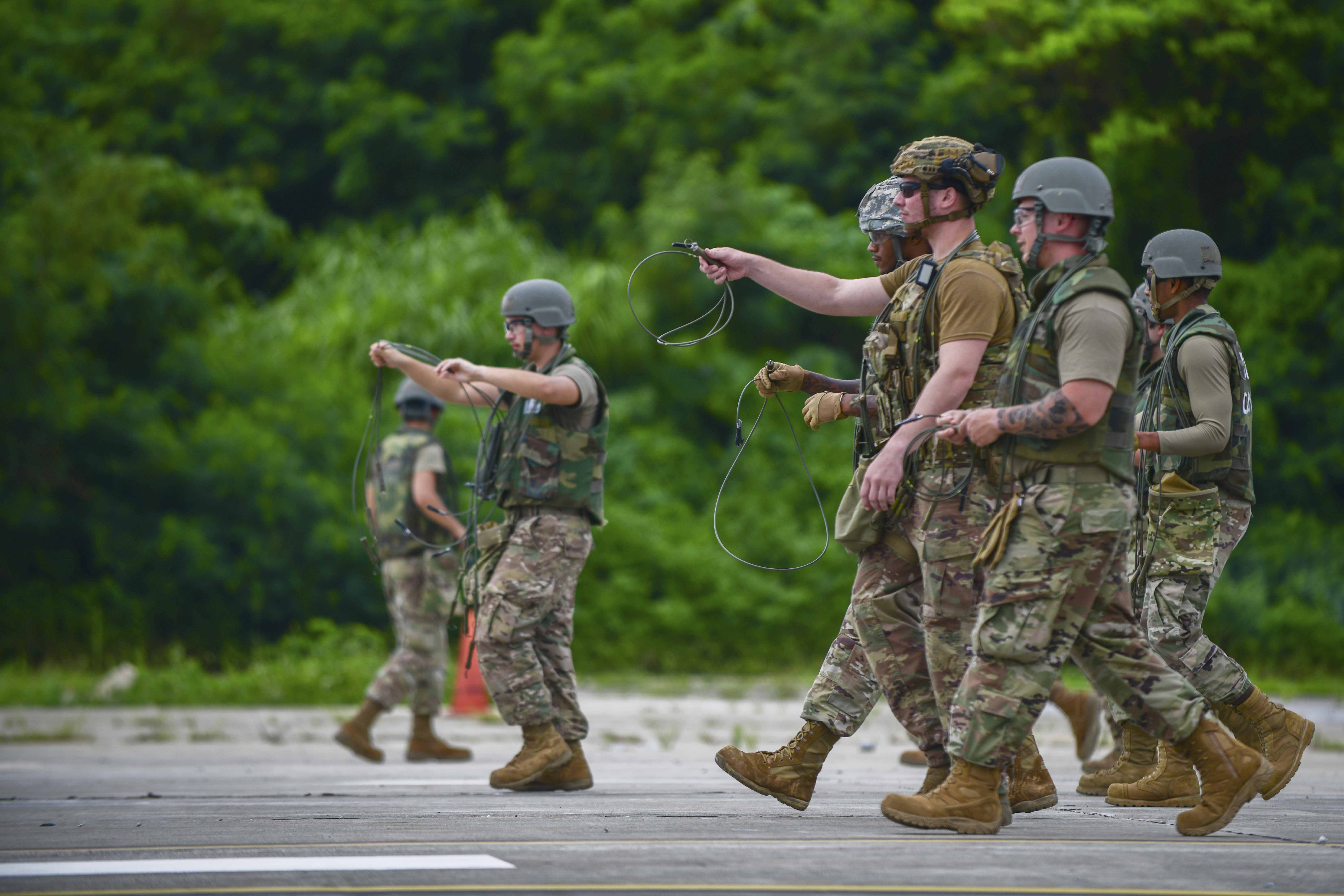
MR. KIRBY: Now, in the Indo-Pacific area, yesterday marked the first day of U.S. Army Pacific's Forager '21, which is the primary training exercise in support of the Defender Pacific '21. Forager '21 is designed to test and refine the theater Army ability to deploy land forces to the Pacific, execute command-and-control and effectively conduct multi-domain operations throughout Oceana from July 11 to August 6, 2021.

Approximately 4,000 U.S. personnel are directly participating in Forager 21. This exercise will consist of several major events to include an 82nd Airborne operation, a bilateral airborne operation with a Japan Ground self-Defense Force and 1st Special Forces Group. And AH-64 helicopter live-fire exercise, multi-domain operations including movements of Stryker, Avengers and high-mobility artillery rocket systems and modernization efforts in this space in cyber domains.

Finally, NORAD and USNORTHCOM in partnership with all 11 combatant commands are leading the latest in the series of global information dominance experience or GIDE, G-I-D-E. GIDE 3 began July 8, and it will continue through the 15th of this month. The experiment is taking place globally through virtual events, but will also involve some live fly events in northern Michigan.

The experiment embodies a fundamental change in how we use information and data to increase decision space, as well as a concerted effort to create global integration. The goal is to shift the department away from today's regionally focused plans, strategies, force management and force design paradigms and budgetary and acquisition processes.

GIDE focuses on rapidly developing the capabilities required to increase deterrence options in competition and crisis to a data centric software-based approach. It's very much part and parcel of what you heard the secretary talk about a few months ago about integrated deterrence for the next century.

GIDE events will combine people and technology to innovate and accelerate system development for domain awareness, information dominance, decisional superiority and global integration.

Lastly, I know I said finally on that, but lastly, I want to note that and I know you all are aware that later this afternoon there will be a memorial service for Tejinder Singh, formerly of India, America today, over -- in downtown.

And again, I just want to use this opportunity to express our condolences on behalf of everybody at the department to him, to his family, to his loved ones, to his colleagues and actually to all of you who I know felt very deeply about him and his professionalism.

We mourn with you and we are certainly missing him here in the -- in the briefing room today. And I know it will be a very touching and fitting event that celebrates an incredible career in journalism.

Bob?

Q: John, thanks for those final words about Mr. Singh. I do have two questions for you related to the transfer of authority from General Miller to General McKenzie. First one is, do General McKenzie's authorities to conduct airstrikes against the Taliban end on August 31?

And the second question is when you mentioned that the airport security will be one of the four missions or purposes, what exactly -- have you worked what exactly U.S. troops would do at the airport? Will they be operating some sort of defensive weapon systems or what will they be doing?

MR. KIRBY: On your first question about authorities, what I can tell you is, as I said in my opening statement that General McKenzie has all those authorities now, as did General Miller. So, he possesses them now. I'm not going to speculate about timing on that.

But what I can tell you is that certainly throughout the remainder of the summer through the end of August General McKenzie has those authorities. I won't go beyond that in terms of schedule or speculating about what it would look like going forward.

On the airport, I think you know Bob, we already have some and have for quite some time some troops dedicated to security at the airport. There's an air -- aviation support element there, there are some defensive capabilities and I would expect that without getting into details, to some degree and in some way that support will continue through the drawdown.

Now what things look like after that and after we've continued to flush out all the details with Turkey, who has agreed to lead this security effort, we'll see. But, what that looks like going forward after the drawdown, but through the drawdown yes we will have requisite capabilities there at the airport to assist in the security.

Q: But it's not clear that they would continue after August 31st?

MR. KIRBY: I don't want to -- I don't want to get ahead of a decision making process that's not complete. We are still in discussions with the Turks about what security at the airport's going to look like. We're grateful for their willingness to lead this effort. You heard President Erdogan talk about that last week.

We're still hammering out, as President Erdogan said, we're still hammering out the scope of what that is and as -- when we get all solidified we'll be able to talk in more detail. But I don't want to speculate about a specific future presence at the airport for American forces just yet.

Q: Can I follow-up on the airport --

MR. KIRBY: Yes. Sure.

Q: So instead there's a -- some kind of an agreement on a framework for the providing security for the airport by the Turkish side, but there's some -- I guess some sticking points that are still under discussion. Are you -- are you able to highlight which issues are still being discussed with the Turkish side?

MR. KIRBY: I don't -- first of all, I would take issue with the description of sticking points. We've had some productive discussions with the Turks. We've been reading some of those calls out to you that the secretary has had himself with his counterpart. I don't believe I'd describe them as sticking points, but there are some modalities and some requirements that we're still working out with the Turks.

And again, I don't think it would be useful for me to publicly conduct a negotiation here at the podium. We're still talking with them. And when we have it more solidified we'll be able to talk about it.

Q: But is the U.S. open to the idea that they might have to provide some troops for the purpose of security at the airport in the future in Kabul?

MR. KIRBY: We are working out what the future security requirements are going to be at the airport. I'm not going to speculate right now what that's going to look like. As I mentioned to Bob, of course we have some responsibilities there, have had for a long time, they're still in place.

What it's going to look like when the drawdown is over I think we'll have to -- we'll have to get to later. It -- the only think I'd add is that the president has made it very clear we're going to maintain a diplomatic presence in Kabul.

We know that in order to do that you have to have adequate security at the airport. So we are very aware of the need to adequate security at the airport so as to protect our diplomats and the work that they need to do in Afghanistan. I think I'll leave it at that.

(J.J. Green ?) I think you're on the phone?

Q: Yes John, can you hear me?

MR. KIRBY: Yes I can.

Q: We spoke some time ago about the Over the Horizon capability or capacity that the U.S. was working on and you've spoken about it some -- a couple times since then at the podium. Thanks for taking this question. But I wanted to ask you again, have -- are there anymore details about what that Over the Horizon capability would look like if it were necessary to utilize?

MR. KIRBY: There is already an Over the Horizon capability and we can talk about what that looks like. We have bases and facilities that we can use in the Middle East region and are. We have a carrier strike group in the region and that is being utilized. We already had existing Over the Horizon counterterrorism capabilities.

Now, would we like to be able to close down time and space and to make it faster and more efficient? Absolutely. And so, we are talking about and discussing with countries in the region about the possibilities of being able to use facilities and infrastructure that is closer to Afghanistan.

I don't have any progress specifically to report out today on that, but it's something that we're actively discussing in concert with our State Department colleagues, but again we have now a robust over-the-horizon counterterrorism capability and we're using it.

Q: Just a follow up on that.

MR. KIRBY: Yes, sure. Go ahead.

Q: Robust counterterrorism capability. If you have the ability to launch airstrikes why aren't you using them as the Taliban continues to take more territory in Afghanistan?

MR. KIRBY: Lucas, I thought we talked about this one last week. I'll try again. The mission right now in Afghanistan -- I went through the four missions -- is to continue the drawdown. General McKenzie now has the authorities to assist the Afghan National Security Forces where and when he finds it feasible to do so, but he has those authorities.

And as I also have said, the Afghans themselves have strike capability, Lucas. They have a good air force, a solid air force, and air force, by the way, that we're adding to and trying to improve the capability of. We're going to be giving them another 37 Blackhawk helicopters. That's more than they have right now, so in effect doubling their attack helicopter capability.

We're purchasing for them three more Super Tucano strike aircraft -- fixed wing strike aircraft. And we've agreed to help refurbish their part -- a good part of their fleet of Mi-17 helicopters. They have a robust air force. The Taliban does not, and they could use that air force in a strike capacity in support of their -- of their troops on the ground.

As we have said for quite sometime now, I think as you -- whatever the outcome are six to eight months from now, whatever it is we're going to be able to look back and we're going to be able to see that leadership -- Afghan leadership is really what made the difference or really what caused the outcomes to occur, Afghan civilian leadership, political leadership, and Afghan military leadership.

This is their country. This is their fight. These are their people, and the president has been very clear that it is now time for them to meet those responsibilities. Barbara?

Barbara?

Q: I didn't actually hear an answer to Lucas's question either time, and I want to ask that and follow up.

MR. KIRBY: Let me hear it before you follow up. I'm not going to repeat the whole thing again, but as I said General McKenzie has the authorities to assist the Afghans where he deems feasible.

Q: The question I believe -- Lucas can correct me if I'm wrong -- is the Afghan -- the Taliban had continued with very aggressive campaign of violence and intimidation. To the best of our knowledge we have not seen coalition air forces in action against the Taliban. We're not asking you what -- I'm not asking you what capacity the Afghans have. I'm asking you why, number one, have U.S. coalition forces not been brought into the action. What is it that you're waiting for other than have an airport?

MR. KIRBY: I never said that we haven't been brought into the action. I've never said that we haven't supported.

Q: (inaudible) the airstrikes?

MR. KIRBY: There have been moments during the drawdown where we have supported the Afghans, absolutely.

Q: Can we get details on what the most recent airstrikes have been?

MR. KIRBY: I think you can understand, Barbara, that given the situation that we're in that we're not going to be detailing everything we're doing to support, but it's -- it would be wrong to report that there's been no support to Afghan forces in the field during this drawdown.

And as I said to Bob's question, the general still has those authorities to use when he deems fit, when it is most feasible to do so.

Q: Can you at least give us some context? The drawdown's gone on for several months. Was it in the early days? Can you roughly tell us the last time there was a coalition airstrike?

MR. KIRBY: I will not. I will not do that because the drawdown is ongoing and as I've said from the very beginning we have to assume that this drawdown's going to be contested, so we're going to be careful about the kind of information we're putting out there, but it would be wrong to conclude and accurate to report that we have not come to the assistance of the Afghan National Security Forces throughout this period of drawdown.

Q: My other question is on the airport. You keep talking about future security requirements and the need to maintain security for the -- adequate security for the embassy in these future security requirements. So -- and that you're continuing to discuss this with the Turks about what these future security requirements are.

So by definition does that mean that there is not currently adequate security at the airport because you are still having discussions about future security? And what is your assessment of the security situation at the airport?

MR. KIRBY: It does not mean that.

Q: How does it not mean that? Help me understand.

MR. KIRBY: Because there is still -- the security at the airport has historically been a mission the Turks have contributed to under the resolute support umbrella, so they are there now and they've agreed to stay there.

There are -- but as all forces draw down out of Afghanistan there are going to have to be adjustments made to who else is helping the Turks and in what way that help is being rendered. That's the discussion that we're going -- that's happening right now, and I'm simply not prepared because it's not complete to detail that for you.

The secretary's comfortable that there's adequate security at the airport right now and is determined throughout the period of the drawdown to make sure that that security remains in place. Some of that security is being provided by the United States. What that's going to look like after the drawdown is over, we're just not there yet.

Q: So what's your assessment of what the Taliban's goal is?

MR. KIRBY: What's my assessment of...

Q: What is the U.S. assessment that -- pardon me, what is the Defense Department's assessment of the goal of Taliban -- of the Taliban?

MR. KIRBY: I'm going to make it a habit not to get inside the Taliban's headspace here, and I'm certainly not going to talk about intelligence assessments. It is clear from what they are doing that they have governance designs certainly of a national scale. It is clear from what they are doing that they believe there is a military solution to the end of this conflict.

We continue to believe that the most sustainable and the most responsible end and solution to this war is a political one, one through negotiated diplomacy. A negotiated settlement that is Afghan-led. Nothing has changed about our desire to see that be the outcome.

Q: So you think they want to take over (inaudible)?

MR. KIRBY: I said they have -- clearly have governance designs of a national character because you can see it in the districts that they are trying to challenge and/or have occupied. Tom?

Q: Thanks, John. I have two questions. One is a few briefings ago you mentioned that there would possibly or most likely be some kind of ceremony recognizing the end of the mission in Afghanistan. Paraphrasing slightly, but you -- that was the response you gave to a question.

I am presuming, but please correct me, that today's ceremony is not what you were referring to, and if not when might -- is that still part of the plan?

MR. KIRBY: You're right. Today is not the end of the mission, and I don't believe that General McKenzie or Secretary Austin could have made that more clear. Not the end. Just a milestone.

Q: (inaudible) Yes.

MR. KIRBY: And, obviously, the secretary wants to be able to recognize the service and sacrifice of the more than 800,000 U.S. troops who have fought and served in Afghanistan and there will be an appropriate time for that. There will be an appropriate place for that. And when we have something to announce, we certainly will.

Q: I wanted to follow up on the Lucas and Barbara questions if I may please.

MR. KIRBY: Of course.

Q: I think it was in response to Barbara that you didn't want to say from the podium the detail, any kind of support -- specific incidents of support that the U.S. (inaudible) troops have given --

MR. KIRBY: That's right.

Q: -- in part -- and please correct me if I misstate what you said, in part because there's a concern of being attacked on the way out by the Taliban and others. You don't want to --

MR. KIRBY: As I said, we -- from the very beginning, we have to assume that at any time this drawdown can be contested by the Taliban. So far we have had no casualties. Everybody has gotten out safely --

Q: Yes.

MR. KIRBY: -- and efficiently and we want to keep that as the case.

Q: So your theory is that by telling us, like say this happened three weeks ago we gained support -- I'm making that up, just to be clear -- that would possibly jeopardize this delicate balance we have now that there's been no casualties, no attacks?

MR. KIRBY: I don't think I'd put it in your words. I would simply say that operational security is a prime concern and we want to be very careful about the information we release right now.

Q: But the information that Barbara asked and Lucas and others about support, if indeed the coalition forces have supported the Afghan troops at some point in the past against the Taliban, wouldn't the Taliban already know that?

I mean, why can't you tell us about something that has happened, if indeed it happened in support of the Afghan Forces against the Taliban who, I would think, knew what hit them already?

MR. KIRBY: You're making a presumption that for some reason we're trying to -- we're trying to keep information from the Taliban --

Q: No, no, no --

MR. KIRBY: What we're trying to do -- no, Tom, wait. Just let me finish, please.

What we're trying to do is protect our options going forward to make sure that the rest of this drawdown can be safe and orderly. And so we are being -- I'll just say it, we're being fairly miserly about the kind of operational information we're putting out there. I know that's an adjustment from how, over the last 20 years, we've talked about this war and our involvement in it. But this is a delicate time, Tom, a very delicate time.

As you saw last week, Central Command said that we're just over 90% done with the drawdown, that means that you have less capability and you have less resources at your disposable -- disposal inside the country. So you want to be ultra-careful about the kind of information that's getting out there because the capabilities are now dwindling down and we got to be -- and we got to be careful. And we make no apologies for that. It's not about -- it's not about what the Taliban knows or doesn't know, it's about what we're putting out into the information space to make sure we preserve our options.

So far, again, nobody's been hurt. We want to keep that going throughout the entirety of this drawdown process.

Q: Thank you.

Q: John, last week White House press secretary said that this war has not been militarily won. Does the U.S. military agree with that assessment?

MR. KIRBY: I think we've said it all along -- and (inaudible) said it just a few minutes ago. We don't believe there's going to be a military solution here. It's got to be done politically. That is not a new talking point, it's not a new fact, it's not a new conclusion. We want to see a political settlement to this -- to this conflict, to this war in Afghanistan.

But as for the United States, the president has made it clear that our participation is going to transition now. We're going to bring our troops home and we're going to transition to a new relationship with Afghan Forces going forward.

Q: So, again, basically you are saying a different thing, right? She said the war has not been militarily won. It means that --

MR. KIRBY: We don't believe it -- because we don't believe that it can be solved militarily.

Q: And the other one. So Taliban has taken over the country and then thousands of people are already running away from the Carthage (with ?) Tajikistan into Iran. Even some of them have arrived into Turkey. And then (inaudible) the large (Bagram ?) base without even saying goodbye to Afghans.

Can you convince the world that this is something other than defeat, other than failure?

MR. KIRBY: This is a conflict that is going to be solved politically and -- it's a responsibility that the Afghan people, the Afghan government, and Afghan Forces now have to be responsible for it. They'll have us helping and supporting them but it's their responsibility.

This isn't about a defeat. It's about a transition to a new relationship with Afghan Forces and the fighting doesn't have to continue. I mean, you talk about it with this sense of inevitability that, frankly, I don't think we share, that there has to be more fighting, that the Taliban will take over the country. None of that is inevitable.

And as I said earlier to Lucas, I think when we look back six or eight months from now, what we're going to see is the influence of leadership and how much political military leadership out of Afghan leaders there was to not make that inevitable.

And let me just one more time, (please ?), you brought up Bagram, to go back on this again. There was full coordination in the turnover of Bagram Air Base, contrary to what I've seen in some press reporting. Full coordination. Days before, a walk through the whole base -- an aerial flyover of the whole base. A couple of days before, we hosted a couple of dozen Afghan engineers on the base to show them how to operate the electrical system and the water system. And I take issue with your characterization that we just walked out of Bagram without saying goodbye.

First of all, it's not a goodbye. It was a turnover to them and their custodial -- their custodial responsibilities and it was done in full coordination. Now, I can't -- I can't stand up and say with certainty and assert to you that every soldier, every Afghan soldier, at or near Bagram got the word that -- what was happening. But I can assert to you that I've seen the documents, that, in fact, the turnover was done in a coordinated way with senior Afghan military and civilian leaders. There was no secret about it.

Bagram was always going to be the last base turned over and the process of getting it ready for turnover was weeks long and months planned.

Q: (Inaudible) again. Twenty years of war, and you called it 20 years (of ?) U.S. oppression inside Afghanistan and the (inaudible) years, the United States military?

MR. KIRBY: What I can tell you is that the United States military accomplished the mission for which it was sent to Afghanistan, that was to prevent Afghanistan from becoming a safe haven for another attack on the homeland. And there hasn't been one since 9/11. And Al-Qaeda, while present, is nowhere near the organization that it once was.

I'm not saying that there aren't terrorist groups operating out of Afghanistan. There are. We've been fairly honest and open about that. But the threats that they pose to the homeland are radically reduced. As a matter fact, what we said is the threats have actually moved elsewhere in the region and into Africa. And we need to be able to focus resources and strategy against that threat as it continues to metastasize.

So I can't speak for every veteran, and I wouldn't begin to do that because they're all entitled to their own opinions about their service and sacrifice over the last 20 years, but the mission for which the United States military was sent to Afghanistan was accomplished.

Q: Thank you.

MR. KIRBY: Let me get back to the phone. I've neglected that.

Carla Babb?

Q: Hey, John. I was -- I saw your -- hey, can you hear me?

MR. KIRBY: Yes, actually I'm just -- my (iPad ?) died on me. One of the challenges of technology, so I just wanted to restart (it ?). Go ahead.

Q: OK, great, I was just wondering -- I heard your comments with Fox News Sunday and I wanted you to talk about if there's a worry among officials at the Pentagon that -- I know you've said the Taliban victory is not inevitable, but is there a worry that the Taliban is wiping out and will continue to wipe out gains that the U.S. has fought for and died for alongside Afghans?

MR. KIRBY: Carla, we are certainly concerned about the prospect that the social, economic, political progress that has been made in Afghanistan over the last 20 years could be harmed or put at peril by increasing Taliban advances. We're obviously concerned about that.

We're not -- thank you -- we're not unmindful of the threats that are posed in that regard, which is why the president has made it clear we're going to maintain a diplomatic presence in Kabul so that our diplomats can continue to support those kinds of programs and initiatives.

It's also why we're going to continue to have a bilateral relationship with Afghan forces going forward. It won't be the same. We're not going to be on the ground with them, but we will still be with them. We will still be helping them financially, logistically, and in other ways. That's why this is just a transition to a new relationship, it's not -- it's not the end of the relationship.

Q: And then one other follow-up, if I may. Could I just -- I need to understand kind of where the buck (stops ?). What you had mentioned earlier about the air strikes, it seems to me based on what you had said that the U.S. is either not helping with the air strikes, it's not feasible according to General McKenzie for the U.S. to get in and (do ?) some of these air strikes, or the U.S. is helping with these airstrikes but not making a significant difference as the Taliban continues to make these gains.

So who is making these decisions on the air strike? Who does the buck stop with? Is it -- is it General Miller or was it General Miller until today, and now will it be General McKenzie? How involved is the Pentagon involved in (these ?) decisions, or how involved is the Pentagon with these decisions, I should say?

MR. KIRBY: So first on your list of three things that aren't happening, I take issue with all of them, Carla. I don't believe anybody has said any of those things. And as I said at the outset, General McKenzie now has the authorities that General Miller had and the decision-making ability for how he wants to or can or is feasible to support Afghan forces in the field.

Idrees?

Q: Hey John, can you hear me? Hey, can you hear me, John?

MR. KIRBY: Yes I can.

Q: I just want to pivot to Haiti really quick. The review that you guys are undertaking (under ?) request from the Haitian government, do you know when it will be complete? Are we talking days or weeks?

And I just wanted to make sure I understand the (NSA ?) statement, it had (a ?) list of folks who went to Haiti. It didn't have any DOD officials, so I just wanted to make sure, no one from DOD was part of that delegation that went to Haiti and returned today, (right ?)?

MR. KIRBY: Nobody from DOD was in that party that went down to Haiti. It was largely Department of Homeland Security and FBI, and it was to help the Haitians as they continue to investigate this terrible crime.

And as for the requests, we are aware of it here at the Pentagon. We are reviewing it. We're going to do so carefully and make sure that we completely understand it and will be discussing it inside the (interagency ?) but I have no decisions to -- and certainly no timeline to provide you today.

We're aware of it. We're reviewing it just like we would review any request for U.S. military assistance. If and when there is a decision to be able to speak to you about that we'll certainly do it.

And we're many (more ?)? Yes.

Q: OK. Thank you, John. I wanted to ask you about China's nuclear capabilities. Earlier this month the several U.S. (inaudible) reported the U.S. has began the construction of (silos ?) for ICBM in the northwest part of China. How much are you concerned about this new report?

MR. KIRBY: I think we've already talked about this. We're -- I'm not going to get into intelligence assessments of Chinese nuclear capabilities. Writ large we remain concerned about China's modernization and the development of capabilities that in many ways seem to serve no other purpose than to try to prevent U.S. and allied access to areas of the Indo-Pacific.

In our China -- our most recent China report we made no secret of the fact that we are aware that they continue to build out nuclear capabilities including the construction of silos. So we're mindful of this. We're certainly aware of it, and that is one of the reasons why the secretary has talked about this thing called integrated deterrence and revitalizing our alliances and partnerships in the region.

Q: Just a quick follow up. The U.S. and China do not have a trusted (inaudible) to discuss the nuclear issue as the U.S. and (inaudible) have. So I'm wondering how you are going to convey the DOD's concurrent (function ?) guided straight (to ?) China and discuss the nuclear issues comprehensibly?

MR. KIRBY: I just did. Paul Handley, AFP? OK, Stephen Losey, Military.com?

Q: Hi, sorry. I was trying to find the mute button. Today marks the one-year anniversary of the Bonhomme Richard fire. Do you have any updates on where the investigation into that stands into the cause of it? And is it likely or expected we're going to see charges as a result of the investigation and what caused the fire there?

MR. KIRBY: I really can't help you with that one. I would refer you to the Navy to speak to that. That's not something that would be appropriate coming from me today. The Navy's a much better place to go for an answer to that question. Yes. In the back there. 

Q: Thank you. My question on South China Sea. Today marks five year from the international (inaudible) decision on South China Sea which rejected Chinese historical claim on that area of the sea. How do the Pentagon assess this development of the situation in this five years?

MR. KIRBY: Well I would just reiterate what you heard Secretary Blinken say just a couple of days ago. Freedom of the seas is an enduring interest of all nations, and it's vital to global peace and prosperity. The international community has long benefited from a rules-based maritime order where international law is reflected in the U.N. Law of the Sea Convention sets out the legal framework for all activities in the oceans and seas.

This body of international law forms the basis for national, regional, and global action and cooperation in the maritime sector, and it's vital to ensuring the free flow of global commerce. Nowhere is the rules based maritime order under greater threat than it right now in the South China Sea five years later.

The People's Republic of China continues to coerce and intimidate Southeast Asian coastal states, threatening freedom of navigation in this critical, global throughway. And for our sake we remain committed to the freedom of those seas. I got time for one more. Yes, ma'am?

Q: So I'm wondering if you could talk a little bit more about the guide exercise or (inaudible) guide exercise? What kinds of goals are there of that exercise? How many days will it last?

MR. KIRBY: It goes from July 8 to the 15. I think I said that in the opening statement. The focus is on rapidly developing capabilities needed to increase deterrence options with a data-centric, software-based approach. The events they're going to be conducting will combine people and technology to innovate and accelerate development for it looks like four things -- information awareness, information dominance, decisional superiority, and global integration.

And if you have any other additional questions I'd point you to NORAD NORTHCOM. Go ahead, Lucas.

Q: But you said there was going to be flyovers at the (department ?).

MR. KIRBY: There is a fly event. Yes, there is a live fly event, but again, I'd refer you to NORTHCOM NORAD.

Q: John, there's a piece in the Wall Street Journal speaking about the Navy saying if it comes to war will the U.S. Navy be prepared? That's the headline. There's a new report coming out for some retired (brass ?) saying a key finding in this report is, quote, "many sailors found their leadership distractive, captive to bureaucratic excess, and rewarded with the successful execution of administrative functions rather than the core competencies of war." And quotes of a senior enlisted leader saying I -- recently retired chief saying, "I guarantee you in every unit in the Navy is up to speed on their diversity training. I'm sorry that I can't say the same for their ship handling training." Any reaction to this report?

MR. KIRBY: I think the Navy's already reacted to this, Lucas, and they have said that they welcome the insights that are provided in this report. They reiterate some of the things that they know they need to continue to work on and that they are working on it, and they welcome all input to help them as they continue to make sure that the surface community in the Navy continues to be the strongest and most viable surface fleet in the entire world.

Q: Is the Pentagon and the Navy also welcome the comments from the former Navy Secretary John Lehman – a respected the (alumnus ?) of this (building ?) -- who said that former five-start admirals who won World War II made mistakes. Bill Halsey was, quote, consistently getting in trouble for bending the rules and drinking too much. Chester Nimitz put his first command on the rocks. Ernie King was a, quote, "womanizer". They were punished several times, but Navy leadership always realized they were very, very promising officers. None, he concludes, could have made it passed captain in today's Navy. Do you agree with that assessment?

MR. KIRBY: Do I agree with the assessments of those former five-star admirals or...

Q: Secretary Lehman's decision.

MR. KIRBY: Yes. I -- look, I think obviously we have great respect for former Secretary John Lehman, and we certainly, as I said, we welcome all these insights and all the scrutiny over the United States Navy. And I think Navy leaders today understand well that their officers, their leaders, their petty officers, their sailors, they're human beings and that people do make mistakes.

And again, nothing that I've seen coming out of this report certainly the Navy has talked to this stands in stark contrast to what the Navy itself and the surface community know they need to continue to work on and that they are.

Q: (inaudible) Nimitz put his ships on the rocks as (inaudible) and he, of course, was still promoted to admiral. Could that happen in today's Navy?

MR. KIRBY: I'm not going to speak to individual hypothetical incidents. Running a ship -- running a ship aground, Lucas, is generally frowned upon.

(Laughter.)

And the Navy has all kinds of ways of making due accountability for that, but look. Everybody here in leadership positions understands that our people are human and that there are mistakes and there are mistakes. Nobody's interested in having a zero defect mentality throughout the military. Not just the Navy but throughout the whole military. We take accountability serious for just that reason, and the responsibility that leaders have to hold everybody in their charge to as high a standard of conduct and behavior as possible.

I want to pull back to what as I understand is the focus of this report and what Navy said about it is about making sure that we continue to have the most powerful Navy in the world, and you heard the secretary talk about this as recently as budget hearings just a few weeks ago. We do. It's the greatest maritime force ever in human history and it's going to stay that way.

And the fact that it gets -- that it makes mistakes as an institution, the fact that there are things that need improvement, all of that is proof that one of the things that makes us so great is that we're willing to do -- no pun intended -- a little naval gazing and there's -- and we're self aware of issues that we need to be improved upon.

And there aren't too many other maritime forces, navies, or even military forces around the world that can say the same thing, that they welcome scrutiny, they welcome criticism, and it's OK to hear from formers as well as members of Congress that there are things that need to be looked at or need to be improved upon.

And as I said, as the Navy said, they're well aware of the issues that were raised and they track very closely and align with things they themselves have been working on to try to improve going forward.

Q: Is the U.S. Navy ready for war?

MR. KIRBY: Yes. OK. Thank you.

Readout of Secretary of Defense Lloyd Austin's Bilateral Meeting With U.K. Secretary of State for Defence Ben Wallace

 July 12, 2021


Pentagon Press Secretary John F. Kirby provided the following readout:

Secretary of Defense Lloyd J. Austin III met U.K. Secretary of State for Defence Ben Wallace today at the Pentagon to reaffirm the special relationship between the United States and the United Kingdom.

The leaders discussed the importance of transatlantic cooperation and burden sharing to address a wide range of security challenges across the globe. They also discussed strategic competition with a focus on Europe and the Indo-Pacific region, ongoing operations in the Middle East, and the withdrawal from Afghanistan.  

Secretary Austin committed to continuing consultations with the United Kingdom on strategic reviews, including the National Defense Strategy.  Secretary of State for Defence Wallace highlighted the United Kingdom’s investments in defense modernization and increased focus on the Indo-Pacific region.

The leaders look forward to deepening U.S.-U.K. defense cooperation. To this end, they signed a one-year extension of the U.S.-U.K. Statement of Intent Regarding Enhanced Cooperation on Carrier Operations and Maritime Power Projection.

After their meeting, Secretary Austin joined Secretary of State Wallace at Arlington National Cemetery to lay a wreath at the Tomb of the Unknown Soldier.

Night Departure


Marine Corps F-35B pilots and maintainers make final preparations for the nighttime departure of three F-35Bs from the flight deck of the USS America in the East China Sea, June 24, 2021.

Wildfire Support


An Air National Guard C-130 drops retardant on Beckwourth Complex Fire near Frenchman Lake in Northern California, July 9, 2021.

Secretary of Defense Lloyd Austin and U.K. Secretary of State for Defence Ben Wallace Opening Remarks at Bilateral Meeting

 July 12, 2021

Secretary of Defense Lloyd J. Austin III; U.K. Secretary of State for Defence Ben Wallace

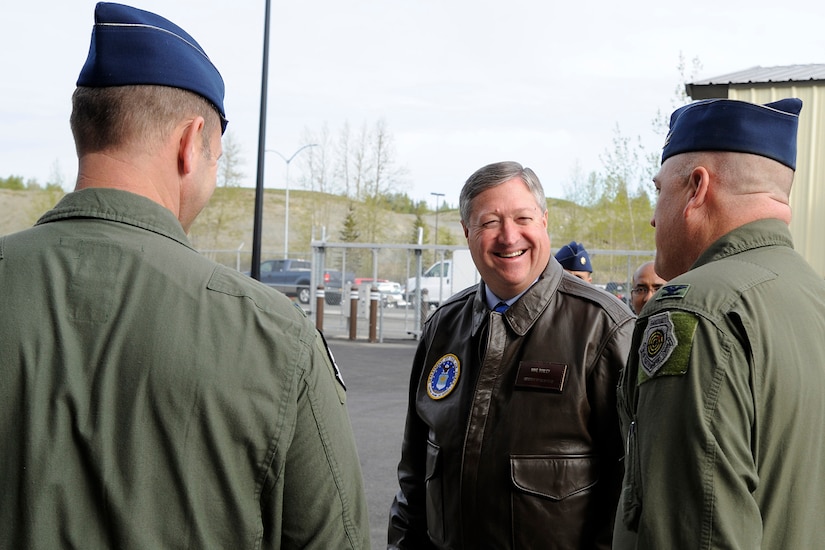
SECRETARY OF DEFENSE LLOYD J. AUSTIN III: Well, good afternoon, Mr. Secretary. It's great to see you again, and so soon after our last meeting in Brussels, so welcome to the Pentagon. I've really been looking forward to hosting you here, and to returning the hospitality that you extended to me and my staff last April. A lot of things have changed since even then, and we have no shortage of items to talk about, everything from the Alliance's drawdown in Afghanistan and our future relationship with Afghan forces, to the persistent challenges posed by -- posed to the rules-based order by nations like Russia and China.

Now, as for Afghanistan, today, we witnessed an important turnover between General Miller and General McKenzie. General McKenzie will now assume leadership over our force presence in Afghanistan, and I want to thank General Miller for his exceptional leadership over the last three years. That we've been able to secure our interests in Afghanistan, as well as those of our Allies and Afghan partners stands as a testament to his operational acumen and strategic vision.

It's also worth noting that we have conducted our retrograde safely and orderly. Understanding the importance of speed, he has led this drawdown without a single casualty and with great efficiency. It has truly been historic. And as General McKenzie noted in his -- in his own remarks today, this transfer of authority is not -- is only the next milestone in our drawdown process. It does not signify the end of our drawdown process, which the president has told us to complete by the end of August, and so we are on track to meet that goal.

Now, let me say right up front how much we are looking forward to working with the U.K. as it implements its new integrated review which aligns well with the priorities outlined in our own interim National Security Strategic Guidance. The U.K.'s emphasis on modernization is especially important in this era of strategic competition, and we welcome your government's emphasis on trans-Atlantic security, support to NATO and focus on the Indo-Pacific region. 

As you turn these priorities into action, we are certainly pleased to be a part of the combined U.S.-U.K. deployment of Carrier Strike Group 21. As you know, we deployed the U.S. Marine Corps F-35s, along with 200 U.S. Marines and sailors aboard HMS Queen Elizabeth, and they are accompanied by one of our destroyers, USS The Sullivans. The Sullivans is famously named after five brothers who were killed in the fighting off Guadalcanal in 1942, and the ship's motto is "We stick together", which I think is very fitting for this particular deployment. 

I expect we'll get the chance to talk about Russia's aggressive actions in the Black Sea region. We stand with you and with our Allies in reaffirming our unwavering support for Ukraine's sovereignty and territorial integrity, and that, of course, extends to its territorial waters. And you can see our partnership in many ways, and I'm especially grateful for the U.K.'s significant investment in defense and for its valuable contributions to NATO, and I look forward to working with you and other Allies in fulfilling the NATO 2030 proposals at the June summit.

And finally, I'm looking forward to signing a one-year extension with you of the U.S.-U.K. statement of intent regarding enhanced cooperation on carrier cooperation and maritime power projection, and of course, I'm very grateful that we'll make a stop later today by Arlington to pay tribute to our fallen heroes, a sacrifice to which Great Britain is certainly no stranger.

So it's going to be a busy and productive day, and I'm looking forward to it. Thanks for coming, Mr. Secretary.

U.K. SECRETARY OF STATE FOR DEFENCE BEN WALLACE: Thank you, Secretary, for welcoming to the Pentagon. Thank you for your kind hospitality while I'm here.

Can I just place on record our -- both our admiration and our thanks to General Miller in Afghanistan. He's been an outstanding leader and a strong friend to the United Kingdom, and the professionalism in which he carried out the leaving of Afghanistan is of the highest standard, and we are better off for it. So we shall miss him, and we, on the United Kingdom side, just want to pay tribute to all the support that the U.S. forces has given Afghanistan and to us all. I think, like yourselves, we are on track to leave together towards the end of August as the Resolute Support draws to an end.

Can I thank you also for your support on the carrier group? Not only have you been very supportive in helping us retain our carrier ability, but also on the deployment with the support of the U.S. Marine Corps on board, and indeed, in the recent event with the tragic fatality on HMS Kent and recently helping us with that situation.

And sticking together is what it's all about, we go together to the Pacific. For us, that is a reengagement with a carrier group after a considerable break, and we will be looking throughout that process, not only work together on board, but also, exercising together with other carrier groups in the Pacific towards the end of the year.

Could I also say that NATO 2030 is a joint endeavor for us together; that I think there's much work to do in making sure that NATO is ready for the future to face an adversary that is constantly competing with us and constantly often -- prosecuting malign activity against the member states of NATO, and I think that is very important, that the United States and the United Kingdom work to deliver a modern NATO that can set about seeing off that threat.

And when it comes to China, the United Kingdom stands shoulder-to-shoulder with the United States in making sure that our Allies around the region in the Pacific are protected by the international rule of law, and that we uphold those values that we all stand for, and I look forward to working together for the future to make sure that Britain's values and the United States' values are held up and protected from whatever threats are thrown against them.

So I look forward to, obviously, working together more. It was great to see you in Brussels where -- alongside the president of the United States, as well. I think we have a lot of work to do. And thank you also for enabling me to visit PACOM on the far side of -- of this great country, and I look forward to visiting Hawaii on my way through to Japan later on. Thank you.
SEC. AUSTIN: Thank you, Mr. Secretary.

Starry Sail


The USS Mahan transits the Gulf of Oman, July 7, 2021.

Life and Look


Soldiers watch a military vehicle being lifting from an Army watercraft system during Forager 21 at Naval Base Guam, July 10, 2021. The exercise is designed to test and refine soldiers’ ability to flow landpower forces into the theater, execute command and control of those forces and effectively employ them.

Sea Signal


A sailor signals to a United Arab Emirates air force helicopter as it prepares to land on the flight deck of the USS Lewis B. Puller in the Persian Gulf, July 11, 2021.

Austin, Wallace Praise Miller as Command Transitions in Afghanistan

 July 12, 2021 | BY Jim Garamone , DOD News

Secretary of Defense Lloyd J. Austin III and the United Kingdom's Secretary of State for Defense Ben Wallace made special mention of Army Gen. Austin S. Miller's leadership in Afghanistan during their meeting at the Pentagon today.

The defense leaders met on the day that Miller transitioned command and authorities of Operation Resolute Support to Marine Corps Gen. Kenneth F. McKenzie, the commander of U.S. Central Command, in Kabul, Afghanistan. 

"I want to thank Gen. Miller for his exceptional leadership over the last three years," Austin said at the Pentagon meeting. "That we've been able to secure our interests in Afghanistan as well as those of our allies and Afghan partners stands as a testament to his operational acumen and strategic vision."

Austin noted that Miller has conducted the retrograde from Afghanistan safely and in an orderly fashion. "Understanding the importance of speed, he has led this drawdown without a single casualty and with great efficiency," Austin said. "It has truly been historic."

Two men stand after passing through a joint service honor guard.

Wallace echoed Austin's praise. "Can I just place a record on both our admiration and our thanks to Gen. Miller in Afghanistan," he said during his remarks. "He's been an outstanding leader and a strong friend of the United Kingdom, and the professionalism in which he carried out the leaving of Afghanistan is of the highest standard, and we are better off for it. So we shall miss him."

Both men were quick to point out that this is not the end of their nations' support to Afghanistan. 

The two leaders also discussed other matters during the meeting. Austin said the U.S. military looks forward to working with the United Kingdom as that nation conducts an integrated review. He said it aligns well with the U.S. National Security Strategic Guidance. "The U.K.'s emphasis on modernization is especially important in this era of strategic competition, and we welcome your government's emphasis on transatlantic security, support to NATO and focus on the Indo-Pacific region," Austin said. 

The two men spoke of the deployment of U.S. Marine Corps F-35s aboard the U.K. 's aircraft carrier HMS Queen Elizabeth as part of the combined U.S.-U.K. deployment of Carrier Strike Group 21. The group also contains the USS The Sullivans, which is named after five brothers who were killed during the Guadalcanal campaign in 1942. "The ship's motto is 'We Stick Together,' which I think is very fitting for this particular deployment."

The two men also discussed Russia and Austin reaffirmed America's unwavering support for Ukraine sovereignty and territorial integrity. 

"When it comes to China, the United Kingdom must stand shoulder-to-shoulder with the United States in making sure that our allies around the region in the Pacific are protected by the international rule of law and that we uphold those values that we all stand for," Wallace said.

After their Pentagon meeting, the two men went to Arlington National Cemetery in Virginia, where Wallace placed a wreath at the Tomb of the Unknowns.

 July 12, 2021 | BY David Vergun , DOD News

Seventeen soldiers, one Marine and one Coast Guardsman have earned spots in the delayed 2020 Olympics in Tokyo. The games, which were postponed last year due to COVID-19, will be held from July 23 to August 8.

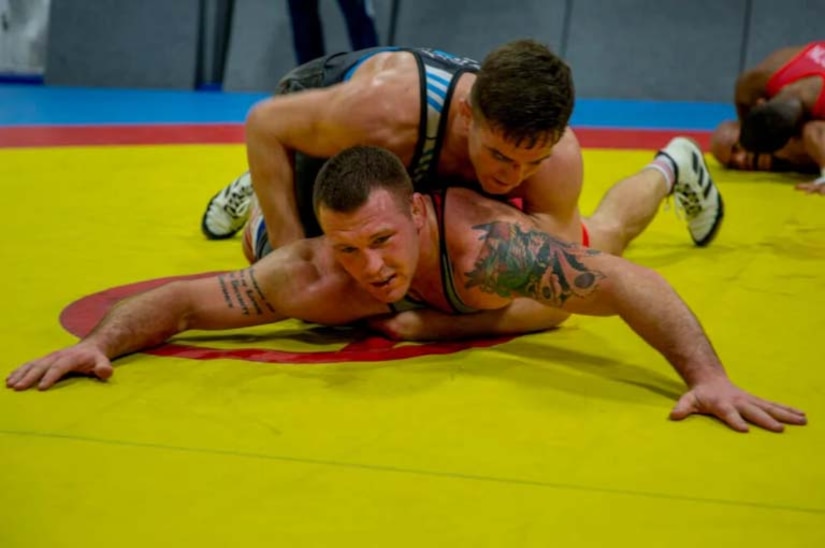
Earlier this year, Marine Corps Staff Sgt. John Stefanowicz defeated the country's top rated 87-kilogram Greco-Roman wrestler to earn a spot in this year's games.

Two men practice wrestling skills on a yellow mat.

"Being able to represent the USA on an international level while being in the Marine Corps is the highest honor that I have ever felt. It is something that is almost indescribable. I have finally accomplished this mission that has had an insurmountable amount of adversity, that has required years and decades of perseverance," he said.

"This could not be possible without the support I have had from my team and coach," Stefanowicz said. "The struggles that we have had to overcome as a team have made us all stronger, and in particular, coach Jason Loukides has helped transform me into the person and Marine that I am today."

Coast Guard Lt. Nikole "Nikki" Barnes will compete in the Women's 470-class sailboat category.

A sail boat sails through choppy blue water.

"I fell in love with the Coast Guard. I am always on the water and the allure of creating a safer environment for fellow boaters was a big intrigue for me. As I have been in the Coast Guard, I have seen even more how this is a tremendous organization of people working hard to make a safer maritime environment," she said.

Army Sgt. 1st Class Elizabeth Marks will compete in Paralympic swimming's 50-meter freestyle, 50-meter butterfly, 200-meter individual medley and 100-meter backstroke. 

In 2016, in Rio de Janeiro, Brazil, she won a gold medal in the Paralympic Games in the 100-meter breaststroke and a bronze in the 100 meter medley.

A female swimming athlete sits next to a pool.

Marks enlisted in the Army in 2008 as a combat medic. She was injured while serving in Iraq and was sent to Brooke Army Medical Center in Texas for recovery. It was there, she said, that she fell in love with swimming, which was used as a form of therapy.

Like most of the soldier-athletes going to the Olympics, Marks is a member of the Army's World Class Athlete Program, a program which enables soldiers with athletic potential to receive professional coaching, while keeping current with Army military occupational specialty and training requirements.

Although Marks said she trained hard to compete and to win, "none of it would have been possible without my brothers and sisters in the military believing in me and pushing me to do so."

Athletes Headed for Tokyo

Army

1st Lt. Amber English – women's skeet

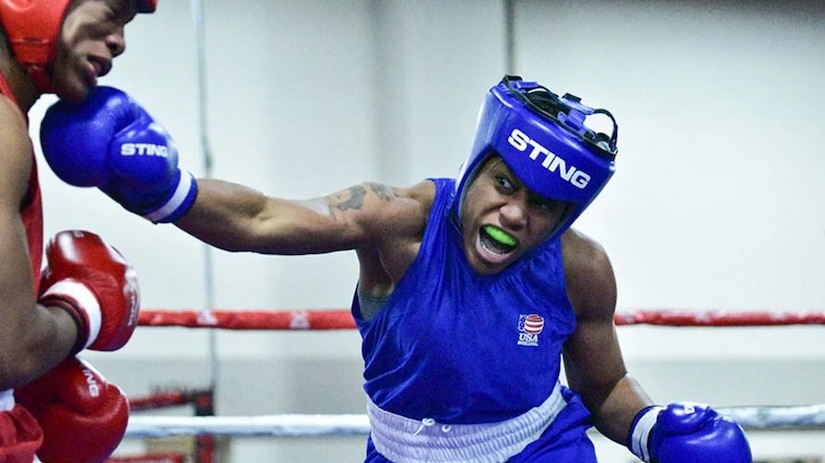
Staff Sgt. Naomi Graham – women's boxing, 75 kilogram category

A boxer throws a punch at another boxer in a boxing ring.

Staff Sgt. Nickolaus Mowrer – 10m air pistol, men; 10m air pistol, mixed team; and 50m rifle, 3 positions.

Staff Sgt. Sandra Uptagrafft – 10m air pistol, women; 10m air pistol, mixed team; and 25m sport pistol. 

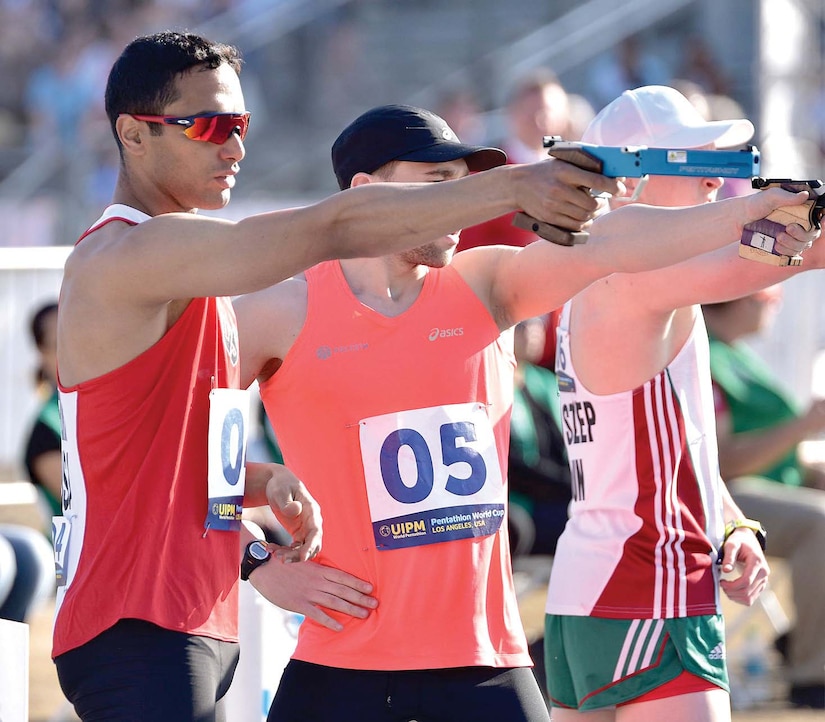
Sgt. Samantha Schultz – modern pentathlon

Sgt. Amro Elgeziry – modern pentathlon

Sgt. Ildar Hafizov – Greco-Roman wrestling, 60 kg category

Spc. Alejandro Sancho – Greco-Roman wrestling, 67 kg category

Spc. Benard Keter – 3,000-meter steeplechase, track and field

Sgt. Patrick Sunderman – men's smallbore rifle

Spc. Sagen Maddalena – women's smallbore rifle

Spc. Alison Weisz – women's air rifle

Sgt. Philip Jungman – men's skeet

1st Lt. Sam Kendricks - pole vaulting

Sgt. 1st Class Elizabeth Marks – Paralympic swimming in 50-meter freestyle, 50-meter butterfly, 200-meter individual medley and 100-meter backstroke

Staff Sgt. John Joss – Paralympic shooting, 50m rifle

Staff Sgt. Kevin Nguyen – Paralympic shooting, 50m rifle

Marine Corps

Staff Sgt. John Stefanowicz – Greco-Roman wrestling, 87 kg category

Coast Guard

Lt. Nikole Barnes – 470-class sailboat category

Men in athletic gear shoot guns during a pentathlon competition.

Brief History of Olympics

The ancient Olympic Games were held every four years in Olympia, Greece, beginning in 776 BC. The games featured running, a pentathlon, boxing, wrestling, pankration and equestrian events. The Olympic Games ended sometime between 393 AD and 426 AD, when the Romans gained power and influence in Greece.

The first modern Olympic Game, under the auspices of the International Olympic Committee, took place in Athens, Greece in 1896.

There were 280 athletes from 13 nations, including the United States, competing in 43 events. The United States took the most gold medals (11), followed by Greece (10) and Germany (6).

Although U.S. military members did not compete in the 1896 games, several who won gold medals later joined the military. Among those were:

  • John Paine, sport shooter, joined the Army and served during the Spanish-American War.
  • James Brendan Connolly, triple jump, joined the Army Corps of Engineers and served during the Spanish-American War.
  • Thomas Burke, 100-meter sprint and 400-meter sprint, served in the Army during World War I.
  • Thomas Curtis, 110 meter hurdles, served in the Massachusetts National Guard during World War I.

In 1924, the Winter Olympic Games were added. The Paralympics were added in 1948.

Since the 1896 Olympics, many members of the U.S. military have participated in the summer and winter games as well as the Paralympics and many have medaled.

Warrior Moves


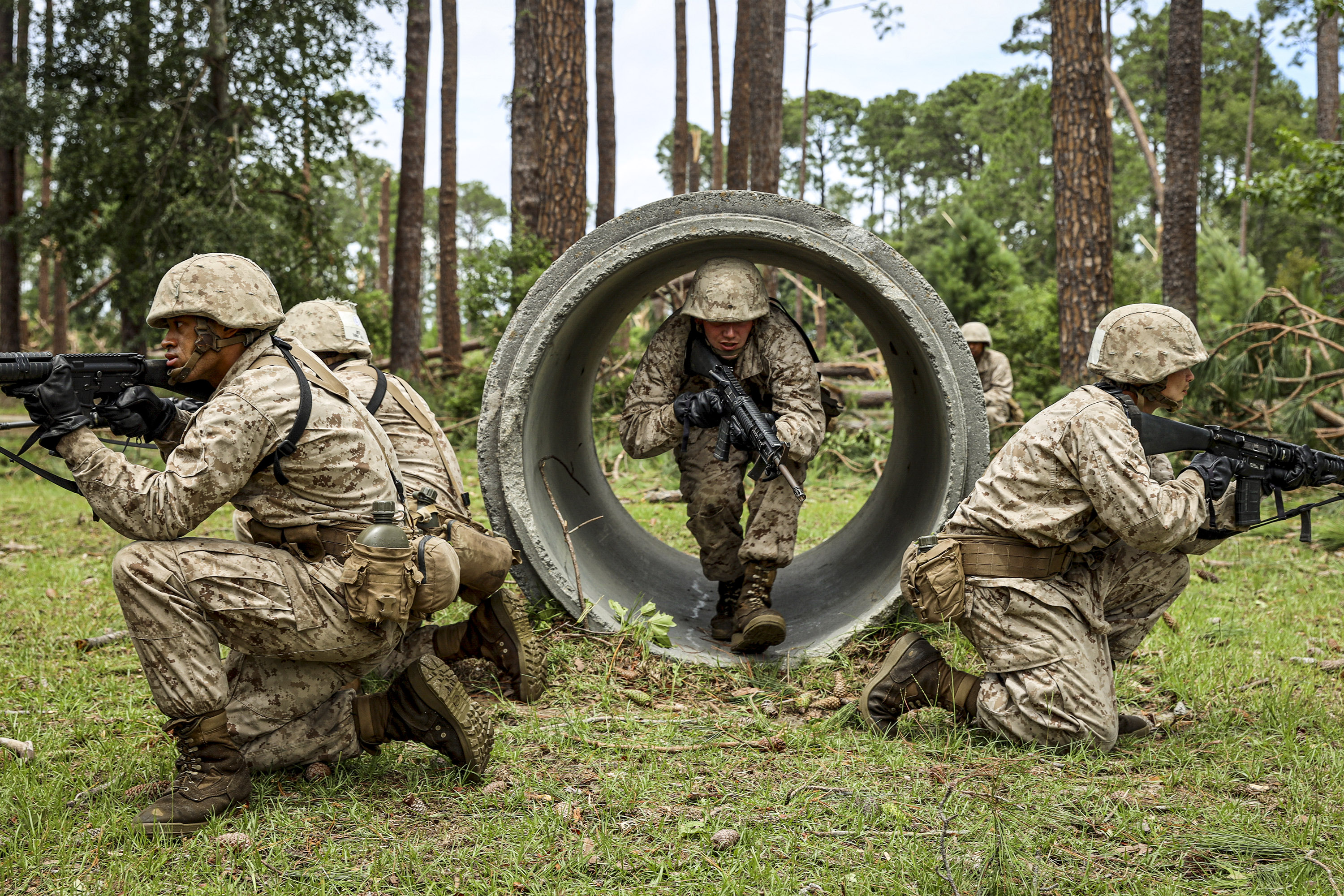
Marine Corps recruits participate in Basic Warrior Training at Marine Corps Recruit Depot Parris Island, S.C., July 8, 2021. The weeklong training event teaches recruits the basics of combat survival and rifle maneuvers.

Recovery Mission


Air Force Tech. Sgt. Draft Criss, a member of the Defense POW/MIA Accounting Agency recovery team, does an initial sweep of an excavation site during a recovery mission in Quang Binh province, Vietnam, June 15, 2021. The mission involved days of digging and screening in hopes of finding a missing service member lost during the Vietnam War.

Hose Handlers


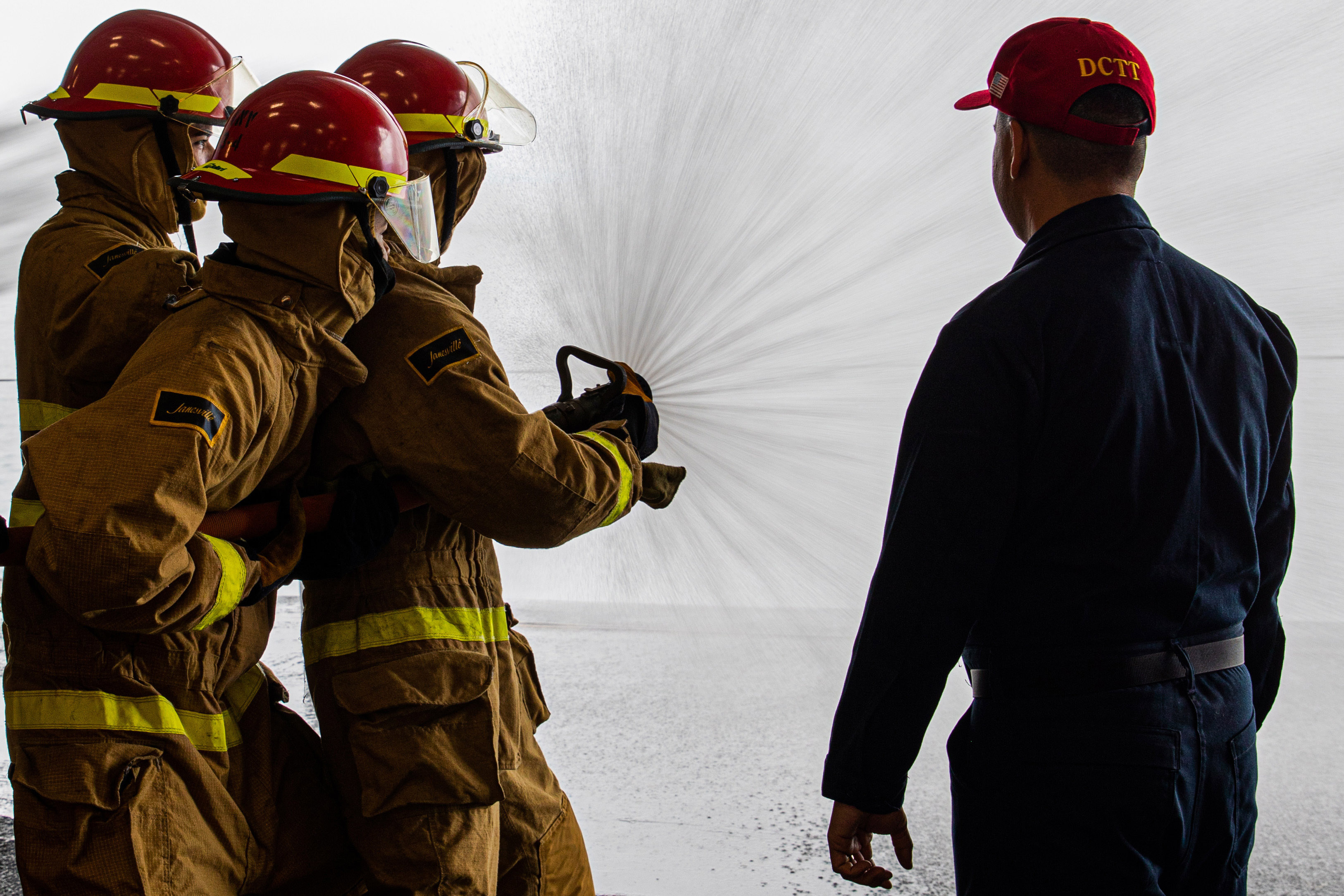
Sailors practice fire hose handling during damage control training aboard the amphibious assault ship USS Makin Island in the Pacific Ocean, June 30, 202

Freshly Painted

A black and grey Air Force A-10 Thunderbolt II flies back to Fort Wayne, Ind., after being painted at the Air National Guard paint facility in Sioux City, Iowa, July 7, 2021. The paint scheme, a departure from the standard two-tone grey, was created to commemorate the 100th anniversary of aviation in the Indiana National Guard.

Sunday, July 11, 2021

Top Brass


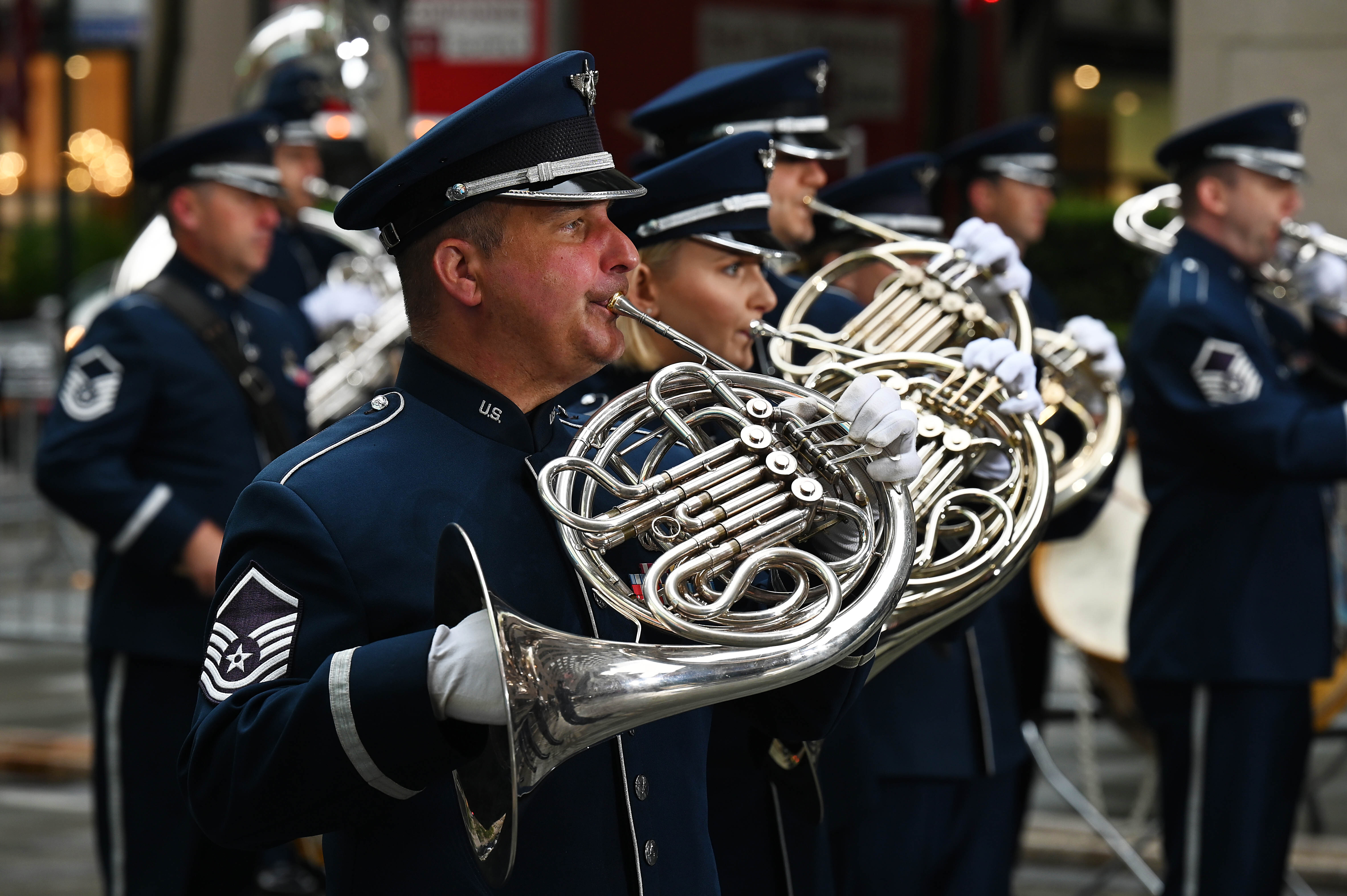
Members of the U.S. Air Force Band’s Ceremonial Brass perform during a live broadcast of the TODAY Show in New York City, July 2, 2021.

Readout of Secretary of Defense Lloyd Austin III Phone Call With Philippines Secretary of National Defense Delfin Lorenzana

 July 6, 2021


Pentagon Press Secretary John Kirby provided the following readout:

Secretary of Defense Lloyd J. Austin III spoke with Philippines Secretary of National Defense Delfin Lorenzana on the phone today to discuss the July 4 Philippines C-130 crash in Jolo.  

Secretary Austin offered his deepest condolences to the people of the Philippines and the families of those lost in this tragedy.  Secretary Lorenzana provided an update on the response to the incident and the Secretaries discussed critical medical evacuation support provided by U.S. personnel for the crash victims. Secretary Austin offered to provide any additional assistance that is possible, including for the crash response and potential identification of victims. The two leaders closed the call by reaffirming their commitment to further strengthening the U.S.-Philippines alliance, noting that they hope to meet in the coming months.  

Saturday, July 10, 2021

Readout of Secretary of Defense Lloyd J. Austin III's Phone Call With Turkish Minister of National Defense Hulusi Akar

 July 8, 2021


Pentagon Press Secretary John F. Kirby provided the following readout:

Secretary of Defense Lloyd J. Austin III spoke by phone today with Turkish Minister of National Defense Hulusi Akar to continue discussions over the ongoing drawdown in Afghanistan. The Secretary and Minister shared views over security concerns and agreed to stay engaged with respect to arrangements at the Hamid Karzai International Airport. 
 

Desert Landing


A Marine conducts parachute operations in Tabuk, Saudi Arabia, June 20, 2021.

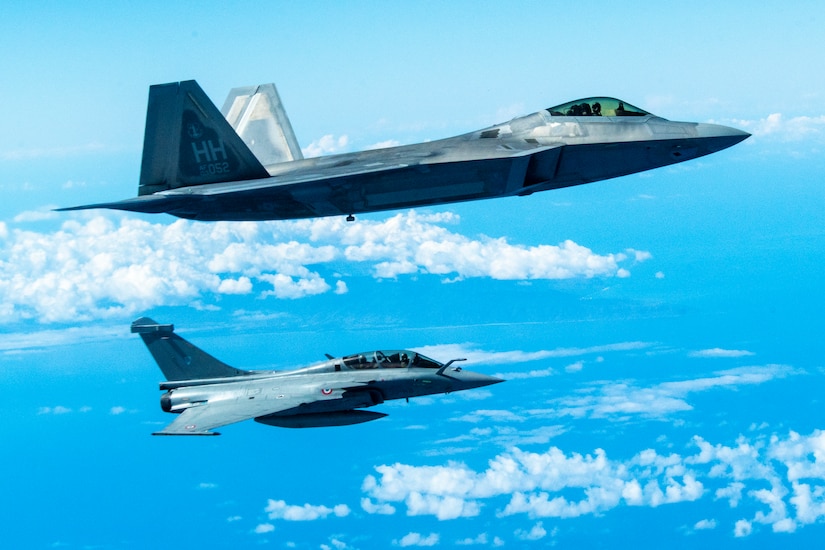
Pacific Partner


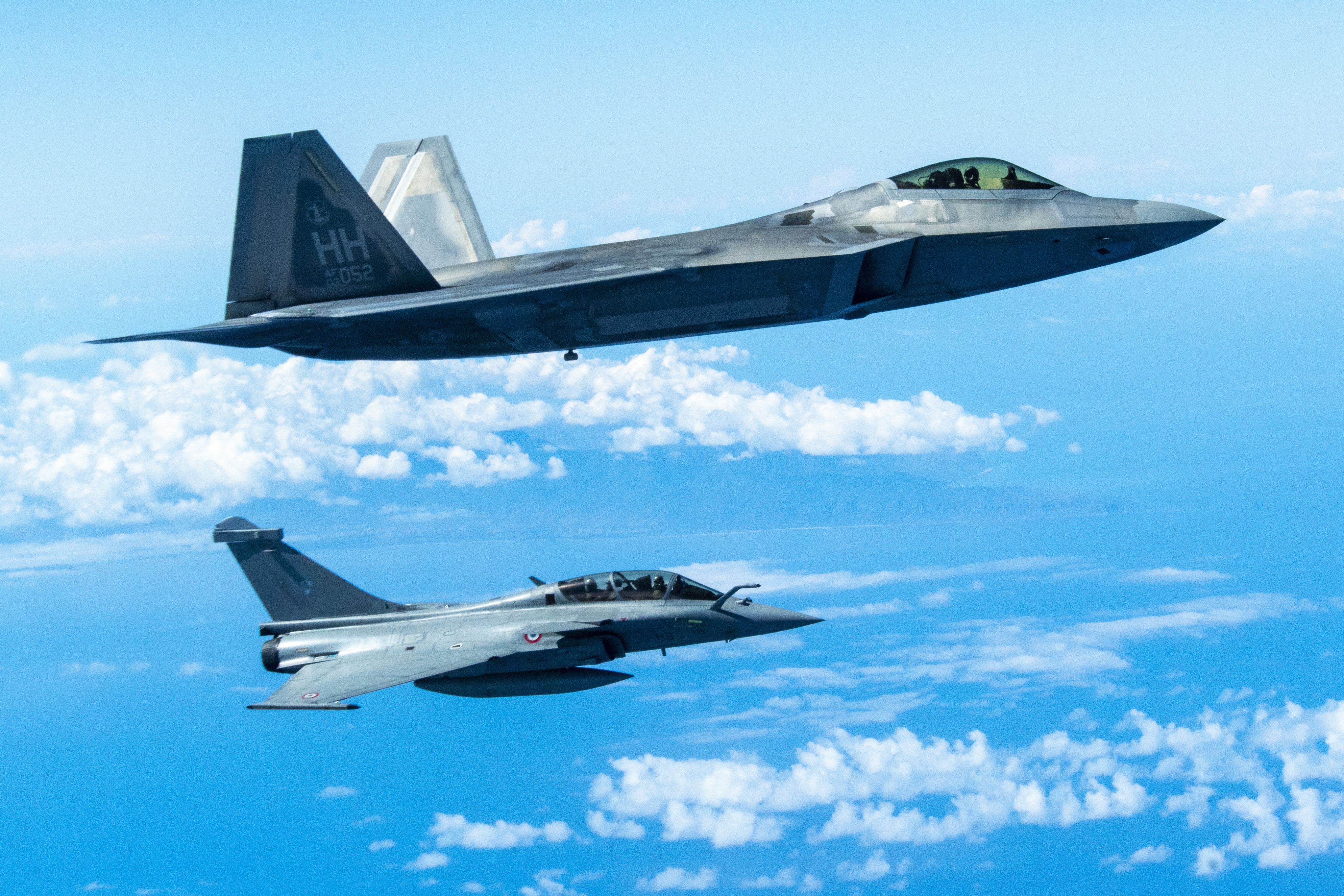
A Hawaii Air National Guard F-22 Raptor flies in formation with a French air and space force F3-R Rafale near Oahu, Hawaii, June 30, 2021. The flight was part of Exercise Wakea, an effort to promote bilateral cooperation in the Pacific between the United States and France.

Rafting Team


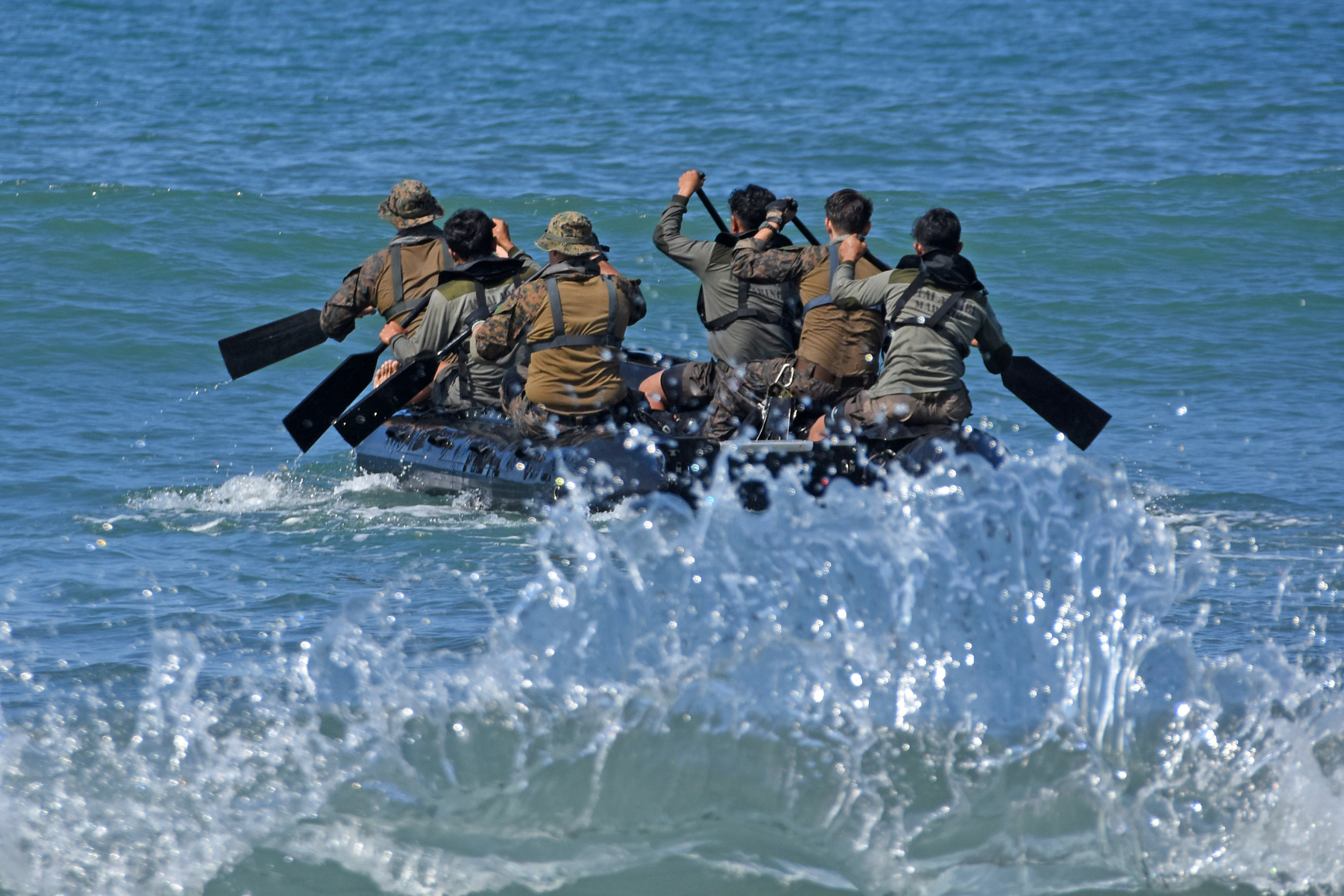
U.S. and Indonesian Marines conduct integrated training aboard combat rubber raiding crafts in Indonesia, June 11, 2021.

Helicopter Repair


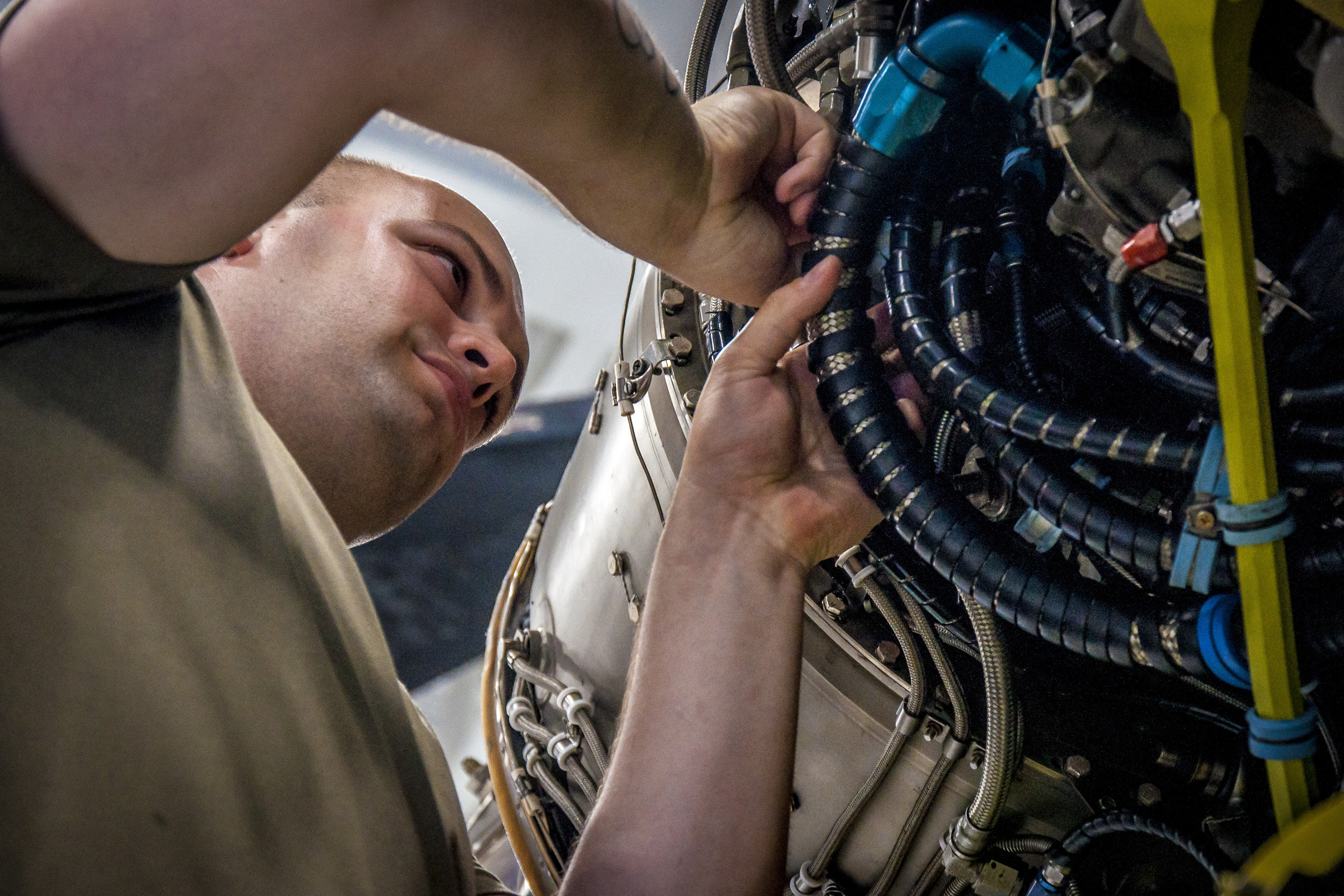
Army Cpl. Zachary Tallis works on the rear engine of a helicopter in a maintenance bay of the Connecticut National Guard in Groton, Conn., June 22, 2021. The chopper is undergoing a complete overhaul after being badly damaged from a hard landing in Iraq.

Hicks Assesses DOD Modernization, Innovation

 July 9, 2021 | BY Terri Moon Cronk , DOD News

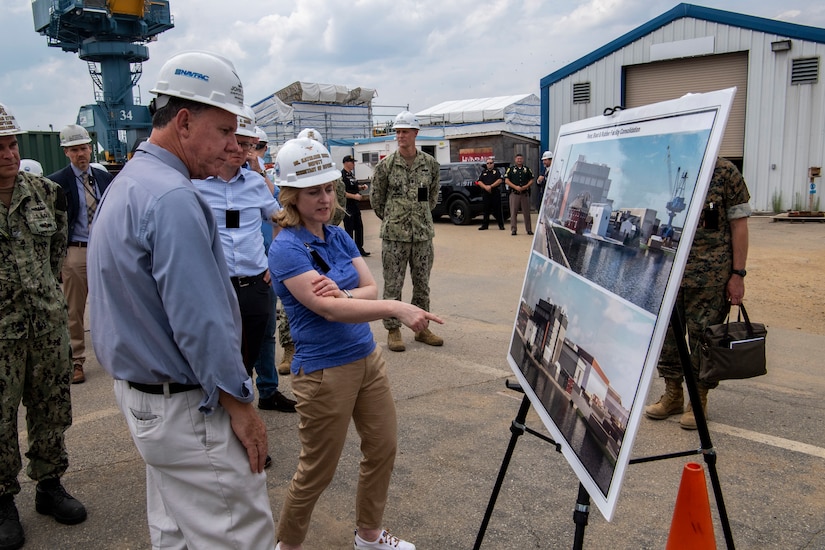
Deputy Defense Secretary Kathleen H. Hicks is on a trip to New England to assess the Defense Department's innovation and modernization efforts and partners’ capabilities to better enable the warfighter with the latest technology.

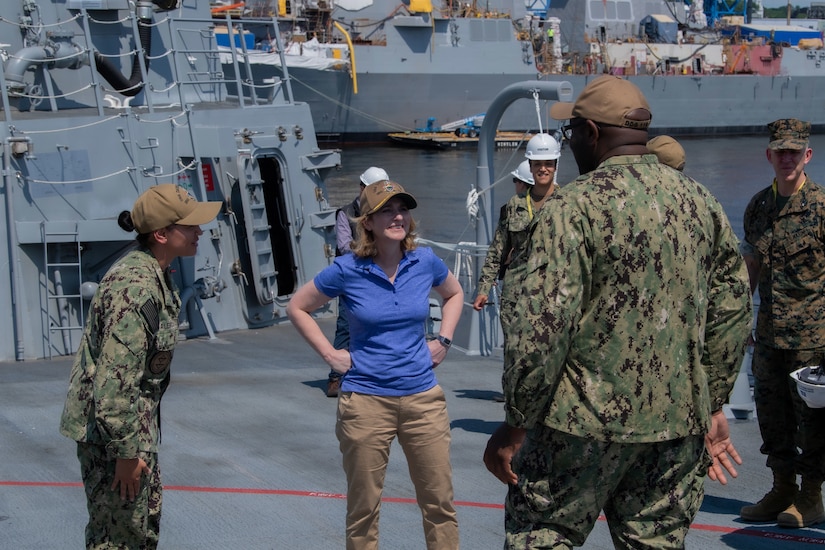
A woman talks to sailors.

The deputy secretary began her trip June 8 at Bath Iron Works in Brunswick, Maine, where she met with troops and toured the USS Daniel Inouye, an Arleigh Burke-class destroyer. She traveled that afternoon to Portsmouth Naval Shipyard and Pease Air National Guard in Portsmouth, New Hampshire.

"How [ships] innovate is a huge piece, of course, of where the department is going today with different kinds of actors, research institutions, universities and startups …" she said of ship and submarine modernization. 

Those elements are important to how DOD modernizes by ensuring shipyards have space availability and move with agility through repair work and understand software upgrades that are moving at a fast pace, Hicks said.

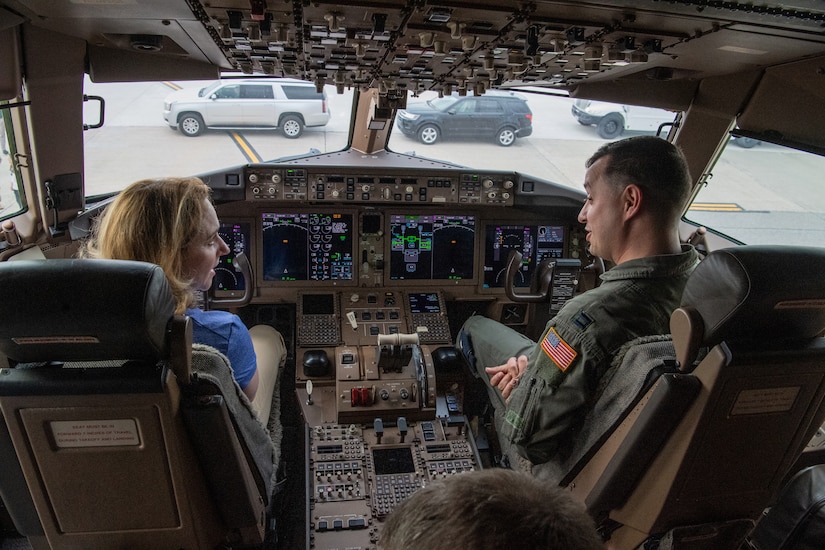
A woman talks to service members in the cockpit of an airplane on the tarmac.

At Pease, the deputy secretary met with troops and toured the KC-46A Pegasus, a 2019 wide-bodied, multi-role tanker aircraft that can refuel all U.S., allied and coalition military aircraft that are in line with international aerial refueling procedures. The KC-46, used by the Air Force, can also carry passengers, cargo and patients, according to Boeing.

Traveling to Cambridge, Massachusetts, Hicks went to Harvard University's engineering school and the Massachusetts Institute of Technology for innovation assessments and briefings. At Harvard, she met with former Defense Secretary Ash Carter and Marine Corps Gen. Joseph F. Dunford Jr., former chairman of the Joint Chiefs of Staff.

DOD is building on the path Carter laid in his Defense Department career by working in partnership with the private sector and academia to quickly get innovation into the warfighter's hands on the battlefield.

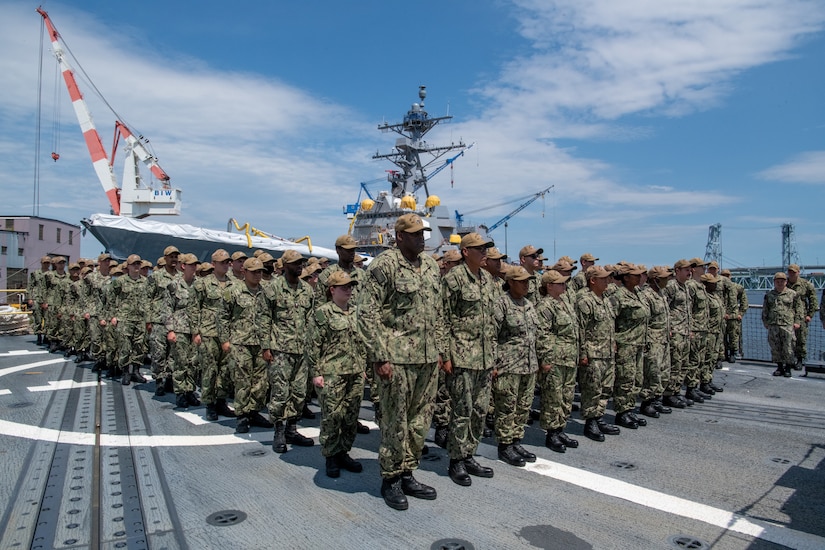
Service members stand on the deck of a ship.

At MIT, Hicks visited military and academic teams at the Air Force-MIT Artificial Intelligence Accelerator, which is designed to make fundamental advances in AI to improve Air Force operations. She also went to the Army's Natick Soldier System Center at Draper Laboratory, a nonprofit engineering innovation company, and The Engine, a venture firm founded by MIT to support "tough tech" companies.

DOD has done well in the last decade to make clear its interest in embracing new technology, she said.  

"Where we need to go next is knitting [everything] together so that we have an ecosystem in the department that doesn't crush the ability to have innovation in small teams because I think there's a lot to be gained from that," she said. 

A man and woman look at photos on an easel.

Hicks emphasized the need to have what she called feedback loops and the ability to understand what such teams are doing to share lessons learned and spread innovation to share with the warfighter.

"[Regardless] of what that pathway is, we need to hear those insights and lessons learned from those who are … deploying forward into the innovation base," Hicks said.

Secretary of Defense Lloyd J. Austin III and French Minister of the Armed Forces Florence Parly Opening Remarks at Bilateral Meeting

 July 9, 2021

Secretary of Defense Lloyd J. Austin III; French Minister of the Armed Forces Florence Parly

SECRETARY OF DEFENSE LLOYD J. AUSTIN III:  Well, bonjour, and thank you for joining us today, Madam Minister.  It's very good to see you again so soon after our last meeting in Brussels, and I'm delighted to host you here at the Pentagon.  I've been looking forward to this for quite some time.

It's not lost on me that your visit falls between our prospective (sic) independence days, July 4th and July 14th.  It's an honor to have the chance to meet with our first ally at a time of year when we celebrate the democratic values that we share.  Our cooperation in NATO, the Sahel and the Middle East are a key to our long-standing partnership, which is grounded in common strategic interests, our shared understanding of the importance of diplomacy and a powerful interest in preserving the international rules-based order.

Today, as you well know, some of our competitors are working to undermine the stable and open order that we both support.  So in the Indo-Pacific in particular, France is an ideal partner for the United States as we work to bolster our shared interests in the region.  In Europe, we look forward to continuing to consult with France, as well as our other NATO allies and partners, as the Department of Defense moves forth with its strategic reviews and as we continue to confront an increasingly-aggressive Russia.

We'll also spend some time today discussing our cooperation in the Sahel, where France and coalition forces from Burkina Faso, Chad, Mali, Mauritania and Niger work to bring peace and security to the region.  The United States is proud to support our French and African partners.

Closer to home, we'll also discuss implementing deliverables that we agreed upon at the NATO leaders summit and at -- and the U.S.-E.U. summit in June, and of course, we thank France for your contributions in Afghanistan since the very beginning of operations there in 2001.  We thank the French people and the French military who served bravely alongside us for the last 20 years.  And now it's time for us to end that war, and we appreciate the coordination we've had as together, we and our NATO allies have begun to transition to a new relationship with our Afghan partners.

I'm also looking forward to our -- to continuing our efforts in other areas and discussing new areas for potential cooperation, and to that end, I am especially pleased that later today, we'll be visiting USCYBERCOMMAND together, where the United States is working to develop our defenses and build up our resilience against adversaries in cyberspace.  I know you have also made cybersecurity a top priority, and that France has developed a cybersecurity strategy to mitigate risk and increase its capabilities.  Our countries have a strong shared interest in protecting our critical infrastructure and that of our allies, including cyber infrastructure, and that's a foundation for our future cooperation in the area of technological infrastructure more broadly.

And finally, I'm looking forward to signing the Special Operations Forces roadmap, which paves the way for enhanced cooperation between our Special Operations Forces, who have a long history of working together on a number of issues.

And so Madam Minister, I hope that your visit to Washington will be a memorable one.  I'm looking forward to our time together and to deepening the U.S.-France partnership on defense issues.

Merci beaucoup.

FRENCH MINISTER OF THE ARMED FORCES FLORENCE PARLY:  Thank you very much, Mr. Secretary.

I've been very (inaudible), because I want first and foremost to thank you very much for your warm welcome.  I'm very delighted to continue the discussions we started in Brussels a -- a few weeks ago.  Our cooperation is already very strong and deep, especially in the field of operations, and we want to seize every opportunity to strengthen it.

Intelligence, space and cyber are also domains where we cooperate more and more.  I met, a few days ago, General Dickinson in Paris, and it was a -- a very good symbol of the relationship we are going to create more and more in the future.

I also want to thank you sincerely for your support in the Sahel.  Today, President Macron unveiled the broad outlines of the transformation of Operation Barkhane.  Your support will continue to be needed in the fight against terrorism and we are very grateful for it.  France and the United States are known to be the oldest allies.  These are not just pretty words; they reflect something real.  We are allies in words and deeds.

Thank you.
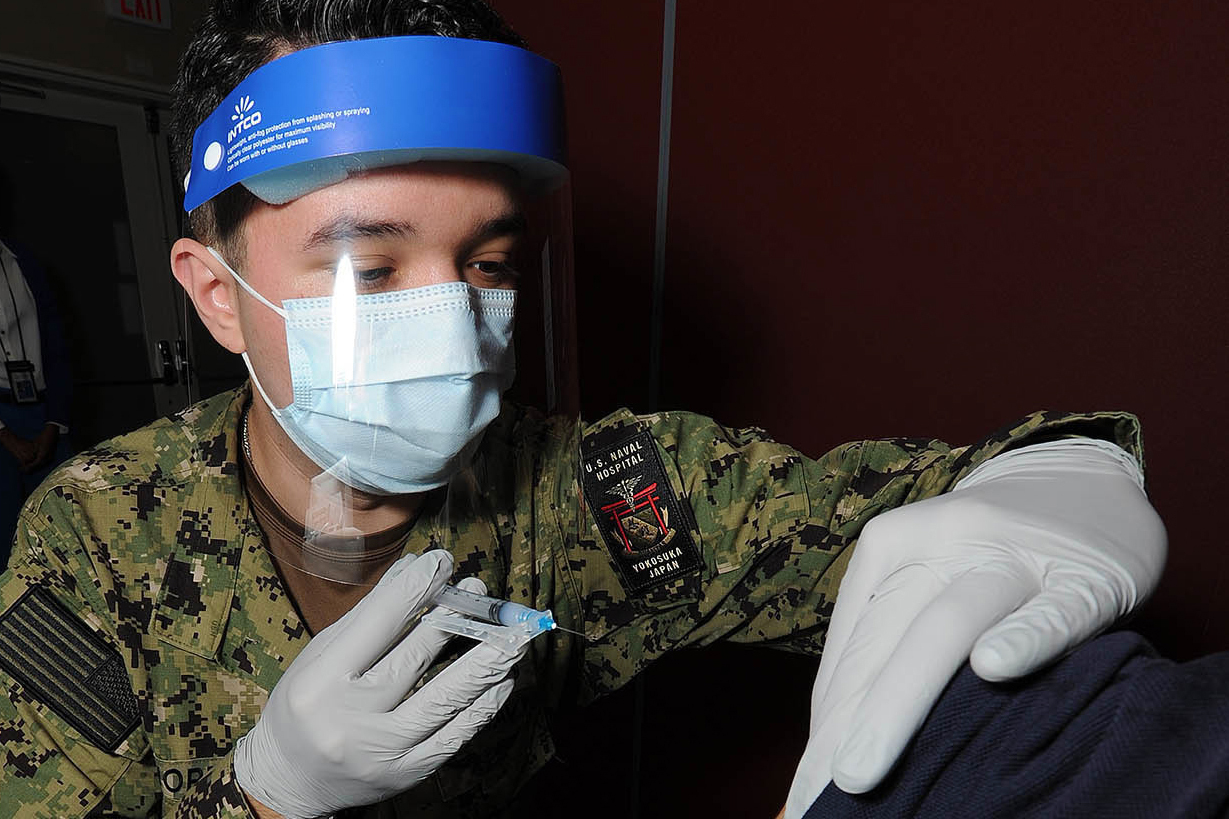
Giving a Vaccine


Navy Petty Officer 3rd Class Johnathan Norton administers the COVID-19 vaccine to an employee at Naval Air Facility Atsugi, Japan, July 2, 2021.

Readout of Deputy Secretary of Defense Kathleen Hicks' Travel to Boston, Massachusetts

 July 8, 2021


Deputy Press Secretary Jamal Brown provided the following readout:

Deputy Secretary of Defense Kathleen Hicks visited Boston, Massachusetts, to meet with academic institutions, industry partners, and military innovation incubators to discuss and assess their efforts in support of Secretary Austin’s commitment to modernize and drive innovation across the Department of Defense. 

The Deputy Secretary met with representatives from Harvard’s Science and Engineering Complex, including former Secretary of Defense Ash Carter and former Chairman of the Joint Chiefs retired General Joseph Dunford.

Following the visit, she visited the Air Force Artificial Intelligence Accelerator at the Massachusetts Institute of Technology (MIT), had lunch with Fellows at MIT-Lincoln Labs, and visited the U.S. Army Natick Soldier Systems Center at Draper Labs. While at Draper Labs, the Deputy Secretary spoke with soldiers and scientists involved in biotechnology and security and microelectronics about their work to advance and support America’s warfighting capabilities through rapid experimentation, innovative technologies, prototyping, and testing and evaluation. 

Donley Welcomes the New Professional Challenge of Old Job

 July 9, 2021 | BY Jim Garamone , DOD News

Mike Donley is an example of the way Washington should work.

Donley, a consummate defense expert, is one of those rare people who have been appointed to national security positions by both Democratic and Republican presidents. He served as the Defense Department's director of administration and management in the Bush Administration and as the Air Force Secretary under President Obama.

And now he is back with DOD serving for the second time as the director of administration and management. He says he is engaged in "worthy work" as the department moves forward.

A man speaks to military personnel.

Donley started his service in the Army and continued in civilian jobs with the Senate Armed Services Committee, DOD, the National Security Council and more. Throughout his career he has worked with many current defense leaders. "We are truly fortunate that Secretary Donley agreed to return to the Pentagon to serve as the director of administration and management," Deputy Defense Secretary Kathleen Hicks said in a written statement. "He embodies our core values of duty, integrity and honor. As we emerge from the pandemic and look forward to modernizing how we manage the department, we will benefit from his decades of expertise across multiple administrations. I look forward to working closely with him."

He hadn't expected to come back to the department. "I was watching this from a distance," he said during an interview in his E-Ring office. 

In this community, no matter where we work, we share that deep commitment to serving the nation's defense and our men and women in uniform. It's always a privilege to be part of this mission."
Mike Donley

Donley had been involved in discussions between the department and Capitol Hill on establishing the DOD chief management officer position in 2005. "I've always been interested in how does one manage one of the world's largest enterprises. It's a huge challenge for a secretary and deputy secretary of defense," he said. 

When he was administration and management director the first time he learned a lot about a wide range of management areas. Congress established the chief management officer position, but then shut it down at the end of 2020. "There was a fair amount of turmoil associated with that, and it just looked to me like there was going to be a challenge to put things back together in some fashion," he said.

And many of the duties performed by the chief of management did not go away when the position disappeared. "Now there is a challenge to figure out where all the pieces go, and how the intention of the Congress and the department in creating this additional level of oversight across the department would be implemented," Donley said. 

He had discussions with Deputy Defense Secretary Kathleen H. Hicks about the situation and he suggested some people who could do the administration and management job. "She eventually turned the discussion around and asked if I would do it. So I said, 'Yes,'" Donley said.

A man answers questions as another man looks on.

Donley advises the secretary and deputy secretary on organization and management aspects of the department. He also oversees a wide range of administrative, logistical and technological support for the Office of the Secretary of Defense and associated agencies and offices. Finally, Donley is responsible for running the Pentagon reservation. 

The job is not going to be the same as it was in his first iteration. The elimination of the position of chief management officer is one reason, technology is another and necessity is a third. The CMO functions need to continue, and the office may pick up those for at least a time, Donley said. Once there is time to study them, the functions may go to another DOD agency [or] to one of the services, he said. New technologies often mandate new methods of doing things, and that, too, causes changes. 

The professional challenge is one part of the reason that Donley came back to DOD. "The people is the other part about coming back," he said. 

Many of those who worked with him originally have retired or moved on to other jobs, but there were a number of career civil servants whom he had worked with and trusted who are still in the organization. "It was good to see many people when I came back into the building," he said. "I know they are committed to the DOD mission, and that is something that unites really everybody in this building. In this community, no matter where we work, we share that deep commitment to serving the nation's defense and our men and women in uniform. It's always a privilege to be part of this mission."

French, U.S. Defense Leaders Discuss Ways to Further Cooperation

 July 9, 2021 | BY Jim Garamone , DOD News

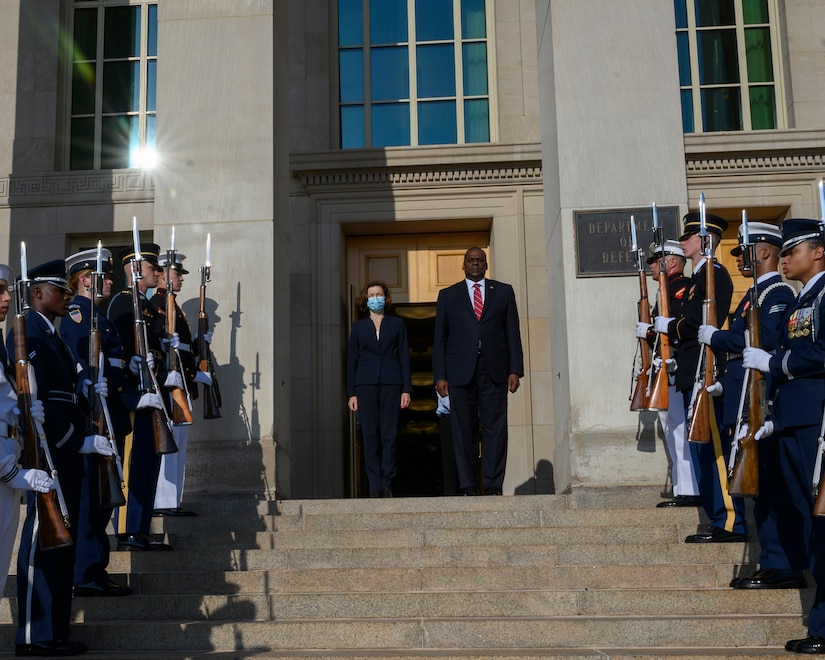
Secretary of Defense Lloyd J. Austin III welcomed French Minister of the Armed Forces Florence Parly to the Pentagon today and discussed myriad ways the United States and France can work together.

A man and a woman stand at the top of a series of steps leading up to an office building. Military personnel line the steps.

It is safe to say that without France, the United States would not have won independence in 1783. More than 200 years later, the two nations still work and fight together. 

The two leaders also signed the Special Operations Forces roadmap, which enhances cooperation between French and U.S. special operators.

"Our cooperation in NATO, the Sahel and the Middle East are a key to our long-standing partnership, which is grounded in common strategic interests, our shared understanding of the importance of diplomacy and a powerful interest in preserving the international rules-based order," Austin said at the beginning of the meeting.

The meeting follows the NATO Summit and the two leaders discussed the ways the two nations will work together in NATO and bilaterally. The challenge from China was among the topics of discussion. "Today, as you well know, some of our competitors are working to undermine the stable and open order that we both support," Austin said. "So in the Indo-Pacific in particular, France is an ideal partner for the United States as we work to bolster our shared interests in the region. 

Russian challenges in Europe and elsewhere also concern both nations and Austin promised the United States would continue to consult with France on this issue and more.

France is a bulwark in West Africa, and especially the Sahel region. Austin and Parly spoke about working with coalition forces from Burkina Faso, Chad, Mali, Mauritania and Niger to bring peace and security to the region. "The United States is proud to support our French and African partners," he said.

French and American service members worked shoulder-to-shoulder in Afghanistan and Austin praised the French contributions. "We thank the French people and the French military who served bravely alongside us for the last 20 years," he said. "And now it's time for us to end that war, and we appreciate the coordination we've had as together, we and our NATO allies have begun to transition to a new relationship with our Afghan partners."

Two fighter jets fly in formation.

But the allies are looking to the future. After the meeting Austin and Parly went to Fort Meade, Md., to visit U.S. Cyber Command. "I know you have also made cybersecurity a top priority, and that France has developed a cybersecurity strategy to mitigate risk and increase its capabilities," the secretary said. "Our countries have a strong shared interest in protecting our critical infrastructure and that of our allies, including cyber infrastructure, and that's a foundation for our future cooperation in the area of technological infrastructure more broadly."

Parly wants the two nations to build on the very robust military-to-military relationship. "Our cooperation is already very strong and deep, especially in the field of operations, and we want to seize every opportunity to strengthen it," she said. "Intelligence, space and cyber are also domains where we cooperate more and more."

Parly specifically thanked Austin for American support in the Sahel. "Your support will continue to be needed in the fight against terrorism and we are very grateful for it," she said.

"France and the United States are known to be the oldest allies," the minister said. "These are not just pretty words; they reflect something real. We are allies in words and deeds."

Furling Flag


Navy Petty Officers 3rd Class Jeremiah Rivera, left, Brandon Lester, center, and Arthur Cataag fold an American flag aboard the USS Ross during Exercise Sea Breeze in Odessa, Ukraine, July 6, 2021. The annual exercise brings together military units from several countries to enhance their warfighting capabilities and build strong relationships.

Phoenix Support


Arizona National Guard soldiers help prepare donations at a food bank in Phoenix, July 7, 2021, to support COVID-19 relief efforts.

Steadfast Sentinel


A soldier assigned to the 3rd U.S. Infantry Regiment, known as “The Old Guard,” walks the mat at the Tomb of the Unknown Soldier during a rainstorm at Arlington National Cemetery in Virginia, July 8, 2021.

Gunnery Prep


Army Reserve soldiers load .50-caliber ammunition into a holding can on top of a Stryker vehicle before a live-fire night gunnery training exercise at Fort Stewart, Ga., June 25, 2021.

Ordnance Disposal


Airmen perform an expedient multiple unexploded ordnance disposal walk during training at Kadena Air Base, Japan, July 2, 2021. Airmen cleared simulated ordnance from a mock airfield during the event.

Deck Check


Sailors inspect the flight deck of the aircraft carrier USS Ronald Reagan for debris during flight operations in the Arabian Sea, July 3, 2021.

Forward Fire


Army Sgt. Keeiaru Lee fires an assault rifle during a qualification for the Schuetzenschnur, the German Armed Forces badge of marksmanship, at the Grafenwoehr Training Area, Germany, July 7, 2021.

Summer Fury


Marine Corps MV-22B Ospreys conduct refueling operations at Marine Corps Air Station Miramar, Calif., July 7, 2021, during Summer Fury, an exercise designed to enhance Marine Air-Ground Task Force integration and increase aviation operations proficiency.

Quick Response


Airmen participate in a quick response training event at Prince Sultan Air Base, Saudi Arabia, June 12, 2021.

Readout of Secretary of Defense Lloyd Austin's Bilateral Meeting With France Minister of the Armed Forces Florence Parly

 July 9, 2021


Pentagon Press Secretary John F. Kirby provided the following readout:

Secretary of Defense Lloyd J. Austin III met France Minister of the Armed Forces Florence Parly today at the Pentagon to reaffirm the deep cooperation between our governments and militaries.

The leaders discussed the importance of transatlantic cooperation and unity, particularly as strategic competitors contribute to increased security challenges worldwide. They also discussed bilateral cooperation and opportunities for continued engagement in the Middle East and Africa, where France and the United States have a long history of working together to address common challenges.

Secretary Austin committed to continuing consultations with France and other NATO Allies on strategic reviews, including the National Defense Strategy. Minister Parly conveyed appreciation for the United States’ reinvigorated engagement with NATO Allies and EU partners, noting the recent NATO and EU Leaders Summits attended by President Biden.

Secretary Austin and Minister Parly concluded their meeting with a signing ceremony of the U.S.-France Roadmap for Increased Cooperation in the Area of Special Operations. The Roadmap signals U.S. and French intent to identify areas where increased special operations coordination and cooperation is possible.

After their meeting, Secretary Austin and Minister Parly visited U.S. Cyber Command at Fort Meade, Maryland, where they discussed shared interests, opportunities, and initiatives in cyberspace to deepen the enduring U.S.-France bilateral partnership.

Thursday, July 08, 2021

Road Trip Day Sixteen: Grandma’s Breakfast

 Last night, anticipating an easier drive I set my phone alarm for 7AM.  I learned early this morning that the previous occupant of my hotel room had set the hotel alarm clock for 5:45AM.  After a quick hotel coffee I was packed and on the road at 630AM. 


On Highway 70, shortly after leaving Terre Haute, Indiana I crossed into the southern tip of Illinois at the city of Effingham.  I hadn’t gone 5 miles when the Illinois Department of Transportation shut down the highway.  Fortunately, I was at an off ramp which was conveniently located next to a Cracker Barrell.  Breakfast sounded better than traffic.  At 715AM in the morning the Effingham Cracker Barrell is empty.  There were very few customers and it was fully staffed.  I was seated and served Grandma’s Breakfast very quickly. 

As I ate breakfast I remembered that my Grandmother, Rose, was born in Gibson, Illinois.  A quick check and I found I was only 90 minutes from Gibson.  I was tempted to make the side trip, but a three hour detour without proper research on what to look for or at, didn’t make sense.  I also remembered that I had at least one great uncle who lived for a time in Effingham. I overheard the information on Effingham and Gibson over 50 years ago and just couldn’t remember much of the substance nor context.  As I was eating I used the phone to research Effingham and found that I was only a half mile or so from the Effingham Masonic Lodge.

The construction of the Lodge was very interesting.  The exterior looks as if they only thing it houses is


a Lodge room.  It is situation East to West and the building simply looks like someone covered a lodge room.

Back on to the highway.  The southern tip of Illinois is pretty flat.  Small towns and hamlets are dotted between flat farm land consisting of acres and acres of corn.  I think corn fields are creepy.  Nothing good (except the corn) happens in corn fields.  Think Casino or The Get Away.  I crossed over the Mississippi and Missouri Rivers and was in St. Louis, Missouri. 

About the time I crossed into Missouri the Dodgers began to play Tampa Bay.  Coffee, Baseball and cruise control for three hours and I arrived in Kansas City, Missouri.  My hotel is in the northeast part of the city, right across from “Worlds of Fun” and “Oceans of Fun.”  I can see giant roller coasters looping in the sky from my hotel room.  Thus, the area is filled with families.  It feels like I am staying in a hotel in Anaheim across from Disneyland.

Tomorrow a tour of the Truman Presidential Library followed by a relatively short drive to Wichita, Kansas. 

Readout of Deputy Secretary of Defense Kathleen Hicks’ Travel to Maine, New Hampshire

 July 7, 2021


Deputy Press Secretary Jamal Brown provided the following readout:

Deputy Secretary of Defense Kathleen Hicks met with representatives from Bath Iron Works in Brunswick, Maine, and Portsmouth Naval Shipyard and Pease Air National Guard, in Portsmouth, New Hampshire, to discuss and assess efforts to bolster U.S. warfighting capabilities and maintain maritime dominance.

While in Brunswick, Deputy Secretary Hicks visited the Bath Iron Works operations as well as the DDG 118 (USS Inouye) and met with troops.

In Portsmouth, Deputy Secretary Hicks spoke with key personnel at the structural shop at the Portsmouth Naval Shipyard and the future Waterfront Support Facility, toured a KC-46 display at Pease Air National Guard and spoke with troops.

Today’s visits underscore Secretary Austin’s commitment to modernizing the Department of Defense to meet future threats.