Thursday, June 10, 2021

General Officer Announcements

 June 10, 2021


Secretary of Defense Lloyd J. Austin III announced today that the president has made the following nominations:

Marine Corps Maj. Gen. David J. Furness for appointment to the rank of lieutenant general, and assignment as deputy commandant for plans, policies, and operations, Headquarters, U.S. Marine Corps, Washington, D.C.  Furness is currently serving as assistant deputy commandant for plans, policies, and operations, Headquarters, U.S. Marine Corps, Washington, D.C.

Marine Corps Maj. Gen. Matthew G. Glavy for appointment to the rank of lieutenant general, and assignment as deputy commandant for information, Headquarters, U.S. Marine Corps, Washington, D.C.  Glavy is currently serving as commander, Marine Corps Forces Cyberspace Command, Fort George G. Meade, Maryland.

Home Builders


Airmen construct the first home in the Cherokee Veterans Housing Initiative in Tahlequah, Okla., May 18, 2021. The initiative is a collaboration between the Defense Department's Innovative Readiness Training program and the Cherokee Nation that constructs new single-family homes and supporting infrastructure for eligible Cherokee Nation veterans and their families.

Shot Scores


Sailors score targets during a qualifying gun shoot aboard the USS New Orleans in the East China Sea, May 30, 2021.

Sierra Fire


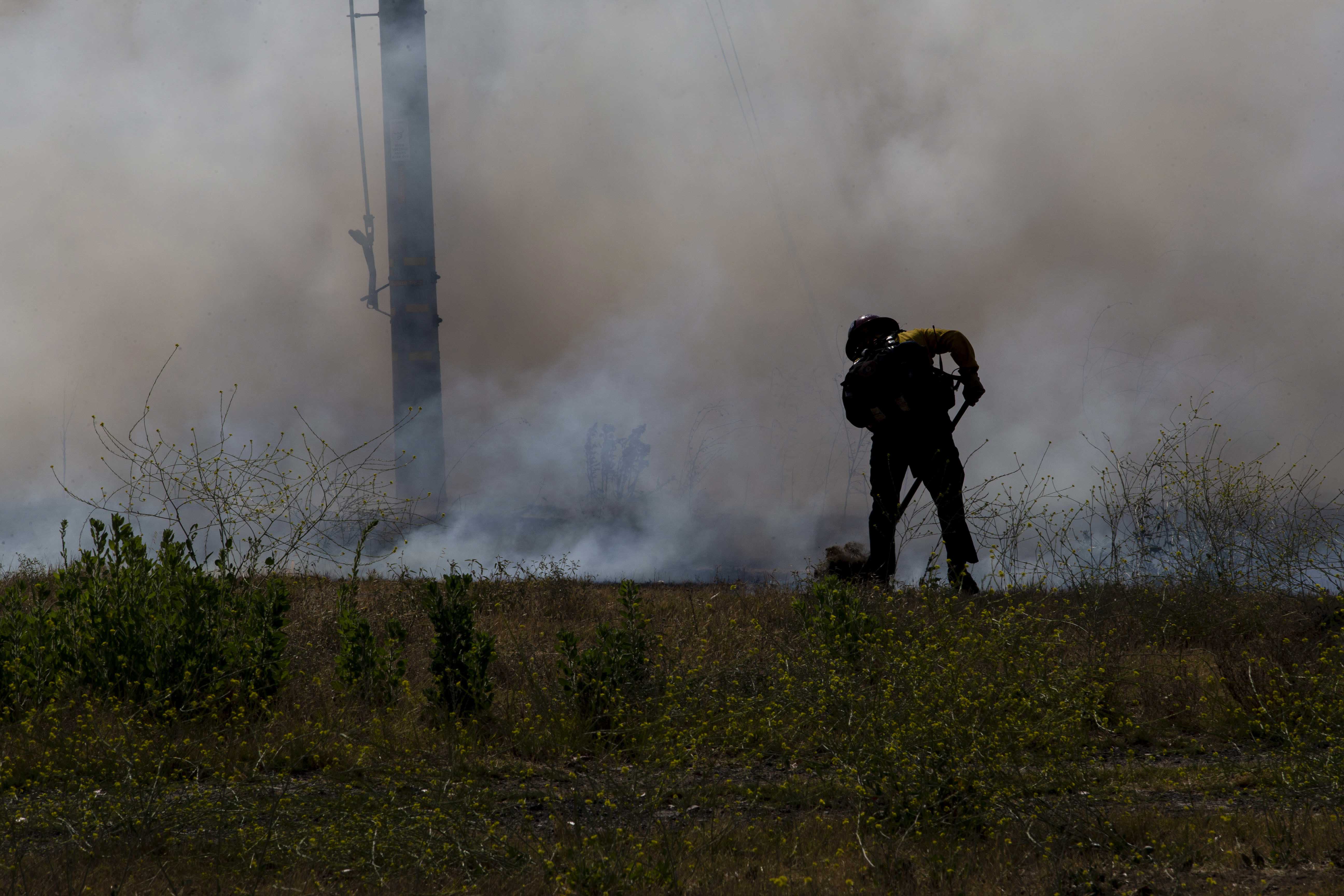
A Marine Corps Base Camp Pendleton firefighter responds to the Sierra Fire at the base in California, June 9, 2021.

Flying Partners


Army AH-64 Apaches fly in formation with Hungarian Mi-24 Hinds during Saber Guardian in Varpalota, Hungary, June 9, 2021. The multinational exercise aims to increase participating nations' capacity to conduct full spectrum military operations.

Vaccination Time


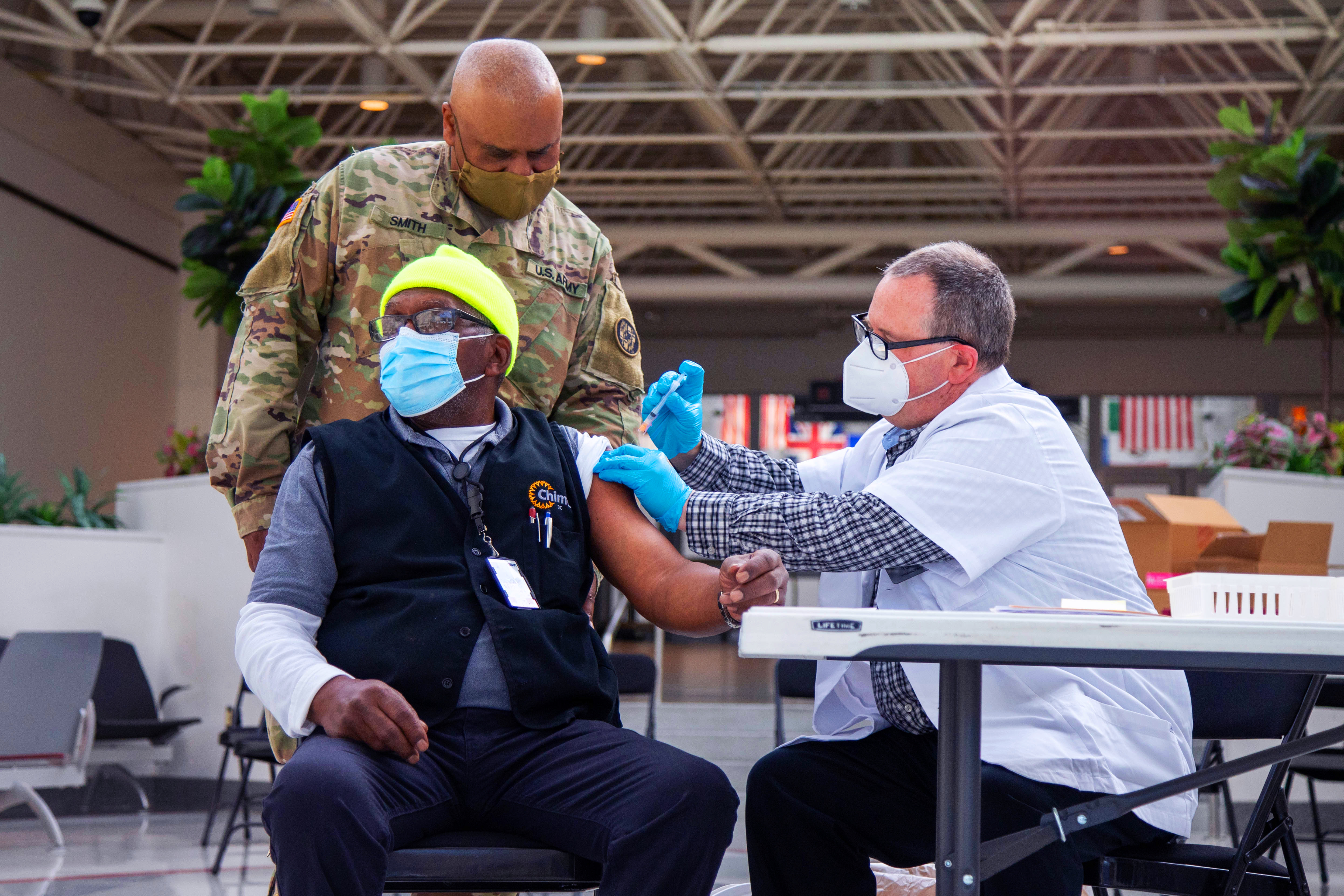
Army Staff Sgt. Ralphael Smith, a member of the Maryland State Medical Detachment, holds up the sleeve of CHIMES employee Robert Johnson, while Dr. Tony Gearhart, a Safeway pharmacist, administers a COVID-19 vaccine during the CHIMES vaccination event in Baltimore, May 17, 2021. Safeway, a supermarket company, and Maryland’s Vaccine Equity Task Force partnered together to vaccinate members of CHIMES, a not-for-profit organization that assists people with intellectual and behavioral challenges.

Slovakia Assistance


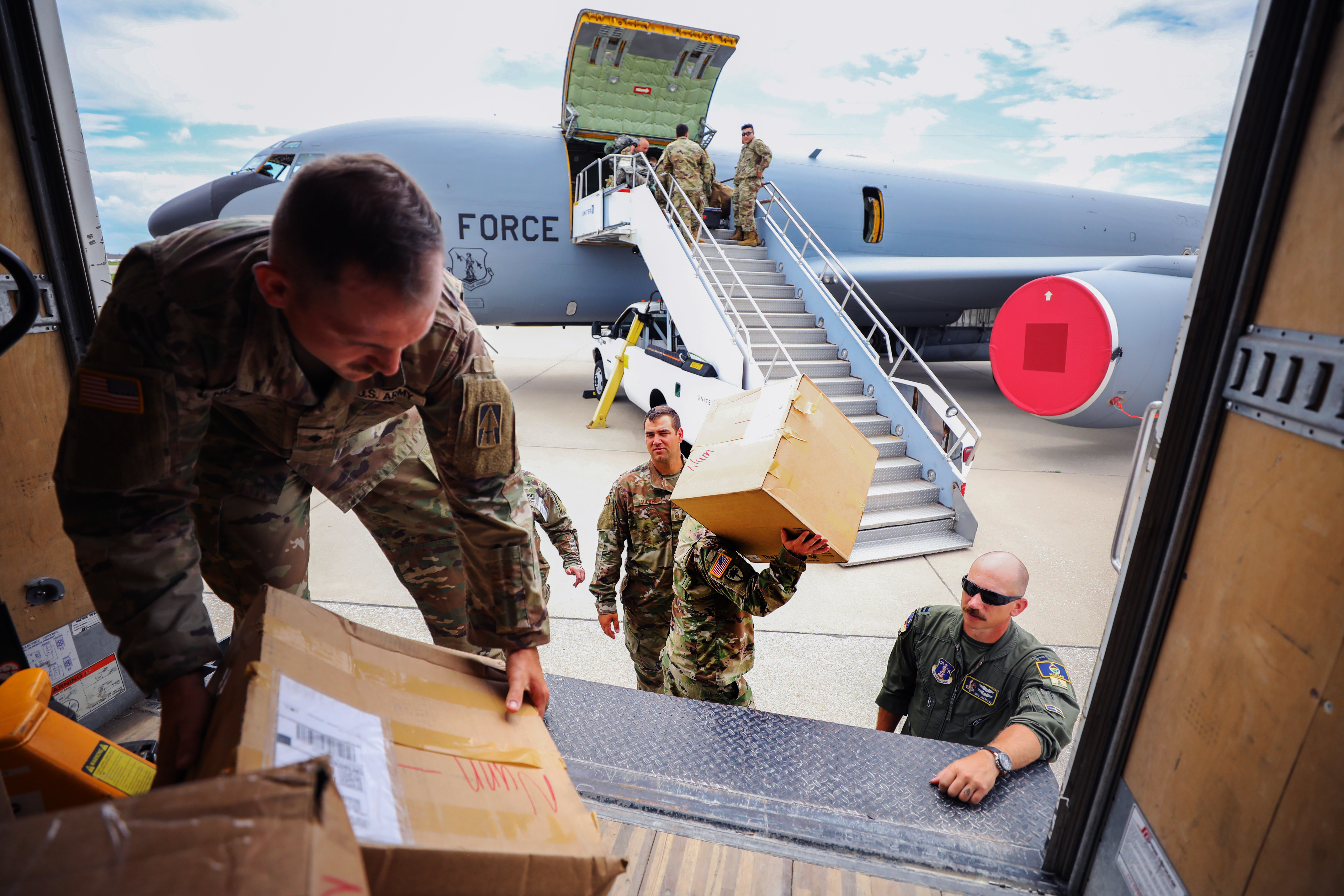
Soldiers assigned to the Indiana National Guard transport donated medical supplies to assist the country of Slovakia in its ongoing fight against COVID-19 at the Indiana National Guard Headquarters in Indianapolis, June 6, 2021.

Pohakuloa Firepower


Soldiers participate in a fire support coordination exercise at Pohakuloa Training Area, Hawaii, June 7, 2021.

Knight's Landing


Army Sgt. 1st Class Roman Grijalva of the Golden Knights, the Army's parachute team, makes a demonstration landing at Fort Bragg, N.C., May 28, 2021.


Pentagon Press Secretary John F. Kirby Holds a Press Briefing

 June 9, 2021

Pentagon Press Secretary John F. Kirby

PRESS SECRETARY JOHN F. KIRBY: Hey guys. Sorry I'm late. I've been saying that more and more these days, I don't know. Megan you want to remind me of that, don't you? Keep me credible, accountable, also humble.

OK, some things at the top here. I think you may have seen on Friday, the Navy's M225 stingray unmanned, there's a picture of it there, unmanned aerial vehicle, successfully completed the first ever aerial refueling between an unmanned tanker and an aircraft. The stingray took off and then transferred several hundred pounds of fuel to a super hornet.

This historic flight demonstrates the stingray -- that the stingray can fulfill its primary tanker mission and free strike fighters up for more of the duty of -- from the duty of transferring fuels, sorry. And this also extends the range capability of the carrier airwing and the carrier strike group and it's a great step forward toward manned/unmanned teaming concepts, pretty dramatic image there. Monday, military Sealift command fleet replenishment oiler USNS Patuxent, assigned to the U.S. fifth fleet provided emergency assistance to the general cargo vessel Falcon Line that was in distress in the Gulf of Aden.

You can see an image there of some of the crew being rescued. Upon notification of the situation the Patuxent proceeded at maximum speed to rescue the crew of Falcon Life before the ship completely sank, it sank due to engine trouble after taking on water. Patuxent safely recovered the 15 crew members and provided food, water and medical screening. The fifth fleet is coordinating with the owner of the ship and other authorities to determine the most appropriate locations to debark the crew members.

Over to Europe now, another update on Defender Europe. Today, wrapped up three days of air and missile defense live fire events in Romania as part of exercise Saber Guardian, you see an image there from the exercise. Tomorrow the U.S. Army's 41st Field Artillery Brigade will move to Norway to conduct a live fire exercise as part of Norwegian National exercise Thunderbolt. This will mark the end of the fires shock series of events and will feature multiple launch rocket systems, high mobility, artillery, rocket systems and high altitude balloon operations. And will include U.S. Army and Norwegian Army interoperability exercises.

OK, on to other news, the Secretary is proud to announce today the establishment of a sixth Defense Department Regional Center. This will be the Ted Stevens Center for Arctic Security Studies. The Ted Stevens Center will provide a new venue to collaborate across the U.S. government and with our allies and partners to advance shared interests for a peaceful and prosperous Arctic.

The Defense Department Regional Centers are international academic venues for bilateral and multilateral research, communication and training with the goal of building strong sustainable international networks of security leaders.

And I think you also saw today the Secretary issued a directive to the force that initiates several major department wide efforts to better address the security challenges posed by China as the United States number pacing challenge. These initiatives, some of which will remain classified, are designed to focus departmental processes and procedures and better help department leaders contribute to whole of government efforts to address the challenge of China.

Having completed its work now the China task force will stand down and the Secretary was very grateful in thanking them for their hard work and their efforts to again better align the department to deal with this particular challenge.

OK, with that we'll take questions. Sylvie, are you here? Nope, OK. Jen? -- is she on the phone?

Q: Yes, yes.

MR. KIRBY: Sorry, she is. Sylvie, go ahead.

Q: Hello, hello. I am - can you confirm that the administration is trying to close the Guantanamo Detention Center?

MR. KIRBY: The - the President has been clear, Sylvie, that we are conducting a thorough and deliberate review that's focused on closing the facility. The President was very clear before taking office that this was a goal he wanted to achieve. To that end the National Security Council continues to work closely the Departments of Defense, State and Justice as well as other departments and agencies. And those discussions are ongoing.

Jen?

Q: John, can you explain a little more about the directive and what the Defense Secretary said to the force in light of the task force on China? What was his conclusion? What was the point of his directive? Just if you could explain a little more?

MR. KIRBY: The directive's classified so there's not going to be a lot that I can get into in terms of the specifics. But it - in the directive to the force he basically is telling the department what the recommendations of the task force were and endorsing those recommendations. The best way I can describe it and I kind of touched at this in the opening is that - is that the task force's work was sort of a down and in look at the way the department is organized, the way it's structured and the way we think about the broader issues of China from a security perspective.

It wasn't mean to be an up and out look, so it's not a strategy that is produced here. Really it's an assessment of how the department's doing with respect to truly treating China as the number one pacing challenge.

And the task force found some gaps and seams, some things that we can be doing better. And back to your question, the directive issue by the secretary lays out some initiatives and efforts that were recommended by the task force that he wants the department to adopt so that we can improve the way we think, the way we plan, the way we structure and organize ourselves to truly deal with China as the number one pacing challenge.

I think what the secretary's concern was that he didn't want to just say this. He wanted to make sure that we were actually acting on it, this idea of the pacing challenge.

Q: Is it accurate? It's been characterized that his message was that while we've been hearing about the China threat for several administrations, that there was more talk about focusing on the China threat and fewer actions. Is that a correct characteristic?

MR. KIRBY: I think that's a little unfair, Jen. The task force as they worked over the last four months found that there was a lot of goodness in terms of dealing with the challenges posed by China, done by the Obama administration as well as the Trump administration.

They found things that were worth pursuing and continuing. It was really a look at how we're doing right now and that there are ways we can improve. And as we said all along, this institution is all about self improvement.

And so, it's not at all an indictment. Quite the contrary, of anybody in the past, I mean, because there were some - there was some good work done. It's really about stitching it together and making sure that when we say we considered China the number one pacing challenge that we here and in the department, you know, can put resources and structure behind that and make it so.

I would also add just one other point, and that's we very much see the work of the task force and the work that will go forward as part and parcel of a much larger whole of government approach to a bilateral relationship with China.

Again, this was really an inward look at the department. It wasn't an outward look. It wasn't designed to develop a new policy or a new strategy specifically.

Q: Anything concrete that you can point to that was recommended?

MR. KIRBY: There were a couple of things that we can talk to. I mean, one was a tasking to the personnel and readiness department here to come up with recommendations and plans to better include China as a focus area inside the workforce and particularly in the world of training and education and how much are we really looking at making sure we have a workforce or a part of the workforce that can help us better focus on China?

So again, I guess the training and education and proficiency and understanding that nation and that part of the world.

A lot of the work of the task force, while I can't get into the details of it, will help inform both the global posture review, which is ongoing and will be completed later this summer as well as the initial work we're doing to start to build out a new national defense strategy.

So they will help - their work will help inform those two additional bodies of work. And then the other thing was in this directive the secretary tasked himself. He tasked himself in this directive to personally take the lead in being more involved in the development of operational concepts and prototypes, in training and exercises that he will - that, you know, he will share and that he will be personally leading and personally involved in that to a degree that we haven't seen before.

So in addition to tasking the department he tasked himself in this. Did that help? Let's go back to the phones. Tara?

Q: Hello. I'm right on time with the mute button. I have a couple of follow ups, too. Can you tell us what makes this task force finding different than the work that has proceeded it? And then secondly on a different topic, Air Force Acting Secretary, John Roth, yesterday told Congress that for now the over-the-horizon capability to support Afghanistan will be basically from the existing footprint that the Air Force has in the region, and I'm just wondering if that means there haven't been any inroads made with potentially new locations for a - to move U.S. forces to provide that over-the-horizon capability? Thanks.

MR. KIRBY: Let me start with the second one first. As we've said for quite some time we already have an over-the-horizon capability - counterterrorism capability there and other parts of the worlds, and we are already using that over-the-horizon capability in Afghanistan.

You all reported on the presence of an aircraft carrier. Well the aircraft from those carrier air wings have been conducting missions from the sea and into Afghanistan, and as well we have existing regional bases and facilities to assist us in that - in that kind of effort, and I think that's what the acting secretary was speaking to, that we are already using fixed-wing assets from inside the region and out of Afghanistan to enact this kind of capability.

It doesn't mean that that's the end all be all, and it doesn't mean that that's where we're - that we aren't going to try to explore other options, and we are. And the department is actively supporting diplomatic efforts to discuss potential options in other places in that part of the world.

I don't have any specific announcements to make or agreements to announce today, but I mean, we are actively pursuing additional options, but again I want to come back to the main point which is that we already know how to do over-the-horizon, and we already are doing over-the-horizon kind of - enacting over-the-horizon kind of capabilities in Afghanistan.

And then your first question, Tara, was on what's new about the task force as opposed to previous efforts. I'm not aware of previous efforts similar to what we established here with the China Task Force, so I can't speak to what previous administrations might have done that are similar to what Secretary Austin put in place.

This was, as we announced when we -- four months ago was going to be a sprint. It was a sprint. It was designed not to develop a new policy or a new strategy but really to take a look at how we're doing inside the department at really making true our concerns about the pacing challenge that China poses.

And so, in that regard it is quite unique the work that they produced and the recommendations that they made, and again I've already talked to some of them. These are - these are new approaches that we're going to pursue, and there'll be other new approaches that will come out of the work that they've done, some of which we'll be able to talk about and some of which we won't.

Pierre?

Q: I believe you mentioned that you are seeking more access to -- and we -- should we understand that we are looking at more deployment and more access to GCC countries around these areas?

MR. KIRBY: I'm not going to get into specific discussions of who our diplomats are talking to and what that might look like. We already have, as you well know, a robust footprint in the Middle East that we can rely upon and draw upon. In fact, we are relying upon and are drawing upon to help us with this retrograde.

So there are capabilities already existing in the region that are quite -- quite agile, quite nimble, quite effective. But in terms of what it's going to look like going forward, again, I'm not going to get ahead of a diplomatic process.

Q: (INAUDIBLE) does this go hand-in-hand with the content of the readout of the secretary call -- conference with Mohammed bin Salman last week in Saudi Arabia. When you said in your readout that we are going to help Saudi Arabia defend itself, I mean, are we into like...

MR. KIRBY: I would not draw the line between that conversation and that readout and what -- your first question about, you know, sort of basing and over-the-horizon capabilities. That the readout we offered after that call was accurate for the purpose of that call. I wouldn't -- I wouldn't read more into it than that.

Let's see, Tony from Bloomberg.

Q: Hi, John. I have a couple of quick questions on the China follow-up. Is there -- what systems can you point to in the FY22 budget request that help further the secretary's directive? Two, are there areas in the task force that stressed areas where we could cooperate with China and possibly reduce tensions rather than this continual push that they are the pacing threat?

MR. KIRBY: Tony, the -- again, I think it's important to remember what the task force was designed to do. It was to assess how we're doing in the department in terms of our main obligation, and you've heard the secretary talk about this, our number one job is to defend the nation. And you want to make sure that -- that we can do that in all respects. And that we -- you know, we still consider China to be the number one pacing challenge of the department.

And, you know, he wanted to see -- have the task force take a look at structures, organizations, processes, concepts, to make sure that we are aligned to that -- to that purpose. It's not -- nobody's seeking conflict here. It's really about alignment and getting a sense -- a better sense of the gaps and seams and what we can be doing better here to have the appropriate focus on China.

And, Tony, the work of the task force was not meant to and did not have a budgetary component here. It wasn't about shaping or recommending systems or programs to be put into the FY22 budget. So I don't -- I want -- it's important for me to divorce you from that idea that the task force was sort of informing the budget in any specific way.

Separate and distinct from that, that said, and putting the task force aside for a moment, I mean, I think, Tony, if you look at the at the budget writ large you'll see not only $5.1 billion for the Pacific Deterrence Initiative, but you will see hypersonics funding in there. You'll see funding for microelectronics and 5G technology and missile defense and nuclear modernization.

I mean, there are a host of capabilities and systems that are represented in the budget that do support our desire to make sure that we're ready for the continual challenges that -- that the countries like China pose, not just in the Indo-Pacific region but around the world.

Q: OK. Fair enough. Thanks.

MR. KIRBY: Sure.

Q: Thank you, John. So I have a follow-up on Guantanamo and a separate question. On Guantanamo is there a timeline or a date that the administration would like to basically close the Guantanamo facility. I mean are you looking at a certain date or aspirational even, and can you do that without cooperation from the Congress?

MR. KIRBY: I'm not aware that there's a target date out there at all, Fadi. There's -- as I said, an ongoing interagency process right now and -- and that work continues and when they're -- when that's over and we can be -- we can read that out, I'm sure -- I'm sure they'll do that but I'm not aware of any particular date.

And as for Congress, I mean of course there will need to be close coordination and consultation with members of Congress as we continue to move forward. What's important here is that the president was serious when he said he wanted to close the facility. The Department of Defense supports that goal.

We are part in parcel of this interagency process and we're going to continue to work at that.

Q: And on Saudi Arabia, the official Saudi news agency reported yesterday that a joint military exercise started between Saudi forces and American forces in the northwestern part of Saudi Arabia and they published photos supposedly showing American troops being deployed. What can you tell us about that military exercise?

MR. KIRBY: I'll have to take your question. I don't have information on that particular exercise.

Q: Because I asked earlier and --

MR. KIRBY: You asked me earlier?

Q: No, no; someone at the DOD official.

MR. KIRBY: OK.

Q: -- and they denied knowing of any such training. And this is creating some kind of confusion because it's out there with photos.

MR. KIRBY: I'll do what I can to clear up the confusion. Let me just take the question rather than try to spit ball here. That usually gets me in trouble.

Ms. (Zheera?).

Q: Thank you.

MR. KIRBY: You're welcome.

Q: I asked, John, about Afghanistan; unfortunately Taliban increased their attack on everyday Afghan people, dying in Afghanistan. And NATO director, general director, was here. Did you discuss anything about Afghanistan?

MR. KIRBY: We certainly did. Secretary General Stoltenberg was here. We issued a read out of it and in that read out talked about the fact that Afghanistan was absolutely on the agenda when they met. Secretary Austin and the Secretary General, and the Secretary reaffirmed our commitment to doing what we can to help our resolute -- resolute support partners as they retrograde themselves out of Afghanistan.

And so to the degree we can be supportive and helpful in that the, secretary made sure that the secretary general knew that. There was also a reaffirmation by both leaders that as the secretary general very eloquently put it. We went in together, we changed our operations together throughout the last 20 years, we adjusted together and we're going to go out together.

And that still remains the fact, yes. Mike, did you have your hand up?

Q: No.

MR. KIRBY: OK.

Q: Thank you. Two questions. First, I want to (inaudible) about the China task force. Based on the recommendation, is there anything that the United States expects the allies in the region to do more in order to maintain peace and -- peace and stability in the region?

MR. KIRBY: The task force was designed to help us and look at ways we can better leverage alliances and partnerships and -- and better contribute. To be better contributors, too, on alliances and partnerships. It wasn't about tasking them to do anything different. That -- that wasn't the purpose.

Q: Separate question, the secretary's trip to Singapore was cancelled due to the COVID-19 unfortunately. The secretary --

MR. KIRBY: The entire conference was cancelled.

Q: Yes. And the secretary lost the opportunity to demonstrate the U.S. commitment to the Southeast Asia. So how will the secretary make up for it? Is the secretary planning alternative opportunities to engage with partners in the region?

MR. KIRBY: I mean the secretary was disappointed, I think, clearly that we couldn't make the trip to Shangri-La work but we understand, certainly respect the decision by authorities to cancel it, given concerns over COVID, perfectly valid reason to do so. So we're disappointed but we will continue to look for other ways to engage our allies and partners in the region.

And I think you'll see that, I don't have anything specific to announce today but you'll see it over time and I have no doubt that the secretary will be willing and able to travel back to the region just as soon as practical. But I just don't have anything specific to speak to.

Q: OK.

MR. KIRBY: OK. Tom Squiteri?

Q: Hi, John, thanks. My question was about the Arctic Center, you answered that in your opening remarks. Thank you.

MR. KIRBY: All right. Thank you. Paul Shinkman, U.S. News?

Q: John, do you have anything -- I have two questions. First on Afghanistan, do you have anything on the deadly shooting yesterday of the 10 mine clearing workers in Baghlan Province, specifically that the perpetrators belong to ISIS and that the Taliban helped the aid workers in the aftermath of the attack?

MR. KIRBY: Paul, I don't have anything on that. If you'll allow me to, I will take the question and we'll get you a response back.

Q: Thank you. And then separately on vaccines. Is -- does the military now or is it planning to have any role in President Biden's plan to purchase and distribute internationally the 500 million Pfizer vaccines?

MR. KIRBY: I don't have any specific plans to speak to today, Paul, but as you've seen, we have contributed to U.S. government efforts to -- to transport vaccines as well as personnel protective equipment to nations in the past; India, Bangladesh we just talked about yesterday.

And should there be additional tasking of the Defense Department to assist in these efforts to help citizens around the world, the secretary has made it very clear to Department leaders that he wants us to be able, willing -- able and willing to lead in in that regard. But I just don't have anything specific to -- to speak to today.

Q: Thanks, John.

MR. KIRBY: Yes, I think it was yesterday, right, when I talked about Bangladesh. So I mean we are actively participating in those efforts. OK. This means I got something wrong right. No, actually it doesn't mean I got something wrong. OK. We'll go to Mallory.

Q: Thanks, John. My questions on the china task force. The Chinese have been quite open about their strategic priorities in the Western Pacific and the commandant of the U.S. Marine Corps has of course released a very detailed and publically available strategy about how he sees the potential competition with China.

What -- what can you say about the naval component of the China task force's recommendations and how these direct -- how these directives could triple down to the services and naval strategy?

MR. KIRBY: Well, Mallory, without getting into specific detail beyond what we've already done today, as I've said the -- the work of the task force will inform both global posture review as well as the new national defense strategy.

And on the former, I mean, that global posture review is really all about, as the secretary says all the time, matching resources to strategy and strategy to policy.

And what he is expecting out of the global posture review is a sense of, you know, the footprint, among many other things, but the footprint. You know, how many resources do we have, how many ships do we have, how many people do we have in any one part of the world and is that right, is it the right number and are they in the right places to do what we need them to do?

And so, backing that all up, the China Task Force, their work will help inform that process. Again, without getting into specific -- I couldn't give you a specific, you know, number today but, clearly, their work will help inform that.

Q: We're still tracking that for later this year? The posture review?

MR. KIRBY: The global posture review is in progress and we expect it to be complete somewhere around late summer, maybe early fall.

Q: Thank you.

MR. KIRBY: Yes. Jared, you had a question?

Q: Hi, John, thanks. Just a quick one on Turkey then a brief follow-up if possible. Turkey's defense minister said Monday that they would take over security at Kabul Airport if conditions were met and that they were awaiting a response from their allies on this. Has DOD communicated with the Turkish Defense Ministry on this since Monday? And is DOD prepared to fulfill those requirements?

MR. KIRBY: Not familiar -- I'm not familiar with those comments by Turkey and I don't have the latest lay down in terms of where the discussions are with the -- the Turks. Let me take the question and we'll see if we can get you something more detailed.

I would just say broadly we, obviously, have had ongoing discussions with Turkish leaders about their plans for security at the airport. Obviously, this is a -- a national decision that -- that President Erdogan has to make and we respect that.

But we have had some preliminary discussions, obviously, and then just more broadly as we've said before, I mean, security at the airport in whatever form or fashion it takes is going to be important for not only the United States but for other nations to be able to maintain a diplomatic presence there in Kabul.

But you asked a very specific question for which I did have a specific answer. I'll do the best I can, I can't promise you a whole lot of detail right now because I'm just not familiar with the -- with those comments by the Turks. But I'll -- I'll take a look at it.

Q: I appreciate it. And if I could just follow-up real quick.

MR. KIRBY: I think I got a couple more here. Jeff Schogal?.

Q: Thank you very much.

Defense Secretary Austin recently demoted an Army two-star general to second lieutenant after this former general officer pleaded guilty in federal court to sexual assault. I wanted to see, does the Defense Department have any avenues to also take away all of his retirement benefits because at the moment he is receiving retirement benefits commensurate with his lower rank.

MR. KIRBY: Jeff, that was a decision made by the Department of the Army and I'd refer you to the Department of the Army for -- for your question. I'm not in a position to answer that. It wouldn't be appropriate coming from us.

Q: Thank you. What I was told was this a Secretary Austin decision?

MR. KIRBY: I -- I'm going to refer to you to the Department of the Army. OK, Kris Anderson? OK, I thought she was there. Couldn't get her. OK, thanks, everybody.

Q: Do you have anything on the active shooter situation in Joint Base San Antonio?

MR. KIRBY: Well, I've seen press reports today just before walking out here, Fadi. I'd refer you to the Air Force on that. I, I mean, I've -- I've seen their statements that they had an active shooter situation. As I understand it there are no reported injuries. But as I walked out here the base was still on lockdown and I think really much better for you to go to the Air Force on this as a developing situation. They'll have more information, and I'm sure they'll be transparent as things unfold and they're able to say more they will. OK. Thanks, everybody.

Wednesday, June 09, 2021

Wash Work


Sailors wash the flight deck of the USS Kearsarge in the Atlantic Ocean, June 7, 2021.

Cohesive Connection


Air Force 1st Lt. Kimberly Hegeman, a nurse assigned to the 151st Medical Group, gives a sticker to a child visiting the pediatric section of a military field hospital in Tafraoute, Morocco, June 7, 2021, during African Lion 21. With more than 7,000 participants from nine nations and NATO, African Lion is U.S. Africa Command’s largest exercise, and is focused on enhancing readiness for U.S. and partner nation forces.

Forward Focus


Army Sgt. Alexander Nguyen low-crawls under barbed wire during the obstacle course event of the Army Futures Command Best Warrior Competition at Joint Base San Antonio, June 8, 2021.

General Officer Announcement

 June 9, 2021


Secretary of Defense Lloyd J. Austin III announced today that the president has made the following nomination:

Air Force Brig. Gen. Linda S. Hurry to the grade of major general.  Hurry is currently serving as the director of logistics, Deputy Chief of Staff for Logistics, Engineering and Force Protection, Headquarters U.S. Air Force, Pentagon, Washington, D.C.  

Norway Launch


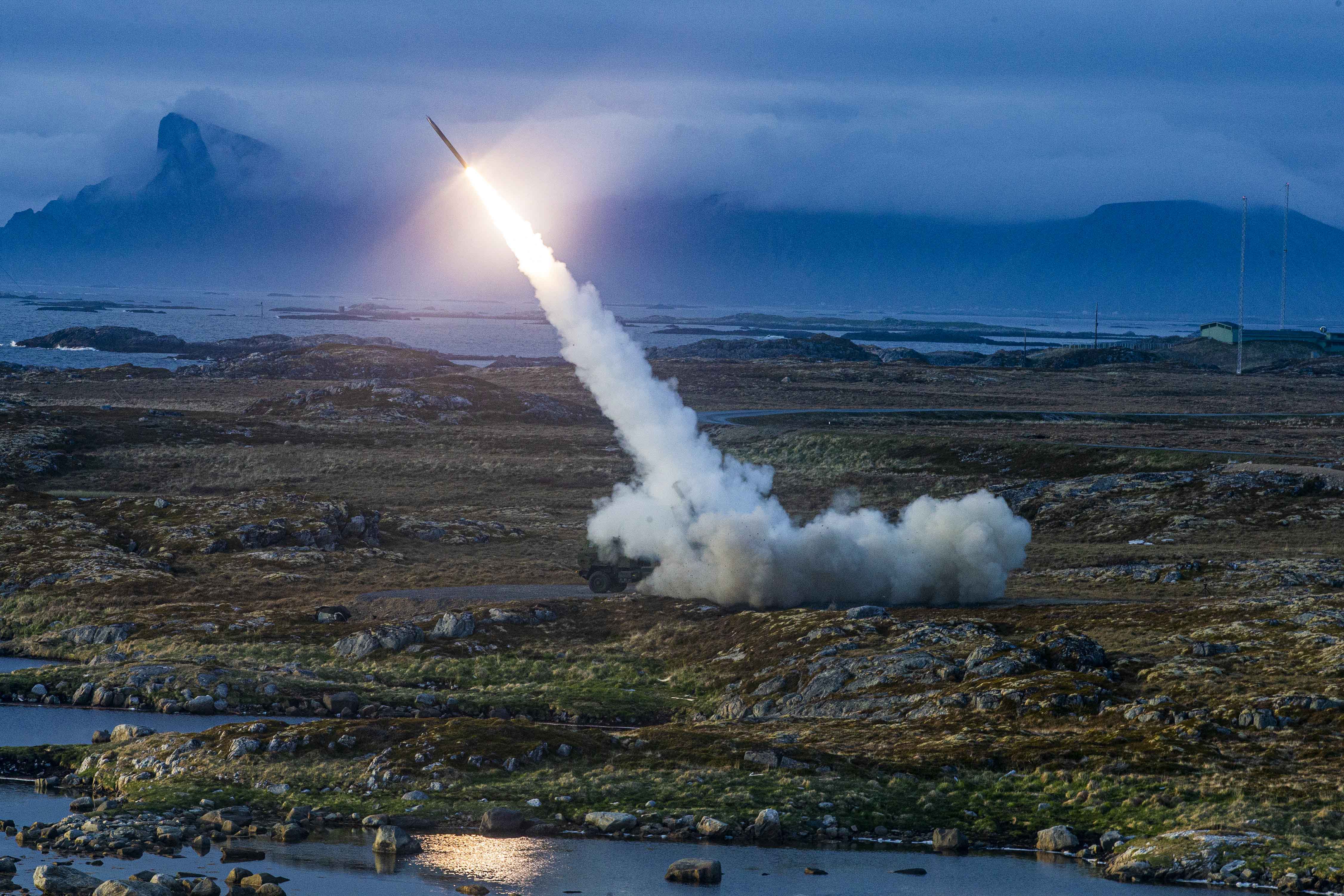
Marines fire a high mobility artillery rocket system in Andoya, Norway, May 31, 2021.

Boat Ops


Sailors conduct small boat operations in the Philippine Sea, June 8, 2021.

Secretary of Defense Lloyd J. Austin III Opening Remarks at DOD Pride Month Event (As Delivered)

 June 9, 2021


Good morning, everybody.
Rudy, thank you for that kind introduction.

And thanks for pulling this together – it’s pretty remarkable work that you’ve done over the past several weeks and months… So let’s give Rudy a big round of applause.  

And thanks to the DoD Pride group for bringing together this community at the Pentagon today.

As Rudy mentioned, it’s great to see such a tremendous array of the Department's top leaders, past and present… these leaders who are here today obviously to support this important event.    

And it’s great to be sharing the same stage with Major General Lauderback and Lieutenant Moore, who have served their country with distinction.

Let me begin by thanking all of you for your service – for the tireless work that you do every day to defend this nation.

And just as important, thank you to your spouses, partners, and families, some of whom are joining us today.

None of us could do what we do without your support and your sacrifices.

This June, we celebrate Pride Month across the Department by recognizing the extraordinary achievements of our lesbian, gay, bisexual, and transgender service members and civilian employees.

And we reflect on the progress we’ve made in making sure that everyone who wants to serve and is qualified can do so with dignity and respect.

We know that we have more work to do, but thanks to your courage, your advocacy, and your dedication, the Department of Defense has been able to do more to secure LGBTQ+ rights than at any other time in our history.

That includes efforts to ensure that all military families and spouses receive the benefits their loved ones have earned and to which they are entitled… to helping veterans who previously were forced out because of their sexual orientation to apply to correct their records, or -- where appropriate -- to return to service.

You know, it’s often said that progress is a relay race, and not a single event.

That’s certainly been true when it comes to the pioneers who fought for this community’s civil rights in the military.

Throughout American history, LGBTQ+ citizens have fought to defend our rights and freedoms -- from the Founding of our nation to the Civil War, from the trenches of two World Wars to Korea and Vietnam, and from Afghanistan to Iraq.

They fought for our country even when our country wouldn’t fight for them.

Even as some were forced to hide who they were… or to hang up their uniforms.

When I reflect on the hard-fought progress that has been made over the years, the efforts of a number of notables spring to mind.

I’m thinking of heroes like retired Major Margaret Witt.

She treated countless troops as a nurse during Operations Desert Storm, Southern Watch, and Enduring Freedom before being outed against her will and discharged from the Air Force under “Don’t Ask, Don’t Tell.”

Major Witt could have walked away, but instead she took a stand -- and challenged that policy in court. Her efforts contributed to the repeal of “Don’t Ask, Don’t Tell” more than a decade ago.

I’m thinking of Technical Sergeant Leonard Matlovich, a decorated Vietnam veteran who inspired Major Witt.

Now, he was only 19 when he volunteered to serve.

He did three combat tours in Vietnam and was severely wounded in Da Nang.

He earned the Purple Heart, the Bronze Star, and the deep respect of his teammates.

But when he came home and came out, he was discharged by the Air Force.

So he took up a new fight in courtrooms across the country—a fight for his right to serve his country as an openly gay man.

And I’m thinking of Dr. Frank Kameny, a proud U.S. Army veteran of World War II. Dr. Kameny was later hired as an astronomer for the Army Map Service -- until he was fired in 1957 for being gay.

He later said it felt like “a declaration of war” against him by his own government.

Then he said, like any true soldier would, “I tend not to lose my wars.”

He wasn’t kidding.

Frank Kameny spent the rest of his life at the forefront of the gay-rights movement – by mentoring the next generation of activists, including Leonard Matlovich; by marching in protests; by founding the Mattachine Society of Washington, a pioneering gay-rights advocacy organization; and, in 1961, by bringing the first civil-rights claim based on sexual orientation all the way up to the U.S. Supreme Court.

Now, Dr. Kameny lost that battle in court.

But his activism helped set the stage for progress in the fight for full equality.

Of course, not every person in this story has been a member of this community.

I’m thinking, too, of Admiral Mike Mullen, my good friend and mentor. As Chairman of the Joint Chiefs of Staff, he took a courageous stand against “Don’t Ask, Don’t Tell”… a stand that led directly to its repeal.

And so today, we commemorate 10 years since the repeal of “Don’t Ask, Don’t Tell,” and we welcome a new generation of soldiers, sailors, airmen, guardians, and Marines openly and proudly serving their country. 

Today, we can recognize and honor their contributions rather than questioning their ability to serve.

And today, we reaffirm that transgender rights are human rights, and that America is safer -- and better -- when every qualified citizen can serve with pride and dignity.

Now, that’s real progress.

And it was hard-fought and hard-won.

But we’ve got more work to do.

Our work isn’t done until we tackle the challenge of sexual assault and harassment in the force. And we know that service members from this community are at elevated risk of such crimes.

Our work isn’t done until we recognize that the health of the force fully incorporates mental health, including for LGBTQ+ service members. That’s why we recommit to treating all wounds, both visible and invisible.

And our work isn’t done until we create a safe and supportive workplace for everyone –free from discrimination, harassment, and fear.

Because nobody should have to hide who they love to serve the country that they love.

And no service member who is willing to put their life on the line to keep our country safe should feel unsafe because of who they are.

And no citizen who is qualified, willing, and able to do the job should be turned away.

So we’ve got more to do.

But I’m confident that we’ll get there because of all of you… and because of all the lesbian, gay, bisexual, and transgender service members and civilians around the world who never stop living the values that they so bravely defend.

I know that you are especially proud this month. 

And rightfully so. 

Well, I’m proud, too. 

Proud every month and every day to call you my teammates... and to serve alongside you.

Because your lives, your careers, your service, and your stories are living proof that we are stronger and more effective together.

So thank you for your service. 

Thank you for your skill. 

And thank you for the change and the progress that you continue to lead.

It matters greatly to the defense of this tremendous nation.

Thank you very much.

Patient Care


Air Force Lt. Col. Marc Wisner, a dentist, examines a patient's teeth at the Military Medical Surgical Field Hospital in Tafraoute, Morocco, June 7, 2021, as part of African Lion 21. With more than 7,000 participants from nine nations and NATO, African Lion is U.S. Africa Command’s largest exercise, and is focused on enhancing readiness for U.S. and partner nation forces.

Austin Signs Internal Directive to Unify Department's China Efforts

 June 9, 2021 | BY Jim Garamone , DOD News

Secretary of Defense Lloyd J. Austin III issued an internal directive today to laser-focus Department of Defense efforts to address China as the nation's number one pacing challenge.

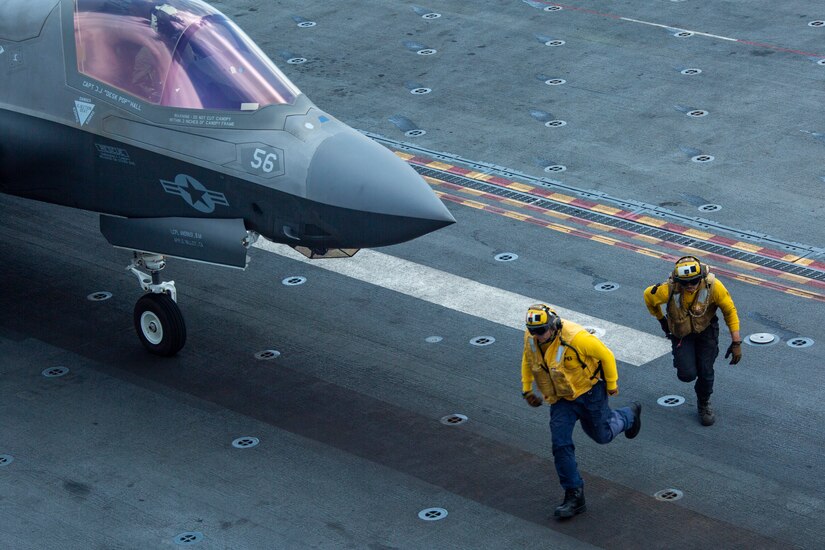
Sailors run in front of an F-35 aircraft readying for take off from the USS Makin Island.

Austin accepted recommendations from the China Task Force he established in February. The document is classified.

"The initiatives I am putting forward today are nested inside the larger U.S. government approach to China and will help inform the development of the National Defense Strategy we are working on," Austin said in a written statement on the directive. 

The secretary thanked the Task Force members and said it is time to move out to ensure that DOD efforts match the challenges.

"The efforts I am directing today will improve the department's ability to revitalize our network of allies and partners, bolster deterrence, and accelerate the development of new operational concepts, emerging capabilities, future force posture and a modernized civilian and military workforce."

– Secretary of Defense Lloyd J. Austin III
Senior DOD officials speaking on background said the directive will bring greater focus and unity of effort to address challenges posed by China. 

The initiatives call on the department to invest in America's unparalleled network of allies and partners. They also chart the need to bolster deterrence across all domains of warfare and look to accelerate the development of new operational concepts, a senior official said. 

The initiatives "are intended to streamline and strengthen cooperation with U.S. allies and partners, particularly in the Indo-Pacific," he said. 

While the task force recommendations are focused on the department, they remain "nested inside the Interim National Security Strategic Guidance and complement the multi-faceted work on China policy of departments, agencies and the White House," the official said. Moving forward, the results will be used to develop the National Defense Strategy and other reviews.

The internal directive is written with clearly stated objectives, with deadlines for implementation, and mechanisms for oversight and accountability. "To the extent possible, we designed these efforts to run through the lifeblood of the department, leveraging existing institutions, and only recommending new processes where necessary," the official said.

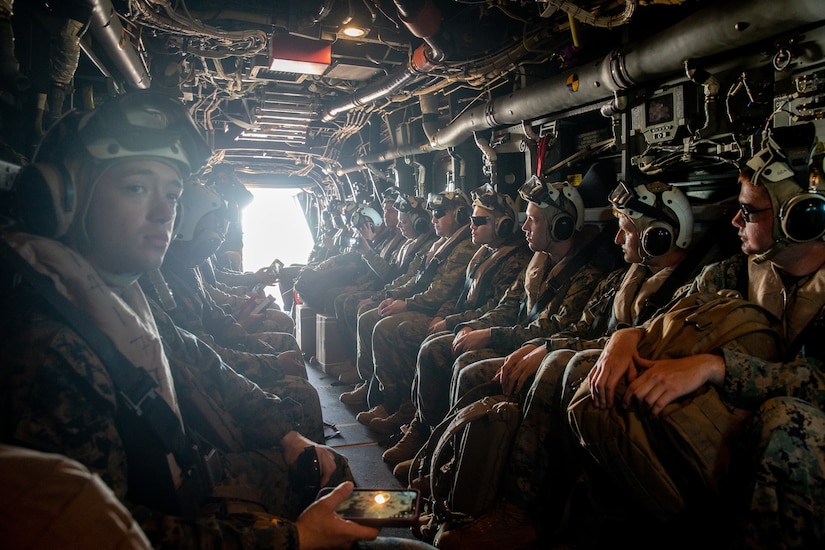
U.S. Marines, Australian service members sit aboard a V-22 Osprey.

The directive is classified, but the official could share one example of the scope of effort. "To ensure that the department has the people that we need to compete effectively, the secretary has tasked … the undersecretary of defense for personnel and readiness with updating professional military education and civilian professional development, to align the department with the prioritization of China," he said.

The secretary will also accelerate the Joint Warfighting Concept through the experimentation and prototyping phases, he said.

The most noticeable effort for service members will probably be in outreach to allies and partners. Military-to-military relationships are part of this outreach and there will be more exercises with allies and partners. 

The work of the task force is completed and it will now stand down. 

Austin: 'No One Should Have to Hide Who They Love to Serve the Country They Love'

 June 9, 2021 | BY Terri Moon Cronk , DOD News

The Defense Department celebrates the extraordinary achievements of its LGBTQ+ service members, civilian employees and their families' sacrifices during Pride Month, Secretary of Defense Lloyd J. Austin III said today at the Pentagon.

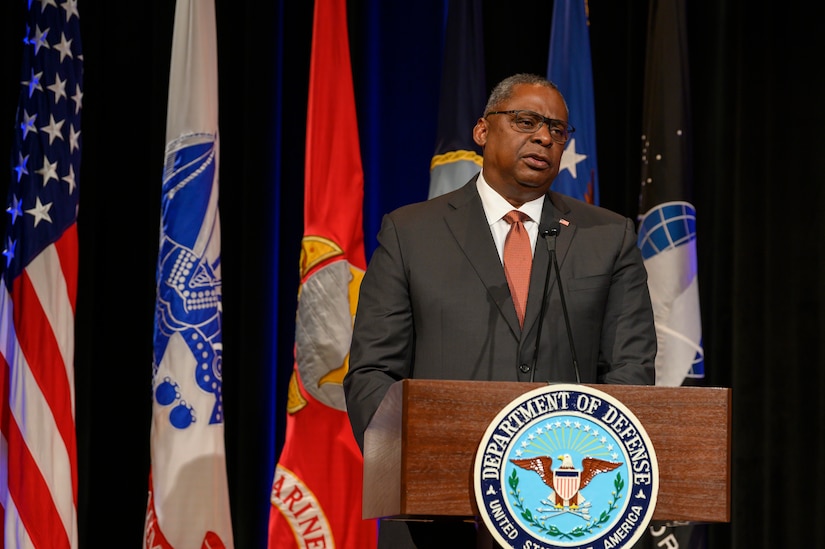
Secretary of Defense Lloyd J. Austin III delivers remarks.

Speaking to an audience that included the department's senior-most leadership, the secretary said as DOD reflects on the progress it's made in making sure that everyone who wants to serve and is qualified, can do so with dignity and respect.

"We know we have more work to do, but thanks to your courage, advocacy and dedication, the Department of Defense has been able to do more to secure LGBTQ+ rights than at any other time in history," Austin said.

That includes efforts to ensure all military families and spouses receive the benefits their loved ones have earned, and to which they are entitled; to helping veterans who previously were forced out because of their sexual orientation to apply to correct their records, or — where appropriate — to return to service, he said.

"[It's] often said that progress is a relay race [and] not a single event. That's certainly been true when it comes to the pioneers who fought for this community’s civil rights in the military," the secretary said.

Throughout American history, LGBTQ+ citizens have fought to defend our rights and freedoms — from the founding of our nation to the Civil War, from the trenches of two World Wars to Korea and Vietnam and from Afghanistan to Iraq, the secretary said. "They fought for our country even when our country wouldn't fight for them."

Austin noted how not every advocate of this community's rights has been an LGBTQ+ community member. Former Chairman of the Joint Chiefs of Staff, Navy Adm. Mike Mullen, was one leader who took a courageous stand against the law, "Don't Ask, Don't Tell," which led directly to its repeal 10 years ago.

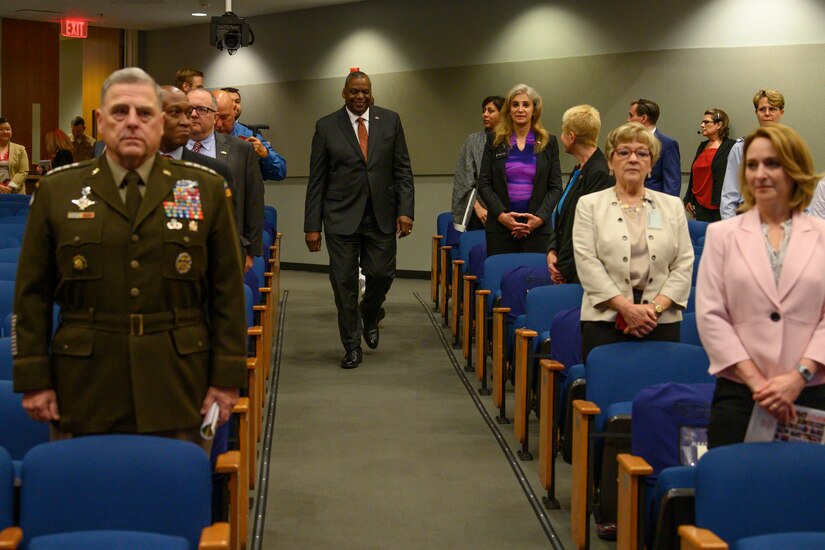
Secretary of Defense Lloyd J. Austin III walks down an aisle in an auditorium.

Today, the department commemorates the repeal of that law and welcomes a new generation of soldiers, sailors, airmen, guardians and Marines, openly and proudly serving their country, Austin said. 

"And today, we reaffirm that transgender rights are human rights and that America is safer — it is better — when every qualified citizen can serve with pride and dignity," the secretary said.

He called such efforts real progress and emphasized how the repeal was hard-fought and hard-won.

However, DOD's work isn't done until it tackles the challenge of sexual assault and harassment in the force, he emphasized. 

"And we know that service members from this community are at elevated risk of this crime.  Our work isn't done until we recognize that the health of the force fully incorporates mental health, including for LGBTQ+ service members," the secretary pointed out.

"That's why we must recommit to treating all wounds, both visible and invisible. And our work still isn’t done until we create a safe and supportive workplace for everyone — one free from discrimination, harassment and fear," Austin said.

Secretary of Defense Lloyd J. Austin III delivers remarks.

"No one should have to hide who they love to serve the country they love," he said. "No service member who is willing to put their life on the line to keep our country safe should feel unsafe because of who they are."

Further, the secretary said, "No citizen who is qualified, willing and able to do the job should be turned away. So yes, we've got more to do. But I'm confident we'll get there because of all of you, and because of the LGBTQ+ service members and civilians around the world who never stop living the values they so bravely defend."

The secretary said he knows this community is especially proud this month and rightfully so. "I'm proud, too," he said, adding, "proud every month and every day to call you my teammates and to serve alongside you — because your lives, careers, service and stories are living proof that we are stronger and more effective together."

Austin thanked the LGBTQ+ community for their service, their skill, and change and progress as they continue to lead. "It matters very much to the defense of this nation," he said.

The Department of Defense Announces Establishment of Arctic Regional Center

 June 9, 2021


Secretary of Defense Lloyd J. Austin III is proud to announce the establishment of a new Department of Defense Regional Center, the Ted Stevens Center for Arctic Security Studies. The center will bring increased cooperation on the unique challenges and security concerns related to the Arctic region.  

Defense Department Regional Centers are international academic venues for bilateral and multilateral research, communication, and training with the goal of building strong, sustainable international networks of security leaders. The Ted Stevens Center for Arctic Security Studies will develop collaborative insights with allies and partners. 

“The center will support the U.S. Interim National Security Strategic Guidance direction to work with like-minded partners and across the interagency to pool our collective strength and advance shared interests,” Secretary Austin said. “It will address the need for U.S. engagement and international cooperation to strengthen the rules-based order in the region and tackle shared challenges such as climate change.”

The Ted Stevens Center will provide a new venue to collaborate with our allies and partners to advance shared interests for a peaceful and prosperous Arctic. The Department is currently determining the appropriate location for the center.

Shooting Stare


A soldier participates in a fire support coordination exercise at Pohakuloa Training Area, Hawaii, June 7, 2021.

Naval Ops


A utility landing craft enters the well deck of the USS Carter Hall during naval operations in the Red Sea, June 6, 2021.

Log Drills


Marine Corps recruits participate in log drills at Marine Corps Recruit Depot San Diego, June 7, 2021.

Twilight Training


A Mississippi Army National Guard M1A2 Abrams tank conducts maneuvers during training at the National Training Center at Fort Irwin, Calif., June 7, 2021.

DOD Hosts Virtual Hiring Fair for Military Spouses

 June 9, 2021


The Department of Defense Military Spouse Employment Partnership will host its fifth virtual hiring fair for military spouses on June 16, 2021.

The theme of this MSEP Virtual Hiring Fair is MSEPtional: A Decade of Wins for MilSpouses, which celebrates the 10th anniversary of the MSEP initiative. Since its inception in 2011, MSEP has inducted more than 500 companies, organizations, and federal agencies into the partnership. Collectively, they have hired more than 180,000 military spouses.

The free MSEP Virtual Hiring Fair gives military spouses the opportunity to live chat from anywhere in the world with hiring managers who, as MSEP partner employers, are actively seeking military spouse employees.

More than 100 MSEP companies will be available from 11 a.m. to 3 p.m. EDT to speak directly with military spouses interested in their organization or job openings. Spouses may apply for featured CONUS and OCONUS jobs with MSEP partners directly through the event platform.

“We’re proud of the success of MSEP since its inception 10 years ago,” said Deputy Assistant Secretary of Defense for Military Community and Family Policy Patricia “Patty” Montes Barron. “The MSEP Virtual Hiring Fair is the perfect platform to recognize that success by making it easy and convenient for military spouses worldwide to connect with hiring managers who recognize their value as employees.”

Through the platform, spouses have exclusive access to connect with Spouse Education and Career Opportunities career coaches, MSEP partner employers and Military OneSource consultants to learn more about resources available to military spouses.

Spouses can prepare for the MSEP Virtual Hiring Fair by connecting with a SECO career coach for a resume review and video mock interview. For more information, call Military OneSource at 800-342-9647 or start a live chat. Register for the MSEP Virtual Hiring Fair at www.msephire.vfairs.com.  

About Military Community and Family Policy 

Military Community and Family Policy is directly responsible for establishing and overseeing quality-of-life policies and programs that help our guardians of country, their families and survivors be well and mission-ready. Military OneSource is the gateway to programs and services that support the everyday needs of the 5.2 million service members and immediate family members of the military community. These Department of Defense services can be accessed 24/7/365 around the world.
Marine Movers


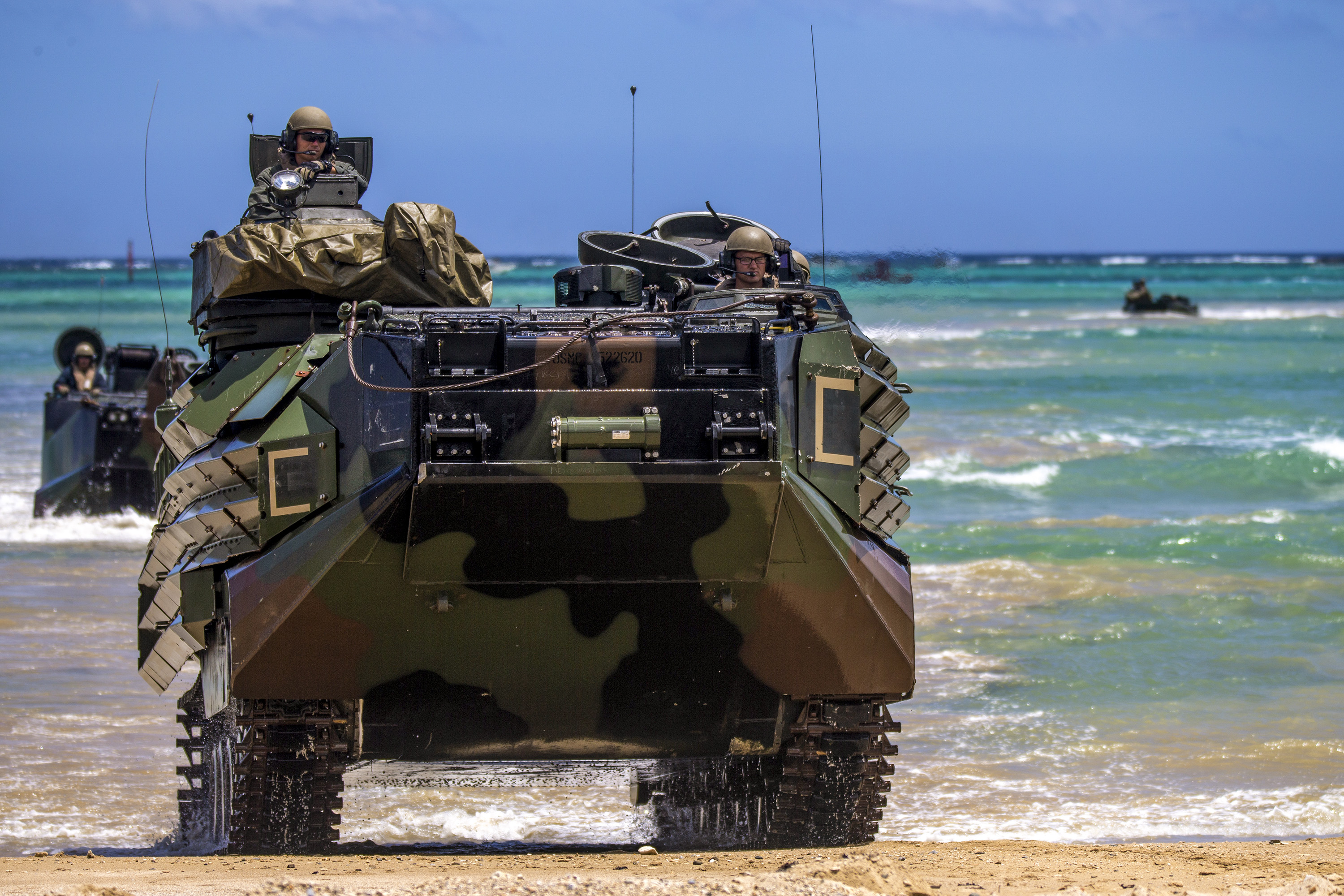
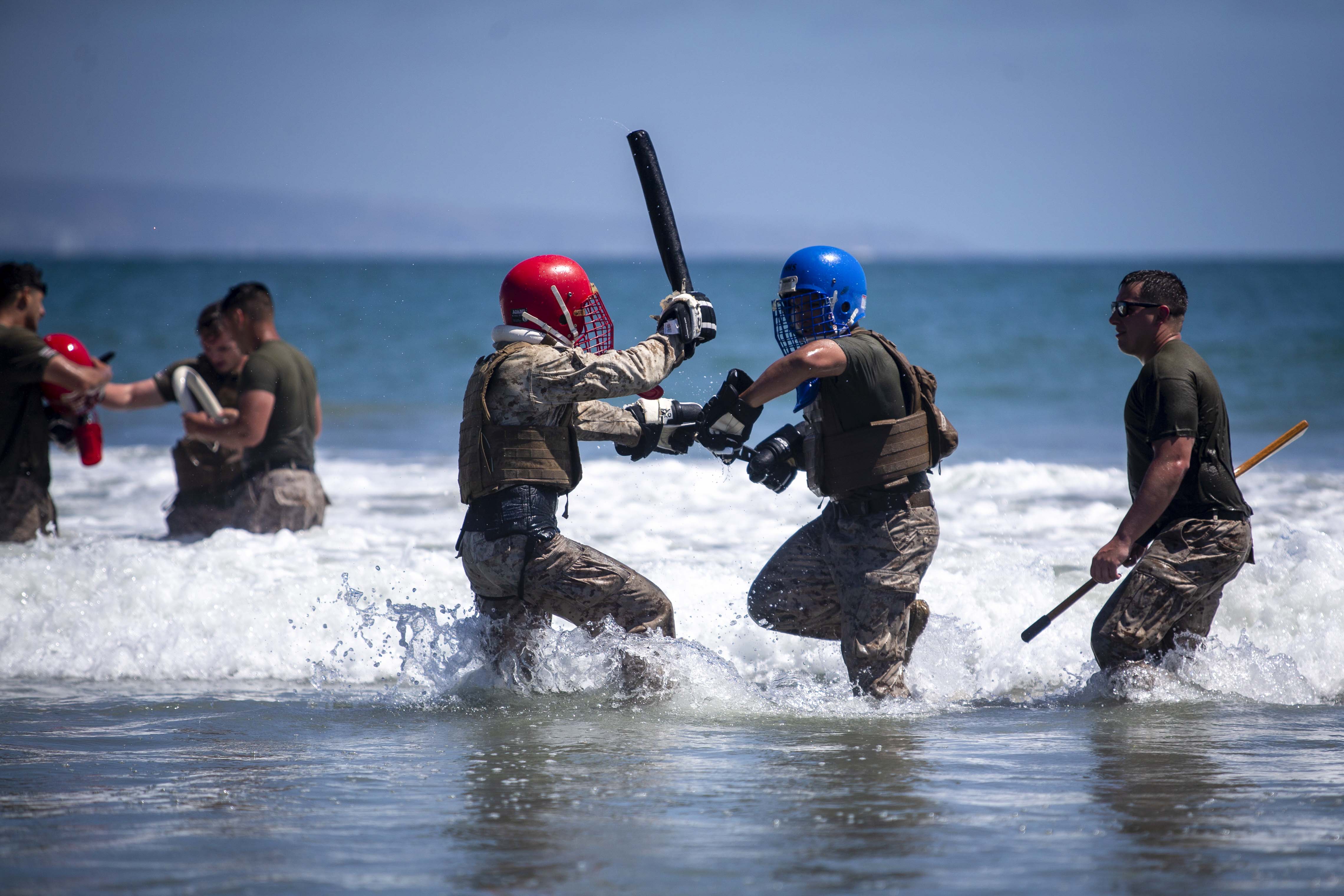
Marines conduct waterborne operations with assault amphibious vehicles during training at Camp Schwab in Okinawa, Japan, May 24, 2021.

Distributing Supplies


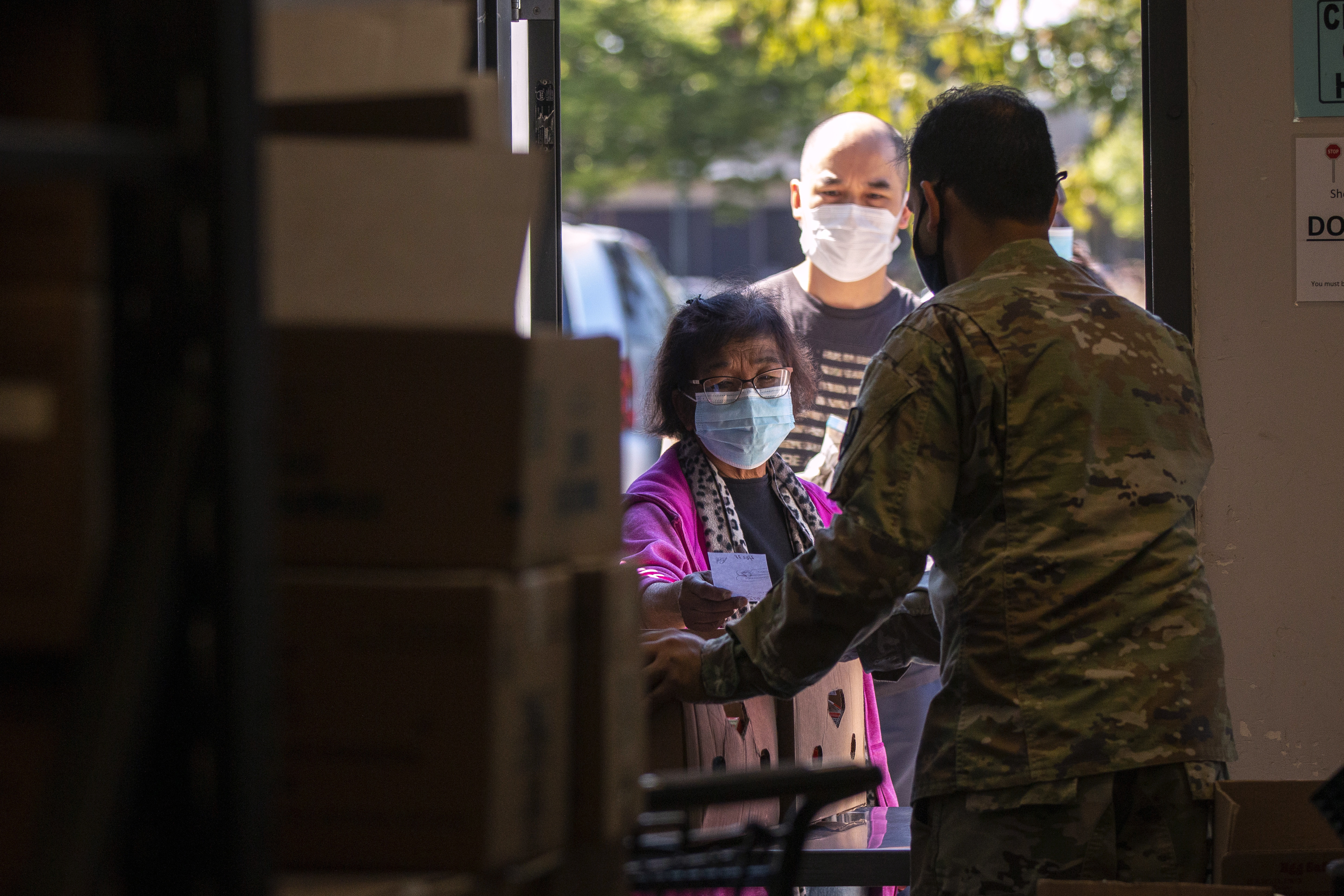
A Washington Army National Guard soldier works with volunteers to distribute nonperishable groceries at the Kent Food Bank in Kent, Wash., June 22, 2021. Joint Task Force Steelhead is the Washington's National Guard's COVID-19 response force.

Supplies for Bangladesh


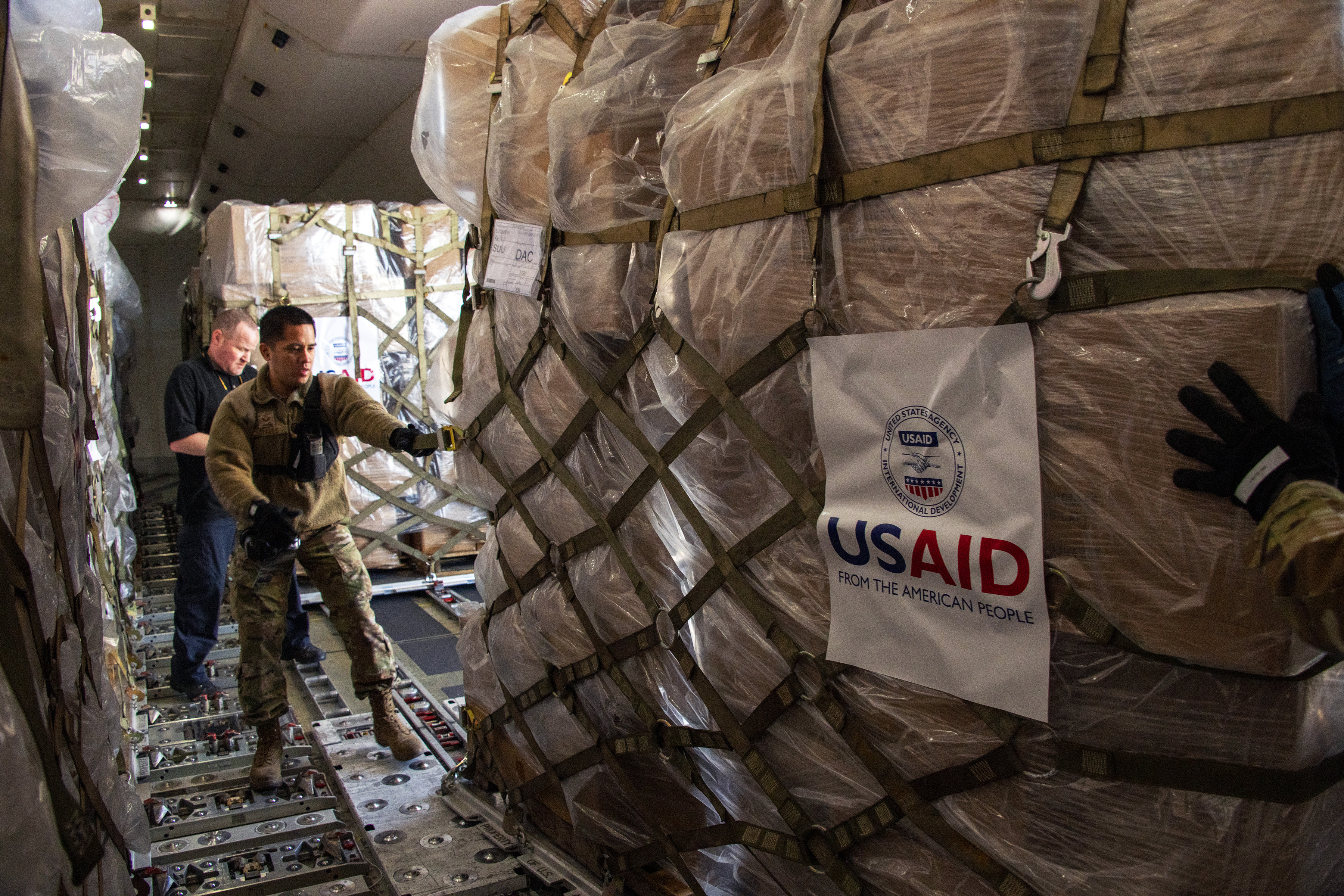
Air Force Senior Airman Christopher Oyales, right, an air transportation specialist, and Robert Lewis, an aircraft loader leader, load a Kalitta Air 747 with more than 30 pallets of COVID-19 supplies and personal protective equipment at Travis Air Force Base, Calif., June 8, 2021. Both men are assigned to the 60th Aerial Port Squadron. The supplies, provided by the United States Agency for International Development, were delivered amid an increase in COVID-19 cases in Bangladesh.

Administering Vaccines


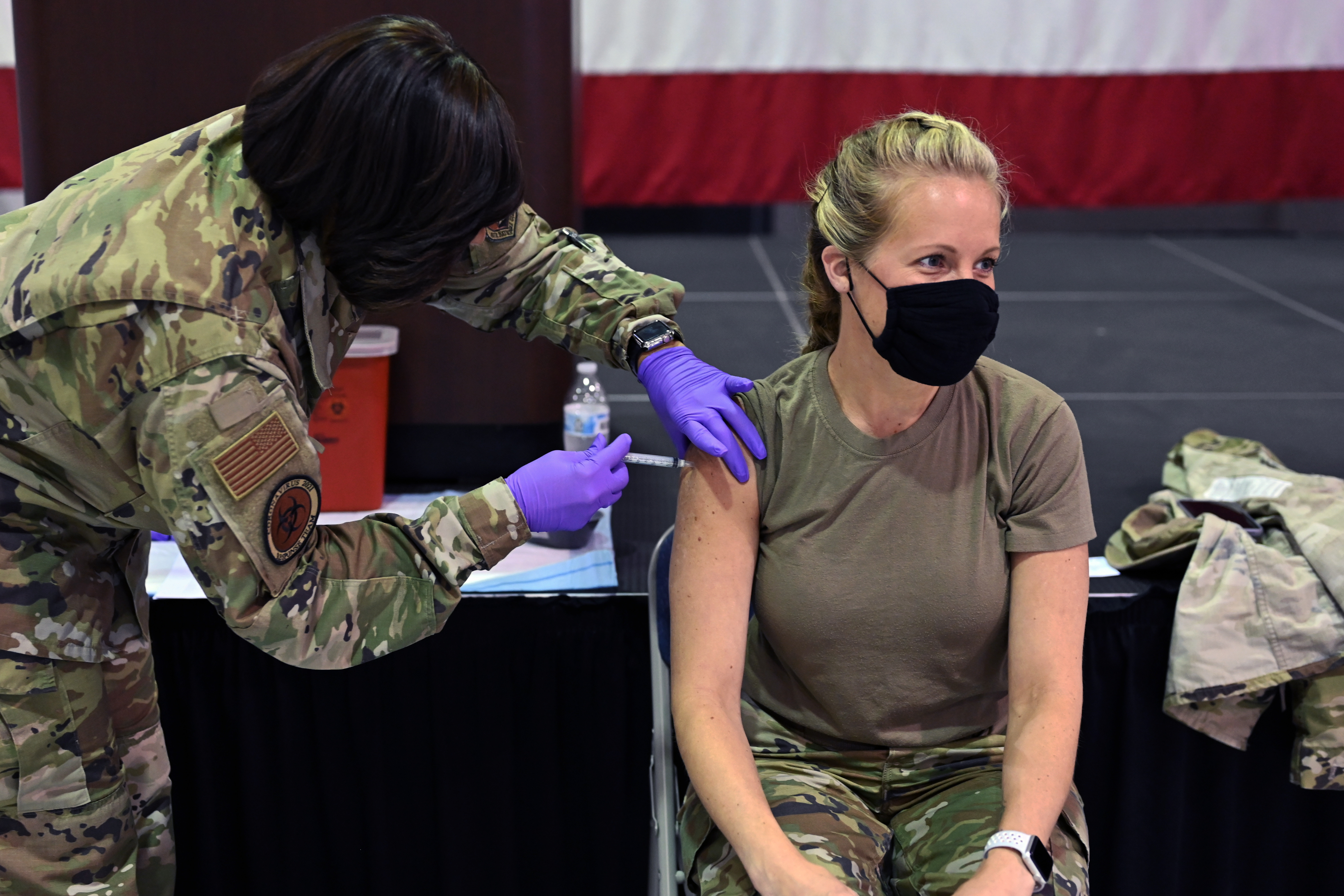
Air Force Master Sgt. Tiffany Sneeze, assigned to the 165th Airlift Wing, administers the COVID-19 vaccination to an airman on Dobbins Air Force Base, Ga., June 8, 2021. Service members at Dobbins Air Force Base administer the vaccine every Tuesday in June.

Corps Tradition


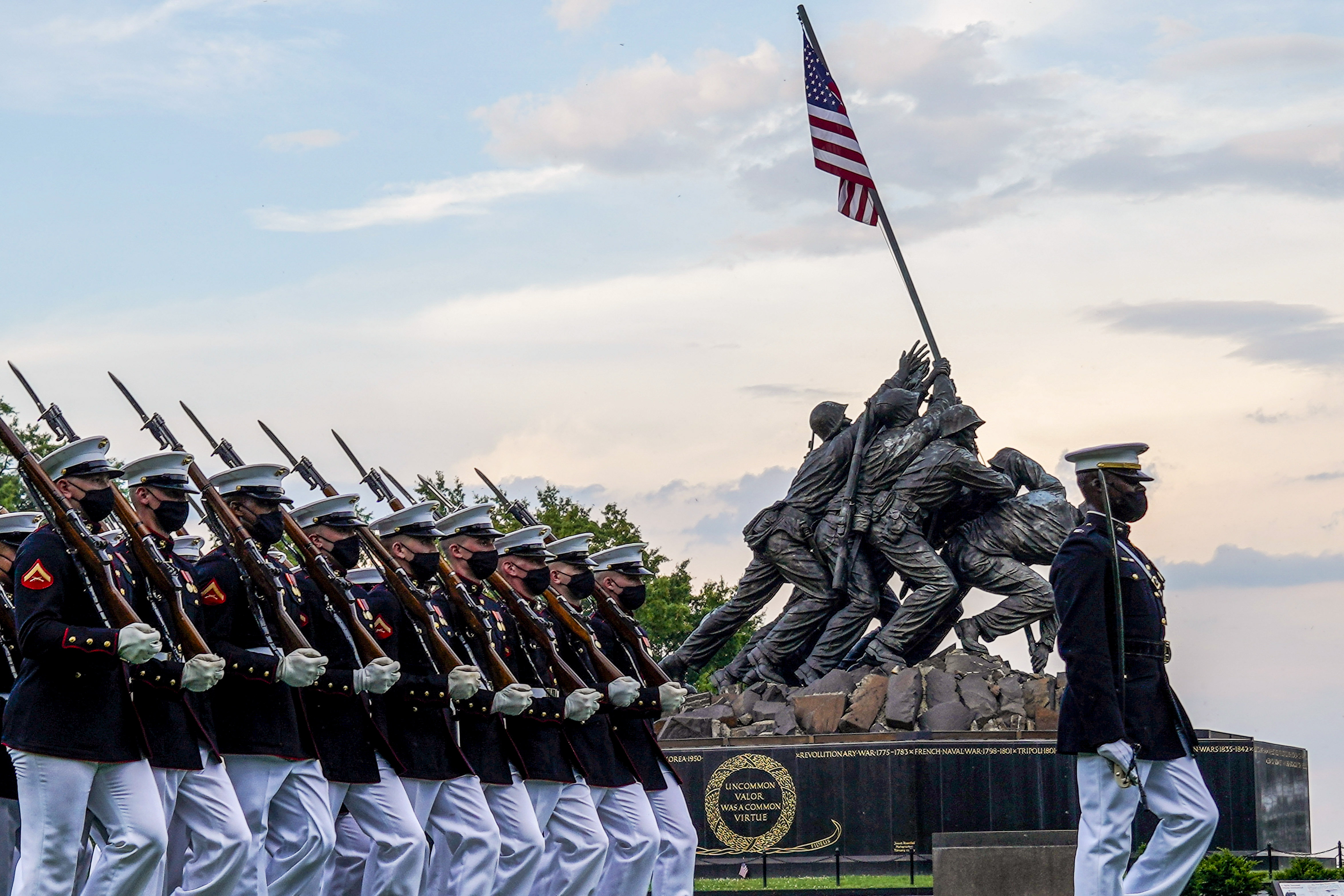
Marines assigned to the Marine Corps Silent Drill Platoon march during a sunset parade at the Marine Corps War Memorial in Arlington, Va., June 8, 2021.

Official Says DOD on Track to Accelerate Delivery of Hypersonic Weapons

 June 9, 2021 | BY David Vergun , DOD News

Hypersonics is a key element of the Defense Department's modernization activity, delivering high-speed, long-range lethal effects that can take out high-priority targets on the battlefield, a key Defense Department official said.

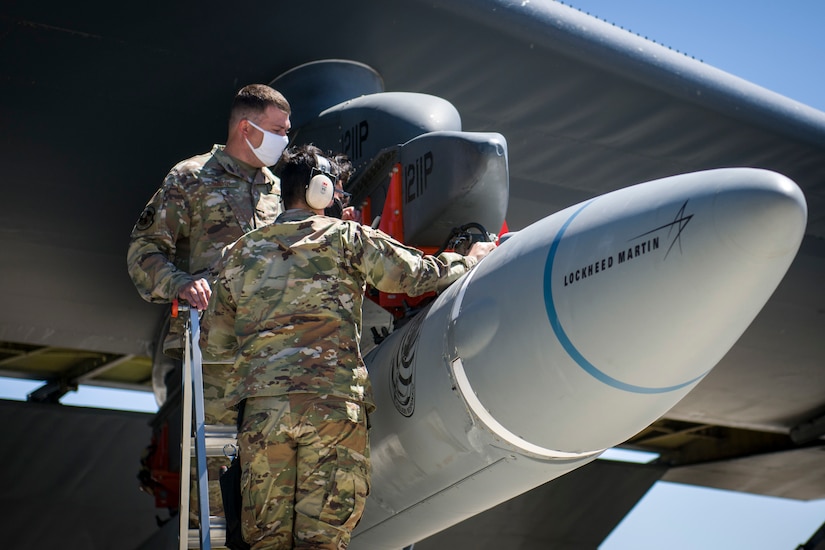
Two men in military uniforms stand on a ladder at the nose of an airplane.

Mike White, principal director for hypersonics in the Office of the Undersecretary of Defense for Research and Engineering, said hypersonics are effective because they fly at sustained speeds around Mach 5, and above, at very high altitudes and are maneuverable. This makes them difficult to intercept and able to reach high-priority targets from long range, in a very short time.

White told the Center for Strategic and International Studies that a lot of science goes into developing hypersonic systems. For instance, at speeds of Mach 5 and above, thermal protection systems are very important because of the heat generated, he said, adding that carbon-based composites are being developed to prevent overheating.

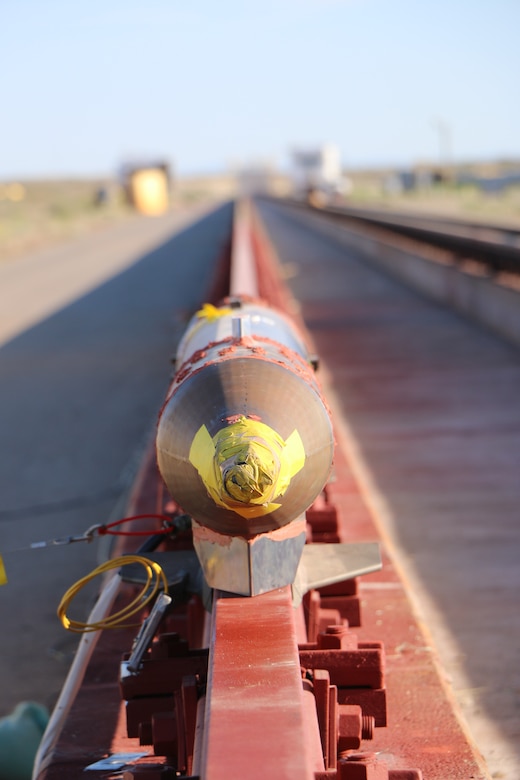
A rocket sled just before launch.

Besides offensive hypersonics, DOD is also working on defensive measures against a potential adversary's hypersonic systems, he said, referring to Russia and China. Intercept measures are being developed to take out enemy hypersonics in all phases — such as launch, glide and terminal.

The hypersonic systems being developed, he said, include a family of hypersonic weapons that can be launched from the sea, land and air, as well as, a family of weapons to defend against adversary hypersonic capability. As such, the Army, Navy, Air Force and Missile Defense Agency are all developing these capabilities, in cooperation with organizations such as the Defense Advanced Research Projects Agency, Sandia National Laboratories and industry. There are also initiatives with allies.

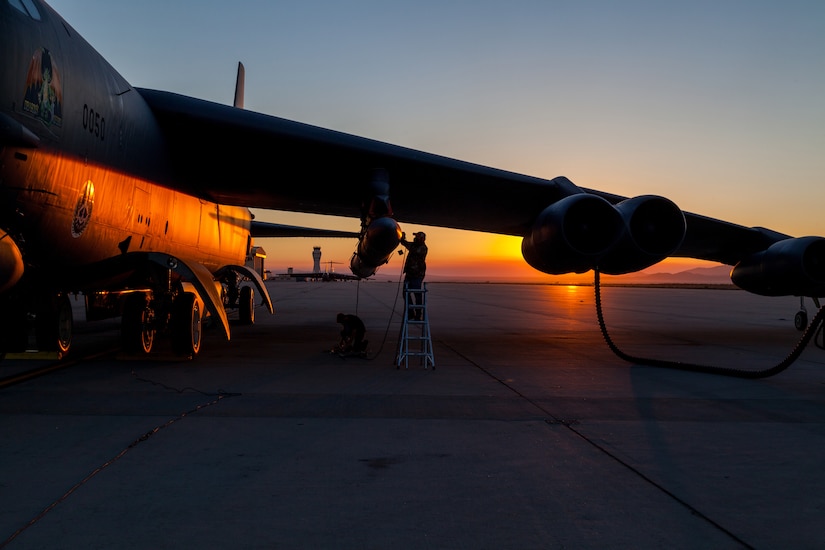
An airman works on an aircraft.

White mentioned that Congress and the administration have been very supportive of hypersonics development.

The DOD's fiscal year 2022 budget request includes $6.6 billion to develop and field long-range fires, including hypersonics, with a goal of testing and producing air, land, and maritime launched weapons by the early to mid-2020's. 

Tuesday, June 08, 2021

Smoke Screen


An Idaho Army National Guardsman participates in a training exercise at the Orchard Combat Training Center in Boise, Idaho, May 13, 2021.

Course Competition


Marines participate in a martial arts instructors course at Naval Air Station North Island, Calif., May 27, 2021.

Hero's Honors


Sarah Adams, great-grandniece of Navy Petty Officer 3rd Class Shelby Treadway, receives a flag during Treadway's funeral at the National Memorial Cemetery of the Pacific in Honolulu, June 2, 2021. Treadway was assigned to the USS Oklahoma, which capsized during the Dec. 7, 1941, attack on Pearl Harbor. The Defense POW/MIA Accounting Agency recently announced the identification of his remains through DNA analysis; he was laid to rest with full military honors.

Flightline Fist Bump


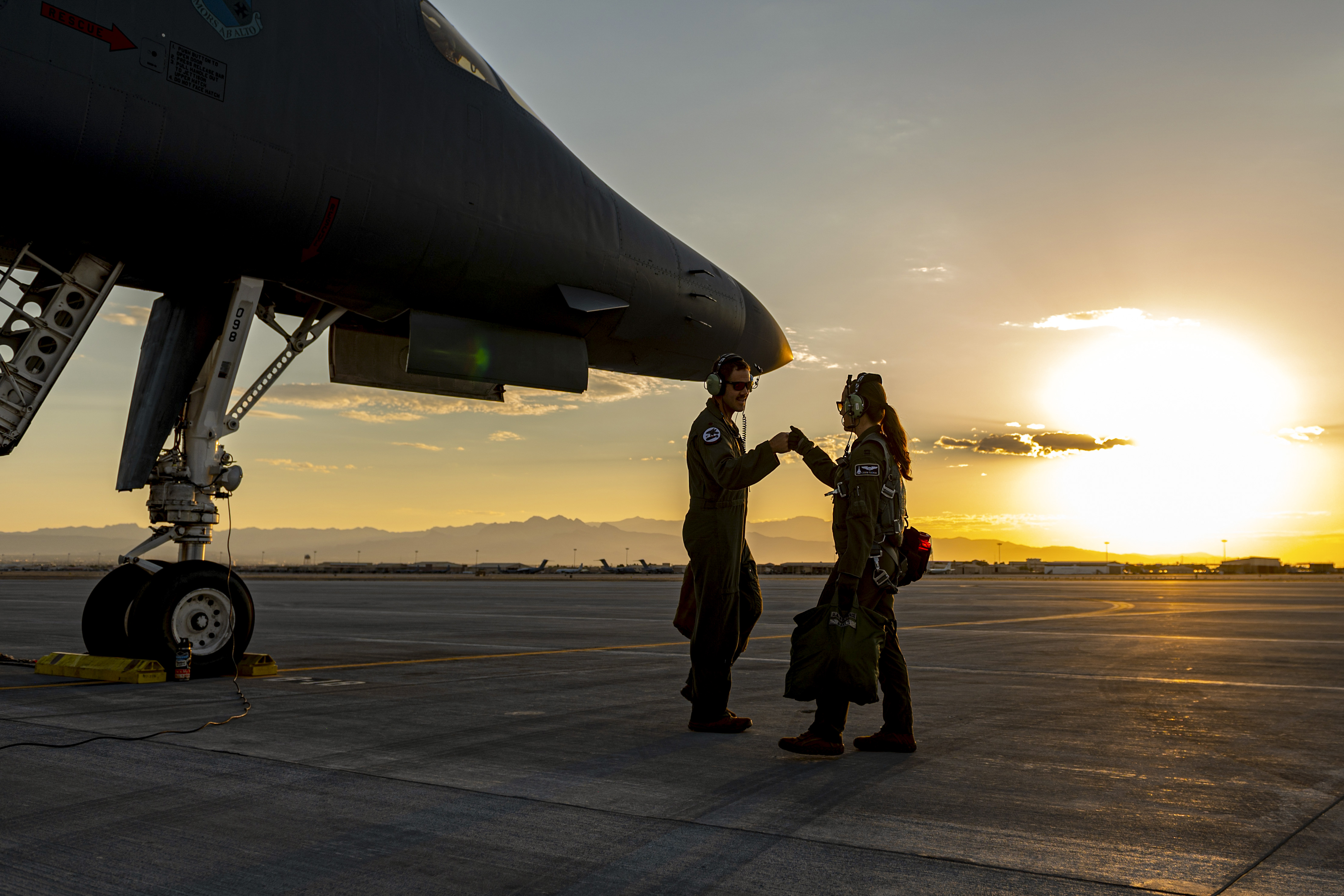
Airmen assigned to the 77th Weapons Squadron fist-bump before a U.S. Air Force Weapons School integration exercise at Nellis Air Force Base, Nev., June 3, 2021.

DOD Vaccine Centers Draw Down to 5

 June 8, 2021 | BY C. Todd Lopez , DOD News

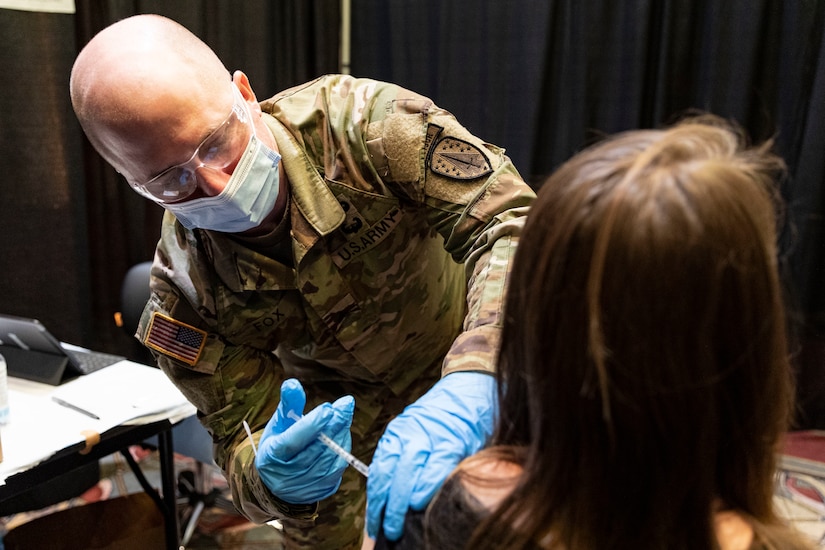
Back in February, the Defense Department partnered with the Federal Emergency Management Agency to set up community vaccination centers to administer COVID-19 vaccines to Americans who wanted them.

A soldier wears rubber gloves and a mask. He uses a syringe to administer a vaccine into a woman's arm.

Since that time, 16 million vaccinations have been administered. At the peak of the effort, there were 35 locations across the U.S. where teams of service men and women — as many as 222 — worked to provide vaccinations.

Now, after much success, that effort has drawn almost completely to a close.

"As of today, we are supporting eight vaccination sites and expect to reduce that to five by the end of today," Pentagon Press Secretary John F. Kirby said. "We are proud of the support, of course, that our service members — both active duty and National Guard — have provided to combat this pandemic."

By Wednesday morning, he said, only five sites will remain open. Those sites are in New Jersey, Oklahoma, Oregon, Minnesota and Kentucky.

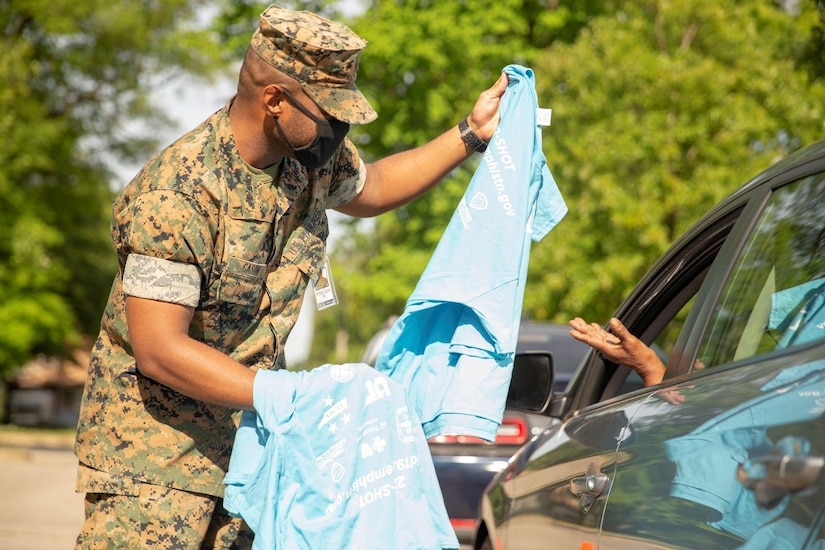
A Marine hands a T-shirt to a person sitting in an automobile.

The Defense Department's fight against COVID-19 isn't limited to the U.S. Currently, DOD is also working to provide COVID-19 support to nations in South Asia, Kirby said.

"If you didn't see it over the weekend, Travis Air Force Base remains extremely busy supporting government efforts to provide emergency assistance to countries in South Asia," he said.

Travis Air Force Base in California is helping the U.S. Agency for International Development airlift much-needed medical supplies to help Bangladesh battle its latest COVID-19 surge, Kirby said.

"An Air Force C-17 flight departed late Friday from Travis for Dhaka, Bangladesh, carrying over 2 million pieces of personal protective equipment to protect thousands of health care workers in Bangladesh," Kirby said.

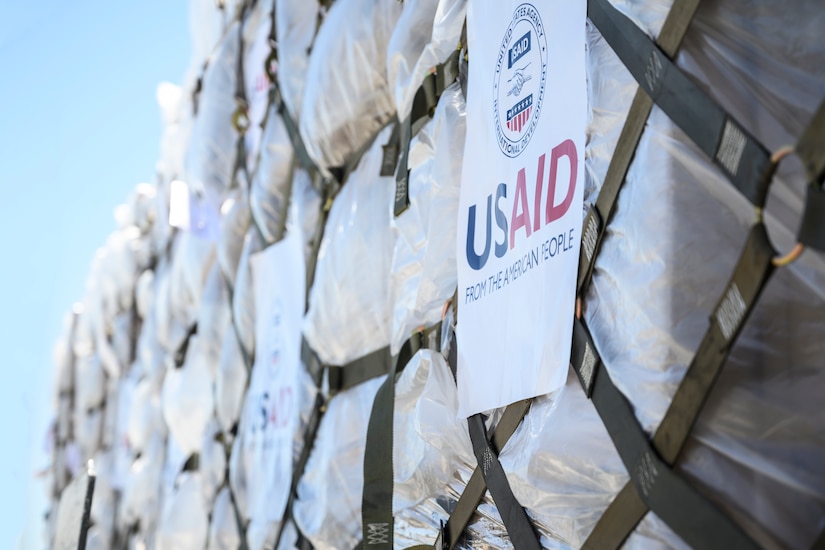
Web mesh is wrapped around cargo. A paper sign reads "USAID."

The U.S. military has also helped USAID provide assistance to other nations, including India, Nepal, Maldives, Pakistan and Sri Lanka.

The partnership between USAID and the DOD, he said, demonstrates the United States government's global response to ensure that life-saving assistance and supplies reach those who need it most.