The secretary of defense has been clear that
modernizing the military is a key component of how the Defense
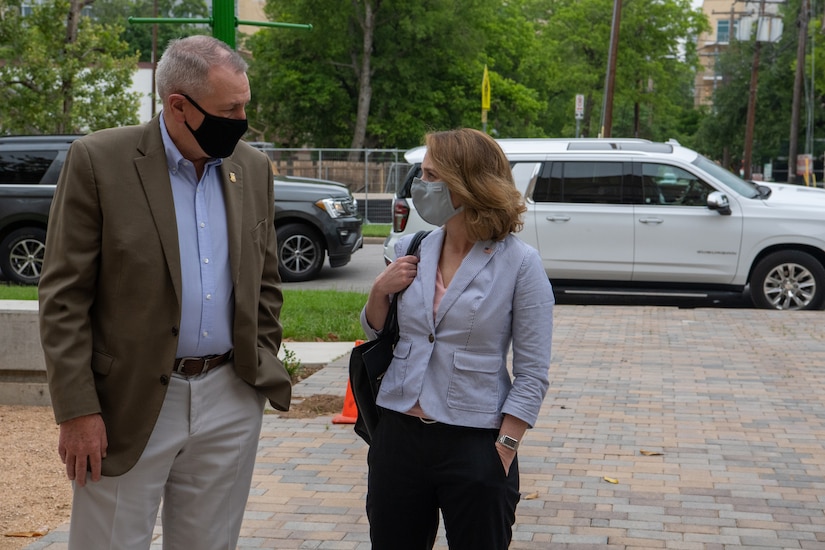
Department defends the nation, Deputy Defense Secretary Kathleen H.
Hicks said this week after spending a day at Army Futures Command in
Austin, Texas.
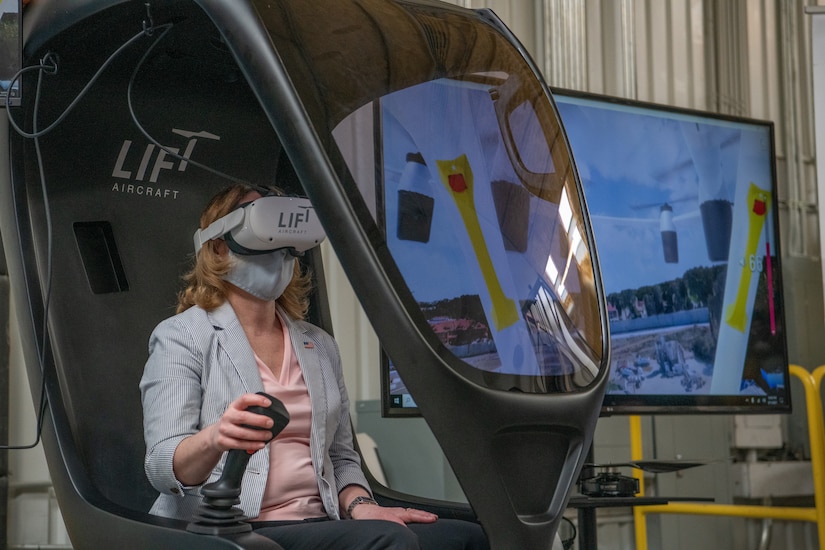
Hicks' trip focused on the DOD's innovation and modernization efforts
and use of best practices to put new technology in the hands of the
warfighter.
In modernizing the total force, Hicks' job is to help Secretary of
Defense Lloyd J. Austin III move strategy to application, she said,
explaining that line runs directly through concept development,
capabilities, force design and eventually resourcing. "That's what Army
Futures Command is all about for the Army, so it helps me significantly
to be able to come down here and see what part the Army is trying to
play in helping move to execution through those same key lines," she
said.
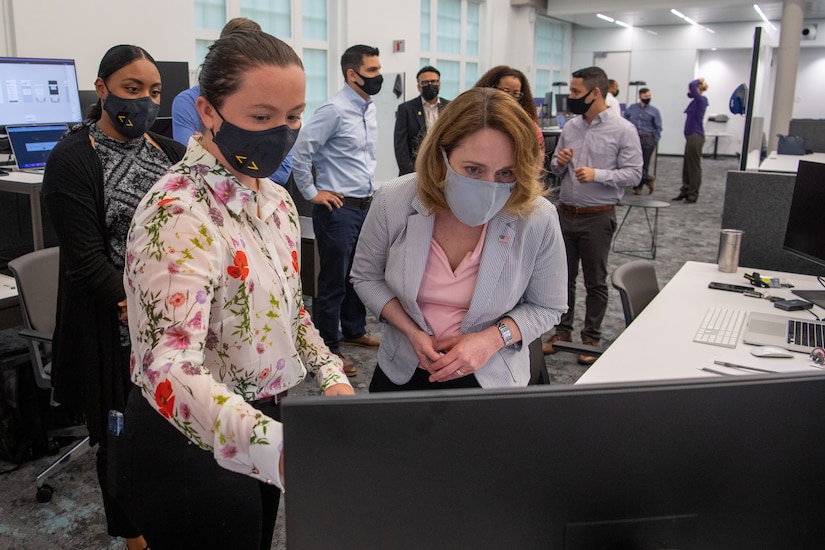
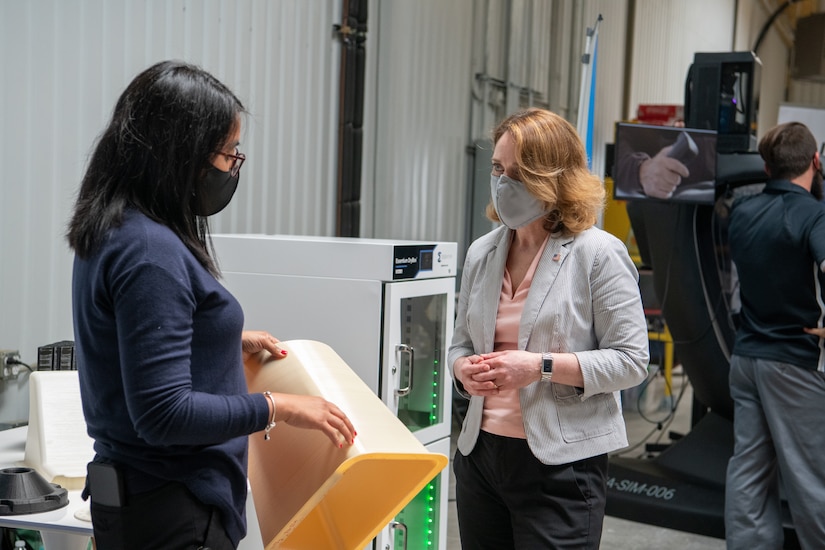
In addition to meetings, briefings and visits with Army Gen. John. M.
Murray, AFC commanding general, Hicks saw the collaboration between the
Army and academia at the AFC Software Factory and the AFC Applications
Lab.
Public-private partnerships are critical to modernizing the force,
she emphasized. "[They're] even more critical today because so much of
the investment in ecosystems around innovation is happening outside of
the government sector, so it increases the need for DOD to make sure
it's [the Defense Department] part of that broader innovation
ecosystem," Hicks said.
DOD has been taking ideas and concepts that are critical for military
needs and helping transition them to solutions for about a decade. "But
I think we're just starting to really see the seeds germinate around
how we do it," she added.
The deputy secretary said she witnessed excitement and passion as she
watched Austin Community College software lab students work and learn
collaboratively with soldiers to find solutions to software issues.
Software developers must be agile and able to jump from problem to
problem, she added.
It's significant to have a resource such as academia pulled into a
traditional military hierarchy if the collaboration yields software
solutions, Hicks said.
"I think, at the corporate enterprise level, what we're trying to
focus on is learning more about the great ideas that are out there — of
which there are many — and [AFC] is one of them," she said.
It's important, she added, to bring ability and transparency to
modernization and innovation efforts and create more of an ecosystem
from the enterprise level. That makes it easier for policy-making
customers to understand what's available and quickly leverage it.
The deputy secretary said DOD wants to pull up those good ideas and
see what's working at the corporate enterprise level. From there, she
said DOD can think about whether major policy and authority changes are
needed and whether there are incentives.
"That's the piece where I think I can provide the most sum on the
scale," she said. "How do you change the incentives around everything
from promotions to how budgets are determined and those sort of major
levers that help you shift culture over time? In a way, that's
supportive of innovation, and we're just at the beginning of that
journey."
Murray said a strength of AFC's Applications Lab is that it starts
with the problems that need to be solved for the Army. "We struggled for
a long time trying to figure out the sweet spot for [AFC's Applications
Lab], and I think we have stumbled upon something," he said.
Being able to describe that problem so the average person can
understand it — without acronyms and very simply — also fosters
innovative thinking.
"We end up with some decent products, but I'm really interested in
expanding the way we think about problems, and I think just the
conversations we have with people who think differently about how to
solve problems is probably the biggest benefit we’re going to get," the
general said.
Ultimately, AFC is trying to solve problems for the soldiers in the
field today, and it's important to keep them involved in the process,
Murray explained.
"But as you start to think about some of the research and development
investments, it's that soldier who's in fourth-grade right now who will
be a soldier in the future. So, we're not only keeping today's soldiers
but future soldiers in mind as we begin to solve some of these
[challenges]," he said.





















 Posts
Posts

