Feb. 12, 2021
Pentagon Press Secretary John F. Kirby
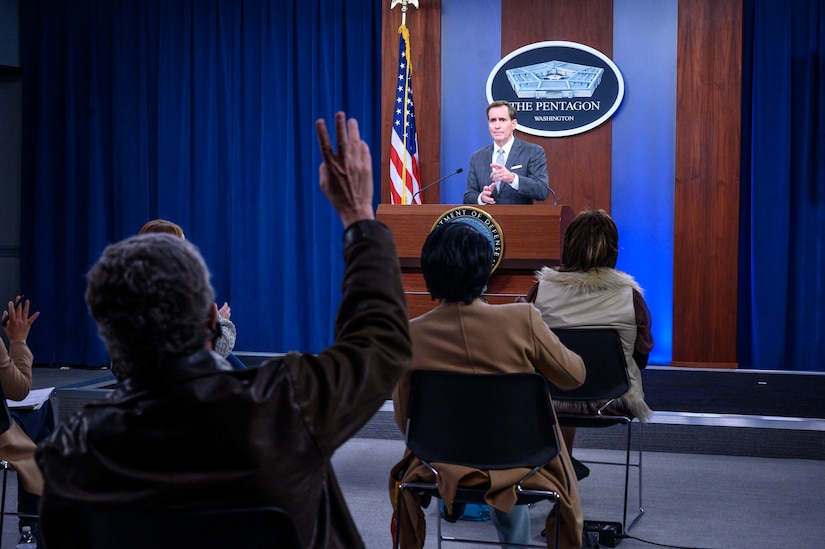
PRESS SECRETARY JOHN F. KIRBY: Alright, good afternoon everybody. Thanks for coming, happy Friday.
Q: Happy lunar new year.
MR. KIRBY: Happy what?
Q: Lunar New Year!
MR. KIRBY: Lunar New Year.
Q: Happy Lunar New Year.
MR. KIRBY: Happy Lunar New Year to you. So just a few things at the
top and then we'll get right at it. Let me start with some partner
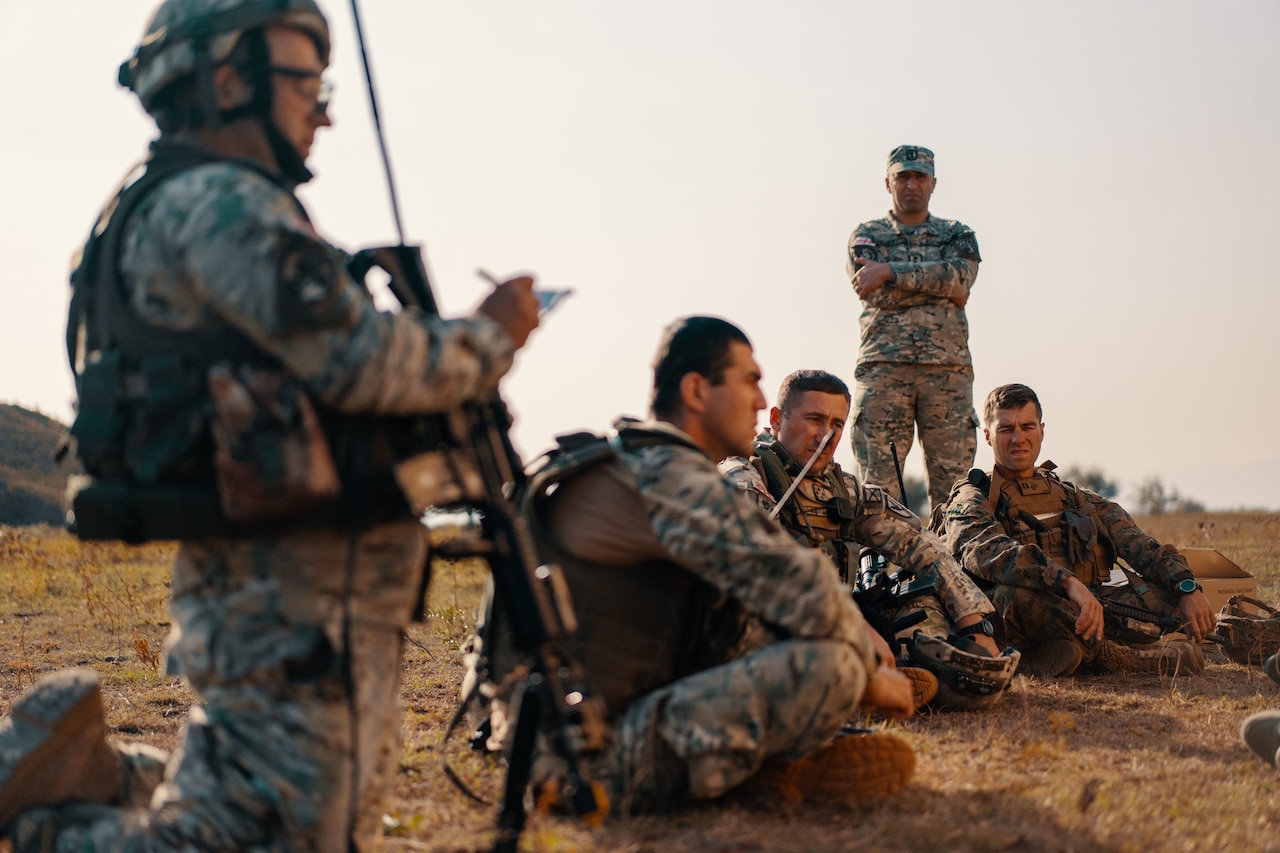
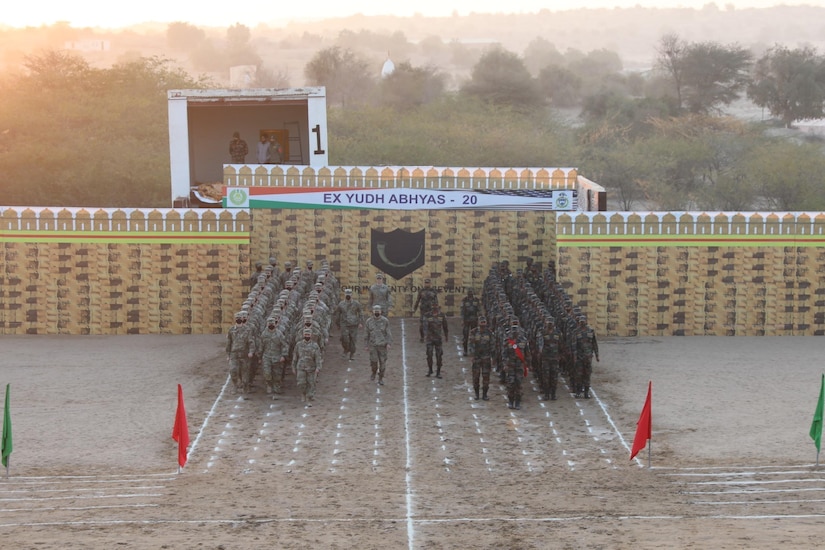
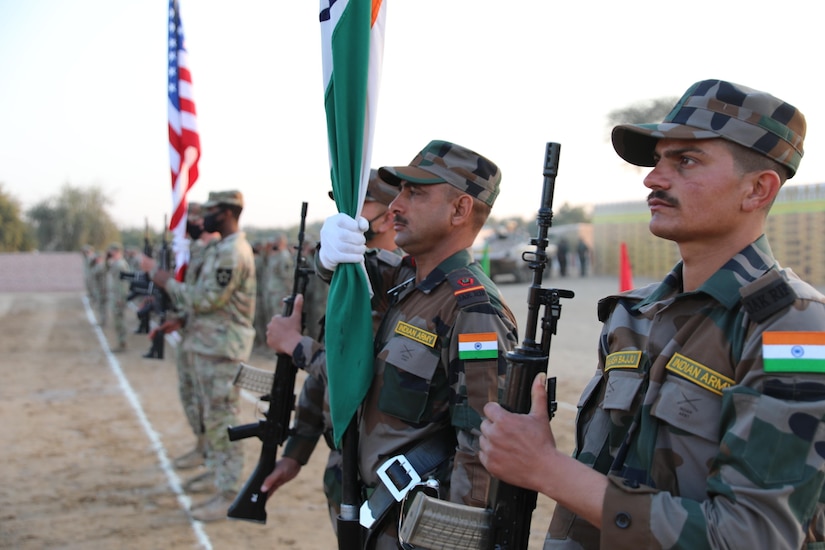
activity in the Indo-Pacific Theater; Exercise. Yudh Abhyas 20 kicked
off in India this week. This is a U.S. Army Pacific-sponsored exercise
that involves approximately 250 U.S. military personnel and 250 Indian
Army soldiers and is designed to enhance combined interoperability
capabilities through training and cultural exchange. This exercise
continues to solidify the U.S./India major defense partnership and
advances cooperation and support of a free and open Indo-Pacific
region.
By way of schedule, just to let you know, today Secretary Austin had a
call with recently confirmed Denis McDonough, our new Veteran Affairs
Secretary, to congratulate him on his confirmation and to discuss areas
of mutual concern in supporting those who have given so much to defend
the nation and they look forward to a very close working relationship
going forward.
Now hopefully you've seen our announcement this morning on the
commission on the naming of items of the Department of Defense that
commemorate the Confederate States of America, commonly referred to as
the Confederate-Base Naming Commission. It was set up of course, as you
know in the fiscal year '21 National Defense Authorization Act and as
part of that the Secretary was required to nominate four members to that
commission.
You saw their names but I'll repeat them here; Retired Admiral
Michelle Howard, Retired Marine Corps General Bob Neller, Dr. Kori
Schake, the Director of Foreign and Defense Policy Studies at the
American Enterprise Institute and Retired Army Brigadier General Ty
Seidule, who is an Emeritus Professor of History up at West Point.
The Secretary was very grateful that they agreed to take this on and
he looks forward to seeing the results of their hard work with the other
commissioners were named by Congress in a bipartisan way in the months
ahead.
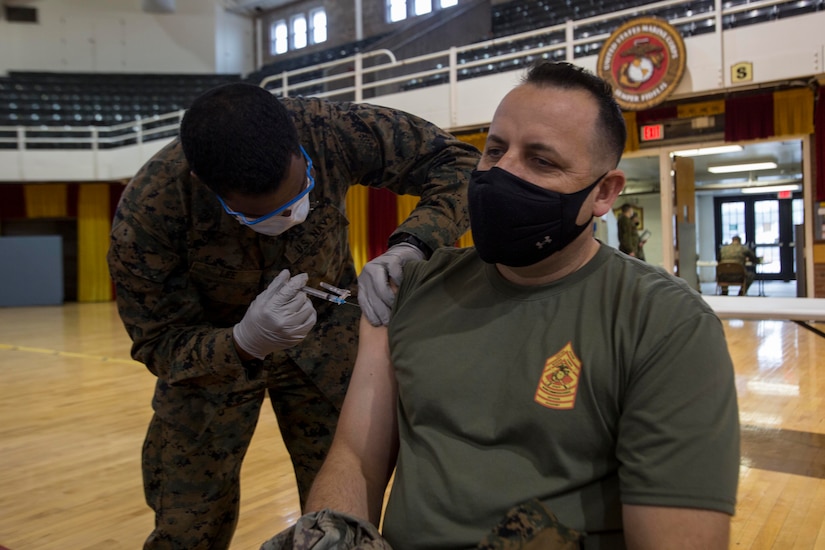
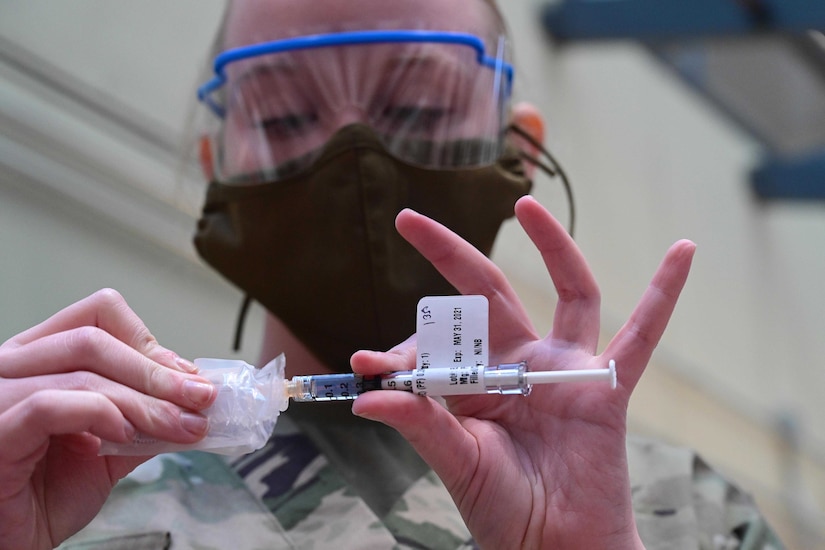
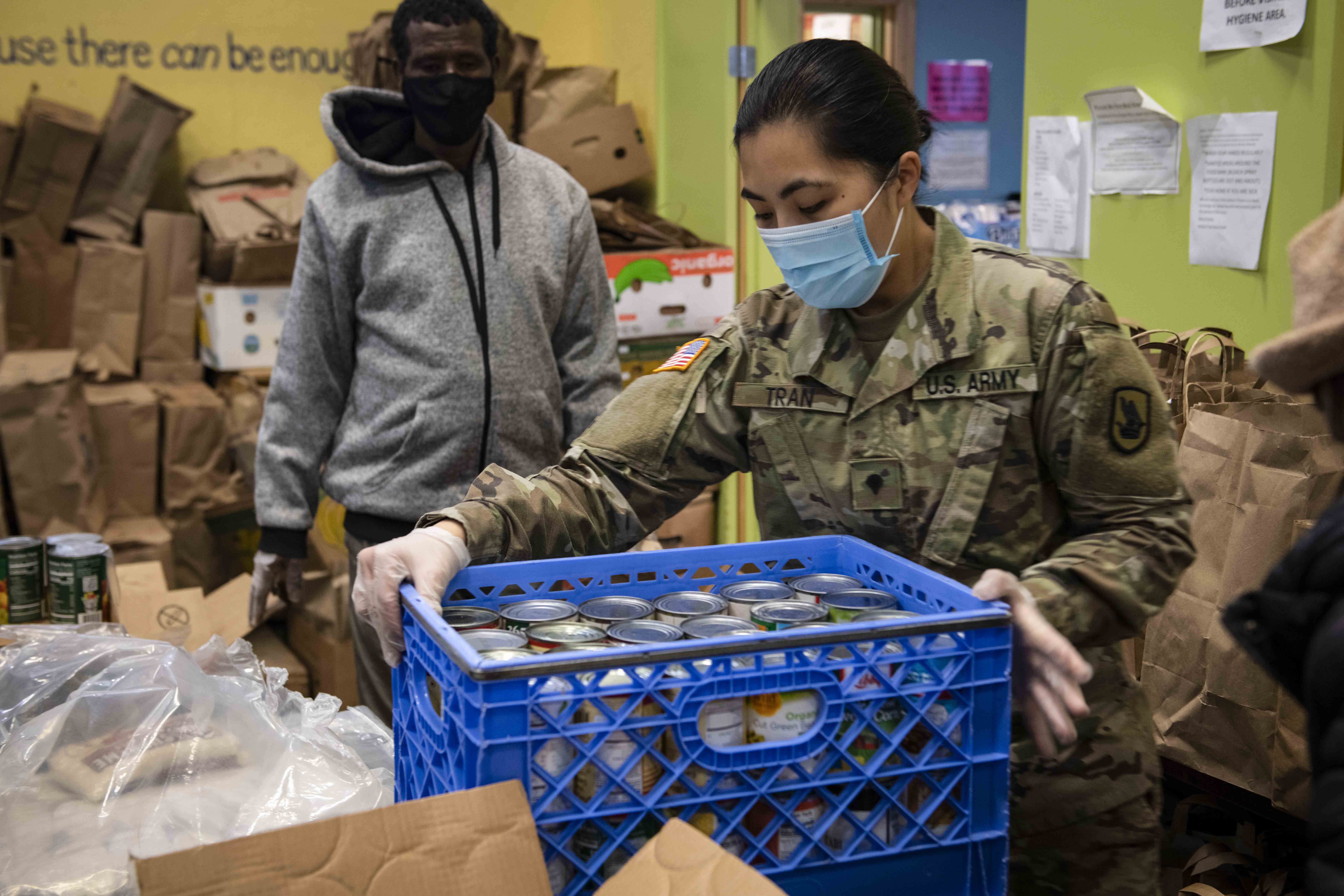
Finally, in support of FEMA, as one of the many federal agencies
involved, we continue with our deliberate and phased support for
emerging FEMA requirements. The first team of 222 personnel; we've
talked about this team before, they arrived in California and they'll be
operational. we expect, by Monday, supporting a mega vaccination site
in Los Angeles.
We will expect to have more information for you next week about the
other four teams that were announced, the original, the first five. So
we'll have more information we expect next week in terms of where
they'll be going and where they'll be coming from, quite frankly.
Additionally I want to tell you that the Secretary has authorized an
additional 20 teams to support FEMA at vaccination sites around the
country. Ten of these teams will be Type 1 of the same one that we
talked about last week, 222 personnel supporting mega vaccination sites
and then the other 10 will be smaller Type 2 teams of 139 personnel
supporting smaller vaccination sites.
These 20 teams are being organized to support FEMA-identified sites
and will be deployed as requirements evolve. This will bring out total
amount to more than 4700 active-duty personnel supporting or preparing
to support FEMA. These personnel are in addition to the more than 26,000
National Guard members and 3000 active-duty personnel who have been
supporting COVID efforts over the last year. We're going to continue to
work with FEMA as they continue to work with state and local authorities
to refine their plan for vaccination sites across the country. Details
are still being worked out across the interagency and we'll keep you
up-to-date as we know more. I'm giving you everything I know today. We
don't have sites for all these additional 20 teams that the Secretary
authorized; he did this out of a request for forces from General
VanHerck, the Northern Command Commander and they and we will continue
to work through more details about where they're going and when they're
going and where they're going to come from; where their sourcing is.
So with that we'll start with Lita on the phone.
Q: Hi, thanks. One quick follow-up from the FEMA announcement and
then a second question. First on the FEMA team, do you expect that both
of these will be active duty? Other Guard officials that have already
said this that’s their expectations but it will be mostly the active
duty and is this, do you expect that you're still working towards the
100 teams? Or is this, do you think, a more scaled-back version of what
FEMA initially asked?
And my second question is just an update. You had talked previously
that in questions about the U.S. military response to the Southern
border; I think people have been asking questions about this for a
couple weeks now, and I'm wondering if there's a problem in getting some
of the accounting for the funding; is there an issue with the
information from the previously administration that left, or is the
Pentagon having a hard time gathering the totals? It's FEMA, so it
wouldn't be that hard to get that kind of accounting.
MR. KIRBY: Let me start with your first two, Lita, and I'm not quite
sure I completely understand your second question but so you asked if
they're all going to be active-duty; we expect that again the sourcing
isn't complete but I would expect that certainly many of these teams
will be sourced out of the active component, but again, the sourcing is
not complete so I don't want to get ahead of decisions right now,
sourcing decisions.
You asked if this was, you know, if we didn't envision sourcing the
whole 100 and as I said in my opening comments, this will be a
deliberate and phased approach and we want, what we're trying to do is
to make sure that when FEMA has identified sites that we are poised,
properly poised and ready to support those sites and the Secretary
believed, after consulting of course, with the Chairman and with the
NORTHCOM Commander that authorizing another tranche of 20 teams to put
them on a Prepare-to-Deploy Order, or a Prepare-to-Deploy basis in a
rolling fashion; what was the right way to do this.
And so they will be put on, as we know as PTDO, in keeping with
General VanHerck's scheme, as he works with FEMA and certainly we would
defer to him on that. But this is again a phase and deliberate approach
here to try to make sure that we are poised and ready to support FEMA on
their timeline and the timeline of the states and authorities, the
local authorities that they're working with.
On your Southern border question, if you're asking about
reprogramming and maybe I'm wrong, that's not what you meant, I know of
no reprogramming decisions that we are considering at this time but I'm
not sure that that was your question, Lita, so I'm going to throw it
back over to you to see if I missed it.
Q: Well yeah, so reprogramming is part of it. I think there's just
been a number of questions over the last couple of weeks about where the
department stands on the Southern border mission, considering the White
House has ended the – formerly ended the mission. And I think we're
just trying to figure out what exactly that means including the
reprogramming which you said you – as far as you know right now there's
no money. Are you saying no money can be reprogrammed or no money is
currently being reprogrammed?
MR. KIRBY: What I'm saying is I don't of any –
Q: I think there was some indication early on that some could be reprogrammed but –
MR. KIRBY: I don't know of any reprogramming decisions that are being
made right now with respect to the decisions that were made by the
previous administration to move money out of military construction and
other infrastructure support to building the wall. So, if we have
something to announce in that regard or a decision that has been made
we'll certainly keep you apprised. But I'm not aware, and I did ask
about this this morning, I'm not aware of any reprogramming decision
that's in the works right now.
If that changes of course I'll let you know. And as for the mission
itself I think I said this yesterday, that a small number of troops that
are down there now they will remain there for the remainder of the
year, that's the plan right now.
Let me go back to the phones again. Dave Martin from CBS.
Q: When you said the total number of troops that are now on prepare
to deploy orders there was a call in that blocked out the number and I
didn't hear it. So if you could repeat that. And the original FEMA
request was always put in terms of 10,000 troops. You said it could be
more, it could be less. Now that you see what it takes to man a type one
and type two site, if you do all 100 do you have any – do you have any
estimate on how many troops we are talking about?
MR. KIRBY: Well, so the – the number that you missed was 4,700 and
that would put you at 25 teams and obviously you can do the math if you
times that by four. If you get – if you get to all 100 teams. But again,
I want to stress the very deliberate and phased approached that we're
taking here. Working in lock-step with FEMA and with other federal
governed authorities here to make sure that what we're trying to do is
to be ready when we're needed and to be – and so these additional 20
teams that the Secretary has now authorized, we now we can start to
prepare them.
Even though if they don't have a location to go right now, even if it
hasn't – all the sourcing hasn't been done. As that sourcing is
determined we can make sure that they're properly trained, make sure
that they're properly resourced, make sure that the – that the commands
that they will be leaving have time to prepare for their departure.
To make sure that any risks to the military treatment facility
requirements is mitigated. So it's again a phased approach. But that's
how we're thinking about it. So right now, as I said, we're at this
4,700 that the Secretary has authorized. One team, as you know, is
already on the ground and will be ready by Monday.
And then we'll just – we'll just see where it goes from there. We're going to take a very deliberate approach on this. Tom.
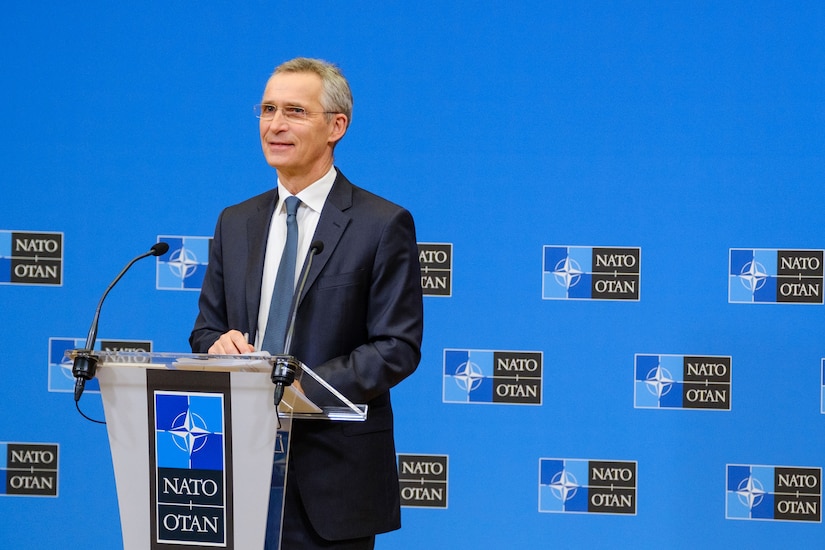
Q: So the NATO Defense Ministers will be meeting next week. Of
course, Afghanistan will be on the table, and I know that Secretary
Austin's taking part in that. Do we expect a decision at that point on
whether the U.S. will abide by the U.S.-Taliban agreement, withdraw
troops by May 1, or there's some talk they may kick that decision into
March if you can kind of walk us through that?
MR. KIRBY: Well there's no question that the NATO mission in
Afghanistan will a topic of discussion at the Defense Ministerial, and
the secretary's very much looking forward to it. And as I think I've
said before that discussion will clearly help inform his thinking and
the sort of advice that he will be expected to give to the Commander in
Chief.
I wouldn't get ahead of the ministerial and where it's going. And I
certainly won't speak for our allies. I can just tell you that the
secretary's looking forward to having that conversation with them. And
as he has said in every conversation he's had with his counterparts,
particularly his NATO counterparts, no decision that we make is going to
be done without proper consultation and discussion with them, and he
very much looks forward to the ministerial meeting next week as another
avenue to have that. I mean, he's already spoken to many of them
individually. He'll have a chance now to speak to them more
collectively.
Q: The bottom line is it's too soon for a decision on troop
reductions? It's more informational gathering information on the way
ahead?
MR. KIRBY: The Commander in Chief makes those decisions, so I
certainly won't speak for President Biden or what timeline he's on.
Nothing has changed about the fact that we continue to review the status
of the agreement and the degree of compliance by parties, and no
decisions have been made on force structure. If and when that happens,
that's a decision for the Commander in Chief. The secretary wants to
obviously be able to help inform that decision making process. And
again, as I said the Defense Ministerial will help give him a chance to
do that, to be able to go back and inform his own policy
recommendations. Jen?
Q: Why has it been so difficult to close Guantanamo Bay, and can the president just order it closed?
MR. KIRBY: I won't speak for the president. Your question about why
it's been so difficult, I mean, there's a lot of factors there, Jen,
including the process of making sure that we are properly holding
detainees accountable, and there's a military commission process that is
in place to do that.
You have seen in the past where some detainees have been transferred
to third-party countries after, you know, giving security guarantees and
assurances. So it's a – it's a multi-tiered effort to make sure that we
are protecting our national security interests but also apply and
subscribing ourselves to proper accountability and the rule of law.
Q: I guess just a follow up is why does the president want to close Guantanamo Bay? Why would –
MR. KIRBY: I will not and cannot speak for the president from this
podium. What I can tell you is that the secretary believes that
Guantanamo Bay, the detention facility should be closed. He fully
supports the administration's desire to do that, and he fully expects to
be a partner in the interagency process and discussing as that goes
forward. I got to go back to the phones. Sorry. I want to make sure that
I'm not forgetting this. Idrees?
Q: Thanks, John. So going back to FEMA and COVID, I understand it’s
going to be a phased and deliberative approach, but given that we – you
know, we're a few weeks into this and only – I think it's 1,000 troops
have moved out or about to move out to get to 4,700, is there a
bottleneck somewhere either FEMA or the states aren't ready to accept
the troops or what's taking them so long for them to actually get onto
the ground and start doing this work, which I think, you know, the
administration has said is a priority? And then I have another separate
question.
MR. KIRBY: Well there's – it's a complicated process, Idrees, and
again, we are supporting FEMA. We are very much in a support role here
to the interagency. And there are lots of factors that have to be
factored in as sites are considered, appropriate location, and
coordination with local and state authorities about how those sites can
be set up, the infrastructure that's needed, the support that's needed. I
mean, it's a complicated process, and we don't want to move any faster
than – we don't want to move too fast so that we're overwhelming the
process of the system. That's not the goal.
The goal is to make sure, as I said, that we're poised and ready the
moment a team is needed. And so, it's a FEMA-led process. We respect
that process, and we understand that, you know, that there's a lot that
goes into this. It's not – you can't just mandate. You can't just tell a
state or a city that well this is a convention center or this is a
stadium and that's what it's going to be. That has to be negotiated and
worked out with them.
So it's – again, we're a full party to the process and we want to
assist the best we can. And where the secretary is, again, is to making
sure that he's authorized enough teams that we have them sufficiently
ready so that when these decisions are finally made they're ready to
move out, and that's our goal. Again, we are very much a supporting
element. We're not driving the process. Did you have another question,
Idrees?
Q: Yes. It's actually on a similar topic because Secretary Austin's
predecessor did speak with their – or the governors of different states
periodically with COVID and some of the other issues. Has he spoken with
any of the state governors or some of the local officials where some of
the active duty troops might be going for the vaccination effort?
MR. KIRBY: I'm not aware of any phone calls he's had specifically
with local authorities. Again, we've been coordinating our efforts
through FEMA. Sangmin ? Sangmin Lee, are you there? Okay. I'll move on.
Jeff from VOA?
Q: Hi. Thanks very much for doing this. Appreciate it. A couple quick
questions. First, any update on the security request for help from
Capitol Police or the Secret Service? Can you hear me?
MR. KIRBY: I got you.
Q: Okay. Any updates to the security request from the Secret Service
or the Capitol Police in terms of security by the National Guard in D.C.
Capitol region during the impeachment trial?
MR. KIRBY: Any additional requests?
Q: Yes, any changes in the status in terms of anything with the National Guard that's gone through the Pentagon?
MR. KIRBY: No. I think the number today is – I don't want to guess.
It's 6,061, as of today they continue to support the FBI, the Capitol
Police, the Park Police, Secret Service, and the city of Washington, and
I know of no changes to the mission requirements. Okay.
Q: Thanks very much. And also –
MR. KIRBY: Go ahead. Go ahead.
Q: Thank you. A little more in depth question would be, looked at the
Pentagon's taking on extremism in the ranks. How much is the Pentagon
concerned about some of the extremist groups who are targeting either
current military members or soon-to-be former military members,
soon-to-be veterans, those groups having links to foreign groups or
foreign governments. Is that something that the Pentagon is taking a
look at?
MR. KIRBY: I don't know of any particular study here in the building
to look at that linkage between some of these extremist groups and
foreign entities, but as I've said before we are certainly mindful of
the fact that some of these groups, you know, actively try to recruit
soon-to-be veterans, to bring them in, and that is of concern.
And one of the things that the secretary and the chiefs have talked
about is – and I suspect they'll continue to explore is the degree to
which we need to do a better job educating future veterans as they get
ready to leave the service as to what's waiting for them and who's
waiting for them on the other side of that. Does that answer your
question?
Q: Yes. Thank you.
MR. KIRBY: Okay. Dan?
Q: On the joint – I have another question. Just wanted to ask is
there any update on the Joint Andrews incident and the security breach
that occurred?
MR. KIRBY: I don't have one for you. I'd refer you to the Air Force on that.
Q: Okay. And then would the secretary be open to the idea that's been
proposed in Congress that we create a new criminal offense in the
military code where if you advocated violent extremism that would be
kind of a particular offense. Is that something that's being looked at?
MR. KIRBY: I'm not aware of an active effort to look at that, but I
will say and the secretary's made it clear that, you know, that he wants
to conduct a review. He wants to learn more about the depth of the
problem and potential solutions. And I wouldn't rule anything in and out
of that. I mean – and I would not be surprised if they – if they take a
look at whether other accountability measures need to be in place.
Now again, wouldn't speculate about changes to the UCMJ. As you well
know the kinds – many of the kinds of conduct and behavior that some
extremist ideology inspirers want to do, to conduct is already
punishable by the uniform code of military justice. So again, I think
it's a fair question for which I don't have a very specific answer other
than to say the secretary wants to be open-minded as we begin to
explore this problem and to get our arms around it.
Q: Sorry could I just have one on Asia. Sorry (inaudible), Obviously
over time the U.S. has deployed more forces, more assets into the
Pacific to counter China. Do you see that as a trend that will continue
and that the secretary when he's looking at this posture review will
take into the account the importance that the administration places on
the Asia-Pacific region strategically?
MR. KIRBY: If you watched his confirmation hearing you'll see how
seriously he considers the pacing challenge that China poses. I would
not get ahead of the global force posture review, it’s one of the
reasons it's so important to do it is so that we take a fresh look as we
come in at what is in the Pacific. What is the footprint both fixed and
rotational, and what's the health of our alliances and partnerships
there? In other words from our perspective are we doing enough? And then
he'll make force structure posture decisions based on that. So again, I
wouldn't get ahead of that. I'll go back to here, Meghann?
Q: All right. The 10 Army posts have gotten the most press, of
course, about changing the confederate names, but is there a list of
entities, buildings, everything else that OSD has that they're going to
be working from to change names?
MR. KIRBY: That's a good question. Let me take it.
Q: Okay.
MR. KIRBY: Let me take it. I mean, we have lots of lists here and we
might very well have one. We're certainly going to rely, though, on the
work of the commission. I'm sure they will be working off a list of –
because remember it's not just bases. It's items. It's virtually
anything inside the DOD portfolio that is commemorating the confederate
states, so it's bigger than just bases. It's a good question, though, so
let me ask. Yes, go ahead.
Q: Thank you, John. I have two questions for you. One on the burden
share and the other one for Burma issues. It is reported that there's a
13 percent increase of defense cost sharing between the United States
and South–
MR. KIRBY: You should pull your mask up.
Q: Okay, thank you. You do –
MR. KIRBY: I have a waiver right here.
Q: All right, thank you. That's a good point. Thank you.
MR. KIRBY: Go ahead. What's your question?
Q: Okay, that the 13 percent increase of defense cost sharing between
U.S. and South Korea we reach an agreement. Do you have anything on
that?
MR. KIRBY: I don't, and I would refer you to the State Department for that.
Q: Okay, but also another one. I think you better know about this because this is the defense sharing, cost sharing, Why you –
MR. KIRBY: It's an issue for – it's an issue for our colleagues at the State Department to speak to.
Q: I hopeful you have a right answer to me today. A lot of things
that you just ask there, ask there ... Anyway, second question –
MR. KIRBY: I'm very sorry I'm disappointing you.
Q: Okay, second question for you. I think this one you can answer for me.
MR. KIRBY: Well we'll see.
Q: President Biden signed an executive order for Burma last
Wednesday. What military sanctions were included in this executive
order?
MR. KIRBY: Again, that is a better question for our colleagues at the
State Department, but just to reiterate that U.S. military interactions
with Burma are heavily constrained by law, including statutory
restrictions on military assistance due to Burma's human rights record.
The United States does not have foreign assistance programs that
directly benefit the Burmese military as an institution, and our minimal
interactions have supported humanitarian response capability and human
rights.
And as President Biden made clear the reversal of Burma's democratic
transition will necessitate an immediate review of our sanctions – our
sanction laws and authorities followed by appropriate action.
Q: Yes, well do you have individual military sanctions, like, so I mean, chief of commander in Burma, they got, against –
MR. KIRBY: For specific sanctions you're going to have to go to my colleagues at the State Department.
Q: Thank you.
MR. KIRBY: Was that an acceptable answer? (Laughter.)
Q: A little bit. Not quite, like, this is like –
MR. KIRBY: In my – in my book a little bit's okay. That's a success for me.
Q: You don’t tell me about it–
MR. KIRBY: If I can get halfway there I win. I win. (Laughter.)
Q: That’s your job, you ask for military for –
MR. KIRBY: And I answered you on military issues.
Q: All right. Thank you very much.
MR. KIRBY: But there are some things that's not appropriate for me to talk to you here.
Q: 60 percent –
MR. KIRBY: 60 percent.
Q: All right.
MR. KIRBY: For me that's an A. (Laughter.)
I'm graded on – I am graded on a curve.
Q: Maybe the next time I–
MR. KIRBY: Marcus, on the phone.
Q: Hey, John. Thanks. I know we're only three weeks in, but Secretary
Austin and Deputy Secretary Hicks I believe are the only two of 61
political positions that require Senate confirmation who are actually
confirmed. When should we expect to hear about the more nominees who
will be making up the rest of Secretary Austin's team? And do you have
any type of goal in place for when you'd like the bulk of the team, you
know, in the building? Thanks.
MR. KIRBY: Well, that's a great question, Marcus. Obviously, we want
to get the team fully on board as soon as possible. And we continue to
on board new members every week. I can see if I've got the number for
this week – don't know if I do. I'll – I'll look for it. But we continue
to do that. We're putting them on our website so you can see exactly
who's coming in and what jobs they're – that they have.
You're – you're talking about Senate-confirmed positions. And
clearly, we look forward – the secretary looks forward to working with
the Senate to continue to make – you know, working with the president
and the Senate to make those nominations and to get people confirmed.
But you know, there's a process here and we're still – and we're still
at it.
He is, more broadly, very, very dedicated to making sure that – the
civilian oversight is applied here in the Pentagon. And that requires,
you know, nominating – or recommending to the president, nominating the
right people with the right skill-sets for these – jobs. They're very
important jobs.
And so, while we certainly want to get the right talent on board as
quickly as possible, we don't want to rush to do that either. You want
to make sure that the process is deliberate and that you are – you know,
that you're able to tee up to the president the sorts of people who
have the leadership skills and the experience to handle these big jobs.
So it's – it's something, Marcus, that I can tell you and I know
firsthand that he's – that he's thinking about and talking about every
single day. But he wants to do it the right way, not necessarily, you
know, an overly fast way. Does that answer your question, Marcus?
Q: Yes. Does – does he plan to go from, like, a top-down – you know,
under service secretaries, under secretaries or will – is there another
part of this deliberate process that you referenced that he – or another
way of conducting this deliberate process that you referenced?
MR. KIRBY: Well, you know, I don't – I don't have a scheme to lay out
for you, Marcus. He's – obviously, we're aware of the Senate-confirmed
positions that still have to be filled. And I – I don't – I'm not aware
that he's got, sort of, a – a certain tiered approach. But if I'm wrong
about that, I'll go back and – and correct that. I do know that is
something he's very focused on.
I got one more here. Jared from Al-Monitor?
Q: Hi, thank you for doing this. Just a quick question, Israeli
police revealed yesterday that more than 20 Israeli citizens, including
former military and defense industry personnel, are under criminal
investigation in a scheme to apparently quietly sell advanced drone
technology to an undisclosed country in Asia.
Has Israeli authorities been transparent with the Defense Department
on this investigation from the start? And has the revelation affected
the cooperation with the Israel's, you know, military or defense
industry in any way?
MR. KIRBY: I do not have details on that investigation. So I'm really
not at liberty to discuss that in any way. And I don't know that even
if I did have specific information that that would be something we would
be talking about from the podium. So I'm afraid I'm not going to have
much for you on that today.
Yes, sir?
Q: Thank you. Iran is enriching more and more uranium of a higher
grade and with more quantities, is it something that alarms you? Is it
something that there is a message to Iran to understand that America
will not take it from them?
MR. KIRBY: Certainly, as the president has said, you know, we want to
see Iran meet its commitments to the JCPOA, the – Iran deal, and as
Secretary Austin has said, no problem in the Middle East get easier to
solve with a nuclear-armed Iran.
And the administration has been clear that they don't want Iran to
achieve that – that kind of capability. I will defer to our colleagues
at the State Department for specifics on what they're thinking about in
terms of managing that process from a diplomatic perspective.
From our perspective here at DOD, it's about making sure that we have
a robust enough presence and deterrent capability in the – in the
Middle East. And as I've said many times, the secretary constantly looks
at that. Certainly it will be part of the Global Posture Review. But on
a day-to-day basis it's very much on his mind and – to make sure that –
you know, that we have both the fixed and the rotational capabilities
in the region to deal with the treats that are posed by Iran.
Q: On that, sir, you do have enough in the area now?
MR. KIRBY: It's something that we look at every day. The secretary’s
comfortable that – and he's in constant communication with General
McKenzie, he's comfortable that we are able to meet the – threats. But
it is something you have to constantly evaluate and look at.
That's why we have a combination of fixed forces in the region as
well as rotational. And those rotational forces – we just talked about
aircraft carriers a couple weeks ago – they constantly change. So it's –
again, it's something that he's – he's always thinking about and we
always want to make sure that we're – adequately postured and prepared
to defend our interests there in the region.
Q: Thank you.
MR. KIRBY: Okay. Yes, sir.
Q: Thanks, John. Jack Detsch from Foreign Policy. Our colleagues at
Vox reported today that Bishop Garrison is going to start next week – I
guess Monday or Tuesday – as the special assistant for diversity to the
secretary. I just wanted to ask what his mandate will be what his
relationship will be with this congressionally appointed commission with
regards to the base renaming?
MR. KIRBY: Look, I've – I've seen the article about Mr. Garrison.
What I can tell you today is that we certainly look forward to having
him on board. He will be working on diversity issues here at the
Pentagon. The secretary looks forward to – benefiting from his
experience and wisdom on that. As for the specifics, I'd rather just
wait, you know, until we're a little bit farther along in the process to
speak to that.
Q: Thanks. And just to follow on Marcus' question from earlier, do
you have a timeline for when Colin Kahl will be up for his hearing for
USDP?
MR. KIRBY: That's a question for the Senate Armed Services Committee.
Tony?
Q: I have a question about the F-35 program. It's one of those
rotational forces the U.S. has now to deter bad actors. The Air Force is
facing an engine shortage. Your acquisition and sustainment people are
all over it, apparently, to solve the problem. From – can you, in
layman's language, lay out what's the issue and what the level of
concern is since this is the Pentagon's largest weapons program and it
is being used around the world to send messages to our – to our
adversaries?
MR. KIRBY: Right. So since about August of last year, acquisition
people here in the Pentagon, along with the military services and Pratt
& Whitney senior leadership have been actively engaged on F-35
engine availability issues. The leadership team here is focused on a
comprehensive recovery plan to mitigate the readiness impact to our F-35
operational units.
The – they don't deem the engine issues right now to be a safety of
flight issue, but maintenance inspections are resulting in unscheduled
engine removals. And as I understand it – and I don't want to get too in
the weeds because I'm not an aircraft mechanic, but it has to do with
the turbine blades of the – of the engine and some malfunctioning that
they're experiencing there.
Q: What's the level of concern among the acquisition people here – is
this a nuisance, an urgent problem, a significant issue? I mean, what's
–
MR. KIRBY: I think – no, that's a fair question, Tony. I think
they're taking it very seriously. I mean, you're right, this is a very
expensive program and it's an important – critically important platform
for the Joint Force going forward, and we're very dedicated to the
future of the program. So honestly, I think everybody's taking it
seriously, as you would expect we would. Let me go back to the phones.
Alex from Vox.
Q: Hi, thanks for taking the question. Jack asked the most of it for
me, so that was very kind of him, but I guess I would add is Bishop's
position going to satisfy the chief diversity officer position that is
mandated in the FY '21 NDAA? Thank you.
MR. KIRBY: Yes, again, I would – I'd like to defer on specifics about
Mr. Garrison until – you know, until we're a little further along in
the process. Again, I won't – not going to dispute the reporting that
you did, but I'm just not able to get into too much more detail.
We're – again, obviously he'll be working on diversity issues. The
secretary is very much looking forward to getting him onboard and –
we'll certainly have more detail about what his role will be as we get a
little closer. Abraham, Washington Examiner.
Q: Thanks for taking my question, John. First off, you've spoken a
lot recently about the vital importance of Saudi Arabia as an ally – as a
partner in the region, but does Secretary Austin have any plans to
speak to his counterpart in Saudi Arabia, or for that matter Israel?
The White House has said that President Biden is not – doesn't have
plans to speak to leaders of those counties. So, that's my question, and
then I have another question about Space Force, if I may.
MR. KIRBY: On the Saudi question, I mean there's no question that the
secretary views Saudi as a critical – Saudi Arabia as a critical
partner against terror in the region. And as we've said before, we're
going to continue to meet our security commitments and helping our Saudi
partners with the defense of their borders and their country.
We're committed to that. I don't have any calls – advanced calls to
announce today in terms of his individual outreach, but nothing has
changed about our commitment to helping Saudi defend itself – Saudi
Arabia defend itself, sorry. Your second question?
Q: Oh, also Israel, is there a call that Israel scheduled? And then I have a Space Force question.
MR. KIRBY: Yes, I don't have any advanced calls to announce. I tend
to prefer to do it after we're done on the phone because sometimes it's
hard to get two leaders to coordinate their schedule. So I don't have
any advanced calls to announce to you today. Barb?
Q: Great. And on Space Force, has the Biden administration directed
DOD to make any changes or given any guidance for the continued rollouts
and of the Space Force?
MR. KIRBY: Have we given – can you say that one again?
Q: Sure. Has the Biden administration directed the Department of
Defense to make any changes or given any guidance for the continued
rollout and standing up of the Space Force?
MR. KIRBY: I think you saw a statement from my White House colleague
Jen Psaki a week or so ago reiterating the full support of the Biden
administration for the Space Force. And the secretary, obviously, is in
full support.
I know of no changes to either that support or to the continued
progress of the Space Force and in terms of advancing their recruiting,
their retention, their capabilities. They're a full player on the
Defense Department team and the secretary looks forward to continuing to
work with them. Barb?
Q: Can I come back to the question of Bishop Garrison one more time?
MR. KIRBY: Sure.
Q: Not addressing Mr. Garrison's expertise at all, but separately
what is it that led the secretary to so quickly decide he did not have
the needed expertise within either the military or civilian structure of
the department? What led him to decide he had to have outside advice on
this and that he didn't have the expertise he wanted inside the
Pentagon?
MR. KIRBY: It's a lot less about feeling like he didn't have
something and much more about wanting to put a very special focus on
this issue and wanting it to be led and to be, you know, internally
focused on and managed here at the department. Yes, ma'am.
Q: My name is Harianna, you can call me Harianna.
MR. KIRBY: Okay. I'm John, you can call me John.
Q: So I have two questions. The first one is what is the yanks’
strategy to reduce conflict and promote peace and security in China Sea?
And the second is how the yanks intend to accelerate efforts to combat
drawing terrorists in West Africa and countries more effectively to
peace and stability in Africa?
MR. KIRBY: Well, that is a lot. You've covered a lot of territory there. Did you say the yanks?
Q: Yes.
MR. KIRBY: Meaning like Yankees, like Americans, or Baseball yanks?
Q: The Pentagon, let me put it that way.
MR. KIRBY: The Pentagon. Just – I'm going to – it's going to sound
like I'm giving you an answer Janne will hate, but it's the truth.
There's a lot here. The secretary made it very clear that he believes
China is the chief pacing challenge for the department and that the
Indo-Pacific region is of critical importance, not just in the United
States and to our allies and partners, but to the world.
And that's going to be a key factor in this global posture review
that he's going to do. You have seen in just the two or three weeks that
the secretary has been in office that he's continuing to make it clear,
particularly in South China Sea, that the United States forces are
going to sail and fly and operate in accordance with international law,
as needed, to protect our security interests and those of our allies and
partners.
Five of our seven treaty alliances are in the pacific, and we take those responsibilities very seriously.
And, so, there's a key focus on this and I think just yesterday, well
actually two days ago when the president was here, talked about the
stand up the establishment of the China task force here at the Pentagon,
and Dr. Ratner was in the briefing room, sort of walking everybody
through the eaches of that, the components of that task force, and what
they're going to be doing.
So there's a sharp focus on that region and China in particular. A
lot of work to do, but clearly a sharp focus on it. And then as for
Africa, I won't, and I don't want to get into a point where we're
talking about hypothetical future operations, but we have commitments to
African partners.
There are significant terrorist threats throughout the continent
that, again, we take seriously, and we – concerns that we share with
many partners, not just African partners but partners in Europe that
also have forces that operate inside Africa.
So again, I think you'll see us continue to focus on the
counterterrorism threat that that's posed, not just to people in the
region, but to us here at home. I've got time for one more and then I'm
really going to have to go.
Go ahead.
Q: I have a follow-up. Thank you.
MR. KIRBY: You have a follow-up to an earlier one?
Q: Yes, I do.
MR. KIRBY: All right. I'll take you and you – okay, I'll do you three and then I've got to go.
Q: Thank you very much, John. Again, (inaudible) journalist, I know you don't like that ...
MR. KIRBY: No, it's not that I don't like it, but you don't have to introduce yourself every time.
Q: Okay, but please (inaudible).
MR. KIRBY: Okay. Okay.
Q: Thank you.
MR. KIRBY: You're welcome.
Q: As you know, Taliban increased their attacks in Afghanistan;
yesterday on U.N. base, five Afghan guards have been killed. Nobody take
the responsibility, Pentagon knows who’s behind this attack? And a
short question, people have an expectation from President Biden that he
was here yesterday.
He didn't mention about Afghanistan once, although he said he is
going to end this war in some countries. Like U.S. involvement –
military involvement in some countries but didn't mention Afghanistan.
Do you have any comment about that?
MR. KIRBY: I think – again, I don't want to speak for the president,
but I think he's been very consistent about – when he talks about ending
forever wars that that certainly includes Afghanistan, and he's also
many times talked about doing it in a responsible way and through a
political settlement. So I think there's no question to why the
commander in chief sits on what needs to happen long-term in
Afghanistan.
On your second question, on the attack, it was certainly – we decry
that violence, and I don't have an update for you on accountability or
attribution of it. You're right, nobody has necessarily claimed
responsibility for it, but we're going to continue to watch this –
monitor that very, very closely.
The violence is too high in Afghanistan, that's the bottom line. And
the Afghan people are suffering as a result – and that's the important
thing, and that's what we're focused on. That's why we want to get to a
political settlement to end this war in a responsible, sustainable way.
Ma'am?
Q: Yes, Terace Garnier, Newsy. Earlier you had mentioned that there's
going to be some kind of training for soon to be veterans so they're
not glorifying extremists. But when I've spoken to veterans, one of the
main concerns that they felt unappreciated when they're getting out,
it's kind of like thank you for your service, bye – see you later.
Either they go with housing situations, assault in the military – so
what kind of training are you going to be able to provide to soon-to-be
veterans when they're already feeling unappreciated for their time and
service to keep them from wanting to be a part of extremists groups when
they get out?
MR. KIRBY: Well look, it's certainly troubling if any vet leaves the
service feeling that they were underappreciated by the services. I can't
certainly speak to any one particular anecdote, or any batch of
veterans. Obviously that's of concern. We do the best we can to make
sure that people have opportunities in the military to grow and
develop.
I certainly didn't feel underappreciated when I left, I can only
speak for myself, and the Navy was very, very good to me and to my
family. And as a vet myself, I certainly don't feel like the American
people didn't appreciate my service. I think and feel that they give me
far too much credit for what I did in uniform.
But if other vets feel differently then that's something that
certainly we would – you want us, and we should be concerned about. And
it's not necessarily about training, but we do think perhaps there is
the potential for better education as vets get ready to transition into
civilian life, to understand more fully what's on the other side.
You know, when I got ready to retire, they – I had access to a
terrific transition program that taught me how to apply for V.A.
benefits and taught me how to write a resume, taught me how to dress,
you know, although it may not look it today. But –
(Laughter.)
(CROSSTALK)
MR. KIRBY: Thank you. So at least I made something right.
Q: ..Nice tie (Laughter.)
MR. KIRBY: Thank you, Janne.
(CROSSTALK)
MR. KIRBY: The point – point is that there is a concerted effort to
prepare people as they get ready to retire. And I witnessed that, went
through it myself. Maybe there is more we can do. Maybe we need to help
veterans – future veterans understand the pull that can come from some
of these groups. And maybe those groups are targeting potential veterans
that feel disaffected.
So this disaffection – I'm not at all the dismissing that, and I am
certainly not questioning that you have heard that legitimately from
some. That is a concern. And so again back to what the secretary wants
to do is to better understand what we are doing on the front end when
somebody decides they want to join the military, to understand who they
are and what values they espouse and how much of those values, you know,
align with our own, as well as while they're in the service and then
certainly as they are getting ready to leave.
And so it's a – to pardon the phrase, it's a soup to nuts approach I
think he wants to take here in terms of making sure that when people
leave they certainly should feel appreciated, but also informed about
the risks that are out there. Lara
Q: As you mentioned, I believe it's TAPS, what, seven to 10 days
where they – they're going through what you can do (inaudible) their
training is not long enough, they're getting a bunch of information
thrown at them and then at the end they're just saying, oh here's a
book! And I've gone through that program, so I know.
So what – are you going to expand that program or make it longer? Like –
MR. KIRBY: I don't think it's called TAPS, And I don't have any
specific things to read out to you now in terms of decisions about
transition planning, except to say – except to say that is certainly on
the secretary's mind, and I would not – I don't want to impose that on
his decision space, but I fully expect that he will be looking at
transition programs as part of this process of trying to get a handle on
the degree to which these groups can recruit and inspire recruitment of
future veterans.
But I just – you know, we're not a point right now where I can tell
you for certain that we're going to look at this program or we're going
to change it this way.
Lara, you get the last question today.
Q: Yes, thank you. So the Trump administration used these NATO
ministerials to hammer Europe on increasing defense spending, and those
kinds of things. Can you say what tone or message Secretary Austin needs
to strike on this topic?
And related, what message does he want to convey during the ministerial regarding Turkey and its moves towards Russia?
MR. KIRBY: I'm not going to get ahead of the secretary on specific
issues. But to your broader question, I suspect that the secretary will
certainly reinforce the view that collective security is a shared
responsibility. And every ally bears that responsibility. And part of
that responsibility, of course, is an adequate level of defense
spending, at the 2 percent according to the Wales Summit. And that we
certainly, you know, want to see everybody take that shared
responsibility.
But I also think that he will recognize that many of our NATO allies
are, in fact, meeting and/or exceeding that 2 percent. And many that
aren't there yet are striving mightily to get there. You know, the NATO
secretary general calls it the three Cs, "cash, competencies, and
capabilities." I think that's right. I might have that wrong.
See, I should not have used it if I didn't – if I couldn't say it accurately. (Laughter.)
But, and he shares the secretary-general's desire here to make sure
that – you know, that the alliance is fully relevant and fully ready.
But I think you'll see a supportive message from the secretary, about
how relevant NATO is. I mean, his first call was to the NATO secretary
general, Jens Stoltenberg. And there was a reason for that. He wants to
revitalize our commitment to the alliance and I think – again, I think
you'll see that overall that will be the message that he sends. That
we're better when we act together. That teams make us stronger. And that
collective security really is a shared responsibility, but also in our
shared interests in a very dynamic world.
Q: And on Turkey?
MR. KIRBY: As I said, on specific issues that's why I demurred on
your – I said I wasn't going to talk about specific issues on the
agenda. I would rather not close down his decision space based on this.
But I just was on a more – on your first more broad question about
shared responsibility, I wanted to address that.
Okay? Thanks, everybody. Appreciate it.
(CROSSTALK)
MR. KIRBY: I'm sorry?
Q: A quick follow-up to what Dan was asking about extremism. Has the
secretary received any statistics from the services about extremism, how
many have been kicked out, how many recruits turned away, anything that
would give him a sense of scope of this?
MR. KIRBY: I don't have an update on data for you today, sorry.
Okay. Thank you, everybody.
Q: Have a good weekend.
MR. KIRBY: Yes. Thank you.


















 Posts
Posts

