Saturday, November 21, 2020

Defense Logistics Agency Closes Out Fiscal 2020 With Small Business Partnership

 Nov. 21, 2020 | BY Chris Erbe, Defense Logistics Agency Public Affairs

The Defense Logistics Agency exceeded its small business contracting goal for the eighth consecutive year by awarding more than 40% of its annual contract dollars to small businesses. Fiscal 2020 also marked the third year in a row that DLA exceeded $15 billion in contract awards to small businesses.

DLA surpassed its Defense Department-mandated small business goal of 32.36% of eligible contracting dollars while promoting participation in DLA contracts by small businesses owned by women and service-disabled veterans, as well as small disadvantaged businesses and those in historically underutilized business zones.

"Small businesses are the backbone of the U.S. economy," said Dwight Deneal, director of DLA Office of Small Business Programs. "These small entities can deliver on time and at the right price, which allows DLA to provide optimum support to the warfighter and our whole-of-government partners."

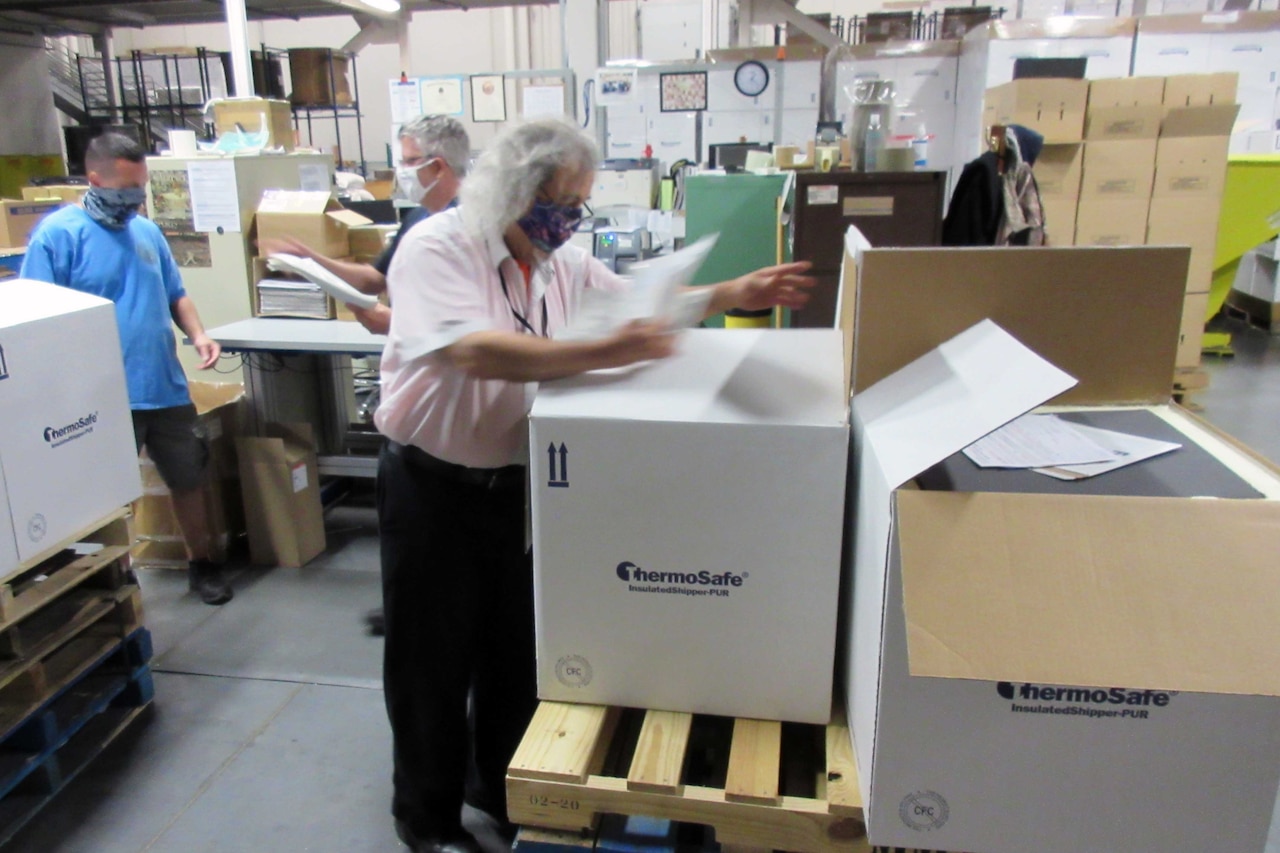
A man in a forklift transports supplies.

DLA's engagement with small businesses in fiscal 2020 was largely driven by the nation's response to the COVID-19 pandemic. DLA awarded contracts worth $2.04 billion to support the COVID-19 relief effort and 81%, or $1.66 billion, went to small businesses.

DLA Troop Support in Philadelphia, which supports military and federal customers through five supply chains, managed nearly all of the COVID-19-related contracts for items like eye protection, shoe covers, face shields, cots, aseptic facemasks, surgical masks, exam gloves, hand sanitizer, goggles and nose and throat swabs.  

In September, DLA awarded 37 contracts for disposable and reusable isolation gowns. Fourteen of the 15 prime contractors awarded were small businesses that received contracts worth $280 million, with about $120 million going to woman-owned small businesses and about $90 million to small, disadvantaged businesses. 

The gown contracts are just one example of how DLA leaned on small business suppliers to meet rapidly escalating demands for COVID-19 supplies, said Mike McCall, the associate director of Small Business Programs at DLA Troop Support.

During the pandemic, small businesses have been able to fulfill our country's most urgent needs."
Dwight Deneal, director of DLA Office of Small Business Programs

"Many competitive offers came in from companies we had never dealt with in the past," McCall said. "Our people did a thorough job vetting firms to make sure they could perform the contracted actions. DLA buyers and contracting officers, as well as our quality assurance and technical people, worked tirelessly to ensure that we completed the process to get the personal protective equipment where it was urgently needed, and which also resulted in a broadened domestic supply chain for these products."

Adapting to the pandemic environment, many small businesses have pivoted to pursuing government contracts for the first time. The DLA-managed Procurement Technical Assistance Program addresses small business concerns and advises them on competing for contracts with DOD, other federal agencies and state and local governments. At the same time, it generates new suppliers for DOD, which helps build a stronger industrial base and creates greater competition. 

PTAP operates 94 centers, called PTACs, assisting businesses in 49 states, Washington, D.C., Puerto Rico, Guam, the Commonwealth of the Northern Marianas and in regions established by the Indian Affairs bureau of the U.S. Department of the Interior.

When a craft brewery in Montana saw sales decline early in the pandemic due to mandatory restaurant shutdowns, the owners started producing hand sanitizer to meet local demand. After initial success, company officials turned to the Montana PTAC for help finding additional customers. 

A man inspects a shipment of goods.

PTAC employees led them to local Department of Veterans Affairs clinics, Army National Guard units and Malmstrom Air Force Base. They also helped owners register in the System for Award Management and develop its Small Business Administration profile, so it was more visible to federal buyers. 

"In fiscal 2020, the PTACs were a critical part of enabling first-time sales to the government and connecting businesses with the government agencies buying COVID-related products and services," said Sherry Savage, PTAP Program Manager. 

In fiscal 2021, DLA small business specialists are reaching out to small business owners to increase their knowledge of the agency's mission and share contracting opportunities. The outreach program includes monthly free webinars with representatives from each of DLA's major subordinate commands outlining current needs and providing advice on how to get started. Participants can also have one-on-one conversations with MSC representatives. 

"During the pandemic, small businesses have been able to fulfill our country's most urgent needs," Deneal said. "Whether there's a pandemic or not, we're doing all we can to make sure, as we execute support for the warfighter and the nation, that small businesses are at the table and winning those opportunities."

Assistant Attorney General Makan Delrahim Issues Statement Commemorating the 75th Anniversary of the International Military Tribunal at Nuremberg

 Assistant Attorney General Makan Delrahim of the Department of Justice Antitrust Division issued the following statement on his participation in the Robert H. Jackson Center’s virtual reading of Justice Jackson’s opening statement at Nuremberg for the 75th anniversary of the International Military Tribunal at Nuremberg:

“I was honored and humbled to be a part of this project marking 75 years since the International Military Tribunal at Nuremberg. Justice Robert Jackson, who was the Chief U.S. Prosecutor at Nuremberg and once held the position of Assistant Attorney General of the Antitrust Division, has long been a hero of mine for his boundless faith in justice and fairness. His work at Nuremberg showed the world that unspeakable acts of hatred will not go unpunished so long as there are good people willing to stand up for the powerless. In my role overseeing the Antitrust Division, I draw on this faith and commitment to justice to guide our work defending American consumers.”

Friday, November 20, 2020

Snowy Security



Air Force Senior Airman Bryan Guerrero provides security during training at Joint Base Elmendorf-Richardson, Alaska, Nov. 18, 2020.

Musician Tradition


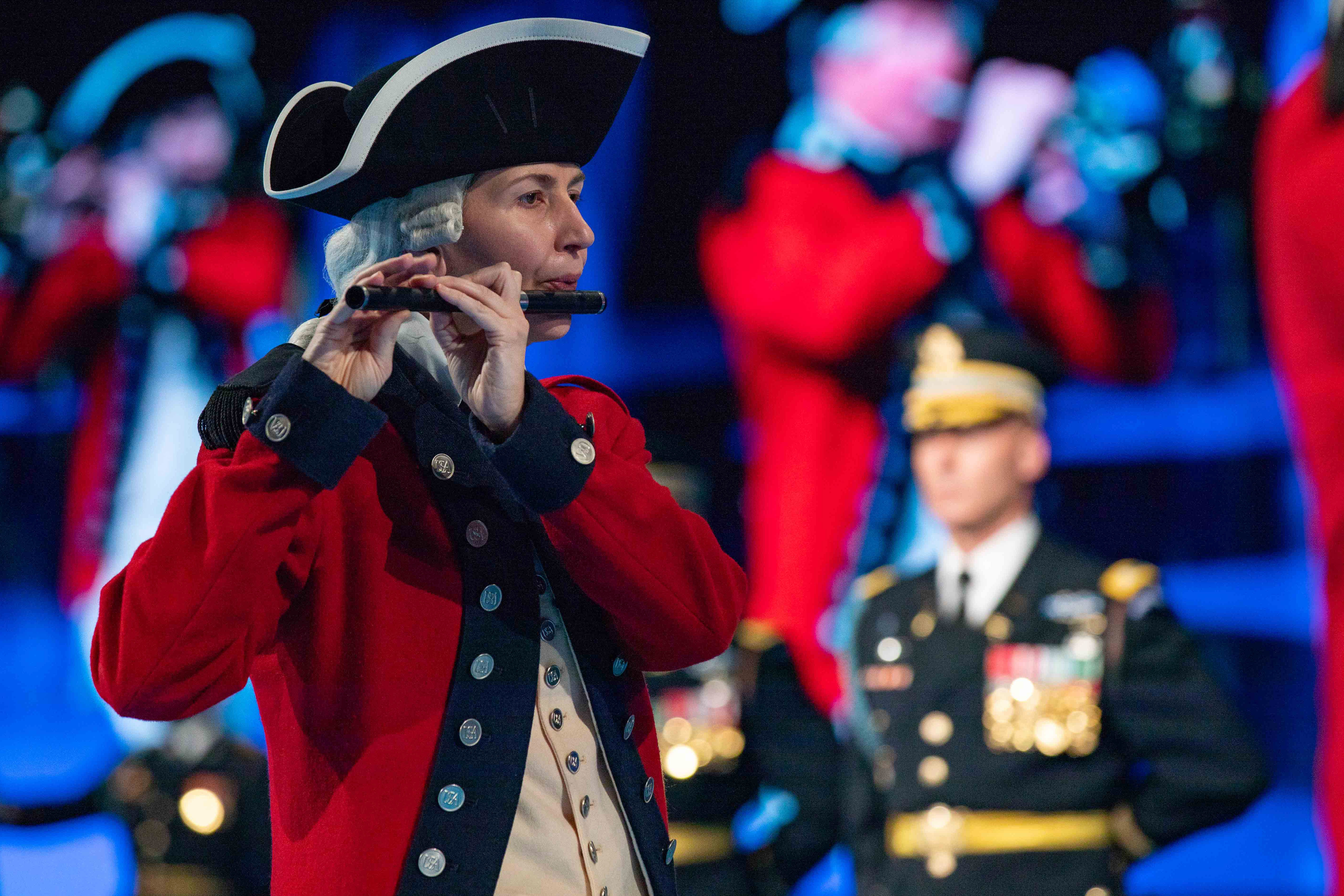
A soldier performs during a retirement ceremony at Joint Base Myer-Henderson Hall, Va., Nov. 19, 2020.

Bundle of Joy


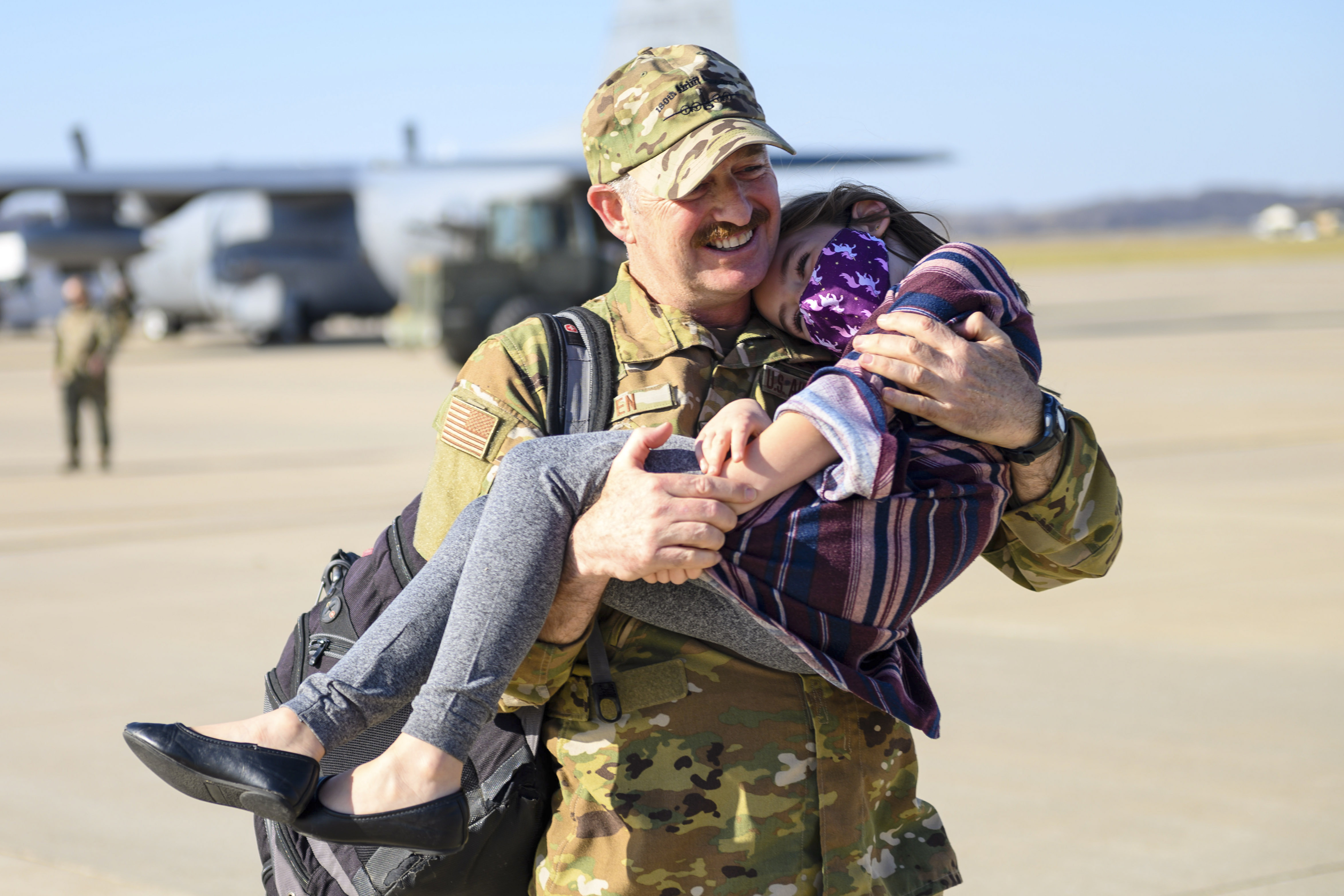
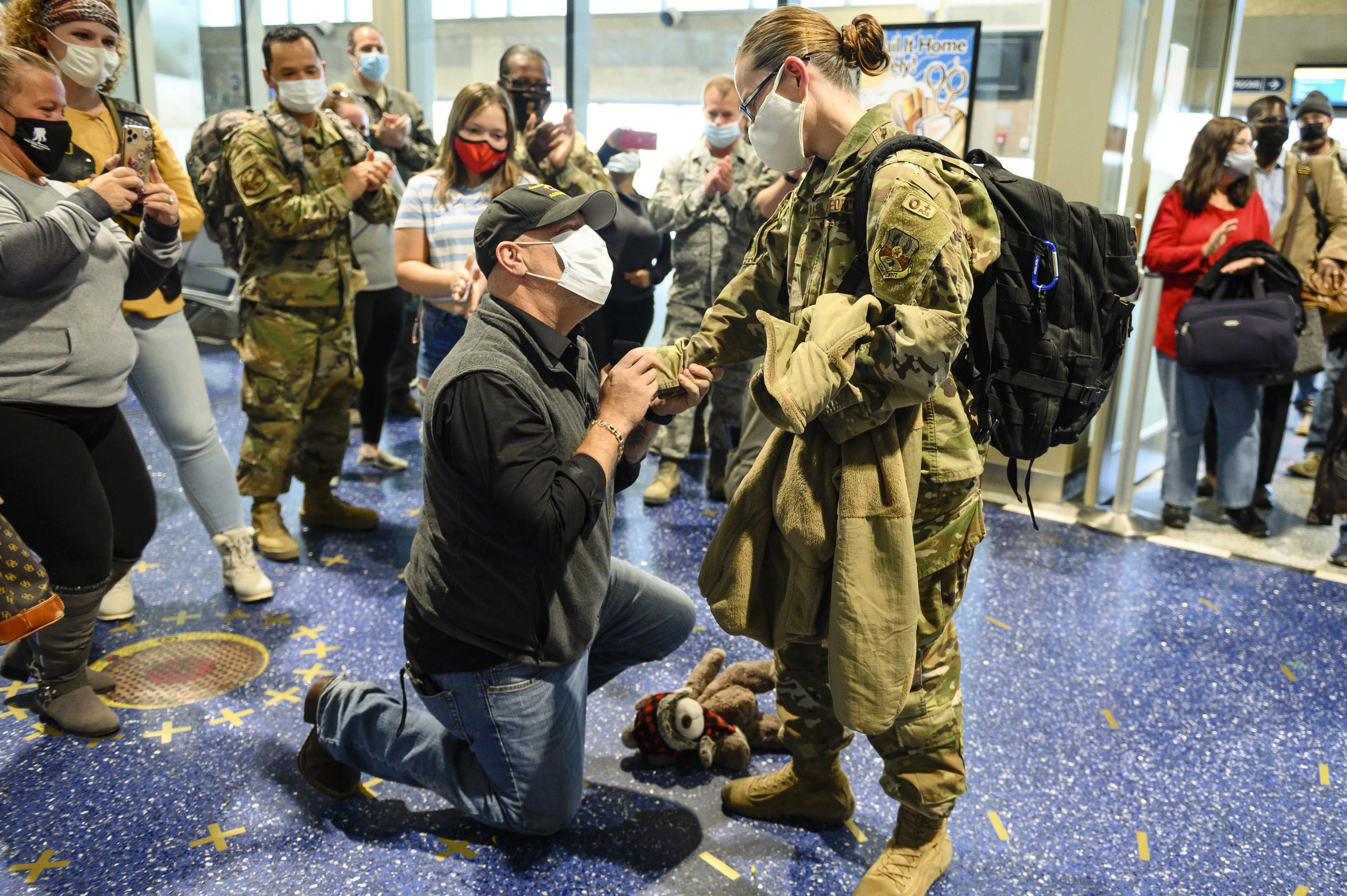
An airman hugs a loved one at Rosecrans Air National Guard Base in St. Joseph, Mo., Nov. 19, 2020, upon returning from a deployment to the U.S. Central Command area of responsibility supporting operations Inherent Resolve and Resolute Support.

Rocket Testing


Air Force Maj. Nathan McCaskey fires a rocket from his F-16 Fighting Falcon near Eglin Air Force Base, Fla., Nov. 3, 2020. The rocket was being tested against a ground based stationary target.

Colorful Crew


The USS John S. McCain conducts a replenishment with the USNS Charles Drew in the Sea of Japan, Nov. 17, 2020.

Readout of Acting Secretary of Defense Christopher C. Miller's Phone Call With Indonesian Minister of Defense Prabowo Subianto

 Nov. 20, 2020


Today, Acting Secretary of Defense Christopher Miller spoke on the phone with Indonesian Minister of Defense Prabowo Subianto to discuss bilateral defense priorities. Both leaders shared their desire to enhance defense engagement between Indonesia and the United States. Both sides noted the importance of bilateral military exchanges and committed to strengthening the education and training opportunities between the two countries. 

Acting Secretary Miller and Minister Prabowo also discussed U.S. defense procurements that would support Indonesia’s defense modernization.

Vaccination Drive-Thru


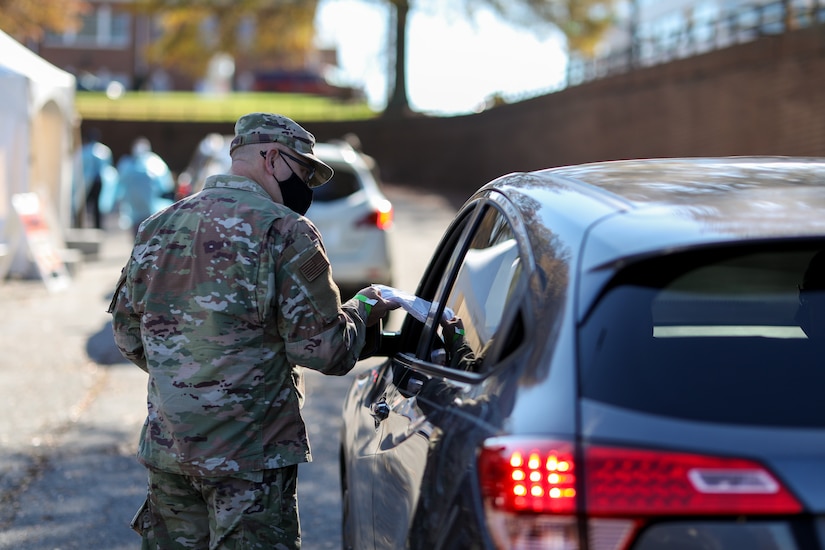
Members of the 919th Special Operations Medical Squadron administer flu vaccinations to reservists in their vehicles at Duke Field, Fla., Nov. 7, 2020. The airmen held their first ever drive-thru vaccination line to keep reservists medically ready while maintaining social distancing guidelines for COVID-19.

Sunlit Scene


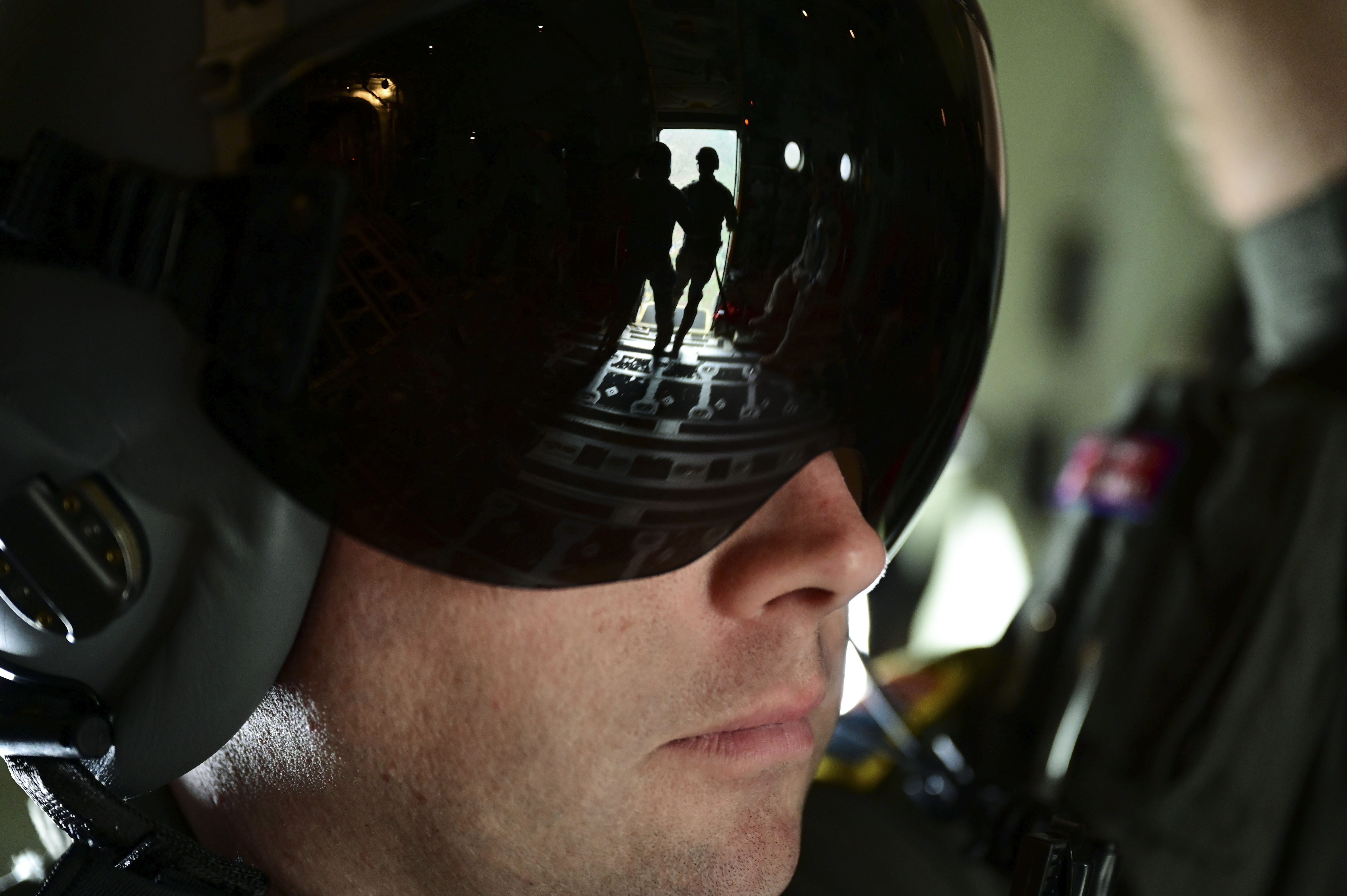
An Air Force F-16 Viper pilot conducts a preflight check at Hill Air Force Base, Utah, Nov. 10, 2020.

COVID-19 Screening


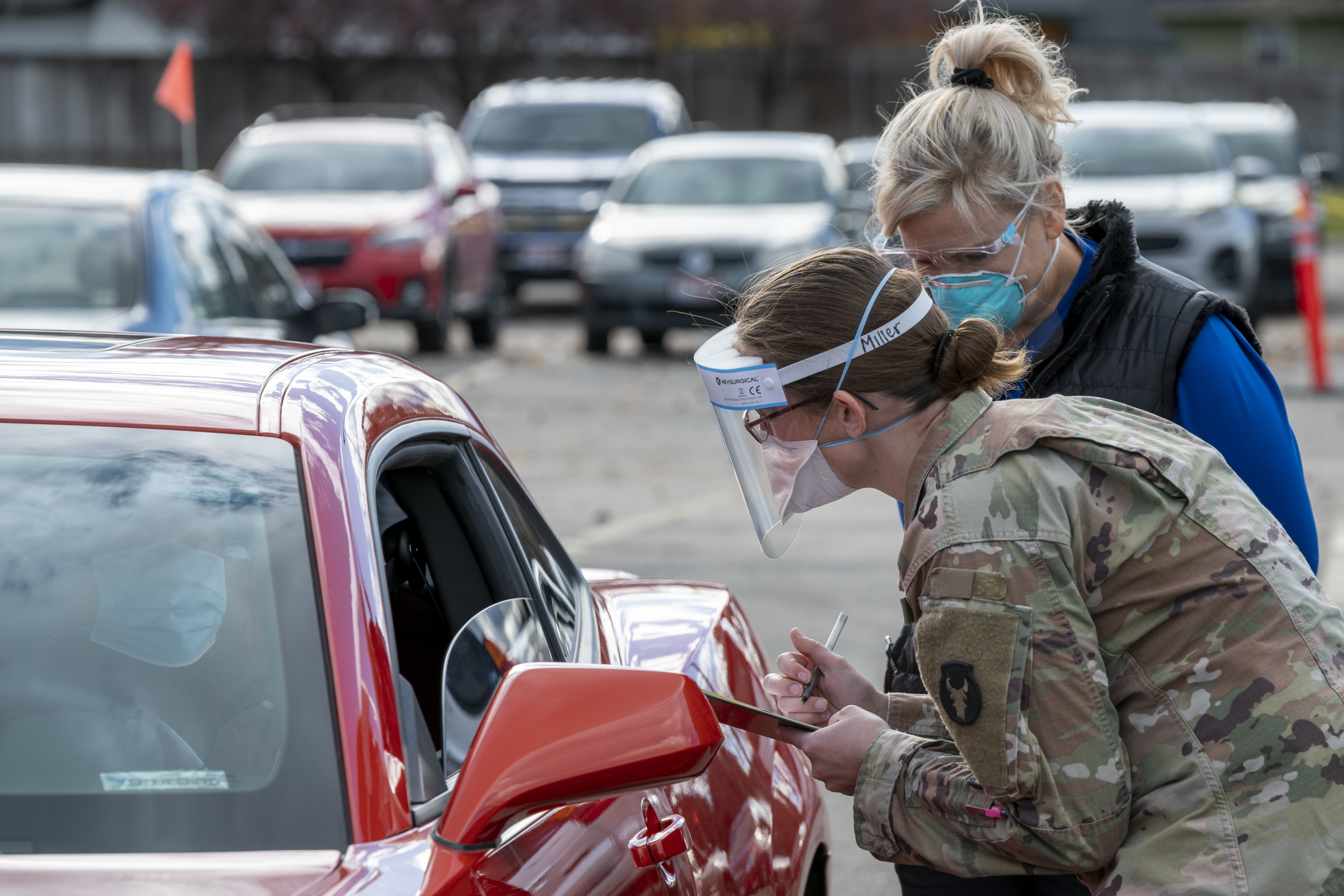
An Idaho Army National Guardsmen conducts COVID-19 screening in Meridian, Idaho, Nov. 19, 2020. One hundred Idaho Guardsmen have been activated to support the state’s pandemic response.

Marine Movement


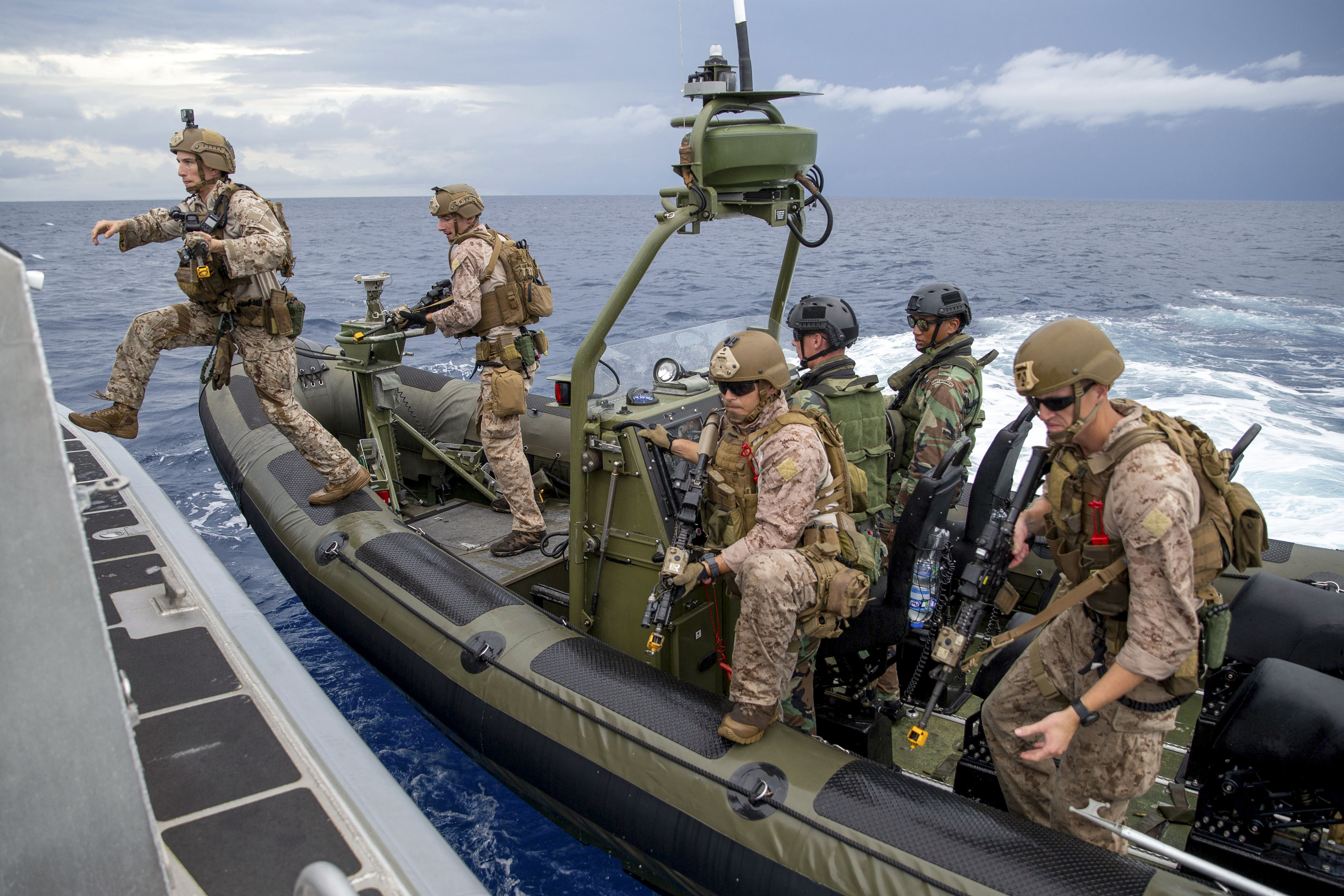
Marines participate in visit, board, search and seizure training with Dutch counterparts near the Savaneta Marine Barracks on Aruba, Nov. 13, 2020.

Temperature Check


A sailor checks the temperature of a Greek pilot as the guided missile destroyer USS Donald Cook arrives in Souda Bay, Greece, Nov. 8, 2020. The temperature checks are part of the COVID-19 protection effort.

Thursday, November 19, 2020

Statement by Chief Pentagon Spokesperson Jonathan Rath Hoffman on Lithuanian Defence Minister Visit and Subsequent COVID Diagnoses

 Nov. 19, 2020


The department was made aware by the Lithuanian Embassy today that Lithuanian Minister of Defence Raimundas Karoblis has tested positive for COVID-19.  Minister Karoblis visited the Pentagon on Nov. 13, 2020, where he met with multiple senior leaders, including Acting Secretary of Defense Chris Miller.  On that day he also met with the Secretaries of the Army and Air Force, and Anthony Tata, Performing the Duties of the Under Secretary of Defense for Policy.  On Monday, November 16, the minister met with the Secretary of the Navy.  All have been tested since their meetings.  As a result of the embassy notification, Mr. Tata was tested today and has tested positive for COVID-19 on two successive tests.  He will isolate at home for the next 14 days in accordance with Center for Disease Control protocols.

We have and are continuing to conduct further contact tracing of DoD personnel who have had close contact with the Lithuanian delegation or Mr. Tata, and are taking appropriate precautions in accordance with CDC guidelines.  Additionally, DoD personnel who had contact with the delegation have received or are receiving at this time rapid COVID tests as deemed necessary based on CDC protocols.  Additional necessary testing for individuals who had contact with Mr. Tata is ongoing.  We will report additional positive cases as appropriate. 

The Department has learned much over the last 10 months of COVID, and even recently we have recommitted to fastidiously following the CDC guidelines with respect to mitigation measures – face coverings, social distancing, contact tracing, hand washing and virtual engagements among others.  As CDC COVID mitigation guidelines were followed during the Acting Secretary’s bilateral meeting with the minister, as well as meetings with Mr. Tata, Acting Secretary of Defense Miller is not quarantining.  Similarly, each of the Service Secretaries are not quarantining based on testing and mitigation measures that were in place during the Lithuanian delegation’s visit and CDC guidelines.  We will continue to evaluate conditions, take appropriate preventative measures, and undertake additional necessary testing.

Despite COVID, we will remain vigilant and at our posts to ensure the safety and security of the American people.  We wish Minister Karoblis and Mr. Tata well and hope they recover quickly.

North Carolina National Guard Continues COVID-19 Response Efforts

 Nov. 19, 2020 , North Carolina National Guard

For some Americans, life is slowly getting back to normal with more people returning to work and school across the country.

Despite that, many states are still responding to problems brought on by the pandemic, including an increased need for COVID-19 testing and a larger population now relying on assistance from food banks.

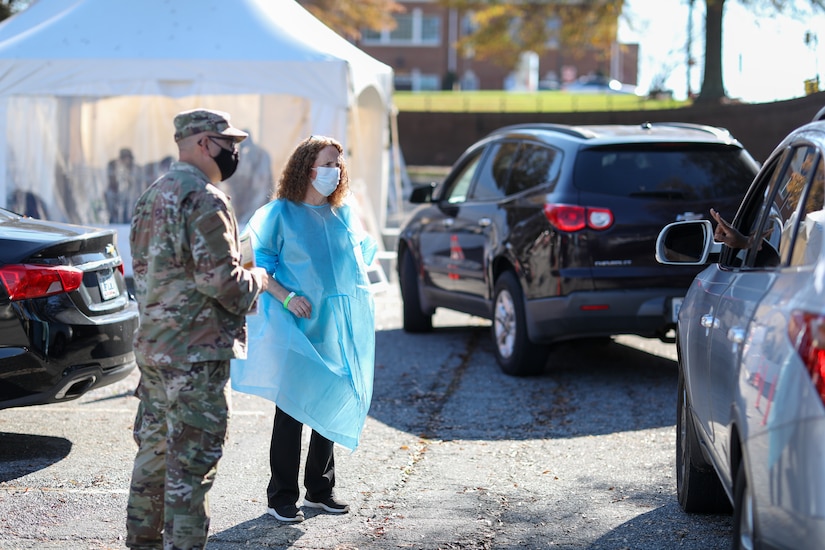
A civilian woman and a soldier talk to patients at a drive-thru.

That is where the North Carolina National Guard steps in. In late September, more than 170 Army and Air Guardsmen were activated to support their state and ease the pressure of responding to a crisis. 

One of the largest areas where guardsmen are supporting North Carolina is at food banks across the state. 

Mary Maxton, the manager of volunteer engagement at the Food Bank of Central and Eastern North Carolina, said they have seen an increase from 600,000 people in need to 800,000 across the 34 counties they support. 

The Raleigh-based food bank where Maxton works now has a team of five N.C. Guardsmen filling the gaps where their volunteer base has decreased from around 90 volunteers a day to an average of 20.

"It's challenging to be here all day for any volunteer, and I know five days in a row is a lot, so we really appreciate the [N.C. National Guard] and all they do." Maxton said. "It's been a tremendous help. It's very nice to have a consistent five people coming in every day."

For many of the soldiers, including 1st Lt. Charles Brown, a platoon leader with the 878th Engineer Company, working at the food bank is a fulfilling experience that led them to join the N.C. Guard in the first place. 

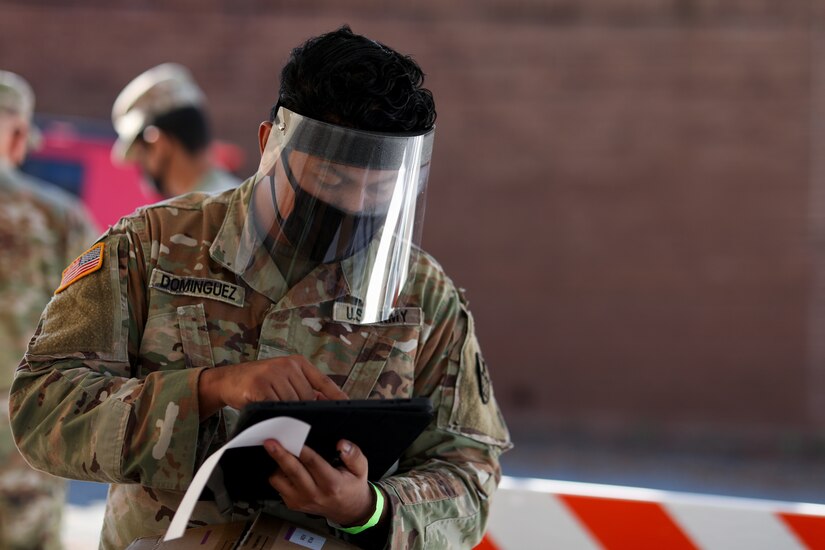
A soldier with personal protective gear takes down information.

"I'm glad me and my guys could help out here," Brown said. "This is really what I signed up for six years ago, to serve my community."

The five-man team works on all the projects that come through the food bank including distribution, which brings the soldiers face-to-face with the people they are supporting. 

"It's really great to see some of the faces light up when they get the food that they need," said Cpl. Dakotah Teter, a combat engineer with the 151st Mobility Augmentation Company.

But food insecurity isn't the only need guardsmen are supporting. Several teams are stationed at COVID-19 test sites across North Carolina, including a site in High Point where four soldiers and one airman are teaming up with Rhino Medical Services at a drive-thru test site. 

The guardsmen register patients to get tested and help with the logistics of operating the site. 

Burneta Barley, a registered nurse and team lead with Rhino Medical Services said having the guardsmen supporting means the nurses can focus on doing more tests.

A soldier hands out masks to people in a car at a drive-thru testing site.

"We're averaging between 80 and 90 a day," Barley said. "Everyone works well together, it's almost like a family to be honest because we spend almost 6 to 7 hours together a day."

Although it is not uncommon for guardsmen to support their communities during times of need, the work they do when responding to a hurricane or winter storm more closely resembles their military jobs than the work many of them are doing to support the COVID-19 response.

"Going from our regular military jobs of digging in the dirt to helping out with COVID tests, it's an entirely different monster in my opinion," said Spc. Bennie Kinley with the 875th Engineer Company. "It's a different experience when you've got people you know in your local community showing up."

As long as North Carolina has a need, Army and Air Guardsmen will continue to be activated to support the pandemic response across the state. Since March of this year, guardsmen have supported the distribution of more than 6.2 million food bank meals and assisted with the testing of close to 21,000 citizens.

DOD Announces Secretary of Defense Maintenance Award Winners

 Nov. 19, 2020


The Department of Defense (DOD) announced the 2020 winners of the Secretary of Defense Maintenance Awards. These awards are presented annually to recognize outstanding achievements in weapon systems and military equipment maintenance.

A total of six field-level awards are presented in three categories - large, medium, and small. The recipients of this year's Secretary of Defense Field-level Maintenance Awards in the large category are the USS ABRAHAM LINCOLN and the 56th and 944th Fighter Wings combined as the 1K Maintenance Group. Winners in the medium category are the Marine Aviation Logistics Squadron 36, Marine Aircraft Group 36, 1st Marine Aircraft Wing, III Marine Expeditionary Force and 100th Maintenance Group. The small category winners are Bravo Company, 526th Brigade Support Battalion and the Helicopter Maritime Strike Squadron FIVE ONE.

The Secretary of Defense Field-level Maintenance Awards are symbolized by the legendary Phoenix, a mythological bird which lived for some five centuries, died, was consumed by flames, and then reborn from its own ashes. Periodically, so states the myth, the Phoenix would again and again be reborn. This unique ability of the legendary Phoenix to rejuvenate and renew itself characterizes the role of weapon systems and maintenance in the DoD. The winner of the Phoenix Award, recognized as the best of the best field-level maintenance units, will be selected from the six field-level award winners.

The depot-level award is named in recognition of Robert T. Mason, a former assistant deputy undersecretary of defense for maintenance policy, programs, and resources. Mason served as the champion of organic depot maintenance for three decades and was instrumental in transforming DoD organic depot-level operations. The recipient of the 2020 Robert T. Mason Depot Maintenance Excellence Award is Satellite Transportable Terminal Depot Maintenance Program, Tobyhanna Army Depot.

The department also recognized the sustainment training, advice, and assistance of foreign military forces awards. This year’s ministerial category winner is the Jordan Country Project, Institute for Security Governance and the operational category winner is 108th sustainment brigade - task force Lincoln, Team Blackhawks, United States Central Command.

The 309th Software Engineering Group at Ogden Air Logistics Complex was selected as the Rear Admiral Grace M. Hopper award for software maintenance excellence in the second year of its award.

The awards will be presented to the winners on January 13, 2021 in the Pentagon Auditorium.

Mortar Fire


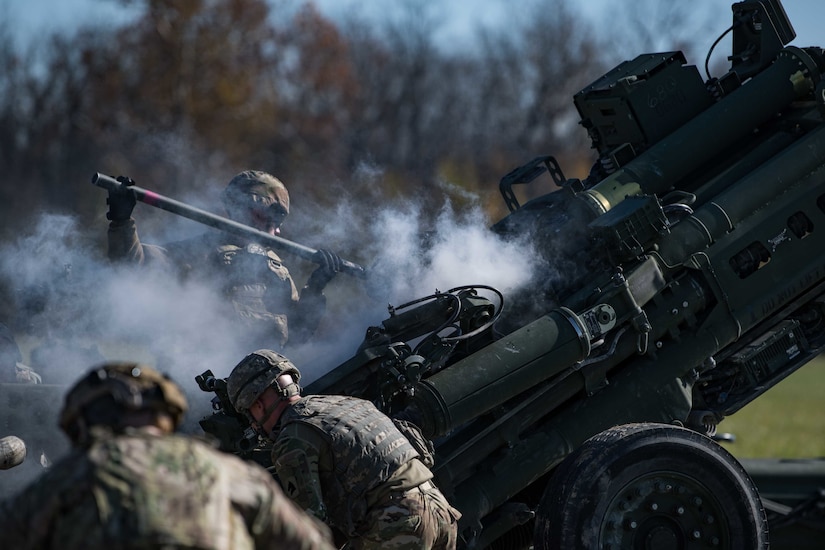
New Jersey National Guard soldiers fire a 120 mm mortar system at Joint Base McGuire-Dix-Lakehurst, N.J., Nov. 13, 2020.

Rear View


Air Force Tech. Sgt. James Hurst observes a training event at Pope Army Airfield, N.C., Nov. 9, 2020.

Solider Sight


A soldier rides in an armored personnel carrier during an exercise at Fort Irwin, Calif., Nov. 13, 2020.

Holiday Season Guidance to Minimize Spread of the Coronavirus Disease 2019

 Nov. 19, 2020


On Tuesday, the department released the Holiday Season Guidance to Minimize Spread of the Coronavirus Disease 2019, which supplements existing guidance in DOD Force Health Protection Supplements, military installation orders, and Combatant Command disease prevention guidelines, as well as other state, local, territorial, or tribal health and safety laws, rules, and regulations.

The memo advises service members and DOD employees to follow recommendations from the Centers for Disease Control and Prevention (CDC) to minimize the spread of COVID-19 during the holiday season. The CDC guidance is found here. Relevant CDC recommendations include, but are not limited to, the following:

  • Gatherings can contribute to the spread of other infectious diseases, thus getting an influenza vaccination is an essential part of protecting your health and family.
  • Do not travel or attend gatherings if recently diagnosed with COVID-19 and not yet met the criteria for when it is safe to be around others; have symptoms of COVID-19; are awaiting test results; may have been exposed to someone who has contracted COVID-19 within the last 14 days; or are at increased risk of severe illness from COVID-19.
  • During travel and during gatherings, wear a face covering, avoid close contact, wash your hands, avoid contact with sick individuals, and avoid touching your eyes, nose, and mouth.
  • Limit the duration and the number of people at gatherings as much as possible.
  • Outdoor activities are safer than indoor activities. If you attend an indoor event, avoid crowded, poorly ventilated, and fully enclosed indoor spaces. Increase ventilation by opening windows and doors to the extent that it is safe and feasible based on the weather.
  • Check with the event host, organizer, or event venue for updated information about any COVID-19 safety guidelines that will be in place to prevent the spread of the virus.

The memo for Holiday Season Guidance to Minimize Spread of the Coronavirus Disease 2019 can be found here.

Current DOD travel guidelines remain in effect and are provided in Under Secretary of Defense for Personnel and Readiness Memorandum, "Force Health Protection Guidance (Supplement 12), Department of Defense Guidance for Personnel Traveling during the Coronavirus Disease 2019 Pandemic," dated August 6, 2020, which can be found here.  

Readout of Acting Defense Secretary Christopher C. Miller's Meeting With Uzbekistan Minister of Foreign Affairs Abdulaziz Kamilov

 Nov. 19, 2020


Acting Secretary of Defense Christopher C. Miller met with His Excellency Abdulaziz Kamilov, Minister of Foreign Affairs of Uzbekistan to reaffirm the strategic security partnership between the United States and Uzbekistan. 

 Acting Secretary Miller welcomed Uzbekistan’s efforts to facilitate intra-Afghan Peace Negotiations, supporting the economic reconstruction of the country, and its integration into the Central Asian region. Both leaders reiterated their commitment to further promote the Afghanistan peace process and to support the goal of a durable political settlement.

 Minister Kamilov expressed his appreciation for the United States' continuous support for Uzbekistan’s defense modernization. Acting Secretary Miller and Foreign Minister Kamilov emphasized the importance of further enhancing bilateral military-to-military cooperation and shared their desire to continue close collaboration on issues such as counterterrorism, border security, and defense institutions’ capacity building.

 Acting Secretary Miller thanked Uzbekistan for its leadership role in advancing stability and security in Central Asia and reiterated that the United States will continue to support Uzbekistan’s’ sovereignty and independence and work with the countries of the region to address common security challenges.


Yellow Icing


Navy Petty Officer 1st Class Andrew Sutton operates a de-icing truck to remove snow and ice from the wing of a P-8A Poseidon at Misawa Air Base, Japan, Nov. 10, 2020.

Flightline Friends


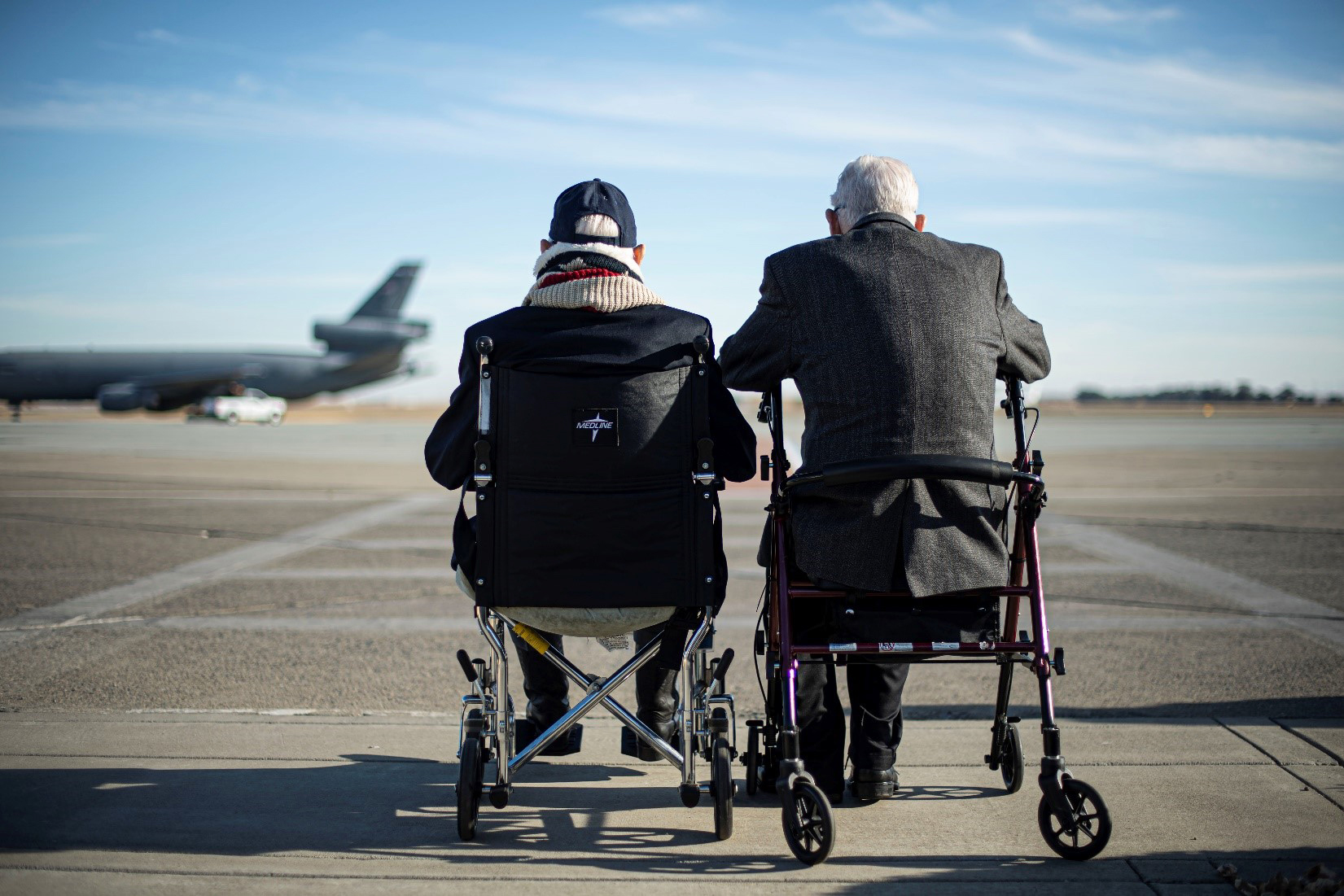
Dean “Diz” Laird, left, and Clarence “Bud” Anderson, both World War II ace pilots, watch as a KC-10 Extender taxis at Travis Air Force Base, Calif., Nov. 10, 2020. At 99 and 98 respectively, Laird and Anderson were high school students together in Auburn, Calif.

Bold Quest Event Builds Interoperable Fires for Tomorrow

Nov. 19, 2020 | BY Jim Garamone , DOD News

Despite coronavirus, the Joint Staff's Bold Quest event at Camp Atterbury, Indiana, allowed the services and partners to demonstrate and assess U.S. and coalition interoperability. 

The event concluded Nov. 4.

Soldiers reload an artillery piece after firing.

The event involved roughly 600 people — 400 in Indiana and roughly 200 attending virtually, said John Finch, the deputy demonstration branch chief with the Joint Staff's J-6 directorate. Finch works with the Joint Fires Integration Division in the Deputy Directorate for C4Cyber Integration.

"We're all about coalition interoperability in the kind of joint and combined fires and sensor-to-shooter interoperability," Finch said in a telephone interview. 

Bold Quest is an annual event that allows participants to assess systems and capabilities in a realistic operational environment.

At Camp Atterbury, Bold Quest assessed the way the U.S. services could work together and integrate different systems, as well as adding the capabilities of partner and allied nations, Finch said.

All of the capabilities in the demonstration work well in the laboratory, but Bold Quest tests to see if they will make the transition to the field. It is one thing for a system to work in a temperature-controlled lab, it is quite another to see if it works in a rainstorm or hurricane.

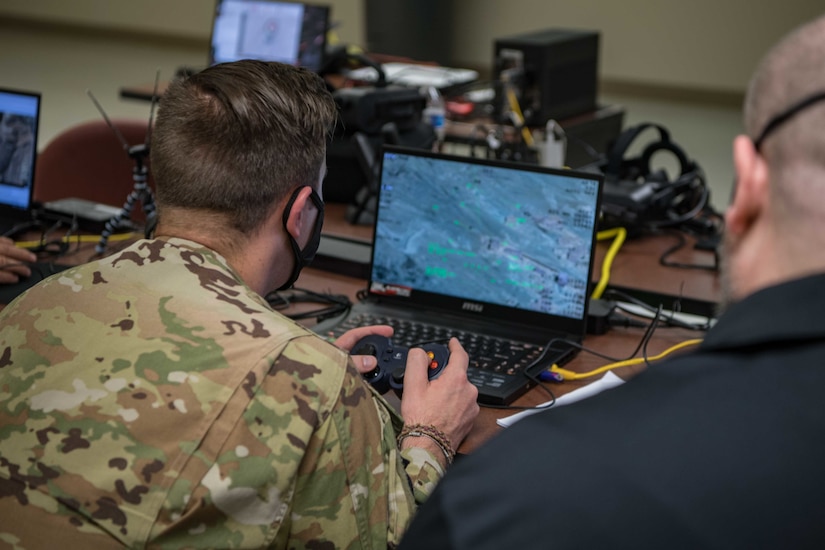
A service member looks at a laptop screen.

"Underneath that general heading, there are specific objectives that are determined by the priorities and the requirements that the services or the partner nations have at any given time," he said. "Some of what we did in this event … was integration of some of those areas to look at interoperability and movement of data and information across that sensor-to-shooter chain."

This means the integration of close-air support, tube artillery, rocket artillery, naval gunfire and more. It means combining intelligence from an observer with binoculars to unmanned aerial vehicles to manned platforms to satellites and more. 

All these objectives were integrated to look at a broader picture of the interoperability across different processes related to joint fires, Finch said.

The services and international partners went to Indiana to assess their systems and the tactics, techniques and procedures that go with them. Bold Quest gave them the data needed to make decisions about what changes or improvements need to be made, Finch said.

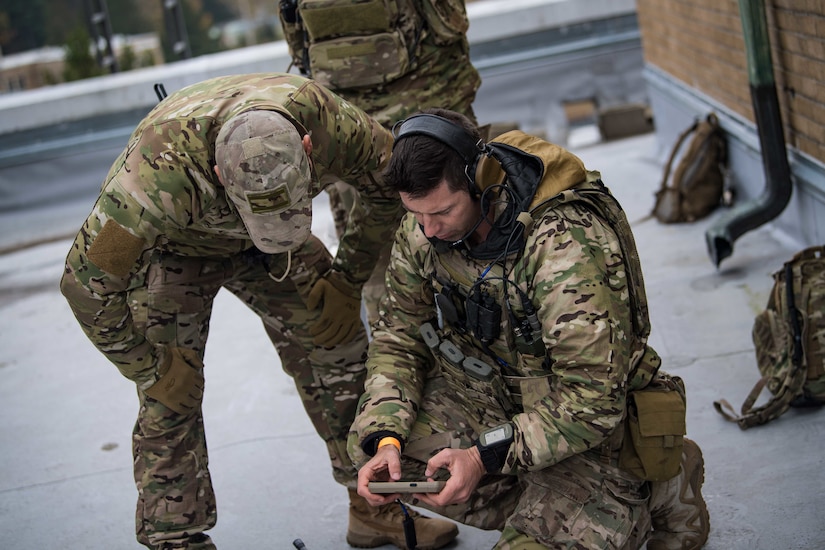
A service member crouches on the ground to look at an instrument in his hand as another service member leans down to observe.

The 400 participants at Camp Atterbury were scattered in different locations and buildings. The 2nd Battalion 150th Field Artillery of the Indiana National Guard provided the guns and fired more than 100 rounds over two days in support of Bold Quest. 

COVID-19 severely limited international travel, but many international partners were able to take advantage of the distributed aspects of the event, Finch said. 

There were six partner nations: Canada, Finland, France, the Netherlands, Norway and Sweden. 

Finch hopes Bold Quest 2021 will allow partner nations to participate in person. His team is already planning what will occur at Camp Atterbury next year.

Flight Line


An Air Force B-52H Stratofortress trains with Colombian air force fighter jets over Colombia, Nov. 8, 2020, during Brother's Shield, a bilateral training event.

Welcome Home


A Missouri Air National Guardsman shares a moment with a loved one upon returning home to Kansas City, Mo., Nov. 18, 2020, after an overseas deployment.

Wednesday, November 18, 2020

Necessary Paperwork


Army Sgt. Alexis Pack prepares paperwork for a COVID-19, community-based collection site in Duckwater, Nev., Nov. 10, 2020. Pack works with Task Force South’s coronavirus strike team and assisted the Shoshone Tribal Health Clinic while testing over 70 members of the tribal community

Sample Collection


Army Spc. Keith Davis assists patients with nasal swab samples for the COVID-19, community-based collection site in Duckwater, Nev., Nov. 10, 2020. Davis works with Task Force South’s coronavirus strike team and assisted the Shoshone Tribal Health Clinic while testing over 70 members of the tribal community.

Soldier Situps


Soldiers participate in a fitness assessment during training in Djibouti, Nov. 3, 2020.

Stars and Lights


An Air Force MQ-9 Reaper sits on the runway at Creech Air Force Base, Nev., Oct. 16, 2020.

Confidence Course


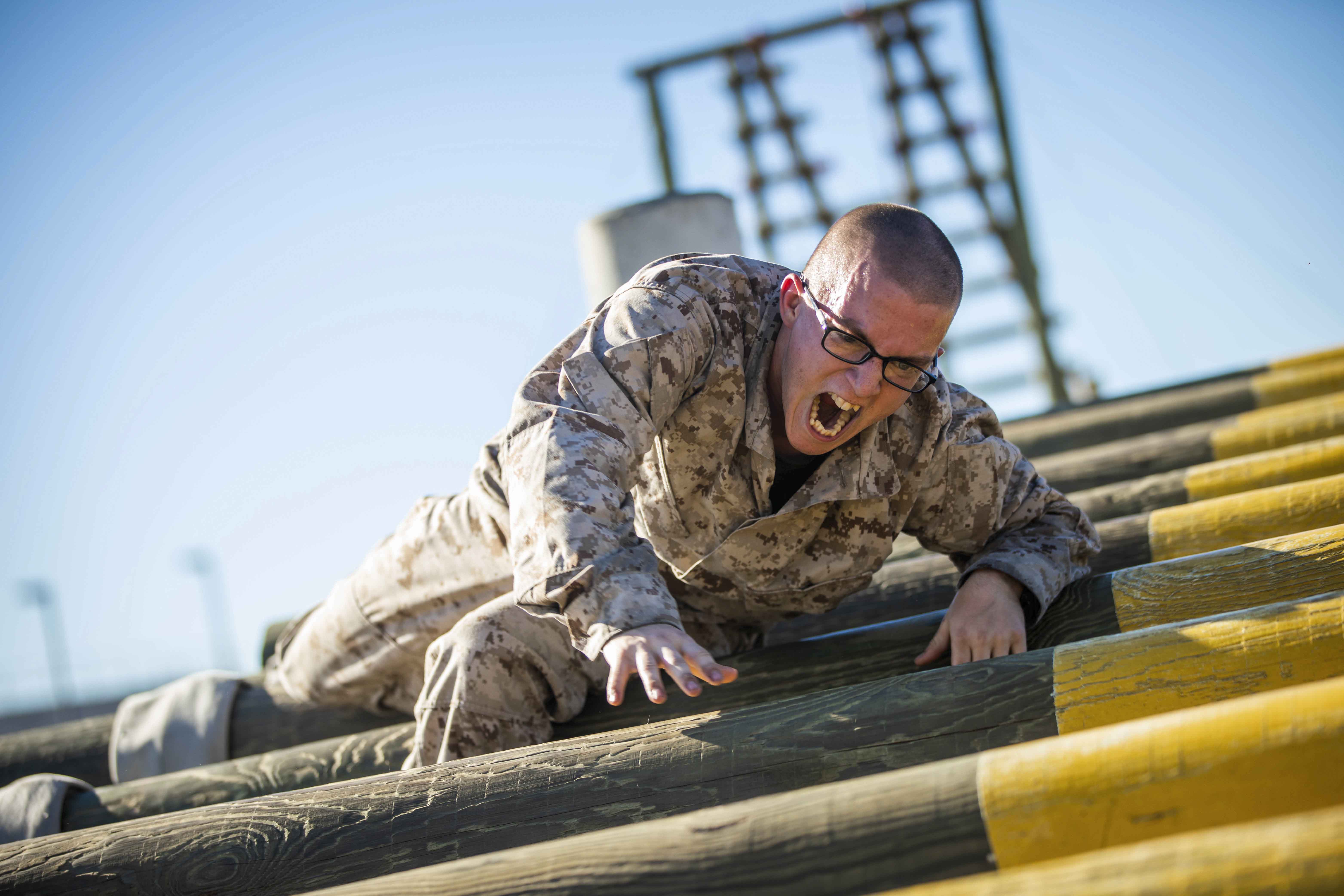
Marine Corps Recruit Taryn Bunton navigates an obstacle as part of a confidence course at Marine Corps Recruit Depot San Diego, Nov. 16, 2020.

Acting SECDEF Announces OSD Changes at Fort Bragg, NC

 Nov. 18, 2020

Acting Secretary Of Defense Christopher C. Miller; Ezra Cohen-Watnick, Acting Under Secretary Of Defense For Intelligence And Security

ANNOUNCER:  Good morning, acting Secretary Miller and distinguished guests.  We are gathered today for a signing ceremony to implement the reforms outlined in Section 922 of the fiscal year 2017 National Defense Authorization Act.

For nearly four years, the Department of Defense has planned and prepared to implement this important legislation.  It not only strengthens the role of the assistant secretary of defense for special operations and low-intensity conflict as a senior civilian for special operations within the department, but it also reinforces the partnership with the commander of the United States Special Operations Command.

Ladies and gentlemen, we will have opening remarks from the acting undersecretary of defense for intelligence and security, Mr. Ezra Cohen.

ACTING UNDER SECRETARY OF DEFENSE EZRA COHEN-WATNICK:  Thank you, Jim.

Mr. Secretary, on behalf of the men and women of U.S. Special Operations, especially Army Special Operations, welcome home.  We are honored that you have returned to your roots on this historic day on hallowed ground.

Today, the Department of Defense has started the process of formalizing what we have long known – the fundamental role of U.S. Special Operations in defense and foreign policy by elevating Special Operations forces to a level on par with military departments as authorized and directed by Congress.

As we enact these reforms, we follow the vision of President John F. Kennedy, who predicted the rise of Special Operations nearly 60 years ago.  He foresaw, quote, "another type of war, new in its intensity, ancient in its origin, that would require a whole new kind of strategy, a wholly different kind of force, forces which are too unconventional to be called conventional forces, which are growing in number and importance and significance."

President Kennedy gave these remarks at the opening of the nuclear age, when the Pentagon was primarily organized to plan and direct large conventional operations against superpowers, not special operations short of overt declared conflict.  The global demand for Special Operations forces then and now has confirmed President Kennedy's foresight.  And now, under the leadership of President Trump, we are fully realizing President Kennedy's prescient view of Special Operations forces.

It is fitting that we are again entering an era of great power competition as we gather to affir -- affirm the importance of special -- the Special Operations community.  Then, as now, I know Special Operations forces will play a vital role, and by the historic reforms we have enacted today, we will ensure Special Operations forces has a civilian advocate commensurate to the secretaries of the other military departments.  I am honored to serve as your service secretary.  Thank you very much.

(APPLAUSE)

ANNOUNCER:  Ladies and gentlemen, acting Secretary Miller.  (inaudible).

ACTING SECRETARY OF DEFENSE CHRISTOPHER C. MILLER:  Here, Jim, you take this.  Got my big book; going to speak for a couple hours.

Good morning, everyone.  Wow, what a week.  That old cliché, if you want a friend in Washington, D.C., get a dog may be true for many.  But for me, I know I can come to Fort Bragg and be with my brothers and sisters in Special Operations forces, who will always have my back.

It is an honor to be here on this hallowed plaza, where we are reminded of the enormous sacrifices and burdens shouldered by our nation's special operators.  These brave heroes were first to the enemy's doorstep, Mark, in the aftermath of the September 11th attacks in 2001.  Only weeks after that dark day in our nation's history, they plunged into danger to bring justice to the terrorists who took thousands of innocent American lives, and they will be the ones who continue to deny safe haven to violent extremists and maintain unrelenting pressure on the road to stability and lasting peace in Afghanistan and Iraq.

I know firsthand the caliber and character of these brave service members, being served -- having served as an Army Special Forces company commander under then-Colonel John Mulholland during Operation Enduring Freedom -- and with Mark, of course.  I also served two tours in Iraq, including during the 2003 invasion, and later, in 2006 as a Special Forces battalion commander, 2nd Battalion, the Special Forces group -- absolutely the best Special Forces battalions in the history of the world -- no offense.  I spent the remainder of my career just as committed to defeating terrorists and those that would help harbor them.

Today, we are gathered before a monument that symbolizes the tremendous cost of these conflicts and our relentless vigilance.  In light of the countless sacrifices made by hundreds of thousands of American service members and our enormous progress over nor -- over nearly two decades, we are now bringing these conflicts to their successful and responsible conclusion under the bold leadership of President Trump.

Yesterday, the president ordered the downsizing of our force presence in Afghanistan and Iraq: 2,500 troops in each country by 15 January 2021 in a manner that protects our fighting men and women and our hard-earned gains.  At the same time -- you all know this -- should any malign actors underestimate our resolve or attempt to undermine our efforts, we will not hesitate to restore deterrence and defeat any and all threats.

As we implement the president's orders, we also recognize that transitions and campaigns are fraught with risk and unexpected challenges and opportunities.  That is why I am here today to announce this -- this is an omen -- uh oh.  I'm here today to announce that I directed the Special Operations civilian leadership to report directly to me instead of through the current bureaucratic channels.  This historic step finalizes what Congress has authorized and directed, and will put Special Operations Command on par with the military services for the first time.

This reform will immediately improve agility to the department and the command, and will enable us to streamline information flow, enhance decision-making and more adaptively and adeptly support our commanders and their superb soldiers, sailors, airmen and Marines.  Change is often tectonic in the Department of Defense.  This is by -- this is by design, and as our history shows, has served the nation very well.

Today's reforms is directly aligned with all three of my priorities, as outlined in my message to the force on Monday.  First, bring the current war to an end in a responsible manner that guarantees the security of our citizens; two, continue implementing the National Defense Strategy with an emphasis on transforming the department for great power competition; and three, accelerate the department's activities to contribute to our whole-of-government effort to combat transnational threats.

I also want to highlight that this particular change has been analyzed, debated and refined over the course of the past 30 years, since the creation of Special Operations Command and the assistant -- and the creation of the assistant secretary of defense for special operations, low intensity conflict by the Nunn-Cohan -- Cohen, excuse me -- Nunn-Cohen Amendment to the Goldwater-Nichols Act of 1987.  I have closely studied and been intimately involved in these efforts.  I personally think SOLIC deserves to be an undersecretary of defense, but unfortunately, that's beyond my authority and purview at this time, but I know future generations will take that one on.

Today, as we chart a clear path forward for our special operators, we proudly stand on the shoulders of the giants who came before us: Colonel Aaron Bank, founder of the U.S. Army Special Forces; Major Richard "Dick" Meadows of the U.S. Army Special Forces, who is mortalized in the statue nearby; Major General Johnny Alison, founder, U.S. Air Force Special Operations; Captain Phil Bucklew, whose name adorns the Naval Special Warfare Center in Coronado, California; Brigadier General Evans Carlson.  Where are the Devil Dogs?  What an incredible commander, an influential commander of the earliest Marine Raiders; Major General Jack Singlaub, a trailblazer amongst Special Operations forces; former acting -- sorry -- former Army Secretary John Marsh, a vocal advocate for SOF improvements in the wake of Operation EAGLE CLAW; and more recently, Colonel retired Dave Maxwell, United States Army Special Forces; Lieutenant Generals John Mulholland and Charles Cleveland.  Is that -- Charles Cleveland.  He's always Charlie Cleveland.  That's good to see it formalized there.  They're now retired senior leaders in the Special Operations community.

We also acknowledge the leaders in Congress who were a driving force behind the Nunn-Cohen reorganization.  I'm reminded of the late Congressman Dan Daniel from Virginia, early and influential proponent of Special Operations reform; and Jim Locher, who was instrumental in garnering bipartisan support for the reorganization, and later became the assistant secretary of defense for Special Operations Low-Intensity Conflict.  We have to remember though, behind these titans stood an enormous group of dedicated patriots, many that have served in this building, who did the heavy lifting to create what ultimately became U.S. Special Operations Command, a national treasure, unparalleled in the world.  These patriots give us strength, and remain our guiding lights.

Today, with the strong support of President Trump, we are forging the next chapter in the history of the United States Special Operations Forces in formalizing a watershed reform.  Right now we start the transition to provide greater civilian oversight of -- and critical advocacy for our special operators. 

This couldn't come at a more critical moment in time as we bring our nation's longest conflict to a responsible end and prepare our Special Operations forces for this new era of great power competition.  I can think of no better place than here, at the original home of our Special Operations forces, to enshrine stronger support for the next generation of special operators, hardened by combat and unrelenting deployments, who understand the fundamental nature of war, who remain committed to defeating every threat, and who are undeterred by the high-price of victory. 

De oppresso liber.  God bless our women and men in uniform.  God bless our great nation.  Thank you so much.

(APPLAUSE)

ANNOUNCER:  Ladies and gentlemen, joining acting Secretary Miller for the signing of the document is Mr. Mark Mitchell, the former acting assistant secretary of defense for special operations low-intensity conflict, Mr. Cohen and Dr. Joseph Tonon.

(CROSSTALK)

ANNOUNCER:  And Colonel (retired) Dave Maxwell.

(CROSSTALK)

(APPLAUSE)

ANNOUNCER:  Ladies and gentlemen, thank you for attending today's events.  This concludes the ceremony.

Statement From Acting Secretary of Defense Christopher C. Miller on UK Announcement of Largest Military Investment in 30 Years

 Nov. 18, 2020


“The US Department of Defense applauds the announcement by the United Kingdom to significantly increase defense spending.  The UK is our most stalwart and capable ally, and this increase in spending is indicative of their commitment to NATO and our shared security.  With this increase, the UK military will continue to be one of the finest fighting forces in the world.  Their commitment to increased defense funding should be a message to all free nations that the most capable among us can – and must - do more to counter emerging threats to our shared freedoms and security.”
Transport Lines


Airmen use an all-terrain forklift to transport cargo to a C-17 Globemaster III at Amedee Army Airfield in Herlong, Calif., Nov. 6, 2020.

DOD Prioritizes December Launch of 'Trusted Capital Marketplace'

 Nov. 18, 2020 | BY C. Todd Lopez , DOD News

While plans are underway for a change in administration, officials within the Defense Department still have several goals they'd like to achieve. Among those is implementation of the "Trusted Capital Marketplace," the undersecretary of defense for acquisition and sustainment said.

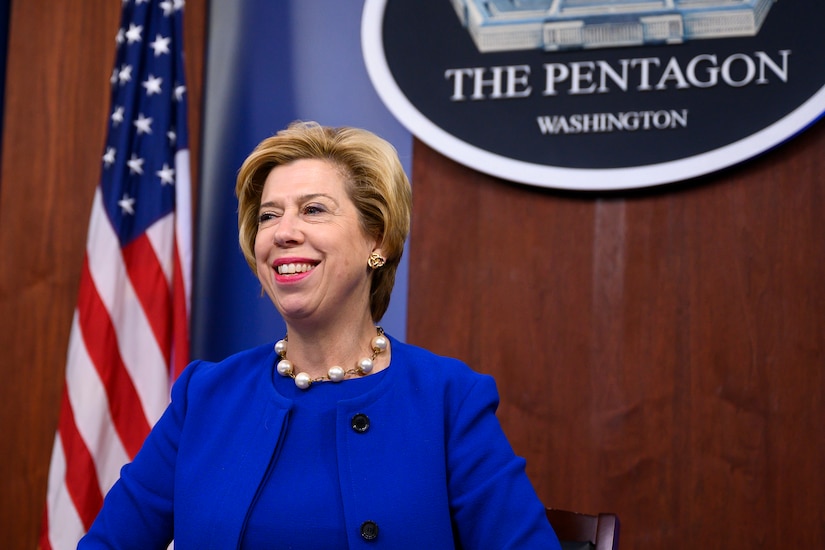
A woman in a blue dress stands in front of a U.S. flag and a sign that reads "The Pentagon - Washington."

"[One] area that we want to bring over the finish line here is our trusted capital project," Ellen Lord said during an online discussion today as part of the three-day American Institute of Aeronautics and Astronautics ASCEND Summit. "We'd like to think the capital markets are very, very efficient. But we work with the Council on Foreign Investment in the U.S. to block or undo a lot of transactions where our adversaries are coming in and buying companies that are critical for our national technology initiatives."

The Trusted Capital Marketplace project is a department effort within A&S meant to both support the defense industrial base and limit adversary nation access to American technology. The effort is in response to a mandate by Congress laid out in the 2018 National Defense Authorization Act.

Within the Trusted Capital Marketplace, the department will be involved in matching up businesses in need of investment with investors that have been shown to not have ties to adversarial nations.

"What we want to do is instead of driving companies, or driving people trying to sell real estate to these adversarial and nefarious kinds of actors out there, we want to be able to partner people with clean money with companies where we understand the beneficial ownership and grow that capability for the betterment of our national security and economic security," Lord said.

To facilitate that, there's going to be an electronic marketplace, she said, something she said pairs up cleared investors and companies in need of investment in much the same way a dating website might work.

"What we're doing is clearing people with money, investors, and then companies that have critical technology for the Department of Defense, and giving them a place where they can get together and talk and hopefully do some deals," she said.

Lord said she expects the Trusted Capital Marketplace to be available in December.

"We are literally just going through federal paperwork right now to launch this," she said. "I'm really excited about our Trusted Capital Marketplace."

U.S. Donates Field Hospital to South Africa for COVID-19 Response

 Nov. 18, 2020 | BY Army Lt. Col. Al Phillips , New York National Guard

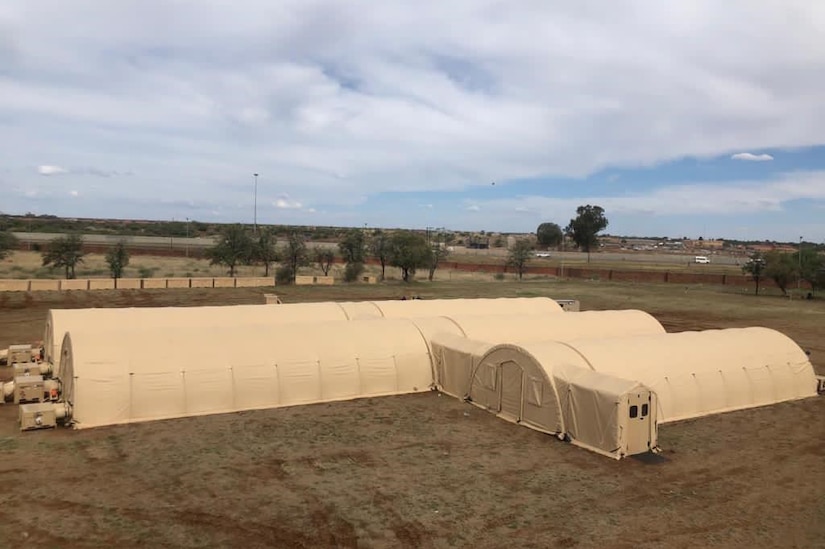
A $1.4 million, 40-bed field hospital donated to South Africa by the United States has been set up in Mahikeng, the capital of the country's Northwest Province, to help fight the COVID-19 pandemic.

The hospital was purchased by U.S. Africa Command through the command's Humanitarian Assistance Program, and transferred to South African officials by personnel from the U.S. Embassy in Pretoria, South Africa.

An aerial view of a field hospital in Africa.

Mahikeng, previously known as Mafikeng, was chosen as the location for the hospital by Dr. Zweli Mkhize, South Africa's health minister, because of an increase in COVID-19 cases in the province in recent weeks.

"The donation of this field hospital is timely given that our scientists are anticipating a possible second wave of COVID-19 infections in February," Jeanette R. Hunter, the deputy director general for primary health care at the South African National Department of Health, said.

As of Nov. 5, 2020, the Mahikeng Provincial Hospital had only four negative pressure isolation beds to treat 28 COVID-19 patients.  

Negative pressure beds are maintained in rooms isolated from the rest of a facility. The air pressure inside these rooms is maintained at a lower level. This keeps air — which could be contaminated — from flowing out when a door is opened.

In order to ensure there were enough beds to treat COVID-19 patients, 90 beds that were used for other purposes were shifted to accommodate. This restricted the hospital's ability to treat patients without COVID-19, Hunter said.

The new field hospital has 40 beds isolated by negative pressure, which will increase the hospital's capacity for more patients.

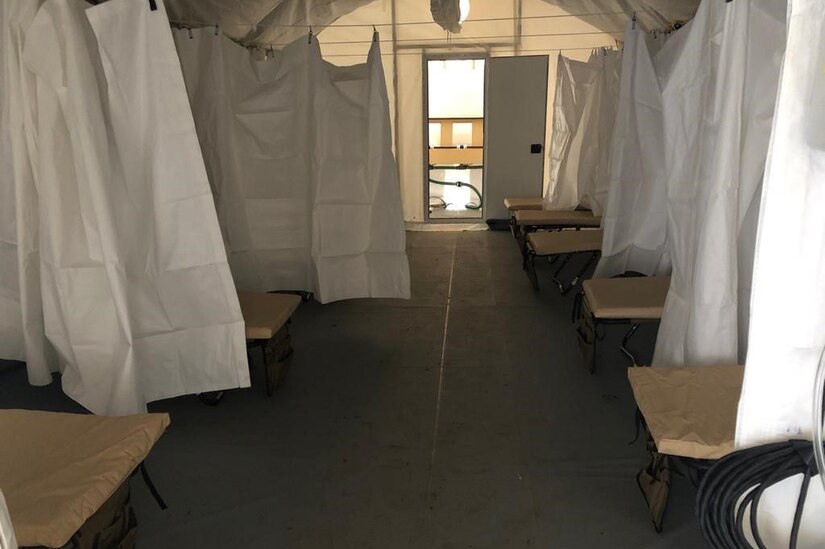
The interior ward of a field hospital is shown.

The hospital was manufactured by Alaska Structures, an Anchorage company that specializes in engineering fabric buildings. Two 2,300 kilowatt generators provide power, and the system includes toilets, showers and a limited reception area.

The hospital can operate autonomously and is equipped with eight air conditioning units equipped with high efficiency particulate air filtration and ultraviolet light scrubber systems to control infections.

"The fight against COVID-19 in South Africa is not over, and that's why this state-of-the-art field hospital donation from the American people, through Africom, is especially timely," U.S. Ambassador Lana J. Marks said.

"We once again commend the South African government and Minister Mkhize, who personally chose Mahikeng as the location for this facility, on their response to the pandemic, which the United States government has been honored to support," Marks added.

The field hospital was set up during the latter portion of October and transferred to the South African government during a ribbon-cutting ceremony on Oct. 26.  

Africom sent a team of civilian trainers to assist South African medical and support teams selected to run the mobile hospital on its assembly, set up, facilitation, transportation and storage.

Africom's support to the COVID-19 response and mitigation efforts began in late March, early April, as the first signs of COVID-19 infections emerged.

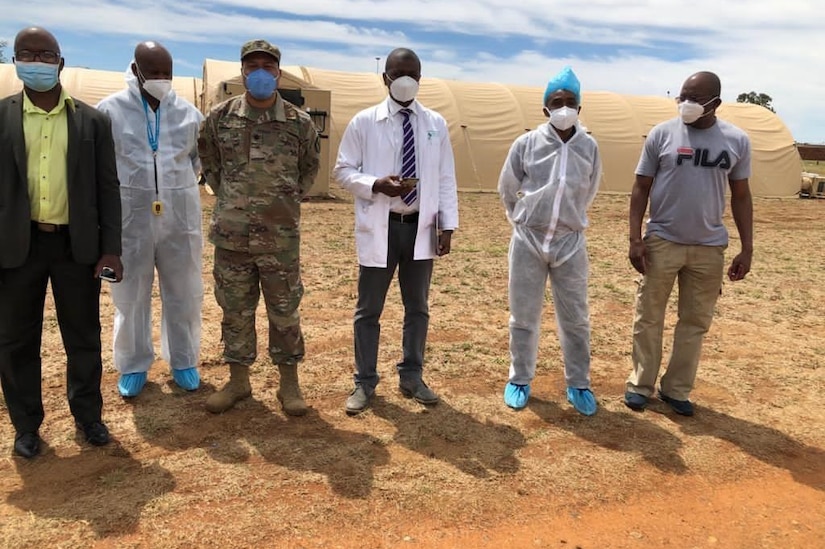
Men in the desert pose in front of a field hospital.

Africom has purchased seven 40-bed and seven 30-bed negative pressure isolation hospitals for African partners.

The military's Humanitarian Assistance Program, or HAP, helps partner nations build their disaster readiness, response and mitigation capabilities. The program funds infrastructure, equipment and training to help nations prepare before disasters and crises strike, but also supports countries who request assistance from the U.S. government when they experience health and weather-related emergencies.

COVID-19 assistance projects are funded under HAP to support requests from partner nations for supplies and equipment needed to respond to the virus outbreak, treat infected patients and prevent additional exposure. The U.S. Department of State and U.S. Agency for International Development review the projects and concur with their proposed assistance before they are approved, according to embassy officials.

Joint Artificial Intelligence Center Has Substantially Grown To Aid The Warfighter

 Nov. 18, 2020 | BY Terri Moon Cronk , DOD News

It was just two years ago when the Joint Artificial Intelligence Center was created to grab the transformative potential of artificial intelligence technology for the benefit of America's national security, and it has grown substantially from humble beginnings.

Dana Deasy, the Defense Department's chief information officer, and Marine Corps Lt. Gen. Michael Groen, the director of the JAIC, virtually discussed from the Pentagon the growth and goals of JAIC at a FedTalks event during National AI Week.

''One of the things we've wanted to keep in our DNA is this idea that we want to hire a lot of diversity of thought into [JAIC],'' Deasy said, ''but yet do that in a way where that diversity of thought coalesces around a couple of really important themes.''

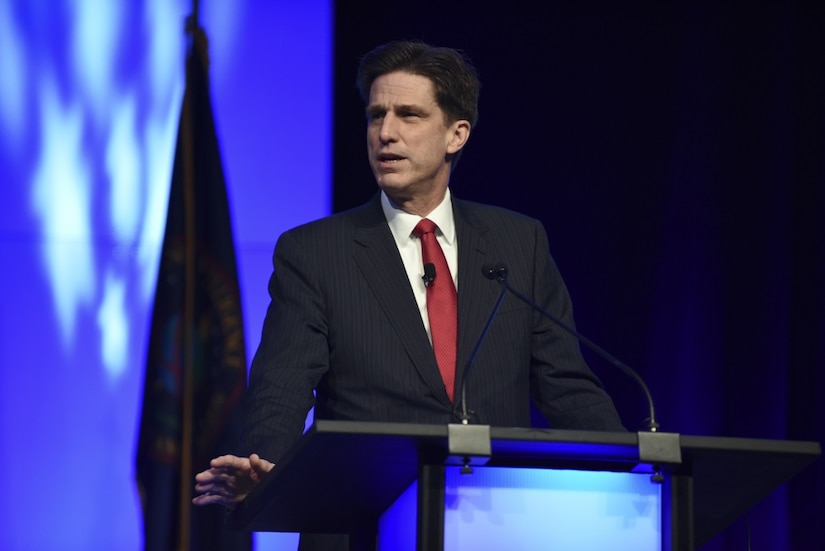
A man in a business suit stands at a lectern.

When JAIC began, it needed to grab hold of some projects that can show people that it can be nimble, agile, and it has the talent to give something that is meaningful back to the Defense Department, he noted.

So JAIC started in a variety of different places, Deasy said. ''But now as we've matured, … we really need to focus on what was the core mission … for JAIC. And that was, we have to figure out what the role is that AI plays in enabling the warfighter. And I've always said that JAIC should be central to any and all future discussions in that place,'' the CIO said.

''Transformation is our vision,'' Groen said.

''So, it's a big job. We discovered pretty quickly that seeding the environment with lots of small AI projects was not transformational in and of itself. We knew we had to do more. And so, what we're calling JAIC 2.0 is a focused transition in a couple of ways. [For example], we're going to continue to build AI products, because the talent in the JAIC is just superb,'' the JAIC director said.

Groen noted that the JAIC is thinking about solution spaces for a broad base of customers, which really gets it focused. 

Soldiers perform maintenance on a military vehicle.

''There are, you know, the application, and the utilization of AI across the department [that] is very uneven. We have places that are really good. And there, some of the services are just doing fantastic things. And we have some places, large-scale enterprises with fantastic use cases [that] really could use AI, but they don't know where to start. So, we're going to shift from a transformational perspective to start looking at that broad base of customers and enable them,'' he said.

JAIC is going to continue to work with the military services on the cutting edge of AI and AI application, especially in the integration space, where JAIC is bringing together intelligence or intelligence of maneuver, Groen said, ''The warfighting functions have superb stovepipes. But now we need to bring those stovepipes together and integrate them through AI,'' he added.

We have to figure out what the role is that AI plays in enabling the warfighter. And I've always said that JAIC should be central to any and all future discussions in that place.''
Dana Deasy, chief information officer

The history books of the future will say JAIC was about joint common foundation, Deasy said. ''JAIC could never do all of the AI initiatives with the Department of Defense, nor was it ever created to do that. But what we did say was that people who are going to roll up [their] sleeves, and seriously start trying to leverage AI to help the warfighter every day. … at the core of JAIC's success has got to be this joint common foundation,'' he noted.

Deasy noted that the JAIC was powerful and very real. 

Into next year, he added, JAIC will have some basic services. And then it's a minimum viable product approach, where JAIC is building some basic services, a lot of native services from cloud providers, but then adding services to that. 

''And where we hope to grow the technical platform is a place where people can bring their data, places where we can offer data services, data conditioning, maybe table data labeling and we can start curating data,'' Deasy projected. ''One of the things we'd really like to be able to do for the department is start cataloging and storing algorithms and data. So now we'll have an environment so we can share training data, for example, across programs.''

The modernized software foundation now gives JAIC a platform so it can build AI, Groen said, adding AI has to be a conscious application layer that's applied, leveraging the platform and the things that digital modernization provides. 

''But when you think of it that way, holy cow, what a platform to operate from,'' he said. 

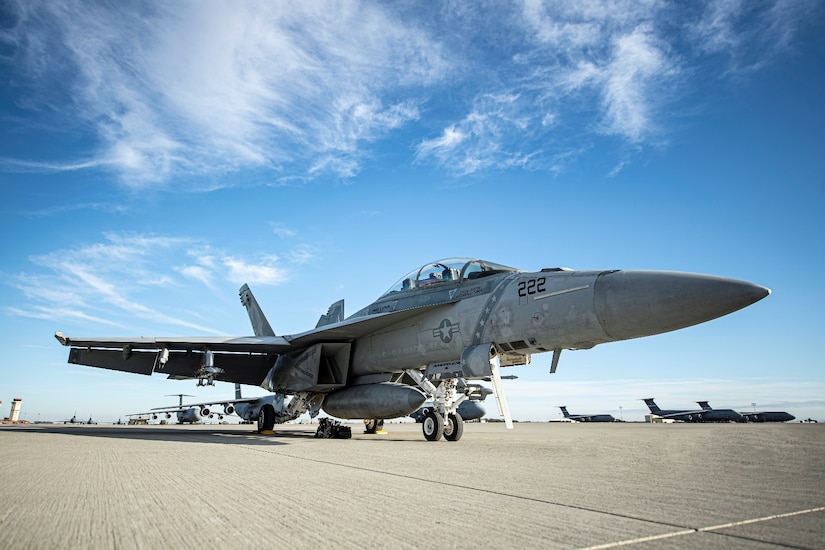
An F-18F Super Hornet sits on a flightline.

So now JAIC will really have a have a place where the joint force can effectively operate, he said, adding that the JAIC can now start integrating intel in fires, intel in a maneuver command and control, the logistics enterprise, the combat logistics enterprise and sort of the broad support enterprise, Groen noted.

''You can't do any of that without a platform, and you can't do any of that without those digital modernization tenets,'' the JAIC director said.

If JAIC is going to have the whole force operating at the speed of machines, then it has to start bringing these artificial intelligence applications together into an ecosystem, Groen said, noting that it has to be a trusted ecosystem, meaning "we actually have to know, if we're going to bring data into a capability, we have to know that's good data." 

''So how do we build an ecosystem so that we can know the provenance of data, and we can ensure that the algorithms are tested to set in a satisfactory way that we can comfortably and safely integrate data and decision making across warfighting functions,'' the JAIC director asked. ''That's the kind of stuff that I think it's really exciting, because that's the real transformation that we're after.''

Tuesday, November 17, 2020

Partner Flight

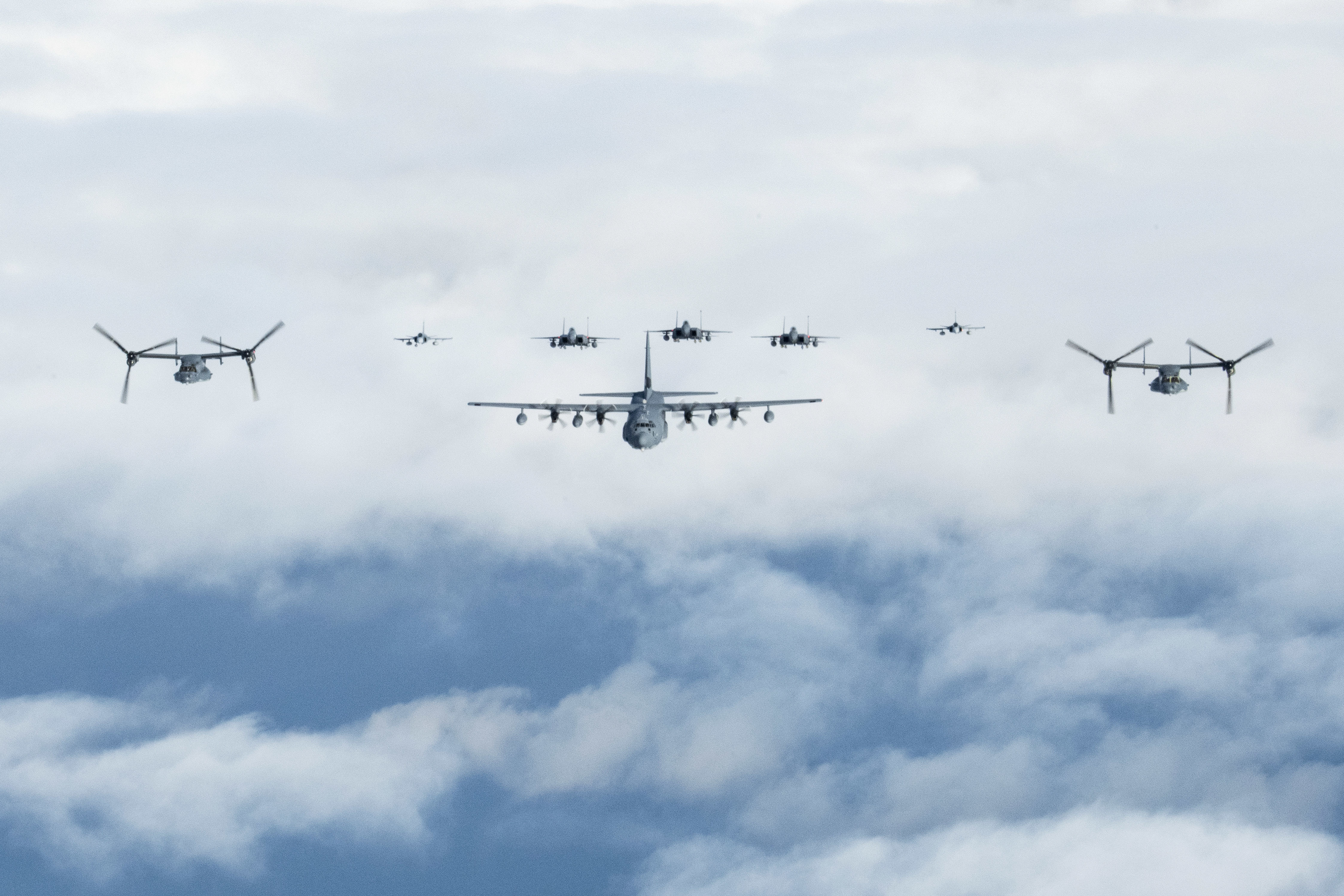
An Air Force MC-130J Commando II, two CV-22B Ospreys and three F-15E Strike Eagles fly with two Swedish JAS 39 Gripens over Gotland, Sweden, Nov. 13, 2020, during an exercise to demonstrate the resolve of the Swedish, U.S. and Estonian forces to defend the sovereignty of nations and work with regional partners for a secure and stable Europe.

Malabar Formation


U.S., Australian, Indian and Japanese vessels participate in Malabar, an India-led multinational exercise, in the Arabian Sea, Nov. 17, 2020.

Flare Fire


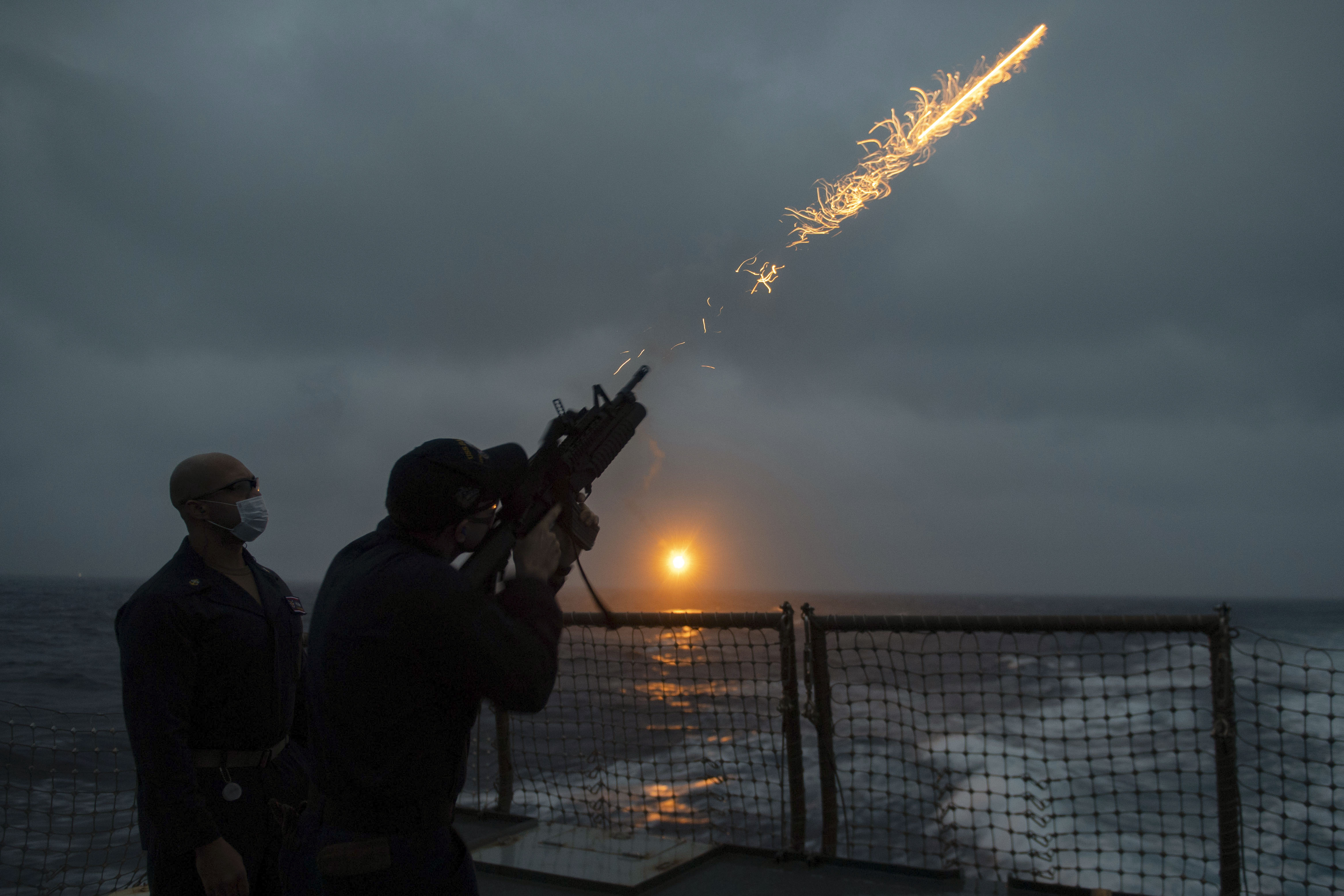
Navy Petty Officer 3rd Class Cullen McArdle fires a flare while Chief Petty Officer Ricardo Stewart observes during an exercise aboard the USS Barry in the Philippine Sea, Nov. 6, 2020.