Tuesday, November 17, 2020

Sports Heroes Who Served: Tennessee Football Coach Served in World Wars I, II

 Nov. 17, 2020 | BY David Vergun , DOD News

Sports Heroes Who Served is a series that highlights the accomplishments of athletes who served in the U.S. military.

By the time Robert Reese Neyland graduated from the U.S. Military Academy at West Point, New York, in 1916, he had made a name for himself in three sports.

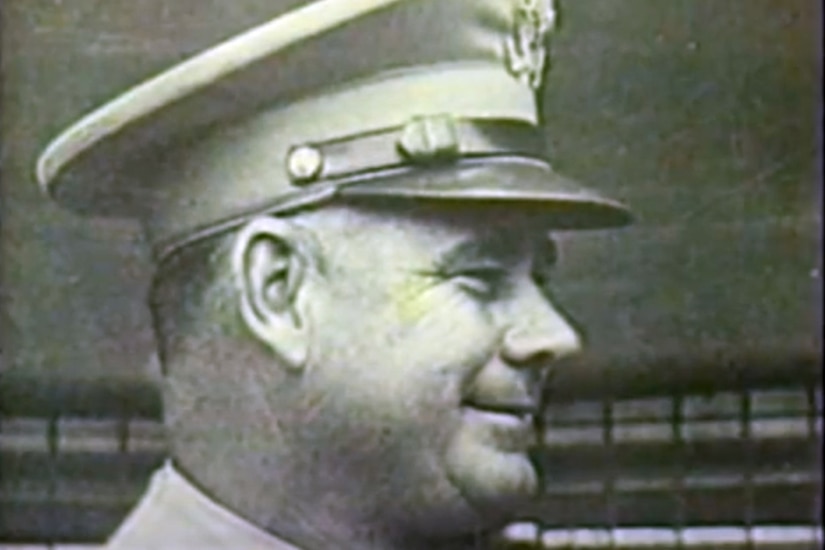
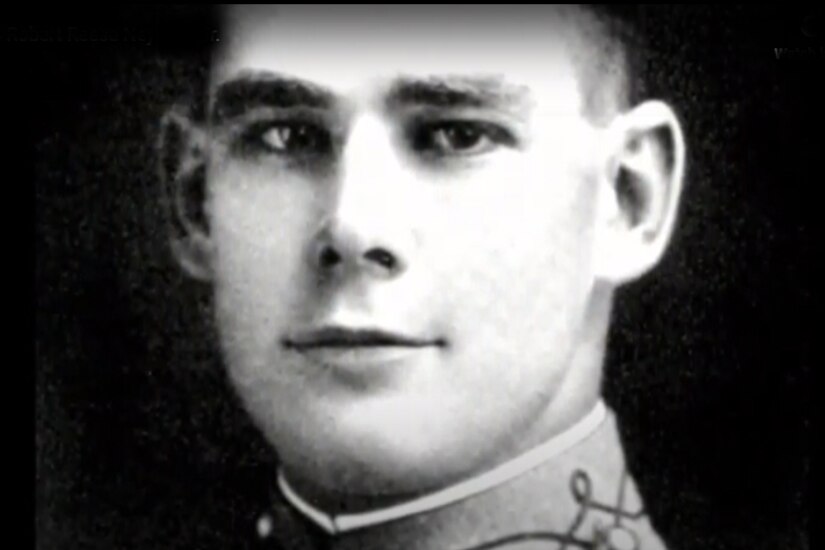
A man in a West Point cadet’s uniform poses for a photo.

As a lineman for the football team, he helped the Black Knights win the Army-Navy games from 1914 to 1916.

As a baseball pitcher for the Black Knights, he authored a 35-5 record. In 1914, he fired the first no-hitter in Army history when he blanked Colgate.

In boxing, he was an undefeated, heavyweight boxing champion for his final three years at the academy.

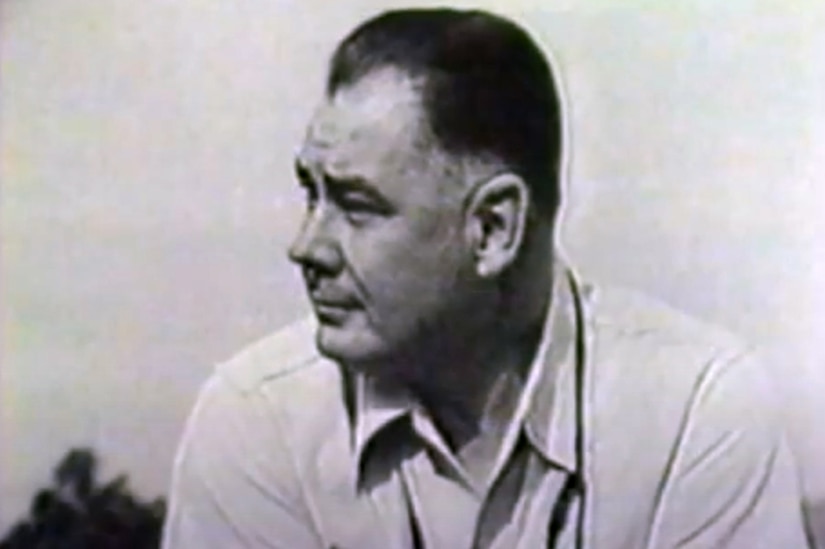
A man in a baseball player’s uniform poses for a photo.

Neyland also found time for academics, graduating near the top of his class.

Several professional baseball teams, including the New York Giants, tried to lure Neyland to their teams with big-money offers, but he decided to stay in the Army where he was deployed to Texas as an Army Corps of Engineers officer and helped erect levees along the Rio Grande River.

Neyland then served as an engineer in France during World War I.

In 1921, he returned to West Point as an aide to Army Brig. Gen. Douglas MacArthur, then the academy's superintendent. While there, he also assisted in coaching football, baseball and boxing.

A man in a military uniform poses for a photo.

In 1925, Neyland became the head football coach at the University of Tennessee while continuing his military duties as an ROTC instructor. 

Neyland's coaching career was disrupted twice — when he was recalled to active duty in 1934 and deployed to Panama and again in May 1941 just before the start of World War II.

In 1942, Neyland was appointed head coach of the Eastern All-Army team that took on National Football League clubs to raise money for the Army Emergency Relief fund. The team played three games, defeating the New York Giants and Brooklyn Dodgers before losing to the defending NFL champion Chicago Bears.

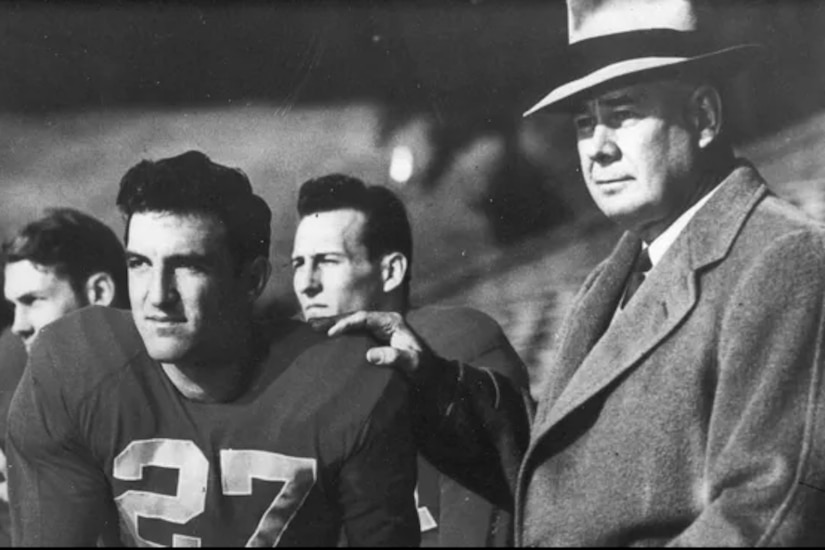
A man talks to football players during a game.
A man talks to football players.
A man poses for a photo.

Neyland then served in China, Burma and India, supervising the transport of Allied war supplies across the Himalayan Mountains. He left the Army as a brigadier general in 1946.

In 1946, Neyland resumed coaching at UT, where he earned the nickname "the General."

In 1952, he quit his job as coach and became the UT athletic director for a decade. During that time, he helped to design UT's stadium.

A man talks to football players.

During his legendary coaching career in Knoxville, Tennessee, he compiled an overall record of 173-31-12, winning four national championships and seven conference titles.

Neyland died in 1962. Today, the University of Tennessee football stadium is named in his honor and there's also a statue of him there.

DOD-Wide Audit Improves Efficiencies to Benefit Warfighter

 Nov. 17, 2020 | BY DAVID VERGUN , DOD News

With the exception of a couple of organizations, the Defense Department has completed most of its third annual comprehensive financial statement audit covering the entire enterprise, worth about $2.9 trillion, a DOD official said, adding that there have been improvements resulting from the audit that will directly benefit the warfighter.

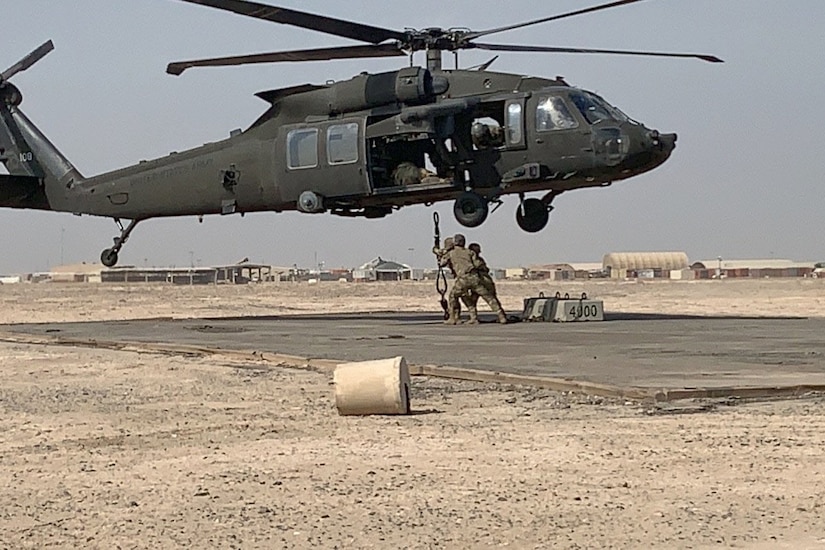
Soldiers sling load a helicopter.

As of Nov. 12, DOD had cleared more than 530 findings, which are 16.3% of the discrepancies from the prior year’s audit, Thomas W. Harker, who is performing the duties of the under secretary of defense (comptroller)/chief financial officer, said at a Pentagon press briefing.

Several hundred more discrepancies should be cleared by next month when auditors complete their work. None of the discrepancies were related to fraud, he noted.

The cost of this year's audit was approximately $203 million, he said, with about $700 million in savings identified.

The ultimate goal is to get a clean financial statement audit opinion across the entire department, Harker said, but the lack of a positive opinion should not be regarded as a failure.

Airmen work on machinery.

"We've been clear that this is a journey that will require a sustained effort over several years. And we remain committed to this goal and continue to make significant progress," Harker said.

The DOD audit is actually 24 separate audits of the military services, as well as defense agencies.

Harker provided some examples:

  • The Navy eliminated three material weaknesses, two on their general fund and one on their working capital fund; the Marine Corps eliminated one material weakness, he said.
  • The Defense Information Systems Agency has improved its business processes and controls, resulting in decreased time required to deliver property to customers, improved accuracy of property records and improved accuracy of financial statements.

Among the organizations expected to receive a clean audit, besides DISA, are: the U.S. Army Corps of Engineers — Civil Works; the Military Retirement Fund; the Defense Health Agency — Contract Resource Management; the Defense Contract Audit Agency; the Defense Finance and Accounting Service; the Defense Commissary Agency; and the DOD's Office of the Inspector General.

Ships are at anchor.

Due to the COVID-19 pandemic, auditors were prevented from doing a lot of in-person travel and testing, he said. Nevertheless, the auditors did a lot of virtual testing, using such things as digital media and photos.

Independent public accounting firms, along with DOD and the Office of the Inspector General perform the audits. About 1,400 auditors conducted more than 100 in-person site visits this year and more than 530 virtual site visits, he said.

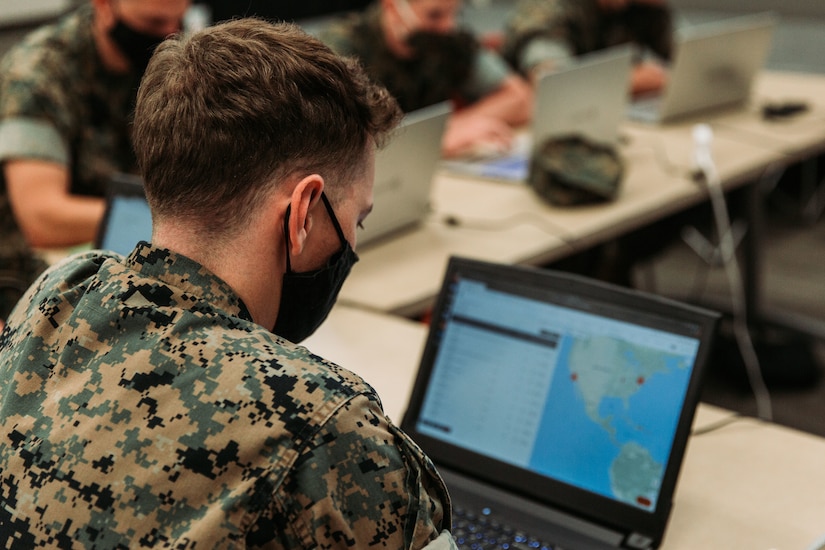
Marines use laptops.

Audit remediation is one of the major components of the National Defense Strategy lines of effort focused on reforming business processes for greater efficiency and effectiveness. 

Harker said the audit provides the following benefits:

  • Improves the quality of the department's financial statements and underlying data available to the public, including providing a reliable picture of its assets, liabilities and spending.
  • Highlights areas where the department needs to improve its accountability over assets and resources. 
  • Improves cybersecurity.
  • Provides accountability and transparency to Congress and the American public.
  • Identifies legacy systems that need to be eliminated.
  • Identifies where too many systems are in place and where consolidation of systems will improve efficiencies.
  • Identifies previously unknown equipment that's available for the warfighters.
  • Provides more accurate financial data that gives leaders improved ability to use that data to make decisions. 

Monday, November 16, 2020

DOD Completes Fiscal Year 2020 Department-Wide Financial Statement Audit; Continued Value and Progress Despite COVID-19 Constraints

 Nov. 16, 2020


Today, the Department of Defense (DOD) completed its fiscal year (FY) 2020 Department-wide financial statement audit. “For the third year in a row, the audit has proven its tremendous value,” Deputy Secretary of Defense David Norquist said. “As we continue reforming the Department for greater affordability, the audit delivers returns that significantly outweigh its cost by improving business operations and enhancing the lethality of our warfighters.”

Seven DOD organizations are expected to sustain unmodified or “clean” opinions. Four audits are still underway and are expected to be completed between December 15, 2020, and March 25, 2021.

  • We are working towards, and optimistic that we will have, an additional (beyond the seven) clean opinion this year for the Defense Information Systems Agency (DISA) Working Capital Fund (WCF).
  • Auditors thus far validated that DOD resolved over 530 findings from the FY 2019 audits.
  • DOD continued to demonstrate progress despite the challenges presented by the COVID-19 pandemic. 

The COVID-19 pandemic struck during a typically critical time for audit testing. Nevertheless, our Military Service members, civilians, contractors, and auditors came together to develop and implement alternative and innovative solutions to complete this year’s audit. Our financial statement audits continue to be foundational to business reform and our 2018 National Defense Strategy. The most tangible benefits come from addressing audit findings, which help us enhance our information system controls, improve the reliability of our financial data, and improve operational efficiency. 

This year, we are optimistic that the DISA WCF can achieve an unmodified opinion, a notable improvement from a disclaimer of opinion last year, and the beginning of a future trend where smaller organizations begin to achieve positive opinions over the next several years.

The following entities sustained their unmodified opinions:  the U.S. Army Corps of Civil Engineers – Civil Works; the Military Retirement Fund (MRF), the Defense Health Agency – Contract Resource Management; the Defense Contract Audit Agency; the Defense Finance and Accounting Services (DFAS) WCF; and the Defense Commissary Agency.  These were the 26th and 21st consecutive unmodified opinions for the MRF and DFAS WCF, respectively. The DISA WCF; Department of the Navy General Fund and WCF; and DOD Office of Inspector General (DOD OIG) audits are still ongoing.  We expect the DOD OIG to sustain its clean opinion.

The DOD has made important progress since last year. For example, the Department anticipates the downgrade of two Agency-Wide material weaknesses; and is hopeful that Navy’s auditors can downgrade three Navy material weaknesses when the Navy’s audit is completed in December. Several material weaknesses for the Marine Corps and Defense Agencies have been downgraded. Auditors also confirmed during the FY 2020 audit that the Department successfully closed over 530 FY 2019 audit findings, and were able to expand their testing in several areas. Progress continued in an array of areas including information technology, inventory, Fund Balance with Treasury, and financial reporting. 

During the FY 2020 audit, auditors verified the Department sustained earlier progress reported in the

FY 2019 audit, including:

  • No significant issues found with payment amounts made to civilian or military members,
  • No evidence of fraud, and
  • Existence and completeness of major military equipment.

The annual audit continues to play a pivotal role in improving financial management and supporting business reform throughout the Department. It reinforces our accountability to the American taxpayer and our stewardship over resources entrusted to us in support of our warfighters.

Defense Logistics Agency Helps DOD Prepare for Second COVID-19 Wave

 Nov. 16, 2020 | BY Beth Reece , Defense Logistics Agency

The Defense Department now has a four-month supply of personal protective equipment  including respirators, surgical masks and gloves to see troops and families through the second wave of COVID-19. 

The supplies, which aren't part of the department's pandemic reserves, were procured by the Defense Logistics Agency to help replenish on-hand stock for military services and geographic combatant commands. Much of it will be used for patient care at military treatment facilities and by service members training or deployed, said Army Col. Matthew Voyles, director of DLA Troop Support's medical supply chain.

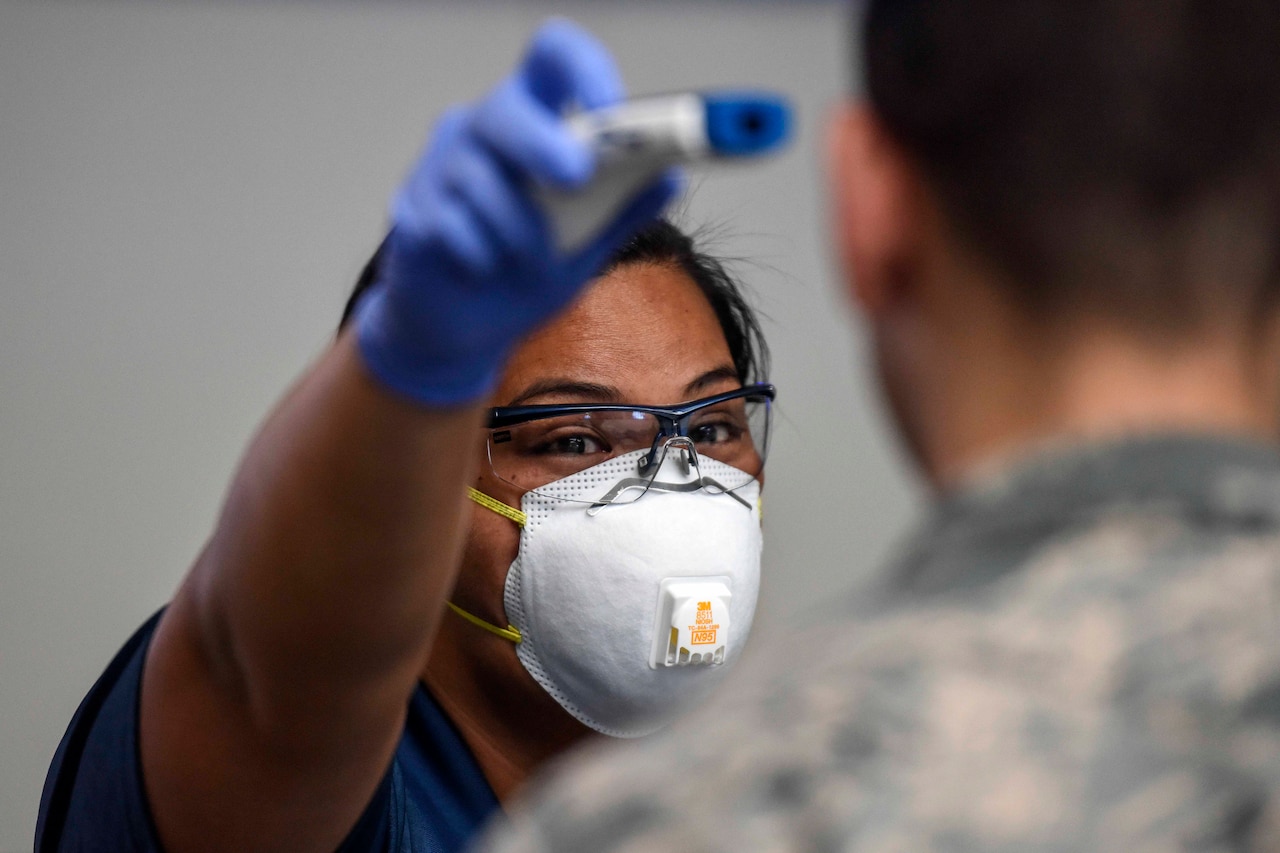
An airman wearing a face mask holds a thermometer to another airman's head.

"The new reality is that all of our service members have got to have personal protective equipment. This PPE will be used across the gamut, from individual units at tactical levels to treatment facilities here stateside and at our overseas locations where all service members and beneficiaries receive care," Voyles said. 

Quantities were based on demand prediction models and in coordination with the department's COVID-19 Joint Acquisition Task Force. Widespread material shortages early in the pandemic prompted DLA Troop Support to work with logistics planners at the Joint Chiefs of Staff and Defense Health Agency to create a priority and allocation board made up of members from the defense medical logistics enterprise who meet weekly to prioritize protective equipment orders based on customer missions and the virus's prevalence in local communities, Voyles said. Readiness and contingency contracts such as those managed through the agency's Warstopper program helped the agency meet initial military needs, as well.

Additional protective equipment is being stored at DLA distribution warehouses to fulfill emerging DOD requirements, added Beth McMaster, medical supply chain deputy director.

"None of us truly knows what's coming. We've prepared for the upcoming months and will remain aware of manufacturing disruptions, especially for those items that remain in a fragile support state," she said. 

DLA contracting officials continue searching for new vendors that can provide COVID-19 supplies. 

The agency has also provided protective equipment and other items to surge test sites and nationwide nursing homes in support of the Department of Health and Human Services. Although the agency already had contracts in place for personal protective items when the pandemic rolled across the United States in March and April, the demand was limited to mostly military medical customers, McMaster said.

"It was a very small part of the medical, surgical and pharmaceutical materials we supported, but we quickly became very hyper-focused as demand dramatically increased and the industrial base struggled to keep up," she continued. 

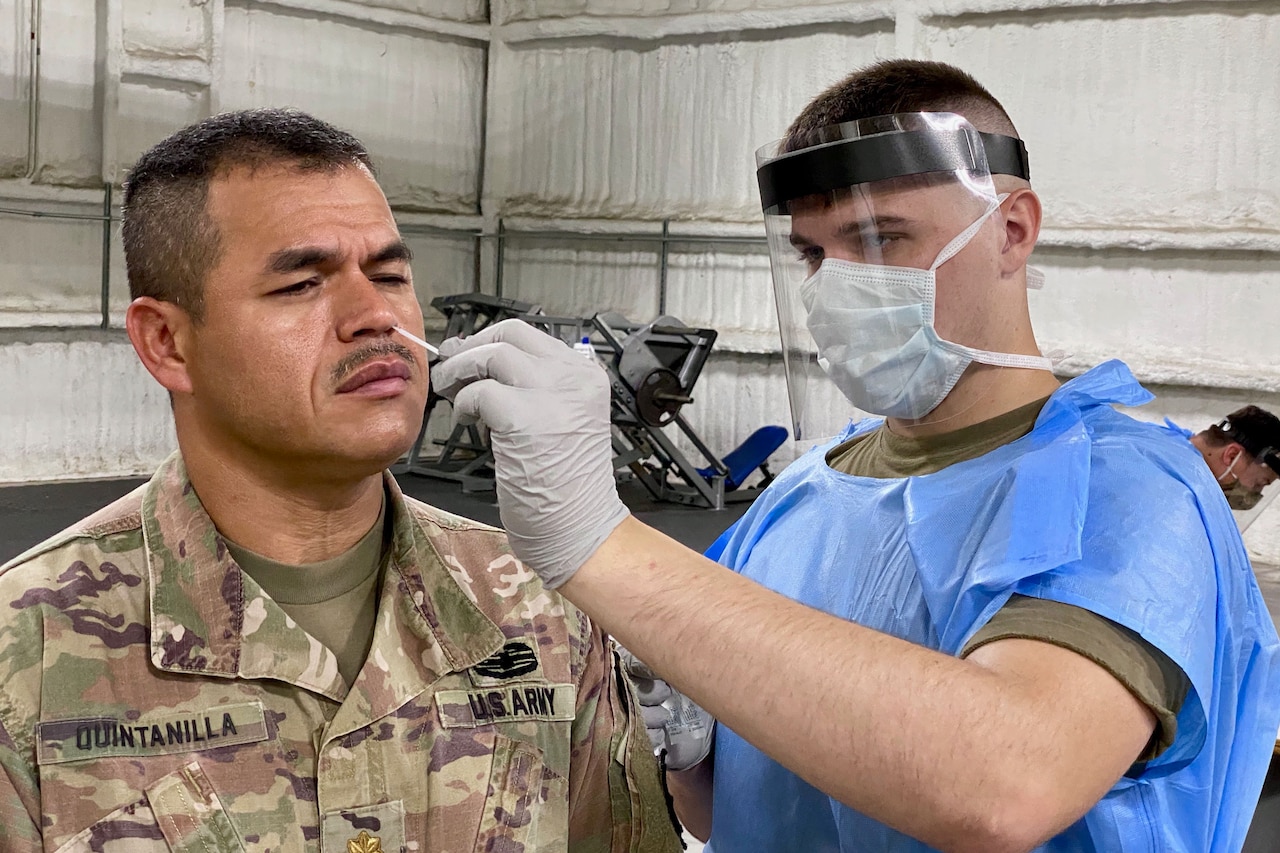
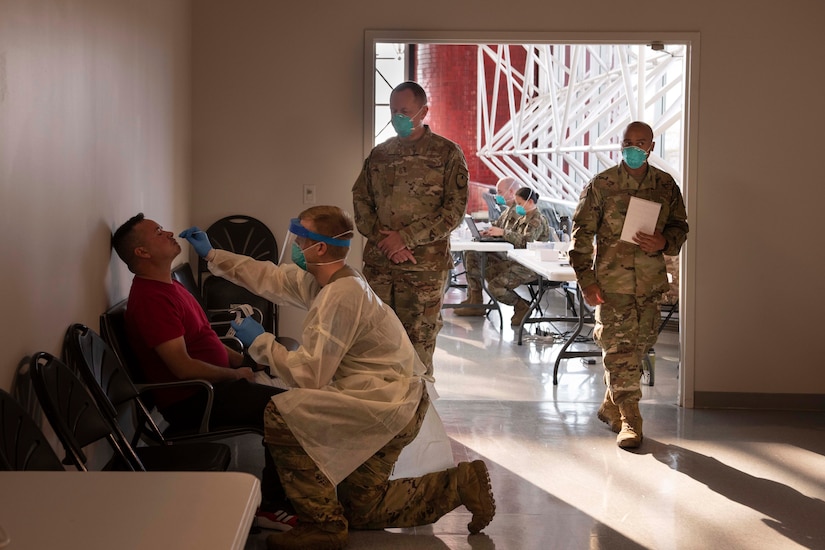
A man wearing PPE uses a nasal swab to obtain a COVID-19 test sample from a soldier.

Orders for medical supplies are typically shipped directly to customers as part of the agency's prime vendor program rather than from agency distribution warehouses. However, increased worldwide demands for protective equipment supplied solely through prime vendors led the agency to store and distribute equipment at its locations.

"That was a new muscle movement that hadn't been exercised in a long time, so we had to go out and educate and train our customers to point their electrons to a different source when placing online orders, as well as make internal changes to our business processes," Voyles said. "The adaptability of the entire supply chain team was pretty incredible in making that happen."

DLA's strong partnership with industry and long-term contracts for medical supplies helped the agency transition from a peacetime pace to a global pandemic, McMaster added. But the expertise and personal commitment of acquisition and customer assistance employees made it possible, she said.

"While the scope of this event has been overwhelming, I'm impressed every day by the ability of our staff to come up with innovative solutions and do things differently," she said of her team's support of efforts such as the supply of the USS Mercy and Comfort. "It's been pure dedication from day one."

The agency is also preparing to support the DOD COVID-19 vaccination plan now in development.

Norquist Highlights DOD Efforts to Produce COVID Treatments

 Nov. 16, 2020 | BY Jim Garamone , DOD News

Deputy Defense Secretary David L. Norquist thanked blood plasma donors and the workers who collected it for their work in combating the COVID-19 pandemic.

Norquist spoke at the Defense Health Agency — the Department of Defense agency tasked with leading this effort. He also went to Walter Reed National Military Medical Center to personally thank the donors.

Close-up of a technician drawing blood.

The coronavirus pandemic called for a departmentwide effort and involved even those who came down with the virus.

Early on, scientists identified COVID-19 convalescent plasma — or CCP — as a tool needed to develop potential treatments to decrease the severity of the illness and aid in recovery of patients who had become infected with COVID-19, according to Health Agency officials. 

CCP comes from the blood of individuals who had the virus and recovered.

In mid-April, the DOD began its effort to collect and manufacture the plasma. In late May, senior DOD officials announced a goal of collecting 8,000-10,000 units of CCP. 

The Defense Health Agency built on the foundation laid by the Armed Services Blood Program. Norquist celebrated the success of the campaign with the current amount at 10,745 units — and counting.

"I congratulate you for achieving thousands of units in such a short amount of time — that is no small feat. It is a testament to your hard work to conduct daily collections at blood donor centers and your willingness to venture into hot spots for mobile blood drives. It also would not be possible without the generosity of the approximately 3,000 donors who participated in the campaign," Norquist said.

Norquist praised those who participated acknowledging the "selfless act of volunteering to collect or donate convalescent plasma."

Scientists are still examining the plasma and its use in treating the disease. But current findings are that CCP is "both safe and promising," he said. The plasma is the first widely available antibody-based treatment for coronavirus.

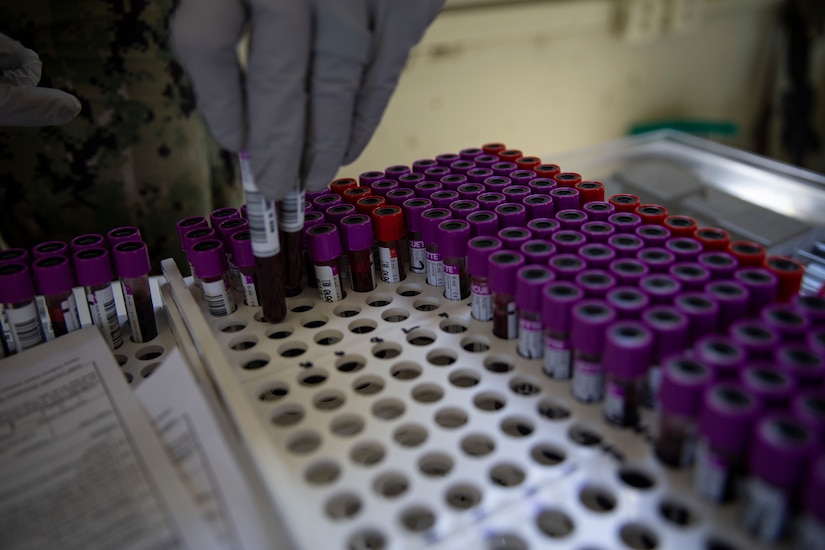
Vials of blood in a tray.

"I am truly grateful to the donor center staff and headquarters personnel who made this drive a success, as well as our DOD men and women who stepped up to help their fellow Americans during this pivotal moment in time," he said. "DOD has supported our national coronavirus response in many ways, and yours is worthy of applause."

Norquist — who serves on the coronavirus task force — highlighted the department's efforts to produce protective gear and other equipment and that they are where they need to be. He noted that the DOD has helped more than 130 different nations fighting the same scourge.

He also spoke about the efforts military medical first responders have made in hard-hit U.S. cities and towns. He praised National Guard personnel for their efforts to test and support their fellow citizens in every state and territory.

Finally, he touted the DOD's vaccine efforts — from groundbreaking work by the Defense Advanced Research Projects Agency aimed at speeding development and manufacture of vaccines, to the logistical support from the military in Operation Warp Speed. 

More must be done, he said, but it is a good start and there is the possibility of 300 million initial doses of the vaccine being delivered by the end of the year.

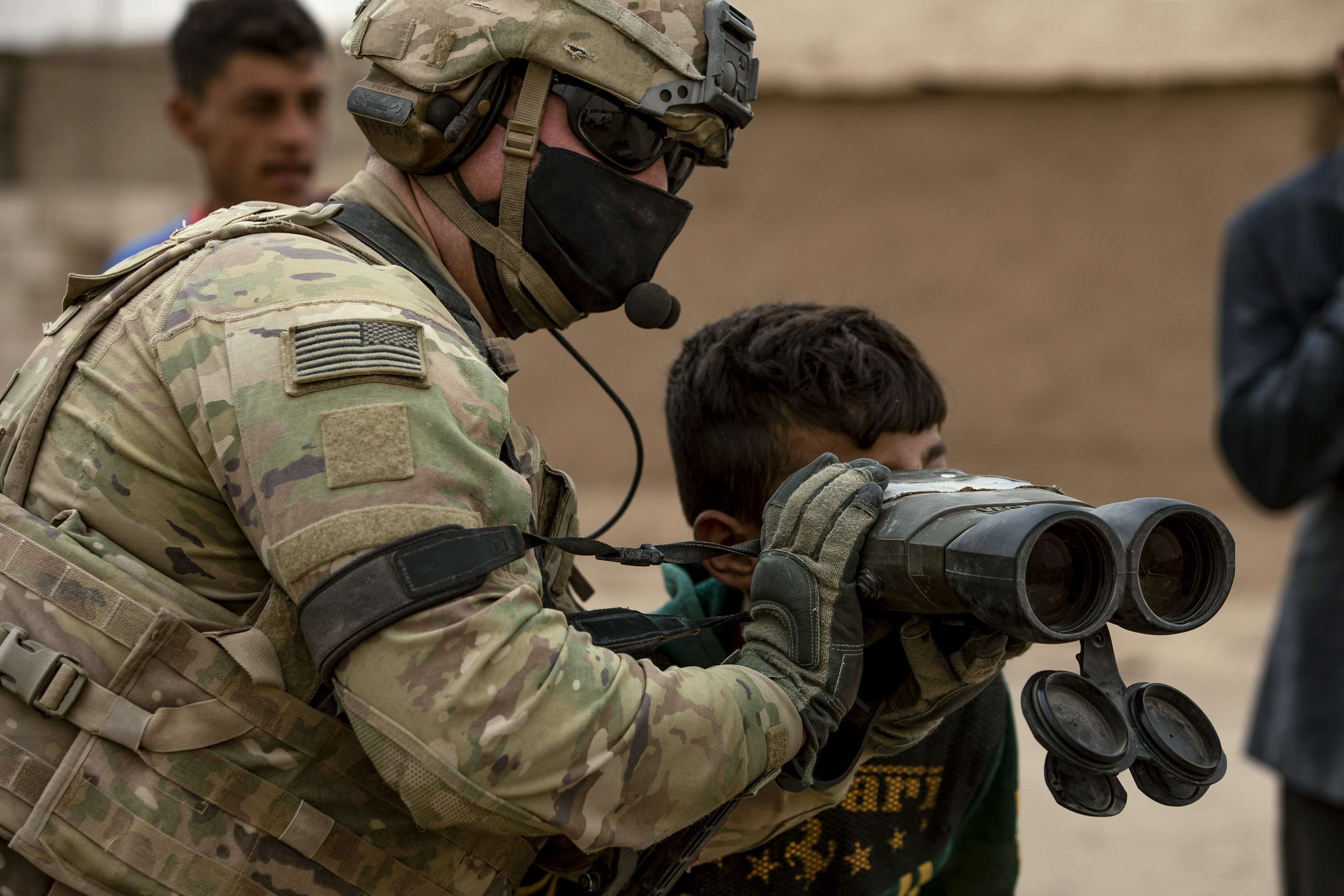
Sharing the View


A soldier supporting Operation Inherent Resolve in Syria lets a child look through his binoculars, Nov. 2, 2020.

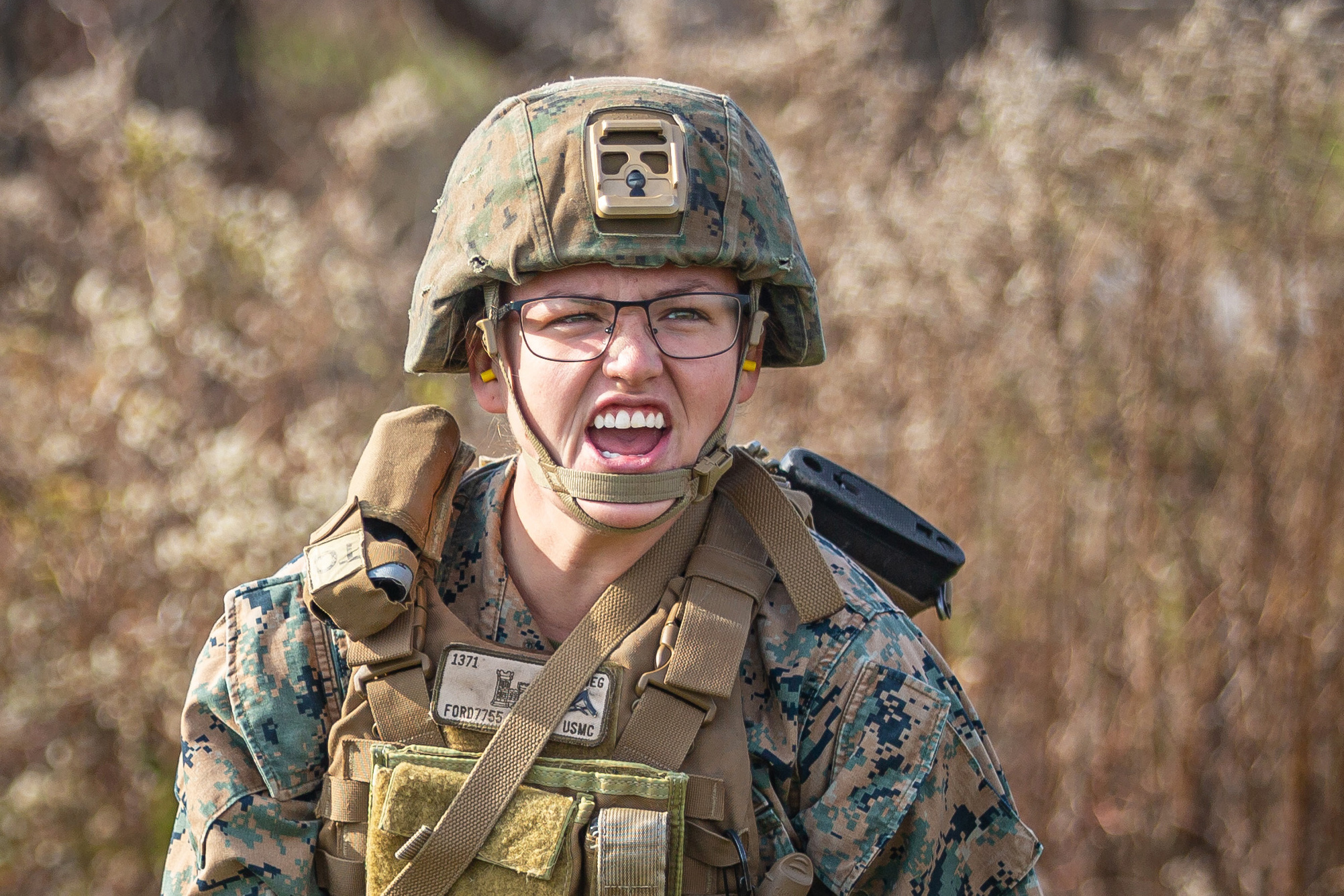
Command Call


Marine Corps Ashlee Ford repeats a command during a range training event at Fort Drum, N.Y., Nov. 6, 2020.

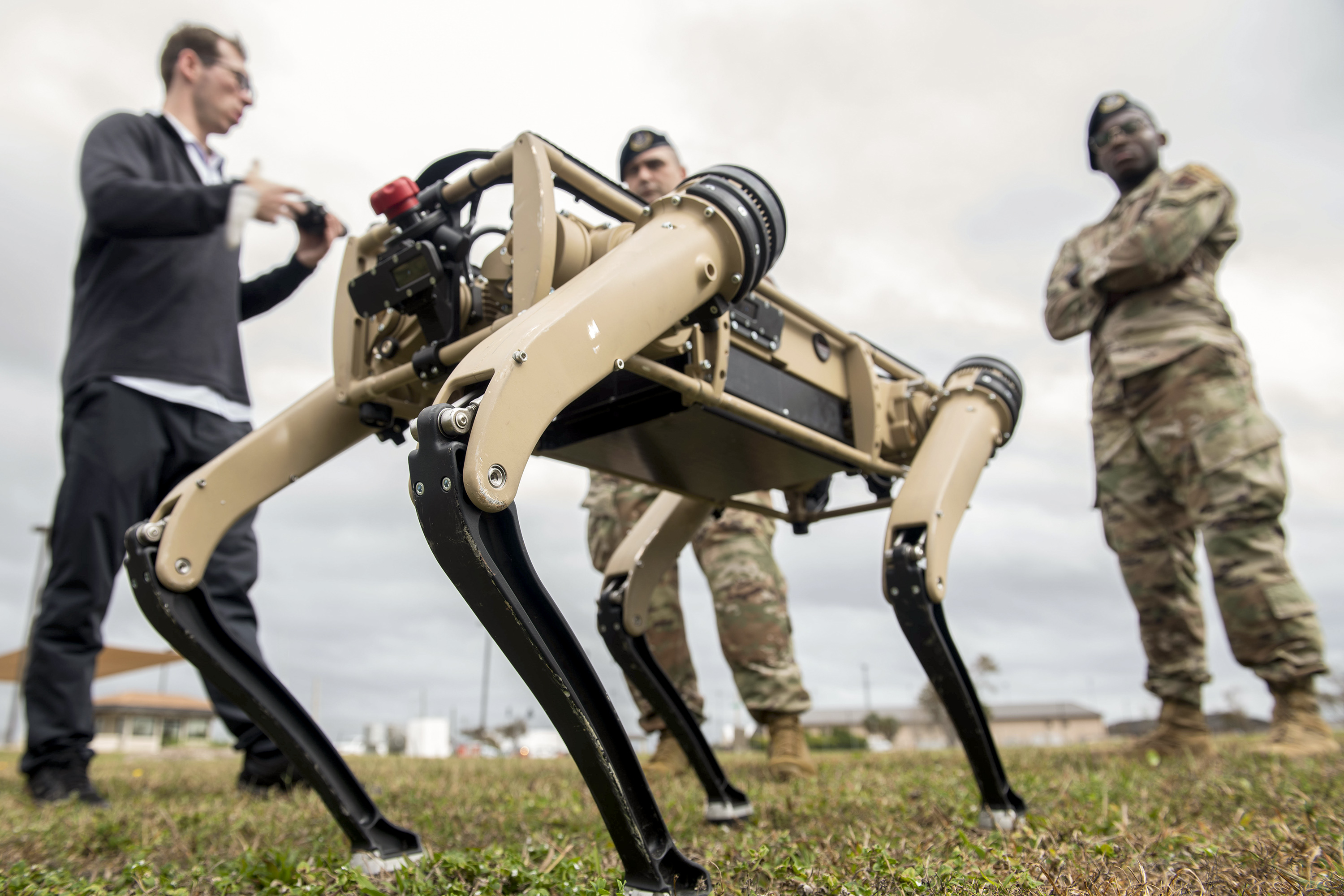
Drone Dog


Airmen watch a test of an unmanned ground vehicle at Tyndall Air Force Base, Fla., Nov. 10, 2020. Tyndall plans to use the “computerized canines” to aid in reconnaissance and enhanced security patrolling operations across the base.

Small Businesses Key to Nation's Defense

 Nov. 16, 2020 | BY C. Todd Lopez , DOD News

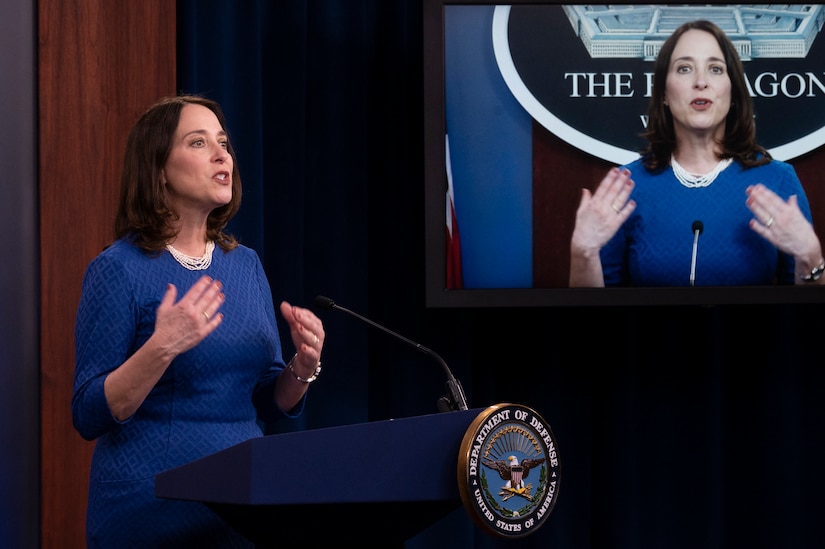
Small businesses are the backbone of the American economy and a large part of the defense of the nation, the Defense Department's director for the Office of Small Business said today.

Small businesses make up 99.7% of U.S. firms and create 64% of net new private sector jobs, said Amy Murray, who spoke during a keynote address before members of the National Defense Industrial Association. Murray also serves as the department's deputy director for industrial policy.

A woman stands behind a lectern. Behind her is a video screen, which also  displays her image.

In fiscal year 2019, Murray said, DOD awarded over $75 billion in prime contracts to small businesses, providing an opportunity for those business owners to contribute to national security by providing both combat power to U.S. troops and economic power to the nation.

"Small businesses are the backbone of the American economy," Murray said. "[They] represent 67% of businesses that are awarded contracts in the DOD — creating hundreds of thousands of jobs."

By their very size, Murray said, small businesses also benefit the department's need to more adequately adapt to the new security environment.

"Small businesses are key to DOD's mission and innovation initiatives," she said. "Their agility delivers the speed and performance to transform the defense industrial base and provide competitive advantage. And this agility drives ... value faster by increasing innovation, responsiveness, customer satisfaction, productivity and quality."

A man places an "open" sign on a glass door.

The mission of the Office of Small Business Programs, or OSBP, Murray said, is to maximize opportunities for small businesses. She said the department has achieved it's small business prime contracting goal every year since fiscal year 2014 and received a procurement scorecard grade of 'A' for six consecutive years.

Why do we have these goals, and why do we need small business participation?. Murray said 99.7% of all employer firms are small businesses, and 97.5% of all identified exporters are small businesses. "Small businesses produce 16.5 times more patents than large patenting firms and create more than half of non-farm private gross domestic product — which is significant to our economy," she said.

Protecting the Industrial Base for U.S. Security

The industrial policy team's efforts also protect American businesses from being influenced by investment by foreign adversaries. That's part of the industrial policy team's "protect" line of effort, Murray said.

"These are the hard tools that we use to deter those who would seek to use America's traditional strengths — openness and fair competition — against us," she said. "This is the team that identifies those transactions, or economic activities, which undermine our economic and national security."

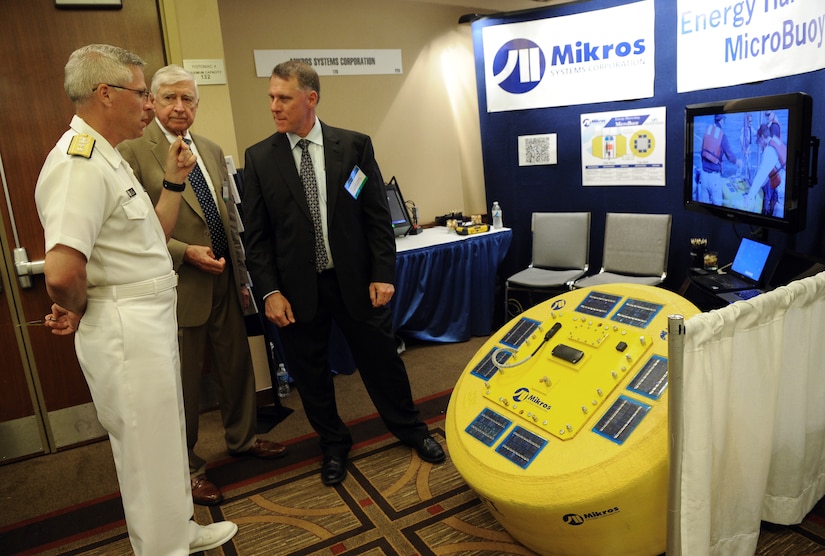
Three men, including one in a military uniform, stand in front of a piece of simulated military hardware at a trade show.

Much work done in this area is in partnership with the Committee on Foreign Investment in the United States, or CFIUS. As part of the mission to protect American companies from adversarial investment, she said, it is important to recognize that during a crisis such as that posed by COVID-19, the defense industrial base becomes vulnerable to adversarial capital.

"We need to ensure companies can stay in business without losing their precious intellectual property, the foundation of so many critical technologies," Murray said. "CFIUS now has jurisdiction over non-controlling investments for innovative technology, critical infrastructure, and personal data, and certain real estate transactions, in addition to the long-standing jurisdiction over transactions that could result in foreign control of a U.S. business."

Hundreds of individuals sit in an auditorium and look at a slide presentation.

During the COVID-19 crisis, Murray said, the department became more acutely aware of the fragility of the U.S. industrial supply chain. In response, more investments through the Defense Production Act have been made to further strengthen the U.S. defense industrial base.

Horse Course


Marines participate in a horsemanship course at Marine Corps Mountain Warfare Training Center in Bridgeport, Calif., Oct. 20, 2020. The course teaches students how to ride horses, load pack animals and maintain animals for military applications in remote and dangerous environments.

Helicopter Ops


Coast Guardsmen conduct helicopter operations aboard the Coast Guard Cutter Diligence in the Caribbean Sea, Oct. 28, 2020.

Shooting Soldier


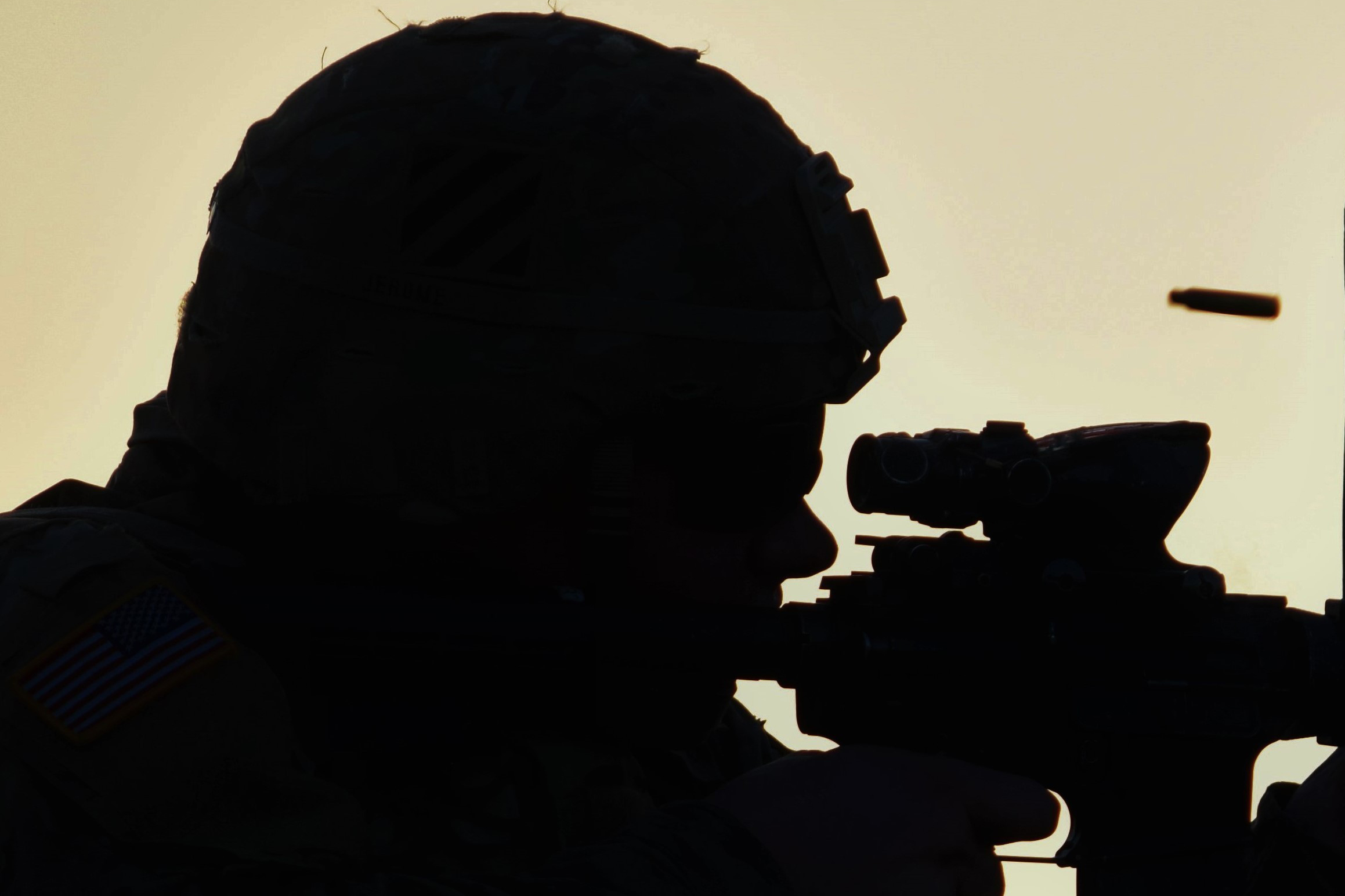
A member of the Georgia Army National Guard conducts his individual weapons qualification at Fort Stewart, Ga., Nov. 13, 2020.

Sunday, November 15, 2020

Readout of Acting Secretary of Defense Christopher C. Miller's Phone Call With Israeli Defense Minister Benjamin "Benny" Gantz

 Nov. 13, 2020


Acting Secretary of Defense Christopher C. Miller spoke with Israeli Defense Minister Benjamin "Benny" Gantz over the phone today. Acting Secretary Miller reaffirmed the U.S. commitment to maintain Israel's Qualitative Military Edge.  

Both leaders expressed continued support to advance shared U.S.-Israeli defense priorities and to further strengthen the two nations' military-to-military cooperation.

Readout of Acting Secretary of Defense Mr. Christopher C. Miller Phone Call With NATO Secretary General Jens Stoltenberg

 Nov. 13, 2020


Acting Secretary of Defense Mr. Christopher C. Miller conducted a phone call with NATO Secretary General Jens Stoltenberg to connect on the important issues being advanced in the transatlantic Alliance and communicate U.S. policy continuity following leadership changes.

The leaders discussed the continued importance of coordination in support of NATO Missions in Afghanistan and Iraq.  Acting Secretary Miller and Secretary General Stoltenberg discussed the threat from Russia and the challenge posed by China.

Saturday, November 14, 2020

Readout of Acting Defense Secretary Christopher C. Miller's Meeting With Lithuanian Minister of Defence Raimundas Karoblis

 Nov. 13, 2020


Acting Secretary of Defense Christopher C. Miller met with the Lithuanian Minister of Defence Raimundas Karoblis today at the Pentagon. Acting Secretary Miller noted the important role Lithuania plays in NATO's readiness, including its support to NATO's enhanced Forward Presence (eFP) and its central role in maintaining an effective deterrent against Russia in the Baltic region.

The leaders exchanged views on the way forward on implementation of decisions made at the recent NATO Defense Ministerial, as well as on bilateral defense concerns.

Acting Secretary Miller emphasized the value of our close security partnership, including the important role of U.S. security assistance in helping develop Lithuania's capabilities and infrastructure, as well as efforts to improve interoperability.   

Acting Secretary Miller thanked Minister Karoblis for exceeding NATO defense spending and modernization commitments. He also thanked the Defence Minister for Lithuania's international diplomats, his offer to continue hosting U.S. forces, and for Lithuania’s support to the International Maritime Security Construct.

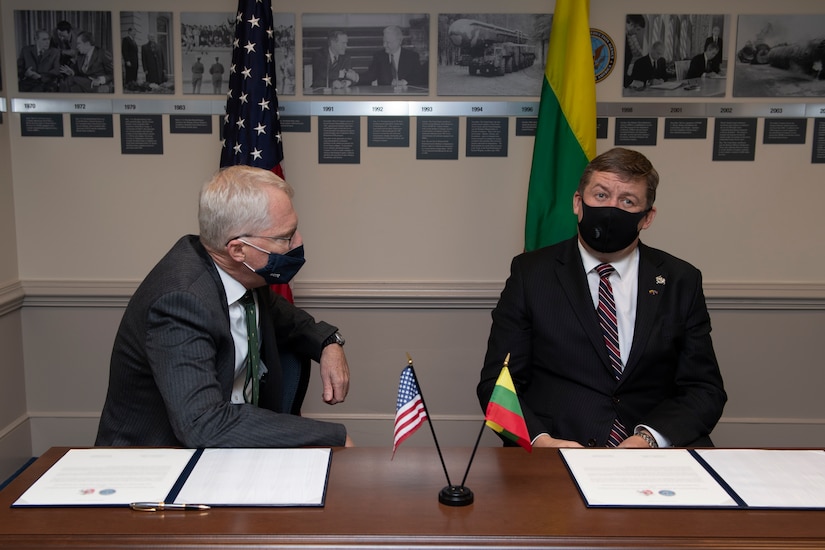
Acting Secretary Miller and Minister Karoblis signed a document acknowledging Lithuania's Letter of Offer and Acceptance to procure U.S. UH-60M Black Hawks to help modernize its helicopter fleet and further NATO interoperability. This procurement, with an expected value of $243 million, will be the largest host-nation-funded procurement of U.S. defense articles in Lithuanian history. 

The two leaders agreed on the importance of the ongoing cooperation and pledged to continue this path in the future for the benefit of both countries' shared security interests and the U.S.-Lithuania bilateral defense agenda.

Friday, November 13, 2020

Night Flight


An Air Force F-16 Fighting Falcon receives fuel from a KC-135 Stratotanker over the U.S. Central Command area of responsibility, Nov. 4, 2020.

Flight Ops


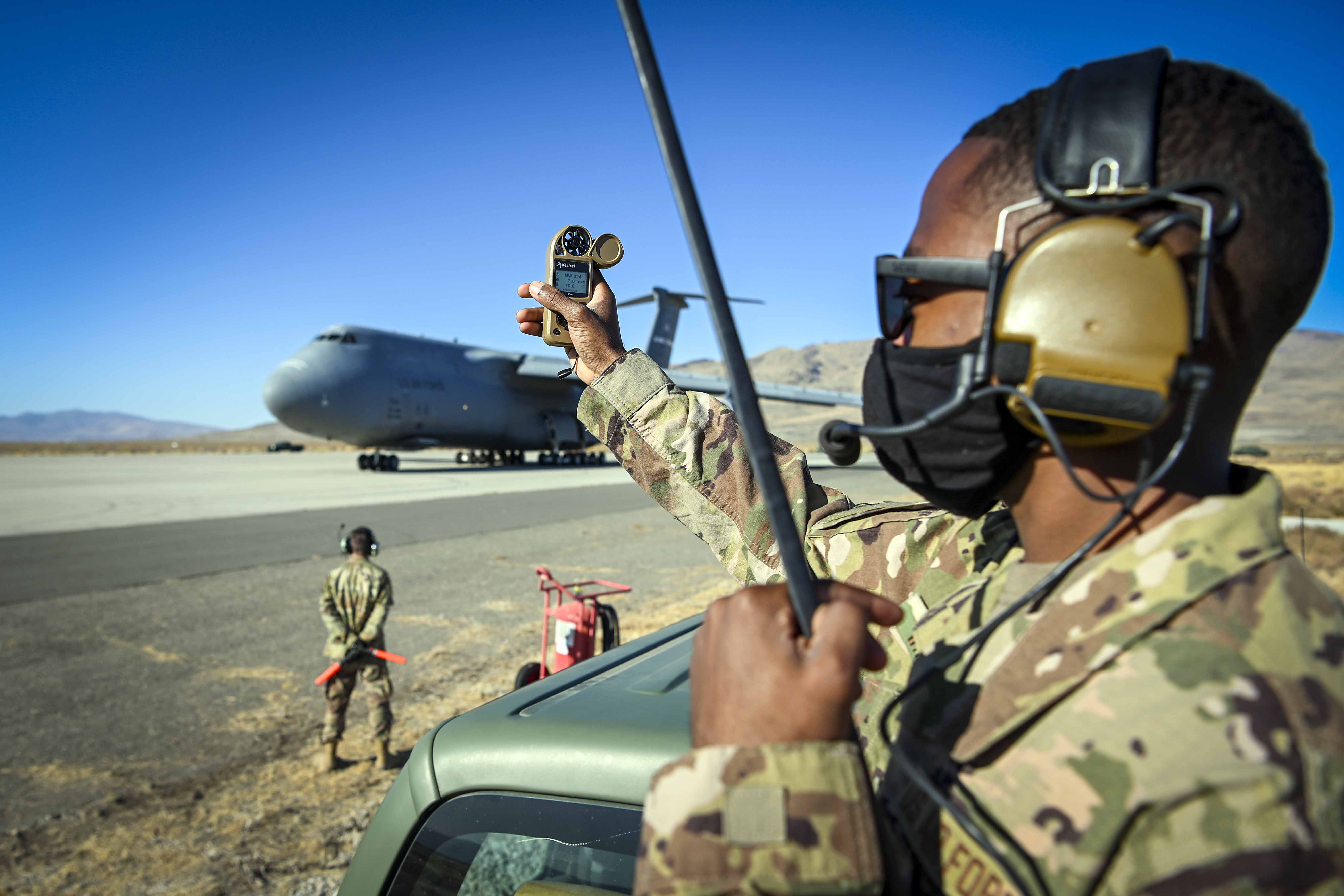
Air Force Senior Airman Trevon Walker uses a Kestrel meter to measure wind speed, humidity and altitude to provide takeoff recommendations for a C-5M Super Galaxy at Amedee Army Airfield, Calif., Nov. 5, 2020.

Ceremony Walk


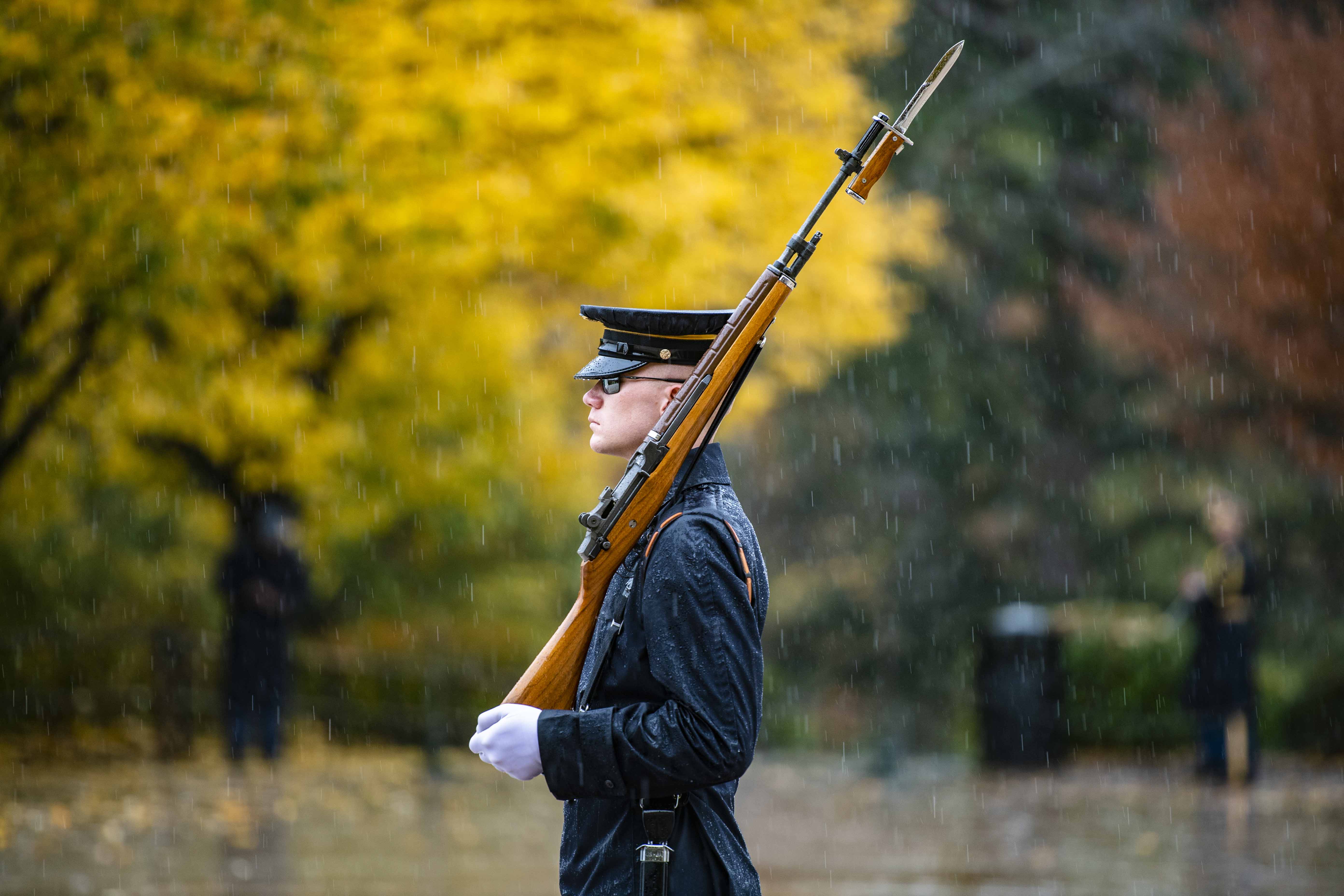
A soldier assigned to the 3rd U.S. Infantry Regiment, known as “The Old Guard,” walks the mat at the Tomb of the Unknown Soldier during a Veterans Day Observance at Arlington National Cemetery, Va., Nov. 11, 2020.

Sunlit Landing


An Air Force F-35A Lightning II prepares to land at Luke Air Force Base, Ariz., Nov. 2, 2020.

Warehouse Work


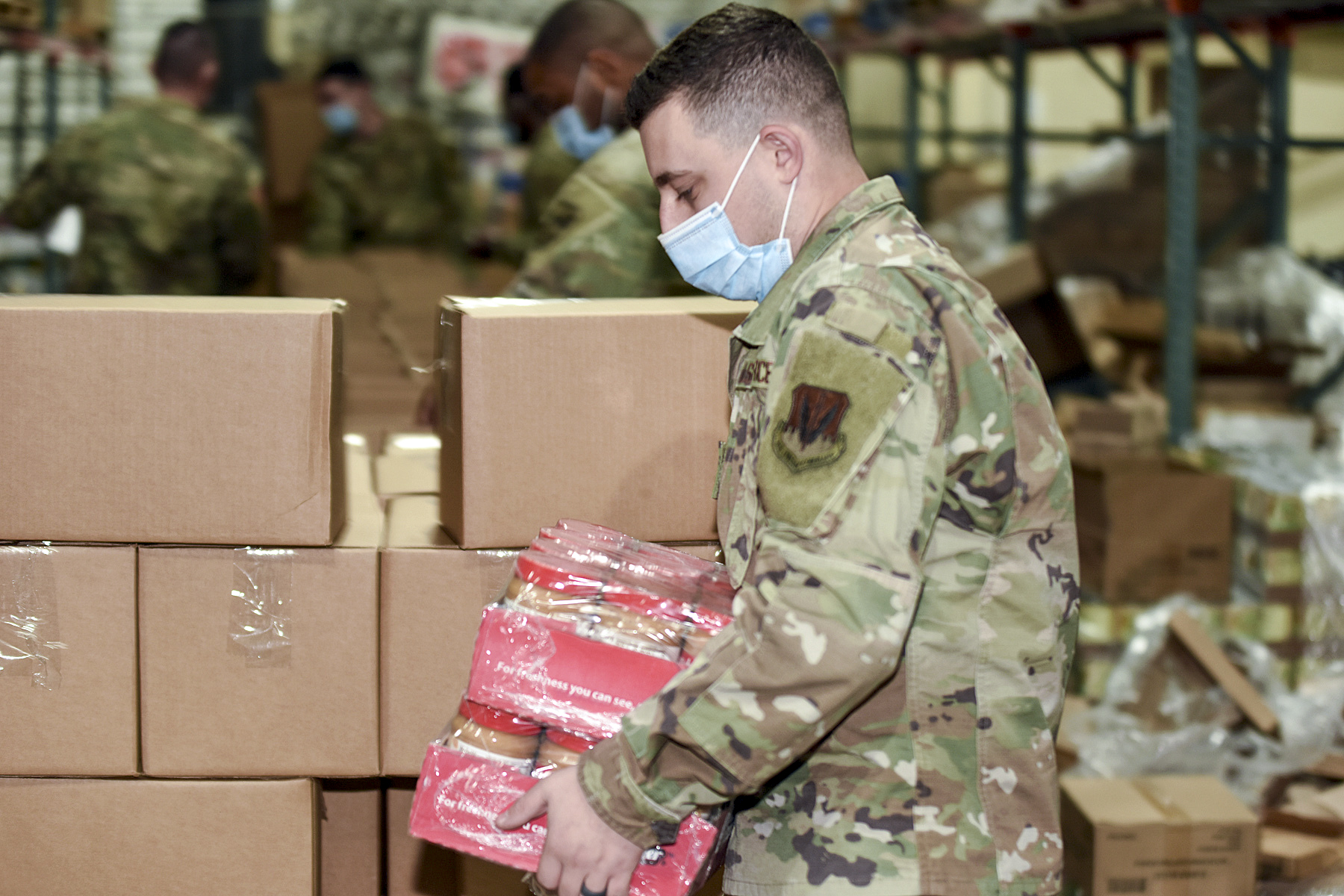
A Michigan National Guard soldier works at the Gleaners Community Food Bank warehouse in Warren, Mich., Nov. 2, 2020, to support COVID-19 response efforts. Since March, Michigan National Guard soldiers and airmen have supported food banks across the state, distributing more than 7 million pounds of food.

Fallen Defender Ruck


Airmen participate in the 13th Annual Fallen Defender Ruck March at Joint Base San Antonio, Nov. 6, 2020. The event honors 186 fallen security forces, security police and air police members who have made the ultimate sacrifice.

Food Focus


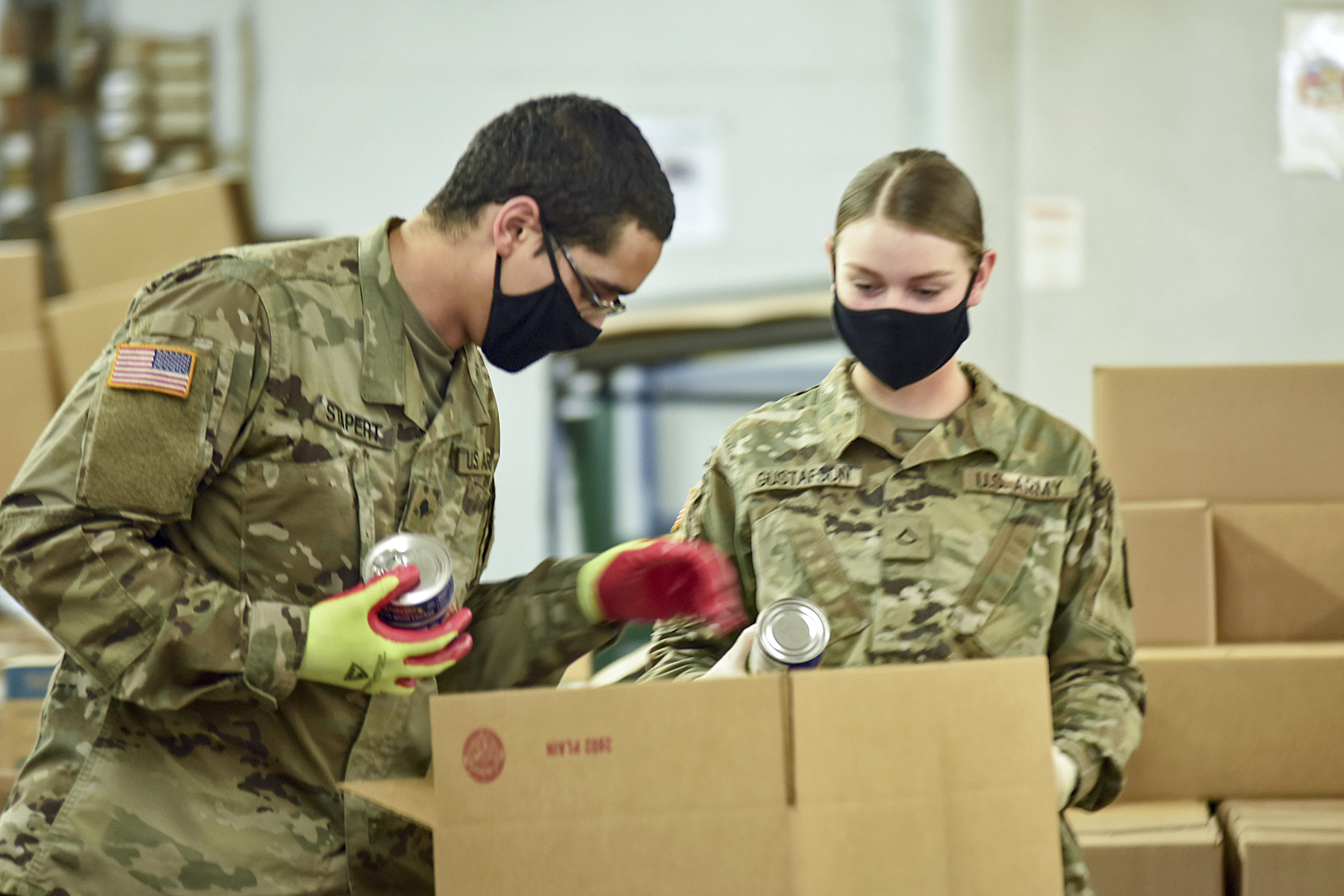
Michigan National Guard soldiers work at the Gleaners Community Food Bank warehouse in Pontiac, Mich., Nov. 4, 2020, to support COVID-19 response efforts. The warehouse feeds 1,000 families daily.

Acting SECDEF, Lithuanian Minister of Defense Participate in Bilateral Negotiation

 Nov. 13, 2020

Acting Secretary of Defense Christopher C. Miller; Lithuanian Minister of National Defense Raimundas Karoblis

ACTING SECRETARY OF DEFENSE CHRISTOPHER C. MILLER: Be seated. Thank you so much.

I'm going to have a -- a little water. If you don't mind, I'll have my mask off while I speak.

LITHUANIAN DEFENSE MINISTER RAIMUNDAS KAROBLIS: Yeah, we -- we too wear masks because of optic.

SEC. MILLER: Thank you so much for visiting. Minister Karoblis, it is a pleasure to welcome you and your team to the Pentagon as we continue to strengthen the defense relationship between our two countries. This is my first in-person meeting with a foreign leader as acting Secretary of Defense, and like I said downstairs, I couldn't have planned for a more appropriate and important visitor.

Over the past few days, I've spoken with my foreign counterparts in Germany, France, and the United States -- oh, sorry, the United Kingdom. I'm going to speak with a lot in the United States. I'm going to cover them in a moment. This afternoon I'll talk with NATO Secretary General Stoltenberg, who's just doing a remarkable job all around. I've also talked with our partners in Congress, including Leader McConnell, Speaker Pelosi, and the chairs and ranking members of the Senate and House Armed Services Committee.

I want to assure the American public and our allies and partners that the Department of Defense remains strong and continues its vital work of protecting our homeland, our people and our interests around the world. We do that in concert with steadfast allies like Lithuania.

For decades, our two nations have stood arm-in-arm in defense of our shared values. I understand there is a plaque -- I -- I want to come see this soon, as soon as we're able to travel safely again. I understand there's a plaque in the center of your capitol to commemorate President George W. Bush's remarks upon your invitation into NATO in 2002. One of our officers who has served there wanted to make sure that it was in there, and that was just such a powerful, powerful symbol when I heard about it. That plaque reads, "Anyone who would choose Lithuania as an enemy has also made an enemy of the United States of America."

I also think it is important to note that the first American to cement this relationship was the acting Secretary of State, Sumner Welles, who refused to accept Soviet domination of Lithuania in the summer of 1940.

President Bush's words ring true today. We remain firmly committed to the NATO alliance, and we share Lithuania's concern regarding Russia's malign behavior.

In light of this and other challenges, we are working closely with Lithuania and other allies to strengthen our security cooperation, enhance deterrence of Russia and bolster Baltic defense. Likewise, Lithuania continues to play an active and important role in NATO operations while protecting the alliance's eastern flank.

The United States is truly grateful for Lithuania's extraordinary host nation support, as demonstrated by the deployment of 500 U.S. military personnel from the U.S. Army's famed First of the Ninth (1-9) Calvary during the nine-month Atlantic Resolve rotation. This is one of the largest examples of sustained U.S. presence in your country, and hopefully, that will continue well into the future.

Further, we look forward to the upcoming rotation in December of 2-8 Calvary Battalion to one of the best training areas in the world in Pabrade. We also appreciate your contributions to the alliance and your commitment to defense modernization and NATO interoperability. We've come so far in the last 20, 30 years.

We commend you for your recent purchase of Joint Light Tactical Vehicles and your upcoming acquisition of UH-60 Black Hawks, the best utility helicopter the world has ever seen; couldn't ask for a better helicopter. Well done, sir. We appreciate it, and we look forward to interoperability exercises in the future.

This is the -- expected value is $243 million. This is the largest nationally-funded investment through foreign military sales in your country's history. Your continued investments in defense set a strong example for other allied and partner nations, and we applaud you for maintaining defense spending consistently at or above two percent of GDP. I encourage all allied nations to follow your lead in meeting the two percent spending target to make needed investments to enhance their capabilities and capacity while strengthening our collective defense.

As you know, two percent should be a floor, not a ceiling. I know we've -- great line. It's really true. That's -- that's -- that's just common sense, and that's how partnerships work.

The United States is proud to stand with Lithuania as steadfast allies, and we remain committed to deterring Russian aggression -- you know that -- boosting readiness and strengthening our mutual security together.

Let me close up congratulating you your -- upcoming Armed Forces Day celebration on November 23rd. Best wishes to you and all of your military members and families.

On a personal note, one of the most legendary figures in our Army Special Forces' history is Major Generally -- Major General Sidney Shachnow, who immigrated from Lithuania after World War II. Unfortunately, -- we lost Major General Shachnow a couple years ago. He was the epitome of a gentleman, an officer, and a warrior. He was a mentor of mine at an extraordinary degree. I only wish he was here with us today. I know he's here in spirit, though.

Thank you, Mr. Minister, for your visit today. Really look forward to our discussions.

This is a just fabulous day for the United States Department of Defense, and I know for Lithuania, too. This is a critical partnership, an important partnership, and I think we're -- frankly, I think we're setting the tone and setting the procedures for future cooperation throughout NATO. 

So thank you, Mr. Prime Minister.

Over to you, sir -- Mr. Minister -- sorry.

KAROBLIS: (inaudible) --

MILLER: You may be prime minister -- may be prime minister soon, but we don't want to put that out just yet.

KAROBLIS: Yeah.

Mr. Secretary -- Mr. Secretary, thank -- thank you for -- for receiving to me and my delegation, very busy days for you, indeed, and I'm very much encouraged by your words, including the plate on the municipality and reading the -- quoting the -- the words of President Bush. And -- and yes, we have -- never have doubts about -- about the U.S. position (inaudible) historic and (inaudible).

And first of all, I would like also to congratulate, with the Veteran's Day, which was two days ago, and also with -- with -- to express condolences for the U.S. servicemen died in -- in Egypt. Yes, it's unfortunate that happened, so sincere condolences for -- for -- for you and for the families.

Well, speaking about our relationship, indeed, the -- so Lithuania is staunch for American alliance, the region in Europe and with the absolute support from the society regarding the presence of U.S. in -- in Europe and the U.S. leadership. We have served and fought together in Afghanistan and Iraq. We are working to contain Russia. We are protecting together the eastern flank of NATO, supporting Ukraine and other activities.

On the other hand, Lithuania being frontier country, we are investing to other security ourselves, also, and during the years from -- the year from 2014 to 2020, we increased defense spending three times, reaching for two -- well above the defense financement, well above two percent in 2020.

We have very great preparation in -- in different areas and in this classical military preparation, but also there are also other areas which have good cooperation. For example, with cyber, one example is the creation of the Joint Regional Cyber Defense Center in -- in -- in Vilnius, which will -- I believe, will start its functions very soon, and also to be important for all region -- wide region, including allies and partners. But we believe it's -- it's -- it's support of national but we believe it's also for the United States.

And of course, so this -- another issue, and the main reason regarding the timing why I'm here, so it's certainly a historic moment because we are signing the agreement to procure Black Hawks, UH-60 helicopters. It's not only about the equipment, but for, which is very important for our armed forces, but it's most symbolically with this project we will be able to -- to quit with the last legacy of -- of -- of Soviet equipment. So in the (inaudible) -- in -- in our armed forces in general in -- in -- in the forces.

So it's important, very, we continue cooperation with you on -- also on this issue, but also on other issues. You -- you -- you mentioned another weapons systems like (inaudible), munition and Javelins and similar systems, and in general. So during next five years, we (inaudible) plans to -- to buy -- so, the weaponry systems from the United States so within the amount of half a billion dollars, when -- of our total defense budget is -- is -- is one billion (inaudible) half euro.

So we really thank you very much, and for -- for -- for the possibility to be here with this -- this -- this visit, and also even more for the cooperation, -- which great cooperation between the United States and -- and Lithuania.

Thank you very much. Looking forward for the discussion.
Reading Engine


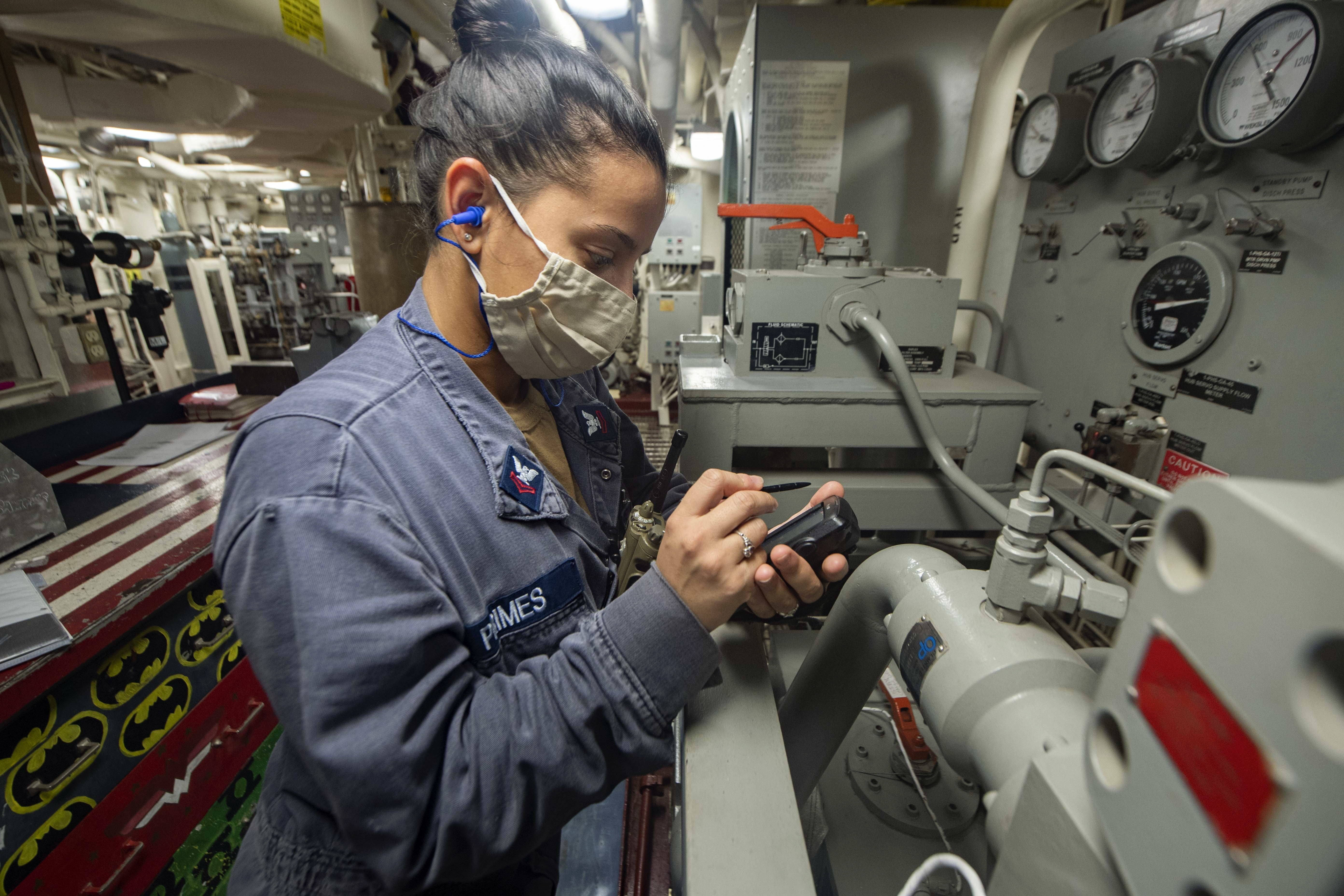
Navy Petty Officer 2nd Class Alexis Primes takes a reading in the engine room aboard the USS Ralph Johnson in the Arabian Sea, Nov. 10, 2020.

Acting Defense Secretary Seeks to Reassure Allies

 Nov. 13, 2020 | BY Jim Garamone , DOD News

Acting Defense Secretary Christopher Miller used his meeting with Lithuanian Defense Minister Raimundas Karoblis to reassure leaders that although there has been a change at the top of the department, "the Department of Defense remains strong and continues its vital work of protecting our homeland, our people and our interests around the world."

This was Miller's first meeting with a foreign counterpart. He stressed the need for steadfast allies. 

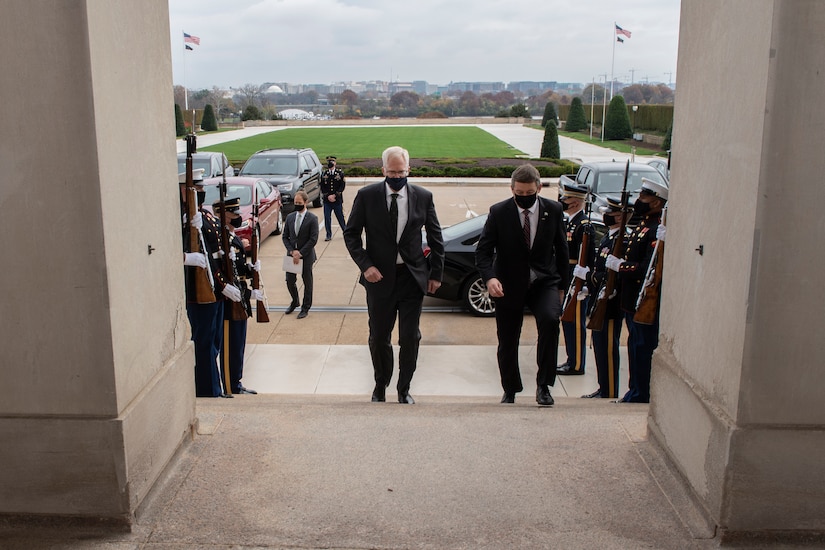
Two men walk up the stairs outside of a large building. An honor guard lines their path.

Miller, who replaced Dr. Mark T. Esper as secretary on Nov. 9, told Karoblis he has spoken with many allied counterparts, including those in France, Germany and the United Kingdom. After the Lithuania meeting, Miller will speak with NATO Secretary General Jens Stoltenberg. He has also spoken with leaders of both parties in Congress.

The acting secretary noted the history behind the U.S. relationship with Lithuania, saying that acting Secretary of State Sumner Welles refused to accept the annexation of Lithuania into the Soviet Union in 1940. He also quoted former U.S. President George W. Bush, who spoke when Lithuania was invited into NATO. "Anyone who would choose Lithuania as an enemy has also made an enemy of the United States of America," Bush said.

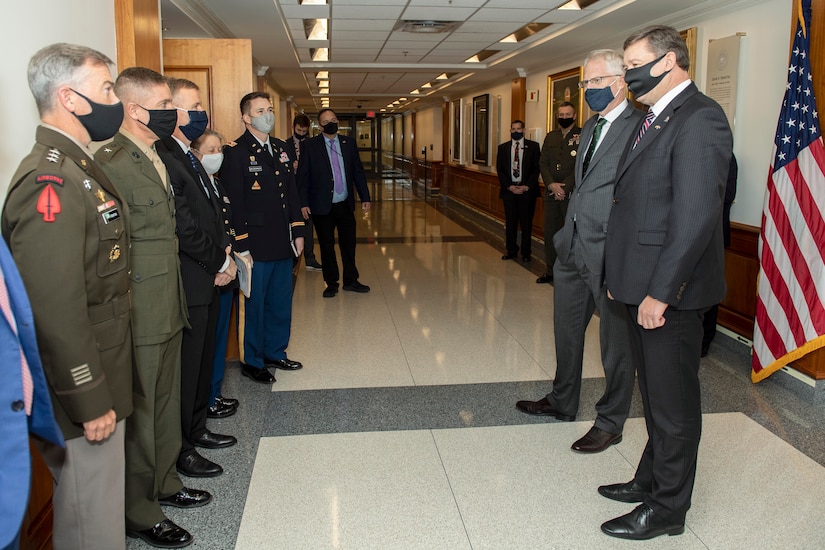
A group of men wearing masks stand in a hallway.

Miller assured Karoblis that the United States shares Lithuania's concern regarding Russia's malign behavior. "In light of this and other challenges, we are working closely with Lithuania and other allies [to] strengthen our security cooperation, enhance deterrence of Russia and bolster Baltic defense," he said. "Likewise, Lithuania continues to play an active and important role in NATO operations, while protecting the alliances' eastern flank."

Lithuania hosts U.S. troops — most recently soldiers of the 1st Battalion 9th Cavalry — who were part of Exercise Atlantic Resolve. Lithuanian service members have also fought alongside U.S. troops in Iraq and Afghanistan.

Lithuania spends more than 2 percent of gross domestic product on defense — a goal of all countries in the NATO alliance, Miller said. 

Two men sit next to one another at a table. On the table are pieces of paper, a pen and small Lituanian and U.S. flags.

Karoblis thanked the acting secretary for the warm welcome. He emphasized the cooperation between the two nations in the conventional domains, but said he looked forward to working with U.S. specialists in Lithuania's new Regional Cyber Defense Center, which will open next year.

He said Lithuania has bought the U.S. joint tactical vehicle and will invest in Blackhawk helicopters, which will at last allow the nation to get rid of its legacy equipment from the Soviet Union and open a new degree of interoperability with its NATO allies.

Flag Officer Announcement

 Nov. 13, 2020


Acting Secretary of Defense Christopher C. Miller announced today that the president has made the following nomination:

Rear Adm. Jeffrey W. Hughes for appointment to the rank of vice admiral, and assignment as deputy chief of naval operations for warfighting development, N7, Office of the Chief of Naval Operations, Washington, D.C.  Hughes is currently serving as commander, Navy Personnel Command; and deputy chief of naval personnel, Millington, Tennessee.

Readout of Acting Secretary of Defense Mr. Christopher C. Miller Phone Call With German Federal Minister of Defence Annegret Kramp-Karrenbauer

Nov. 13, 2020

Acting Secretary of Defense Mr. Christopher C. Miller conducted a phone call with German Minister of Defence Annegret Kramp-Karrenbauer to underscore the United States’ strong and enduring commitment to U.S.-Germany ties and the transatlantic relationship.

The leaders agreed on the importance of strengthening the U.S.-Germany defense relationship.  Acting Secretary Miller and Minister Kramp-Karrenbauer reaffirmed their commitment to cooperation on issues of mutual strategic importance, including increased burden sharing, promoting security and stability in the Middle East, and countering malign influence in Europe and beyond.

Readout of Acting Secretary of Defense Mr. Christopher C. Miller Phone Call With U.K. Secretary of State for Defense Ben Wallace

 Nov. 13, 2020


Acting Secretary of Defense Mr. Christopher C. Miller conducted a phone call with U.K. Secretary of State for Defense Ben Wallace to underscore the importance of strong bilateral ties and the transatlantic Alliance.

The leaders discussed approaches to shared global security challenges and ongoing efforts to deepen the U.S.-UK defense relationship. Acting Secretary Miller and Secretary of State Wallace discussed transatlantic security cooperation, operations in the Middle East, and continued cooperation in the Indo-Pacific. 

Readout of Acting Secretary of Defense Mr. Christopher C. Miller Phone Call With French Minister of Armed Forces Florence Parly

 Nov. 13, 2020


Acting Secretary of Defense Mr. Christopher C. Miller conducted a phone call with French Armed Forces Minister Florence Parly to strengthen the enduring U.S.-France relationship and transatlantic ties.

The leaders affirmed their commitment to bolster the U.S.-France defense relationship and collaborate on global security challenges.  Acting Secretary Miller and Minister Parly discussed the importance of continued cooperation in the Sahel, promoting security and stability in the Middle East, and projecting Alliance unity to counter shared threats.

Readout of Acting Secretary of Defense Christopher C. Miller Phone Call with Japanese Defense Minister Nobuo Kishi

 Nov. 13, 2020


On November 13, Acting Secretary of Defense Christopher C. Miller spoke with Japanese Defense Minister Nobuo Kishi by phone to reaffirm that the U.S.-Japan Alliance remains the cornerstone of defense and stability in the Indo-Pacific region.  Acting Secretary Miller also congratulated Minister Kishi on his recent appointment as Defense Minister.  The Ministers agreed to continue advancing ongoing discussions on the response to COVID-19, security issues in the Indo-Pacific region, and continued cooperation in new domains such as space and cyber.

Target Practice


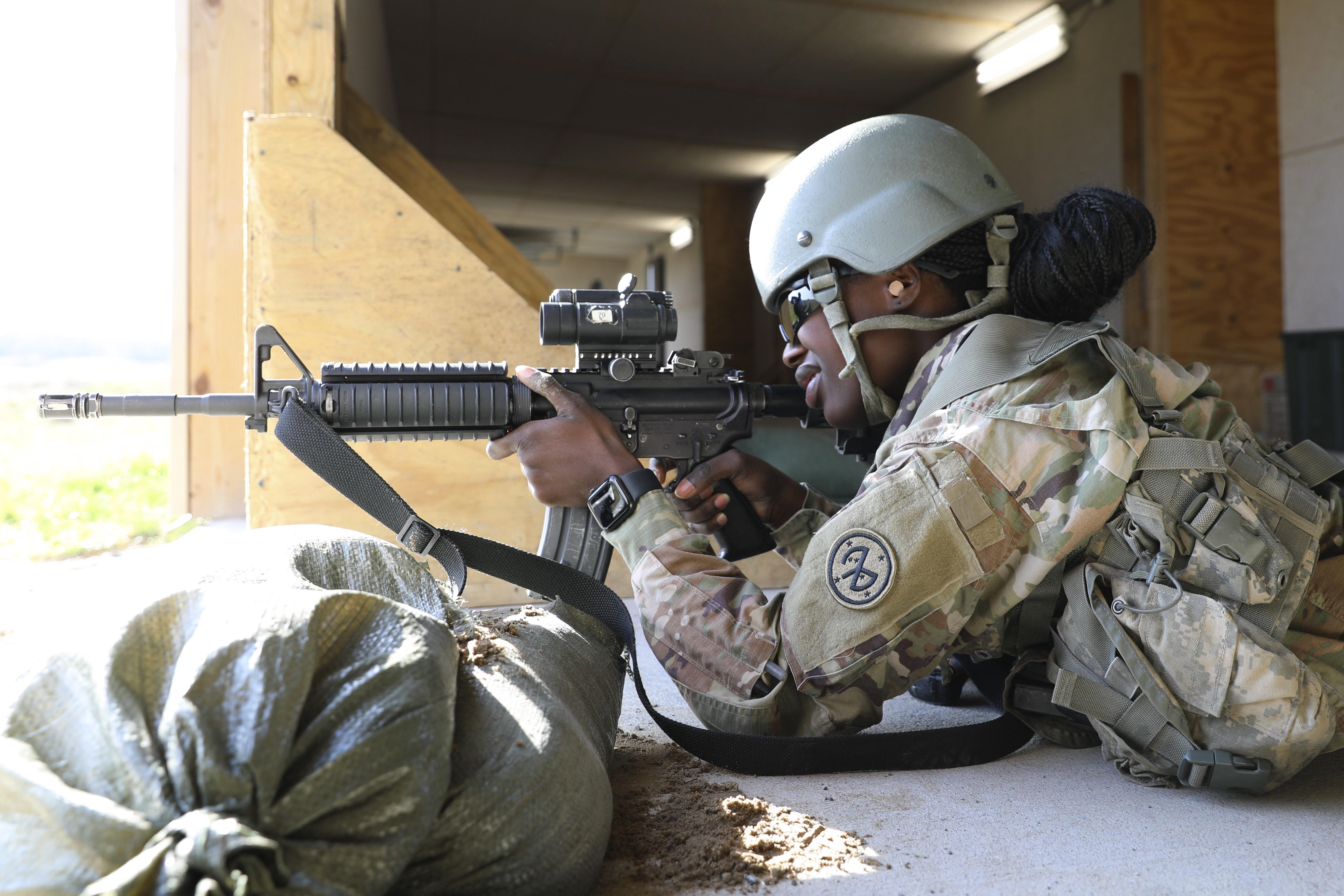
Army 2nd Lt. Lasheema Rose aim an M4 carbine during individual weapons qualification at Fort Drum, N.Y., Nov. 7, 2020.

Flag Officer Assignments

 Nov. 13, 2020


The secretary of the Navy and chief of naval operations announced today the following assignments:

Rear Adm. Alvin Holsey will be assigned as commander, Navy Personnel Command; and deputy chief of naval personnel, Millington, Tennessee.  Holsey is currently serving as special assistant to commander, Naval Air Forces/commander, Naval Air Force, U.S. Pacific Fleet, with additional duty as director, Task Force One Navy, Washington, D.C.

Rear Adm. (lower half) Richard J. Cheeseman Jr. will be assigned as commander, Carrier Strike Group Ten, Norfolk, Virginia.  Cheeseman is currently serving as commander, Carrier Strike Group Two, Norfolk, Virginia. 

Rear Adm. (lower half) Brendan R. McLane will be assigned as commander, Navy Warfare Development Command, Norfolk, Virginia.  McLane is currently serving as commander, Carrier Strike Group Ten, Norfolk, Virginia. 

Rear Adm. (lower half) Scott F. Robertson will be assigned as commander, Carrier Strike Group Two, Norfolk, Virginia.  Robertson is currently serving as commander, Naval Surface and Mine Warfighting Development Center, San Diego, California. 

Seeing Sailor


Navy Petty Officer 2nd Class Erica Taylor stands watch aboard the USS Ronald Reagan in the Philippine Sea, Nov. 12, 2020.

Senior Enlisted Leader Observes COVID-19 Testing for Patriot Express Passengers


Nov. 13, 2020 | BY MICHELLE GIGANTE, U.S. TRANSPORTATION COMMAND PUBLIC AFFAIRS

The senior enlisted leader of the U.S. Transportation Command visited Baltimore/Washington International Thurgood Marshall Airport to see the newest testing the Defense Department is conducting to mitigate the spread of COVID-19 from personnel traveling from the United States to overseas duty stations and on deployments.

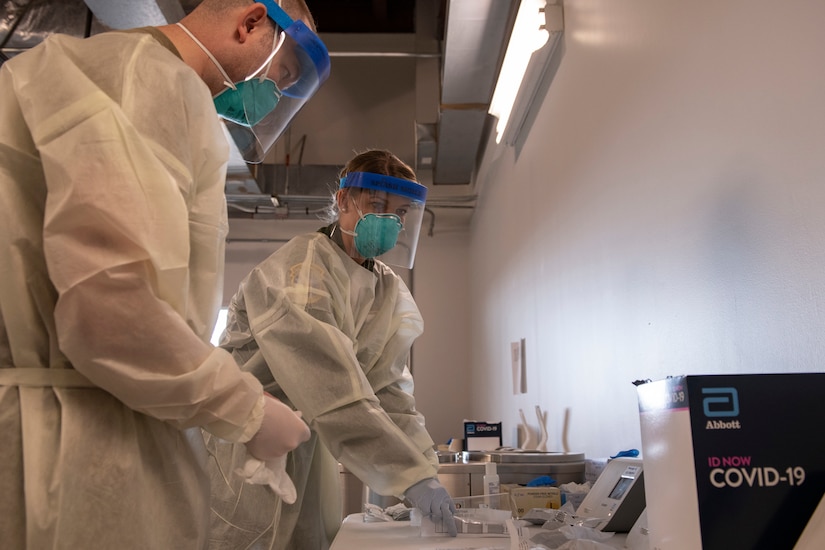
Starting Nov.1, the DOD military medical professionals at BWI and Seattle Tacoma Airport began administering rapid, on-site COVID-19 tests to service members, civilians, contractors and family members prior to boarding Patriot Express flights destined for overseas locations. 

An airman stands by watching another airman administer a nasal swab test to a man.

"As the command senior enlisted leader, I want to make sure we are transporting passengers in the safest, most efficient manner possible and to make sure we are doing all we can to mitigate the spread of COVID-19," USTRANSCOM SEL, U.S. Air Force Chief Master Sgt. Jason France said. "The implementation of this on-site testing here will also help the Defense Department establish a common baseline of testing for our service members, civilians and their families traveling to overseas duty locations."

All Patriot Express travelers are screened for symptoms of COVID-19 by completing a pre-travel questionnaire and on-site temperature check. Approximately 10-15 percent of the passengers who are not exhibiting symptoms are subject to a rapid, on-site laboratory test prior to travel. This percentage is part of the proof of principle, or prototype, which helps determine whether this testing method is feasible in preventing the spread of the virus.

Rapid, on-site testing will help establish, as much as possible, a COVID-free aircraft of DOD military, civilian and family members traveling overseas. At BWI, France observed how the tests were being administered and talked with the DOD medical professionals conducting the tests as well as personnel traveling out of the country. 

"I'd also like to send a special thanks to the Mobility [Command] airmen who provide the screening, on-site testing, lab analysis and any follow-on care in support of our Patriot Express mission. These airmen are making a difference on a global scale; ensuring the readiness and lethality of the geographic combatant commands and allowing them to get the mission done," he said. 
The proof of principle is taking place through Nov. 30, at which time Air Mobility Command will advise USTRANSCOM on analysis of testing data and feasibility of testing on a larger scale. The priority, though, will continue to be the health of the DOD community, their families and host countries. 

A man and a woman, both wearing protective equipment, prepare to administer a medical test.

France said he was impressed by the professionalism of the team of medical personnel working at BWI and he's confident their efforts will mitigate risks associated with overseas travel. 

"I was glad to be able to personally visit our BWI team, and I know the team at SEATAC is doing equally inspiring work," France said after his visit Monday. "I'm thankful to both BWI and SEATAC for their cooperation accommodating the DOD and our military families in this challenging era."

He added, "While these tests ensure we continue completing our missions in this COVID environment, this is just one step in taking care of our service members and families, civilians and contractors. It also helps us maintain the trust and confidence of our allies and partners abroad."