Friday, September 04, 2020

Iwo Jima Medal of Honor Recipient Recounts Experiences During Battle

 Sept. 4, 2020 | BY David Vergun and Katie Lange , DOD News

The last surviving Medal of Honor recipient to have fought in the Battle of Iwo Jima, Hershel "Woody" Williams, made a visit to the Iwo Jima memorial in Arlington, Virginia.

As Williams made his way up to the memorial on Sept. 2, scores of Marines snapped to attention, rendering the 96-year-old veteran a heartfelt salute. 

Williams joined the Marines in May 1943 and took part in the battle to retake Guam in the summer of 1944 before being sent to Iwo Jima, a tiny island in the Volcano Islands chain. The two were vastly different, he said.
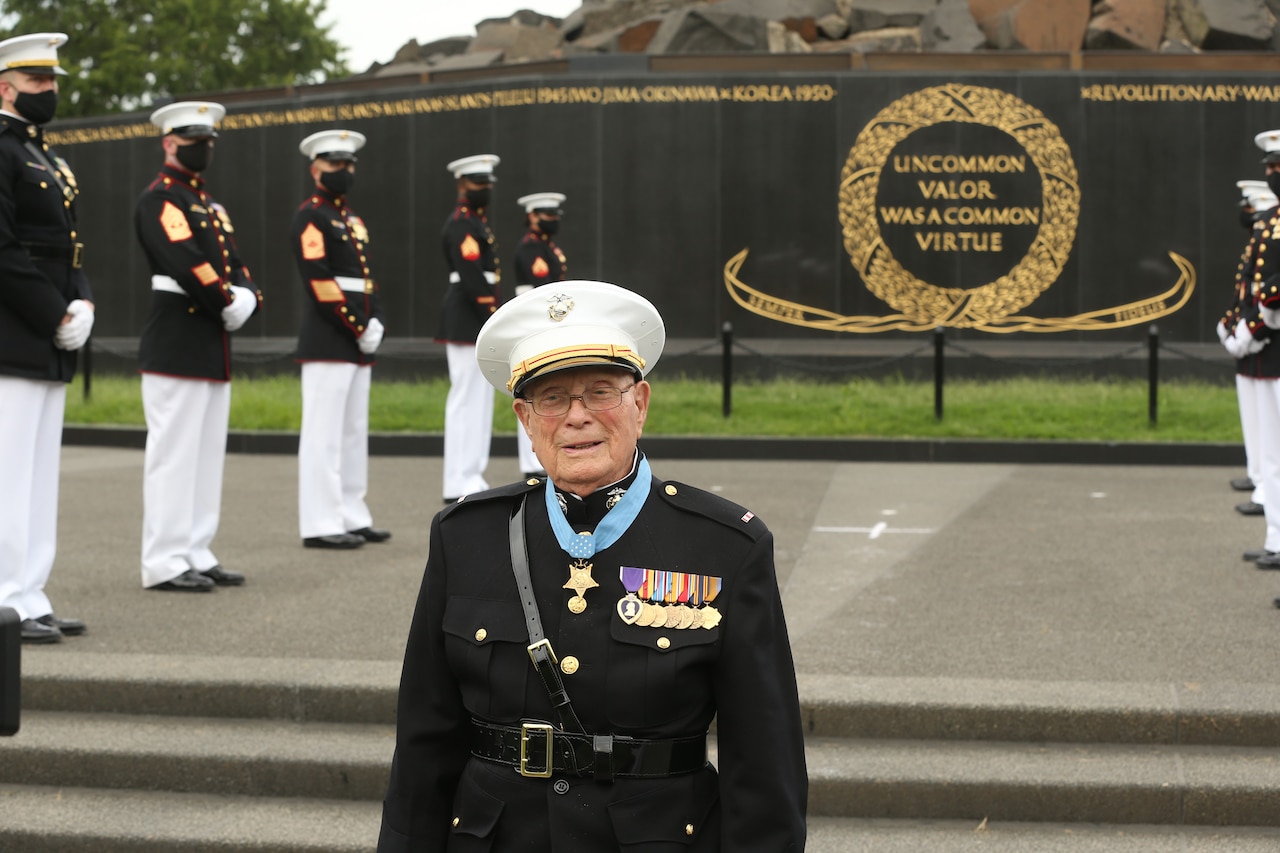
A Marine Corps veteran in uniform and wearing the Medal of Honor poses for a photo. Marines stand in formation behind him.

"Guam was more jungle-type fighting — a lot of creeping and crawling — but when we got to Iwo Jima, everything had been wiped off that island," Williams explained in an interview for the Library of Congress' Veterans History Project. "About the only protection you could find would be a shell crater or try to dig your own hole."

Capturing Iwo Jima was crucial to the Allies. The U.S. needed the island's airfields. Other U.S.-occupied islands placed fighter jets out of bomber-escort range of Japan's mainland. 

Williams' reserve unit was sent ashore two days after the battle started, and the scene was chaotic. He said they found out quickly that the land was incredibly difficult to maneuver.

The tanks had trouble opening up a lane for the infantry through the black volcanic sand that sloped steeply up the beach from the waterline. But the biggest problem was posed by the many steel-reinforced "pillbox" bunkers protecting the Japanese airfields.

"Bazookas and that sort of thing had no effect on them, because they were so thick and well built," Williams said in a 2017 interview. "The only way to actually eliminate the enemy inside those pillboxes was by flamethrower."

The battle saw heavier than usual casualties. Williams had initially been one of several demolition sergeants, but by Feb. 23, 1945, he was the only one left. So, he bravely volunteered to go forward as the last flamethrower to try to quell the devastating machine-gun fire from the pillboxes.

In four hours, with only four riflemen to protect him, Williams managed to wipe out seven pillboxes. He repeatedly prepared explosives in a safe area, struggled back to where the enemy was, and then set off the charges.

One time, he jumped onto one of the pillboxes from the side and shoved the nozzle of his 70-pound flamethrower into an air vent pipe and fired, killing everyone inside. Another time, he charged bayonet-wielding enemies and killed them with one burst of flame.
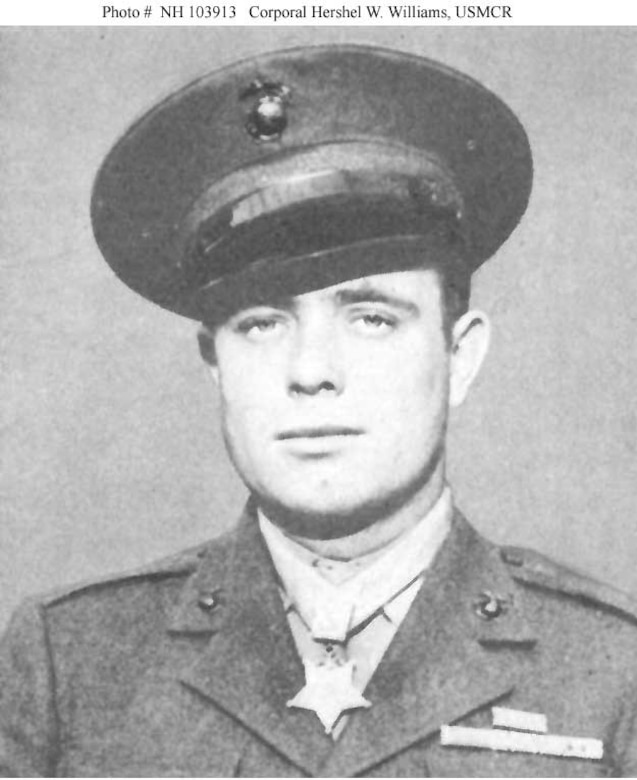
A Marine poses for a photo.

"That made a hole big enough that [the company] could go through and get behind any other pillboxes that were in that area," Williams said. "Once you got behind the pillboxes, then we had the advantage."

Williams' efforts helped to neutralize one of the most fanatically defended Japanese strongholds his regiment had encountered. For his actions, he received the Medal of Honor from President Harry S. Truman during a group ceremony at the White House on Oct. 5, 1945. Ten other Marines and two sailors also received the honor that day.

Before Sunset Parade on Sept. 2, Williams made additional remarks about his service and what it means to serve.

When he and his fellow Marines saw the second American flag raised atop Mount Suribachi, Williams said their spirits were lifted. "I still remember that day," he added.

Williams said he's been asked where bravery comes from, particularly about his valorous actions leading to the Medal of Honor.

He said he's never been able to answer that question satisfactorily. "Everybody has some instinct of bravery. And, as long as they can control the fear, you can be brave. But if fear overtakes you and becomes the dominant instinct, you cannot operate. You cannot operate under fear. Your brain won't let you.

"I feel that our upbringing had some influence on our bravery because we were taught in the depression years, if you didn't have it, you had to make it," Williams said. "And the only way you could make it was to work at it. Our upbringing gave us the confidence that developed into bravery."

America was and is worth fighting for, he said. "If we lose our freedom we lose America."

Williams was discharged in 1945, but he stayed in the Marine Corps Reserve until his retirement. Nowadays, he continues to serve through his foundation, the Hershel Woody Williams Medal of Honor Foundation, which honors families who have lost a loved one in service to their country.
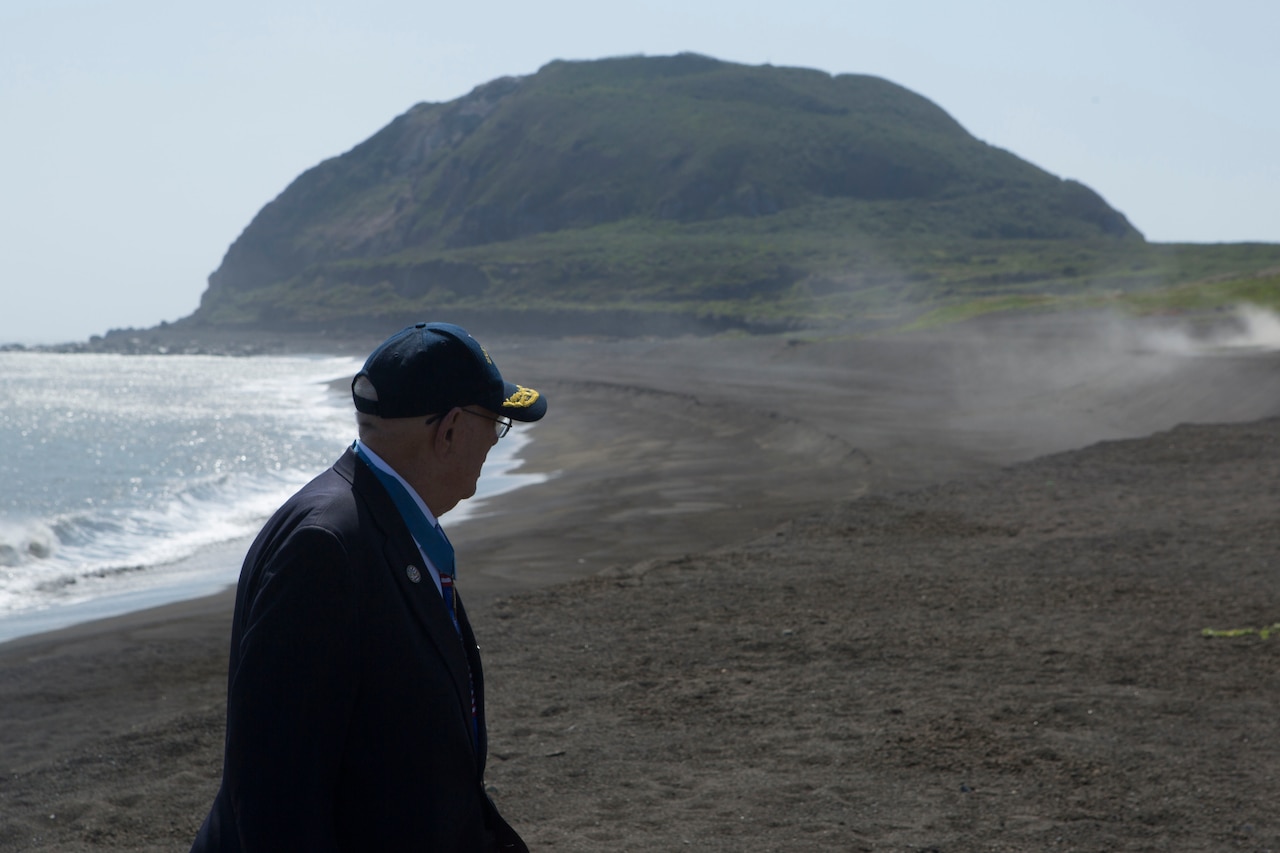
A man gazes at a hill. A shoreline is in the background.

Williams said it's those men — the ones who died protecting him — who really deserve the honor.

"This medal doesn't belong to me. It belongs to them because they gave their lives for me," he said, trying to hold back tears. "I was just doing a job that I was trained to do."

Asked what advice he'd give to young people, he said: "If you love America, truly, you are going to have the instinct and desire to serve your country. If you don't, then you're going to find some way to go in the other direction.

"Service is within all of us," he continued. "Every time we do something to help another person, we get a residual of that that makes us feel good, makes us feel proud that we could do something for someone else. And, there's no feeling like it."

In the last few years, Williams observed that Americans have become more separated than at any time since the Civil War. "We must come back together as a nation and as a people to where we can truly say, 'We are the United States of America.'"

Thursday, September 03, 2020

Beaming Performance


Navy Petty Officer 3rd Class Cristiana Rojas, a member of the U.S. Naval Forces Europe Band’s Alliance Jazz Combo, performs at a music festival in Ravello, Italy, Aug. 30, 2020.

Smoky Sailors


Sailors conduct preflight checks on a Navy EA-18G Growler aboard the USS Ronald Reagan in the Philippine Sea, Aug. 31, 2020.

Medical Services


Air Force Staff Sgt. Corbin Bailey and Air Force Lt. Col. Sarah Davis, both assigned to the Vermont Air National Guard’s 158th Medical Group, screen and test members of the 134th Fighter Squadron and 158th Fighter Wing for COVID-19, South Burlington, Vt., Aug. 21, 2020. After returning from the deployment to Volk Field, Wis., members of the Vermont Air National Guard all tested negative for COVID-19.

Certifying Cells


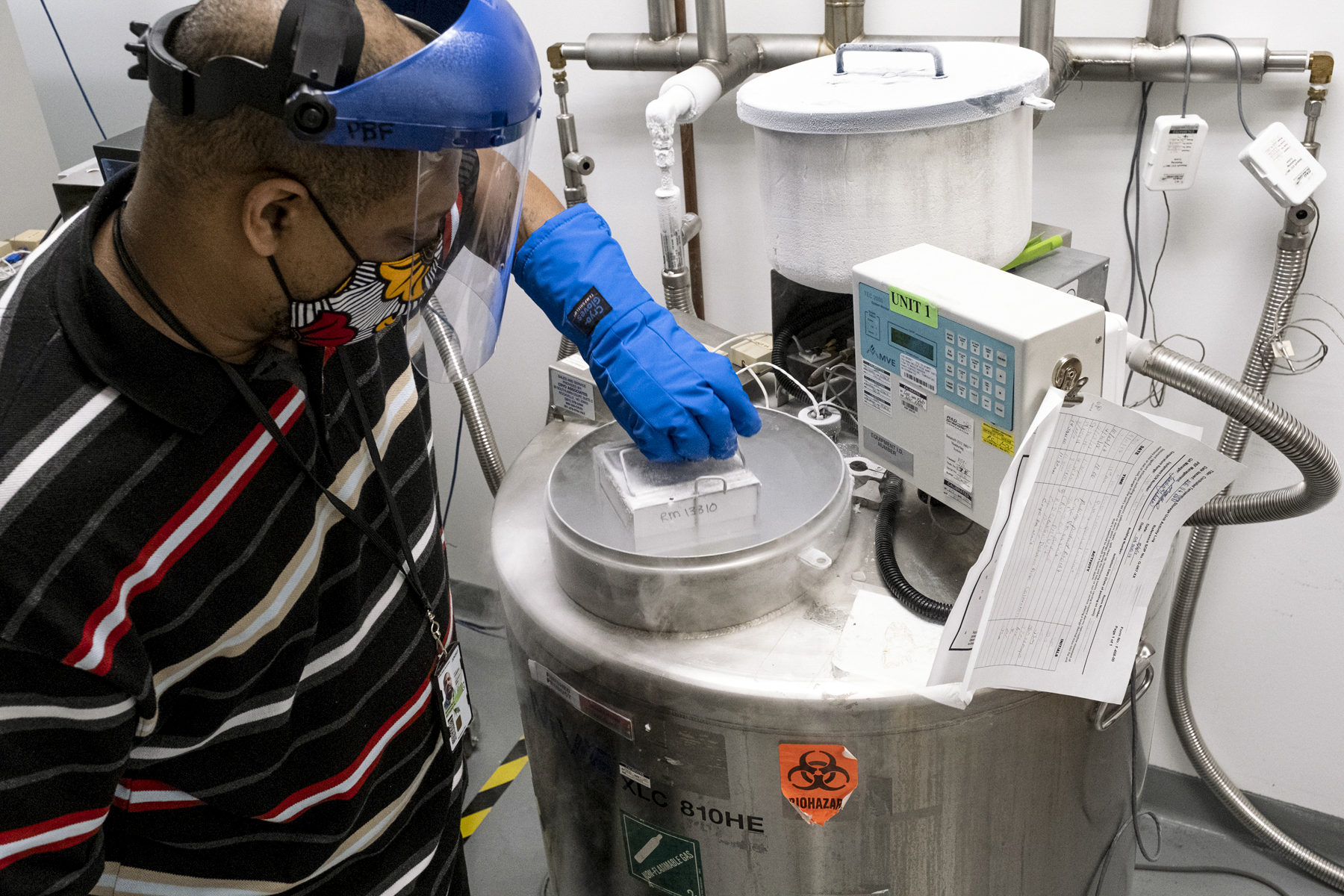
Army Col. Deydre Teyhen, commander of Walter Reed Army Institute of Research, certifies cell starting material from liquid nitrogen storage signifying the initiation of the institution’s COVID-19 vaccine material in Silver Spring, Md., Aug. 26, 2020. The institute is supporting COVID-19 response efforts.

DOD Sites Selected for Phase III COVID-19 Vaccine Trials: Five Medical Treatment Facilities in National Capitol Region, San Antonio, and San Diego to Participate

 Sept. 3, 2020


As part of the Operation Warp Speed (OWS) goal to deliver safe and effective vaccines and therapeutics by January 2021, five DoD locations have been identified to participate in the Phase III trial evaluating the vaccine candidate AZD1222 under development by AstraZeneca.

“The Department of Defense continues to play a key role in the development of a potential COVID-19 vaccine,” said Honorable Tom McCaffery, Assistant Secretary of Defense for Health Affairs. “Now that vaccines have passed the first phases of testing for safety, dosing and response, we are ready to move into the next phase where volunteers are needed to join large clinical studies. We are excited to have several sites identified to support the next steps in the vaccine development process.”   

The DoD sites selected are:

  • Naval Medical Center San Diego (Site Code: NMSD)
  • Joint Base San Antonio Brooke Army Medical Center (Site Code: BAMC)
  • Wilford Hall Ambulatory Surgical Center (San Antonio) (Site Code: WHASC)
  • Walter Reed National Military Medical Center (Bethesda, MD) (Site Code: WRMC) and
  • Fort Belvoir Community Hospital (Fort Belvoir, VA) (Site Code FBCH)

To volunteer, visit www.CoronavirusPreventionNetwork.org, click on “Volunteer Now” and complete the survey. Once the survey is completed, local study site coordinators will contact Military Health System beneficiary volunteers in their area who are a good match for the study. Please be sure to enter the appropriate site code.

To ensure that the vaccines work to protect those at greatest risk, participation by people from communities that are hardest hit is critical. The study is looking for people who are at an increased risk of SARS-CoV-2 infection which may include:

  • Working in an essential job, such as healthcare professions, emergency response personnel, grocery workers, meat-packing plants, restaurant staff, public transit, etc.
  • Living in densely populated residential environments
  • Living or working in congregated living facilities such as correctional facilities or nursing homes
  • A member of a community that has been hardest hit by this pandemic, such as older persons, persons with underlying health conditions, and racial/ethnic groups such as African Americans, Latino, and Native American populations.

OWS is a U.S. government, interagency endeavor that is focused on delivering 300 million doses of a safe, effective vaccine for COVID-19 and is part of a broader strategy to accelerate the development, manufacturing, and distribution of vaccines, therapeutics, and diagnostics (countermeasures) for the virus.

Direct support for this effort is provided by the U.S. Department of Defense's (DoD) Joint Program Executive Office for Chemical, Biological, Radiological and Nuclear Defense (JPEO-CBRND) in coordination with the Office of the Assistant Secretary of Defense for Health Affairs (OASD(HA))and the Defense Health Agency (DHA).

Army North Task Forces on COVID-19 Front Lines

 Sept. 3, 2020 | BY Lori Bultman, Air Force , 502nd Air Base Wing

Service members from across the country who are part of U.S. Army North have converged on San Antonio as part of the urban augmentation medical task forces activated to support hospitals during the COVID-19 crisis.

U.S. Army North is the U.S. Northern Command's Joint Forces Land Component Command responsible for the Defense Department's response to COVID-19.

The first UAMTF to arrive in San Antonio, designated UAMTF-627, began treating patients at five local hospitals July 9.

Army Capt. Sarah Kopaciewicz, a U.S. Army nurse from Madigan Army Medical Center at Joint Base Lewis-McChord, Washington, is one of those working hard to assist San Antonio medical personnel with their overload of coronavirus cases.

"We are working as critical care nurses, taking care of critically ill COVID-19 patients," she said. "Our nights are busy between managing patient care and communicating with their family members or loved ones."

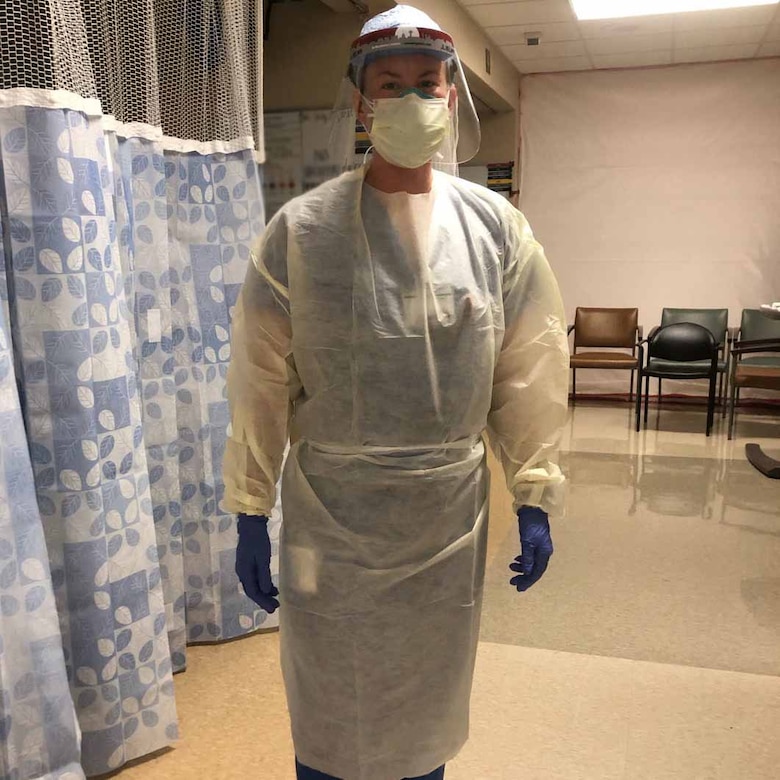
A critical care nurse wearing personal protective equipment.

Kopaciewicz said San Antonians have made her feel welcome in their facilities.

"The staff at Christus Santa Rosa Hospital Westover Hills has been very welcoming toward us," she said. "They have made it easy to ask questions regarding equipment, patient movement and hospital policies."

The importance of the mission is clear.

"This mission has proven that the military can work anywhere, anytime and in any environment to provide the best care for those in need," Kopaciewicz said.

Charles Reed, vice president and associate chief nursing officer at University Health System, is thankful the task force members arrived when they did.

"Seeing how patients overwhelmed healthcare systems around the world is something that you expect on the news or in the movies," he said. "It's not something that you would ever expect to happen in your own community. We were under a lot of stress during the surge, and the military staff was able to come in and provide immediate relief to our COVID-19 units."

We are extremely appreciative for all the military has done for our patients and our staff."
Charles Reed, vice president and associate chief nursing officer

Reed said local hospitals were in urgent need of assistance when the task force members started arriving.

"We needed a lot more staff to care for COVID-19 patients for several reasons: higher nurse-to-patient ratios, 'gatekeepers' to ensure staff was donning and doffing personal protective equipment appropriately and more beds converted to intensive care unit care," he said. "This higher level of acuity and the need for additional beds was not only stressful for the nursing staff but for the whole medical team, including physicians, respiratory therapists and technicians."

The military staff members provided support to the entire healthcare team quickly, Reed said.

"The ICU and acute care nurses were able to assimilate into our environment and become part of 'our' team," he said. "We had a 40 to 50% increase in the number of ventilated patients, with the same number of respiratory therapists and all working mandatory overtime. The military respiratory therapists provided immediate relief, allowing us to reduce the number of vents per therapist and giving us greater coverage in both the ICUs and in the acute care units, or ACUs."

The military licensed vocational nurses were also important to getting COVID-19 patients cared for, Reed said.

"The LVNs helped us by taking over the oxygen therapy, assessments and breathing treatments — the duty that we were going to have the registered nurses complete due to the shortage of respiratory therapists," he said.

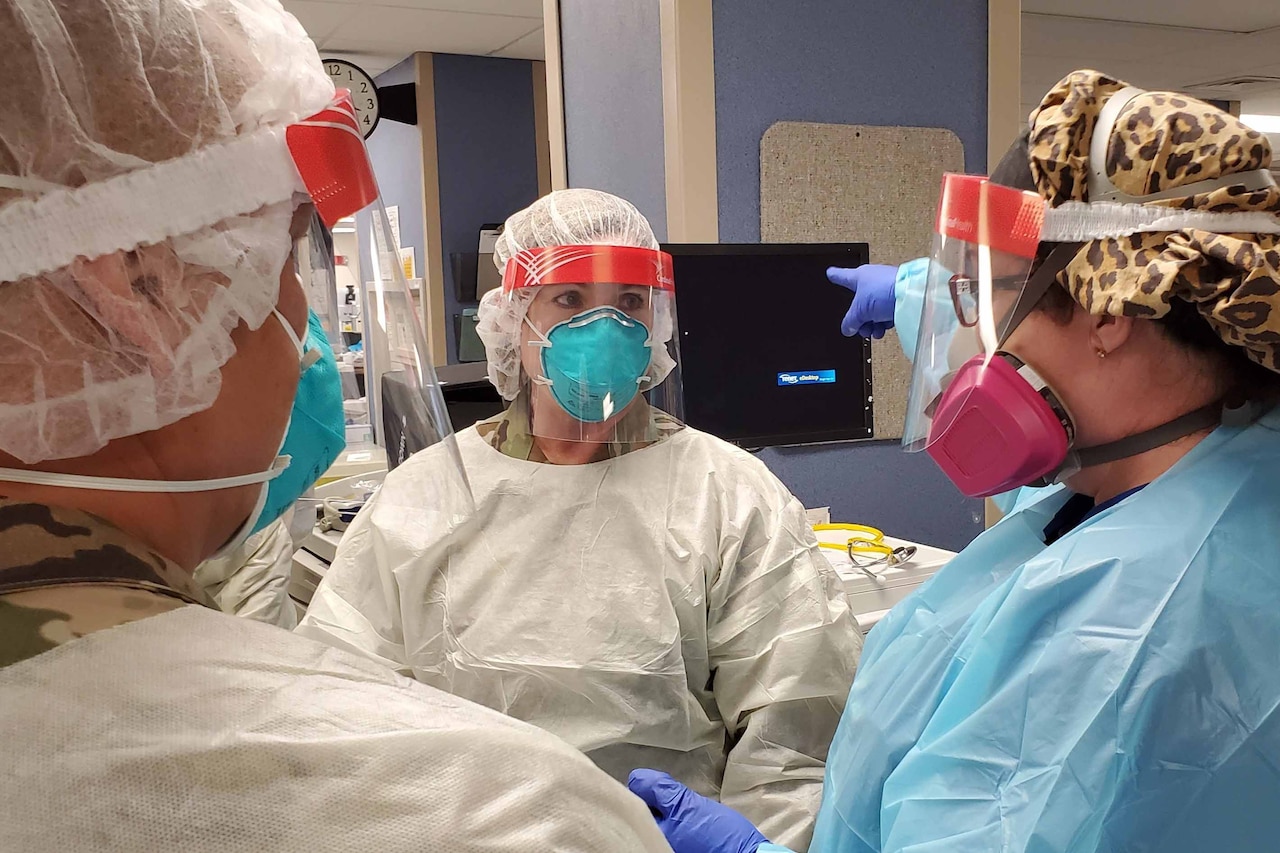
People wearing personal protective equipment in a hospital are having a discussion.

To Reed and the staff members at University Health System, the task forces' assistance was essential to their ability to combat COVID-19.

"The military staff members provided us with the resources to open up additional beds and provide care to patients that we otherwise would not have had the resources to support," he said. "They also supported us mentally, by improving the morale of our staff through their support, camaraderie, presence, knowledge, skill and professionalism. We are extremely appreciative for all the military has done for our patients and our staff."

Army Lt. Col. Jason Hughes, the commander of UAMTF-627, said helping those in need is the purpose of the UAMTFs.

"We, individually and as an organization, exist to save and sustain lives anywhere in the world," he said. "This mission is special, and our soldiers brought a burst of energy to each of our five hospitals and hope to the community."

I could not be more proud of how the military and civilian partners joined together to provide the care each American deserved in their time of need."
Army Lt. Col. Jason Hughes

Hughes said the hospitals in San Antonio welcomed the task force members, some of whom they had worked with before.

"The leadership at each hospital did an excellent job of integrating us into their team, which was made easier because the local military health system has a strong relationship already in place," he said. "For example, University Health System understands how the military operates because of their day-to-day training partnership, so the process was seamless and some of the faces were familiar, which reduced the initial stress of onboarding."

"I cannot thank the hospitals enough; they welcomed us with open arms and took care of us like we were family," Hughes said. "I could not be more proud of how the military and civilian partners joined together to provide the care each American deserved in their time of need."

At the request of the Federal Emergency Management Agency and state officials, approximately 740 Defense Department medical and support professionals from the Army, Navy and Air Force are assigned as part of the department's ongoing COVID-19 operations in Texas and California.

Lab Shifts Gears to Fight COVID-19

 Sept. 3, 2020 | BY Amber Kurka, Army

Keeping others safe from disease is a priority for Public Health Command-Pacific Environmental Molecular Biology Laboratory personnel.

Located at Camp Zama, Japan, and Joint Base Lewis-McChord, Washington, EMBL's mission is to protect the health of the force from vector borne diseases found in ticks, mosquitos and fleas by testing arthropod samples found in austere environments.

"Our EMBLs are always on the cutting edge of identifying new diseases emerging in our area of responsibility," explained Army Capt. Bradley Kearney, a biochemist and the PHC-P Laboratory Sciences director. 

In January, Kearney and his team began tracking the news of an emerging new virus, SARS-CoV-2, with the help of Dr. Michael Butel, PHC-P's chief of epidemiology. As the new disease COVID-19 evolved, the team began to strategize how they could help clinical labs in Japan and Washington in the event of a pandemic.

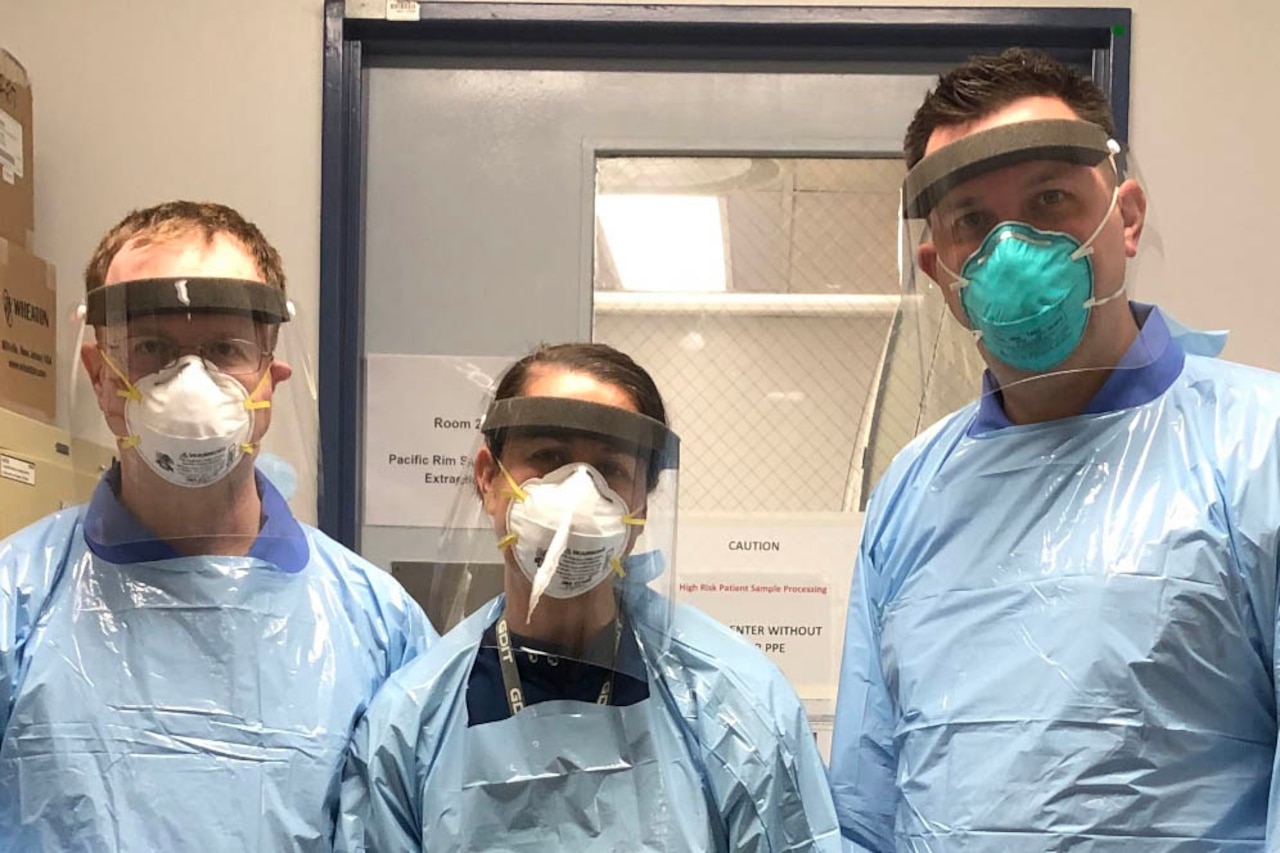
Three people in personal protective equipment stand in a lab doorway.

"We were having meetings frequently in preparation for what we anticipated would be a pandemic before it was hardly even called an epidemic," Kearney said.

As the weeks continued, PHC-P leadership and the EMBL teams worked to identify critical laboratory assets and skill sets to help with clinical testing. 

"Laboratory assets can take a very long time to spin up," Kearney explained. "To get someone qualified to do laboratory testing, the minimum threshold requires more than 50 weeks of advanced individual training, then an individual will need to do months of training in a clinical hospital. In order to have a rapid response, we tapped into those who already had the training in place. Since our team conducts vector laboratory testing regularly we had 100% of our staff from both Japan and JBLM go to support clinical efforts due to the limited availability of laboratory testers."

To help fight COVID-19, Gary Crispell, a microbiologist, and Kearney launched COVID-19 testing in Japan while Milagros Solá, a microbiologist, and Army Spc. Darius Torres, a medical laboratory technician, supplemented the clinical lab staff at MAMC.

"You have to be highly qualified and trained on the right equipment to do COVID-19 testing," Solá said. "We have to make sure that we are following all of the proper protocols to not only keep ourselves safe but to also make sure the samples are processed accurately. The results could be life or death for someone. Additionally, it takes a really special person to work under the stress and pressure of processing COVID-19 samples, because the results were needed by the medical staff yesterday."

... The most gratifying thing was when we found pockets of COVID-19 in our community and worked with preventive medicine teams. They were able to respond quickly and conduct contact tracing to extinguish clusters of COVID-19."
Gary Crispell, microbiologist

One of the most time-consuming portions of COVID-19 testing involved lysing, the process of breaking down a cell in order to release the genetic material for each sample.

"Every sample needs to be lysed [break open the cells to get to the DNA], and it could be a long process, since you have to pipette the sample multiple times before it can go onto an instrument to process it," Torres explained. "If you don't have enough people in the lab, you end up wasting a lot of time going back and forth between lysing the samples and running the equipment."

By supplementing the lab staff at MAMC, Torres and Solá were able to take some of the stress off their clinical counterparts. Kearney and Crispell, on the other hand, worked around the clock to set up testing efforts for DOD personnel and family members stationed in Japan.

"Rather than send samples back to San Diego to be processed, which would take precious time, we partnered with the Navy to stand up a testing location at the NHRC satellite lab," Kearney said. "We moved our specialized instrument from Camp Zama to Yokosuka and were able to run the first tests for DOD members within a week."

The new ability to test in Japan helped keep the DOD and naval missions going by quickly identifying pockets of COVID-19 and reducing spread within the community.

"For me, it was very gratifying to run these clinical tests in order to clear personnel to go out on missions," Crispell said. "But the most gratifying thing was when we found pockets of COVID-19 in our community and worked with preventive medicine teams. They were able to respond quickly and conduct contact tracing to extinguish clusters of COVID-19."

To reduce outbreaks, both locations partnered with preventive medicine teams to identify and test individuals who may have come in contact with the coronavirus.

A lab technician processes a vector sample while a microbiologist observes.Both are wearing lab coats and masks.

"It truly is a team effort between laboratories and preventive medicine," said Kearney. "Together, we do a lot of work behind the scenes to reduce the spread of diseases. Often we [stop] outbreaks before they happen."

Kearney pointed out that while the overall footprint of microbiology and preventive medicine are relatively small within the medical community, the mission is extremely important, and they are ready to respond.

"Historically, disease and non-battle injuries have been the number one threat to military readiness," Kearney said. "To help reduce this threat, we are behind the scenes at all times ready to protect the DOD community as a whole."

The ability to adapt and respond to the demands of COVID-19 has meant a lot to the PHC-P EMBL staff.

For Solá, helping the MAMC clinical lab was extremely personal.

"Madigan was my first duty station," Solá said. "I started out as an enlisted medical lab technician in 1993 and became the NCOIC. Three of the staff members that I used to work with are still there at the lab. I cannot explain how it makes me feel to be able to help my former teammates more than 25 years later as a civilian employee. This mission is so incredibly important, I am very proud to help."

While Solá has four years until retirement, Torres reflected on how this experience has impacted him as a young enlisted lab tech.

The Army laboratory enterprise stands with the rest of our healthcare force to continue the fight against COVID-19 and to support our warfighters with any medical challenge the future may hold."
Army Capt. Bradley Kearney

"A pandemic like this is not something that anyone ever expects," Torres said. "However, this experience has shown me that as a soldier, I'm not only able to battle what I was taught to fight, but together as a team, we can battle such things as a pandemic."

For Kearney, this experience is why he joined the Army.

"The involvement with COVID-19 testing really gets at the reason why I joined the Army," Kearney said. "I joined to provide my expertise and to provide my services as a biochemist to help support the warfighter and their families."

As members of PHC-P, Crispell, Kearney, Solá and Torres's dedication to care for the health and well-being of others embraced the PHC-P credo of "100/0!" which means 100% accountability and zero excuses for not giving your best every day.

"Almost anything is achievable when all of the parties are invested," Crispell said. "To me nothing is more important than the service members and civilians that we service."

"For years, the Army's number one priority has been readiness," Kearney said. "The combined team of our soldier, scientist and civilian workforce has directly and measurably made a positive impact on readiness during this pandemic. The Army laboratory enterprise stands with the rest of our healthcare force to continue the fight against COVID-19 and to support our warfighters with any medical challenge the future may hold."

(Amber Kurka is assigned to the Public Health Command - Pacific)

DOD Provides On-Line Mental Health Resources Amid COVID-19 Pandemic

Sept. 3, 2020

In its continued efforts to provide resources to service members and their families, the Department of Defense issued an info sheet highlighting a few of the many resources available to help those who may be coping with an experience of sexual assault.

As service members continue to experience daily challenges due to the COVID-19 pandemic, the DOD wants everyone to know that assistance for sexual assault remains available for all service members and their dependents.

More information can be found here.

Wednesday, September 02, 2020

Sanitizing Sailor


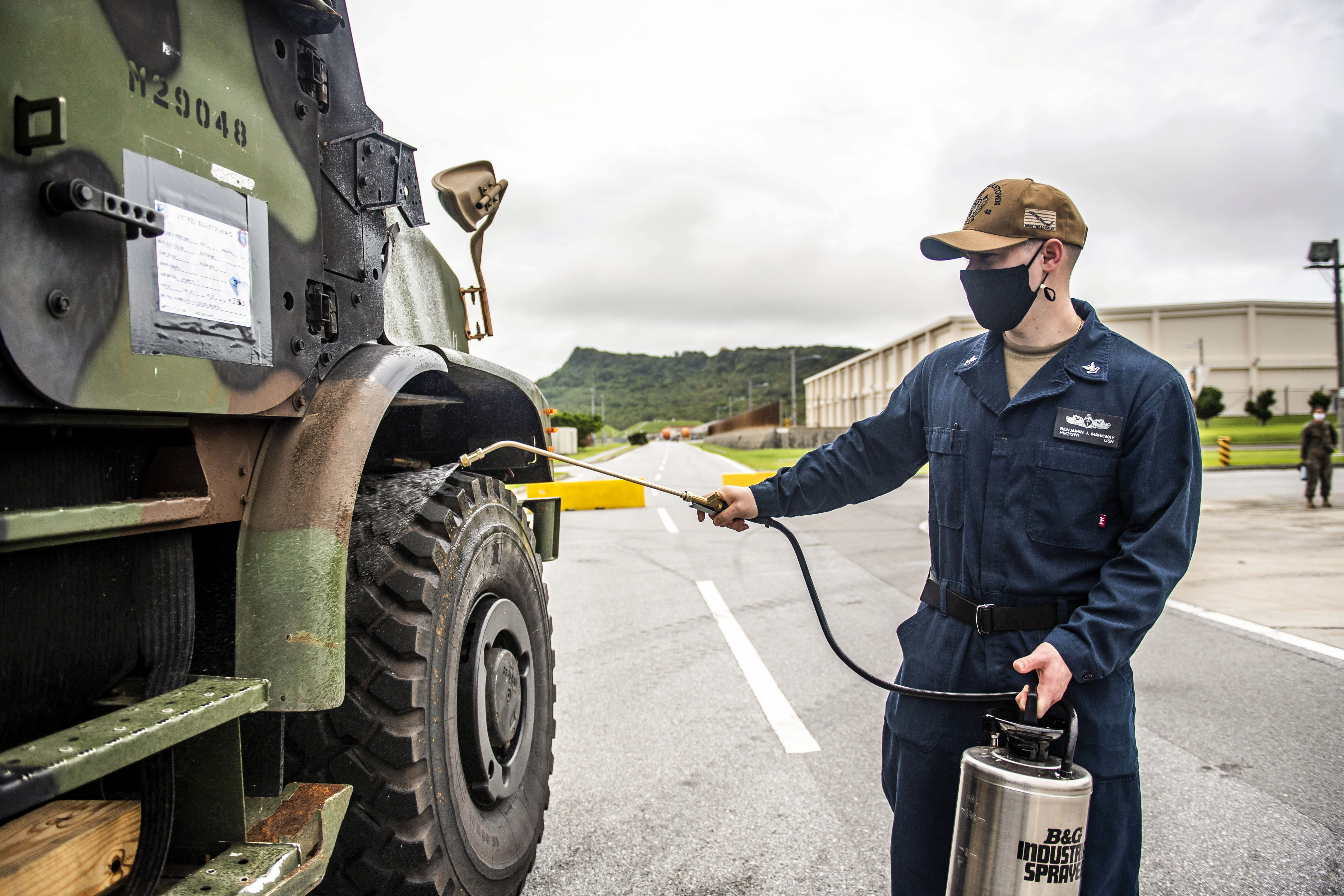
Navy Petty Officer 2nd Class Benjamin Markway, a member of the COVID-19 Rapid Response Team aboard the USS Germantown, sprays disinfectant on a Marine tactical vehicle in Okinawa, Japan, Aug. 27, 2020.

Wire Work


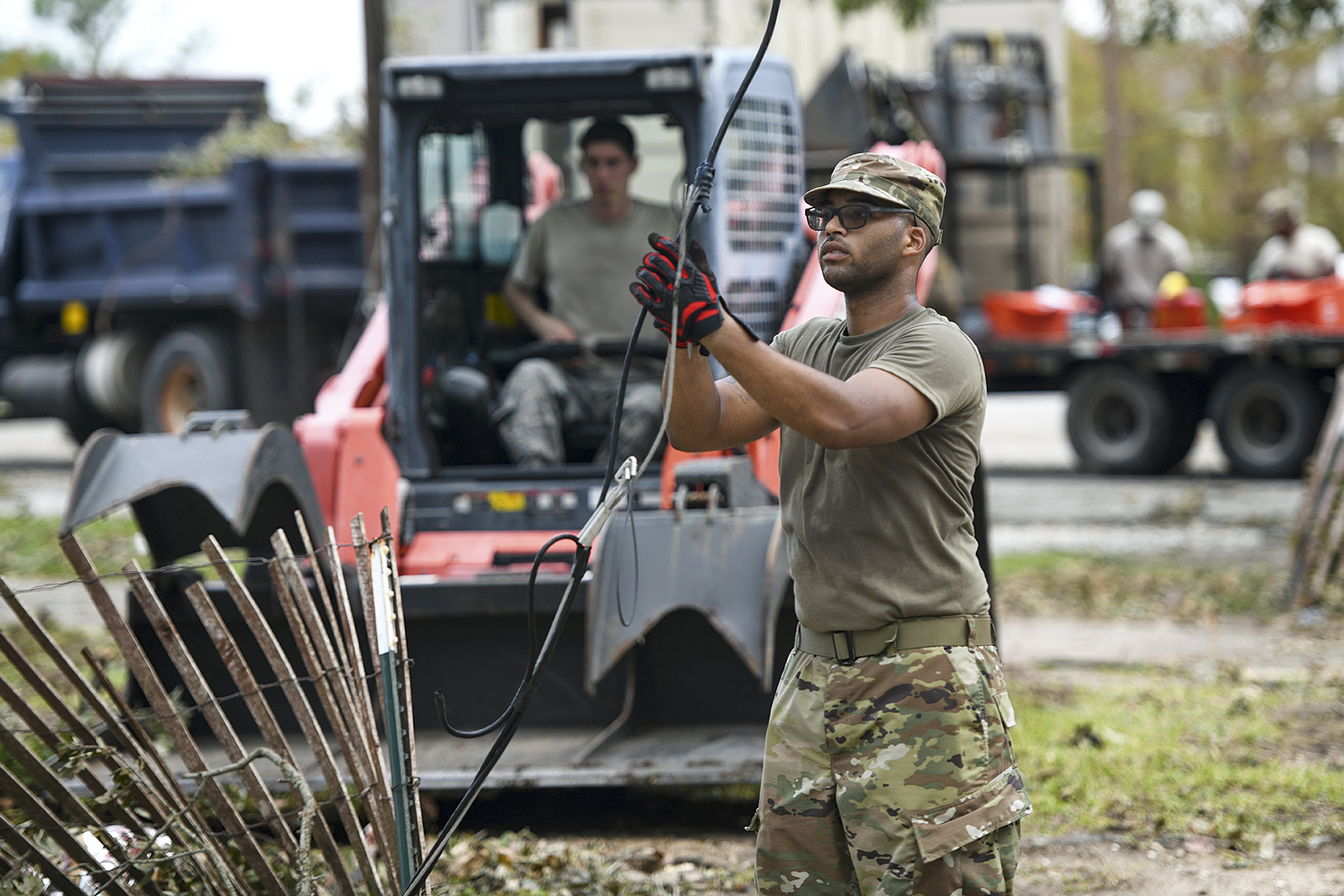
Louisiana Air National Guardsmen work to remove disconnected power lines from trees knocked down by Hurricane Laura in Lake Charles, La., Aug. 30, 2020.

Tactical Maneuvers


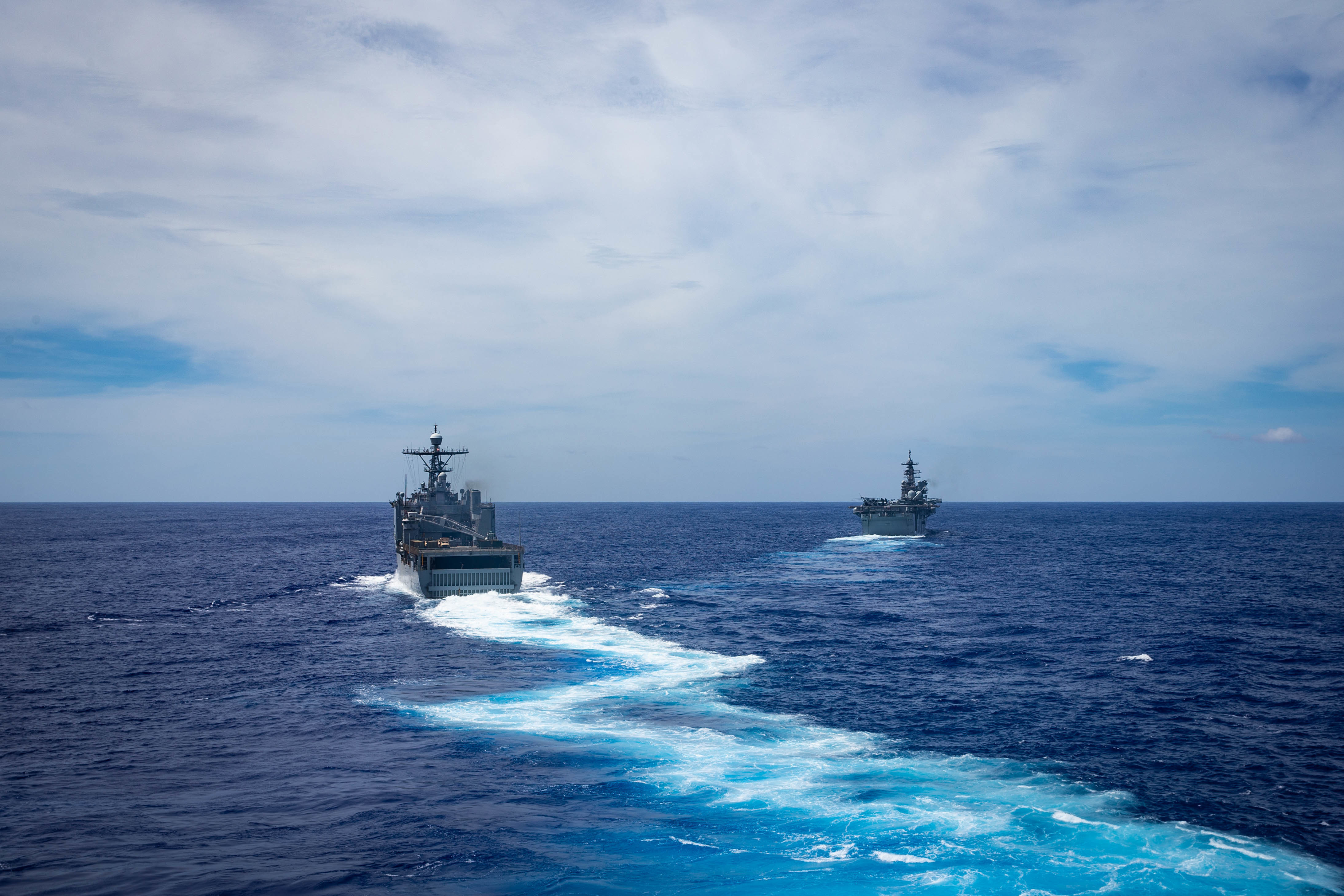
USS Germantown, left, and USS America maneuver out of a tactical formation during security and stability operations in the Philippine Sea, Aug. 25, 2020.

Vaccine Effort


Anthony Marshall removes cell starting material from liquid nitrogen storage at Walter Reed Army Institute of Research in Silver Spring, Md., Aug. 26, 2020, signifying the initiation of the institute’s vaccine material. The institute is supporting COVID-19 response efforts.

Puma Launch


Marine Corps Cpl. Andrew Abbott launches a RQ-20B Puma small unmanned aircraft system at Mount Bundey Training Area, Northern Territory, Australia, Aug. 18, 2020. The Marines are working with the Australian army’s forward observers to support fire missions with real time video feeds from the Puma.

DOD Official Outlines U.S. Nuclear Deterrence Strategy

 Sept. 2, 2020 | BY David Vergun , DOD News

There is broad, bipartisan support for the modernization of the nuclear triad, which includes bombers, intercontinental ballistic missiles, submarines and the systems that control them, a Defense Department expert said.

Robert Soofer, the deputy assistant secretary of defense for nuclear and missile defense policy, also said support is more divided for the creation of W76-2, which is a class of low-yield, tactical nuclear warhead that is different from those in the nuclear triad. An example would be a submarine-launched ballistic missile nuclear warhead.

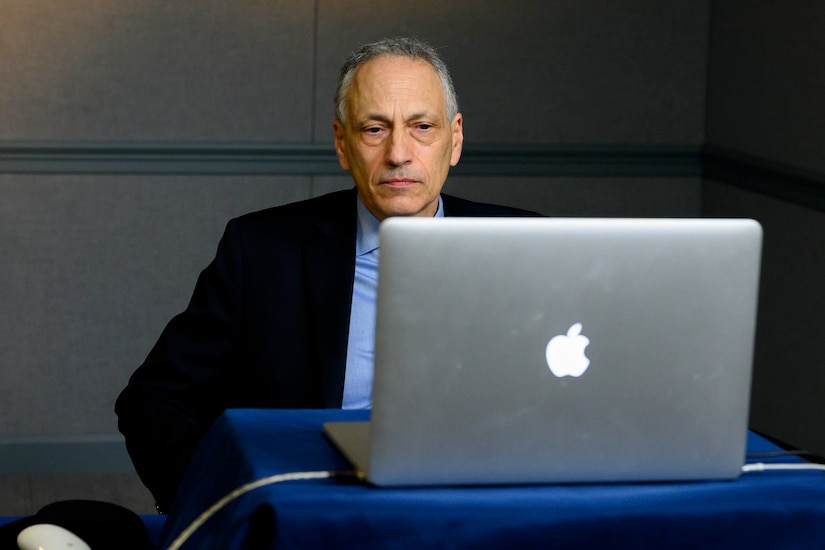
A man sits in front of a laptop.

To understand the divide over support for W76-2, one must have an understanding of the two schools of thought on the best approach to nuclear deterrence, Soofer told the Air Force Association Mitchell Institute's Nuclear Deterrence Forum today.

Each school of thought has its advocates, including members of Congress, interest groups and think tanks, he noted.

The first school of thought is known as simple nuclear deterrence, sometimes referred to as minimum deterrence. The thought is that deterrence is best achieved with a limited number of nuclear weapons that, for example, could destroy a certain number of an adversary's cities, Soofer said. The viability of the deterrence is created by an adversary's fear of uncontrolled nuclear escalation.

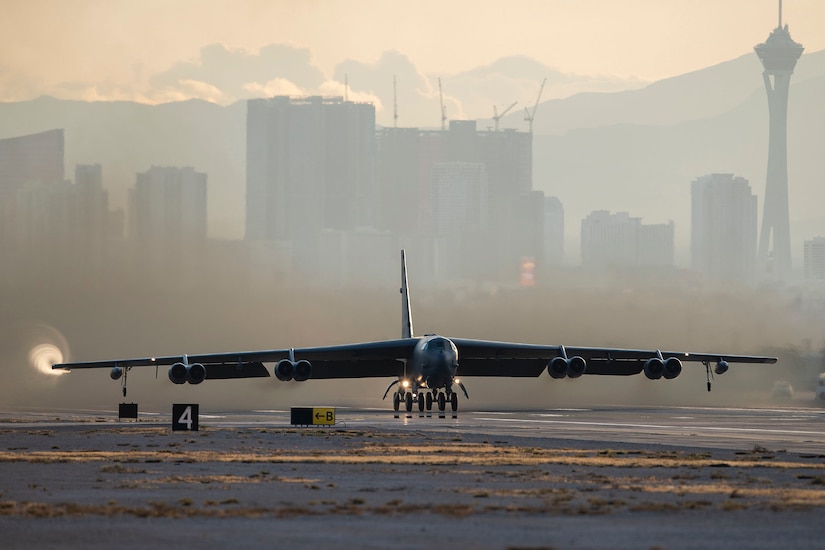
An aircraft takes off; skyscrapers can be seen in the background.

The second school of thought is known as complex nuclear deterrence. This recognizes that nuclear deterrence can be more complicated, requiring an understanding of the adversary and various scenarios that could play out, he said. This strategy also pays close attention to the nuclear balance and places a premium on ensuring the survivability of nuclear forces that can threaten the adversary. 

The complex nuclear deterrence approach has been the basis of U.S. nuclear policy since about the 1960s, and it rests on presenting the president with a number of options and capabilities — particularly in a regional conflict — that would deter Russia's nuclear use in any scenario, he said.

This is particularly important since Russia has expanded its nuclear capability, and has espoused a doctrine of limited first use, meaning the use of low-yield tactical nuclear warheads, Soofer said.

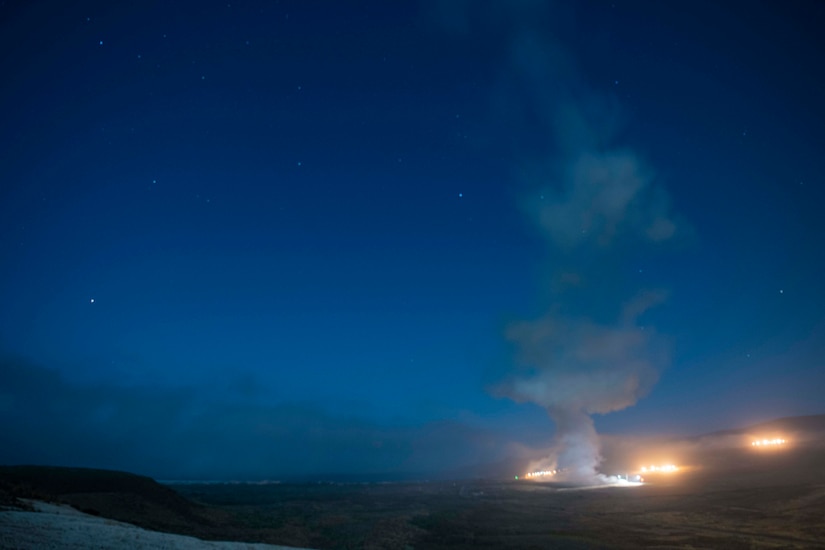
Lights and a plume of smoke can be seen against a dark sky.

Having W76-2 capability demonstrates to Russia that the U.S. has taken practical steps to ensure that adversaries can derive no benefit from even limited nuclear use, he said.

There is a very high bar that must be met before the president, who is the only one who can order the use of nuclear weapons, will contemplate the use of W76-2 warhead, or any other nuclear weapon for that matter, Soofer said.

Having a range of nuclear weapons capabilities not only deters nuclear attacks, but it also deters large-scale conventional and biological and chemical attacks and reassures allies and partners, he said.

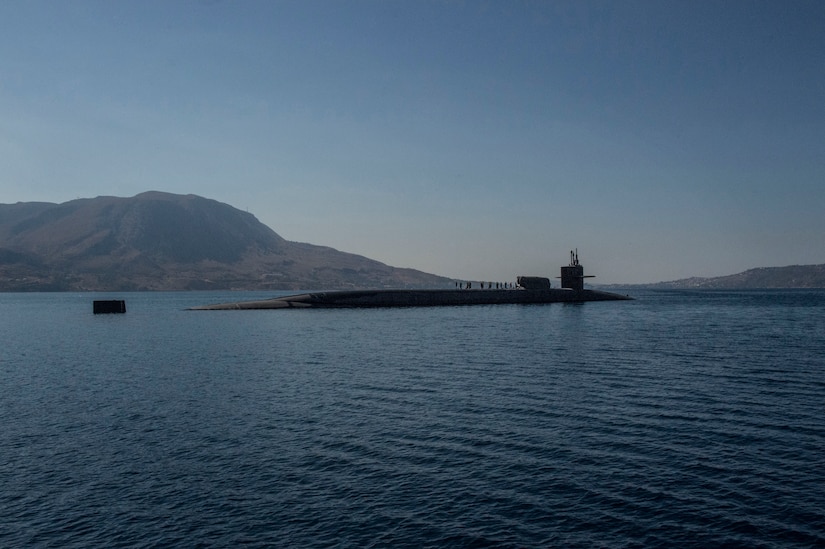
People stand atop a partially submerged submarine.

That is why the U.S. has not adopted a "no use first" policy when it comes to using nuclear weapons, he said, adding that circumstance for first use would have to be extreme, meaning to defend the vital interest of the U.S., allies and partners.

The objectives of the U.S. nuclear strategy are two-fold, he said. "First and foremost is to deter war, both conventional and nuclear; second, should nuclear deterrence fail, [is] to deter further nuclear use and hopefully bring the war to an end before the worst imaginable nuclear catastrophe unfolds."

Therefore, the U.S. nuclear strategy doesn't rely solely on massive and immediate attacks against an adversary, he said, though the U.S. maintains this capability to deter adversaries from contemplating a first strike against the United States. "Massive attacks would represent the failure of our nuclear strategy. Rather, our nuclear strategy as articulated in the [2018] Nuclear Posture Review calls for tailored deterrence with flexible capabilities, including an appropriate mix of nuclear capability and limited, graduated response options — something administrations over the last six decades have valued," Soofer said.

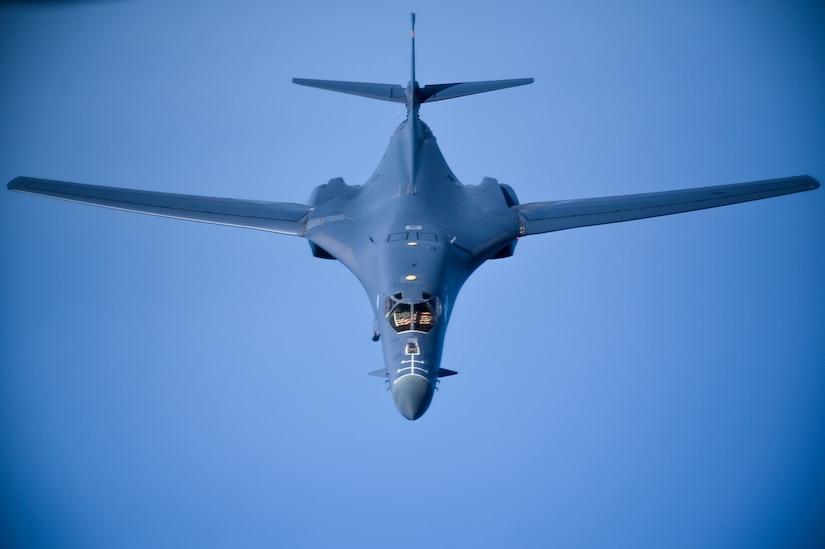
An aircraft soars in the sky.

In sum, U.S. nuclear strategy is one of resolve and restraint, he said. "Our limited use of nuclear weapons in response to a Russian or Chinese attack is intended to demonstrate resolve, convincing the adversary that it has really miscalculated when it contemplated the use of nuclear weapons."

The strategy also communicates restraint, sending a message to the adversary that it has much more to lose if it continues down the path of nuclear escalation, he said.

Navy and DoD Internships, Scholarships, and Fellowships

Below are some great opportunities for high school students through those working on their doctorate, also to include faculty.  Please share this info, and don’t hesitate to contact me if you have any questions.

The following  Navy and DoD Internships, Scholarships, and Fellowships have application portals already open or that will be opening on September 1, 2020!     

The Naval Research Enterprise Internship Program (NREIP) is a 10-week paid undergraduate and graduate research internship opportunity at one of nearly 30 naval laboratories or warfare centers. Accepted students gain real-world, hands-on experience and research skills while being introduced to the Navy and Marine Corps science and technology environment. Please refer to the program website listed below for additional information, including details about potential stipends and benefits.  https://nreip.asee.org/   (application portal open 1 Sep – 30 Nov)

The Science, Mathematics and Research for Transformation  (SMART) program is a scholarship for service program is an opportunity for students pursuing an undergraduate or graduate degree in STEM disciplines to receive a full scholarship and be gainfully employed upon degree completion. Please refer to the program website listed below for additional information, including details about potential stipends and benefits. 

https://www.smartscholarship.org   (application portal open NOW- 1 Dec)

The National Defense Science and Engineering Graduate (NDSEG) program provides fellowships to support study and research leading to doctoral degrees in science and technical areas. NDSEG confers high honors upon its recipients, and allows them to attend whichever U.S. institution they choose. Please refer to the program website listed below for additional information, including details about potential stipends and benefits.

https://ndseg.sysplus.com   (application portal open NOW – 2 Nov)

For High School students, we have an 8-week paid summer internship for them!  The Science Engineering Apprenticeship Program (SEAP) is an 8-week high school apprenticeship opportunity at one of nearly 25 naval laboratories or warfare centers. Accepted students gain real-world, hands-on experience and research skills while being introduced to the Navy and Marine Corps science and technology environment. Please refer to the program website listed below for additional information, including details about potential stipends and benefits.

https://seap.asee.org/  (application portal open 1 Sep – 30 Nov)

If you know any College/University Faculty, the Office of Naval Research has Faculty Programs!   

n  The Sabbatical Leave Program (SLP) provides an opportunity for faculty to participate in naval-relevant research at a DoN laboratory or warfare center during the academic school year

n  The Summer Faculty Research Program (SFRP) provides an opportunity for faculty to participate in research at a DoN laboratory or warfare center from May through August

https://www.onr.navy.mil/en/Education-Outreach/faculty   (application portal open 1 Sep – 10 Dec)


Secretary of Defense Remarks for the Commemoration of the 75th Anniversary of the End of World War II

 Sept. 2, 2020


AS PREPARED 

Aloha everyone, and thank you for joining us on this special day. Thank you, Admiral Davidson, for that kind introduction, and thank you to Governor Ige for the warm welcome and hospitality. It is my great honor to be on the deck of this historic ship as we commemorate the 75th anniversary of the end of World War II, and reflect on the sacrifices and victories of our Service members and allies who helped fight for – and secure – peace.

I would like to extend a very special welcome to the members of the Greatest Generation here with us this morning, whose remarkable stories of courage and heroism are forever etched into our Nation’s heart and history. It is because of your selfless service and sacrifice that we live in peace and prosperity today. And it is your legacy that inspires us in our efforts to uphold the freedoms and values for which you so nobly fought. Thank you! 

It is fitting that we are gathered here on the USS Missouri, where the conflict in the Pacific came to an end on this day, in 1945. This ship, which was built for war, has since been dedicated to peace and reconciliation. It now rests in the very harbor where more than 2,400 Americans paid the ultimate price nearly eight decades ago, at the beginning of World War II. This morning, we pay tribute to all those we lost on that infamous date in 1941, and to the millions more who demonstrated our collective resolve and commitment to freedom in the years of war and hardship that followed.

We remember heroes like Floyd Welch, an electrician’s mate, who helped save the lives of more than 30 sailors trapped in the sinking USS Oklahoma. With pinpoint precision, he cut holes in the ship’s hull, freeing the sailors without igniting fuel cells. 

And, we honor sailors like Mess Attendant Dorie Miller – the namesake of the Navy’s newest aircraft carrier. Miller assisted his mortally wounded Captain aboard the USS West Virginia, then manned an anti-aircraft gun, with no formal training, to blunt the onslaught of enemy fighters and bombers. 

Since then, the memory of these men and those we lost in the attack on December 7th has served as an eternal reminder of the consequences of war – the human toll and tragedy – the debt paid in freedom’s name, and the imperative of remaining ever vigilant.

Throughout the war, millions of our countrymen answered the Nation’s call with great courage and selflessness. Americans of all faiths, races, and ethnicities; from all walks of life and vocation, rich to poor; and from all corners of the country, from cities to suburbs to farms – they left behind their loved ones, men and women alike, to sail across oceans and join allies in a desperate fight for liberty. 

From the deserts of Tunisia, to the islands of Midway; and from the beaches of Normandy, to the hills of Iwo Jima, these intrepid patriots stood arm-in-arm, and shoulder to shoulder, with our allies, determined to achieve total victory no matter how long it took.

Meanwhile, on the home front, millions of other Americans served as civil defense volunteers, learning essential skills such as first-aid, air defense, and firefighting. Many more bought war bonds, rationed consumer goods, and recycled scarce materials. 

Entrepreneurs, innovators, and production workers transformed assembly lines and industrial plants into the arsenal of democracy, ensuring military production kept pace with the needs of our Soldiers, Sailors, Airmen, Marines, and Coast Guardsmen. And, most importantly, though often separated by great distances and different challenges, the American people forged an unbreakable commitment to the cause of liberty, one that lives on to this day.

World War II was an inflection point in the history of our great nation – and for humanity writ large. The global fight against tyranny and oppression cost more than 70 million lives and caused unimaginable loss for the United States and our allies. Virtually no household was left untouched by the scale or scope of its wanton destruction.

The human toll of the deadliest conflict in history led to the creation of a new world out of the rubble of the old, one that began with Imperial Japan’s surrender on this ship, 75 years ago. The war fundamentally altered the global balance of power and reshaped the international order into one led by like-minded nations, grounded in common purpose and shared values that prepared them well for a decades-long struggle against Soviet communism that would soon follow. 

In the aftermath of World War II, the United States assumed the mantle and responsibility of leadership, recognizing that the Atlantic and Pacific Oceans would no longer protect us from conflicts started abroad; from ideologies with hegemonic ambitions; or from governments with malign intentions. It was America’s time to lead, and we did so guided by our founding principles and core values.

The United States rose to that challenge. We built relationships with like-minded nations based on reciprocal trade, not predatory economics; based on respect for the sovereignty of all countries, not a strategy of “might makes right”; based on a commitment to always honoring our international obligations, not just when they serve our interests; and most importantly, based on our enduring values and beliefs.

The result was today’s international rules-based order that has provided security, prosperity, and stability to billions of people around the world for well over a half century. It set new standards and protocols when it comes to matters of trade and diplomacy; it raised the bar when it comes to human rights and individual freedoms; and it created new expectations regarding the use of force and the way countries should treat one another.

Today, in the face of new challenges to this free and open order, we are working to build an even broader coalition of partners – one that includes both longtime friends and former adversaries – to protect the hard-fought gains of generations past and present…especially in the Pacific. We share an important goal – defending the sacred principles that benefit us all: democracy, liberty, sovereignty, human rights, mutual respect, and the rule of law. 

To do so, we continue to forge new partnerships and strengthen our existing ones across this region – from our alliances with Japan, South Korea, and Australia, to our long collaboration with ASEAN countries, India, New Zealand, and the Pacific Islands. Growing, deepening, and unifying this network must remain central to our collective strategy to ensure peace and prosperity for another 75 years and beyond. We welcome every nation – especially those that have benefited the most from today’s international system – to join us in this effort. 

For decades, the United States and our partners have based our efforts on the belief that today’s free and open order, however imperfect, is worth fighting for. And while this system has largely remained intact, we cannot take it for granted or leave its future up to chance. That is why, together, we are committed to improving it and remain ready to defend it – much like the Greatest Generation did when history called and fate challenged them.

Seventy-five years ago today, the great American naval hero Admiral Chester Nimitz sent a message to the Pacific Fleet regarding the end of the war. He reflected on the heavy cost of victory, and our “solemn obligation” to the fallen, which was, in his words, quote: “The obligation to ensure that their sacrifice will help to make this a better and safer world in which to live.” 

Our work today continues in this spirit. As we look to the path ahead, we honor the legacy of those who came before us, and recommit ourselves to defending today’s international rules and norms so that the world is safer and better for generations yet to come. 

This means embracing the importance of what President Ronald Reagan called “peace through strength,” and building a military and alliance structure to match that imperative. 

The United States’ commitment to the world today is the same one we made to the freedom-loving people of the world in 1941: that we will remain ready to fight any foe and defend any friend; and, that we will safeguard our values and all that we hold dear, at every turn, in any place. We will not back down, and we will not yield. Freedom is far too precious to do otherwise; and the sacrifice of those who came before us, far too great.

Ladies and Gentlemen, thank you once again for commemorating this historic anniversary with us today. May God bless the members of the Greatest Generation, and all of our veterans, Service members, and allies across the globe. 

And, may God bless the United States of America.

Thank you.

School Delivery


Soldiers deliver personal protective equipment to schools across Montana, Aug. 31, 2020, as part of COVID-19 response efforts.