Wednesday, September 02, 2020

Navy and DoD Internships, Scholarships, and Fellowships

Below are some great opportunities for high school students through those working on their doctorate, also to include faculty.  Please share this info, and don’t hesitate to contact me if you have any questions.

The following  Navy and DoD Internships, Scholarships, and Fellowships have application portals already open or that will be opening on September 1, 2020!     

The Naval Research Enterprise Internship Program (NREIP) is a 10-week paid undergraduate and graduate research internship opportunity at one of nearly 30 naval laboratories or warfare centers. Accepted students gain real-world, hands-on experience and research skills while being introduced to the Navy and Marine Corps science and technology environment. Please refer to the program website listed below for additional information, including details about potential stipends and benefits.  https://nreip.asee.org/   (application portal open 1 Sep – 30 Nov)

The Science, Mathematics and Research for Transformation  (SMART) program is a scholarship for service program is an opportunity for students pursuing an undergraduate or graduate degree in STEM disciplines to receive a full scholarship and be gainfully employed upon degree completion. Please refer to the program website listed below for additional information, including details about potential stipends and benefits. 

https://www.smartscholarship.org   (application portal open NOW- 1 Dec)

The National Defense Science and Engineering Graduate (NDSEG) program provides fellowships to support study and research leading to doctoral degrees in science and technical areas. NDSEG confers high honors upon its recipients, and allows them to attend whichever U.S. institution they choose. Please refer to the program website listed below for additional information, including details about potential stipends and benefits.

https://ndseg.sysplus.com   (application portal open NOW – 2 Nov)

For High School students, we have an 8-week paid summer internship for them!  The Science Engineering Apprenticeship Program (SEAP) is an 8-week high school apprenticeship opportunity at one of nearly 25 naval laboratories or warfare centers. Accepted students gain real-world, hands-on experience and research skills while being introduced to the Navy and Marine Corps science and technology environment. Please refer to the program website listed below for additional information, including details about potential stipends and benefits.

https://seap.asee.org/  (application portal open 1 Sep – 30 Nov)

If you know any College/University Faculty, the Office of Naval Research has Faculty Programs!   

n  The Sabbatical Leave Program (SLP) provides an opportunity for faculty to participate in naval-relevant research at a DoN laboratory or warfare center during the academic school year

n  The Summer Faculty Research Program (SFRP) provides an opportunity for faculty to participate in research at a DoN laboratory or warfare center from May through August

https://www.onr.navy.mil/en/Education-Outreach/faculty   (application portal open 1 Sep – 10 Dec)


Secretary of Defense Remarks for the Commemoration of the 75th Anniversary of the End of World War II

 Sept. 2, 2020


AS PREPARED 

Aloha everyone, and thank you for joining us on this special day. Thank you, Admiral Davidson, for that kind introduction, and thank you to Governor Ige for the warm welcome and hospitality. It is my great honor to be on the deck of this historic ship as we commemorate the 75th anniversary of the end of World War II, and reflect on the sacrifices and victories of our Service members and allies who helped fight for – and secure – peace.

I would like to extend a very special welcome to the members of the Greatest Generation here with us this morning, whose remarkable stories of courage and heroism are forever etched into our Nation’s heart and history. It is because of your selfless service and sacrifice that we live in peace and prosperity today. And it is your legacy that inspires us in our efforts to uphold the freedoms and values for which you so nobly fought. Thank you! 

It is fitting that we are gathered here on the USS Missouri, where the conflict in the Pacific came to an end on this day, in 1945. This ship, which was built for war, has since been dedicated to peace and reconciliation. It now rests in the very harbor where more than 2,400 Americans paid the ultimate price nearly eight decades ago, at the beginning of World War II. This morning, we pay tribute to all those we lost on that infamous date in 1941, and to the millions more who demonstrated our collective resolve and commitment to freedom in the years of war and hardship that followed.

We remember heroes like Floyd Welch, an electrician’s mate, who helped save the lives of more than 30 sailors trapped in the sinking USS Oklahoma. With pinpoint precision, he cut holes in the ship’s hull, freeing the sailors without igniting fuel cells. 

And, we honor sailors like Mess Attendant Dorie Miller – the namesake of the Navy’s newest aircraft carrier. Miller assisted his mortally wounded Captain aboard the USS West Virginia, then manned an anti-aircraft gun, with no formal training, to blunt the onslaught of enemy fighters and bombers. 

Since then, the memory of these men and those we lost in the attack on December 7th has served as an eternal reminder of the consequences of war – the human toll and tragedy – the debt paid in freedom’s name, and the imperative of remaining ever vigilant.

Throughout the war, millions of our countrymen answered the Nation’s call with great courage and selflessness. Americans of all faiths, races, and ethnicities; from all walks of life and vocation, rich to poor; and from all corners of the country, from cities to suburbs to farms – they left behind their loved ones, men and women alike, to sail across oceans and join allies in a desperate fight for liberty. 

From the deserts of Tunisia, to the islands of Midway; and from the beaches of Normandy, to the hills of Iwo Jima, these intrepid patriots stood arm-in-arm, and shoulder to shoulder, with our allies, determined to achieve total victory no matter how long it took.

Meanwhile, on the home front, millions of other Americans served as civil defense volunteers, learning essential skills such as first-aid, air defense, and firefighting. Many more bought war bonds, rationed consumer goods, and recycled scarce materials. 

Entrepreneurs, innovators, and production workers transformed assembly lines and industrial plants into the arsenal of democracy, ensuring military production kept pace with the needs of our Soldiers, Sailors, Airmen, Marines, and Coast Guardsmen. And, most importantly, though often separated by great distances and different challenges, the American people forged an unbreakable commitment to the cause of liberty, one that lives on to this day.

World War II was an inflection point in the history of our great nation – and for humanity writ large. The global fight against tyranny and oppression cost more than 70 million lives and caused unimaginable loss for the United States and our allies. Virtually no household was left untouched by the scale or scope of its wanton destruction.

The human toll of the deadliest conflict in history led to the creation of a new world out of the rubble of the old, one that began with Imperial Japan’s surrender on this ship, 75 years ago. The war fundamentally altered the global balance of power and reshaped the international order into one led by like-minded nations, grounded in common purpose and shared values that prepared them well for a decades-long struggle against Soviet communism that would soon follow. 

In the aftermath of World War II, the United States assumed the mantle and responsibility of leadership, recognizing that the Atlantic and Pacific Oceans would no longer protect us from conflicts started abroad; from ideologies with hegemonic ambitions; or from governments with malign intentions. It was America’s time to lead, and we did so guided by our founding principles and core values.

The United States rose to that challenge. We built relationships with like-minded nations based on reciprocal trade, not predatory economics; based on respect for the sovereignty of all countries, not a strategy of “might makes right”; based on a commitment to always honoring our international obligations, not just when they serve our interests; and most importantly, based on our enduring values and beliefs.

The result was today’s international rules-based order that has provided security, prosperity, and stability to billions of people around the world for well over a half century. It set new standards and protocols when it comes to matters of trade and diplomacy; it raised the bar when it comes to human rights and individual freedoms; and it created new expectations regarding the use of force and the way countries should treat one another.

Today, in the face of new challenges to this free and open order, we are working to build an even broader coalition of partners – one that includes both longtime friends and former adversaries – to protect the hard-fought gains of generations past and present…especially in the Pacific. We share an important goal – defending the sacred principles that benefit us all: democracy, liberty, sovereignty, human rights, mutual respect, and the rule of law. 

To do so, we continue to forge new partnerships and strengthen our existing ones across this region – from our alliances with Japan, South Korea, and Australia, to our long collaboration with ASEAN countries, India, New Zealand, and the Pacific Islands. Growing, deepening, and unifying this network must remain central to our collective strategy to ensure peace and prosperity for another 75 years and beyond. We welcome every nation – especially those that have benefited the most from today’s international system – to join us in this effort. 

For decades, the United States and our partners have based our efforts on the belief that today’s free and open order, however imperfect, is worth fighting for. And while this system has largely remained intact, we cannot take it for granted or leave its future up to chance. That is why, together, we are committed to improving it and remain ready to defend it – much like the Greatest Generation did when history called and fate challenged them.

Seventy-five years ago today, the great American naval hero Admiral Chester Nimitz sent a message to the Pacific Fleet regarding the end of the war. He reflected on the heavy cost of victory, and our “solemn obligation” to the fallen, which was, in his words, quote: “The obligation to ensure that their sacrifice will help to make this a better and safer world in which to live.” 

Our work today continues in this spirit. As we look to the path ahead, we honor the legacy of those who came before us, and recommit ourselves to defending today’s international rules and norms so that the world is safer and better for generations yet to come. 

This means embracing the importance of what President Ronald Reagan called “peace through strength,” and building a military and alliance structure to match that imperative. 

The United States’ commitment to the world today is the same one we made to the freedom-loving people of the world in 1941: that we will remain ready to fight any foe and defend any friend; and, that we will safeguard our values and all that we hold dear, at every turn, in any place. We will not back down, and we will not yield. Freedom is far too precious to do otherwise; and the sacrifice of those who came before us, far too great.

Ladies and Gentlemen, thank you once again for commemorating this historic anniversary with us today. May God bless the members of the Greatest Generation, and all of our veterans, Service members, and allies across the globe. 

And, may God bless the United States of America.

Thank you.

School Delivery


Soldiers deliver personal protective equipment to schools across Montana, Aug. 31, 2020, as part of COVID-19 response efforts.

China Pursues Own Nuclear Triad, Doubling of Nuclear Capability

 Sept. 1, 2020 | BY C. Todd Lopez , DOD News

Over the next 10 years, it's expected China will double the number of nuclear warheads it possesses, while embarking on an effort to expand the ways it can deploy its nuclear capability, Deputy Assistant Secretary of Defense for China Chad L. Sbragia said at the American Enterprise Institute.

He discussed findings of a just-released Defense Department report, "Military and Security Developments Involving the People's Republic of China -- 2020."

"The report does contend that there are currently an estimated low-200s in terms of warhead stockpiles, and it's projected to at least double in size over the next decade as China expands and modernizes its nuclear forces," Sbragia said.

But equally as important is how China would be able to deliver those warheads. It intends to develop a "nuclear triad" similar to the one the U.S. has and is currently working to modernize.

"The report [also] notes that China is expanding, modernizing and diversifying its nuclear forces across the board," Sbragia said. "Just looking at the number of warheads by itself is not the entire picture, or doesn't paint a holistic understanding of where the Chinese are or where they want to go.

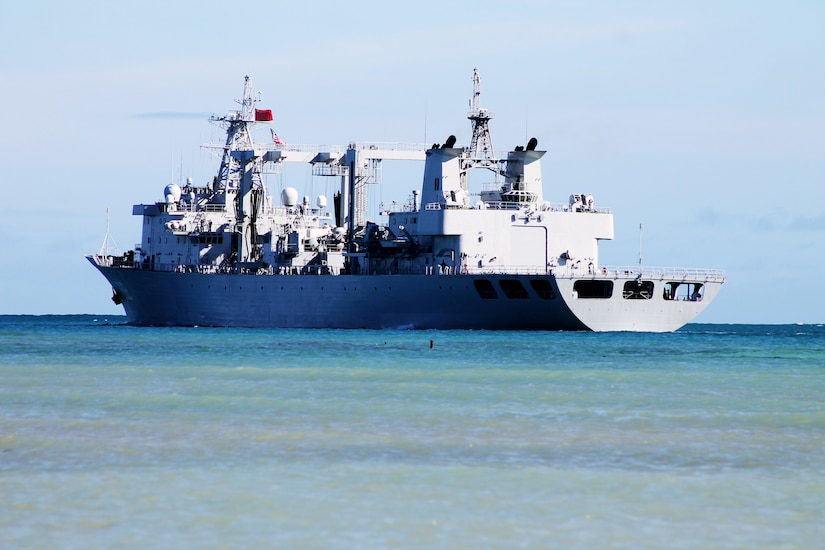
A large military vessel moves through the ocean.

A nuclear triad, as it exists in the U.S., allows for land-based missile delivery, sea-based delivery from submarines and air-based delivery with bombers.

Within the next decade, Sbragia said, China plans to expand its ballistic submarine fleet and field more capable, longer-range, sea-launched  ballistic missiles. It also plans to complete the development of its nuclear-capable, air-launched ballistic missiles along with bombers to deliver them. On the ground, he said, China plans to field additional mobile ICBMs and also possibly expand its silo-based ICBM capability.

"As has been noted by others, and then as the report contends ... they're obviously in pursuit of the full suite of capacities ... to include the building out of infrastructure for a more modernized, capable and larger capacity in this area," Sbragia said.

Sbragia said that the report also concludes that, besides its investments in nuclear capability, China aims to transform the People's Liberation Army into a "world-class military" by around 2050.

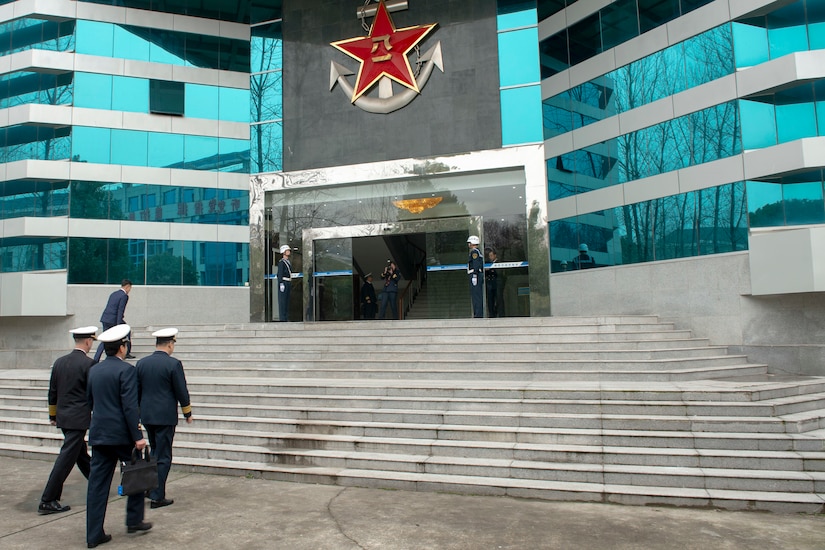
Men in military uniforms approach steps in front of a building.

"While China has not defined exactly what 'world-class military' means, it is likely that China will seek to build a military that is equal to or in some cases superior to the U.S. military or the military of any other great power that China perceives as a potential threat," Sbargia said.

One aspect of that advancement towards a world-class military, he said, is power projection. The Chinese want their military to be able to operate anywhere on the globe. One step towards that is the establishment of a more robust overseas logistics network.

According to the report, China is "very likely already considering and planning for" the establishment of military logistics facilities outside China that can support naval, air and ground forces.

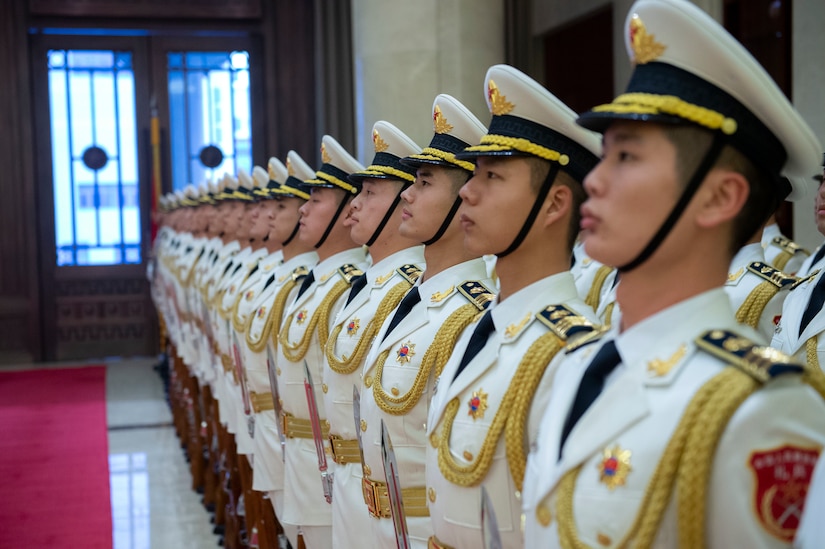
Young men in military uniforms stand shoulder-to-shoulder.

Some locations that they may now be considering include Myanmar, Thailand, Singapore, Indonesia, Pakistan, Sri Lanka, the United Arab Emirates, Kenya, the Seychelles, Tanzania, Angola and Tajikistan. China already has a military installation in Djibouti.

"The Chinese do have ... an aspiration for great power status by virtually every measure of comprehensive or composite national power that you can measure," Sbragia said. "To achieve that, it means that they have to have ... global convergence at the broadest scale possible. For the PLA, that means that they do have the intent to go out. I think that's certainly one of the aspects of what 'world-class military' means ... the capacity to have influence at distance, at a time and place of their choosing. They certainly aspire to do that.

Camp Zama Gyms, Patrons Work Together to Maintain Safety During COVID-19

 Sept. 2, 2020 | BY WINIFRED BROWN, ARMY

Personnel at Camp Zama, Japan, fitness centers and pools have implemented several measures to open facilities and help keep patrons safe from COVID-19.

As a whole, patrons have responded well to the measures put in place. They are aware of the need for precautions and are happy most facilities are open, so they have stringently followed protocols, Stefan Thompson, chief of fitness, athletics and aquatics for Camp Zama's Family and Morale, Welfare and Recreation, said.

The Army follows five health protection condition levels, and Camp Zama is currently at HPCON C.

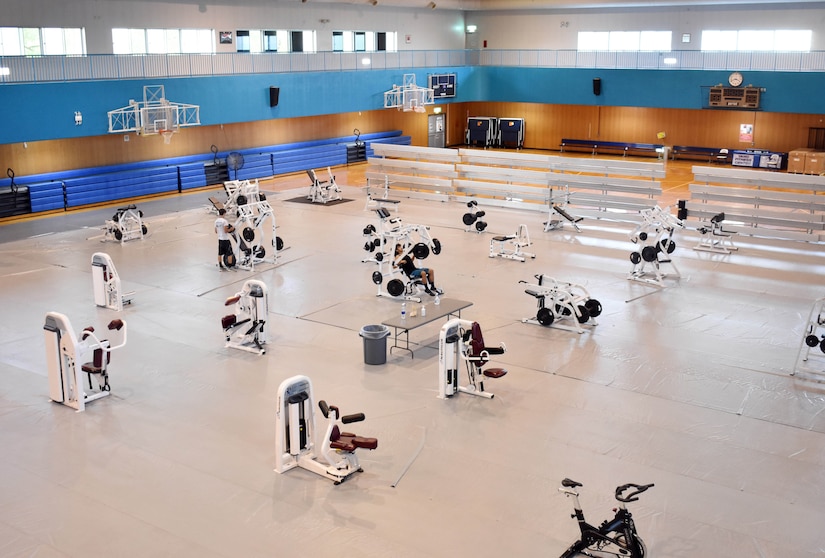
Under HPCON B and C, personnel have placed hand sanitizer and disposable towels at strategic locations throughout the facilities, provided a bleach solution approved by Public Health Activity-Japan, ventilated rooms, instituted room capacities and spaced exercise equipment to comply with social distancing measures, Thompson said.

In addition, under HPCON C, the locker rooms are closed, there are no group fitness classes and the spa and sauna areas are closed, Thompson added.

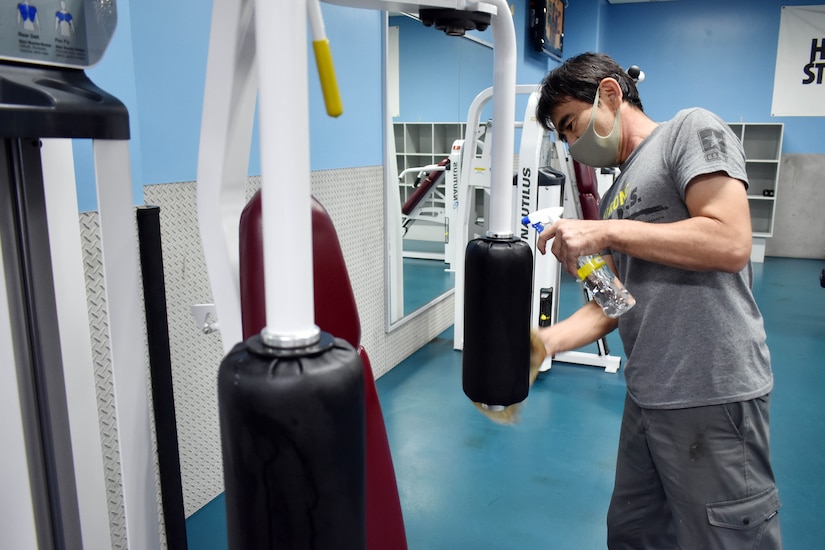
A man wearing a face mask is  cleaning exercise equipment.

Other initial considerations include reduced operating hours to limit the number of people using the facilities, Thompson said.

"The staff has been doing such a great job cleaning, customers have been very accountable, and primarily, have been following all of the rules," Thompson said. "We have our normal operating hours at this point."

At the Yano Fitness Center, about 65% of the facility's exercise equipment is in the gym with windows open and fans on to provide as much ventilation as possible, Thompson said.

"Plus it allows us to disburse the equipment with a very generous two- to three-meter distance between each machine to not breach the social-distancing mitigation," Thompson said.

At satellite facilities, such as the Sagamihara Family Housing Area Gym, personnel have made hand sanitizer and bleach solution available at all times and have placed exercise equipment with social distancing in mind, Thompson said.

Because there are no personnel on duty at the SFHA Gym, personnel depend on a community policing concept to ensure people are following the rules, Thompson said. The gym at Sagami General Depot is currently closed for construction and the relocation project is underway.

"We have signage posted at the facilities alerting [patrons] to our numbers if there's a safety breach of any kind, not just a COVID-19 protocol," Thompson said. "We highly encourage patrons to give us a call so we can get somebody on site and check out and analyze the situation."

Patrons help make the system work, Thompson said.

"If something doesn't look right, please bring it to our attention, and we'll take a look at it and see if we have to take other action," Thompson said.

Patrons should come in clean and use hand sanitizer on their way in and out to make sure their hands are clean, Thompson said.

"Also, just heed the posters," Thompson said. "They ask patrons to please disinfect equipment before and after each use, and use the hand sanitizer."

Socially distanced gym equipment.

In terms of the pools, the Yano Fitness Center pool is open with one patron per lane, lap swimming only and no group physical training formations, Aaron Messisco, aquatics manager for Camp Zama's FMWR, said.

The SFHA Pool is open, and allows up to 60 people to enter for three, two-hour waves throughout the day, Messisco said. The locker rooms and the barbecue pavilion are closed.

Thompson said that FMWR personnel consult with officials at Public Health Activity-Japan before making any decisions, every step of the way.

Also, it is especially important during the current postures that all patrons either check in electronically by scanning their ID card, or sign in when using all fitness facilities, Thompson said.

(Winifred Brown is assigned to the U.S. Army Garrison-Japan).

New York Recruiters Partner to Distribute Dairy, Produce

 Sept. 2, 2020 | BY AIR FORCE TECH. SGT. RYAN CAMPBELL , New York National Guard

Ten soldiers from the New York Army National Guard volunteered to go to Herkimer County (New York) Community College to help distribute milk and fresh produce to county residents, Aug. 26, 2020.

Recruiters who support the Herkimer region shifted their focus from recruiting new soldiers to supporting their community as a result of COVID-19 and the hardships it has brought.

County legislators were able to arrange 1,200 boxes of milk and 1,200 boxes of produce donated by the American Dairy Association North East and local farmers associations to hand out to community members in need.

"As COVID-19 has made recruiting events scarce, my team has really focused on supporting community service functions to stay in contact with our local populations and maintain a positive and visible presence," Army Sgt. 1st Class Jessica Girard, the noncommissioned officer in charge of the recruiting team, said.

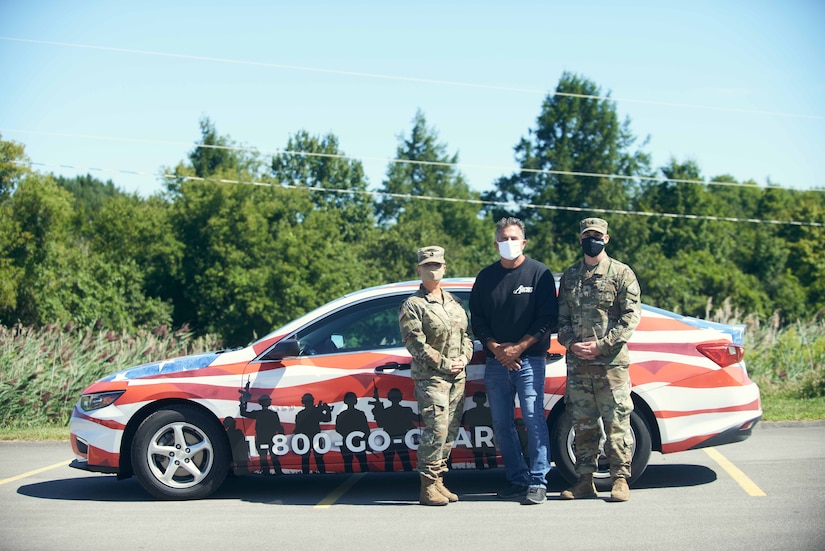
Two people in military uniforms and a civilian stand in front of a car with “1-800-Go-Guard” painted on the side.

According to Girard, this is the third time dairy and produce has been distributed in the county with the Guard taking part in the most recent two. More than 1,000 families have come through the three distribution events, she added.

"This isn't a mission that was assigned to the Army National Guard," Girard said. "This is a mission a local recruiting team volunteered for, to show up when people need help."

The roads leading to the college were lined with vehicles well before the 11 a.m. scheduled start time. Police and guardsmen along the way to directed residents where to go.

"It's just simply the right thing to do, helping out our communities," Army Sgt. Steven Ludwig, a recruiting and retention noncommissioned officer for Herkimer County, said.

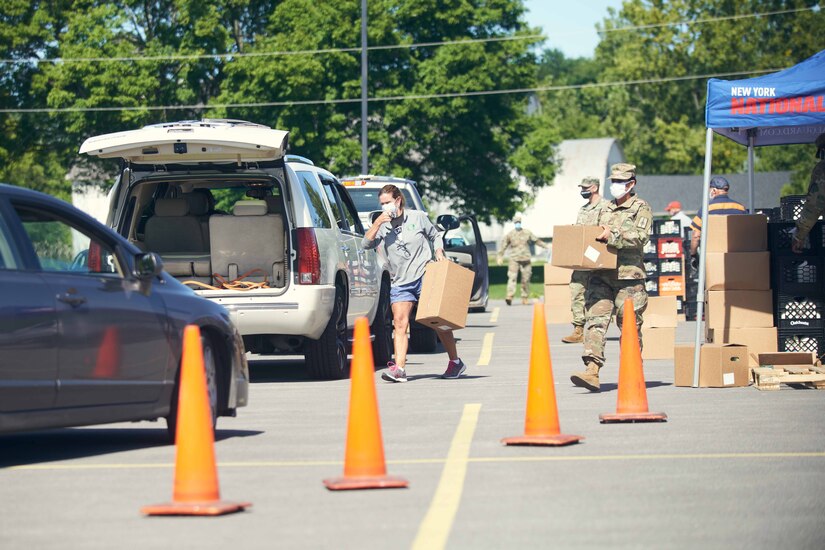
Ludwig said that by the end of the four hours the distribution site was open, 500 gallons of milk and 15,000 pounds of produce were handed out to families. They would pull up in their vehicles, and volunteers would place the items in their trunk, ensuring contactless distribution.

"As far as we know, this will go on till around October," Ludwig said. "The location will change, but as long as it's anywhere in our area, our recruiting team will come out to help."

Volunteers hand out food.

"I want to thank the National Guard from the bottom of my heart," Robert Schrader, the Herkimer County District 3 legislator, said. "I look forward to working with the National Guard each time I have one of these events. It shows people that the military is here to help and that's the biggest thing."

For the recruiters, helping to hand out food reminded them of why they joined the Guard.

"This is absolutely why I joined the National Guard as opposed to active duty or any other branch," Ludwig said.

"When I volunteered at this event... it reminded me how good people actually are," Girard said. "It was heartwarming. It reminded me while I love this job."

Tuesday, September 01, 2020

Command Senior Enlisted Leader Assignment

 Sept. 1, 2020


The Office of the Senior Enlisted Advisor to the Chairman of the Joint Chiefs of Staff (OSEAC) announced today the following assignment:

Air Force Chief Master Sgt. Daniel C. Simpson, currently assigned as the command chief master sergeant for Eighteenth Air Force (Air Mobility Command), Scott Air Force Base, Illinois, has been selected to assume responsibility from Marine Corps Sgt. Maj. Vincent C. Santiago as the command senior enlisted leader for the Defense Security Cooperation Agency, Arlington, Virginia.

Diversity, Inclusion Board Seeks Input From All DOD Personnel

 Sept. 1, 2020 | BY DAVID VERGUN , DOD News

The Department of Defense Board on Diversity and Inclusion will report to the Secretary of Defense by Dec. 15 on ways to improve diversity and inclusion leading to broader opportunities for all department personnel, and they are looking for input from all Defense Department personnel.

The board will focus on actions to enhance diversity and inclusion and drive a cultural shift to create lasting change in the Defense Department, from recruiting, career track selection and retention; to accessions, assignments, schools and promotions; to military justice and everything in between and beyond.

All Defense Department personnel are encouraged to crowdsource feedback on ideas for improving diversity and inclusion via www.milSuite.mil. The closing date for input is Oct. 16.

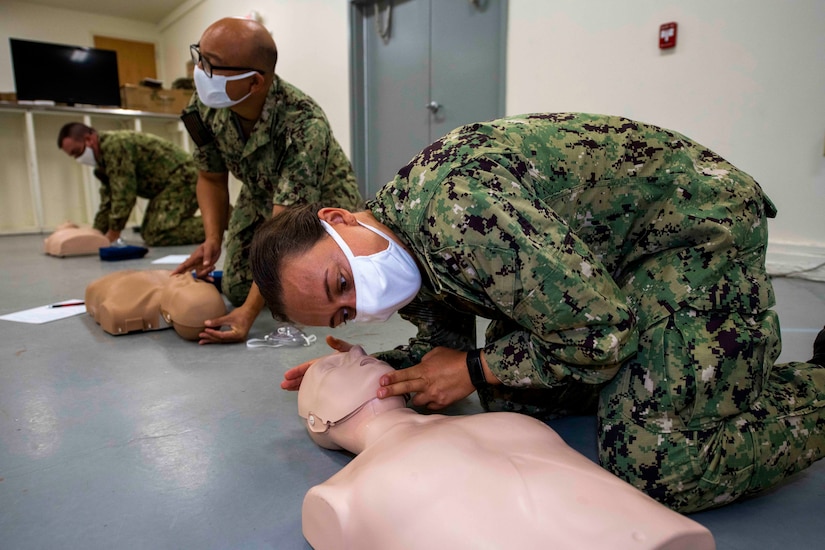
Sailors wearing masks perform CPR on mannequins.
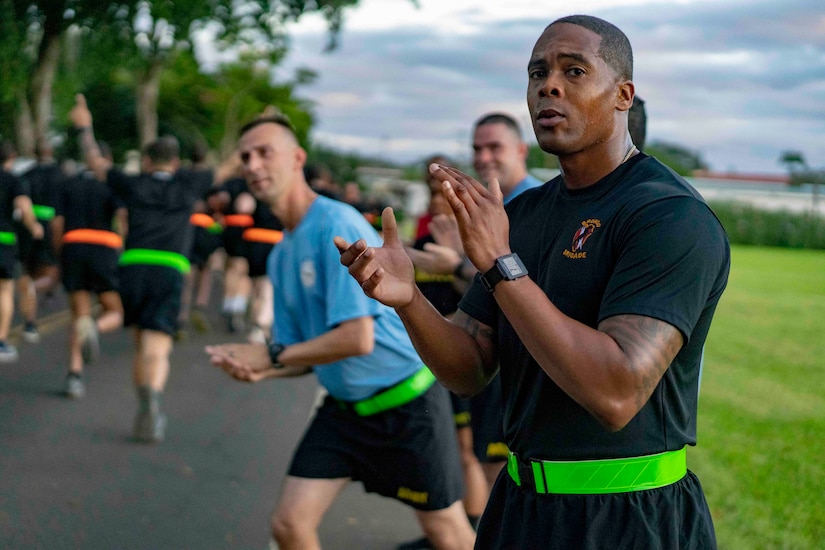
Soldiers in running clothes on the sidelines encourage runners.

"Hearing from our service members is critical in helping the Department of Defense make lasting changes to our military culture," Air Force Brig. Gen. Troy E. Dunn, the board's senior military member, said. "All members of the Department of Defense are invited to join this important conversation. Since solutions will not come from the Pentagon alone, we offer the milSuite link to seek your feedback through open and honest dialogue on diversity and inclusion."

There are four focal points of actions the board is taking:

1
Evaluating all military policies, programs and processes;
2
Surveying best practices of industry, academia and other non-DOD organizations;
3
Reviewing the scientific literature, past studies and reports, including recommendations on actions the department can take to improve diversity and inclusion; and
4
Generating actionable items and policies to improve diversity and inclusion.
There are six recommendations the board will provide to the Secretary of Defense:

1
Strengthening both community engagement and the narrative about military service opportunities during recruiting to attract more diverse candidates;
2
Retaining minorities beyond initial service commitment and into leadership ranks;
3
Addressing barriers confronted by minorities in the workplace;
4
Improving advancement opportunities, promotion boards, command selection, professional military education and assignments;
5
Addressing command and organizational climate issues that may negatively impact the retention of minorities; and
6
Promoting inclusion of minorities in military culture and strengthening aspects of individual and cultural identities such as hair and shaving standards and dress.
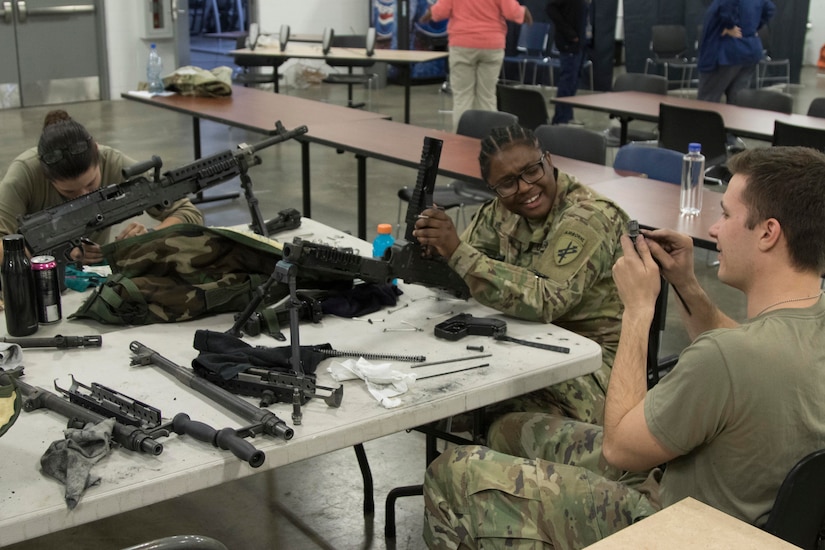
Three people in uniforms clean weapons.
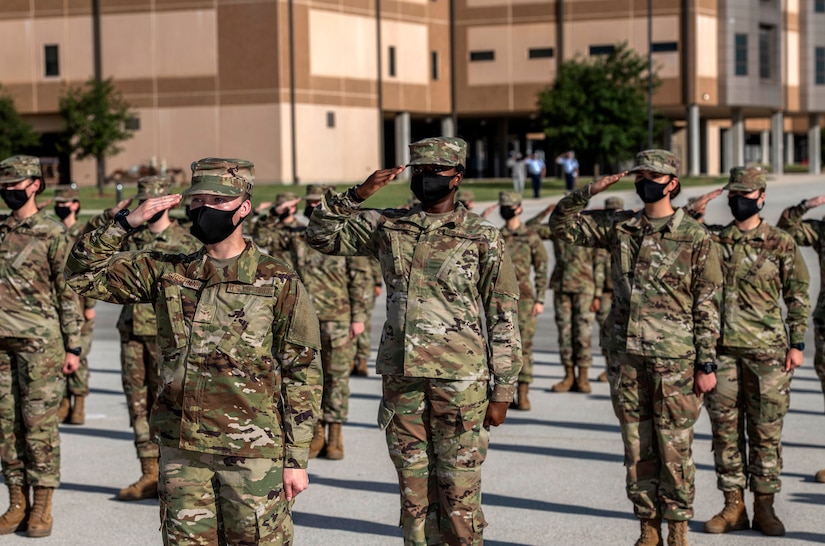
Air Force recruits in uniform and in formation salute.

The success of the board will be determined by improvements to policies, programs and processes that achieve broader diversity and inclusion.

The Secretary of the Air Force serves as board chair, supported by the senior enlisted advisor to the Chairman of the Joint Chiefs of Staff. 

Hurricane Cleanup


Members of the Louisiana National Guard clear roads in Lake Charles, La., Aug. 27, 2020, after Hurricane Laura made landfall in the southwestern part of the state.

Guard Performs COVID-19 Tests for Mission Critical Personnel

Sept. 1, 2020 | BY Air Force Lt. Col. Jim St. Clair

Due to an innovative partnership with Lexington Medical Center, airmen with the 169th Fighter Wing, South Carolina Air National Guard, are being rapidly tested for COVID-19 to ensure critical missions can continue uninterrupted.

"It started with an idea. Just sitting down one day and saying 'Hey, why can't we do this?'" said Air Force Master Sgt. James Bosley.

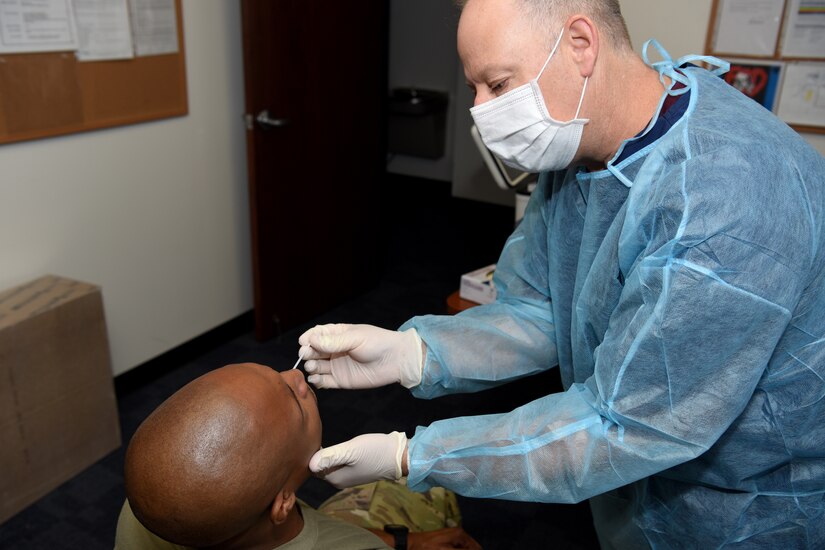
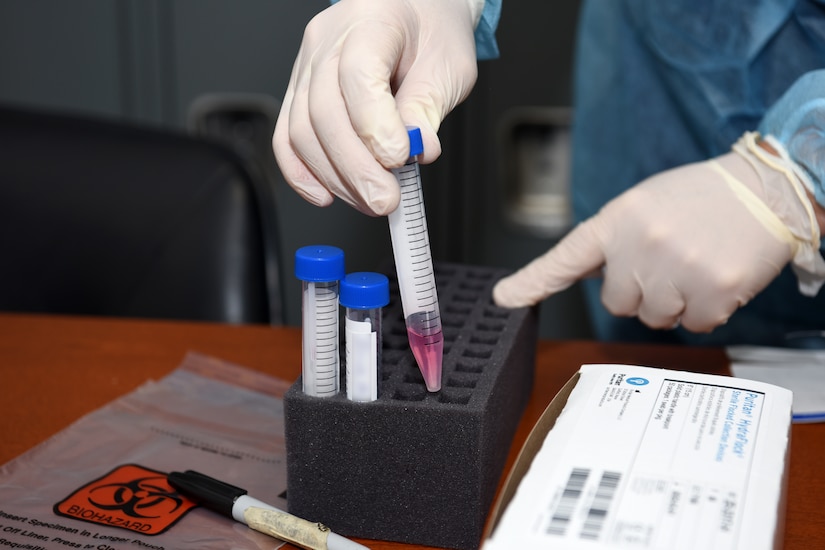
An airman wearing a face mask tests another airman for COVID-19.

Thanks to Bosley's civilian expertise, he was able to facilitate getting personnel returning from deployment tested and personnel assigned to the Aerospace Control Alert trained unit at McEntire Joint National Guard Base, South Carolina, tested.

Bosley works as a microbiology and molecular supervisor for Lexington Medical Center in Lexington, South Carolina, during the week. On drill weekends, he is the 169th Fighter Wing Drug Demand Reduction program manager with the 169th Medical Group.

When Air Force Col. Akshai Gandhi, 169th Fighter Wing commander, wanted to start testing mission critical personnel on base, 169th Fighter Wing Public Health reached out to Bosley because of his connections with a company that manufactures rapid COVID-19 tests.

"I realized that I could be doing this testing," Bosley said. "I could do it at my hospital. I went to my administration [at Lexington Medical Center] and said 'Here's the deal, we need to do COVID testing for our patients, but we also need to do it for the military.'"

Right now only returning deployers and Aerospace Control Alert assigned airmen are being tested weekly.

An airman wearing a face mask tests another airman for COVID-19.

Bosley performs testing twice a week along with Army and Air National Guard medical personnel who assist with sample collections. The medical personnel are provided by Air Force Col. (Dr.) Philip Latham's, SCANG state air surgeon, Medical Strike Team. The Medical Strike Team is an Army and Air National Guard medical collaboration that links Army National Guard medics with Air National Guard aerospace medical technicians. The Medical Strike Team has been performing COVID-19 testing across South Carolina at community testing sites, correctional facilities and other locations since May.

Bosley has the testing procedure down to a science.

"I show up, and the people who will be tested are waiting for me," Bosley said. "I [put on] the proper PPE, put the gloves on and then do the nasopharyngeal swab. Then I have a tube of vial transport media, in Hank’s solution that I break the swab into. [Hank's] is a media that supports the growth of viruses and keeps them healthy until I get back to work."

It only takes two hours to get the results back. Bosley said the testing might be ramped up later to include other critical personnel on base.

(Air Force Lt. Col. Jim St. Clair is assigned to the South Carolina National Guard)

COVID-19 Patients Can Give Back

 Sept. 1, 2020 | BY AIR FORCE AIRMAN 1ST CLASS MELODY BORDEAUX

With the flu season fast approaching and no approved vaccine developed for COVID-19, supplies of life-saving measures such as blood and plasma are being put under strain.

To help hold back the tide, the Defense Department has established a goal of obtaining 10,000 units of donated COVID-19 convalescent plasma, or CCP, by Sept. 30, 2020, to combat the potential rise in cases.

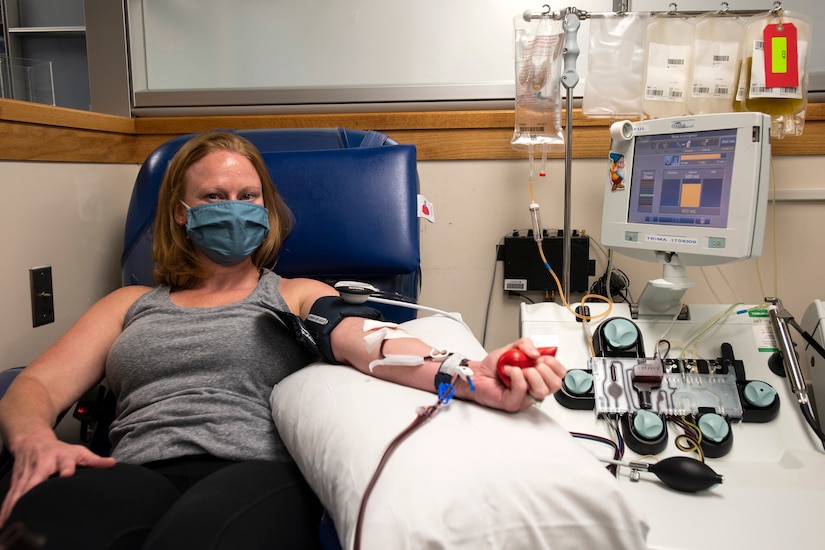
A patient donates blood.

A patient that has recovered from COVID-19 can donate within two to three weeks after recovery. Within this time frame, recovered patients have a concentrated group of antibodies that can help critically ill patients not producing enough antibodies on their own. Donating CCP allows doctors to treat other infections caused by the virus, such as pneumonia, while the antibodies strengthen the patient's immune system and fight against COVID-19.

All service members and DOD civilians that meet these conditions can help donate to the Armed Services Blood Bank Center. Each donation could save as many as three lives.

''Do for somebody what they can't do for themselves,'' said Air Force Staff Sgt. Kiersten Zardee, Armed Services Blood Bank Center noncommissioned officer in charge of aphaeresis operations. ''Giving antibodies saves lives.''

Even if a donor can't give plasma, they can still donate blood and support the everyday mission to provide blood products directly to military beneficiaries worldwide.

''Blood donated on military installations directly supports military beneficiaries and warfighters,'' said Air Force Maj. Sherry McWaters, director of the Armed Services Blood Bank Center. ''We really are asking [donors] to choose us right now, to come on to the base, because we are limited to only doing collections on federal property.''

While the prospect of donating plasma may seem daunting, especially in the uncertain world we now find ourselves in, the team at the Armed Services Blood Bank Center is happy to guide potential donors through the process.

''It's a scary time, there are a lot of things that we don't know, people have a lot of unanswered questions, but if you are nervous to donate just give us a call,'' reassured Air Force Lt. Col. Jeff Wisneski, commander of the 59th Medical Diagnostics and Therapeutics Squadron. ''We'll answer questions that you have so that you're not scared and that you're not nervous because at the end of the day we will find an answer.''

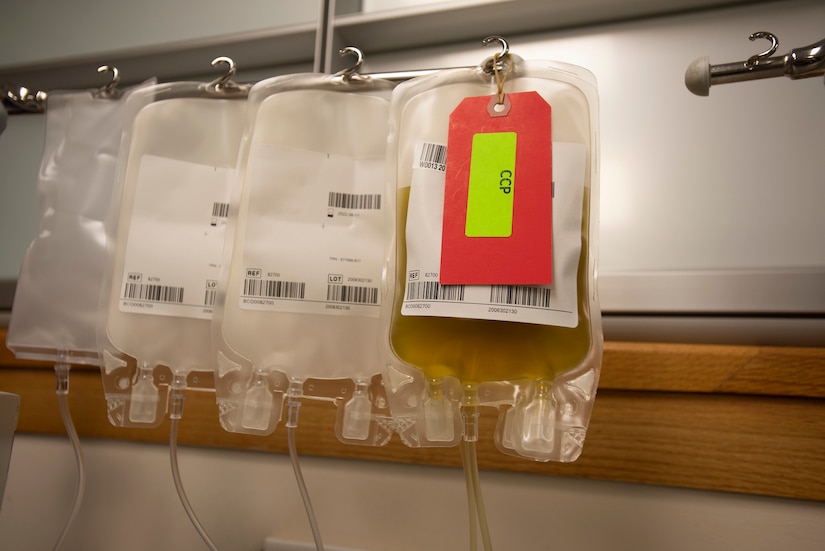
Plasma collection bags hang on a wall.

Once a patient comes in for a screening they will receive a $25 incentive and staff will determine if the recovered patient has the right amount of antibodies to donate. This incentive is only available until Sept. 30, 2020.

Even if a patient does not qualify to donate CCP, they will still receive the gift card and can still donate blood to support mission readiness, military beneficiaries and military treatment facilities around the world.

The process to donate CCP takes about 45 minutes to an hour, and they provide patients with snacks, a movie, seat warmer, pillow and blankets to relax.

When a patient donates, the automated blood collection machine separates the plasma from the blood cells and then returns the red blood cells rich in oxygen  to the patient, significantly reducing fatigue while still providing the most plasma, and antibodies, possible.

Many people have been affected by COVID-19 either personally or through the experience of their loved ones. Those who recover have the opportunity to help save someone else's life.

''Our donor center values the success of this CCP mission,'' McWaters said. ''We truly appreciate everyone who has and who will schedule an appointment to help our nation overcome this pandemic.''

(Air Force Airman 1st Class Melody Bordeaux is assigned to the 59th Medical Wing).

DOD Releases 2020 Report on Military and Security Developments Involving the People's Republic of China

 Sept. 1, 2020


The Department of Defense announces the release of its annual report on "Military and Security Developments Involving the People’s Republic of China." The congressionally mandated report serves as an authoritative assessment on military and security developments involving the PRC. 

This year's report highlights the links between China's national strategy and developments within China's armed forces.

Under the leadership of the Chinese Communist Party, the strategy calls for "the great rejuvenation of the Chinese nation" by 2049, including the transformation of the People's Liberation Army into a "world-class” military.

The report comes at a time when the world is witnessing the aggressive assertion of that strategy in the Indo-Pacific and beyond, where China continues to undermine the international rules-based order to advance their own interests. 

This report accounts for the PRC's national strategy and the drivers of China’s security behavior and military strategy, covers key developments in China's military modernization and reform, and provides new insights into China's strategic ambitions in the Indo-Pacific and beyond.

The report also discusses China's views of strategic competition, the broader purposes of its Military-Civil Fusion Development Strategy, and its ambitions for the PLA as a political entity of the party.

The National Defense Strategy identifies the Indo-Pacific region as the department's priority theater. As Secretary Mark Esper noted during his recent remarks at the Asia-Pacific Center for Security Studies, the department continues to take steps to address the strategic challenges posed by the PRC as we implement the NDS, including the modernization of our forces, strengthening our alliances and partnerships, and promoting interconnected security partnerships to advance our shared interests.

The report comes as the Secretary of Defense is wrapping up his trip to Hawaii, Palau and Guam, where he has met with senior leaders from across the region to address these very issues, and reaffirm the U.S. commitment to a free and open Indo-Pacific. 

The report can be found here.

Transcript: Defense Secretary Addresses Free and Open Indo-Pacific at APCSS

Stealthy Steps


Army infantrymen conduct training at Joint Base Elmendorf-Richardson, Alaska, Aug. 26, 2020, as part of an 18-day advanced leadership course.

Farewell Ceremony


Air Force medical providers and support staff assigned to COVID Theater Hospital-1 arrive for a farewell ceremony hosted by the staff of Eisenhower Hospital, Rancho Mirage, Calif., Aug. 28, 2020. The airmen have been supporting COVID-19 response efforts at Eisenhower Hospital since mid-July.

Sports Heroes Who Served: College Star Brought High-Achieving Ability as Army Aviator

 Sept. 1, 2020 | BY David Vergun , DOD News

Sports Heroes Who Served is a series that highlights the accomplishments of athletes who served in the U.S. military.

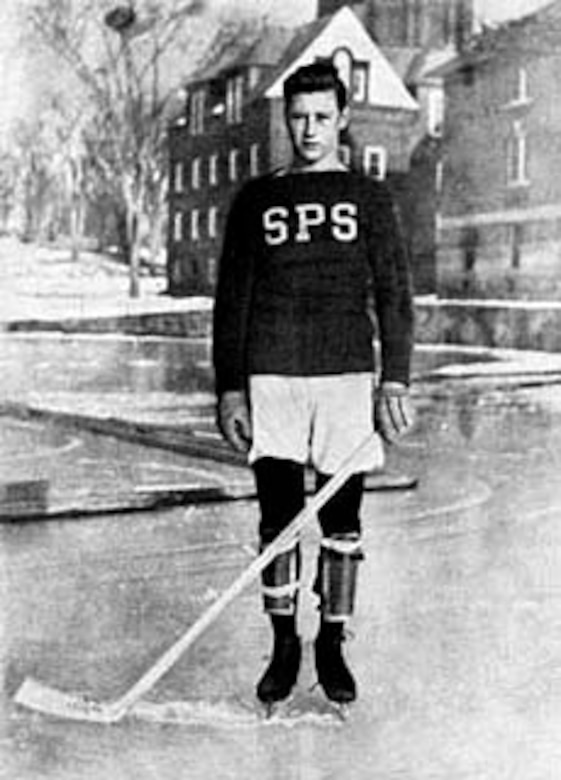
When Hobey Baker entered Princeton University in 1910, he joined the school's hockey, football and baseball teams. For a while he played outfield on the baseball team but he was told by school officials that he could play only two sports at one time, so he dropped baseball. It proved to be the right choice.

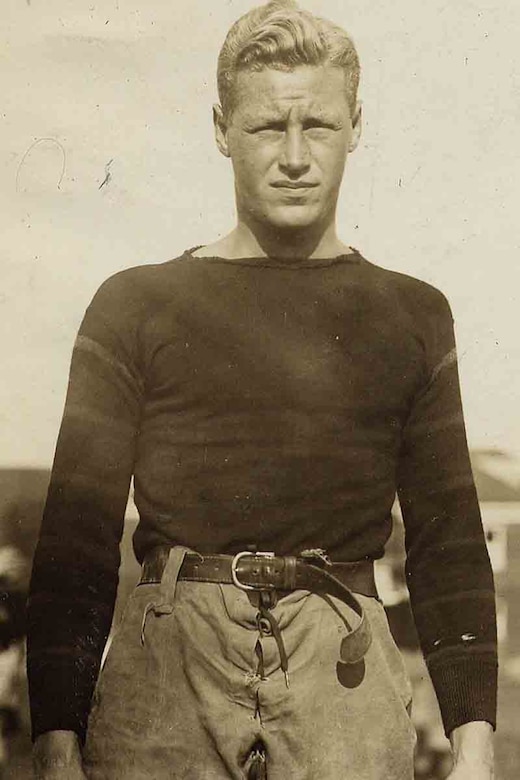
A man in a Princeton letter sweater poses for a photo.

As a freshman in one of his first football games with the Tigers, he helped defeat Ivy League rival Yale when he faked a drop-kick field goal and ran for a touchdown.

In 1911, Baker's second year, Princeton finished their ten-game season with eight wins, no losses and two ties. During a re-match against Yale, on Nov. 18, Baker set a school record that still stands: 13 punt returns for 63 yards. That same year, Baker scored 92 points, a school record that stood until 1974.

In 1912, Princeton also had a winning football season of seven wins, one loss, one tie.

A man in a football uniform poses for a photo.
A man in a hockey uniform poses for a photo.

In 1913, his final season, Baker was named captain of the football team. He finished his senior year in 1914 with a winning record of five wins, two losses and one tie. 

In hockey, the Princeton Tigers finished the 1911-12 season eight wins and two losses, and in Baker's final hockey season that concluded in 1914, Princeton won the national championship with a ten-and-three record. 

Baker was noted for his good sportsmanship. After each hockey game, it was said he shook hands with each of the opposing team's players.

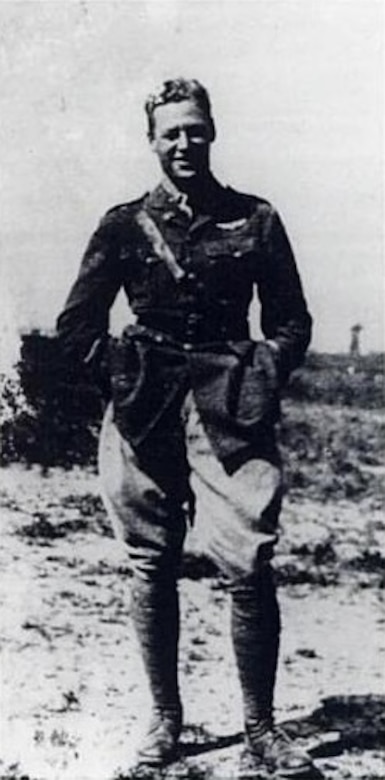
In 1916, two years after graduation, Baker joined an aviation unit in New York City that was tasked with training civilians who were interested in passing the reserve military aviator flying test and receiving commissions in the Army's aviation section of the Signal Corps. Baker, an aviator, enjoyed flying even more than playing sports.

A young man in school hockey gear poses for a photo.

On April 6, 1917, the United States entered World War I. That summer, Baker was part of a group of soldiers who were among the first to arrive in Europe. After training in the United Kingdom, he traveled to France where his achievements as a pilot were as illustrious as his collegiate sports record.

In April 1918, Baker joined the 103rd Aero Squadron in France. He downed his first German aircraft the following month and was awarded the French Croix de Guerre medal for valor.

That summer he joined the 13th Aero Squadron. He downed another aircraft and was given command of the 141st Aero Squadron's 26 pilots and 180 enlisted service members.

In October 1918, just four years after graduating from Princeton, Baker was promoted to captain. He shot down two more aircraft on Oct. 28 and Nov. 5.

The war ended Nov. 11, 1918.

A man in an aviator uniform poses for a photo.

On Dec. 21, 1918, Baker took his final flight from the 141st, based in Toul, France. His aircraft reportedly had mechanical difficulties and crashed, killing Baker.

Baker was inducted into the U.S. Hockey Hall of Fame in 1973 and the College Football Hall of Fame in 1975. He is the only person ever to be inducted into both.

The Hobey Baker Award was established in 1981 and is awarded annually to the best player in National Collegiate Athletic Association hockey.

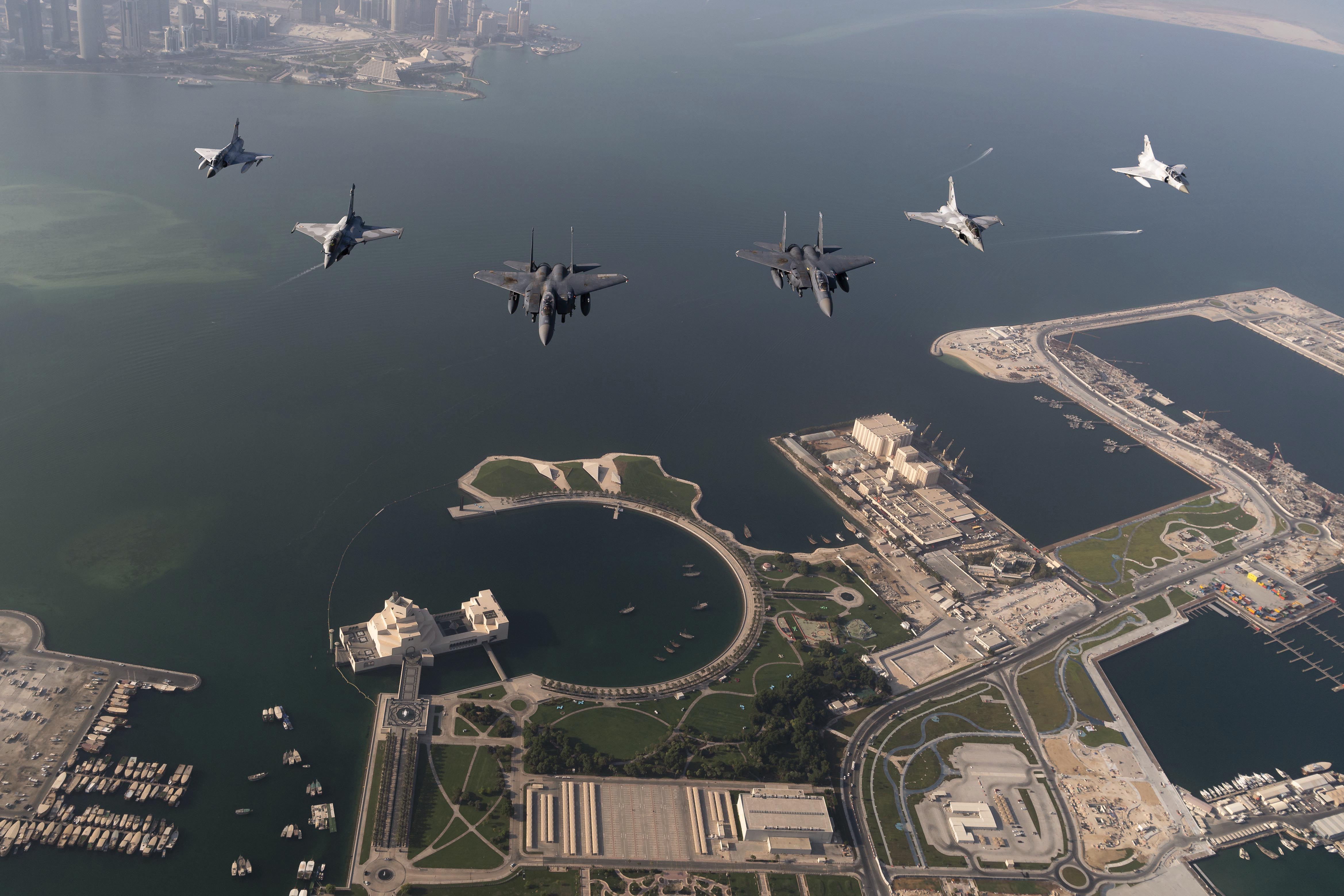
Force Formation


The U.S. Air Force and the Qatari air forces fly in formation over Doha, Qatar, Aug. 24, 2020.

Fighting Flames


Marines conduct live-fire training at Marine Corps Air Station in Iwakuni Japan, July 8, 20