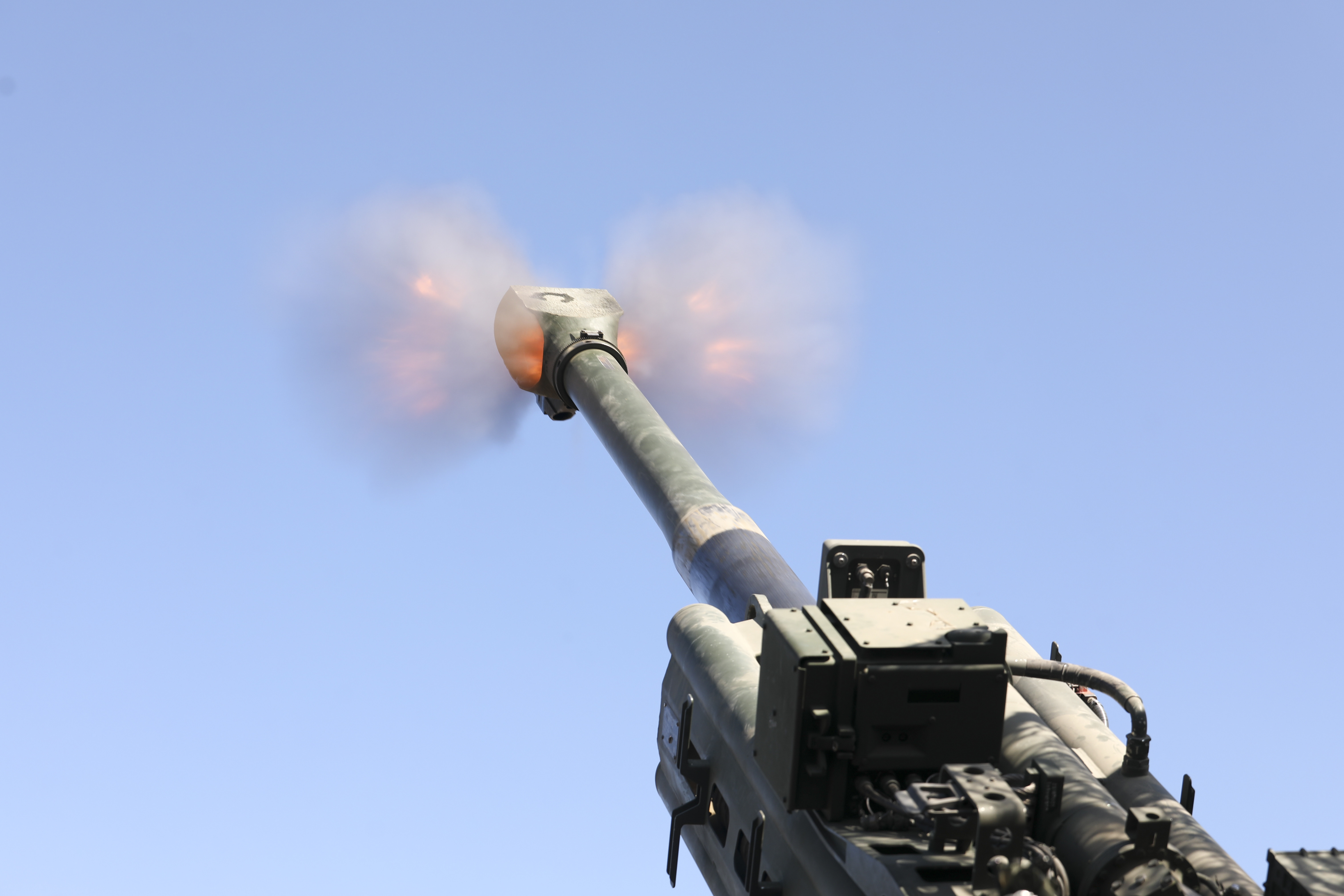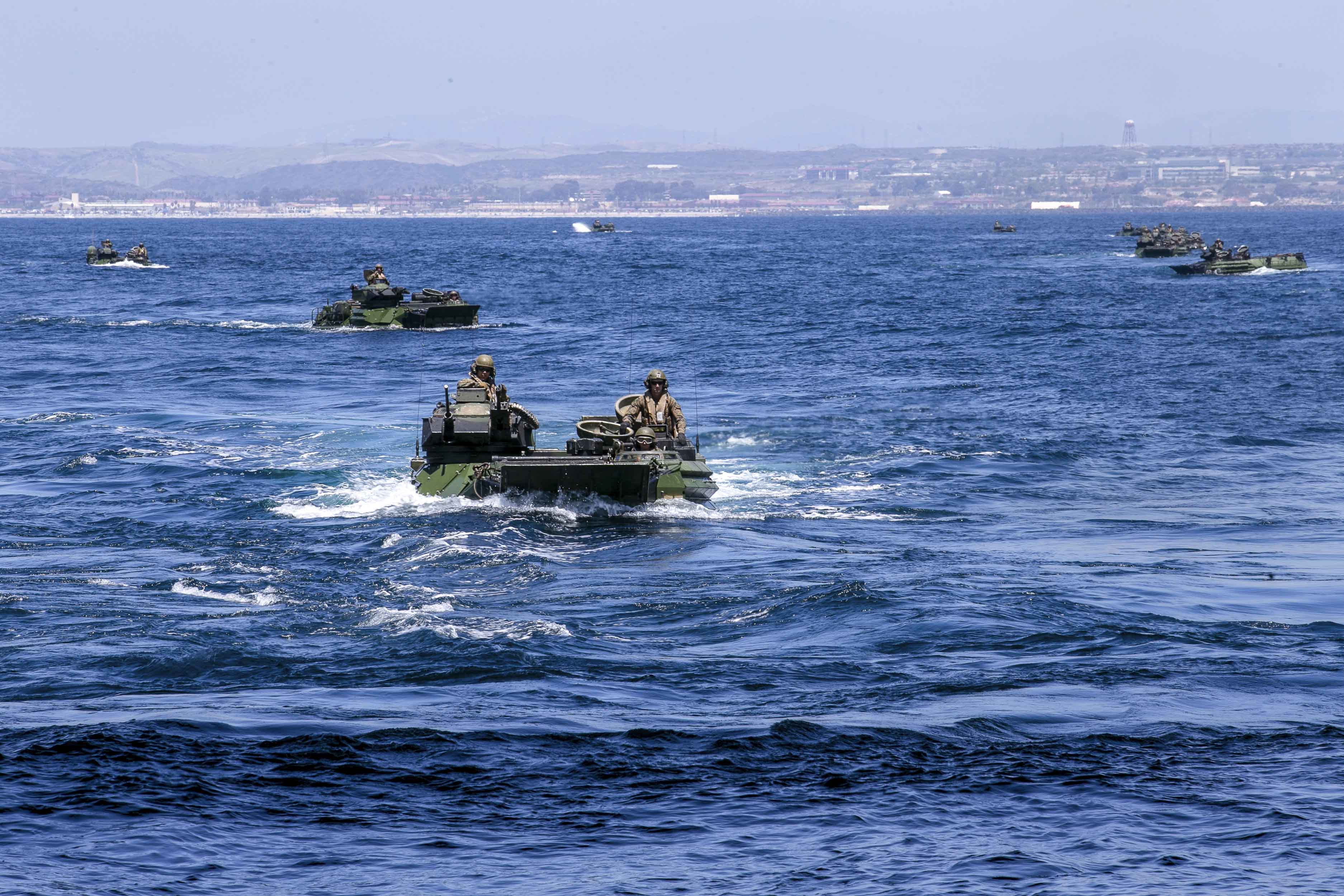
Marines operate assault amphibious vehicles during training with the USS Somerset in the Pacific Ocean, July 27, 2020.
Marines operate assault amphibious vehicles during training with the USS Somerset in the Pacific Ocean, July 27, 2020.

Marines conduct base operations at Yuma Proving Ground, Ariz., July 16, 2020, during Summer Fury, an exercise designed to enhance Marine Air-Ground Task Force integration and increase aviation operations proficiency.
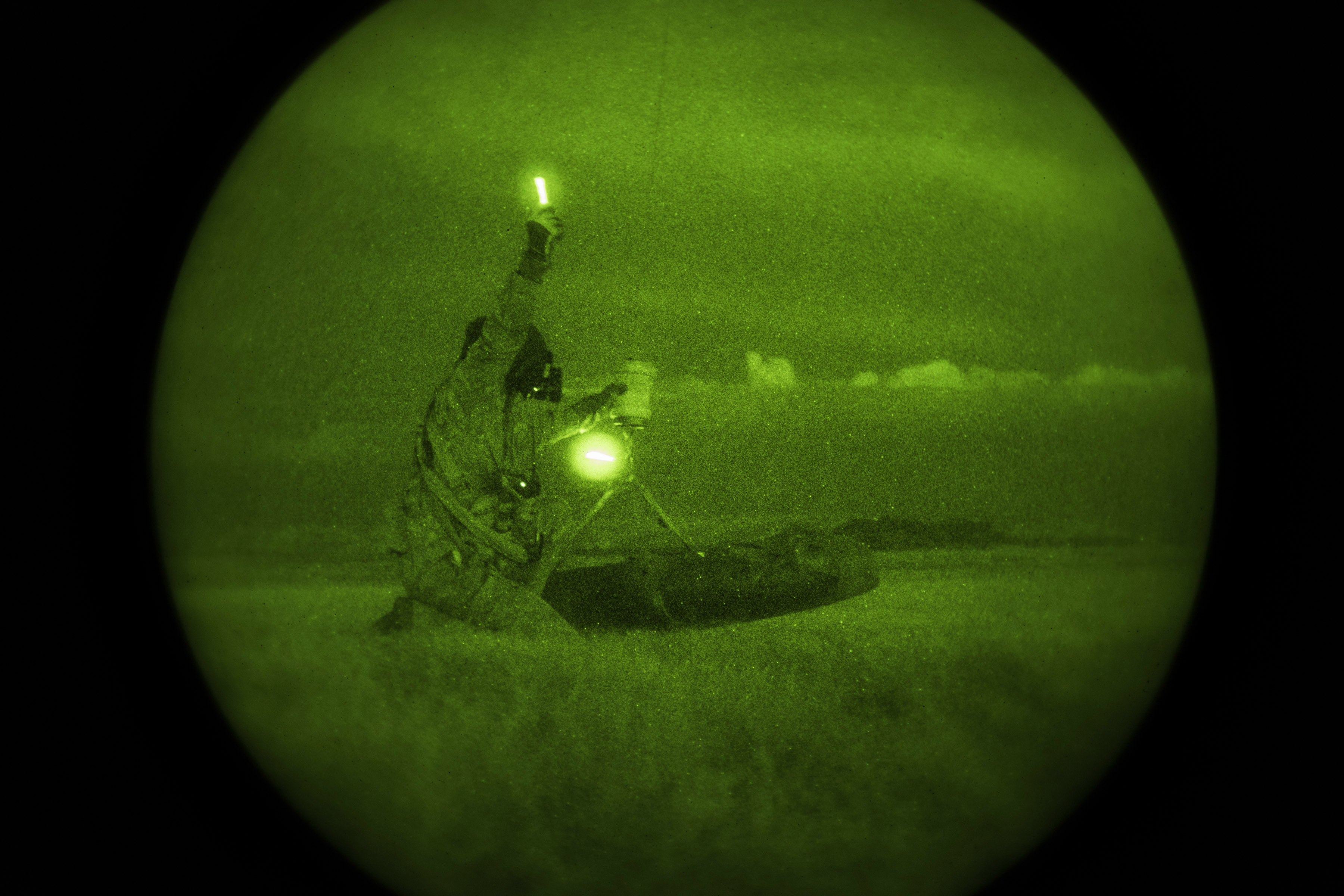
An Idaho Army National Guardsman participates in night hoist rescue training with fellow guardsmen using night vision goggle equipment and UH-72 Lakota helicopters near Gowen Field in Boise, Idaho, July 21, 2020.
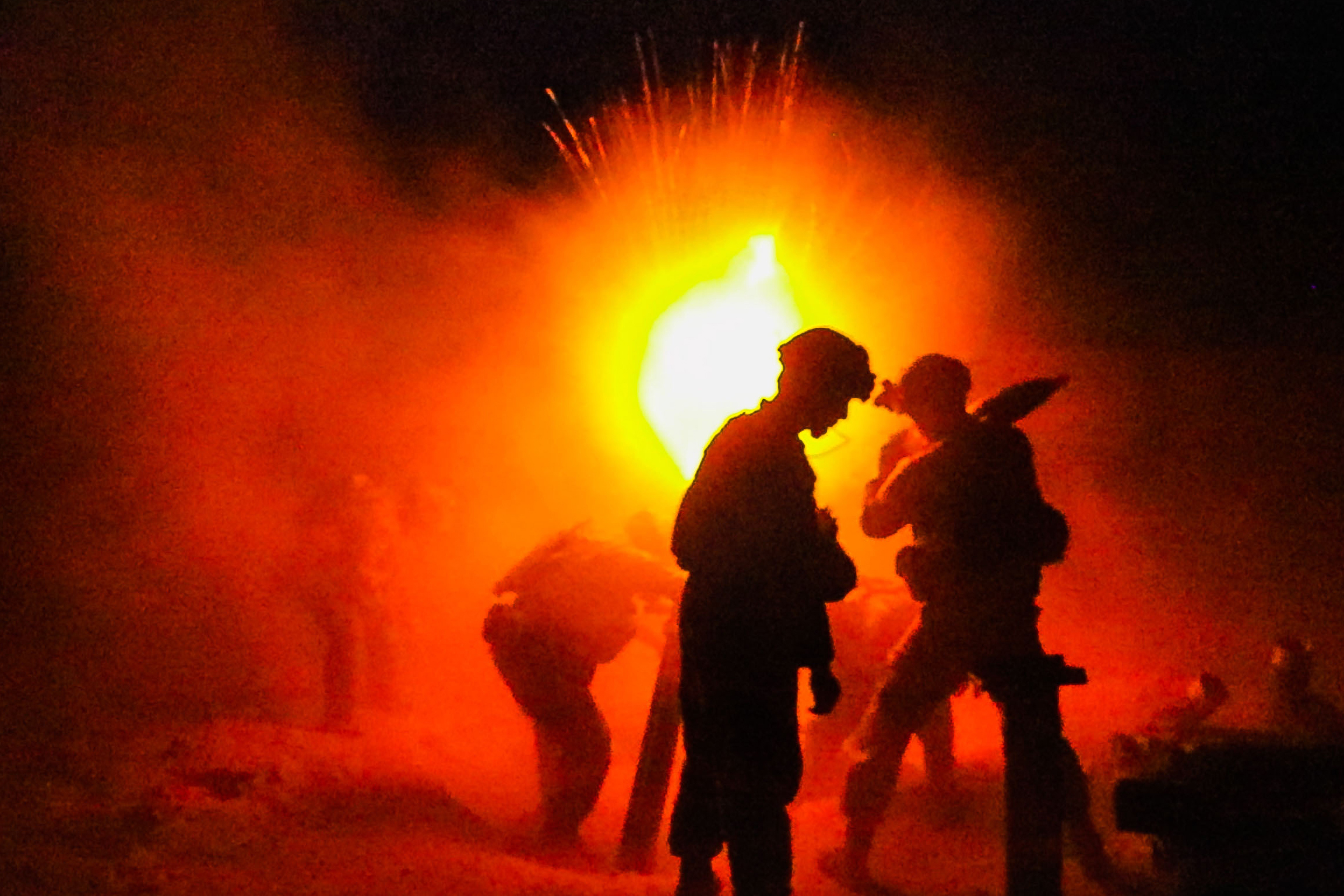
Soldiers fire rounds from an M120 mortar system at Al Asad Air Base, Iraq, July 25, 2020.

Marines assigned to the 2nd Tank Battalion track through tank trails for the last time at Camp Lejeune, N.C., July 27, 2020. After serving the 2nd Marine Division for more than 75 years, the battalion is slated to deactivate as part of a future redesign of the Marine Corps.
Secretary of Defense Dr. Mark T. Esper announced today that the president has made the following nominations:
Air Force Maj. Gen. Nina M. Armagno for appointment to the rank of lieutenant general, with assignment as director of staff, Office of the Chief of Space Operations, Pentagon, Washington, D.C. Armagno is currently serving as director, space programs, Office of the Assistant Secretary of the Air Force (Acquisition, Technology and Logistics), Pentagon, Washington, D.C.
Air Force Maj. Gen. William J. Liquori Jr. for appointment to the rank of lieutenant general, with assignment as deputy chief of space operations for strategy, plans, programs, requirements and analysis, Office of the Chief of Space Operations, Pentagon, Washington, D.C. Liquori is currently serving as director, strategic requirements, architectures and analysis, Headquarters Air Force Space Command (redesignated U.S. Space Force), Peterson Air Force Base, Colorado.
Air Force Maj. Gen. Bradley C. Saltzman for appointment to the rank of lieutenant general, with assignment as deputy chief of space operations, operations, cyber, and nuclear, Office of the Chief of Space Operations, Pentagon, Washington, D.C. Saltzman is currently serving as deputy commander, U.S. Air Forces Central Command; and deputy commander, Combined Forces Air Component Command, U.S. Central Command, Al Udeid, Qatar.
Air Force Maj. Gen. Stephen N. Whiting for appointment to the rank of lieutenant general, with assignment as commander, Space Operations Command, Peterson Air Force Base, Colorado. Whiting is currently serving as deputy commander, Headquarters Air Force Space Command (redesignated U.S. Space Force), Peterson Air Force Base, Colorado.
Secretary of Defense Dr. Mark T. Esper announced today that the president has made the following nomination:
Air Force Maj. Gen. Sam C. Barrett for appointment to the rank of lieutenant general, with assignment as director for logistics, J-4, Joint Staff, Pentagon, Washington, D.C. Barrett is currently serving as commander, Eighteenth Air Force, Air Mobility Command, Scott Air Force Base, Illinois.
Nate Galbreath testified today before the House Armed Services Committee's military personnel subcommittee in a hearing called in the wake of Army Spc. Vanessa Guillen's death at Fort Hood, Texas. Guillen was found dead, and an investigation continues.
"Even with my 30 years investigating violent crime, supporting victims and counseling the wounded, nothing prepares one for something like this," Galbreath said. "The murder of Specialist Guillen has touched us all in some way, but no one feels the loss more than her family. I can only hope that the groundswell of support, love, compassion and even inspiration that comes … in Vanessa's name can bring some comfort for those who loved and knew her."
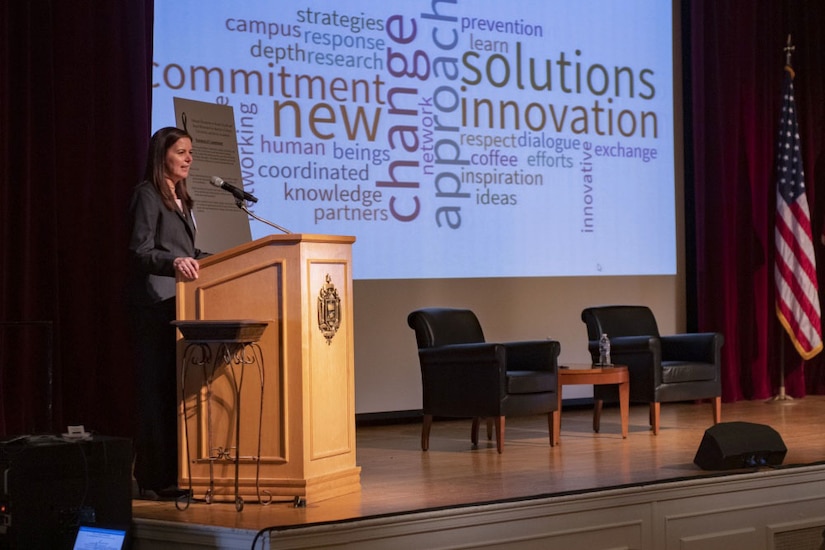
Although harassment-policy criminal investigation in the military justice system falls outside his portfolio, Galbreath said, SAPRO is keenly aware of how these issues play a critical role in their work to prevent and respond to sexual assault, and to allow those who choose to make a report to do so without fear of retaliation. While more work remains, many of SAPRO's efforts have resulted in certain progress, he said.
"As many of you know, the department has two key metrics in its sexual-assault program," he told the House panel. "First [is] estimated prevalence or how often crime occurs, which is the number we want to go down. Second, the number of reports [is what] we want to go up, which means that more victims are coming forward to connect with care and support services as well as [help] our efforts to hold offenders appropriately accountable," he explained.
Data shows that the estimated prevalence rates of sexual assault in DOD has decreased by over a third over the past 14 years, Galbreath said. "And reporting of sexual assault is four times what it was in 2006," he added.
However, DOD's most recent active-duty survey in 2018, showed an increase in the prevalence of sexual assault on women, he said. In addition, in that year, about 24% of women and 6% of men on active duty indicated experiencing behavior consistent with sexual harassment in the year before being surveyed.
Fear of retaliation complicates and degrades the department's efforts to encourage greater reporting of this conduct and to connect service members with restorative care, he emphasized.
"While not all behaviors perceived to be retaliatory by someone constitute retaliation that is actionable, all behaviors — actionable or not — gravely undermine our efforts in this space, and are incongruent with our expectations for dignity and respect," he said.
"To be blunt, such behaviors are absolutely unacceptable and have no place in a military that is striving for greater dignity, respect and inclusion for all," Galbreath said.
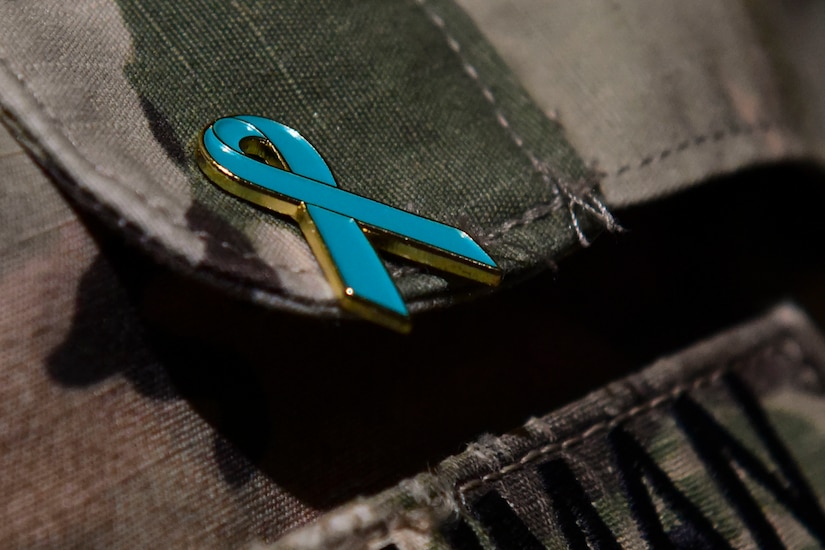
In some, achieving and sustaining progress requires continuous institutional examination, reflection and evolution, he said, adding that the Defense Department acknowledges the gap between where it is now and where it desires to be.
"We are committed to working toward lasting, impactful, cultural change," he said.
SAPRO establishes policy and conducts oversight on efforts to assist victims of sexual assault, encourage greater reporting, empower survivors to recover and prevent the crime.
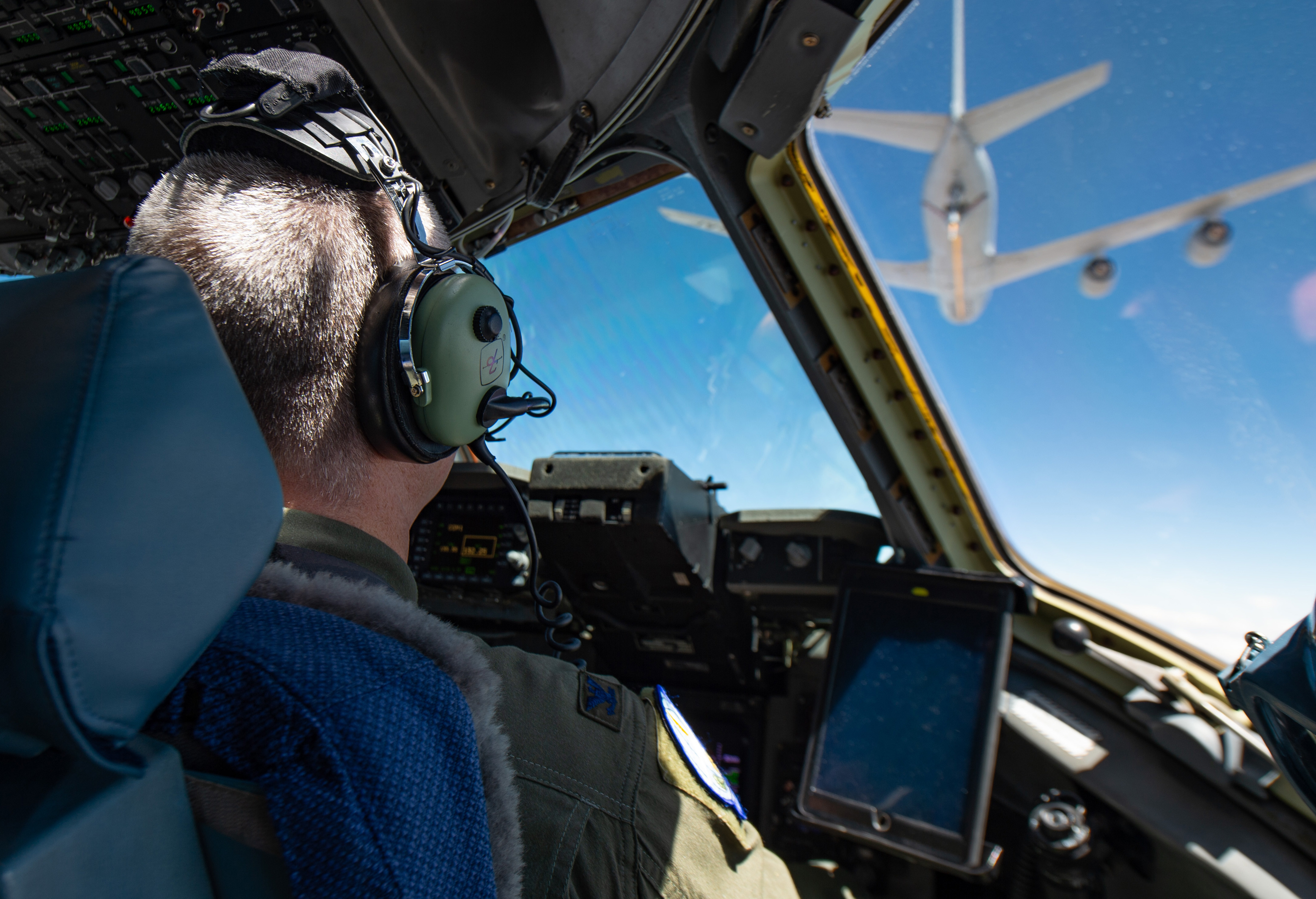
Air Force Col. Brian Collins flies a C-17 Globemaster III during an air refueling training sortie near Salt Lake City, Utah, July 27, 2020.
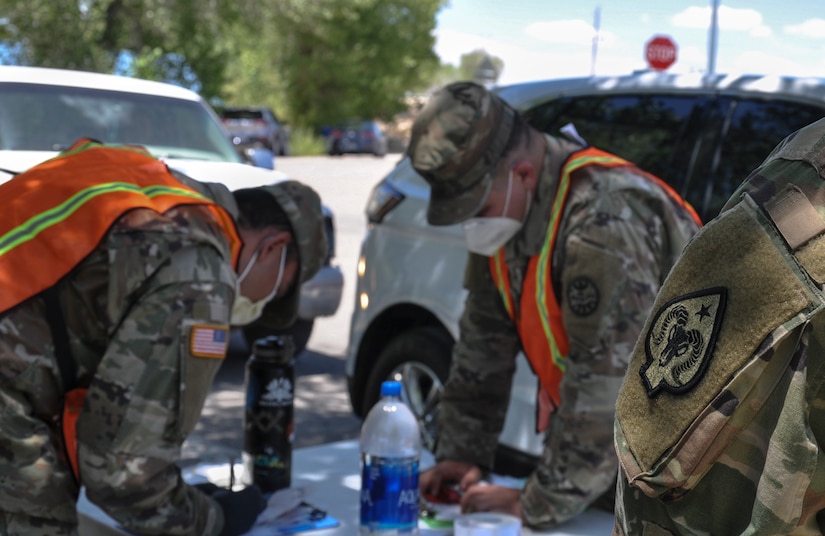
Nevada National Guardsmen with medical task forces 221 and 17 traveled north to assist the Shoshone Health District with COVID-19 community-based COVID-19 test collections in Duckwater, Nev.
According to Shoshone Health District records, their combined efforts July 1 resulted in testing 102 residents: 57% percent of the population and more than 80% of the active older adult population.
The Shoshone are a Native American tribe in eastern Nevada, where their people share a long and rich history. They are also known to be a part of the Great Basin American Indians, and at one point in history, the Shoshone tribes could be found stretching from central Wyoming to Texas, into California and up into parts of Canada. Although not known for their jewelry, Shoshone artists are famous for their beautiful beadwork, paintings, hides and woven baskets.
Army Staff Sgt. Keith Linford, with the Task Force Medical 17, discussed his take on the number of people tested within the timeframe. ''We tested over a hundred people in just four hours,'' he said. ''I think that's the largest number compared to all the other rural communities so far.''
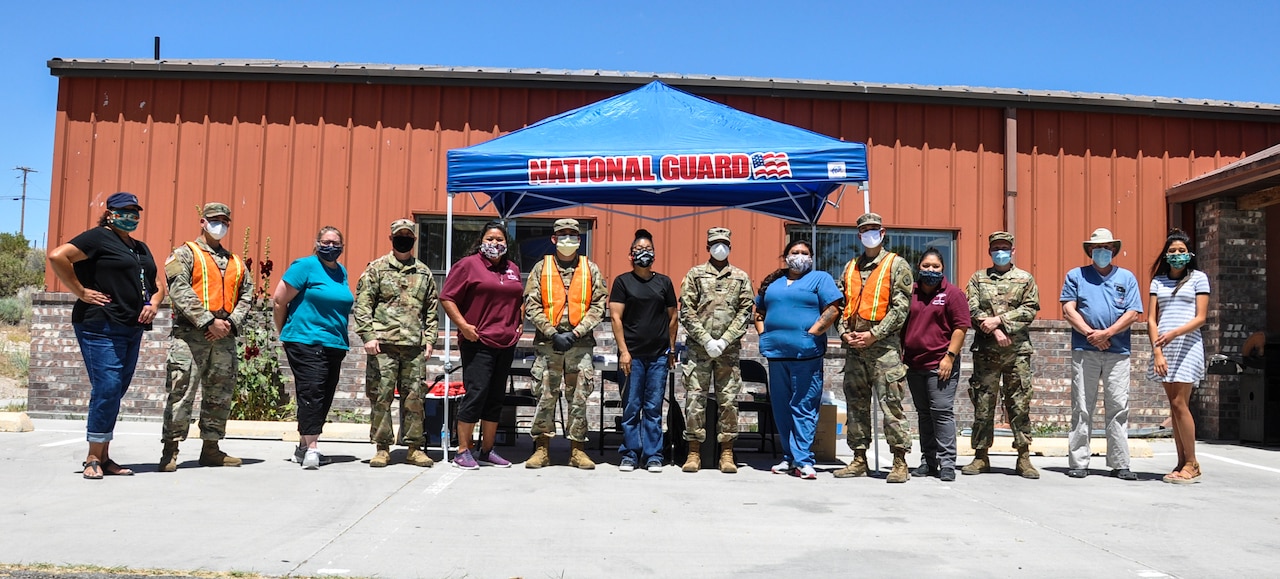
Brenda O’Neil, the health manager for the Duckwater Shoshone Tribal Health Clinic, discussed some of the challenges her people faced the past few months as the pandemic spread throughout the country.
''Any time we leave the reservation, the closest store for supplies is 77 miles away,'' she said. ''Some of those stores were out of basic necessities like bread, flour, sugar and toilet paper. We had to sometimes travel further to cities like Las Vegas or Reno. That would expose us more to the virus.''
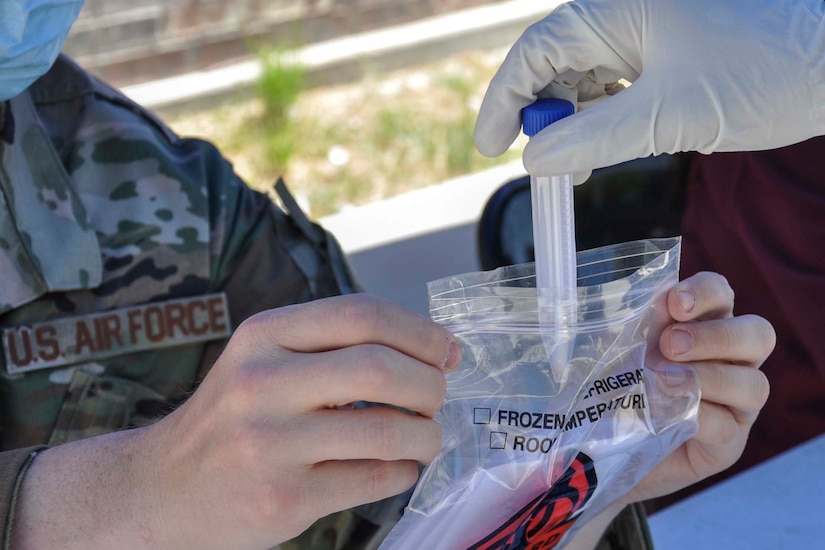
Having to travel hundreds of miles for testing was also a major hurdle for tribe members. The closest hospital with any type of specialty care is in Ely, Nevada. There's a cost associated with transportation, rooms, meals and any other incidentals, O'Neil said, adding that personnel and scheduling, along with the logistical requirements, need to be taken into account when planning medical trips off of tribal land.
''The majority here are elders, and they make up about 60% of our population,'' O'Neil said. ''We didn’t want them leaving the reservation and possibly exposing them to coronavirus.''
On a blistering hot day in the mountains of Asheville, North Carolina, Army Spc. Enrique Acevedo and Army Pfc. Bennie Kinley, both with the North Carolina Army National Guard, were handing out meals to the children of Buncombe County. Suddenly, a mother from the neighborhood graciously offered ice cream to the two hard-working guardsmen to help cool them down.
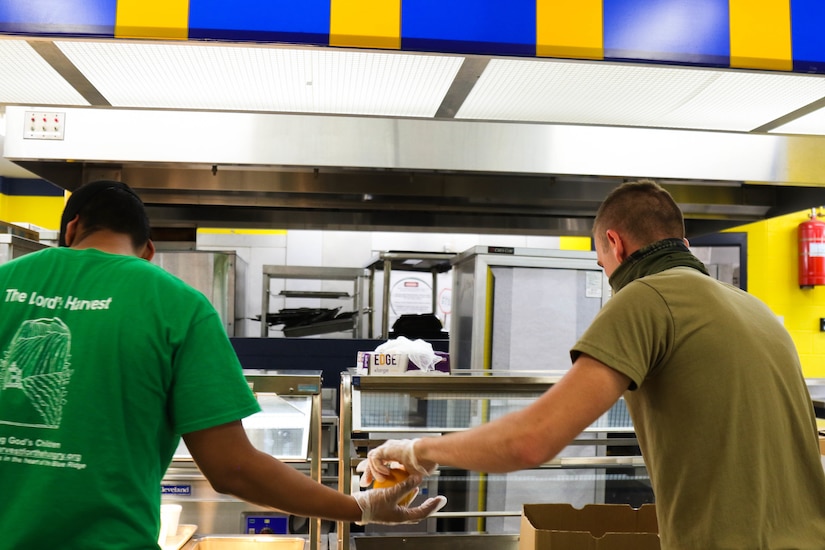
This simple scoop of kindness showcased a turning point in the developing relationship between these guardsmen and the local community. It was more than just ice cream. It was an offering and a symbol of established trust.
"It shows the trust and strength between these programs and the communities,"Acevedo said. "They seem to be more accepting that we are just trying to help, … that there is good intention here."
Acevedo and Kinley of the 875th Engineer Company were a part of an eight-member team called up to help the citizens of Asheville. Their service affected the community so much so that it set into motion an unstoppable wave of unity, kindness and friendship during a time of crisis.
"Being an influence on the community just by being who you are makes you a better person," Acevedo said.
At the beginning of their assignment, the guardians in green were met with skepticism and wariness from a community not traditionally exposed to the uniform. To help alleviate the wariness, Acevedo and Kinley took off their uniforms and began distributing food in civilian clothing to show that they were just human beings trying to help.
"It feels really good to go out there and build trust with the communities," Kinley said.
For more than 60 days, the guardsmen have assisted the Mountain Area Nutritional Needs Alliance Foodbank in feeding people in 16 counties and supporting local school food programs.
Western North Carolina is home to diverse communities whose backgrounds originate around the world and who speak a variety of languages. To effectively communicate with the Latino community, these guardsmen broke down language barriers and built relationships of trust.
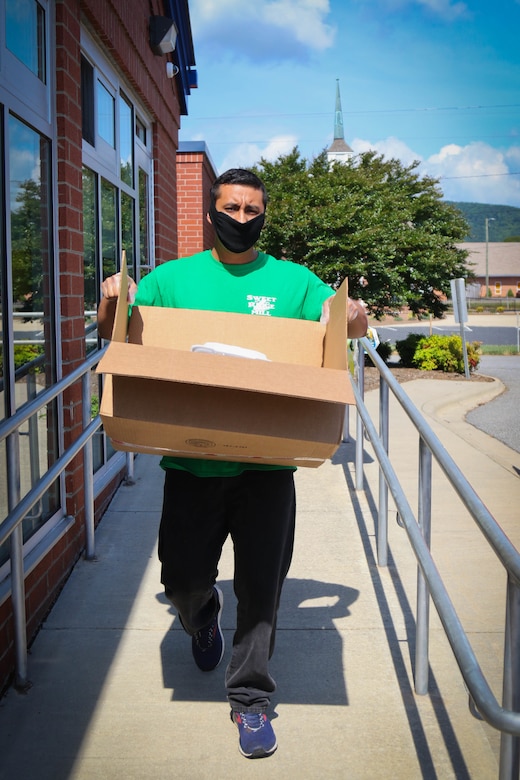
Kinley began to learn Spanish in Army Basic Combat Training to help a fellow trainee, who could not speak English, communicate with her drill sergeants. He continued to enhance his Spanish-speaking capabilities through civilian jobs and friends.
"I chose to learn to understand," Kinley said. "You could still have a friendship through a language barrier, but the more you learn... you gain more of a trust and stronger bond with them."
This experience further encouraged Kinley to learn and communicate with the families they were serving. Acevedo has been a guide in helping Kinley learn the culture and speak Spanish.
Acevedo has been a strong asset to the team due to his background, knowledge and ability to easily connect with the local community. Spanish was Acevedo's first language. He was born in New Jersey, but he was raised in Mexico. His mother eventually returned to the United States to make a better living.
When Acevedo was younger, he and his family often faced struggles from financial insecurity, and he began working at his mother's cleaning service. Due to these hardships, Acevedo knows what it's like to ask for help and receive assistance from programs much like the one he is now working at in Asheville.
"I've been working all my life," Acevedo said. "I understand what these people are going through. I used to be on these programs, so I understand what that means."
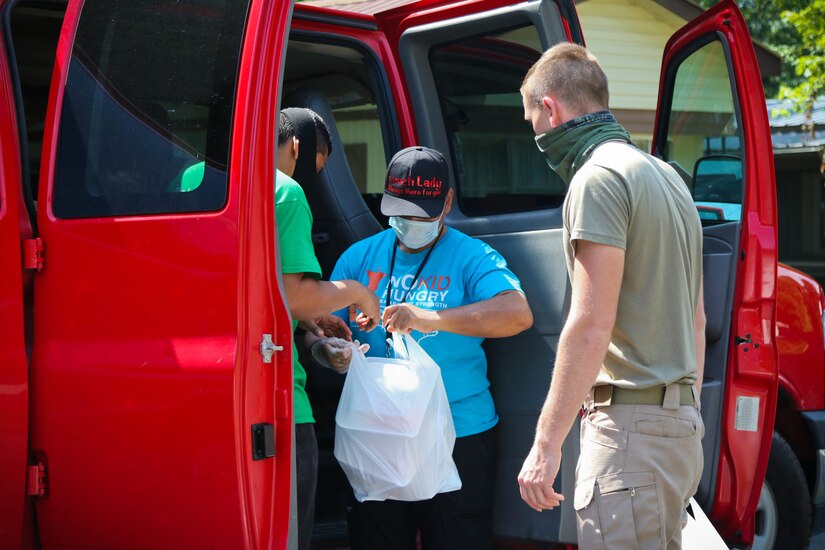
Guardsmen understand that having diversity within the ranks makes a world of difference to the people who are trying to ask for help and communicate their needs. Army Sgt. Jonathan Greene, assigned to the 883rd Engineer Company and the noncommissioned officer in charge for the Ashville emergency relief team, has also made strides in helping the diverse community.
Back home, Greene was a volunteer at a local church that had a chapel for the deaf. The pastor mentored Greene and taught him American Sign Language.
Greene was able to transfer his capabilities and communicate with families in Asheville who were deaf and needed assistance. His unique asset enabled the food bank to effectively understand their needs and provide them the necessary food. "That always stuck with me," Greene said. "Especially handing out food to the families that were deaf."
The eight-member team brought more than just a helping hand. They went beyond their traditional duties to help achieve the joint mission.
"We're making more of a difference," Greene said. "We're helping a community."
(Army Spc. Hannah Tarkelly is assigned to the 382nd Public Affairs Detachment.)
Good morning everyone, and thank you for joining us today. Since being sworn into office more than a year ago, I have been consistent in stating that my top priority would be implementing the National Defense Strategy. Over the past year, we have done just that.
If you look at my recent message to the joint force regarding the progress we’ve made, you’ll see very clearly how far we have moved on our three lines of effort, which include the first line of effort: build a more lethal force; and the second line of effort: strengthen alliances, as well as our 10 subordinate goals.
One important initiative to advance the NDS has been to conduct a review of all the Combatant Commands to ensure a focus on NDS priorities. This includes optimizing our force presence worldwide; directing our time, money, and manpower toward our highest priorities; implementing our Immediate Response Force, Contingency Response Force, and Dynamic Force Employment enhanced readiness concepts; and, moving toward greater use of rotational forces from the United States to enhance our strategic flexibility and operational unpredictability, as we’ve done over the past few months with our Bomber Task Forces. We are pursuing several other initiatives under this rubric as well.
There are currently more than a half dozen Combatant Command reviews underway, beginning with U.S. Africa Command, and the most recent being U.S. Space Command. Today, we want to update you on the status of our U.S. European Command review, which was accelerated with the President’s decision in early June to reduce our footprint in Germany, and our plans to reposition our forces in Europe to be better situated for Great Power Competition.
It is important to note that in NATO’s 71-year history, the size, composition, and disposition of U.S. forces in Europe has changed many times. Sometimes this has been a result of changes in the threat, sometimes because of other changes in the international environment, and sometimes simply because the borders between NATO countries and Russia have shifted as new Allies have joined. As we’ve entered a new era of Great Power Competition, we are now at another one of those inflection points in NATO’s evolution, and I am confident the Alliance will be all the better and stronger for it.
Since June, EUCOM has done excellent work in developing a plan that achieves the President’s objective, and meets the following five principles that I gave General Wolters as he and his staff began their planning:
1. Enhance deterrence of Russia
2. Strengthen NATO
3. Reassure allies
4. Improve U.S. strategic flexibility and EUCOM operational flexibility
5. Take care of our Service members and their families in the process.
The President approved the EUCOM plan in late June; we briefed key members of Congress last week; and the team and I spoke with NATO Secretary General Stoltenberg and directly affected Allies over the past few days. As we share the plan with you, note that this plan is subject to – and likely will – change to some degree, as it evolves over time.
PAUSE
The current EUCOM plan will reposition approximately 11,900 military personnel from Germany – from roughly 36,000 down to 24,000 – in a manner that will strengthen NATO, enhance the deterrence of Russia, and meet the other principles I set forth.
Of the 11,900, nearly 5,600 Service members will be repositioned within NATO countries, and approximately 6,400 will return to the United States, though many of these or similar units will begin conducting rotational deployments back to Europe. The broad strokes of these moves are as follows:
Various U.S. headquarters will be consolidated in locations in Europe outside of Germany, including, in some cases, collocating at the same locations as their NATO counterparts in Belgium and Italy. This will strengthen NATO and improve the operational efficiency and readiness of over 2,000 Service members.
The nearly 4,500 members of the 2nd Cavalry Regiment will return to the United States, as other Stryker units begin continuous rotations farther east in the Black Sea region to enhance deterrence and reassure allies along NATO’s southeastern flank.
The 2,500 airmen based in Mildenhall, United Kingdom, who are responsible for aerial refueling and special operations, and who had been scheduled to re-base to Germany, will remain in the U.K., thus ensuring the uninterrupted readiness and responsiveness of these units.
A fighter squadron and elements of a fighter wing will be repositioned to Italy, moving them closer to the Black Sea region and better capable of conducting dynamic force employments and rotational deployments to NATO’s southeastern flank.
In addition to these moves and the rotational forces announced by President Trump and Polish President Duda in 2019, we also plan on rotating forward the lead element of the Army’s newly established V Corps headquarters to Poland, once Warsaw agrees to a Defense Cooperation Agreement and burden sharing details, as previously pledged.
Our aim is to implement these moves as expeditiously as possible, consistent with the principles I set forth from the beginning, particularly being fair to and taking care of our Service members and their families. We could see some moves begin within weeks; others will take longer.
PAUSE
As anyone can see, the repositioning of our forces in Europe constitutes a major strategic and positive shift, wholly in line with the NDS, and consistent with other adjustments the U.S. has made within NATO in previous times.
These changes will unquestionably achieve the core principles of enhancing U.S. and NATO deterrence of Russia; strengthening NATO; reassuring Allies; and, improving U.S. strategic flexibility and EUCOM operational flexibility.
And, of course, at all times, we will prioritize our most important resource: our Service members and their families. No moves will take place without thorough communication with our people, continued engagement with Congress, and consultation with our Allies.
Thank you, and I will now turn it over to the Vice Chairman of the Joint Chiefs of Staff General Hyten, and EUCOM Commander General Wolters, who will cover these moves in more detail.
Today the Secretary of Defense announced an update to the status of our U.S. European Command Force Posture review as a part of the department’s continued efforts to implement the National Defense Strategy. Following the decision from the President in early June to reduce our force footprint in Germany, the Secretary provided direction to the Department to develop options for repositioning our forces throughout Europe using five core principles:
In total, approximately 11,900 military personnel will be repositioned from Germany, with nearly 5,600 repositioned within other NATO countries and 6,400 returning to the United States to address readiness and prepare for rotational deployments.
The plan will consolidate headquarters to strengthen operational efficiency, will reposition some forces to the United States to focus on readiness, and place rotational forces in the Black Sea region on NATO’s southeastern flank. These force posture changes meet the Secretary’s above core principles while adapting our force posture to address national security concerns in today’s environment. In addition, these changes will prioritize service members and their families as they relocate throughout the process.
Read Secretary Esper's opening statement at the U.S. European Command Force Posture Policy press conference.
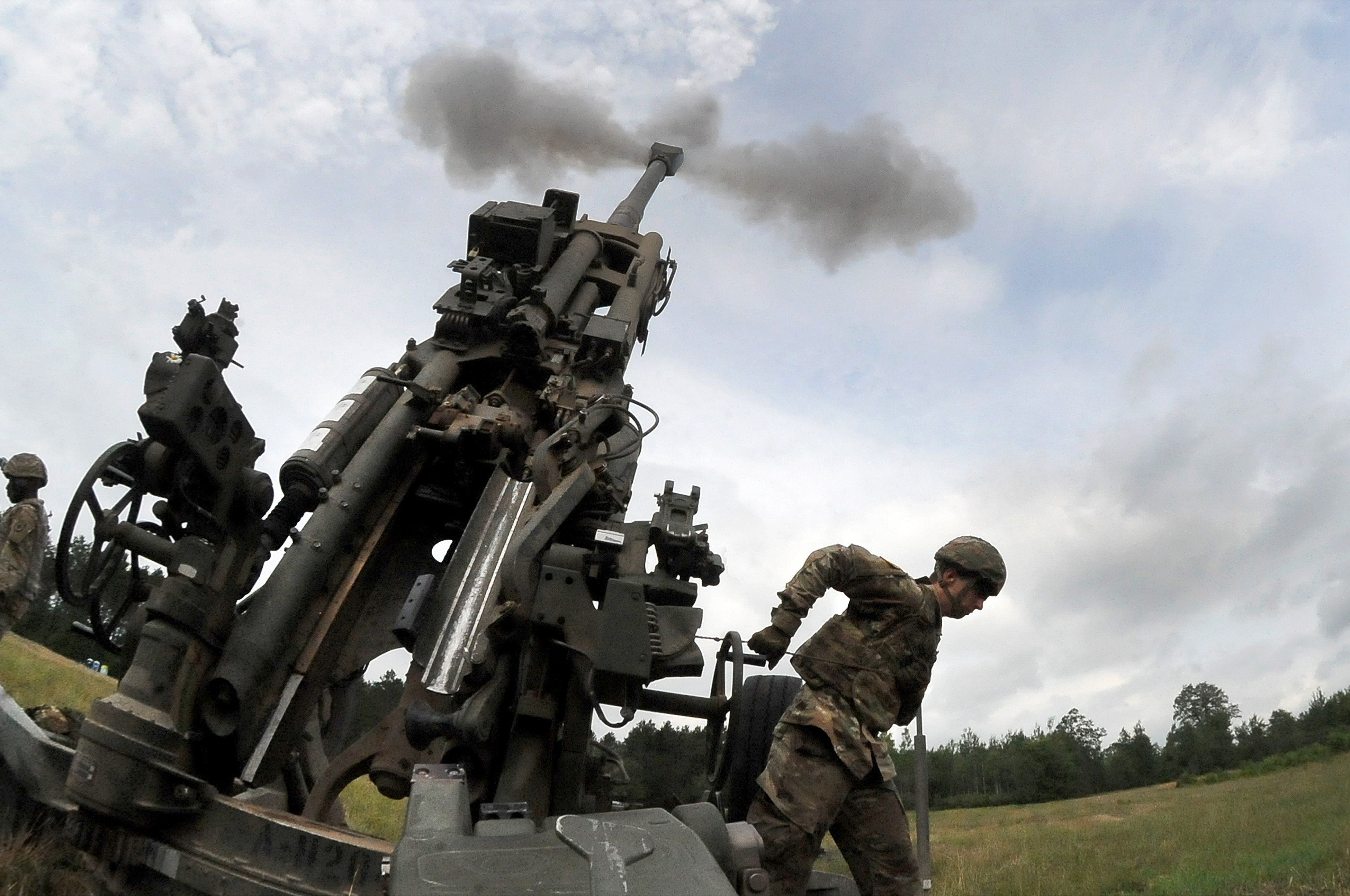
Michigan Army National Guardsmen execute a direct fire mission during exercise Northern Strike at Camp Grayling, Mich., July 26, 2020. Northern Strike integrates joint operations in a realistic training environment incorporating service members from throughout the U.S. military as well as international partners.
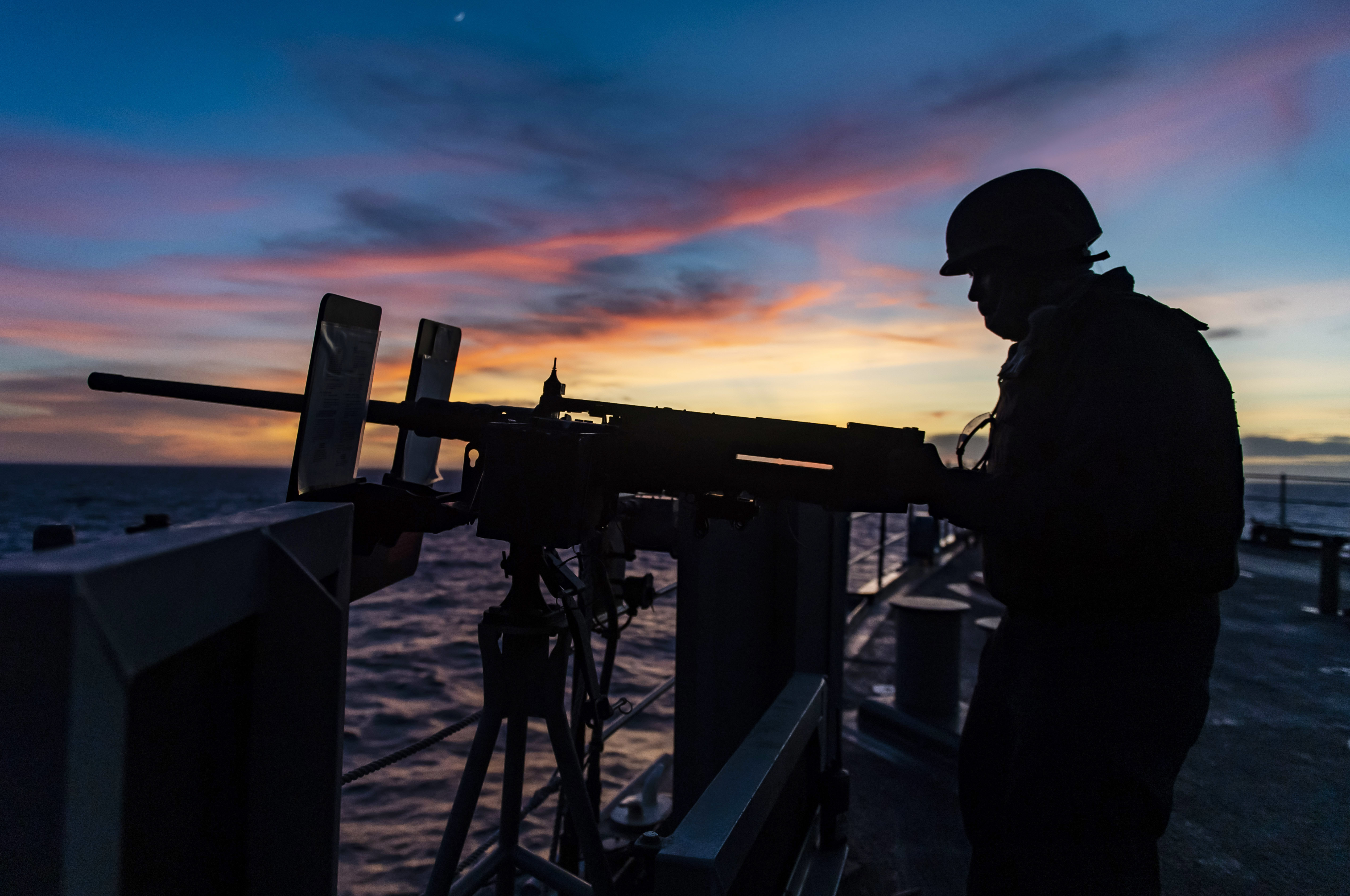
Navy Petty Officer 3rd Class Cameron Howard mans a .50-caliber machine gun during small craft action team training aboard the USS Germantown in the East China Sea, July 23, 2020.


An airman checks the oil levels on an A-10C Thunderbolt II while performing post-flight maintenance during training at Avon Park Air Force Range, Fla., July 22, 2020.
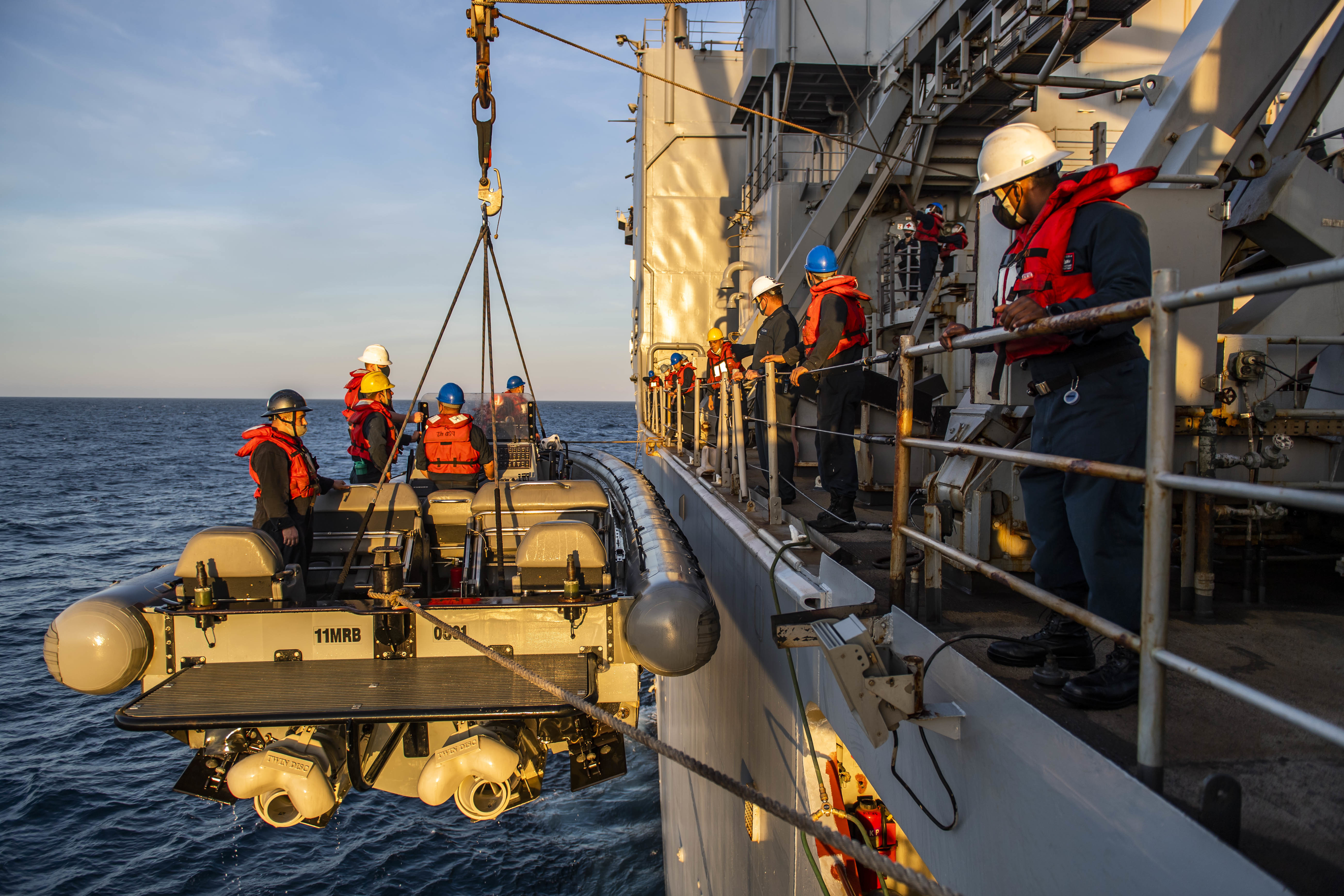
Sailors recover a rigid-hull inflatable boat on the port side of the USS Germantown in the East China Sea, July 23, 2020.
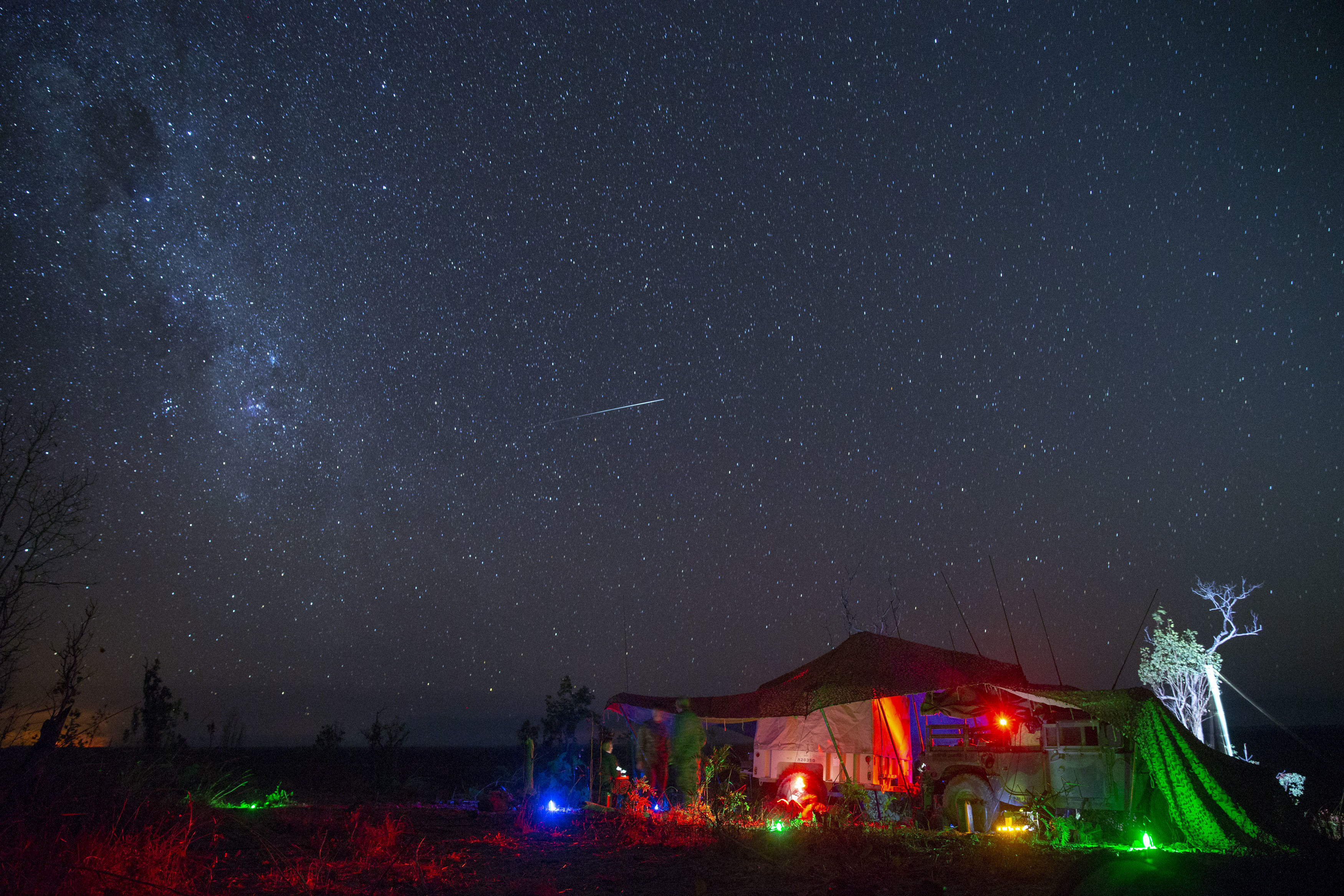
Marines man a command center and process intelligence collected from an unmanned aerial vehicle at Mount Bundey Training Area, Northern Territory, Australia, July 20, 2020. During the training, Marines provided real-time surveillance from a bird's-eye view.

Marines rehearse security settings before live-fire training at Fort A.P. Hill, Va., July 23, 2020. Marines trained to improve combat readiness in a simulated realistic environment.
Secretary of State Mike Pompeo and Secretary of Defense Mark Esper hosted Minister for Foreign Affairs Marise Payne and Minister for Defence Linda Reynolds on July 28 in Washington for the 30th Australia-United States Ministerial Consultations (AUSMIN 2020).
During their discussions, the Secretaries and Ministers built on Prime Minister Morrison’s historic official visit to Washington in September 2019, which demonstrated what President Trump has called the “long, cherished, and unwavering friendship between the United States and Australia.” More than a century since we first fought side-by-side, 80 years after the United States and Australia established diplomatic relations, and 68 years since the formation of our Alliance, our shared commitment to freedom and democracy remains unbreakable.
Indo-Pacific Recovery
The Secretaries and Ministers discussed the devastating impact of the COVID-19 pandemic and resolved to strengthen cooperation to support our collective recovery and foster a post-COVID-19 world where all countries prosper as sovereign States.
Secretaries and Ministers noted the need to strengthen global efforts to prevent and mitigate future health crises and pandemics and reaffirmed their commitment to bilateral health security cooperation, with a focus on the Indo-Pacific, in line with the release of the AUSMIN Global Health Security Statement. They noted the World Health Assembly resolution on identifying the zoonotic origin of the virus and evaluating the World Health Organization-coordinated international health response, and reaffirmed their commitment to facilitating timely and broad deployment of affordable, safe, and effective COVID-19 vaccines and therapeutics, including to support a response in the Indo-Pacific region.
The Secretaries and Ministers reaffirmed that the Indo-Pacific is the focus of the Alliance and that the United States and Australia are working side-by-side, including with ASEAN, India, Japan, the Republic of Korea, and Five Eyes partners, to strengthen our networked structure of alliances and partnerships to maintain a region that is secure, prosperous, inclusive, and rules-based. They also reaffirmed that women’s security and meaningful economic and political participation in line with the Women, Peace, and Security agenda and women’s economic empowerment is key to achieving these goals.
The United States and Australia reaffirmed their commitment to a stable, secure open, and prosperous Pacific, and recognized the immediate and ongoing impact of COVID-19 on economies in the region. The two sides recognized Australia’s Partnerships for Recovery as setting out a framework for supporting the region’s recovery and welcomed the U.S. government’s commitment of over $118 million in funding to support the COVID-19 response in the Pacific Islands.
The United States and Australia recognized the important role of the Pacific Islands Forum and the Pacific Community (SPC) in helping mitigate the health and economic impacts of the COVID-19 pandemic in the region. They committed to supporting the Forum’s Pacific Humanitarian Pathway for COVID-19, including funding for the UN World Food Programme Pacific Humanitarian Air Service to operationalize the Pathway (Australia has contributed AUD$3 million, and the United States has committed to contributing US$5 million). They underlined their support for the SPC’s regional work on health and economic impacts, which will be important for the region’s economic recovery.
The Secretaries and Ministers also committed to working to support the Pacific's economic stability and recovery, including through advice and budget support for Pacific Island countries and high-quality infrastructure investment, such as under the Papua New Guinea Electrification Partnership and the proposed undersea cable for Palau that will connect to the U.S. International Development Finance Corporation-supported trans-Pacific cable. Working with the United States, the Government of Palau, and other partners including Japan, Australia has already invested in the marine survey and branching unit that will allow the Palau cable to come to fruition.
Indo-Pacific Security
The Secretaries and Ministers noted that the pandemic has reduced States’ resilience to shocks and created incentives for some actors to pursue strategic gains in ways that undermine the rules-based international order and regional stability.
The United States and Australia expressed deep concern about the People’s Republic of China (PRC) government’s efforts to undermine the “One Country, Two Systems” framework and to erode Hong Kong’s autonomy and freedoms in violation of its obligations under the Sino-British Joint Declaration. In particular, the principals expressed deep concern at the imposition of sweeping and vague “national security” legislation on Hong Kong that has imperiled the rule of law and undermined the rights to freedom of expression, including for members of the press, and to peaceful assembly. The Secretaries and Ministers noted that both the United States and Australia are taking steps to suspend their respective extradition treaties with Hong Kong as a result of the PRC’s actions and announced mechanisms to admit Hong Kong residents to our countries. They also reiterated their support for the people of Hong Kong to be able to elect Legislative Council representatives via a genuinely free and fair election, which is credible and peaceful, on September 6.
The United States and Australia expressed deep concern over the PRC’s campaign of repression of Uyghurs and members of other minority groups in Xinjiang, including mass detentions, forced labor, pervasive surveillance, restrictions on freedom of religion, and reports of forced abortions and involuntary birth control.
The Secretaries and Ministers re-affirmed Taiwan’s important role in the Indo-Pacific region as well as their intent to maintain strong unofficial ties with Taiwan and to support Taiwan’s membership in international organizations where statehood is not a prerequisite. Where statehood is a prerequisite for membership, both sides support Taiwan’s meaningful participation as an observer or guest. The United States and Australia highlighted that recent events only strengthened their resolve to support Taiwan. They reiterated that any resolution of cross-Strait differences should be peaceful and according to the will of the people on both sides, without resorting to threats or coercion. They also committed to enhancing donor coordination with Taiwan, with a focus on development assistance to Pacific Island countries.
The Secretaries and Ministers expressed serious concerns over recent coercive and destabilizing actions across the Indo-Pacific. In line with the 2016 decision of the Arbitral Tribunal, they affirmed that Beijing’s maritime claims are not valid under international law. Specifically, they affirmed that the PRC cannot assert maritime claims in the South China Sea based on the “nine-dash line,” “historic rights,” or entire South China Sea island groups, which are incompatible with the United Nations Convention on the Law of the Sea (UNCLOS). They noted that the 2016 Arbitral Award is final and binding on both parties and emphasized that all claims in the South China Sea must be made and resolved in accordance with international law. They also expressed their support for the rights of claimants to lawfully exploit offshore resources, including in relation to long-standing oil and gas projects as well as fisheries in the South China Sea, free from harassment and coercion. They welcomed the recent ASEAN Leaders statement that a South China Sea Code of Conduct should be consistent with UNCLOS, and emphasized that any Code should not prejudice the rights or interests of States under international law or undermine existing regional architecture, and should strengthen the commitment of parties not to engage in actions that complicate or escalate disputes, notably militarization of disputed features.
The United States and Australia reaffirmed the significant role of the United Nations and other key international organizations, especially specialized agencies and standards-setting bodies, in delivering outcomes vital to our shared security, interests, values, and prosperity. They pledged to deepen cooperation to promote consistent and fair processes for elections of qualified, meritorious candidates for leadership positions in these bodies and to pursue meaningful reforms to ensure international organizations are accountable to Member States and free from undue influence.
They affirmed that state-sponsored malicious disinformation and interference in democratic processes are significant and evolving threats, with both countries recently joining a cross-regional statement pledging to combat the “infodemic” that has accompanied the COVID-19 pandemic. They plan to continue to counter these threats vigorously, including through collaboration with international partners, and through a new working group between the Department of Foreign Affairs and Trade and the Department of State, which will monitor and respond to disinformation efforts.
The United States and Australia share the view that malicious behavior in cyberspace can undermine the national security and economic prosperity of States. The principals expressed deep concern that the targeting of intellectual property and sensitive business information, including information relating to the development of vaccines and treatments for pandemic response, presents an increasing threat to the global economy, and they committed to holding malicious actors accountable.
Both sides reaffirmed that allowing high-risk vendors that are subject to extrajudicial directions from a foreign government to supply 5G network equipment or build telecommunications cables creates unacceptable risks to national security, critical infrastructure, and privacy. The principals noted the role of 5G network security best practices, such as the Prague Proposals, and expressed their intent to work with like-minded partners to develop end-to-end technical solutions for 5G that use trusted vendors. Acknowledging that 5G is only the starting point, the two nations also reaffirm their commitment to lifting the security of critical and emerging technologies that will be vital to our nations’ prosperity.
The Secretaries and Ministers called on the PRC to be transparent and to negotiate in good faith with the United States and Russia on limitations on nuclear weapons as well as measures to reduce risk and build confidence. They recalled obligations under the Nuclear Non-Proliferation Treaty to pursue negotiations in good faith on effective measures relating to nuclear disarmament.
The Secretaries and Ministers affirmed their support for U.S.-DPRK denuclearization negotiations and their commitment to fully implement sanctions against North Korea to counter the threat to security and regional stability posed by North Korea’s nuclear and ballistic missile programs.
The United States and Australia reaffirmed their commitment to cooperation on counterterrorism. Both sides are proud of the achievements under the Global Coalition to Defeat ISIS (Da’esh) and in the Indo-Pacific region. They committed to continue to work together with Indo-Pacific partner countries to mitigate any impacts of COVID-19 on exacerbating the regional terrorist threat environment and to support regional counter-terrorism partner countries in addressing these threats, including any potential movement of foreign terrorist fighters within the region.
Regional Coordination
The United States and Australia reaffirmed their commitment to Trilateral dialogues with Japan and Quad consultations with Japan and India. The Secretaries and Ministers look forward to further ministerial meetings in these fora. They reaffirmed their strong support for ASEAN, ASEAN-led regional architecture, and ASEAN’s Outlook on the Indo-Pacific, and applauded Vietnam, as current ASEAN Chair, for its leadership of ASEAN in combatting the COVID-19 pandemic. They underscored the role of the East Asia Summit as the region's premier leaders-led forum for addressing political and security challenges. They welcomed and acknowledged the role of APEC, as the premier economic forum in the region, in strengthening the region’s resilience to future economic shocks and addressing health-related threats, particularly infectious diseases, to trade and investment in the region.
Indo-Pacific Prosperity
The United States and Australia plan to continue to mobilize private sector investment throughout the Indo-Pacific to deliver high-quality, resilient infrastructure and natural resource projects in partner countries that adhere to international standards and best practices on the rule of law, sovereignty, and free-market principles. The United States and Australia updated their development cooperation Memorandum of Understanding, committing to build the stability, prosperity, and resilience of the Indo-Pacific. The United States and Australia also committed to uphold robust standards for development and infrastructure assistance and to avoid burdening recipients with unsustainable debt. They called on all G20 Members and their official creditor agencies to follow through on their G20 commitments under the Debt Service Suspension Initiative and provide debt relief to eligible countries that request forbearance. Recognizing the vital role multilateral development banks (MDBs) play in regional economic development, the two sides intend to work with likeminded shareholders to ensure effective and transparent implementation of MDB procurement frameworks and policies that emphasize value for money and quality over lowest-price bids and seek to multiply the development benefits by encouraging domestic capacity development and increased opportunities for SMEs in the borrowing country.
The United States and Australia continue to prioritize close and continuing cooperation on supply-chain diversification and resilience, particularly for essential medical equipment, pharmaceuticals, critical technologies, and critical minerals. They welcomed the announcement that Lynas has signed a Phase 1 contract with the U.S. Department of Defense for an engineering and market feasibility study for the design of a heavy rare earth separation facility in the United States. Both countries remain committed to working with like-minded partners to support continued access to critical goods and services. The principals reaffirmed their nations’ openness to an open exchange of views, exploration of new approaches to diversification, and the maintenance of reliable and secure supply chains.
In particular, the Secretaries and Ministers welcomed the continued development of a U.S.-Australia Critical Minerals Plan of Action to improve the security of critical minerals in the United States and Australia. Recognizing the impact of market-distorting practices by near-monopoly suppliers of critical minerals, including attempts to drive out competitors and deter new market entrants, principals plan to progress options to support new investment in the sector to diversify supply chains, and to consider work with like-minded partners to develop international standards on critical minerals.
Bilateral Defense Cooperation
The United States and Australia are determined to strengthen defense cooperation, including on force posture, and acknowledged that the presence of U.S. forces in the Indo-Pacific has been vital to preserving the region’s security and prosperity for 75 years. They signed a classified Statement of Principles on Alliance Defense Cooperation and Force Posture Priorities in the Indo-Pacific. The Statement establishes a bilateral Force Posture Working Group to develop recommendations that will advance force-posture cooperation in the Indo-Pacific to promote a secure and stable region and deter coercive acts and the use of force.
The Secretaries and Ministers discussed practical ways to strengthen our ability to address a range of challenges in a more contested Indo-Pacific, from countering malign gray-zone tactics to deterring aggression in the region. They recognized Australia’s 2020 Defence Strategic Update and Force Structure Plan further builds Australia’s contribution to the Alliance by investing in a more agile, potent, and self-reliant Australian Defence Force. Australia’s sharper regional Indo-Pacific focus will allow the Australian Defence Force to make its strongest contribution to shared security interests in the Indo-Pacific, be better able to project military power, and deter destabilizing actions at a longer range.
The Secretaries and Ministers emphasized the importance of ensuring that our enhanced defense engagement and capacity building, especially with partners in Southeast Asia and the Pacific, are closely coordinated to avoid duplication and to maximize their impact in protecting sovereignty and building resilience.
Following this year’s cooperative naval activity between HMAS Parramatta and the USS America Expeditionary Strike Group in the South China Sea, the principals committed to pursue increased and regularized maritime cooperation in the region, as well as the Indian Ocean, bilaterally and in concert with other likeminded and regional partners. They were pleased Australia and the United States proceeded with the Marine Rotational Force-Darwin rotation this year, despite COVID-19 challenges. Discussions also included the potential expansion of Marine Rotational Force-Darwin joint training exercises to include additional partners and allies to bolster regional relationships and capabilities.
The two sides recognized that the operational effectiveness of the Alliance relies increasingly on secure supply chains to support our combined capability and readiness.
In a significant step toward strengthening the resilience of our supply chains, the United States and Australia intend to establish a U.S. funded commercially operated strategic military fuel reserve in Darwin.
The United States and Australia also determined to advance initiatives that diversify and harness our industry cooperation, including further pursuing options that enable greater maintenance, repair, overhaul, and upgrade of U.S. military platforms and components in Australia to further strengthen our supply chain resilience in the Indo-Pacific.
Acknowledging the unique role of technology and our respective industries in the U.S.-Australia defense partnership to maintain our competitive edge, the Secretaries and Ministers reaffirmed their commitment to closely collaborate and encourage bilateral defense trade to promote interoperability, and to pursue cooperation in defense innovation. As an example, they welcomed that over 50 Australian companies were contributing to the global F-35 program. They welcomed Australia’s inclusion in the U.S. National Technology Industrial Base and committed to work to reduce barriers to industrial base integration, including Australian participation in U.S. supply chains. In addition, they noted the ongoing collaboration through the AUS-U.S. Defense Trade Working Group is expected to identify and help resolve defense trade issues of mutual concern, including on export controls, thus facilitating cooperation and strengthening our respective industrial bases and collaboration into the future.
The Secretaries and Ministers recognized an interest in strengthening the mutual security and prosperity of the United States and Australia through investment in technology, innovation, and research to develop new industries, drive economic growth, and enhance readiness. The Secretaries and Ministers affirmed the value of bilateral collaboration on issues including hypersonics, integrated air and missile defense, electronic and undersea warfare, space, cyber, critical minerals, and other technologies.
The United States and Australia also have a rich history of collaboration on civilian science, technology, and innovation, and welcome the fifth U.S.-Australia Joint Commission Meeting on Science and Technology Cooperation in 2020. Building off the 2019 Joint Statement of Intent between the Australian Space Agency and NASA, the principals expressed their support for expanding space exploration cooperation under the Artemis program and committed to finalizing a bilateral Space Framework Agreement as soon as possible, including to support NASA’s mission to put the first woman and next man on the Moon by 2024, as well as broader space collaboration between the nations.
Australia looks forward to hosting the next AUSMIN in 2021.
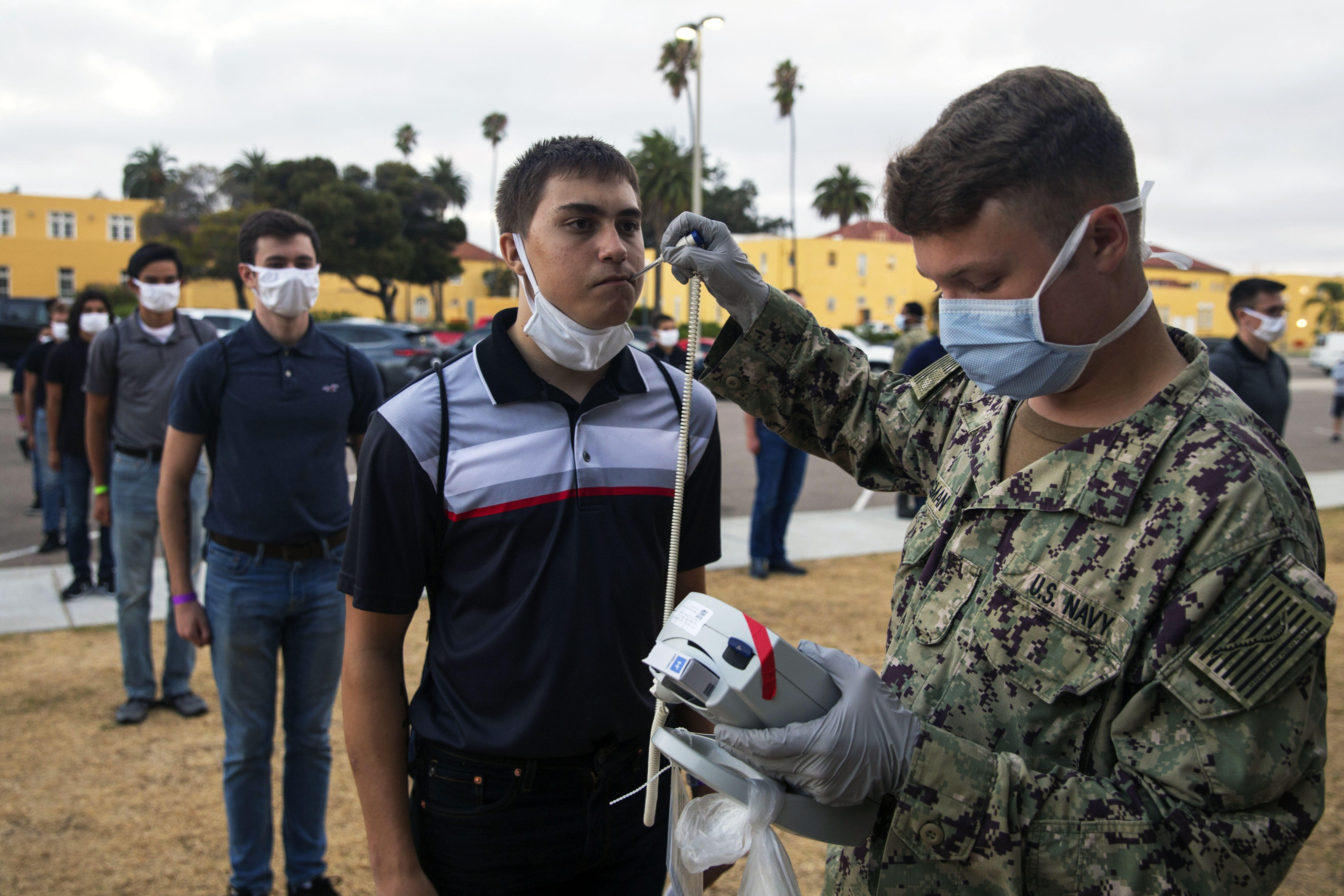
New recruits assigned to India Company, 3rd Recruit Training Battalion, are medically screened after arriving at Marine Corps Recruit Depot San Diego, Calif., July 27, 2020. As future recruits arrive, they will enter a 14-day staging period to be medically screened, monitored and attended classes to prepare them to begin recruit training. All of this will occur before they step onto the iconic yellow footprints and make that memorable move toward earning the title “Marine.”
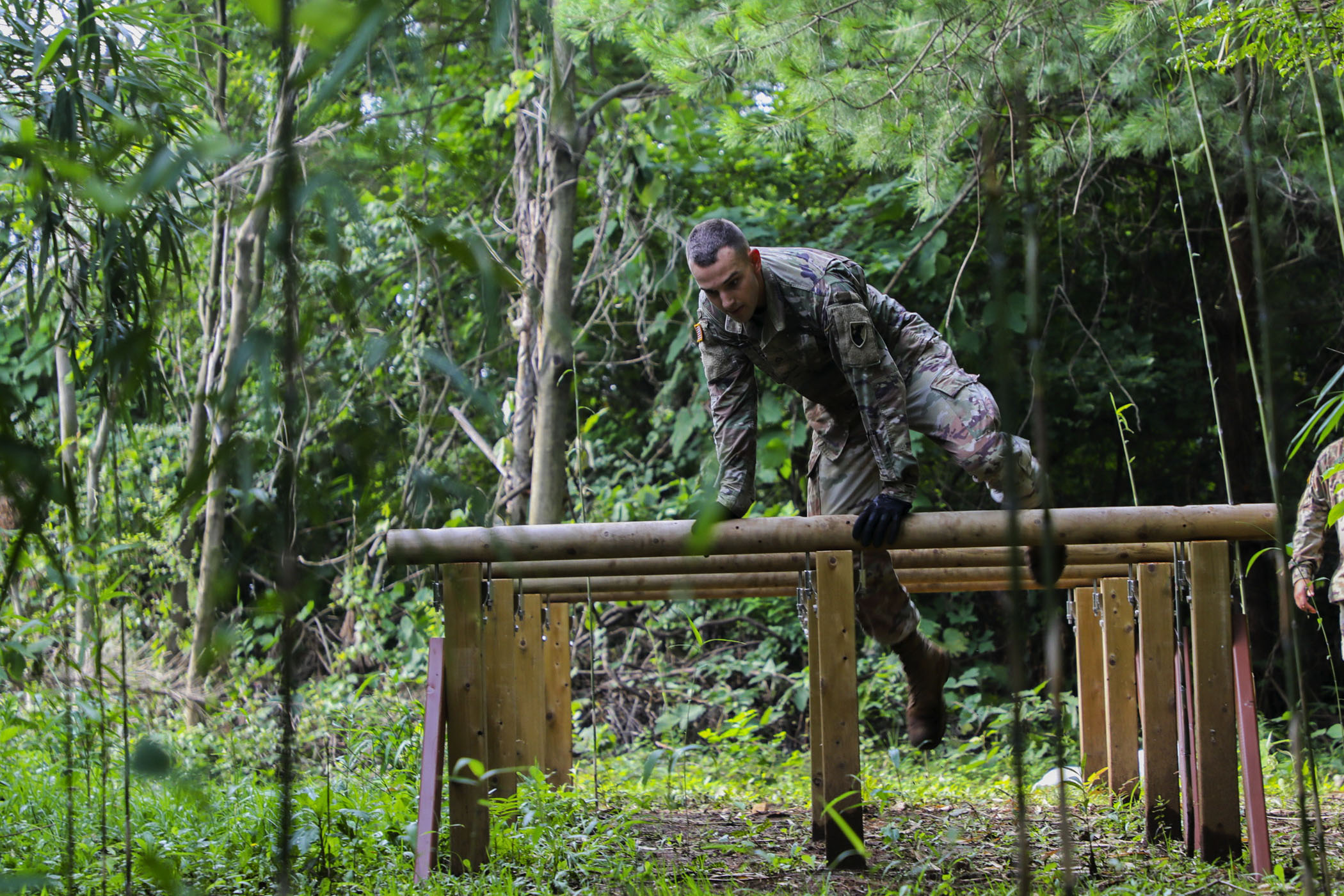
Army Japan is hosting the 2020 Best Warrior Competition at Camp Zama and Sagami General Depot to challenge soldiers in 33 events to identify the best noncommissioned officer and soldier in Japan. The event also posed challenges for the event organizers and participants who worked hard to adhere to COVID-19 protocols.
''China and Russia are developing increasingly capable and numerous missile defense systems, and integrating them into their defense strategies as they compete with the United States,'' a DOD official said.
The United States pioneered missile defense systems. Then-President Ronald Reagan proposed missile defense systems in the early 1980s. His ''Strategic Defense Initiative'' was dubbed the ''Star Wars Initiative'' — sometimes derisively.
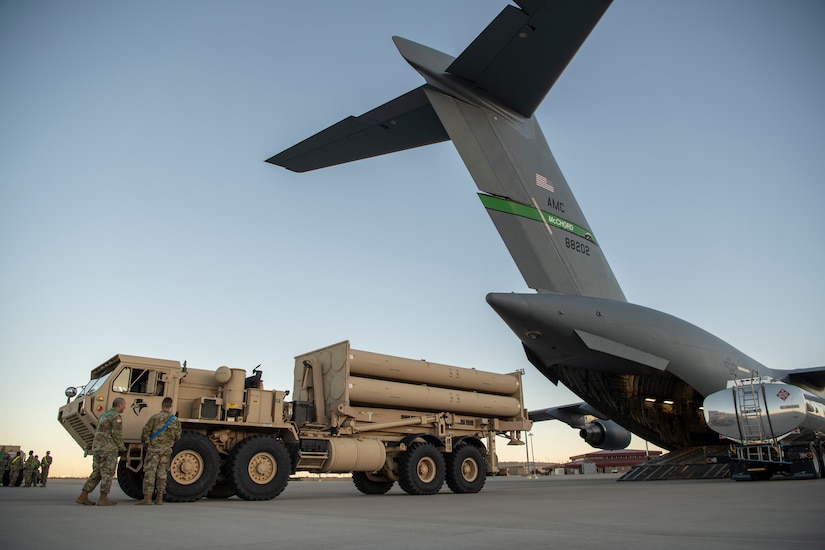
The laughing stopped during Operation Desert Storm, when Patriot missile defense batteries based in Saudi Arabia and Israel stopped Iraqi Scud missile attacks.
Russia is a long-time player. The former Soviet Union created a ring of anti-ballistic missile batteries around Moscow during the Cold War. These nuclear-tipped missiles still exist as part of Russia's A-135 anti-ballistic missile system. The system consists of 68 nuclear-armed interceptors. As part of President Vladimir Putin's military buildup, the system has received new radars and updated electronics. The beauty of this system is that the Russians have only to be close to an incoming threat. The downside is radiation from an intercept would contaminate thousands of acres of countryside.
The Russians are getting ready to field the S-500 system. Designed to intercept short- to medium-range threats, they say the system will defend against ballistic, cruise and hypersonic missiles. The system's initial operating capability is set for some time in 2025.
The other main threat comes from the People's Republic of China. The Chinese see missile defense as a key cog in their military ambitions. The People's Liberation Army Air Force is accelerating the transition of its tasks from territorial air defense to both offensive and defensive operations, according to a Chinese white paper on the subject. China's air force is also improving its capabilities for strategic early warning, air strikes, and air and missile defense.
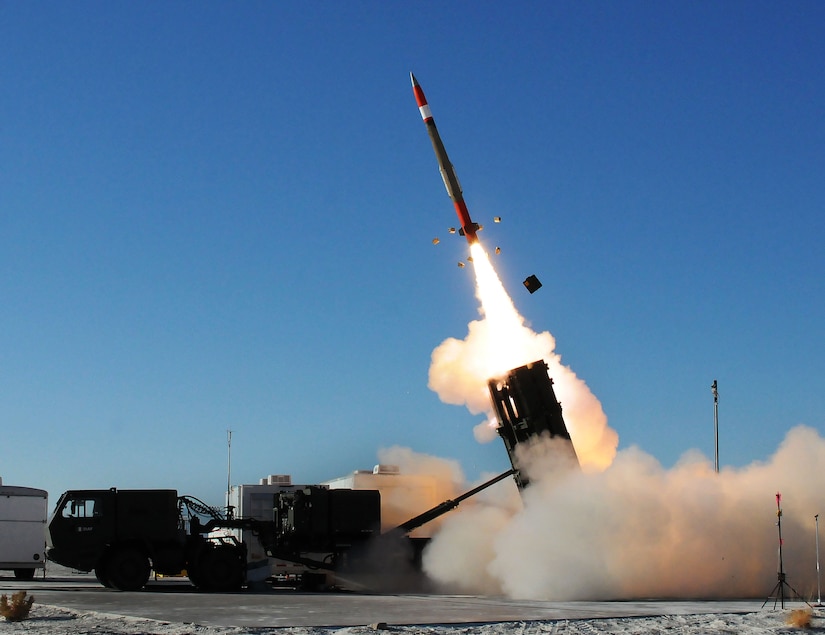
Right now, the Chinese are heavily dependent on Russian missile defense capabilities. The Chinese have invested in the Russian S-300 and S-400 systems – missile defense capabilities. The Chinese are assiduously studying the problem and have invested in research to build their own capabilities, DOD officials said.
This includes the HQ-19 missile defense system, which could be used against incoming, medium-range ballistic missiles. Initial operating capability is set for next year.
China is also developing a mid-course interceptor. The Chinese government said they tested that capability in February 2018. U.S. officials say initial operating capability is not likely until the late-2020s. They anticipate it would have good capability against intermediate-range ballistic missiles and could be adapted to target intercontinental s and submarine-launched ballistic missiles.
The United States homeland's missile defense system is in place to defend against accidental launches or attacks from rogue states such as Iran and North Korea. Unlike Russia, the U.S. uses non-nuclear ''kinetic kill'' vehicles, which destroy incoming warheads using their speed and mass to collide with the threat.
In an effort to help slow the spread of the coronavirus, the 182nd Task Force deployed 27 Michigan Air National Guardsmen to the Shiloh Missionary Church in partnership with the Genesee County health department and other state agencies.
The Michigan Air Guard provided free drive-thru COVID-19 testing for Flint and Genesee County, Michigan, residents, July 9-10.
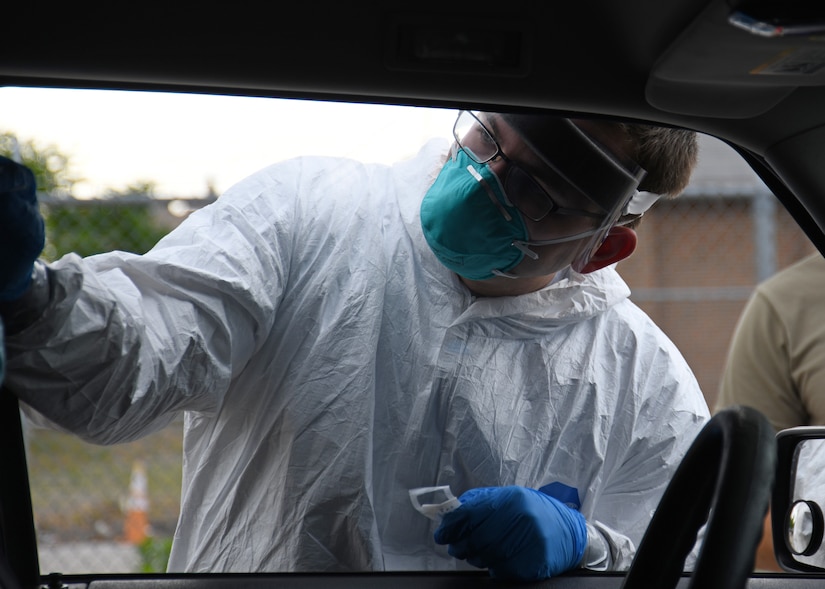
''It's great to have the National Guard out here helping us with testing,'' said Jean Troop, Genesee Health System health center deputy director. ''As a health system, we have done mobile testing for homeless shelters and group homes, but being able to hold community events which have no cost to the public is fabulous.''
Air Force Staff Sgt. Stephanie Holdridge, 110th Logistics Readiness Squadron command and control support, said the teams had about 1,000 COVID-19 nasal swab tests available. The swabs are designed to help identify positive cases so that infected individuals can follow the proper protocol and quarantine.
''The goal is to test everyone in the community who volunteers to be tested and flatten the curve,'' Holdridge said. ''After today, our team will have tested more than 11,000 people since May 3.''
The testing allows community members to drive up to the testing area and receive a test without leaving their vehicles.
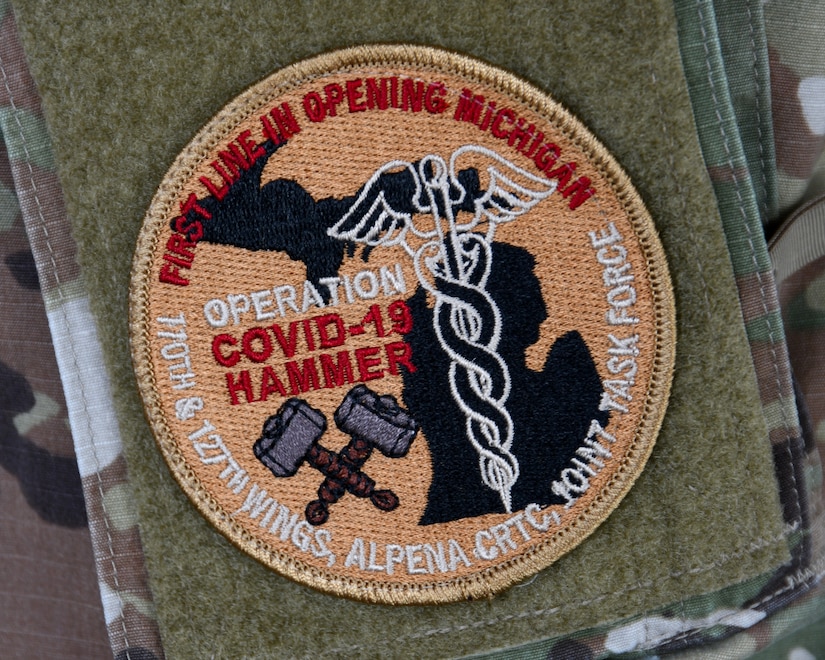
''It is a great opportunity to interact with the community and provide them with service they need,' said Air Force Chief Master Sgt. Charles Halt, 217th Air Operations Group team supervisor. ''It is helping give people peace of mind.''
This testing site was part of an ongoing effort by the Michigan National Guard to partner with a variety of state agencies to provide no cost Covid-19 tests to Michigan residents.
(Air Force Senior Airman Tristan Viglianco is assigned to the Michigan National Guard.)
The National Association for Stock Car Auto Racing — NASCAR — is well known to stock car racing fans and has produced many legends.

One of the NASCAR greats is Bud Moore, World War II veteran and owner-operator of Bud Moore Engineering from the 1960s until it shut down in 1999. Moore won the NASCAR title in 1957 as crew chief for racer Buck Baker, and as a car owner he won titles in 1962 and 1963 with driver Joe Weatherly. His team won three NASCAR Grand National Series championships and 63 races.
His career was legendary. Moore was inducted into the Stock Car Racing Hall of Fame in 2002; the International Motorsports Hall of Fame in 2009; the NASCAR Hall of Fame in 2011; and the Motorsports Hall of Fame of America in 2013.

After turning 18 during World War II, Moore was drafted into the Army on June 2, 1943. His basic combat training was at Camp Van Dorn, Mississippi. He then reported to Fort Dix, New Jersey, where he became a machine gunner assigned to 1st Platoon, D Company, 1st Battalion, 359th Infantry Regiment, 90th Infantry Division.
Moore and others from his division were reattached to the 4th Infantry Division, which landed on Utah Beach in Normandy, France, on June 6, 1944. The then-19-year-old almost drowned before hitting the beach when he stepped into a hole in the seabed with his heavy combat gear weighing him down.

After clearing the beach of Germans, Moore joined Army Maj. Gen. George S. Patton at Periers, France.
In December 1944, Moore participated in the Siege of Bastogne, Belgium, providing support for the besieged 101st Airborne Division.
Later, Moore's unit crossed the Siegfried Line, a series of German fortifications erected before World War II along Germany's western frontier. They went as far as the Rhine River in Germany, but they withdrew to Verdun, France, because they overextended their supply lines and the Germans counterattacked in what is now known as the Battle of the Bulge.
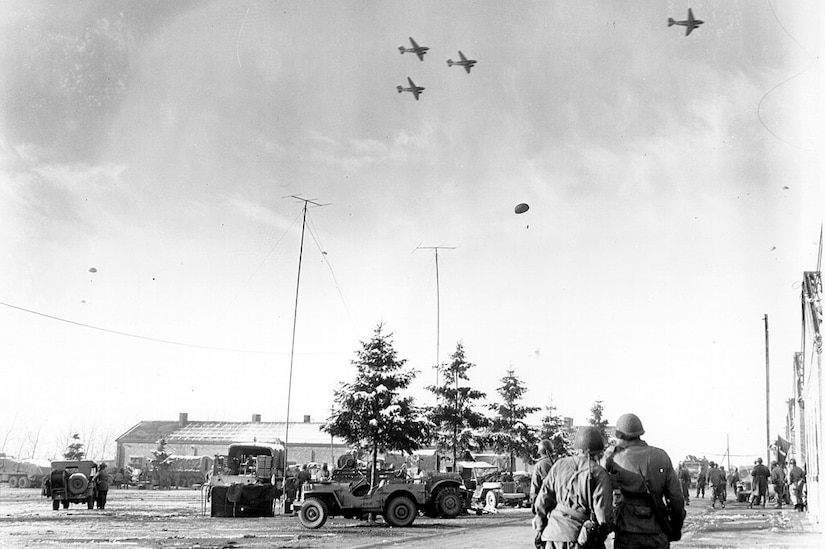
During the battle, Moore captured a number of German soldiers and was later awarded a Bronze Star for his role in the operation.
His unit continued through Germany and into Czechoslovakia, where Moore was promoted to sergeant and was awarded a second Bronze Star. Besides the medals for valor, he also received five Purple Heart Medals for the wounds he suffered.
Moore was honorably discharged from the Army on Nov. 15, 1945.
He died in 2017 in his hometown of Spartanburg, South Carolina, at the age of 92.
''When I first started on orders, I was working at a test site in Bremerton, but now I am making the test kits,'' said Army Spc. Dameon Spurgeon, a motor transportation operator with the Washington Army National Guard’s 1041st Transportation Company.
At first, he said, he was confused at why he and his fellow guardsmen were wearing protective suits and masks. ''But then we started testing people, and it made sense,'' he said. ''We were interacting directly with individuals that could have the virus.''
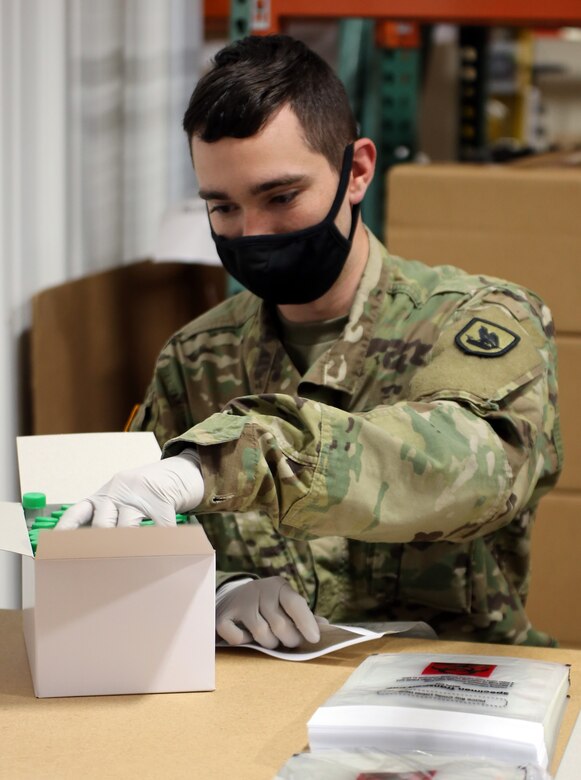
Spurgeon is one of more than 1,000 guardsmen who were activated four months ago to support the overall COVID-19 response in Washington. Guardsmen continue to support food banks, conduct COVID-19 mapping, operate community-based testing sites, assemble test kits and assist state officials with processing unemployment claims. Spurgeon's team has been tasked with assembling more than 2.4 million test kits for the state by the end of August.
''I know this mission is critical, and we are running very smoothly,'' he said. ''I think we are expected to break 1 million next week.''
An aquatics manager at Great Wolf Lodge and reserve police officer in Tenino, Washington, Spurgeon says supporting the COVID-19 response is just part of what he likes to do: helping those who need help. In 2017, he was activated to fill sandbags in support of a flood in the small eastern Washington town of Sprague.
''I have always wanted to help our communities, whether it is being a lifeguard, a police officer, or a guardsman,'' Spurgeon said. ''I am just happy to help.''
While the number of food bank missions has been cut in half as volunteers who had been homebound are returning, some guardsmen have moved from the larger processing missions in SODO, part of Seattle’s industrial district, to the food banks to work with the public.
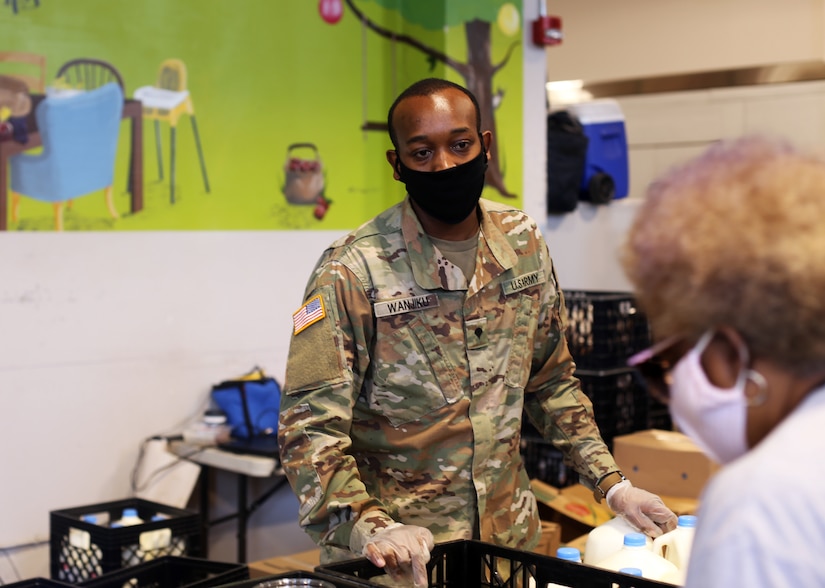
''The interactions with people are overwhelming,'' Army Spc. Alex Wanjiku said. ''While at SODO, although we knew we were, it didn't seem like we were helping out but moving from the warehouse to here I now see it.''
Wanjiku moved to America from Kenya three years ago and immediately joined the National Guard because he wanted to assist others during their times of need. Since being activated, he has gone from processing food at the South Seattle warehouse locations to passing out food at the St. Leo's Food Bank in Tacoma, Washington.
''Here I am, seeing the people I am helping, and they are so grateful,'' he said.
Army Sgt. Nikko Ethridge, a cavalry scout with the Washington Army National Guard and a full-time corrections officer for the Department of Corrections in civilian life, has been serving since the initial call-up. While originally starting at the SODO warehouse, he has supported two different activations, moving to the civil unrest mission in June.
''When I started, I was working at the SODO warehouse,'' Ehtridge said. ''Then my unit was asked to go to Bellevue to provide support following the civil unrest. The people in Bellevue were so supportive of the guard being there, and it was a nice break from the food bank mission.''
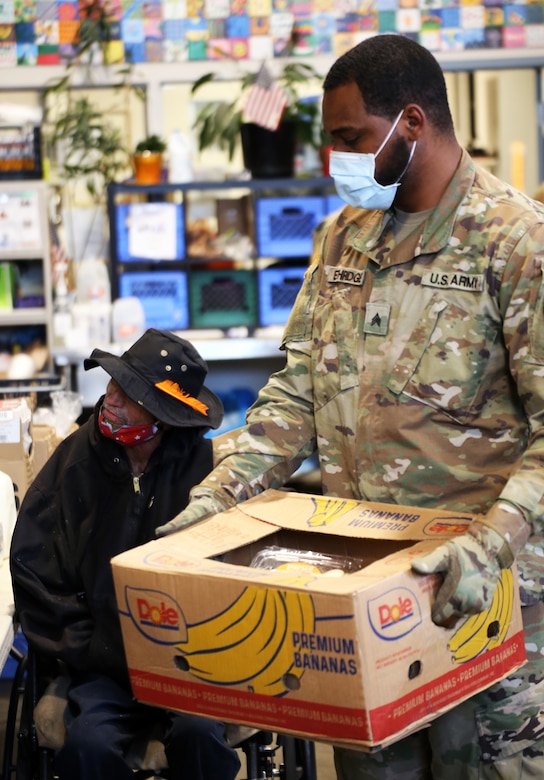
Ethridge used the break to move to the Kent distribution center, which was closer to home and then to the St. Leo's Food Bank.
''At the warehouse, you are packing food and it's easy to forget about the mission. But here you see where the food is going,'' Ethridge said. ''We are working more hours here, have less breaks, but you never would know it. It is definitely more rewarding.''
All three said they plan to support the mission through the duration, and if they move to different locations or jobs, they are happy to do whatever to assist others.
''I love the state, like helping people, and what is a better way than working for the National Guard to do that?'' Ethridge said.
(Joseph Siemandel is assigned to the Washington National Guard Joint Force Headquarters.)


 Posts
All Comments
Posts
All Comments
Posts
All Comments
Posts
All Comments