Thursday, September 13, 2018

Hurricane Florence Illustrates Need to Prepare Health Care Packages


FALLS CHURCH, Va. -- Hurricane Florence’s imminent arrival is a reminder for people to prepare for their health care needs during severe weather.

TRICARE experts recommend making a list that includes your physician’s name and contact information, medications with dosage and frequency, and type and model number of medical devices. Those with chronic health conditions or issues with vision, hearing, or mobility should get medical alert tags or bracelets, and identify how to get to safety.

Health care officials recommend that people gather immunization records, insurance paperwork and medical documents in a waterproof container that’s easy to carry. Put together a basic first-aid kit with enough medication to ride out a storm. TRICARE authorizes early prescription refills when emergency procedures are in place, as they currently are in, because of Hurricane Florence.

As a reminder, TRICARE beneficiaries not on active duty do not need a referral to receive care from urgent care providers. They can receive urgent care from any TRICARE-authorized urgent care center or provider. This allows beneficiaries to seek nonemergency care for illnesses or injuries if their primary care provider is unavailable because of weather disruptions.

Preparing for Natural Disasters

The Military Health System also prepares for natural disasters. Retired Air Force Brig. Gen. James “Jay” Burks is among those who understand that firsthand. In August 2011, Burks was a colonel commanding the 87th Medical Group at Joint Base McGuire-Dix-Lakehurst, New Jersey, when Hurricane Irene hit. In October 2012 -- only 14 months later -- Hurricane Sandy struck.

In the days leading up to Hurricane Sandy, Burks’ team systematically canceled patient appointments, prepared for a surge of prescription refills, and worked with public affairs to advertise the timeline for when services would be shut down.

“My primary concern was the safety and well-being of our staff and our patients as we followed the installation commander’s guidance to prepare,” Burks said.

Additionally, cots and provisions were brought in to the medical facility so two ambulance crews could work in shifts around the clock. Computer systems were taken offline, and big-ticket equipment such as radiology machines were covered to protect them from possible water damage. Burks also contacted civilian hospitals in the area to check on their capacity in case it was needed.

Fortunately, the installation was largely spared from Sandy’s wrath. But many communities in the multistate region were devastated, Burks said. The joint base community of about 44,000 airmen, sailors, soldiers, Marines, Coast Guardsmen and family members grew by about 5,400 when responders with the Federal Emergency Management Agency arrived when the installation became a staging area for recovery efforts.

The MHS is the DoD component of the National Disaster Medical System, which also includes the Departments of Health and Human Services, Homeland Security, and Veterans Affairs. The system provides health and medical support when requested by civilian authorities when disasters and other emergencies happen.

“We’re involved in the full spectrum of medical support, from national to state and local levels,” said Dr. Mark Gentilman, director of medical preparedness policy in the Office of the Assistant Secretary of Defense for Health Affairs, Health Readiness Policy and Oversight.

That support may include moving civilian hospital patients out of harm’s way, Gentilman said, and performing food safety operations and inspections through the Veterinary Service.

West Virginia Guard Prepares for Hurricane Florence Response


By Air Force Capt. Holli Nelson, West Virginia Air National Guard

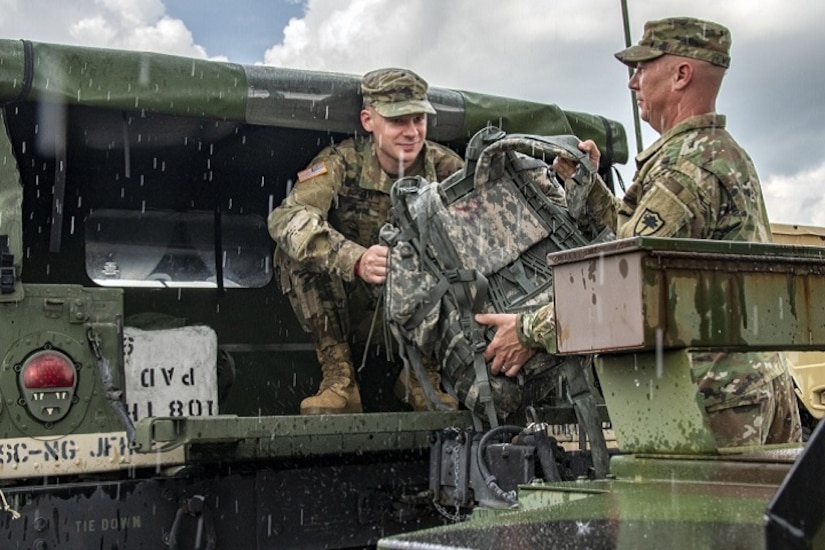
CHARLESTON, W.Va. -- The West Virginia National Guard continues to ramp up efforts to prepare for the impact of Hurricane Florence on the Mountain State, while simultaneously lending support to neighboring National Guard units and federal agencies.

The West Virginia National Guard has dispatched numerous joint enabling teams from the Army Interagency Education and Training Center to locations in the path of Hurricane Florence. As of Sept. 12, 13 soldiers have deployed to the National Guard Coordination Center, South Carolina, North Carolina and Virginia.

Joint team members have advanced training in homeland defense and response and will serve as additional assets and liaisons for National Guard units’ requirements at the national level in coordination with the National Guard Coordination Center. In addition, the West Virginia National Guard’s swift water rescue team, a joint endeavor with Clendenin and Glasgow Volunteer Fire Departments, is on standby for staging and deployment depending on the tracking of the storm.

Disaster Relief Supplies

At the 167th Airlift Wing in Martinsburg, West Virginia, 20 Air Guard personnel been working with representatives from the Federal Emergency Management Agency Region 3 to prepare a staging area for disaster relief supplies. Since Sept. 11, nearly 70 tractor-trailer loads of water, food, tents, cots, blankets and fuel arrived at the airbase where the supplies will await distribution as needed pending Hurricane Florence’s impact.

“We’re staging commodities here in anticipation of a potential flood hazard in West Virginia,” said Randy Branson, a logistics planner for the Response Division of FEMA Region 3, and team leader for the staging operations at the 167th AW. “We’re operating under what we call a surge.”

West Virginia Gov. Jim Justice authorized up to 50 Guardsmen and women into a duty status Sept. 11 for preparation and staging at locations across the state.

“Our Guard folks and our state and local emergency management and response agencies are working as one cohesive team in this process and I commend them on this effort,” Justice said. “There’s still a lot of unknowns at this point, and we want every one of our citizens to be safe throughout this ordeal. I urge you all to continue to prepare for this storm, monitor local reports and heed any warnings from our agencies working around the clock.”

Wednesday, September 12, 2018

Airmen Monitor Florence, Provide Data to National Hurricane Center


By Air Force Lt. Col. Marnee L.C. Losurdo, 403rd Wing

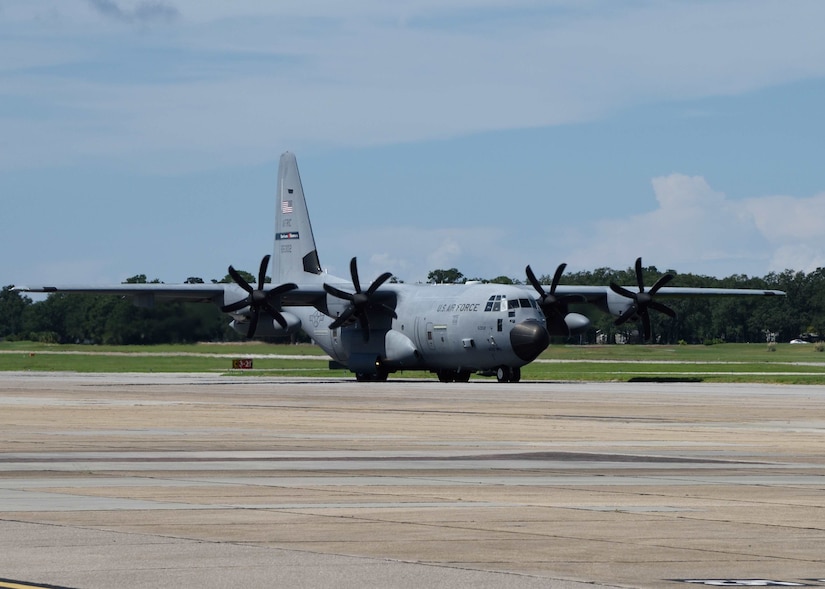
KEESLER AIR FORCE BASE, Miss. -- The Air Force Reserve's 53rd Weather Reconnaissance Squadron based here is flying missions over the Atlantic Ocean this week to monitor Hurricane Florence.

The 53rd WRS is the only Defense Department unit that flies reconnaissance missions into severe tropical weather during the hurricane season, June 1 through Nov. 30, to gather data for the National Hurricane Center to improve the center's forecasts and storm warnings.

The Hurricane Hunters' first mission into Florence was Monday evening. The Hurricane Hunters departed here Sept. 9 to operate out of Savannah/Hilton Head International Airport, Georgia, for Florence reconnaissance. Florence became a hurricane Sept. 9 and will impact the Carolinas and Virginia late Thursday and into Friday, according to the NHC.

The Hurricane Hunters have completed two missions into Florence, now a Category 4 storm -- including one today -- with three more missions already tasked and two more possible, said Air Force Lt. Col. Thomas Moffatt, a navigator for the 53rd WRS.

Lifesaving Data

Oceans are data-sparse environments, due to the lack of radar and weather balloons over those areas. And satellite data can be incomplete, so the data the Hurricane Hunters provide is vital, potentially saving lives and property, said Air Force Maj. Jeremy DeHart, 53rd WRS aerial reconnaissance weather officer.

During a hurricane, crews fly through the storms at 5,000 to 10,000 feet above sea level, flying through the eye of a storm four to six times to locate the low-pressure center and circulation. During each pass through the center, they release a dropsonde, an expendable weather reconnaissance device that collects weather data such as surface winds and pressure on its descent to the ocean surface.

Each crew has a loadmaster that drops an average of 8 to 12 dropsondes while in flight, depending on how many times the mission flies through the center of the storm, said Air Force 1st Lt. Garrett Black, 53rd WRS aerial reconnaissance weather officer. Ten devices were dropped on the most recent flight. It takes about 10 minutes for the collected data to travel from the dropsonde to the plane to the NHC being 10 minutes.

Working alongside the Navy, which is gathering data showing the relationship of the ocean temperature and how it can affect storms, are members of the U.S. Coast Guard Reserve. These members are releasing buoys called Airborne/Air Expendable Bathytherographs, or AXBTs, which collect data such as water temperature, said Coast Guard Reserve Chief Petty Officer Steve Jayne, a maintenance engineer.

Providing this data to the NHC will keep the squadron busy, especially since September is the peak of the annual hurricane season. Last year was the 10th busiest season on record, and this month looks to be a busy one as well.

In addition to monitoring Hurricane Florence, members of the unit deployed to Hawaii this month to fly reconnaissance missions into Hurricane Olivia, and today they are tasked to fly a low-level investigation mission into a disturbance approaching the Gulf of Mexico. Tropical Storm Isaac and Hurricane Helene are also in the Atlantic, but the squadron is not tasked to fly those storms.