Monday, September 10, 2018

U.S., South Korean Soldiers Raft for Relaxation, Resilience


By Army Sgt. Raquel Villalona, 2nd Infantry Division/Republic of Korea-U.S. Combined Division

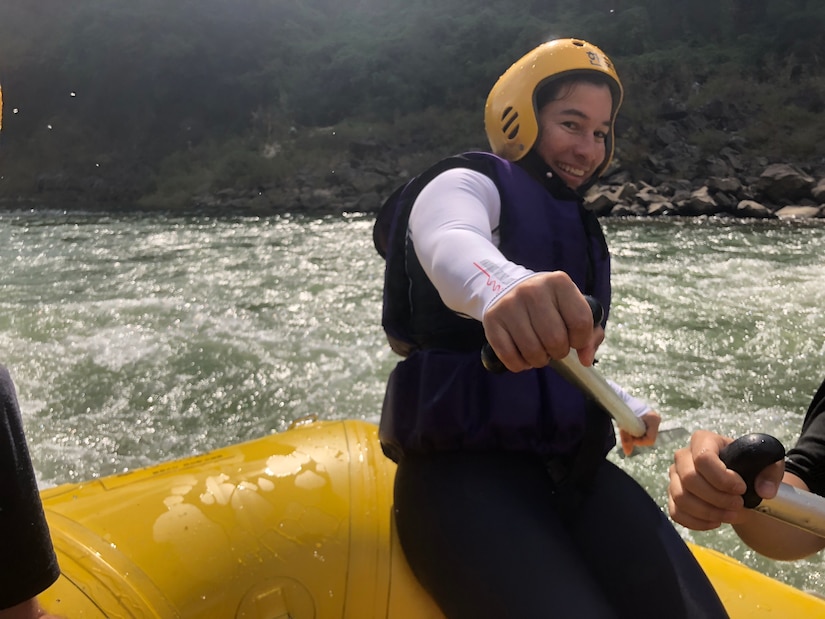
CHERWON, South Korea -- Equipped with a helmet, life vest and paddle, first-time rafters were filled with both excitement and anxiety as they approached their yellow rafts.

The U.S. and South Korean soldiers each grabbed a handle and guided their rafts down a hill to the foot of the bank as they prepared to embark the rapids together.

The 2nd Infantry Division/Republic of Korea-U.S. Combined Division unit ministry team hosted a Hantan River whitewater rafting trip Sept. 7 to provide members of the Warrior division spiritual resilience training and focus on teamwork.

The day started with a group discussion that included the importance of stress management and comprehensive resilience.

“Living with stress and knowing how to handle pressure is necessary for survival,” said Army Chaplain (Capt.) Steven K. Love, an Edwardsville, Illinois, native, and Headquarters and Headquarters Battalion spiritual leader. “It is related to a person’s ability to take control of their own destiny from the circumstances that surround them.”

Love ties the idea of river rafting to overcoming obstacles in life.

“Whitewater rafting requires the entire team to be fully engaged to get through the challenges, and that relates to life,” he said. “Like the river, soldiers hit some tough spots and it can be fearful, but you learn to get through it with the support of others.”

After the insightful discussions, a morale-boosting Korean barbeque lunch and a safety brief, enthusiastic soldiers descended onto the Hantan River.

‘A Ton of Fun’

“This is my first duty station and first time whitewater rafting,” said Army Pvt. Haley N. Deline, a Grand Blanc, Michigan, native and wheeled-vehicle mechanic for Headquarters Support Company. “It took teamwork and coordination to prevent the raft from flipping over, but we handled the situations well and had a ton of fun.”

The soldiers paddled in sync, creating new bonds and gaining both courage and insight while navigating their way through the intense rapids.

“Rafting made it easier to connect with other soldiers from the division,” said Pfc. Hyun-rae Kim, a South Korean army soldier serving as a U.S. Army augmentee. He is a native of Sejong City and works as a Headquarters Support Company supply specialist.

“I translated in Korean and English for the tour guide, which forced me to interact with soldiers I didn’t know. And in the end, I made new friends,” he added.

Army Maj. Jeffrey P. Nelson, native of Joliet, Illinois, and the division’s deputy plans officer, agreed that communication was key.
“We had to communicate effectively and be aware of what was going on around us and maneuver the raft together,” Nelson said. “We also had to take on different team roles, which is similar to our experience as soldiers in leadership positions.”

Sunday, September 09, 2018

Indo-Pacific Chiefs of Defense, Senior Enlisted Leaders to Meet in Hawaii


By Jim Garamone, DoD News, Defense Media Activity

NEW DELHI -- National sovereignty, freedom of navigation, open sea lanes and airways, and respect for the rule of law have enabled the nations of the Indo-Pacific region to proper together.

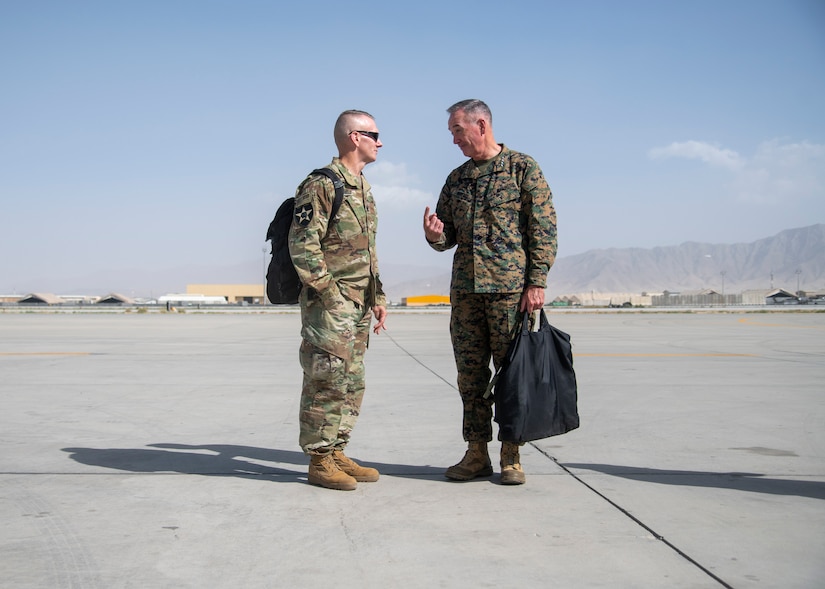
Marine Corps Gen. Joe Dunford, the chairman of the Joint Chiefs of Staff, will join with chiefs of defense and senior enlisted leaders from around the region Sept. 10 for a conference in Hawaii.

“What we’ll be talking about is the military dimension of that free and open Indo-Pacific and where there are opportunities to enhance our cooperation, to enhance our interoperability,” Dunford said about the meeting during an interview here.

The conference also will examine issues such as North Korea and efforts to disrupt the ship-to-ship transfer of oil, he said.

Enforcing Norms and Standards

“We’ll talk about continuing to make sure that we fly, sail and operate wherever international law allows and ask for all nations to help us with regard to enforcing … international norms and standards,” the chairman said.

The chairman said he will have time during the conference to consult with chiefs of defense on these and other pressing matters.

Senior enlisted leaders will also participate. Marine Corps Sgt. Maj. Anthony Spadaro, U.S. Indo-Pacific Command’s senior enlisted leader, will host his counterparts. Army Sgt. Maj. John W. Troxell, the senior enlisted advisor to the chairman, is one of the keynote speakers. The theme for the program is “Strategic Leadership and the Future of Battle 2035.”

The enlisted portion of the annual event is growing from six in 2016 to 20 this year. “We are covering the linkages of geographic space that we all operate in parallel with partners across the globe,” Spadaro said in a note.

These personal military-to-military contacts are important, the chairman said, noting that he will hold a number of bilateral engagements during the conference.

Saturday, September 08, 2018

Northern European Chiefs of Defense Address Russian Deterrence


OSLO, Norway -- Chiefs of defense from 11 northern European countries gathered here today to discuss a variety of topics at the 2018 Northern European Chief of Defense Conference.

The main focus of the conference was deterring Russian aggression, U.S. European Command officials said.

Army Gen. Curtis M. Scaparrotti, the Eucom commander, was the senior U.S. military official who attended the conference, which was hosted by Adm. Haakon Bruun-Hanssen, the Norwegian chief of defense.

The two leaders opened the conference by highlighting their mutual appreciation for one another’s collaboration and the benefits of partnering to address the regional challenges faced today.

“The United States and Norway have a long history of cooperation, and we value your partnership,” Scaparrotti said. “We’re pleased to be here today and to work so closely with you.”

Enhancing Cooperation

The objective of the conference was to facilitate an open and candid dialogue to enhance cooperation among the northern European countries in support of enduring stability and peace during a period of emerging challenges.

Presentations from both U.S. and Norwegian leaders helped to facilitate the discussion among the group. Topics focused on how nations can work more closely together to address disinformation and Russian malign influence, cyber threats and critical infrastructure protection, future military deployments and exercises in the region.

“We must be resolute and adaptable as we work together as a team to maintain our momentum,” Scaparrotti said.

Conference participants represented Denmark, Estonia, Finland, Germany, Iceland, Latvia, Lithuania, Norway, Poland, Sweden and the United States.