Monday, August 20, 2018

U.S., Iraq, Kuwait Complete Trilateral Exercise


By Navy Petty Officer 2nd Class Samantha Montenegro, U.S. 5th Fleet

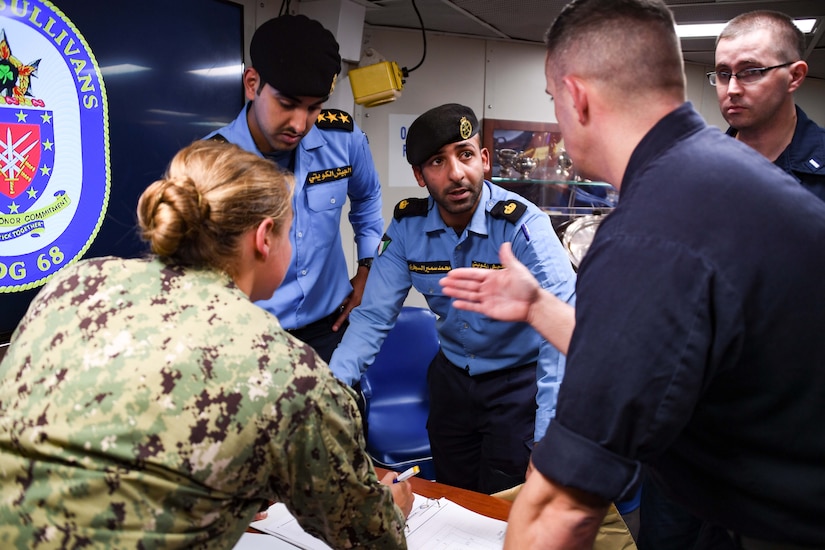
PERSIAN GULF -- The U.S. Navy and Coast Guard completed a trilateral exercise with Iraqi navy and Kuwaiti navy partners in the Northern Persian Gulf, Aug. 15.

The exercise focused on improving collective proficiency in maritime security tactics between the three nations and ensuring the freedom of navigation throughout the U.S. 5th Fleet area of operations, officials said.

Participants included the U.S. guided-missile destroyer USS The Sullivans, U.S. coastal patrol ships USS Tempest and USS Chinook, U.S. Coast Guard Island-class patrol boat USCGC Monomoy, Iraqi navy patrol boat P 303, and Kuwaiti navy patrol boat KNS Al-Garoh. The Sullivans led command and control of each event throughout the exercise.

Exercise events included live-fire gunnery exercises, visit, board, search and seizure team training, maritime infrastructure protection drills, search and rescue training, and high-value unit protection operations.

“This has been such a rewarding experience,” said Navy Seaman Karen Rodriguez, assigned to The Sullivans. “I was a part of the small boat operations we conducted with the Iraqi and Kuwaiti navies, and was able to watch our partners maneuver in the gulf alongside us. It’s reassuring to know we have strong partners in this area with common goals and it was really great to see it first-hand.”

Navy Cmdr. Russ Moore, The Sullivan’s commanding officer, felt the exercise helped develop collective maritime security tactics.

“Kuwait and Iraq play a key role in maintaining maritime stability in this region,” Moore said. “This trilateral exercise was an opportunity for all of us to flex our capabilities and learn more about our collective capability. We proved that our nations have the commitment and capacity to collectively preserve the free flow of commerce and freedom of navigation in the Gulf.”

Supporting Regional Stability

The exercise was led by Task Force 55, and is part of a routine theater security cooperation engagement serving as an opportunity to strengthen tactical proficiency in critical mission areas and support long-term regional stability.

TF 55 controls surface forces in the 5th Fleet area of operations, such as U.S. Navy patrol craft, U.S. Coast Guard patrol boats and independently deployed ships.
The U.S. 5th Fleet area of operations encompasses nearly 2.5 million square miles of water area and includes the Persian Gulf, Gulf of Oman, Red Sea and parts of the Indian Ocean. The region is composed of 20 countries and includes three critical choke points at the Strait of Hormuz, the Suez Canal and the Strait of Bab-al-Mandeb at the southern tip of Yemen.

Face of Defense: Airlift Manager Delivers on Contingency Travel Plan


By Air Force Tech. Sgt. Seth Bleuer, 194th Wing

KAHULUI, Hawaii -- Air Force Master Sgt. Michelle Kelly, an airlift manager with the Oregon Air National Guard’s 173rd Fighter Wing, served as the transportation planner for Tropic Care Maui County 2018, a joint training mission providing no-cost medical, dental, and vision services to people living on the Hawaiian Islands of Maui, Molokai and Lanai.

The training mission was held August 11-19.

Kelly has served in the Air National Guard for 18 years. She lives in Klamath Falls, Oregon, with her husband. She enjoys raising pigs and horseback riding.

Planning Transportation

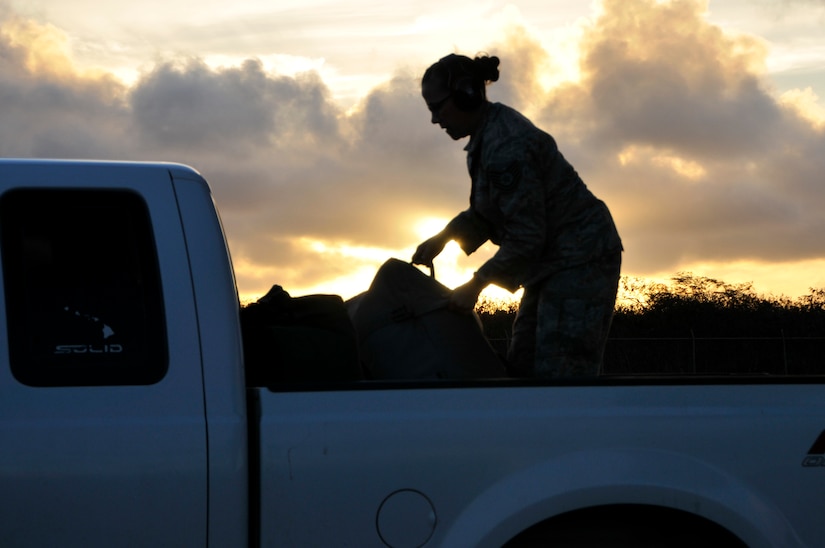
For Tropic Care Maui County 2018, Kelly planned all of the transportation to three different islands for over 350 service members from several military service branches. Tropic Care Maui County 2018 covers six different sites on three separate islands that require transportation of personnel and supplies to and from the sites.

Just before the majority of service members were to travel to the islands for the start of the mission, Hurricane Hector was moving through the Pacific, with the possibility of impacting the Hawaiian Islands. Kelly had to coordinate a contingency plan for travel on the day before the main body of service members was to arrive.

“The hurricane created a lot of transportation challenges,” she said. “When you fly military aircraft you have a large amount of people coming in at the same time and same place, and you can concentrate your transportation to that one location. Due to the hurricane we had to switch to commercial air, which meant we had small groups coming in at different times, and we had to adapt our transportation plan to that which was a huge challenge, but it worked out.”

Transportation Challenge

The biggest challenge, Kelly said, was redirecting the flights to Maui.

“Originally, everyone was supposed to fly directly to their islands at Molokai and Lanai, but due to safety concerns from the hurricane the decision was made to fly everyone into Maui,” she said. “This meant we had to move over 40 personnel and an enormous amount of equipment across the island to a ferry to Lanai.”

Kelly added, “We pieced it together when we could, but the ferries kept getting canceled due to the weather. It was challenging, but we made it work. We ran into the same challenge trying to get everyone and their equipment out to Molokai with their flights. But the aircrew from the Montana Air National Guard flying the C-130 were absolutely amazing and made it happen.”

Hurricane Hector moved away from the islands. Tropic Care participants arrived in Maui on Aug. 9, and were able to travel to their final clinic sites to prepare to receive patients by August 10. Clinics were able to open on schedule on Aug. 11.
Tropic Care Maui County 2018 is a joint-service training mission led by the Air National Guard and supported by members of the Air Force, Army, Navy Reserve, and Marine Corps Reserve. Tropic Care provides medical troops and support personnel “hands-on” readiness training to prepare for future deployments while providing direct and lasting benefits to the people of Maui, Molokai, and Lanai.

New York Guard, Habitat for Humanity Partner to Build Houses in Puerto Rico


By Eric Durr, New York National Guard

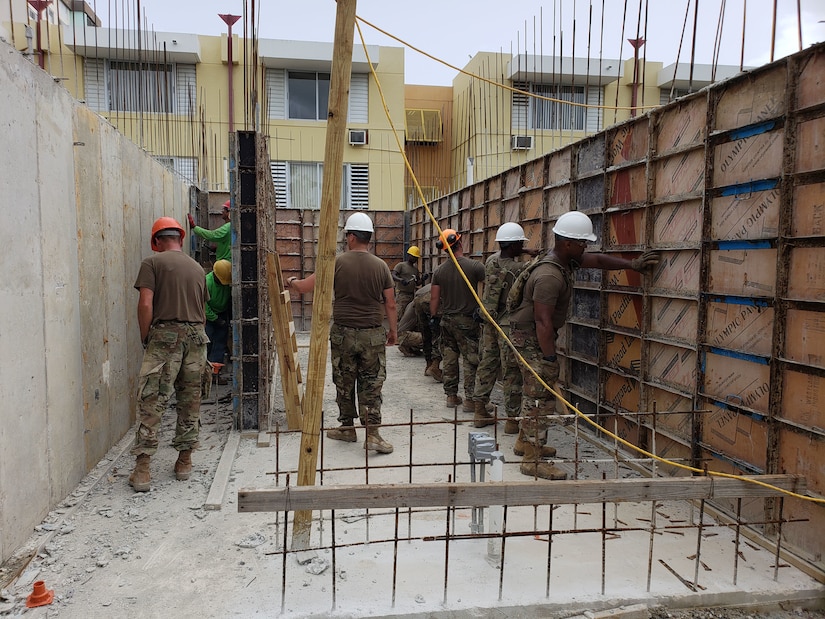
SAN JUAN, Puerto Rico -- Forty-five soldiers from the New York Army National Guard’s 204th Engineer Battalion spent two weeks helping Habitat for Humanity build a three-family home in Puerto Rico, July 30-Aug. 10.

The work was done as part of the Defense Department’s Innovative Readiness Training Program, through which soldiers hone military skills while also helping local communities.

The engineer soldiers were among a series of National Guard and Army Reserve engineer units helping to construct the housing, explained Army Maj. Dan. Colomb, the operations officer for the 204th, which is headquartered in Binghamton, New York.

Twenty of the soldiers were members of the battalion’s 1156th Engineer Company, which specializes in vertical construction, featuring soldiers with carpentry, masonry, plumbing and electrical skills. The other soldiers came from other companies in the battalion, Colomb said.

Partnership With Habitat for Humanity

The building is designed to resist hurricanes, and is being constructed in the Quintana neighborhood of San Juan. The New York Guardsmen worked with a local contractor hired by Habitat for Humanity, officials who ensured that materials arrived on time and provided construction advice, Colomb explained.

The 204th Engineer soldiers were responsible for building the forms and pouring all of the walls on the first floor, both internal and external. The unit also did some work on assembling scaffolding and framing for the second floor, before turning that over to the next iteration, Colomb explained.

While a portion of the 204th soldiers worked on the site for the Habitat for Humanity project, other engineers did work for the Puerto Rico Air National Guard at Muniz Air National Guard Base and for the Puerto Rico Army National Guard at its Camp Santiago facility, Colomb said.

Overall, it was a good mission for the New York soldiers and their leaders, he said.

Training, Fostering Relationships

“This mission allowed our soldiers to accomplish training for their individual readiness while also fostering relationships through the community tie-in and partnership,” Colomb said. “They were exercising their military occupational specialty skills, running the full gamut of the construction engineer tasks, everything from carpentry and masonry work to plumbing.”

The soldiers got to see the end result of the project, he said.

“Sometimes at annual training we dig a hole and then fill it back in. This project was rewarding, in that we could see tangible results that will be handed over to fellow citizens in need,” Colomb explained.

Deploying to Puerto Rico was not new for the New York Army National Guard.

In the wake of Hurricane Maria, which caused massive destruction on Puerto Rico, the New York National Guard deployed 300 soldiers to help.
The New York Air National Guard also flew missions bringing supplies to the island.