Tuesday, July 31, 2018

Agency Begins Process of Identifying Korean War Remains


By Jim Garamone, DoD News, Defense Media Activity

WASHINGTON -- All Americans welcome the return of remains from the Korean War.
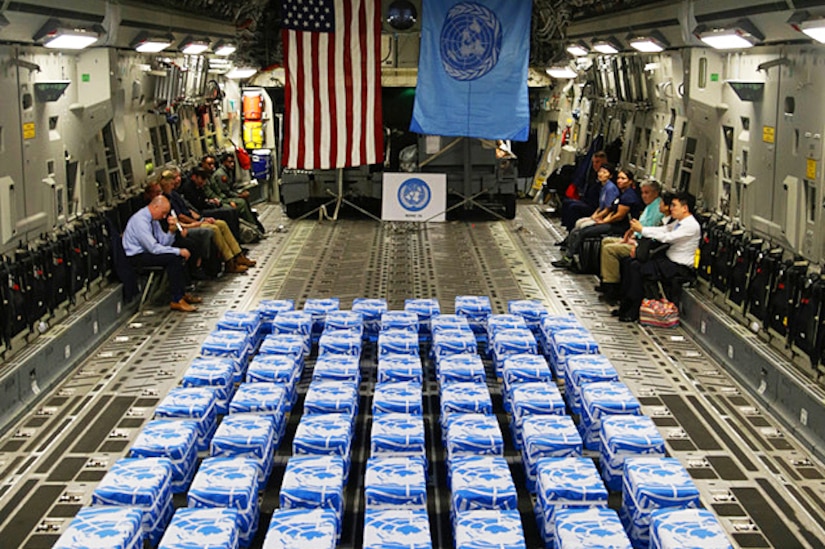
United Nations Command returned 55 cases of remains from the Democratic People's Republic of Korea, also known as North Korea, to Osan Air Base, South Korea, July 27, 2018.

The July 27 honorable carry ceremony at Osan Air Base, South Korea, transferred 55 boxes of remains covered by the United Nations flag. Now the work of identification begins.

These remains are presumed to be American, but many other nations fought in the Korean War, and it’s possible the remains may come from one of those nations.

The 1950-1953 Korean War was incredibly violent, with 36,940 Americans killed and another 92,134 wounded. Some 7,699 American service members are listed as unaccounted-for from the conflict.

Remains Examination

The remains will be examined at the Defense POW/MIA Accounting Agency, and experts there will be responsible for identifying the remains. The agency is relatively new -- coming into existence in 2015 after the merger of the Joint POW/MIA Accounting Command and the Defense Prisoner of War/Missing Personnel Office.

Many of the fallen service members died in North Korea and were buried by their comrades where they fell. Other U.S. service members were captured and placed in prisoner-of-war camps, where many succumbed to starvation, exposure and torture. Outside those camps are graves of Americans.

The DPAA Laboratory at Hickam Air Force Base, Hawaii, is the first U.S. stop for the recently returned remains. The lab is the largest and most diverse skeletal identification laboratory in the world and is staffed by more than 30 anthropologists, archaeologists and forensic odonatologists, United Nations Command release.

Those experts will sort and examine the remains. In the past, North Korea turned over commingled remains.

The lab experts are painstaking in their examination. The age of the remains -- at least 65 years old -- will complicate the process. The North Koreans collected the remains, and U.S. investigators will have to do the examination without the forensic information they normally would have, such as the approximate place of the burial and the conditions around it.

Examination of dental charts and mitochondrial DNA will be key technologies used to identifying the remains, and the process may take years to complete, DoD officials said.

Shanahan Discusses F/A-18s, Naval Aviation Readiness at Oceana

By Lisa Ferdinando, DoD News, Defense Media Activity

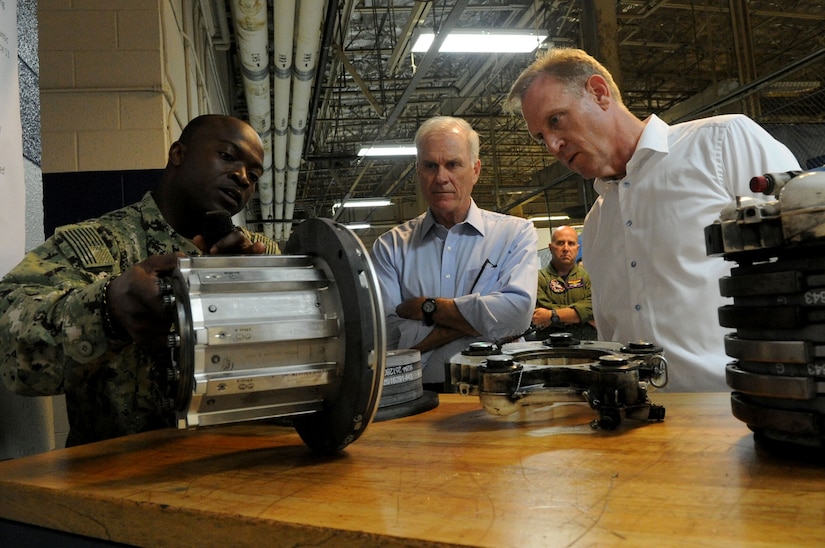
NAVAL AIR STATION OCEANA, Virginia Beach, Va. -- Deputy Defense Secretary Patrick M. Shanahan and Navy Secretary Richard V. Spencer toured the Fleet Readiness Center Mid-Atlantic facilities here July 26 to discuss enhancing naval aviation readiness.

"What we were trying to get out is what are the major process changes we would make to get a step function improvement in performance," Shanahan said in an interview after the tour and a closed-door session with the leadership team.

The deputy secretary said he wants to explore ways of taking a departmental approach to some of the issues and challenges in the maintenance and repair of F/A-18 Super Hornet jet aircraft.

"For the people who are responsible for those facilities, we wanted to get a sense of what are those big constraints where either you need help or a decision,” he said.

Seeking Higher Mission Capacity

The most important part of his visit, he said, was the discussion with the leadership team on ways to drive a higher mission capability. This, he pointed out, supports the National Defense Strategies priorities of creating a more lethal force.

Topics included modernization, service life extensions, managing the supply chain, and working on the DoD-level to better engage the supplier, he said.

"We also talked quite a bit about how to set the priorities for improving the reliability of the airplane,” he said. “We talked quite a bit about how do we want to get the right pool of spare parts [and] how should we rotate spare parts to different depots and different bases where the F/A-18s are based."

Sailors and civilians assigned to Fleet Readiness Center Mid-Atlantic perform maintenance and repair, inspections and structural and electronic system modifications on numerous carrier-based aircraft, as well as aircraft launch and recovery equipment on aviation-capable ships.

Marine Marksmanship Instructor Enjoys Mentoring Recruits


By Marine Corps Sgt. Dana Beesley, Marine Corps Recruit Depot Parris Island

PARRIS ISLAND, S.C. -- Surrounded by a sea of recruits and the smell of hot brass, it’s easy to spot Marine Corps Staff Sgt. Estefania Patino’s campaign cover and trademark green marksmanship instructor jacket as she patrols Chosin rifle range’s firing line here, inspecting weapons and encouraging shooters as they sight in on their targets.

As a primary marksmanship instructor, Patino is charged to make riflemen out of the recruits. To them, she is a shooting guru. But they would never guess that Patino had never fired a weapon before she joined the Marines.

A Laredo, Texas, native, Patino first developed her interest in shooting during recruit training, where she fired a weapon for the first time in her life. It was not a natural experience for Patino, who struggled at first.

“In boot camp, I was actually really bad. I got sharpshooter,” she said. “All I remember about the first time shooting was that it was cold and it was December. It wasn’t natural to me and took a lot of practice and reiteration for me to learn how to shoot. Once I got comfortable with it, I loved it.”

Honing Marksmanship Skills

While stationed in Okinawa, Patino volunteered to go through the Combat Marksmanship Coach Course, where she honed her rifle marksmanship skills and learned to shoot a pistol for the first time. Patino excelled, and her love for teaching grew along with her love for shooting.

“I love that I would be able to help my Marines through the process because I was able to memorize the knowledge and sustain it,” Patino said.

Patino later volunteered for drill instructor duty. While training recruits, she noticed there were trends of female recruits not performing as well on the range as Patino felt they could. Using her experience as a marksmanship coach, she stressed the importance of marksmanship knowledge to her recruits, and in turn, her platoons were recognized for their improved performance.

Seeking Unique Challenge

Later, she decided to pursue the challenge of becoming a primary marksmanship instructor, something few drill instructors had done before.

“I became a PMI because I enjoyed teaching marksmanship as a drill instructor,” Patino said. “My PMIs were always very helpful in helping me better assist my recruits.”

Patino said she relates to recruits on a personal level.

“I don’t put on a ‘persona’ for them, and I tell them that I struggled and I got nervous,” Patino said. “I try to make them comfortable, and tell them that if they keep trying and they keep pushing that maybe one day they’ll get to wear this green jacket.”

Marine Corps Gunnery Sgt. Angelica Dixon, senior drill instructor for Platoon 4036, Oscar Company, said Patino’s passion for teaching influenced her decision to become a marksmanship instructor.

“Weapons were her passion from the beginning, but I also believe she was born to teach,” Dixon said. “She’s a hard worker. She never complains.”

Mentor, Coach

Patino’s drive for mentoring and coaching on the range opened the door for more female drill instructors to pursue becoming PMIs, Dixon said.

“Besides making Marines, she’s also making marksmen, and for a recruit to see that is inspiring,” Dixon said. “She kept pushing to get to where she is, and that’s what every Marine should do. If you want to do something, don’t let anything stop you. And she didn’t let anything stand in her way.”

Patino will return to regular drill instructor duty in a few months. She hopes to become a senior drill instructor and a chief drill instructor before returning to the fleet.
“I’d like to take the knowledge that I have from the range and share it with my [drill instructors] and teach them how they can better prepare their recruits for the range -- even if it’s something small,” Patino said. “My [senior drill instructor] taught me how important the range is. When brand-new Marines get out to the fleet, they’re all going to have the same one ribbon, but their shooting badge is always going to be what sets them apart.”