By Sharon Holland, Uniformed Services University of the
Health Sciences
BETHESDA, Md. -- Whether an Army brat or Army officer, each
one is proud to serve this nation. They are not a band of brothers, but a band
of sisters. And they’ve already shared a common bond and lifetime of
experiences.
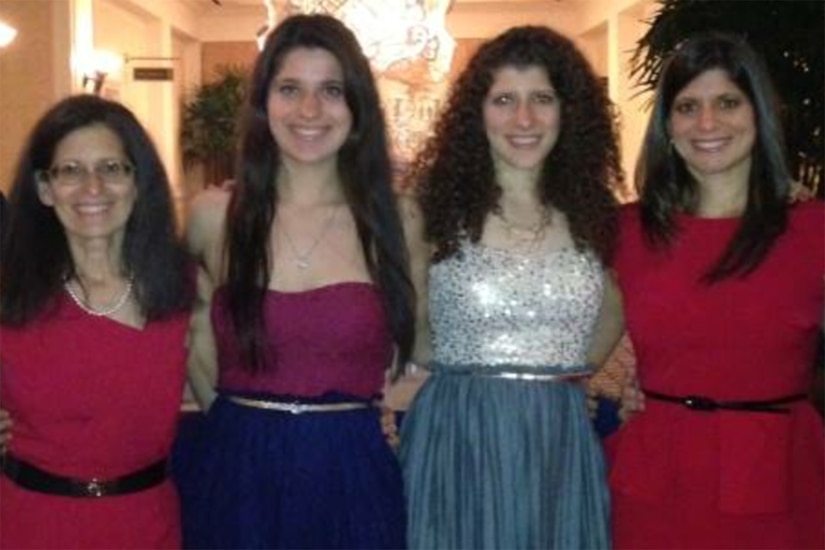
Army Maj. (Dr.) Nicole Miller Vietor, Army 2nd Lt. Natalie
Miller, and Michelle Miller, soon to be commissioned as an Army second
lieutenant, have had the same leader and mentor their entire lives: their
mother, Rose.
As a lifelong “squad” leader, champion and mother of three
daughters, Rose Miller is a natural leader. Soon, her youngest daughter,
Michelle, will follow in the footsteps of her siblings as she prepares to
attend F. Edward Hebert School of Medicine at the Uniformed Services University
of the Health Sciences here.
‘I Never Thought of Us as a Military Family’
Rose Miller came from a military family. Her father served
during World War II, and she married an Army officer. But as mother to a trio
of girls, she said, she never imagined military service for any of her
children, let alone all three of them.
“My husband graduated from West Point and we spent five
years in the military, but by time we had our three daughters, all that was
behind us and we worked at corporate positions,” Rose said. When she learned Nicole, the oldest, was
looking at a career in the Army, Rose was surprised.
“At first I was shocked,” she said. “And that happened with each one of my
daughters. I never thought of us as a ‘military family,’ but the underpinnings
were probably there all along. I’m sure that we somehow sent the message that
military training was held in high esteem.”
The Path to Medical School
All of the sisters, who grew up in Chester, N.J., were
interested in science, but none of them initially had her mind set on becoming
a physician.
The eldest, Nicole, followed in her father’s footsteps and
attended college at the U.S. Military Academy. While there, she shadowed
medical staff at multiple military treatment facilities.
“Working with the active duty patients, family members and
wounded warriors were some of my most rewarding moments at the academy,” she
said, adding that she immediately knew military medicine was the career for
her. “I couldn’t think of a better way to use my love of science and give back
to the soldiers that sacrifice so much for our country than becoming a military
physician.”
As an undergraduate student, Natalie worked in a laboratory
focusing on the pathological and genetic changes associated with Alzheimer’s
and Parkinson’s diseases.
“When I took a service-learning course in undergraduate, I
had the opportunity to volunteer in hospice. I got to personally meet and work
with patients afflicted by the diseases I had been studying,” said Natalie, the
second-eldest of the sisters. “I felt so
much reward when I combined basic science and clinical experience that I knew
that becoming a physician was the career for me.”
Different Ideas
The youngest of the three sisters, Michelle, had different
ideas. She didn’t want to be a doctor at first, saying it felt cliche to do
what her older siblings do, but her mind changed while in college. Her most
enjoyable experiences were shadowing and learning about her sisters’ careers
during school breaks, she said.
“I took one physiology course that was one of the first
steps towards being pre-med, and I knew I was hooked,” Natalie said. “The
complexity of the human body fascinated me, and being able to make that into a
career excited me. Human health is a very intimate aspect of a person’s life,
and being able to take part in, and guide, an individual in their health made
it an easy decision to pursue medicine.”
All of their paths led them to medical school at USU. Nicole graduated in 2010, and Natalie will
graduate on Armed Forces Day – May 19 – this year. Michelle starts school the
first week of August.
“USU was a natural choice for me since I always planned on a
career in the Army,” said Nicole, who is now an Army endocrinologist assigned
to Walter Reed National Military Medical Center here and associate director of
the endocrinology fellowship program. “I
wanted to get the best medical and military education possible, and USU was the
place that could provide it.”
When Natalie decided to attend USU, she had two reasons in
mind: excellence and respect. Not only does each student at the university
represent excellence in several areas, including academics, athletics, and
character, she said, but she also grew up with an enormous respect for the
military. “I am honored to care for this population who sacrifices so much,”
she added.
Michelle’s college classmates were leery of her plans to
pursue a career in military medicine, but she saw it as an opportunity to care
for a unique group of people dedicated to service, she said. She was already familiar with the military,
and saw it as more than an opportunity to be in a war zone.
Learning Beyond Education
Military medicine includes learning that goes beyond the
normal medical school education, Michelle said. It includes leadership training
as well as developing critical thinking skills under pressure. “It is an honor
to serve those who chose a life of service, together creating a group of people
working towards something bigger than themselves,” she explained.
The sisters’ “squad leader” encouraged their applications to
USU for medical school. When she saw her first daughter develop strong skills
in leadership, communication, responsibility and professionalism through the
military, she was sold on a military medical education, Rose said.
“I applaud my daughters’ choice of USU as their medical
school,” she said, adding that it is not due to financial considerations
because the family was prepared to pay for medical school for each one.
“My daughters chose this option because they each want to be
part of something bigger than themselves,” she said. “The high credentials of
USU, as well as the ability to have a much broader experience through rotations
in many locations and through caring for those in combat, make USU highly
desirable.”
With Michelle’s acceptance at USU, Rose Miller said, she is
still surprised to realize she has three daughters in the military. While she
wouldn’t have seen it coming several years ago, she’s very happy with their
choice, she said.
“Each one of them has great respect for USU as a training
ground and are excited to be military officers,” Rose said. “I am so very proud
of my daughters. In the end, we have become a military family.”
The girls credit their mother for their success. Observing
their mother as they grew up instilled work ethic and selfless service into
them, Michelle said. “For work, she had many international assignments and
traveled for months at a time,” she added. “Despite these demands, she always
made us feel like top priority.”
Through it all, Rose was at every school event, served as
room mother for their classes, and attended all school concerts, science fairs,
and sports events – even if it had to be over the phone, Nicole said. She
described her mother as a role model who is the secret to the sisters’
successes.
“The three of us would not be where we are today without
her,” she said. “She not only encouraged and supported us through every
challenge, success and failure, but she modeled what it means to be an incredible
mom and a successful career woman. Every day I strive to be as good of a mother
to my son as our mom is to us.”
Mother’s Day
This year for Mother’s Day, they will all be together. It
may be the last time for a while, as Natalie will be moving across the country
to Tacoma, Washington, to start her ophthalmology residency at Madigan Army
Medical Center.
“This is one of the first years we’ve been able to all be
together,” Nicole said. The Miller family will have a busy Mother’s Day
preparing for Natalie’s graduation and helping with her wedding dress search,
apartment hunting for Michelle, and getting some last-minute items for Nicole’s
baby. “Our mom’s job is to relax amongst the chaos,” she said.
On this Mother’s Day, the band of sisters has messages of
gratitude for Rose and her support, encouragement, and guidance.
“Thank you for the love, sacrifice, encouragement, and hard
work you’ve given to each of us,” Nicole. “We owe everything to you!”




 Posts
Posts

