Tuesday, March 13, 2018

Face of Defense: New York Sailor Saves High School Student


By Navy Chief Petty Officer Travis Simmons, Navy Recruiting District New York

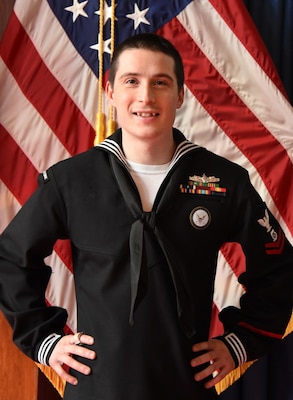
SAG HARBOR, N.Y., March 13, 2018 — A recruiter assigned to Navy Recruiting District New York jumped into action to perform the Heimlich maneuver on a choking freshman at Pierson High School here, Oct. 4, 2017.

Navy Petty Officer 2nd Class Jonathan Bragaglia, a native of Holbrook, New York, and a 2005 graduate of Sachem High School North, was in the hallway outside the school’s cafeteria behind his recruiting table covered with Navy giveaways and informational pamphlets.

Bragaglia does this five to six times a month at Long Island schools within range of his recruiting station to answer questions about the Navy and to discuss possible career options with students. He said he normally answers questions like what he does in the Navy, what boot camp is like and how long he signed up for.

That day started the same with one exception; he happened to be the closest adult within range to a distressed student.

Rescue

“After talking to a few students, I was behind my table and noticed one of the students came straight to my table and her face was blue; she was pointing to her neck,” Bragaglia recalled. “That’s when I jumped over my table and I asked her, ‘Are you choking?’ and she nodded her head yes.”

Bragaglis, who holds the military occupational specialty of gas turbine systems electrical technician, had received Basic Life Support training three times in the Navy. The last evolution took place one year prior at Naval Hospital Pensacola before Bragaglia reported to New York.

“I got behind her, said, ‘I got you’ and performed the Heimlich maneuver,” Bragaglia said.

The student’s airway was cleared on the second try when the obstruction flew out onto the hallway floor.

Student’s Gratitude

Bragaglia said the freshman thanked him, gave him a hug and then went back to her table and daily school routine. He was in the right place, at the right time and knew exactly what to do.

“I was very confident the training would work, because I’ve seen it done before while I was in boot camp,” Bragaglia said. “One of the sailors in my division was actually choking at a cafeteria visit and one of the recruit division commanders came and gave him the Heimlich maneuver, so I know it works.”

Bragaglia cleaned up the items he knocked over and spoke with some of the school security guards and lunch room chaperones to discuss what happened.

"Petty Officer Bragaglia's life-saving actions are a prime example of the broad scope of training Navy personnel receive,” said Navy Cmdr. Christian Gaskill, the commanding officer of Navy Recruiting District New York. “I was not surprised to hear that Petty Officer Bragaglia, being in the right place at the right time, had the knowledge and confidence to take action to prevent serious injury or death. I am grateful he is part of our Navy team!"

“Pretty much all the training kicked in, and I knew exactly what to do,” Bragaglia said.

Service Secretaries: People Are Most Important Part of DoD’s Success


By Jim Garamone DoD News, Defense Media Activity

WASHINGTON, March 12, 2018 — Speaking at a forum here today on issues surrounding the president’s fiscal year 2019 defense budget request, the three service secretaries agreed that the Defense Department’s most crucial need is continued investment in people.

Army Secretary Mark T. Esper, Navy Secretary Richard V. Spencer and Air Force Secretary Heather Wilson told the Center for Strategic and International Studies that the American military’s most crucial advantage is its people and that investment must continue to attract and retain them. Kathleen Hicks of CSIS moderated the discussion.

All three service leaders said the fiscal 2018 budget goes a long way toward repairing the damage done by the Budget Control Act spending cuts and that the 2019 request will begin the road to modernization.

“At the end of the day, people are what makes everything work, and we really have to focus on this,” Spencer said.

War for Talent

The services will be in a war for talent with the private sector, other portions of government and each other, the Navy secretary noted. “We are all going to be looking for more people to do more things in a more intelligent manner,” he said. “We are going to have to figure out a way to adopt and adapt those people that we have.”

Esper noted that the budget request supports the National Defense Strategy announced last month. He said the world is entering a “dynamic environment” with the return of great-power competition with Russia and China and the threats from Iran, North Korea and terrorism. The Army must be capable of countering terror threats as well as those posed by near-peer competitors, he said.

The Army must be able to fight across the spectrum of warfare, and it must be fast, Esper said. He pointed to the stand-up of the Army Futures Command later this year as a defining moment for the service.

“It will be the biggest reform in the Army since 1973 in terms of structure,” he said. “It promises to really reduce the time it takes to … field a new piece of equipment [and] to do it at less cost, and in time for the soldier to be able to use it.”

Joint Force Evolution

Wilson stressed that the services are continuing the evolution to a truly joint force. When she first joined the Air Force, she said, being joint meant having to serve in an assignment with people from other services, and joint operations meant deconflicting a battlespace.

“I would say the services are on the cusp of becoming integrated – not just interdependent, not just joint – but integrated in our operations,” she said. “Because if we can do that – if we can gather information faster, decide faster and act faster, then we are going to prevail in 21st-century conflict. I think we are on the cusp of being able to think and move in that direction.”

“What distinguishes our military, what makes us the premier fighting force in the world -- which guarantees it will prevail in any conflict -- is the quality of our service members,” Esper said. “They are – bar none – the best in the world. They’re smart, they’re aggressive, they’re resourceful, they are persistent and they have a lot of grit.”

All of the secretaries said the services need some personnel reforms. Wilson noted that it takes 150 days to hire a civilian employee and said the backlog for security clearances has doubled over the past 18 months.

The Air Force secretary said she wants organizational shifting to stop while the service implements acquisition reform. “There is something we need to pause, which is organizational change,” she said. “There’s been a lot of it in the Pentagon, and we need to just let the org-chart boxes stay where they are this year and focus on things like personnel reform and fine-tuning acquisition.”

Monday, March 12, 2018

Vietnam Vascular Registry Helps Combat Veteran Reunite with Doctors


By Sarah Marshall Uniformed Services University of the Health Sciences

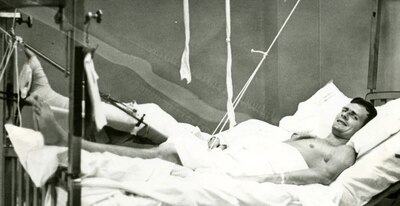
BETHESDA, Md., March 12, 2018 — Five decades after being shot in Vietnam and almost losing his leg, former Army Spc. John Fogle will make good on a promise he made to the surgeons at the 22nd Surgical Hospital in Vietnam who saved his life.

Before he was transported to a general hospital in Japan, Fogle told his surgeons he would drop them a line and let them know how he was doing. He never did write, but instead, in May he will fulfill his promise of reconnecting -- in person.

Fogle was injured in combat on July 25, 1969. Although over time he forgot their names, he never forgot the doctors who saved him and when he learned of a reunion planned for the surviving members of the 22nd Surgical Hospital staff, Fogle decided to seek them out in hopes of inviting them to the event.

Vietnam Vascular Registry

One of his first stops in his search was the Vietnam Vascular Registry, developed by Dr. Norman Rich, chair emeritus of the surgery department at the Uniformed Services University of the Health Sciences.

In 1966, the Vietnam Vascular Registry was developed by Rich at the Walter Reed General Hospital based on cases he had seen while serving in Vietnam along with hundreds of other cases added by colleagues. The registry documented and analyzed blood vessel injuries in Vietnam, resulting in documentation of more than 10,000 injuries from about 7,500 American casualties in Southeast Asia. Each patient entered into the registry was assigned a consecutive number and given a vascular registry card stating the registry’s purpose.

Rich has maintained the registry for more than 50 years. If stretched out completely, the entire registry itself would be about 114 linear feet, he noted. In 2016, the registry was digitized by the Office of the Secretary of Defense, making it much easier to search and find records from vascular patients seen during Vietnam. The originals were sent to the National Archives and Records Center in St. Louis.

Fogle had held onto his registry card, sent by Rich from the Vietnam Vascular Registry, for more than 50 years. Once he connected with Rich, he was able to reference his assigned registry card number, making it relatively easy for Rich to access his medical records from the 22nd Surgical Hospital. The records provided the names of Fogle’s doctors, among them Dr. Monroe Levine, who assisted in the surgery on his right leg and arm.

‘They Performed Miracles’

Fogle has foggy memories of the day he was injured, so over the years it was hard for him to remember the names of those doctors who first operated on him in the 22nd Surgical Hospital. However, he will never forget being shot while flying in an observation helicopter.

He was on the lookout for signs of enemy activity, as the crew chief, and as they flew over a canyon, they surprised the Viet Cong, who began firing at their helicopter. Fogle was shot three times down his right side, leaving him with a severed femoral artery and a compound fracture in his femur. He remained conscious, though, and continued firing back to suppress the enemy’s fire and protect his crew, which included the pilot, who sat just two feet away. They were able to get out of there quickly and landed safely, arriving at the 22nd Surgical Hospital which was only 12 miles away. Fogle’s actions later earned him an Air Medal.

About 10 minutes after he had been shot, Fogle was being pulled into the 22nd Surgical Hospital, which he recalls had four fully equipped operating rooms, totally air conditioned. The unit’s mission was to help stabilize the wounded before transporting them to the 249th General Hospital at Camp Drake in Japan.

“They performed miracles in there,” Fogle said. At the time, he said, his leg was a big “question mark.” Surgeons in that unit prepared him for transport to Japan, and told him he “wasn’t out of the woods just yet.” He made it to the general hospital, where he underwent more surgeries. His recovery, over the years, was smooth and he has not had any other major issues.

“I was very fortunate,” Fogle added. “I could’ve easily lost my leg.”

He added that many surgeries were performed at the 22nd Surgical Hospital, over a long period of time, so it would have been hard for the doctors to remember each patient. In looking through his records obtained through the registry, Fogle said he learned that Levine had seen four other patients that same day.

“That’s why these notes [in my records] are so important,” he said.

Reconnecting

After learning Levine’s full name, it didn’t take long for Fogle to find that the doctor is still practicing medicine in Colorado. The two connected over the phone, and are now looking forward to meeting again, after all these years, at the reunion, which will take place in Florida. Fogle sent his records to Levine to look through, hoping to help jog his memory before they meet in May.

Fogle considers himself very lucky. After leaving the military, he’s really only had to limit himself to certain sports and activities because he did suffer muscle loss, which throws off his balance to this day. He was able to go back to school after his military service and became an electrical engineer. A few years ago, he retired after a fulfilling, 38-year career.

Had it not been for the work of Levine, as well as the others in that unit and throughout his care and recovery, Fogle might not be where he is today.

“I’m looking forward to meeting him again in person,” Fogle said.

Rich was pleased to hear Fogle reconnected with one of the surgeons who saved his leg.
“This is what makes it valuable,” he said, referring to the extensive Vietnam Vascular Registry. “It is really reassuring that what we were doing has merit.”