Wednesday, February 21, 2018

Face of Defense: Airman's Innovation Benefits Relief Efforts


By By Air Force Staff Sgt. Robert Hicks, 621st Contingency Response Wing

TRAVIS AIR FORCE BASE, Calif., Feb. 21, 2018 — In the aftermath of Hurricane Maria, when the Air Force’s 621st Contingency Response Wing deployed more than 150 airmen throughout Puerto Rico and the surrounding islands, one airman in particular employed an innovative way to facilitate support to the relief mission.

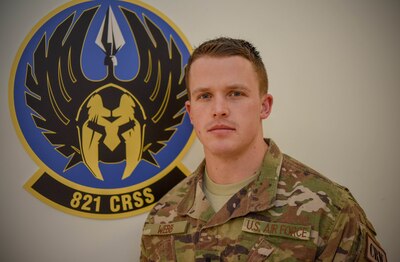
Air Force 1st Lt. David Webb, an intelligence officer with the 821st Contingency Response Support Squadron here, identified a critical role open-source data could play to help expedite the hurricane relief efforts to more than 3.5 million civilians in the wake of the most recent hurricanes.

As one of the first intelligence officers to deploy to Puerto Rico in support of the relief efforts, Webb had the idea to use publicly available information to help deliver life-saving supplies to where they were needed most. He developed a common operating picture using Google Earth to gather background information that could be employed as a navigation tool.

“Through the use of publically available information, as well as working with sister services and other DoD support agencies, I was able to gather essential information, including disaster-ridden locations, accessibility to these locations, and needs of the local area for the placement of distribution points and regional staging areas for relief supplies,” Webb said.

Building a Shared Resource

Once Webb was able to pinpoint hard-to-reach areas, he used the tool to add additional information, such as grid coordinates, sources of information, contact information and needs of the area. He provided this information directly to the senior airfield authority.

“The COP was also used to provide the SAA, contingency response element commander and other [leaders with] situational awareness updates, enable force protection of the airfield and shape leadership decisions,” Webb said. “The COP was also used by the Army, Marines, [U.S.] Fish and Wildlife [Service], American Red Cross and the Federal Emergency Management Agency.”

In essence, the common operating picture provided teams on the ground in Puerto Rico with a centralized hub of information to coordinate logistical support.

“The COP was an amazing tool,” said Air Force Lt. Col. John Berger, the 921st Contingency Response Squadron’s director of operations. “It allowed us to see the entire environment and plot the needs of a community [in] real time, which enabled us to get supplies to the correct villages faster.”

The common operating picture was also used by follow-on forces to ensure continuity of support to the Puerto Rico relief efforts.

As a direct result of Webb’s innovation, Defense Department aircrews and federal agencies were able to deliver 8.7 million pounds of aid across the island.

Innovation

Webb was selected to present his innovative product during the National Reconnaissance Office Air Force A2 Industry Symposium. During this conference, he was able to share his ideas and connect with industry leaders to help support future mobility missions.

“Webb is consummate professional,” said Air Force Maj. William Taylor, the 321st Air Mobility Operations Squadron’s senior intelligence officer. “He’s Intelligent and dedicated to his craft. His inquisitive disposition and knack for problem-solving made him a shoo-in for the mission, and it paid off."

Webb was recognized for his support to the hurricane relief operations and received a challenge coin from Air Force Lt. Gen. Veralinn Jamieson, the deputy chief of staff for Air Force intelligence, surveillance and reconnaissance.
“Innovation is a critical part of Air Force history and will be a critical part of the Air Force future,” Berger said. “Airmen tend to think outside the box and tackle problems in new and innovative ways. In the [contingency response wing], our mission is extremely dynamic, ranging from humanitarian relief to combat operations, so we require people who can find new ways to make the team more efficient and effective.”

Tuesday, February 20, 2018

Airmen Build Partnerships at Patriot South 18


By Air Force Senior Airman John Linzmeier, 154th Wing

GULFPORT, Miss., Feb. 20, 2018 — Imagine this: A major earthquake registering magnitude 7.7 strikes a town called Luxora, Arkansas, while also affecting a town called Aloha City in Perry County, Mississippi. There are reports of high amounts of injuries, casualties and major infrastructure damage throughout Aloha City.

As criminal activity is on the rise in rural areas, the Mississippi Emergency Management Agency is stretched thin. There isn’t enough law enforcement support to respond to the looters and to help injured civilians in hard-to-reach places. The Mississippi governor declared an emergency in Perry County, and enacted an Emergency Message Action, asking for support of outside states and local, state and federal agencies to respond to the affected region.

Disasters like this happen all the time, which is why about 1,000 participants from federal, state and local entities came together here for this year’s iteration of exercise Patriot South, held Feb. 13-15.

In this particular training scenario, the Hawaii Air National Guard’s 154th Security Forces Squadron flew 4,200 miles to join Mississippi law enforcement’s call to arms.

Realistic Training

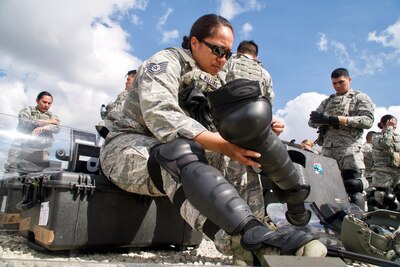
After the triggering event of Patriot South, the catastrophic earthquake, the airmen from Hawaii united with the Mississippi Department of Wildlife, Fisheries and Parks’ Special Response Team at Camp Shelby, Mississippi, where they were unofficially deputized for the training events. Over the next three days, the airmen served as much-needed backup for the responders in a series of trials, such as supply delivery, medical care, search and rescue, VIP escort, crowd management and even herding cattle in order to clear an airfield.

“Based off my experience of working with active-duty airmen, the training we went through felt very realistic,” said Airman 1st Class Marvin Bumanglag, a 154th SFS fire team member. “Some parts got really stressful, but as long as we stayed in communication with each other, we were able to handle each situation they threw at us. It also helped me get to know the people I work with better and now I’ve got a lot more trust and confidence in them.”

Each training activity was carefully planned to mimic an actual emergency event that had occurred during the past year.

In order to bring each crisis scenario to life, security forces airmen from the California Air National Guard’s 129th Rescue Wing played out the roles of injured victims, aggressors, general public and VIPs, making this the first national level exercise to include multiple Air National Guard security forces units working together with state law enforcement.

Diverse Experience

While the two units haven’t collaborated before, one of the largest advantages of the civilian-military police team was its diversity of experience. Several of the MDWFP members hail from military backgrounds and have been recognized as one of the best team of trackers in the nation. Out of the 94 security forces squadrons in the ANG, the guardsmen of the 154th have the highest deployment rate, and many of its airmen have civilian careers as police officers or other emergency management experience.

Throughout the exercise, participants had plenty of opportunities to share their expertise and learn something new from their new partners.

“It’s remarkable how we only met each other a few days ago, but our teams just gelled together like they’ve been working together for their past ten to fifteen years,” said police Capt. Dale Bell, MDWFP SRT chief. “This experience has definitely been a bridge-builder between the Air National Guard and the Mississippi Department of Wildlife, Fisheries and Parks; a complete win-win for the state and the country.”

Exercises like this also serve as a valuable opportunity for junior airmen to step up and assume responsibilities that normally would fall on higher-ranking personnel, such as operating the law enforcement operations center and leading a fire team. Air Force Senior Master Sgt. Clifford Ramson, 154th SFS exercise evaluator, said it’s common for leaders to be diverted to other taskings or experience field-related injuries, making it important for all airmen to be ready to fill the shoes of their superiors.

After four months of planning and three days of crisis management, the exercise came to a successful close.

Just like the unpredictable events the responders overcame in Patriot South, Air National Guard units across the nation and U.S. territories are standing by to lend a hand to their neighboring states and active duty components around the world. Whether it’s an earthquake, blizzard, flood or tsunami, they have the unique role and capability to help those in need at a moment’s notice.

U.S., Thai, South Korean Underwater Construction Teams Work Together


By Navy Petty Officer 3rd Class Ian M. Kinkead III Marine Expeditionary Force

SATTAHIP, Thailand, Feb. 20, 2018 — Navy underwater construction teams from the U.S., Thailand and South Korea are training and operating together at Thung Prong Bay Sattahip Navy Base here during the 37th annual Cobra Gold exercise, which ends Feb. 23.

"We are here to perform underwater inspection techniques and also to talk about maintenance plans," said Navy Petty Officer 1st Class Matthew Ramirez, a construction mechanic.

The main operation of the day for the underwater construction teams was the inspection of Thrung Prong Pier, which was originally built in the 1970s and was rebuilt for the first time last year.

"The UCTs completely rebuilt Thrung Prong in 2017,” Ramirez said. During that work, the teams installed 377 sacrificial anodes, which are used to protect submerged metal structures from corrosion. This year, the teams measured the rate of deterioration on those anodes. "Since the pier was built, it has been used for various purposes -- ammo offloads, mooring, getting supplies on and off the base and basically enabling the Royal Thai Navy to be a little bit more efficient," he said.

The underwater construction team members will also prepare for the possible future reconstruction of DeLong Pier.

"The DeLong Pier was built in the 1960s," Ramirez said. "It's an ammo offload pier that the U.S forces built, and right now it is dilapidated, so we are here to make some measurements and create a possible demolition plan for a future project."

South Korean navy Lt. Donghyua Oh, from Jinhae Naval Base, said that the Thai, South Korean and U.S. personnel working together strengthens the alliances between them exponentially. This Cobra Gold and every other one moving forward will continue to grow and strengthen the underwater construction teams combined interoperability.

Underwater construction teams are a small community in each nation's navy, which is a reason why their ability to operate together and build lines of communication is part of Cobra Gold 18.

Cobra Gold 18 is an annual exercise conducted in Thailand, which this year runs from Feb. 13-23 and has seven fully participating nations.