Friday, January 22, 2016

Operation Desert Storm changed the Air Force through innovation


Secretary of the Air Force Command Information / Published January 21, 2016

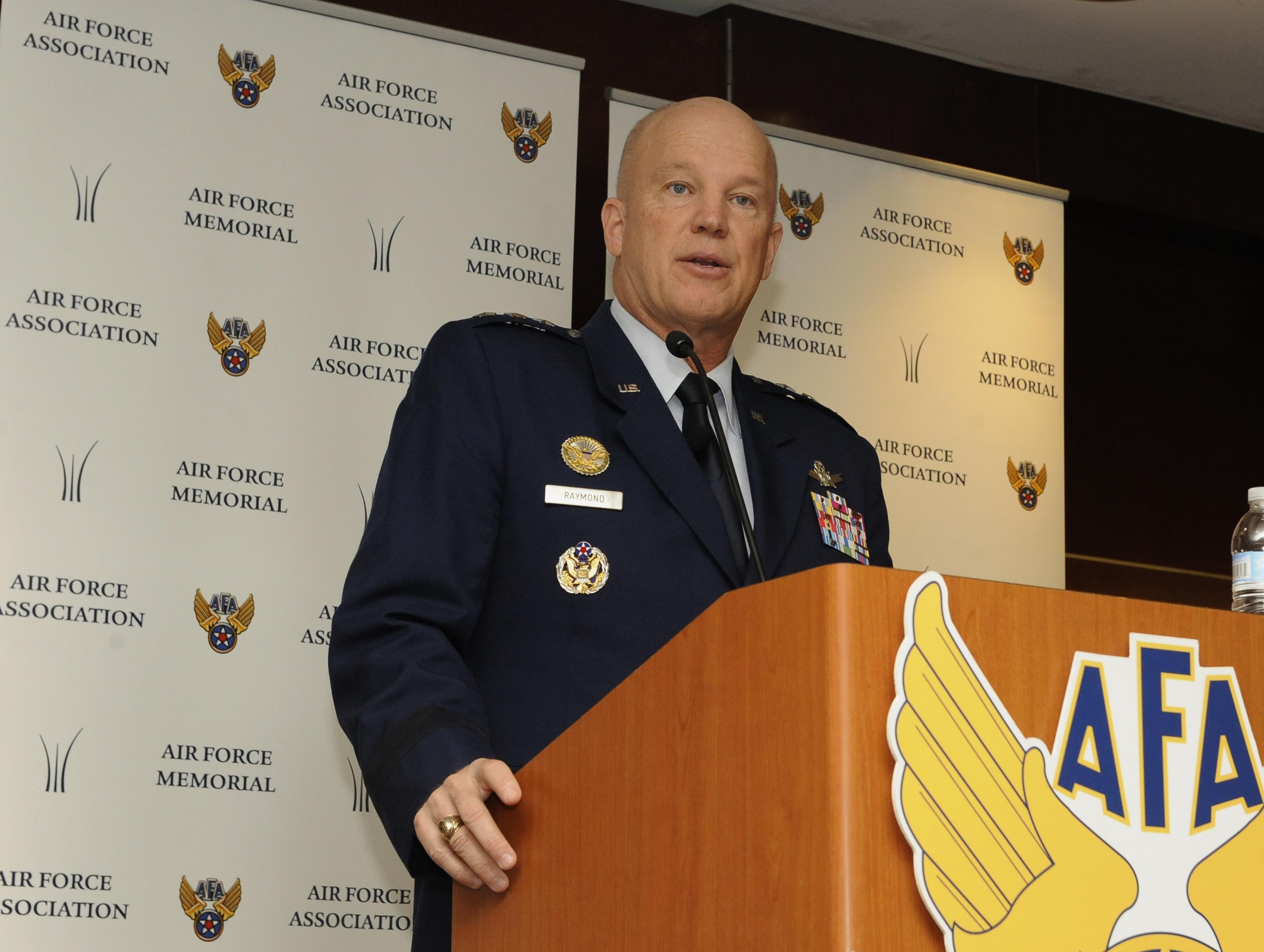
WASHINGTON (AFNS) -- Air Force Deputy Chief of Staff for Operations Lt. Gen. John Raymond addressed the Air Force Association on innovations that took place during Operation Desert Storm at the first AFA breakfast of the year Jan. 20 at the Key Bridge Marriott in Arlington, Virginia.

“The anniversary of Operation Desert Storm affords us an excellent opportunity, which brings to life the vision statement of the U.S. Air Force,” Raymond said. “The world’s greatest Air Force -- powered by Airmen and fueled by innovation.”

The Air Force celebrated the 25th anniversary of Desert Storm on Jan. 16. The occasion offered an opportunity to reflect upon the first conflict in history to make comprehensive use of stealth and space systems support capabilities against a modern, integrated air defense.

With the help of the total force model, the Air Force made several contributions that led to one of the most successful air campaigns in U.S. history.

Desert Storm is largely recognized as the first space war. It was the first war where operationalized strategic assets were used for operational and tactical advantages. The Defense Support Program helped add to the advantage by developing missile warning satellites used to detect and geolocate Scud missile launches in theater.

Just as it is important to reflect on previous conflicts, Raymond noted the Desert Storm anniversary presents the opportunity to compare and contrast the 1991 and 2016 versions of the Air Force.

“Today we are the smallest, busiest (and) oldest Air Force, operating in the most complex and strategic environment that it has ever faced,” he said.

The Air Force is comprised of fewer aircraft than in 1991, but today’s force is fully integrated. Airmen from the Air National Guard and Reserve maintain 55 percent of the Air Force’s aircraft. Raymond said without the total force Airmen completing day-to-day missions and capabilities professionally, operations would not be successful.

“As we sit here this morning, our Airmen are fully engaged all over the world,” Raymond said. “Airpower continues to be the force of choice countering the violent and extremist threats.”

Innovation is still a major part of Air Force operations. During the period of Desert Storm there was no such thing as a remotely piloted aircraft. Today, the RPA program represents the weapons system with the largest number of pilots and increasing demands for intelligence, surveillance and reconnaissance missions, thanks to emerging requirements and combatant commander needs.

“The Air Force has an incredible story to tell and that story is innovation, which has been written by incredible Airmen who operate those capabilities for us each and every day,” Raymond said.

MET provides secure comms to warfighter


By Tech. Sgt. James Hodgman, 379th Air Expeditionary Wing Public Affairs / Published January 22, 2016

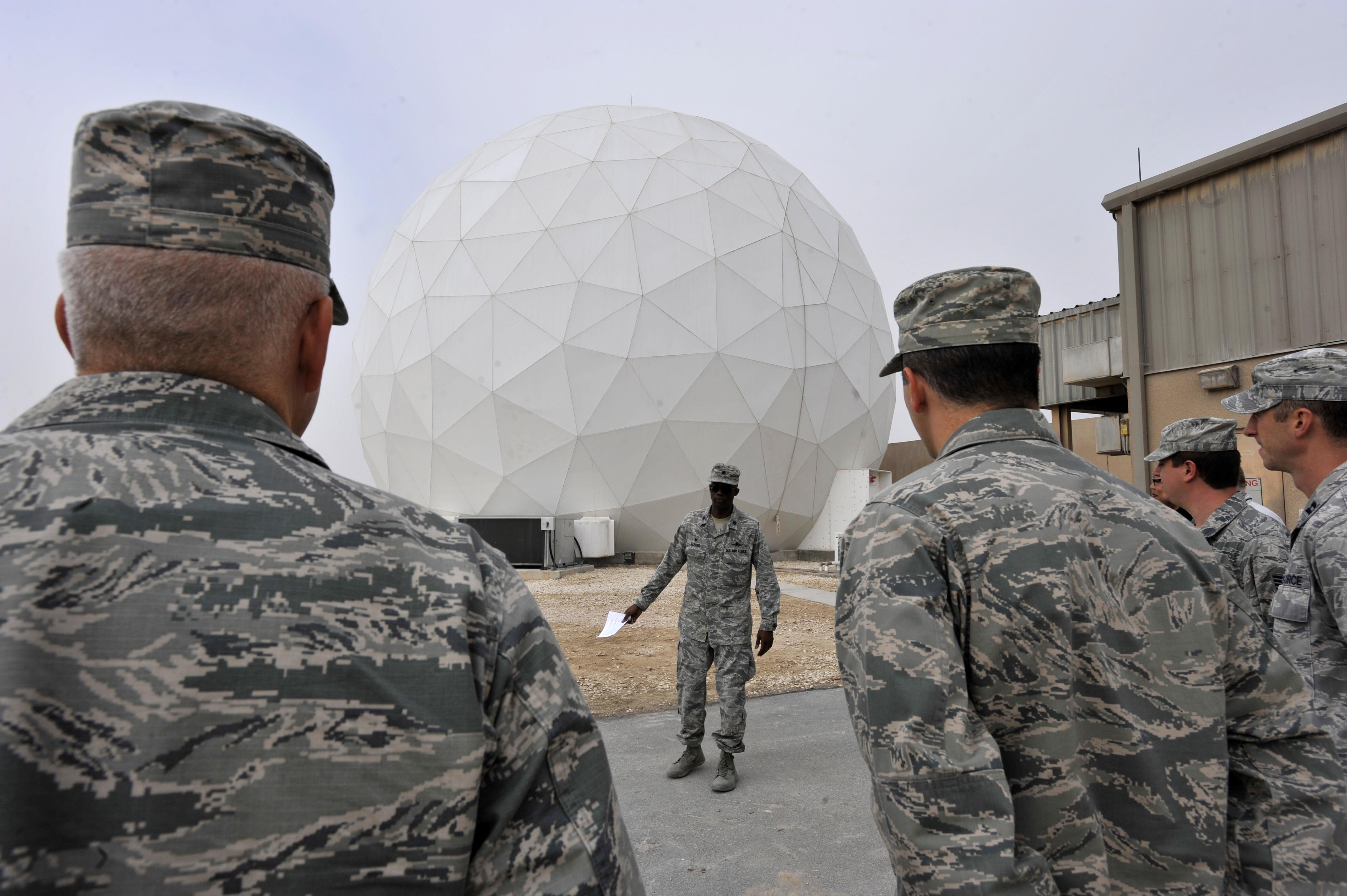
AL UDEID AIR BASE, Qatar (AFNS) -- The first fully funded Air Force modernization enterprise terminal (MET) outside the U.S. is now operational at Al Udeid Air Base, Qatar.

The terminal, which cost $15 million, provides secure communication capabilities including voice, video and data services, linking service members in the U.S. Central Command area of responsibility with military leaders around the world.

The system also features anti-jamming software and uses the most current technology, said Vernon Jones, the 379th Expeditionary Communications Squadron plans and programs manager.

“It provides tremendous capability and reliability to the warfighter,” said Jones, a retired Marine chief warrant officer 2.

Jones, who served more than 20 years in the Navy and Marine Corps, said he knows how important it is to communicate quickly and securely. He served in combat on three occasions and said having reliable communication is vital.

“In Iraq, we were moving from one base to another near Baghdad,” Jones said. “As we were going in, I couldn’t get any of my satellites up and locked to get vital information to the logistics people who were coming in after us. Our primary terminal was down and that left about 5,000 Marines without reliable communications.”

Jones said his Marines lost secure communications capability for two weeks and were forced to send runners in Humvees from point-to-point to deliver secure messages.

“Having been shot at, I understand the criticality of having dependable communications,” he said, “and that’s what this terminal provides.

“It ensures the CENTCOM commander has the communication capability to get his guidance to his subordinate commanders to execute the mission,” he continued. “It also provides the assurance to the warfighter that when an extraction team or a rescue helicopter is needed, it will be there.”

The terminal is part of the Defense Department’s MET program, said Lt. Col. Carlos Alford, the 379th ECS commander.

“The program’s goal is to install new terminals around the world to enable U.S. military forces to take advantage of increased data capabilities of its constellation of Ka-band wideband global communication satellites,” Alford said. “The MET will simultaneously handle both X and Ka-band signals which use WGCS.

“The previous Defense Satellite Communications System could only handle X-band and one WGCS satellite is equal to about 10 DSCS satellites in terms of bandwidth it provides,” he added.

The MET program will continue expanding by installing more enterprise terminals around the globe, Alford said. In 2018, Al Udeid AB will likely have a second MET set up to further increase CENTCOM’s communication capabilities.

Work to install the MET began in September 2012. A few years later on Jan. 14, the terminal was certified to operate by the Defense Information Systems Agency.

Carlise Krawzyk, a 379th ECS MET program manager, oversaw installation of the terminal and said she was committed to seeing the project completed.

“This project has been challenging and I just kept thinking we have to get this done, we are going to support the warfighter,” Krawzyk said.

Krawzyk coordinated with more than 20 agencies within the DOD and the government of Qatar, overcoming numerous obstacles, including a change in contractors early in the process, she said.

“It’s very satisfying to see the MET up and running and know that we’re able to provide reliable and secure communications across the AOR,” Krawzyk said.

Defenders strengthen skills through combative course

by Senior Airman Jonathan Stefanko
86th Airlift Wing Public Affairs


1/20/2016 - RAMSTEIN AIR BASE, Germany -- Airmen throughout Europe attended a Security Forces Combative course at Ramstein Air Base, Germany, Jan. 11 through 17.

The five-day course is designed to teach security forces members weapon retention and self-defense.

"When our people are facing a threat, they need to have the skills and knowledge to defend themselves as well as ensure their weapons are secured," said Staff Sgt. Jakob Haase, 435th Security Forces combative instructor.

While the program is not new, it has just recently grown in popularity as its benefits have become more apparent, according to Senior Airman Nicholas Zimmer, 100th SFS response force leader and course student.

"The skills taught during the program can be used in everyday calls," said Zimmer "From domestic responses to altercations while on patrol, (what) we learn here can be used to handle hostile situations in the most peaceful means necessary."

From memorizing complex maneuvers to strenuous endurance training, the students push through the physical and mental exhaustion to perfect their craft, because it could be what saves someone's life.

"If a hostile situation arises it won't be in a controlled environment like (this)," Haase said. "There is no telling what could happen, we need to be confident in our skills and the only way to do that is practice."

In order to teach defenders at geographically separated locations, U.S. Air Forces in Europe units send members to attend the course at Ramstein, become instructors and share that knowledge upon return to their home stations.

"The cadre set the standard really high," Zimmer said. "They show us where our skills need to be as instructors and how we can guide and mentor the people we will be teaching at our home station."

With the end of the course comes another patrol for the Airmen, but with their new skills and knowledge in mind they arrive better prepared to serve, defend and protect.

New airfield lamps benefit budget, environment, base personnel

by Gina Randall
100th Air Refueling Wing Public Affairs


1/21/2016 - RAF MILDENHALL, England -- The environmental impact is important to any organization and the 100th Civil Engineer Squadron has made changes on the airfield that will not only save energy, but save money.

"The airfield lighting team designed, built and implemented a raised perimeter road traffic light system," said Martin Parker, 100th CES Airfield Lighting supervisor. "This was to increase visual awareness for road users."

The results mean aircraft are able to land safely with minimal disruption to road users.

"As a result, the new road layout now has a clearer indication of when the control tower implements a road closure for mission-critical instrument landing system application," Parker added. "The collaboration between airfield lighting and airfield management minimized the disruption to the mission by reducing disturbance to the traffic management system on the airfield perimeter roads."

The safety of Air Force personnel and assets are paramount to base leaders.

"Colonel Bibb (Col. Kenneth T. Bibb Jr., former 100th Air Refueling Wing commander) and the 100th ARW safety office requested this change due to a number of drivers disregarding the red light, causing a breach of the temporarily restricted area," Parker said. To meet road safety regulations, we reconstructed the existing traffic management system by retrofitting the old lights to a new raised flangable system.

The primary reason was safety, but other factors such as saving money were behind the installation of new lighting.

"We replaced inefficient halogen lamps with LED (light emitting diode) lamps into the runway distance remaining markers, which saves more than $19,000 a year," Parker explained. "Our aim was to save money in energy consumption and to save money in less maintenance costs over time."

The civilians and military members worked together for the common goal.

"The airfield lighting and structures shops were asked if they could upgrade an old traffic light system, while at the same time saving the government money to outsource the work via contract," said Master Sgt. Arlen Wilkes, 100th CES facilities superintendent. "My team accepted the challenge and immediately got to work on the design and implementation of the new traffic light system. Their innovation and means to think outside-the-box speaks volumes to the caliber of work they can do. The sky is the limit for my team, and I'm proud to work beside such great people."

With any project, it's vital to compare the costs with the potential benefits to ensure it's worthwhile. So far, the team is proud of the task and the implications for base personnel.

"It's early days (for this project), but since these traffic lights were installed no one has driven through a red light," Parker said. "And cost-wise, in two years and one month, the installation versus the savings will break even."

The 100th CES wants to ensure it keeps the runway operational while not wasting unnecessary funds. It's a difficult balance but Wilkes is working with leadership to do this.

"Every single day the airfield lighting and structures crews ensure that the 100th ARW mission is uninterrupted and the base populace is safe," Wilkes said. "They will continue to do so until we leave."

Leaders need to balance the safety of their people with the condition of the base when its handed it back to the U.K., while ensuring U.S. tax payers' dollars are used properly.

"The cost of running the lamp halogen for 12-hours a day is $1,320.88, while the new LED light bars only cost $156.55 to run -- a huge saving over time," explained Parker. "If you think of this over a year while including maintenance costs, the outdated halogen lamps cost $19,502.88 to run while the new LED light bars cost the original $156 as they don't require new lamps or labor and maintenance costs."

While the financial savings are a huge benefit to the U.S., and the environmental savings are a benefit to the world as a whole, for the team in 100th CES, they benefit knowing what they do could save a life.

"It's important to understand that safety is number one. It should be the first thought in everyone's mind when doing any work here on RAF Mildenhall. Nobody is above safety! " exclaimed Wilkes. "I'm pleased to say that the work the airfield lighting and structures crews did reduced traffic violations by 86 percent. Their efforts created a safe and more secure driving environment around the airfield, and that was and always will be our goal."

Face of Defense: Student Pilot Completes Osprey Aircraft Training


By Marine Corps Cpl. Michelle Reif II Marine Expeditionary Force

MARINE CORPS BASE CAMP LEJEUNE, N.C., January 22, 2016 — Marine Corps 1st Lt. Erik Erlandson, assigned to Marine Medium Tiltrotor Training Squadron 204, proved his skills as an MV-22B Osprey aircraft co-pilot Jan. 12.

He was judged against the strict standards and requirements of the Naval Air Training and Operating Procedures Standardization Program and completed the final steps toward joining the Marine Corps fleet.

Erlandson completed his final flight with the training squadron at Marine Corps Air Station New River, North Carolina. Marine Corps Maj. Matthew Cave, the student control officer for the training squadron, evaluated him during the flight to confirm his preparedness to join the operating forces.

“We provide new pilots and crew chiefs to the fleet,” Cave said. “Today we are doing a check ride, [which is] basically the final event before they graduate.”

Training

Leading up to the check ride, pilots receive classroom instruction, and perform basic manipulation of the aircraft, basic maneuvering, formations, instrument flying, confined area landings, low altitude tactics, flying using night systems and much more.

During training, Erlandson, like all Osprey student pilots, completed two flights in the simulator for every one flown in the sky. The beauty of the simulator is that instructors can freeze, replay and do-over as much as much as they need to -- exposing student pilots to any scenario they might actually face. The entire syllabus is about four months long, Cave said.

“By our standards, I should be able to ask him any question about the core skills of the V-22 [such as] our operating manual, the airplane limitations, emergencies and basic maneuvering,” he said. “He knows all that and I’ll be quizzing him on it today to make sure that he is good enough to leave here.”

Check Ride

During the check ride, Erlandson demonstrated his skills in communication as well as in flying. He was required to speak with range control to clear landing space, as well as being aware of any obstacles in the area, such as parachutists. While in flight, he proved his knowledge in several different approaches, landing and tactical maneuvers.

“I was pretty nervous getting to the brief because there is so much to be quizzed on and a lot of limitations that you have to know,” Erlandson said. “But once I got through the brief I felt pretty confident going into the flight.”

At the end of the check ride, both pilots knew the flight went smoothly and Erlandson proved he was ready to move to the fleet. He is prepared to take the next step in his career as he becomes the newest pilot assigned to Marine Medium Tiltrotor Squadron 365, based at Marine Corps Air Station New River, North Carolina.
“Advice that I would give to new pilots is to study early and often,” Erlandson said. “I know that it can be overwhelming at first, but if you stay the course and take small bites at a time it’ll add up and you’ll be well prepared to continue on.”

F-35 fires first AIM-9X missile

from 412th Test Wing Public Affairs

1/21/2016 - EDWARDS AIR FORCE BASE, Calif.  -- An F-35 from the 461st Flight Test Squadron launched an AIM-9X missile for the first time over the Pacific Sea Test Range Jan. 12, 2016. The Flight Sciences aircraft, AF-1, of the Joint Strike Fighter Integrated Test Force, was piloted by David Nelson, Lockheed Martin chief F-35 test pilot at Edwards AFB.

The AIM-9X is an advanced infrared missile and the newest of the Sidewinder family of short-range air-to-air missiles carried on a wide range of fighter jets.

The missile was launched at 6,000 feet.

The shot paves the way for the F-35 to utilize the weapon's high off-boresight and targeting capabilities, increasing lethality in the visual arena.

MAF efforts translate to mission success in USCENTCOM AOR

by Master Sgt. Thomas J. Doscher
18th Air Force Public Affairs


1/22/2016 - SCOTT AIR FORCE BASE, Ill.  -- Lt. Gen. Sam Cox, 18th Air Force commander, returned from a week-long trip to the U.S. Central Command area of responsibility Jan. 5.

The trip was his first chance to meet with mobility Airmen and see the mission first-hand since he assumed command of the service's largest Numbered Air Force in October.

Flying with a C-17 crew from the 437th Airlift Wing out of Charleston Air Force Base, South Carolina, Cox executed a standard cargo mission to Al Udeid Air Base, Qatar, where he met with mobility Airmen and discussed 18th AF's contributions with commanders.  The general's goal was to reintegrate himself into the global mobility enterprise and experience the en route system first-hand after serving at the Pentagon for two years.  The visit also offered him a chance to get feedback directly from the Airmen performing operational missions.

"Without mobility Airmen, there is no mission. Bottom line," Cox said. "They're a huge part of a very important operation. So it's wonderful to see for myself what an incredible job our Airmen are doing and hear from their commanders just how much of an impact they're making."

While at Al Udeid Air Base, the commander took the opportunity discuss operations with the USCENTCOM Director of Mobility Forces, Brig. Gen. Karl McGregor. The "DIRMOBFOR" is the senior mobility officer in USCENTCOM's area of responsibility and advises the Combined Forces Air Component Commander on mobility issues.

Characterizing Mobility Air Forces as "the backbone of the AOR," McGregor said the mission couldn't happen without mobility Airmen.

"Strike does not happen without air refueling , and the theater does not function without its Air Lines of Communication supported by airlift," he said. "Neither Iraq nor Afghanistan has the ground transportation network that allows safe travel across much of the country, so both sustainment of forward forces and the movement of those forces generally involve air transportation.  Given the dynamic nature of the battle space, there's a constant need to move assets rapidly and then to supply them.  Airlift provides that capability."

McGregor said mobility Airmen really shine when a flexible approach is required.

"When there's an aircraft accident or tragic event, mobility aircraft and crews directly support those high priority Air Evac or Human Remains flights at a moment's notice and do whatever it takes to get the job done," he said. "The air refueling crews extend their track times and cover the battle space for troops in contact or changes to strike packages.  From ammunition airdrops in Syria to delivering force protection assets to the Sinai, users invariably tell us of the professionalism and consistently excellent level of service they receive from our Airman."

Cox said he insisted on hearing what Airmen thought of the support they received, good and bad. The Airmen took him up on it.

"Before the mission, I talked to my crew and told them to be up-front with Lt. Gen. Cox with whatever questions were asked so that he could get an accurate sense of the mindset of the typical aircrew member," said Maj. Jake Parker, an instructor pilot from the 14th Airlift Squadron.

Cox said he takes their feedback to heart.

"We continually work with the DIRMOBFOR and our AFCENT counterparts to set the requirements for airlift and air refueling," Cox said. "We must balance the demands of readiness for joint forces at home with the combat requirements in theater, and this requires continuous analysis and revision in order for us to get it right and keep it right."

McGregor said the unique nature of the USCENTCOM AOR requires that special attention be paid to that balance.

"This theater is both expeditionary and enduring, requiring a different mindset and construct than what we use at home station or for short duration contingencies," he said.

McGregor compared the Mobility Air Forces to iceberg, noting that most of the mission is done "quietly below the waterline." In the end, however, the success of the MAF impacts the success of the mission.

"There are a multitude of metrics that can be used to measure success, from meeting Latest Delivery Dates to percentage of on time takeoffs, but really the measure of success I would embrace is feedback from our customers," McGregor said. "In the final tally, how we support the Task Force, Special Ops and our many other users defines their success and by definition our success and that of the theater."

Cox said the best indicator of how well mobility Airmen are accomplishing the mission is that mission partners never have to worry about it.

"To them the fact that airlift, air refueling and aeromedical evacuation happen consistently and effectively is simply the way things are," Cox said. "It's like turning on a light switch.  It's automatic, because our mobility Airmen make magic happen every day."