Friday, October 23, 2015

'Unprecedented' Challenge in Countering Adversarial Propaganda, Official Says


By Lisa Ferdinando DoD News, Defense Media Activity

WASHINGTON, October 23, 2015 — The United States is facing an unprecedented challenge in countering the propaganda of adversaries who recruit and easily spread misinformation through the Internet, a top defense official told a House panel yesterday.

While there are many benefits to being in a cyber-connected world, there is also a "dark side" that adversaries are taking advantage of, according to Michael D. Lumpkin, the assistant secretary of defense for special operations and low-intensity conflict.

"The scope of our current challenge in the informational space is unprecedented," Lumpkin told the House Armed Services Emerging Threats and Capabilities Subcommittee.

Joining Lumpkin at the hearing were Army Maj. Gen. Christopher K. Haas, director of the force management and development directorate for U.S. Special Operations Command, and Air Force Brig. Gen. Charles Moore, deputy director for global operations on the Joint Staff.

Immediacy, Wide Reach of Social Media

The military has a critical role to play in countering adversarial messages, Lumpkin said, noting it is a contributor of unique capabilities and a partner to the whole-of-government effort led by the State Department.

The U.S. Special Operations Command's Military Information Support Operations, or MISO, force provides a critical capability in supporting the needs of the military and the overall strategic messaging effort of the State Department, Lumpkin said.

"The rise of [the Islamic State of Iraq and the Levant] and the ability for other state and non-state actors to conduct recruitment operations and spread propaganda almost certainly and with minimal cost highlights the dark side, one that requires the whole-of-government response," he said.

Unlike television or radio broadcasts, social media and other Internet communications allow for interactive discussions "anytime and in almost any location with virtually unlimited reach," Lumpkin said.


"Social media and other communications technologies have enabled the virtual and, in some cases, actual mobilization of dispersed and demographically varied audiences around the world," Lumpkin said.

The communications allow non-state actors to "reach across the globe with multiple, simultaneously targeted and tailored approaches to motivate or manipulate a spectrum of audiences," he said.

Limitless Reach


Preparing the MISO forces for current and future conflict is an important role for the U.S. Special Operations Command, Haas said.

Citing what he described as the "extensive propaganda efforts employed by both ISIL and Russia," Haas said the role of the U.S. Special Operations Command in manning, training and equipping is especially critical.

While significant improvements have been made over the last decade, challenges remain, he said.

To address capability gaps, U.S. Special Operations Command is developing a plan to expand MISO training into social media use, online advertising, web design and other areas, he explained.

Global Military Information Efforts

MISO forces are currently deployed to 21 U.S. embassies, working with country teams and interagency partners to challenge adversary information and support broader U.S. government goals, Moore said.

The military information forces use existing web and social media platforms such as Facebook, Twitter and YouTube to support military objectives by shaping perceptions while highlighting ISIL atrocities, coalition responses to ISIL activities, and coalition successes, he said.

MISO personnel have the training and cultural understanding to assess enemy propaganda activities and propose unique solutions that support U.S. military objectives, he said.

Moore said MISO efforts in the Central Command area of responsibility are focused on challenging violent extremists. In the European Command's area of responsibility, he said, the efforts of military information forces include "exposing Russian mistruths and their concerted efforts to mislead European audiences as to their true intentions."

Also at the hearing was Matthew Armstrong of the Broadcasting Board of Governors, the independent federal entity that oversees government broadcasting including the Voice of America.
Moore said European Command is looking to expand its engagement with the Broadcasting Board of Governors to further improve information dissemination capabilities.

Face of Defense: Marine Excels as Air Traffic Controller


By Marine Corps Cpl. Joshua Brown 26th Marine Expeditionary Unit

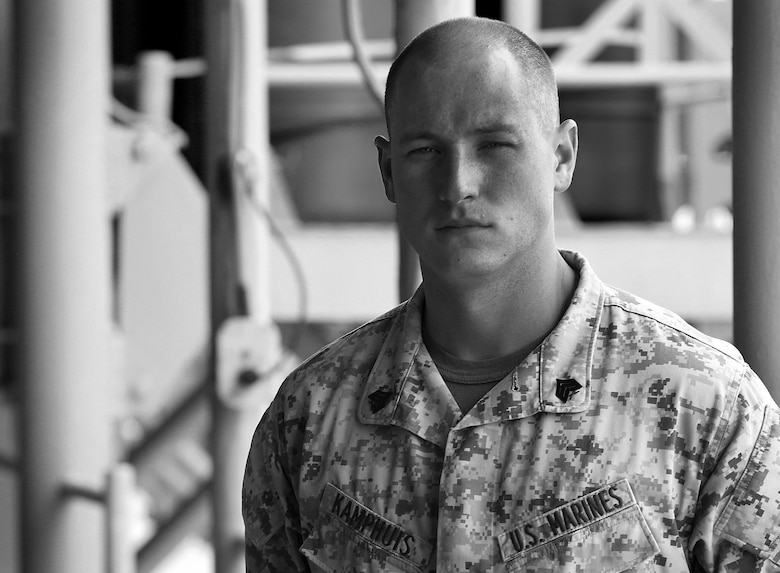
ABOARD THE USS KEARSARGE, Atlantic Ocean, October 23, 2015 — The Marine Corps League presents the Sgt. Maj. Frederick B. Douglass award annually to a Marine who demonstrates superior qualities and actions during the performance of his or her duties in the aviation community. An individual needs to receive recommendation from his leadership and approval from a commanding officer for eligibility.

Sgt. Jan Kamphuis, an air traffic controller assigned to the 26th Marine Expeditionary Unit, is the most recent recipient of the prestigious award.

Kamphuis, a Warrenton, Virginia, native, said his Marine Corps career began shortly after he graduated from Roanoke University with a bachelor’s degree in history and felt called to serve.

“I’ve always felt it’s the duty and responsibility of Americans to give back and do their part to keep this country safe,” said Kamphuis. “If we want to keep this country great, we have to give back and do our part.”

Starting a Challenging Career

He said his family reacted positively to his decision, even though he is the only member of his immediate family to serve in the armed forces. The most recent was his grandfather, who served in the Dutch military.

Kamphuis enlisted as an air traffic controller -- an occupation that includes a range of responsibilities involving the deployment, recovery and tracking of aircraft in various locations.

“He’s a local controller,” said Marine Corps Staff Sgt. Timothy J. Layton, a fellow 26th MEU air traffic controller and a Spring Hill, Florida, native. “He is qualified to communicate with aircraft in the local area and get them to the ground.”

Kamphuis said he primarily performs his duties in an expeditionary capacity, building landing zones and refueling points for aircraft prior to their disembarkation from a ship, and establishing communications to direct and control the flow of air traffic to and from those locations.

“It’s a pretty good job,” said Kamphuis. “It can get difficult at times, but it’s rewarding.”

Focused, Confident Teacher

Kamphuis’ leaders have noted his ability to execute well during stressful times.

“He’s always professional and knows how to stay focused on the situation,” Layton said. “He’s always confident when communicating with the pilots, and that isn’t always easy when you’re trying to ensure two aircraft don’t trade paint in the air.”

Kamphuis said ATCs have "to stay mentally alert and aware at all times. When things get difficult, you have to stay calm and control the situation as efficiently as possible.”

Layton said one big factor in Kamphuis' nomination and eventual selection for the award was how he took the lead in training the sailors on the ship. “When we disembark from a ship, we all work together as an integrated team to set up an airfield," he said. "And Kamphuis has taken huge steps in preparing them to work with us and perform while we're forward-positioned."

Kamphuis has also taught and assisted others with various air traffic control certifications. During the weapons and tactics instructors’ course -- a large-scale training event conducted in Yuma, Arizona -- he acted as a Marine Corps Air Traffic Control Team augmentee.

Seeking Leadership Opportunities

He said his professional successes have influenced his plans for the future -- he wants to continue his career in the Marine Corps and seek out more responsibilities.

“I’ve applied for re-enlistment and would like to apply for the enlisted commissioning program if I’m approved,” said Kamphuis. “I already have a college degree, so the commissioning process would be simplified, and I could continue to develop my skills and lead Marines.”

Those goals seem to align with the career trajectory his leaders and peers predict he’ll achieve.

“He’s never set a goal that he hasn’t accomplished,” Layton said. “He’s well-educated, capable and one of the best Marines I’ve worked with.”

Kamphuis said he still has his mind set on his current mission while deployed with the 26th MEU. “I want to do the best I can in my job, and I want to be the best Marine I can every single day,” he said.

U-2 brought to forefront with ‘Spies’ premiere


By Secretary of the Air Force Public Affairs Command Information, / Published October 22, 2015

WASHINGTON (AFNS) -- The Air Force’s intelligence, surveillance and reconnaissance mission areas were highlighted with the release of a major motion picture Oct. 16.

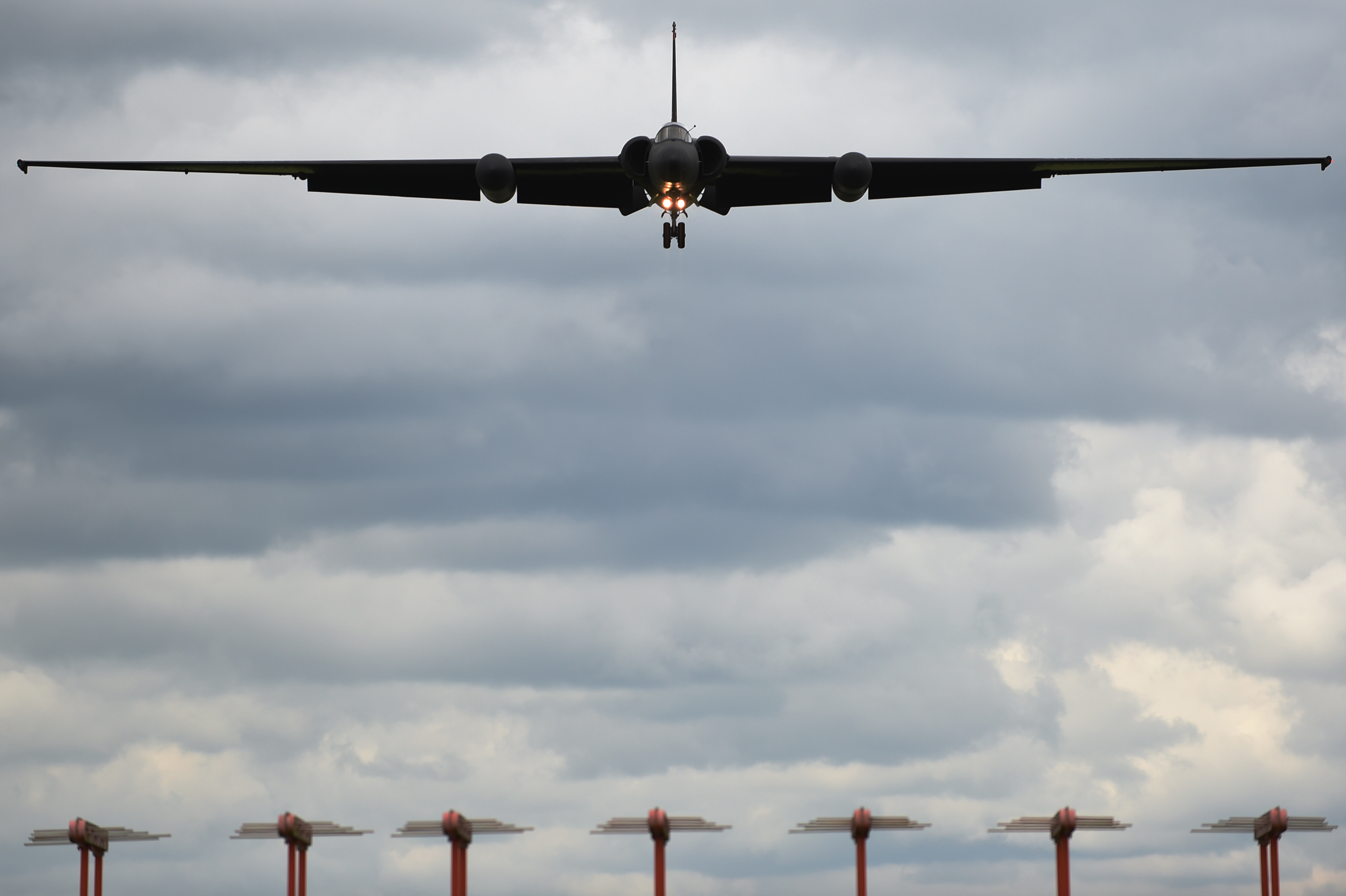
The Air Force Entertainment Liaison Office teamed with movie producers to tell the story of Capt. Francis Gary Powers, an Air Force U-2 pilot who was shot down in 1960 while flying a reconnaissance mission over Soviet Union air space, in the movie “Bridge of Spies.”

ISR is one of the Air Force’s five enduring core missions and is integral to global vigilance for the nation -- it’s foundational to global reach and global power.

“The film ‘Bridge of Spies’ features the U-2 aircraft, and with the United States Air Force support, filmmakers were provided access to film the high-altitude, reconnaissance aircraft and gain insights from current U-2 pilots based out of Beale Air Force Base in California,” said Secretary of the Air Force Deborah Lee James.

The U-2 Dragon Lady is an important part of the Air Force’s ISR enterprise, and provides high-altitude, all-weather surveillance and reconnaissance in direct support of U.S. and allied forces. It delivers critical imagery and signals intelligence to decision makers throughout all phases of conflict, including peacetime indications and warnings, low-intensity conflict, and large-scale hostilities.

“The Air Force agreed, with the Department of Defense, to participate in the motion picture ‘Bridge of Spies’ because it was an opportunity to highlight history and showcase Airmen to worldwide audiences,” said Develyn Watson, the Secretary of the Air Force Public Affairs Entertainment Liaison deputy director.

The Los Angeles-based entertainment liaison office falls under the public affairs career field, and is entertainment industry’s primary contact for access to Air Force personnel and equipment. In addition to coordinating shoots on Air Force bases, the office also reviews television, movie and video game content for accuracy when DOD support is authorized. Past movie projects include the first two “Iron Man” films, “Terminator Salvation” and the first three Transformer films, including “Transformers: Revenge of the Fallen.”

“Filmmakers were provided access to and filmed an actual U-2; relied on the expertise of current U-2 pilots; and gained insights from Air Force historians,” Watson said. “These interactions afforded the visual effects crew and production team with the ability to recreate scenes that added to the realism and authenticity of the film.

“This collaborative effort between the filmmakers and the Air Force provided a level of production value that would not have been achieved without the Air Force and DOD cooperation.”

The U-2’s feature brings attention to the aircraft, and the importance of its mission today. The Air Force ISR enterprise provides actionable intelligence from multiple sources -- including platforms, sensors, people and databases -- to national decision makers, combatant commanders and tactical level personnel.

“It’s the top combatant commander requirement and will remain so for the foreseeable future -- balancing capabilities across the range of military operations remains a top priority as ISR experts deliver decision advantage to commanders at all levels,” said Lt. Gen. Robert Otto, the ISR deputy chief of staff. “As we transition to what will likely be a highly volatile, unpredictable future, Air Force ISR will be the bedrock upon which the service provides freedom of action to our joint and coalition partners.”