Showing posts with label interoperability. Show all posts

Monday, September 29, 2025

Joint Insertion Training Enables Combined U.S.-Japan Live-Fire Exercise

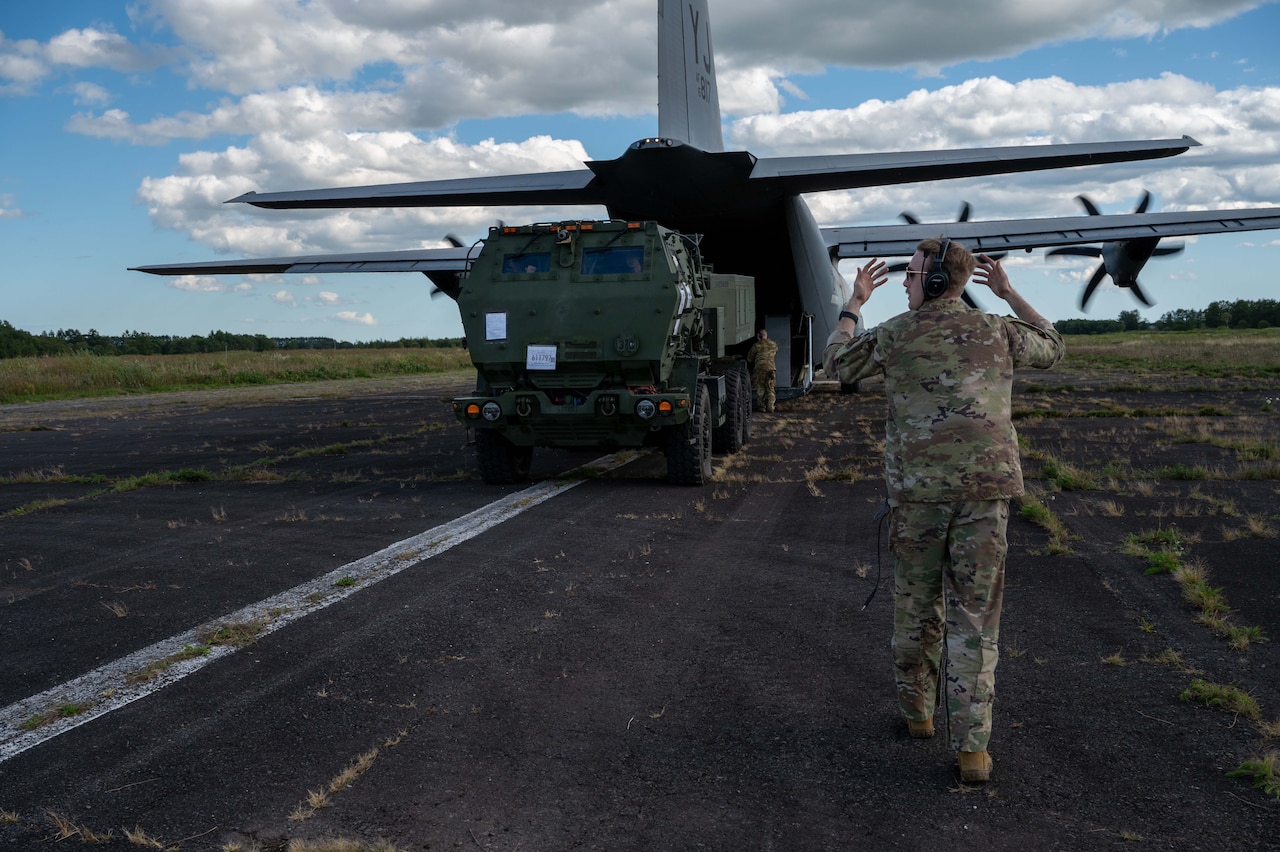
A man wearing a camouflage military uniform walks backwards on a tarmac as he guides a large green military vehicle out of a military cargo aircraft.

Airmen assigned to the 36th Airlift Squadron conducted a High Mobility Artillery Rocket System rapid insertion training during a joint operational support mission with Marines at Kadena Air Base and Kenebetsu Air Base, Japan, Sept. 18–19, enabling a bilateral live-fire exercise between the Marine Corps and the Japan Ground Self-Defense Force. 
 
The training gave personnel an opportunity to practice emerging tactics, techniques, and procedures that allow C-130 Hercules aircrews to reload ammo pods into a High Mobility Artillery Rocket System without any material handling equipment, a process known as HIMARS direct reload inside plane. 
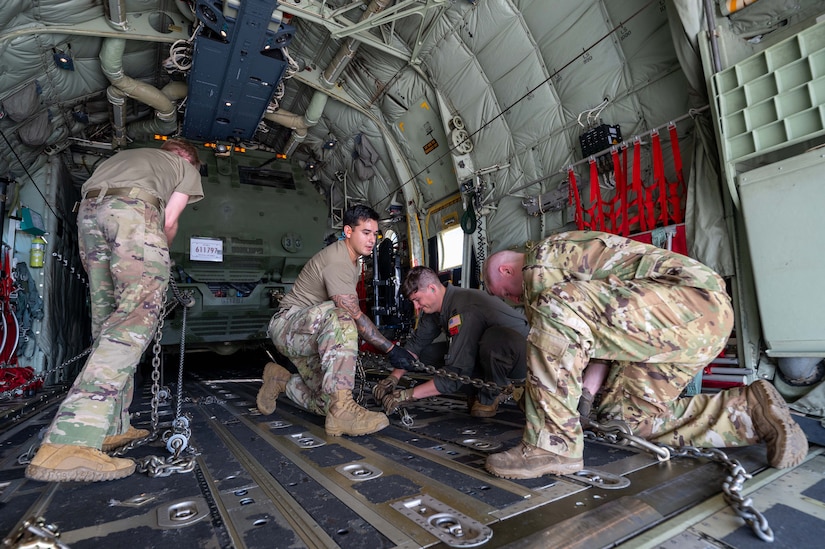
Three men wearing camouflage military uniforms and another man wearing coveralls attach chains to the floor of a military cargo aircraft. The chains are securing a military vehicle inside the aircraft that is in the background.

 
This marked the first time on record that an Air Mobility Command aircrew within Pacific Air Forces has executed this process, as the 36th Airlift Squadron continues to develop homegrown training events designed to refine the skills needed to support operations in austere environments. 
 
"[This process] pushes and furthers the C130's capabilities for supporting HIMARS and [rapid insertion] operations," said Air Force Tech. Sgt. Trevor Humes, 36th AS instructor loadmaster. "By practicing rapid reload operations, we better enforce the lethality of our joint partners while reducing everyone's period of vulnerability. Being able to practice austere operations proves our readiness for contested environments." 
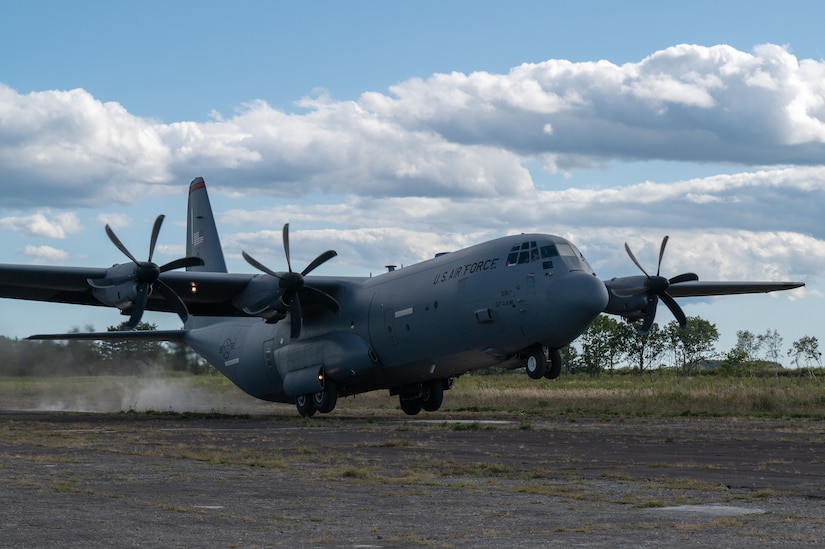
A large gray military cargo aircraft takes off from a runway. There is a field and trees in the background.

 
The first day of the mission began with aircrews from the 36th AS departing in two C-130J Super Hercules aircraft from Yokota Air Base to Kadena Air Base, where they met MC-130J Commando II personnel assigned to the 353rd Special Operations Wing, along with Marines from the 3rd Battalion, 12th Marine Regiment, 3rd Marine Division. 
 
The 353rd SOW is currently writing checklists and procedures for the direct reload mission in conjunction with the 561st Weapons Squadron and provided the 36th AS with the draft publications necessary to prepare them for mission execution. 
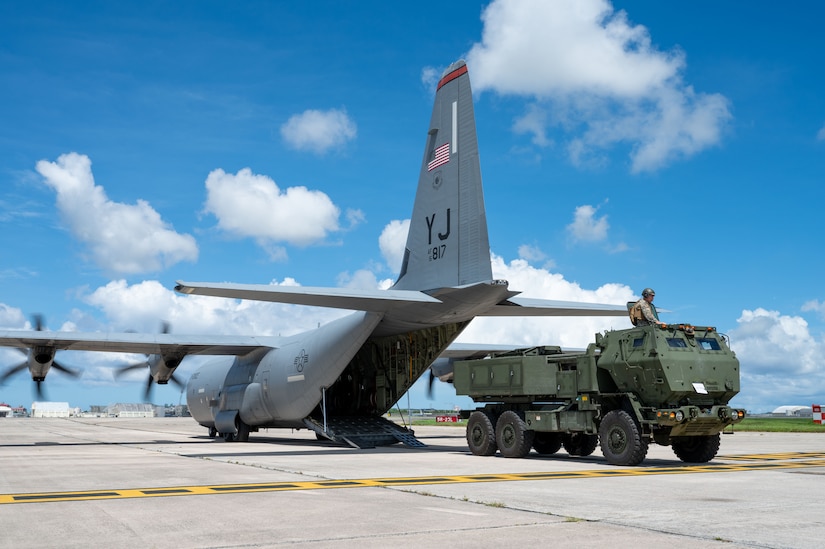
A man wearing a camouflage military uniform stands in the open hatch of a large green military vehicle as it backs into a gray military cargo aircraft on a tarmac.

 
Additionally, 353rd SOW personnel provided hands-on training to 36th AS aircrews, guiding them through the process of loading an ammo pod into a HIMARS. 
 
The 353rd SOW conducts missions requiring unique skill sets, so expanding the training to 36th AS personnel increases the number of C-130 aircrews capable of maneuvering and sustaining joint operations in the Pacific theater. This added capacity is valuable if the special operations wing is tasked with a low-density, high-demand mission. 
 
Other units at Kadena Air Base further augmented the 36th AS to ensure a successful training. 
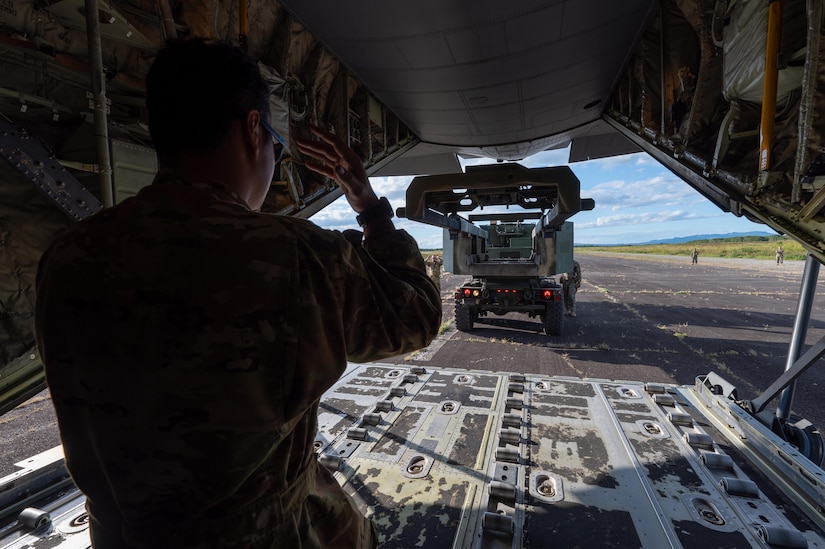
A man wearing a camouflage military uniform guides a military vehicle into the back a large military cargo aircraft. There are four other service members in similar attire standing outside the aircraft on the tarmac.

 
"This mission wasn't accomplished by one unit," said Air Force Col. Donavan Laskey, 374th Airlift Wing deputy commander. "It was accomplished by multiple units coming together as one team to show what we can do in a joint and combined environment. Our partners from the Marine Corps, 18th Wing, 733rd Air Mobility Squadron and 353rd Special Operations Wing played key roles in making it happen, and it is this kind of teamwork that ensures we are ready to respond whenever and wherever needed." 
 
The 36th AS aircrews departed Kadena the following day for Kenebetsu Air Base, transporting a HIMARS on one C-130J and two ammo pods on another. They then applied the direct reload procedures they had practiced the day before, demonstrating rapid reloading in a realistic environment without traditional support or infrastructure. 
 
This proved to be an invaluable experience for some of the newer aircrew members. 
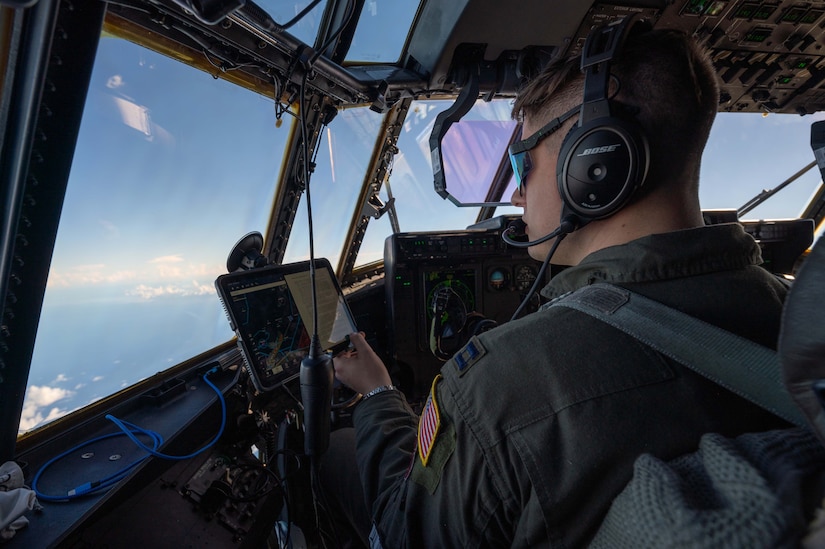
A man wearing a flight suit, sunglasses and a headset looks at a tablet screen while sitting in the cockpit of a military cargo aircraft. The aircraft is flying, and you can see clouds outside the windows of the cockpit.

 
"As a new airman, being part of this training gave me valuable insight into how we prepare for real-world contingency operations," said Air Force Airman 1st Class Andrew Giorgio, 36th AS loadmaster. "It was eye-opening to see the operational capability of the C-130J and how it supports the mission." 
 
Flying crew chiefs assigned to the 374th Aircraft Maintenance Squadron also supported the training, performing regular tasks while augmenting the 36th AS loadmasters to expedite the process. 
 
Airmen assigned to Yokota Air Base regularly conduct training events to strengthen agile combat employment capabilities and build interoperability with joint partners in support of a free and open Indo-Pacific. As it looks ahead, the squadron plans to build on this training by increasing efficiency and advancing their ability to respond in the event of a combat mission. 
 
"Our feedback and experiences are shaping future publications for our airframe and fellow aviators," Humes said. "By practicing and honing these procedures, we can take these lessons learned and continue to push the capabilities of our aircraft and partners." 

Thursday, September 11, 2025

Joint Service Teamwork Forged During Exercise Sage Eagle

Army Green Berets and supporting elements assigned to the 3rd Special Forces Group teamed with security forces airmen from the Air National Guard for Sage Eagle 25-4, a joint training exercise designed to enhance the services' interoperability and readiness, conducted in late August.

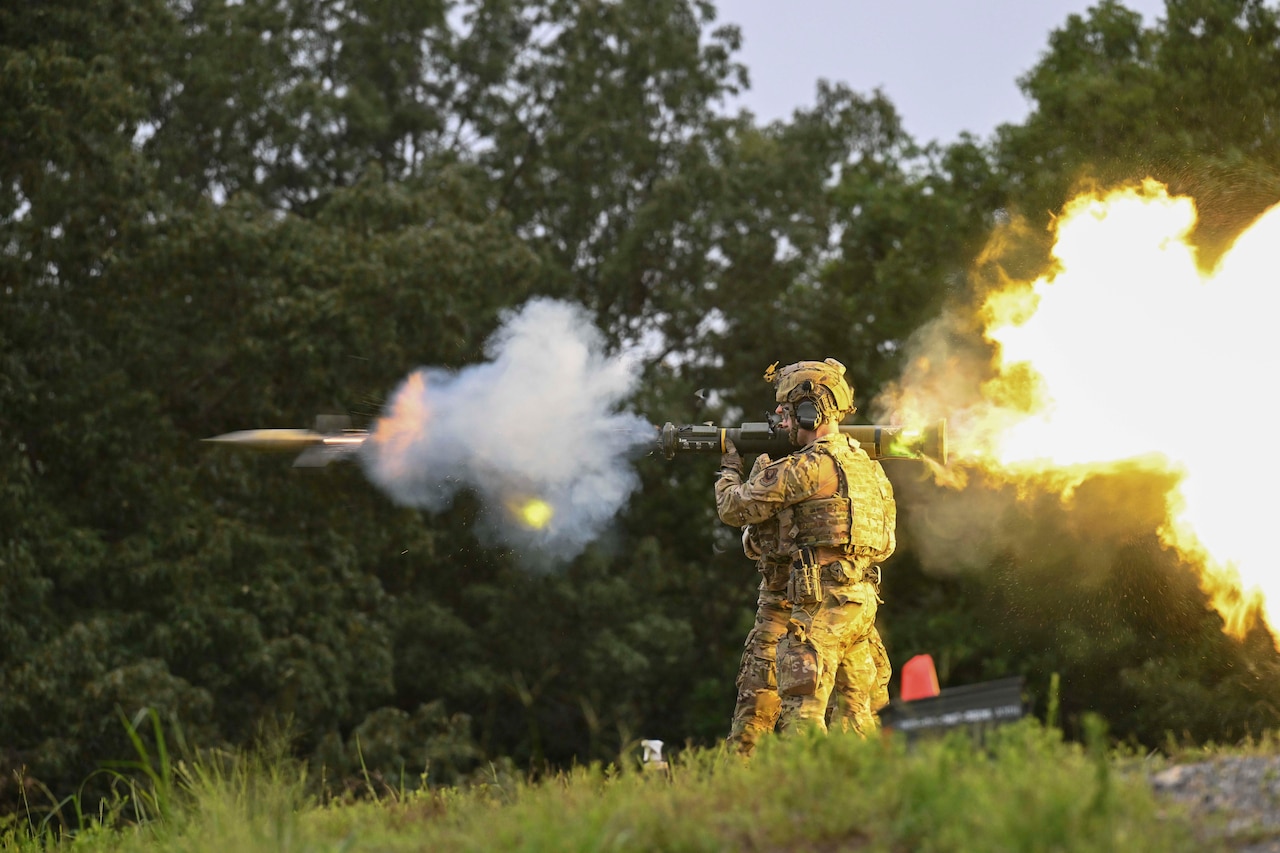
Two service members wearing camouflage stand close to each other as one fires a shoulder-launched missile that creates smoke in front and fire behind the launcher.

With a focus on small-unit tactics, joint mission planning and advanced combat scenarios, the training at Fort A.P. Hill, Virginia, aimed to better prepare special operations forces and the Air National Guard for real-world missions that reinforce their ability to jointly operate in diverse operational environments. 
 
Sage Eagle 25-4 commenced with weapons familiarization, pairing soldiers and airmen in a series of classes that built a foundational understanding of weapons handling and functions. Green Berets trained the airmen on multiple weapons systems, including the M320 grenade launcher and the M249 squad automatic weapon.  

Weapons training culminated in an M4 rifle qualification range before transitioning into advanced tactical training. From dawn to dusk, airmen repeatedly conducted realistic training simulations in small-unit tactics, including close-quarters battle drills, ambushes and raids, immersing them in the demanding tempo of special operations.  

"I think it's great to see the different ways that the Green Berets teach things, for example, room clearing," said Air Force Airman 1st Class Leann Minnick, a security forces airman assigned to the 193rd Special Operations Security Forces Squadron. "They taught us many ways to do it that I'm generally not trained to do, so I could bring that back to my unit." 
 
Following multiple days of weapons training, teams entered a five-day field environment, plagued with rugged terrain and dense vegetation, which challenged even the most experienced service members.  

Limited access to supplies and the need for covert movements through rugged landscapes added another layer of complexity to the training, requiring teams to adapt quickly or risk mission failure. Following days of training from the Army's elite, airmen applied what they learned to plan and execute simulated raids and ambushes, evading a multitude of different enemy threats to complete the mission. 

"[The Green Berets] are experts at detail, which is what it boils down to," said Air Force Tech. Sgt. Jason Tartaglia, a security forces airman assigned to the 166th Security Forces Squadron. "And that's really what makes them so great. Just thinking outside the box or looking at something from a different angle makes a huge difference." 
 
The training culminated in a realistic joint forcible entry exercise, leveraging the unique skills of each service in a mission to capture a high-value target. Soldiers breached the compound under simulated hostile fire, systematically clearing each floor of enemy threats and overcoming tight stairwell fighting positions, barricaded rooms and simulated casualties on every level.
 
While Green Berets maneuvered throughout the compound, the Air National Guard security forces secured the exterior of the compound, facing unruly crowds and demonstrators. Leveraging their training, the security forces mitigated all potential threats, enabling both services to seamlessly withdraw. 
 
Sage Eagle isn't just tactical training; it's a crucible for joint force integration. The exercise honed critical skills in cross-service communication, adaptive planning and mission execution in complex environments. Participants gained instrumental insights, directly enhancing current operations and fortifying readiness for future challenges. 
 
"This training pushed us to our limits, but that's how we get better," Minnick said. "When we walk away tired, dirty and more capable than before — we know it was worth it."