During
conflict, the last thing many selfless warriors have done is shield
their comrades from grenade explosions using their own bodies. Marine
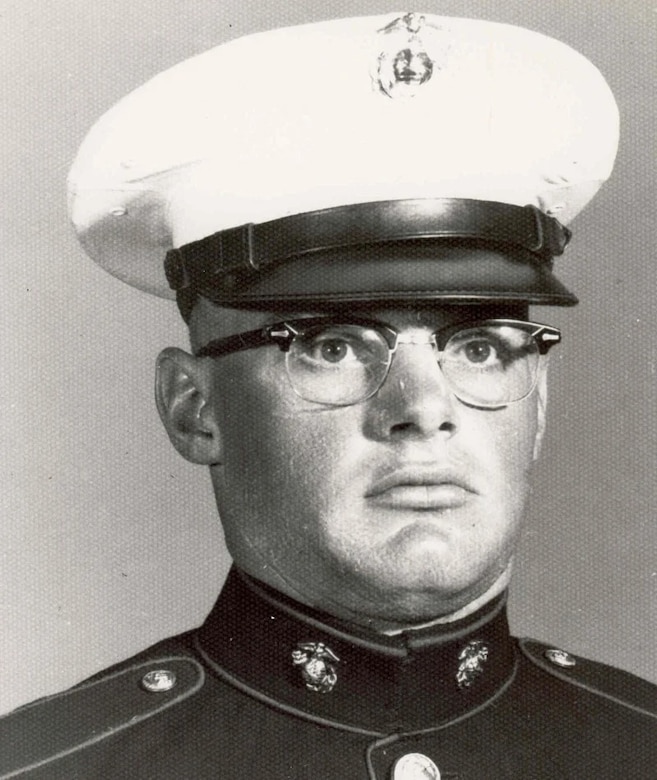
Corps Pfc. Ronald Leroy Coker was one of them, but
amazingly, that didn't stop him from continuing to drag a wounded man to
safety. His courage through horrific pain inspired his fellow
Marines, and it led him to receive a posthumous Medal of Honor.
Coker
was born Aug. 9, 1947, in Alliance, Nebraska, to Cecil and Nellie
Coker, who raised their family on a 160-acre farm. Coker had two
brothers, Charlie and Ray, and a sister named Janet.
After
graduating from Alliance High School in 1965, Coker attended an
automotive school in Denver, where he
completed a mechanic training program in 1966. Sadly, that same year,
his mother died.
As
a young man, Coker was known for his quiet
intelligence. Standing 6 feet, 3 inches tall, he was lean, liked to do
things with his hands and always wore a black cowboy hat, according to a
profile of him published in the 2013 Omaha, Nebraska, World-Herald
newspaper.
In
January 1968, Coker was working as a well driller in Alliance when he
was drafted. He wanted a say in where he would end up, though, so three
months later, he enlisted in the Marine Corps.
By September 1968,
Coker had completed all of his training and was sent to join a staging
company that would prepare him to deploy to Vietnam, where the war was
raging.
When Coker arrived
in-country that November, he was assigned as a rifleman to Company M of
the 3rd Battalion, 3rd Marine Regiment, 3rd Marine Division, which was
sent to the embattled Quang Tri Province along the north-central coast
of South Vietnam. The company was tasked with patrolling the jungles
south of the demilitarized zone to keep northern combatants from
infiltrating the area.
On
March 24, 1969, Coker was leading his platoon's patrol when he came
across five enemy soldiers on a narrow jungle trail. The whole squad
quickly chased the combatants, who had hidden in a cave.
As
the squad moved closer to the cave's entrance, they came under intense
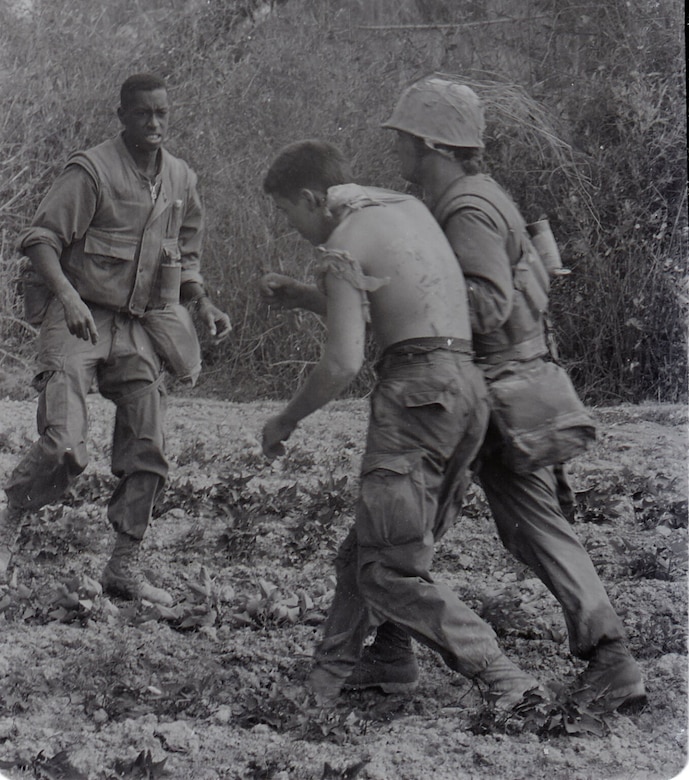
enemy fire, which seriously wounded Marine Corps Cpl. Ronald Playford,
forcing everyone else to take cover. Playford was left suffering out in
the open, so Coker ignored his own peril and ran back into the
fire-strewn area to try to collect him.
Along
the way, Coker was wounded in the chest and throat, but he continued to
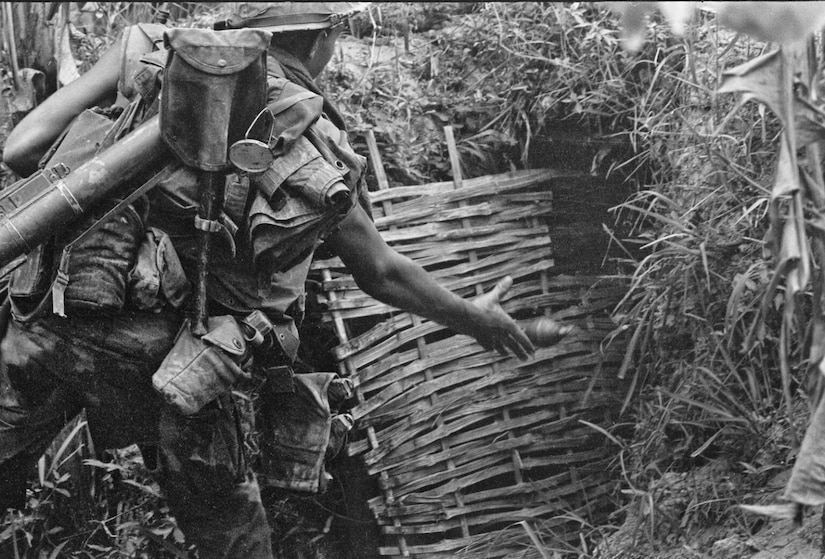
crawl toward his comrade, eventually lobbing a hand grenade toward the
enemy's position to quiet their fire long enough to get to Playford.
As
Coker began dragging the injured man to safety, a grenade landed
squarely on top of Playford. Without hesitation, Coker grabbed it with
both hands and turned to throw it. Unfortunately, before he could, it
exploded. Witnesses said the explosion severed both of Coker's hands at
the wrists.
Shockingly,
Coker kept going. Refusing to abandon Playford, he used what was left
of his arms to pull Playford along from his cartridge belt. As they
moved toward friendly lines, two more enemy grenades exploded near
Coker, inflicting even more devastating injuries to his chest, face and
legs.
With
every ounce of strength he had left, Coker continued to pull Playford
toward safety until another Marine was close enough to grab them both
and pull them to cover.
Coker's valor inspired his fellow Marines so much that they eventually annihilated the enemy hiding in the cave.
Unfortunately, both Coker and Playford died almost as soon as they were pulled to safety.
"I
saw a lot of brave acts in Vietnam, and I saw a lot of people die for
their country," Marine Corps Pfc. Jimmy Murphy, who was with Coker
during the incident, told the Omaha World-Herald. "This was the bravest
act I witnessed."
Several
of Coker's comrades who witnessed his selflessness nominated him for
the Medal of Honor. On April 20, 1970, Coker's father and
siblings received the nation's highest honor for valor on his behalf
from Vice President Spiro Agnew during a White House ceremony.
Coker is buried in Alliance's Fairview Cemetery, next to his mother.
The
fallen hero's father kept the medal, but sadly, Cecil Coker died
in 1972 during a flash flood of his new home in Rapid City, South
Dakota. The flood swept the house off its foundation, and the medal was
lost, according to the Omaha World-Herald. The newspaper said one of
Coker's brothers later received a replacement medal that the family now
keeps in storage for safekeeping.






 Posts

