Monday, August 31, 2015

New program aimed to improve MQ-1/9 community begins at ACC

by Shaun Eagan
Air Combat Command Public Affairs


8/31/2015 - Langley Air Force Base, Va.  -- The initial stage of Air Combat Command's new program, the Culture and Process Improvement Program, began here, Aug. 21, and is designed to take place across 12 Air Force active duty, reserve and National Guard bases.

The CPIP was established to target and develop methods of improvement for concerns identified by Airmen and family members in the MQ-1/9 career fields.
 
The program, set to happen throughout the month of September, began by sending surveys to 3,366 officer and enlisted Airmen to help identify concerns and issues in the MQ-1/9 community.  Starting Sept. 8, two CPIP teams will travel to 12 bases to engage with Airmen and their families and build upon the information discovered from the survey results.

"We're seeing problems in the MQ-1/9 community at both the major command and base levels that can be solved quickly," said U.S. Air Force Col. Troy Jackson, C2ISR Operations division chief and CPIP officer in charge.  "Airmen in this career field are being exhausted with no end in sight; we want to fix this."

Approach

The program, comparable to Global Strike Command's Force Improvement Program, takes the same grass-roots approach, except it's tailored towards the MQ-1/9 communities, according to Jackson.  CPIP presents a holistic approach to identifying where improvements need to be made both in the work environments and overall quality of life.

"A lot of assumptions were made over the years, and people don't realize how stressful and overworked the MQ-1/9 field is," explained Jackson.  "We're asking Airmen to do a lot when they're either not trained properly or not ready for what's being asked of them, which leaves the Airmen burned out."

The approach towards the program is to focus on fixing smaller problems fast, and discovering any long-term strategic goals to improve the more complex, deep-seeded problems of the Airmen through the process.

"The idea is to present an opportunity for Airmen to understand they're being heard and to speak their mind," Jackson said.  "They need to know their leadership wants to hear their needs and appreciates what they do."

How it's getting done

Besides the CPIP teams reaching out to Airmen, they're also hoping to hear responses from family members.  When the teams visit each of the 12 scheduled bases, both Airmen and family members will be allowed to voice their opinions through questionnaires and interviews.

The bases scheduled for visits are as follows:

- Creech Air Force Base, Nevada (Sept. 9-11)
- March Air Reserve Base, California (Sept. 13)
- Davis-Monthan Air Force Base, Arizona (Sept. 13)
- Holloman Air Force Base, New Mexico (Sept. 15-16)
- Ellington Field Joint Reserve Base, Texas (Sept. 15)
- Whiteman Air Force Base, Missouri (Sept. 17)
- Cannon Air Force Base, New Mexico (Sept. 18-19)
- Berry Field Air National Guard Base, Tennessee (Sept. 19)
- Ellsworth Air Force Base, South Dakota (Sept. 21)
- Springfield Municipal Airport, Ohio (Sept. 21)
- Fargo Air National Guard Base, North Dakota (Sept. 23)
- Hancock Field Air National Guard Base, New York (Sept. 23)

In addition to surveying and interviewing Airmen and their families, the CPIP team created a Facebook page and a blog in hopes of expanding to a wider audience, according to Jackson.  The Facebook page will stay updated throughout the program and provide an opportunity for 24-hour access to the CPIP team.  The blog will also be available to provide program updates and provide open and anonymous responses.

"This isn't about fixing chow halls, gyms, or the other base amenities that have been looked at before," explained Jackson.  "We want to provide the MQ-1/9 community the same level of holistic quality of life and professional development as other weapon systems, and this is a step towards it."

Feedback

When the CPIP teams leave each base, a CPIP contingent at ACC Headquarters will analyze the results and provide real-time feedback to the teams for improving the interview process.  After completing the base visits, the CPIP team will determine why certain indicators were reported in the data and interview process.

The findings and recommended solutions will be developed by peer-selected MQ-1/9 members that are part of the CPIP team.  The members will then present the CPIP's recommendations for improvement to Gen. Hawk Carlisle, commander of ACC.

"The past has shown the Air Force tried to fix smaller aspects at the base level, but only so much money can be thrown at certain problems," said Jackson.  "This approach will allow us to view what's happening in the MQ-1/9 career field.

"These Airmen deserve an opportunity to have personal and professional development, lifestyles, work environments and other benefits just like any other Airman," Jackson continued.  "There needs to be a constant problem-solving goal."

The purpose of CPIP is to collect as much honest feedback as possible.  Jackson explained that Airmen and their families are being presented with the ability to be heard and tell the Air Force both what's bothering them and any recommendations they may have to improve issues.

"Airmen need to provide us with their unfiltered responses and opinions when we visit," said Jackson.  "Your responses are going to the commander of ACC, so what you say is what gets reported."

MQ-1s test deployment capability in Latvia

by Capt. Holly Hess
USAFE Public Affairs


8/31/2015 - RAMSTEIN AIR BASE, Germany -- Two MQ-1 Predator remotely piloted aircraft (RPAs) and approximately 70 Airmen deployed to Lielvarde Air Base, Latvia to test the unit's ability to forward deploy, and to conduct air operations while assuring NATO allies of our commitment to regional security and stability.

Airmen and aircraft from the 147th Reconnaissance Wing of the Texas Air National Guard based in Ellington Field in Houston, Texas, began arriving in Latvia Aug. 24. This temporary deployment of aircraft and personnel will continue through mid-September.

"The big win is being able to rapidly deploy, setup shop, fly and exercise all of the agreements, arrangements and relationships that went into making this happen. It validates basing and airspace arrangements, operations and host-nation agreements in a very real way," said Lt. Col. Christopher Recker from the operations directorate at U.S. Air Forces in Europe and Air Forces Africa Headquarters.

"This will test mobility, maintenance and logisticians arranging airlift," he said. "Personnel have to make decisions about bandwidth, satellite communication, frequency allocation and frequency clearing."

Once validated, this model may be used as a responsive and flexible option for operations in the future.

"This is not a one-time operating zone. We created an airspace arrangement that is enduring, so when we need to go back, it will be available," said Recker.

Another portion of this deployment is intelligence training. It is based on a platform called the European Partner Integration Enterprise (EPIE) which provides a mechanism for sharing intelligence information with coalition allies and partners.

Two intelligence officers from Poland and each of the Baltic nations of Latvia, Lithuania, and Estonia were invited to participate.

"While the crew is flying in Latvia, we will sit shoulder-to-shoulder with our Baltic allies and teach them how we go through full-motion video processing," said Lt. Col. Anthony Bellione, USAFE-AFAFRICA commander's action group chief.

Although the deployment is not gathering intelligence information for operational use, it tests the ability to share intelligence information, and tests the capabilities of the secure-NATO pipeline used to disseminate intelligence products.

"The intent is to reassure our allies, by showing them a different capability set. This is the intelligence component that deepens our commitment with our NATO partners in the region," said Bellione.

The squadron will also conduct partner familiarization on RPA operations.

"Utilizing a satellite data link, the squadron will familiarize our Latvian allies on long-range flights so participants understand the opportunities and challenges of RPA operations," Recker said. "Additionally, there are plans for NATO joint terminal attack controllers to receive training calling in airstrikes in coordination with A-10 Thunderbolt IIs and information received from MQ-1s."

During operations, air controllers coordinate airspace traffic based on host-nation agreements to ensure safe operations.

"The Predator will operate in positively controlled airspace. Everyone in that airspace is participating, which means all aircraft are in voice and radar contact with controllers, taking vectors, climbing and descending," said Bellione. "U.S. Air Force pilots are at the controls actively flying the airplane every moment of the flight."

"This is a weapons system that enables the most powerful aspects of the warfighting cycle. It enables information to be distributed to decision makers, and allows tactical pause when necessary to make smart decisions. All of that saves lives, saves resources and influences a lot of decisions," said Recker.

This deployment is funded by the European Reassurance Initiative which demonstrates America's solemn commitment to reinforce the safety and territorial integrity of our allies and partners, in addition to strengthening the security and capacity of allies and partners in the region.

Through these strengthened relationships and engagements, the U.S. alongside European allies and partners, train to meet future security challenges and demonstrate a shared commitment to a safe and secure Europe.

Sunday, August 30, 2015

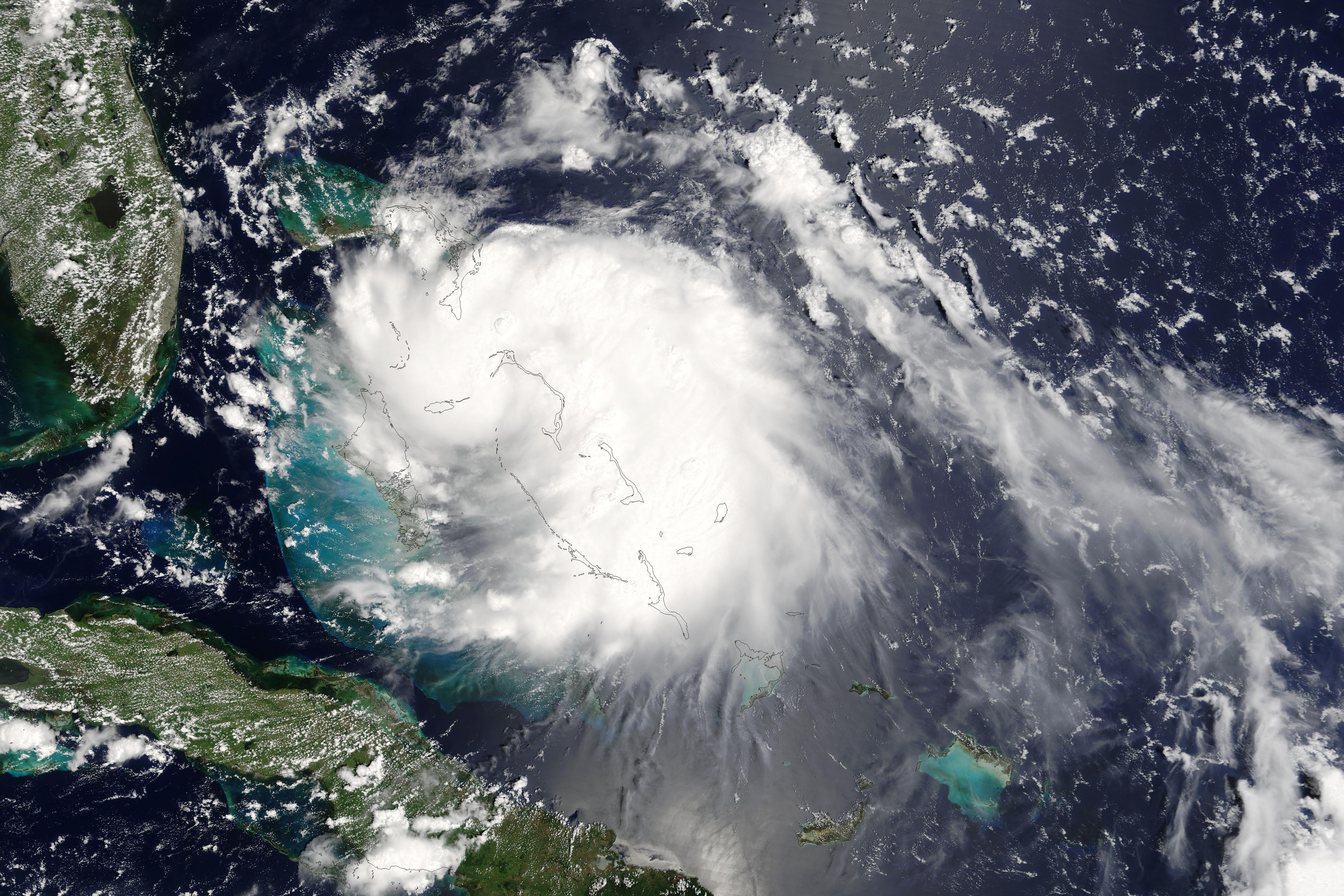
Northern Command Applies Lessons Katrina Taught


By Jim Garamone DoD News Features, Defense Media Activity

WASHINGTON, August 28, 2015 — In 2005, Hurricane Katrina rocked the nation’s complacency in how it would face a major disaster.

The storm, which hit Louisiana and Mississippi 10 years ago, killed about 1,200 people and caused $10 billion in damage, according to the National Hurricane Center.

About 80 percent of New Orleans was flooded, and roughly 80 percent of the Mississippi coast was destroyed by the Category 3 hurricane.

U.S. Northern Command was not quite 3 years old when it was thrust into the rescue and recovery phases of Katrina’s aftermath. More than 60,000 service members -- both active duty and National Guard -- participated in storm recovery efforts.

Lessons Continue to Resonate

The lessons from the storm continue to resonate with Northcom, said Tim Russell, the vice director for future operations at in the command’s Colorado Springs, Colorado, headquarters. The command has thorough plans on how to respond to a disaster in the United States, he said. These include not only hurricanes, he noted, but also fires, earthquakes and man-made disasters.

The Defense Department has tremendous resources and the ability to get them where needed, said Donald J. Reed, deputy chief of Northcom’s civil support branch. “Logistics, security, communications, medical support, aircraft -- the list goes on,” he said.

Need for Planning With State and Local Officials

One lesson the command learned from Katrina was the need to do all planning with state and local officials, Reed said. “If something happens,” he explained, “all [parties] need to know how Northcom knits in with local, state and [Federal Emergency Management Agency] efforts.

“There are reams of papers on those plans,” he continued. “There are authorities the Northcom commander has been given by the [defense] secretary to get capability that may be more proximate to the incident site from another service and direct them to be moving in anticipation of a formal request from FEMA.”

In 2005, this wasn’t the case. Northcom was a new command, having been established in 2001 following the 9/11 attacks. “We were just getting our arms around our components,” Russell said. “We didn’t have any forces, … and we didn’t have any authorities to go after forces.”

To get forces, the command had to apply for them, and that was not a very nimble process, Russell said. That has changed, he added, and the Northcom commander now has the authority he needs to get forces.

Dual-Status Commanders

Another aspect learned from the Katrina response was command of the forces involved. While most of the troops in Joint Task Force Katrina were National Guardsmen on Title 32 state orders, many were Title 10 active-duty service members with different chains of command. Northcom since has established dual-status commanders.

“We have a Guardsman who also accepts a federal commission, or we have a federal general officer who takes a state commission, and he is able to provide that unity of effort over Guard and Title 10 federal forces in the same battlespace, working the same problem,” Russell said.

But much of what the command learned was around the need to build relationships for the defense mission of supporting civil authorities. “We work with the National Guard and the services to ensure they understand what our role is,” Russell said. “In 2005, it was not understood what the DoD role was.”

State and local officials also didn’t know what DoD could bring to the effort, how long it would take to get forces and capabilities where they were needed, and they didn’t understand how DoD would knit into state and local efforts, Russell said.

‘Now They Are Getting It’

“Now they are getting it,” he added. “We still have a lot to do, but I think there is a growing recognition of what the Department of Defense’s capabilities are and what our roles can be and, more importantly, there is a sense of trust and a better relationship among local, state, Guard and interagency partners.”

Northcom has a directorate -- the J-9 -- which is the “home room” for interagency representatives, Russell said. The J-9 has reps from the various states, as well as from the Department of Homeland Security, FEMA and the Army Corps of Engineers.

“We have all the organizations from within government that could be involved with a ‘defense support of civil authorities’ event in one place,” he said. “They live here. Immediately, we have people who understand how Northcom will be operating in any given event.”

The National Guard is the biggest partner for the command and Northcom’s deputy commander is a National Guard lieutenant general. The Coast Guard is also integrated at all levels of the command. “The tone and the conversations with our Guard and interagency partners are changing,” Russell said.

Major Change in Disaster-Response Strategy

What also has changed is the strategy behind employing DoD assets, Reed said. During Katrina, the doctrine in place was called “sequential failure,” meaning local officials had to fail and then the state effort had to fail before federal help could come in. Katrina changed this. Local, state and federal planners work together now.

“We are fully engaged in integrated planning with DHS and our other partners, and that has a huge, huge impact on our efforts,” Reed said. “It’s gone from a sequential to a simultaneous event. We’re not seen as threatening to the National Guard or the state, we’re seen as part of a concerted effort, and that enhanced our ability to get the right stuff to the right place.”

The command works constantly on plans and has a group that looks at possibilities around the nation and what the appropriate response should be. Plans do not get dusty on shelving in the headquarters, but are constantly updated with changes in populations, changes in terrain, changes in threats or changes in technology.

Wary of Complacency

The communications system has been reinvented since Katrina, and that must be taken under consideration. Remotely piloted vehicles also add a technology that can be used to survey situations, Russell said.

Both men said they are concerned about complacency, noting that Katrina showed what Mother Nature can do, and the command never wants to think they have everything covered.

“It’s been 14 years since 9/11 and 10 years since Katrina, and we haven’t had a disaster to that level since then, but that doesn’t mean the threats are not still there,” Reed said.

“We at Northcom, we are not complacent,” Russell said. “We spend a lot of energy planning and maintaining relationships that will help us in the event of a disaster.

USARAK commander sets out priorities for readiness

Commentary by Army Maj. Gen. Bryan Owens
USARAK commanding general


8/28/2015 - JOINT BASE ELMENDORF-RICHARDSON, Alaska -- Greetings to the arctic warrior family. I am thrilled to lead this team and be counted among the cold weather, cold region experts of U.S. Army Alaska. I've been told my family arrived in Alaska during the best time of year, and I have to say I agree completely.

The Alaska community has made us feel extremely welcome, and we look forward to experiencing all the amazing landscapes, activities and culture this state has to offer.

Today, I want to share my priorities for the arctic warriors during my command. Over the coming months, I will be out meeting and talking to our Soldiers, civilians and families to reinforce and expound on these priorities.

My top priority is to provide our Army and our nation with trained and ready forces to accomplish our current and future missions. To do this, Soldiers, and especially leaders, must develop and sustain a field mentality. Exercising field discipline will help Soldiers collectively overcome many of the challenges they face.

Earlier in my Army career when we went to the field, there were only five times we were permitted to remove our helmets.

Those five allowances were during after-action reviews, religious worship, and designated chow, sleep and personal hygiene times. That was it. But it wasn't about the helmet; it was about discipline, a key tenet of our profession and being a professional Soldier. Our leaders enforced the standards, and we learned discipline.

Just as my leaders enforced our unit's helmet standard, I expect all USARAK leaders to steadfastly enforce our standards every day to help instill the necessary level of discipline and through that discipline gain and maintain the trust of the American people.

Thus far, I have been very impressed with the quality of U.S. Army Alaska's arctic tough leaders, the training facilities on our installations and the unique environmental opportunities we have here on the Last Frontier. To live up to our moniker as America's Arctic Warriors, we must always continue to fine tune our skills as the best cold-weather, cold-region combat troops on the planet.

An essential element of achieving a high state of readiness is trust.  I view trust as an equation: credibility + reliability + intimacy (the effort and involvement with getting to know those you lead) divided by the perception of self interest. We've got to maintain trust in each other.

A lot of big changes are coming to our Army, and we don't have a clear sight picture yet. There is a lot of conjecture and rumor about where our Army is heading and especially what will happen here in Alaska. As I get more information about USARAK's future, I will pass it along to our Soldiers, civilians and families.

You are all winners in my book and have my complete trust until you violate that trust. I ask that you in turn trust your leaders. As we move forward in training our units to fight and win our nation's wars, I am confident we will balance our readiness requirements with the force-reduction challenges ahead.

We are working through a very deliberate mission analysis, and we will work closely with our partners to continue achieving the same high training and readiness standards while caring for our Soldiers and families.

I ask that you all continue to be patient, focus on the mission, look out for each other and always give your very best.

Arctic warriors, arctic tough!

Remembering Hurricane Katrina a Decade Later


By Jim Garamone DoD News Features, Defense Media Activity

WASHINGTON, August 28, 2015 — Forecasters said the hurricane would be bad, but no one expected a Katrina.

Hurricane Katrina hit the American Gulf Coast on Aug. 29, 2005, causing initial destruction from Texas to Florida. It wreaked such damage over such a large area that it changed the way the U.S. government responds to disasters.

According to the National Hurricane Center Katrina was directly responsible for around 1,200 deaths, making it the third most deadly hurricane in American history. It caused $108 billion in property damage, making it the costliest hurricane to strike the U.S.

DoD personnel were in the middle of rescue and recovery efforts for weeks and months after the storm hit.

More than 60,000 members of the U.S. military forces were on the ground, first saving, then sustaining lives.

An Enormous Effort

It was an enormous effort with 18,000 active duty service members joining 43,000 National Guardsmen that focused on Katrina relief operations.

And they were needed. When Katrina hit, it caused a storm surge that inundated whole coastlines, according to National Hurricane Center Service measurements. The storm had sustained winds of more than 120 mph. Portions of Louisiana and Mississippi received 15 inches of rain.

Katrina knocked out power and the communications grid crashed. Bridges, underpasses and roads were all closed. Flooding forced relief personnel to detour for miles.

Huge Storm

The size of the storm caused its own set of problems. The storm surge in Mobile Bay -- fully 70 miles east of where Katrina hit land -- was still between 12 and 16 feet. Hurricane force winds lashed the Florida Panhandle.

Typically, hurricanes lose force quickly once striking land. Not Katrina. Tornadoes and rain lashed inland areas up into Georgia. Hurricane Katrina affected over 93,000 square miles of the United States, an area almost as large as Great Britain and left an estimated five million people without power, according to the Federal Emergency Management Agency.

Levees protecting the city of New Orleans weren’t high enough with the storm surge overtopping some of the protective berms, and breaching others. At a U.S. Senate hearing after the storm, Army Corps of Engineers officials said there were 55 breaches in the levee system protecting the city.

New Orleans Residents Experience the Storm

New Orleans officials estimated that 80 percent of the population evacuated, but that still left between 50,000 and 60,000 people who were hunkering down in their homes or in “last-chance” shelters like the Superdome. The levee failures flooded about 80 percent of the city. Some 26,000 people who had taken refuge in the Superdome were surrounded by water.

The city also sustained wind damage. The Hyatt Hotel in downtown New Orleans had almost every window blown out on the north side of the building.

The Mississippi coast was devastated. Pass Christian, a pretty town along the Gulf Coast, disappeared. The storm surge and winds scoured the town leaving nothing but concrete slabs where brick homes once stood. The surge picked up whole section of a bridge that carried Route 90 and deposited the huge concrete structure 200 to 300 meters inland. Strangely, the other two lanes of the bridge remained in place. More than 80 percent of the structures in Pass Christian were destroyed or rendered uninhabitable, according to local officials who had set up a headquarters in a relatively unscathed gas station.

In Biloxi the surge picked up freight train cars full of chicken and the winds broke them apart. For weeks, the smell was something to behold.

Seabees based in Gulfport, Mississippi, began work with their base essentially underwater.

Rescue Efforts Commence

U.S. Coast Guard and National Guard personnel moved in as soon as conditions allowed. Coast Guardsmen were the first on the scene with any kind of organization. Coast Guard helicopters skittered across the city rescuing people from rooftops, from flooded streets and providing the eyes for those following in their wake. The Coast Guard helicopters were soon followed by Coast Guard boats. The airport in Mobile became the world’s largest Coast Guard base with choppers from around the service flying missions. Overall, Coast Guard personnel rescued 33,544 people during Katrina operations, according to their records. For its response, the Coast Guard received the Presidential Unit Citation.

National Guardsmen tried to move into the city even as the winds were blowing and the rain was falling. Fallen trees and flooded roads stalled their progress, said Guardsmen. Many of the Guardsmen had lost their homes, yet they were heading out to help others. There was confusion about what powers Guardsmen had and who they reported to.

In New Orleans order had broken down. Shortly after the hurricane passed looting began and reports out of the city mentioned everything from murder to rape to carjackings. Later investigations found the reports were exaggerated, but it was no exaggeration that the city was in dire straits.

Multi-Service Effort

National Guard forces entering the city conducted humanitarian, search-and-rescue, evacuation and security missions, officials reported. While Coast Guard, Air Force and Army helicopters sought out those trapped in attics or roofs, National Guardsmen and police conducted house-to-house searches. The doors marked with an X and information in the various quadrants saying who searched the house, what was found and when the search was conducted, soon became a familiar sign.

The Guardsmen were soon joined by active-duty soldiers and Marines.

Navy and Coast Guard vessels sailed up the Mississippi River to lend the help their crews and facilities could provide. In time, 28 ships -- 21 Navy and seven Coast Guard -- were stationed in the affected region.

Coordinating the DoD effort was Army Lt. Gen. Russel L. Honore, who commanded Joint Task Force Katrina. Honore, a Louisiana native, became a legend for his gruff, no nonsense approach. “He got things done,” then-New Orleans Mayor Ray Nagin said of Honore.

Getting Back to Normal

The Army Corps of Engineers set about mending the breached levees and getting the pumping stations that usually kept the below-sea-level city dry working again. It was October before the floodwaters were pumped out.

There are still signs of Katrina in New Orleans and along the coast. Then-President George W. Bush said recovery would take years, and he was right. A decade on, the area is still rebuilding. New, deeper levees were emplaced, new water control apparatus erected. Some areas were elevated, while others were cleared. It remains a work in progress.

Katrina has served as a warning against complacency, Federal Emergency Management Agency officials said. It is an example of why people should take evacuation orders seriously and be prepared for emergencies.

The loss of life and the damage from Katrina was so severe, that the National Weather Service officially retired Katrina from the Atlantic hurricane naming list.

15th CMSAF mentors Airmen

by Airman 1st Class Nicolo J. Daniello
92nd Air Refueling Wing Public Affairs


8/26/2015 - FAIRCHILD AIR FORCE BASE, Wash. -- The 15th Chief Master Sgt. of the Air Force, Rodney J. McKinley, visited here Aug. 21, taking opportunities to mentor Airmen about doing the right thing, the value of people and getting the job done. He was also the guest speaker at the Senior NCO induction ceremony.

"The most important thing is being the best Airman that you can be and concentrate on doing what's right," the chief said. "Don't do things that you are going to regret, go out and do good things, not just to get that enlisted performance report bullet, but because doing the right thing is a good thing to do."

McKinley served as the highest enlisted member of the Air Force from June 2006 until June 2009. He promoted standardization across the board, including the enlisted performance reports, assisted in creating the Airman's Creed, promoted higher education for Airmen and their families, generated a tighter mission focus, and professional development programs.

"He's been very influential across the entire spectrum of the Air Force," said Master Sgt. Rory McKinnon, 92nd Force Support Squadron career assistant advisor. "We wouldn't be where we are today if not for him and the programs he put in place."

During his visit, McKinley gave advice to Airmen on the importance of doing the right thing and pushing one another to be successful and to get the mission done.

"Every person is valuable and every person needs to pull their own weight," McKinley said. "They may stumble and we may give an Airman a Letter of Counseling, but that doesn't mean we don't want them to succeed, we want them to be successful. We want Airmen to be successful and to get the mission done."

Since retiring from the Air Force, Chief McKinley travels from base to base as a guest speaker, mentoring Airmen whenever he can.