Showing posts with label andersen air force base. Show all posts

Wednesday, December 10, 2025

Operation Christmas Drop: DOW's Longest-Running Humanitarian Mission in Pacific

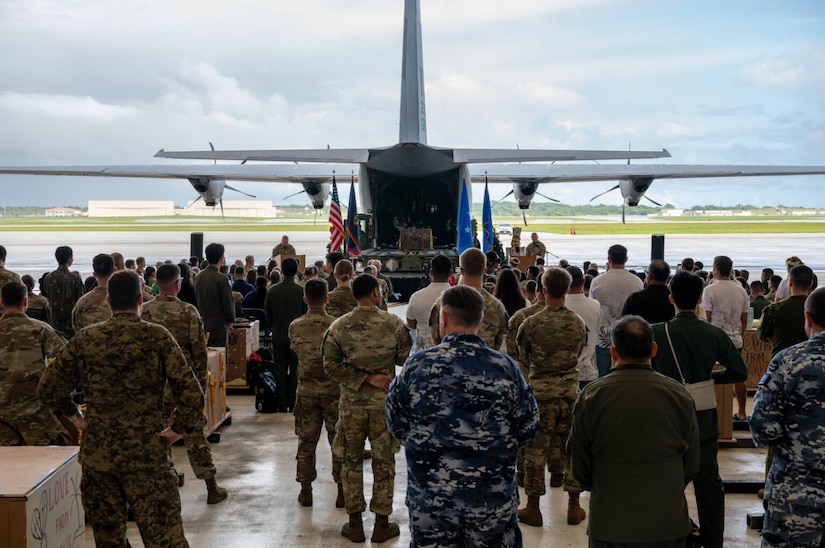
Leaders from the U.S. Air Force, partnering nations and community members gathered for a traditional "push ceremony," marking the official beginning of Operation Christmas Drop 2025 at Andersen Air Force Base, Guam, Dec. 8, 2025.

A group of service members and civilians stand behind an open military aircraft in a hangar.
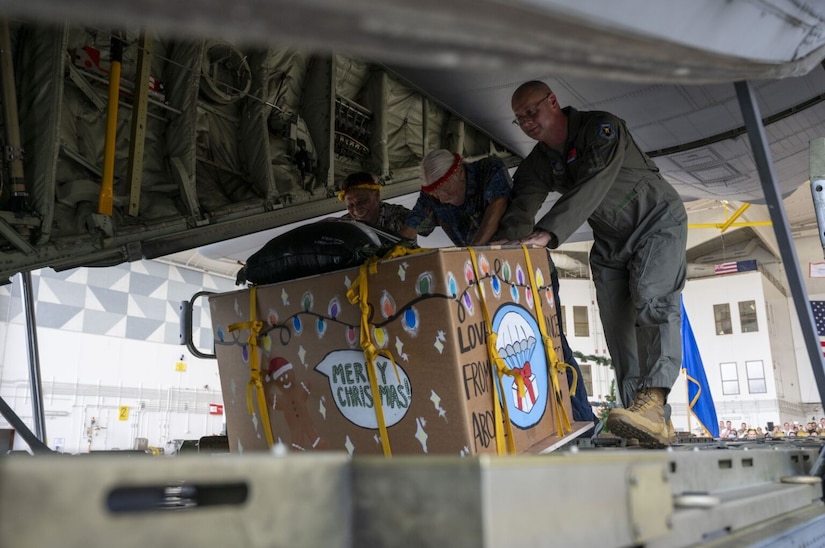
Three men push a large box down the back of a military aircraft.
The event served as the symbolic opening for the 74th iteration of the operation, the War Department's longest-running humanitarian airlift mission. It began in 1952 after an Air Force B-29 crew flying near Guam spotted islanders waving from below and dropped supplies as an act of goodwill.
 
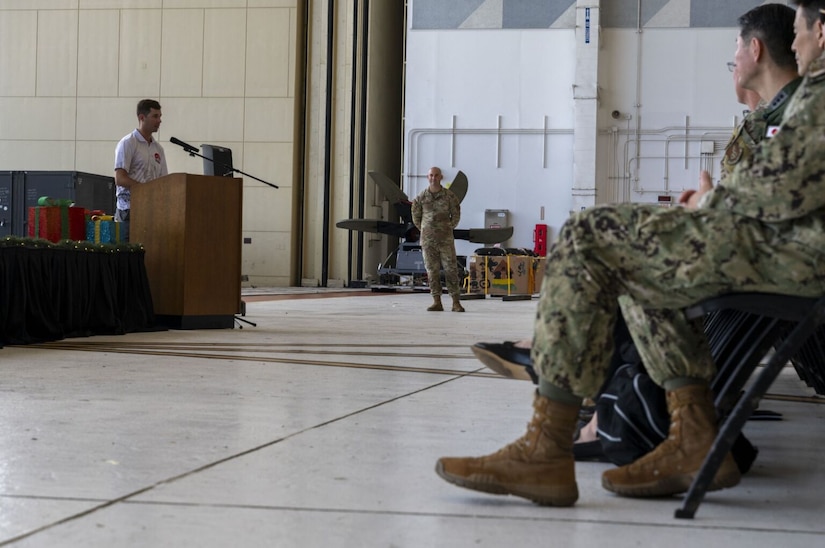
"Operation Christmas Drop delivers more than just supplies," said Aren Palik, vice president of the Federated States of Micronesia. "It delivers hope, connection and the reassurance that even across a vast ocean, we remain part of one family. It is an accomplishment that speaks to the steadfast commitment of the United States and its Pacific partners to care for our people and our communities."

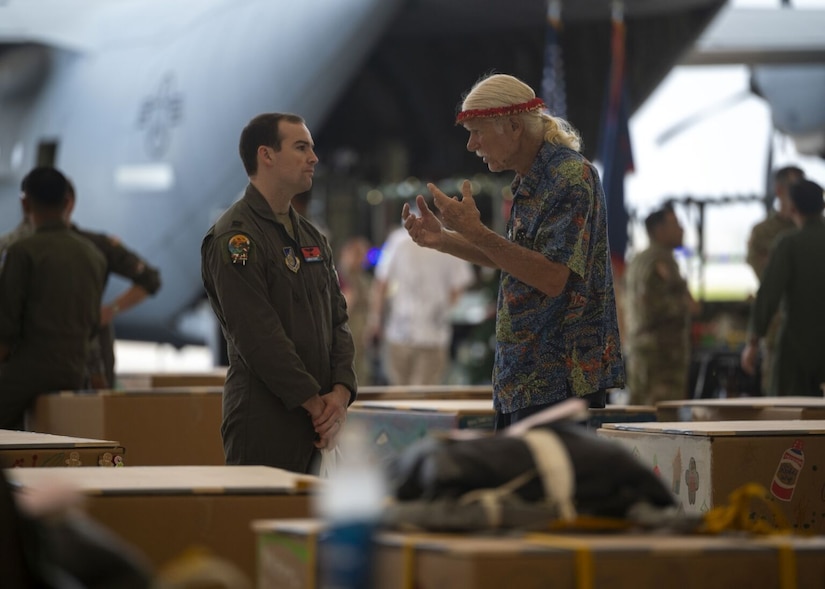
Two men, one a service member and the other a civilian, chat amongst a sea of supply boxes in an aircraft hangar. A military aircraft is in the background.

 
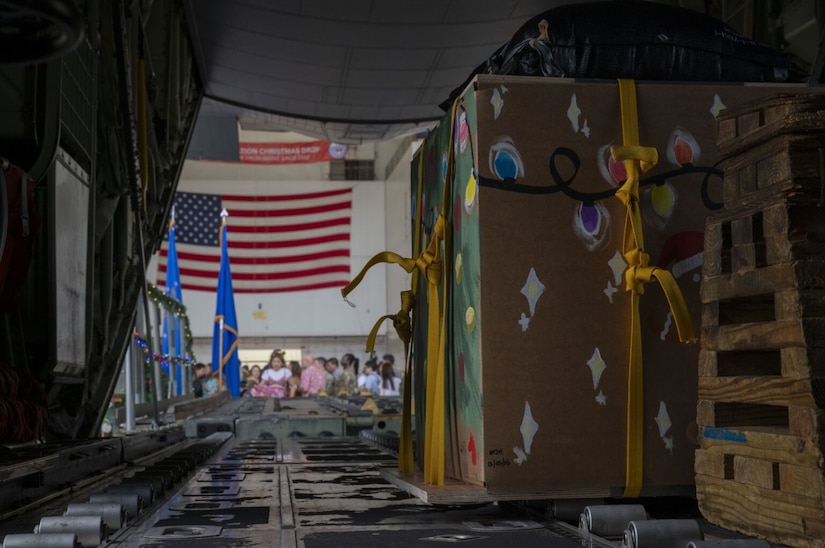
The ceremony concluded with Palik, Bruce Best — known at Operation Christmas Drop as "Brother Bruce" — and Air Force Col. Richard McElhaney, 374th Airlift Wing commander, loading the first official bundle into the cargo bay of a C-130J Super Hercules assigned to the 36th Airlift Squadron, operating under the 374th Expeditionary Wing.
 
"These bundles supply 56,000 people across 59 islands each year, but I don't think we can truly grasp that impact until we see the families wave and jump up and down in excitement as we fly by," McElhaney said. "While this is an amazing humanitarian mission, it's also an invaluable training event for participating aircrews. This training, and the work we do here, matters and translates to our readiness."

A man stands at a lectern and gives a speech to a seated crowd of civilians and service members inside an aircraft hangar.
Large boxes sit inside the back of a military aircraft.
Throughout the remainder of the operation, the Air Force and partnering nations will airdrop a total of 270 bundles filled with critical supplies to remote communities across the Pacific, delivering humanitarian assistance while simultaneously conducting valuable low-level flight, precision-airdrop and logistical coordination training — skills that strengthen the ability to execute rapid global airlift missions across the Indo-Pacific region.
 
"The people of the Federated States of Micronesia extend our deepest gratitude," Palik said. "Beyond the food, tools, fishing gear, school supplies and gifts, you deliver something far more valuable: the spirit of compassion that defines this Christmas season." 

Friday, September 11, 2015

B-2 deployment to Guam: Teamwork, Sorties, Success

by Senior Airman Joseph A. Pagán Jr.
2nd Bomb Wing Public Affairs


9/11/2015 - ANDERSEN AIR FORCE BASE, Guam -- For nearly 30 days, Airmen from Whiteman Air Force Base, Missouri, showcased the capabilities and mission effectiveness of the B-2 Spirit while deployed to Andersen Air Force Base, Guam.

From Aug. 7 to Aug. 28, approximately 225 Airmen from the 509th Bomb Wing exercised their ability to conduct B-2 flight operations in an environment outside of the United States. The 13th BS completed more than 25 sorties and compiled approximately 300 flying hours, including integration with home station aircraft to support exercise operations during Red Flag-Alaska.

"Launching three B-2s from Andersen to participate in Red Flag-Alaska, while at the same time two B-2s launched from Whiteman AFB to do the same was the flying highlight of our deployment," said Lt. Col. Robert Makros, 13th Bomb Squadron commander. "This sortie was a 32-hour marathon that presented flyers with challenges similar to those they will experience during combat."

All five B-2s executed their mission and hit their target sets with precision and flawless timing, Makros continued.

Red Flag-Alaska is a Pacific Air Forces commander-directed field training exercise for U.S. Forces, providing large employment training in a simulated combat environment.

"The success of Red Flag and numerous other missions during the deployment were not because of any one individual," Makros said. "It was a direct result of our team busting their tails every single day. Every person on this trip played a vital role in our success."

This dedication was on display each day, resulting in a visit from the 36th Wing commander, Brig. Gen. Andrew Toth, who discussed the importance of Andersen's location.

"Bringing these assets (B-2s) to Andersen demonstrates our partnership and commitment in preserving peace and stability in the Pacific," Toth said.  "Should any conflicts arise, our strategic forward presence enables us to rapidly respond to any crises."

Markos said the Airmen who support, safeguard, generate and fly the B-2 ensure the continued operation of the most feared and revered bomber in the world.

"This team and the power projection they provide are why I sleep very well at night and why certain groups in far off places do not," Markos said.

Wednesday, September 09, 2015

Face of Defense: Seeing Double


By Air Force Airman 1st Class Alexa Ann Henderson 36th Wing

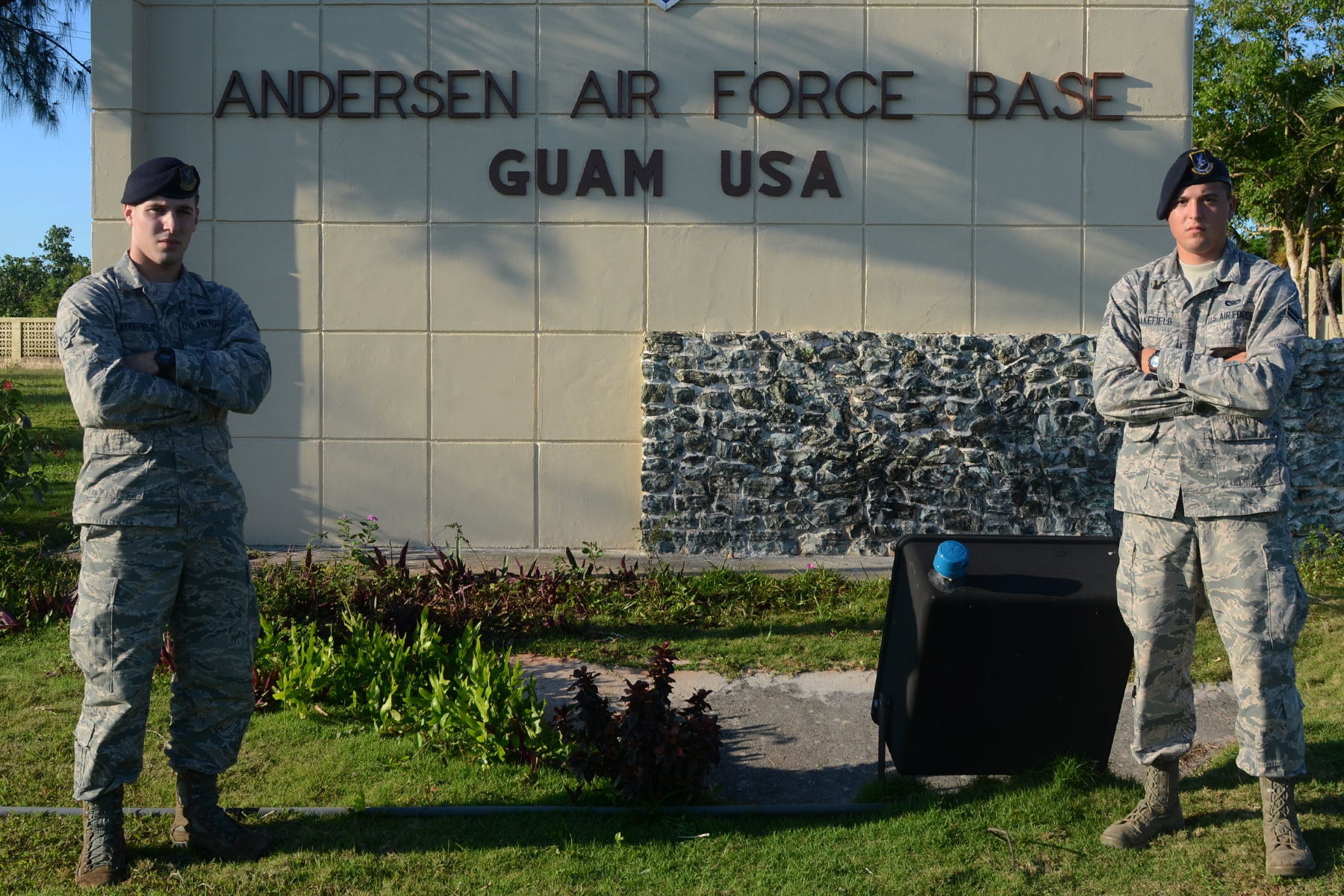
ANDERSEN AIR FORCE BASE, Guam, September 9, 2015 — Driving through the gates at Andersen Air Force Base, someone could easily mistake the two airmen that stand guard there, and it’s easy to see why.

Though not identical, they could almost be the same person, but one has longer hair. They have the same Washington state accent, stand at about the same height with little difference in their features and they bear the same name on their vests.

U.S. Air Force Airmen 1st Class Colby and Travis Wakefield are fraternal twins who also are 36th Security Forces Squadron entry controllers.

Although Andersen is their first duty station, this is not the first time the Wakefields have served together since beginning their military careers.

Travis and Colby both signed up for security forces and left for basic training on the same day after asking if they could go together. After arriving at Joint Base San Antonio-Lackland, Texas, for basic military training, they found out they were in the same flight. Together, they graduated and became airmen.

Once they reached technical training, they found a way to become roommates. However, this is not where their camaraderie was destined to end.

"After we had been at tech school for a week or so, we decided to look and see where we were going to be stationed," Colby said. "I looked first, and it said Andersen Air Force Base. My brother decided to look next, and it also said Andersen. We don't know how, but we got stationed together."

The brothers graduated technical training and went home before reporting to their first duty station.

"It was easier to come here, because I had my brother with me," Colby said. "We were going through the same thing."

After spending the first 18 years of their lives with each other, the brothers arrived here in April 2014 to perform the same job within the same squadron.

The brothers currently share the same work schedule, so their days off often coincide.

"We spend a lot of our off time doing the same things," Travis said. "We play golf and other sports with our squadron. We grew up playing a lot of the same sports. We pretty much do everything together."

Having two airmen who look very similar and share a last name can be confusing, so they were given nicknames.

"We call Colby 'Regular Wakefield' and Travis 'Baby Wakefield,' because they were born one minute apart," said Tech. Sgt. Alicia Goetschel, the 36th SFS flight chief.

The twins are soon due to find out where they’ll be assigned when they return from overseas, but they hope it won't be the end of them working together.

"We were told there's a possibility we could be kept together until we reach [higher ranks]," Colby said.

They both agreed that joining the Air Force was one of the best decisions of their life, and they hope to continue their careers together wherever the Air Force may take them.

The Wakefields also have an older sister, a mother and father who live in Washington.

"Every time I call them on the phone to see how they’re doing, they always tell me the same thing," said the twin's mother. "They tell me how happy they are with joining the Air Force and how they are so proud to see just how far they have come."

The twins aren't the only ones who have pride in what they are doing, though.

"It's been a blessing to have them stay together," the mother said. "It's also comforting to us, too; I always find out what's going on from one of the boys. We are so proud of them and all that they have accomplished."

Wednesday, August 19, 2015

Whiteman Airmen, B-2s maintain readiness in Guam

by By Senior Airman Joseph A. Pagán Jr.
2nd Bomb Wing Public Affairs


8/19/2015 - ANDERSEN AIR FORCE BASE, Guam --  -- About 225 Airmen and three B-2 Spirits from Whiteman Air Force Base, Missouri, deployed here Aug. 7 to conduct familiarization training activities in the Indo-Asia-Pacific region.

The goal of the training is to maintain force readiness by conducting flight operations in an environment outside of the United States.

"The objectives I outlined are simple," said Lt. Col. Robert Makros, 13th Bomb Squadron commander. "I want everyone to come back better and more lethal than before they left."

Makros' objectives may be simple, but it's the execution of the mission that will carry this deployment toward and through the finish line.

"Everyone understands the role they play in the B-2 global strike mission and what it provides to leadership," Makros said. "The flexibility and ability to strike, at the time and place of leadership's choosing, any target set on the globe with precision, range, stealth and a massive payload, conventional or nuclear, is what makes this aircraft incredible."

Makros also said the 13th Bomber Squadron will be training with sister services and other joint aircraft while capitalizing on multi-national training events.

Executing the mission provides flexibility to Air Force Global Strike Command senior leadership, making the B-2 a credible and viable option that delivers decisive effects around the globe.

AFGSC routinely evaluates their readiness and reposition of forces as needed to ensure they maintain both the operational and support capabilities essential to meet training needs -- this includes planned deployments, such as this one, to various regions around the globe, providing commanders of major commands and combatant commands a global strike capability and extended deterrence against potential adversaries.

"It's why we signed up and what we train for every day," Makros said. "Our aircrew and the entire B-2 team constantly push themselves to be the best because they understand being the best is a must when it comes to generating and flying 30-hour missions, and successfully striking targets half way around the globe."

The familiarization training will not only be conducted by B-2 aircrews but also by the maintainers and support personnel on the ground.

"Maintainers, cops, support staff -- everyone is receiving great training while deployed here," said Master Sgt. Daryl Allen, 2nd Aircraft Maintenance Squadron first sergeant. "We all face obstacles and new training scenarios that aren't always present stateside, and we have to be ready to fix the aircraft, prepare the aircrew and get it in the sky as quickly and efficiently as possible; that comes from everyone working together."

Monday, August 17, 2015

Face of Defense: Airman Aids Home Island During Typhoon Recovery


By Air Force Staff Sgt. Alexander Riedel 36th Wing

ANDERSEN AIR FORCE BASE, Guam, August 17, 2015 — When Typhoon Soudelor struck the small island of Saipan Aug. 2, the tropical storm likely was a side note in the daily news headlines for many Americans.

But for one of Andersen Air Force Base’s own, the storm literally hit close to home.

U.S. Air Force Senior Airman Louie Lacsina, an air transportation specialist with the 36th Mobility Response Group and a native of Saipan, deployed along with five 36th Contingency Response Group wingmen to assist ongoing relief efforts on his home island.

Arriving Aug. 9 aboard a U.S. Navy MH-60S Seahawk helicopter, Lacsina said he was shocked by the devastation left behind by the storm.

Hundreds of island residents lost their homes, including some of his friends, Lacsina said.

“As a returning former resident, some places are just not recognizable anymore,” he said. “What looked like paradise just got flattened. Most of my family is fine and their houses are ok, but they are missing power and water and went without a good clean shower for a few days.”

In the absence of electricity, Lacsina said many have to leave their windows open at night, which allows mosquitoes and other bugs to enter. Some friends completely lost the roofs of their houses, he said. Meanwhile, electricity and water will take a while to be fully restored, Lacsina said.

“One family I know currently lives together in a single room, the only one with a functioning roof,” he said. “It’s pretty bad and sad to see, but I’m also glad that I’m here and able to help out.”

Part of a Rapid Response Force

As an aerial porter tasked with unloading equipment and supplies from aircraft, Lacsina is one of a select few airmen chosen to serve as a rapid response force for combat operations and humanitarian emergencies. Together with highly skilled security forces, engineering and medical specialists, they make up a team that is tailored for disaster relief -- ready to go anywhere in the world to establish airfield and base operations. Earlier this year, Lacsina and his wingmen rushed to support international earthquake recovery efforts in Nepal, where his team unloaded more than 200 aircraft.

“As the contingency response group, we go wherever help is needed -- with as little as 12 hours’ notice,” he said. “As an air transportation specialist, my job ... is to provide transportation support and forklift loader support to aircraft to unload cargo and move it to its staging positions.”

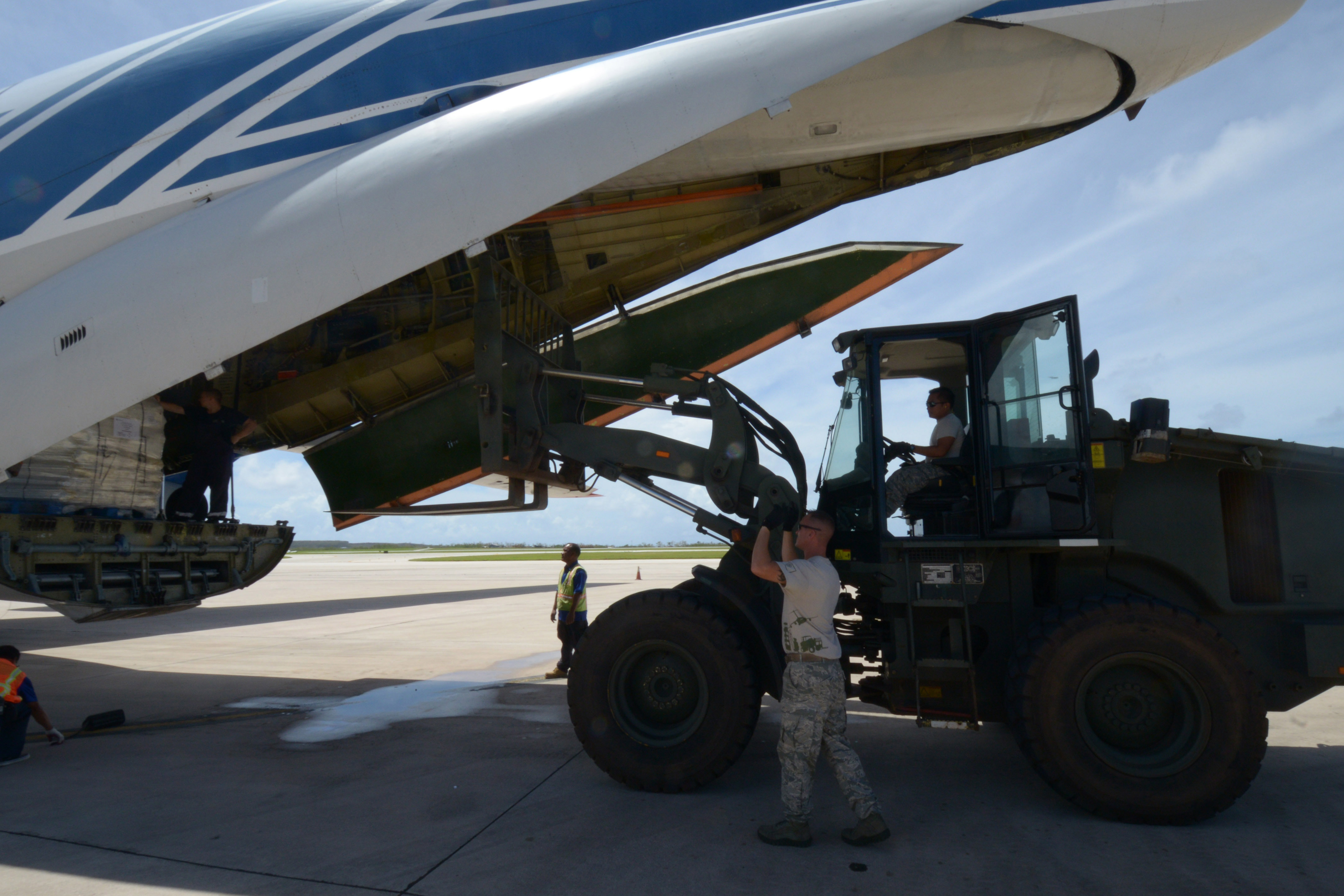
Together with units from Joint Base Pearl Harbor-Hickam, the teams provided two Tunner 60K Aircraft Cargo Loaders, which provide high-lift support to reach aircraft that the local airport can’t reach, and military-grade, adverse-terrain fork lifts.

“Currently the airport here has only one forklift in operation and it’s much smaller than what is needed for these jobs, so we brought two large forklifts capable of loading 10,000 pounds each,” Lascina said. “We bring these forklifts on missions like this because we don’t know what we’re going to encounter.”

Growing Up in Paradise

Before becoming an airman, Lacsina grew up between palms and the waves of the West Pacific and calls the Saipan villages of San Antonio and Chalan Kiya home.

“I grew up outdoors, by the beach, sheltered by distance from the outside world,” he recalled. “Saipan is a great place to grow up on. A lot of people call it paradise.

“When typhoons hit when I was young, it was a pretty exciting and scary time," he continued. "As an adult, I see how painful they can be for a small island like Saipan.”

Deciding whether or not to join the Air Force after high school was an easy decision, Lacsina said. A curiosity for the world urged the young student to look for opportunities beyond the small U.S. commonwealth.

“It really was a group effort between my friends and me,” he said. “We could either try to work our way through and potentially never leave the island, or join the military to gain experiences. We eventually decided together that we’d join the military.”

Lacsina’s military assignments have taken him across the globe, from Ramstein Air Base, Germany, to Yokota Air Base, Japan.

“ has really paid off for me,” he said. “I got to experience different things and went to different places in the world as part of my job. Growing up, I’d never have thought I’d eventually work with aircraft and now I work with different aircraft and different nations. It’s a great experience.”

While his immediate family now lives in Hawaii, Lacsina still has aunts and uncles residing on Saipan. He surprised them with a visit to lighten the mood after the storm.

“Being stationed on Guam, I do have the opportunity to go back occasionally, but the most recent one isn’t the way I wanted it to be,” Lacsina said. “They were pretty happy to see me and knowing that I’m with the military also gave them the reassurance that there is a U.S. presence helping out on island.”

Local Knowledge an Asset

For the Saipan recovery team, Lacsina’s knowledge of the island infrastructure and its people has been a real mission asset, said Master Sgt. Corey Long, contingency response team chief with the 36th CRG.

“Having a Saipan native on the team is awesome,” Long said. “Whether it’s a local language barrier or directions, he’s instrumental in that he knows the area.”

Even if the airfield staff could unload all arriving supplies, local teams would get backlogged because they’d have to individually load things onto trucks, Long continued, making Lacsina an essential part of the team.

“We enable the crews to get supplies off the airplane, onto trucks and directly to the people who urgently need this help,” he said. “The forklift driver is the key in this operation. Without his expertise these operations would stall or delay emergency aid.

“Lascina is highly proficient in his job,” Long continued. “His job experience shows and what would take a new guy two hours, he gets done in a fraction of the time. That counts when we try to get essential aid to the people who need it most.”

For the foreseeable future, the teams have their work cut out for them as many residents are still living without electricity and potable water.

“There is so much more to do,” he said. “So much rebuilding remains to be done around the island. It’s good to at least be home and help out. I joined the U.S. to help my country as a whole, but there is nothing better than coming home to do this. It’s a good feeling.”

“They always say, ‘your home is where your heart is,’” Lacsina said.

Lacsina’s skills driving a 10-K All-terrain forklift were on display on the western side of the runway at Saipan International Airport Aug. 12. In concert with personnel from the Commonwealth of the Northern Marianas Ports Authority and the Federal Emergency Management Agency, the team unloaded a cargo plane that arrived from Manila. In 1 hour and 6 minutes, they moved 45 pallets onto the tarmac for a customs inspection and then onto flatbed trucks for transport to a central distribution site.
As a result, 53,000 pounds of water, tents and cots were on their way to the people of Saipan.