Seven months ago, Secretary of War Pete Hegseth stood before a large crowd of Lockheed Martin employees in Texas, during the third stop of his nascent Arsenal of Freedom tour, to show his appreciation for the people behind the defense industrial base.
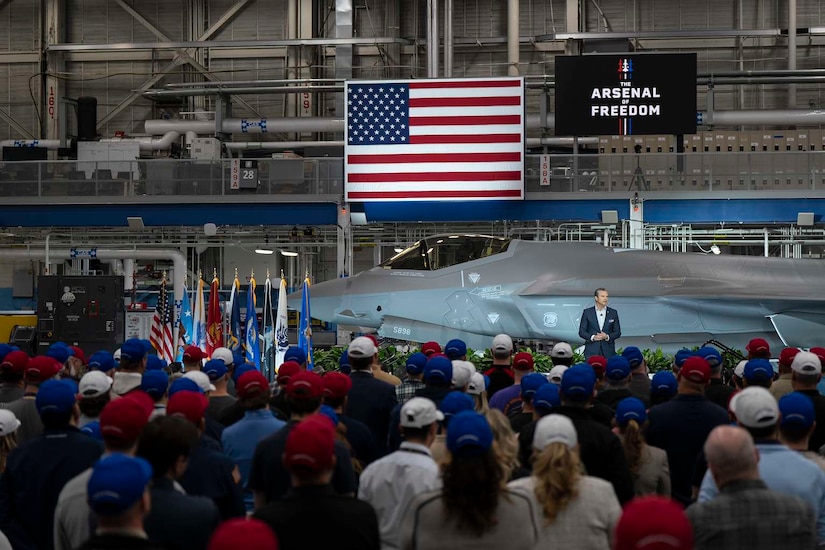
During his remarks, Hegseth made clear that supercharging the defense industrial base, which is one of the four lines of effort in the 2026 National Defense Strategy, is something the current administration and the War Department want to see happen at a rapid clip.
"We've got to go fast. The warfighters need it; they deserve it. We've got near-peer adversaries that are building at record speed," Hegseth said. "[This] Arsenal of Freedom tour is meant to speak to you and your peers, and to tell you to keep going."
To facilitate that need "to go fast," the War Innovation Unit — formerly the Defense Innovation Unit and still abbreviated as DIU for contractual purposes — is working to cut through red tape with the defense industrial base.
Founded in 2015, DIU is purpose-built to accelerate the War Department's adoption of commercial technology at speed and scale to lower cost and increase combat power. Since January, it has been working to answer Hegseth's call for the expedited acquisition of commercial capabilities across the services in several ways.
Its latest initiative is the Bridge Program.
Conceived and developed over the past year by Sarah Pearson — a former Navy officer, technology executive and current chief of strategic initiatives at DIU — the Bridge Program was created to drive long-term, systemic reform across the War Department.
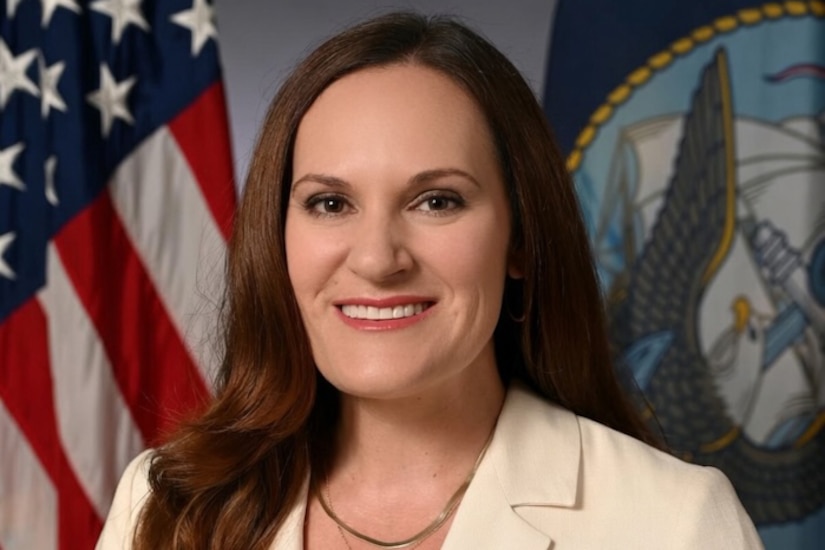
Throughout her career, Pearson has witnessed firsthand the hurdles nontraditional companies face when attempting to sell and scale commercial solutions for the military.
Under her direction, the Bridge Program is now executing a targeted strategy to eliminate critical bottlenecks — specifically around security clearances, access to classified spaces, technology accreditations and testing.
By dismantling these operational barriers, the program seeks to broaden the War Department's commercial engagement aperture, mitigate risks, accelerate capability development and maximize adoption rates to deliver best-in-class commercial technologies directly to the warfighter.
The program's first line of effort focuses on evolving the model for classified space design, construction, accreditation and operation.
By blending commercial technologies, process improvements, rapid contracting, policy and Congressional support, the department is jointly addressing each aspect of the value chain around classified infrastructure.
"When successful, we will have demonstrated a new model, a model where classified infrastructure is resourced based upon usage and becomes operational within months — not years — of the need arising," Pearson said.
Furthermore, she emphasized the critical importance of continued close collaboration within the War Department.
"Our partners within three offices — the offices of the undersecretary of war for intelligence and security; acquisition and sustainment; and research and engineering — as well as the Defense Intelligence Agency, the Defense Counterintelligence Security Agency and the armed services have been the single greatest unlock in achieving the early success we've seen so far," Pearson said.
DIU's Bridge Program, and the broader working group across the aforementioned organizations, had its first major contracting announcement last month, when President Donald J. Trump announced a $10 billion investment in Pennsylvania's defense industry July 16.
The announcement included investment in four shared commercial classified facilities, one of which will be built in Pittsburgh — using the joint funding model that the Bridge Program is prototyping.
Beyond Pittsburgh, the Bridge Program has contracted for nine additional commercially owned and operated sites across the U.S., including Austin, Texas; San Francisco; Boston; Charleston, South Carolina; Chicago; Cleveland; Louisville, Kentucky; and New York.
Additional locations will be announced in the coming weeks.
The Bridge Program's second line of effort focuses on establishing the fastest and most trusted accreditation portfolio within the department — something Pearson said can't be accomplished without deep cybersecurity expertise — a thoughtful approach to risk and incorporation of the world's best artificial intelligence capabilities.
By using technology to enhance and accelerate DIU's authorization process, the Bridge Program team will condense timelines and enable greater throughput with fewer resources.
"We plan to shift the risk management framework process to the left in prototype development and build cybersecure solutions that the services can more easily field. Indexing toward accreditations for every program and sooner in development are critical to adoption," Pearson explained.
The third line of effort — test and evaluation — draws on DIU's core competency, prototyping commercially derived technologies inside the department's developmental and operational test infrastructure.
Through partnership, technology and new approaches, Pearson said DIU is building an end-to-end test approach for portfolio companies entering the prototype pipeline, with testing opportunities throughout the contract lifecycle.
The result is a process that stitches capability development together with existing and emerging test infrastructure, for both physical and digital applications.
As DIU continues to expand and implement the Bridge Program in support of Hegseth's call to revamp and expedite the acquisition process, Pearson said it will continue to lean on unprecedented partnership across the department, its history of pioneering new approaches and its deep conviction that the warfighters deserve the best capabilities available.


 Posts
Posts


No comments:
Post a Comment